Germany: 376 km and 157 scats…

Peter & I dropped off group 1 at Bremen earlier today and here is the summary of what we have achieved:

We covered 307 km on forestry roads and paths on foot and an additional 69 km on bikes.

Over this distance we only found two wolf tracks, but they were under 100 m in length; tracking conditions have not been good generally as the ground is very dry. A 100 m track is a very tough ask, but it is what the official state monitoring protocol requires in order to accept a track as being made by a wolf. It is the one sure sign that tells wolf from dog, because dogs run around much more erratically, whereas wolves save energy and have a real purpose to their gait.

But we made up for the lack of tracks by finding 157 scats. Yes, you have read right. 157! Anyone who ever says that citizen science can’t make great contributions to wildlife research and conservation may now forever hold their tongue! Of the 157 scats, 46 were too old for any further analysis; 111 were good enough for dietary analysis (which will be done over the next few months) and of those 111, 11 were good (i.e. fresh) enough for DNA analysis (also over the next few months)

Looking at the geographical distribution, the 111 scats were found in fourteen different cells of the European 10 x 10 km grid. Compared to last year, the team covered about the same distance within five survey days, but the number of findings is exceptionally high. So we’re getting better with age!

Remember those Biosphere Expeditions priorities of safety, science, satisfaction? Safety: Fine, nothing untoward happened. Science: Bloody hell, well done team 1! Satisfaction: Comes with the science and the days out in the field, but also with a great base and staff at NABU Gut Sunder (thank you!).

Highlights? Visiting the shepherd & wolf commissioner Holger and his guarding dogs was surely a great opportunity to look behind the scenes of a livestock owner and breeder of guarding dogs. Holger is one of those enlightened shepherds who accepts wolves belong in this landscape and creates an opportunity out of the challenge by becoming a wolf commissioner and dog breeder. We need more people like Holger! Being in the field with wolf commissioner Theo and benefitting from his obvious knowledge, not only of the wolf packs in his area, but also of all other wildlife, the dynamics within a forest habitat and nature itself, is also quite an experience. And then there was the excursion to the far north-eastern part of our study area, which gave us the opportunity to operate in a different landscape.

Our last night together on Thursday was spent – where else – around the campfire. For some it lasted into Friday….

Thank you to everyone for making this a fun and very effective week. I hope you all enjoyed the last week as much as Peter & I did. Safe journeys back home!

Team 2, you have big boots to fill and I look forward to meeting you all tomorrow morning at 11:00.

Continue reading “Germany: 376 km and 157 scats…”

Germany: 99 scats in six days!

Update from our monitoring expedition studying wolves in Lower Saxony, Germany www.biosphere-expeditions.org/germany

It’s already expedition day five and all the teams have been out in the field every day – time for an update on our activities! After the introduction & training days on Saturday and Sunday, we split ourselves up into four groups and went to different locations each day.

We conducted an intensive survey in the Celle district close to base on Monday, but unfortunately the scat samples of the resident pack we found weren’t fresh enough for DNA analysis.

On Tuesday & Wednesday a team of four went north (district Luechow–Dannenberg) for an overnighter. Clare, Susanne, Rudolph & I camped in the backyard of Kenny’s Biohotel Kenners LandLust and were briefed on the survey routes by wolf commissioner Kenny himself. (Wolf commissioners are local people trained in wolf surveying and assisting their community with reporting and dealing with wolf-related incidences. They are important links between local communities and the state’s efforts in monitoring wolves and dealing with the consequences of their presence). It is known that two packs reside on Kenny’s wolf commissioner patch, but DNA sampling of individuals is missing, so our main job was to hunt for fresh scat from which DNA can be extracted. So we hunted and we found. 65 (!) samples, to be exact, with fewer than ten fresh enough for DNA sampling. It was way past midnight when Peter, with Lea assisting, finished sorting, labelling and freezing them.

Other teams went to the districts of Harburg, Heidekreis and Holzminden. Some of these areas called in and requested that we come and survey them. This is quite a change from last year, when there was a lot of skepticism about citizen science. But we stuck at it and our 2017 report, and the great results detailed therein, has silenced the critics.

No results in Holzminden (a new area), but we made a first assessment and will continue looking for proof of wolves. Some of us met wolf commissioner Theo again, who took a group out investigating “his” area. Others met shepherd Holger and his guarding dogs.

Overall we found 99 (!) scats samples so far, 13 of which were fresh enough to attempt DNA extraction and analysis.

I’ll let you have a review of the first week shortly; Friday will be the last day of group 1. For now enjoy the pictures and some wolf howling, and those preparing for the next week, get ready, get excited! The weather here was changeable up until Tuesday, but next week is meant to be warm and dry throughout.

Continue reading “Germany: 99 scats in six days!”

Germany: We’re on our way

Update from our monitoring expedition studying wolves in Lower Saxony, Germany www.biosphere-expeditions.org/germany

Group 1 is underway. All were there at the Bremen assembly point. This year’s first expedition team consists of eighteen members from seven different countries, including three journalists and three local placements.

From Bremen we travelled to Doerverden Wolfcenter to learn about and encounter our target species from very close for a while. Training (and introductions) continued back at our base of NABU Gut Sunder, a beautiful oasis of nature and calm in the middle of our study site. Dr. Jana Sprenger from the State Wolf Buero gave a talk about the history of the wolf in Germany, the development from 2002 onwards and the present situation in the state of Lower Saxony, where we work with the official wolf monitoring programme. There was training on equipment, track recognition, scat collecting and more. Quite an intense day, rounded off with an intense World Cup football match, which Germany won at the last second. The relief amongst the Germans was palpable 😉

This slideshow requires JavaScript.

Continue reading “Germany: We’re on our way”

Germany: Opener for 2018 Germany wolf expedition

Update from our monitoring expedition studying wolves in Lower Saxony, Germany www.biosphere-expeditions.org/germany

We’re getting ready for you. As you can tell, our expedition leader Malika and scientist Peter really love being on camera, but fear not they will be less awkward in the field.

No hassle so far from the local press or anyone else, unlike for our inaugural expedition last year when there was a lot of hostility and fake news around (you’ll know what we mean if you read the 2017 report) and not many understood what this citizen science thing was. The local paper Weser Kurier, quite hostile in 2017, even picked up on our latest press release and ran a positive piece.

It’s warm and sunny at base today, but a dip in temperatures is forecast for the weekend, before it’s back to sunshine and high twenties again. We’ll take it as it comes, of course.

We’ve set our focus areas in cooperation with our friends at the State Wolf Bureau and the State Forestry Authority is playing ball too this year, thank you. Some forestry areas are even ringing up and requesting survey teams to be sent to them too! Encouraging stuff and long may it continue.

Safe travels, group 1, and we look forward to seeing you on Saturday.

Continue reading “Germany: Opener for 2018 Germany wolf expedition”

Costa Rica: Nest number 100

Update from our conservation holiday protecting leatherback and other sea turtles on the Caribbean coast of Costa Rica www.biosphere-expeditions.org/costarica 

The last few days of the expedition were busy!

On Friday and Saturday nights there is usually an increase in the number of poachers on the beach, as people from nearby towns come to the beach to try their luck over the weekend. In response we sent out a lot of patrols trying to get to the turtles before the poachers.

On Friday night, for example, we had a leatherback nesting right in front of the station and we reached her only a mere matter of minutes before a team of poachers walked by. Expeditioner Scarlet from Bulgaria says that “it is amazing to me that nature can create such a beautiful creature and that I got to see this ancient nesting ritual”.

We carried 83 viable eggs back for reburial at the hatchery. This was nest number 100 in the hatchery for the season.

Later that same night we encountered the first hawksbill turtle of the season. If poachers encounter a hawksbill turtle, they will not only steal the eggs, but also kill the turtle for its shell. So it was imperative to transport the eggs to the safe hatchery and  see the turtle back to sea, which we did.

Our impressive total now stands at seven leatherback nests (608 eggs) and one hawksbill nest (150 eggs) saved, 56 hours of beach patrolling and 39 hours of guarding the hatchery. By contrast, the poachers got four leatherback and one hawksbill nests poached, making the average approximately 65% in our favour.

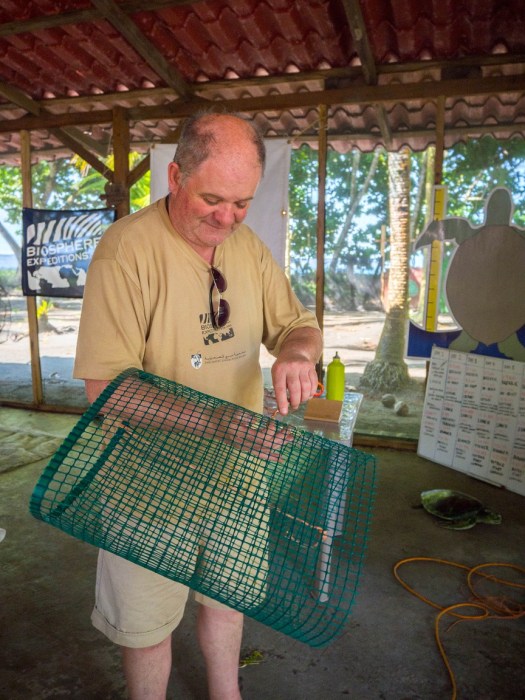
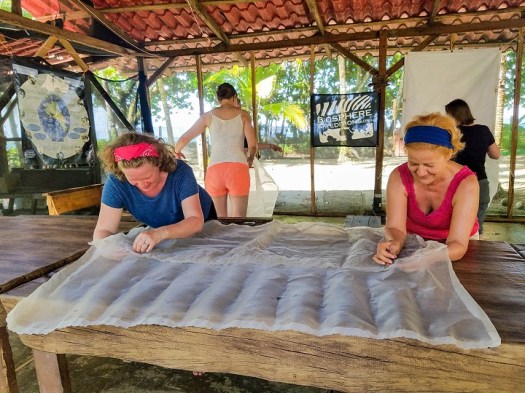
In addition to patrolling, we have also been busy making hatchery baskets to place over the hatchery nests, cleaning the beach of plastic rubbish, and maintaining the hatchery, making sure it is predator-proof.

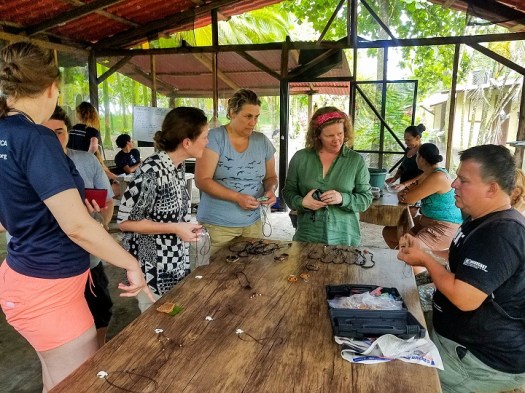
Our partner organisation LAST has also set up a weekly market day for community members to sell goods to our citizen scientists and the very few tourists that find their way to this remote beauty spot. Goods include fresh fruit, homemade coconut cake and turtle-themed jewellery.

Expeditioner Talar from the USA thinks “it’s great to able to support the community in this way too and providing an alternative income to poaching” and with this puts LAST’s thinking into a nutshell.

But I’ll let people and actions speak for themselves soon. Pictures are attached – and give us a few days to cut and produce some videos from the field too….

Continue reading “Costa Rica: Nest number 100”

Costa Rica: Hatched and unhatched turtle eggs

Update from our conservation holiday protecting leatherback and other sea turtles on the Caribbean coast of Costa Rica www.biosphere-expeditions.org/costarica 

Wednesday morning Fabian had exciting news for us all. During the night a natural nest on the beach had hatched and that afternoon we were to excavate the nest to see if there were any stragglers left behind and what percentage of the eggs had not hatched.

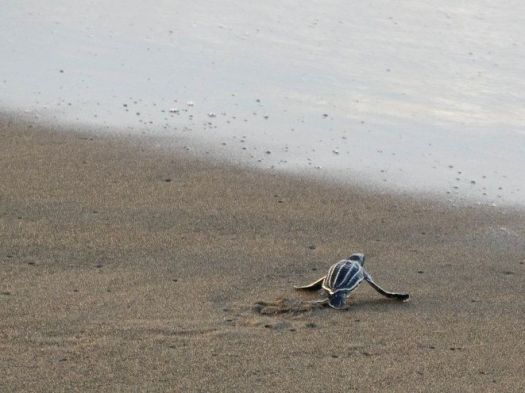
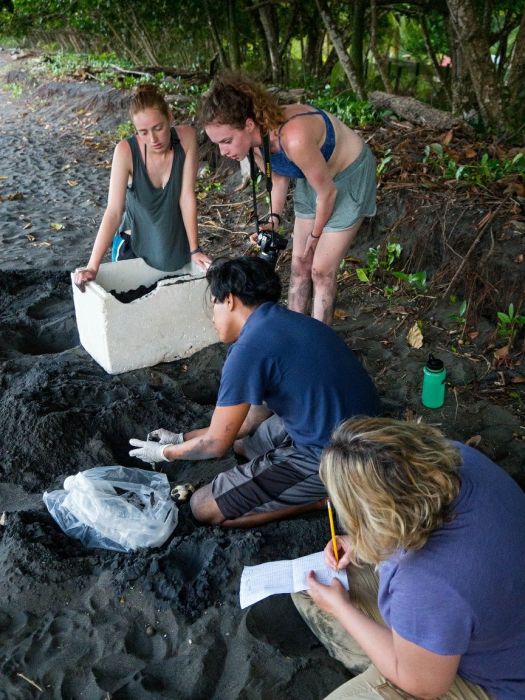
When we started digging up the nest, we found five hatchlings that were still alive! They had been trapped in the nest unable to make their way out. Under normal conditions they would have died before making it to adulthood, as do about one in a thousand of them, including some hatchlings nearby that were trapped under a log. But now they had been given a second chance at life.

Inside the nest were also 52 eggs that had not hatched, all at various stages of development. Normally, an average of approximately 20% of eggs do not hatch. This can be due to fungal or bacterial infection, genetics or environmental causes. Out of the 52 eggs not hatched in this nest 25 were infected by a fungus.

Hatchling success rate in this nest was very low with only fifteen emerging, and out of those seven had died in the sun. Once Fabian had checked all the eggs and buried them in the sand it was time to see the five survivors to sea. We released them at the high tide mark and watched them make their way towards the waves. As they all disappeared into the sea, expeditioner Sherry  called them “amazing fighters”.

The excitement didn’t end there. On Thursday we were told that another nest, which had been relocated from its original nest to a secret spot on the beach before the hatchery was built, had hatched. So we went to dig up the nest to study survival rates, but when we did, we found a full clutch of still viable, but unhatched eggs! As we had already disturbed the nest, we could not rebury them as this would significantly decrease chances of survival. Instead we reverted to the accepted alternative method and placed the eggs in a cooler box and covered them with moist sand. They now live next to the kitchen, and we are all anxious for them to hatch.

Continue reading “Costa Rica: Hatched and unhatched turtle eggs”

Costa Rica: Leatherback hatchling

Update from our conservation holiday protecting leatherback and other sea turtles on the Caribbean coast of Costa Rica www.biosphere-expeditions.org/costarica 

Just a quick video of a leatherback turtle hatchling making its way to the ocean yesterday…

Continue reading “Costa Rica: Leatherback hatchling”

Costa Rica: Turtles on the beach, nests saved

Update from our conservation holiday protecting leatherback and other sea turtles on the Caribbean coast of Costa Rica www.biosphere-expeditions.org/costarica 

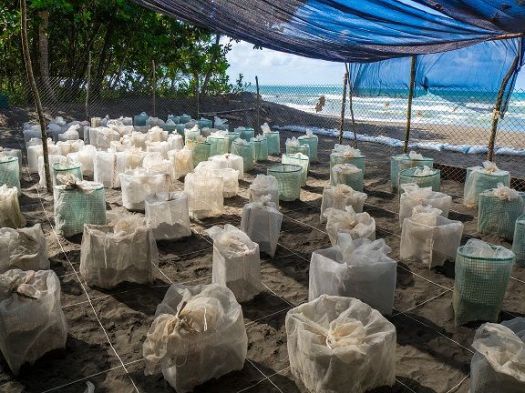
Our 2018 Costa Rica team arrived at Pacuare research station on Monday lunchtime. We were immediately thrown into the training so that we could start patrolling that very night to get to nest before the poachers.  If we encounter a turtle, we take her eggs as well as measure and tag her. The eggs are then taken to a secure hatchery. At the hatchery the person on duty digs a new nest for the eggs that are then guarded 24/7, keeping the developing turtles safe.

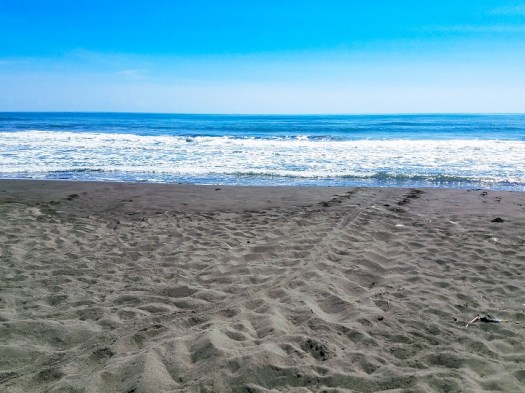
Although walking along the beach in the dark and in tropical humidity is not an easy task, our first night yielded leatherback turtles straight away. “It was really impressive to see how big they are”, says expeditioner Gary. The larger of the two turtles measured 153 cm across its carapace (shell).

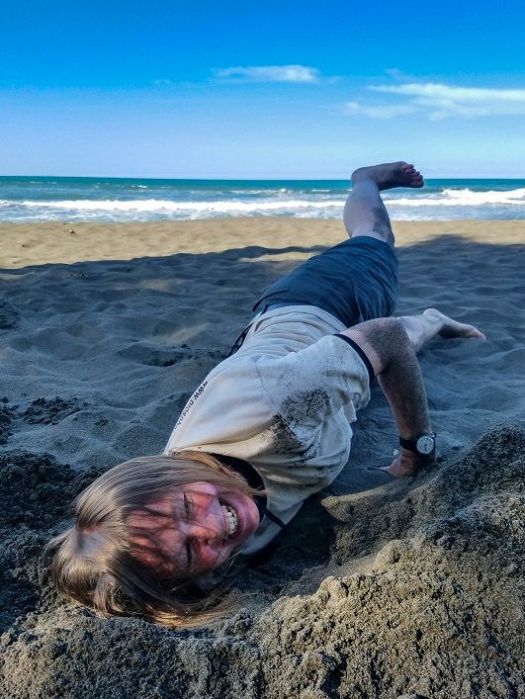
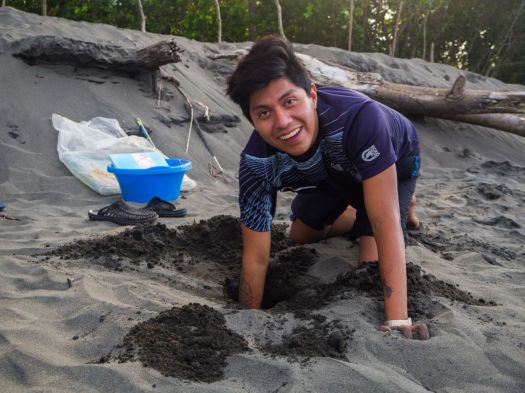
On Tuesday we completed our training with hatchery duties. This includes how to dig a  turtle nest so that we can rebury the eggs correctly while on hatchery duty. It was a sandy affair as the nests are generally 75 cm deep and it is very hard to reach that deep into the sand. We were all covered head to toe in sand after and enjoyed a dip in the balmy sea. As part of our training we also learnt how to deal with any hatchlings that emerge during our shift and how to safely see them to sea.

The Tuesday late patrol, leaving the research station at midnight, encountered a turtle only 40 minutes out from the station. We watched her make her way out of the sea and dig a body pit in the sand before finally starting to dig her nest hole. At this point we joined her and got ready to insert the bag into her nest hole, “stealing” all her eggs. We also measured the length and width of her carapace and checked her tags. She was 147 cm long and she had a broken finger in her back flipper, perhaps from digging her nests. Our data later showed that this is the third time this same turtle has come ashore to lay eggs on Pacuare beach.

Once we had all the measurements and the eggs, we transported them back to the hatchery were Eva and Stefanie were on duty. They were elated to get to put their new learnt skills into practice and to dig their first hatchery nest. “There were 75 viable eggs and 40 yolkless eggs”, explained Eva after she and Stefanie had finished building the nest and transferred all the eggs.

The first nest in the hatchery is due to hatch any day now, so hopes are high and everyone is waiting in anticipation for the hatchlings to emerge.

Continue reading “Costa Rica: Turtles on the beach, nests saved”

Costa Rica: 93 nests already in the hatchery

Update from our conservation holiday protecting leatherback and other sea turtles on the Caribbean coast of Costa Rica www.biosphere-expeditions.org/costarica 

I have  arrived at Pacuare field station and Fabian and I are busy getting things ready for your arrival. I am excited to inform you that so far it has been a busy turtle nesting season and there are already 93 nests in the hatchery! The first hatchery nest is expected to hatch on the day of your arrival, so with a little luck it won’t be just Fabian and I greeting you when you arrive. There are also currently four research assistants at the station who will be helping us with our training and nightly patrols.

The hatchery
The hatchery

So far this season Latin American Sea Turtles (LAST) have managed to relocate approximately 80% of the nests in to the guarded hatchery, with only 20% being taken by poachers. This is a great start to the season.

“A lot of the people in the village who used to poach turtle eggs have now found employment in town and as such there is no longer a need to poach for income. However, as the season progresses, it is likely poachers from further away will move in to take their place” explains Nicki from LAST. By the sounds of things, we will have a busy expedition with a lot of turtles coming ashore to nest.

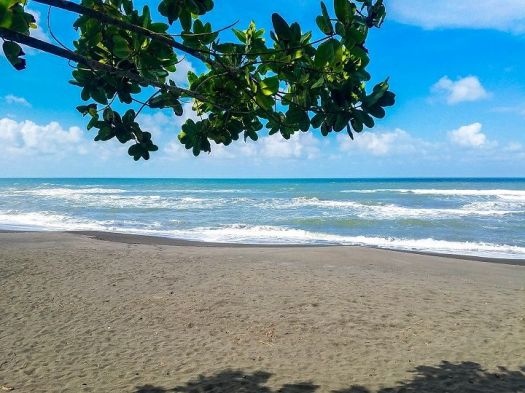
Pacuare beach
Pacuare beach

Nicki will meet you at Hotel Santo Tomas at 09:00 on Monday and make sure you all get on the bus. Fabian and I will be at the dock to greet you when your bus arrives and will take you by boat to the field station. It is a beautiful boat ride – I spotted white-faced capuchin monkeys, crocodiles, a sloth and a myriad of birds on my ride here. However, it is the wet season and it can pour at any moment, so you keep your rain jacket handy for the boat journey (just in case).

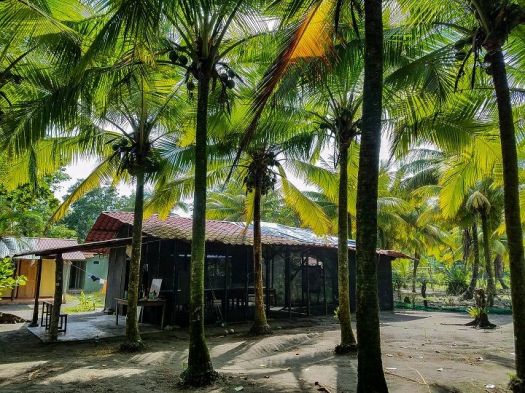
The station
The station

Fabian and I and the rest of the crew look forward to meeting you all tomorrow.

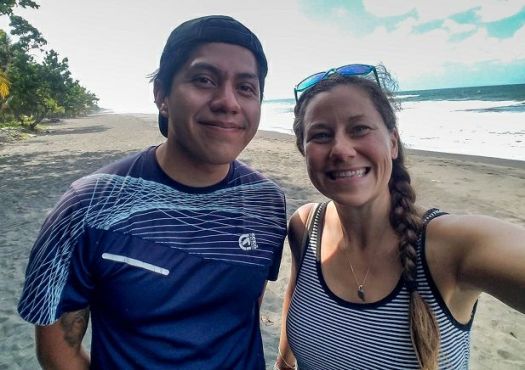
Fabian & Ida
Fabian & Ida


Continue reading “Costa Rica: 93 nests already in the hatchery”

Costa Rica: First diary entry

Update from our conservation holiday protecting leatherback and other sea turtles on the Caribbean coast of Costa Rica www.biosphere-expeditions.org/costarica 

Welcome to the Costa Rica 2018 expedition diary. My name is Ida Vincent and I will be your expedition leader. This will be my third year on this expedition and I look forward to being back at the Pacuare field station and working together with Latin America Sea Turtles (LAST).

Ida Vincent

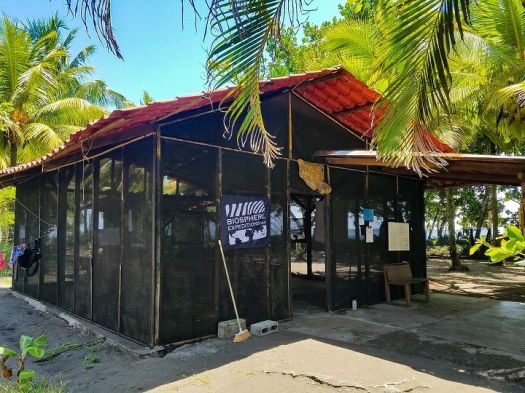
The field station is located just behind the beach where the turtles nest and during our time in Pacuare we will work closely with the onsite biologist from LAST, Fabian Carrasco, who will be training us in sea turtle monitoring.

Fabian Carrasco

We both look forward to meeting you on 7 May. Fabian and I will already be in Pacuare preparing the field station for you arrival. However, Nicki Wheeler from LAST will be meeting you at 09.00 in the lobby of Hotel Santo Tomas. Make sure to be on time as our first night of patrols starts that very evening and there is a lot to learn prior.

I hope you have read about the excellent results that came out of our last report, and that in reading the report, you have familiarised yourself with the work in hand and how it is conducted. It’s going to be quite a bit of work, but that’s exactly why we need you. Have another look through your dossier and check your packing list; remember that your head lamp need to have a red light mode.

I will be a few days ahead of you, preparing everything for your arrival together with Fabian and Nicki. I’ll send my next diary update from Pacuare with turtle and weather updates.

Save travels and see you soon

Ida

Continue reading “Costa Rica: First diary entry”