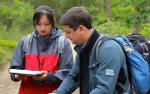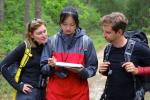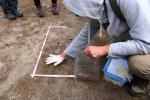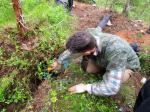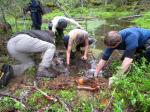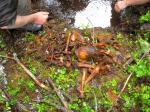
Tien Shan: Group 2

The second group has been and gone. The team, Volodya, Guma, Beka and Ismail have arrived back in Bishkek. We’ve been off the radar for a full two weeks up in the mountains.

Team 1: Volodya says thank you so much for the heart-warming goodbye postcard that I passed on to him upon my return to base camp two weeks ago!

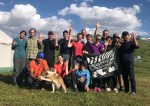
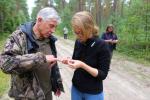
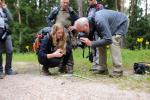
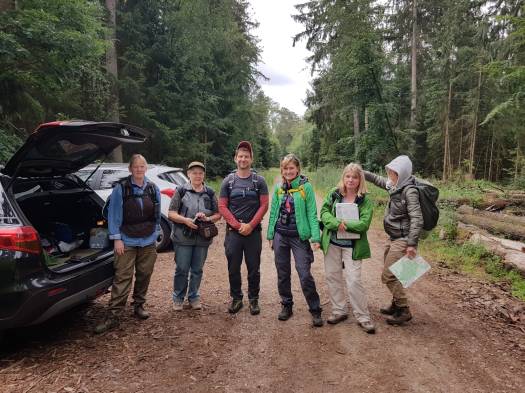
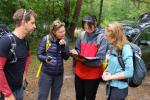
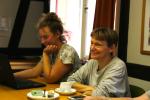
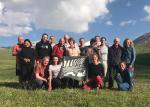
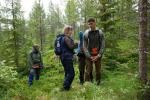
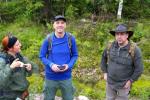
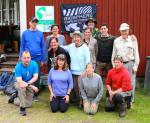
Now, let me introduce you to the second team: They were Angelika, Christa, Christina & Nils, Detlev, Jochen and Meike from Germany, Hilary & John from the U.S as well as Mark & Rowan from the UK.

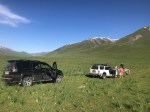
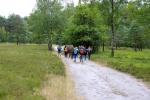
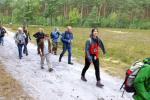
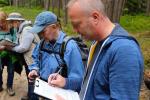
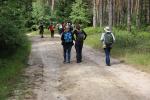
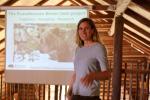
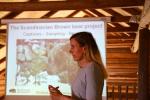
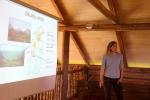
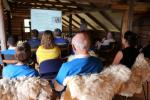
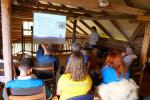
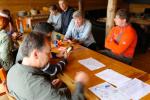
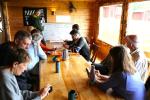
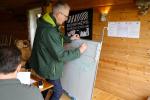
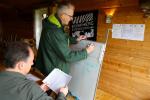
It all began with a bad weather day: rain started when we arrived at base camp late in the afternoon on Monday, and all of Tuesday was a mixture of wet, very wet and a few dry periods. Multiple layers of clothing and an enormous amount of hot tea kept us warm during the training lectures & sessions. In time for our fist survey walk on Wednesday, the sun came out in the morning and from then on it was the same every single day! Most days it was hot, a protective hat and thick layers of sunbloc became essential on our survey walks. After a few days, we were eager for a refreshing afternoon bath in the river after returning to camp, completely ignoring the shower tents. However, the temperature dropped close to zero degrees on some nights, when we found the tents covered in a fine layer of ice in the morning.

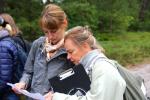
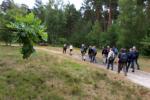
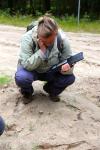
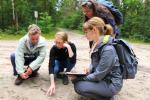
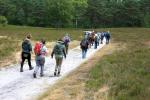
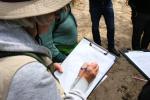
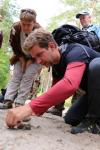
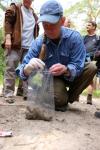
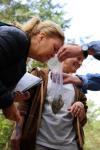
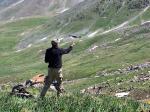
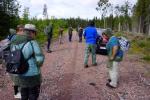
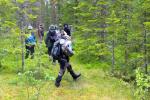
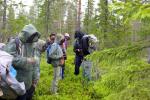
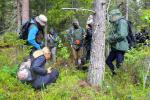
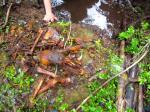
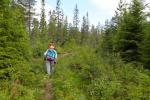
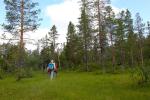
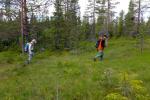
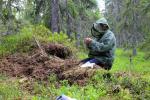
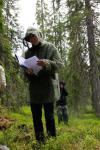
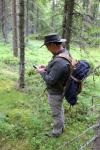
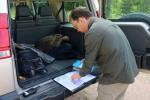
On the surveys, we covered the upper valleys multiple times again. They became much more accessible with each sunny day of melting snow fields. Surveys were possible all the way up to the bottom of the glaciers in Isyk Ata, Jaartash, Jor Bulak, Kashka Tor, Kashtor and Chon Chikan. While we concentrated our searches on higher altitudes (3,400 – 3,700 m), Nils, Mark & Rowan became the team’s special force for exploring the high ridges and steep slopes. Our efforts were rewarded with amazing findings: snow leopard tracks & scat, Pallas’ cat tracks and evidence of ibex in many places (see details below).

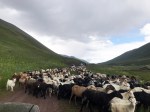
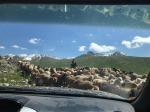
We installed six more camera traps, two each in Chon Chikan (at the same location we couldn’t reach in group 1), Isyk Ata (close to a snow leopard track) and Jor Bulak (located in between those two valleys). It seems that the study animals have already retreated to calmer (and less accessible) areas, avoiding disturbance from people and livestock. By now the Suusamyr valley hosts a great number camps, herders as well as huge herds of sheep, cattle, horses and even a herd of yaks that roam the side valleys as far up as they find fresh green grass. Quite often we spotted horses and cattle above 3.600 m.

Over the course of the last two weeks, we also went twice the long way down to Tuyuk valley, only to find out that the stream is still impossible to cross. Twice we couldn’t reach the most interesting area just below the glacier. Good luck with this task, group 3! If the weather conditions remain the same, you will be the first group exploring a place that has proved a hotspot in past surveys. Unexpectedly though, Volodya saw two argali (mountain sheep) there – a female with a juvenile roaming the green rolling hills in the lower valley. What an exceptional sighting! Since 2014 only the odd single male argali sheep has been seen, most probably on the search for a partner to establish a new herd.

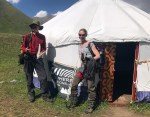
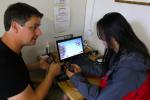
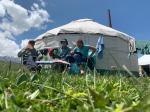
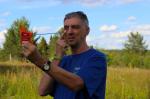
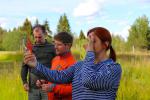
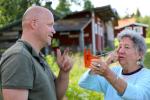
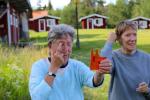
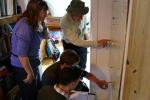
From the moment the Karakol pass road was reported clear, we included Karator and Pitiy valley on the other side again in our surveys. I am thankful none of the teams got in trouble on the way back – not even the team that was hit by thunderstorm and hail a few days ago… 😉 By the end of week two, we also started with interviewing local people. Detlev, Jochen, Meike, Hilary & John took the chance to visit some of our neighbours in their yurts or huts accompanied by Ismail to help with translating . The variety of people – grandparents to children – and their living conditions – nicely decorated traditional yurt to simple shanty – was eye-opening.

Now, here is the summary of the research results:

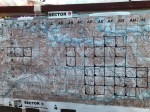
43 different cells of 2×2 km were covered (20 of the once, twenty twice and three three times)

Species recorded:

31x marmot
17x ibex
6x snow cock
1x argali
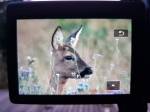
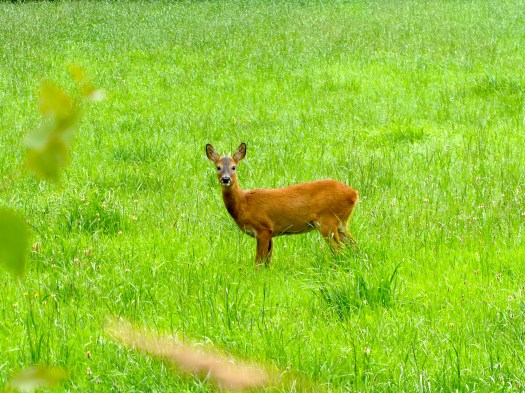
1x roe deer
3x Pallas’ cat tracks (TBC)
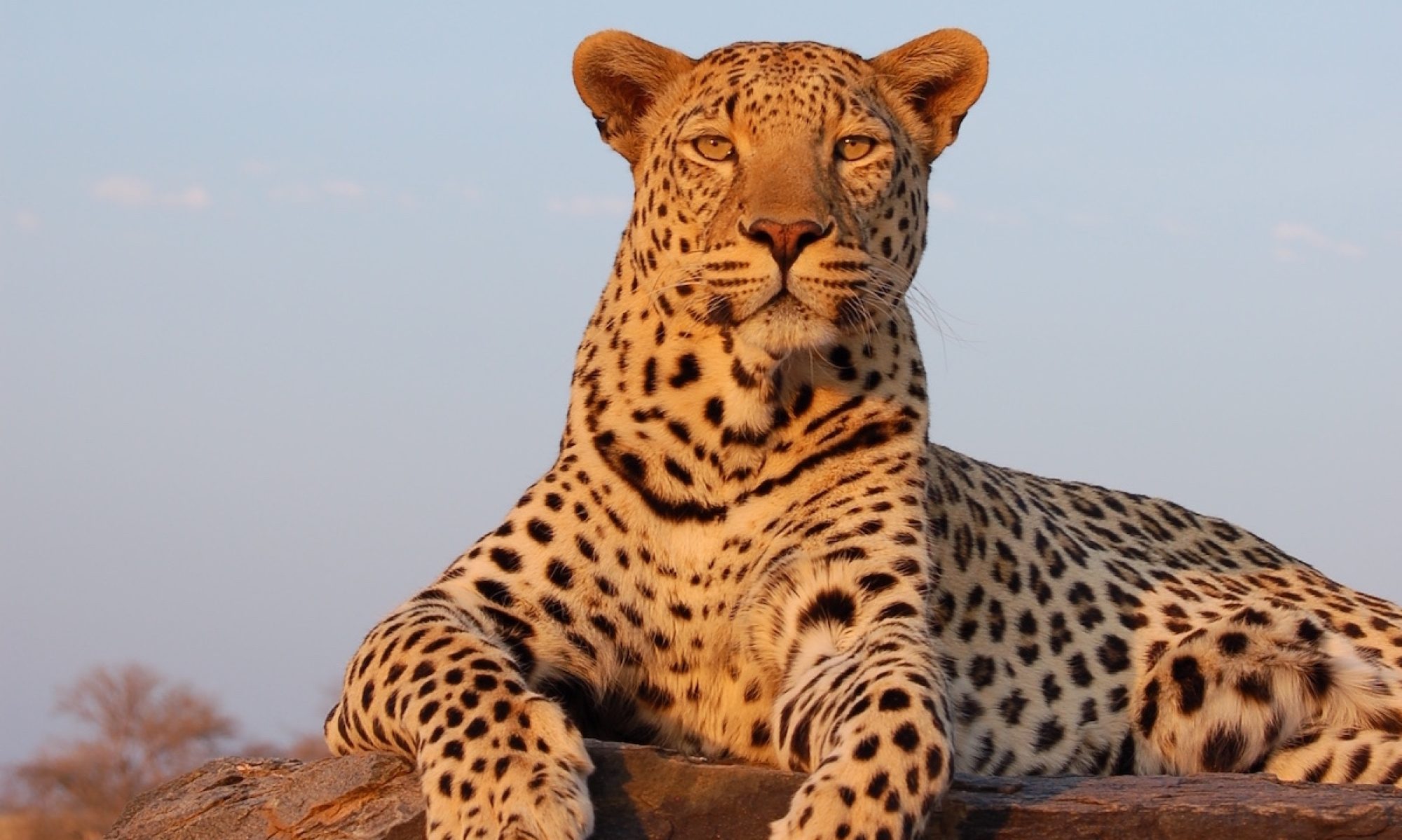
2x snow leopard (scat & tracks)

Birds:

45 species including rare sightings of imperial eagle and black kite.  Five new species added to the bird inventory: Eurasian harpe, brown accentor, little ringed plover, variable wheatear, rusty-trumped warbler.

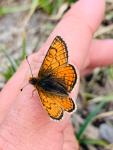
Petroglyphs & butterflies:

38 recordings that will be added to the database

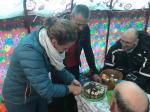
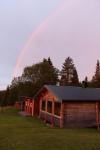
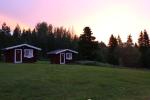
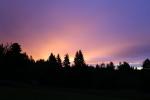
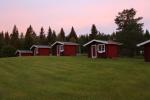
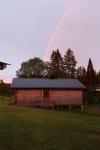
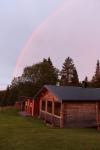
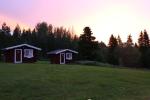
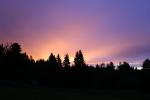
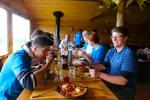
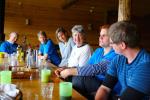
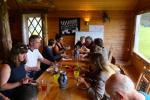
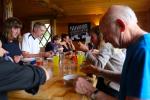
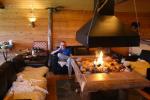
Besides all the work, a UNO game after dinner became a daily routine for some, others simply enjoyed a cold beer after a hot day and the quiet and peaceful atmosphere at camp with the orange sky turning into red just before sunset.

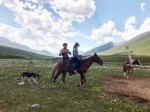
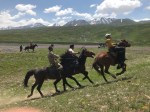
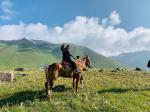
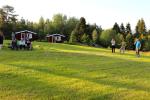
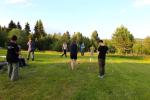
On Sunday (our day off), we experienced another highlight when herders from north and south Sussamyr valley got together for a horse game with us watching. All of this was organised through Bekbolot and Volodya (who is called “grandpa” by the local herders that have known him for years ;)). They did a great job with spreading the word a couple of days before, but none of us knew how many herders would join until we reached the playground at a place called “Aral” in the middle of Sussamyr valley. The scenery we found made us watch in awe: dozens of horses, men of all ages equipped with protectors for the game, dogs that got excited about what was going to happen soon. It was a great spectacle and the “price”, a headless sheep each team tried to pick up from the ground and lay in a specific spot to earn a point, was trampled and beaten thoroughly. After the game the meat was prepared at neighbour Djoldosh’s hut where we enjoyed a traditional Kyrgyz meal altogether. The upper valley winner team was around offering free horse riding … great fun, especially for Hilary and Christina that were gone for quite a while. The meal turned into a party that ended just before the sun set at base camp.

Thank you so much, team 2! I had a great time living and working with you for the last two weeks. Thank you for your contributions in so many ways. None of what we have experienced during the last two weeks would happen without you joining us. Remember the the three Ss: Safety, science and satisfaction – I think we made all of it work out very well as a team!

A day before I leave Kyrgyzstan, I am handing over to Amadeus who will be the expedition leader for groups 3 & 4. Good luck to you and all future participants!
Germany: Final entry

We’re done for this year and once again we have collected a shedload of data for Peter, so who better to summarise it all than the man himself

In words, we

  • covered 28 10 x 10 km grid cells
  • walked 743 km
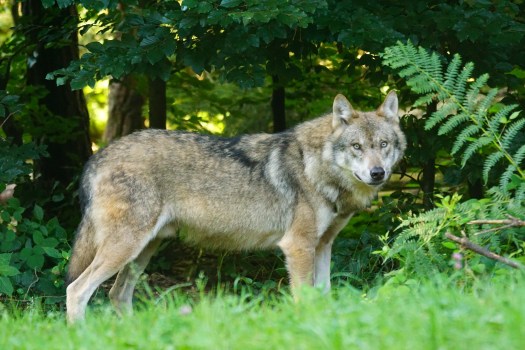
  • found 236 wolf scats
  • of these froze 156 scats for later dietary analysis by Lotte
  • of these put 26 in ethanol for DNA analysis
  • we also had two direct sights (one with and one without a photo taken)

As Peter says, this is a huge boost to the official wolf monitoring in Lower Saxony and we can all be proud of what we have achieved. Without the committment of you citizen scientists, only a tiny fraction of these data would have been collected.

Thank you to everyone. I’ll let some of you speak for the expedition as whole and add my personal gratitude and appreciation. The official report will be out within six to twelve months. I look forward to this and to perhaps seeing some of you again, in Germany or elsewhere on this beautiful, fragile planet of ours.

Matthias
Expedition leader

Group 1
Group 2

This slideshow requires JavaScript.


Germany: Three days in a row

Today is  our last day in the field. The last couple of weeks have flown by and our teams have outdone themselves: the top result was 26 km for one team in one day!

Thank you for the support of the many wolf commissioners who have helped us and given us a glimpse of what it means to be at the forefront of a returning predator to a country and a people that have forgotten how to live in side by side to a large carnivore.

When out with one of the wolf commissioners, he was called to look at a flock of sheep that had been attacked. The flock was not protected by the minimum recommended herd protection measures and our citizen scientists experienced first-hand how important herd protection is in a landscape to which the wolves have returned.

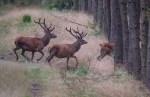
Other groups came across groups of majestic red deer and other animals in the forest.

Today we’re on the home straight and we’re full of suspense on what the final preliminary results of this year’s expedition will be. Stay tuned.

Germany: And so it continues…

On Saturday morning, we met ten keen, fresh-faced “ordinary” people from the UK, Germany, Russia, Luxembourg and the USA at Bremen airport. Two days and our training mill later, we have ten citizen scientists ready to go. Go forth, team 2, and bring back those nuggets!
 

Germany: Good job group 1!

Time flies. Group 1 of 2 is done already. We had a lot of exciting wildlife sightings during the week and we ended the last day of field work with 15 more samples and a good feeling of being successful.

Well done group 1! You can be proud of what you have achieved. 151 scats in total and an amazing number of 97 samples, which were will be used for diet analysis. Once more you have shown how significant the impact of citizen scientists can be, and is, for wolf monitoring in Lower Saxony.

We spent our last evening together travelling around the world including a Chinese tea ceremony, a quick detour into the monitoring of the black-footed ferret in Canada and some photo impressions of the wildlife in our direct neighborhood.

Safe journeys back group 1, to wherever you are going in the world. Thanks a lot and we hope we will meet again in the future, on an expedition or somewhere else on this beautiful planet.

See you tomorrow group 2!

(c) Theo Grüntjens
(c) Theo Grüntjens

Germany: Wolf nuggets and another sighting

Our overnight team is back from the Göhrde with 71 findings, including five DNA samples. Well done!

The others have not been idle either. On Wednesday they went to the Ebstorf region, accompanied by the local wolf commissioner and his four-legged companion. The aim was to solve the mystery of whether there were wolves in the area. Seven DNA samples and a total of 15 findings later, it was clear that they are present. And as if to emphasise their existence, at the end of the day, just a few meters from the car – a WOLF! It appeared on the forest path at some distance, looked briefly in the direction of our happy observers and walked calmly away. A memory that will last forever.

(c) Torsten Berg
(c) Torsten Berg
(c) Torsten Berg
(c) Torsten Berg

Germany: Two wolf pups and other adventures

We’ve been very busy in the field for the past couple of days.

Six of us went for an overnight trip to the Ghörde area with wolf commissioner Kenny of Kenners Landlust and produced a haul of 30 scats and a sighting of two wolf pups!
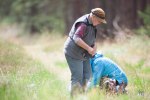
Others checked camera traps (no wolf on them) and/or went with wolf commissioner Theo: their haul was six scats.

Not bad at all for a Monday and Tuesday in the office!
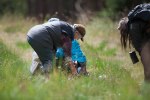
(c) Torsten Berg
(c) Torsten Berg
(c) Torsten Berg
(c) Torsten Berg
(c) Torsten Berg

Germany: Trained and off the leash

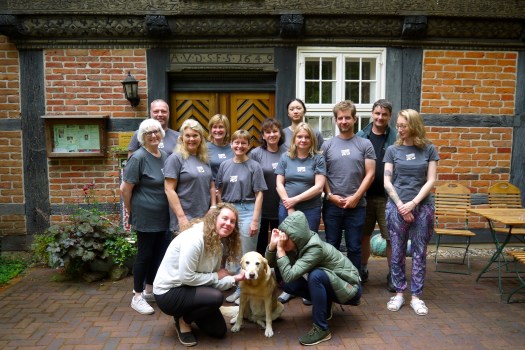
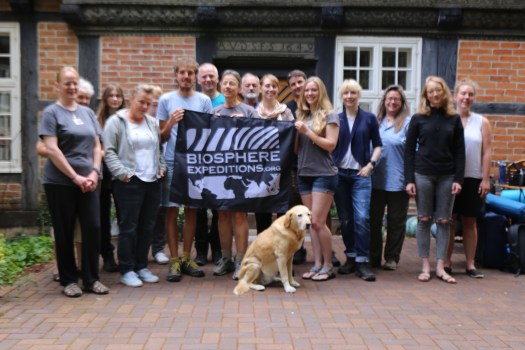
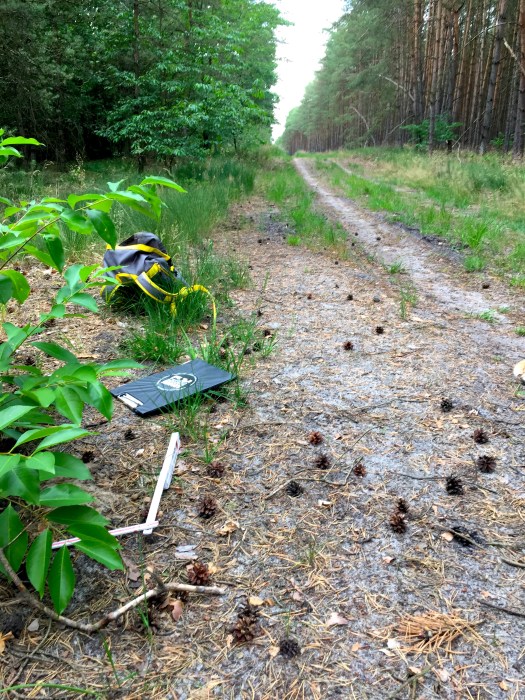
Team 1 of this year’s Germany wolf expedition now knows almost everything there is to know about wolves in Germany, GPSs, data collection, marking waypoints, creating tracks, and most importantly finding and collecting those wolf research nuggets otherwise known as scat (in clever) and poo (in the vernacular). Well done team 1 for absorbing it all in record time.

Our reward was “wolf alley” during our Sunday training walk near Meißendorf. A piece of heath and woodland near our base where a wolf pack has recently been active in all sorts of ways, including leaving so many nuggets that we ran out of time recording and collecting them all. Quite a gold digger’s haul already at the beginning of the expedition.

Our new base is great, pulling out all the stops and serving us lots of excellent food. Only the internet connection in this remote part of the internet developing world that is Germany leaves something to be desired.

This Monday morning, we are off Peter’s, the scientist, leash and looking forward to heading out in four small independent groups in search of more gold. Wish us luck and good hunting. Especially if it was run over by a tyre and separated.

Tien Shan: group 1 trailblazers

The first of four expedition groups has finished, with the team arriving back at Bishkek on Saturday late afternoon. Together with Bek and Beka, the local NABU guides, Guma (cook) and Volodya the citizen scientists Christa & Manfred, Simone & Uwe, Christiana, Lothar and Stefan (Germany), David, Kurt, Tessa and David (UK), Michele (US) and Guillaume (France) spent another wonderful week in the mountains full of research work, adventure and fun.

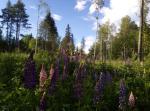
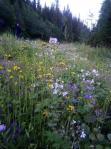
Right now the valley meadows are carpeted in flowers of all colours, everything is lush and green and moist. Most days are sunny and warm, streams of snowmelt feed the Karakol river and soon the sun will have cleared the Karakol pass road from snow. In the first week, our camp stood solitairy in the vast valley but it seems that on 1 July the summer pasture season started and the herders, one after the other, set up their yurts.  Herds of sheep, goat, horses and cattle came into the valley, our neighbour Kanat moved in a couple of days ago and invited Volodya, Guma and myself for a welcome visit.

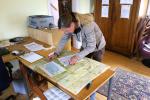
On our surveys we’ve been concentrating on snow leopard hotspots – locations where their presence has been proved in the past. Large snowfields still cover the upper parts of the side valleys, none of the former camera trap locations is yet accessible. Nonetheless, we set up four camera traps, two each in Kashka Tor and Isyk Ata as high up as possible. We went out in three or four smaller teams each day, recorded snow leopard prey species and other interesting mammals, birds and petroglyphs. Every evening during the daily review, Volodya assessed dozens of pictures, mostly of scat and footprints, and marked all findings in the overview map before taking over the completed datasheets. Our study area is divided into 2 x 2 km cells for statistical reasons, a scientific methodology that is used widely.

Here is a brief summary what we achieved over eight survey days:

  • We covered 36 cells, 11 of them three times, 15 twice and 10 once
  • We identified 34 bird species, four of them new additions to the bird inventory we have created over the years
  • There were 41 recordings of marmot, 6 sightings and 17 indirect ibex signs (scat, track), 4 recordings of snow cock, one of wolf and one of hare
  • We recorded 23 petroglyphs showing the historical significance of the area
  • We recorded 5 species of butterfly

We collected data on all but one day. That day we saw bad weather approaching from downvalley – thick and grey and unfriendly. We went out all the same and were rewarded for our folly with heavy rain and snowfall. Volodya’s team made it back to camp around 10:00 before they were hit (well done, Volodya!), team 2 & 3 returned shortly after, dripping wet from a very cold rain & snow shower. The kitchen yurt offered shelter, hot tea and a shot of vodka to warm up the body system while wet clothes, boots and rucksacks were spread around the stove in the drying yurt, which soon became a steaming sauna. When the rain stopped later on, the involuntary day at camp had become a full-blown party including dancing, singing and a hilarious yoga lesson led by Stephan later on.

Only team four (Christiana, Michele, Lothar and Bek) were still out on their mission in Pitiy valley, on the Eastern side of Karakol pass – or so we thought. No sign of them until 17:30 when, in accordance with our safety procedures, a search party went off to look for them. On the way up to the pass, we received a radio call from Christiana and returned to camp. And there they were telling about the adventures of getting wet during a river crossing, heavy snowfall and vain attempts to drive the car back up and over a pass on snow covered ground. Driving all the way around the mountain range was the only option to get back to camp, and that’s what they did: a full 6 hour drive! The team’s reunion was worth a celebration that lasted until late at night…

Thank you, team one for being the trailblazers and reccee team on this year’s Tien Shan expedition. Many thanks for your support, time, sweat and exceptional team spirit that made the last two weeks a unique experience. I hope you enjoyed it as much as I did. Safe travels to wherever you are heading. I hope to see you again some time.

Team 2: I am looking forward to meeting you on Monday morning at the Futuro Hotel.

Sweden: Picture and video addendum

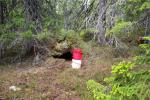
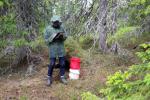
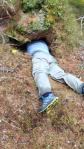
Here are some pictures and videos of the expedition. Thanks again everyone!