
Update from our South Africa biodiversity conservation expedition

We’re now well into our research routines during week two of group 1. Day and night car transects, bird ringing, honey bush surveys, camera trap servicing, data entry. Hot days are followed by dramatic temperature drops of 25 degrees every other day, but the African sundown never fails to impress us when we’re enjoying dinner at the boma with a view of the surrounding hills.
Biodiversity research: How to go about filling blanks on a map
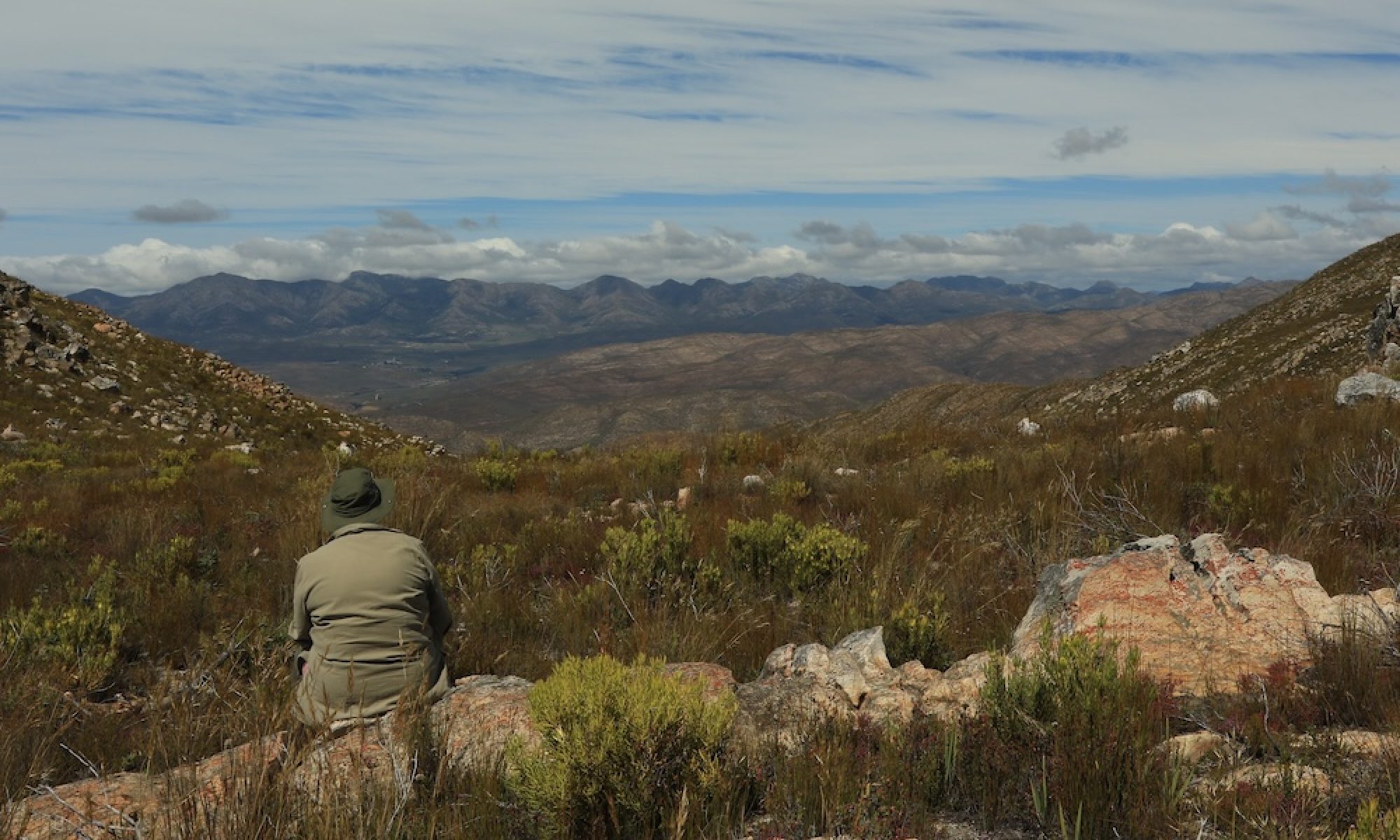
Take a team of two citizen scientist, equip them with a GPS, radio, Seek and iNaturalist mobile phone apps and send them off-track recording data. Make sure they wear proper hiking boots and carry a rucksack filled with water supplies and a lunch box. Provide a pick up point location and allow for 5-6 hours remote photo documentation work across hills, around rocky outcrops as well as well hidden in dense vegetation. Open the iNaturalist Blue Hill Biodiversity Project map, watch the number of plant and other species observations growing by the minute and dot by dot turning blanks into surveyed areas. This quite specific data collection activity is not only efficient but also great fun and most popular with the explorers amongst us.


Connecting with local people: Community day
A research expedition is not only about plants and wildlife. It is also about connecting with the local community and creating memories. Initiated by Alan and supported by our host Carol, we invited about a dozen kids of the Hartbeesrivier Primary School accompanied by their teacher to spend a day with us at Kouga View. The whole day including a game drive, picture slide shows, games, drawings and singing was organised by the team. What a fun day for all of us.


Getting stuck – and getting out!
Who would have thought that we’d get stuck in mud high up on a mountain saddle? As if steep terrain, rocks and narrow tracks weren’t enough of an off-road driving challenge… One minute we drive on solid, rocky ground and the next the car slides… and sinks. Soon after it became clear that the car wouldn’t make it out of the muddy slope by itself. Plan B: Get a rescue car to pull it out. That should have worked in theory only that the rescue car ended up stuck in the mud too. On to plan C: Walk back 3 km to Blue Hill and call it a day. Plan D: Organise a rescue operation the next morning: all hands on deck and a lot more horsepower on the ground. Nothing is impossible when a dedicated team works hand in hand!


Read also: First I second I third I fourth I fifth entry. All entries for the South Africa biodiversity conservation expedition.
Author: Matthias Hammer

Malika Fettak is half Algerian, but was born and educated in Germany. She majored in Marketing & Communications and is a qualified Systemic Coach & Trainer and passionate team leader. She joined Biosphere Expeditions in 2008, ran the German-speaking operations and the German office for some years and has led expeditions all over the world. She cares deeply about nature, the outdoors and the diversity our planet has to offer. She has travelled extensively, is multilingual, a qualified off-road driver, diver and outdoor first aider. More about Malika.