From our conservation holiday volunteering with lynx, wolves, bears and wildcats in the Carpathian mountains of Slovakia (http://www.biosphere-expeditions.org/slovakia)

Paul and Astrid (expedition leaders) collected two shiny new Discovery Sports in Vienna

vienna

and then met up with Tomas (expedition scientist) at the base camp here in the village of Svosov on Thursday.

team

We received a warm welcome from our host Frantisek who treated us with his hot herb tea. Since arriving we have been busying ourselves with expedition preparation, including sorting the kit and paperwork. It’s not been all work though! Tomas treated us to a showing of footage that he has been shooting over the 18 months for a new documentary on the wildlife of Slovakia – some amazing shots that I am sure he will be happy to show again once we are all gathered.

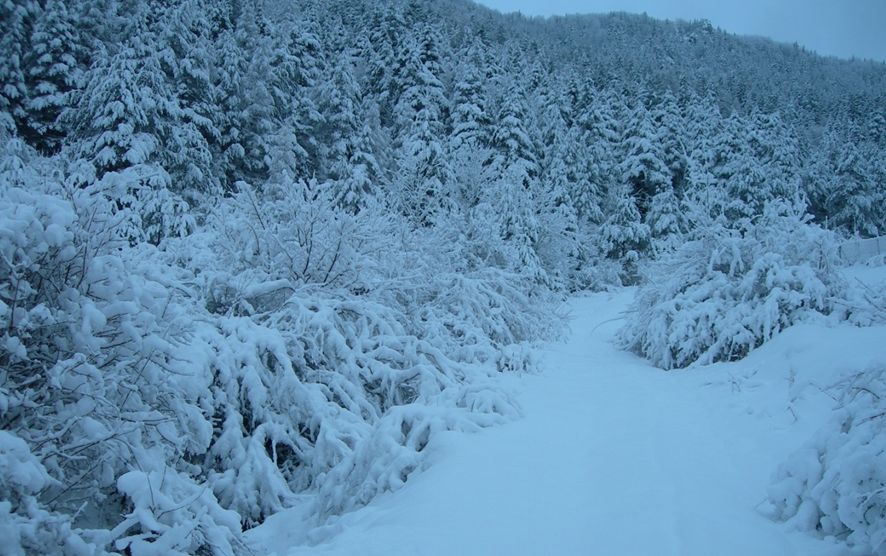
It snowed a lot yesterday, and again last night so we have 30 to 40 cm on the ground, which will be great for the tracking. Everything looks beautiful around base camp.

base snow

Today we will make a foray into the valley to see what the snow conditions are like there.

Paul will be getting the train to Bratislava at 04.35 in the morning (Sunday) for our rendezvous with the Slot 1 expedition members at 09:00. Then we have a three hour, 20 minute train ride back to Kralo’vany, which is 15 minutes in the expedition vehicles to the base. We are looking forward to meeting everyone on Sunday.

Continue reading “From our conservation holiday volunteering with lynx, wolves, bears and wildcats in the Carpathian mountains of Slovakia (http://www.biosphere-expeditions.org/slovakia)”

From our conservation holiday volunteering with lynx, wolves, bears and wildcats in the Carpathian mountains of Slovakia (http://www.biosphere-expeditions.org/slovakia)

Hello everyone! This is the first of a series of diary entries for the Biosphere Expeditions Slovakia 2015 expedition or for the full title: True white wilderness: tracking lynx, wolf and bear in the Carpathian mountains of Slovakia. I hope you are all as excited as I am with the anticipation of embarking on this adventure.

So let’s get the introductions out of the way: My name is Paul and I will be your expedition leader. Although I have led expeditions to Slovakia in previous years for Biosphere Expeditions, these were in the summer and studied the impact of wolf predation on the chamois population of the Low Tatra mountain range. I will be ably assisted by Astrid, a veteran of this very expedition for the last two years (she will be the one who heads off in the ‘correct’ direction from the base on the first day! Don’t worry though I am a fast learner!). Tomas is our expedition scientist with whom we will share interesting tales and who will guide us through our research objectives and methods during our initial training day. Then most importantly ‘you all’ without whom none of this would be happening, including some of you ‘coming back for more’ (so it can’t be that bad!).

Astrid and I are flying out from the UK to Austria tomorrow. Some kit is being packed in Germany as we speak (see below) and the rest is already in Slovakia.

kit

The German kit, Astrid and I will unite in Vienna with two brand spanking new Land Rovers tomorrow, kindly supplied by Land Rover Austria, and then we’ll push onto base, where we will meet with Tomas and our host Frantisek. We’ll then have a couple of days to prepare before one of us (probably Astrid) will meet group 1 at Bratislava main train station at 09:00, as per your dossier. Once in Slovakia, we’ll check our mobiles and send you our local numbers for emergency communication too.

The good news is that there is snow in the Veľká Fatra study site (see webcam http://www.panorama.sk/sk/sprievodca/webkamera-malino-brdo/2462) and the forecast is for more snow and subzero temperatures (https://www.meteoblue.com/en/slovakia/weather-veľká-fatra).

So I will leave you to carry on with your preparations (pack warm!) while we do the same at our end. If you are all packed and ready to go you can always fill your time watching ‘You Tube’ videos of how to turn around wearing snowshoes without face planting in the snow. Let the adventure begin!

Paul

Continue reading “From our conservation holiday volunteering with lynx, wolves, bears and wildcats in the Carpathian mountains of Slovakia (http://www.biosphere-expeditions.org/slovakia)”

From our working holiday volunteering with leopards, elephants and cheetahs in Namibia, Africa (http://www.biosphere-expeditions.org/namibia)

I received a couple of emails from previous team members asking to show pictures of what rain looks like here and I have attached them. (Evidently they did not believe me that it actually does rain here in November!)

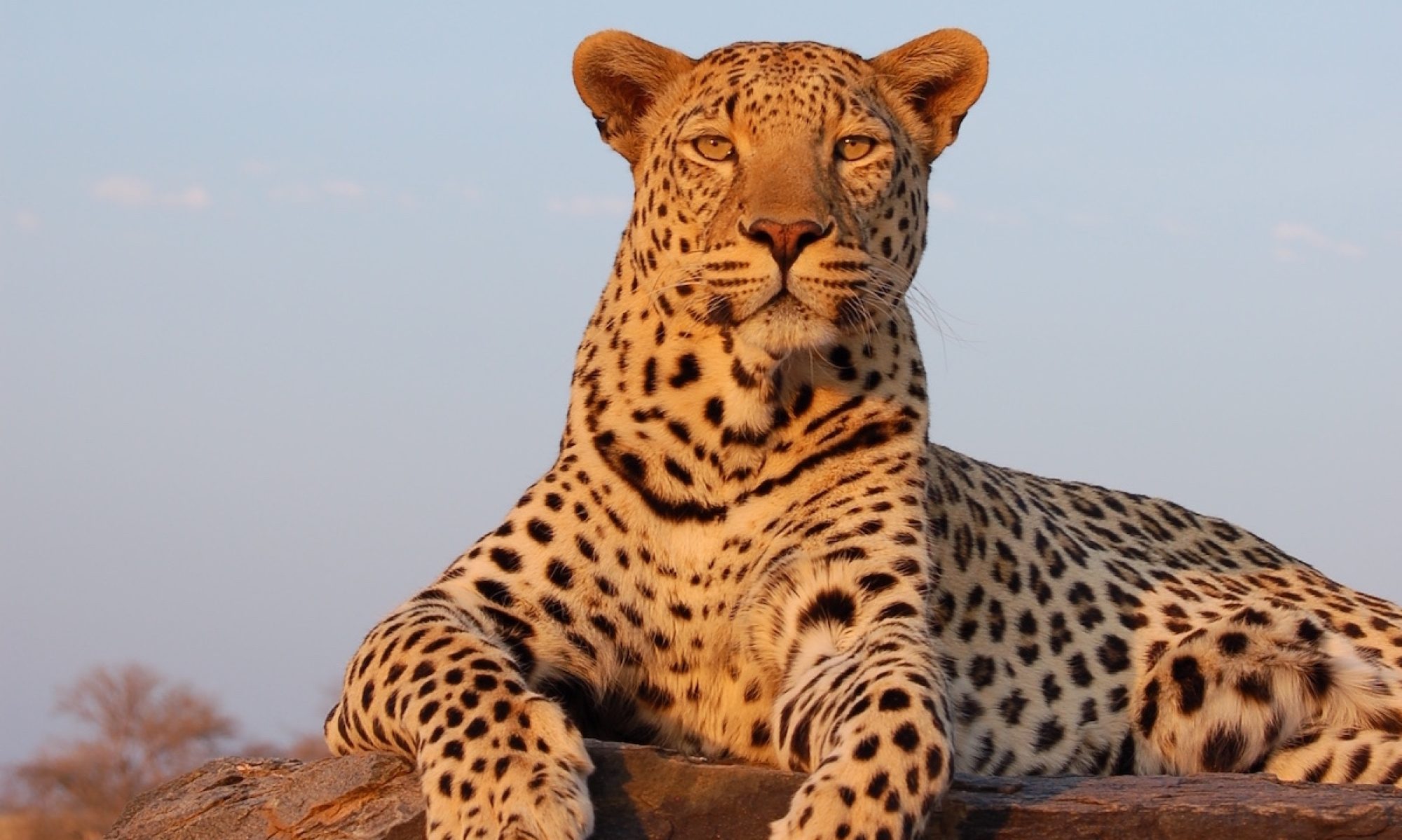
Wednesday Stuart, Sandra and Markus signed up for the all day camera trap team. They kept stumm about it all day, yet at briefing they practically burst with the news: they’d seen a leopard running away from them up in the mountains. Quite a lucky team!

Thursday was our vehicle game count, the last of the season with Biosphere Expedition. It was a terrific way to finish off the expedition – all three teams seeing record numbers of animals and getting to spend one last beautiful morning driving on Okambara. In the afternoon the team helped pack up the expedition – each year the first and last teams have the privilege of unpacking and packing the expedition kit and storing it until the next season.

I’ve also attached a picture of all the groups’ elephants sightings in 2014.

Team 6 has now left the farm, and that wraps up our Namibia expedition for 2014. A huge thank you to everyone who volunteered this year. It was great to meet you all and work alongside you. Your hard work, flexibility, willingness to get dirty and be Vera’s “arms and legs and feet” on Okambara has been immensely helpful. Thanks to you we captured three leopards this year and collared two. Vera’s scientific report on the 2014 expedition will be published in a few months.

Best wishes

Alisa Clickenger
Expedition leader

This slideshow requires JavaScript.

Continue reading “From our working holiday volunteering with leopards, elephants and cheetahs in Namibia, Africa (http://www.biosphere-expeditions.org/namibia)”

From our working holiday volunteering with leopards, elephants and cheetahs in Namibia, Africa (http://www.biosphere-expeditions.org/namibia)

One of the things I love about working in Namibia is that when you start your day, you never know how it’s going to end. Sunday I got wet walking to briefing, something that has never happened to me before here in Namibia because normally we work in the dry spring/summer season. Tuesday night I drifted off to sleep to the deafening sound of all the frogs that had come out to call for mates with the rains.

Saturday was the day off and the teams volunteered to check the box traps. Unfortunately they were all empty. Sunday morning Stuart, Markus, Heidi, Sabine and Karen all helped Vera move the box trap from Frankposten up to Bergposten. We placed the trap where Team 4 had installed one, simply called Bergposten 2. Team 6 was hyper organised and had the trap out of the ditch and up on the track waiting for the truck when Vera arrived. They were back to camp in record time, thanks to said organisation plus the previous work Team 4 did cutting shrubs.

The elephant team did not find the elephants on Monday, but the box trap team did on their way back from the lodge, so we know they are still on the farm 😉 The lead cow’s VHF collar is barely giving a signal – very often we have to be within 300 metres or less to pick up any beeps at all.

Monday Markus and Sandra changed the trap meat in the morning, and Stuart, Christaine and Sabine changed it in the afternoon. Rough work in the afternoon for our resident vegetarians when the intestines we started using in the morning to lay a scent trail to our box traps had become fully ripe in the morning and afternoon sun.

Because of the rains all waterhole teams are reporting seeing very few animals. Tuesday we figured out why: we saw lots of puddles of water around the farm, so the animals do not have to go to the water holes where they are extremely vulnerable. Rather, they can grab a drink along the way and not have to congregate in the “danger zone”. Our territorial sable bull doesn’t seem to consider the bush camp water hole a threat, however…

_G8Q8628 IMG_6181 IMG_6191 IMG_6229

_G8Q8603

Continue reading “From our working holiday volunteering with leopards, elephants and cheetahs in Namibia, Africa (http://www.biosphere-expeditions.org/namibia)”

Update from our SCUBA diving volunteer opportunity & conservation holiday on the coral reefs of the Musandam peninsula, Oman (www.biosphere-expeditions.org/musandam)

On Wednesday, a beautiful day of surveying, punctuated by two minke whale sightings, the first was at 09:00 on our way to our first survey site. They were far from our boat, so we grabbed masks and snorkels and hopped into the speedboat for a closer look. We followed them at a safe distance for about half an hour watching them blow and dive until they disappeared into the deep.
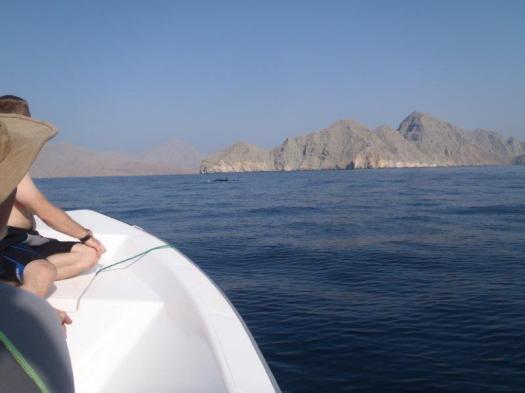
minke whale, Kriss Brandstrom

The surveys were both at Osprey Point, and by the afternoon the swell was so strong that Jean-Luc was given the nickname of Sultan of Swing in reference to the laying of the transect line. The substrate team, Catherine and Nadege, had an equally difficult time reeling it in, but although the team were bashed and tumbled by the waves, the stories were well recounted later!

The surveys on Thursday clarified our hypothesis that the further into the MPA we go, the less coral cover there was due to the environmental conditions, increased siltation, and restricted water movement. Nasser, Kristoffer and Hari went out on the speedboat and documented illegal fishing practices in the area, whilst the rest of the team entered data. The restricted water movement did, however, have a bonus feature in that huge amounts of phosphorescent phytoplankton congregated in Khor Nadj, our overnight mooring area, and with thousands of fish coming in to feed after the moon had set, we were treated to an amazing phosphorescent fish display. It was so beautiful that some of the team were tempted to join in, so donning masks and fins added to the incredible light show – a once in a lifetime experience!

exploring the MPA

Sailing into the remnants of a storm, the sky was hazy and the sea lumpy as we reached our first survey site of Friday, Paradise Point. The coral, though, was good, and the fish life abundant. The afternoon site, named Son of Gargoyle was even better, with ancient porites mounds and prolific grouper. The survey of the MPA was over (for this year at least) and we steamed round the northern tip of the peninsula accompanied by two Indian ocean humpback dolphins, who bow rode with us for a while.
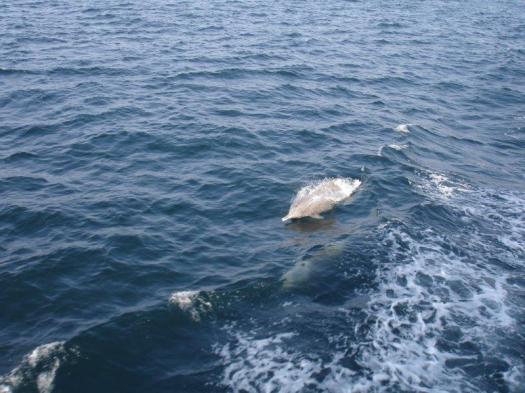
Indian ocean humpback dolphins

Back in Khumsar, as the Mosques called to prayer, we decided to set foot on dry land and visit the village nestled in the rocks with no road in or out, accessible only by boat. It was a great excursion, and gave a little insight into the lives of the local people here – a community reliant on the sea.

excursion to Khumsar

We were woken today, Saturday, at 04:00 by the waves slapping the side of the boat. Nadege, worried for her diving gear, went up on deck and rescued wetsuits and bikinis from being blown overboard. Dawn yoga was a windy affair, and breakfast was tricky with tea literally being blown out of the cups, but we made it back to Khasab, even managing to stop for a dive at Pipi Beach along the way before leaving our trusty survey vessel, the MS Sindbad, after lunch.

Another expedition over, but thank you for a wonderful week, rich in laughter and learning, new experiences and great memories – no one who saw will ever forget the sight of a terrified Hari trying to escape from an innocent turtle! We look forward to Jean-Luc’s report and are grateful for everyone’s involvement. It will be great to see how our understanding of the MPA has developed by this time next year.
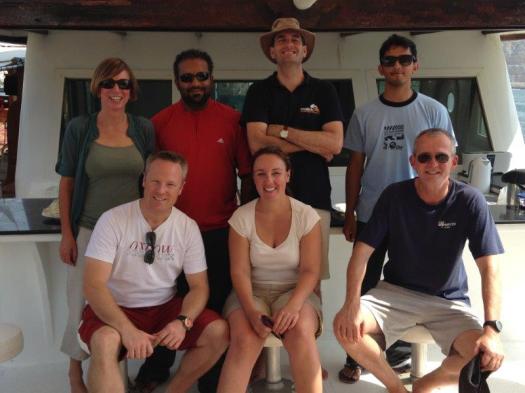
the team

Thank you to everyone who supported this project. Special thanks to the Oman Ministry of Tourism for supporting our efforts to conserve coral reefs through tourism.

logo_sultanate_of_oman

Continue reading “Update from our SCUBA diving volunteer opportunity & conservation holiday on the coral reefs of the Musandam peninsula, Oman (www.biosphere-expeditions.org/musandam)”
Update from our SCUBA diving volunteer opportunity & conservation holiday on the coral reefs of the Musandam peninsula, Oman (www.biosphere-expeditions.org/musandam)

After Saturday night in the desert (at the Dubai Desert Conservation Reserve, our Arabia project partners), we returned to Dubai on Sunday morning, collected the team and set off to the Musandam peninsula.

Surrounded by impressive sandstone mountains, our vessel – the MY Sindabad – took us to our first dive at the glorious Pipi Beach on Sunday afternoon. Dwarfed by massive coral stands, several hundered years old, the team checked out their diving kit and skills and gazed in awe at the underwater scene.

After that great introduction to the Musandam’s underwater world, the team knuckled down to some serious Reef Check training, and with 5 lectures, 2 dives and a test (with 100% pass rate – well done everyone!), the second day (Monday) of the expedition was successfully completed, and the MY Sindabad continued its journey around the peninsula.

This slideshow requires JavaScript.

Now firmly in the MPA (marine protected area) that was partly brought about by Biosphere Expeditions survey work here, we have begun to have a look around. Dive sites vary from heavily silted to abundant coral and fish life. For example, our ID test dive on Tuesday at Osprey Point (complete with osprey nest and feeding chick), was rich in diversity.

Gargoyle Cliffs was the site of our mock survey, and with a strong surge buffeting us, the team collected its first data set. It was more challenging than Nadege and Kristoffer, who were undertaking the fish survey, had imagined it would be, with hundreds of snappers to count whilst avoiding being smashed against the corals!

So, with Reef Check training completed, and a fully qualified EcoDiver team now in action, some decided to celebrate with a night dive.  Nasser and Kristoffer saw (and documented), a cuttlefish spawning – a very rare sight indeed.

This morning, after dawn yoga, and after we said goodbye to Matthias, Kathy, Liesl, Lukas and Sophie, we start our surveys proper, and will endeavour to investigate as many sites in the MPA as we can.

Continue reading “Update from our SCUBA diving volunteer opportunity & conservation holiday on the coral reefs of the Musandam peninsula, Oman (www.biosphere-expeditions.org/musandam)”

From our working holiday volunteering with leopards, elephants and cheetahs in Namibia, Africa (http://www.biosphere-expeditions.org/namibia)

Team 6 brought the rain. Not the average almost-evaporates-before-touching-the-ground-rain, but full-on rain. With thunder, lightning and the whole shebang. With nine of the team members out at the 4WD training, we sought shelter under the roof at the scientists’ compound. They have a metal roof in their lapa and it was spectacular. Back at bush camp, merely 6 kms away, Heidi had been out checking box traps with Ligeus and wondered what all the fuss was about because no rain fell there. Such are the vagaries in the non-rainy season in Namibia.

Team 6 also brought the rhinos, two of them at their first dinner here in camp. The rhino pals were so comfortable near us, they laid down for a while, so we got a really nice front-row encounter in the comfort of our own home.

Monday was our box trap training up at the CS House box trap, and afterwards we split into three groups to check all the traps. Markus, Astrid and Christiane came with me and got the grand tour of the farm on the first day, because we were responsible for checking the Lodge trap (where we found hyaena prints walking just beside the trap) and the Mountain trap (where I forgot there is a camera trap so there will be nice pictures of my lower legs for the next data entry team to see).

This slideshow requires JavaScript.

Today, Wednesday, the teams are working independently and enjoying the fruits of their two days of training. First order of business is changing the meat in the box traps, so it will be interesting to hear at tonight’s briefing how they’ve combined all their navigational, equipment, box trap and data sheet training for a successful day in the field. Most volunteers comment on how they cannot believe that after two days of training that we let them loose to work on their own in the field. Yes, we trust them. All the volunteers are so important, because we’re able to do so much more work all over the farm.

This morning the elephants gave Markus, Astrid, Christiane, Karen and I a merry chase. We searched for 4+ hours with no luck. We did telemetry in the north, south, east and west, and not a single beep. Yes, we even had fresh batteries in the telemetry receiver. Christiane and Markus even climbed up the Boma treehouse to have a listen. Well, no data are still data, so we have to record those as well.

On the way back from searching for the elephants, our team came across a large group of giraffe. Take a close look at the horns on the wee one. You’ll notice that they are crooked. That’s because when giraffes are born their nubs aren’t yet connected to their heads. Over time they grow and adhere to the animal’s head, becoming fully fused at 4-4.5 years (~7 years in females). But at birth they are loose and lie flat so they’ll ease through the birth canal.

Continue reading “From our working holiday volunteering with leopards, elephants and cheetahs in Namibia, Africa (http://www.biosphere-expeditions.org/namibia)”

From our working holiday volunteering with leopards, elephants and cheetahs in Namibia, Africa (http://www.biosphere-expeditions.org/namibia)

Thursday was our weekly vehicle game count. What a difference a week can make. Last week we were frozen solid on the backs of the trucks and counting game like crazy, and this week the weather was much warmer and the animal counts much less. The mountain team consisting of Mark, Helen, Uli and Ashley didn’t see much game on the game count, but they did see a lot of tracks. In fact, one track they followed led them straight to out box trap! There the leopard put on paw in the trap, then proving how very clever they are decided it was a bad idea and stepped out again without activating the trap. We can’t wait to see what leopard it was when we view the camera trap pictures!

Elephant observation teams were extremely unlucky after the first encounter. We scoured the farm for four days never finding them, getting random beeps but never seeing them. Finally on day 5 we went out and found followed their signal (and them) to the Sandposten waterhole. We had a lovely encounter for more than an hour, unfortunately never observing any feeding behaviour because they were so absorbed in the water. What was very interesting to all of us was how they chased off the cows: they blow water at them!

elephants

Vera’s game count team of Mara, Paul, Emma and Bruce didn’t see much game at all according to Helen and Uli doing data entry to my right, but they reported seeing the rhinos on the way back home. My team of Louize, Di, Vibeke and John on the east side of the farm didn’t see the bat eared foxes this week, but we did see a plentiful amount of the beautiful and delicate Steenbok. (Our data sheets were so full we didn’t want to brag that we also saw the rhino family group plus the big male.) We also counted among our animals a sable antelope.

evening light

The rest of the week’s activities hummed along swimmingly well. The teams worked hard even though it has been quite hot these past two weeks. We’ve changed around the activities a bit so that we’re doing the more sedentary activities in the afternoons, but for some activities like box traps and changing the bait meat in the traps, it’s just a hot, sweaty, smelly business no matter what time of day you do it.

team 5

A hearty thanks goes out to all the Team 5 volunteers. We wish you safe travels home.

Team 6? See you at the Josephine Gate on Sunday!

Continue reading “From our working holiday volunteering with leopards, elephants and cheetahs in Namibia, Africa (http://www.biosphere-expeditions.org/namibia)”

Update from our SCUBA diving volunteer opportunity & conservation holiday on the coral reefs of the Musandam peninsula, Oman (www.biosphere-expeditions.org/musandam)

Here’s a paragraph from our scientist about the forthcoming expedition:

The Marine Conservation Society (MCS) will be joining forces with Biosphere Expeditions to undertake the first Reef Check monitoring trip to the two new Musandam (northern Oman) Marine Protected Areas (MPAs) from 26 October – 1 November 2014. The two MPAs (encompassing two inlets – Khor Najd and Khor Hablain – see http://goo.gl/maps/XvZnG) were set up last year, and are detailed in our last expedition report (see www.biosphere-expeditions.org/reports). Biosphere Expeditions has been working with MCS, other regionally-based scientists and government officials over the past five years to undertake systematic surveys of local reefs. Our surveys this year will take in assessments of coral health, fish populations, and fisheries indicator species (such as the regionally important grouper) both inside and outside the new MPAs. The MPAs will restrict all forms of fishing other than handlining.

Musandam surveys 2014

Continue reading “Update from our SCUBA diving volunteer opportunity & conservation holiday on the coral reefs of the Musandam peninsula, Oman (www.biosphere-expeditions.org/musandam)”

From our working holiday volunteering with leopards, elephants and cheetahs in Namibia, Africa (http://www.biosphere-expeditions.org/namibia)

Last Friday Team 5 set up a new box trap at the south fence. Last year’s volunteers reading this diary might know its location on the ridge on the fence south of JM House where we set the camera trap. I don’t think I’ve shared the attached camera trap picture yet. While it’s not the target species of this project, it is an awfully cute picture.

IMG_0254

With the help of IZW scientists, Team 5 also set up a new box trap in the mountain area of Okambara this past week. We’ve stepped up our trapping efforts as you can tell and have borrowed two traps from the IZW in order to catch as many leopards as possible. There are still several females we are targeting to get collared, and we wouldn’t mind re-capturing the leopards we caught last year in order to refresh their collars.

So Team 5 now is lucky enough to have a total of six traps check. Traps are far enough apart that we’re spending considerable time driving all over Okambara both mornings and evenings, and sometimes we split up the box trap duties and combine them with other activities in order to make sure we’re operating at maximum efficiency.

Team 5 has been super helpful not just on science-related tasks and I have to commend them for their fantastic “dig in and do it” attitudes. For example; three nights ago Emil the male rhino came along and thought the fence surrounding our lapa was a pretty good place to get a good scratch. Unfortunately, the fence toppled inwards and left a lovely hole for every animal coming to the waterhole to crawl through, so Bruce, Ashley, John, Paul and Mark put their heads together, put their backs into it and got it fixed. Bruce, Ashley, John and Paul then went out with Ligeus to gather firewood too.

_G8Q8260 IMG_6104

Continue reading “From our working holiday volunteering with leopards, elephants and cheetahs in Namibia, Africa (http://www.biosphere-expeditions.org/namibia)”