From our conservation holiday volunteering with lynx, wolves, bears and wildcats in the Carpathian mountains of Slovakia (http://www.biosphere-expeditions.org/slovakia)

Paul and Astrid (expedition leaders) collected two shiny new Discovery Sports in Vienna

vienna

and then met up with Tomas (expedition scientist) at the base camp here in the village of Svosov on Thursday.

team

We received a warm welcome from our host Frantisek who treated us with his hot herb tea. Since arriving we have been busying ourselves with expedition preparation, including sorting the kit and paperwork. It’s not been all work though! Tomas treated us to a showing of footage that he has been shooting over the 18 months for a new documentary on the wildlife of Slovakia – some amazing shots that I am sure he will be happy to show again once we are all gathered.

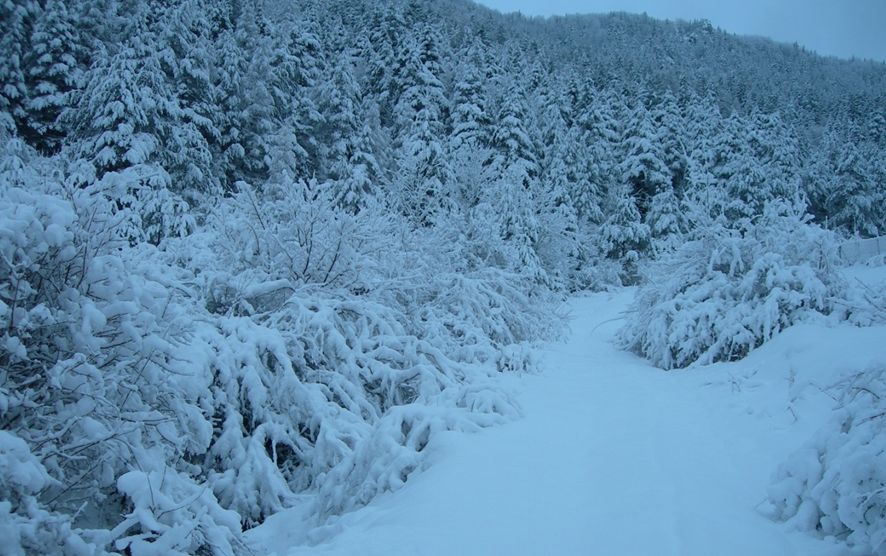
It snowed a lot yesterday, and again last night so we have 30 to 40 cm on the ground, which will be great for the tracking. Everything looks beautiful around base camp.

base snow

Today we will make a foray into the valley to see what the snow conditions are like there.

Paul will be getting the train to Bratislava at 04.35 in the morning (Sunday) for our rendezvous with the Slot 1 expedition members at 09:00. Then we have a three hour, 20 minute train ride back to Kralo’vany, which is 15 minutes in the expedition vehicles to the base. We are looking forward to meeting everyone on Sunday.

Continue reading “From our conservation holiday volunteering with lynx, wolves, bears and wildcats in the Carpathian mountains of Slovakia (http://www.biosphere-expeditions.org/slovakia)”

From our conservation holiday volunteering with lynx, wolves, bears and wildcats in the Carpathian mountains of Slovakia (http://www.biosphere-expeditions.org/slovakia)

Hello everyone! This is the first of a series of diary entries for the Biosphere Expeditions Slovakia 2015 expedition or for the full title: True white wilderness: tracking lynx, wolf and bear in the Carpathian mountains of Slovakia. I hope you are all as excited as I am with the anticipation of embarking on this adventure.

So let’s get the introductions out of the way: My name is Paul and I will be your expedition leader. Although I have led expeditions to Slovakia in previous years for Biosphere Expeditions, these were in the summer and studied the impact of wolf predation on the chamois population of the Low Tatra mountain range. I will be ably assisted by Astrid, a veteran of this very expedition for the last two years (she will be the one who heads off in the ‘correct’ direction from the base on the first day! Don’t worry though I am a fast learner!). Tomas is our expedition scientist with whom we will share interesting tales and who will guide us through our research objectives and methods during our initial training day. Then most importantly ‘you all’ without whom none of this would be happening, including some of you ‘coming back for more’ (so it can’t be that bad!).

Astrid and I are flying out from the UK to Austria tomorrow. Some kit is being packed in Germany as we speak (see below) and the rest is already in Slovakia.

kit

The German kit, Astrid and I will unite in Vienna with two brand spanking new Land Rovers tomorrow, kindly supplied by Land Rover Austria, and then we’ll push onto base, where we will meet with Tomas and our host Frantisek. We’ll then have a couple of days to prepare before one of us (probably Astrid) will meet group 1 at Bratislava main train station at 09:00, as per your dossier. Once in Slovakia, we’ll check our mobiles and send you our local numbers for emergency communication too.

The good news is that there is snow in the Veľká Fatra study site (see webcam http://www.panorama.sk/sk/sprievodca/webkamera-malino-brdo/2462) and the forecast is for more snow and subzero temperatures (https://www.meteoblue.com/en/slovakia/weather-veľká-fatra).

So I will leave you to carry on with your preparations (pack warm!) while we do the same at our end. If you are all packed and ready to go you can always fill your time watching ‘You Tube’ videos of how to turn around wearing snowshoes without face planting in the snow. Let the adventure begin!

Paul

Continue reading “From our conservation holiday volunteering with lynx, wolves, bears and wildcats in the Carpathian mountains of Slovakia (http://www.biosphere-expeditions.org/slovakia)”

From our desert expedition volunteering with oryx and wildcats in Arabia (http://www.biosphere-expeditions.org/arabia)

Well that’s another Arabia expedition over and a lot of valuable data collected, which will be thoroughly analysed over the next few weeks and months to go into this year’s expedition report. The team finished surveying their quadrants yesterday and gathered up all the live traps (aimed at sand foxes and Gordon’s wildcats), rodent traps and camera traps from throughout the reserve on one final drive-around.

Unfortunately there were no more captures in the live traps, but there was a lot of evidence of fox activity around the traps and one team did see cat tracks on Thursday.

There were more captures of Cheesman’s gerbils in the rodent traps, which suggests that their population is at a good level, which is important as they are a major food source of the Gordon’s wildcat and eagle owls. We were certainly made aware of the eagle owls’ presence during the last two nights with incessant hooting in the nearby ghaf trees!

The camera traps photographed a lot of oryx and two Arabian red foxes, but no Gordon’s wildcat. This does not mean that there are no wildcats, but it reinforces the estimate of just how rare they are.

The initial summary of the sightings in the quadrant surveys indicates that the populations of Arabian gazelles and sand gazelles are good and the health of the oryx herd is really good, based on the fact that they are now breeding, which they have not really done over recent years. Each herd recorded had several calves and one herd had eight.

On Thursday afternoon (the hottest day of the week at 36°C), we were joined by the reserve’s botanist, Tamir, and Head of Conservation, Greg, to be shown the new drone. A flight was planned covering the area around our camp, which is being surveyed by air to assess the vegetation cover and type. We were all able to watch the drone being launched and fly transects backwards and forwards looking like a big bird and sounding like a very distant mosquito.The DDCR scientists are very excited about this new development in the technology that can be used to help them do their jobs with minimal impact on the habitat and wildlife.

So we said our thanks and farewells to the team this morning and hope to see them again on future expeditions. Many thanks also to the DDCR and the scientists for another great expedition and we look forward to 2016 by which time a few Arabian wolves will hopefully have been introduced into the reserve and we’ll have even more work to do…

Thanks to all our participants. Your work has become an integral part of conservation efforts in Dubai. You could have shopped, shopped, shopped, but instead you spent a week in the desert surverying, surveying and surveying. Well done and thank you so much.

Kate

This slideshow requires JavaScript.

Continue reading “From our desert expedition volunteering with oryx and wildcats in Arabia (http://www.biosphere-expeditions.org/arabia)”

From our desert expedition volunteering with oryx and wildcats in Arabia (http://www.biosphere-expeditions.org/arabia)

The team have now settled into the daily routine, which is firstly checking the cat/fox traps and rodent traps that they set up on Sunday followed by surveying three 2 x 2 km quadrants of the reserve on foot with the help of binoculars, spotting scopes and range finders. In the evening the teams enter their data onto the acientist’s computer to be analysed at the end of the expedition.

After two full days of surveying we have sighted most of the study animals – oryx, Arabian gazelles, sand gazelles, Arabian red fox, Mcqueen’s bustard and lappet-faced vulture. The biggest difference we have noted, compared to last year’s expedition, is the presence of lots of oryx calves, some only a couple of weeks old, which is an indicator that the oryx population is thriving. The photo is of one herd’s young on top of a sand dune near one of the tracks we drive on to get around the reserve.

The northern team (Kate, Melanie, Neil and Andre) had a live capture yesterday morning of a black and white ferral cat (see picture). These are the biggest threat to the endangered Gordon’s wildcat due to interbreeding and competition, so this cat has now been taken outside the reserve.

Almost all of the team members have now had a rodent capture in the smaller traps. We are assessing the rodent population, because it is the food source of the Gordon’s wildcat and Pharoah’s eagle owl, but is also being hunted by the Arabian red foxes. In the pictures Jörg is about to handle a Cheesman’s gerbil (yes, that is it’s name) to discover its sex and body measurement and mark it before re-releasing. Well, this was the plan but the gerbil had a different idea and ran up Jörg’s arm and out of the trap before he could get a proper grip!

There are two and a half more days left to complete the survey of the reserve before we retrieve the live and camera traps and get an overview of the data we have collected. In the meantime we are enjoying our long sandy survey walks in the warm sunny weather and it seems too soon to be thinking about the end!

This slideshow requires JavaScript.

Continue reading “From our desert expedition volunteering with oryx and wildcats in Arabia (http://www.biosphere-expeditions.org/arabia)”

From our desert expedition volunteering with oryx and wildcats in Arabia (http://www.biosphere-expeditions.org/arabia)

Just a quick note to update a few things relating to the expedition. We now have confirmation from the local vet that he will come out on Sunday to assist our three groups to dart and radio collar three individual oryx.

This slideshow requires JavaScript.

There will be a local photographer here while we are working (a friend of the scientist) who is going to make a short film of the expedition to put to music. He will use a GoPro camera and a drone to take action shots of us driving around the reserve and walking in the dunes in addition to filming the study animals in their natural habitat. He has offered to do this purely to support the conservation activities, so the film will be made available for Biosphere Expeditions to use.

Looking forward to meeting the team at 09:00 tomorrow morning for the start of the expedition!

Continue reading “From our desert expedition volunteering with oryx and wildcats in Arabia (http://www.biosphere-expeditions.org/arabia)”

From our desert expedition volunteering with oryx and wildcats in Arabia (http://www.biosphere-expeditions.org/arabia)

Last night Malika and I spent our first night sleeping under the stars at our base camp in the Dubai Desert Conservation Reserve (DDCR). We planned an early night and a lie-in after our long journeys and were woken by the loud dawn chorus at 6.30 – during the expedition this won’t happen because the expedition team will be the early birds!

Sunset

Early morning is the best time to start our research work as we are more likely to see the study animals and we will need to free any animals that may be caught in our live traps as soon as possible to minimise any (heat) stress to them.

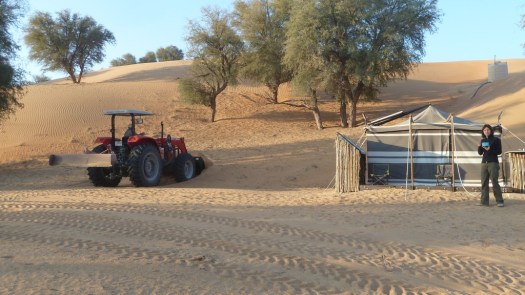
This morning the workers of the DDCR came to prepare an area for our Bedu and then they erected it in record time while we were away from camp collecting all the food for the expedition.

P1070571 (2)

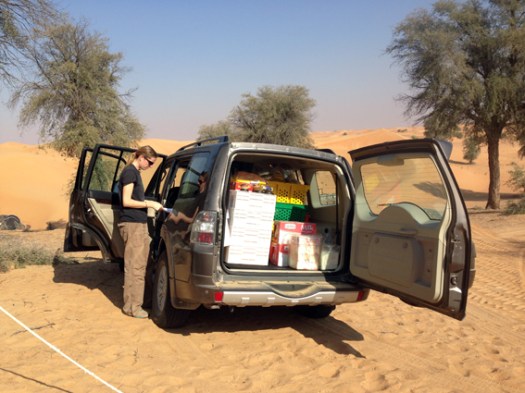
The car was so full of food I think we, like the oryx, will be well fed while we are in the reserve.

food car

This year there will be no body condition scoring of the oryx because the last survey carried out a few months ago by the local scientists showed that they are now all in good condition. Still, we will have plenty to do with the new tasks I mentioned in the last diary entry and if we get time during the expedition, we may even get a chance to fly a drone – the latest piece of equipment to arrive at the DDCR for use in their research work.

The rest of this week we will be busy preparing our equipment and datasheets and setting up camp ready for the arrival of the team on Saturday – no more lie-ins for us!

Continue reading “From our desert expedition volunteering with oryx and wildcats in Arabia (http://www.biosphere-expeditions.org/arabia)”

From our desert expedition volunteering with oryx and wildcats in Arabia (http://www.biosphere-expeditions.org/arabia)

Hello everyone, happy new year and welcome to the first diary entry for Biosphere Expeditions’ fourth Arabia expedition taking place in January 2015. My name is Kate Fox and I will be your expedition leader for this project along with Malika Fettak. We were both in Arabia almost a year ago and are very much looking forward to returning to continue with this valuable research work.

At the moment I am in West Wales (cold and windy), preparing paperwork and equipment, but next Monday I will be flying to Dubai to meet up with Malika for more preparation work in the Dubai Desert Conservation Reserve (currently 27°C and sunny).

On this expedition we will continue to survey and monitor the endangered Arabian oryx and other species in the reserve including sand fox and extremely elusive Gordon’s wildcat. Our survey techniques include setting live traps and camera traps and using GPS to navigate around the reserve by car and on foot – a good chance to burn off all those excess calories after Christmas, tramping up and down sand dunes for several hours a day! Live traps will be set up not only targeting sand foxes, but also a variety of smaller rodents since not much is known about their presence/absence in the DDCR and the behaviour of some of them. We will record everything we see, whether it is the study animals themselves or their tracks in the sand. For the first time during this expedition, we will also be darting Arabian oryx and attaching radio collars to monitor their movements. Three collars are waiting to do their job. The data delivered from the collars will help to build up a picture of their movements and behaviour, how far each herd ranges and what their preferred feeding places are.

Keep an eye out for our next diary entry from Arabia next week and in the meantime Happy New Year!

Kate

Continue reading “From our desert expedition volunteering with oryx and wildcats in Arabia (http://www.biosphere-expeditions.org/arabia)”

From our working holiday volunteering with leopards, elephants and cheetahs in Namibia, Africa (http://www.biosphere-expeditions.org/namibia)

I received a couple of emails from previous team members asking to show pictures of what rain looks like here and I have attached them. (Evidently they did not believe me that it actually does rain here in November!)

Wednesday Stuart, Sandra and Markus signed up for the all day camera trap team. They kept stumm about it all day, yet at briefing they practically burst with the news: they’d seen a leopard running away from them up in the mountains. Quite a lucky team!

Thursday was our vehicle game count, the last of the season with Biosphere Expedition. It was a terrific way to finish off the expedition – all three teams seeing record numbers of animals and getting to spend one last beautiful morning driving on Okambara. In the afternoon the team helped pack up the expedition – each year the first and last teams have the privilege of unpacking and packing the expedition kit and storing it until the next season.

I’ve also attached a picture of all the groups’ elephants sightings in 2014.

Team 6 has now left the farm, and that wraps up our Namibia expedition for 2014. A huge thank you to everyone who volunteered this year. It was great to meet you all and work alongside you. Your hard work, flexibility, willingness to get dirty and be Vera’s “arms and legs and feet” on Okambara has been immensely helpful. Thanks to you we captured three leopards this year and collared two. Vera’s scientific report on the 2014 expedition will be published in a few months.

Best wishes

Alisa Clickenger
Expedition leader

This slideshow requires JavaScript.

Continue reading “From our working holiday volunteering with leopards, elephants and cheetahs in Namibia, Africa (http://www.biosphere-expeditions.org/namibia)”

From our working holiday volunteering with leopards, elephants and cheetahs in Namibia, Africa (http://www.biosphere-expeditions.org/namibia)

One of the things I love about working in Namibia is that when you start your day, you never know how it’s going to end. Sunday I got wet walking to briefing, something that has never happened to me before here in Namibia because normally we work in the dry spring/summer season. Tuesday night I drifted off to sleep to the deafening sound of all the frogs that had come out to call for mates with the rains.

Saturday was the day off and the teams volunteered to check the box traps. Unfortunately they were all empty. Sunday morning Stuart, Markus, Heidi, Sabine and Karen all helped Vera move the box trap from Frankposten up to Bergposten. We placed the trap where Team 4 had installed one, simply called Bergposten 2. Team 6 was hyper organised and had the trap out of the ditch and up on the track waiting for the truck when Vera arrived. They were back to camp in record time, thanks to said organisation plus the previous work Team 4 did cutting shrubs.

The elephant team did not find the elephants on Monday, but the box trap team did on their way back from the lodge, so we know they are still on the farm 😉 The lead cow’s VHF collar is barely giving a signal – very often we have to be within 300 metres or less to pick up any beeps at all.

Monday Markus and Sandra changed the trap meat in the morning, and Stuart, Christaine and Sabine changed it in the afternoon. Rough work in the afternoon for our resident vegetarians when the intestines we started using in the morning to lay a scent trail to our box traps had become fully ripe in the morning and afternoon sun.

Because of the rains all waterhole teams are reporting seeing very few animals. Tuesday we figured out why: we saw lots of puddles of water around the farm, so the animals do not have to go to the water holes where they are extremely vulnerable. Rather, they can grab a drink along the way and not have to congregate in the “danger zone”. Our territorial sable bull doesn’t seem to consider the bush camp water hole a threat, however…

_G8Q8628 IMG_6181 IMG_6191 IMG_6229

_G8Q8603

Continue reading “From our working holiday volunteering with leopards, elephants and cheetahs in Namibia, Africa (http://www.biosphere-expeditions.org/namibia)”

Update from our SCUBA diving volunteer opportunity & conservation holiday on the coral reefs of the Musandam peninsula, Oman (www.biosphere-expeditions.org/musandam)

On Wednesday, a beautiful day of surveying, punctuated by two minke whale sightings, the first was at 09:00 on our way to our first survey site. They were far from our boat, so we grabbed masks and snorkels and hopped into the speedboat for a closer look. We followed them at a safe distance for about half an hour watching them blow and dive until they disappeared into the deep.
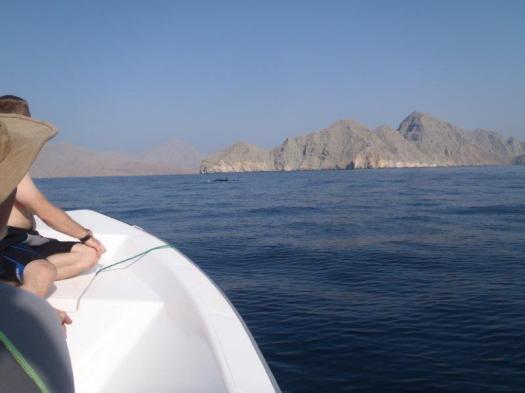
minke whale, Kriss Brandstrom

The surveys were both at Osprey Point, and by the afternoon the swell was so strong that Jean-Luc was given the nickname of Sultan of Swing in reference to the laying of the transect line. The substrate team, Catherine and Nadege, had an equally difficult time reeling it in, but although the team were bashed and tumbled by the waves, the stories were well recounted later!

The surveys on Thursday clarified our hypothesis that the further into the MPA we go, the less coral cover there was due to the environmental conditions, increased siltation, and restricted water movement. Nasser, Kristoffer and Hari went out on the speedboat and documented illegal fishing practices in the area, whilst the rest of the team entered data. The restricted water movement did, however, have a bonus feature in that huge amounts of phosphorescent phytoplankton congregated in Khor Nadj, our overnight mooring area, and with thousands of fish coming in to feed after the moon had set, we were treated to an amazing phosphorescent fish display. It was so beautiful that some of the team were tempted to join in, so donning masks and fins added to the incredible light show – a once in a lifetime experience!

exploring the MPA

Sailing into the remnants of a storm, the sky was hazy and the sea lumpy as we reached our first survey site of Friday, Paradise Point. The coral, though, was good, and the fish life abundant. The afternoon site, named Son of Gargoyle was even better, with ancient porites mounds and prolific grouper. The survey of the MPA was over (for this year at least) and we steamed round the northern tip of the peninsula accompanied by two Indian ocean humpback dolphins, who bow rode with us for a while.
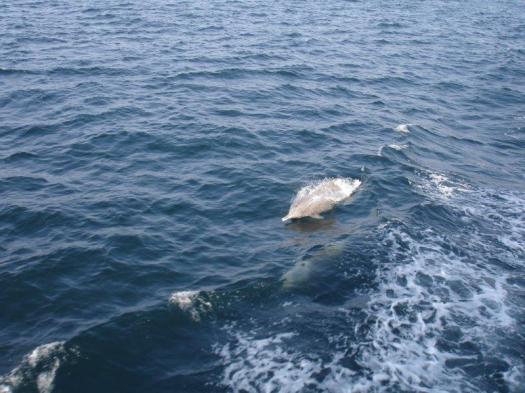
Indian ocean humpback dolphins

Back in Khumsar, as the Mosques called to prayer, we decided to set foot on dry land and visit the village nestled in the rocks with no road in or out, accessible only by boat. It was a great excursion, and gave a little insight into the lives of the local people here – a community reliant on the sea.

excursion to Khumsar

We were woken today, Saturday, at 04:00 by the waves slapping the side of the boat. Nadege, worried for her diving gear, went up on deck and rescued wetsuits and bikinis from being blown overboard. Dawn yoga was a windy affair, and breakfast was tricky with tea literally being blown out of the cups, but we made it back to Khasab, even managing to stop for a dive at Pipi Beach along the way before leaving our trusty survey vessel, the MS Sindbad, after lunch.

Another expedition over, but thank you for a wonderful week, rich in laughter and learning, new experiences and great memories – no one who saw will ever forget the sight of a terrified Hari trying to escape from an innocent turtle! We look forward to Jean-Luc’s report and are grateful for everyone’s involvement. It will be great to see how our understanding of the MPA has developed by this time next year.
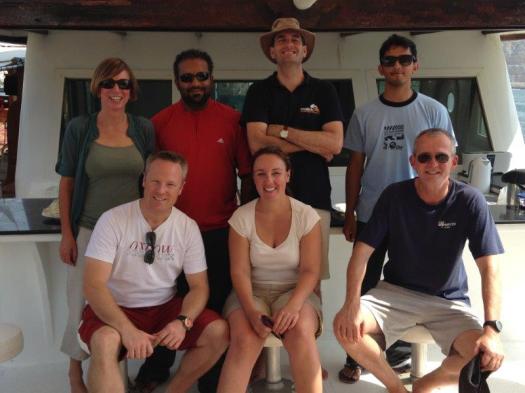
the team

Thank you to everyone who supported this project. Special thanks to the Oman Ministry of Tourism for supporting our efforts to conserve coral reefs through tourism.

logo_sultanate_of_oman

Continue reading “Update from our SCUBA diving volunteer opportunity & conservation holiday on the coral reefs of the Musandam peninsula, Oman (www.biosphere-expeditions.org/musandam)”