From grey to green

How an almost dead landscape is transformed back into a wildlife paradise by livestock – by Christiane Flechtner

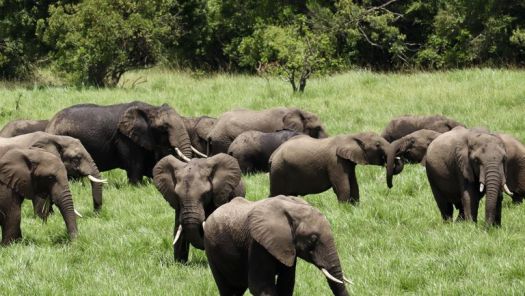
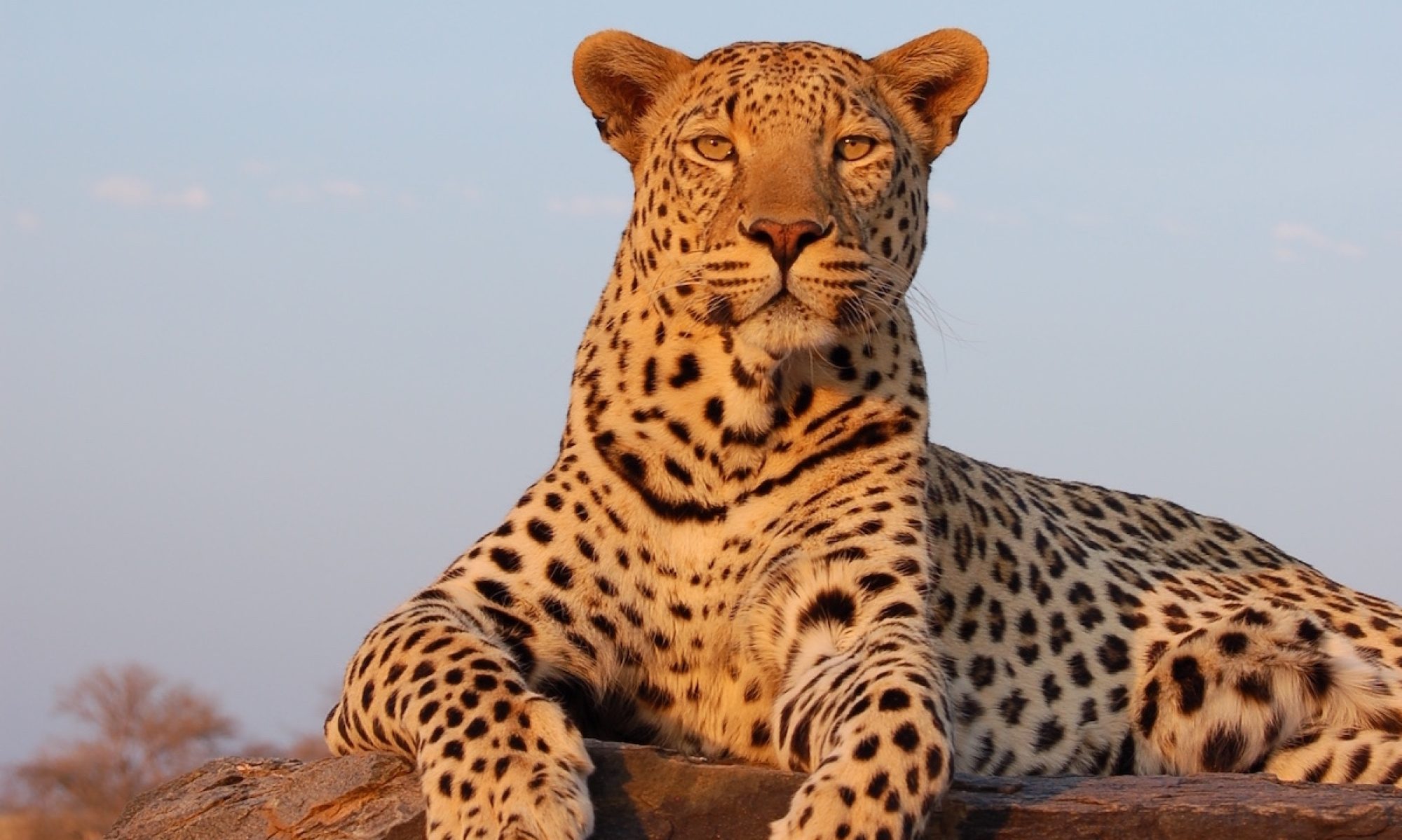
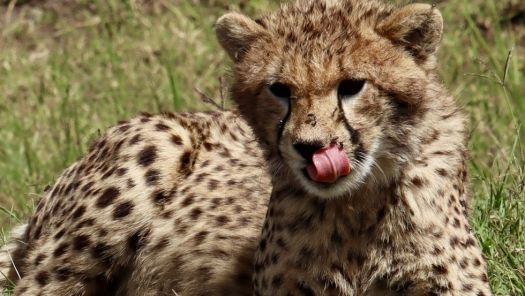
Kenya – Kunsang Ling looks through her binoculars. What the Canadian sees makes the corners of her mouth move upwards: “A cheetah with six young animals,” shouts the 38-year-old to her team in the 4×4 vehicle. Just a few years ago, this region of Kenya consisted of little more than barren earth. Dead, dusty land devoid of life. But little by little, the grey is changing into green – and with it zebras, wildebeests and antelopes are reclaiming their former territory.
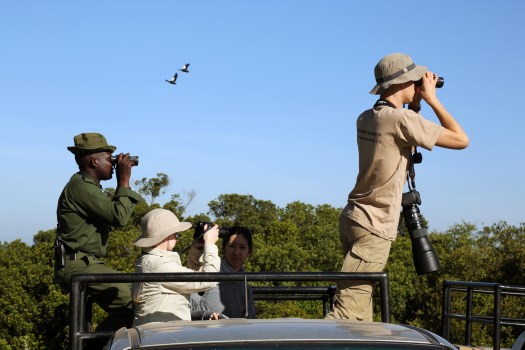
Counting wildlife from the back of a 4×4 (c) C. Flechtner

The Canadian is one of twelve international citizen scientists on a wildlife conservation expedition to Kenya, conducted for the second time by the non-profit nature conservation organisation Biosphere Expeditions. The organisation is known for its successful involvement of lay helpers in species conservation projects worldwide and has been working hand in hand with people and biologists in various project areas since 1999 – including the Enonkishu Conservancy in southwest Kenya. “We want to help scientists to conduct their research projects successfully,” explains Malika Fettak, the NGO’s expedition Leader in Kenya. “To this end, we recruit motivated people who help collect data and help hands-on during their holidays.”

Widlife of Enonkishu, all photos (c) C. Flechtner

This slideshow requires JavaScript.

Kenya is one of the countries with the highest population growth worldwide. From 1960 to 2017, the number of inhabitants rose from 8.1 million to 49.7 million – an increase of a full 513 percent. In the next 25 years, the number is expected to double again. The country is groaning under the burden of a overpopulation and the associated expanding infrastructure, which increasingly encroaches on animal habitats. In just three decades, the species-rich country has lost almost 70 percent of its wildlife – on the one hand through the destruction of its habitat, and on the other through the effects of climate change with extreme droughts.
The 1,700-hectare area of Enonkishu Conservancy, located around 240 kilometres south-west of the capital Nairobi, also since ceased to be a habitat for wild animals. It is a buffer zone between the famous Mara Serengeti ecosystem and civilisation.

The land belonged to 32 different landowners, who used it as farmland for corn or bean cultivation and cattle breeding – and overused it enormously. The excessive number of livestock led to extreme soil erosion. In order to counteract the devastation, the landowners joined together in 2009 to form a community and transformed the area into a conservancy, a protected area jointly managed by the local population.

The thousands of years old behavioural patterns of wild animals served as a model for rewilding of the area: “Here, the great migration of the wildebeest through the Serengeti has been imitated on a small scale,” explains the expedition leader. The wildebeest not only loosen the soil with their hooves, but also fertilise it with their dung. Then they move on, and the grazed green grass can grow again. “Here in Enonkishu, they leave this task to the cattle – they systematically let them graze in certain areas and then drive them on. Within just a few years, dead earth transformed into a green oasis, from which not only the landowners benefit, but also the wild animals,” says Fettak happily.

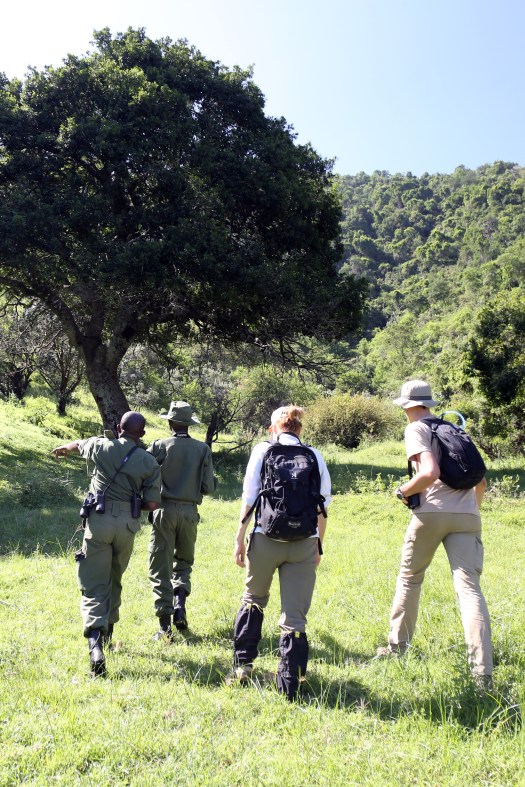
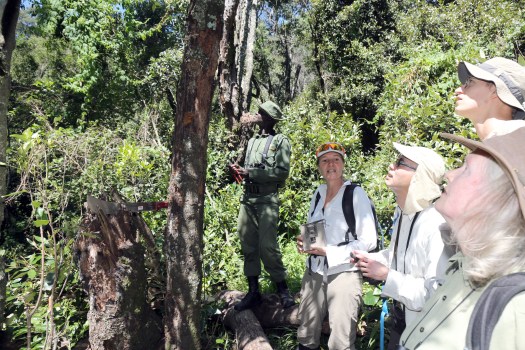
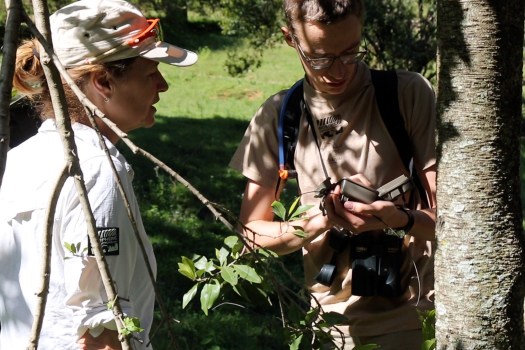
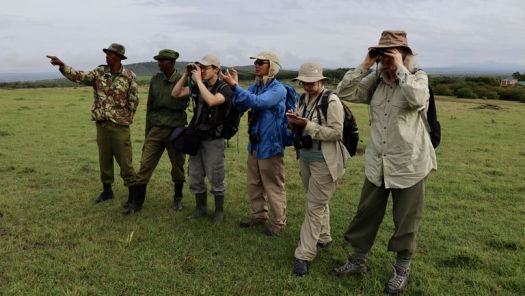
The job of the expedition participants is to collect data to provide figures to document the return of the wild animals. While Kunsang, together with Matthias Herold from Germany, Sirpa Lahtinen from Finland and Kathy Haan from the USA, observes the waterhole for several hours from a hide using binoculars, GPS devices and rangefinders, ranger Albert Ngetich, together with Canadian Brian Oikawa and Dutchman Paul Serail, set off on foot to the summit of Kileleoni Hill to observe the area from a bird’s eye view. The third group checks camera traps for pictures of nocturnal animals.
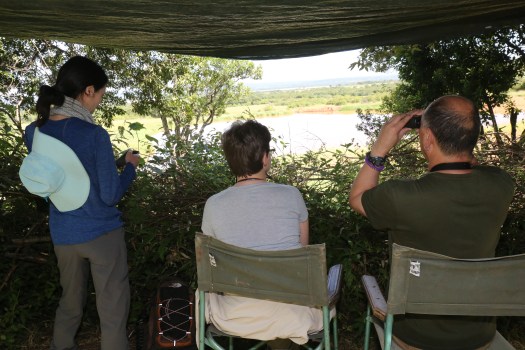
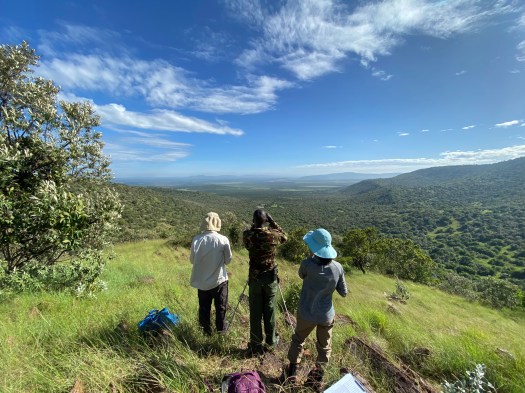
Waterhole obervation (c) C. Flechtner
Hill top obervation (c) C. Flechtner
On the way to a research activity (c) C. Flechtner
Checking and setting a camera trap (c) C. Flechtner

The results are quite impressive: The wildlife numbers have proliferated within a year. “The whole thing has developed a momentum of its own,” says the expedition leader. “The landscape has turned into a paradise where farm animals and wildlife can live peacefully side by side,” says Fettak. A positive side effect is that tourists are also discovering the area for themselves and supporting Enonkishu with their entrance fees to the protected area.

It may even be possible to find imitators of the sustainable concept elsewhere. It would be good for the densely populated country, and with the acceptance of wildlife and its benefits for people, this will be a chance to increase already scarce wildlife habitat bit by bit.
(c) Christiane Flechtner

This is how you survive on safari

This article was translated into English from the original article in Dutch by Paul Serail on Quest.

“It’s not a safari”, Biosphere Expeditions warned in advance. It was an adventure.

Cheetah (c) Paul Serail

Those who go on safari are driven around the savannah for a day by a guide. I went to Kenya for science. With twelve citizen scientists we counted zebras, wildebeest, giraffes and other cool animals in the Enonkishu Conservancy nature reserve.

How far is that wildebeest? Editor Paul Serail, third from left, measures the distance. (c) Paul Serail

Then you should also set out on foot. And not all animals on the savannah are harmless. As I walked into the bushes to take a pee, an irritated elephant hooted furiously nearby. Oops. During another walk I really had to run it twice for an elephant.

Hippos are the most dangerous

How do you get through your expedition safely? Tip 1: stick together. Tip 2: keep your distance from the animals.

But what should you do if the animals do not keep their distance from you?

Hippos are the cause of most casualties in Africa. A hippo usually flees to the water. Therefore, make sure you never stand between a hippo and the water.

If you leave elephants alone, they will leave you alone. Mostly. (c) Paul Serail

Elephants pretend to attack

Stressed elephants often perform a fake attack, then stop and make themselves big. They shake their heads “no” and rake the ground with one foot. They can also trumpet at the same time. The right solution: get out.

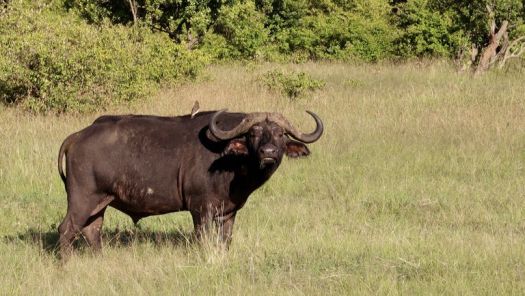
Buffalo, especially the bulls, have a short fuse. (c) Paul Serail

If you stay, it can happen that an elephant really attacks. He does this without sound, with folded ears for extra speed and with the tusks ahead. Running makes no sense, because the elephant will win that competition. Stand still, make yourself tall and yell, “Stop!” It works, I am told.

Buffalo do not fake attack. You better stay far away from the animals to avoid misery.

Whoever runs away from a lion is prey

Has she already eaten? (c) Paul Serail

If a lion comes across as slightly interested, stand still. It will be difficult, but otherwise the hungry hunter sees you as prey and you don’t want to be that. It can be wise to make yourself big and shout loudly. Then you come across as a threat, rather than a meal.

Other expedition pictures, all (c) Paul Serail

This slideshow requires JavaScript.

Do you also want to go on an expedition? You can. Biosphere Expeditions organises volunteer trips in nature. From diving to coral reefs to the mountains where snow leopards live. And everything in between.

(c) Paul Serail

Azores: the south of Faial strikes again!

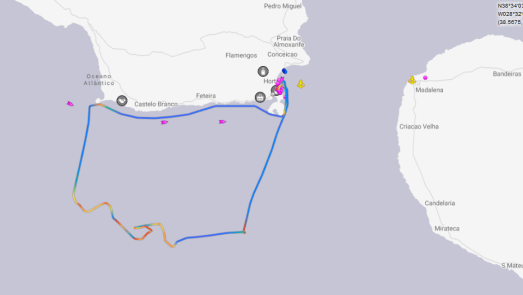
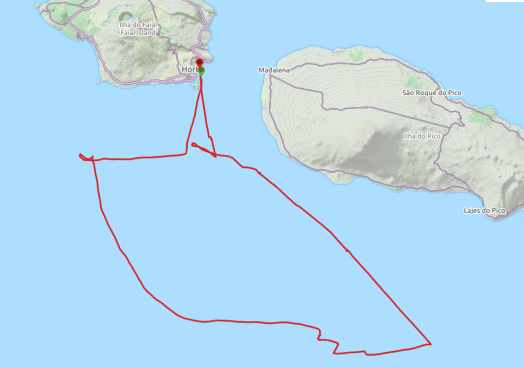
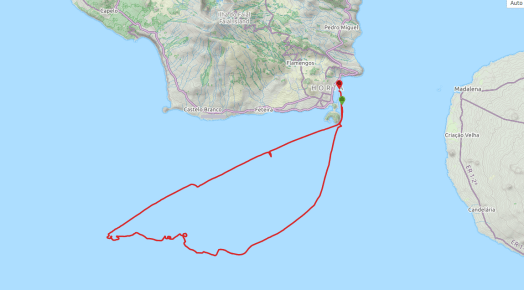
The wind has been blowing quite hard from the north all last week and yesterday (Sunday) was the first chance to get out again. The lookout on the south of Pico only saw a few small groups of dolphin, so we decided to stay to the south of Faial, where the waves were a bit smaller than the north side. It was a good choice!

We found a co-operative group of common dolphin, including some very small calves, where you could still see the fetal folds. Fetal folds are the “zebra” like stripes formed from the baby dolphin being bent inside of the womb, before birth. The brighter the stripes, the younger the animal. These marks will fade after a few months.

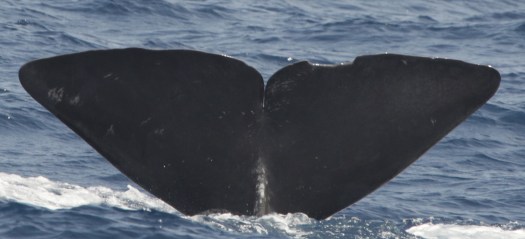
Just after the dolphin, we saw the second loggerhead turtle of the day! Not in “Turtle Time” for those of you wondering! 🙂 After the turtle dived, we put the hydrophone in for the second time and got a surprise. We had already passed a group of sperm whales! So we headed back the way we came and after about five minutes, I spotted three animals surfacing not too far from the boat! Yes! Then a small calf popped up and joined them and then another two! There were six sperm whales at the surface, including two calves; one suckling and the other not. Two of the four adults had been photographed in 2015, the other two are new to science.

Luckily, they didn’t all dive at the same time; one, then two sequentially and finally the fourth adult left the surface. The small calf was left at the surface and the larger one had shallow dive. WOW!! Now we understood why we hadn’t heard them on the hydrophone the first time we listened, they had all been up at the surface at the same time! We followed their clicks and waited for a second showing of the flukes, just to make sure we got the ID photos. And once they had all gone again, it was time to start back towards the harbour.

We passed very close to the Morro, the big white rock that you have to avoid hitting when landing or taking off from Horta airport! It is very impressive. No more animals were spotted, but I will be going out again soon, tagging along with Rui & Monica from the University of the Azores again. This time, they are going to be trying to tag a sperm whale.

Weather looks good, let’s hope the animals are waiting for us. Today Monday, 8 June is World Oceans Day.

This slideshow requires JavaScript.

Status update June 2020 – All 2020 citizen science now deferred to 2021

The world remains in the grip of the coronavirus. Many countries that we operate in continue to keep their borders shut and some are still expecting their first peak, let alone a second wave. In fact, in many countries that we operate in, things are predicted to get worse before they get better. And a vaccine will take time, or it there may never be one.

Because of all this, we have decided to defer the citizen science elements of all our 2020 expeditions to 2021. These are:

Expeditions that happened early in 2020 and are now scheduled to repeat in 2021 as normal are

An overview over all expeditions is on our website as a list and a map.

Please note that project work has not been cancelled. It is only the citizen science element that has been deferred to 2021 due to the coronavirus pandemic. Project work with local staff only will continue and you can see on our appeal page what is planned in terms of community expeditions and project work. If you can, please support our efforts to raise funds for this!

You can also read about community expedition efforts already under way in the Azores and Tien Shan.

We continue to feel very strongly about the need for continued conservation efforts and supporting our local partners and staff despite, or indeed because of, the unprecedented and very difficult circumstances. We hope you agree. If you do, please give to our coronavirus appeal to enable our local partners & staff to do just this.

Azores: sperm whale day

Sperm whales to the south, sperm whales to the north. Not a lot in between yesterday (Friday).

I joined the University of the Azores again to look for baleen whales. The lookouts had only seen sperm whales to the south of Faial when we left the harbour. Since there was no lookout in the north, we went to search the area which wasn’t covered by a lookout. We spotted the first turtle of the day about 3 miles offshore and then found a mixed group of common and striped dolphin. They were not interested in the boat, so we kept going. Shortly afterwards, we spotted our second turtle of the day. This was a fairly large turtle and Rui decided to launch the drone to get some overhead photos. There is a project planned to have an unmanned aerial drone surveying the waters around the island for wildlife. But before that can happen, they need to write some algorithms to decipher the footage they will get. The photo of the turtle was only taken from 15 m height and it is tiny!

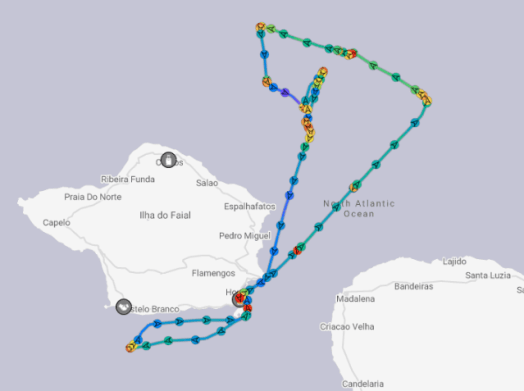
Unfortunately, during the flight one of the engines malfunctioned, so the drone couldn’t be used again during the trip. We kept heading to the NW of the islands, until the lookout on the north called to say he was on duty and and  had spotted sperm whales closer to the coast and couldn’t see anything else, despite good visibility. So we headed in to get some photo-ID of the sperm whales on our way to the south coast. The vigia directed us to a group of three and then spotted a big blow about two miles further out. It turned out to be a male sperm whale and it didn’t wait for us to get in position to get a fluke photo. So we turned towards the south once again, but ran into sperm whales once more! A group of two, then a juvenile and another single all within a mile. So after another three flukes, we finally made it to the south coast, only to find that the wind had slightly changed and increased, making it impossible to do any work. So we had to call it a day. On the way home, we came across another tw loggerhead turtles. Still smiles for me, because although we weren’t actually looking for sperm whales, we found them once again and managed to get five ID photos.

This slideshow requires JavaScript.

Azores: first humpback and more

Wednesday started out very grey and overcast. It was not looking very promising to go to sea, but still we headed out towards a small bank to the south of Faial and just as we arrived and deployed the hydrophone, the first blow was spotted! As we got closer, it was apparent that it was a baleen whale, since the blow was going straight up in the air. The next time the whale surfaced, the white flippers were seen through the water. “Humpback”, I shouted! The first humpback I have seen in 2020.

At this time of year, they should be on their way back north to the feeding grounds. This whale may have been coming from the Cape Verde islands or the Caribbean, likely on its way to Norway or Iceland. I notified the Azores university of the sighting, since they had been waiting for something to be seen before they left the harbour and we continued to track the whale. Unfortunately, it did not show its fluke, but I did manage to get dorsal fin photos and just have to hope that it is distinctive enough to find a match. When the university boat arrived, we left and headed to the West of Faial.

Before we had left in the morning, I was planning to head to the west if the lookouts hadn’t seen anything. I know that the “Winter Whales” usually hang around for a couple of weeks. The unknown factor, was if they had already been hanging around for a while when we saw them the other day or had just arrived. We will never know the answer to that question, but as we approached the Condor Bank, we picked up some sperm whale clicks on the hydrophone. About an hour later we spotted the first blow. As the whale fluked, my hunch proved correct. We had found the “Winter Whales” again! The first two whales we saw were the same two we had seen the other day, but we did manage to get a third fluke that was different. Given the hazy spotting conditions, we were lucky to see each whale twice. The juvenile that we saw a few days ago with one of the females was not seen on this occasion, indicating that it is getting to an age when it starts to forage for itself, only occasionally returning to suckle from its mother.

As it turned out, one of the Winter Whales was 2448, first seen in 2003. The one with the two small nicks on the left end (see photos) is 3483, first seen in 2007.

3483

And the one with the small scallop on the right near the notch is 2808, first seen in 2004.

2808

About five minutes after we started to head for home, I spotted some dolphin splashes . This turned into the first sighting of bottlenose dolphin, one of our resident species. Unfortunately, they were not going to escort us towards Horta, but were on their way to the west, so after about five minutes, we both continued on our separate ways.

Hopefully I can get out again soon, because towards the weekend it looks like a bit of wind before a couple more sea days next week.

This slideshow requires JavaScript.


Azores: oh my!

Friday was one of those days you won’t forget for some time!

The morning started off quite drizzly and wet, so we delayed the departure. I was invited by Rui and Monica from the University of the Azores, IMAR, to join them aboard the boat I had been going out in.

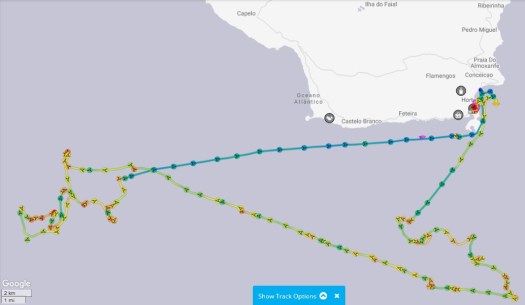
The lookouts hadn’t seen anything and the south of Faial lookout had actually re-located to the north of the island. We headed out to the south-west. Monica and Rui wanted to find a fin whale to attach a short-term tag to, which records any vocalisations and also data during a dive, such as orientation and acceleration.

We had been going for about an hour when a back of a whale was spotted in the swell. We stopped and waited and waited a bit more. Blow! It turned out to be a sperm whale. Not what we were looking for, but we went to get the ID. As it fluked, I was pretty sure that I recognised it. We didn’t wait for any more, instead heading now to the south of Pico where the weather was clearing. We found a small group of common dolphin that came over to the boat and some a little further out appeared to be feeding.

We decided to head a bit further to the southeast, but by 13:30, we hadn’t found anything and started to head back to the harbour.

As we approached Faial, the lookout spotted the sperm whales again, so we headed over to have a look. Another project the university has, is to use a drone to collect samples of the blows, the famous “Snot Bot”! Although in Portugal (and therefore the Azores), drones are not allowed to be used by the general public, the use of this one (as wel as it biopsy darts and application of a tag) is approved under a research license. As Rui and Monica prepared the drone, we followed a whale along the surface. As it dived, I gave an excited shout! This group was the “Winter Whales”, so named, because we have seen them once in December, 2007. Once this encounter was over, we went back to Faial and everyone went their separate ways, but about 30 minutes later, the lookout Anteiro called to say he had seen a mother and baby blue whale! So we all raced back to the boat and off we went again!

The whales were off the South of Faial heading to the west. Monica & Rui prepared the tag and the biopsy dart (to collect a sample of the skin/blubber for analysis). Unfortunately, the mother was not very cooperative and every time we got almost close enough to deploy the tag, she turned away. After a couple of unsuccessful attempts, it was decided to leave the pair to continue on their way. We did get the photo ID shots from both sides for both individuals and they have been sent off for matching.

This slideshow requires JavaScript.

The calf did some absolutely incredible lunges/breaches while we were watching that made for some unbelievable sights. I don’t think I will forget that for a very long time!

We will be out again next week.

Tien Shan: exciting community camera trapping results

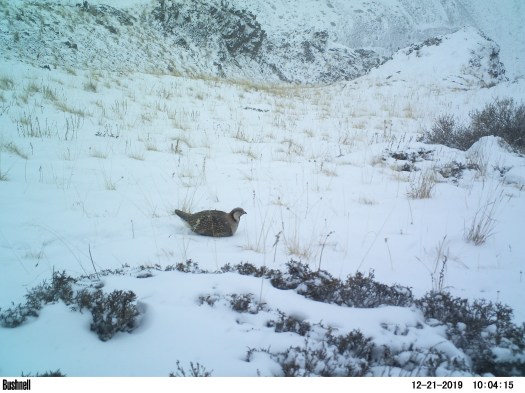
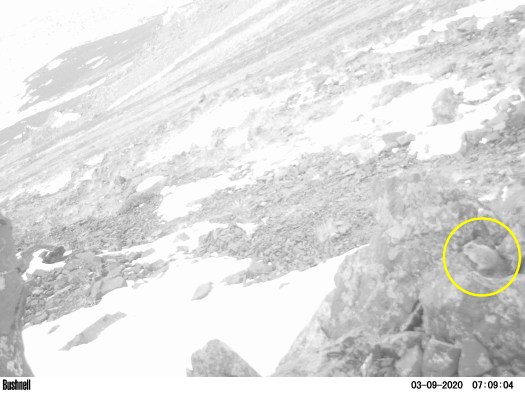
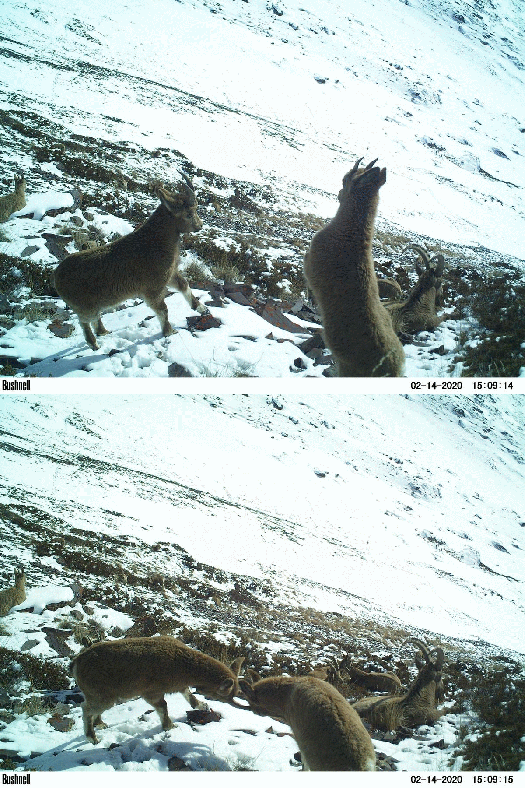
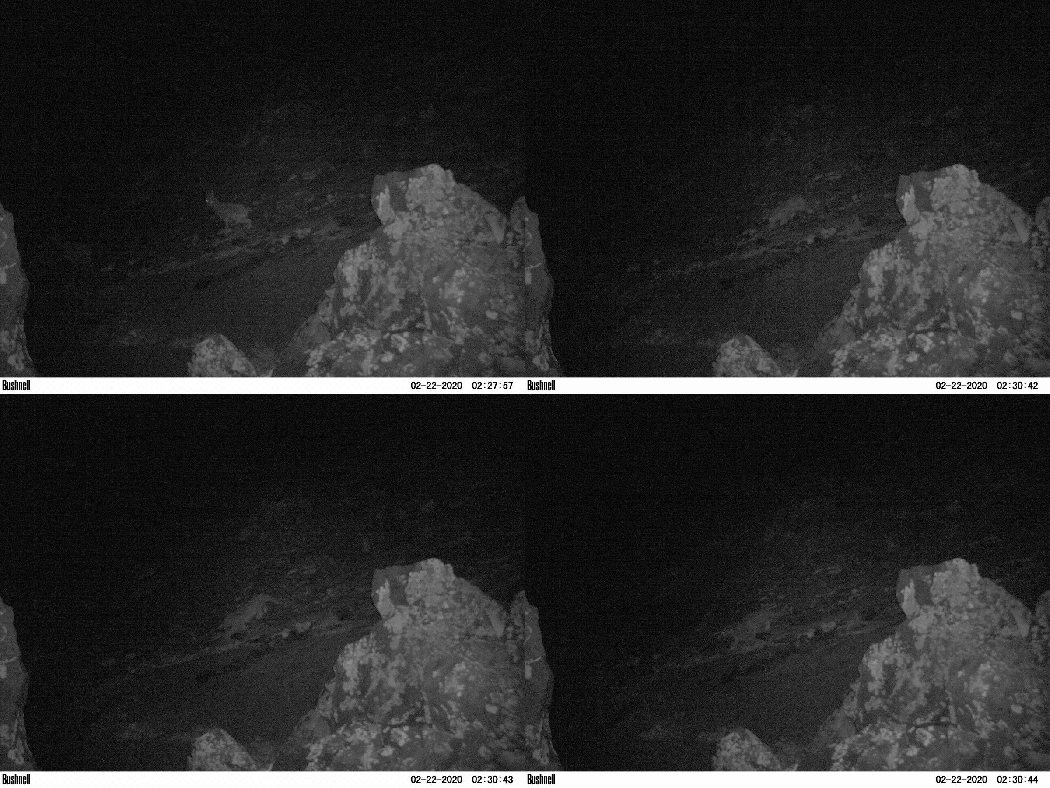
We’ve gone through all the community camera trapping team pictures now and we have some very interesting results:

Fox (1 record)
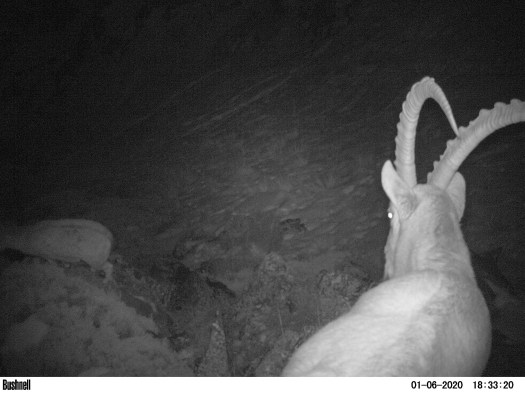
Ibex (many records)
Snowcock (4 records)
Pika (2 records)

As well as young ibex playfighting

And most interestingly and excitingly of all, a young ibex being stalked/hunted by a snow leopard

Once again, well done community camera trappers!

Wildlife thrives in closed US national parks

‘We’ve never seen this’: wildlife thrives in closed US national parks
Deer, bobcats and black bears are gathering around parts of Yosemite national park typically teeming with visitors

Tien Shan: community expedition in coronavirus times

The coronavirus has forced us to make major changes to our efforts here with the Tien Shan snow leopard expedition. All citizen science elements of the expedition have been deferred to 2021, but we are still able to push ahead with a community expedition this summer, thanks to the generosity of those who have contributed to the Biosphere Expeditions appeal. We are lucky in getting our community expedition funded through this. There are other projects out there that are not fully funded yet, so please, if you can, consider supporting those too. Anyway, thank you to all donors who have funded us!

Right now we are in the planning phase of how to pull all the different partners together here in Kyrgyzstan. As always, we have our inaugural partner NABU on board with their Grupa Bars (anti-poaching patrol) staff.  Also joinung us this year will be  Askat Mukabaev, who is a full-time conservation biologist at ILBIRS, another local conservation NGO here in Kyrgyzstan. Beyond that we have our community camera trap monitoring group that will be joining us as well. The expedition leader this year will be me, Amadeus DeKastle, as I’m already here in Kyrgyzstan, having lived here for a good while!

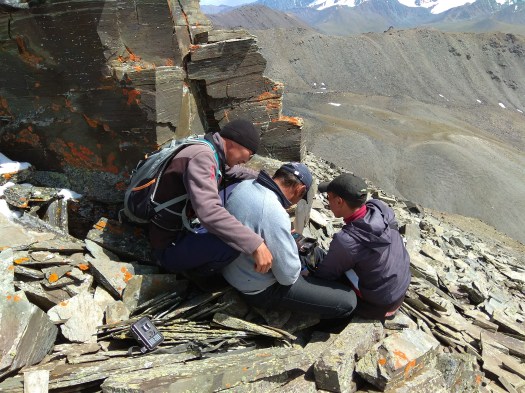
Community camera trapping group at work
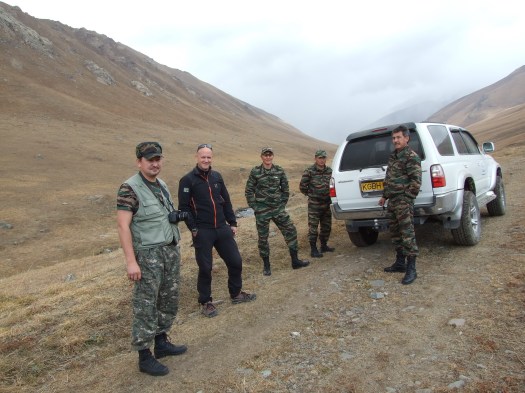
Some Grupa Bars members
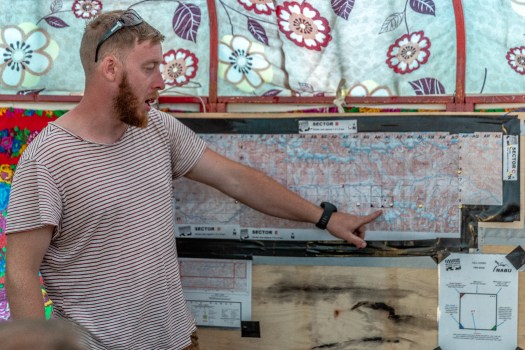
Amadeus DeKastle

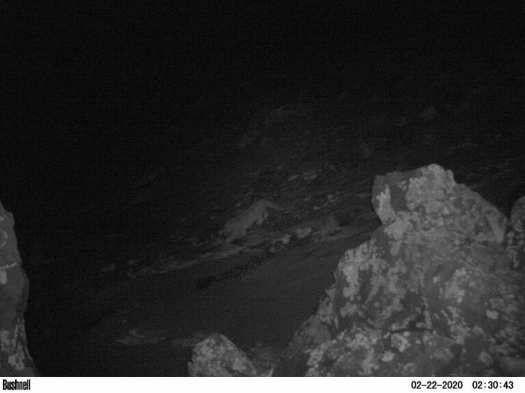
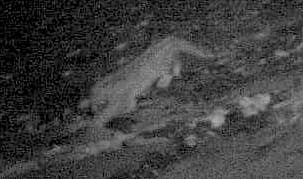
This year will be very different from previous expeditions, but at the same time, I know we are all looking forward to continuing this project and collecting another valuable data set this summer. Our community camera trap monitoring group has already collected some of the camera traps that are accessible and which have been out in the field since the end of the 2019 expedition. And we have a new image of a snow leopard in a new valley! It’s at night and blurry, but it’s definitely a snow leopard. Well done community camera trappers!

Original camera trap photo
Zoomed in and processed

So the excitement is there to check the camera traps that are still in the field, and also to use our community expedition really to develop the community-based conservation element of our work.

We are looking forward to the expedition (and will keep you updated via this blog). For next summer, I hope that things will be back to full capacity so that we are able to experience an expedition together again.