
Update from our Maldives coral reef conservation expedition

One day later and almost everyone is now a Reef Check EcoDiver. Well done! So off we went to a site in the north of Kaalo Atoll to check on a reef that we had not looked at for over a decade.
Phase shifters
When we last visited that reef, it had phase shifted from corals to corralimorphs, a lifeform that scientists know precious little about.
On coral reefs, a phase shift describes a rapid ecological transition where the dominant biological community changes from one state to another, typically following a major environmental disturbance or human-induced stress. While phase shifts most commonly result in a takeover by fleshy macroalgae, a phase shift to corallimorphs involves the aggressive dominance of corallimorpharians – soft, anemone-like cnidarians closely related to corals. In these events, species such as Rhodactis howesii proliferate rapidly, expanding outward to form dense monocultures that actively smother and overgrow the remaining corals.

Once established, these corallimorph-dominated states drastically reduce biodiversity and structural complexity, presenting a severe challenge for marine conservation and reef recovery.
Not good news then, so we expected the worst – a brown wasteland with few corals and even fewer fish.
Corals fighting back
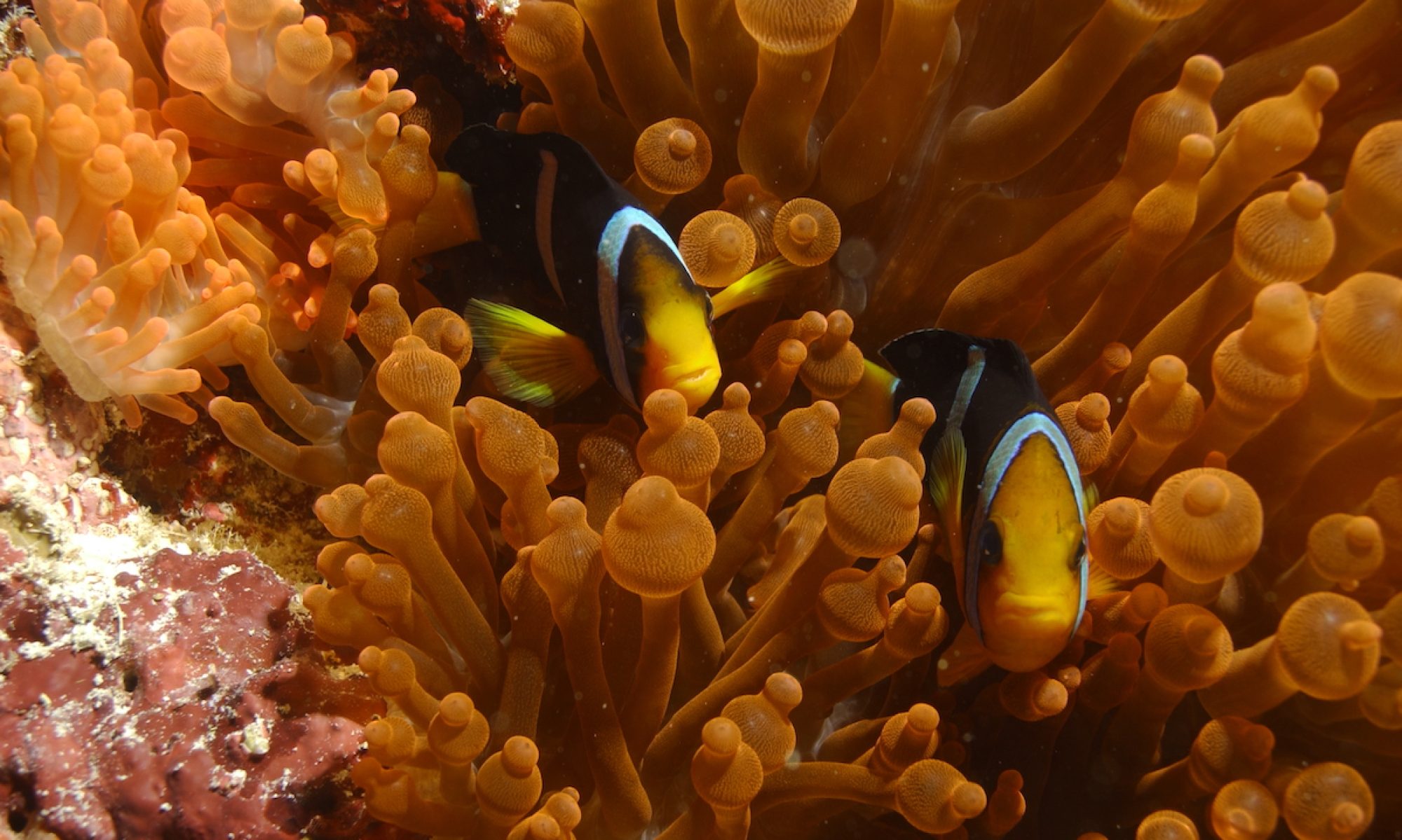
So in we jumped and were surprised to see the opposite: Corals and fish coming back, at least in parts.
We are not sure why and how yet, but we gladly recorded the change.


Resilience and citizen science
This remarkable resilience demonstrates why long-term citizen science datasets are so crucial. Without consistent monitoring spanning decades, unexpected recoveries like this would go entirely unnoticed, leaving scientists to assume the reef remained trapped in a degraded state.
Bearing witness to these ecological shifts over extended timescales allows us to identify potential climate refugia – pockets of the ocean where coral communities possess the unique conditions or genetic resilience required to bounce back. By continuing to return, document and record these changes on the ground, our EcoDivers are helping build the baseline data needed to safeguard resilient reefs for the future.

Documenting ecological reality
This unexpected recovery underlines a core principle of our Manifesto: even in a rapidly changing world, targetted interventions and the dedicated search for climate refugia matter.
Our conservation work is not about naive optimism or despair, but about showing up to document ecological reality on the frontlines. By maintaining a sustained presence and recording these subtle shifts over time, our long-term citizen science surveys provide the crucial data needed to pinpoint where ecosystems are quietly holding out or fighting back – ensuring our conservation efforts are directed where they are genuinely useful on a planet in upheaval.
A big thank you to the expeditioners who make this long-term research possible. It would not happen without you.


Author: Matthias Hammer

Biosphere Expeditions was founded in 1999 by Dr. Matthias Hammer. Born in Germany, he went to school there, before joining the Army, and serving for several years amongst other units with the German Parachute Regiment. After active service he came to the UK and was educated at St Andrews, Oxford and Cambridge. During his time at university he either organised or was involved in the running of several expeditions, some of which were conservation expeditions (for example to the Brazil Amazon and Madagascar), whilst others were mountaineering/climbing expeditions (for example to the Russian Caucasus, the Alps or the Rocky Mountains). With Biosphere Expeditions he has led teams all over the globe. He is a qualified wilderness medical officer, ski instructor, mountain leader, divemaster and survival skills instructor. Once a rower on the international circuit, an amateur marathon runner and Ironman triathlete, he now enjoys less extreme pursuits such as writing and long-distance walks in the wild. More about Matthias.