Update from our volunteer vacation / conservation holiday protecting whales, dolphins and turtles around the Azores archipelago (www.biosphere-expeditions.org/azores)

Our multi-national team all arrived safely, via a mix of routes and modes of transport. So the first slot of 2016 begins.

With initial introductions, risks assessments and briefings completed, this morning we dived headlong into the research element of the expedition – the main reason why we have all travelled to the Azores. The scientific training began with familiarisation of equipment, which was followed by data records training, and rounded off with a boat orientation.

Our volunteers have clearly been good to the climate gods, as they have brought great weather with them. The team’s new-found cetacean research skills were soon put to the test, with sightings of common dolphins.

The luck continued, with a loggerhead turtle sighted during one of our designated ‘turtle time’ survey periods. Normally we see them outside ‘trutle time’, when they are logged as ‘random sightings’. A great job by Ralf in spotting the turtle, and custom has it, that such a sighting means our scientist Lisa buys a drink for each member of the team – thank you Ralf!

The sightings continued with a small group of Risso’s dolphins, located close to Pico Island. This species is resident in the Azores. When born they are very dark in colouration, but become ‘scratched’ with age, through social interactions, exhibiting unique hieroglyphic markings on the bodies and dorsal fins. The scratch marks can be used to identify individuals.

The day was rounded off learning key identification features of species we will hopefully encounter. The team are now poised and ready for action. So a great start to the expedition and the data collection. The whales will have to wait for another day…but you always have to have something to look forward to…

This slideshow requires JavaScript.


Update from our volunteer vacation / conservation holiday protecting whales, dolphins and turtles around the Azores archipelago

Update from our volunteer vacation / conservation holiday protecting whales, dolphins and turtles around the Azores archipelago (www.biosphere-expeditions.org/azores)

It’s time for the initial introductions. I am Craig Turner (on the left below) and I’ll be your Expedition Leader in the Azores this year.

If expeditions are a journey with a purpose, then the first part of that journey is complete. I arrived in the Azores (coming from Scotland) on Friday to prepare the expedition. It wasn’t quite all as planned, as we had an unscheduled stop in Porto, for a medical emergency on the plane. The delay meant I ending up chatting to a Brazilian academic about his PhD work on film translation, and on the second flight I bumped into Jim, one of our hosts from Banana Manor.

It is great to be back again and to meet up with friends and colleagues from previous years, not least, our scientist Lisa Steiner (looking through the ladder below). If you want to find cetaceans in the Azores, then she is the person to find them. Last year, our first day at sea scored our one and only humpback whale for the expedition – so you never can be too sure what ‘data’ we will collect. With Lisa already reporting sightings of humpbacks and sperm whales, we could be lucky again. We now just hope that the weather and whale gods are on our side and we can look forward to some great fieldwork (and data collection) over the next few days.

2015 expedition team with Craig Turner (left) and Lisa Steiner (looking through the ladder)

I hope you’ve all been eagerly reading your expedition materials and know to bring many layers of clothing. The weather can be a bit like four seasons in one day, so prepare for warm, cold, wet and dry. Like the weather in Scotland! Don’t forget your waterproof trousers – you’ll thank me when you are stationed on the bow as a lookout and the weather is choppy (so also bring your motion sickness pills/patches – if you know you need them!).

So with the local team in place, whale sightings already logged by Lisa, all we are missing is you. This Monday morning is hopefully one we are all looking forward to….. It will be great to meet you all.

This reminds me to mention communications on the island. There’s cell/mobile reception on Faial in addition to internet here and there, but remember the golden rule of no cell phones while we’re at sea. Hopefully you can resist the need for frequent international comms, and why not go off the grid for the expedition, and soak up the experience of Atlantic island isolation. My mobile number here is (+351) 962 338 060. Hopefully you and I won’t need it, but there you have it, just in case of emergencies, such as being late for assembly.

Safe travels and we look forward to meeting group 1 on Monday and groups 2 and 3 in due course.

Craig


Update from our volunteer vacation / conservation holiday protecting whales, dolphins and turtles around the Azores archipelago

From our snow leopard volunteering expedition in the Tien Shan mountains of Kyrgyzstan (http://www.biosphere-expeditions.org/tienshan)

Trainings of trainers in Batken province

Rahat Yusubalieva was a placement programme recipient on the Tien Shan snow leopard expedition with Biosphere Expeditions from 22 June – 4 July 2015. In December 2015 Rahat shared her knowledge and experience as part of the environmental training sessions in the rural schools of Kyrgyzstan’ s Batken province, the most south-west and remote part of the country bordering on Tajikistan.

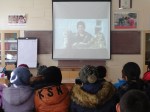
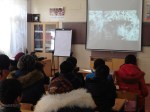
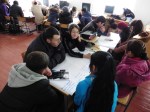
On 16 and 23 December 2015 trainings of trainers (TOT) sessions were conducted in the villages of Andarak and Iskra in Batken province. Participants included school students of grades 7 to 10, as well as teachers of biology and geography. The sessions focused on ecosystem conservation, management of water, forest, land and pasture resources in relation to climate change impacts. Participants discussed how local ecosystems have changed in the last two decades and how people can conserve them. The goal of the TOT was to inform local educational institutions on the current state of the environment, methods of conservation, and for local community members to reflect on how they are influencing their own environment, and to integrate their own observations and new scientific knowledge into the school curriculum.

The TOT also covered the snow leopard, its habits, prey animals, threats to its survival, as well as the historical and cultural meaning of the snow leopard for the people of Kyrgyzstan. A documentary film “Irbis, legends of snow covered mountains” was shown and followed by a discussion. Participants were also informed on research findings by Biosphere Expeditions in West Karakol and Kyrgyzstan’s action plans for snow leopard conservation.

Residents of Andarak and Iskra villages depend on the resources of their mountain environment and Sarkent National Park, where people graze their animals and collect wood. Endangered species, which are under government protection also inhabit the park, including snow leopards. According to the director of Sarkent National Park, tracks of snow leopards are often seen in the park, as well as remains of mountain goats preyed on by snow leopards. However, due to the remoteness of the area and lack of finances, the park does not have equipment and camera traps to monitor them. Local people said that about a decade ago, a snow leopard’s pelt was found and the poachers were caught. Now hunting of mountain goats in the park is prohibited both for local and foreign hunters until 2017, when the moratorium is up for re-consideration.


Continue reading “From our snow leopard volunteering expedition in the Tien Shan mountains of Kyrgyzstan (http://www.biosphere-expeditions.org/tienshan)”

From our desert expedition volunteering with oryx and wildcats in Arabia (http://www.biosphere-expeditions.org/arabia)

We’ve walked many more kilometres on the sand and dunes over the last two days with all teams determined to complete their surveys. By Friday afternoon we had surveyed 39 out of a total of 42 cells, making the scientist very happy. Heavy wind and downpours stopped us from surveying on Wednesday afternoon. Fortunately all tents were still in place when we returned to base.

Instead of sitting around the fireplace, that evening was spent in the main tent with some of us playing games after the daily review. On Thursday a broken cooker forced us to cook on the fire. Having a hot tea or coffee in the morning around the fireplace truly felt like being on expedition.

The week was over too soon. Before we went out to a special event on the last evening, Steve summed up the results after six days of working in the field. Not including Friday’s results, 399 oryx were counted at feeding spots, 126 mountain and 49 sand gazelles were encountered as well as two hares. The new method of visiting two predefined observation points in each cell to survey the area for 15 minutes will definitely result in more accurate/comparable results. We caught only three rodents during the week using 16 traps, leading to the conclusion that the number of rodents is down. This could influence the number of desert eagle owl – a bird target species that was not recorded on the surveys – but also on the cat population. 130 fox dens were observed and quite a few new dens were recorded. All of this will go into the expedition report.

We left camp after the obligatory team picture session to go out for a night dune drive. Sponsored by Platinum Heritage the team was invited to spend the evening at traditional Arabian dune camp. We learnt about Arabic coffee, cuisine, dance, henna painting, smoking shisa, etc. The dinner was delicious! It was far beyond our usual bed time (22:00 ;)) when we were dopped back off at base. Still everyone had enough sleep since we decided to have breakfast late today, our last day.

Thank you so much, again for joining this project, putting sweat, time and money into research & conservation. I hope you’ve enjoyed the week as much as David, Steve and I did and I hope to see you again sometime somewhere.

Malika

From our desert expedition volunteering with oryx and wildcats in Arabia (http://www.biosphere-expeditions.org/arabia)

The expedition is in full swing. We are checking live traps in the morning and rodent traps before the teams move on to their surveys. A Cheeseman’s gerbil was caught yesterday.

Cheeseman's gerbil
Cheeseman’s gerbil

Playing dead, we didn’t see or hear it hidden in wood shavings and there was no movement when we studied the closed trap for signs of life. Only when emptying the trap, did the creature reveal itself, frozen at our feet for only a second before disappearing at the speed of light. During the night a fox must have desperately tried to get to it, burying a deep hole all around the gerbil’s safe enclosure. From the tracks that were left behind we could read the whole story!

Trap & tracks
Trap & tracks

Other than that the surveys are going well. After a couple of days everyone is now familiar with the GPS and the road network. But also with using shovels and tow ropes for a full desert experience! 😉

A little stuck
A little stuck

Apart from surveying ‘cells’ – areas of 2 x 2 km – from two different survey points, which the teams have to reach on foot walking up and down sand dunes, Steve, the expedition scientist, has added the task of counting oryx at feeding points.

Survey point
Survey point

A great number of calves and juveniles are seen and counted, and it will be of great importance to ascertain the actual number of oryx within the Dubai Desert Conservation Reserve for further management decisions.

Oryx
Oryx

We have also come across a dead oryx indicated by about 15 lappet-faced vultures circling the sky above. Walking the dunes we also check fox den holes marked in our GPSs to categorise them active/inactive/abundant/not found, or we note GPS positions of new fox dens – all in an effort to update the existing database.

When the teams return back to base in the late afternoon lots of data are brought back from the field. Thanks to Lea, who has become the team’s data entry specialist, all data sheets  have been entered into the scientist’s computer.

Only two more days of rising with the sun in the morning and spending all day out in the field.

Continue reading “From our desert expedition volunteering with oryx and wildcats in Arabia (http://www.biosphere-expeditions.org/arabia)”

From our desert expedition volunteering with oryx and wildcats in Arabia (http://www.biosphere-expeditions.org/arabia)

Everyone arrived safely two days ago at base camp located within the Dubai Desert Conservation Reserve. The convoy of four cars stopped at the DDCR’s brand-new office where Steven Bell, the expedition scientist, gave a presentation about the history of the reserve, study animals and conservation work before the convoy headed out into the desert. After setting up tents and lunch, the rest of Saturday was spent with talks, risk-assessment, training on research equipment, live- and camera traps, data sheets and expedition vehicles. More training on GPSs – a vital tool for all field work – was done the next morning as was the off-road driving training. So far so good.

The North (Sandra & Gary, Mary and Judith from the UK, Susanna & Lloyd from the US), Central (Margit and Sigrun from Germany) and South (Caroline and her two daughters Lea and Janna, U.A.E. residents and Tariq from Jordan) teams accompanied by Steve, David and I then went out to set all traps (10 camera, 12 live and 16 rodent traps). Designated areas stored in the GPSs must be found, as well as proper spots to place and bait the traps – a very busy day. The South group came across a lappet-faced vulture, the Central group found a small silver snake and everyone finally made it back to base in the late afternoon. Of course Arabian oryx and the smaller gazelles are all around, flitting through the dunes or majestically standing in the sand, reminiscent of Arabia as it once was or of Africa as it still is in some parts of the savannah wilderness. For the daily review we sat around the fireplace, had dinner straight after and went to bed early.

The weather has been very pleasant: sunny, 23 degrees C, with temperatures not dropping below 10 degrees at night. For dinner we are spoiled by a great variety of delicious food & salad plus dessert such as chocolate cake! 😉  Writing this I am at the DDCR office while everyone is out doing surveys. Soon I will be picked up to be taken back to base camp, away from any internet or phone connection. I’ll keep you updated.

This slideshow requires JavaScript.

Continue reading “From our desert expedition volunteering with oryx and wildcats in Arabia (http://www.biosphere-expeditions.org/arabia)”

From our desert expedition volunteering with oryx and wildcats in Arabia (http://www.biosphere-expeditions.org/arabia)

Only 36 hours have passed since we’ve arrived in Dubai. Stephen, our expedition scientist, David and I met up yesterday morning, picked up some supplies in town and then made our way to the desert. With two huge Ford off-road expedition vehicles, we drove to the storage room within the reserve to load up our camp equipment: tents, tables, chairs, carpets, cushions, gas cooker, cooler boxes  – just to name a few items. Thanks to the DDCR staff the main “big” and kitchen tents were already set up and in place for us to move in. We’ve been busy with organising camp, checking research equipment, going through data sheets and paperwork, etc., etc. It feels like we’ve been here for much longer than 36 hours 😉

We have been shopping a bit already, but tomorrow is going to be the big shopping day – we’ve put together a looong list – as always.

The weather is really pleasant. In the mid 20s C during the day, dropping to high 10s during the night, some scattered cloud, but otherwise blue skies.

That’s it for the moment, we’ll be in touch again soon.

Continue reading “From our desert expedition volunteering with oryx and wildcats in Arabia (http://www.biosphere-expeditions.org/arabia)”

From our desert expedition volunteering with oryx and wildcats in Arabia (http://www.biosphere-expeditions.org/arabia)

This is the first (quick) diary entry for the Arabia desert expedition starting on 9 January. My name is Malika Fettak, I am a senior member of the Biosphere Expeditions staff and I will be leading the expedition. Also with us will be David Moore as an expedition leader in training.

Right now we are about to board our planes Dubai (David from France and I from Germany). David and I will meet up in Dubai tomorrow morning and then go straight into preparations. Quite a few things need to be organised before the team’s arrival: Food supplies, setting up the expedition base campsite, preparing the equipment, cars and paperwork, etc., etc. I’ll be in touch again once I have arrived on the ground and my local SIM card is confirmed as working still.

Meanwhile, our expedition scientists Stephen Bell of the Dubai Desert Conservation Reserve is getting ready at his end too. He’s picked up some cars that cannot be missed in the desert – see below ;), kindly provided by Ford Middle East, who has also supported our expeditions in the region for many years via its Conservation and Environmental grants programme.

Ford

Further support, logistics and otherwise, comes from Platinum Heritage and Al Maha. Thank you to all three of them; their support is much appreciated.

Now all we need is the team. Safe travels and I’ll see you in the desert soon.

Malika Fettak
Expedition leader

Continue reading “From our desert expedition volunteering with oryx and wildcats in Arabia (http://www.biosphere-expeditions.org/arabia)”

From our snow leopard volunteering expedition in the Tien Shan mountains of Kyrgyzstan (www.biosphere-expeditions.org/tienshan)


Thank you for sharing your pictures – here are some highlights:

Continue reading “From our snow leopard volunteering expedition in the Tien Shan mountains of Kyrgyzstan (www.biosphere-expeditions.org/tienshan)”

From our snow leopard volunteering expedition in the Tien Shan mountains of Kyrgyzstan (http://www.biosphere-expeditions.org/tienshan)

Snow leopard ground data and computer modelling

The two months long 2015 snow leopard expedition to the Tien Shan mountains of Kyrgyzstan ended on 8 August, with the last of three teams breaking camp. Biosphere Expeditions in collaboration with the local office of German NGO NABU (Naturschutzbund = Nature & Biodiversity Conservation Union) runs the snow leopard expedition annually with the aim of providing valuable scientific data to empower local authorities to make informed conservation decisions and take action based on hard data.

One of the highlights of this year’s results is the confirmation of snow leopard presence (in the form of tracks and scat) in the Kyrgyz Alatoo range. Three individual instances were recorded over the course of two months.

While this is exciting, especially for volunteer citizen scientists doing the ground work in the field, the project does not focus solely on the search of snow leopard sign, but also collects information on prey species. For example, mammals and birds that can reveal information on the biodiversity and health of the habitat as well as disturbances.

“It all adds to statistics and you also take into account the zeros”, explains field scientist Dr. Volodya Tytar. “If you check the camera trap and say – oh there is nothing – it is something! Because if it is a zero, which has been obtained, that also adds to the statistical database.”

When talking about how the data are used, Dr. Tytar mentions a new approach called ‘ecological niche modelling’ or ‘species distribution modelling’. This consists of the combination of readily available environmental digital information (for example temperature, moisture, vegetation, etc.) with ground data collected by volunteers. Computer software then combines the two to arrive at some sophisticated forecasting of wildlife distribution. It also identifies new areas that have not been surveyed yet, but that could be promising snow leopard habitat. “With modern computing methods a lot can be done”, Dr. Tytar adds, “but the bottleneck turns out to be that there are often very little ground data. So the data collected by our expeditioners in the field adds a fundamental missing piece of information to an existing digital information puzzle, enabling predictive analysis of species distribution even across non-surveyed areas – an exercise which would otherwise not be possible.”

Talking about the results of this year’s expedition, Dr. Tytar says that together with NABU, Biosphere Expeditions will be able to generate specific conclusions and recommendations about candidate areas for conservation status: “There are areas where we found fresh tracks of ibex in combination with minimum disturbances. Many of these areas are in very confined mountain locations with only one entrance, so they would be quite easy to protect by just having, say, a ranger station or a signboard and people patrolling the area. I think all this together in the future will work out in a network of protected areas, maybe including some kind of corridors as well. What we have been doing here significantly contributes to that kind of work”, concludes Dr. Tytar.

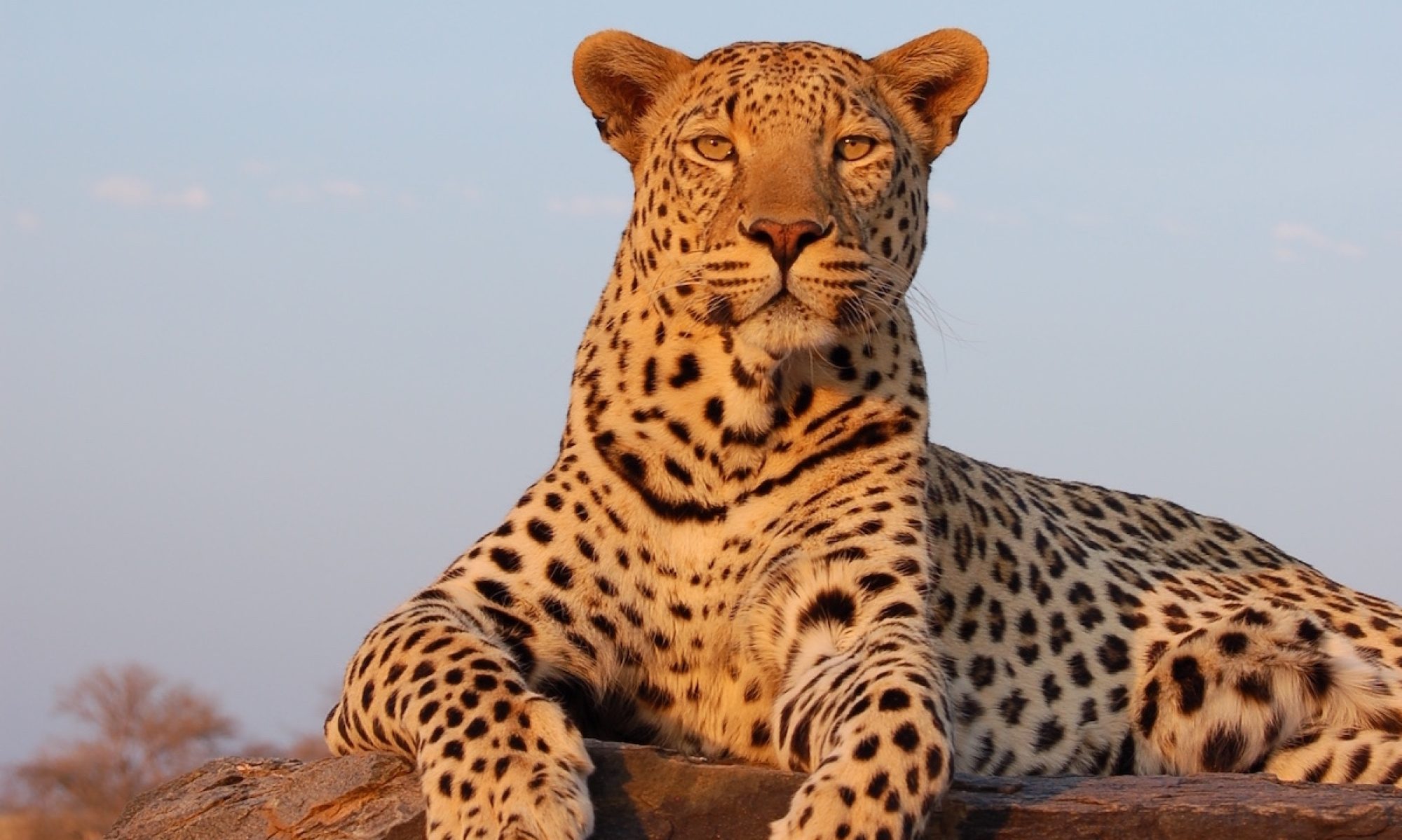
Listed as “Endangered” on the IUCN Red List, the snow leopard is threatened by poaching, retaliatory killings and habitat loss. It is estimated that fewer than 7,500 snow leopards remain in the wild. One goal formulated by an international snow leopard conference in Bishkek in 2014 was the 20/20 pledge – to protect 20 snow leopard landscapes that have over 100 breeding adults by 2020, and to promote sustainable development in areas where the species lives.
 

 Slideshow of the 2015 expedition:

This slideshow requires JavaScript.

Continue reading “From our snow leopard volunteering expedition in the Tien Shan mountains of Kyrgyzstan (http://www.biosphere-expeditions.org/tienshan)”