Award-winning, non-profit and ethical wildlife conservation volunteering. Advancing citizen science and conservation since 1999 – for nature, not profit.
Some of us were woken up in the small hours this morning by a strange sound. To me, it was the clattery rocky sound of a working quarry a few kilometres away (unexpected, at 03:00), but I was wrong. Getting up for a dawn drive at 05:00, the sound still jumping out of the darkness, I found some of the expeditioners conferring with the night guard and staring at a spot right in front of base camp, where, just visible in the murky light, was a huge herd of cape buffalo – maybe 100 of them, twitchy and in constant motion, hooves clattering and calling to each other. A new wildlife sound, for me, and one that I will not confuse with a distant quarry again.
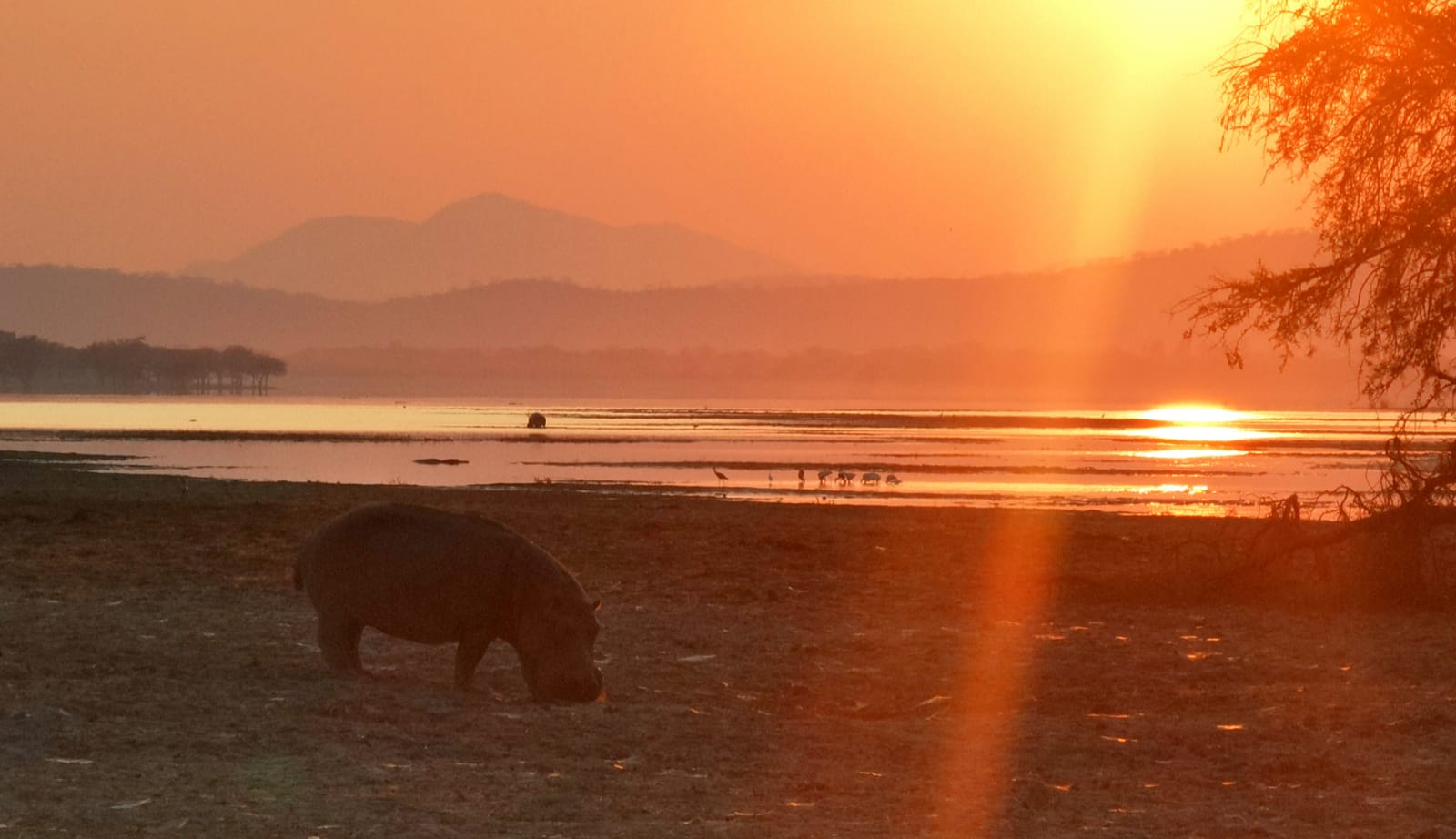
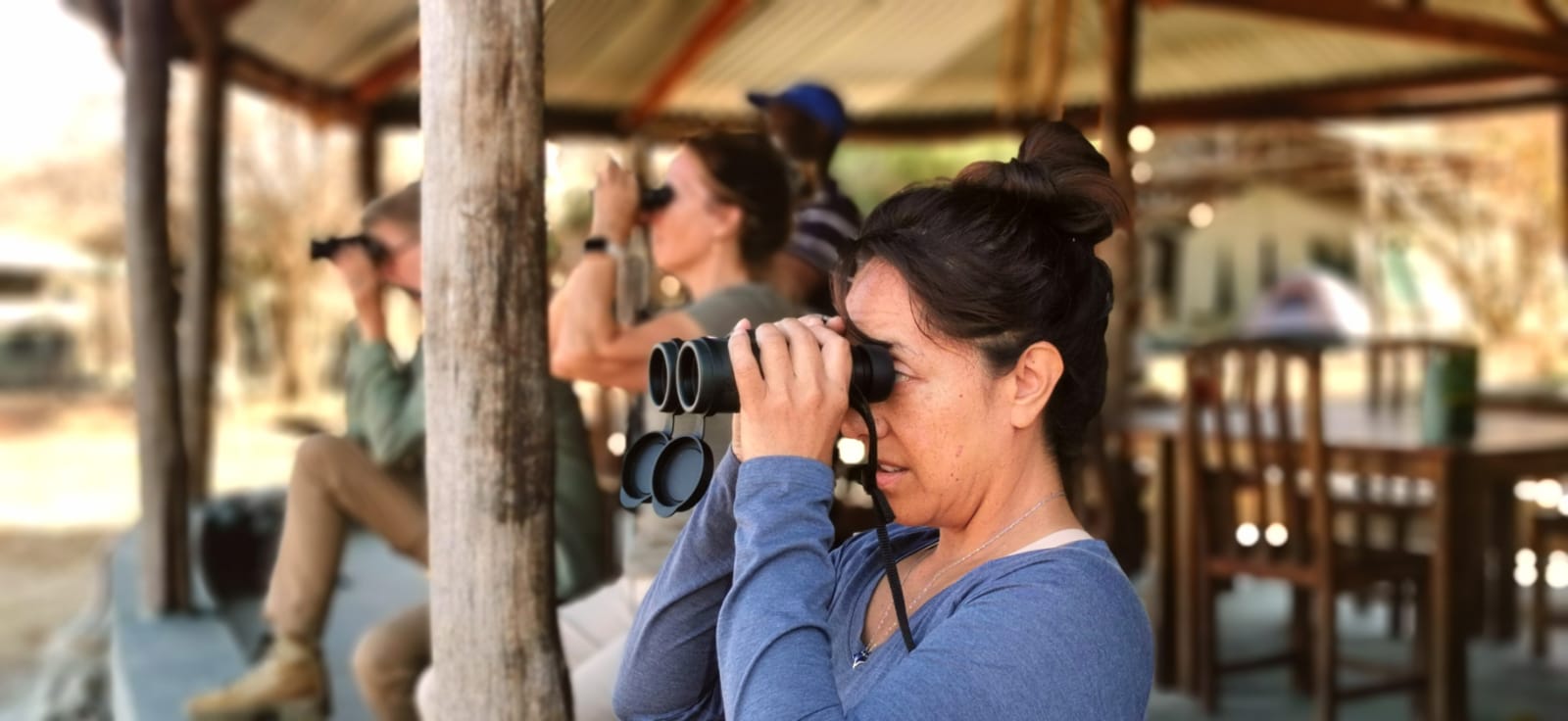
The herd drifted into the tall grass as we began our drive. After that we enjoyed the simple pleasures of watching and recording hippos, elephants, impala, kudu, vervet monkeys and more, aglow in the red dawn as the sun rose above the lake.
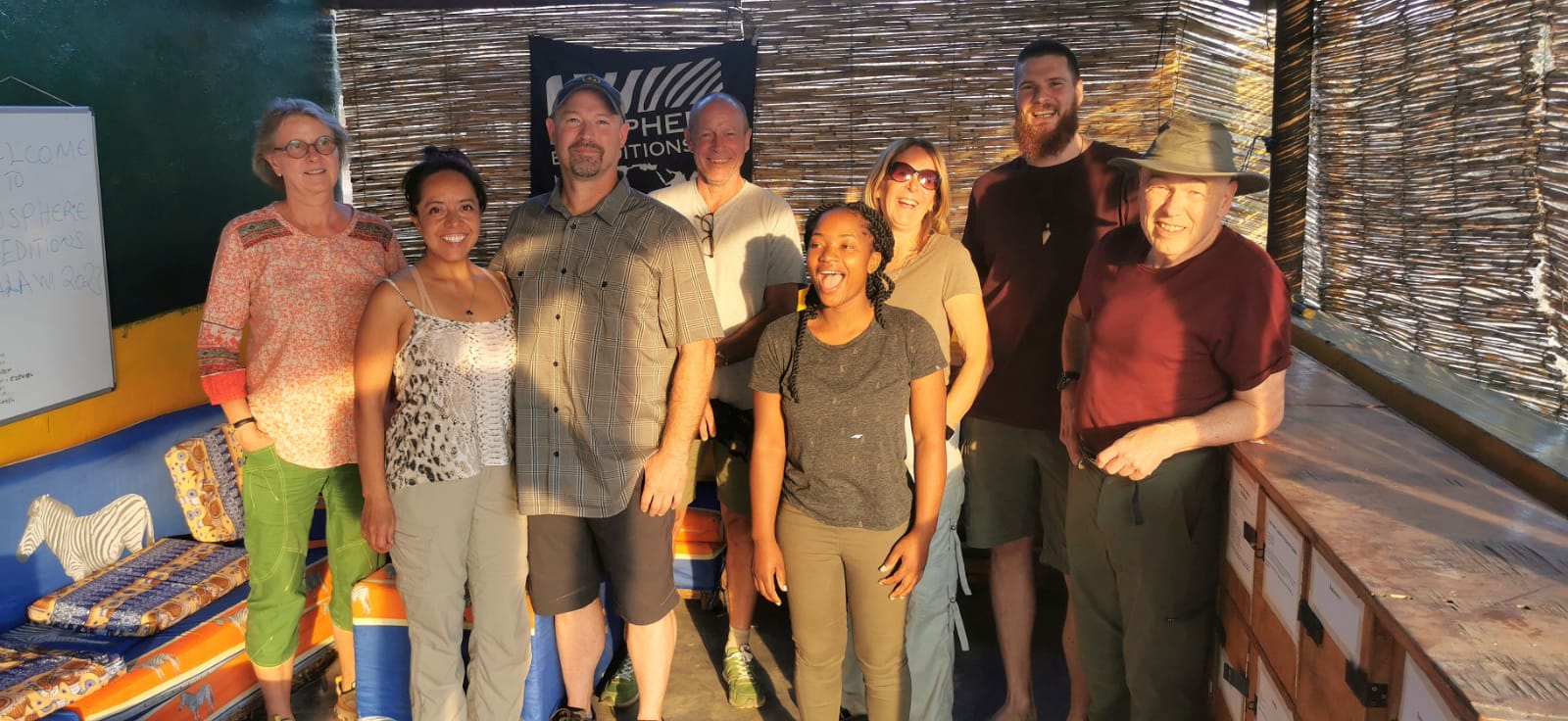
With the formal training now over, the team are had at work with the research tasks involved in this expedition and have already gathered useful data including on the training days. They have all been on other Biosphere Expeditions before and the experience shows.
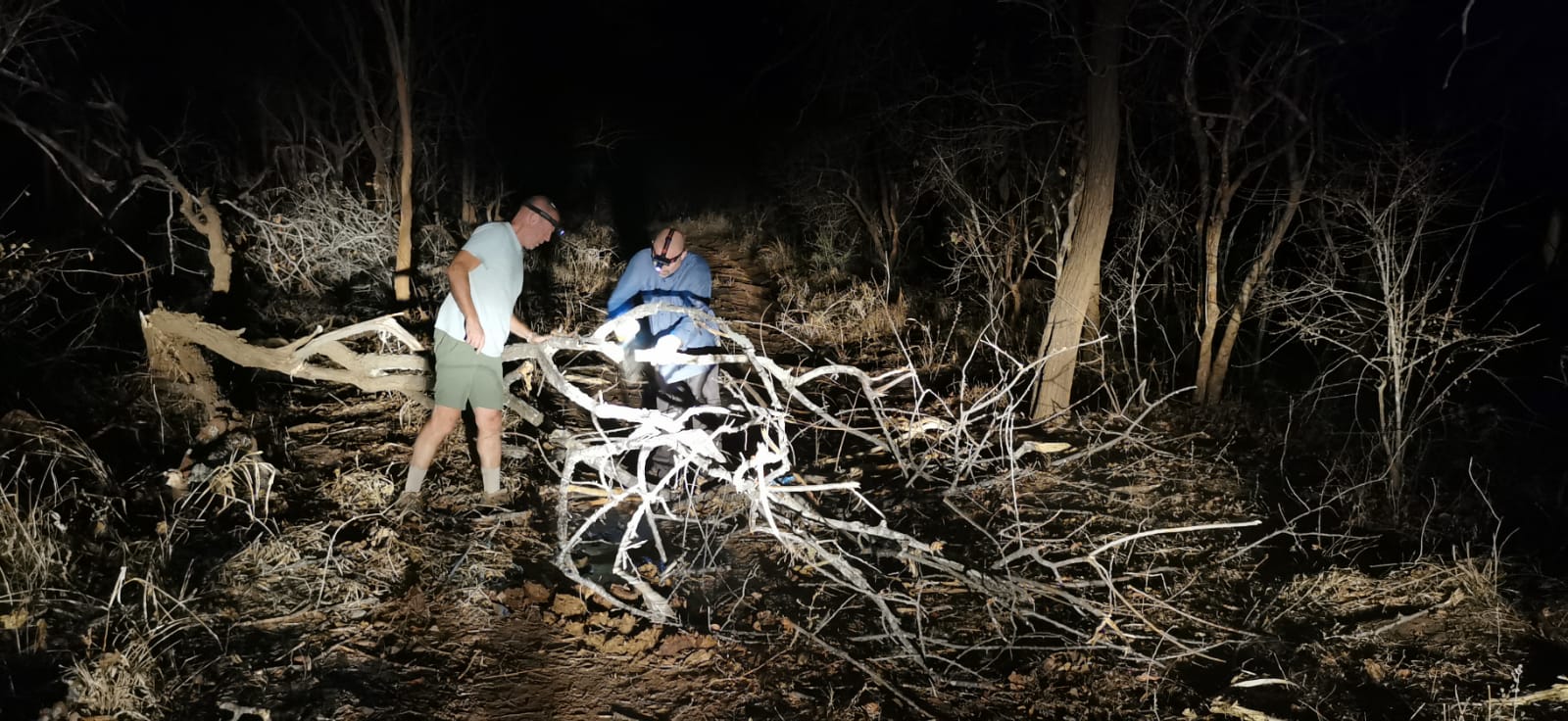
We are now settling into a mostly regular regime of hippo transects on foot and recording elephant herds and individual elephant IDs by car, by foot and often from base camp when the elephants wander across the river in front of us. We have also collected some good samples of elephant dung (scientist Benni is very particular about quality, and it is important to keep the scientist happy) and we have now placed all the camera traps, not without challenge: the vehicle track we use is often blocked by trees pushed over by browsing elephants and they need to be cleared with tools and muscle power if we can’t drive around them.
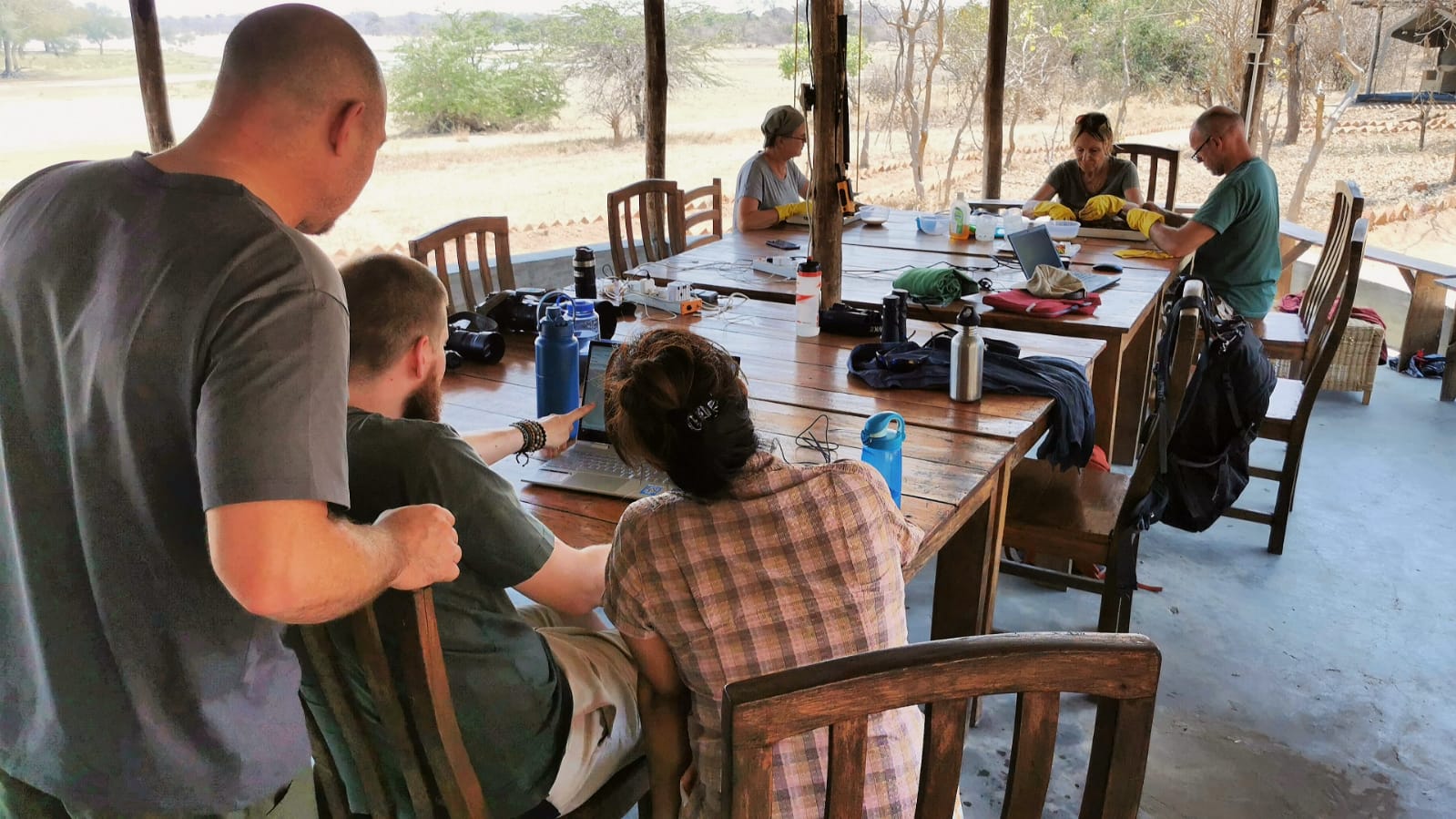
Our tasks from now on is to continue to gather data across all the research tasks and – during the hotter part of the day – sit in the comfort of base camp, processing elephant dung (to find any evidence of the elephants eating crops on local community land) , analysing camera trap images and entering data. We are doing well and the team is happy.
Sunday afternoon was peaceful at base camp in Vwaza. After a week of hard work and the usual endless practical challenges – water supply problems, missing kit, delayed delivery of new tents – we found that we were ready in good time. Even the unexpected news that our newly painted walls were not a sanctioned colour (sunny yellow: cheerful but apparently may be too bright for the wild animals) was resolved with minimum resentment or fuss by swiftly repainting in more wildlife-friendly British Racing Green.
The team arrived at base camp on Sunday evening, after a long drive from Lilongwe, on time, in good spirits and with everyone accounted for. This is always a moment of relief for the expedition leader. The team was also rewarded with the sight of a small family of elephants wandering across the riverside right in front of us under the warm evening sun.
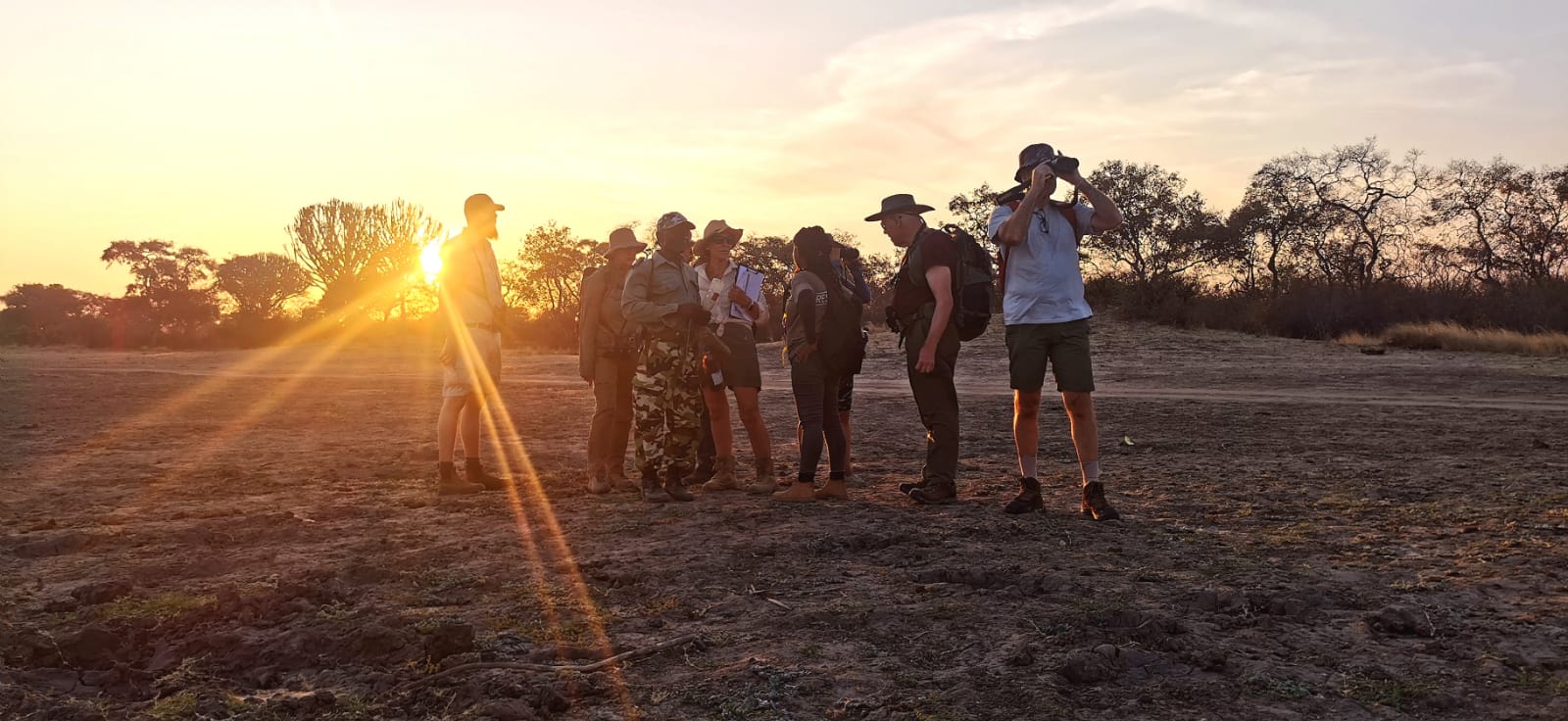
The first two days of the expedition are focussed on training in the research tasks that we will be doing, but the team were keen to get immersed in their new neighbourhood so Monday started early with a dawn ‘orientation’ drive around the lake. As the sun rose, they spotted elephants, many antelope species, some hippo returning to the water from their nocturnal grazing and lots of birds.
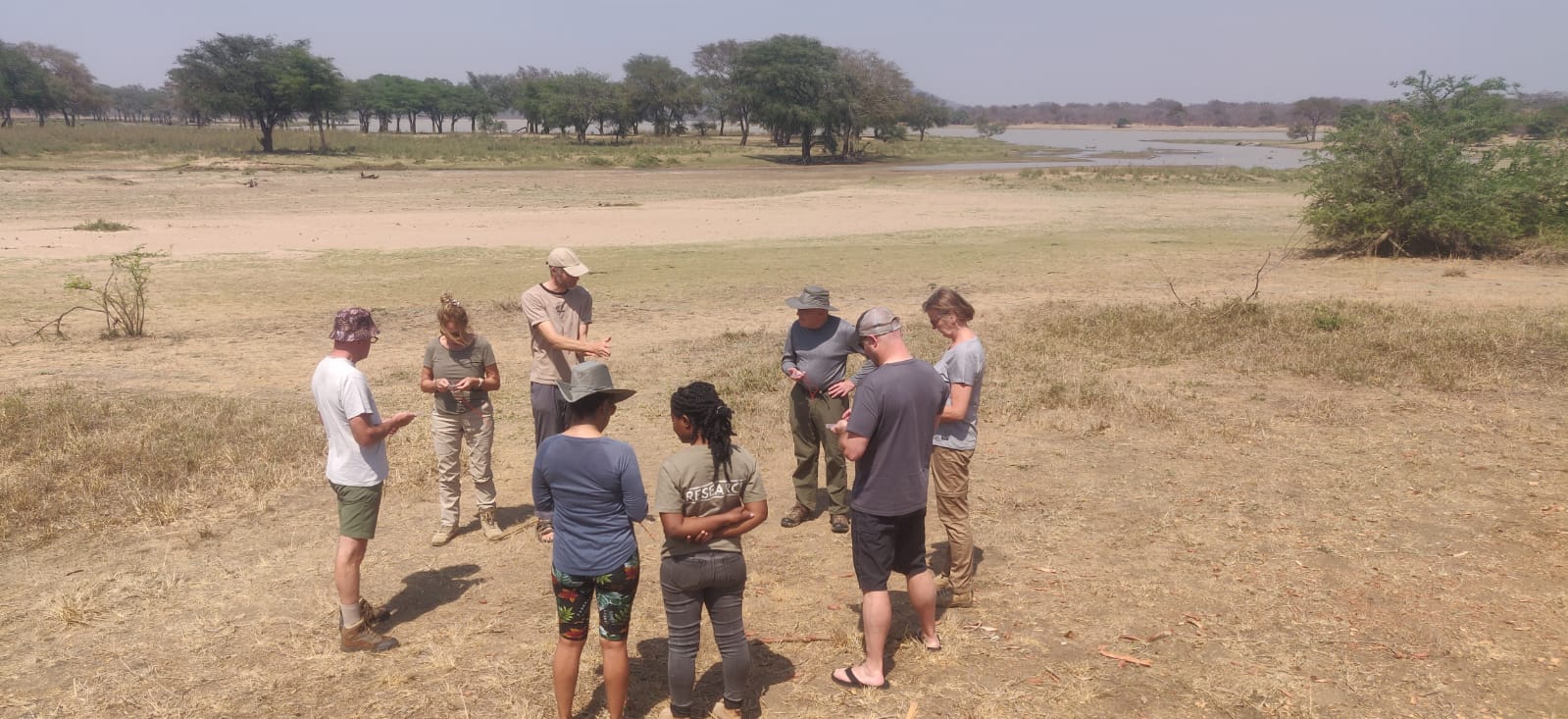
The rest of Monday is now being taken up by a mixture of classroom lectures and practical training. So far, the expeditioners are lapping it up and are now experts in using a compass and a GPS device to locate themselves and avoid getting lost.
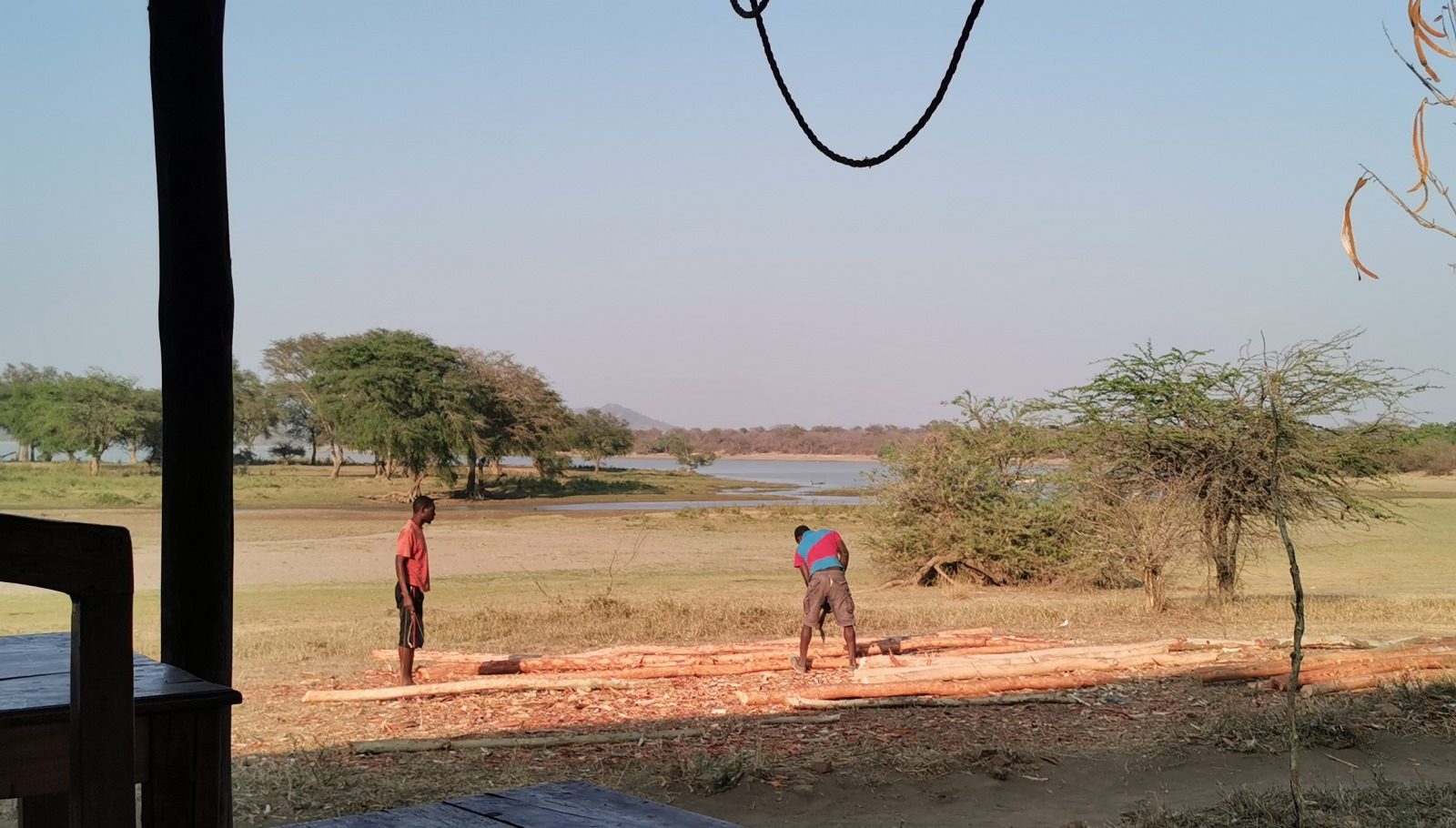
Base camp at Vwaza is full of activity. A team of people, led by Robert (LWT’s chief of all things practical), has been busy for the last few days repairing and refurbishing the camp ready for our expedition, and they are working hard. Walls are being given a fresh coat of paint (cheerful yellow), the kitchen floor re-concreted, a new gas-powered fridge, termite-damaged wooden posts replaced and a thorough clean-out all round.
When the team finally stopped work last at night, the sounds of wildlife crept back in – the resonant grunt of a nearby Hippo, the raucous ugly call of the Hadida Ibis, the endless chirps of insects as a backdrop. The smell of wood smoke from the dying embers of the cooking fire pervades the camp as the night draws in.
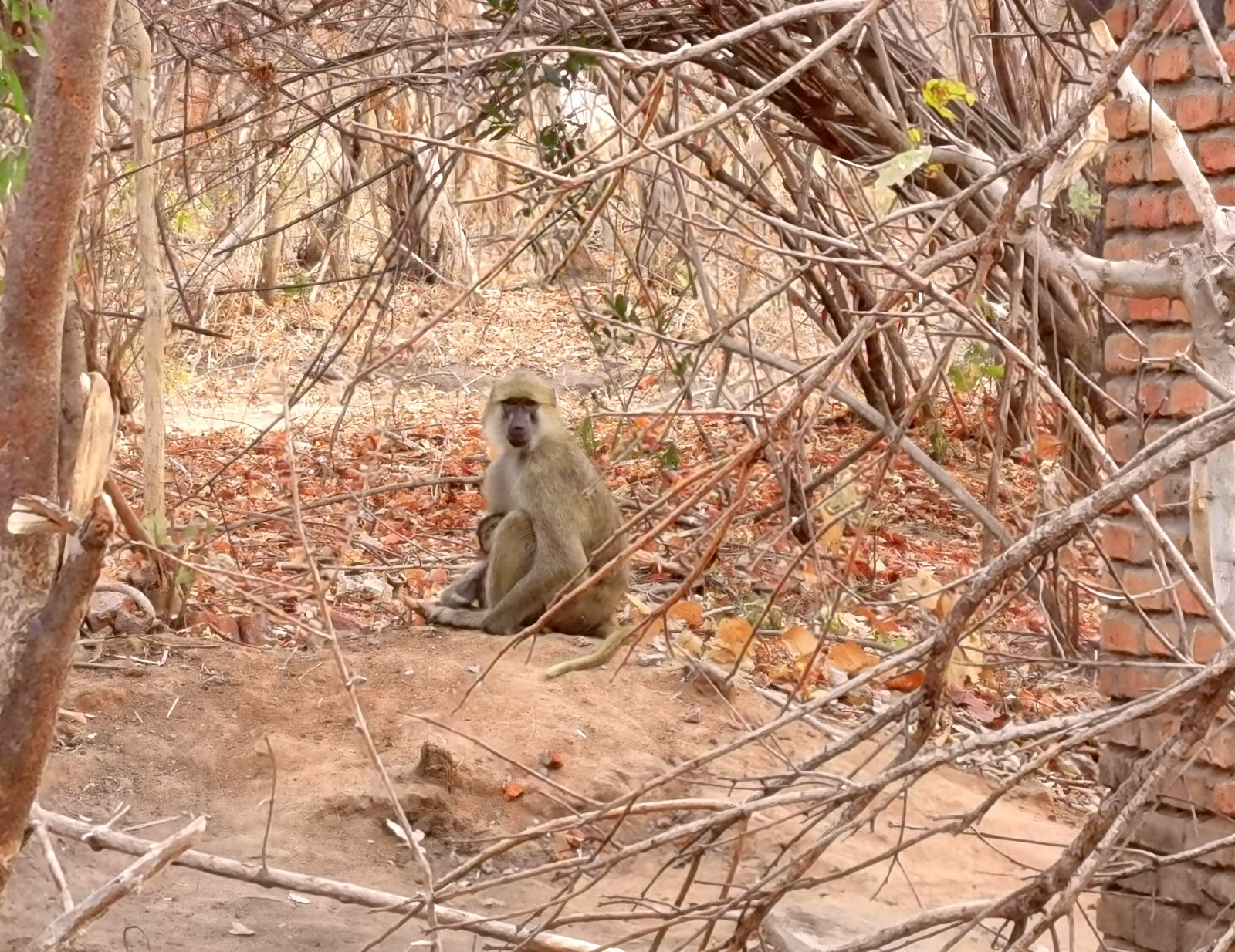
The day begins early with the dawn chorus at 05:00, punctuated by the lyrical whistling call of the Tropical Booboo. A herd of Impala are silhouetted against the lake, standing alert under the thorn trees. A family of Baboons lurk on the edges of the camp, the bolder animals darting in closer in the hope of finding food. Against this backdrop, the builders are already starting work. As the day brightens, the baboons retreat into the bushes and the Impala, emboldened, wander into the sunlit riverside in front of base camp.
Here’s an e-mail by our scientist Jean-Luc to Reef Check Italy, who are working with us on a scientific paper. We thought you might like to see this as it contains a nice summary of what we found.
——————-
We visited North and South Ari reefs, last visited in 2018. I was so depressed by the inner reefs then that we moved operations in 2019 and 2022 (post Covid) to South Male’ and Vaavu atoll reefs, that appear healthier.
Conclusions from this year
Outer reefs of Ari haven’t changed much – just accumulated slightly more of the same coral cover since 2018 (Rasdhoo, Bathalaa and Dhigurah wall).
Inner reefs are showing three post-bleaching trajectories:
Trajectory 1
Acropora coral (previously dominant in Maldives reefs over geological time in shallow water environments) recolonise and dominate the shallowest reefs (to 5 m max), where bleaching had damaged them and where grazing is extensive (example site: Kuda falhu). We think (re)growth of any coral below 5 m is difficult in many central atoll reefs, because of extensive rubble fields of unconsolidated material drifting down the slope from previous bleaching, then storm events.
Trajectory 2
A shift to Porites rus (that can be branching and plating and massive in life-form) and Porites cylindrica and Pocillopora (probably P.verrucosa) in (mostly) shallow reefs. These three lifeforms are prevalent in Baros House reef (from a snorkel to the south of the resort), and from surveys in previous years in South Male’ inner reefs – at Beybe’s and Guraidhoo inner (see photos from previous reports of surveys in 2019 and 2022).
Trajectory 3
A phase shift in reefs from coral-dominated to Corallimorph-dominated (worrying). This is the case at Dega thilla. I have recorded in all my time in the Maldives two other reefs entirely dominated by this blanketing lifeform – one was Adhureys Rock way back in 2005. You have the data from that site I think. I think the other one was about 2011 or 2012 (from North Male’ I think – I’ll have to look these up).
So there is little variation in outer reefs, drops-offs, near channel reefs, but the above three trajectories in inner reefs does show this tremendous variation. I suppose there is another where things remain pretty much dead – with low coral cover, and not much else in terms of dominance. That would be expressed by Oshigali finolhu that we visited as our last site (an inner reef near to Dangheti Island, South Ari on the last day).
I hope these observations, and data are useful. As I said in the Wetransfer, we also have photo quadrats at all sites if your students want to analyse these in more detail.
Other achievements of the expedition include:
Since its inception in 2011, this expedition has thus far trained over 100 people in Reef Check surveying, including over 30 local Maldivians in techniques on how to monitor their reefs and set up community-based monitoring schemes. As a direct result of this, local NGO Reef Check Maldives was formed in 2017 and is now active in community-based reef conservation work and advocacy. Some of these community surveyors are now teaching Reef Check themselves, and are employed by government agencies and private consultancies to undertake management and surveillance. A colouring and educational booklet for local schools has also been produced and distributed around the country with the help of the local Ministry of Education. The expedition has also surveyed reefs that were impacted by the coral bleaching event of 1998, and identified recovery in most reefs prior to the 2016 bleaching event. Data on reefs and whale sharks are given to local and international NGOs, government and other decision-makers, who are planning on increasing the number and area of Maldives marine protected area (MPA)s. Our Reef Check data will form part of that picture when the government considers new MPA areas. Other achievements include: Post-bleaching assessment and scientific paper, assessment of fish populations inside and outside ‘MPAs’, two masters theses with University of York, conference presentations (IMCC, Washington 2009 & ECRS, 2017), four resorts trained in Reef Check, one of which is now undertaking its own Reef Check and hosting coral rehab work, two dive centres (Vaavu atoll, Fulidhu and Baros) trained in Reef Check, award-winning Maldivian expedition placement (Shaha Hashim) now employed by Blue Marine Foundation grouper project at Addhu atoll, national Reef Check Coordinator (Hassan Baybe) at ‘Save the Beach’, Vilingili.
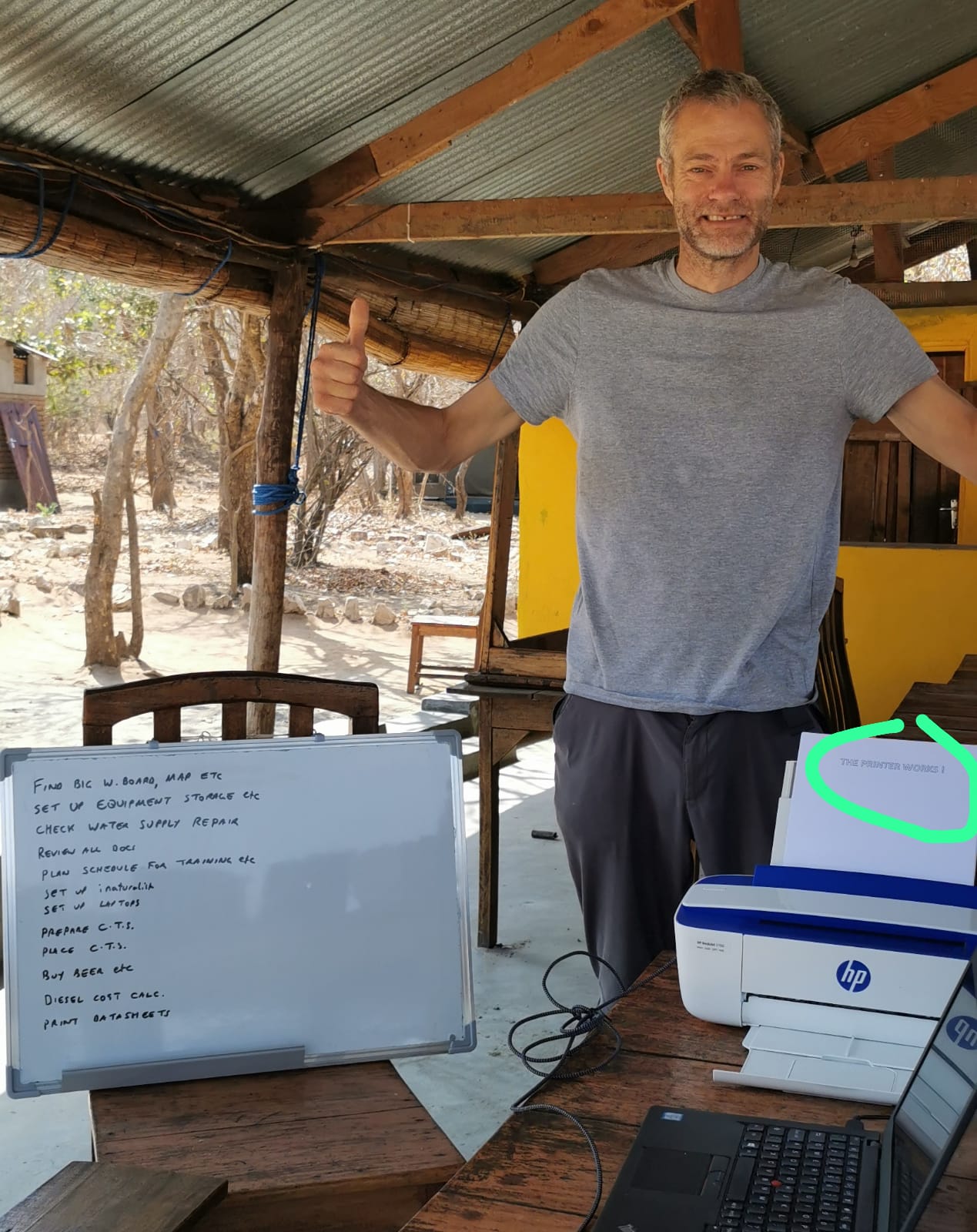
This is Roland Arnison, the expedition leader for the 2023 Malawi expedition. I have just arrived in Malawi – I am delighted to be returning to lead this expedition again, along with Lilongwe Wildlife Trust (LWT) lead scientist Benni Hintz. We will also be joined by research assistant Chimwemwe Kalulu from LWT and expedition chef Luka.
Form left: Luka, Roland and Benni
I will spend a short time in Lilongwe for last preparations and supplies before heading up to base camp in Vwaza Marsh Wildlife Reserve with Benni to get everything set up there ready for the arrival of the main team of citizen scientists on 17 Sep .
On this expedition we will see elephants – lots of them – which is useful as these are one of our research targets for the expedition to assess their population changes and potential conflict with humans. Although we will explore the south part of the Wildlife Reserve, at the edge of the lake, to look for elephants, we can expect to spot many of them from the comfort of the base camp: in previous years the elephants regularly walked across the lakeside right in front of us (and occasionally wandered through base camp at night).
Our research tasks will also involve counting hippos (easy to spot, less simple to count) and hyaenas (difficult to find, but we have a technique) and using camera traps for recording other wild animals. It will be a busy, but hopefully very rewarding expedition. Please make sure you swot up on the methodology using the field guide we sent you and bring a copy with you into the field.
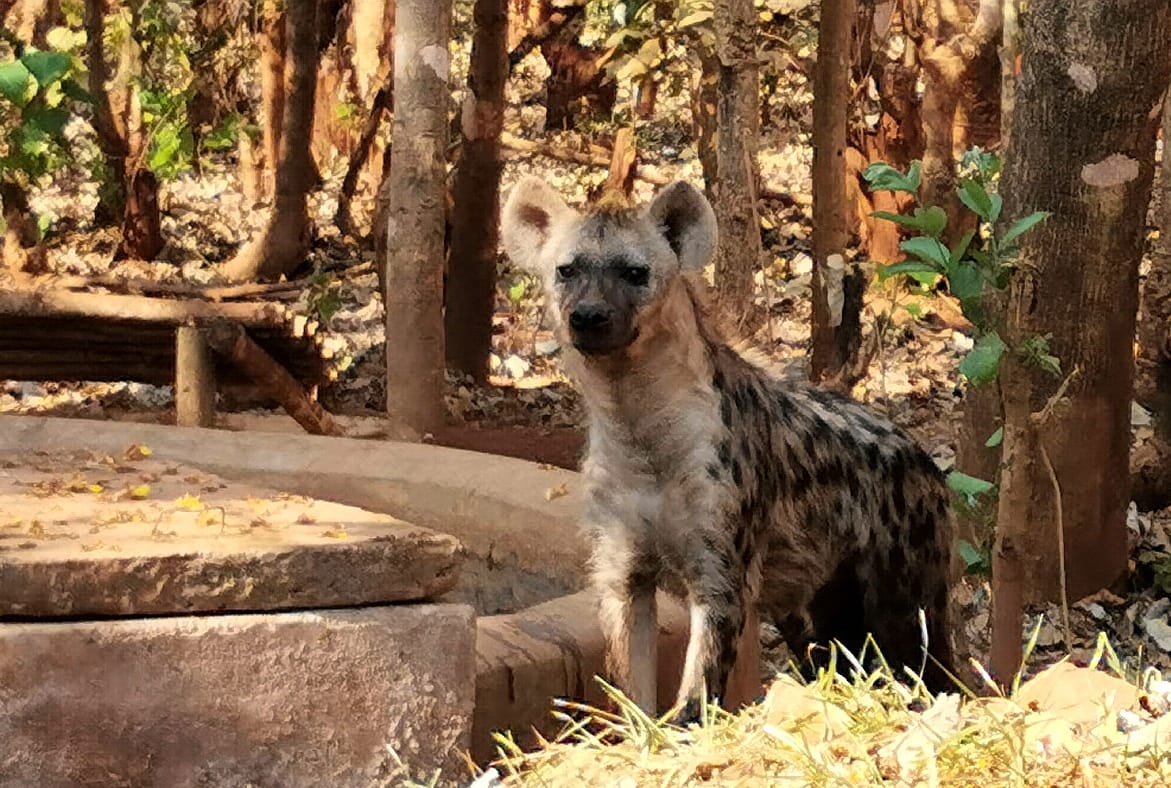
Within hours of arriving in Malawi I have already encountered yellow baboons and a hyaena at LWT’s wildlife centre in Lilongwe – a wonderful welcome.
I will send another diary entry and more photos when I arrive at base camp in a couple of days.
We’re done. Another batch of EcoDivers trained, another year of surveys done, another bunch of people looking at reefs with different eyes.
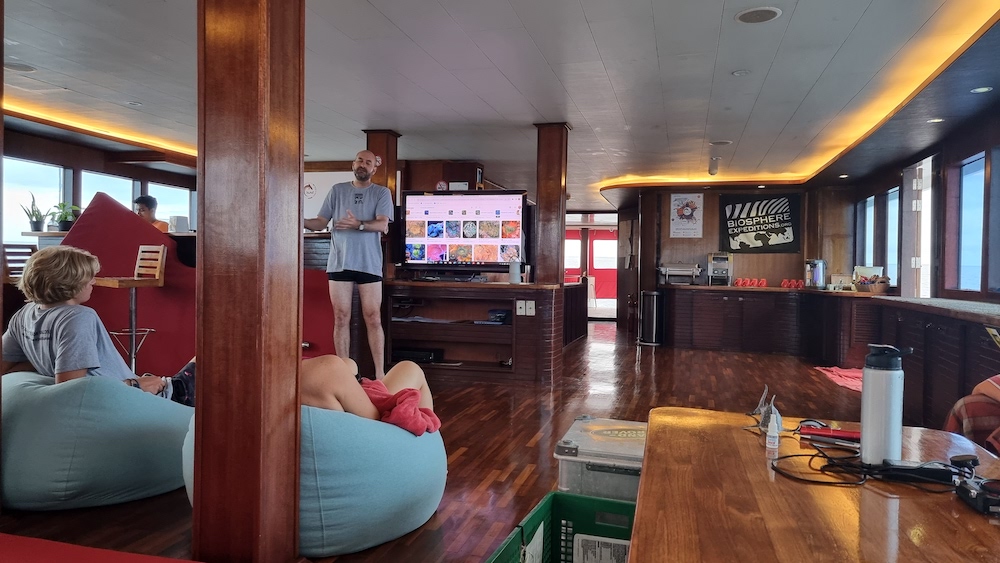
Jean-Luc presented us with some prelim results and thoughts towards the end, the full scientific report will come out in 10 months or so, publications with our now impressive dataset spanning over a decade are in the works.
It’s been a mixed bag of hope and despair, of reality checks, the best and worst of humankind, camaraderie, focus and getting a job done. Thank you to Dune Maldives and the crew of the Theia who looked after us so well allowing us to concentrate on diving for science. Thank you, team, for your efforts and kind words, on record below and on the boat in private. Without you, this expedition would not happen, the data would not be collected and no reports would get written. So stay in touch, come back and we’ll you somewhere, someday on this beautiful, beleaguered planet of ours.
We came here feeling pessimistic. Reefs are battered from all sides – warming oceans, bleaching, acidification, overfishing, exploitation, you name it, we humans inflict it on reefs and the natural world. Indeed some say that this current decade is the last to prevent the total collapse of reefs worldwide.
So we did not expect to find signs of hope, but we have. A dim light at the end of the tunnel, a flicker of hope, however faint. It’s no reason to celebrate, but it shows why citizen science is so important. Without the citizen scientists on this expedition, this message, which we will write up in a scientific report, would not exist or be heard. So thank you to all those on board for enabling this with their efforts and funds.
And here’s the story:
We have found some cause for hope for previously badly affected sites, mainly from the last 2016 mass bleaching event. Sites that are grazed by herbivorous fish and have not been colonised by corallimorphs have partially recovered since 2016. True, the recovery is slow (cue the problems from paragraph 1), but there is some recovery. Baby corals are taking a foothold, surviving on the skeletal corpses of once great boulder corals, finding a space for new life in between dead coral branches, clinging on and growing. But those reefs that have been colonised by corralimorphs are getting worse. They are or have phase shifted from coral to corralimorph reefs, blanketed by nothing but these fleshy creatures, which nothing eats and which take over everything. Once the brown carpet has taken over, nothing is left – no fish, no invertebrates, no corals. This has happened in other parts of the world, for example in Bermuda, where few coral reefs are left.
But we are not there yet in the Maldives and we hope our work makes a small contribution to never getting there.
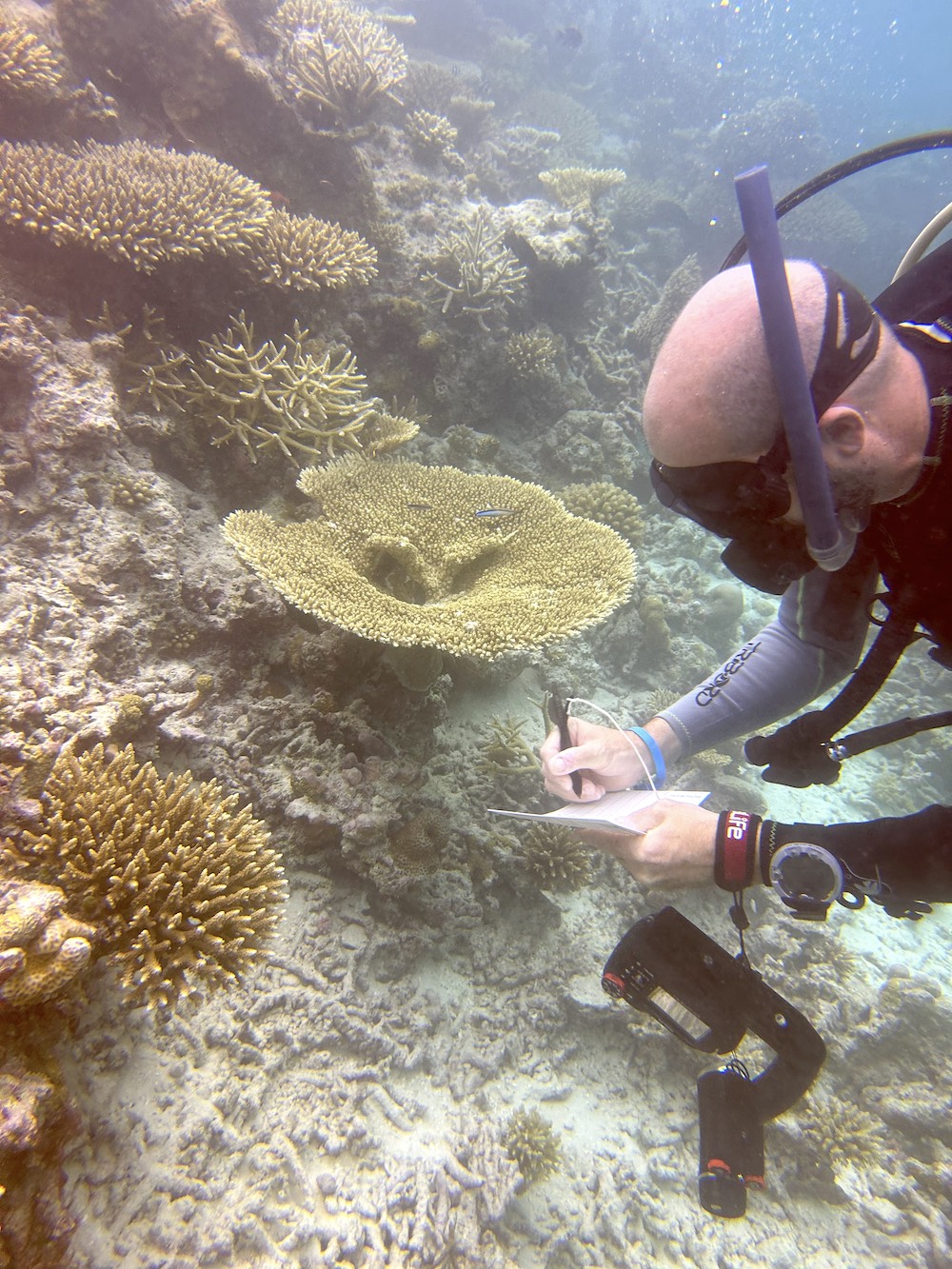
Two days later and we have a boat load full of qualified Reef Check EcoDivers. Congratulations to everyone for passing the written and in-water exams and rising to the challenge.
Even our test survey dive yesterday was good enough to keep the data. Our scientist Jean-Luc was predictably pleased. A small miracle, as he is otherwise quite cantankerous :))
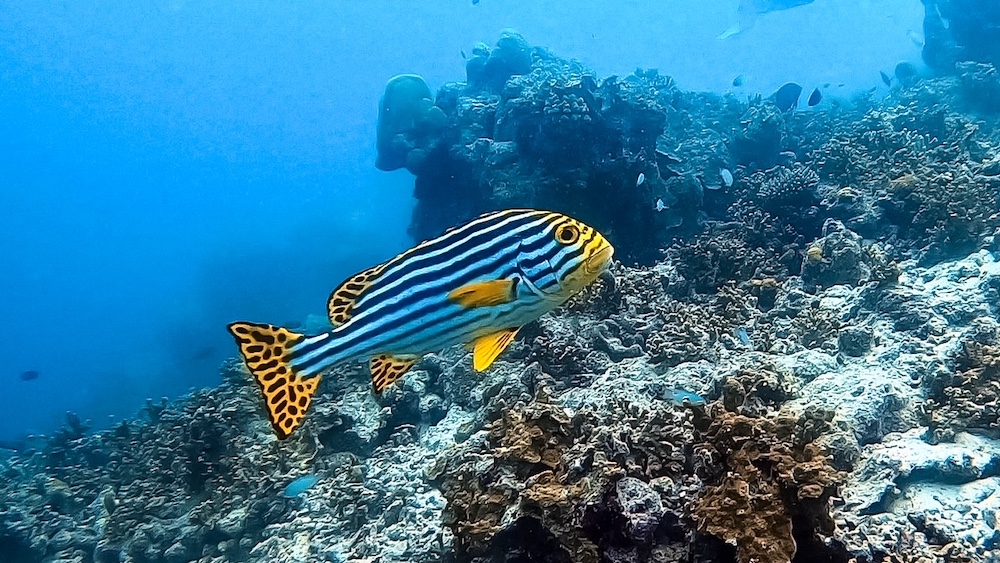
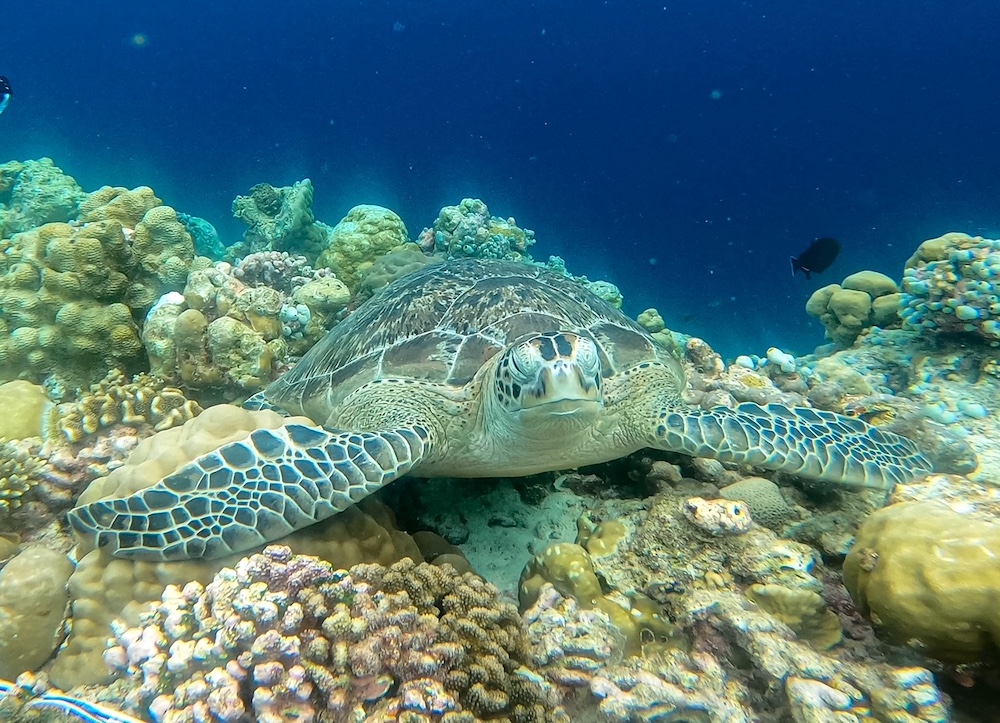
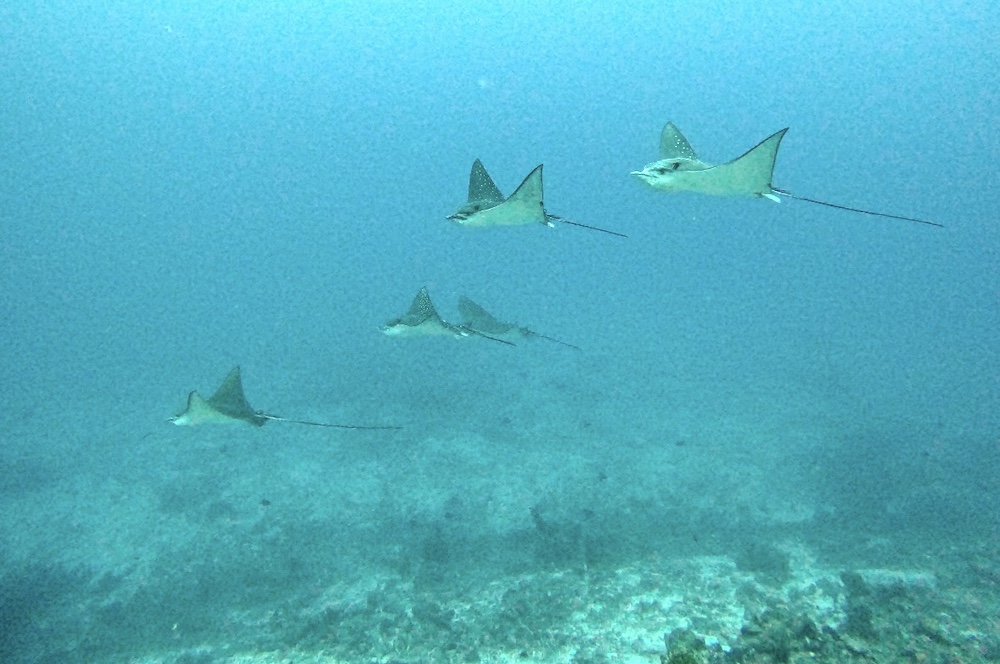
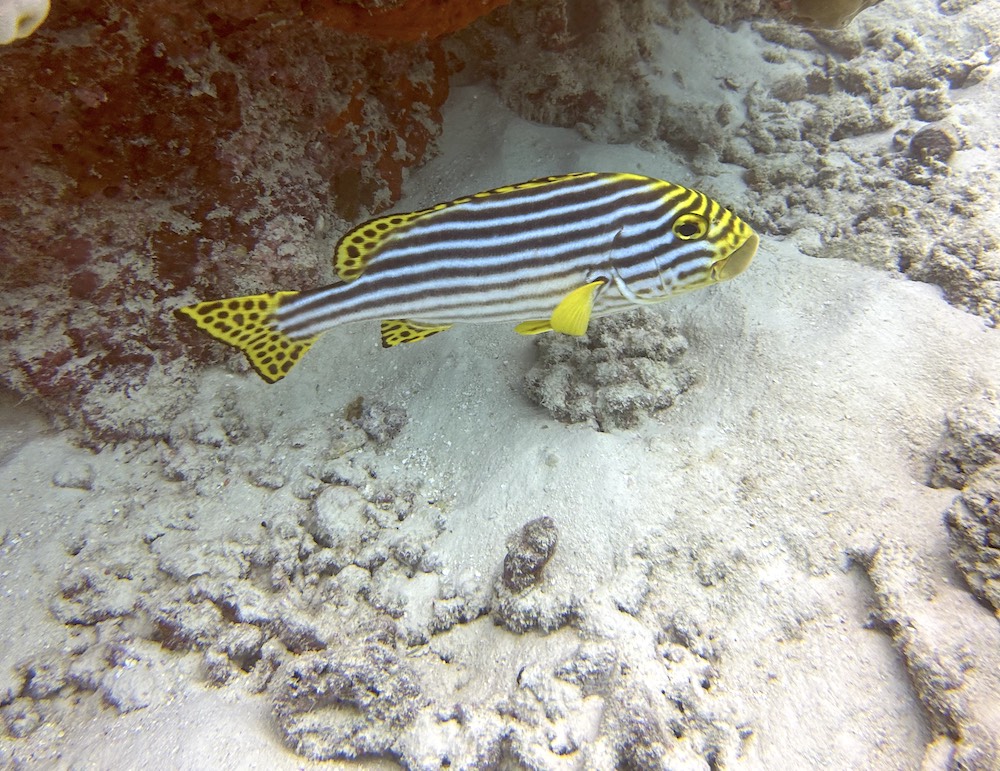
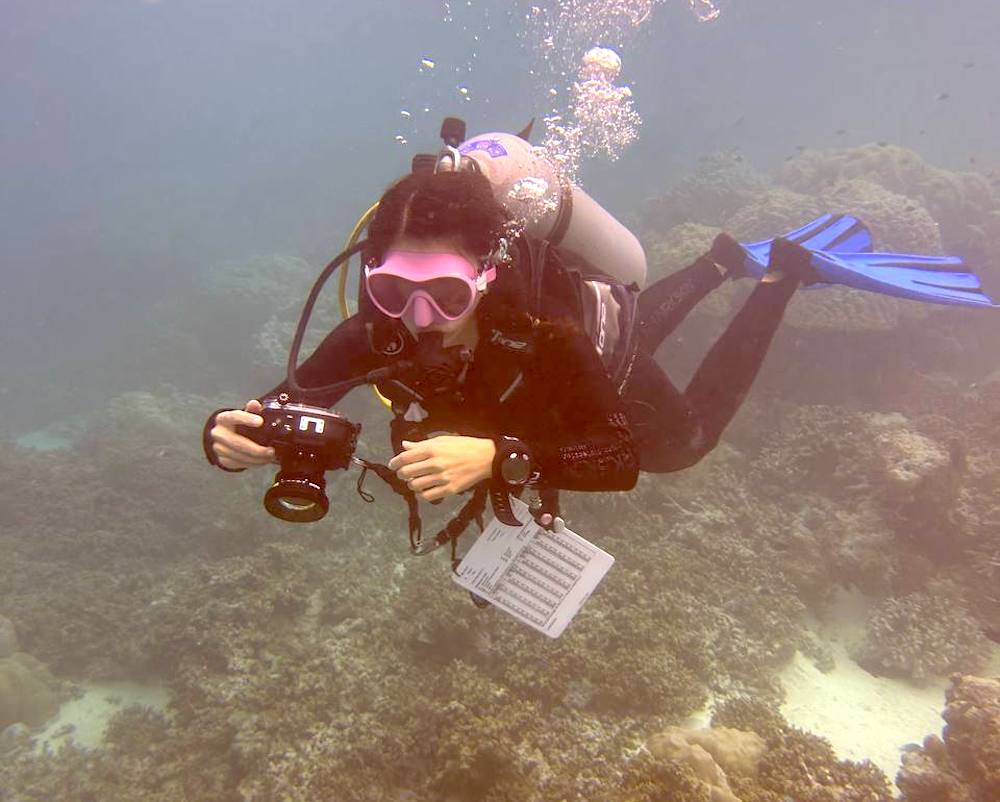
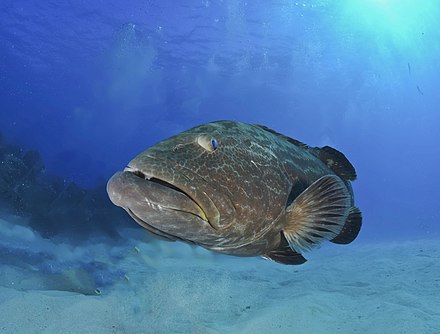
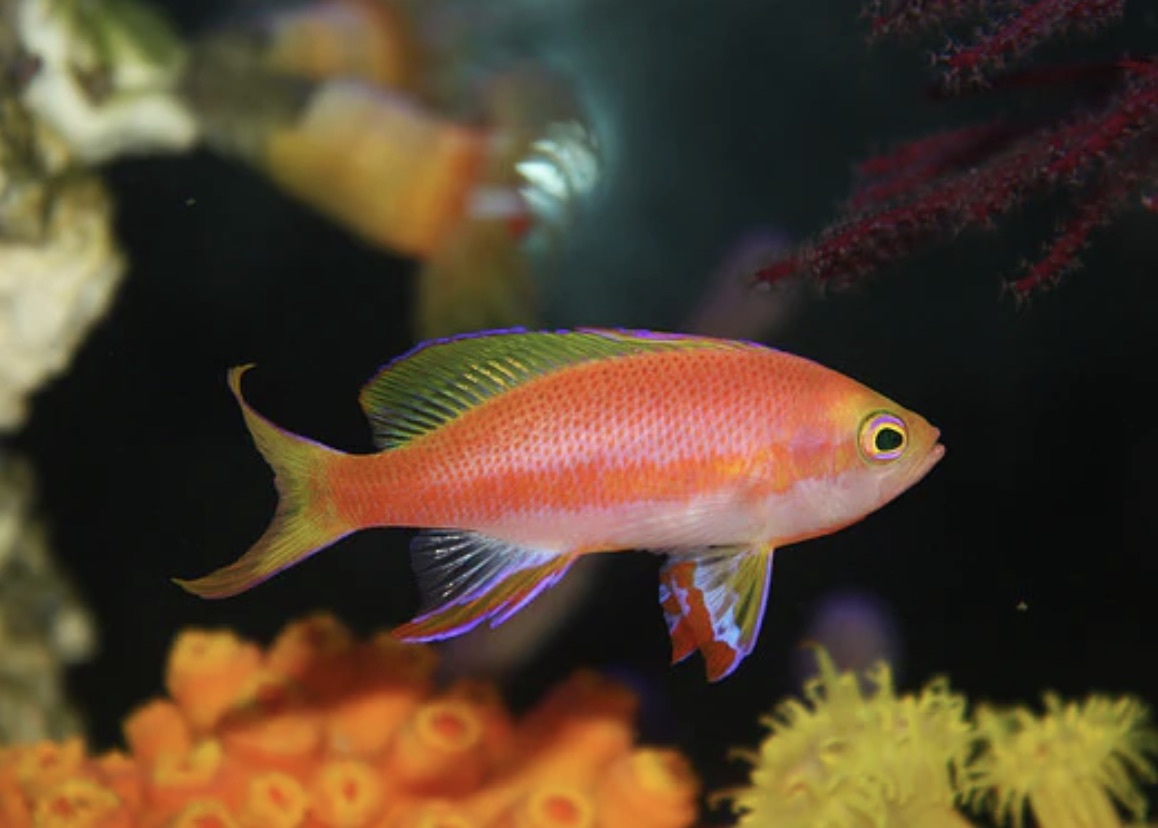
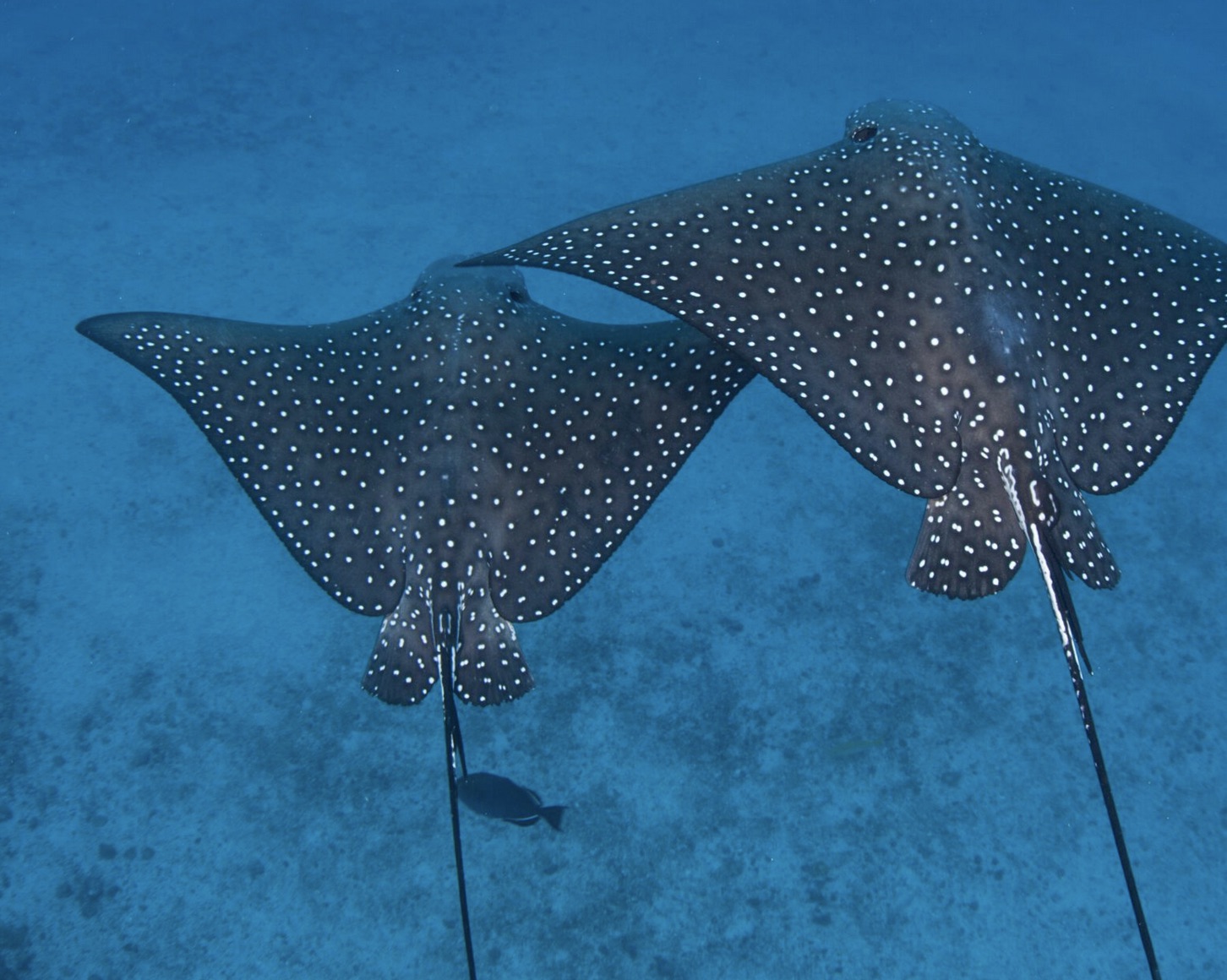
Today started with an early morning lazy dive at a well-known dive spot at Rasdhoo atoll. We saw lots of our indicator fish (grouper, snapper, butterflyfish, sweetlips, parrotfish, etc.), a graceful small school of eagle ray and a handful of sharks cruising a steep reef drop-off going deep down into the blue where us mere mortals with our heavy, noisy and clunky gear to survive in the water cannot go. Jacks cruised the blue too, slow and lazily, like a sheathed arrow, ready to dart at a moment’s notice when prey is near. Above us, unicornfishes amused themselves in our bubbles, below longnose butterflyfish picked away at corals in the reef garden. Resplendent anthias floated between the corals and did their name proud. Parrotfish munched and grated against the corals, their excrement the creator of those white sandy beaches that we associate with the dreamland we call the Maldives. A goatfish barbled its way along the sandy bottom in search of food. A Napoleon wrasse floated by in between us, curious as they are, but, alas, quite small (about our size) as their docile and inquisitive nature is their undoing in the face of the destroyer.
And because we destroy, our job is to research and protect where we can. What was it like 50 years ago, when the Maldives where in a pre-tourism slumber? How many hundreds of snapper would we have seen today, how how many sharks would have policed the blue, how big would that school of eagle rays have been? A whole university perhaps? It’s hard to know and hidden by shifting baselines. We know we are part of the problem and this is why collecting reliable data over many years, in our case over a decade now, is so important. But are we just documenting the inevitable decline? It’s hard to know. The first few days tell us that at least it does not seem to have become worse. But that is only a snapshot impression, an educated guess based on a few observations. That’s another reason why recording things in details is so important and why lazy dives such as this one are rare. Why waste your time being tourists when you can be citizen scientists instead?
So out we are again this morning, checking the reefs we all love.
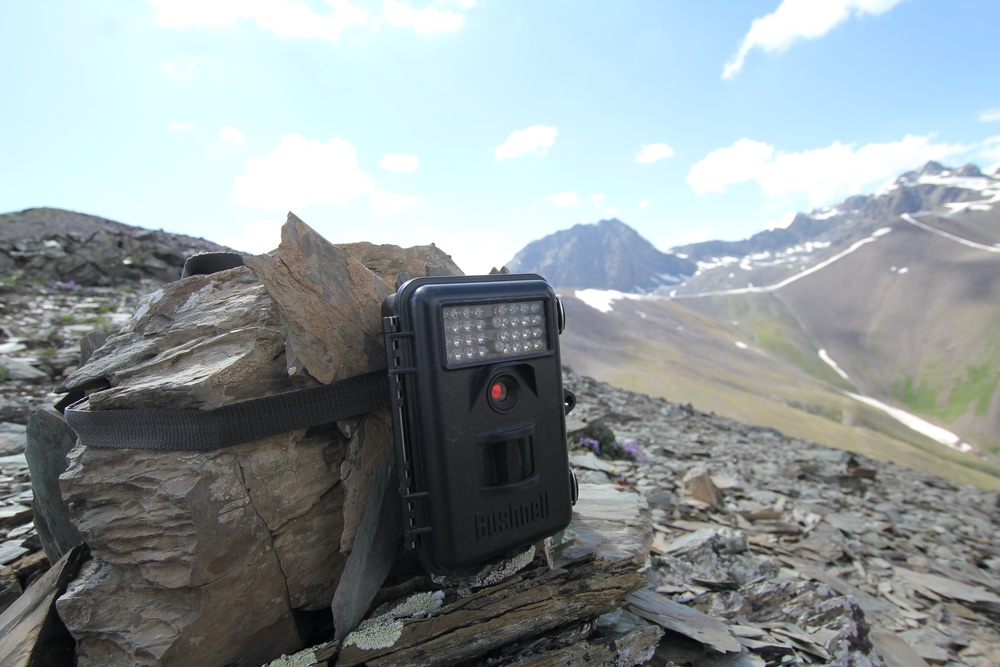
In science confirming the absence of a species from a location is still a result. But hope dies last and so, after all the effort that has been put into selecting and moving expedition locations, everyone was hoping that we can find some evidence that snow leopards inhabit the mountains of our new study site. With this in mind, we started group 3 with the ambitious goal of placing 15 more camera traps in the surrounding mountains, and surveying all the remaining valleys within our base camp vicinity.
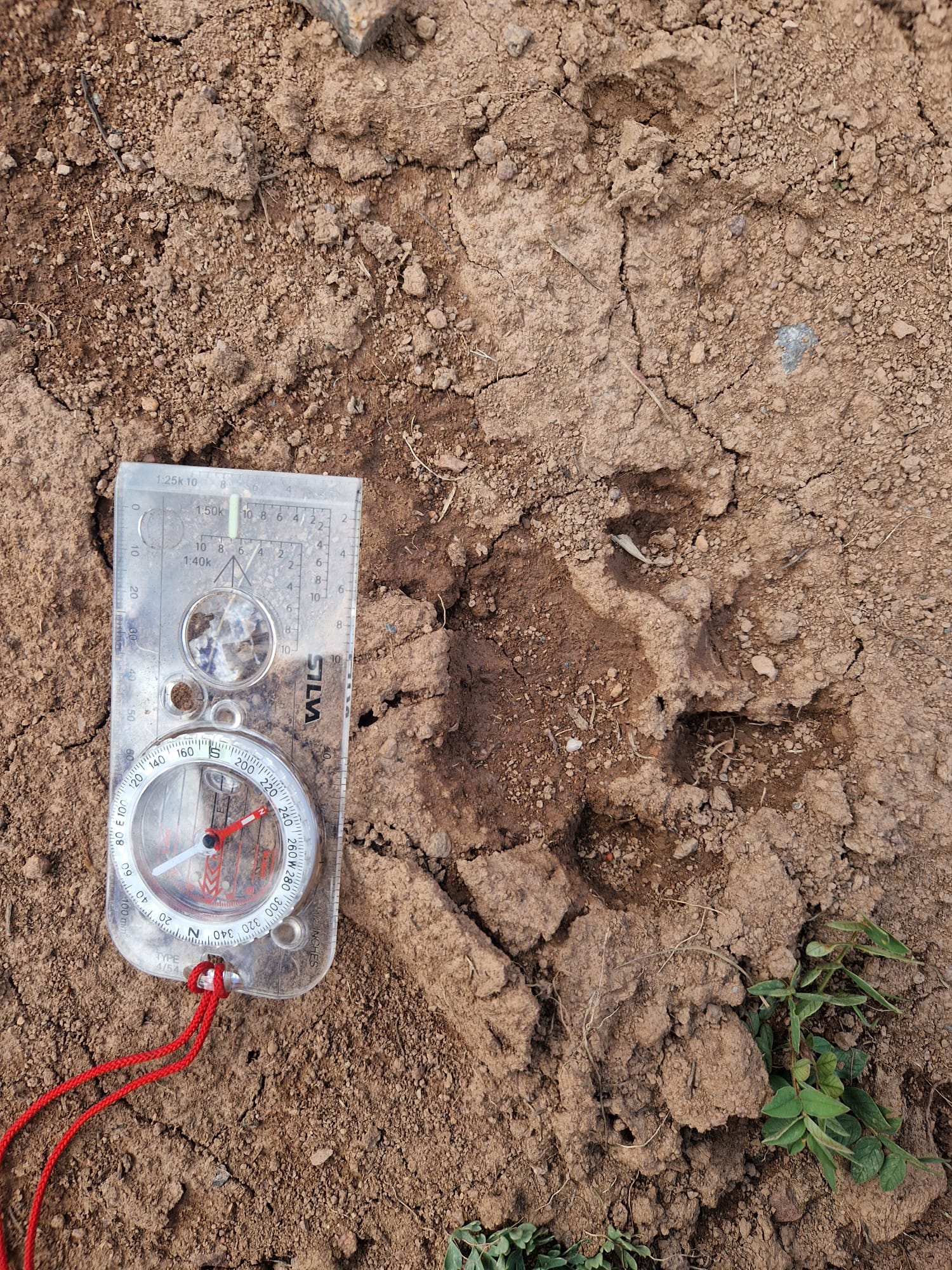
As previously reported, on our first full day in the mountains Sonja found what is suspected to be snow leopard scat. Since then several more promising samples have been collected (we eagerly await DNA confirmation from the lab). However, with Taalai, the local rangers and Alex (snow leopard zoo keeper) all feeling confident, signs are promising.
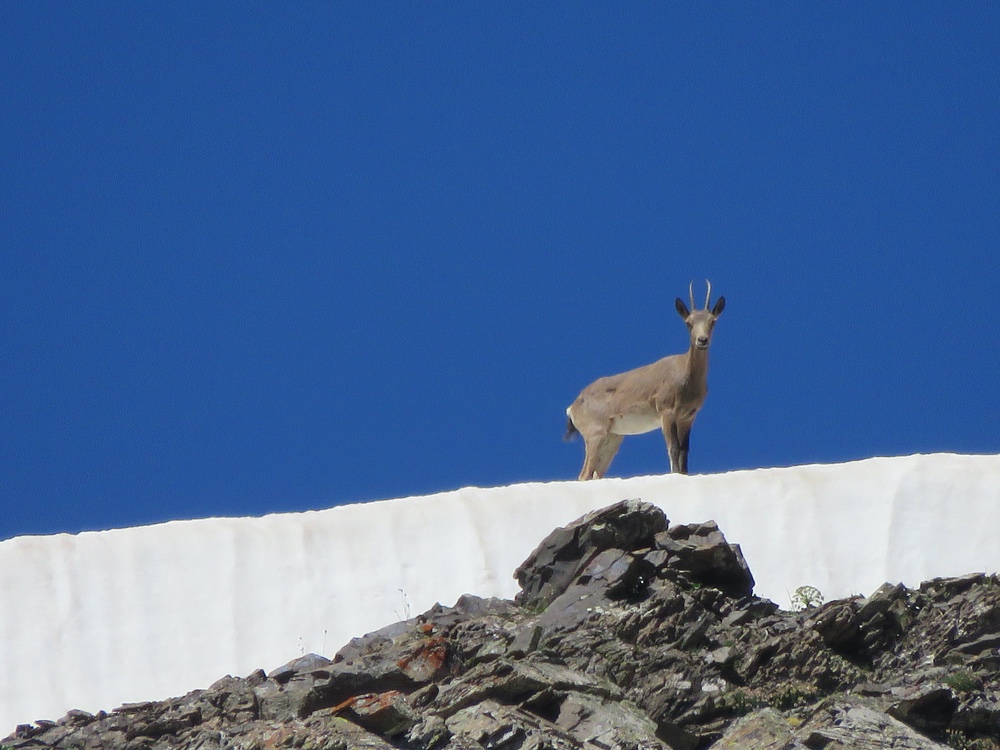
With strong and ambitious snow leopard citizen scientists we managed to hit our camera trap goals, special thanks to Mel and Alex for volunteering for the most challenging survey routes on every single day we went out. The most exciting discovery of the fortnight was made by Sonja, an excellent suspected snow leopard print (also mentioned in our previous blog post). With likely snow Leopard prints and scat, multiple Pallas’s cat prints as well as live ibex sightings, all indications are that these mountains are an excellent location for our expedition.
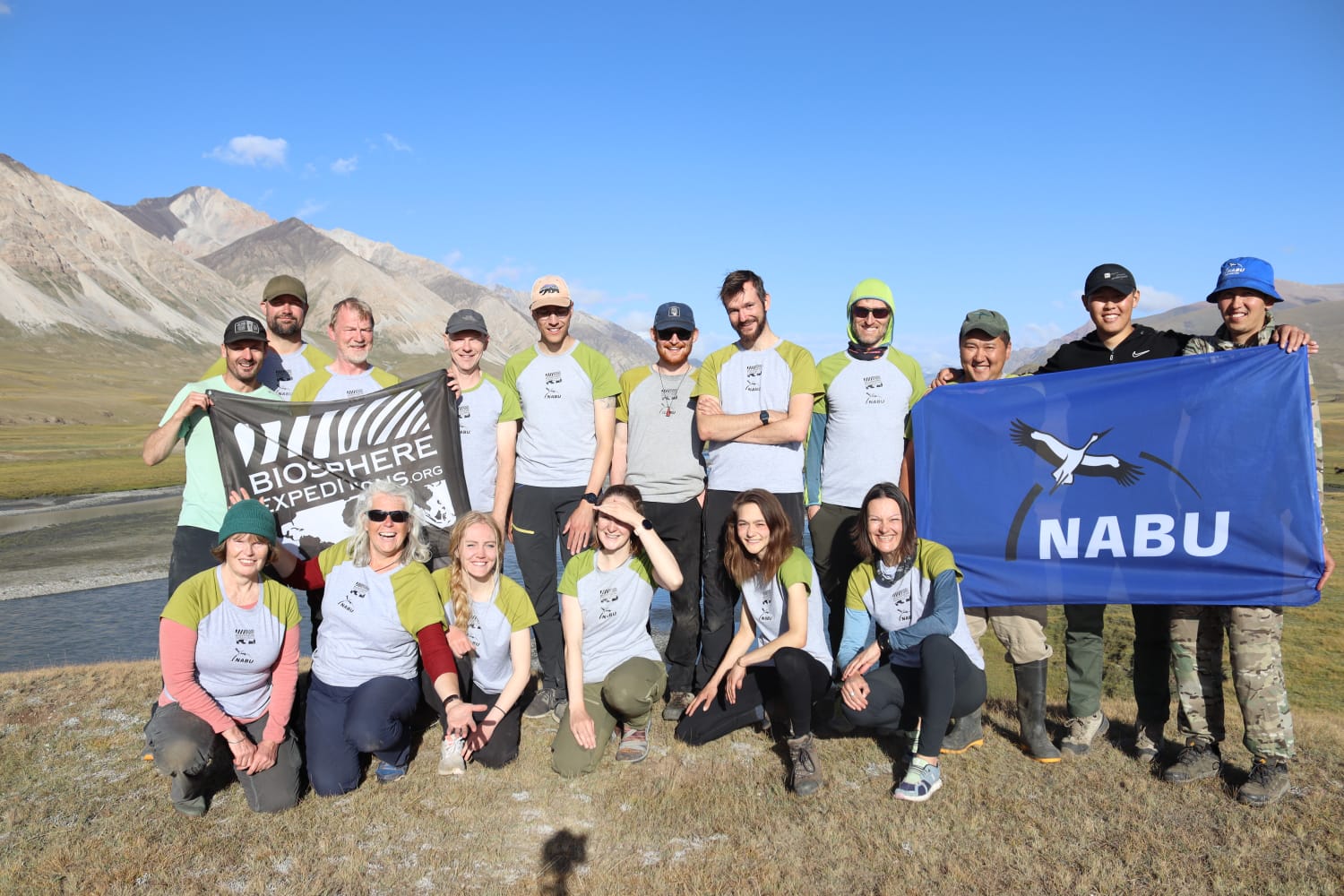
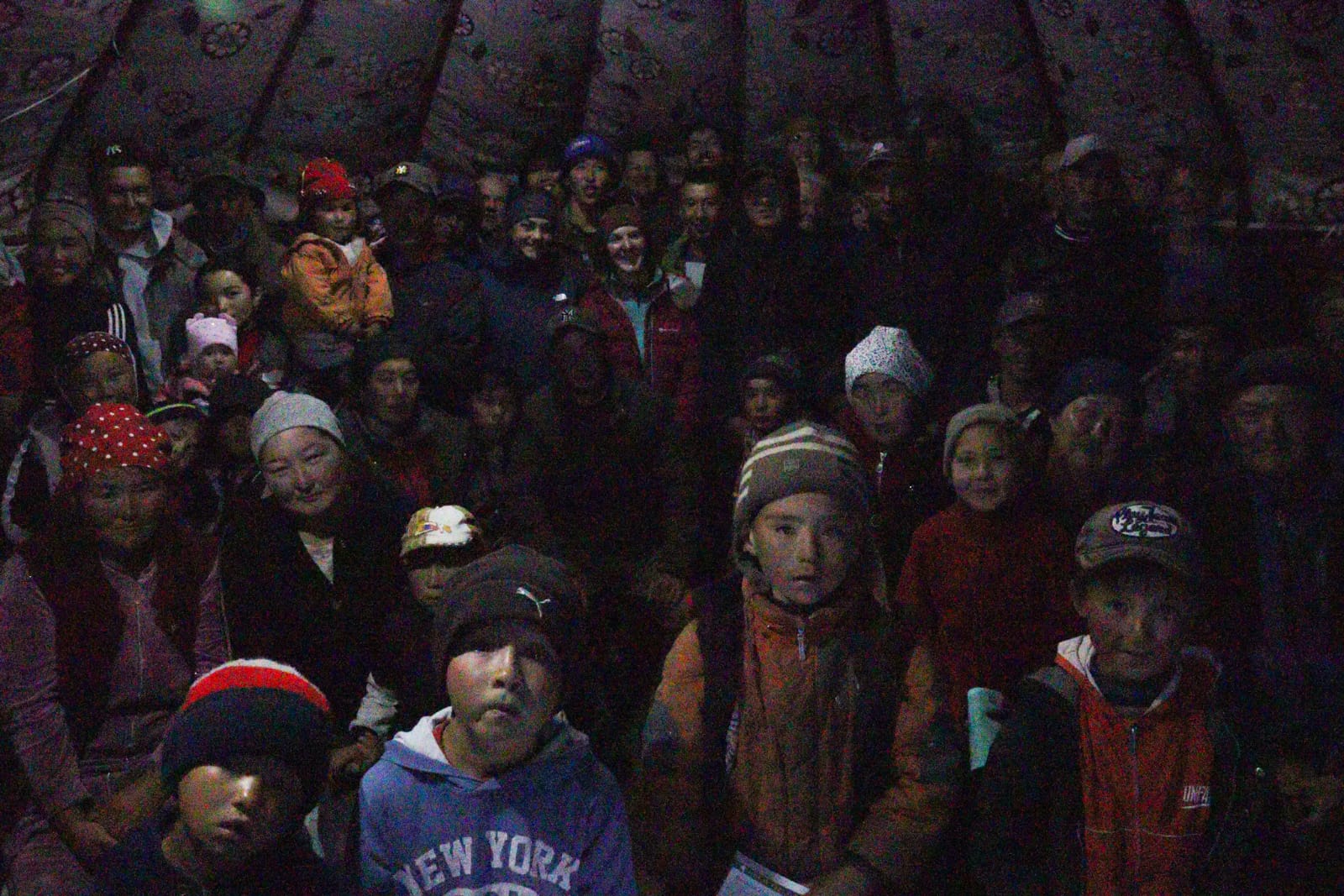
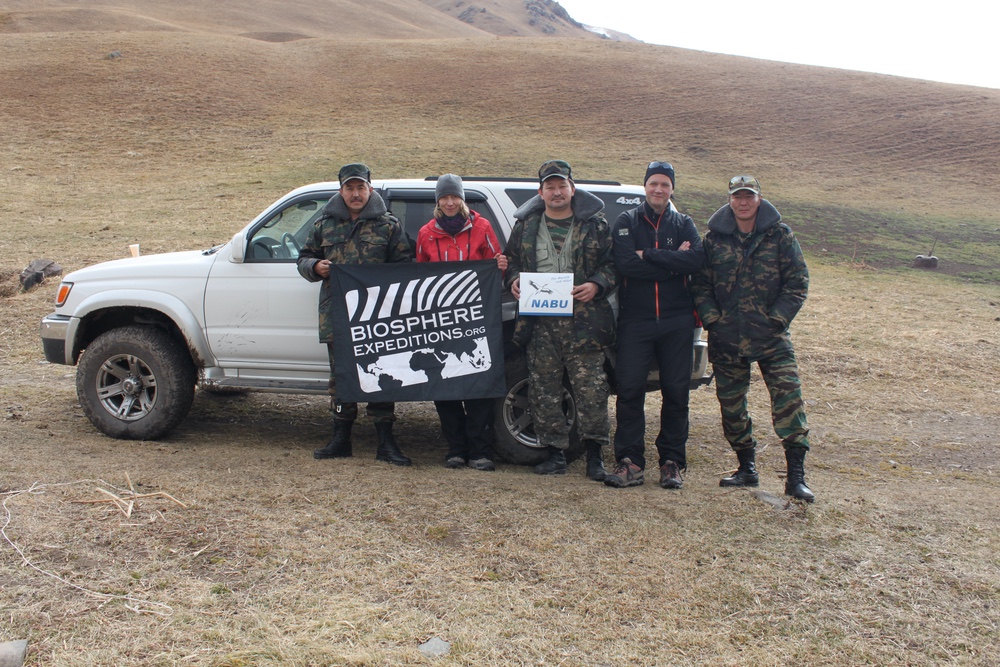
We rounded off the 2023 snow leopard expedition with a presentation evening for the locals in the valley. It was our opportunity to thank them for their hospitality and officially introduce Biosphere Expeditions, NABU and our project. With over 35 attendees, the evening was a fitting end to a busy and productive expedition. Keep an eye out for the 2023 scientific report in the coming months. With a look forward to 2024, we eagerly await the results of the camera traps we have placed.
On behalf of the whole team here in Kyrgyzstan, thank you to group 3 for your tremendous work ethic and thank you to everyone who contributed to the 2023 snow leopard expedition.
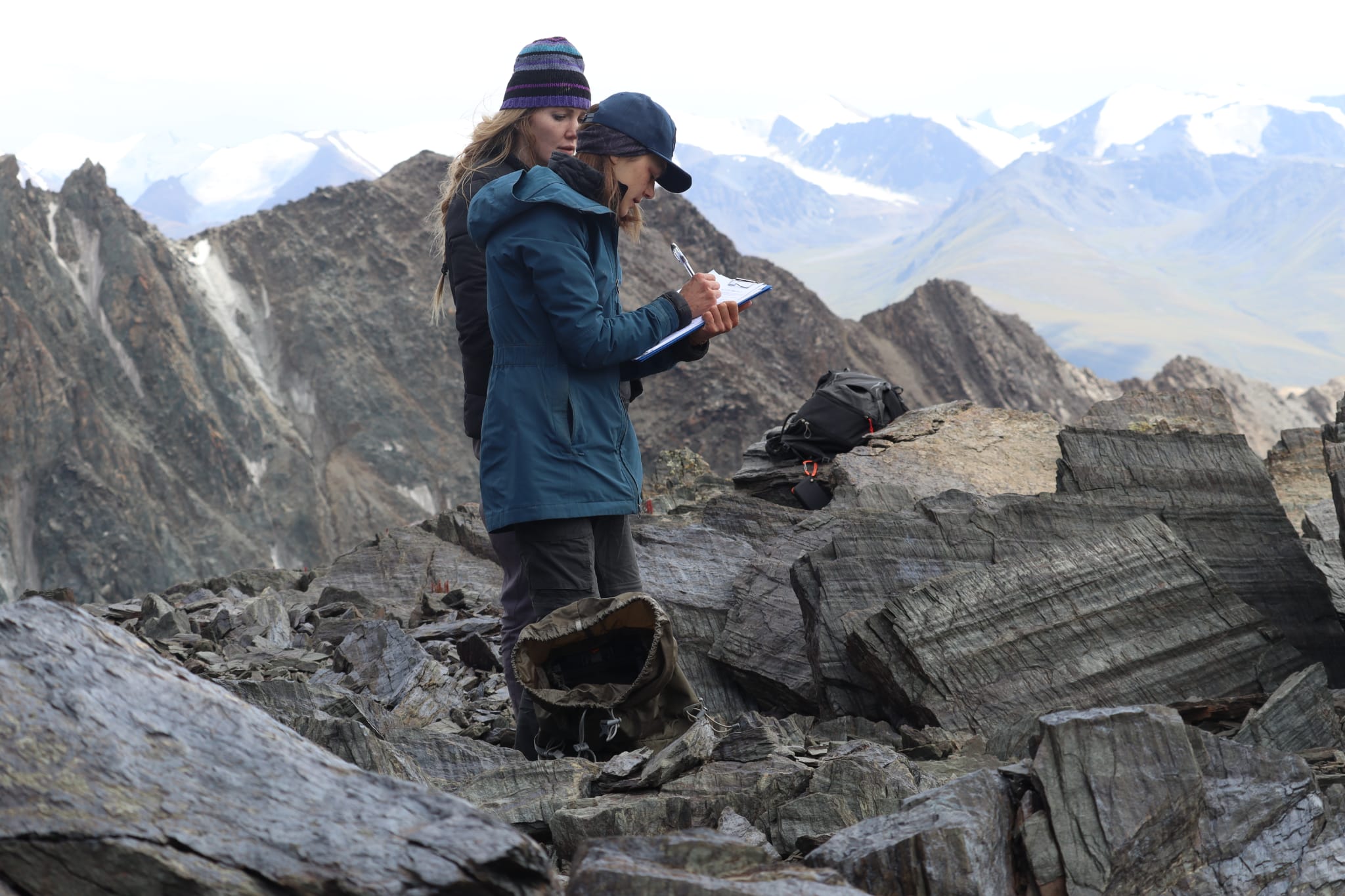
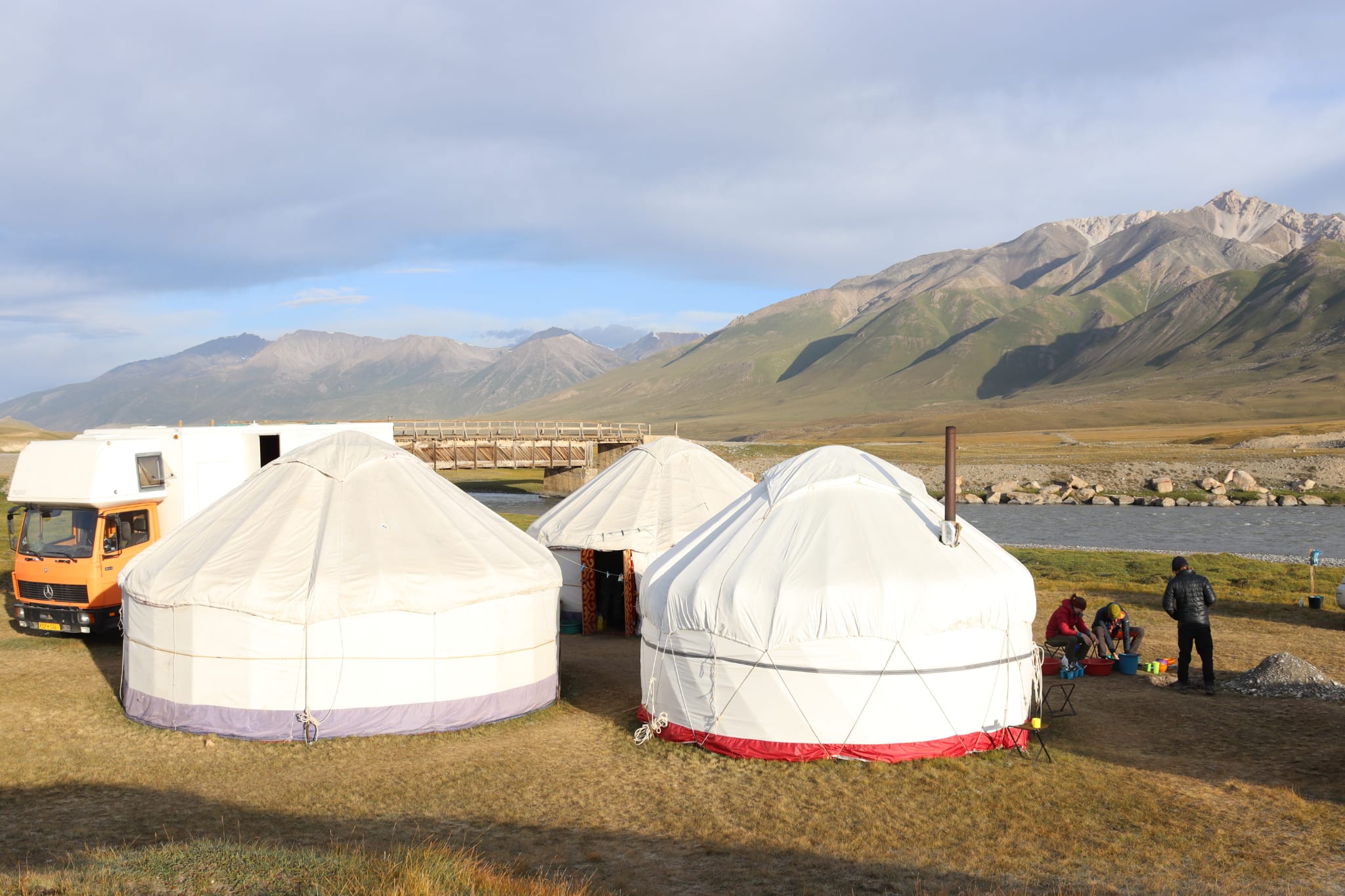
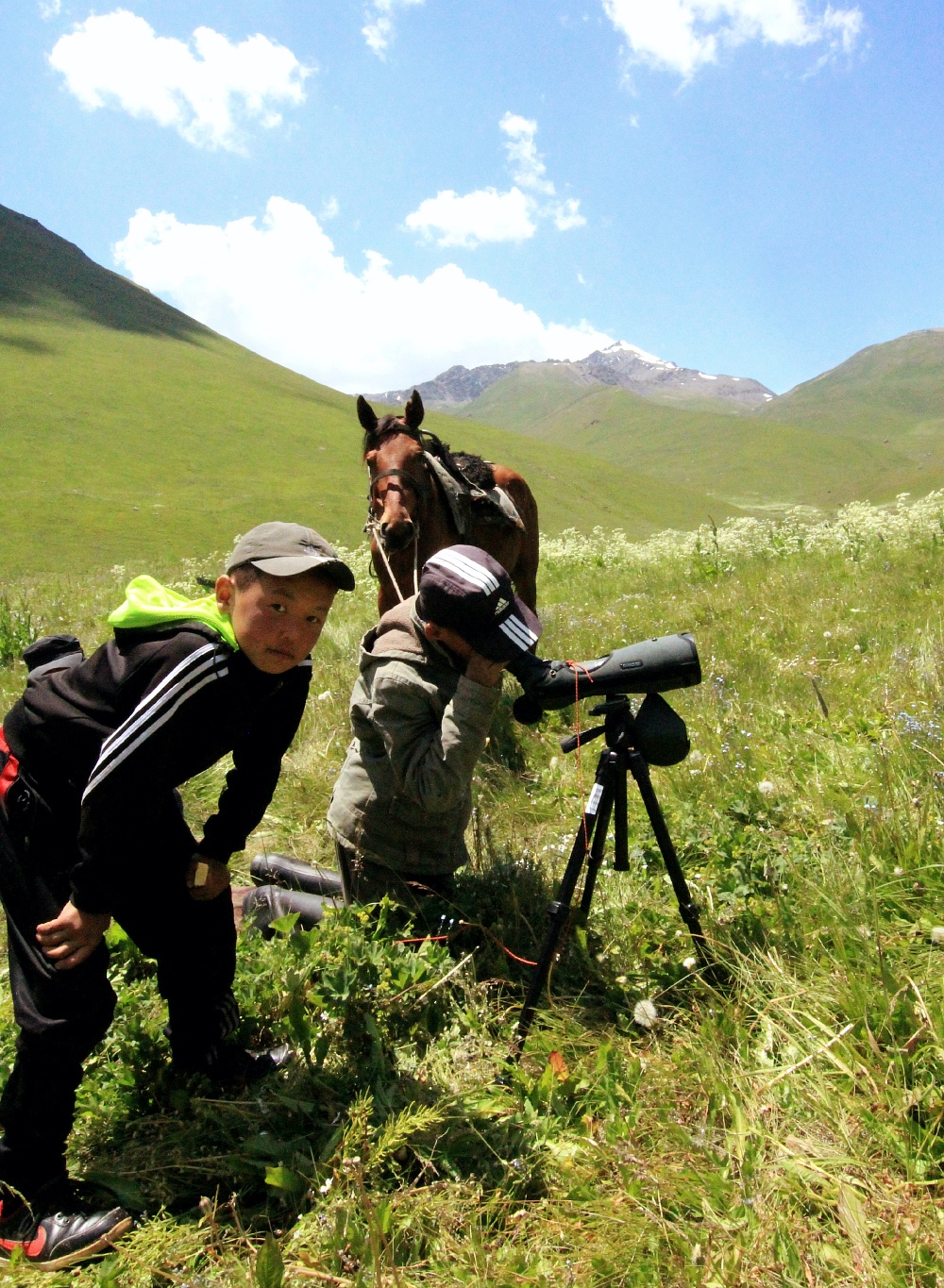
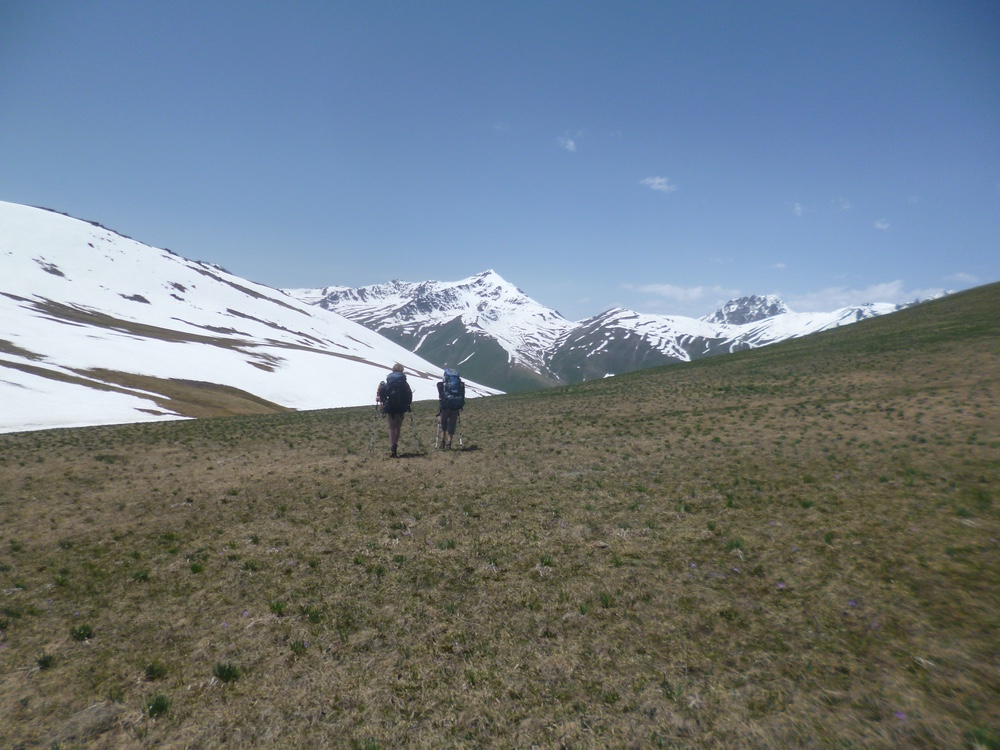
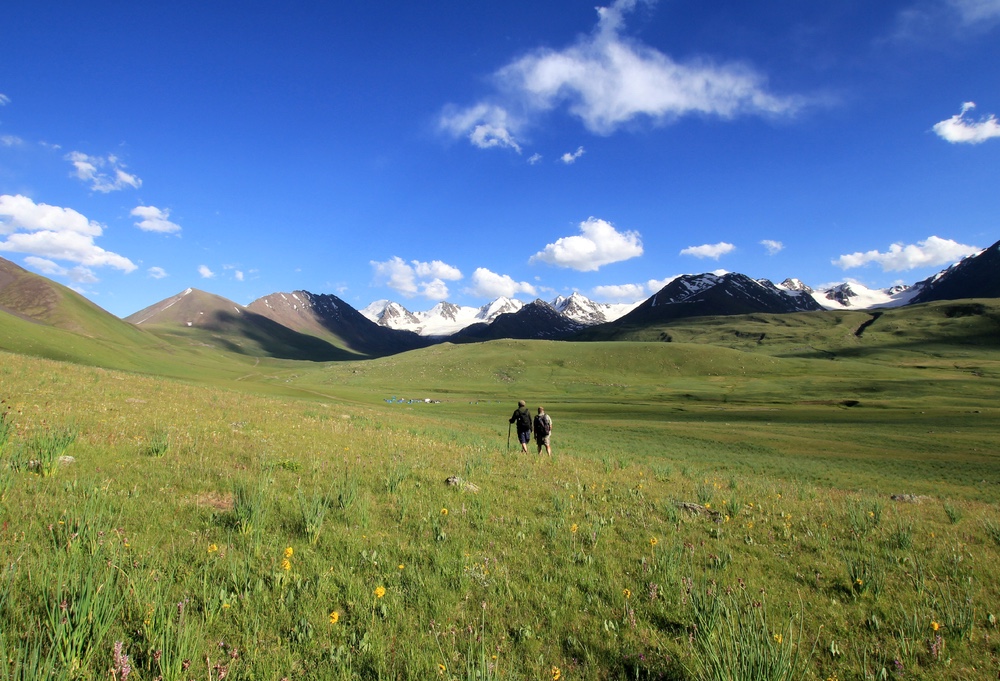
Here’s an update from half-way through group 3, mostly text with some generic pictures. This is because we have fancy GPSs that can send messages (but not pictures) via satellite from our remote, internet- and mobile-free base camp, which is a welcome distraction from distractions in itself….
Things are going well with a strong group 3. Our new location is delivering. We’ve had multiple ibex sightings and also what we think is evidence of snow leopard (tracks and scats). Tracks are notoriously unreliable with a high misidentification rate, so this is not strong evidence yet for our science nerd minds. Scat will be, once its DNA has been analysed. In itself scat has a 50% misidentification rate by sight, but once snow leopard DNA has been show to be present, then it’s a 100% proof. What the people in the lab look for – if you are interested – is intestinal cells on the surface of the scat that are deposited there as the scat moves through the cat’s gut. The scat itself is composed of what has been eaten.
We are pushing to get all camera traps out by the end of the expedition. This is hard work, but group 3 are up to the task.
We will also deliver a presentation about what the heck we are doing in their valley to our local herding neighbours. Hopefully this will be a great ice breaker and the start of a good working relationship.


























 Biosphere Expeditions: blogs from the frontline of wildlife conservation and the fight for a more sustainable planet