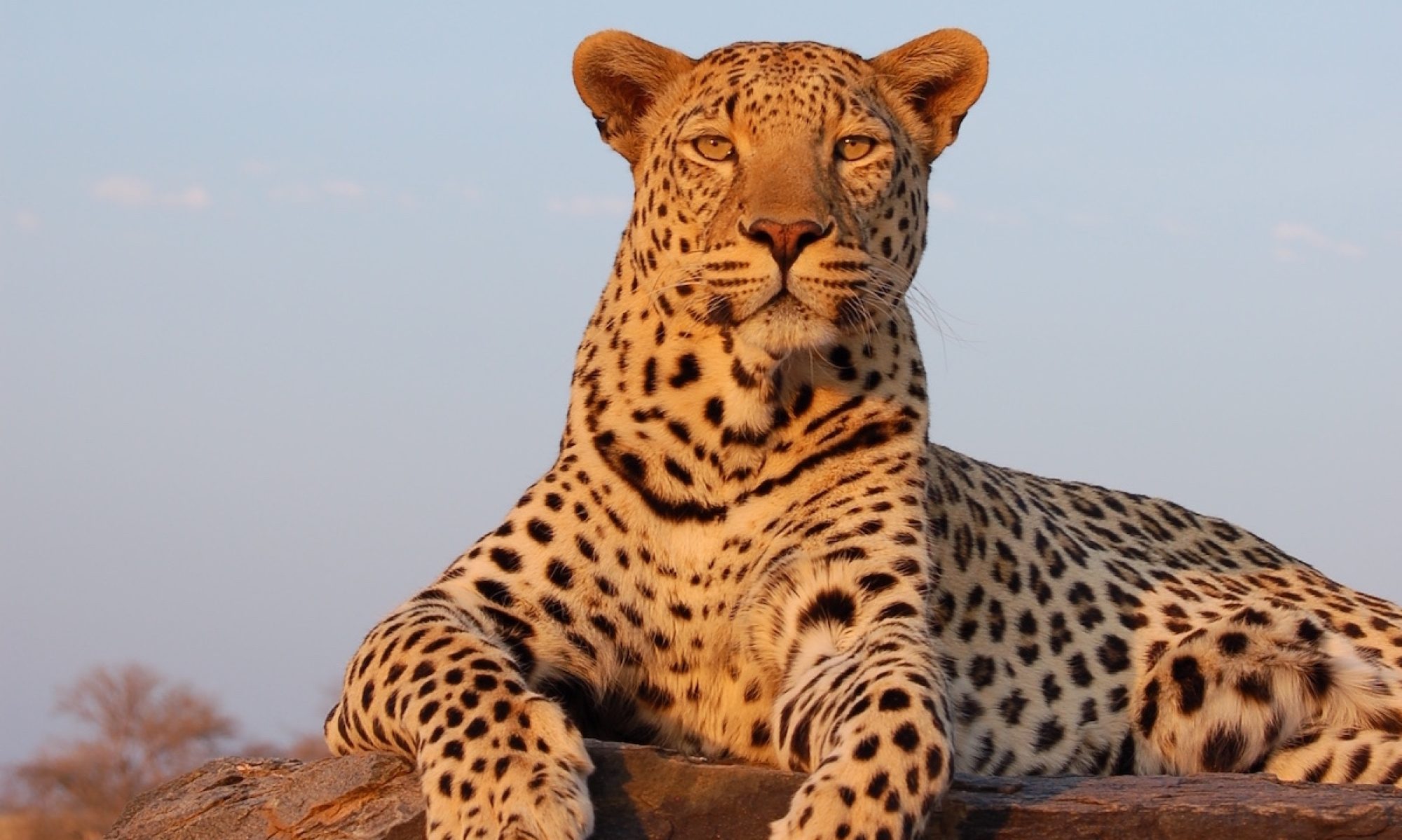
From our working holiday volunteering with leopards, elephants and cheetahs in Namibia, Africa (http://www.biosphere-expeditions.org/namibia)

Team 2 hit the ground running. We’re a small group, but full of enthusiasm and have already been trained up on all the equipment. Glenn, Lynne, Lesley and Mei came out with me on the first day and learned how to use the telemetry equipment to track the elephants. They also learned how well the elephants can blend into the savannah and how frustrating it can be when the entire herd is in the exact middle between tracks and we know where they are, but we cannot see them.

John and Valerie walked with Jesaja on the first day on the tracks and scats route #9. The surface was hard for them to read with the pockmarks of the light rain that came down. Yes, rain. We woke up to the unusual sound of the patter of rain on the thatched roofs. This was big and most-welcome news for us since we are now in the heart of the dry season.

Yesterday we caught our first rock dassie (rock hyrax) by-catch. Normally hiding in the rocks, this fellow was found hiding under the trigger plate of the trap. Evidently the animal gave Ligeus, Lynne and Leslie quite a scare when it stopped playing “dead” and raced out of the trap as soon as they opened the door to investigate.

This slideshow requires JavaScript.

Continue reading “From our working holiday volunteering with leopards, elephants and cheetahs in Namibia, Africa (http://www.biosphere-expeditions.org/namibia)”

From our snow leopard volunteering expedition in the Tien Shan mountains of Kyrgyzstan (http://www.biosphere-expeditions.org/tienshan)

As I signed off on the last diary entry, I could see the first lot of team members cresting the ridge that separates us from their target valley for that day. As I packed up the satellite coms, they were close enough for me to see that there was a spring in their step. Although it was really just a training run with Volodya, they found quite a lot, amongst which was clear footprints of a Palas’ cat or manul. The next day was also productive, with the first real survey yielding access into Issyk Attar’s upper reaches where a fantastic high traffic pass was discovered. Tracks and scats of all kinds and so fresh that the urine patches of many argali were still clearly visible amongst the still wet droppings. There are two platforms below the pass and each has a wide mud flat, which has captured the comings and goings of herds of beasts as they negotiate the pass into the valley systems to the north. This will surely be a big focus of next year’s explorations.

This morning the heat of yesterday’s excitement was significantly cooled off by the fact that we all awoke in igloos. As our tents bowed in under the weight of a good layer of snow, we were woken by the freezing sides of the inner tent settling on our heads. The drumming of tent walls being pounded from within to dislodge the heavy snow blanket woke those not already up, and when we opened the zips and stepped outside, we were in another land from that which had seen us off to bed the previous night.The entire valley was covered in snow.

The day’s plans now out of the window, we fixed a couple of tents before the first snowball hit its mark. Thomas and Robert started it, but Katie and then Susanna quickly returned fire, and pretty soon it was on for young and old. When Shiloh emerged from his tent, he was imediately pelted, but, as an ex riot cop, he just stood there and only moved a little when the trajectory of a snowball included him. No-one hit him despite the flurry of projectiles he was simultaneously monitoring.

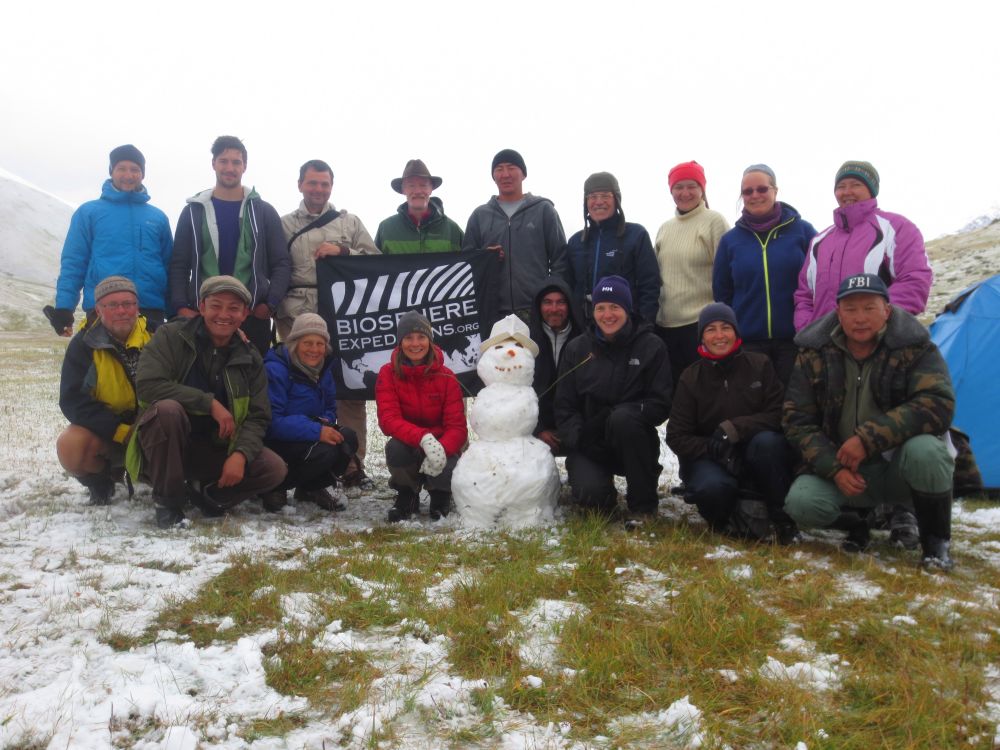
The newest member of the team, named Matthias by his creator Gary, can be found front and centre of the team photo below.

The snowman

An addendum. It is now a few days since I prepared the above. Some technical issues have prevented me from sending the August 15 diary and we have more news. The cold weather is intensifying and snow is now a feature of our days and nights. The cold has caused havoc with some of our equipment and is making sending diaries difficult. The traditional Sunday off saw most of the team pay a visit to our neighbours down the road who live in a very beautiful yurt and display fantastic traditional Kyrgyz hospitality. On their way back to base camp, our people stopped at another yurt and learned that only three days previously a horse was attacked by what the herders say was a leopard in a valley close to base refered to as No Name Valley. This has led to a revision of our plans for the day and a team has been sent to the herder to find out the precise details. The urgency is warrented by the fact that the horse survived the attack and is sporting the wounds which, if leopard, will be highly characteristic of such and need to be photographed as soon as possible. We have a vet on the team as well, who may be pressed into action if we find the horse’s condition requires her attention. Stay tuned.

Continue reading “From our snow leopard volunteering expedition in the Tien Shan mountains of Kyrgyzstan (http://www.biosphere-expeditions.org/tienshan)”

From our working holiday volunteering with leopards, elephants and cheetahs in Namibia, Africa (http://www.biosphere-expeditions.org/namibia)

We thought we’d share some of our “Best of” camera trap pictures and team photos while we’re busy training Team 2…

This slideshow requires JavaScript.

Continue reading “From our working holiday volunteering with leopards, elephants and cheetahs in Namibia, Africa (http://www.biosphere-expeditions.org/namibia)”

From our working holiday volunteering with leopards, elephants and cheetahs in Namibia, Africa (http://www.biosphere-expeditions.org/namibia)

It’s been a whirlwind week of checking box traps (liberated: one rock monitor lizard, one hare and one porcupine), setting up camera traps, trouble-shooting camera traps (re-aligned by baboons, some not taking pictures, some taking too many pictures), fixing up waterholes (Emil the bull rhino used the one at Gustavposten as a scratching post), doing water hole observations, early morning vehicle game counts (1 cold and one not-so-cold-but-windy), observing elephants, walking around the bush looking for tracks (lots!) and picking up scats (lots!).

We did two evening observation drives and while we did not see any aardvarks, which were my original idea because of the plethora of new holes dug in the farm tracks, the teams reported seeing an aardwolf, bat eared foxes, “loads of springhares” and jackals. Evening entertainment included “Banana Grams”, a simple word game made very confusing by each participant making words in their own language (English, French, German and Italian). Verification was next to impossible. Evening briefings were made more artful by Marco’s pictogram explanations of the day’s activities. Thanks Heinz for letting me post some of your pictures with this diary!

Team 1 has just left for the Josephine Gate and it’s very sad to see them go. They formed a solid working team quite quickly, and really impressed Vera and I with their work ethic and willingness to spend long hours in the field making sure everything got done. Up and out at times before the “regular” departure time, their willingness to go out in the cold and count game animals was remarkable, and their willingness to go out into the field all day working on a smorgasbord of activities got us off to a great start. A big thank-you to all of you for your ability to make hard work fun, and for your contributions to the leopard project. Safe travels home.

Team 2? See you Sunday!

This slideshow requires JavaScript.

Continue reading “From our working holiday volunteering with leopards, elephants and cheetahs in Namibia, Africa (http://www.biosphere-expeditions.org/namibia)”

From our snow leopard volunteering expedition in the Tien Shan mountains of Kyrgyzstan (http://www.biosphere-expeditions.org/tienshan)

The training and induction days of the final slot went off without a hitch except to say that, due to a problem with the partner organisation’s cars we got to base camp a car short. It was expected to arrive the next day, driven by NABU’s Aman, after being repaired. When it did not arrive we waited, thinking that the serious nature of the problem might have resulted in a delay in Bishkek. When, by the afternoon of the next day Aman still hadn’t arrived, we set out to find a phone signal about an hour down the road towards Koshkor. We discovered that the car had left Bishkek the previous day. We discovered also that he had reached his birth village at the foot of the range that day. At this point I became concerned that he may have run into trouble, so we went on into the village to ask around.

The concensus in the village was that he had left that morning, but he had not made it to the base camp. All this took quite a while and it was dark by the time we all agreed that we would need to search. A slow and poorly lit drive back yielded no results despite numerous stops to peer into the deep gorges in the moonlight.

The next morning I told the team of the situation and the need to mount a potentially grizzly search for our colleague who had dissapeared without a trace. To their immense credit, everyone on the team stepped forward to participate in what could easily have turned into a very unpleasant task. A basic plan was formed and with the ready collaboration of the entire team we honed the search on the fly with one car canvasing locals while the other two slowly cruised the valley stopping to scan the deep floor at the bottom of the precipitous valley walls. Wherever a view of the bottom of the slope was not possible from the car, the car would stop and the searchers would fan out to investigate the valley floor. The other car would pass them and do the same at the next occluded view point. In this way they leap-frogged each other to the end of the valley. At the bottom of the range, as we gathered and I prepared to push further on into the flats below and raise an official search, a car appeared and we quickly realised that it was Aman. His breakes had begun to fail after leaving the village, as had his mobile phone, fully in line with Murphy’s law. For safety sake, he had headed back to fix this second car issue but no-one was the wiser. Needless to say he was surprised by the overly happy welcoming party that had come down the mountain to meet him. A very good ending, all things considered.

Continue reading “From our snow leopard volunteering expedition in the Tien Shan mountains of Kyrgyzstan (http://www.biosphere-expeditions.org/tienshan)”

From our working holiday volunteering with leopards, elephants and cheetahs in Namibia, Africa (http://www.biosphere-expeditions.org/namibia)

How to Set up a Box Trap in 5 Easy Steps

1. Gather 9 citizen scientists

2. Fill buckets with sand and make a nice floor for leopards to walk on

3. Do leopard-liking landscaping inside and out

4. Hang Fresh Meat

5. Install Doors and Activate Trap!

This slideshow requires JavaScript.

Continue reading “From our working holiday volunteering with leopards, elephants and cheetahs in Namibia, Africa (http://www.biosphere-expeditions.org/namibia)”

From our snow leopard volunteering expedition in the Tien Shan mountains of Kyrgyzstan (http://www.biosphere-expeditions.org/tienshan)

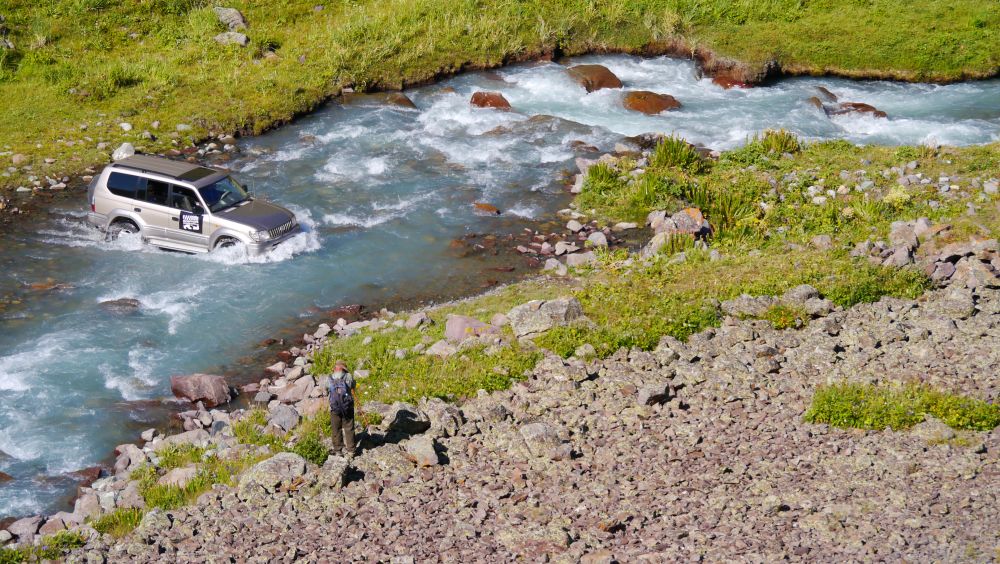
The best laid plans… The teams returned late yesterday with stories of awesome landscapes, uncrossable glacial torrents, bits of horse left rotting and some interesting interactions with curious wildlife…but no snow leopard.

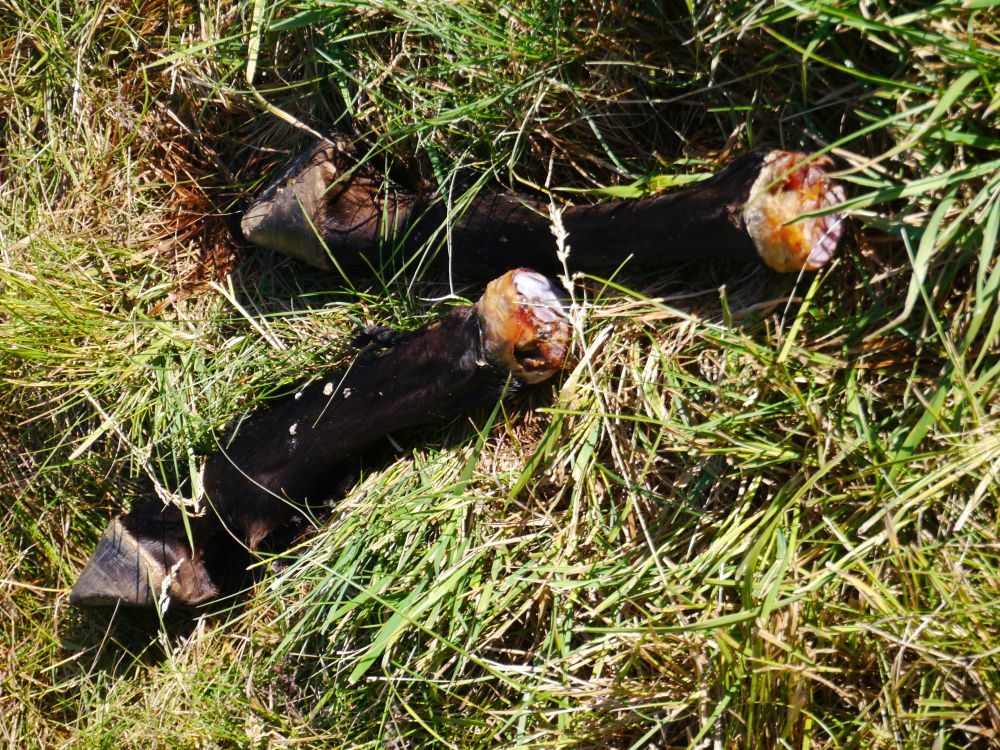
The team that went to the original base camp valley had hoped to make camp in the general vicinity of the attack on the horse. When Rhys looked around his possition, he actually found a leg and then another a bit further away a third was found.

Pieces of horse

They had the spot and spent two days surveying out from there into any likely habitat they could reach. Unfortunately to no avail as far as the leopard was concerned. They were compensated, however, by the occurance of another major herders’ games event. During the last slot we were informed of an “annual” Herders’ Olympics downvalley from us. Well it seems that “annual” means fortnightly in these parts and so the team were met with huge crowds and even a media presence from Bishkek there to cover the games.

This slideshow requires JavaScript.

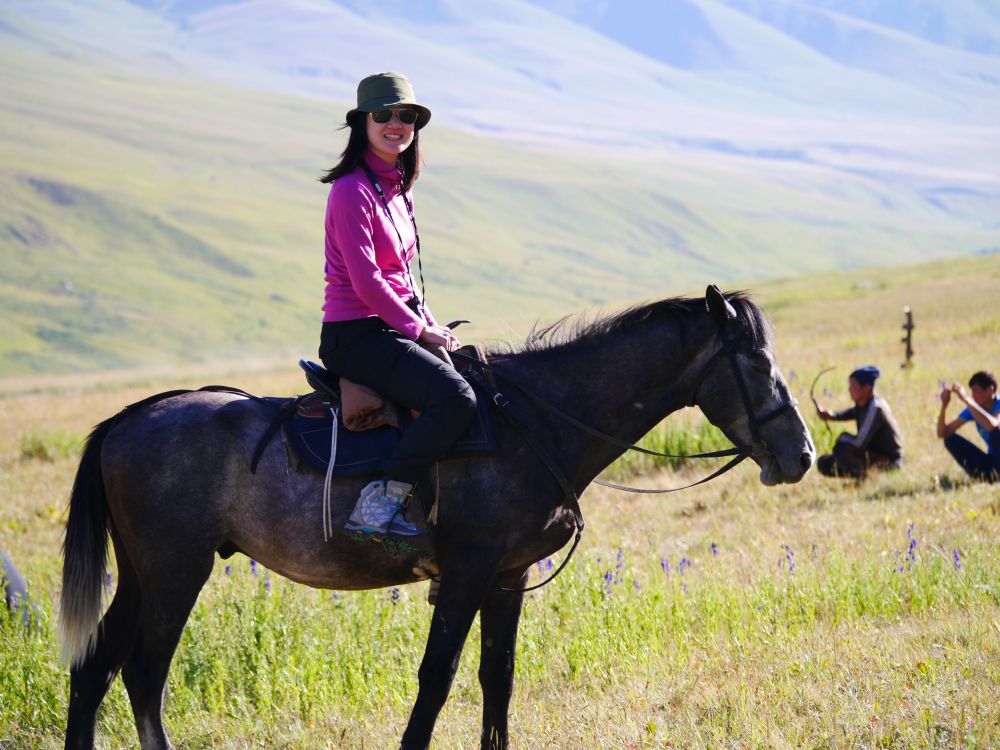
The other team returned to the valley in which I had heard a the coughing sound and conducted a couple of days of hard survey, but again did not find any evidence of our animal. They did remark on the beuty of the place though and were accompanied by Talant our very helpful neighbour and some of his horses to carry gear and due to his seniority within that particular group, Meinhard got a horse to ride along with Talant and Kurmanbek (spelled correctly this time), one of our NABU participants.

Jhong Wen on horse Kyrgyz games5

Continue reading “From our snow leopard volunteering expedition in the Tien Shan mountains of Kyrgyzstan (http://www.biosphere-expeditions.org/tienshan)”

From our snow leopard volunteering expedition in the Tien Shan mountains of Kyrgyzstan (http://www.biosphere-expeditions.org/tienshan)

We have decided to strike while the iron is hot. As you know, as a result of our recent interviews with local herders, we have discovered two very recent incidents involving alleged leopard attacks on young horses in two of the bigger and more remote valleys in this system. Each were within the fortnight or so and in response to the more local account, we investigated on horseback the site of an atttack. As we placed a camera beside a heavily used pass, the unmistakeable cough of what we surmised to be a big cat in the cliffs above could be heard. Whilst none of the party saw the animal, we are now fairly certain that there is a snow leopard in that location.

The more distant and more recent incident is in fact in the valley of the original base camp. The stories are very similar, with a young horse discovered dead with large puncture and crush wounds to the throat. This is highly typical of the leopard method of killing large prey, gripping the throat and asphixiating the quarry (there is a photo sequence of this killing method on http://newswatch.nationalgeographic.com/2014/02/20/the-first-ever-successful-snow-leopard-hunt-and-kill-caught-on-camera/). The fact that a snow leopard will apparently abandon the kill at the slightest disturbance has led to the almost ubiquitously believed folk tale that the snow leopard is in fact drinking the blood of its prey rather than eating its flesh. Either way, large dead animals with “vampire-like” neck wounds can only mean one thing and the consistency of the stories as told by the herders who recently lost their horses, and by the wider community of herders throughout our huge survey region who’ve simply heard about those losses, suggests that we are not being led on a wild goose chase by folk who just want to tell us what we want to hear.

So, the hot iron… We have decided to split the team into two overnighters who will each attend an incident site and attempt to make a more thorough investigation of the environs surrounding the two kills. One team has returned to the valley of the original base camp and will atempt to get to the bottom of that story before heading further into the valley with Volodya. The other team has been deployed back into the valley that was the subject of my recent experience and will spend two days making a careful survey of its upper reaches. We have sent the FLIR thermographic equipment with the second team as they will be camping closer to the cliffs and will have a better chance to use the gear to best effect. The first team have a powerful spotting scope to scan the wider valley ends that they will face.

Your truly has remained at base camp with our awesome chef, Emma, as it represents a “central” point of contact that either group will be able to find me at should the need arise, rather than trying to locate me in either of the large ranges that each group will be negotiating.

For some reason I feel like this will be an exciting next couple of days… For the team at least. At least I’ll eat well…

Continue reading “From our snow leopard volunteering expedition in the Tien Shan mountains of Kyrgyzstan (http://www.biosphere-expeditions.org/tienshan)”

From our conservation holiday volunteering with jaguars, pumas, ocelots, primates and other species in the Amazon rainforest in Peru, South America (http://www.biosphere-expeditions.org/peru)

I am at Lima airport waiting to board my flight back to Europe. Time to write this year’s final Amazonia diary entry. Team 2 left the ARC on Saturday morning. A big boat was sent up from the Tahuayo Lodge to ferry ten team members, four helpers, Alfredo & I, the equipment boxes and everyone’s luggage. See on the team picture (front, left to right) Ramon, Jayden, Shelley, Keiran, Alfredo (middle, left to right) David G, David H, Neil, Julian, Ashley, Andrew (back, left to right) Oscar, Segundo, Julio.

AM team 2

Overall the project has made a big step forward this year. We were able to expand the survey area significantly by exploring and recording hitherto unknown trails benefiting from the combined knowledge of Julio, Segundo, Oscar and Ramon. GPSs were used to record the tracks that will be included in our map and will help to expand and deepen research. It will take a few more years of data collection before the comparison of results will give a clearer picture of what is going on in the forest. As Alfredo said, it is a long-term project, but it is vital for the sustainable management of the whole reserve.

Thank you to everyone involved in the Amazonia expedition. Thanks for your contribution, your time, work and sweat. A special thank goes to David Hausmann for donating a brand-new pair of binoculars to the project. They will be put to good use in the future. Many thanks also to Brigitte and David Glossop for providing your personal camera traps to contribute to the research. I hope that you’ve all enjoyed your time at the ARC and the forest work as much as Alfredo & I did.

The camera trap pictures are now available:

This slideshow requires JavaScript.

I hope to see some of you again some time!

Malika

Continue reading “From our conservation holiday volunteering with jaguars, pumas, ocelots, primates and other species in the Amazon rainforest in Peru, South America (http://www.biosphere-expeditions.org/peru)”

From our working holiday volunteering with leopards, elephants and cheetahs in Namibia, Africa (http://www.biosphere-expeditions.org/namibia)

Team 1 has arrived and has already had one day of briefings so far. We’ve stuffed their brains full of useful information on bush safety, using GPSs, rangefinders, compasses and other equipment, and right now Vera is going over the datasheets. After lunch everyone will learn how to change a tyre in case of a flat, even the non-drivers. Then we’ll move on to the 4WD training, then straight into field work, because we have three open box traps on Okambara and they need to be checked twice a day.

We spent the afternoon learning how to change flat tyres then went out into the field for our 4WD training. Late afternoon tasks included a briefing on how to check the box traps and some animal identification practice. Tuesday will be our first full day working in the field.

Continue reading “From our working holiday volunteering with leopards, elephants and cheetahs in Namibia, Africa (http://www.biosphere-expeditions.org/namibia)”