Award-winning, non-profit and ethical wildlife conservation volunteering. Advancing citizen science and conservation since 1999 – for nature, not profit.
Our third day at sea saw us venture into new waters, for the 2016 expedition. This time we headed south of Faial.
Under rather grey skies, common dolphins and loggerhead turtles were among the first sightings of the day. They have been the consistent ‘data points’ for each day so far.
For the second day running, we also encountered another fin whale. A relatively brief encounter, but nevertheless an important one. With GPS positions logged (as we do for all sightings), data recorded and photos documented, we moved on. Heading further off the southern coast of Faial.
As the weather improved in the afternoon, so did our luck, with multiple sperm whale encounters. At one point we were trailing five individuals in a line. There won’t be many days when you get to linger behind five sperm whales! Though when trying to document the tail flukes of each whale, as well as monitor blow rates, activity on the boat can get fairly frantic. And you can always guarantee that multiple sperm whales will appear when we have some of the team on bird or turtle surveys.
The upshot was another great day of data collection, aided by some great weather and calm seas. More of the same tomorrow please!
Fin whale (taken by Craig Turner)
Sperm whale (taken by Craig Turner)
Sperm whale fluke (taken by Craig Turner)
Sperm whale fluke for ID (taken by Craig Turner)
Multiple sperm whales (taken by Craig Turner)
Following sperm whales (taken by Craig Turner)
Celine recording data (taken by Craig Turner)
Southern coast of Faial (taken by Craig Turner)
Some of the team on lookout (taken by Craig Turner)
Fieldwork invariably offers variety and the unexpected.
We started our first full day at sea with a hint from our lookouts that we could probably expect to see bottlenose dolphins. The strange-looking dolphins that we soon encountered were in fact false killer whales – not a whale, but another dolphin species that is less common than the bottlenose dolphins in the Azores, so a great find.
False killer whale (c) Craig Turner
False killers were quickly followed by a false alarm, as two dark objects with ‘long fins’ were spotted on the sea surface, silhouetted in the glare of the sun. As we approached we quickly realised that the two kayakers wouldn’t add much value to our data set!
With our error forgotten, we were quickly surrounded by some 30+ individual false killer whales, spread over several hundred meters, and close to the coast of Pico island.
After an hour-long encounter, we decided to head further south. But our ‘hunt’ for our first true whale sighting was interrupted by several brief encounters with Risso’s dolphins.
Risso’s dolphin with calf (c) Craig Turner
And then…..nothing and more nothing. The weather and sea conditions were almost perfect, but the cetaceans were ominously absent, as we sailed on and the hours ticked by, the whale sighting count stayed firmly at zero. We continued to sail south, towards a 500 m deep sea mount, and with the hydrophone deployed, we finally located a sperm whale.
Sperm whale (c) Craig Turner
And then our luck truly changed, with the sighting of a solitary fin whale – the second-largest species of whale.
Fin whale (c) Craig Turner
Fieldwork can often also be frustrating, but it will also often reward persistence and patience!
Deploying the hydrophoneLaura recording dataLynn listening to the hydrophone
Our multi-national team all arrived safely, via a mix of routes and modes of transport. So the first slot of 2016 begins.
With initial introductions, risks assessments and briefings completed, this morning we dived headlong into the research element of the expedition – the main reason why we have all travelled to the Azores. The scientific training began with familiarisation of equipment, which was followed by data records training, and rounded off with a boat orientation.
Our volunteers have clearly been good to the climate gods, as they have brought great weather with them. The team’s new-found cetacean research skills were soon put to the test, with sightings of common dolphins.
The luck continued, with a loggerhead turtle sighted during one of our designated ‘turtle time’ survey periods. Normally we see them outside ‘trutle time’, when they are logged as ‘random sightings’. A great job by Ralf in spotting the turtle, and custom has it, that such a sighting means our scientist Lisa buys a drink for each member of the team – thank you Ralf!
The sightings continued with a small group of Risso’s dolphins, located close to Pico Island. This species is resident in the Azores. When born they are very dark in colouration, but become ‘scratched’ with age, through social interactions, exhibiting unique hieroglyphic markings on the bodies and dorsal fins. The scratch marks can be used to identify individuals.
The day was rounded off learning key identification features of species we will hopefully encounter. The team are now poised and ready for action. So a great start to the expedition and the data collection. The whales will have to wait for another day…but you always have to have something to look forward to…
It’s time for the initial introductions. I am Craig Turner (on the left below) and I’ll be your Expedition Leader in the Azores this year.
If expeditions are a journey with a purpose, then the first part of that journey is complete. I arrived in the Azores (coming from Scotland) on Friday to prepare the expedition. It wasn’t quite all as planned, as we had an unscheduled stop in Porto, for a medical emergency on the plane. The delay meant I ending up chatting to a Brazilian academic about his PhD work on film translation, and on the second flight I bumped into Jim, one of our hosts from Banana Manor.
It is great to be back again and to meet up with friends and colleagues from previous years, not least, our scientist Lisa Steiner (looking through the ladder below). If you want to find cetaceans in the Azores, then she is the person to find them. Last year, our first day at sea scored our one and only humpback whale for the expedition – so you never can be too sure what ‘data’ we will collect. With Lisa already reporting sightings of humpbacks and sperm whales, we could be lucky again. We now just hope that the weather and whale gods are on our side and we can look forward to some great fieldwork (and data collection) over the next few days.
2015 expedition team with Craig Turner (left) and Lisa Steiner (looking through the ladder)
I hope you’ve all been eagerly reading your expedition materials and know to bring many layers of clothing. The weather can be a bit like four seasons in one day, so prepare for warm, cold, wet and dry. Like the weather in Scotland! Don’t forget your waterproof trousers – you’ll thank me when you are stationed on the bow as a lookout and the weather is choppy (so also bring your motion sickness pills/patches – if you know you need them!).
So with the local team in place, whale sightings already logged by Lisa, all we are missing is you. This Monday morning is hopefully one we are all looking forward to….. It will be great to meet you all.
This reminds me to mention communications on the island. There’s cell/mobile reception on Faial in addition to internet here and there, but remember the golden rule of no cell phones while we’re at sea. Hopefully you can resist the need for frequent international comms, and why not go off the grid for the expedition, and soak up the experience of Atlantic island isolation. My mobile number here is (+351) 962 338 060. Hopefully you and I won’t need it, but there you have it, just in case of emergencies, such as being late for assembly.
Safe travels and we look forward to meeting group 1 on Monday and groups 2 and 3 in due course.
Lisa Steiner’s report from the San Francisco marine mammals conference
Every two years, the Society for Marine Mammalogy hosts a conference. Over 2,000 scientists that study whales, dolphins, seals, sea lions, sea otters and polar bears descend on whichever city holds the conference. The last conference I attended was in Quebec City, Canada, where I presented results on male sperm whales that matched between the Azores and Norway. This year, I was presenting a poster on twelve female sperm whales and a calf that have been seen in both the Azores and the Canaries, as well as a match between the Azores and Madeira and also a single match between Madeira and the Canaries. I was also co-author on two other posters, one on humpback whales and the other on blue whale photo-identification.
Lisa Steiner at her poster
The conference gives people studying marine mammals around the world a chance to see what is being done elsewhere in the world. There is not a lot of time to rest. There are five talks going on at the same time for most of the day and a couple of selected speakers have their own slot. This year saw the introduction of the 5 minute speed talk, which was challenging for both the presenters and the listeners, especially if the audience wanted to change rooms for the next talk!
On Saturday, before the official start of the conference, there was a workshop just on sperm whales. We had short presentations on all aspects of sperm whale biology & behaviour. I gave a short three minute presentation on the photo-identification work that Biosphere Expeditions and I are doing in the Azores.
Some highlights of the sperm whale session were:
There is not a lot of genetic diversity between oceans, and this may be due to a bottleneck in the population around 80,000 years ago, when the squid populations also crashed.
Male sperm whales in Alaska have learned how to take sable fish off the long lines. It seems that there are around ten offenders and the researchers are working on ways to help the fishermen avoid this loss or these whales specifically. Some of the males were tagged with satellite transmitters and a few of them went as far south as Baja, Mexico still heading south when the transmissions stopped.
Russian illegal whaling may have changed the structural groups of females in the Pacific by decimating the stocks. Females in the Pacific groups are not always related, whereas in the Atlantic they generally are. This was caused by individuals forming new groups in the Pacific.
There are some juvenile male sperm whales that lived close to a navy test site in the Bahamas for a couple of years, before they moved on to another unknown destination. I am hoping to get those flukes for matching to the Azores catalogue. The female sperm whales in the Bahamas sensibly stay in the north of the archipelago, away from the navy test site and there does not appear to be mixing between the groups seen in the Bahamas and Dominica.
A couple of invited squid biologists gave us a bit of a different perspective on the whales as ferocious squid predators.
And in the last presentation of the day, it was shown that the theory that sperm whales change the density of the spermaceti to help them dive and surface is not accurate.
Some highlights of the rest of the conference:
Whales benefit the environment by recycling nutrients. In the case of sperm whales they catch their prey in deep waters, but defecate at the surface, re-releasing all those nutrients, which would otherwise be lost to the depths. Blue whales in the Antarctic drive the whole ecosystem by recycling nutrients and making them more accessible for the krill to use.
Climate change is not good news for polar bears and probably walrus too, because they depend on the sea ice to hunt, but grey whales could benefit as new feeding grounds open up, which have previously been covered in ice. This lack of ice could also lead to grey whales re-populating the Atlantic Ocean, where they have been extinct for many years. But the fossil record shows that there may have been several re-colonisations over the years as ice ages came and went.
Fin whales are mostly right handed lungers. Out of 800 lunges, only three or four went to the left.
A long term photo-ID study in Alaska’s Glacier Bay National Park has 46 individuals with a sighting history of more than 30 years. Something I am aiming for with the Azores sperm whales.
And speaking of Humpback Whale IDs. There has been a match made between a humpback whale that was seen during the 2008 Azores expedition and then again in Norway in 2012, near Tromsø! This is the second match made with a whale actually seen during an expedition. The other match was first seen in Norway on 20 March 2010 and then in the Azores on 5May 2010.
This slideshow requires JavaScript.
The humpback whales that we see in the Azores are most likely travelling from the Cape Verde Islands up to feeding grounds around Iceland and Norway or back down to the breeding grounds; although to date we have not had any matches to Iceland. We have eight Azores matches to the Cape Verdes and now eight matches to Norway as well. The whales can use the waters around the Azores as a pit stop from the breeding to feeding grounds, since most of them have not been feeding for a few months while on the breeding grounds. So far we have not had any matches to the Caribbean population of humpbacks, which is more numerous than the Cape Verde population, although this may be down to low numbers of identifications in the Azores.
This slideshow requires JavaScript.
The flukes in the North Atlantic Humpback Whale Catalogue are constantly being reviewed, especially with hard to match individuals, since the computer assisted matching is not always perfect.
And speaking of computer-assisted matching, I think we will be trialling a new matching system, Flukebook, during the 2016 expedition alongside Europhlukes. Flukebook is a new online matching system that shows a lot of promise. It uses six different algorithms for the matching and has machine learning too, as well as being able to plot the sightings with Google Earth. The biggest drawback will be if catalogues that I currently match to, do not join Flukebook. Only time will tell.
After the conference I had a couple of days down in Monterey Bay, looking for grey whales, since I had never seen one. The mission was a success, I saw over 20 different grey whales and around 30 humpbacks. Unfortunately none of the “friendly” behaviour from the greys – they were just migrating on their way to the breeding lagoons, where you can get the “friendlies”. No acrobatics from the humpback whales either, but I did get some fluke ID pics, which I will send off to the Pacific Humpback Whale Catalogue at Cascadia Research.
I would like to thank the Friends of Biosphere Expeditions, as well as my parents, for making my attendance at these conferences possible through their support. And thank you to all the expedition participants that make this work possible.
Divers rediscover Eden for coral reefs in the face of climate change
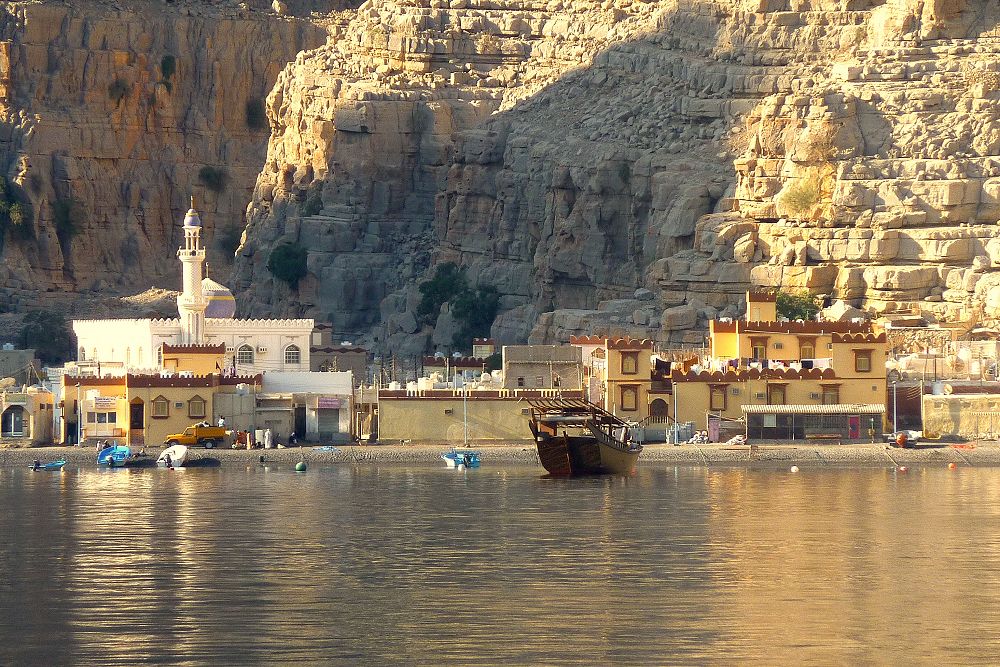
The waters of the world’s tropical coral reefs are warming and getting more acidic in the face of increased C02 concentration. Reefs in most parts of the world are dying from such stress and it appears that the ability for coral reefs to recover from periodic El Nino events is being diminished – because of increasing frequency of warming, pollution, increased sedimentation and disease. However, the corals of the Musandam in northern Oman are currently an exception. Here reefs are extremely healthy, covering the shallow waters of the mountainous peninsula with extreme variety of growth forms from massive 400 year old 4m high ‘boulder’ coral to the delicate yet important branching and ‘bushy’ corals. Coral cover regularly exceeds 70% in nearshore embayments
Elsewhere in the world, corals have been reduced to rubble, their once great carbonate structures being eroded by boring sponges and worms, whilst successive warming events and overfishing of herbivores has resulted in massive plant growth, suffocating what’s left of corals, and attracting opportunistic algae. The majority of Jamaica’s once spectacular reefs have been turned from ‘coral’ to ‘algal’.
Dr Jean-Luc Solandt, Reef Check Course Director of the region said: ‘The past six years of Biosphere Expeditions surveys confirm the vitality and resilience of this area. At a time when we’re seeing the degradation of the world’s most diverse marine habitats, relied on by 100s of millions of people for food, Musandam is withstanding the current temperature hikes. Our survey findings offer hope that there are some areas of the world that can withstand such environmental change.’
The temperature of the surrounding waters differs considerably from that of the Gulf of Arabia. Musandam lies at the entrance of the gulf and is enriched by cool deep waters of the Gulf of Oman to the east. The current exchange between the waters of the gulf flowing over the reefs allow for currents to wash the reefs with clear waters, whilst the cooler water from the east prevents catastrophic climate effects. Furthermore, some of the corals have been seen to harbour temperature resistant algae, allowing greater resistance to bleaching.
Whilst Musandams coral reefs are faring well, the fisheries of the area are being exploited at ever increasing effort. The most important commercial fish species of the reefs – grouper (hammour) are only ever recorded at 50 cm in size at very few more isolated sites. We recommend the development of an MPAs and minimum landing sizes for grouper to achieve a sustainable fishery, though none of this will change if it doesn’t have the support of the community. Jenan Alasfoor from the Environment Society of Oman, a scholar on this year’s expedition, knows too well that before any changes in fishing practices occur, full consultations with the local communities need to be undertaken.
Our first dive survey went smoothly – reef sharks and an eagle ray spotted off transect – then we sailed to Faq al Asad (the jaw of the lion), a stunning site of crystal clear water, amazing rock formations, even dolphins! We ate our lunch and went for a snorkel to assess the reef, then kitted up as usual. The teams dived in and the invertebrate teams began to lay the transect. As they reached the end of the 10 0m and turned around to swim back to the start of the tape a freak current swept through the bay. The teams struggled back to find that the boat had completely swung on its anchor, one of the SMB’s marking the start of the transect had been swept away and air was running low. All was not lost, though, as we reeled the tapes back in and still had time to sail further round the peninsula with a pod of Arabian humpback dolphins at our bow, to a site aptly named “pray for calm.” It worked, and we managed to complete our survey just before dusk.
Not to be thwarted by the elements, we returned to Faq al Asad the following morning very early and collected the data we had missed the day before, then headed to Khayl Island for a glorious survey dive, complete with shipwreck. The site was so interesting we decided to stay for a night dive and explored the ancient porites mounds with their banded coral shrimp and moray eel inhabitants, with turtles, cuttlefish, giant porcupine fish and squid in the mix.After a scientific wrap-up from Jean-Luc, we moored away from any civilisation and spent our last peaceful night under the stars.
A big thank you to everyone for all your hard work and attentiveness. It’s been a steep learning curve, so much to take in, both in and out of water, and your diligence in collecting the data, even in adverse conditions – swarms of jelly fish and flies – was much appreciated. This expedition has confirmed for us that the reefs here in Musandam really are resilient to the ravages of climate change, and offer an insight into another type of hardier reef that can withstand very significant temperature fluctuations. It may not be as colourful, or as varied as traditional coral reefs, but it has a much healthier future than most!
Thank you also to Patrick for your retrieval skills – masks, fins, SMBs, plastic bags and even a cushion that got knocked overboard during a dawn yoga session! Thank you to the crew, who offered continuous support and demonstrated great expertise in getting us right where we wanted to be. Thank you all for your sense of curiosit, and enthusiasm for getting the work done. It was a pleasure working with you! I hope you continue Reef Checking now you have your certification and look forward to meeting you again on another Biosphere Expeditions project.
It’s been an eventful beginning to this year’s Musandam expedition – a tire on our trailer blew out as we were en route to Khasab, so we had to wait for another vehicle to transport all the kit. Arriving late at the harbour meant we had no time to spare if we wanted to complete our check dive before dark, though with an attentive team, and a competent skipper and his crew this was not an issue. The dive went well and we relaxed to the light of a huge silvery moon.
The next couple of days were taken up with Reef Check training. From dawn ’til dusk the team studied, dived, and took tests above and under water. The effort required was considerable but rewarding and by the afternoon of the third day everyone had passed all their tests and were fully qualified reef checkers. Well done! A great achievement for a team with an age range spanning 50 years! As a treat we took the speedboat and visited the local land-locked village of Kumzar, learning about the local customs and traditions from Yusef, our skipper.
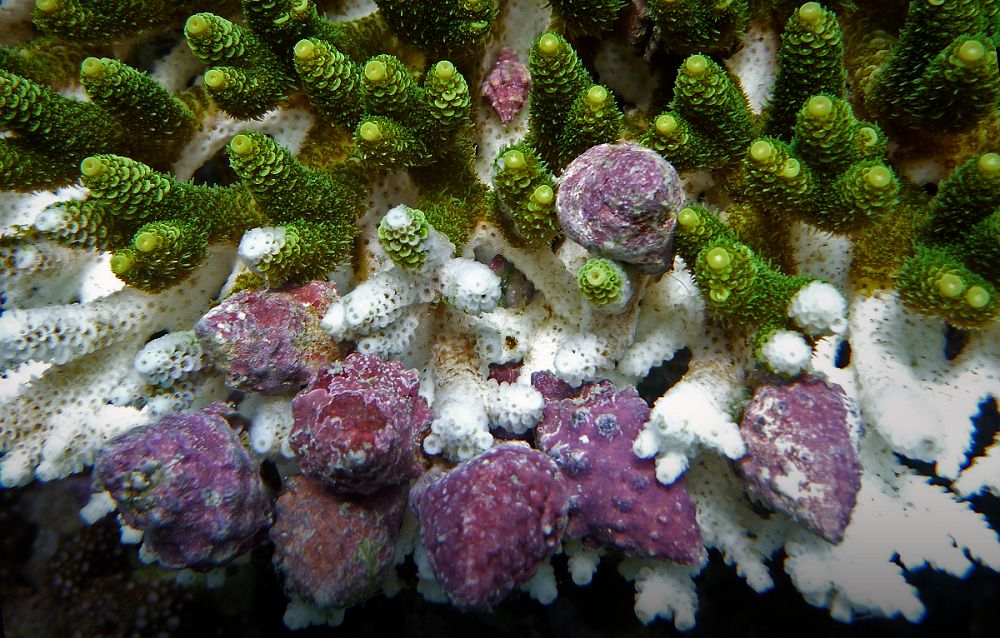
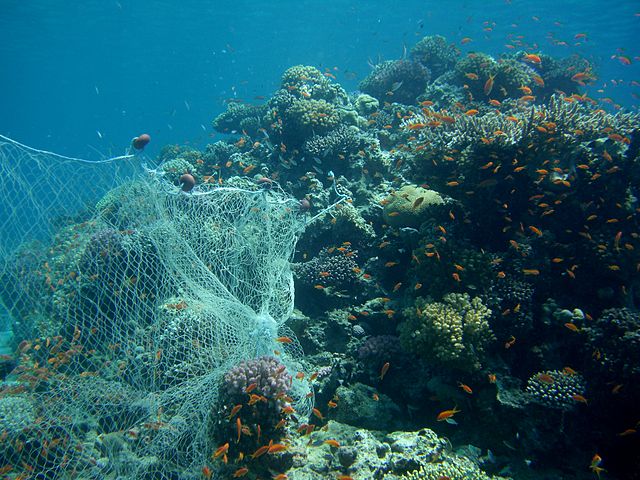
It is reassuring to see from our preliminary investigation that despite being flagged as a hot spot for coral bleaching, these corals seem to have adapted sufficiently to cope with such high temperatures. Not such good news is the first ever sighting on any Musandam expedition, of the coral-eating Drupella snail at, along with a proliferation of discarded fishing nets and lines. Reef Check veteran Ayesha managed to release two banner fish caught in a fish trap, though bat fish in another trap were not so fortunate.
So with another five surveys ahead of us and the full moon tampering with the tide and currents, we still have very few full days ahead of us. But I have no doubt that if the last few days are anything to go by, the next will be filled with enthusiasm, hard work, and good humour.
Greetings from Dubai – our preparation day has been very successful, beginning with a trip out to the Dubai Desert Conservation Reserve (DDCR) to collect our kit boxes that have been in storage there for the past year. The DDCR is our partner for our Arabia expedition (www.biosphere-expeditions.org/arabia) which runs each January, monitoring Arabian oryx, Gordon’s wildcat, and other flagship species, and they also kindly guard all the equipment we need to run the Musandam expedition as well. Once the kit had been checked and the car loaded, we went back to Dubai in search of an essential piece of O2 delivery equipment, without which we could not set sail tomorrow. After a hectic couple of hours, it was sourced, found, and collected! Thank you Nasser for your help!
Our next port of call was the iconic sail-shaped Burj Al Arab hotel where we met with David Robinson, their head aquarist. He took us behind the scenes, showing us the turtle rehabilitation work they are doing in Dubai, taking injured hawksbill and green turtles that get washed up on the beaches, and nursing them back to health for release back into the open ocean. David told us that there are only 60 breeding adult female hawksbill turtles left in the whole of the Southern Gulf of Arabia. This dangerously low figure is due to loss of habitat, unsustainable fishing practices and other anthropogenic influences.
This slideshow requires JavaScript.
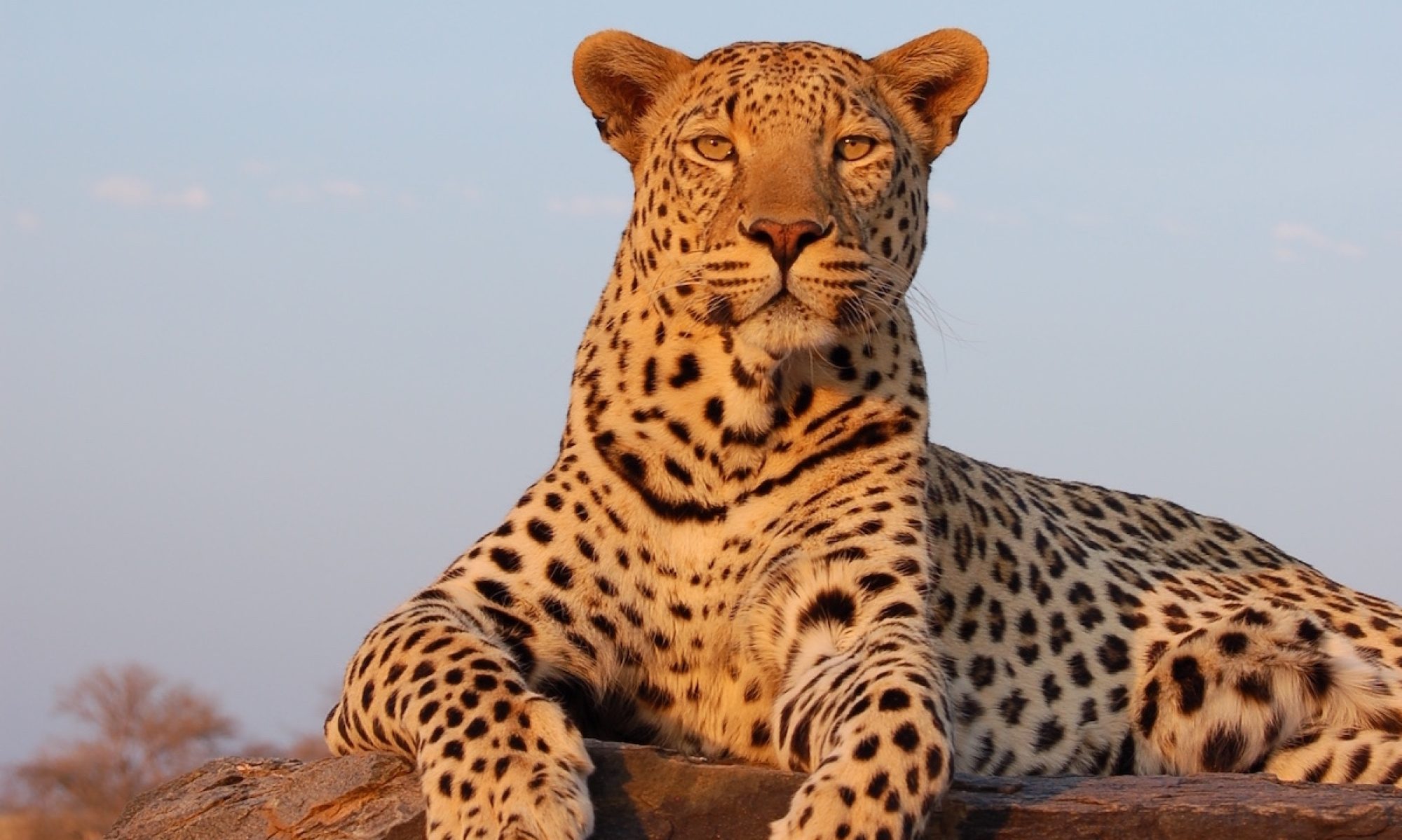
On our tour we saw the aquarium’s leopard shark, now 7 years old, born parthenogenetically, i.e. without external fertilisation. David was very excited, as yesterday, she too exhibited the first signs of laying her own clutch of eggs. Leopard sharks are only the 3rd species to show parthenogenesis in captivity. David is not only working in Dubai, but is conducting research on whale shark ecology. As part of his PhD, David formed Sharkwatch Arabia, a database to collect whale shark sightings throughout the region. He recently discovered a massive aggregation of over 150 whale sharks in Qatar. Protected by the presence of oil rigs, the waters are not fished, and tourism is prohibited – a strange but effective MPA. He asked us to keep a lookout for whale shark and other shark species during our time in Musandam, as they are likely to be present in the areas we are surveying. We did indeed have a whale shark encounter two years ago, in the same location, so keep your eyes peeled – and remember, it may be above you!
So, after this very informative and enjoyable meeting we bid our farewells and rushed back to the Holiday Inn to collect another consignment of equipment – all in a day’s work!
It may be a few days before I can send another diary entry as internet connection out on the Musandam peninsula is sporadic to say the least, but I look forward to meeting you tomorrow at 09:00 – let the expedition begin!


 Biosphere Expeditions: blogs from the frontline of wildlife conservation and the fight for a more sustainable planet