From our working holiday volunteering with leopards, caracals and Cape biodiversity in South Africa (www.biosphere-expeditions.org/southafrica)

That’s all folks. Our time on expedition has come to an end. Our volunteers have departed, the kit is packed and now Alan and I must head our separate ways. First we must convoy south to return our Ford Rangers (thank you again Ford South Africa!). I then have to make the migration north to Scotland, and Alan to Senegal to present some of his research. The science never stops!

I can hardly believe our second expedition in South Africa is already over. Let me start by thanking our team. First off, our volunteers; the joy of expeditions is working with a bunch of liked-minded people towards a common goal – we’ve had a fantastic group and you’ve all made a great contribution (which I’ll expand on in a moment). But firstly we owe a huge thank you to Melda and Gurli, for the continual provision of culinary delights, and their botanical wisdom! We would also like to thank the extended Lee family (Anja, Elli, Charlie, Chris & Elaine) for their boundless hospitality. And finally, our enormous collective thanks go to Alan, our leader in all things scientific. It has again been a fantastic privilege to share in your world and work with such a passionate scientist.

So what about that contribution I mentioned? Well, the stats are staggering, over 50 litres of wine drunk, in excess 130 chocolate bars eaten, and numerous cups of tea and coffee consumed, and we still managed to complete all the fieldwork. Of course data still need to be crunched from the various field surveys and just think of all those new camera traps still clicking and collecting data….long beyond our departure.

But in case you have forgotten, here are just some of our highlights:

Several new camera traps have been deployed across the Blue Hill area (and many others serviced) to monitor leopard, caracal and other mammal activity and movement patterns.

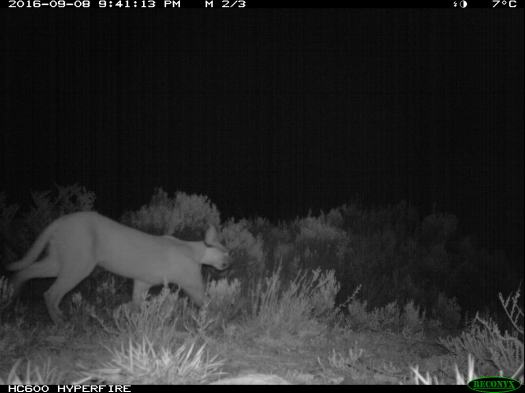
Nearly 3000 camera images from Blue Hill have be analysed, identified and catalogued, revealing activity of leopards, caracals and African wildcats across a number of locations.

Over 20 kms of flush transects surveys have been completed across the Blue Hill area.

Several mist netting surveys have been completed providing more data on several endemic and range-restricted bird species.

We completed yet another round of small mammal trapping surveys.

We identified the location of more Cape rockjumper nests (a bird endemic to the Fynbos).

We have identified at least another two new species of bat in the research area (bringing the total to seve) and additional cave roosts of the Cape horseshoe bat have been identified.

The team have contributed to pioneering and ongoing research of Matt Macray into the impact of electric fences on tortoise species. This is going to be a ground-breaking study highlighting the devastating impacts on a species, which poses no threat to any other animal.

And finally, the Hottentot buttonquail……

Alan has been catching and ringing birds at Blue Hill since 2011, and in that time he has caught over 7,000 birds but not a single Hottentot buttonquail. But neither has anyone else caught one, ever, anywhere. Biosphere Expeditions volunteers have been instrumental in changing that, and helping to influence our understanding of this endangered, range-restricted fynbos endemic bird.


No matter whether you are a volunteer, scientist or expedition leader, we all go on expeditions with a varying mix of nerves, hope and expectation. We never know what we will achieve and I certainly don’t expect a ‘world first’, but in the diminutive shape of the Hottentot buttonquail, that is exactly what this team has achieved. Who would have thought that was possible when you are just going away for a couple of weeks?

Be pleased, be proud and I look forward to being back next year.

Best wishes

Craig Turner
Expedition leader


From our working holiday volunteering with leopards, caracals and Cape biodiversity in South Africa.

From our working holiday volunteering with leopards, caracals and Cape biodiversity in South Africa (www.biosphere-expeditions.org/southafrica)

With field science the devil is normally in the detail. We may be nearing the end of the expedition, but fieldwork continues apace. Entering the home straight, we still have to continue with camera trapping, mist netting, flush surveys and our programme of small mammal trapping has also commenced. As you may have realised by now, the small things in the fynbos really do matter, as part of understanding the bigger picture.

Assessing the small mammal fauna via the use of live (Sherman) traps enables us to better understand another part of the prey base for some of our resident predators. The various mice and shrew species in the area could form an important part of our feline predators’ diets.

However, we need to know what we have, where, and get a gauge on their relative numbers. Cue the need for yet more empirical science! The team set out 50 sherman traps up and over the ridge line of Signal Hill – so called as it is the nearest place to get a mobile phone signal. This not only gives a gradient of habitat types and aspects, it also means those craving a signal (Scott & Jim) are more than willing to climb the ridge – nothing like motivation!

Similar to our big mammal (leopard) trap, the small mammal traps are checked twice a day, and any captures are documented before being released. The trick is finding them again. The results blew our expectations, both in terms of numbers and variety in any single trapping session. The captures far exceeded those we achieved last year, but again focussed on Namaqua rock mice, striped field mice and Sengi (elephant shrew). Clearly there is still much to learn about the smaller fauna of this area of the fynbos.

The flush surveys are also proving useful for demonstrating the levels of diversity and abundance of other vertebrate (mammal and bird) species. As well as keeping our team relatively fit – you know when you have walked several kilometres through the fynbos. At least the teams get to ride out to the survey and/or collected courtesy of our Rangers from Ford South Africa.

With our final round of mist netting planned and camera trap collection still to complete, we are slowly beginning to pull together the results from the last couple of weeks. Suffice it to say that simple and well-tested techniques, combined with a bit of hard graft usually deliver results, adding more detailed ‘colour’ to our evolving scientific picture.


From our working holiday volunteering with leopards, caracals and Cape biodiversity in South Africa.

From our working holiday volunteering with leopards, caracals and Cape biodiversity in South Africa (www.biosphere-expeditions.org/southafrica)

A key component of any expedition is focus. We focus on planning, fieldwork and research objectives, amongst many other things. We also focus on target species – often of the larger vertebrate variety.

But sometimes it is just as valuable to refocus, and not become blinkered by our obsession to find and document charismatic wildlife. Sunday saw an opportunity to do just this with a walking tour of local rock art sites, which was neatly combined with an evening presentation of the geology of our local landscape, by Chris Lee (Alan’s dad – a retired professional geologist). This of course gives us a wider focus, as we can marvel at the millions of years of geological history beneath our every step.

Marrying art and geologic science also helps give perspective on the historic people of this land, through the observation of ancient rock art, which seems to adorn every cave wall or rock overhang – showing people, antelopes and big cats. Clearly we are not alone in our interest in larger wildlife.

The start of the week also gave us an opportunity to appreciate the fynbos biome in another way. For we are not just blessed with two good cooks on this expedition; but Melda and Gurli are also great botanists. The fynbos may be a fire-driven ecosystem, but flower power prevails. There is no doubting we are working in a Floral Kingdom – the Cape Floral Kingdom to be precise.

We are surrounded by a wildflower wonderland. Whilst the lack of rain means the flowers may not be at their best, they are still ever present. There is always something in flower year round. And once you start looking at them, I mean really looking, in detail; they reveal all manner of shapes, sizes and colours.

Once you stop to look at the flowers and your immediate environment, you begin to discover a variety of other species, whether they are birds, insects or amphibians, and interactions between them. Observation of wildlife is such a simple pleasure but also vital for any fieldwork.

In many respects, flowers really do power the fynbos. Several small mammals (the subject of our trapping studies) are reliant on protea flowers for food. Many species of butterfly, moth and horseflies are specialised for extracting nectar from tubular flowers, and at the same time perform a pollination role. While orange-breasted sunbirds and Cape sugarbirds, which are endemic to the fynbos, not only act as pollinators, but the latter relies on proteas and pincushions for food and shelter. All of this is vital as it underpins the charismatic species that we seek.

So whilst our focus may be on Cape leopards, caracals and other target species, a broader understanding of our wider environment is key. After all the rocks and vegetation form the foundation of the fynbos on which our focal species depend.


From our working holiday volunteering with leopards, caracals and Cape biodiversity in South Africa.

From our working holiday volunteering with leopards, caracals and Cape biodiversity in South Africa (www.biosphere-expeditions.org/southafrica)

Our quest for our target species has continued over the past couple of days, but seemingly, only with partial success.

Mist-netting has again been combined with flush surveys on consecutive mornings, but the Hottentot buttonquail are proving elusive. We have sighted at least two other individuals, but are yet to catch any more. It is becoming clear why no-one had done this prior to this Biosphere expedition! The work has confirmed locations of this species and enabled us to locate nest sites of Cape rockjumper – another bird species restricted to the fynbos biome.

Another part of our daily routine each morning and evening is to check the leopard trap – a large cage trap, which will hopefully tell us which of the cat species are moving through the local area. Any Cape leopard caught will be fitted with a telemetry collar so we can better understand their movements and habitat use. We’ll also get some interesting by-catch, and over the last few mornings we have trapped a grysbok – a small antelope almost entirely restricted to the fynbos vegetation; and a porcupine – the largest rodent in Africa. All are released to continue on their way.

A regular feature in our workload is camera trap servicing and deployment. This provides a great excuse to explore Blue Hill Nature Reserve to its geographic limits; ensuring cameras are deployed in all directions. Hopefully they will give up a few more secrets on our other target species (i.e. Cape leopard, Caracal and African wildcat).

Camera traps can also give you a few surprises. Our team retrieved one remote camera; that has been in the field since it was deployed by last year’s expedition group. Not only was the camera still taking pictures 12 months later (on its original set of batteries), it had also recorded black-backed jackal (another predator not frequently recorded in the area), been attacked by baboons and survived a wildfire! Well done both teams.

And our work is not just limited to the daytime. We have also been deploying bat detectors and using them on transect walks, to better understand what species are present in the area. The detectors are a bit like camera traps, but are triggered by ultrasonic sound, recording a sonogram, which can then be used to identify bat species. This also provides opportunities for face-to-face encounters with other larger wildlife which tends to be more active at night!


From our working holiday volunteering with leopards, caracals and Cape biodiversity in South Africa.

From our working holiday volunteering with leopards, caracals and Cape biodiversity in South Africa (www.biosphere-expeditions.org/southafrica)

Expeditions are often about learning by doing. Our work in South Africa is no different. Tuesday morning saw us head south on a mist-netting quest to catch a Hottentot buttonquail – an endangered, range-restricted fynbos endemic bird, urgently in need of a focussed study into its conservation status.

On route to our bird survey, we took the opportunity to service a few camera traps – change memory cards and batteries, and ensure they haven’t been redistributed by baboons! Camera traps are a vital tool for the project, giving us extra eyes in multiple locations and at all hours of the day and night. On later processing the images from one of these traps, we found out that the last image taken, less than 24 hrs before we serviced the camera was a Cape leopard. It is great to know our main target species is in the vicinity.

Having served our fast-track mist-net apprenticeship on Tuesday, we returned to the same location on Wednesday, and set the nets again. The idea is to then ‘flush’ the target birds in the direction of the nets, so they can be caught, documented and released. So four short flush transects walks later, what did we have in our nets – a Hottentot buttonquail! When your scientist starts dancing around, high-fiving everyone, you pretty much know you have achieved something special!

This was history. This species has never been caught before, ever. Our team had achieved a world first. The individual in question had her biometrics taken, was ringed, photographed and released. The information is vital on many levels, but importantly we now know its weight. So when another individual is caught the correct radio collar could be fitted so the bird can be ‘followed’ and we can learn much more about its ecology, which is vital to inform conservation efforts.

Our achievements have not just been limited to the Blue Hill area. Every day at least one of our volunteers has been helping Matt Macray (our resident Masters student) survey tortoises across the wider fynbos area (also helped by the kind loan of a vehicle from Ford). This not only helps advance knowledge of the distribution of at least four tortoise species, but the study will principally assess the impact of electric fences. These are the scourge of this mixed use landscape, and kill tortoises and other wildlife in unknown and un-necessary numbers. Data are vital to address this problem.

This year’s expedition may be in its early days, but the achievements are beginning to role in. Fingers crossed it continues…


From our working holiday volunteering with leopards, caracals and Cape biodiversity in South Africa.

From our working holiday volunteering with leopards, caracals and Cape biodiversity in South Africa (www.biosphere-expeditions.org/southafrica)

After all the preparation of the past few months, weeks and days, we could finally get the expedition underway. Our team of volunteers arrived not only with bags of energy, enthusiasm and kit, but also boxes of wine! You sometimes get an instant feeling that you have a good group 😉

With initial introductions, orientations and risk assessments completed, we could get down to the real business of field research. This was kicked off by Matt Macray (a Masters student) who is working on the impact of electric fences on leopard tortoises. This was followed by our project scientist (Alan) giving an overview of field research to date at Blue Hill, and outlining the targets for this years expedition.

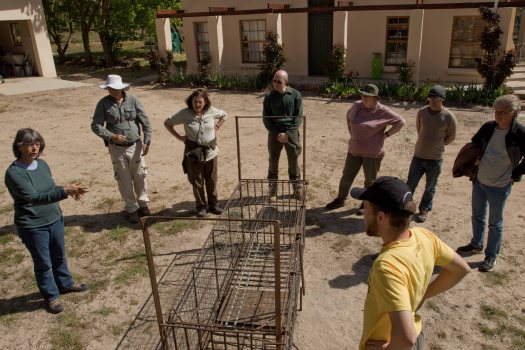
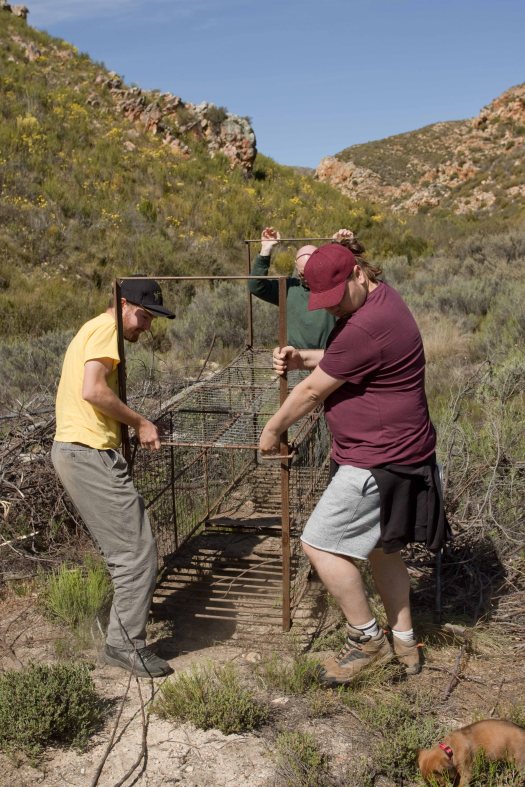
One of these is to trap a Cape leopard, so it can be fitted with a tracking collar, to better understand its movement patterns within the fynbos environment. Cue a field briefing on the cage traps used to trap leopards.

cage-trap-briefing-with-harry leopard-trap-relocation

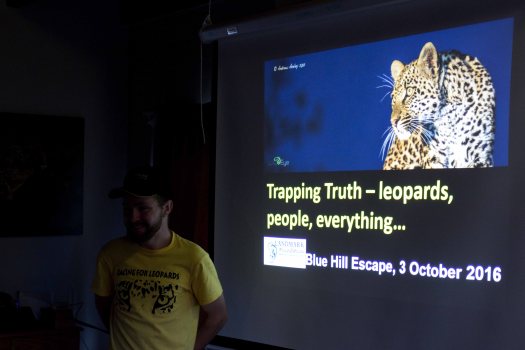
We were also joined by Harry Lewes of the Landmark Foundation, who are working to protect leopards across much of this region of South Africa. Not only was he able to brief our team on leopard capture, but also give an overview on the plight they face in South Africa and the great work that is being undertaken to conserve them across their range. Much of this is reliant on current data, such as the information from Blue Hill.

landmark-foundation-presentation

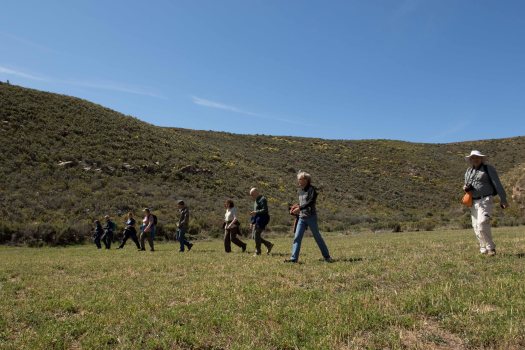
With some additional practical sessions on field equipment and survey techniques completed, our group are now almost ready to begin the vital data collection, and we are hopeful of some positive early results!

practice-flucsh-survey site-orientation-with-alan


From our working holiday volunteering with leopards, caracals and Cape biodiversity in South Africa.

From our working holiday volunteering with leopards, caracals and Cape biodiversity in South Africa (www.biosphere-expeditions.org/southafrica)

Sorry for the late entry; the internet has been down at base!

Touch Down. Four flights later and I finally made it to George. It is great to be back. My first afternoon was spent collecting our second 4WD (thank you Ford South Africa for the loan), picking up our cooks (Melda and Gurli), who have just got in from Cape Town, and doing  a supply run – I can’t remember the last time I bought so many vegetables!

We could then enjoy the two hour drive north to Blue Hill; our expedition base for the next two weeks. As George disappears into the distance, the roads deteriorate from tarmac to dirt, whilst the views become ever more expansive, and so the sense of anticipation increases. You know you are heading somewhere special, away from much of the world.

img_8741

It has been great to catch up with Alan (and his family) and meet Matt (a Masters student who will be working with us – all will be revealed). The research plans are prepared, the equipment is tested and ready to go, and our expedition base is ready to welcome our volunteers.

img_8619

And the good news is that many of our target species are also beginning to make an appearance. On checking a couple of the camera traps along the east road from our base camp, there have been recent records of leopard, caracal and African wildcat. Some of the latter from just two days ago!

img_0186 img_0233 img_0341

We look forward to meeting you all and hope you bring the good weather and lucky cat charms!

See you soon.


From our working holiday volunteering with leopards, caracals and Cape biodiversity in South Africa.

From our working holiday volunteering with leopards, caracals and Cape biodiversity in South Africa (www.biosphere-expeditions.org/southafrica)

‘I Don’t Like Mondays’ (so went that infamous song), and when they begin under the cold clear skies of northern Scotland at 4.15 a.m., I’m inclined to agree.

However, this Monday is different, as I begin my migration to South Africa. By means of introduction, I am Craig Turner and I’ll be your expedition leader of the South Africa expedition this year. It is fantastic to be going back to this part of the world to work on this great project in a wonderful location. Below are some pictures of the location I took last year.

I am already on route, having packed my gear and left our croft in the sunny Highlands of northern Scotland. The serious travel continues on Wednesday. It will be great to be working with our project scientist, Dr. Alan Lee, again and it sounds like he has some exciting field work planned.

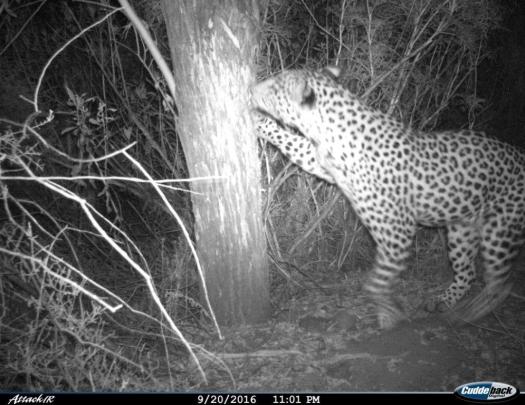
The signs are already good, as Alan has noticed scratch marks on a tree on the Baboon trail (not far from the guest house). At the end of August he decided to place a camera trap to try and identify the culprit. He presumed a bushpig or porcupine, but just a few days ago two incidents were captured on camera of a young male leopard, which we hope to catch and collar during this expedition!

leopard

We arrive a few days before you volunteers in order to set up the expedition. I say ‘we’, since I am also travelling from George with Melda and Gurli – our cooks. Melda was part of the team last year, so I know we will be well nourished. I’ll send around another message once I get on the ground in South Africa.

This reminds me to mention communications on the expedition. There’s very limited cellphone reception on the project base (a 10 min walk up a hill) via Vodacom, and equally limited internet connectivity. Hopefully you can resist the need for frequent international comms, and why not go off the grid for the expedition, and soak up the remote field experience.

I know you’ve all been eagerly reading your expedition materials and know to bring many layers of clothing and good boots! The weather can be a bit like four seasons in one day, so prepare for warm, cold, possibly wet and hopefully dry. Just like the weather in Scotland!

So with the local team in place, and other staff en route, all we are missing is you. It will be great to meet you all and soon we’ll be humming a very different tune, ‘Under African Skies’.

Safe travels…

Craig Turner
Expedition leader


From our working holiday volunteering with leopards, caracals and Cape biodiversity in South Africa.

From our working holiday volunteering with leopards, caracals and Cape biodiversity in South Africa (www.biosphere-expeditions.org/southafrica)

Against the tide of bogus voluntourism in South Africa: a case study from the Western Cape

South Africa has been gaining a reputation as the home of bogus wildlife voluntourism projects. At the worst end of the scale are profiteering scams that abuse unsuspecting volunteers to walk, pet and raise lion and other predator cubs whose only purpose is to enrich the owners and be killed in a canned hunt as soon as the animals have outgrown their cute and cuddly stage. But there are genuine volunteering alternatives too, set up by locals and satisfying local need for help with wildlife research and conservation. A small project in the fynbos of the Western Cape shows how it is done.
Dr. Alan Lee, a South African biologist, is currently hosting a group of seven volunteers from South Africa, Switzerland, the UK and USA at Blue Hill Nature Reserve to assist him for two weeks in his efforts to research and conserve the unique wildlife of the fynbos.

“The volunteers helped me with big cat, small mammal and camera trapping, with analysing thousands of camera trap photos, and conducting a general biodiversity assessment using flush surveys”, says Dr. Lee and adds that “much of this work is time- and labour intensive and can only be done in groups. With only a couple of days training, I can turn laypeople into valuable research assistants, enabling me to do projects that I could not do by myself or that I simply lack the time for.”
But it does not stop just there. Dr. Lee aims to publish two peer-reviewed scientific papers as a result of the project, one on temporal patterns of abundance of medium- to large-size mammals from camera trap records, and the other on the Hottentot buttonquail, an endangered bird species endemic to the fynbos. This will add two more useful pieces of the puzzle to what is known about South African wildlife in academic and conservation circles.

Dr. Lee enlisted the help of international volunteering non-profit Biosphere Expeditions in order to recruit his volunteers and help with the logistics of the project. Fellow biologist and executive director of Biosphere Expeditions Dr. Matthias Hammer says that “Dr. Lee’s project is a showcase of how wildlife voluntourism can and should work, and we are very proud to be associated with it. Peer-reviewed publications are the litmus test for genuine research and getting two out of a two-week project with seven volunteers shows exceptional, goal-oriented focus. It also corroborates what we call our stamp-collecting argument: That voluntourism in wildlife conservation works, because tasks are simple, but laborious and therefore often ideal for the involvement of volunteer citizen scientists. Add to this genuine local demand and community involvement through Biosphere Expeditons’ placement programme, hosting Khomotso Rammala, a recent biology graduate from the University of Limpopo on the project, and you have a small, but significant project that swims against the tide of charlatan and bogus voluntourism in South Africa”, concludes Dr. Hammer.

The next expedition to Blue Hill with Dr. Lee and Biosphere Expeditions will take place from 2 – 16 October 2016.
In collaboration with the Landmark Foundation, the project focuses on monitoring two of Africa’s iconic cats: the threatened Cape mountain leopard and the caracal, in an effort to mitigate conflict with farmers and thereby contributing significantly to cat survival and their conservation. Working in the unique biome of South Africa’s Cape Floral Kingdom (fynbos) – a UNESCO World Heritage Site and the world’s only biome contained within one country – the project also conducts larger biodiversity surveys, focusing on cat prey species such as antelopes, as well as small mammals. The project’s ultimate goal is to develop a remote monitoring technique that will better inform landowners of the status of their prey wildlife and predatory cats, identify potential conflict areas, and use the knowledge gained to mitigate conflicts.

At 1.2 million square km, South Africa is the world’s 25th largest country. It is incredibly biodiverse, with habitats ranging from forest to savannah, grassland, thicket, karoo, desert and fynbos. South Africa is also very rich in wildlife, and is a favoured Big Five safari destination. The core of the study site is the Blue Hill Nature Reserve, a 2,300 ha CapeNature stewardship nature reserve with mountains ranging from 1,000 to just under 2,000 m and under the care of the Lee family trust. CapeNature is the Western Cape provincial conservation department in charge of the network of nature reserves of the Western Cape. The property was purchased in 2009 by Chris Lee, a retired geologist who has been awarded the Draper Memorial Award for contributions to South African geology. The land was previously used for cattle ranching. It was incorporated into the local community conservancy in 2010 and officially declared a nature reserve in 2013. The trust has an obligation to manage the land for biodiversity under a management plan administered by Eastern Cape Parks and Tourism, the state organisation charged with managing the Baviaanskloof Mega Reserve.

Blue Hill lies on the western side of the massive Baviaanskloof Mega Reserve and wildlife is free to move between these protected areas. The Baviaanskloof area is one of outstanding natural beauty, owing to its spectacular land forms, a diverse array of plants and wide variety of animals. The area is also part of the Cape Floristic Region World Heritage Site.


Here is a photo from the camera trap taken at the cage the night after it was deactivated! The associated video shows the leopard spooking at the entrance, and not going through… but trust our luck….

M2E6L0-0R350B362
M2E6L0-0R350B362

From our working holiday volunteering with leopards, caracals and Cape biodiversity in South Africa.

From our working holiday volunteering with leopards, caracals and Cape biodiversity in South Africa (www.biosphere-expeditions.org/southafrica)


We ended as we started, with a small transportation hiccup. The minibus driver managed to get himself lost on the way to Blue Hill. So we loaded everyone and their kit into two of the four wheel drives, and headed out to intercept the bus on a dirt road, and ensure that flights weren’t missed.

I can hardly believe our first expedition in South Africa is already over. Let me start by thanking our team. First off, our volunteers, for being pioneers, willing to take the expedition leap of faith and believe in a new project – you’ve all made a great contribution (see below). But firstly, we owe a big thank you to the Lee family, particularly Anja, Eli and Charlie, and Chris and Elaine (our collective hosts) for your endless hospitality. Grateful thanks also go to Melda and Stefan, for the continual provision of culinary delights, and their botanical and camera trap ID wisdom! And finally, our enormous collective thanks go to Alan, our leader in all things scientific. It has been a fantastic privilege to share in your world.

So what about that contribution I mentioned? We achieved the following:

– 15 new camera traps have been deployed both across the Blue Hill area and in the Baviaanskloof, to monitor leopard, caracal and other mammal activity and movement patterns.

– Over 3500 camera images from Blue Hill have be analysed, identified and catalogued, revealing activity of leopards, caracals and African wildcats across a number of locations.

– 20 km of flush transects surveys have been completed across the Blue Hill area, and the first-ever flush survey was completed in the Welbedacht section of Baviaanskloof.

– We completed the first series of small mammal trapping surveys in the Blue Hill area of the fynbos, and demonstrated the presence of Namaqua rock mice, which was previously unknown in this location.

– We identified the location of more Cape rockjumper nests (a bird endemic to the fynbos), and installed camera traps to monitor chick development and feeding behaviour.

– We completed more radio-telemetry surveys on tagged rockjumpers, to assess activity and distribution patterns.

– We located an active nest of the endemic jackal buzzard, with two chicks and again installed a camera trap to assess prey species brought to the nest.

– Four species of bat have been identified in a small survey area around Blue Hill, and a cave roost of the Cape horseshoe bat has been identified.

– New locations and examples of rock art have been discovered.

That broadly covers the headlines, but our work is still not complete. Data still needs to be crunched from the various field surveys and just think of all those new camera traps still clicking and collecting data….long beyond our departure.

This slideshow requires JavaScript.

The keen-eyed amongst you will have realised that this is nine different, and in several cases, new achievements, in nine full days, by the collective efforts of nine people. Full marks and many thanks for this great contribution.

Don’t forget to share your pictures and you’ll hear from us again when the full technical expedition report comes out in a few months. Safe travels home and we hope to see you on another expedition again at some stage, somewhere on this beautiful planet of ours.

Craig Turner
Expedition leader


From our working holiday volunteering with leopards, caracals and Cape biodiversity in South Africa.