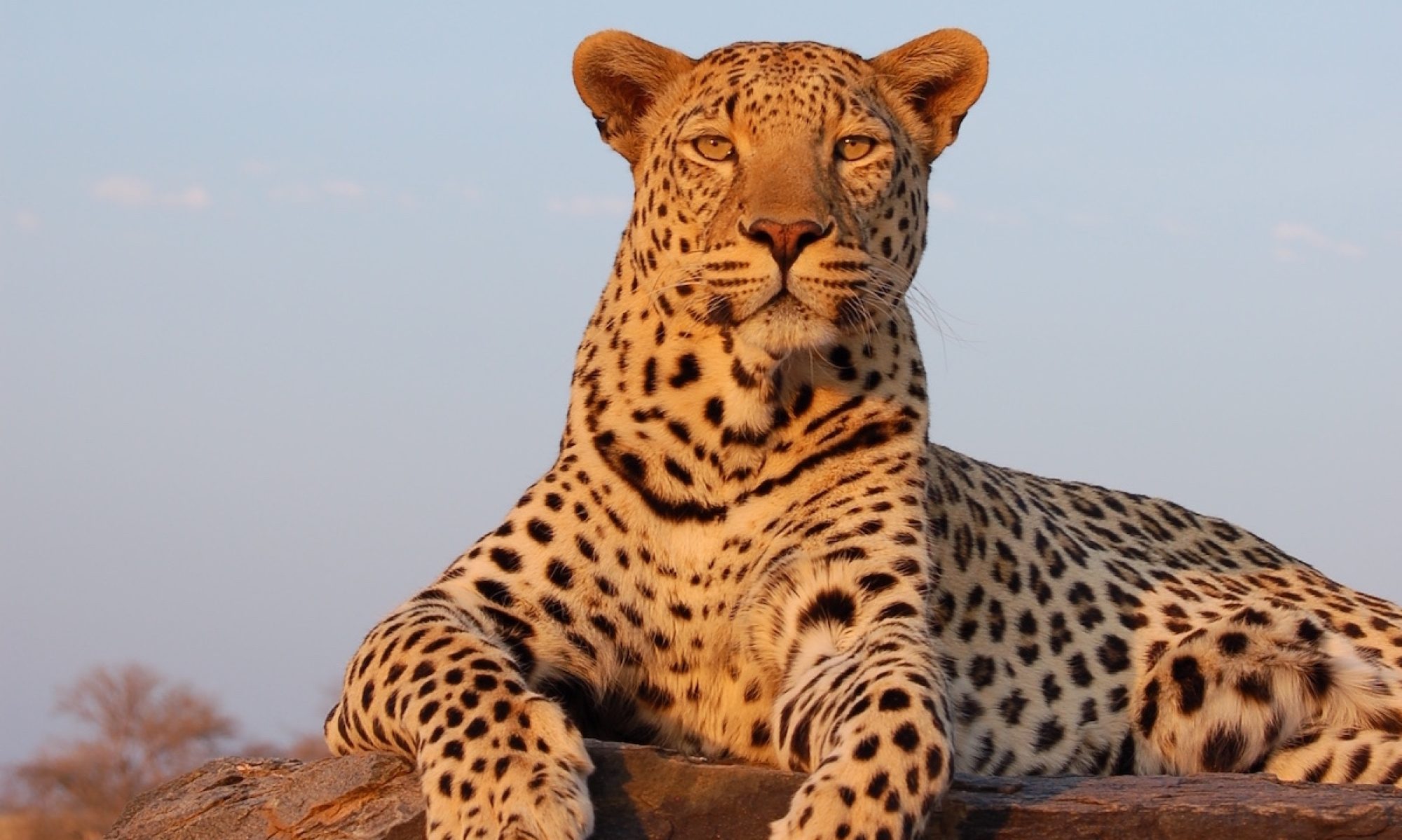

We’re in between teams at the moment, and since we’re looking forward to your arrival, we thought we’d share some of the camera trap pictures from the last group. Enjoy! See you soon Team 5.
Update from our SCUBA diving volunteer opportunity & conservation holiday on the coral reefs of the Musandam peninsula, Oman (www.biosphere-expeditions.org/musandam)
All the staff are now here (from left to right): Rita Bento (outgoing scientist), Matthias Hammer (expedition leader), Jean-Luc Solandt (incoming scientist), Catherine Edsell (expedition leader in training).

Did you hear Jean-Luc mention the words “field ID test”? How are your Reef Check studies going?
We’ll see most of you tomorrow morning in Dubai, and Antonia, Amran, Sondy and the crew of the Sindbad, our research vessel, in Khasab.
Update from our working holiday volunteering with leopards, elephants and cheetahs in Namibia, Africa (http://www.biosphere-expeditions.org/namibia).
Thursday was our Vehicle Game Count and I think all three transects saw significantly more amounts of game than the previous week. It’s always great fun to be out and about on Okambara that time of day and see things from the early riser point of view. One team picked up a hyaena track and another got down to investigate and record the tracks. Back at base, Louize made a new friend.
We caught two porcupines in the box traps overnight, so most of the team has now seen one up close and personally. Jackie and Sue volunteered to liberate the one at Bergposten. Thursday night we had a nice sunset, complete with Emil, the male rhinoceros, attending the water hole just before dark. Somehow I never get too mad when he interrupts my briefings 😉
We said good-bye to Team 4 this morning, and they’ll be missed. Thanks everyone for your hard work, your flexibility, and for making our time in the field fun, in spite of the scorching afternoon sun. We could not have collected nearly as much data as without you, and we never would have caught and collared that hyaena and the THREE honey badgers. As the journal says TEAM FOUR ROCKS!
We’re into our week break now and look forward to meeting Team 5 next Sunday, 13 October! Over and out until then.
Update from our SCUBA diving volunteer opportunity & conservation holiday on the coral reefs of the Musandam peninsula, Oman (www.biosphere-expeditions.org/musandam)
Update from our working holiday volunteering with leopards, elephants and cheetahs in Namibia, Africa (http://www.biosphere-expeditions.org/namibia).
This diary entry is really a tale of two badgers. Honey badgers, that is. But before I get to the honey badgers, I have to tell you about the hyaena. And the elephants.
Yesterday started like normal and the box traps, elephants, tracks and scats and waterhole teams all left base at 07:30. (We normally start at 08:00 but as I’ve already reported this is an eager team…) About an hour and a half later I received simultaneous text messages and radio messages that we’d captured a brown hyaena in the Bergposten trap. Great news! Vera went on to organise the veterinarian because IZW wanted to put a radio collar on it.
Another hour went by and the radio and text messages came in again…we’d also caught a honey badger in the JM South trap. Great News x 2! The entire group came back to base and eagerly awaited the call that Sonja the IZW veterinarian was on her way. The plan was to immobilise and collar the hyaena first, then take samples from the honey badger.
While the team was having lunch Jesaja and I went to IZW to collect a shade net for the hyaena, and then drove up to Bergposten to try an make the animal comfortable during the heat of the day. As you can see in the picture she was not very happy to be in the trap.
The team met Sonja at Bilda and led her to the box trap while Vera and the IZW team set up the field hospital. We then attended the entire immobilisation and collaring process. Bernd, one of the IZW scientists, explained the physiology of the animal and how its longer and stronger forelegs are an evolutionary adaptation in order to carry heavy loads. We were also able to see first hand how the size of the fore and hind paws leaves the uneven-sized tracks in the sand. Sonja also showed us how in the matriarchal hyaena society that their genitals have actually become somewhat hybridised and are quite difficult to tell the males from the females.
We arrived at the honey badger location and much to our and even the experts’ surprise there were actually TWO honey badgers caught in the same trap. The box trap team had followed instructions precisely and not approached the closed cage, but with the badgers curled up together they didn’t realize that there were actually two animals. It was close to dark and the decision was made to postpone the honey badger immobilisation until this morning.
We invited the scientists back to camp to have dinner with us, and just as we finished eating, the elephants came and made their third dinner appearance/performance. The entire camp fell dead silent as we sat mesmerised by the show. Six elephants had shown up, and waited rather impatiently for the other three to show up and drink their fill. They finally arrived twenty minutes later, but in the meantime we watched the shenanigans of the young elephants up close and in the spotlights. One young elephant is still nursing, but another, much larger one also wanted to have some milk, and that didn’t go over too well with the cow (how would you feel if an elephant with ¼ meter (one foot) tusks tried to suckle from you?). She bellowed at him and ultimately kicked him with a hind leg to make him stop harassing her.
The elephants wandered off and we wandered inside to have our evening briefing—after 21:00! It was a terrifically long day, but I think the team went to bed tired and happy, looking forward to today’s honey badger collaring times two! (Thanks, Team 4, for being so good humoured, flexible, and so much help, and thanks to the IZW staff for electing to work on the honey badgers in the daylight today so that we could participate!).
Update from our working holiday volunteering with leopards, elephants and cheetahs in Namibia, Africa (http://www.biosphere-expeditions.org/namibia).
It was Vera’s birthday on Thursday, and Okambara baked us a really nice chocolate cake. We’re not sure what it said, but it sure tasted good. (A note to previous team members: YES, it really was Vera’s birthday – we didn’t even have to invent a birthday just to get sweets!) The team was really sweet and made a lovely hand-made card and also pooled all their various travellers bits and presented Vera with a bag full of wonderful little gifts; soaps, shower caps, suckers and sweets, pens, coloured pencils, etc.


Friday was our vehicle game count, and all three teams had a good morning practicing their ID skills counting zebras, kudu, springbok, impala, red hartebeest, eland, giraffe, warthogs, duiker, steenbok, and waterbuck from the back of the trucks.
And while that was exciting enough on its own, after dinner Friday, well, that’s when things got really interesting at the bush camp. Most of us were outside when the family group of three rhinos (the female with the broken horn and her two youngsters) came sauntering in, nervously watching us watching them. Our group fell silent. The rhinos finally decided it was safe enough to drink with us humans there in the lapa, and drank their fill. They then proceeded to spend some time licking the salt blocks Okambara puts out for the animals.
About fifteen minutes later, the elephants appeared! Rhinos and elephants at the waterhole – now that’s something we’ve just not seen yet this year. The elephants came rushing in as usual, eager to get right to the business of drinking. We thought it curious that the matriarch did not chase off the rhinos, and we just sat silently watching the encounter. Most of the elephants moved off in a hurry – in under their usual +/- ten minutes – but the young bull elephant stayed.
Now this guy is about eight years old, and since there are no mature bull elephants in the herd, let’s just say he doesn’t have a positive role model for appropriate behaviour. The young bull decided he was going to antagonise the rhinos, and started first with a staring contest. When that didn’t get the rhinos riled up, he sucked up some water and actually sprayed the young rhino in the face with it! Again that didn’t gain a reaction from the rhinos, so then the bull went around the other side of the water hole and stared at them again, then he threatened with a mock charge, and even rolled up his trnuk, flapped his ears and prepared for battle! He also kept kicking the dirt with his front legs in apparent frustration at not being able to engage the horned trio.


None too impressed, the rhinos stood their ground, the young one not fully engaging and backing off, and that’s what gave the young bull the idea that he was winning. Back and forth the two sides danced, and finally the rhinos abandoned the stalemate and one by one went back to the salt lick on the other side of the water, ignoring the young bull. Flummoxed, the young stud finally meandered off in the same direction his herd had marched off, and disappeared into the darkness. We humans let out a collective sigh of relief.
Update from our SCUBA diving volunteer opportunity & conservation holiday on the coral reefs of the Musandam peninsula, Oman (www.biosphere-expeditions.org/musandam)
I am now all packed to go with (from left to right)

Paperwork, of course. I hope you have yours ready. You will need to bring your checklist and PADI statement (and if you don’t know what I am talking about, then you had better read the dossier again, because you won’t be diving without a PADI statement or a valid diving licence, for example).
Buffs. If you don’t know what this is, then watch www.youtube.com/watch?v=ewVEK-AElDY. People find them very useful for diving, for example to keep hair out of your face. As you will see, I do not suffer from this problem 😉
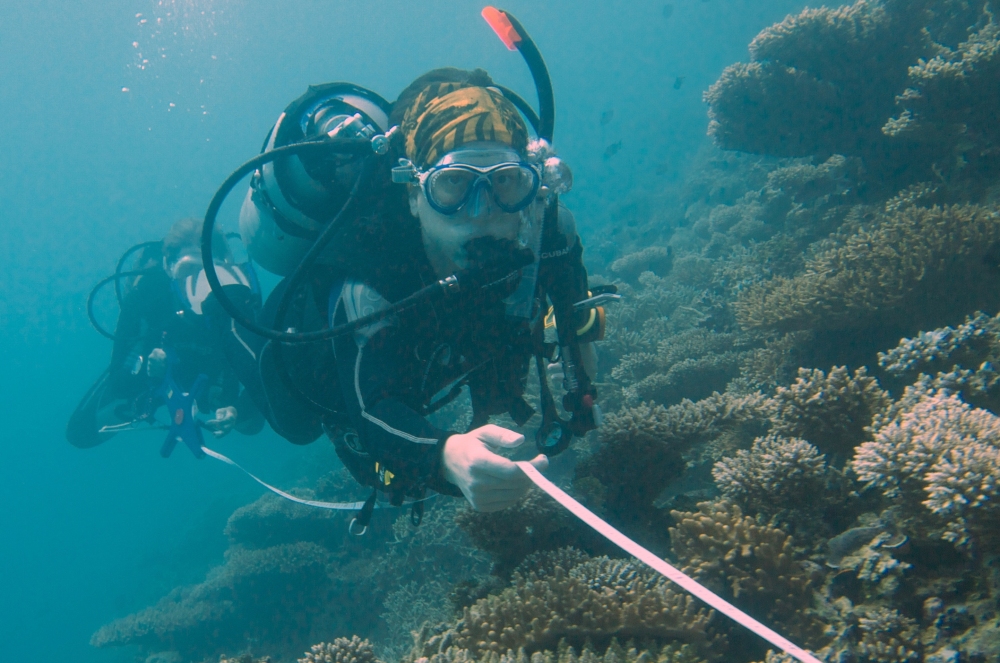
Underwater magnifying glasses?! All will be revealed in due course.
Snazzy Swarovski Optik binoculars. For our sooty falcon work.

Of course there’s lots more gear, but this is all safely stored in Dubai. Remember that you need to have your diving gear serviced if you have not used it for a while. Otherwise I hope your packing is going well.
I’ll be in Muscat for a few days before getting to Dubai. The mobile number I will have in Dubai for about 36 hours before assembly is xxx. This is for emergency purposes only (such as being late for assembly).
See you there.
Update from our working holiday volunteering with leopards, elephants and cheetahs in Namibia, Africa (http://www.biosphere-expeditions.org/namibia).
Team 4 has arrived at Okambara, and they were evidently briefed about my unusual tactics to get team members to be on time because they are always early!
Team 4 has been very keen to get to work, and so eager for the briefings that we finished them in record time. (I admit to using coffee and cake as an incentive to stay caffeinated and sugarated.) Even before their first day in the field all three activity groups jumped into organising their kit and the first morning was ready to leave base camp a full half hour before we were scheduled to start.
We were well rewarded for everyone’s efforts because this group’s very first box trap team captured a honey badger (in the trap at the lodge) and a porcupine (at Bergposten). The IZW (Institute for Zoo and Wildlife Research, one of our partners here in Namibia) wanted to immobilise the honey badger and take some DNA samples, and they invited the Biosphere Expeditions team to be involved in the process. (You’ll remember that the last group also captured a honey badger and while the IZW was keen to take samples then as well, unfortunately for our last group all the IZW scientists were in the field and we therefore released the animal without immobilisation.)
While I am sure the honey badger doesn’t think he was any too lucky, we think he was because the IZW veterinarian identified a foreign object imbedded in his leg. After a small bit of field surgery she extracted a large, broken piece of porcupine quill from his hind leg. You can see the piece being extracted in the photograph above. We all got to watch the honey badger’s quick run for freedom about three minutes after the immobilisation antidote was administered. Afterwards the IZW team cleaned up the field station while two Biosphere teams went to work at re-setting the box trap. Thanks Team 4 for working your first day until dark!
Team 4’s first tracks & scats team found three hyaena tracks and one leopard track on track #4, and we had a good laugh at the evening briefing when they were disappointed to find so few tracks. We assured them that finding four tracks in a two and a half hour walk is an enormous success. We also found hyaena tracks in front of the Frankposten trap as we approached it for our box trap training, so the whole team received a lesson on measuring and identifying tracks our first day out.

The first day’s elephant team was only successful in learning how to use the telemetry equipment and also learning how easily a herd of nine elephants can disappear into the bush. The afternoon team looked and looked as well, and eventually found them through hearing their very loud crushing of and foraging on the brittle acacia shrubs.
Team 4’s other odd reward was a giant thunderstorm and believe it or not, RAIN! Unbelievable as it sounds, rain came in the middle of the night for several hours. This is most welcome because there has not been any rainfall here since May, and the bush is quite dry. We’ve been worried for the animals with Namibia’s drought, and hopefully the 10 mm of rain that fell last night will give the shrubs and grasses the boost they need to feed the game animals. For those of you that have been here and seen how dry it is, you’ll know how shocking – and welcome – the rain is.
Update from our working holiday volunteering with leopards, elephants and cheetahs in Namibia, Africa (http://www.biosphere-expeditions.org/namibia).
Gabi (an expeditioner staying for a second slot) and I were enjoying the day “off” in between groups by checking the box traps for Vera. In order to follow this story you need to know one thing about me: I hate travelling the same road twice. So Gabi and I set off on a new-to-us road in the north part of the farm. Thanks again to the volunteers in Team 1, I now know what a kill drag looks like. So when I drove over one on this route (yes, it took my brain three seconds to realise what it was!) I stopped and got out.
Gabi and I, not being experienced trackers, followed the drag about 300 meters to a hole in the fence. Excitement pounding through our veins at the possibility of finding a valuable leopard kill, we eventually realized we were following it in the wrong direction! So we backtracked, passed the truck again, and followed it the other way. 200 meters later we stopped our tracking because the trail led to the mountains. We then drove off to get some cell phone reception and back-up from Vera and Jesaja.
Jesaja was able to track the drag high up into the mountains, but the prey was small enough for the leopard to eventually pick it up and carry it over the rocks and we finally lost its trail. We were keenly disappointed to not find the fresh kill, because that is what led us to the leopard capture and subsequent collaring in Slot 2. I’m posting some pictures on https://biosphereexpeditions.wordpress.com/ so that those still to come can see what we were so excited about.
Update from our working holiday volunteering with leopards, elephants and cheetahs in Namibia, Africa (http://www.biosphere-expeditions.org/namibia).
Thursday we did our vehicle game count and it was the first time Vera, Jesaja and I weren’t freezing our whatooties off on the back of the vehicles. It was a welcome change from the near-zero temperatures we’ve had before! We had some really good spotters in this group and it was great to have them on board the vehicles.
After the vehicle game count, each vehicle split off to check the box trap nearest the terminus of their transect. Sadly, they were all empty. Vehicle 2 had a surprise encounter with the elephants on their way back to camp on the main east-west road, and they seemed a lot quieter than they were yesterday. The teams yesterday found them restless and a bit challenging to observe.
Unfortunately we did have one camera trap casualty this slot. The elephants and the baboons tag-teamed the poor trap and you can see how it came back to us. Look closely and you’ll see the teeth marks in the batteries! This is the second camera trap the elephants have destroyed this year.


After lunch all helped with the final data entry and equipment cleaning and organisation around base. Ania, our volunteer pharmacist, ruthlessly organised our emergency medical kits while Brigitte sorted through thousands of camera trap pictures. (Tomorrow look for the best of Slot 3 camera pictures.) Other afternoon activities included box trap duty and the vehicle cleaning detail.


Thanks Team 3 for your hard work over the past two weeks! Not only did you trail-blaze some new tracks for us (and collected our freshest “snack”, er, scat to date) you also gave us some clues as to where we might relocate another box trap.
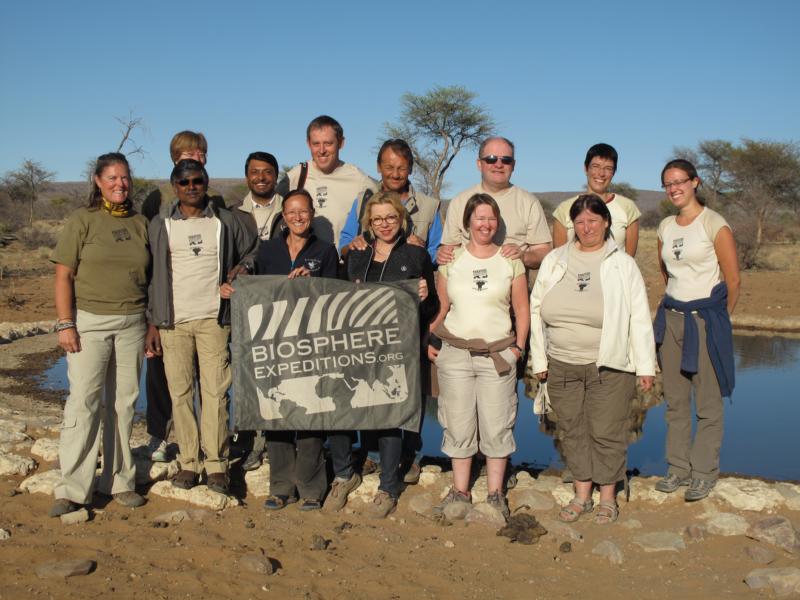
 Biosphere Expeditions: blogs from the frontline of wildlife conservation and the fight for a more sustainable planet