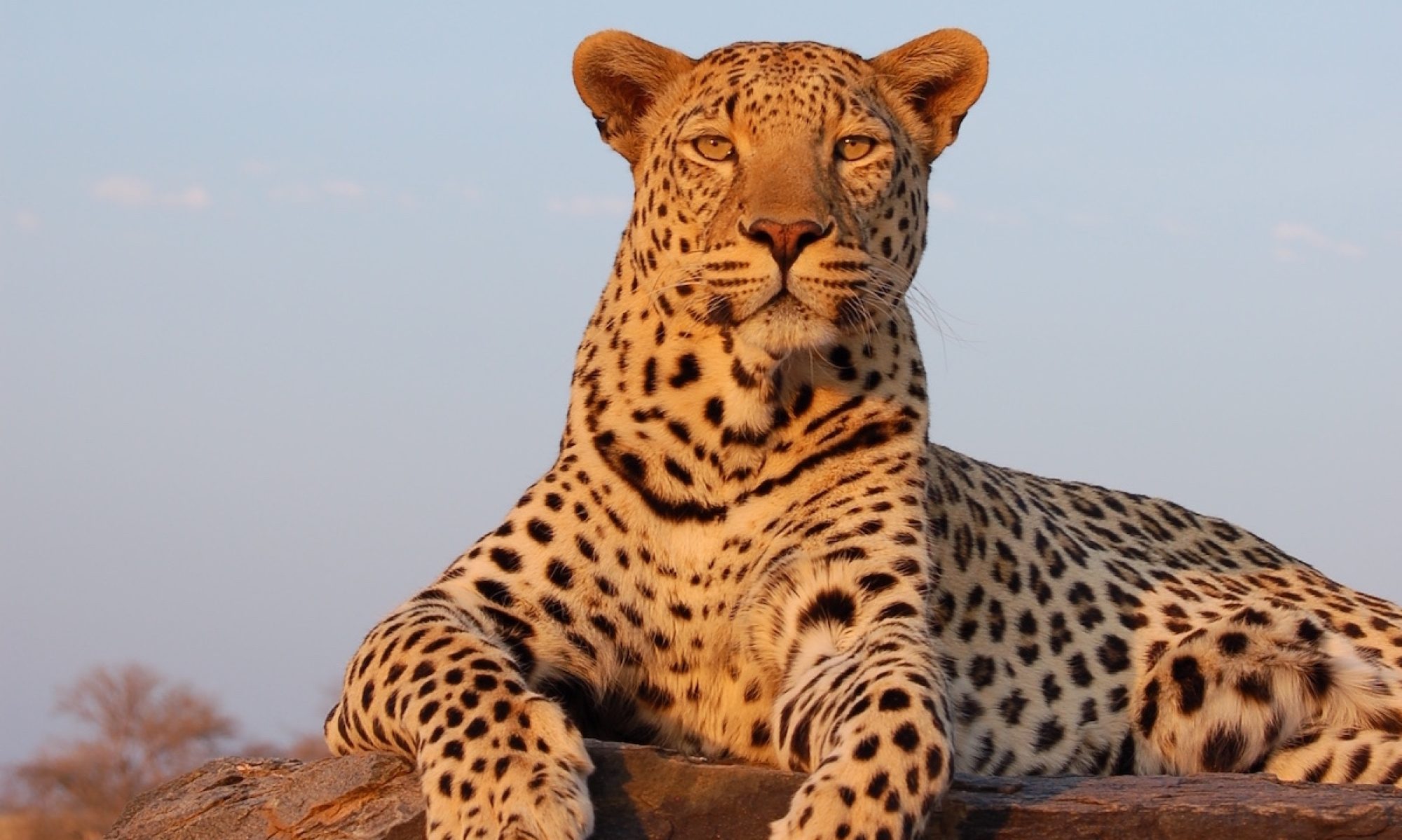

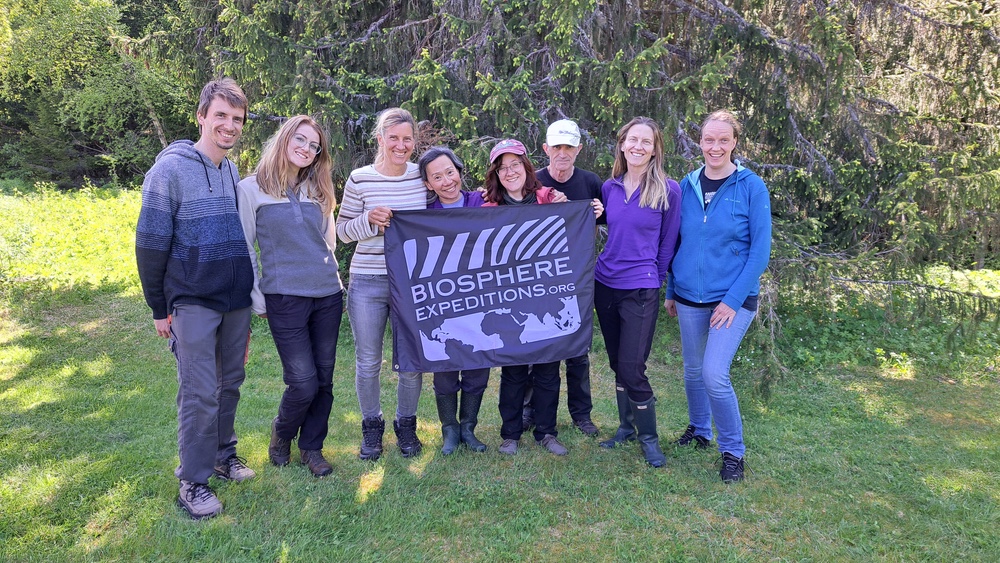
Peter Thoem, a retiree from Canada, has participated in six expeditions so far. ‘I have time in my life, the health and the resources – so why not’ is his go-getter attitude in all this. This is why he started with expeditions and what he experienced on them.

Since 2018 Peter has tracked snow leopards in the Tien Shan mountains of Kyrgyzstan, studied biodiversity in Kenya’s Masai Mara, Arabian oryx in the Dubai Desert Conservation Reserve and whales & dolphins on the Azores archipelago.
‘Back in the day, when I was thinking about joining my first expedition to the Tien Shan mountains to study snow leopards, it was the opportunity to get into a really wild area. I could see that few westerners would ever get to see or experience the Tien Shan mountains and that the expedition might yield exciting results’, recounts Peter, ‘it was simply too good an opportunity to miss.’
And since then? ‘Tien Shan was just so thrilling’, says Peter, ‘and then the year after – in 2019 – there was the chance to do something equally useful in places as fascinating as the Dubai Desert Conservation Reserve and Kenya’s Masai Mara. It deeply interested me’. So off he went to the Dubai Desert Conservation Reserve first and then a few months later to Africa for back-to-back expeditions in 2019 and 2020, just before the Covid pandemic brought everything to a standstill for a couple of years.

His most recent expedition was to the Azores archipelago, studying whales & dolphins from a catamaran.
When asked about lessons learnt on expedition, Peter’s answers are swift and precise, showing his enthusiasm. He believes that with good planning, an open mind, health and resources, you can do it, because ‘it’s a fascinating world out there’. And further that even if ‘our western comforts make us think that everywhere else is scary, it’s not. Yes, some places can be risky, even dangerous, but not everywhere else.’
When asked to summarise his experiences, Peter takes some time to think, smiling to himself and then says: ‘Sometimes it’s rigorous – we have work to do and protocols to follow, we have to understand what’s expected. We have to coalesce as a team and appreciate each other’s strengths and not-so-strengths. Then we have to find ways to work with the less committed – some are day-dreamers, others are bloggers who don’t always contribute much.’ But it always works out in the end: ‘We come from all corners of the world, some of us have even met before, because we’re committed to the Biosphere Expeditions ethic. And when I return, I always feel richer and profoundly privileged for having been to places and done things that I used to believe only existed in an Attenborough world.’
Peter’s most abiding memories include standing on the slope of a remote valley in Kyrgyzstan with a clear blue sky. ‘It’s just warm enough to unzip my jacket. I’m surrounded by yellow expanses of spring flowers, there’s rushing meltwater cascading off snow-draped mountains around me and I had to pinch myself. Is THIS really me? Am I really here?”
Or there is the time when Peter was on his middle-of-the-night-shift keeping watch over a waterhole in Kenya’s Masai Mara. There are elephants around and hippos lie in the waterhole, but it’s quiet except for the odd grunt, splash or snuffle. Then from across the valley comes a strange upside-down bark, like indrawn breath “EEeeeeYiP”. What’s that, Peter asks the ranger. ‘Hyaena’, the ranger replies and Peter’s spine tingles.
And most recently, in 2024, on the expedition boat off Faial, one of the islands of the Azores archipelago: ‘The sea is lively and we have to hold on white-knuckle tight’, remembers Peter, ‘we’re all doing our tasks as assigned when a blue whale is sighted. We slow down and carefully approach – again everyone does as instructed – gathering data: time, water temperature, sea-state; taking photos, watching, counting and more. And then we’re spell-bound. There in front of us, all but immersed, visible yet almost invisible is the world’s largest mammal. It blows a couple of times, then dives to depths that take it out of the realm of human comprehension.’

With all those experiences, what impact have the expeditions had on Peter’s daily life, away from expeditions? Again, Peter does not hesitate: ‘I’m seen and known for having just come back from another exotic place. Where are you going next, people ask. I have a greater understanding and appreciation of the value of citizen science’. An appreciation that has contributed to a structured long-term project on bird populations close to Peter’s home (now in its 10th year).
And what about Peter’s connection to nature? Has this changed through the expedition experiences he’s made? ‘My connection with nature has always been strong’, Peter responds, ‘and I feel that I have a reasonable understanding of how the balance of nature all weaves together. The expeditions give me the chance to see some of those interactions and inter-relationships’. And Peter adds an example of this: ‘With Alan, our expedition scientist in Kenya, we watched a small group of impala ingesting mineral-rich soils. Alan was ecstatic, it was, he said, the first known-to-science example of geophagy (animals eating soil, usually for its mineral content) by impalas. My photos made it a publishable observation‘.

The interview ends with the question of what Peter would tell others who are thinking about joining their first expedition. Peter laughs and just says: ‘If it appeals to you, then set aside your fears and just go do it’.
Find an overview of all upcoming expeditions here.



























 Biosphere Expeditions: blogs from the frontline of wildlife conservation and the fight for a more sustainable planet