From our scuba diving conservation holiday with whale sharks and coral reefs of the Maldives

I have been here in the Maldives for 24 hours now and have seen all sorts of weather from heavy rain storms and high winds to hot, steady sunshine. The only constant is the temperature, which has remained at a warm but comfortable 30 degrees centigrade. The sea has been quite choppy with all the wind, so we may get some bumpy crossings.

sea

Our evenings will be spent at quiet anchorages inside the atolls, so we will have calm evenings and overnights.

Arrangements are going well for everyone’s arrival on Saturday and with our usual boat being refitted, we have been given an upgrade so the accommodation will be very nice.

As expedition leader one of my main concerns is everyone’s safety and as part of this role, I have visited one of the main hyperbaric chambers on the Maldives and met with the manager.

Ahmed Wafir, Manager, Bandos Medical Centre sitting at the controls of their state of the art hyperbaric chamber

They have a very good set-up here and I was impressed with the organisation. We have never needed to use these facilities as all of our survey dives are relatively shallow and we work well within PADI diving protocols, but it is important to be prepared.

Continue reading “From our scuba diving conservation holiday with whale sharks and coral reefs of the Maldives”
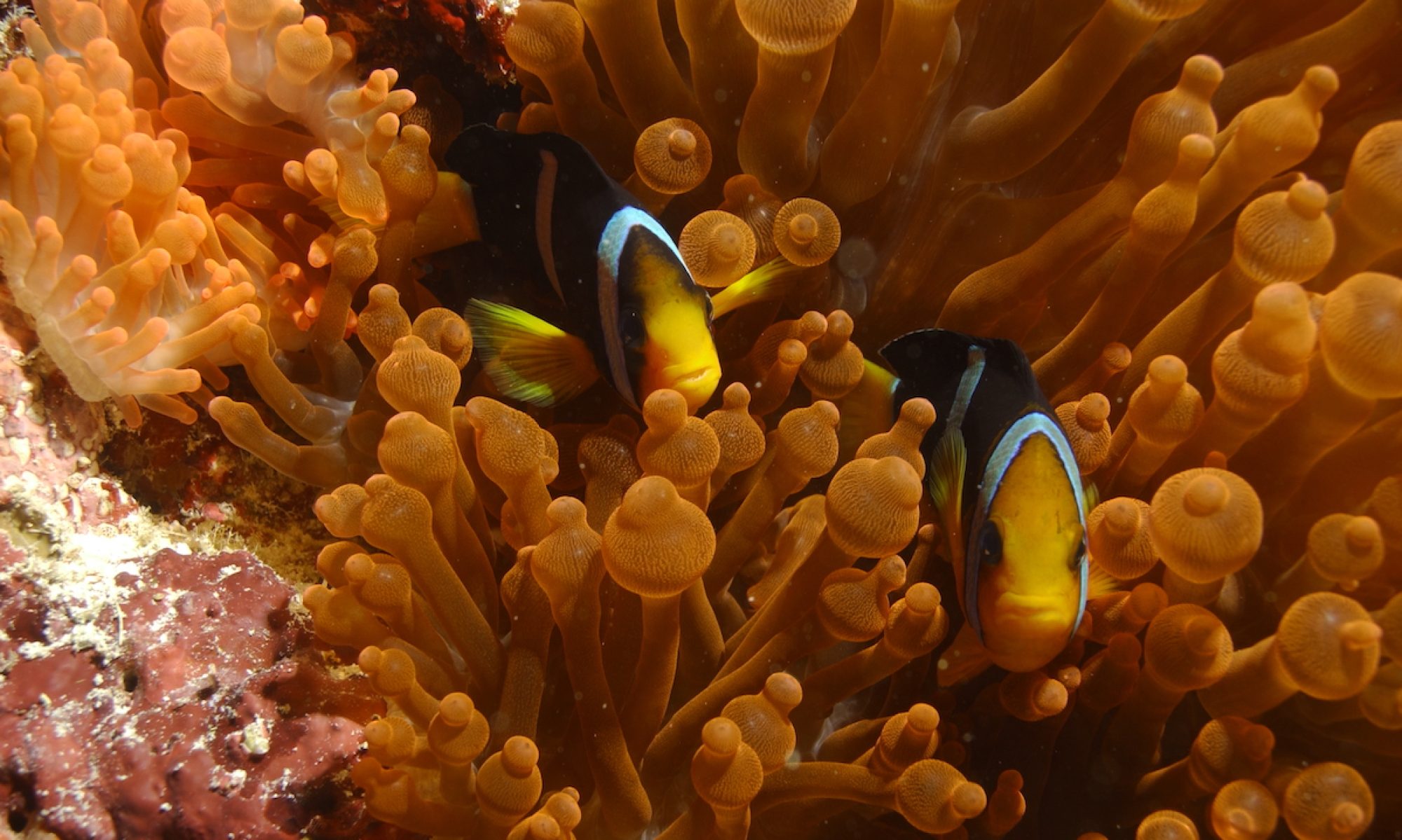
From our scuba diving conservation holiday with whale sharks and coral reefs of the Maldives

Hi, my name is Kathy and I’m going to be your leader for this year’s Maldives expedition starting soon. I’m going to be leaving the UK at the weekend to ensure that everything is well prepared for your arrival on 9 July. Once I have made it to Male’, I’ll be in touch again with my local mobile number and some updates.

Kathy Gill
Kathy Gill

We are expecting a substantial amount of bleaching to have occurred this year, so be prepared for some strange sights on our surveys.  Our scientist, Jean-Luc, knows a lot about the phenomenon that has caused this and the extent of the impact around the world, so expect to learn a lot about it and the work that has been going on around the problem. We will be documenting an exceptional event and your work on this will be crucial.

Dr. Jean-Luc Solandt

This is what Jean-Luc has said about the expedition this year: “The reason we’re doing this route is unfortunately one of sadness – to see the impact of climate change. As everyone’s probably aware, a massive bleaching event has hit the Maldives in May as a result of a strong and long El Niño. It has killed many shallow water Maldives reefs. El Niño increases surface sea water temperatures in coastal and oceanic waters, stressing many corals. Our trip is to see the extent of the damage caused by the hot water that was over Maldives reefs in early May. As our trip is in July, it allows us to see the short-term recovery of the reefs that we’ve been surveying since 2011. Our work this year, and in subsequent years, is to see which sites are more resilient.”

Below is our proposed survey route FYI.

I’m really looking forward to meeting you all and I hope your travels go well.

Regards

Kathy Gill
Biosphere Expeditions

Continue reading “From our scuba diving conservation holiday with whale sharks and coral reefs of the Maldives”

Update from our SCUBA diving volunteer opportunity & conservation holiday on the coral reefs of the Musandam peninsula, Oman

Divers rediscover Eden for coral reefs in the face of climate change

The waters of the world’s tropical coral reefs are warming and getting more acidic in the face of increased C02 concentration. Reefs in most parts of the world are dying from such stress and it appears that the ability for coral reefs to recover from periodic El Nino events is being diminished – because of increasing frequency of warming, pollution, increased sedimentation and disease. However, the corals of the Musandam in northern Oman are currently an exception. Here reefs are extremely healthy, covering the shallow waters of the mountainous peninsula with extreme variety of growth forms from massive 400 year old 4m high ‘boulder’ coral to the delicate yet important branching and ‘bushy’ corals. Coral cover regularly exceeds 70% in nearshore embayments
Elsewhere in the world, corals have been reduced to rubble, their once great carbonate structures being eroded by boring sponges and worms, whilst successive warming events and overfishing of herbivores has resulted in massive plant growth, suffocating what’s left of corals, and attracting opportunistic algae. The majority of Jamaica’s once spectacular reefs have been turned from ‘coral’ to ‘algal’.

Dr Jean-Luc Solandt, Reef Check Course Director of the region said: ‘The past six years of Biosphere Expeditions surveys confirm the vitality and resilience of this area. At a time when we’re seeing the degradation of the world’s most diverse marine habitats, relied on by 100s of millions of people for food, Musandam is withstanding the current temperature hikes. Our survey findings offer hope that there are some areas of the world that can withstand such environmental change.’

The temperature of the surrounding waters differs considerably from that of the Gulf of Arabia. Musandam lies at the entrance of the gulf and is enriched by cool deep waters of the Gulf of Oman to the east. The current exchange between the waters of the gulf flowing over the reefs allow for currents to wash the reefs with clear waters, whilst the cooler water from the east prevents catastrophic climate effects. Furthermore, some of the corals have been seen to harbour temperature resistant algae, allowing greater resistance to bleaching.

Whilst Musandams coral reefs are faring well, the fisheries of the area are being exploited at ever increasing effort. The most important commercial fish species of the reefs – grouper (hammour) are only ever recorded at 50 cm in size at very few more isolated sites. We recommend the development of an MPAs and minimum landing sizes for grouper to achieve a sustainable fishery, though none of this will change if it doesn’t have the support of the community. Jenan Alasfoor from the Environment Society of Oman, a scholar on this year’s expedition, knows too well that before any changes in fishing practices occur, full consultations with the local communities need to be undertaken.

Pictures from the 2015 expedition


Update from our SCUBA diving volunteer opportunity & conservation holiday on the coral reefs of the Musandam peninsula, Oman.

Update from our SCUBA diving volunteer opportunity & conservation holiday on the coral reefs of the Musandam peninsula, Oman

Our first dive survey went smoothly – reef sharks and an eagle ray spotted off transect – then we sailed to Faq al Asad (the jaw of the lion), a stunning site of crystal clear water, amazing rock formations, even dolphins! We ate our lunch and went for a snorkel to assess the reef, then kitted up as usual. The teams dived in and the invertebrate teams began to lay the transect. As they reached the end of the 10 0m and turned around to swim back to the start of the tape a freak current swept through the bay. The teams struggled back to find that the boat had completely swung on its anchor, one of the SMB’s marking the start of the transect had been swept away and air was running low. All was not lost, though, as we reeled the tapes back in and still had time to sail further round the peninsula with a pod of Arabian humpback dolphins at our bow, to a site aptly named “pray for calm.” It worked, and we managed to complete our survey just before dusk.

Not to be thwarted by the elements, we returned to Faq al Asad the following morning very early and collected the data we had missed the day before, then headed to Khayl Island for a glorious survey dive, complete with shipwreck. The site was so interesting we decided to stay for a night dive and explored the ancient porites mounds with their banded coral shrimp and moray eel inhabitants, with turtles, cuttlefish, giant porcupine fish and squid in the mix.After a scientific wrap-up from Jean-Luc, we moored away from any civilisation and spent our last peaceful night under the stars.

A big thank you to everyone for all your hard work and attentiveness. It’s been a steep learning curve, so much to take in, both in and out of water, and your diligence in collecting the data, even in adverse conditions – swarms of jelly fish and flies – was much appreciated. This expedition has confirmed for us that the reefs here in Musandam really are resilient to the ravages of climate change, and offer an insight into another type of hardier reef that can withstand very significant temperature fluctuations. It may not be as colourful, or as varied as traditional coral reefs, but it has a much healthier future than most!

Thank you also to Patrick for your retrieval skills – masks, fins, SMBs, plastic bags and even a cushion that got knocked overboard during a dawn yoga session! Thank you to the crew, who offered continuous support and demonstrated great expertise in getting us right where we wanted to be. Thank you all for your sense of curiosit, and enthusiasm for getting the work done. It was a pleasure working with you! I hope you continue Reef Checking now you have your certification and look forward to meeting you again on another Biosphere Expeditions project.

This slideshow requires JavaScript.


Update from our SCUBA diving volunteer opportunity & conservation holiday on the coral reefs of the Musandam peninsula, Oman.

Update from our SCUBA diving volunteer opportunity & conservation holiday on the coral reefs of the Musandam peninsula, Oman

It’s been an eventful beginning to this year’s Musandam expedition – a tire on our trailer blew out as we were en route to Khasab, so we had to wait for another vehicle to transport all the kit. Arriving late at the harbour meant we had no time to spare if we wanted to complete our check dive before dark, though with an attentive team, and a competent skipper and his crew this was not an issue. The dive went well and we relaxed to the light of a huge silvery moon.

moon

The next couple of days were taken up with Reef Check training. From dawn ’til dusk the team studied, dived, and took tests above and under water.  The effort required was considerable but rewarding and by the afternoon of the third day everyone had passed all their tests and were fully qualified reef checkers. Well done! A great achievement for a team with an age range spanning 50 years! As a treat we took the speedboat and visited the local land-locked village of Kumzar, learning about the local customs and traditions from Yusef, our skipper.

kumzar

It is reassuring to see from our preliminary investigation that despite being flagged as a hot spot for coral bleaching, these corals seem to have adapted sufficiently to cope with such high temperatures. Not such good news is the first ever sighting on any Musandam expedition, of the coral-eating Drupella snail at, along with a proliferation of discarded fishing nets and lines. Reef Check veteran Ayesha managed to release two banner fish caught in a fish trap, though bat fish in another trap were not so fortunate.

drupella net

So with another five surveys ahead of us and the full moon tampering with the tide and currents, we still have very few full days ahead of us. But I have no doubt that if the last few days are anything to go by, the next will be filled with enthusiasm, hard work, and good humour.


Update from our SCUBA diving volunteer opportunity & conservation holiday on the coral reefs of the Musandam peninsula, Oman.

Update from our SCUBA diving volunteer opportunity & conservation holiday on the coral reefs of the Musandam peninsula, Oman

Greetings from Dubai – our preparation day has been very successful, beginning with a trip out to the Dubai Desert Conservation Reserve (DDCR) to collect our kit boxes that have been in storage there for the past year. The DDCR is our partner for our Arabia expedition (www.biosphere-expeditions.org/arabia) which runs each January, monitoring Arabian oryx, Gordon’s wildcat, and other flagship species, and they also kindly guard all the equipment we need to run the Musandam expedition as well. Once the kit had been checked and the car loaded, we went back to Dubai in search of an essential piece of O2 delivery equipment, without which we could not set sail tomorrow. After a hectic couple of hours, it was sourced, found, and collected! Thank you Nasser for your help!

Our next port of call was the iconic sail-shaped Burj Al Arab hotel where we met with David Robinson, their head aquarist. He took us behind the scenes, showing us the turtle rehabilitation work they are doing in Dubai, taking injured hawksbill and green turtles that get washed up on the beaches, and nursing them back to health for release back into the open ocean. David told us that there are only 60 breeding adult female hawksbill turtles left in the whole of the Southern Gulf of Arabia. This dangerously low figure is due to loss of habitat, unsustainable fishing practices and other anthropogenic influences.

This slideshow requires JavaScript.

On our tour we saw the aquarium’s leopard shark, now 7 years old, born parthenogenetically, i.e. without external fertilisation. David was very excited, as yesterday, she too exhibited the first signs of laying her own clutch of eggs. Leopard sharks are only the 3rd species to show parthenogenesis in captivity.  David is not only working in Dubai, but is conducting research on whale shark ecology. As part of his PhD, David formed Sharkwatch Arabia, a database to collect whale shark sightings throughout the region. He recently discovered a massive aggregation of over 150 whale sharks in Qatar. Protected by the presence of oil rigs, the waters are not fished, and tourism is prohibited – a strange but effective MPA. He asked us to keep a lookout for whale shark and other shark species during our time in Musandam, as they are likely to be present in the areas we are surveying. We did indeed have a whale shark encounter two years ago, in the same location, so keep your eyes peeled – and remember, it may be above you!

So, after this very informative and enjoyable meeting we bid our farewells and rushed back to the Holiday Inn to collect another consignment of equipment – all in a day’s work!

It may be a few days before I can send another diary entry as internet connection out on the Musandam peninsula is sporadic to say the least, but I look forward to meeting you tomorrow at 09:00 – let the expedition begin!


Update from our SCUBA diving volunteer opportunity & conservation holiday on the coral reefs of the Musandam peninsula, Oman.

Update from our SCUBA diving volunteer opportunity & conservation holiday on the coral reefs of the Musandam peninsula, Oman

For those of you still under the impression you are coming on a cushy diving “cruise”, we thought you might like to see the itinerary and dive sites 😉

Image1

Image2


Update from our SCUBA diving volunteer opportunity & conservation holiday on the coral reefs of the Musandam peninsula, Oman.

Update from our SCUBA diving volunteer opportunity & conservation holiday on the coral reefs of the Musandam peninsula, Oman


Hello and welcome to the first instalment of the Musandam diary.  I am Catherine Edsell your leader for this year’s expedition to the Musandam Peninsula. I have led this expedition for the past three years and feel privileged to be able to take you to such a stunning environment – we have a great expedition ahead of us. I trust all your preparations are going well, and I look forward to meeting you in Dubai at 09:00 on 25 October in the foyer of the Holiday Inn Express Jumeirah, our departure point to the northernmost tip of Oman.

It is our aim to replicate the surveys we performed in 2013 and 2011 as only by obtaining comparative data can we gain an insight into the true state of reef health. This year is an El Niño year. Sea surface temperatures are rising and as I write this, corals around the world are dying due to the intensity of this phenomenon. The temperature of the waters surrounding the Musandam Peninsula are always higher than the global average, making it a unique study site, as the corals here are already adapted to warmer temperatures. It will be interesting to document how much resilience they have and whether they are being affected. This is our quest.

To be able to collect accurate data, Dr. Jean-Luc Solandt our expedition scientist, and I will first need to train you in Reef Check methodology, so please have a look at all the training materials available on our website (see your dossier for details), as the more familiar you are with the indicator species of fish and invertebrates and types of substrate we will be studying, the better!


Update from our SCUBA diving volunteer opportunity & conservation holiday on the coral reefs of the Musandam peninsula, Oman.

From our scuba diving conservation holiday with whale sharks and coral reefs of the Maldives

No bleaching and lots of teaching on Biosphere Expeditions’ Maldives reef expedition 2015

If you have ever visited the Maldives, you will have seen fleets of luxury liveaboards motoring around the atolls taking their guests to well-known dive sites to experience the underwater beauty that the Maldives is famous for. This September, one of those liveaboards, the MV Carpe Diem, housed a rather different clientele – the honeymooners and adventure divers were replaced with studious environmentalists embarking on a training course to learn the monitoring techniques necessary to collect reef health data – Reef Check.

From five different countries, 10 participants, two of whom were Maldivian, came together to learn the Reef Check methodology on an annual research expedition organised by nonprofit conservation organisation Biosphere Expeditions. Biosphere Expeditions recognizes the importance of training local Maldivians, alongside citizen scientsts from around the world. Once the expedition is over, and most participants have returned to their temperate homes, the Maldivians have continued access to their reef and with their newly acquired knowledge, can support Biosphere Expeditions’ work with additional Reef Checks, amongst them the first such all-Maldivian survey in 2014.

So, with the lounge of the Carpe Diem transformed into a classroom and its dhoni (dive boat) now a research vessel, the ten newly qualified Reef Check team set out on a survey route previously visited in 2011 and 2013. “We revisit the same sites to get a clearer idea of what’s going on,” says Catherine Edsell, expedition leader and Reef Check trainer, “much can be gleaned from repetitive datasets – they helps us to see what is changing, especially when it comes to the issue of bleaching.”

With a global El Niño event and documented sea surface temperatures rising, the team were on high alert for signs of coral bleaching. leaching occurs when corals are stressed resulting in expulsion of the symbiotic algae (zooxanthellae), which not only give them their colour, but provide them with food via photosynthesis. Without their zooxanthellae corals appear bright white or luminous yellow and it was this sign that the team was on the look-out for.

Initial training dives around Baros Resort’s house reef revealed no such incidence, but Mariyam Shidha Afzal, this year’s expedition scientist and a previous Maldivian recipient of Biosphere Expeditions’ training programme said, “Bleaching can be quite localised, so we may find when we travel south that things are different.” Fortunately this was not the case and there was minimal bleaching at all survey sites. Storm damage, on the other hand, was quite severe, especially at Bathalaa Maaga and Holiday Thilla, and it was easy to see why, as throughout the expedition, monsoon storms battered the more exposed atolls, causing one of the surveys to be aborted.

“Understanding the factors that are affecting the health of the Maldives’ reefs is the ambition of the programme”, says Dr Jean-Luc Solandt of the Marine Conservation Society and Reef Check co-ordinator for the Maldives. “It is never a simple story – when we put our heads underwater at each site, we have a basic understanding of what‘s likely to be affecting the reef, but Reef Check allows us to nail this down further with data on a wide variety of factors. At the same time we are able to train Maldivians and conservationists from other countries to do the same, so we are delighted with the long-term results of the trainings and collaborations we are forging in the Maldives.”

Biosphere Expeditions’ placements this year, kindly supported by the Rufford Foundation, were Mohammed Ryan Thoyyib, currently working for LaMer (Land and Marine Environmental Resource group – a local environmental consultancy), and Irthisham Hassan Zareer from the Maldives Whale Shark Research Programme. Both organisations have an ongoing relationship with Biosphere Expeditions and offer up their most promising candidates to become Reef Checkers. “I feel extremely lucky to be part of such an expedition that brings people together from different corners of the world for the same goals, to try and conserve the beautiful reefs that we are blessed with,” says Irthrisham, “I am hoping to get in contact with some of the other Reef Check trainers from the Maldives and with the help of some more dedicated divers, carry out more surveys at the end of the year.”

2015 expedition slideshow:

This slideshow requires JavaScript.

Continue reading “From our scuba diving conservation holiday with whale sharks and coral reefs of the Maldives”

From our scuba diving conservation holiday with whale sharks and coral reefs of the Maldives

So, sadly all good things must come to an end. It has been an excellent expedition, with a hardworking, diligent, enthusiastic team. The fact that everyone passed their Reef Check tests first time was testament to the effort put into studies. And despite being a diverse group from many different countries, with an age difference of over 30 years, the team gelled really well and we all had a lot of fun together. Thanks also to Shidha, our scientist, who stepped in at the last minute and did a great job.

I must mention the fantastic crew of the Carpe Diem who supported us both on board and under water – without them, some of our transects would not have been laid, due to the extreme weather and currents we encountered, so they really were integral to the success of the expedition and the collection of valuable data. Thank you!

In addition to all our Reef Check data, (which will be published in the 2015 Maldives Report), we also collected ID shots of manta rays, which I will submit to Manta Matcher www.mantamatcher.org. This a conservation group that endeavours to learn more about the habits of Manta rays worldwide, with a view to their protection. Of course our whale shark encounters that were also mapped and logged will also be submitted to the Maldives Whale Shark Research Programme http://maldiveswhalesharkresearch.org. Using IS3, a programme initially designed by NASA to identify constellations, we were able to identify two of the sharks we saw by matching ID photographs of their markings to those already on the MWSRP’s database. Our sharks were called Adam and Kokko, two juvenile males taking refuge in the warm sheltered waters of Ari Atoll.

So thank you all for your energy, your laughter, for joining me on the sun deck for yoga at dawn, for revising late into the night, for supporting and helping each other throughout the week – you really made a fantastic team, and I hope to meet you all on another expedition someday.

This slideshow requires JavaScript.

Continue reading “From our scuba diving conservation holiday with whale sharks and coral reefs of the Maldives”