Tien Shan: One week to go

Update from our snow leopard volunteer project to the Tien Shan mountains of Kyrgyzstan

Preparations begin long before our snow leopard citizen scientists start their journeys. This expedition especially involves A LOT of preparation. Our partners in Kyrgyzstan have been getting things ready and I, Roland, have now joined them in Bishkek for the last week’s push before the expedition starts.

Bishkek is located in one of the few parts of Kyrgyzstan that is not mountains and the weather here is hot hot hot and hazy. We will be heading up into the mountains in a few days to set up base camp and recce our expedition area, which will be much cooler – we may even have snow at base camp on some nights.

In the meantime, there is shopping to be done, kit to check and 4×4 vehicles to prepare. And meetings to be held too. Our base in Bishkek is the headquarters of NABU Kyrgyzstan, our main partner here, and this is where I have been spending my time when not shopping. I have been joined by Amadeus, a veteran of the Tien Shan expeditions (and former placement) and Taalai who is our new scientist directing the snow leopard research this year. I have also met Gulia, our base camp cook and Aman, our chief ranger, as well as Jirgal, Jengish, Ayan and Bek, the NABU rangers from the Grupa Barz (the NABU ranger group tasked with protecting snow leopards in Kyrgyzstan), who will be joining our groups on a rota system.

I am happy to say we are on target with preparations. Most of the shopping is now done and we have been through most of the kit – everything from tents, cooking stuff and fuel to a full mobile office and various gadgets for communication, navigation and safety. New this year are wooden huts for the toilet and shower (the tents used in previous years were not up to the job) and a set of GPS devices that give us digital mapping (for general navigation), a tool for research and a means of communication in an emergency in a region with no phone signal. We have also invested in a solar power system so that we can charge all the gadgetry properly. Tomorrow we will be joined by Malika, also a veteran of many a Tien Shan expedition and our expedition leader for the first group starting next Monday. But first, there is base camp to set up. I for one can’t wait to get up into those mountains.

We’ll send another diary entry once we are back in Bishkek. Happy packing, group 1!

From left: Tolkunbek (boss of NABU Kyrgyzstan), Ayan (NABU Grupa Barz ranger), Roland (expedition leader), Bek (NABU Grupa Barz ranger), Jengish (NABU Grupa Barz ranger), Jengish (NABU Grupa Barz ranger), Taalai (expedition scientist).
Amadeus and Aman food shopping
NABU truck that will get all the gear to the mountains
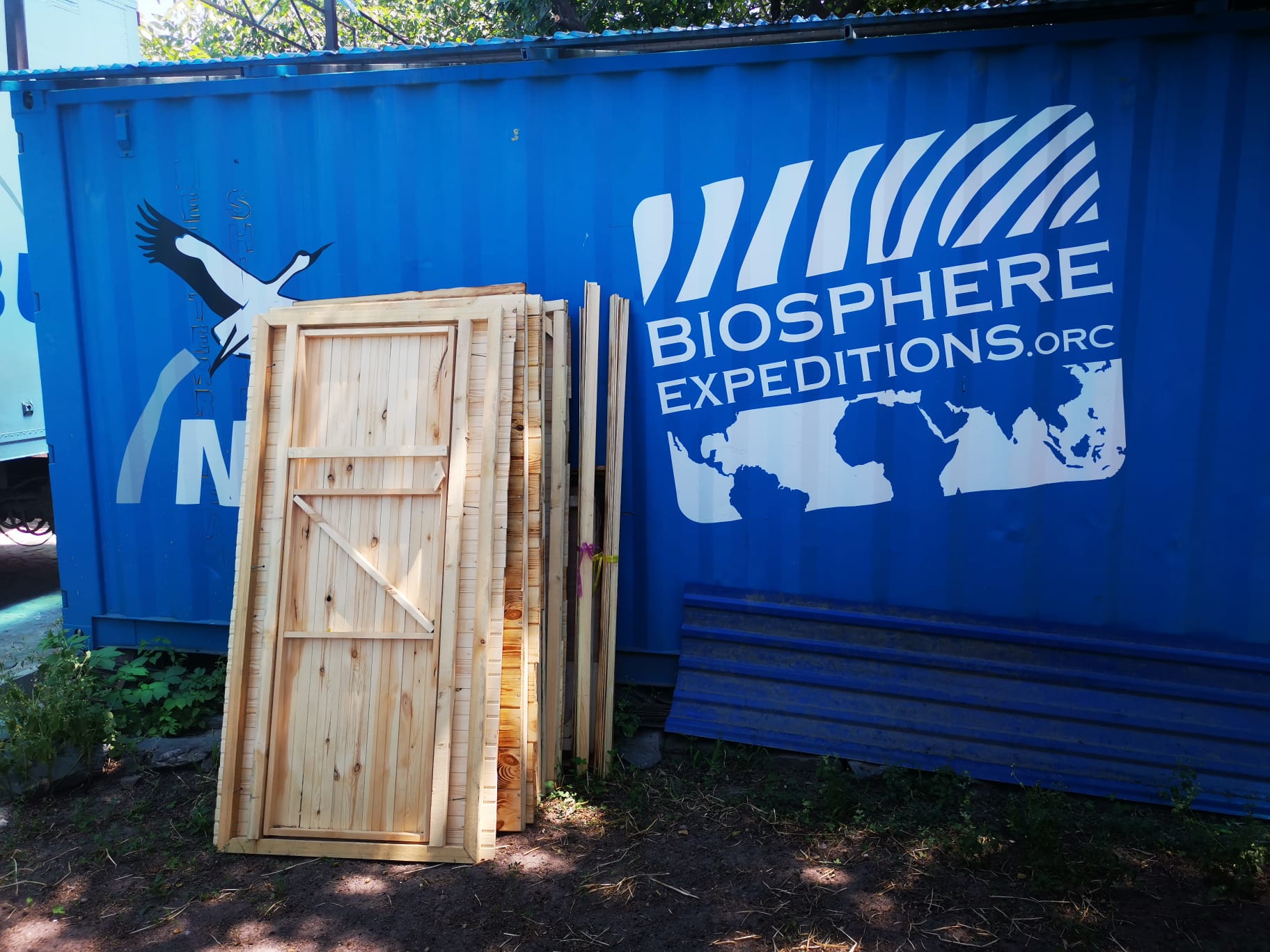
Container for gear storage and “flatpack” shower and toilet blocks
One thing the pandemic has taught is is meeting online more. Here Biosphere Expeditions executive director Matthias with the team in Bishkek

P.S. Roland now has a local SIM card and his number is +996 9972 07208 . This will only work when he’s in Bishkek though, so for example for group pick-up and changeover, but not when he’s in the mountains, where there is no mobile phone signal.

Continue reading “Tien Shan: One week to go”

Tien Shan: Base camp awaits

Update from our snow leopard volunteer project to the Tien Shan mountains of Kyrgyzstan

Base camp is now ready for the first group of snow leopard volunteer citizen scientists arriving on Monday. After a week of preparations in Bishkek, the team were ready to head up to our base camp location on Thursday first thing. The Ala-Too mountain range towers over Bishkek, offering an enticing view of jagged snowy peaks, but also a formidable obstacle to anyone wanting to travel to the Karakol valley on the other side – which is where our expedition base sits. Our usual route is over the infamous Camel Pass and through a 2 km tunnel drilled through the very top of this pass. But an accident in the tunnel earlier in the week meant the tunnel was out of action for a few days. Option 2 involves taking a different route from Bishkek and heading up the Karakol Pass – no tunnel on this route but a very steep road winding up the mountain side, almost certainly still snow-bound and too high a risk for our truck. In true expedition style, we came up with a plan C, a third route – taking an especially long and circuitous route involving many kilometres of driving on dirt tracks following all points of the compass. But it would get us to base camp without substantial obstacles. And so our fleet of vehicles set off with confidence, a truck and two 4x4s, one with a trailer. We spent the day following dusty roads winding down steep valleys hugging wild rivers, over sparse sheep-clad hills and always surrounded by huge rocky mountains any one if which could be home to snow leopards.

Finally, after a day and a half of driving, home for the next few weeks came into view. The spot sits in a long, wide valley of endless pastures overlooked by snow-capped peaks. The pastures are the summer home for many herders alongside the few permanent residents. We passed many yurts and herds of sheep, cattle and horses on our long journey up the dirt track. The air is clear and cool, a relief compared with Bishkek. Base camp is right next to the river and partly hidden from the main track.

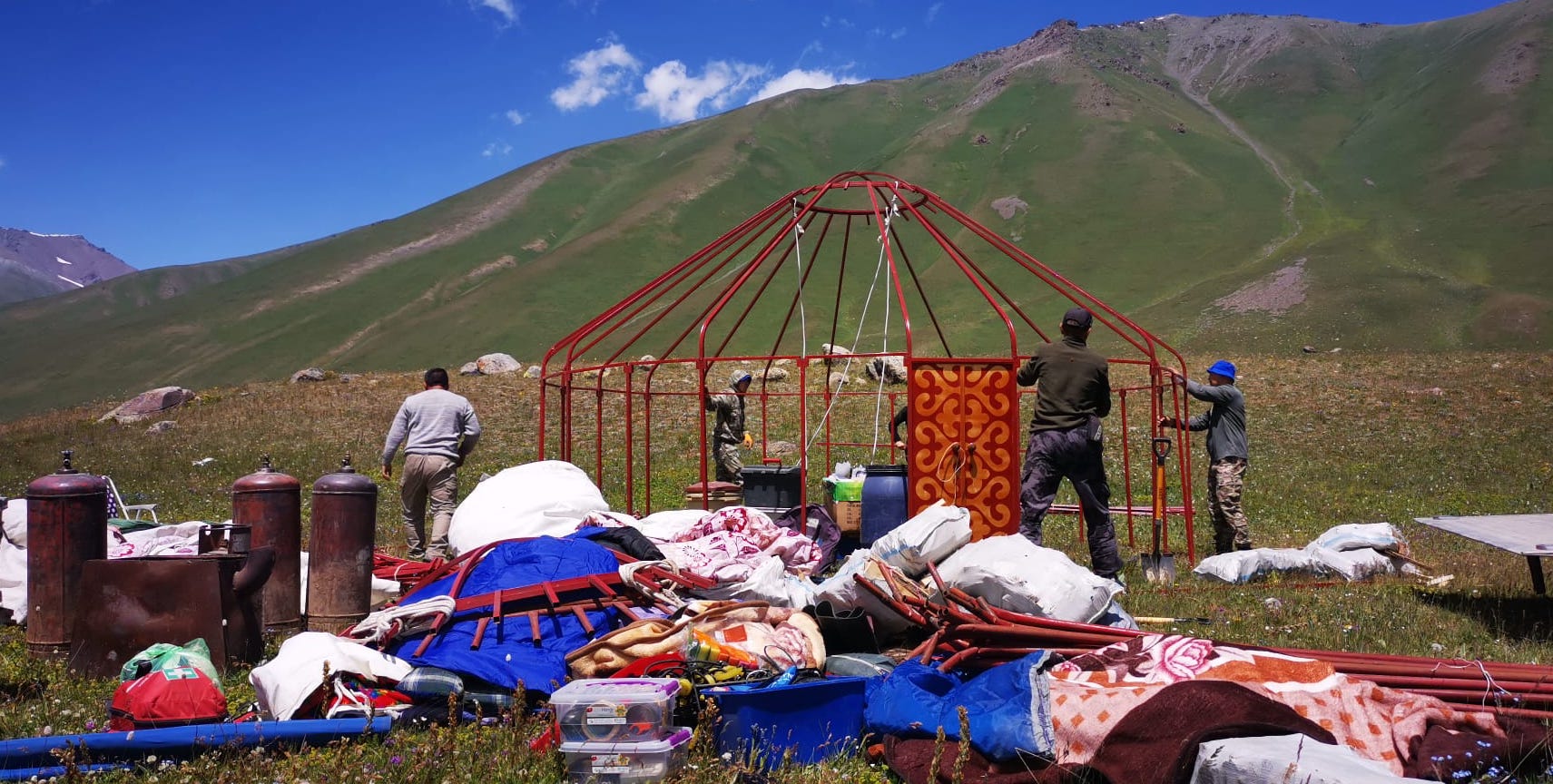
The team are well practiced at setting up base and it was not long before our yurts, tents and (new for 2022) shower and toilet huts were up. Gulia cooked up our supper and we declared base camp open and ready for the first snow leopard expedition group starting on Monday. See you in Bishkek!

Base camp central
Home…
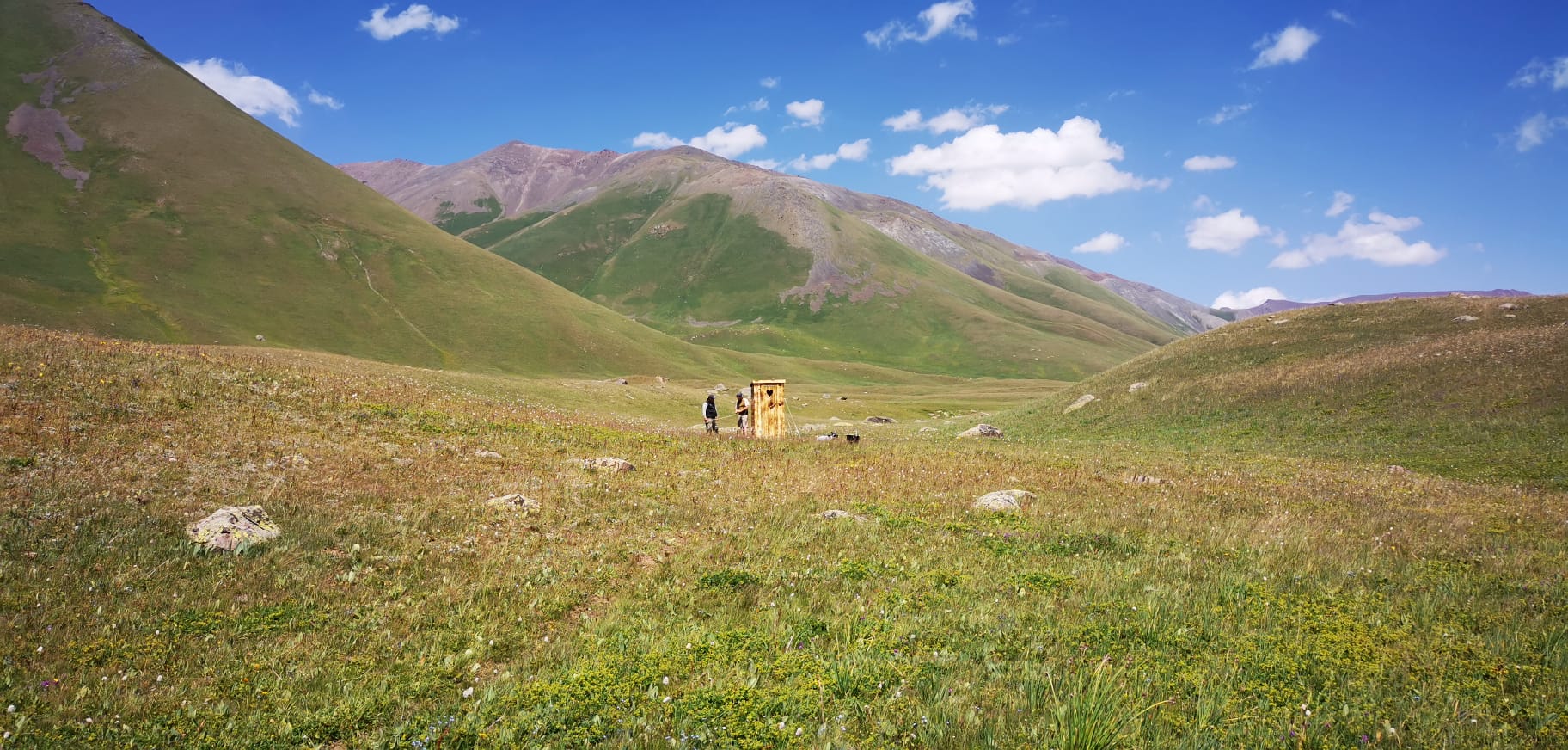
…with luxury ablutions
Lots of gear and a yurt
Staff dinner
Spot the nod to Bavaria and the Alps – ask Malika for details if unsure

Continue reading “Tien Shan: Base camp awaits”

Germany : Team 2, 327 km later

Update from our Germany wolf volunteer project

Thursday was the last day of wolf monitoring for group 2. While the sun has been our faithful companion through all surveys thus far, it was our first day in the rain and mud. It was a refreshing last hike and the motivation of all teams was high to bring back more wolf sign from the territories of Walle, Wietze and Ebstorf.

In Walle we came back empty-handed, in Wietze more fresh scats were found in the same area as several days ago and in Ebstorf also multiple scats were documented and collected. Each survey counts regardless of its outcome for in science the zeros are as important as the ones. Every kilometre walked by our wolf citizen scientists is valuable and would not have been covered if it was not for this dedicated annual wolf conservation expedition. Wolf evidence or the lack thereof gives relevant up-to-date real-time information on wolf presence or absence. With highly mobile predators that have home ranges up to 100-200 square kilometres per pack, it is only normal that it takes several monitoring days and multiple 10 by 10 km grids surveyed in the same territory before we can narrow down the core area of a wolf pack, which can of course also shift over time.

On Friday morning our expedition scientist Peter summed up the results of this intense but rewarding week: A total of 327 km were surveyed, covering 13 grids in nine wolf territories. Our wolf volunteers’ efforts resulted in a total of 69 scats, of which 52 were kept for further validation and dietary analyses. Out of these 52, seven fresh samples are being considered for DNA analysis, of which some might be from wolf pups. These are only preliminary results as the findings will be validated by other experts first too.

Many thanks to all for your efforts, enthusiasm and good sense of humour during this week of true team work. We also had one special sighting during this group: Sylvia’s surprise appearance in her wolf Halloween outfit that put smiles on everyone’s faces. It was nice to hear that several of our citizen scientists are keen to walk paths near their homes to see if they can find wolf evidence there as well. Keep up the good work!

Our expedition now takes a one week break to start afresh Saturday week when we welcome our third and final Biosphere Germany team of 2022.

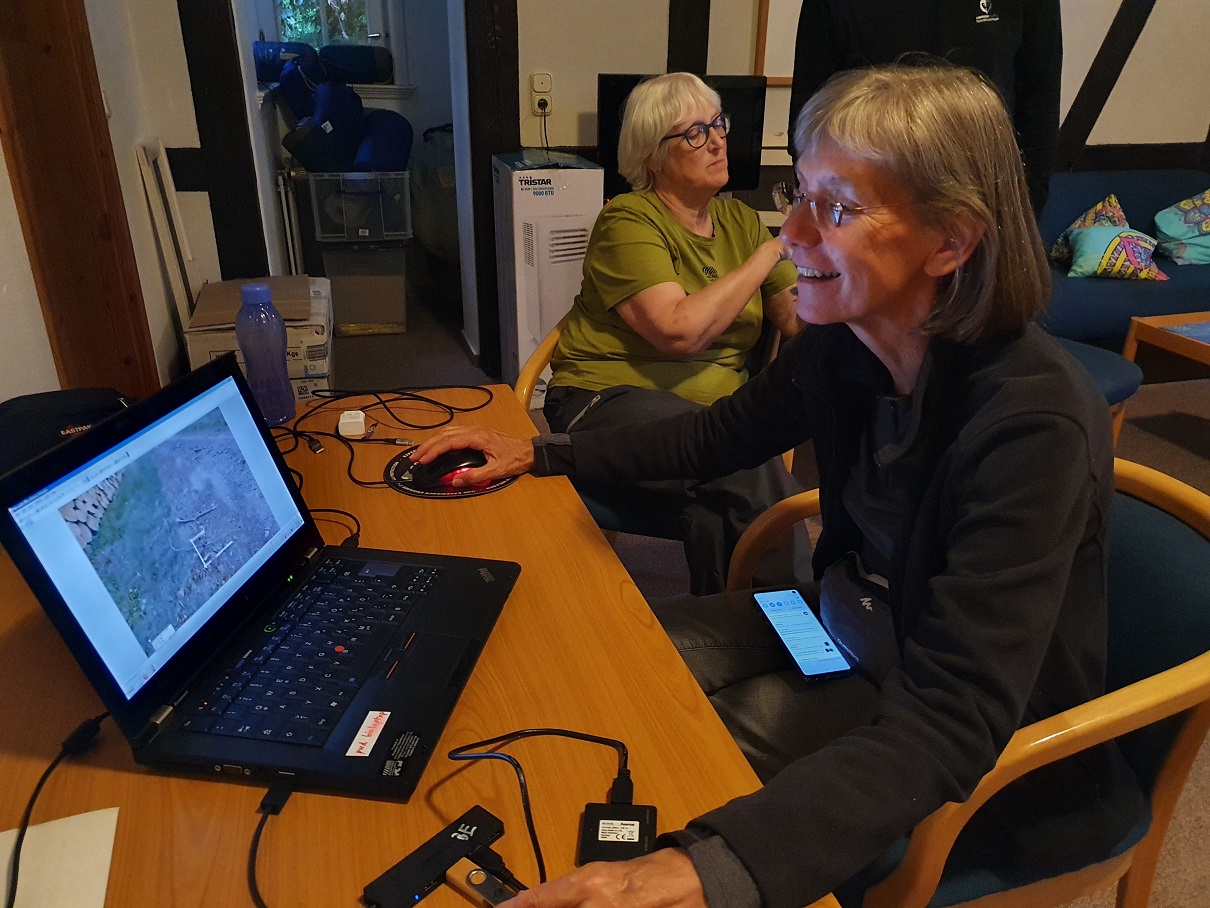
Anne downloading images
Team 2 2022
Liam documenting wolf sign
The first rainy day of the expedition
Continue reading “Germany : Team 2, 327 km later”

Germany : Overnight excursions and more

Update from our Germany wolf volunteer project

On Monday the teams set out for a full day of wolf monitoring. You are never sure what the day will bring. One team walked 17 km in beautiful surroundings, but found nothing wolf-related. Others collected a few old signs. The lucky ones came across fresh signs of wolves.

It was Lotte and Carl’s turn to get lucky in the Wietze territory: they found a 346 m long track of clear footprints of an adult wolf accompanied by at least two pups. They also collected what appeared to be a fresh pup scat nearby, thus definitely new for the DNA database.

On Tuesday half of the team left for an overnight trip up into the northern part of Lower Saxony to monitor the Amt Neuhaus and Göhrde wolf territories. Closer to the expedition base, the other half of our wolf volunteer team covered over 35 km in the Ebstorf wolf territory.

With the special sighting of previous week in this area in mind, hopes were high and there was a lot of scanning crossroads and landscapes with binoculars, hoping to get a glimpse of our target species off in the distance, but sadly no wolf appearance this time. Nevertheless, our efforts were rewarded with a total of 19 wolf scats.

On Wednesday morning Timo presented the livestock protection project and we visited the wolf-proof fence of a cattle farmer nearby. Some argue these fences keep all wildlife out and not just wolf and wild boar. Camera traps were put in place during the project and show these fences have no impact on local wildlife other than wolves. During our expedition further data on this are being collected. While on site, we saw a pine martin come out of the forest into the pasture. Going through the images of the eight camera traps, we found evidence of a fox returning to the site on three consecutive days, several hare grazing during the day and night and even a mighty white-tailed eagle relaxing on one of the fence poles.

It was nice to be reunited on Thursday evening with our other friends and hear about their overnight wolf expedition in the north. In Amt Neuhaus the team had a close roe deer encounter and their perseverance in scanning trails was tested by an abundance of mosquitoes and horseflies. The trio Aniek, Martin & Pat now hold the record for the highest number of wolf signs found in one single day in the Lucie territory with no fewer than 19 scats. Very impressive work and good spotting skills. The team’s hard work was rewarded with some local ice cream.

Organising findings
Monitoring in Amt Neuhaus
Analysing camera trap data
Camp of the overnight expedition
Crossing a river to a new survey site
Ice cream reward!
Camera-trapping at a wolf-proof fence
Continue reading “Germany : Overnight excursions and more”

Tien Shan: One week to go

Update from our snow leopard volunteer project to the Tien Shan mountains of Kyrgyzstan

Preparations begin long before our snow leopard citizen scientists start their journeys. This expedition especially involves A LOT of preparation. Our partners in Kyrgyzstan have been getting things ready and I, Roland, have now joined them in Bishkek for the last week’s push before the expedition starts.

Bishkek is located in one of the few parts of Kyrgyzstan that is not mountains and the weather here is hot hot hot and hazy. We will be heading up into the mountains in a few days to set up base camp and recce our expedition area, which will be much cooler – we may even have snow at base camp on some nights.

In the meantime, there is shopping to be done, kit to check and 4×4 vehicles to prepare. And meetings to be held too. Our base in Bishkek is the headquarters of NABU Kyrgyzstan, our main partner here, and this is where I have been spending my time when not shopping. I have been joined by Amadeus, a veteran of the Tien Shan expeditions (and former placement) and Taalai who is our new scientist directing the snow leopard research this year. I have also met Gulia, our base camp cook and Aman, our chief ranger, as well as Jirgal, Jengish, Ayan and Bek, the NABU rangers from the Grupa Barz (the NABU ranger group tasked with protecting snow leopards in Kyrgyzstan), who will be joining our groups on a rota system.

I am happy to say we are on target with preparations. Most of the shopping is now done and we have been through most of the kit – everything from tents, cooking stuff and fuel to a full mobile office and various gadgets for communication, navigation and safety. New this year are wooden huts for the toilet and shower (the tents used in previous years were not up to the job) and a set of GPS devices that give us digital mapping (for general navigation), a tool for research and a means of communication in an emergency in a region with no phone signal. We have also invested in a solar power system so that we can charge all the gadgetry properly. Tomorrow we will be joined by Malika, also a veteran of many a Tien Shan expedition and our expedition leader for the first group starting next Monday. But first, there is base camp to set up. I for one can’t wait to get up into those mountains.

We’ll send another diary entry once we are back in Bishkek. Happy packing, group 1!

From left: Tolkunbek (boss of NABU Kyrgyzstan), Ayan (NABU Grupa Barz ranger), Roland (expedition leader), Bek (NABU Grupa Barz ranger), Jengish (NABU Grupa Barz ranger), Jengish (NABU Grupa Barz ranger), Taalai (expedition scientist).
Amadeus and Aman food shopping
NABU truck that will get all the gear to the mountains
Container for gear storage and “flatpack” shower and toilet blocks
One thing the pandemic has taught is is meeting online more. Here Biosphere Expeditions executive director Matthias with the team in Bishkek

Continue reading “Tien Shan: One week to go”
Germany : Team 2 in action

Update from our Germany wolf volunteer project

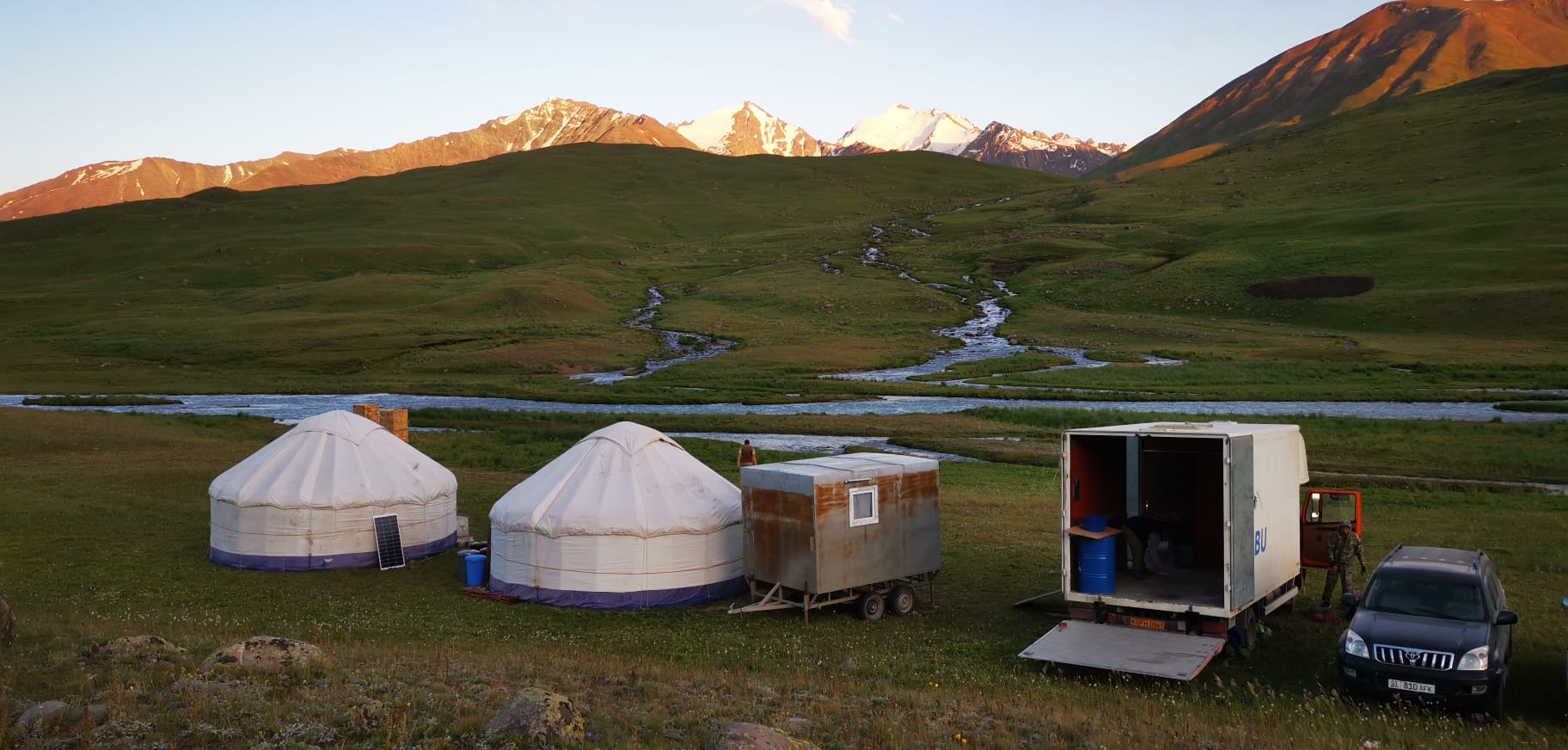
Wolf expedition team 2 hails from Ireland, UK, Germany and the Netherlands. They join our dedicated wolf citizen scientists Pat, Siggi and Syilvia staying on for their second week.

After the usual initiation/training visit of the wolf centre, we welcomed them at our expedition base Gut Sunder and got straight into training mode. After a long first day, some still had energy left and went to explore the surroundings and birdlife. Sandra and Patricia even enjoyed observing bats and fireflies around one of the nearby lakes.

On Sunday morning we were woken up early by our local cuckoo and continued training. After lunch we went on a trial monitoring hike all together in the Meißendorf territory. Along a 5 km hike across heath and pine forest, the team scanned the paths and crossings for wolf evidence. Three possible wolf scats were recorded, photographed and sampled in line with our monitoring protocol, and we can now report: team 2 ready for wolf conservation work.

Stay tuned for more.

Data collection training
GPS training
Liam in action
Meißendorf heath
Paul packing up research gear
Sandra taking a photo
Training lecture
Field trial run
Visiting one of the lakes behind the expedition base
Continue reading “Germany : Team 2 in action”

Germany : Wolf monitoring rewarded

Update from our Germany wolf volunteer project

Our first week of intensive wolf monitoring in Germany has come to an end and we just said goodbye to a great and motivated team. These wildlife conservation expeditions are always full on – and perhaps partly because of this – they are truly rewarding in terms of research and data collection. Lotte and Peter worked quite late yesterday to go through all the evidence collected this week. This morning’s wrap-up presentation summed up nicely what a team of ten dedicated wolf volunteers can accomplish in just a short week:

Our wolf citizen scientists walked a total of 310 kilometres in no fewer than thirteen 10x10km grids in seven different wolf territories. These long hikes resulted in a total of 79 scats collected, 54 of which will go in the freezer for dietary analyses and of these 6 should in principle be suitable for DNA analyses. Twenty-five scats were considered too old. Lotte already started entering data in the official wolf monitoring database and experts will validate the information and decide which ones to process further.

On our last day of monitoring, Lotte and Eleanor had unique encounter in the Ebstorf wolf territory. While checking a junction for wolf evidence, Lotte checked all four paths with her binoculars and could see an animal off in the distance. As the individual headed in their direction, they could tell it was a wolf. They stood still, kept quiet but at a distance of 60-80 m the wolf noticed them, turned around and walked back along the path and into the forest. Half an hour later they found a fresh scat and clear footprints, completing the experience quite nicely with even more evidence and data to hopefully identify the individual and reveal further secrets of the local wolf pack.

We thank our wolf volunteers for their hard work and dedication, braving temperatures up to 32°C on long hikes to contribute to wolf conservation through citizen science data collection. We hope to see you again one day and we look forward to meeting our new team tomorrow.

Claudia and Pat entering data
Lotte checking datasheets
Alistair checking weather data
At the end of the last survey day
Wolf territory
Sybille braving hot weather
Thank you team 1
Continue reading “Germany : Wolf monitoring rewarded”

Tien Shan: Get prepared!

Update from our snow leopard volunteer project to the Tien Shan mountains of Kyrgyzstan

As our advance team is getting ready in Bishkek or about to fly there, here are a few things for you expeditioners to prepare:

First, please remember to look at and study our terrestrial expedition methods guide. On that page, you will find a field guide (updated today), which you will need to have in the field with you, as well as other guides on plants and butterflies, as well as research methodology background papers and a video:

The most important thing you will need is the field guide. Please make sure that you have a digital or printed copy with you on the expedition.

We’ll be using new, fancy and complicated Garmin 700i and 66i GPS units. The more you can familiarise yourself with them ahead of the expedition, the easier you will find it to work with them in the mountains.

Our updated snow leopard expedition report with news of great successes of our community camera trapping group is now also online. Again, the more you know before you go, the better, but in a nutshell “The community camera trapping group in 2020 and 2021 demonstrated continued snow leopard presence through several snow leopard photo captures in several locations and found unconfirmed signs (scats, scrapes, tracks) at various locations. It is interesting to note that captures are increasing year-by-year, but there is insufficient data to tell whether this is a positive sign connected to snow leopard presence increasing in the study area.” With your help, we aim to find out.

So get ready, get excited and we will see you in the mountains in due course. This diary will now start in earnest and the next entry will be from Bishkek. See you there!

Continue reading “Tien Shan: Get prepared!”

Germany : Wolf monitoring in full swing

Update from our Germany wolf volunteer project

On Monday our team set out to two different locations for a full day of wolf monitoring. Team Claudia and Stefan accompanied by Lotte set the first record returning to base with no less than eight scats. Our experienced team Sigi and Sylvia brought back the first fresh scat, suitable for DNA analysis. Like detectives on a mission, this set the tone to monitor as many locations as possible.

On Tuesday seven of us set out on an overnight trip to Göhrde, a 2-hour car ride north-east of our base. We were welcomed there by wolf commissioner Kenny at his beautiful bio-hotel, located in the middle of the forest. Once there, three teams walked a total of 75 km over two days (Tuesday and Wednesday) and managed to collect two samples for DNA and 23 for dietary analyses, much needed to assess the current situation of the local wolf pack. One of the highlights was stumbling upon the footprints of both adult wolves and their pups, truly exhilarating to see the evidence and realise you are walking in the middle of prime wolf territory!

In the meantime, closer to our expedition base, Alastair and Silvia joined Timo to check up on camera trap images on a wolf-proof fence put in place at a cattle farm. Lotte and Claudia braved the Naturistenweg (nudist walking trail), but kept their clothes firmly on 😉 Professional as they are, they stayed focused on the task at hand.

Our counter now is at 41 samples, including four good enough for DNA analysis, from five different wolf territories – and the team is ready for more. It is fun detective and wolf citizen science work in beautiful forests of spruce and pine, but also beach and oak, and heathlands interwoven with meadows. Also, there is plenty of wildlife around and between all of us we have seen foxes, roe deer, hare, red kite, cranes, newborn squirrels, a lonesome badger, staghorn beetles and many more.

Forest path
At work
At work
Relaxing at a lookout at the end of the day
Wolf tracks
Continue reading “Germany : Wolf monitoring in full swing”

Germany : Arrived, trained, ready

Update from our Germany wolf volunteer project

This Saturday we welcomed our first team of wolf volunteers at the Bremen assembly point. Half of the team are Biosphere Expedition returnees keen to get a taste of new expeditions or returning to familiar ones. The trio Sylvia, Siggi and Pat are true hardcore wolf fans, having joined all four expeditions our work here in wolf conservation in Germany started. The remainder of our team has also been really keen to get into expedition action. So, it’s fair to say we have got a truly motivated team to get the citizen science wolf monitoring 2022 up and running.

After meeting up in Bremen, we drove to the Wolfcenter Dörveden to learn more about (and see) our target species. From there we proceeded to the expedition base at Herrenhaus Gut Sunder for 36 h of intensive training and a series of talks by a great team of experts.

Our expedition scientist Peter gave us an introduction to the state wolf monitoring programme , the priority survey areas and actual field data collection protocols. His assistant Lotte enlightened us about everything you possibly want to know about wolf scats (and more). Expedition leader Malika trained us on GPS and radio use as well as other equipment. Ingrid from the Wolfsbüro underlined the importance of citizen science in gathering long term data on wolf populations to inform strategies for coexistence with a large predator. Theo, the first wolf commissioner of Lower Saxony and an excellent photographer, treated us to a stunning presentation of the Lüneburg Heath biodiversity and how everything in this ecosystem is connected. Finally, this Sunday afternoon we did a first trial in the field to test our newly developed skills along a 7 km hike in pine forests in 31°C. Today, Monday, surveying proper starts in earnest.

Learning about the wolf at the Wolfcenter
Scientist Peter on the area around base
Peter’s assistant Lotte on scat
Expedition leader Malika on equipment
Sylvia and Alastair on data collection training
Training
More training
Continue reading “Germany : Arrived, trained, ready”