From our snow leopard volunteering expedition in the Tien Shan mountains of Kyrgyzstan (http://www.biosphere-expeditions.org/tienshan)

The training and induction days of the final slot went off without a hitch except to say that, due to a problem with the partner organisation’s cars we got to base camp a car short. It was expected to arrive the next day, driven by NABU’s Aman, after being repaired. When it did not arrive we waited, thinking that the serious nature of the problem might have resulted in a delay in Bishkek. When, by the afternoon of the next day Aman still hadn’t arrived, we set out to find a phone signal about an hour down the road towards Koshkor. We discovered that the car had left Bishkek the previous day. We discovered also that he had reached his birth village at the foot of the range that day. At this point I became concerned that he may have run into trouble, so we went on into the village to ask around.

The concensus in the village was that he had left that morning, but he had not made it to the base camp. All this took quite a while and it was dark by the time we all agreed that we would need to search. A slow and poorly lit drive back yielded no results despite numerous stops to peer into the deep gorges in the moonlight.

The next morning I told the team of the situation and the need to mount a potentially grizzly search for our colleague who had dissapeared without a trace. To their immense credit, everyone on the team stepped forward to participate in what could easily have turned into a very unpleasant task. A basic plan was formed and with the ready collaboration of the entire team we honed the search on the fly with one car canvasing locals while the other two slowly cruised the valley stopping to scan the deep floor at the bottom of the precipitous valley walls. Wherever a view of the bottom of the slope was not possible from the car, the car would stop and the searchers would fan out to investigate the valley floor. The other car would pass them and do the same at the next occluded view point. In this way they leap-frogged each other to the end of the valley. At the bottom of the range, as we gathered and I prepared to push further on into the flats below and raise an official search, a car appeared and we quickly realised that it was Aman. His breakes had begun to fail after leaving the village, as had his mobile phone, fully in line with Murphy’s law. For safety sake, he had headed back to fix this second car issue but no-one was the wiser. Needless to say he was surprised by the overly happy welcoming party that had come down the mountain to meet him. A very good ending, all things considered.
Continue reading “From our snow leopard volunteering expedition in the Tien Shan mountains of Kyrgyzstan (http://www.biosphere-expeditions.org/tienshan)”

From our snow leopard volunteering expedition in the Tien Shan mountains of Kyrgyzstan (http://www.biosphere-expeditions.org/tienshan)

The best laid plans… The teams returned late yesterday with stories of awesome landscapes, uncrossable glacial torrents, bits of horse left rotting and some interesting interactions with curious wildlife…but no snow leopard.

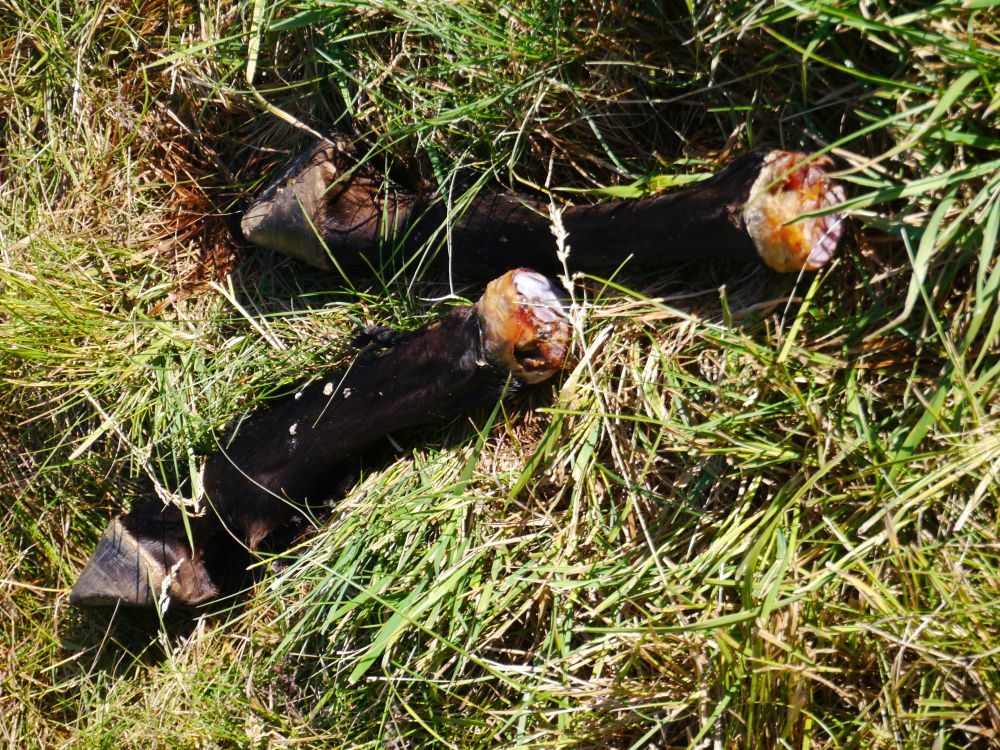
The team that went to the original base camp valley had hoped to make camp in the general vicinity of the attack on the horse. When Rhys looked around his possition, he actually found a leg and then another a bit further away a third was found.

Pieces of horse

They had the spot and spent two days surveying out from there into any likely habitat they could reach. Unfortunately to no avail as far as the leopard was concerned. They were compensated, however, by the occurance of another major herders’ games event. During the last slot we were informed of an “annual” Herders’ Olympics downvalley from us. Well it seems that “annual” means fortnightly in these parts and so the team were met with huge crowds and even a media presence from Bishkek there to cover the games.

This slideshow requires JavaScript.

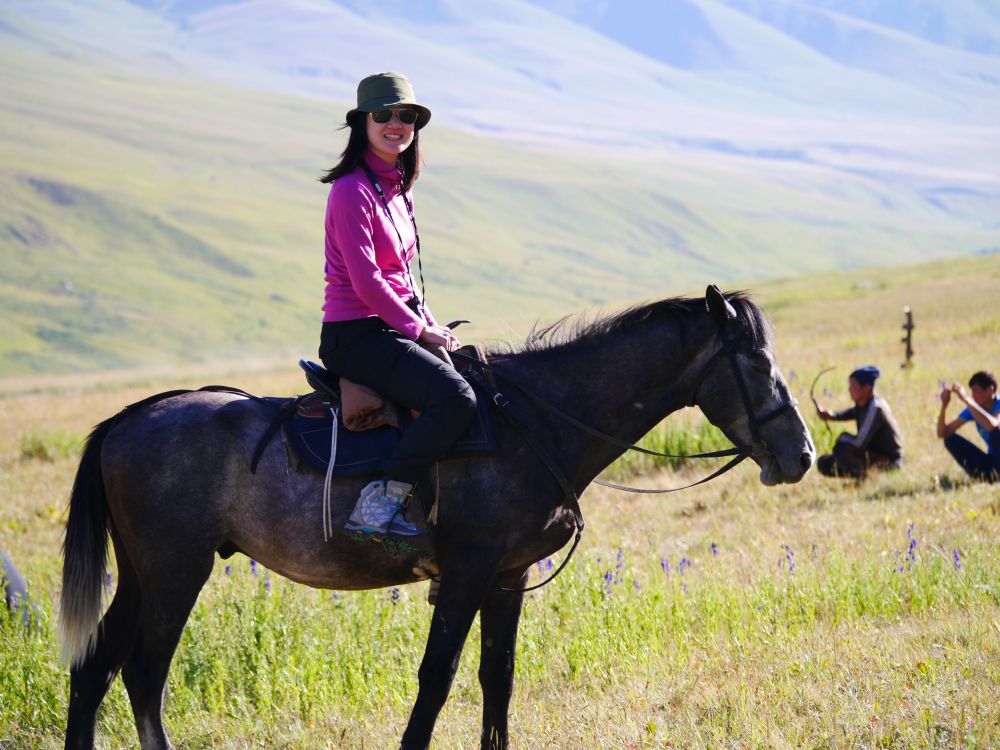
The other team returned to the valley in which I had heard a the coughing sound and conducted a couple of days of hard survey, but again did not find any evidence of our animal. They did remark on the beuty of the place though and were accompanied by Talant our very helpful neighbour and some of his horses to carry gear and due to his seniority within that particular group, Meinhard got a horse to ride along with Talant and Kurmanbek (spelled correctly this time), one of our NABU participants.

Jhong Wen on horse Kyrgyz games5

Continue reading “From our snow leopard volunteering expedition in the Tien Shan mountains of Kyrgyzstan (http://www.biosphere-expeditions.org/tienshan)”

From our snow leopard volunteering expedition in the Tien Shan mountains of Kyrgyzstan (http://www.biosphere-expeditions.org/tienshan)

We have decided to strike while the iron is hot. As you know, as a result of our recent interviews with local herders, we have discovered two very recent incidents involving alleged leopard attacks on young horses in two of the bigger and more remote valleys in this system. Each were within the fortnight or so and in response to the more local account, we investigated on horseback the site of an atttack. As we placed a camera beside a heavily used pass, the unmistakeable cough of what we surmised to be a big cat in the cliffs above could be heard. Whilst none of the party saw the animal, we are now fairly certain that there is a snow leopard in that location.

The more distant and more recent incident is in fact in the valley of the original base camp. The stories are very similar, with a young horse discovered dead with large puncture and crush wounds to the throat. This is highly typical of the leopard method of killing large prey, gripping the throat and asphixiating the quarry (there is a photo sequence of this killing method on http://newswatch.nationalgeographic.com/2014/02/20/the-first-ever-successful-snow-leopard-hunt-and-kill-caught-on-camera/). The fact that a snow leopard will apparently abandon the kill at the slightest disturbance has led to the almost ubiquitously believed folk tale that the snow leopard is in fact drinking the blood of its prey rather than eating its flesh. Either way, large dead animals with “vampire-like” neck wounds can only mean one thing and the consistency of the stories as told by the herders who recently lost their horses, and by the wider community of herders throughout our huge survey region who’ve simply heard about those losses, suggests that we are not being led on a wild goose chase by folk who just want to tell us what we want to hear.

So, the hot iron… We have decided to split the team into two overnighters who will each attend an incident site and attempt to make a more thorough investigation of the environs surrounding the two kills. One team has returned to the valley of the original base camp and will atempt to get to the bottom of that story before heading further into the valley with Volodya. The other team has been deployed back into the valley that was the subject of my recent experience and will spend two days making a careful survey of its upper reaches. We have sent the FLIR thermographic equipment with the second team as they will be camping closer to the cliffs and will have a better chance to use the gear to best effect. The first team have a powerful spotting scope to scan the wider valley ends that they will face.

Your truly has remained at base camp with our awesome chef, Emma, as it represents a “central” point of contact that either group will be able to find me at should the need arise, rather than trying to locate me in either of the large ranges that each group will be negotiating.

For some reason I feel like this will be an exciting next couple of days… For the team at least. At least I’ll eat well…

Continue reading “From our snow leopard volunteering expedition in the Tien Shan mountains of Kyrgyzstan (http://www.biosphere-expeditions.org/tienshan)”

From our snow leopard volunteering expedition in the Tien Shan mountains of Kyrgyzstan (http://www.biosphere-expeditions.org/tienshan)

Our neighbours from a yurt down the road reported that one of their young horses was killed by a leopard about two weeks ago. He offered to take us to the site of the attack on horseback to set up some camera traps. Today we took him up on his offer and what ensued was a hard ride up a long valley in sometimes driving snow and other times baking sun. When we got to the end of the valley, we ascended on foot beyond the moraine to a vegetated pass in a protected hollow below a small glacier. Signs of leopard prey were common and fresh with footprints and scat everywhere. While we were setting up the third camera, a small disturbance high above us sent some stones tumbling and a second or so later a percussive cough, characteristic of a leopard was clearly heard. The local guys believe that a mother and cubs are resident in this place from where they make hunting forays into the valley propper. I can’t wait to pick up those cameras with the last slot….

Continue reading “From our snow leopard volunteering expedition in the Tien Shan mountains of Kyrgyzstan (http://www.biosphere-expeditions.org/tienshan)”

From our snow leopard volunteering expedition in the Tien Shan mountains of Kyrgyzstan (http://www.biosphere-expeditions.org/tienshan)

With a population density of one animal per 100 square kilometers, our chance of stumbling upon a snow leopard are rather low. Nevertheless, with the gear at our disposal and in the hands of this motivated team, we can go a long way towards assessing this landscape’s potential for harbouring our target creature. With the various optical scopes and binoculars we have seen many of the animals on the leopard’s menu and we’ve even seen fellow peak predators in the form of a lone wolf, sighted yesterday. It was a young wolf, which suggests a population in the active state of sustaining itself. The other predators we’ve seen are mostly eagles, which still speaks of a landscape capable of supporting a reasonable number of predators.

Testing our FLIR unit, we find that it will clearly display warm marmot mounds with their nervous tennants in the dead of night from over a hundred metres away, so I have high hopes that the upcoming overnighters will put it to good use on the cliffs and crags (leopard habitat) that their temporary camp will be established within easy sight of.

Yesterday, the team on the interview detail went out and visited a number of yurts. Kyrgyz hospitality is famous and also quite socially impossible to refuse. At each yurt we were invited inside and stuffed with bread and fermented horse milk and other delights until a number of us felt much the worse for wear. We discovered a great deal of consistent reportage of recent leopard incidents and the result is a fairly good idea of where a snow leopard and cubs are currently residing. We are heading there on horseback in the next few days to place camera traps, inching ever closer to our object of desire. Will we get there during the 2014 expedition?

This slideshow requires JavaScript.

==============================

Biosphere Expeditions diaries/blogs/pictures available on https://biosphereexpeditions.wordpress.com/ | www.facebook.com/biosphere.expeditions1 | https://plus.google.com/103347005009999707934/posts.

Continue reading “From our snow leopard volunteering expedition in the Tien Shan mountains of Kyrgyzstan (http://www.biosphere-expeditions.org/tienshan)”

From our snow leopard volunteering expedition in the Tien Shan mountains of Kyrgyzstan (http://www.biosphere-expeditions.org/tienshan)

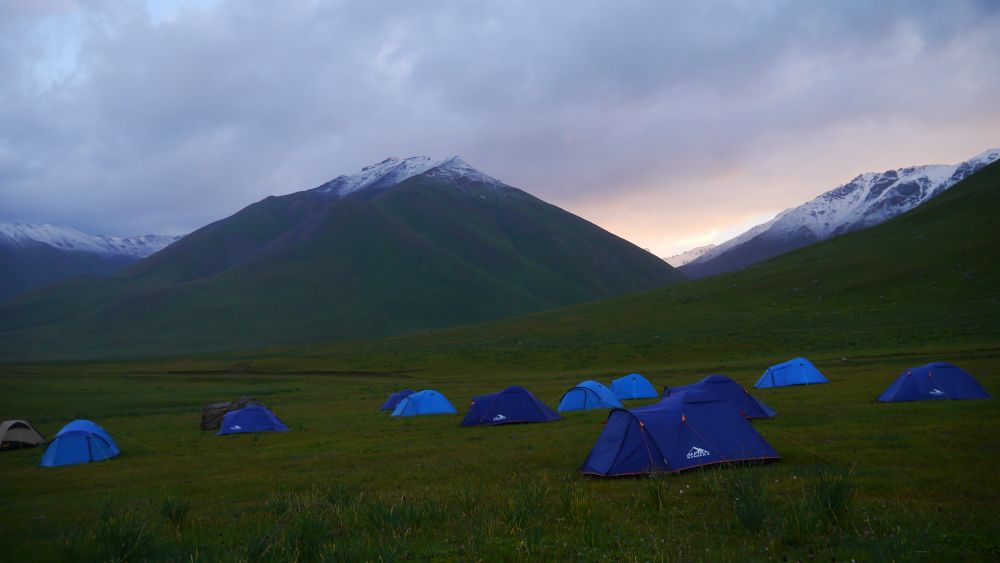
We woke up after an especially chilly night to find the mountains surrounding the camp were dusted with fresh snow. It is all gone now but it was impressive to see and it explained the need for the extra layers.

Fresh dusting Denis

The little stream beside the base camp is deceptively placid looking. Today, the team went on a preliminary field survey to help them find their feet.

First survey slot 5 Deniss

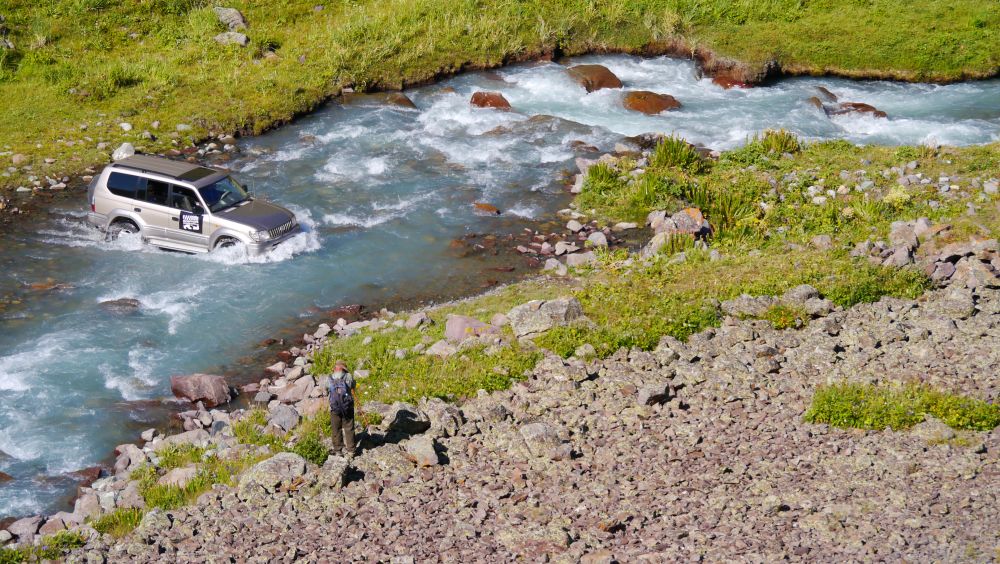
After crossing the creek, glacier-fed from only a couple of kilometers away, it was harder to find their feet than many expected. Some, including our excellent Kyrgyz placement Aliashkar, actually had to get visual confirmation that they were still attached to their legs! No-one fell in though, despite the fact that the last metre of the crossing was very swift and finding good ground with numb toes is not an easy task. The video of our first overnighter at below shows you what a river crossing looks like.

Today I also introduced a piece of awesome technology to the team. The thermography company, FLIR, have lent me one of their quite amazing field units. This device images the world in terms of the heat differences in the landscape. Subtle differences in temperature of fractions of a degree are rendered clearly visible. Mammals of course, being warm-bodied, stand out clearly against the cool alpine background. Perfect, I explained to FLIR, for finding warm white things in the snow at night. We will send the unit out into the field in the coming days, but I expect its greatest utility to be discovered on the overnighters when the team will have the time and the proximity to scan the rocky ends of the valleys from close up. Thanks to FLIR for this generous loan.

Continue reading “From our snow leopard volunteering expedition in the Tien Shan mountains of Kyrgyzstan (http://www.biosphere-expeditions.org/tienshan)”

From our snow leopard volunteering expedition in the Tien Shan mountains of Kyrgyzstan (http://www.biosphere-expeditions.org/tienshan)

The first day of the fourth slot of the Tien Shan snow leopard expedition was an early test of the team member’s metel. Intel recieved prior to our departure from Bishkek indicated that the terrible tunnel at the top of the main pass into our mountains was the subject of some major works and that a four hour delay could be expected. A quick survey of our new group revealed that we were blessed with a plethora of experienced 4×4 drivers, including a park ranger and some who had completed a 4×4 training course. Just as well because we now had the option of taking our heavily laden cars over the alternate route, which we had discovered on the previous slot. It is by far a more interesting route and as we skirted within metres of the Kazakhstan border and on up into the range beside Lake Issyk Kul, we were treated to some awesome scenery and some great windows into Kyrgyz culture not as evident on the route, which we were now avoiding.

kyrgyz alatoo

As we approached our entry valley we could see that the conditions, which till now were fine, were about to take a turn for the worse. Ahead was a thick dark weather system that clad the entire range down to the foothills. We ascended the valley and negotiated the tricky bits easily. Our drivers didn’t break a sweat, partly because of their experience and partly because it was freezing. When we approached the top, the cloud was so thick that we had to crawl along at a snail’s pace with our hazard lights flashing just to see the car ahead.

fog

It was on the decent that the real test came. The last car came on over the radis ond said they could smell a problem. We stopped and foung that car three had a completely flat tyre and was now running on a rim. The smell was the shredding rubber.

flat-tyre

The team came together then and in the freezing gale and 20 metre visibility, we jacked up the vehicle and with some effort and no feeling in our fingers replaced the wheel. It was a great introduction to the team into the valley that would be their home for the next two weeks. Go team!

Continue reading “From our snow leopard volunteering expedition in the Tien Shan mountains of Kyrgyzstan (http://www.biosphere-expeditions.org/tienshan)”

From our snow leopard volunteering expedition in the Tien Shan mountains of Kyrgyzstan (http://www.biosphere-expeditions.org/tienshan)

Once more a team stayed out in the field for a night. This time Aman, Ulan, Volodya, Liss, Martin H. and James made it further to the east to explore a big valley. Our maps indicated an accession via a pass to a remote area higher up. They found a huge barren area, which Liss described as ‘Mars’-like. Despite this there was good evidence of ibex and even argali. The next slot has to work out where to place camera traps as there is an old pass that leads into another big valley further north. We don’t know yet if this pass is still being used to move livestock between the two valleys.

Furthermore we installed two more camera traps way up in a valley next to our base camp. All in all there are now 14 cameras placed in the field. It will be a challenge for the next slots to go back to these places to check each of them. But it will be also an exiting task.

Now, this is my last entry as I am handing over to Paul who will lead slots 4 and 5. I would like to thank everybody who supported our common idea of wildlife conservation and helped me personally in many ways to make it fly. It’s you who made my eight weeks in the field a memorable time indeed. Thank you.

I wish Paul and the next two slots a successful (snowy is still the only visible snow leopard in the area) and enjoyable time.

Ronald


This slideshow requires JavaScript.

Continue reading “From our snow leopard volunteering expedition in the Tien Shan mountains of Kyrgyzstan (http://www.biosphere-expeditions.org/tienshan)”

From our snow leopard volunteering expedition in the Tien Shan mountains of Kyrgyzstan (http://www.biosphere-expeditions.org/tienshan)

Following teams 1 and 2, team 3 also spent their (Sun)day off with a herder. The afternoon was entertaining for everybody, including the family of the herder 😉

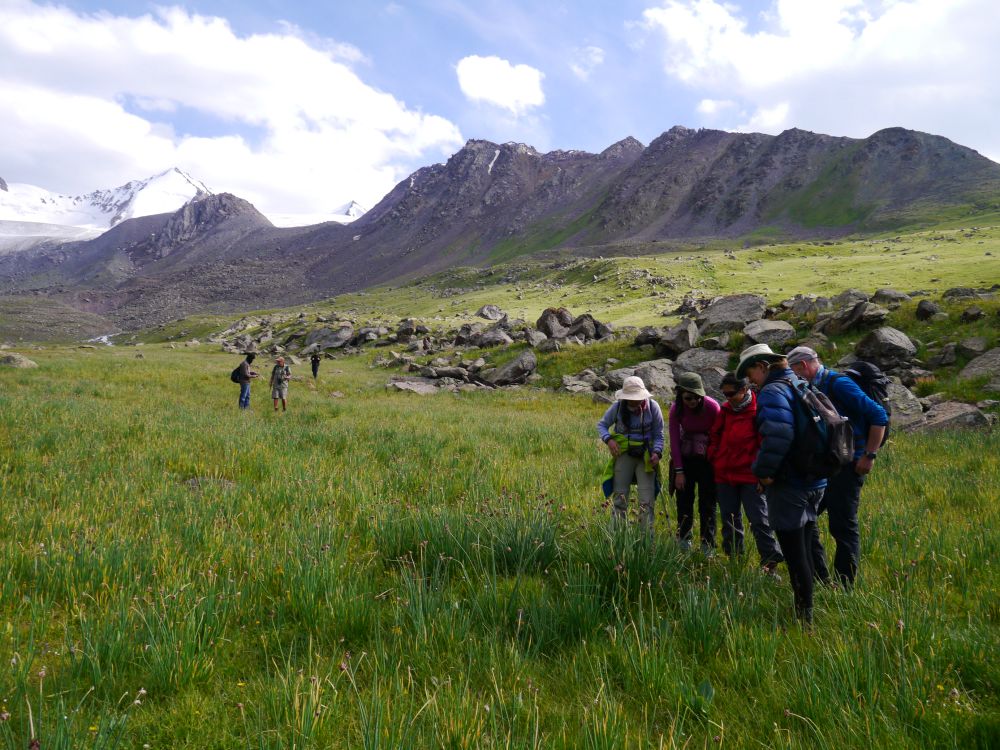
At the beginning of this week we resurveyed valleys that we could not reach the end of previously, because of snow. A very promising valley (we named it ‘You Youkon’) attracted our attention from the very first visit. This week Ulf, Ilka, Sheilo and Paul finally made it up to a pass that might give us the chance of advancing further north into what we hope will be undisturbed higher ground. Their findings confirmed our plan to go back there again for an overnighter: many ibex and argali tracks as well as wolf scat.

The Ysik Ata valley can now also be walked up to the very end, up to the ridge where the glacier begins. There we installed two camera traps in promising places (and have now added camera trap pictures to the previous entry on https://biosphereexpeditions.wordpress.com/).

Throughout this slot we have found petroglyphs in many places. We are actually not counting them anymore. Thomas has meanwhile compiled a comprehensive collection of photos of them. Thanks’ for that.

This slideshow requires JavaScript.

We have also extended our surveys to the east, checking out a new valley. Again there seems to be a pass leading north into the unknown and hopefully undisturbed parts of the range. Besides the perpetually exciting sightings of several ibex, the local herder told us that last year he saw a snow leopard feeding on a sheep in that area. Well, you can’t take everything for granted, but we will definitely be back. And it feels like we’re getting closer to our quarry…

Continue reading “From our snow leopard volunteering expedition in the Tien Shan mountains of Kyrgyzstan (http://www.biosphere-expeditions.org/tienshan)”

From our snow leopard volunteering expedition in the Tien Shan mountains of Kyrgyzstan (http://www.biosphere-expeditions.org/tienshan)

For the past few days it’s been getting colder every night up to the point where we have to defrost our hand wash basins in the morning.

Despite the icy temperatures and days with all four seasons of the year rolled into one, research activities continue as normal. One of the first tasks for this group was to check whether the Karakol Pass was still blocked by snow. Good news: we were able to find a way around and finally made it to the eastern side. And, Pei Hao, a participant from Singapore, for the first time in his life touched real snow ! The big valley east of the pass is crowded by herders but several deep, long northern side valleys seem to be promising as survey areas.

Another day saw Martin, Liss, James , Pei Hao and Aman survey the first of these valleys. It was a long and strenuous day full of beautiful landscapes, waterfalls and sightings of badgers, marmots and several ibex. We will definitely be back for an overnighter.

This slideshow requires JavaScript.

Volodya, Martin, Guenter and Gordon combed the southern valleys. To do this, an early morning icy river crossing is compulsory, but was taken sportingly and in good spirits. Before they reached the terminal moraine of one of the glaciers, they found a long, perfectly clear wolf track, some wolf scat and hundreds of amazing old petroglyphs (showing deer, camels, donkeys, birds and hunting scenes). A remarkable find! But they also found evidence of hunting.

Ulf, Ilka and Agnes in the meantime pushed the survey altitude up to far above 3700 meters.

Our overnighter team of this week was Liss, Martin, Ulan, James and Aman who visited our old “home valley” of Base Camp 1. On their way they stopped at the herder of that valley, where they were served a second breakfast. As the water level of the rivers has dropped noticeably, they managed for the first time to get a car across a ford and penetrate deep into the valley beyond. First, and supported by fantastic weather conditions, they checked the camera traps we installed two weeks ago. Fresh ibex scat all over had everybody looking forward to having a look at the camera trap pictures. And indeed several good shots were taken of ibex, badger, fox and argali. But none of the mountain ghost. On one picture it appears as if the mountain sheep is chasing away the fox!

This slideshow requires JavaScript.

On the second day of their overnighter, they installed four more cameras high up on the other side of the valley. Perhaps the ghost will grace those. We live in hope. The stunning landscape, the team spirit, the weather, visiting the herder made it all together an unforgettable experience and they returned to base in high spirits. Well done everyone!

Continue reading “From our snow leopard volunteering expedition in the Tien Shan mountains of Kyrgyzstan (http://www.biosphere-expeditions.org/tienshan)”