Award-winning, non-profit and ethical wildlife conservation volunteering. Advancing citizen science and conservation since 1999 – for nature, not profit.
The El Niño effect this year has devastated coral reefs around the world, but the reefs of one island in Malaysia are fighting back.
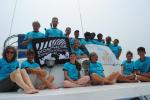
Citizen scientists from Biosphere Expeditions have teamed up with Reef Check Malaysia to survey the coral reefs around the island of Tioman, off the east coast of peninsular Malaysia. The group was assessing the health of the reefs following the devastating rise in sea temperatures that happened in May this year. A temporary rise of 2 or 3 degrees Celcius, caused by this year’s El Niño event, has been causing corals all around the tropics to do something called ‘bleaching’, which can lead to the death of corals and then entire reefs. A coral bleaches when it expels the symbiotic algae that usually live within it. These algae give the coral its colour, without these algae the transparent coral appears white (or bleached) as we see through the animal to its white calcium carbonate structure. Without the algae the animal also loses around 80% of its energy which is usually supplied by the algae photosynthesising sugars. This eventually leads to the death of the coral through starvation.
But the reefs around Tioman island have been taking algae back, and in the months since the reefs were 30 to 40% bleached, they have largely recovered, as the Biosphere Expeditions team has found. The team, comprising citizen scientists from all over the world, also found reefs that were almost back to pre-bleaching states and which were generally healthy. So for these reefs the danger of bleaching has passed for now, but the threats of overfishing and pollution are still there. Very few larger predator fish were found during the surveys, indicating that fishing is still happening, despite Tioman being a Marine Protected Area. The amounts of nutrient indicator algae growing on some of the reefs led the team’s scientist, Alvin Chelliah of Reef Check Malaysia, to speculate on the amount of sewage that may be ending up on the reefs from some of the island resorts. It is through working with the communities on the island, as Reef Check Malaysia does, that the threats to these reefs will be tackled sustainability can be secured.
‘I Don’t Like Mondays’ (so went that infamous song), and when they begin under the cold clear skies of northern Scotland at 4.15 a.m., I’m inclined to agree.
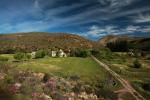
However, this Monday is different, as I begin my migration to South Africa. By means of introduction, I am Craig Turner and I’ll be your expedition leader of the South Africa expedition this year. It is fantastic to be going back to this part of the world to work on this great project in a wonderful location. Below are some pictures of the location I took last year.
I am already on route, having packed my gear and left our croft in the sunny Highlands of northern Scotland. The serious travel continues on Wednesday. It will be great to be working with our project scientist, Dr. Alan Lee, again and it sounds like he has some exciting field work planned.
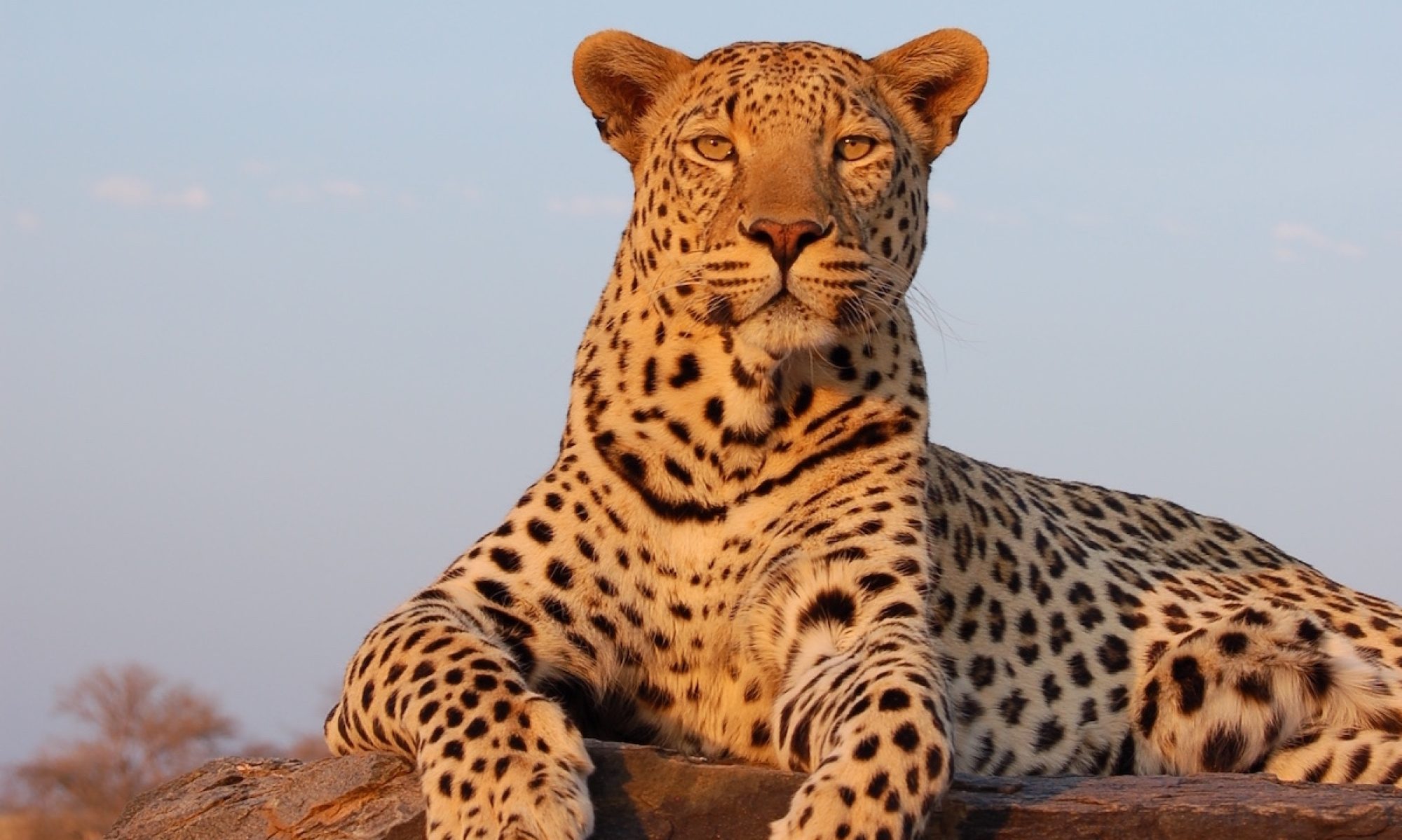
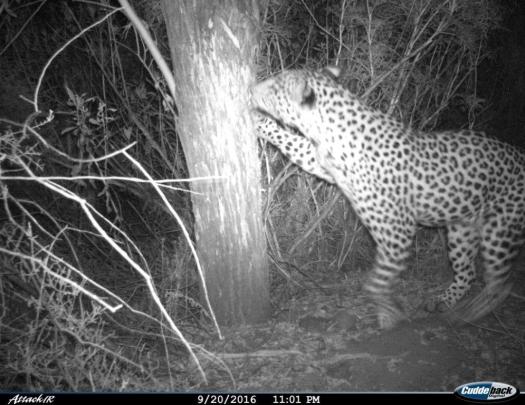
The signs are already good, as Alan has noticed scratch marks on a tree on the Baboon trail (not far from the guest house). At the end of August he decided to place a camera trap to try and identify the culprit. He presumed a bushpig or porcupine, but just a few days ago two incidents were captured on camera of a young male leopard, which we hope to catch and collar during this expedition!
We arrive a few days before you volunteers in order to set up the expedition. I say ‘we’, since I am also travelling from George with Melda and Gurli – our cooks. Melda was part of the team last year, so I know we will be well nourished. I’ll send around another message once I get on the ground in South Africa.
This reminds me to mention communications on the expedition. There’s very limited cellphone reception on the project base (a 10 min walk up a hill) via Vodacom, and equally limited internet connectivity. Hopefully you can resist the need for frequent international comms, and why not go off the grid for the expedition, and soak up the remote field experience.
I know you’ve all been eagerly reading your expedition materials and know to bring many layers of clothing and good boots! The weather can be a bit like four seasons in one day, so prepare for warm, cold, possibly wet and hopefully dry. Just like the weather in Scotland!
So with the local team in place, and other staff en route, all we are missing is you. It will be great to meet you all and soon we’ll be humming a very different tune, ‘Under African Skies’.
11 Sep – With the first team safely on their way home, and team two experiencing a smooth passage to the research station, all seemed to be going without a hitch, but when we arrived, we were shocked to hear the news that there had been a shooting!
The target had escaped unharmed, but the macaw colpa team were outraged!. A ‘peke peke’ (local boat) with four men on board, (later identified as being members of a semi-indigenous community one hour upstream), seeing a bountiful display of macaws on the colpa (claylick), took a shot at one of them. Alan and Dana stepped out of the hide and screamed at them to leave, and surprised by the unexpected audience, the boat made haste. What is unclear is whether they were hunting, or merely shooting for ‘sport’.
Macaw hunters?
So Sunday saw the new team, Sandra, Jurgen and Etienne (all from Germany), complete their safety, navigation and transect training, whilst Rick, Pauline, Dana and Anh continued to monitor the macaw colpa and transects. With sightings of spider monkeys, howler monkeys, guans and red squirrels, plus a textbook morning at the colpa and some humming bird magic in the afternoon, it was a very satisfying day for all.
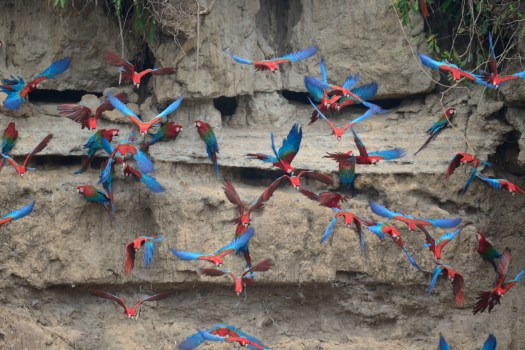
Monday (12 Sep) started at dawn with full colpa emersion for Jurgen, Etienne and Sandra with a seven-hour shift watching and recording the behaviour of the macaws. With multiple boats passing downriver and disturbing the already agitated birds, macaw numbers fluctuated from 70 to 0 and back again, and they did not regain the confidence to actually come onto the exposed colpa and feed on the mineral rich clay that makes up an essential part of their diet.
Macaws flying off the colpa
The other teams fared well, with sightings of collared peccary, a family of saddleback tamarin monkeys, black spider monkeys, and a troop of red howler monkeys with two babies on their backs.
The night transect for Jurgen and Etienne was most dramatic with the territorial call of a nearby jaguar echoing through the forest around them, not 100 m away! They scanned the area with high beam torches as the hairs on the backs of their necks bristled, but although it was most certainly watching them, they could see only darkness.
Tuesday (13 Sep) held another spectacular display at the macaw colpa, this time with over 50 birds feeding, perhaps because they had been deprived the day before. There were over 80 birds at the site, and trying to record the squawking, flapping melee in scientific terms, was not an easy task for Sandra and Catherine. With the friaje (cold front), definitely over, temperatures are now rocketing up into the high thirties. Despite this, there were many sightings on the transects, but the most interesting was spotted by Anh and Aldo on the B transect, with juveniles of two different species of monkey (red howler and black spider monkey) playing together in the same tree whilst the adults sat and observed. With it being so hot, we decided to conduct our night survey on the river. In 2005 our scientist Alan Lee and the team had conducted caiman population surveys from the boat, so we thought it would be interesting to see how the data compared to current populations. We calculated that on average they had seen 10-14 caiman on a nightly basis, and were hoping, (though doubting), to see as many. As it turned out, we surpassed it four-fold, seeing over 40 caiman on the same stretch of river. Admittedly about 25 of them were juveniles, but we were delighted to see the population faring so well.
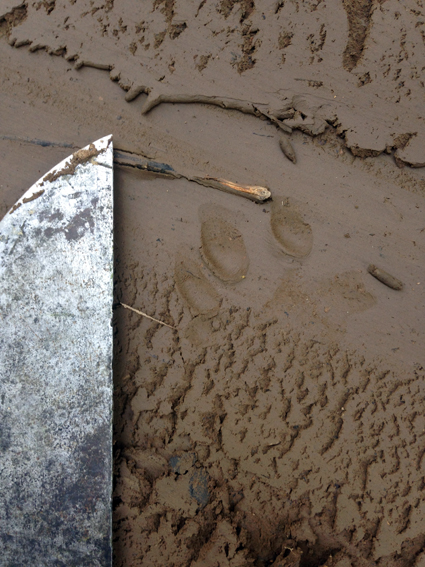
On Wednesday (14 Sep) the teams began to bring in some of the camera traps, and we all enjoyed the sneak preview into the colpa, watching macaws and parrots eating copious amounts of mineral rich clay. It was a sweltering day in the jungle, but this only slowed down the humans, the animals were still very much in play – even the night monkeys were still out! Rick and Pauline took a wander off B transect onto the intersecting logging track and spotted two fresh cat prints in the mud. One was small, possibly an ocelot, but one bore all the hallmarks of a large jaguar!
At last the rains came and with it the frogs, so Etienne, Anh and Harry went out to the swamps on C transect to see what they could find, and came back with tales of seven different species of frog, three lizards, one green vine snake and a mouse opossum.
Thurs (15th Sept) The early morning colpa shift witnessed over 100 macaws, though they were kept from their feast of clay by a cheeky red howler monkey. This was fortuitous for the second colpa team as it meant they also got to watch a spectacular feeding event (something that is often done and dusted by the time they get there), and took some excellent photos. The weather had turned cold again, and apparently the mammals, like us, sought warmth, so there was not much action on the transects, although, as Alan said, “If you walk for long enough, you will always see monkeys and a red squirrel,” which they did!
On Friday (16 Sep) the sun came out again on our last day at Las Piedras. With the last transects completed, it was now time to collect the camera traps and process the data. With 74 km walked on transect (and many more on trail clearing and camera trap setting missions), there were 153 target species sighted, and again many more off transect including 16 groups of spider monkey, 11 groups of brown capuchin, 21 registered howler monkey events, 4 sightings of white-fronted capuchin monkey, 5 troops of squirrel monkey, 8 collared peccary, 1 puma on transect, but 11 tracks registered including ocelot, tapir, and of course, our jaguar tracks and calls. The data from the colpa show that in comparison with past expeditions, the macaw population is thriving, despite the worrying signs of extensive logging of their nesting trees occurring on the north side of the river. The reality may be somewhat masked though by the fact that macaws can live for up to 70 years, and the breeding stage does not begin until the birds have reached at least five years old, so continued monitoring is imperative to watch for any unusual patterns.
It has been an amazing week, and everyone has worked extremely hard, but if there were medals to give out (which there aren’t), Pauline and Rick would win an award for the most dedicated data enterers ever!
On Saturday (17 Sep), with the kit and equipment packed and ready to go and all the transport links planned and agreed in advance, what could possibly go wrong? The station has a boat, but due to our extensive luggage we needed another one, but it didn’t arrive. Chito did a sterling job ferrying us in two groups, avoiding sandbanks and rocking us off the ones we almost ran aground on, and we only left Lucerna an hour and a half late! Thank you all for a fantastic expedition, for working so well as a team and for your willingness to tackle any task. Thanks also to our fantastic chef Roy with his wonderful jungle recipies, for Brandy’s attention to detail, and Chito’s smiling face and excellent boat skills. Also to Pico and all the other staff who came and went doing their bit. And of course a big thank you to Juan Julio (JJ), the owner of Las Piedras. Until next time! Hasta luego!
The first group is back from the jungle. We have been out of reach from when we left Puerto Maldonado last Sunday (4 September). While Alison (UK), Kat (UK), Sabine (Germany), Gabriele (Germany), Janelle (Australia) and Louise (Australia) are leaving after a week, Anh (France), Dana (USA), Pauline & Richard (USA) have stayed back at the Piedras Station together with Alan and Aldo. They will conduct more surveys over the weekend and then train slot 2 upon arrival together. But back now to what happened last week:
When I left base on Saturday (3 Sep) to pick up the team it was sunny & hot. During the four-hour journey the weather changed dramatically: rain started drizzling and turned into pouring rain when I arrived in Puerto. The next morning (4 Sep) all of team 1 assembled at the Wasai lobby was wearing boots, hats and jackets.
We were about to hop on the bus when the message was received that the dirt road to Lucerna had been closed due to bad weather. Juan Julio, our partner on the ground, did his best to reorganise transports and redirect boats. The pick-up point now had to be much further down the Las Piedras river, only a short bus ride away from town. It took some time to get the message through to Lucerna port and the boat drivers via radio – the only way of getting in touch. So we spent the morning at the Wasai lobby with introductions and the risk assessment talk before taking the bus to the boat landing spot. Quite optimistically we expected them to be there around 15:00 not considering low water levels. They finally arrived at 16:30 – too late for a return trip to Piedras Station.
The whole team spent another night at Wasai Lodge and finally got on the boats on Monday morning (5 Sep) together with loads of food, gas and other supplies. Seven hours later we arrived at the Piedras Biodiversity Station and were very warmly welcomed by Catherine and Alan. Rooms were assigned and the team went straight into training sessions. After dinner Alan took out some of the team for a night walk.
Boat to base
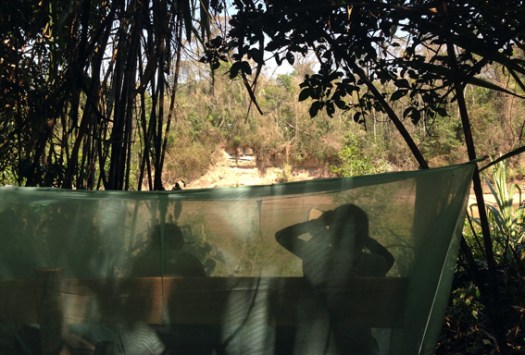
All of Tuesday (6 Sep) was spent with training, starting with a forest transect introduction walk split into two groups first thing in the morning. Later on the team crossed the river by boat to get to the colpa (clay lick) observation point. A comfortable hide was built during preparation including a bench, cushions and a mosquito net. After lunch everybody learned how to use the research equipment such as GPS, compass, rangefinder, camera traps, machete handling and sharpening. Two teams then went out again to set four more camera traps that Dana kindly had brought from the U.S. In between the practical lessons, Alan gave a couple of talks about the background of science and the history of Piedras Station & Biosphere Expeditions. After dinner another night walk was conducted.
Hide at the colpa
Wednesday (7 Sep) was the first full survey day. Anh and Dana signed up for the early morning colpa shift starting at 5:30. The second shift (Gabriele and I) took over from 10:00 to 15:00. Janelle and Louise did a transect survey on the ‘Brazil nut’ trail led by Aldo. Alan, Catherine, Sabine, Kat and Alison formed a machete team with the aim of finding an old trail (the B trail) on the other side of the river and to clear it if possible for further transect work. The first shift of afternoon data entry was taken over by Pauline and Rick and two night transects led by Alan and Aldo were conducted after dinner by Gabi & Kat and Pauline & Richard.
And what a first full survey day it was! Two direct sightings of puma! An adult puma was encountered on the Brazil nut trail no more than 20 – 30 metres away from the transect team and a cub was spotted when the B trail was cleared on the other side of the river.
Puma!Puma track
We continued with the same work schedule on Thursday and Friday (8 & 9 Sep) with team members rotating through various activities. Except for the second colpa shift that was kindly provided with a packed lunch from our cook Roy, everyone returned to base for lunch. Some of us had a nap in the afternoon, others went out for a swim or a walk the bulk of work was done in the early mornings when the chance of encountering the study species is best. The atmosphere in the forest is magic shortly after sunrise. Walking slowly and quietly along the transect trails we are transported into a world of strange sounds. The advanced skills and experience of Aldo and Alan were needed to filter the ones of interest before our eyes were able to spot the study species: monkeys of all kinds and and some specific bird species. The cats – jaguar, puma, ocelot are more active during the night.
On Thursday it was monkey day. Each team encountered quite a few different species during their transect walks including black spider monkey, red howler monkey, brown capuchin monkey, squirrel monkey, saddleback tamarin and titi monkey.
During the colpa observations the teams are busy with recording behaviour patterns of parrots and macaws. Hidden in the forest on the other side of the river hundreds of birds were seen, scanned and recorded in intervals of 5 minutes. It is quite a spectacle when suddenly dozens of red-and-green macaws fly off at the same time only to come back after a few minutes. The birds do all kinds of funny things such as playing, kissing, hanging from lianas head down and calling all the time. The sound reminded me of the squeeking of an old bicycle – hard to describe but definitely very loud. At some time during a five hour shift all of us were thinking: Shut up, please, only for a second! 😉
Highlights of the week were certainly for all of us the howler monkey wake-up calls every morning around 5:00 when some of us had already had breakfast, while others on later survey shifts still lay in their beds. But also the puma sightings for those who had been lucky enough to be at the right place at the right time. The camera traps caught more pumas during the night besides ocelot, peccary, deer, agouti and other small mammals.
The first slot ended with Aldo’s birthday party yesterday (Sat, 10 Sep) evening. We went to bed way after the standard bed time agreeing that the week has gone over to fast. Now it is time for me to hand over to Catherine, but not before thanking everyone who was involved with making this expedition another very special and successful event. Thank you for putting time, money and sweat into the project. The important conservation work couldn’t be done without you. I have very much enjoyed working with all of you: team members, staff and partners on the ground and I hope to see some of you again some day.
Team 2 is now also at Wasai and ready to go tomorrow morning (Sun, 11 Sep). Good luck to you all. I hope you enjoy your time as much as I and team 1 did, and that you are as successful.
Catherine, Alan and Aldo have stayed at Piedras Biodiversity Station. I have returned to Puerto Maldonado today. The journey from base is about 3-4 hours including a 30 min. boat ride. The three of us left Puerto Maldonado by car on Thursday afternoon at 14:00, checked out a couple of medical posts on the way and arrived at base just before dusk at 18:00.
The Piedras Biodiversity Station is located on a plateau nestled in the jungle. The way up to the station from where the boat lands is a 600 m walk including two pretty steep sections. It took us a while and a few runs to bring all our luggage and the equipment boxes up the hill.
Over the years the unforgiving climate has left its marks on the station but it is still an amazing place to stay at and work from. The Piedras staff, Theo, Christan and Rolando were busy all day yesterday with cleaning and doing repairs while Alan went out checking trails, colpa sites and set a few camera traps. Catherine and I unpacked boxes, checked and prepared the research equipment such as the GPSs, rangefinders, etc. We’ve printed and laminated paperwork, maps, house rules and kit lists and set everything up at base. In the afternoon we checked out the colpa site together with Alan who cut down the vegetation that has overgrown the viewpoint. The mosquito netting will be installed together with the first team during training sessions. From the opposite side of the river it’ll be a great observation point.
Having discussed in detail schedules and activities, we are now all set for group 1 to arrive! I will do some last minute shopping in Puerto Maldonado today. At 8:00 tomorrow, I will meet team 1 at Wasai Lodge. Please come prepared for our journey to base: Wear proper shoes/boots for the way up to base (you must carry your own luggage) and have your rain gear/ponchos handy, just in case.
Catherine and I have arrived in Puerto Maldonado yesterday.
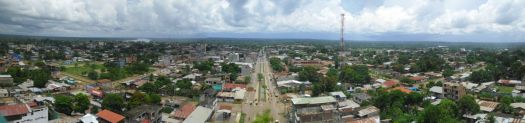
Puerto Maldonado
We came in on different flights, met at Wasai Lodge, had a quick shower and went straight into preparations. We met JJ, the owner of Piedras Biodiversitiy Station, in the afternoon and Aldo, who will be the second scientist on the expedition. JJ was involved in the project from the very beginning many years ago. Aldo was also part of the team and is actually a great success story of a local placement (see www.biosphere-expeditions.org/placements) turning into a guide and eventually a scientist, now coming full circle on the expedition. Well done Aldo!
Aldo
First of all, it is sunny and warm (what a surprise! ;)), but in town it is not very humid right now. JJ said it gets chilly in the evening and, indeed, I took a jumper with me when we went shopping in the late afternoon. I did not have to use it, but JJ has told me that a friaje (see your dossier pages 11 and 16) occurred twice within the last couple of weeks, with temperatures dropping significantly. Please be prepared as per your dossier!
That’s it for now. I will be out of touch for the next couple of days, leaving as soon as Alan has arrived – and hopefully with him two more equipment boxes. I’ll be back on Saturday for an update and to meet team 1 on Sunday morning.
Hello everyone and welcome to the Amazonia 2016 expedition diary!
My name is Malika (Fettak) and I will be your expedition leader on the first group and then Catherine (Edsell) will take over for group 2.
Malika FettakCatherine Edsell
This year the project will return to where Biosphere Expeditions started off in Peru in 15 years ago: The Piedras Biodiversity Station in Madre de Dios region. The station, which was originally part-financed by us, sadly fell into disrepair in the past, but now has a new owner giving us the chance to come back for more research work.
Piedras Biodiversity Station
It will be a return to beginnings too for Dr. Alan (Lee), the expeditions’ head scientist, who gained his PhD in the Amazon and worked with our expeditions before moving back to his native country South Africa. For me, it will be leading the project for the fourth time and handing over to Catherine after the first week. We will also be working together with local staff I will introduce you to once I have met everyone personally on the ground.
Alan Lee
We have been busy over the last few weeks preparing logistics, expedition kit, research equipment, paperwork, datasheets and the research manual. Innumerable e-mails have been exchanged between continents. Catherine, Alan & I will each bring a share of the equipment, some more equipment boxes stored in Lima will be picked up on the way. Flying in from different directions (UK, South Africa, Germany) we will meet on Wednesday in Puerto Maldonado – keep your fingers crossed that none of us gets stuck on the way! Our schedule on the ground is pretty tight. If things work out as planned we will go shopping on Wednesday afternoon in Puerto, proceed to Piedras Station on Thursday and set up base. I will return to Puerto Maldonado on Saturday for last minute shopping and meet team 1 on Sunday morning.
I hope your preparations are going well. Please don’t forget to bring a strong torch (600 lumens minimum) for night surveys!
I will be in touch again once I have arrived in Puerto.
And here are also some gorgeous picture by photographer Dietmar Denger from group 1:
Gigantische Nationalflagge vor dem Nationalmuseum am Ala-Too-Platz
Futuro-Hotel in Bischkek
Futuro-Hotel in Bischkek
Futuro-Hotel in Bischkek
Die Ala-Too-Berge auf dem Weg ins Basislager
Pferde in den Ala-Too-Bergen, am Weg ins Basislager
Pferde in den Ala-Too-Bergen, am Weg ins Basislager
4000er der Ala-Too-Berge vom Basislager aus gesehen
Schafe im Basislager auf 3000m Höhe
Blumenwiese im Basislager auf 3000m Höhe
Gelber Mohn im Basislager auf 3000m Höhe
Köchin Eva im Kochzelt im Basislager
Expeditionsleiterin Malika Fettak erklärt den Gebrauch der GPS-Geräte
Der Gebrauch von Kompassen wird auch erklärt, falls die GPS-Geräte mal streiken
Schafhirten zu Besuch im Basislager
Biologe Volodya Tytar beim Briefing für den nächsten Tag
Laubsänger am Basislager
Bachstelze am Basislager
Schafhirten beim Basislager
Schafhirten beim Basislager
Links das Basislager auf 3000m Höhe, rechts Schafe, dahinter 4000er der Ala-Too-Berge
Schafhirten beim Basislager
Schafhirten und Schäfchen beim Basislager
Schafhirten und Schäfchen beim Basislager
Die kirgisische Tierärztin Aigerim Kumondorova begleitet die Expedition als Volunteer
Die kirgisische Tierärztin Aigerim Kumondorova begleitet die Expedition als Volunteer
4000er des Ala-Too-Gebirges vom Basislager aus gesehen
Kühe und Hirten-Jurten am Basislager
Jurte und Pferdeherde im Ala-Too
Start zur Wanderung am Morgen, die Koordinaten werden im GPS gespeichert
Salbei – Die Blumen reichen beim Wandern in den Hochtälern stellenweise bis zur Hüfte
Unterwegs in einem der Hochtäler des Ala-Too
Unterwegs in einem der Hochtäler des Ala-Too
Gelber Mohn
Gravierte Felsbilder – Petroglyphen genannt – finden sich überall in den Hochtälern rund ums Basecamp
Expeditionsleiterin Malika Fettak sucht per GPS-Koordinaten den Standort einer Kamerafalle
Unterwegs in einem der Hochtäler des Ala-Too
Bach in einem der Hochtäler des Ala-Too
Bachüberquerung in einem der Hochtäler des Ala-Too
Bachüberquerung in einem der Hochtäler des Ala-Too
Steinbock auf etwa 3600m Höhe
Steinbock auf etwa 3600m Höhe
Steinbock auf etwa 3600m Höhe
Rückkehr vom ersten Aufstieg in eines der Hochtäler des Ala-Too
Besuch bei Pferdehirten im Ala-Too
Blick auf die 4000rt in einem der Hochtäler des Ala-Too
Zu den Ausgangspunkten der Erkundungstouren müssen oft Flüsse überquert werden
Fahrt zum Ausgangspunkt der zweiten Wanderung im Issyk-Ata-Hochtal
Ausgangspunkt der zweiten Wanderung im Issyk-Ata-Hochtal
Bergpieper
Kugelblume
Gelber Mohn
Murmeltiere stehen auch auf dem Speiseplan des Schneeleoparden
Sedum-Blüte auf 3700m Höhe
Spuren im Schnee auf 3700m Höhe im Issyk-Ata-Hochtal, wahrscheinlich von einem jungen Schneeleoparden
Spuren im Schnee auf 3700m Höhe im Issyk-Ata-Hochtal, wahrscheinlich von einem jungen Schneeleoparden
Blüten am Fuß eines Gletschers auf 3700m Höhe
Blüten am Fuß eines Gletschers auf 3700m Höhe
Biologe Volody Tytar am Gletscher im Issyk-Ata-Hochtal
Vielleicht die Beute eines Schneeleoparden, gefunden im Issyk-Ata-Hochtal
Wasserfall im Issyk-Ata-Hochtal
Standpunkt auf einem spannend bewachenen Stein im Issyk-Ata-Hochtal
Blumenpracht und Wasser allerorten in den Hochtälern des Ala-Too
Blumenpracht und Wasser allerorten in den Hochtälern des Ala-Too
Biologe Volody Tytar befestigt am Fuß eines Gletscher im Issyk-Ata-Tal eine Kamerafalle
Biologe Volody Tytar bringt an der Fundstelle der Tatzenspuren eine Kamerafalle an
Edelweiß
Pferde unterhalb des Karakol-Passes
Gewitter im Ala-Too, unterhalb des Karakol-Passes
Gewitter im Ala-Too, unterhalb des Karakol-Passes
Die Felsgrate unterhalb der 4000er-Gipfel sind Lebensraum der Steinböcke und Jagdplätze der Schneeleoparden
Mit Ferngläsern werden die Felsgrate inspiziert, Lebensraum der Steinböcke und Jagdplätze der Schneeleoparden
Blumenwiese wie in einem Garten auf 3700m Höhe
In diesem Hochtal, auf 3600m Höhe, wurde im Vorjahr ein Pferd von einem Schneeleoparden verletzt
Alte Felsgravuren – Petroglyphen genannt – sind an vielen Stellen im Ala-Too zu finden, viele zeigen Steinböcke
Spähen nach dem Schneehuhn in 3700 m Höhe
Spähen nach dem Schneehuhn in 3700 m Höhe
Riesige Schneeleoparden-Spur auf 3700m Höhe
Eine Kamerafalle wird angebracht
Bergbach auf 3700 m Höhe
Fluss beim Basislager
das Basislager auf 3000m Höhe
Schafherde im Basislager
Schafherde im Basislager
Hirte am Abend, vom Basislager aus beobachtet
Hirtenjurte vom Basislager aus gesehen
Beim abendlichen Report werden alle Sichtungen des Tages gesammelt für den abschließenden Expeditions-Report
Landschaft am Karakol-Pass
Bei der Fahrt über den Karakol-Pass mussten wir als erste Autos des Jahres noch Schneewächtem wegschaufeln
Landschaft am Karakol-Pass
Landschaft am Karakol-Pass
Stopp am Karakol-Pass
Stopp am Karakol-Pass
Stopp am Karakol-Pass
Hirten und Berge bei Kochkor
Hirten und Berge bei Kochkor
Improvisierte Tankstelle bei Kochkor
Ausgestopfte Schneeleopardin in einem Schulmuseum in Kochkor
Ausgestopfte Schneeleopardin in einem Schulmuseum in Kochkor
Schule bei Kochkor, wo im Schulmuseum eine ausgestopfte Schneeleopardin zu sehen ist
Freilassung einer Manul- oder Pallaskatze, die verletzt aufgefunden worden war, durch den NABU nahe Kochkor
Freilassung einer Manul- oder Pallaskatze, die verletzt aufgefunden worden war, durch den NABU nahe Kochkor
Vor einer Jurte bei Kochkor
Vor einer Jurte bei Kochkor
Freilassung einer Manul- oder Pallaskatze, die verletzt aufgefunden worden war, durch den NABU nahe Kochkor
Hirtenmädchen bei Kochkor
Freilassung einer Manul- oder Pallaskatze, die verletzt aufgefunden worden war, durch den NABU nahe Kochkor
Freilassung einer Manul- oder Pallaskatze, die verletzt aufgefunden worden war, durch den NABU nahe Kochkor
Vor einer Jurte bei Kochkor
Vor einer Jurte bei Kochk
Vor einer Jurte bei Kochkor
Vor einer Jurte bei Kochkor
Vor einer Jurte bei Kochk
Am Karakol-Pass
Am Karakol-Pass
Am Karakol-Pass
Flussdurchquerung bei der Rückfahrt vom Karakol-Pass
Am Karakol-Pass
Schlafzelt im Basislager
Sonnenaufgang im Basislager auf 3000m Höhe
Das Basislager auf 3000 Meter Höhe
Literatur im Messezelt
Koffer im Basislager
Auf der sechsstündigen Fahrt vom Basislager zurück nach Bischkek, typische Landschaft im Ala-Too-Gebirge
Auf der sechsstündigen Fahrt vom Basislager zurück nach Bischkek, typische Landschaft im Ala-Too-Gebirge
Autoren-Foto: Das Buch „Auf der Spur des Schneeleoparden“ von Peter Matthiessen hatte Dietmar Denger einst für das Reisen begeistert. Umso mehr freute er sich auf die Tour ins Tan Shan.
After what has seemed like a very short time in the mountains over the last two weeks the third and last team all arrived safely back in Bishkek late on Saturday afternoon (27 August). Perhaps the time has passed quickly due to the amount of work we had to do. There were 12 camera traps set out in the field and we set several more during the first few days. All these needed to be gathered back in and their many thousands of photographs monitored and sifted for signs of snow leopard or prey species, a task that consumes time. We also had many other objectives that we had to squeeze into the time we had, more on those in just a moment. We’ve had quite a bit of rain, hail and snow, but nothing like as bad as what the first team had to endure. The weather during this third group has been much colder, though, with frequent hard frosts in the mornings.
So here is an account of our last couple of weeks in the field with group three:
After writing up the expedition dairy last Sunday morning (14 August), I then spent the whole day shopping for expedition food with Emma. We loaded up two cars full of food ready for departure in the morning.
And at 8:00 am on Monday (15 August), team 3 all met-up at the Futuro hotel. The team consists of Hunter (USA) for his second slot, Nigel (Belgium), Trevor (UK), Tristan and her grandparents Mary and David (Canada), Manuela (Germany), Laura and Nicola (UK) who both participated in the Altai expedition several years ago, Kenny (USA/Hong Kong), Deborah (Germany/Netherlands), Miyana (Japan), and Rahat our placement from Kyrgyzstan joining for her second slot. Of the expedition crew only Bekbolot, Shailoo, Emma and myself met up at the hotel, Volodya stayed at base camp.
Team 3The convoy drive over the Karakol pass
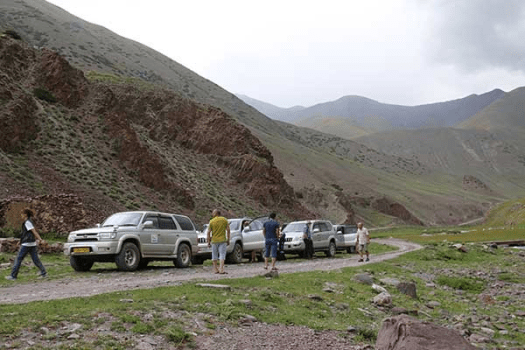
As team 2 arrived and left the mountains via two different routes, I thought it a good idea for team 3 to do the same. That way everyone gets to see more of this astonishing and stunningly beautiful country, and as we were going to have to drive the truck out through the tunnel (as it would have been too dangerous to drive it over the pass), I chose to drive team 3 in via the Kochkor/Karakol pass route. The route is longer than the tunnel route, but the roads are much better for driving. Hunter is now quite proficient at negotiating traffic on these manic roads, so he drove the whole way. David volunteered to be the fourth driver, and he displayed his years of experience of driving to get us all safely to base camp, where Volodya was waiting with a huge pot of hot Ukrainian borsch that he’d made for everyone.
The 2016 base camp in the upper part of the valley
The training sessions began right after dinner on Monday with a risk assessment talk. The whole of Tuesday (16 August) was spent with training sessions as well, starting with the scientist’s talk about the background of research, study animals and their prey, 2015 results, recommendations and aims for 2016. Everyone learned how to use the research equipment.
First survey
On the first survey day on Wednesday (17 August) the whole group went to Kashka-tor for practicing their newly-learnt skills. Unfortunately there was very little to record in the lower parts of the valley. The group then split with Nigel, Miyana, Tris and Phil climbing up one side valley with Volodya and the rest heading further up the valley with Shailoo and Bekbolot, where they split again to recover the camera traps. One trap could not be found. Nobody saw a great deal that day except for Volodya’s group who investigated the area where we had discovered leopard scat the previous Thursday. It had rained heavily the day before and a little more during the night, so when we found fresh snow leopard tracks (lots of them), we knew that these were only laid down that same morning! There were plenty old leopard tracks too along with ibex tracks. This is probably the best opportunity we have to capture snow leopard on camera trap, so we set three of them there before getting rather wet on the way back down. That place is quite special with huge cliffs on each side of the glacier. It is so easy to imagine leopards up there looking down on us.
Fresh snow leopard footprintsNikki setting a camera trap
As we were all wet and cold after our day in the rain, we lit the yurt fire to warm ourselves up again.
On Thursday (18 August) the team split into three groups: Two groups headed off to Chon-chikan, the one walking up the left of the valley consisting of Manuela, Nikki, Nigel and Bekbolot saw a red fox and two eagles. The team that headed up the right, which consisted of David, Miyana, Kenny and Volodya saw a white-winged redstart. The third group – Mary, Tris, Laura, Deborah and Trevor headed off to Kosh-tor to recover traps and saw an eagle and marmot.
Miyana and Nikki clearly had too much energy after the day’s hike
The wildlife is now scarcer down in the valleys compared with previous slots. Most noticeable is the absence of small birds and butterflies now that the spring nesting has ended and the flowers are all but gone.
Hunter winning a game of Kok-boru
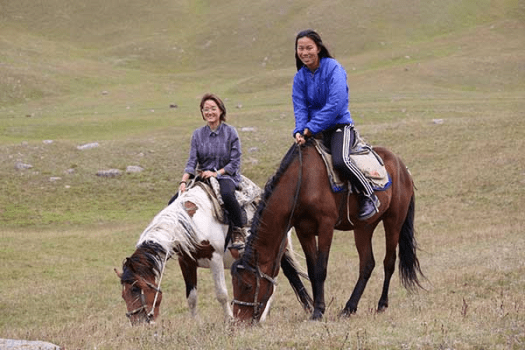
We took a day off from surveys on Friday (19 August) to watch a game of Kok-boru, which was to take place right beside our base camp. This was not a big game such as we had witnessed during the previous slot, rather a small game with just a few participants. They also included various other games such as arm-wrestling on horseback. Hunter played a few one-on-one games of Kok-boru with the boy from the neighbouring yurt and he won most of them. I have to say that Hunter really looks quite professional playing this game now, a potential future Californian professional player, he looked good partly due to having a fast horse this time around. Several people had a horse-ride for a while including Kenny and Deborah, but only Miyana and Tris rode horses all day long. We were later invited over to the neighbour’s for a meal.
KennyDeborahMiyana and Tristan
On Saturday (20 August) the whole team headed out to the Issik-ata valley, passing playful and watchful marmots on the way.
Deborah scanning the ridges for ibex
On Sunday (21 August) Nikki, Deborah and Laura put in a special effort to get another couple of transects covered, while everybody else other than David and Mary headed off to the NABU snow leopard rehabilitation centre at Issyk-kul lake, where we would spend the night. We took our time getting there and it was too dark to see the cats that evening, but we all got some pretty good views the following morning prior to heading off back to base camp on Monday (22 August). While we were away, David repaired some of the camp tools and tents, while Mary put in some hard work cleaning and tidying the camp.
Hard expedition life! Miyana and Tris got soaked to the skin in Issyk-kul lakeThe NABU rehabilitation centreYoung snow leopardLynx
Surveys conducted on Tuesday (23 August) revealed very little, mainly due to bad weather. A strong wind hit the camp and we had to hold onto everything to stop the camp being blown away. I found a noctule bat lying cold in the grass so we moved it to a warm dark place in the yurt, and later that evening it had gained enough strength to fly away.
I tried to photograph these petroglyphs of Ibex but Nigel decided to sit on them
We split up into two groups on Wednesd (24 August). An all-female group headed off to Dungarama where they managed to see a stoat, an eagle, a lammergeier, an ibex and a wolf scat. Volodya, Phil, Nigel and Hunter hiked in Pitiy, where they were not so successful, but they did see the first swallowtail butterfly of the expedition.
Trevor collecting a camera trap
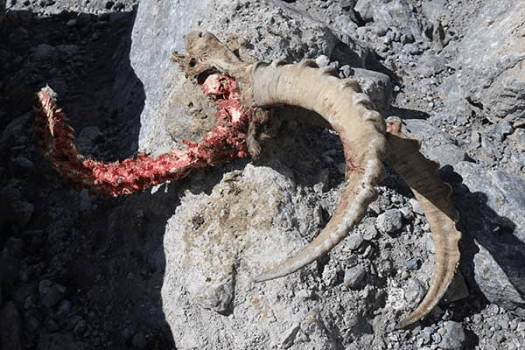
Thursday (25 August) was the big day where we all returned to Kaska-tor, the place where we had found snow leopard footprints, scrape and scat previously, and where we had set the three camera traps on 17 August. The party consisted of Phil, Hunter, Miyana, Tris, Manuela, Trevor, Niki and Laura, and this was our very last survey day with the objective of collecting those last three traps. We had high hopes that these traps were going to capture active snow leopards, but on arrival we could not find any fresh footprints, so there was much disappointment. But also on arrival, sitting on the rocks behind the cameras, was a lammergeier, which immediately took flight over our heads. A vulture sitting there like that suggested there was a carcass there somewhere. We collected in the cameras, then after lunch a few of us explored the area and Miyana discovered the remains of an ibex, which we could clearly see had been killed by a snow leopard. Typically, a snow leopard will leave the nasal passage and eye-sockets of the prey intact, in contrast to other predators such as the wolf for example. We also saw a Saker falcon flying over the camp upon our return that day.
Ibex killed by a snow leopard
Other parts of the team also conducted interviews with some of the herders in the yurts further down the valley. An interesting pattern of responses from herders is the opinion that snow leopards only suck the blood of animals. The origins of this myth are probably based on the fact that a leopard caught with a fresh kill will be holding the animal by the throat before it is scared off. One herder actually said that the meat from an animal killed by a leopard is white after the leopard has sucked all the blood out.
And then, back at base, when we thought our chance to capture a snow leopard had gone, there it was after all! A rather poor quality, but nevertheless very great reward for all our efforts over the years, honing in on the ghost of the mountain, until we have finally caught it on camera! So the ghost does exist and roams these hills.
Rather poor quality, but the very first snow leopard captured on our camera traps
Mary, Kenny, David, Hunter and Volodya
With a spring in our step and hearts full of pride, we disassembled the yurt and much of camp on Friday (26 August) and packed it all away in the truck, ready for departure Saturday morning. Thank you to everyone for helping with this so much.
Trevor, Nigel, Miyana, Laura and Nicola taking down the yurtManuela reluctantly packing up to leave on the very last day in this beautiful valley
All together this has been the most successful year ever here in the Tien Shan. But this is no coincidence as each year has built on the other. The results of interviews with the herders and the surveys during the first year identified suitable snow leopard habitats. In the second year, a snow leopard distribution model was defined based on the data collected and a plan was made to hone in on the ghost of the mountain. And finally this year those places identified by the model were targeted to culminate in definite proof of snow leopards roaming these hills. Well done to everyone who has made this possible over the years!
Thank you for all your hard work! All of you over the years have contributed to this success and you can feel justifiably proud. Team 3, have a safe flight home, and I hope to meet you all again someday.
Best wishes to you all and thank you again.
Phil
========
Quick summary group 3
Snow leopard captured on a camera trap (photo and video) for the first time on a Biosphere Expeditions Tien Shan expedition; a fresh leopard kill, which shows a very clear pattern and example worthy of publication of how snow leopards eat their prey; and many clearly defined leopard footprints found.
Slot 3 added five new species of birds to the list of 57 compiled by the previous slots; one new swallowtail butterfly observed in the mountains.
13 cells covered, compared to 16 cells covered by group 2. This reduction is due to the large number of camera traps that needed to be recovered during the last slot.
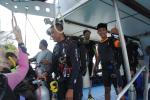
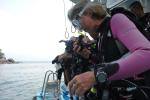
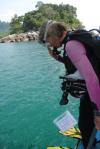
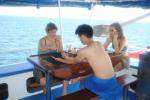
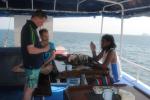
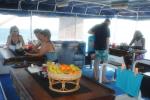
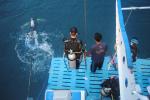
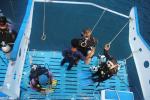
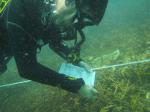
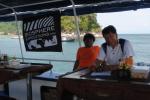
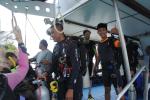
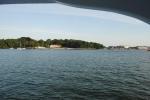
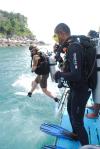
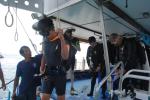
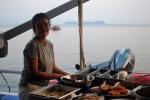
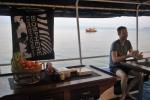
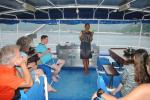
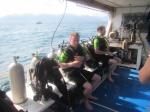
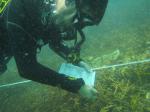
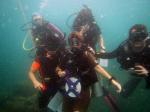
Sunday and Monday followed with three survey dives on each. Some of the team swapped jobs, but a lot of us preferred to stay in what we felt were our areas of expertise. A lot of data were gathered and entered into the Reef Check spreadsheets, and we even had time for a night dive and one lazy dive at the end, which stretched our navigation skills with some pretty low visibility. We arrived back at Singapore and waited off-shore for the customs boat to come and check us back in to our final destination. We enjoyed the final crusie into harbour during breakfast, with Indonesia on one side and Malaysia on the other. Farewells were said as this year’s expedition came to an end. Thanks to all the team for all of their hard work and a lot of fun – hope to see you all again!
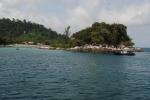
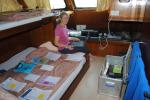
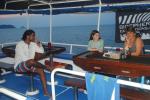
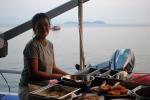
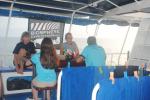
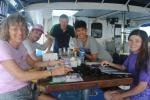
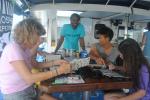
Sorry that the pictures did not come through. Here’s an album now to make up. And also the draft of a press release to summarise the expedition, which could not happen without your time and money, so thank you again!
========
Strong Recovery for Malaysian Coral
The El Niño effect this year has devastated coral reefs around the world, but the reefs of one island in Malaysia are fighting back.
A team from Biosphere Expeditions have teamed up with Reef Check Malaysia to survey the coral reefs around the island of Tioman, off the east coast of peninsular Malaysia. The group was assessing the health of the reefs following the devastating rise in the sea temperatures that happened in May this year. A temporary rise of 2 or 3 degrees Celcius, caused by this year’s El Niño event, has been causing corals all around the tropics to do something called ‘bleaching’, which can lead to the death of corals and then entire reefs. A coral bleaches when it expels the symbiotic algae that usually live within it. These algae give the coral its colour, without these algae the transparent coral appears white (or bleached) as we see through the animal to its white calcium carbonate structure. Without the algae the animal also loses around 80% of its energy which is usually supplied by the algae photosynthesising sugars. This eventually leads to the death of the coral through starvation.
But the reefs around Tioman island have been taking algae back, and in the months since the reefs were 30 to 40% bleached, they have largely recovered, as the Biosphere Expeditions team has found. The team, comprising citizen scientists from all over the world, also found reefs that were almost back to pre-bleaching states and which were generally healthy. So for these reefs the danger of bleaching has passed for now, but the threats of overfishing and pollution are still there. Very few larger predator fish were found during the surveys, indicating that fishing is still happening, despite Tioman being a Marine Protected Area. The amounts of nutrient indicator algae growing on some of the reefs led the team’s scientist, Alvin Chelliah of Reef Check Malaysia, to speculate on the amount of sewage that may be ending up on the reefs from some of the island resorts. It is through working with the communities on the island, as Reef Check Malaysia does, that the threats to these reefs will be tackled sustainability can be secured.

























































 Biosphere Expeditions: blogs from the frontline of wildlife conservation and the fight for a more sustainable planet