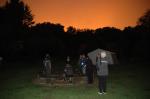
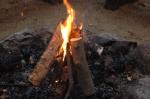
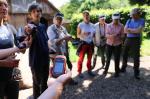
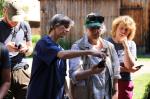
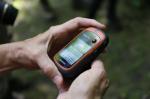
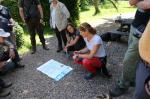
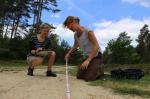
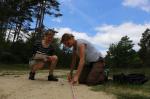
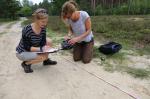
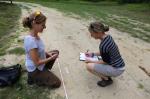
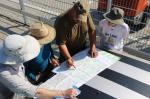
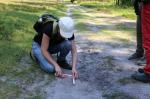
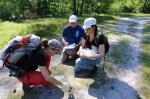
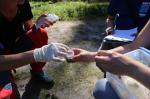
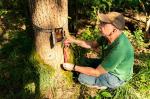
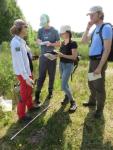
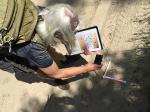
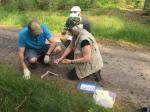
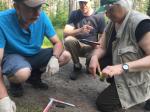
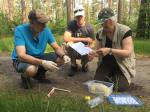
From our snow leopard volunteering expedition in the Tien Shan mountains of Kyrgyzstan

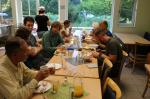
Ever since the gale force winds at the end of group 3, the weather here has been quite strange. We left Bishkek on a cool Monday morning. Once we arrived at base, there was plenty of work to do. Aman and Shailoo both went to the neighbour to help take down their yurt so we could reassemble it at base. Everyone else got busy finishing up the cleaning job left from group 3’s storm. That evening we all got settled in and ended the night with a large pot of Ukrainian borscht made by Volodya.

The next day is usually a training day, but the circumstances required a bit of a change. We spent the first half of the day putting up the new yurt and switching the old yurt to become Gulya’s new kitchen area. The base camp looked great again! At the same time as the yurt setup, some of the group drove down the valley to the opening ceremony of a new NABU snow leopard statue. Tolkunbek, the local director of NABU, was very glad that we made the effort to have Biosphere Expeditions represented at this ceremony.

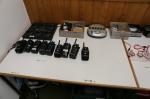
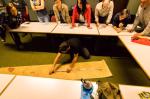
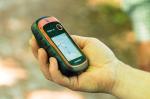
Wednesday got started early with training in methodology, equipment, and camera trapping followed by a short half day out in Sary Kul. We thought our first day out tradition would continue with rain, but although the clouds threatened, the weather stayed clear.

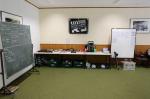
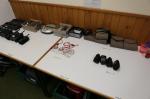
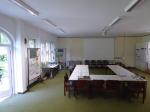
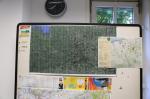
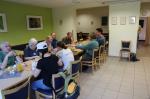
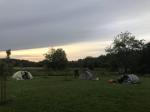
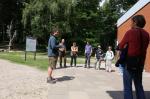
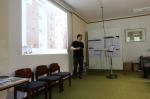
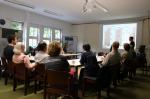
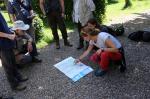
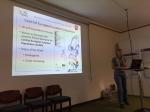
But that did not last through the night. Waking up this morning, we were surrounded by snow. Our initial plan of surveying Irii Suu and Takyr Tor just was not be feasible in such conditions, so plan B took immediate effect and now we’re here in Dong Alysh at the zoological museum, working with our local partners on camera trap training and hoping that tomorrow’s weather will be clear and beautiful so we can get started with our full day surveys.

From our snow leopard volunteering expedition in the Tien Shan mountains of Kyrgyzstan

When we last checked in, we were in the zoological museum in the village of Dong Alysh on the other side of the pass from our camp. Seeing such an impressive museum in such a small village was reassuring for us all as it means that the young people in the area are learning about their natural environment and why it is important, and keeping this heritage with them throughout adulthood. Jana from the USA said, “Its amazing that such a museum even exists out here!”

While we were away at the museum, it had actually snowed at base camp, but by the time we were back it was all melted and the clouds cleared up to start drying things out. The weather had finally turned in our favour.

Sunday was our day off and we made good use of it by washing and drying all our damp clothes, bathing in the river, and then spending the afternoon at a neighbour’s yurt for a late lunch mixed in with some horse riding. One of our expeditioners, Kate from New Zealand, has been riding horses her whole life and the looks on all the local Kyrgyz herdsmen’s faces when she started riding the “feisty” horse were priceless! They were shocked! Aman, one of our guides, showed us how he could reach down from horseback and grab a hat while galloping. By the end of the meal, we almost had to be rolled back to basecamp. All in all the day off was as perfect as it could be.

Surveys started right back up again with the weather cooperating nicely. On Wednesday we were able to send out an overnight group to collect some camera traps that group 1 had set up during their overnighter. Some herders came up to Volodya during the overnighter trip to tell him that one of their foals had been attacked by a snow leopard that week and wanted to know if we had found any other evidence of the cat. In fact we did find evidence of a cat…but of a lynx! On the camera trap in the same valley as the herders had their foal attacked, a lynx decided to pose beautifully in front of the camera trap. “This is something extraordinary!” Volodya said.

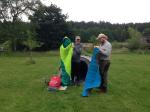
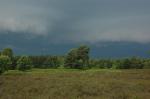
Friday we had a half day survey as the local herders were going to have a game of Kok Boru, or as many of us started calling it, “Kyrgyz polo”. This is a traditional nomadic game played on horseback and can get very exciting! The game was great and then abruptly ended as everyone saw some large dark clouds rolling in from down the valley. We all quickly ran back to basecamp and sheltered in the yurt. When the storm reached us, we quickly realised that this was no ordinary storm…it was a full-blown hurricane and it took all of us holding the yurt together to keep it from flying away. Both our mess tent and Gulya’s wonderfully organised kitchen tent were lifted up and ripped apart by the wind and hail. We watched through openings of the yurt as our basecamp was destroyed in less than 15 minutes of strong winds. Fortunately, nobody was hurt, all the personal tents held strong, and nothing of value (other than our two large tents) was lost. A standing ovation to group 3 members who, as soon as the wind had died down, were all outside cleaning up the aftermath. Our large mess tents have to be ordered in, so group 4, we’ll hire a yurt from a neighbour to house the kitchen and mess tent area.

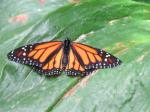
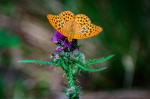
I’ll wrap up this entry by sharing group 3’s recordings. We were able to survey 49 cells, had 5 direct sightings of ibex, 26 cells had signs of marmot presence, 7 cells with snowcock sign, 1 new species of butterfly for the region (Karanasa kirgisorum), over 150 petroglyph recordings taken, many camera trap photos of ibex, but perhaps most excitingly, images of a lynx in a location where traditionally they are not thought to live! One more group to get something snowleopardy!

Thank you so much group 3! Three down, one more to go. See you Monday, group 4.


From our Sumatran tiger conservation volunteering holiday in Indonesia

The first slot of the expedition is now completed and we have arrived back in Pekanbaru after 13 days in the rain forest. The last few days were spent completing the surveys and placing the last camera traps, as well as with a school visit.

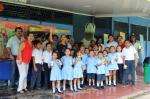
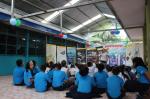
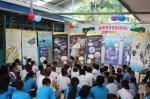
We visited the school in Murabio village and Febri gave a talk about the animals in the region and the importance of conserving the environment and wildlife. After the presentation, we spent time playing games with the children, much to their delight. Education and community involvement is one of the most important aspects of the work that WWF carries out in the region and it felt good to be part of that process.

Everyone was sad to say goodbye and Martyn from Australia reflected on his experience, “My favorite was the overnight trip. I have never slept in the jungle before. Or rather I didn’t sleep, there were so many wonderful sounds to listen to I couldn’t sleep.” Pam from the USA really enjoyed the comradery of the team “I am really grateful that everyone helped me generously when I was tired, encouraging me and being patient.” While Neil from Italy said his favorite part of the expedition was doing something useful for the planet.

Slot 1 during its time in Rimbang Baling Reserve placed eleven camera traps and surveyed the same number of cells for signs of tiger prey species and illegal logging and poaching. We also conducted nine interviews with local people about their perception of tigers. Thank you to everyone who helped to make this slot a success!

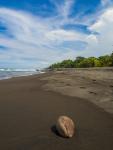
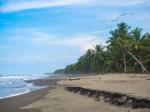
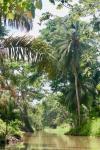
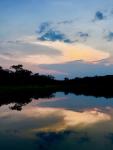
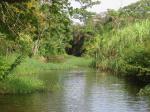
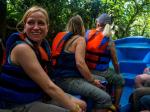
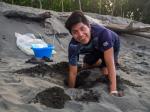
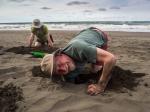
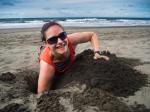
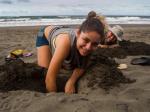
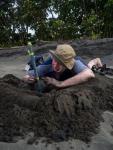
Update from our conservation holiday protecting leatherback and other sea turtles on the Caribbean coast of Costa Rica

Here are some pictures from the 2017 expedition…

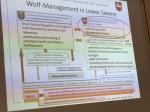
Update from our monitoring expedition studying wolves in Lower Saxony, Germany

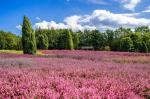
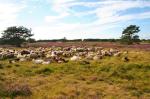
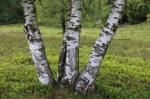
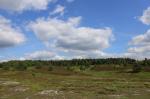
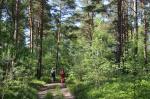
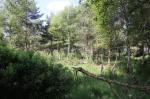
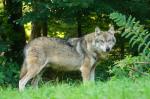
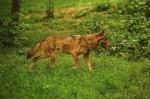
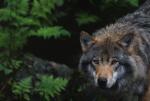
26 July 2017 – 17 June 2017 saw the start of Germany’s first-ever wolf citizen science expedition, organised by Biosphere Expeditions in cooperation with the Wolfsbüro (wolf bureau) of the state environment ministry NLWKN. Participants from all over the world searched for wolf sign for a month. The results in terms of signs found, data gathered and media interest exceeded all expectations of the expedition’s organisers.

A total of 49 citizen scientists took part in the expedition from 17 June to 21 July 2017, supporting the state’s official wolf monitoring programme with four groups of one week each. Most of the participants came from Germany, its neighbouring countries and the UK. Some even came from as far away as North America, Singapore and Australia.

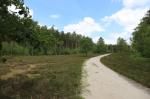
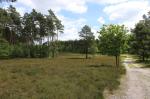
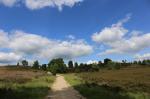
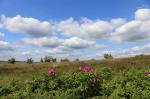
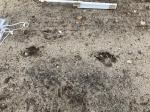
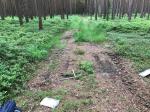
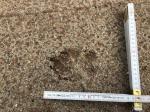
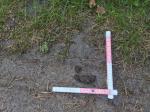
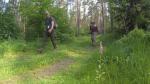
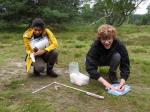
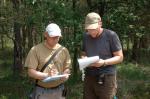
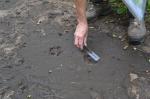
After two weeks of intensive training, citizen scientists went into the field in small groups of two to four persons to search for wolf signs. In total 1,100 km were covered on public footpaths and bridleways, which is where wolves also like to walk, patrol and mark their territories. All signs found were recorded following the strict scientific protocol of the state’s official wolf monitoring programme. Over the course of four weeks almost 80 wolf scats and as many other wolf signs again were found and passed onto the wolf bureau for further analysis. An expedition report in early 2018 will detail all findings and also where funds provided by the citizen science participants through their expedition contributions went.

Co-organiser of the expedition Peter Schütte says that “the data gathered by our citizen scientists are a valuable addition to official wolf monitoring efforts and a great way to show support for all the other wolf ambassadors working in our state.” His colleague Kenny Kenner adds that “we alone simply can’t cover large areas. I can just about manage to cover ‘my’ area and ‘my’ wolf pack within. So I am very grateful for the additional help that the expedition provided – in areas where we want to and should know more”.
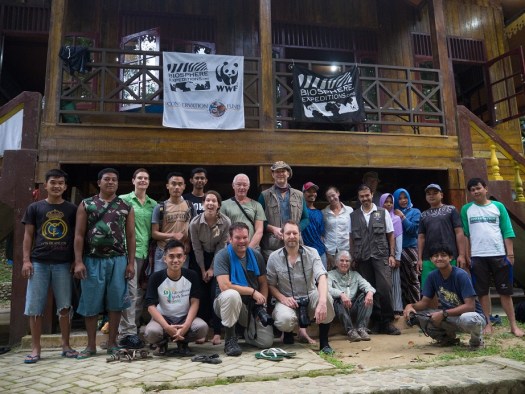
Dr. Matthias Hammer, founder and executive director of Biosphere Expeditions remarks that “in summary our citizen scientists help on two levels: by collecting valuable scientific data and through financing the project as a whole. Not even we expected the wealth of extra data our expeditioners collected. This shows how much citizen science can achieve in just four weeks and how much it is capable of adding to official wolf monitoring efforts. But of course this does not mean we want to replace or belittle those other efforts. On the contrary. It is only through working together that we will reach our goals. Because the more data we have, the easier it is to come to the right science-based conclusions and develop successful strategies to protect livestock and avoid conflict between wolves and humans. So we are really looking forward to the final results and to repeating the expedition in June/July 2018 again.”

The state’s wolf bureau agrees and also wants to work “cooperatively with partners such as Biosphere Expeditions and individuals who have an interest in the wolf, such as for example hunters, the state’s hunting association, forest- and landowners, shepherds, livestock owners, wolf ambassadors and others. The state of Lower Saxony is glad if people take an interest in the wolf and contribute their skills and time to monitoring efforts, as sound scientific data are the prerequisite for reducing conflict with this predator.”

Wolf ambassador Schütte adds that “if wolves are to have a future in Lower Saxony, then local people must be kept in the loop about their whereabouts and behaviour so that conflict can be reduced or avoided altogether. Our project contributes significantly towards this ultimate goal of wolves and humans living side by side in Germany.”

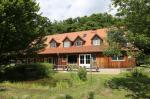
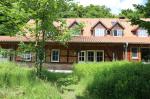
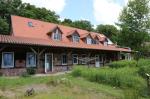
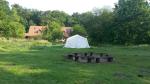
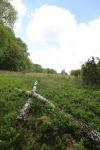
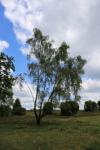
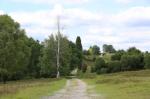
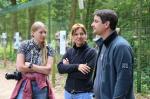
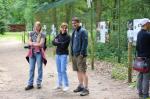
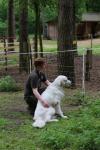
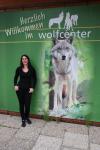
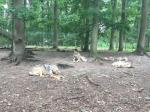
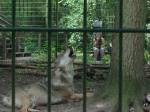
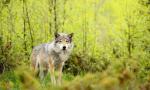
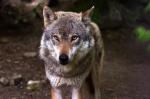
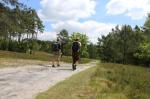
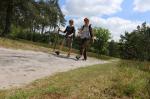
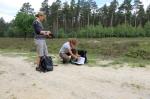
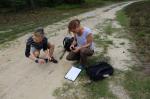
Here’s a collection of photos from the expedition:

From our Sumatran tiger conservation volunteering holiday in Indonesia

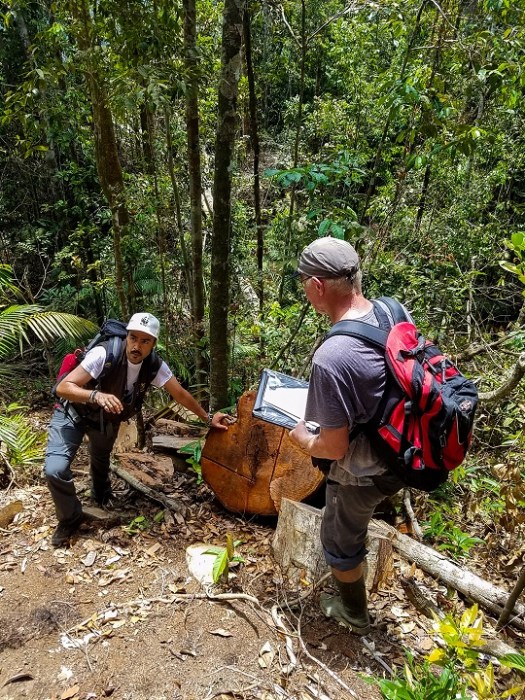
A second group set out for an overnight trip, sampling two cells further upriver. The first day was very steep and we set a camera trap on an animal trail high up on a ridge. Along the trail we also found a barking deer trap set by poachers and cut hard wood trees, a sad reminder that illegal poaching and logging is commonplace in the reserve. We pushed on higher and higher and eventually popped out of the forest on to a clear summit with views of the rainforest in every direction and Subayang River far below, a nice treat for our efforts.

Logging

We spent the night camping on the riverbank, watching the stars and listening to the monkeys fighting in the trees. Najib, one of the local placements from the city of Pekanbaru, was awestruck by the beauty of nature “In Pekanbaru you can never see the stars. I want to come back and camp here again – it is amazing!”

The second survey day went smoothly and the group that stayed behind also successfully sampled two survey grid cells and placed camera traps. The camera traps will be collected by the team arriving in the second slot, hopefully lots of animals will be captured to further our knowledge of the abundance and distribution of animals in the reserve.

Camera trap

From our Sumatran tiger conservation volunteering holiday in Indonesia

The research is now in full swing and we have already surveyed five 2×2 km cells in the buffer zone of the Rimbang Bailing Nature Reserve. We have been placing camera traps and looking for tiger prey species as well as signs of illegal logging and poaching. Half of the team went for an overnight trip, going for three hours by boat upriver, spending the night camping on the riverbank and surveying two cells. They came back with tales of steep hills and a great night out.
The team that stayed at base also surveyed one cell per day and visited two villages to conduct interviews with locals to help better understand the perception of tigers in the region. There seems to be a “not in my backyard” attitude with everyone believing tigers are good for Indonesia and the ecosystem, but fear is strong and as such they don’t want tigers close to where they live. In Tanjung Belit village we also visited the recycle shop, where women are turning used plastic packaging into beautiful bags. This is an initiative spearheaded by WWF, our local partner organisation.

A group of school children from a nearby village came to visit the research station. Gia from WWF explained to the children and us about the Rimbang Baling Reserve and its ecosystem, highlighting the importance of the Subayang River system. Afterwards we got the opportunity to answer questions from the curious children and play games in honour of Global Tiger Day, which was on 29 July. Global Tiger Day was coined in 2010 in St Petersburgh, Russia, during a tiger summit there in an attempt to highlight dwindling tiger numbers worldwide. Peter from Austria summed the it up well: “It is so important for the children to know about their natural heritage and it is delightful to interact with them.”

This slideshow requires JavaScript.

From our snow leopard volunteering expedition in the Tien Shan mountains of Kyrgyzstan

Today is stormy with rain and snow, so we decided to take a trip to the zoology a museum on the other side of the Karakol pass in Doing Alysha, which is where I’m now writing from.

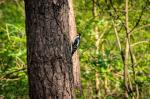
Meeting up with group 3 in Bishkek went perfectly. Now that the Karakol pass between our two valleys has been cleared of snow by group 2, it was possible to travel the shorter route to base camp from Bishkek. Once at base we unloaded groceries and got everyone settled in. Training on Tuesday held perfect weather again, so in an effort to keep traditions alive, we made sure that on our first day out for a survey, it rained. The weather cooperated all day till just after lunch when the clouds rolled in and the thunder started. Fortunately, the rain was only short-lived and everything dried up quickly for an all-round good survey. We have already, in only two survey days, collected information in 12 cells, seen one ibex (and lots of ibex sign), countless marmots, and plenty of birds, butterflies, and petroglyphs. Hoping for many more sunny survey days next week!

And the office tells me that the article by Matthias Gräub (group 1) in Swiss magazine “Tierwelt” (animal world) is now online on https://www.biosphere-expeditions.org/volunteeringinkyrgyzstan#press , alongside many others.

This slideshow requires JavaScript.

From our Sumatran tiger conservation volunteering holiday in Indonesia

The first group has arrived on site and we spent the first couple of days with training in the scientific methodology and use of equipment.

On Wednesday, armed with our new knowledge, we went into the jungle. First for a practice run getting used to the lay of the land and in the afternoon a few of us completed the first survey. Our intrepid team of four placed the expedition’s first camera trap and were frightened half to death by a two meter long monitor lizard that ran out right in front of us. We also spotted barking deer tracks along a creek. Barking deer is preferred prey species by the Sumatran tiger, but also by the local population who like to eat game meat. By surveying for the presence of tiger prey species, we get a good idea of the capacity for tigers in the reserve. Seeing tracks of barking deer is a good sign, indicating there is still prey for tigers in the area, despite competition from humans.

“This is so fantastic, we have already seen so many things! It is so beautiful here,” says Karen from Germany.

Tomorrow a team of six will go deeper into the woods for our first overnight trip surveying some of the more remote areas, while the rest of us will focus on survey sites closer to base.

From our scuba diving conservation holiday with whale sharks and coral reefs of the Maldives

One of the questions on a Reef Check site description form is ‘Is this the best reef in the area?’ Distressed by our recurrent findings of unhealthy degraded reefs, we decided to go in search of just that, so on 26 July, after consulting the knowledgeable crew of our research vessel, we surveyed Litholu Kandu, an outer reef on the far eastern tip of Vaavu Atoll. We were not disappointed. This may not have been a pristine reef, but in comparison to what we had been seeing, it was a sight for sore eyes. As we headed north we found that the reefs once again were suffering, and these weren’t just the inner reefs, but the outer reefs as well.

On 27 July we performed our whale shark transect, but were not as fortunate as last week, and no whale sharks were sighted. But a large pod of around 50 spinner dolphins put on a great show of leaping and spinning, really playing up to their name.

For our final day the weather turned and our last transect, on a particularly silted reef, we battled with the wind, rain and poor visibility. The site we were surveying in Embudhu, South Male’, previously had 30% hard coral cover (in 2012), but now foreign investors in conjunction with the ministry of tourism here in the Maldives are reclaiming 7 km of land to build tourist islands akin to those in Dubai. As if the reefs aren’t having to cope with enough already! It was a sad way to end our week, but another example of why these surveys are really important, and why the world, and the Maldives, really need to wake up to what is going on just below the surface!

And what is going on is that inner reefs are devastated. Outer reefs aren’t in the places we’ve been to. If you look at IUCN ratings, over 30% cover is OK, so there may be opportunities for some recovery, but the problem is that impacts just keep increasing – sedimentation, pollution, ocean warming, overfishing, ocean acidification, you name it, it’s all here in the Maldives, which is why the inner reefs are indeed knackered and may not recover…..and this is of course where most of the resorts are….

We’ve been coming here since 2011 and even in this short time things have become much worse. Unless the Maldives, its people and its government wake up to the reality of what they are doing to their reefs, which are after all the basis for everything in the country, including the very country itself, then greed, ignorance, apathy and short-sightedness will win the day and kill the reefs – and with it much of the country’s economy and the well-being of its citizens. There’s no nice way to put this. What we are documenting is the rapid decline of a country in more ways than one.

Thank you to a fantastic team who have worked really hard in the face of an ecological crisis. This was the first time that Biosphere Expeditions has run an expedition for those already trained in Reef Check protocols and methodology, and it has been a great success. To be able to get to work quickly after a brief refresher, and to travel to distant locations has been a real bonus. It has also been great for participants of previous expeditions to meet up with old friends, and to make new ones. Everyone hopes that other diving destinations will follow suit and if they do, I hope to see you all in another location continuing the good work!

We would also like to thank the fantastic crew of our research vessel. The food has been amazing, and the knowledge and skill of the dive guides has really helped the whole operation run smoothly. A special thank you to Inthi, for being flexible and accommodating at all times.

So until next year… we wish the Maldivian reefs a year of recovery. `They need all the luck and help they can get.