Award-winning, non-profit and ethical wildlife conservation volunteering. Advancing citizen science and conservation since 1999 – for nature, not profit.
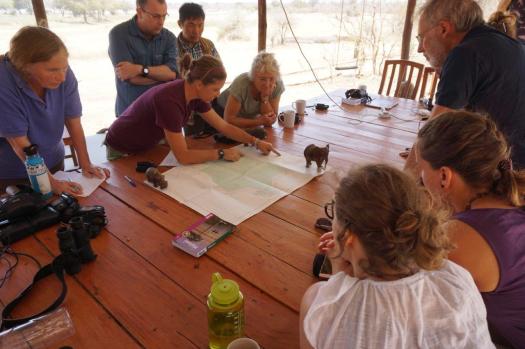
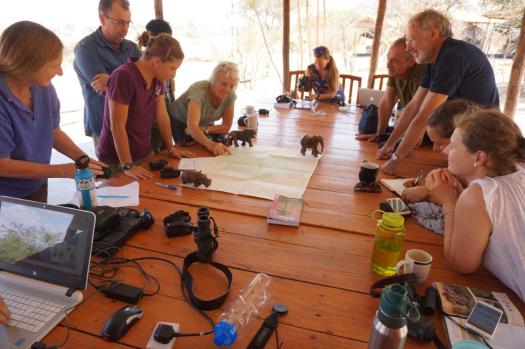
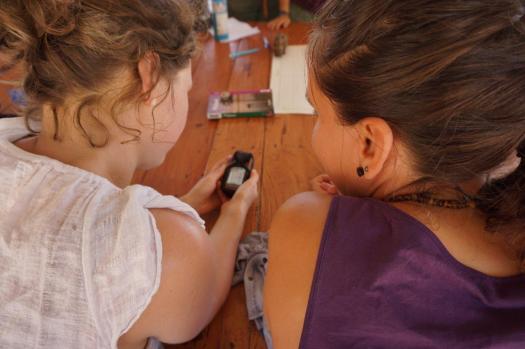
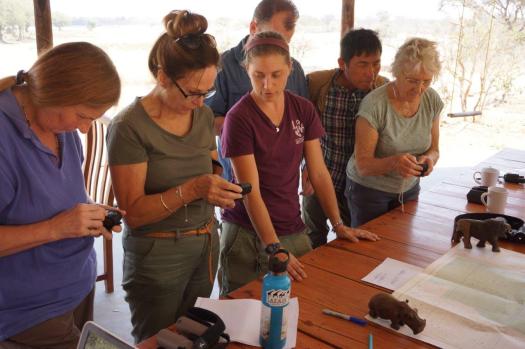
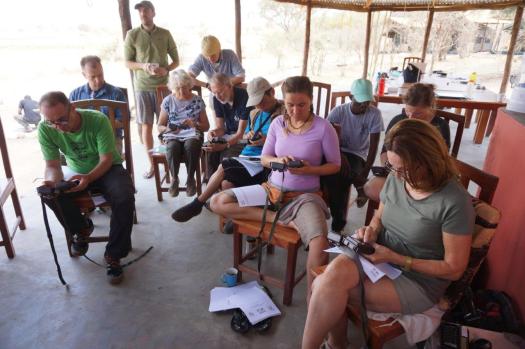
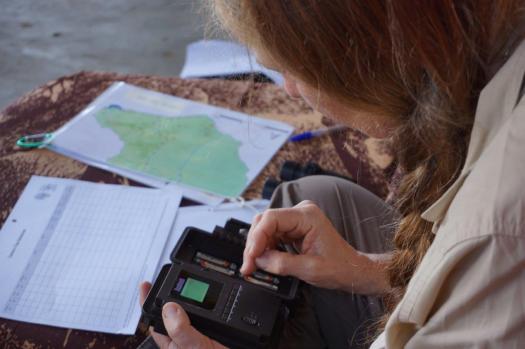
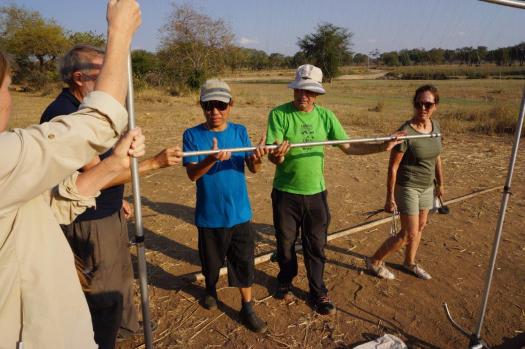
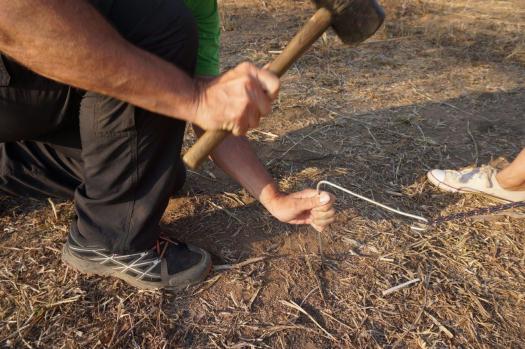
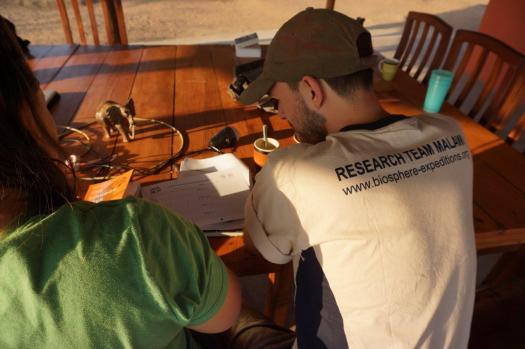
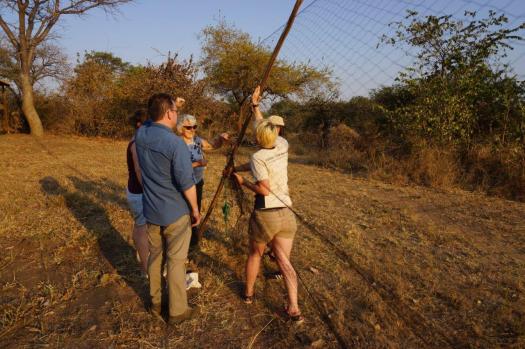
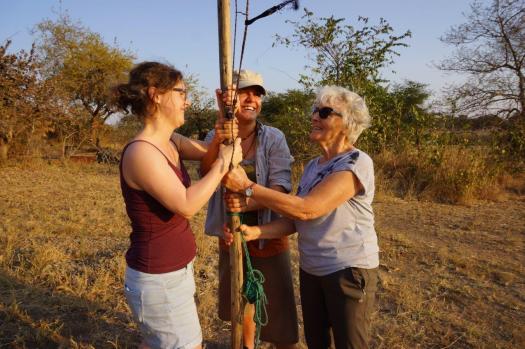
After a day of getting to Vwaza from Lilongwe, the next two days of the expedition are dedicated to training. This includes talks on the study species, research background, hands-on training on maps, GPS, compass, datasheets, bat net erection, behaviour in the bush, cars, etc., etc. It’s intense, but necessary if we want to generate good research data, which is what it’s all about. And it’s excellently fuelled by the most important
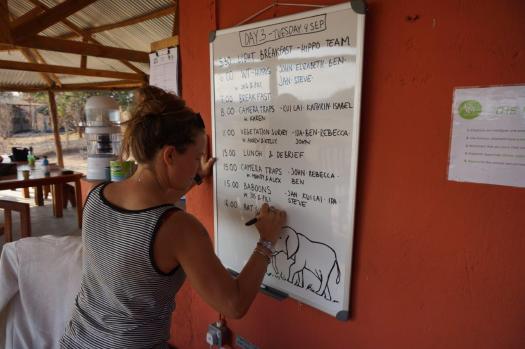
Our scientists have prepared remarkably well, thank you, so it has gone smoothly. Tomorrow we start with our research work. We have hippo transects, bat surveys, vegetation surveys and much more on the programme…
We’re as ready as we can be for you. The proof will be in the pudding now, starting with trailblazing group 1 tomorrow. And trailblazers we will be indeed. Just one example is that our expedition will set camera traps all over the reserve for the first time ever. Yes, it has never been done before and we are excited about the research work and what it will show. And the camera traps are just one facet of many citizen science aspects. So wish us success and good fortune!
Group 1, I hope you are all reading this in Lilongwe tonight and I hope you are ready. Please help us smooth out the rough edges and make this inaugural expedition a success.
Here are a couple of videos and some pictures to wet everyone’s appetite.
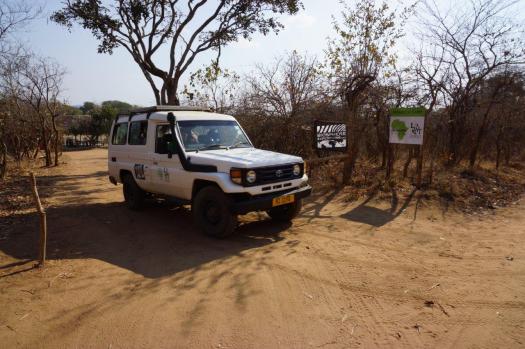
We arrived at Vwaza base camp today, just as the sun was setting. The elephants were drinking at the lake across from camp and a full moon rose as the camp fire lit up. What more can you ask for? Perhaps nice weather? Well, today was a blue skies day with temperatures in the high twenties C. The forecast if for much of the same for next few weeks.
Camp has been beautifully upgraded by our partner organisation the Lilongwe Wildlife Trust, and tomorrow morning we will start unpacking and setting things up for you.
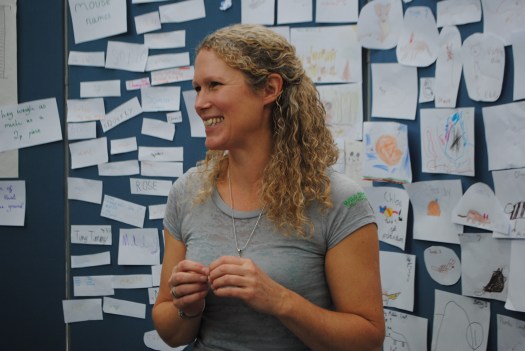
My name is Ida and I am your expedition leader for the inaugural African biodiversity expedition to Malawi. We have been working hard with our partners from the Lilongwe Wildlife Trust and Conservation Research Africa to set this expedition up and we are excited that it is finally about to start.
I hope your preparations are going well and you are starting to get excited. I also hope you have downloaded and printed your expedition manual / field guide for you to bring with you into the field. The more studying of this you can do now, the easier you will find it in the field during the citizen science training phase of the expedition.
I am about to start from the USA; other Biosphere Expeditions staff are setting off form Germany and the UK and we will all converge in Lilongwe soon, to go up our expedition base at Vwaza Marsh, where we will meet with the field scientists (below) to put the finishing touches to the expedition.
This slideshow requires JavaScript.
Remember that this is our inaugural expedition and that it is as much your expedition, as it is ours. Bear with us as we go through our teething phase and work with us to make this the best expedition it can be, for our partners and their wildlife research and conservation work, for ourselves and for the African wildlife at Vwaza we will be helping to protect. Because wildlife research and conservation is what this is all about and I for one can’t wait to get started.
I will write again from Vwaza with some weather and field updates. Stay tuned and I look forward to meeting you all.
Group 2 is back in Bishkek with some great results! But before we get to that, I want to share a bit more about our two weeks in the Tien Shan.
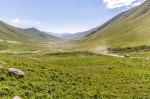
Thanks to group 1’s efforts at digging away the snow on the mountain pass, group 2 was able to drive the eastern route to get to base camp. Once at base camp, we had a quick tour before setting up our tents. After all the necessary methodology and gear training on Tuesday, we got up on Wednesday ready for a good day out in the mountains. Our plans were quickly changed though thanks to a sudden snowstorm on our drive up to the valley. We took great advantage of it though with a surprise snowball fight! Once back at camp, we decided to head down the valley where it looked dry and have our first day out in a valley called Tuyuk.
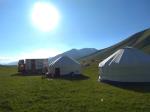
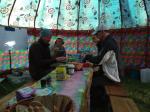
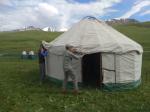
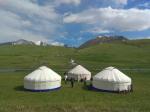
Our next day also was a “weather” day … even though it started out with perfect weather! Once we reached the top of the valleys we were in and began setting up camera traps, the weather changed for the worse. Both groups experienced snow, hail, rain, high winds, and lightning on their way back down the valleys. We were very grateful to Gulya who had started a fire in the yurt to help us all warm up and dry out. Of course, the weather wasn’t quite over as we had an awful wind storm in the middle of the night, one that I was worried may be a repeat of last year’s storm that destroyed our mess tents. Thankfully, our new yurts held strong and there wasn’t any damage to the camp.
With such a tough start to the expedition, we were nervous that each day would be the same, but after the storm, each day was beautiful! We had wonderful trekking weather that allowed us to reach the glacier’s edge almost every day to look for signs of snow leopard, ibex, marmot, and other species. Closer to the end of the two weeks it was time to start collecting the camera traps installed during groups 1 and 2. This is where we get to the results!
Over our two weeks we covered 35 cells, 26 of which had signs of snow leopard prey species found in them. On the very last day, we finally got an ibex sighting! A total of 41 bird species and 23 butterfly species were recorded, some for the first time in our study area. However, the grand finale of all information is that we have finally managed to photograph a snow leopard with a camera trap in Chong Chikan valley!
What a way to end our fifth year in the Tien Shan. My thanks goes out to group 2 of David, Pat, Jan, Anette, Christine, Hans, Jo, Jerred, Bec, Berni, Kathrin, Ralf, and Buyanaa. Thank you for the effort you put in during our two weeks together. And to everyone that was involved in this year’s work, including group 1 of course. You could have gone to a beach somewhere, but instead you were with us up in the mountains in Kyrgyzstan, getting rained, snowed, and hailed on (sometimes) and “suffering for science”. Your passion and concern for snow leopard conservation here is much appreciated, and even though two or four weeks seems like a short time, I am proud to call you all dear friends. I hope someday during this incredible journey of life that our paths will cross again. Thank you as well to Volodya, Bek, Beka, and Gulya, without whom we’d have no idea what to do, where to go, and would always be hungry. And to Biosphere Expeditions, thank you for providing the opportunity for people from around the world and with a wide range of skill sets to bond together, not just over the idea of snow leopard conservation, but over the struggles, challenges, joys and triumphs of snow leopard conservation!
Until we meet again,
Amadeus DeKastle
Expedition Leader
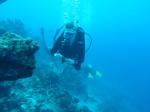
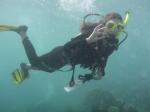
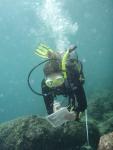
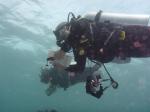
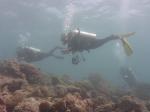
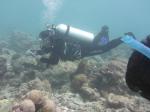
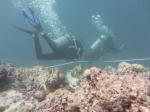
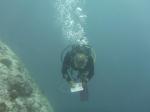
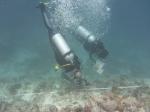
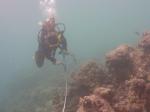
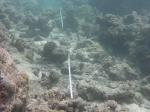
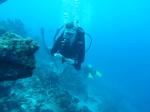
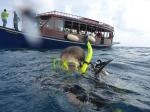
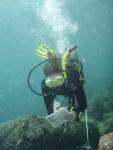
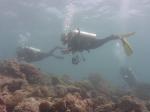
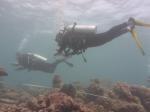
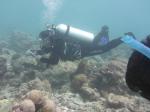
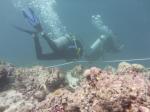
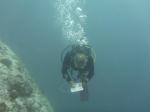
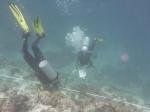
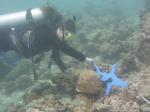
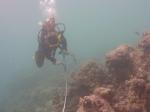
We have now undertaken five Reef Check surveys on five different reefs, and all has gone well. The whole team have managed to work on all the different aspects of the survey and nobody got lost after the first practice dive. We saw manta rays while laying the first transect tapes, an abundance of fish, some fascinating hermit crabs, turtles, sharks and sting rays. The reefs themselves, however, are not very healthy and indeed some of them are largely dead wastelands now. The bleaching event in 2016 severely damaged the reefs, and even the ones on the outside reefs (that weren’t so badly damaged) are not looking good.
We had a magical night dive on a 5 m mound, around 50 m across, with sides that fell away to around 30 m. There were a multitude of small sharks, tuna and sting rays, plus turtles cruising through at intervals. We also did one afternoon looking for whale sharks to support a local NGO that surveys them regularly in the area. After more than two hours of searching, we came across one small male, around 3.5m in length, and managed to get in the water to experience swimming with it (and take photos of its gill area). It was a very beautiful animal and although there were many people from other boats in the area, the fish did not seem bothered, and gently cruised past all the curious on-lookers.
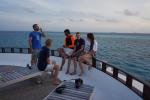
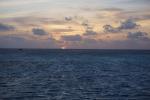
We celebrated our last survey dive on Thursday with a sunset snorkel. Dinner was rounded off by viewing old Jacques Cousteau DVDs – amazing footage but it’s nice to note how conservation diving has improved its methods – at one point Jacques remarks that dynamiting the fish is the only was to get an accurate count of the ones in the area, a technique that we are glad to say has been replaced by Reef Check!
Jean-Luc, our scientist, sums up the expedition like this:
“Findings are pretty startling – inner reefs are still faring badly, with little sign of any recovery other than the very shallowest top 2-3 m with recruits on coralline-stabilised and heavily grazed reef flats. All other depths (that are in our permanent transects) are showing algae and turf covering dead branching, table and plate Acropora corals, which used to dominate these inner reefs. Outer reefs are actually faring much better with 14-40% live coral, with many recruits on the most exposed slopes down to 12+ m. And these recruits are the more resiliant Pocillopora eydouxi species and Acropora. And of course the more resistant encrusting and massive growth forms. So there is hope there.
But for the inner reefs – very little cause for optimism for a recovery as rapid as I witnessed between 1998 and 2005.
Other than that, the predator fish / megafauna population seems to be OK. Grey reef, black-tip, white-tip sharks on most sites, one whale shark sighted at the Mamigili Marine Protected Area (an MPA for whale sharks), snapper populations seem to be OK at some sites. Grouper numbers pretty good, but sizes small as usual.”
All these insights would not be possible without you, our brave citizen scientists. You could have gone on an ordinary dive holiday, but instead you chose to put your time, money and skills to better use. Thanks you so much for this.
I leave you with best wishes and the hope to meet you again some day, some place on this beautiful blue planet of ours. I also leave you with some pictures and videos below. Do share yours too please.
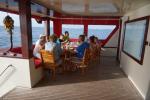
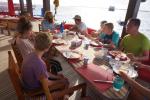
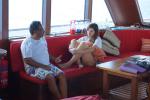
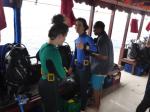
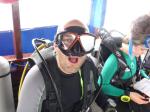
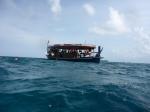
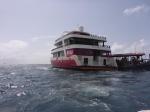
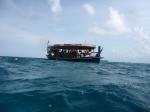
The team all arrived on time on Saturday, with briefings and talks on the first afternoon and our first dive at Baros. The following morning we went on one of our longest crossings, over to Rasdoo, and a more interesting reef for us to dive on for the next two days. Here the team learnt to identify the fish, invertebrates and substrate that they need to know to carry out the Reef Check surveys, looking at things underwater and in the ‘classroom’ that the main salon on the boat turns into for these few days. The time was filled with talks and tests, interspersed with dives, and our final dive was a practice Reef Check dive, with everyone working across two survey teams. The dive was enlivened by one buddy pair descending down the wrong marker buoy and not finding the survey area :), but all ended well and everyone else completed the survey work successfully.
This morning we have moved to the area where we will start our formal survey work, everyone having passed the necessary tests, congratulations. The first Reef Check dive is upon us!
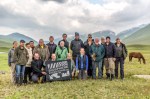
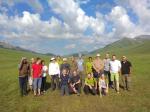
2018’s first Tien Shan expedition group has arrived back in Bishkek after a busy two weeks. Thank you to Judy, Sophie, Marilyn, Allycia, Tristan, the two Peters, Holger, Jim, Ross, Markus, Peter, Andreas, Noel and Stanley for putting in lots of effort to collect a solid amount of data. We covered 34 cells (2×2 km each) in our study area, some of them multiple times. Our surveys showed that of those 34 cells, 23 of them had snow leopard prey species living in them. This included ibex, argali, marmot and snow cock. We set up eight camera traps in various locations (results pending). We also collected records for three bird and two butterfly species that are completely new to our study area this year. Most importantly, we collected two distinct records of snow leopard. The first record was the dead body of a cub in Sary Kul valley that we found out about from a shepherd. In Chong Chikan valley a survey up near the glacier came across two sets of prints, likely belonging to a mother snow leopard and her cub. This is not only a strong indication of snow leopard presence, but it is also great to see that there is likely to be a breeding population here in our study area.
Group 1, it was a pleasure to spend two weeks with you in the mountains “suffering for science”. All the best, and I hope to see each of you again!
I’m Kathy, the expedition leader for the Biosphere Expeditions coral reef research trip to the Maldives this year. I’m heading off from the UK tomorrow, so just packing up, checking kit and paperwork today.
Kathy Gill
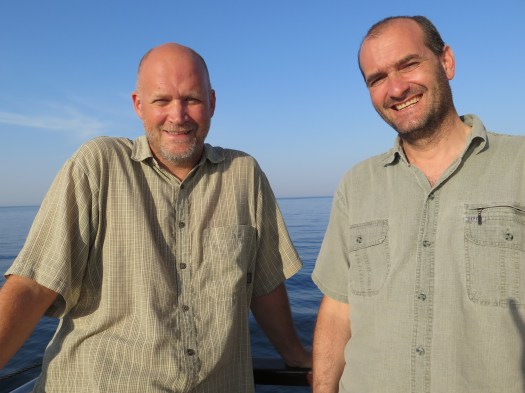
We are very lucky to have two great science trainers with us this year, Dr. Jean-Luc Solandt, from the Marine Conservation Society, and Dr. Matthias Hammer from Biosphere Expeditions. Both are highly experienced in Reef Check surveys (and surely you recognise their names from having read the Maldives reports anyway! :). Jean-Luc has been going to the Maldives for many, many years.
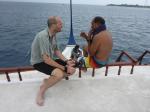
Drs. Jean-Luc Solandt (right) and Matthias Hammer
The learning over the first couple of days will feel quite fast-paced, but you are all in good hands as these two haven’t failed to get anyone through the tests yet! And of course you will also have swotted up on the Reef Check methodology, so you’ll be prepared….
Jean-Luc is already in Male’ meeting with local partners as we speak. He’s also set the survey route for us.
I’m just heading off to collect my newly-serviced BCD; please make sure any kit you’re bringing with you has been given any necessary once-overs, and don’t forget important paperwork such as your diving certification cards, PADI medical forms (where necessary), insurance details and Biosphere Expeditions checklist.
Happy packing and I hope you all travel safe. I’m looking forward to meeting you in Male’.
When I get to Male’ myself, I’ll get a local SIM card and let you know the number in case you need to get in touch with me. See you on Saturday!










































 Biosphere Expeditions: blogs from the frontline of wildlife conservation and the fight for a more sustainable planet