Award-winning, non-profit and ethical wildlife conservation volunteering. Advancing citizen science and conservation since 1999 – for nature, not profit.
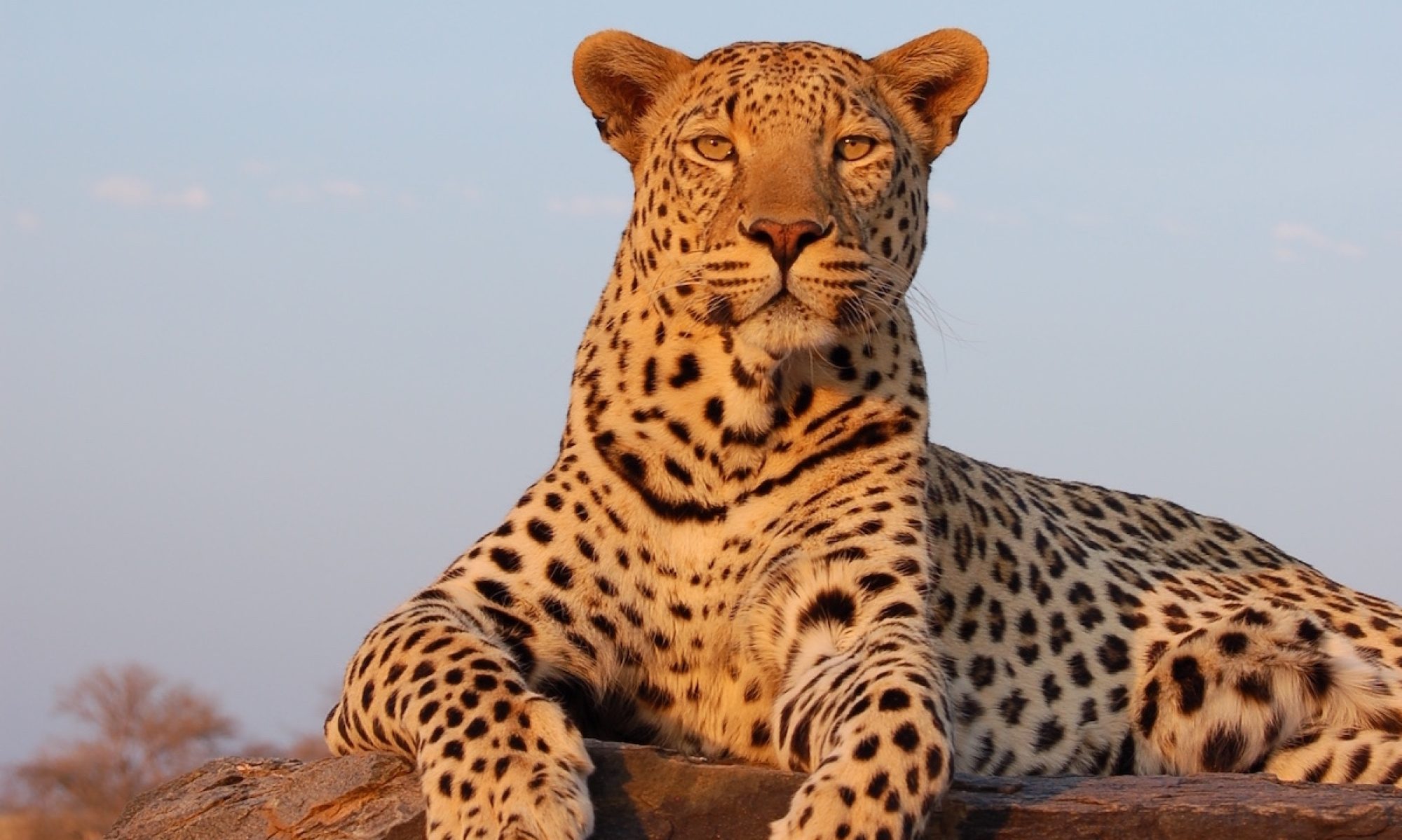
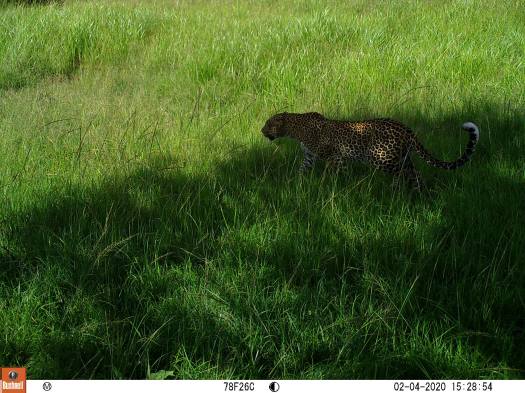
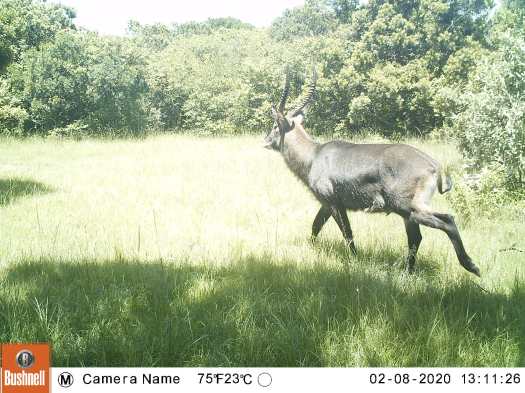
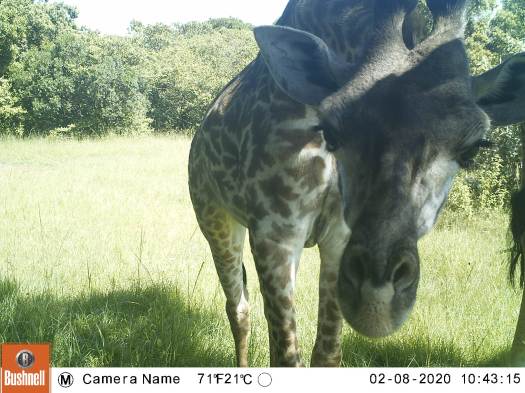
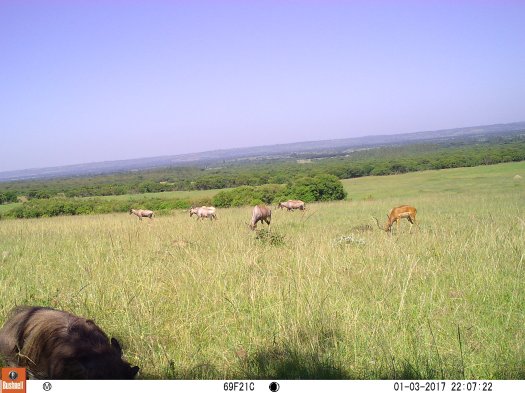
Team 1’s opportunistic camera trap survey was quite successful in terms of capturing more elusive and/or nocturnal species that haven’t been mapped during the day surveys. Amongst them is also a very good leopard picture captured during daylight.
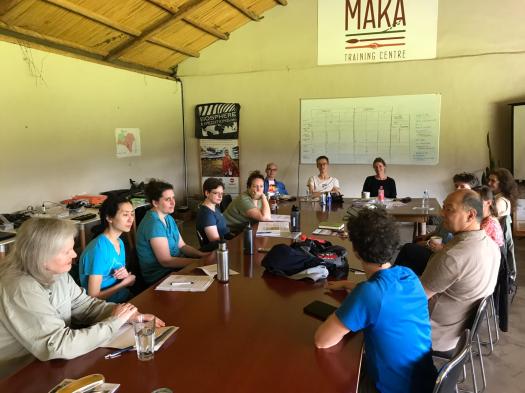
Team 2 arrived safely at base on Sunday afternoon. Heike, Christiane and Matthias (Germany), Kunsang and Brian (Canada), Ariane, Kathy and Jet (USA), Celine (France), Sipra (Finland), Fiona (UK) and Paul (Netherlands) completed the two-day training sessions. Today (Wednesday) a full day of morning, afternoon and night surveys is scheduled. During the driver training on Monday, two teams were lucky enough to spot six lions on the plane west from Memusi dam well hidden under a bush in high grass.
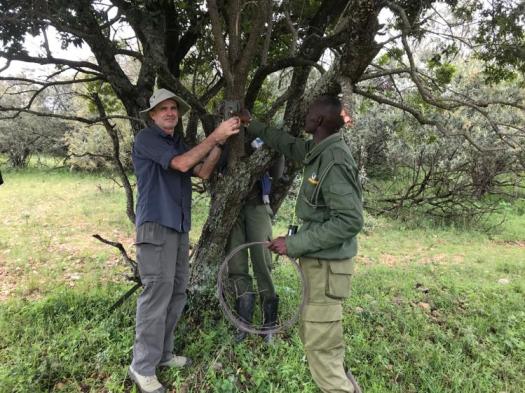
We redeployed seven camera traps on Tuesday for another two-week opportunistic survey. This time we set them up much more specifically for rarely seen or nocturnal species and smaller mammals such as colobus monkey, mangoose, civet, etc. Four cameras were placed around Nubian camp in the forested area at the bottom of Kileleoni hill. They will now survey for us a “leopard tree” located at the campsite itself, a waterfall, as well bunches of ripe fruit on a massive fig tree up a steep narrow valley east of Nubian camp. Two more cameras were placed at the salt lick beside Memusi dam to find out more about the variety of species using the place.
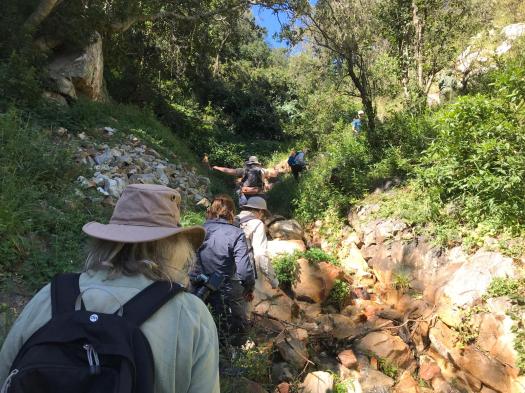
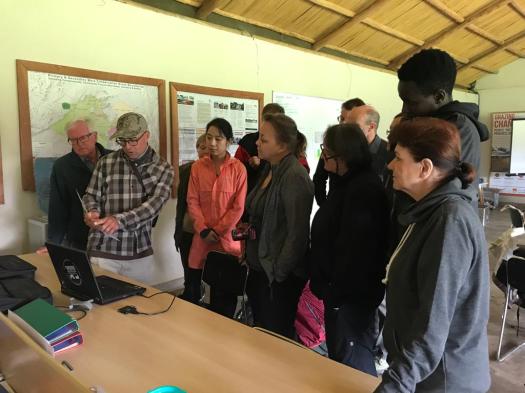
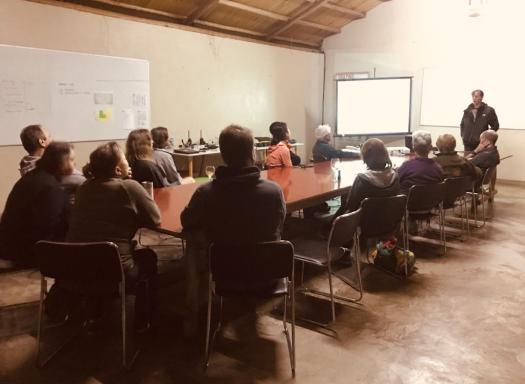
Saturday afternoon was all quiet at Mara Training Centre. Alan and I dropped team 1 at Narok at mid-day. It feels like this group has came to a sudden end, but actually that’s not true. I guess we’ve been immersed in our tasks, busy in the field from early morning until late afternoon. During the daily briefing sessions before dinner Alan kept us up to date with the data collected by producing a map to identify blank spots within the reserve we haven’t surveyed yet. Keen to fill the gaps with data, we explored new routes both from the vehicles or on foot and climbed Kileleoni hill from every possible side. The weather has been pleasant throughout lately, with the odd rain shower during the late afternoon or night.
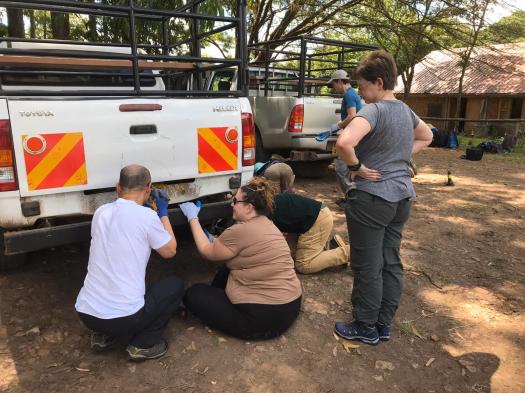
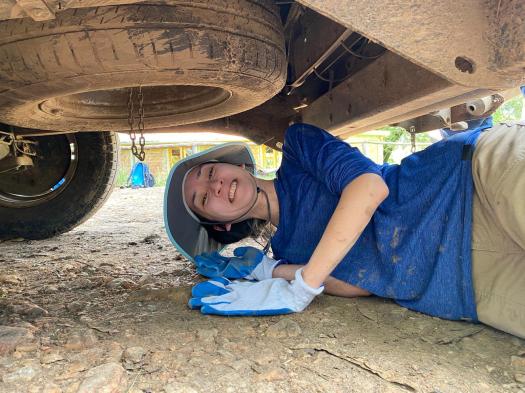
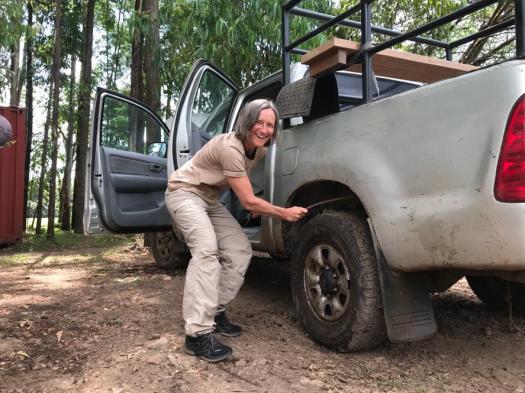
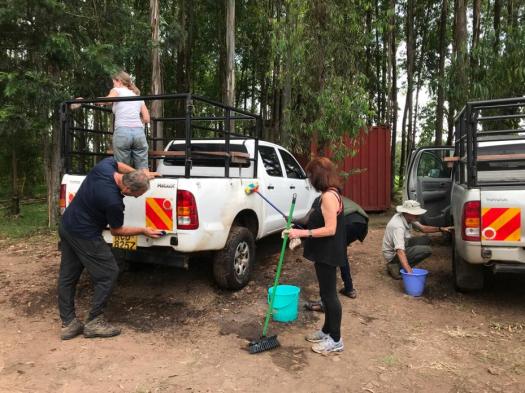
We collected eight hotspot camera traps on Thursday for first results before the vehicles got a proper wash and check. The team worked their way through solid layers of mud using machetes, brushes and brooms until the vehicles’ true colours came shining through. Well done, everyone!
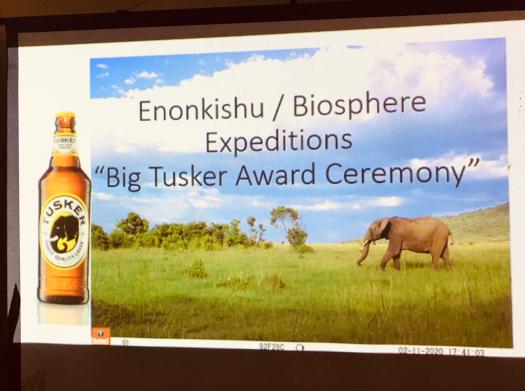
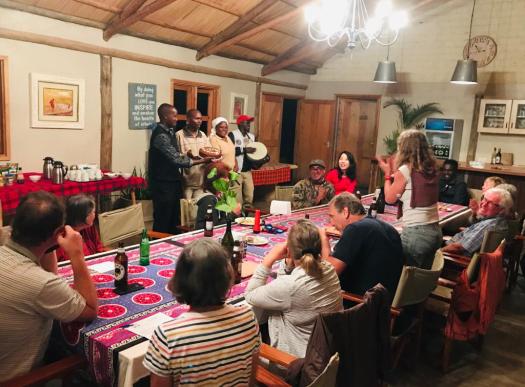
The ‘Big Tusker Reward Ceremony’ on our last evening was not only about summing up data and scientific results, but also a reflection of every single citizen scientist’s special skills and contribution to the tasks at hand, the field work and team-building activities. Alan and I totally agreed that everyone deserves their very own Big Tusker! It was great fun decorating ‘Wingman’, ‘Miss Congeniality’, ‘King & Queen of Kileleoni’, ‘Wreck it Ralph & fix it Felix’ or ‘Best dressed in Chebunyo’, only to mention a few. The day ended with a hilarous evening at the cowshed, a farewell chocolate cake presented by the kitchen staff, singing and dancing – Hakuna Matata, life goes on and everything will be alright!
Thank you, team 1, for coping with many last minute change of plans, bad weather an unexpected events. But also for your enthusiasm, support and hard work. I hope you’ve got as much out of our two weeks together as you have put in.
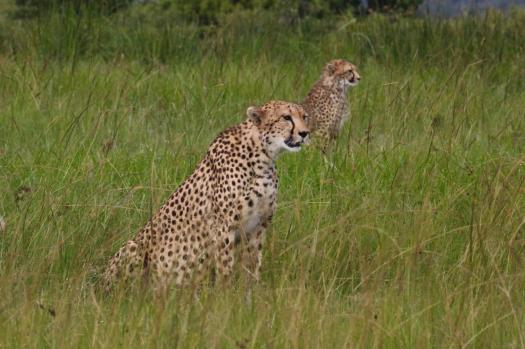
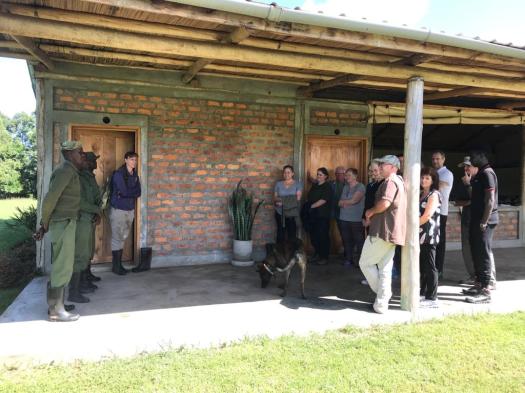
Wildlife almost always exists in a human context. We can do all the monitoring we want – without having the local community on board, it would mean nothing. This is why this expedition includes an ‘educational day’. This Sunday we hosted twelve students (age 14-17) from the local boarding school in Emarti, the village just outside Enonkishu, for a day. In a planning session on Saturday afternoon, the team created an activities schedule to make the day a learning experience for everyone. After an eye-opening tour around the school providing first-hand insight, the team went out for a game drive in all three cars. Most of the students had never seen the wildlife that lives on their doorstep – not even an impala or Thomson’s gazelle. Not only did they see plenty of those, but also the cheetah family, as well as two female lions with two cubs. For the expedition, this was also the first encounter with them.
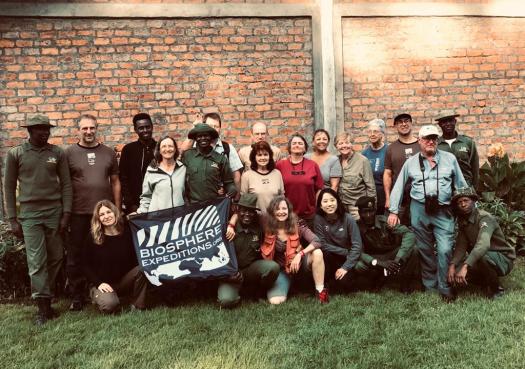
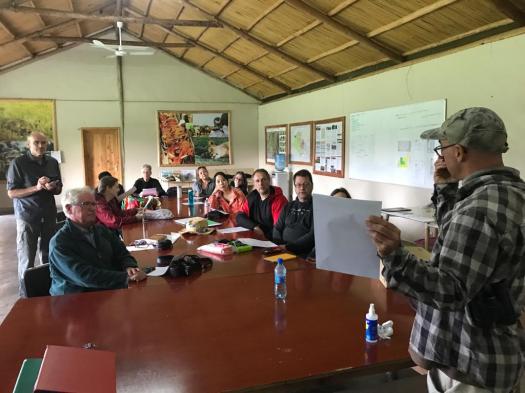
Lunch at the expedition base was then followed by a walk around our classroom by Monika and a short presentation created by Michael and Peter T. to introduce our international team of citizen scientists in order to create awareness that people from all over the world come to Enonkishu to support wildlife conservation efforts. Emmanuel, Albert and Musa from Enonkishu then talked about their roles/jobs/tasks in conservation before the students were briefed by Gabi and Nannette on a learning group activity they were asked to present to the group. Peter G. presented pictures of a remotely set up camera trap in the classroom before Brigitte and Sylvie handed over a present to each student. These were mostly notebooks and pens, brought in specifically for this event. Then it was time to go, but not before taking a group picture!
No rain for 36 hours! The sky was clear last night and the temperatures dropped significantly but it won’t take long until the warming sun will make us sweat again. The last few days have been adventurous, challenging and rewarding all the same – call it a true expedition!
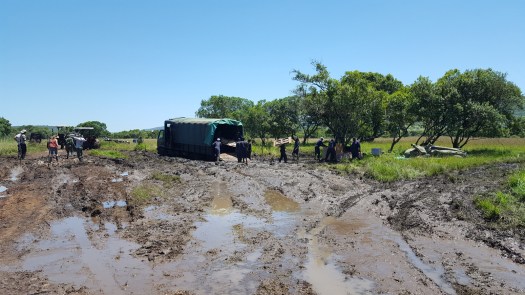
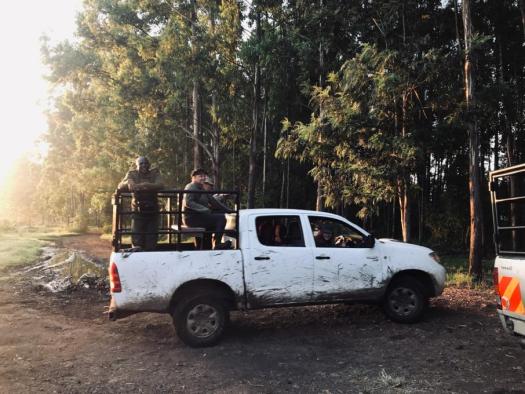
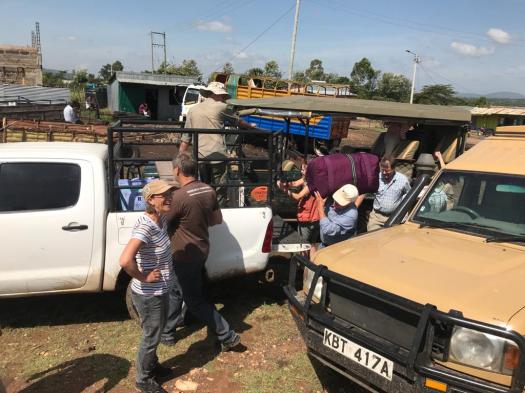
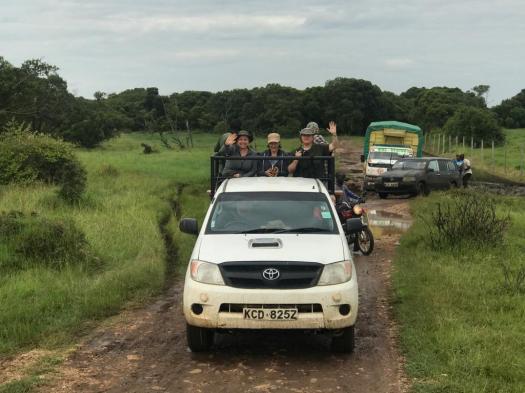
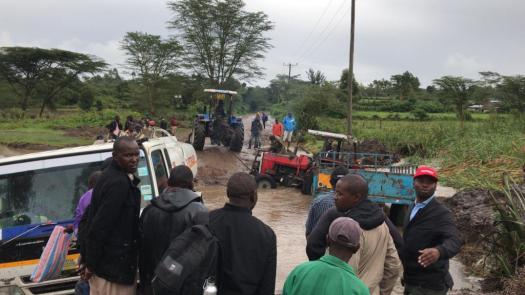
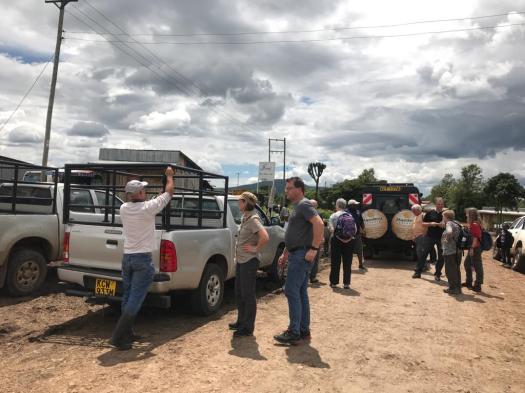
Three days ago, on our first research day, we got stuck twice during the morning activity. There are a few muddy spots along the main roads that have been messed up by heavy trucks, some of them stuck for a couple of days before being pulled out by even bigger tractors. The video below will say more than a thousand word about the state of the road. Still, we managed both situations with great team work and spirit!
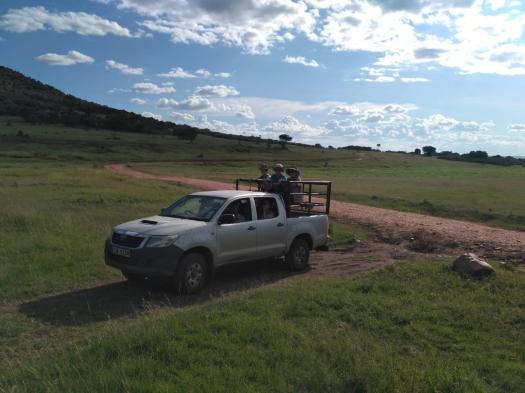
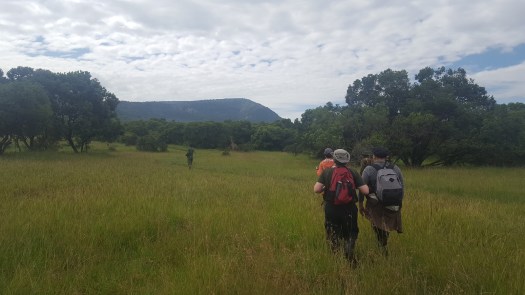
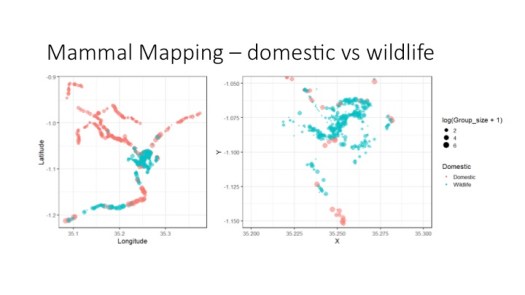
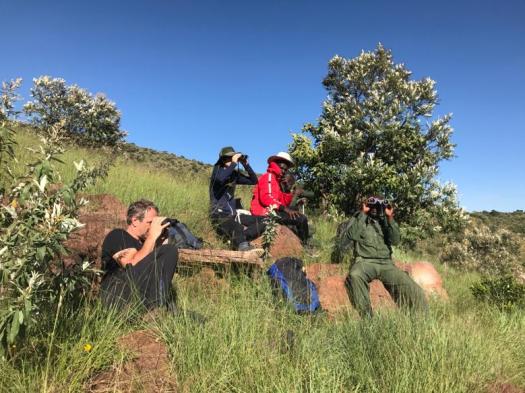
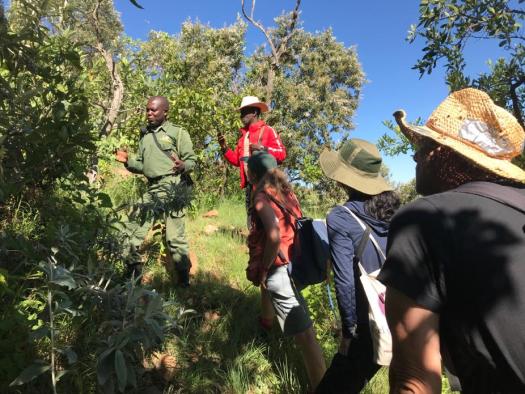
But none of this could hold us back from collecting data. The areas we could reach safely by car were surveyed on foot using the mammal mapping app. A few shifts surveying the waterhole have been completed and grid cameras have been serviced. We’ve also started exploring the areas just outside the Enonkishu boundaries by driving and mapping birds and mammals on the way. It’ll be interesting to see what’s going on in these areas in terms of human-wildlife conflict. About 500 recordings have already been logged in the mammal mapping app. Sightings include elephant, buffalo and cheetah apart from the “usual” gazelles, giraffe, baboon, topi, etc. Kisaru, the cheetah mum that is raising six cubs at Enonkishu, has been seen frequently. As have a herd of nine elephants including at least two juveniles.
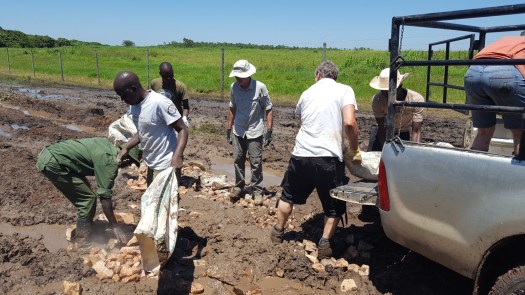
While a team of four including Alan went for a bird & mammal mapping drive into Mara North conservancy on the day off on Friday, Peter G., Michael, Ralf and Monika spent their day with road repairing together with rangers Albert & Dapash. Car loads of stones were collected and dropped into the most treacherous deep mud holes at a key spot all cars have to pass to get out on their activity. Great job, guys and a big thank you from all of us!
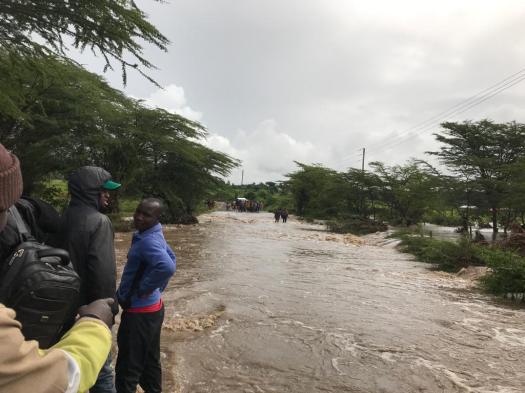
Team 1 has arrived safely at the Mara Training Centre at Enonkishu Conservancy, our expedition base for the next month. Getting to Nairobi and back as an adventure in itself as the rain had made many roads impassable, but we managed!
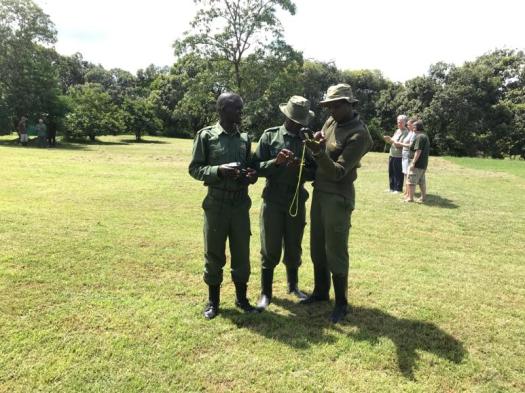
Our trailblazer team 1 this year comprises Gabi & Michael and Ralf (Germany), Brigitte, Silvie and Peter T. (Canada), Monika (Austria), Nanette (Australia), Jaein (USA), Margret, Christina and Peter G. (UK) as well as Emmanuel, a local placement from Kenya. The research team is supplemented by six Enonkishu rangers: Dapash, Albert and Mike as well as Meshek, Naman and Salamí.
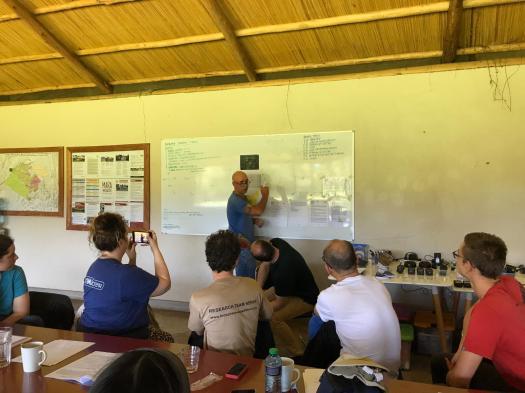
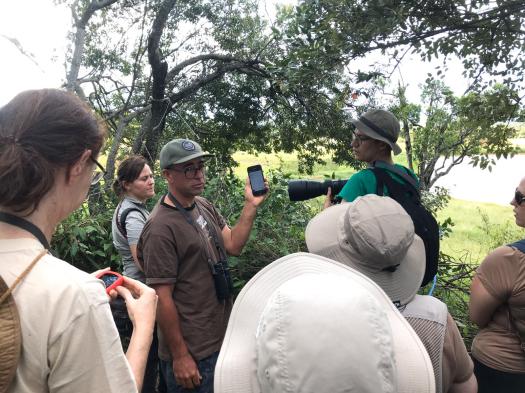
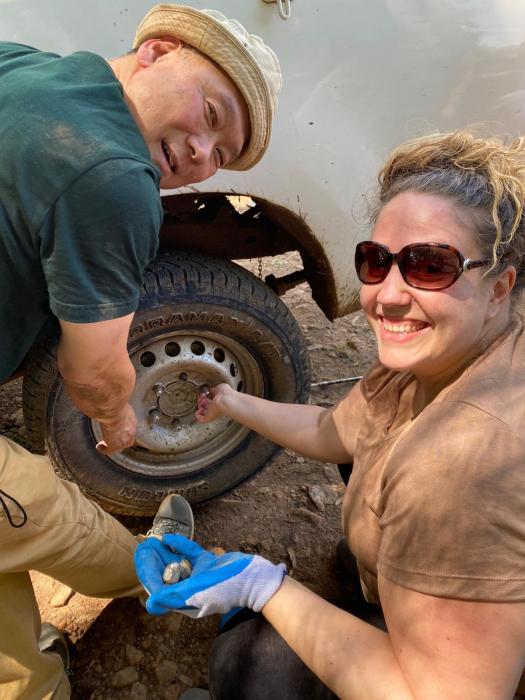
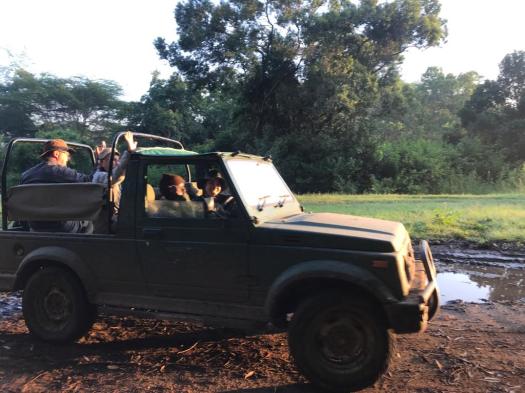
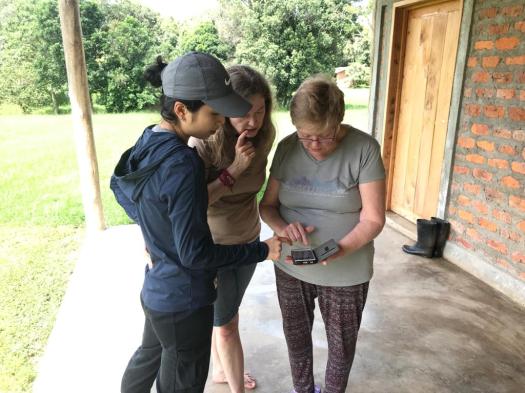
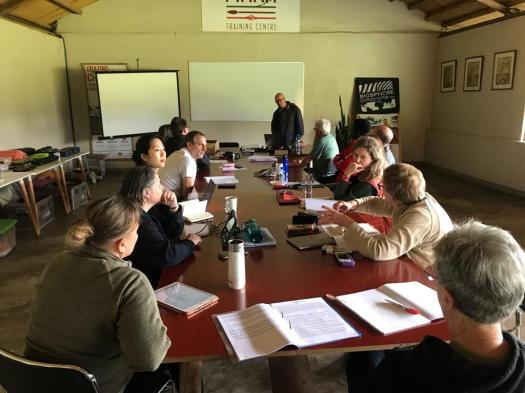
We have now gone the usual couple of training days starting with a risk assessment on Sunday, followed by an introduction presentation about Enonkishu Conservancy held by Rebekah Karimi, the Conservancy Manager. It was sunny throughout Monday morning when everyone received training on data collection and smartphone apps, datasheets and the equipment, such as compass, rangefinders and GPS. After lunch we spent some time with pimping the three 4×4 rental cars by adding special recovery and safety equipment such as solid tow ropes, jumper cables, tyre repair kits and machetes, only to mention a few. We did some practice on changing a tyre before the drivers went through a theoretical 4×4 training session. For some practical driver training two cars left base a short while after. The game & practicing data collection drive of the non-drivers was literally rained off while the drivers all received some proper practice in mud driving. 😉
We prepared and set up seven camera traps first thing in the morning on Tuesday. Equipped with cameras, protective metal cases, wire, datasheets, GPS and compass, three teams went out together with the rangers to place them in the field. Besides an ongoing camera trap grid survey (18 cameras placed in fixed spots throughout the conservancy), these cameras are placed in places of high wildlife activity for an opportunistic survey during the expedition. Our hopes are to obtain pictures of more elusive and/or nocturnal species or maybe even of the three lions that are roaming Enonkishu right now.
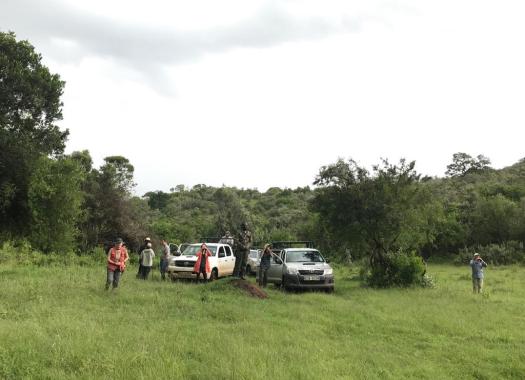
We finished the training sessions with exploring the hide at the Memusi dam waterhole on Tuesday afternoon. All three cars drove in convoy memorising the track that leads up to the dam. From there we continued onwards on transect 2 through dense bushland, mapping mammals on the way and coming came across buffalo, impala and giraffe. We briefly explored the area around Nubian camp, a deserted camp site along the way, within preferred buffalo and elephant terrain. Alan found a leopard track and is quite keen to send an explorer team in due course for further investigation and general bio-mapping . We turned around and went back when the rain came, quickly turning the bush track into a stream.
Today (Wednesday) we have scheduled this year’s first proper vehicle drive transect activity, a walking mammal mapping activity and a waterhole observation shift. Writing this, three teams are out in the field completing the morning tasks in good conditions. As it is, Alan, Rebekah and I will be scheduling activities according to the weather on a daily basis. Keep your fingers crossed that the overall weather situation will slowly, but steadily convert into stable and dry conditions – just like they’re supposed to be this time of the year! 🙂
During 2019, an el Niño year, the leatherback turtle nesting season is expected to have higher numbers of turtles nesting on the Caribbean coast of Costa Rica. “The warmer sea and weather will make this a peak nesting season”, says Nicki Wheeler, Volunteer Coordinator at Latin American Sea Turtles (LAST). And more turtles means that more poachers will also be searching for precious eggs on the beaches. The soft-shelled eggs fetch a high price on the black market, and conservationists who protect the Vulnerable leatherback turtle population do so, amongst other things, by patrolling nesting beaches to protect nesting turtles and their eggs.
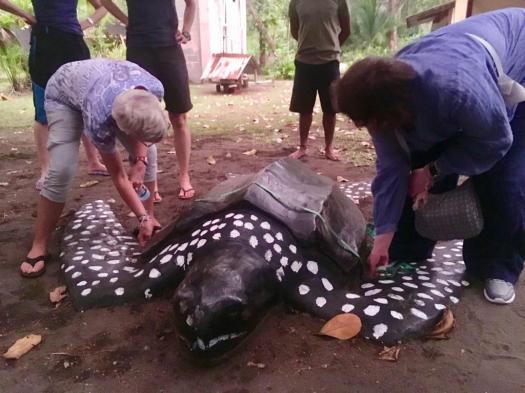
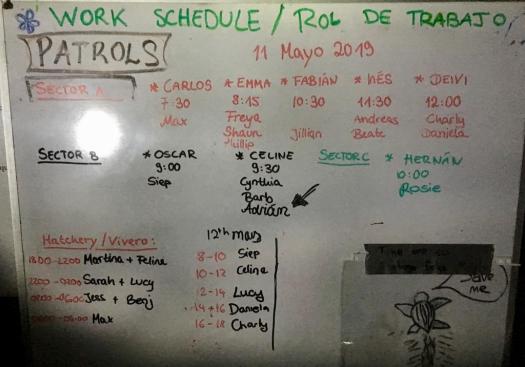
Turtles nest during the cover of darkness and by the end of each night, all the eggs are gone from the beaches, either taken by poachers or saved by citizen scientists and re-buried in the safe sand of a guarded hatchery.
“Each egg is sold for one US dollar on the black market, and with each nest holding 60-120 eggs, that is a lot of money” explains Fabian Carrasco from Mexico, the onsite scientist with LAST at their Pacuare beach site on the Caribbean coast of Costa Rica.
Biosphere Expeditions works together with LAST, and for the fourth year in a row, an international team of Biosphere Expeditions citizen scientists have been actively patrolling Pacuare beach and guarding the hatchery. The hatchery held over 10,000 eggs, which amounts to over 10,000 US dollars on the black market. Trade on international markets could even bring hundreds of dollars per egg in Asia. Given the amount of money at stake, every egg on Pacuare beach would be poached, were it not for the efforts of LAST and Biosphere Expeditions.
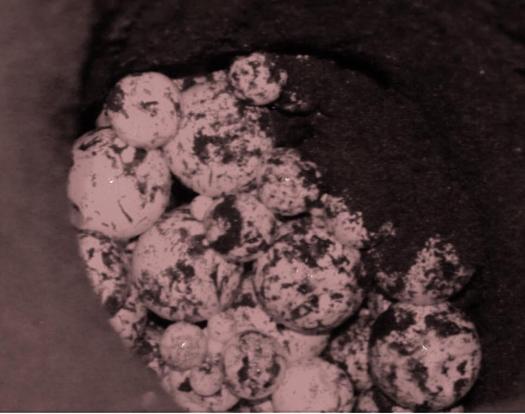
Turtle eggs are valued as a (fake) aphrodisiac and as a traditional cultural food in many countries in Latin America. Leatherback eggs are more popular than other sea turtle eggs, because they are the largest of all: close to the size of a pool ball. However, the eggs are high in cholesterol and can harm the health of frequent consumers.
“In a new and positive development, and due to our efforts and reports, the coast guard has started to visit the beach more often,” says Carrasco. “For example, at one point during the 2019 nesting season, ten coast guard members came and arrested two poachers. At another time they arrested one poacher and retrieved four bags of eggs from him. We re-buried the eggs in the hatchery, just in case they are able to hatch.” The coast guard also started using new thermal imaging to find poachers and turtles. “All this sends a clear message to other poachers that they are no longer able to poach at will and face the combined efforts of the law, LAST and Biosphere Expeditions”, concludes Carrasco, “it is one of the many positive outcomes from our conservation work here.”
Lucy Marcus, the project’s expedition leader adds: “This is great news as our recent annual reports have made it clear that increased law enforcement on the beach would be a very positive step forward in turtle conservation. It seems our voice is being heard!”
Marcus continues: “All in all our expedition saved 25 clutches of leatherback turtle eggs, totaling close to 2,500 eggs. We patrolled the beachers for a total of 84 hours and were on shifts in the hatcher for 42 hours. During our time here, only nine nests were poached, meaning that our success rate was 65%. Without the presence of our local partner LAST and our active conservation action of beach patrols and hatchery duty, most likely 100% of the nests would be poached or otherwise lost. I think these figures speak for themselves in terms of the important role that citizen science plays in protecting the wildlife of our beautiful, beleagured planet.”
The citizen scientists searching for turtles on the beaches are richly rewarded as well: “The chance to see the leatherback turtles and to get up close and watch them lay their eggs was a once in a lifetime experience I will always treasure”, said Cynthia Singer, a Biosphere Expeditions citizen scientist from the USA.
Alan and I are back on our way to Nairobi for some final shopping and to collect another 4×4 car and group 1 tomorrow.
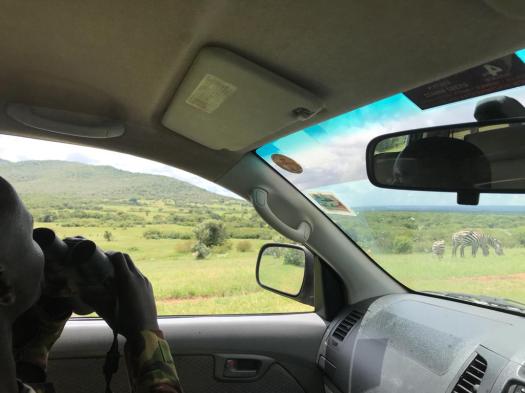
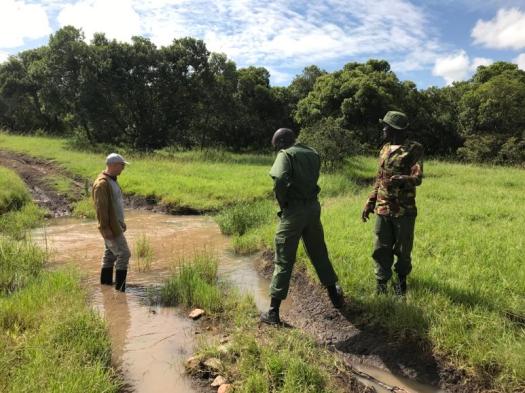
Yesterday, amongst many other things, we went on a reccee drive with with Albert & Dapash, two of the rangers we will work with over the next month, to assess the track conditions of two transects. Despite the rain, cold and difficult terrain, the place is still beautiful, of course.
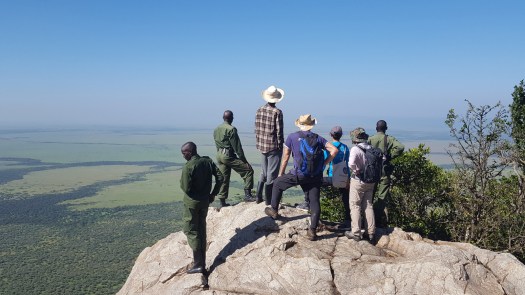
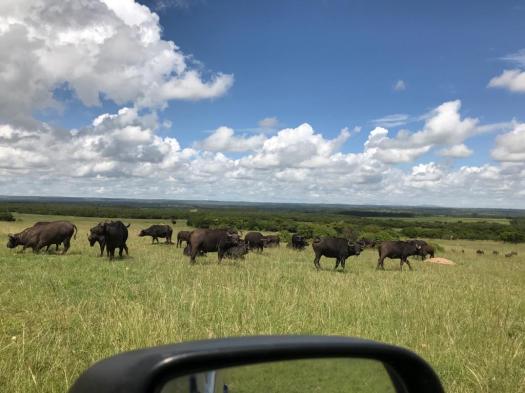
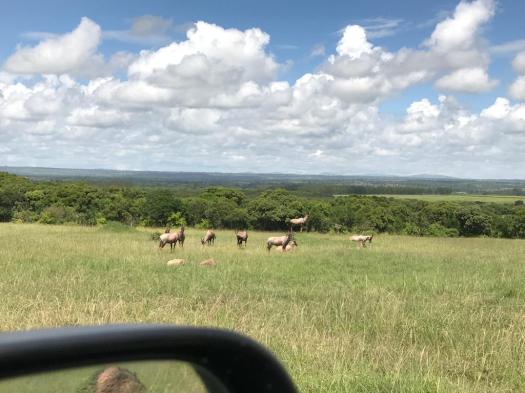
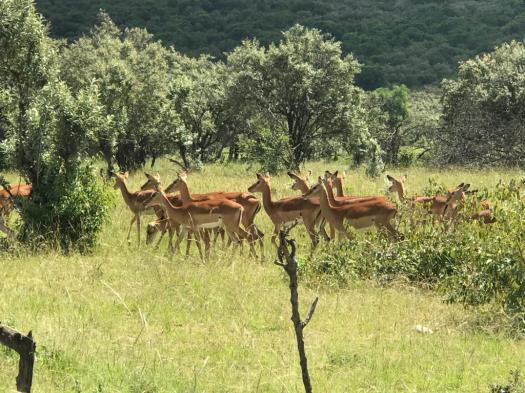
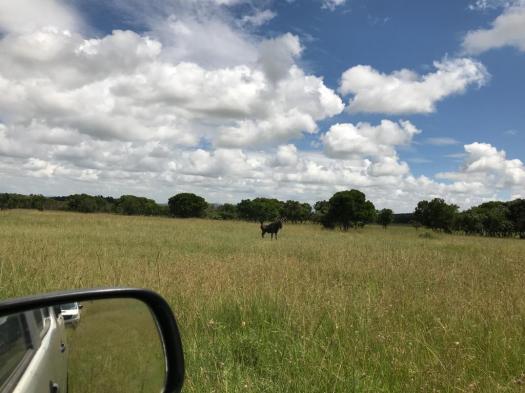
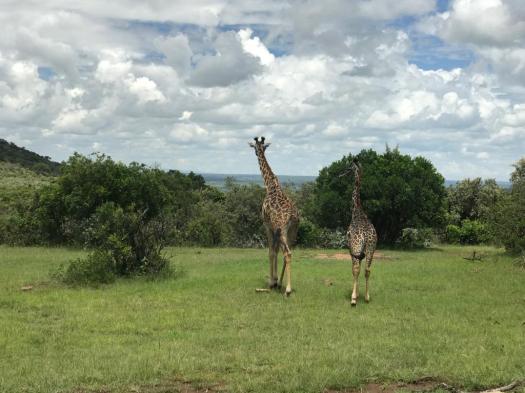
So please enjoy some pictures I took yesterday this morning during the drive and get excited about the project you are going to join as well as the wildlife you will encounter and record. We came across the cheetah family, giraffe, buffalo, Thomson gazelle & impala, wildebeest, topi and warthog, only to mention a few.
Biosphere Expeditions and the Dubai Desert Conservation Reserve completed their 9th consecutive annual survey this January. Key results include an improved understanding of oryx and gazelle distribution, evidence of healthy rodent populations throughout the reserve and sightings of rare species including Arabian hare, lappet-faced vulture and Gordon’s wildcat.
The international team of 14 citizen scientists, two Biosphere Expeditions (BE) leaders and three Dubai Desert Conservation Reserve (DDCR) staff surveyed the Arabian oryx, Arabian gazelle and Sand gazelle populations across the entire 227 sqkm reserve. This very significant effort provided population estimates and distribution predictions for these three species, which will help improve management, especially in light of upcoming translocations.
Greg Simkins, DDCR’s Conservation Manager says, “Every year Biosphere Expeditions’ citizen scientists help us get a clear picture of oryx and gazelle distributions across the reserve. Doing this ourselves with such a small team is much more challenging, so this cooperation allows us to make a rapid and accurate assessment and provides data, which we can use to make important management decisions.”
As the DDCR is a fenced reserve, it is easy to see a difference between it and the unfenced side. Where camels roam outside the reserve, the vegetation is scarce and few animals are seen, while inside it, the ecosystem is thriving with abundant animals and vegetation. However, the DDCR in some ways is also a victim of its own success and “with an oryx population well above the carrying capacity of the reserve, we really need to begin a relocation project to take some pressure off the ecosystem,” says Moayyed Sher Shah, Conservation Officer at the DDCR. “We’ve already made plans with a few other reserves to begin transferring animals, in March or April 2020, and the data collected by BE citizen scientists will give us valuable information about which parts of the reserve require more immediate action.”
Apart from the ungulate surveys, another species of note, recorded multiple times in the reserve, is the lappet-faced vulture, classified as Endangered on the IUCN Red List. “The fact that such a rare bird inhabits the DDCR is a testament to the importance of protected areas such as this,” says Sher Shah. Currently, the area in and around the DDCR is an important location within the UAE where the Lappet-faced vulture is found.
Key points of the Biosphere Expeditions 2020 Arabia expedition within the DDCR:
1. The DDCR has an Arabian oryx population of approximately 850 individuals, of which our survey methods were able to account for about 90%. More importantly, the data collected will allow their estimated distribution to be mapped within the reserve, providing the DDCR with data necessary for herd management.
2. BE citizen scientists were also involved in small rodent live captures, in which Cheeseman’s and Baluchistan gerbils were caught. Fecal samples from captured individuals will provide data on the genetics and food plants for both species.
3. Camera traps were set throughout the reserve, with over 6,000 images captured at 14 points during the week. The most significant of these was of a Gordon’s wildcat, a rare subspecies of wildcat threatened by hybridisation with domestic and feral cats.
4. Twenty-three new fox dens were identified, including one potentially used by a Rüppell’s fox; a species last recorded in DDCR when an individual was trapped during a BE survey, five years previously.
5. In 2021, Biosphere Expeditions will continue survey efforts to determine the distribution of oryx and gazelle following the translocation of ungulates in March/April 2020.
6. Additionally, Biosphere Expeditions will continue monitoring of other important species on the reserve including Gordon’s wildcat, Lappet-faced vulture, Hoopoe lark, MacQueen’s bustard, and various rodent species.
7. Next year’s expedition will take place in January and February 2021 and will continue to work in close collaboration with the Dubai Desert Conservation Reserve.
8. International citizen science volunteers from all over the world will, through their collective effort and funding, make it possible. Anyone can take part and details about the expedition and how to join are at https://www.biosphere-expeditions.org/volunteeringinarabia.
Finally, some pictures and videos from the 2020 expedition:
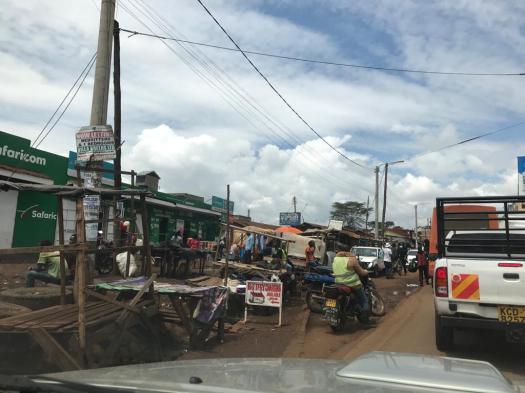
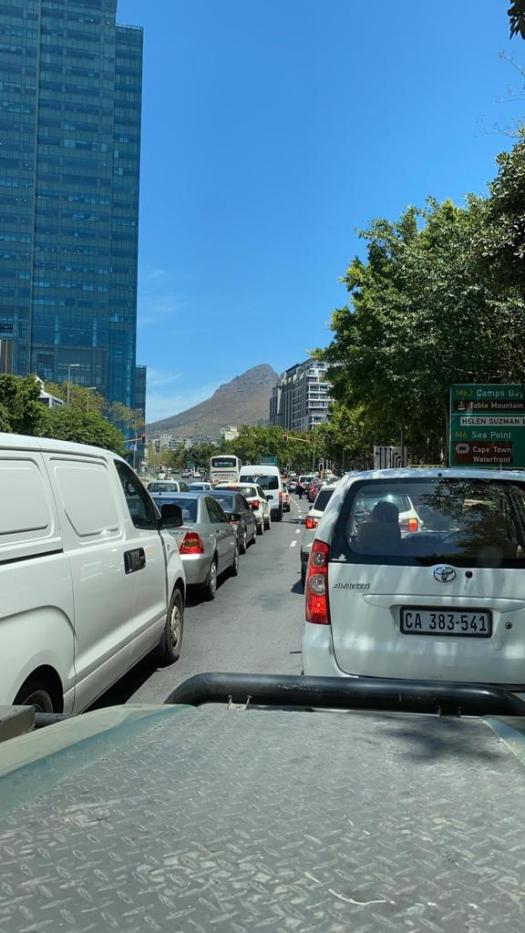
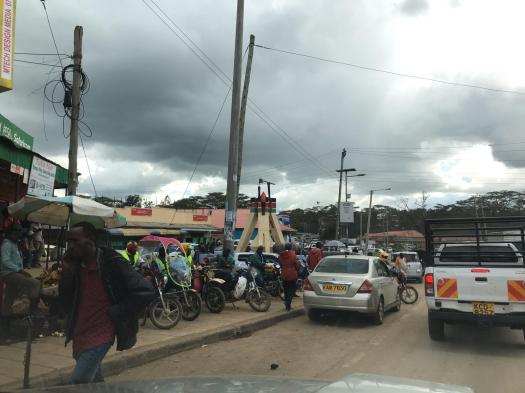
Alan & I arrived safely at Enonkishu on Tuesday evening. It’s a six hour drive although the distance is no more than 170 km. Traffic is heavy in and around Nairobi and further on trucks of all kind are slowing the traffic down to walking pace in some places down the escarpment road into the Rift Valley. The views are fantastic, though!
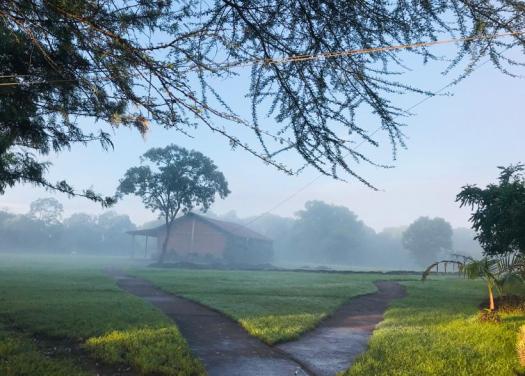
The odd rain shower hit us on the way and became constant heavy rain when we hit the dirt road in Mulot leading to Enonkishu. A couple of months of continuous, unseasonal rainfall has washed out the tracks. Streams have become rivers and potholes are now enormous puddles.
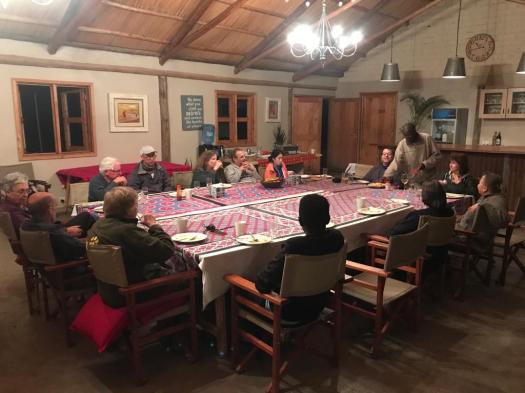
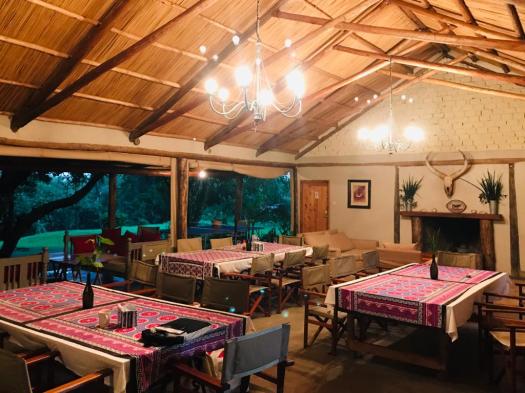
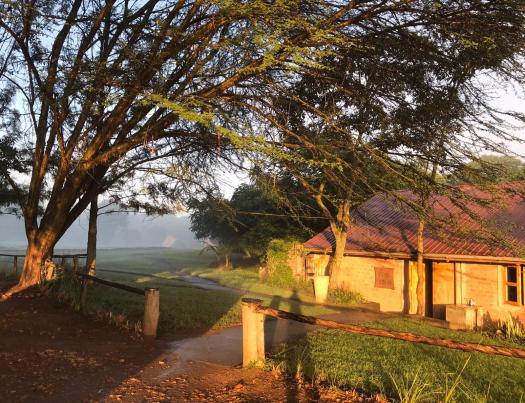
We were warmly welcomed by Albanus, our camp manager, as well as Bernard and Joseph, the kitchen staff. We enjoyed a lovely dinner at the Cow Shed, our dining area, where a fire was lit in the fireplace. What else can you ask for after a long and challenging day?
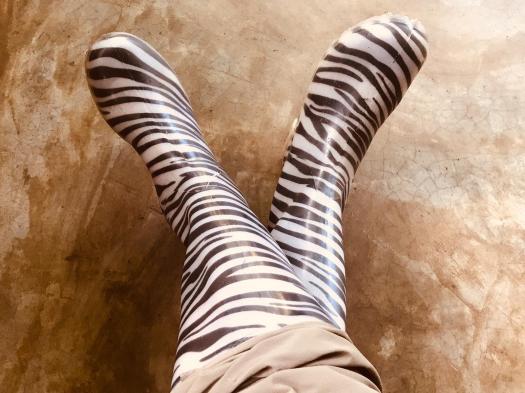
Please come prepared for the local – very unusual – weather conditions. Make sure to bring proper rain gear and rubber boots if possible. I got myself a fancy pair of zebra boots for only a few hundred Kenyan Shilling in Nairobi.
But no worries, less fashionable wellies will also do. 😉 The temperatures are pleasant in the 20s when the sun comes out, but most probably you want to wear a fleece or warmer layer in the early mornings and evenings. According to the forecast for the next seven days or so, the weather won’t change significantly although it was dry throughout the day yesterday.
Rebekah, Alan & I have spent the whole of Tuesday with adapting the activities plan, sorting out equipment, setting up computers and the classroom. None of the driving transects are accessible right now. Some of last year’s expeditioners will remember transect 3 / block 7 cutting through between two main roads of the triangle. The whole area is a swamp right now that we will be monitoring on foot. Overall we will cut down the driving to a minimum on safe roads only and will concentrate on mammal mapping on foot. Please be aware that we will do a lot of walking until the conditions allow otherwise. However, our plan is flexible and will be adapted on a day-to-day basis according to the weather. But please don’t forget to bring your own pair of binoculars. They are an essential piece of equipment you want to use on each activity whether we are recording wildlife, mapping birds or doing waterhole observations.
You will be pleased to hear that a cheetah with cubs is currently roaming on Enonkishu. If we are lucky, we might be able to spot them or at least get some good camera trap footage. We are planning to set up cameras in places where a lot of activities have been noticed by the rangers.
That’s it for now. Alan and I have one more day for setting things up before hitting the road back to Nairobi on Saturday early morning. We are looking forward to meeting team 1 on Sunday morning!
My name is Malika and I will be leading this year‘s African biodiversity expedition to the Maasai Mara, Kenya. I look forward to continuing the project we set up this time last year together with our partners at Enonkishu Conservancy.
Malika Fettak
Dr. Alan Lee, the expedition scientist and I arrived in Nairobi yesterday evening (Alan from South Africa and I from Europe). It was far beyond midnight when we finally went to sleep at the Margarita House. We’re now on our way into town to pick up two of our 4×4 expedition vehicles. Nairobi is busy, as always, and our driver is taking us on an interesting journey along the back roads as I type this.
Alan Lee
From Rebekah Karimi, Enonkishu’s Conservation Manager, we heard that the local conditions are different this year due to a lot of rainfall over the last couple of months, which is continuing. As in many other places around the world where we have expeditions, the weather, the rains and many other aspects of our planet’s climate are changing and no amount of fake news or misinformation by climate change deniers can alter this reality on the ground. Many roads and tracks on site have apparently turned into quagmires and we will most likely need to adapt our programme. But as expeditioners we know that nothing is as constant as the change of plan, so we will take this in our stride, I am sure.
We’ll arrive at our destination in Nairobi in a minute and at Enonkishu later this afternoon. I will be in touch again from there with more details from the ground.
I hope you are enjoying your preparations, have studied the expedition report and your field manual, and are getting excited and fired up. Safe travels. Alan and I look forward to seeing you soon.














 Biosphere Expeditions: blogs from the frontline of wildlife conservation and the fight for a more sustainable planet