Costa Rica: First clutch saved

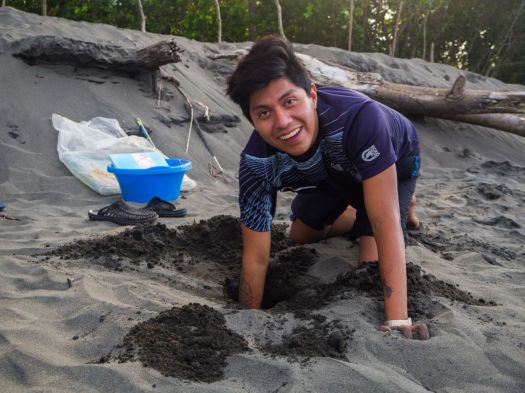
Covered in black sand on knees arms and faces, the Costa Rican Biosphere Expeditions team practices digging perfect replicas of sea turtle nests on the beach, to prepare for our shifts guarding the fenced hatchery. We all lie face down on the sand and dig a vertical tube with one arm fully extended, straight down, as far as we can reach. Then we excavate a rounded cavity to one side of the base of the tube, like a boot. The holes we create replicate the holes made by female leatherback turtles, who use their 75 cm hind flippers like a hand, to deftly scoop sand from the bottom of the tube.

Fabian, the lead scientist, let us feel the hole he dug in the sand to test what the perfect example of an egg cavity should be like. Fabian reaches into everyone’s hole and gives people tips for perfecting the shape. “Make your base a little longer and a little wider wider” Fabian suggests to me after testing my first try. Once we perfect our holes and pass Fabian’s checkout test, we sprinkle sand back into the hole, like a mother turtle gently covering the eggs. Tapping the top of the hole down with a fist, we finally graduate turtle nest building class and we wade into the waves to splash black sand off sandy limbs. Barb, Phil and Cynthia laugh as they get knocked around by the strong surf and emerge beaming. But we are still not completely ready to be hatchery guardians.

Fabian points out that the fence around the hatchery keeps out predators such as raccoons or dogs. Each nest is covered by a white basket-like cylinder over the top to stop smaller predators and pests, such as crabs or insect larvae, from attacking the eggs. The baskets covering each nest also corral the emerging baby turtles, so they can’t flipper to the ocean and the citizen scientists can record how many hatchlings emerge from each nest as well as measure 15 of them from each. During their hatchery shift, every hour, guardians peak into each basket to see if a nest might be hatching. If it is, they call the other citizen scientists on the radio so people can come help, because there can be over 80 tiny turtles clambering to escape the confines of the basket. Some lucky hatchery guardians will get to be the proud adoptive parents of a new clutch of eggs, brought to them by other citizen scientists patrolling the beaches looking for turtles laying eggs. They can then employ their newfound skills as a nest cavity excavator.

Carved into the vegetation bordering the beach, the fenced-in hatchery now protects over 7,000 sea turtle eggs. As the nesting season continues, the hatchery will protect over 10,000 eggs, and statistically each year only ONE in 10,0000 baby turtles will survive to reproduce. Each clutch of 80-100 eggs is removed from a natural sea turtle nest and re-burried to incubate in the sand within the guarded hatchery. Citizen scientists will keep watch in the hatchery 24 hours a day for the 9 months of the turtle nesting season. Each nest takes between 55-100 days to hatch depending on temperature. Warmer weather helps the eggs develop more quickly, and during cloudy cool weather, incubation is slower. We hope that hatchlings will emerge while we are here.

Later that day, after a delicious traditional Costa Rican dinner prepared by chef Johanna, we check the schedule written on a whiteboard to see who is on hatchery duty and who on beach patrol that night. Beach patrol shifts last from 2-4 hours depending on if it’s light out or not. Daytime shifts are 2 hours , night shifts are 4 hours. Our citizen scientists cover the 4 hour night shifts this evening, starting at 21:00 and running through the dawn after 06:00. Some people get ready for their upcoming hatchery duty donning long pants and red headlights and others take a nap to wake up in the middle of the night to start their shift.

The next morning, during breakfast, we all chat about how everyone’s evening went. We learned that during the hatchery shift from midnight to 03:00 Phil, Barb and Cynthia were lucky enough to receive a bag filled with pool-ball sized turtle eggs, from citizen scientists who just carried the 6 kg bag for over two hours. Phil started work quickly and dug the long vertical shaft with the boot-shaped hollow for the eggs to rest within. Each of the three guardians took turns placing eggs into the hole, counting each out loud: “….88, 89, 90!” They carefully placed sand over the eggs and marked the new nest with sticks. They tagged the new nest with a number and letter designating its place in the grid of the hatchery. Everyone was  excited that our team helped protect this clutch of 90 eggs from poachers, stopping this particular endangered treasure from being sold on the black-market as snack.

In the afternoon, our crew cut and sewed baskets to protect the nests. Once the handicraft was complete, we ventured to the hatchery and fixed the edges of the new baskets around the tops of the nests buried the previous nights. The first clutch of eggs of our expedition is now safely tucked into its new resting spot in the hatchery. Some day in the next few months, “our” turtles will venture out into the ocean. Perhaps one of ours will be the one in 10,000 that will return to this beach to lay eggs again.

Costa Rica: Straight into beach patrols

The Costa Rican adventure began with the minibus ride from the capital of Jan San José through a thrilling tropical rain storm. As participant Jillian said “when I looked out the windows, I thought it was just like a rainy day at home in the UK, just with tropical vegetation, but when I stepped out into the downpour it was totally different, so warm, such an amazing feeling”.

Costa Rican wildlife is abundant and from the minibus our citizen scientists spotted troops of monkeys and a sloth. The animal spotting continued on the boat ride to the research station, where the tunnel-like trees, arching over the canals hosted birds, more sloths and monkeys. Even freshwater turtles rested on logs in the sun by the sides of the canal.

Soon after arrival training began, so everyone could be prepared for the upcoming starlight beach partrol to search for nesting leatherback turtles. Everyone jumped right in, amongst other things to practice measuring turtle shell length and width on the model turtle.

Later that evening, small groups of our citizen scientists followed researched asisstants and the expedition scientist down the beaches with no lights on. Everyone’s eyes adjusted to the ambient starlight and the glow of bioluminescence from the crashing surf nearby. We scanned the waves lapping the sand for dark mounds that could be turtles preparing to flipper up the sand to the high tide line to dig a nest. “Is that one? Look at how rounded that black shape looks!” Said Phil as he pointed to the white froth of the waves hitting the sand.

“What did you think?” Celine, the research assistant asked as we approached it and she shone a red headlamp on it. We had been fooled by a “tree-turtle”! It was the rounded root-ball of a palm tree with the trunk angling up the beach, which we couldn’t see until we had more light. We got used to being excited by many “log-turtles” rolling in the waves throughout the 2.5 hour patrol, but Celine helped us learn how to refine our search pattern. Most exciting was finding a set of tracks from a turtle that may have nested the previous day. The tracks were so wide and deep it looked like a tractor had driven out of the water towards the forest. The massive leatherbacks, can be close to 2.5 metres long, and more than one person remarked at how unbelievably huge the turtle model was at the research station. So we couldn’t miss one on the beach if it was there, but none of the three search parties were lucky to find a turtle this evening. But we learnt to look for black mounds floating in the surf, to feel the difference in the sand as it got softer underfoot if we crossed a track, and how you feel drunk if you walk through one of the massive holes they dig to burry their eggs in because you stumble into and then out of a deep pit in the sand.

The sand sparkled greenish blue with each step as we walked closer to the water on the way back to the station. Fireflies glowed so brightly they almost ruined our night vision. In the cloudy night sky, lightning flashed in the distance, illuminating the forest edging its way up to the sand. The adventure has only just begun and we are enjoying every step of the way.

Costa Rica: Over 60 turtle nests already in hatchery

I have arrived in San Jose, Costa Rica and enjoyed seeing lush parks and flocks of parrots while walking around the city getting everything ready for your arrival. I had a good meeting with Nicki Wheeler of our partner organisation Latin American Sea Turtles (LAST). She will be meeting you at the hotel on Monday morning and sending you on the minibus to meet scientist Fabian and I for the 40-minute boat ride to the Paquare beach research station. When you arrive there, lunch will be ready and we’ll get started learning everything we need to know about the first evening beach patrol. One part of the research station we will all be excited to visit is the hatchery, where over 60 turtle nests are incubating already, some ready to hatch during our expedition!

The hatchery

Nicki let me know that this year is an El Niño year, which means the ocean is warmer and it’s looking like a peak year for turtle nesting. LAST started work on Paquare in February, relocating turtle nests to the safe hatchery where the eggs take close to 60 days to develop. Our efforts will be well needed as there are many poachers on the beaches this year as well, and we hope to encounter the nesting females and relocate eggs before they are removed by people wanting to sell turtle eggs as food.

Rising global temperatures have made the sand on beaches warmer, which makes turtle eggs develop as mostly females. In order to keep the sand in the hatchery cooler, to ensure even numbers of male and female turtles, LAST has covered the hatchery with shading mesh to cool the sand.

March through July is the prime nesting season for leatherbacks on the east coast of Costa Rica, where we work. The height of the season is right now, so there is a good chance some of you will encounter nesting female turtles during night patrols. Other species such as green and hawksbill turtles also nest on Paquare beach during July to October. Rarer are the Olive Ridley turtles who nest in the region June thought November.

Leatherback turtle
Green turtle
Hawksbill turtle
Olive Ridley turtle

It’s amazing to think of so many species of turtles sharing the same beach, it’s quite lucky that they nest at different times of the year so they are not digging up each other’s nests! The baby turtles will continue to hatch throughout the year, but November through February, the beaches are quiet, and only the site manager of the research station, David, stays to release the last of the hatchlings. You will meet him on Monday as well and hopefully he and Fabian will have great stories to share about hatchlings and nesting females when we arrive.

To prepare for your journey to the research station, carry water, snacks, and a warm shirt in case the air conditioning is cool in the van. For the boat ride keep handy your sun hat, sunglasses and sunscreen as well as a rain jacket. If you brought binoculars or a camera, keep them handy but in a Ziploc in case of rain. This 45-minute boat ride though calm, costal-forest canals is beautiful and you might encounter wildlife such white-faced capuchin monkeys, sloths, caiman crocodiles or toucans.
Looking forward to exploring with you soon!

Costa Rica: First diary entry

Hello Costa Rica expeditioners,

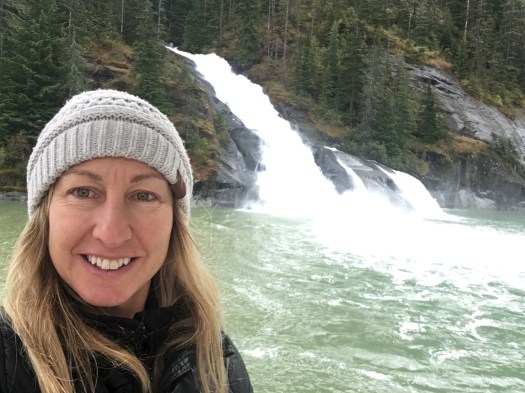
With the trip starting in about a week, it’s a great time for introductions, an overview of the project and what we hope to accomplish with the help of citizen scientists from around the world. I’m Lucy Marcus and I will be your expedition leader for the turtle research trip in Costa Rica. I look forward to returning to this richly abundant costal region of Central America to explore the beaches and help protect the sea turtles nesting there.

Lucy Marcus

I am currently in California organizing my gear and making sure I have all the items listed in the project dossier packing list. Make sure you check off all the items, so you will be comfortable and correctly outfitted as well! It will be great meet you all in Costa Rica and introduce you to our turtle research scientist Fabian Carrasco who you will meet at your arrival to the Paquare beach research station.
Fabian Carrasco

The first person you will meet in Hotel Santo Thomas is Nicki Wheeler, from our local partner organisation Latin American Sea Turtle. Nicki will send you on your way on the mini-bus which transfers to a boat that brings you through the coastal wetlands to the research station. Fabian and I will be awaiting your arrival at the research station where you will get settled in to our cabins before going straight into learning how to measure turtles and collect eggs during our nightly beach patrols.
The 2018 expedition report is now published and explains how successful we were last year. It was fantastic to read that 65 % of the nests were saved due to volunteer effort and that the turtle population in the region we work in is stable. Working with Fabian this year, we will continue with our efforts to protect turtles. As stated in the 2018 report, here is what we will do this year:

  • conduct nightly beach patrols
  • record data on nesting turtles including measurements
  • tag turtles
  • re-locate eggs to a safe hatchery
  • monitor the hatchery
  • release any turtles that hatch
  • exhume nests after hatching
  • work on hatchery material construction
  • do beach clean-ups and marine debris removal

I arrive in Costa Rica on 2 May and will get the research station prepared for the expedition. I will send another message with my local contact details once I am on the ground in Costa Rica.
Once I am at the research station, communication will be minimal as there is limited reception for local mobile phones. Remember that the research station and the region around it does not have any access to WiFi. Local phone reception is only available on the beach near the research station, not in the cabins and a local SIM card is necessary to make mobile phones function correctly (more details are in your dossier). My phone is available for emergencies and for minimal communication with the Biosphere Expeditions HQ. I will share my local number with you once I have arrived in Costa Rica and picked up a SIM myself. Hopefully you can resist the need for frequent international communication with the outside world, and you can enjoy being off-grid for the expedition, soaking up the experience of remote beach isolation.

I imagine you are all reading our expedition material and know that your gear and clothing is essential for this project. It takes some time to make sure we all have dark clothing for night patrols, comfortable shoes for walking many hours on the beach each night, rain gear and a headlamp with a red light. A pack for carrying gear snacks and a large enough water bottle to support your journeys on the beach in hot weather will all come in handy too.

I look forward to meeting all of you and searching for turtles on the beach together. Safe travels and see you in Costa Rica!

Lucy Marcus

Azores: expedition musings

Our time in the Azores has  come to an end for another year, so it is time to reflect on the past month. I know I have said this before, but expeditions offer many things, including difference, difficulty, diversity, discovery and of course data. We all come with varying expectations and often leave with different realisations and experiences. Let’s face it, if we got what we expected, it wouldn’t be an expedition!

This year we have been challenged on many fronts and had several achievements, but before we review the details, let me initially offer some thanks. Firstly to the back office staff at Biosphere Expeditions. There is always a lot of unseen work and preparation for any expedition. Secondly, thanks to Jim (Claudia and Tiago) at Banana Manor, who have been our hosts for the past few weeks – giving us all a second home. I also extend our collective gratitude to Eugenio (and his team at Casa de Cha), and Carey and Pete, who (amongst others) have catered for our variety of dietary needs. I must also not forget our skipper Jairo; who not only took us out to sea, but also ensured we knew the sea state, wind direction, cetacean locations and always got us back to port safely – thanks Jairo. And of course, our enormous collective thanks go to Lisa, our leader in all things scientific. It is always a privilege to share in your world and work with such a passionate field biologist and cetacean scientist.

But my final thanks go to our citizen scientists, who stepped up to the daily challenge of data collection to achieve our collective goals of better understanding the ecology of the cetaceans and turtles of the Azores. Your contribution, attitude and application, sometimes in the face of adversity, and across all aspects of the expedition, has been outstanding. It has been a pleasure to meet and work with you all.

Our data haul this year has been different to others, and would be easy to focus on the fact that sometimes whales have been hard to find – but that is not the only focus of the project. The seeming lack of cetaceans on some days, or the  sea states may have challenged us on occasion, but overall we’ve been able to amass a diverse range of data and information, that without Biosphere Expeditions, wouldn’t have been collected.

In case you have forgotten, here are just some of our highlights:

  • We’ve deployed two teams into the field, comprising 7 different nations
  • We completed multiple days at sea, covering over 700 km of survey transects
  • We’ve collected data on at least 5 different cetacean species and 1 turtle species
  • We’ve recorded orcas for the first time on a Biosphere Expedition
  • We’ve listened to singing humpbacks for the first time in the Azores
  • We completed multiple POPA surveys (Programa de Observação para as Pescas do Açores = Observation Programme for the Fisheries of the Azores)
  • We’ve assisted the local university with their D-Tag research on sperm whales
  • We’ve field tested a cetacean monitoring app and contributed data to Monicet

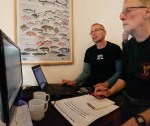
Of course there is also the data entry, image processing and sorting, and not to mention matching work that has been completed so far. All helps to better understand the puzzle of cetacean patterns in the Azores. Data on absence is as important as that on presence. To truly understand cetaceans movements, their ecological needs, and distributions we need to study them over appropriate scales of space and time.

Field research rarely gives us instant results or fast answers to our bigger questions, but even the encounter rates from this year underscore the value of long-term research – this project has been running for fifteen years. The results from this year’s work will soon become clearer in the expedition report (due out later this year).

So what of the success I mentioned? Success isn’t just dictated by data, and to my mind successful expeditions are defined by experience – that which we bring to it, and that which we gain from it. Personal success is perhaps is influenced by the people you meet, the new experiences you have, the challenges you overcome, or the wildlife you see. This year we have had a fantastic blend of past Biosphereans, past Azores expedition team members, and a healthy dose of first-timers. The teams and the teamwork have been a personal highlight. You’ve all played your part in the success of this year. Your own judgement of success is perhaps most dependent on your own expectations.

We all come on expeditions for different reasons and with different expectations. No matter whether you are a citize scientist, scientist or expedition leader, we all start an expedition with a varying mix of nerves, hope and expectation. We hopefully leave with new experiences, having explored, been enthused, educated, entertained and maybe even enlightened!

If you are truly fortunate, like the cetaceans, you get to return.

Best wishes

Craig Turner
Expedition leader

Azores: fin whales and tags

After the successful sperm whale encounter, we next headed out south of Pico, this time in search baleen whales. There had been reports of ‘blows’ several miles off the coast of Pico, so who can pass up that opportunity?

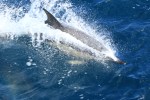
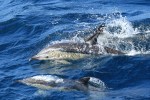
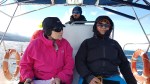
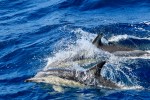
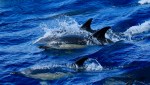
Our mission was briefly interrupted by a wonderful encounter with some common dolphins, surfing in the waves and playing around the boat – a great start to any Sunday morning. Our photographer for the day (Martin) was duly put through his paces.

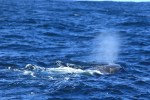
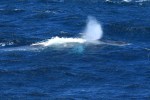
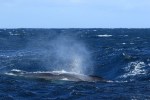
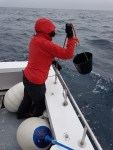
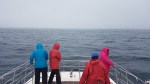
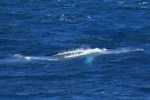
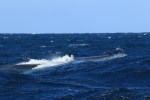
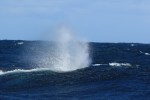
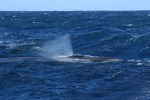
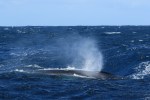
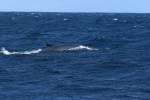
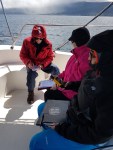
With our skipper (Jairo) then spotting a blow, it was time to move on. In building seas, large baleen whales are not the easiest to find, but when you have three fin whales blowing together it makes things a little easier. Spotting them was the easy bit – another new record for the 2019 expedition.  We followed them into the oncoming waves and wind that tested the resolve of all on board and made it tricky to get the ID photos.

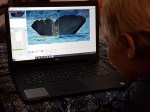
The last couple of days have been on shore, working on images and yet more data. The team have already matched three of the sperm whales seen on Saturday to previous encounters in 2013 and 2008 – yet more small but important pieces of the puzzle.

Rui Prieto from the Azores Whale Lab also came over to the expedition base, to give a talk on his wider cetacean research and how some of the data being collected by the project is being used. And in other good news…he recovered his D-Tag (see previous blog).

Azores: whales and memories

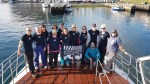
Welcome to our second and final team for 2019. Our group truly embraces the international nature of Biosphere Expeditions, hailing as they are from Germany, Austria, Switzerland, United Kingdom and the USA.

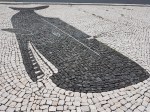
This phase of the project started on a bright note. As you may know, Horta harbour is adorned with paintings, made by crews of the many ships that pass this way. On our first walk around the harbour, Lisa (one our citizen scientists from the UK) was able to locate a painting created by her late father, which she had not seen before.

With the team in place, briefings, orientations and training completed, we set out to sea on our first afternoon of surveying. This meant breaking new ‘ground’, as we headed for the channel between Pico and São Jorge. Our change in tactic from the first expedition didn’t prove to be as successful as we’d hoped.

After a couple of enforced days on shore, due to weather and sea conditions, we returned to the ocean. After a brief encounter with common dolphins, we were rewarded with whales – sperm whales to be precise. We followed a small group for several hours, getting fluke images of at least four different individuals, including a male.

At the end of the day, whilst following our last whale of the day, we were joined by a couple of whale watching boats from Horta. One was carrying two citizen scientists from our first group – always nice to share the whale experience.

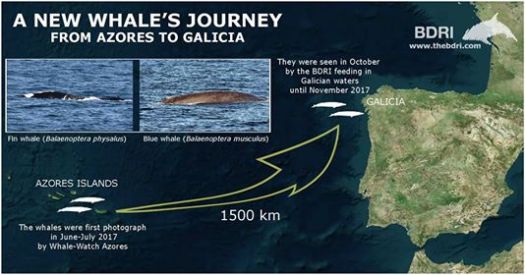
Also on the agenda was the news of the power of our work here or more precisely, the results of photo ID at work. A long range matche of a blue and fin whale from the Azores to Galicia, Spain in 2017 has just been published. This shows how important it is to take these fin and fluke photographs to elucidate the movement of these enigmatic ocean creatures around the seas.

Azores: group 1 round-up

A sterling effort by group 1 over the past few days. We’ve covered in excess 250 km of surveys over the past three days, and again in some challenging seas. Safe to say everyone now has their ‘sea legs’.

We have also been involved in a mini collaboration with the local university, assisting them with a search for a D-Tag. This non-invasive tag (attached by a suction cup to sperm whales) can record the sounds heard, and made, by the tagged whale together with its depth and orientation (i.e. pitch, roll and heading), in a synchronised fashion throughout the dive cycle. The tag records data digitally for around 24 hours, depending on sampling rate. When if floats to the surface it gives out a radio ‘ping’, so it can be radio-tracked, once a rough position has been triangulated from land. Well, the theory is simple!

We were able to help in the search whilst conducting our own ‘normal’ surveys. Rui Prieto joined us from the local university (Dept of Oceanography & Fisheries) with his telemetry kit and all we had to do was spot a small yellow tag in the Atlantic – needle in a haystack – when dealing with 5 m waves. Sadly we weren’t successful on this front, but we did collect other cetacean data. We wish Rui luck in finding it!

Over the last few days, the team have worked their socks off, scouring much of the ocean south of Faial and Pico, up to 25-30 km offshore. The reward has been nine cetacean encounters, totalling over 125 individuals, not forgetting several loggerhead turtles. And let’s not forget our couple of expedition firsts – orcas and a singing humpback – more than data, they are truly moments to remember.

Just reward for such a great group who have personified teamwork – you have been a joy to work with, thank you. But as we say a sad farewell to group 1, we are excited to meet and welcome group 2. There is still much to discover, as we reach the halfway point of this year’s expedition.

Azores: Singing humpback

After the excitement of the orca encounter on our first day in the field, we were brought back down to earth the very next day… by the weather! High winds and worse sea states meant data processing was the only productive option.

So the team spent the morning with sorting and /or matching image files to enable identification and matching of several species, including sei and sperm whales; Risso’s dolphins and of course the orcas. Many of the orcas could not be matched with other individuals recently seen around the central island  group of the Azores, suggesting there are more out there to be found.

After an afternoon break, we were back out to sea the next day in slightly calmer seas. This began with common dolphin sightings, and four encounters later this was the only species we had seen all day, whilst navigating a loop south of Pico and Faial.

Eager for a change of fortunes, we set sail again on Wednesday. Luck was not entirely on our side. The dolphins appeared to be avoiding us, so we deployed the hydrophone to ‘listen in’ on dolphins and sperm whales but with no joy. But what we did hear – surprised all on board, including a scientist, Lisa – a singing humpback! Whilst the males are known to sing, often when in search of females, Lisa has never heard this behaviour in 30 years of working in the Azores. Another first for Biosphere Expeditions in the Azores. Fieldwork is about sights and sounds.

After several hours of searching, and with 110 km covered, we could not locate the humpback and finally had to give up on our singing cetacean. You don’t always get the result you want, but if your survey ends with ‘presence’ or ‘absence’, your data is zeros rather than ones, it is still a result.

Let’s see whether our humpback was just in rehearsal mode today, and we will get the full performance tomorrow…

Azores: Orcas!

The Azores expedition is officially up and running, and we can finally offer an Azorean welcome to our first citizen scientists of 2019. We have already been pushing the limits and the initial headline is a new species record for Biosphere Expeditions… but more about that later!

Our multi-national team all arrived safely, via a mix of routes and modes of transport. Some were hot off the plane and plunged straight into initial introductions, risks assessments and briefings. Not forgetting a whistle stop tour of Horta to get some bearings.

Saturday saw us dive into scientific training, with familiarisation of equipment, which was followed by data records training, and eventually rounded off with a boat orientation. Unfortunately the weather was against us, so we could not complete our first field trip as planned….that would have to wait. Patience is vital with fieldwork.

Sunday  saw us head out to sea. With winds blowing from the northeast, the conditions were best described as challenging. As we headed south of Pico, we eventually encountered some loggerhead turtles and a small group of common dolphins (great spots Stefi and Shantala), but encounters were hard to find.

The hydrophone was deployed in a quest to find sperm whales, but the conditions were just too extreme to follow them. With the sea state quickly reaching force 5 (the limit that we can effectively work in, and most people can stomach), we turned around and headed back towards the protection of Pico.

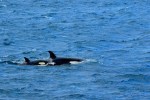
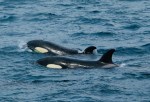
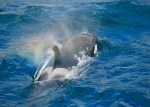
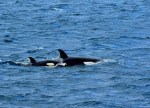
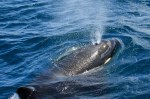
An inspired (if not lucky decision), for it was just off the coast (close to Lajes) that we had our first ‘whale’ encounter……with orcas! They had been seen in the area as few days before the group arrived, but normally move on. This is the first time they have ever been recorded by a Biosphere Expedition group. Great data and a wonderful encounter!

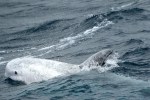
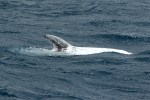
Our day was not done as we also found a group of Risso’s dolphins, with several young, as we began to cross the ‘choppy’ channel back to Horta. A quick baptism of cetacean research for some.

Field work will often push your limits, give you moments of luck, and reward your loyalty to your task. One of our citizen scientists, Neil, is a veteran of nine (!) Biosphere Expeditions and a previous participant on the Azores. Yesterday was very much payback for his commitment, in the shape of six beautiful orcas; and it was only our first day at sea.