Conservation in crisis: ecotourism collapse threatens communities and wildlife > more


Award-winning, non-profit and ethical wildlife conservation volunteering. Advancing citizen science and conservation since 1999 – for nature, not profit.
Experts call for legislation and trade deals worldwide to encourage green recovery
Pandemics such as coronavirus are the result of humanity’s destruction of nature, according to leaders at the UN, WHO and WWF International, and the world has been ignoring this stark reality for decades.
The illegal and unsustainable wildlife trade as well as the devastation of forests and other wild places were still the driving forces behind the increasing number of diseases leaping from wildlife to humans, the leaders told the Guardian.
As the coronavirus pandemic has a stranglehold on the planet, travel plans have had to be cancelled everywhere. Even those where people help nature conservationists during their holiday time as citizen scientists.
Peter Laufmann spoke to Executive Director Dr. Matthias Hammer.
(this is a translation from the original article in German in natur magazine)
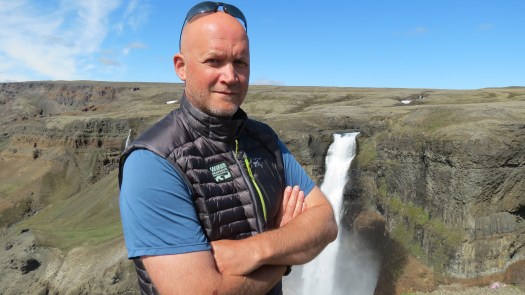
Laufmann: The corona pandemic seems to be giving nature some breathing space. That must please you as a nature conservationists, right?
Dr Hammer: Of course! I am very happy about nature being given a chance to recover for a change, instead of the continuous assault of the last decades. There is also the hope that humanity as a whole will stop to ponder for a while. That we realize it is possible to work from home, to fly around less, etc.
What’s the situation like in nature conservation?
Well, for us, for our citizen science / wildlife conservation expeditions, the effect is of course that we won’t be able to carry out any projects in 2020. But that is the lesser of two evils. The bigger evil is the situation of our local partners.
How come?
It is much worse for our local partner organisations. In the developed world, we can apply for state aid. Besides, we are a very lean organization. We don’t have large offices which we have to pay rent for and the like. Our running costs are very low. State aid, as limited as it may be, helps us a lot. But our local partners are in a difficult situation. There, there are by and large no such programs. And much of their income has disappeared. For example in Enonkishu, a conservancy in Kenya, their main income is the fees that tourists pay when they come into the reserve. This has dropped to zero practically overnight, so they now have a reall challenge on their hands to keep paying their rangers and other staff. And if no rangers are being paid, how do they fight poaching? Not only that: the increasing poverty through the crisis also increases the pressure from poaching as cash-strapped people go in search for bushmeat, for example.
So what does this mean?
There are two sides to it: It’s both a chance and a challenge. On the one hand, it’s a chance for nature to recover, because there are no visitors. In the Red Sea, for example, the water is clear and the reefs are recovering, as the ecosystem remains largely on its own, because of course there are no divers or tourists causing disturbance. On the other hand, the lack of money is a real problem, as I explained earlier. Conservation costs money.
How can we counteract this? Both on a large scale and you with Biosphere Expeditions?
We are a relatively small organisation. Our influence is correspondingly small. At best we can do something on the ground with our partners and bring money and, of course, manpower to advance their conservation projects. But since this has now ground to a halt, we have also started a fundraising campaign. Our project partners have written a few lines about what they currently need money for; where their need is greatest. And I have been surprised by how generous people are despite, and perhaps because of the crisis. For our partners this really is a godsend in their hour of need.
How does Biosphere Expeditions deal with the fact that there are now those calling for a fundamental change in the way we travel?
Air travel in itself is of course bad for the environment. There is no question about that. If there are no contrails in the sky, everyone has a basic understanding that this must be good for the planet.
How does Biosphere Expeditions deal with this dilemma?
We have several approaches. First, it is a fundamental concern of ours to eliminate ourselves in the long run. In other words, we want to advance projects to a point where we are no longer needed. Take the Maldives, for example: via expeditions there for eight years, we have established a non-profit organisation (www.reefcheckmaldives.org), which is now entirely run by locals. The reef research that we have done with volunteers is now under their leadership. Point two is that we encourage our participants to offset their carbon footprint. I am aware that this is also under criticism, but as part of the mix, I believe it is a positive thing. We as an organisation naturally compensate for the CO2 our activities produce as well. Thirdly, we must not forget that the alternative to tourism is often the chainsaw or total overfishing. In other words, nature conservation takes place because there’s an economic benefit for local people to intact wildlife and wild places. This is what we conservationists call the ‘what pays, stays’ principle, whether it is via safari tourists or through citizen science projects. It’s too shortsighted to reduce everything down to CO2 exclusively, although we must keep an eye on this. The world is more complicated than just CO2 budgets.
How will the pandemic influence your citizen scientist projects?
That’s a difficult question to answer. The crisis will be with us for a long time; years rather than months. We have contingency plans in case expeditions are still impossible right through to 2022. How people’s behaviour will change… I wouldn’t want to predict this as this is not my area of expertise. But I do believe that the desire to do something useful in your holiday time will keep increasing in people. This was already evident before the pandemic and will hopefully get a further boost now.
Is this the end of tourism?
I am afraid not. As soon as lockdown restrictions are relaxed, people will by and large fall back into old habits. Still, it would be nice if humankind could become significantly more mindful through this crisis.
What should politicians do to support nature conservation and environmental protection in times like these?
On no account lower environmental standards! Under no circumstances save the big polluters. The money that is saved by not bailing out destructive corporations should be put to good use elsewhere in combating climate, the other and more dangerous challenge humanity faces, and preventing destruction of wildlife and wild places. We need the planet as the basis of all life and economic activity. For on a run-down planet, there will be no life worth living and no economy to speak of.
How does someone use their time during lockdown?
There are lots of ways to help from home as well. Citizen science also works during lockdown. You could for example analyze photos of animals or galaxies, or provide computing power for virus research. The possibilities are endless.
(c) Peter Laufmann
The world remains in the grip of the coronavirus. Many countries that we operate in continue to keep their borders shut and some are still expecting their first peak, let alone a second wave. In fact, in many countries that we operate in, things are predicted to get worse before they get better. And a vaccine will take time, or it there may never be one.
Because of all this, we have decided to defer the citizen science elements of all our 2020 expeditions to 2021. These are:
Expeditions that happened early in 2020 and are now scheduled to repeat in 2021 as normal are
An overview over all expeditions is on our website as a list and a map.
Please note that project work has not been cancelled. It is only the citizen science element that has been deferred to 2021 due to the coronavirus pandemic. Project work with local staff only will continue and you can see on our appeal page what is planned in terms of community expeditions and project work. If you can, please support our efforts to raise funds for this!
You can also read about community expedition efforts already under way in the Azores and Tien Shan.
We continue to feel very strongly about the need for continued conservation efforts and supporting our local partners and staff despite, or indeed because of, the unprecedented and very difficult circumstances. We hope you agree. If you do, please give to our coronavirus appeal to enable our local partners & staff to do just this.


The coronavirus has forced us to make major changes to our efforts here with the Tien Shan snow leopard expedition. All citizen science elements of the expedition have been deferred to 2021, but we are still able to push ahead with a community expedition this summer, thanks to the generosity of those who have contributed to the Biosphere Expeditions appeal. We are lucky in getting our community expedition funded through this. There are other projects out there that are not fully funded yet, so please, if you can, consider supporting those too. Anyway, thank you to all donors who have funded us!
Right now we are in the planning phase of how to pull all the different partners together here in Kyrgyzstan. As always, we have our inaugural partner NABU on board with their Grupa Bars (anti-poaching patrol) staff. Also joinung us this year will be Askat Mukabaev, who is a full-time conservation biologist at ILBIRS, another local conservation NGO here in Kyrgyzstan. Beyond that we have our community camera trap monitoring group that will be joining us as well. The expedition leader this year will be me, Amadeus DeKastle, as I’m already here in Kyrgyzstan, having lived here for a good while!
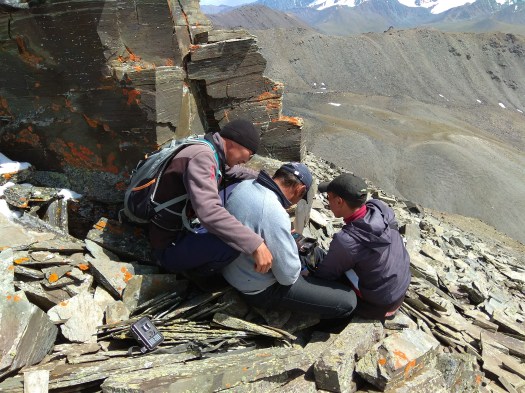
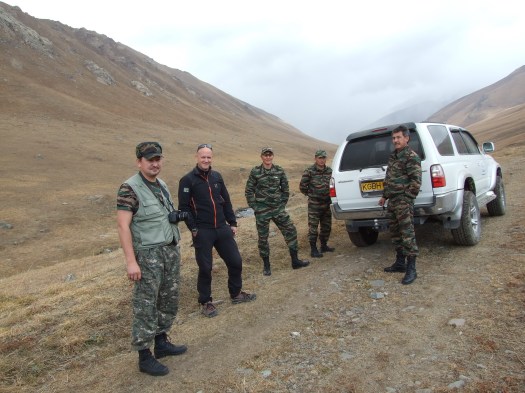
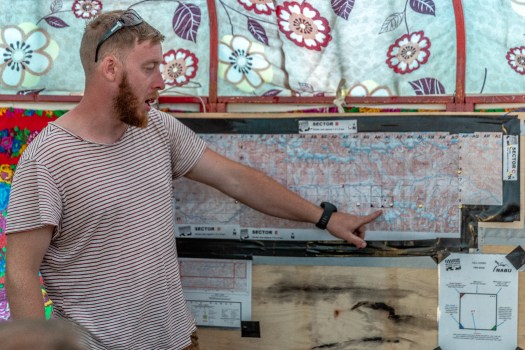
This year will be very different from previous expeditions, but at the same time, I know we are all looking forward to continuing this project and collecting another valuable data set this summer. Our community camera trap monitoring group has already collected some of the camera traps that are accessible and which have been out in the field since the end of the 2019 expedition. And we have a new image of a snow leopard in a new valley! It’s at night and blurry, but it’s definitely a snow leopard. Well done community camera trappers!
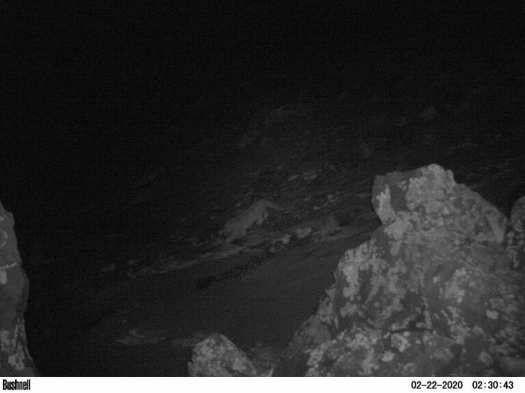
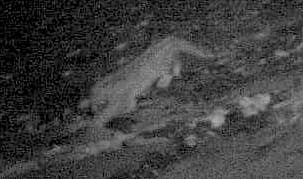
So the excitement is there to check the camera traps that are still in the field, and also to use our community expedition really to develop the community-based conservation element of our work.
We are looking forward to the expedition (and will keep you updated via this blog). For next summer, I hope that things will be back to full capacity so that we are able to experience an expedition together again.

Our coronavirus appeal for our local conservation partners & staff stands at 38% (EUR 23,296) raised. An overview of where each partner stands is below. Thank you for your generosity so far. Please keep on giving!
ALMOST THERE
NEED MORE SUPPORT
FULLY FUNDED

We have the opportunity to reshape our economies to support life on Earth. Governments should take it.
Do Not Resuscitate. This tag should be attached to the oil, airline and car companies. Governments should provide financial support to their workers while refashioning the economy to provide new jobs in different sectors. They should prop up only those sectors that will help secure the survival of humanity and the rest of the living world. They should either buy up the dirty industries and turn them towards clean technologies, or do what they often call for but never really want: let the market decide. In other words, allow these companies to fail.
 Biosphere Expeditions: blogs from the frontline of wildlife conservation and the fight for a more sustainable planet