Tien Shan: Done for 2025

Update from our snow leopard volunteer project to the Tien Shan mountains of Kyrgyzstan

Team 3 has been a very productive 12 days with many highlights, a little ermine hopping through camp being one of them! Weโ€™ve had nights under the stars in bivvy bags watching shooting stars and the Milky Way, river dips, yoga, a successful Archaly valley reccee and of course lots of research.

Group 3
Ermine at base camp

The first few days as always, we focused on training, getting familiar with equipment, ready for driving off road, field surveys and camera trap servicing and placement. This also allows time to acclimate, especially for those of us that live at a much lower altitude for much of the year (yours truly). Getting to know the field guide is important too and we learn that identifying scat, prints, tracks, scratchings etc. is a dark art.

The results of this group were:

No more snow leopard pictures on this group, because all camera traps had been serviced recently. But two more potential snow leopard scats have been added to this yearโ€™s collection in the final group, bringing the tally to six total. Talking about scats: The first batch from group 1 has come back and all the high-mountain ones were indeed snow leopard; only the lower altitude one collected next to the ibex skull was not, so a very good result for group 1. Well done!

Over the three groups we have managed to survey over 97 cells on my last count, this has involved some big days out along rivers, through deep-cut gorges, up steep scree slopes, over majestic ridges and through alpine meadows awash with cranesbill, alpine aster and edelweiss, an abundance of wildflowers typical. In the background a scattering of prominent glaciers provide much needed water… But I digress. The overall headline results of the expedition are:

Expect the full expedition report with all details and conclusions in a few months.

Camera traps are now placed in and around three valleys; those cut by the Burkhan, Archaly and Jyluu Suu rivers. We have also had some very interesting interviews. You will need to wait for the report for more on that.

When the time finally came to pack down camp, swifts were frantically foraging overhead and the wildflowers had gone to seed. It’s amazing how short the alpine season is here. Emil, our scientist left with our equipment including yurts, showers and kitchen destined on the penultimate day, so we were back to wild camping for our final night. The last morning involved an early breakfast, a quick final goodbye to the local herders who have cooked and kept us fed many of the evenings here and then we were on our way. The journey to Bishkek went smoothly.

So it is now time for reflection and maybe a toast to the season that has been. A heartfelt thank you to all our citizen scientists in this final group for their huge effort. Thank you everyone for keeping high spirits when the weather grounded us, for playing a role in keeping expedition base camp running smoothly and of course for your data collection activities. Also, your company has been fantastic. Thank you to Johnny for all the guidance and Sofia for your delicious salads and desserts and of course all your help around camp, thank you Matthias for the training and taking me on as part of the Biosphere Expeditions team. Most importantly, thank you to all the citizen scientists this year, for without you, this couldnโ€™t happen. Rahmat!

Darran Keogh
Expedition leader

I leave you with some more impressions and a couple of feedback videos:

Update from our Kyrgyzstan expedition to the Tien Shan mountains, volunteering in snow leopard conservation.

Tien Shan: Archaly

Update from our snow leopard volunteer project to the Tien Shan mountains of Kyrgyzstan

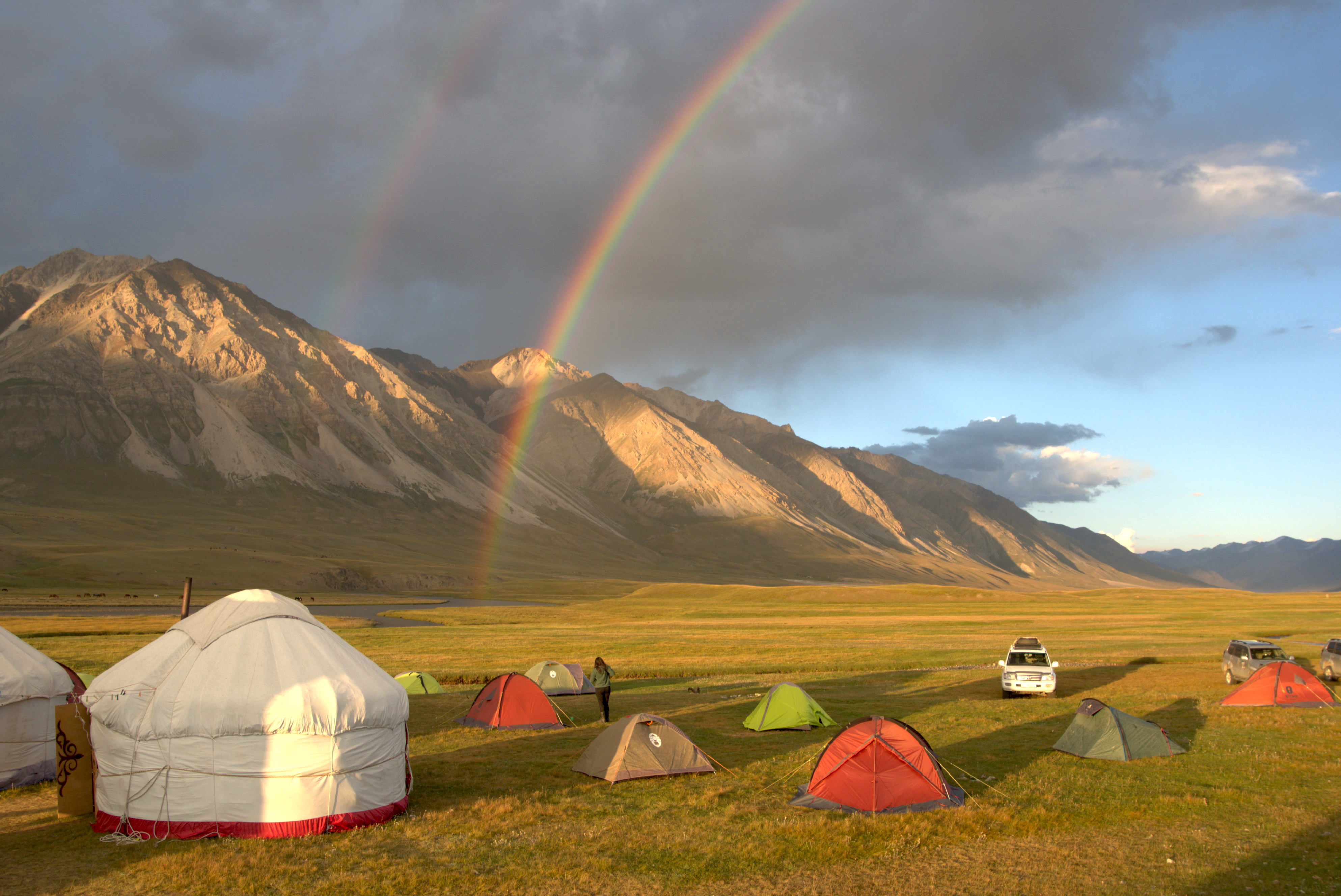
Hello from base camp. The sun is shining, nights are cool with morning frost that is quick to thaw with sunrise.

All is well here, we are surveying many 2×2 km cells in and around the valley, even a requests from our citizen scientists to revisit and resurvey areas they reckon hold promise! We had some interesting local interviews today with the usual hospitality and offers of local food and drink and talk of close encounters with Tien Shan bear, wolf and snow leopard.

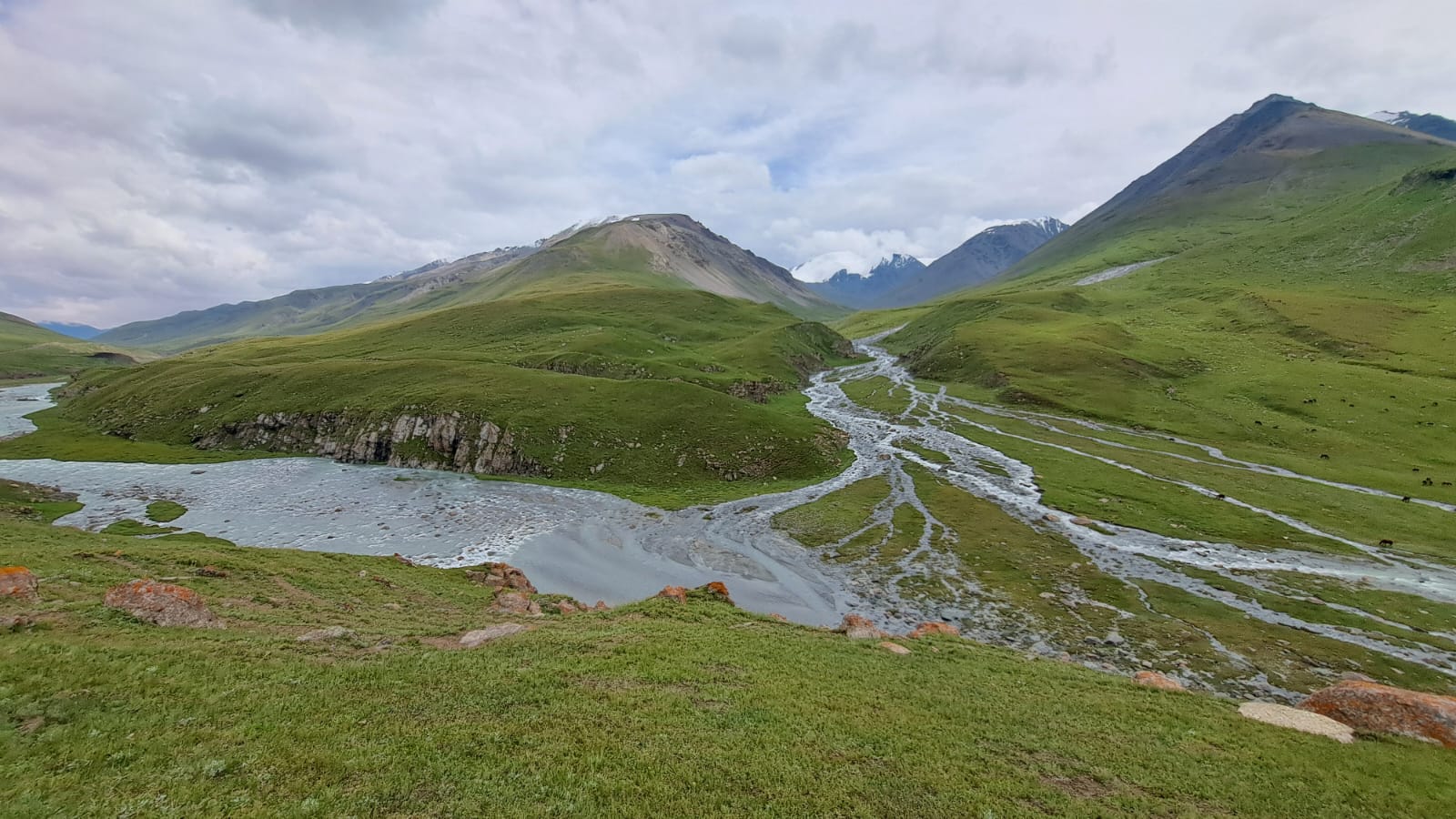
Today is our rest day. Monday we head to beautiful and remote Archaly valley (see pictures) to set up camp for surveys there and an extended reconnaissance for 2026. We look forward to bringing you more details at the end of the expedition, after we get back to Bishkek at the end of next week.

Update from our Kyrgyzstan expedition to the Tien Shan mountains, volunteering in snow leopard conservation.

Tien Shan: Group 2

Update from our snow leopard volunteer project to the Tien Shan mountains of Kyrgyzstan

And just like that, the second Tien Shan expedition group of 2025 has concluded. A whirlwind of a fortnight with higher temperatures and more sunny days than any of us could have imagined – with the occasional blizzard thrown in for good measure.

All camera traps placed in 2024 have now been either serviced or retrieved and an extra seven camera traps placed. We have set up โ€œstationsโ€ at three locations, which have previously yielded great results.

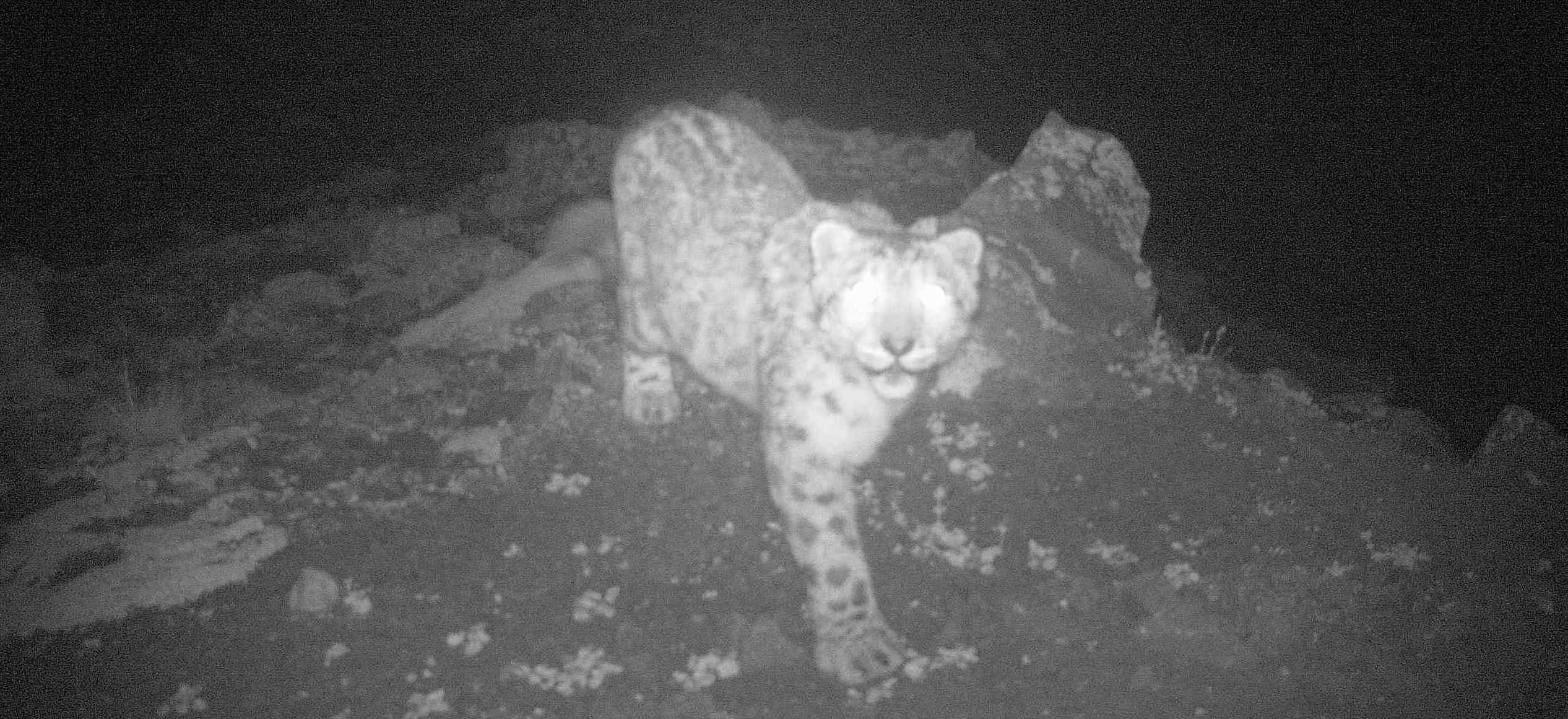
There were more snow leopard captures on the 2024 cameras, in fact we recorded four more snow leopard events. Here are the best ones:

And of course we recorded other animals too and achieved the following in group 2:

One highlight was the direct sighting of a Mongolian wolf with prey in its mouth:

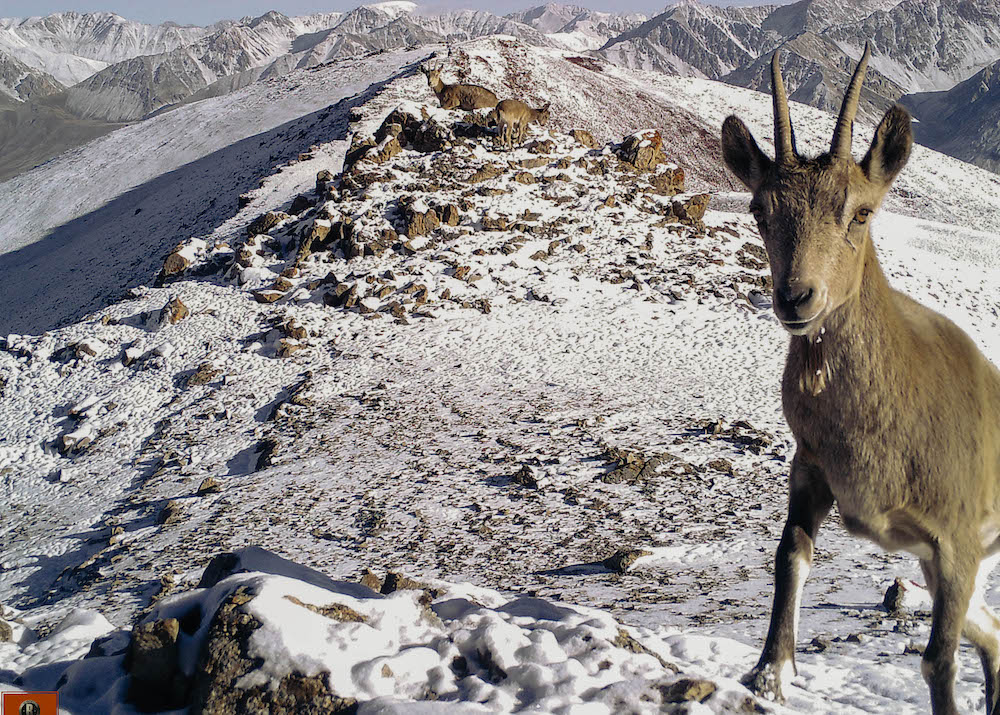
Other animals posed for our cameras too:


After a severe weather warning thwarted our original plans for overnighters between Monday and Wednesday, we managed to squeeze in a brief overnight expedition on Thursday evening.

All in all, another very successful group. I will now hand over the expedition leader baton into the very capable hands of Darran โ€“ he is about to enter his third Tien Shan expedition group and now knows the valley like the back of his hand. I must thank each and every participant from this year and previous years: your motivation and hard work has afforded us incredible results that are far beyond our expectations. I hope to see you all again in the field again one day soon.

Johnny Adams
Expedition leader group 2

Update from our Kyrgyzstan expedition to the Tien Shan mountains, volunteering in snow leopard conservation.

Tien Shan: Wolves…

Update from our snow leopard volunteer project to the Tien Shan mountains of Kyrgyzstan

Group 2 has settled in and is collecting good data. All but two camera traps have now been either serviced or collected, once again yielding snow leopard images.

The last two camera traps will require an overnight trip, but we have some severe weather warning for the next couple of days, so won’t be venturing deep into the mountains.

We have also set up two new camera traps at a new location, in this study site’s first “camera trap station” configuration. This is when two camera traps face a pinch point through which animals pass. The aim is to take pictures of animals – particularly snow leopards – from two sides simultaneously as this makes it easier to identify individuals through their unique coat spot patterns.

We have also found snow leopard tracks

and logged our first-ever direct sighing of a Mongolian wolf – carrying a small bird kill – by a group on cell survey.

All field data are up to date and the weather so far has been good, with clear warm days and no rain, though this is about to change. This group has so far surveyed 13 cells surveyed and conducted two interviews.

In other developments in Europe, the first batch of suspected snow leopard scat from group 1 has now been sent for DNA analysis to a specialist lab in Germany. We should have results within a few weeks.

Update from our Kyrgyzstan expedition to the Tien Shan mountains, volunteering in snow leopard conservation.

Tien Shan: Take two

Update from our snow leopard volunteer project to the Tien Shan mountains of Kyrgyzstan

Group 2 is now safely at base camp, after a 9 hour journey on progressively smaller to no roads. Today training begins.

Following a successful first group, we hope now to get more local interviews, more cells surveyed and camera traps serviced and set and we will hopefully be reporting back with more positive data at the next opportunity.

Update from our Kyrgyzstan expedition to the Tien Shan mountains, volunteering in snow leopard conservation.

Tien Shan: What a start!

Update from our snow leopard volunteer project to the Tien Shan mountains of Kyrgyzstan

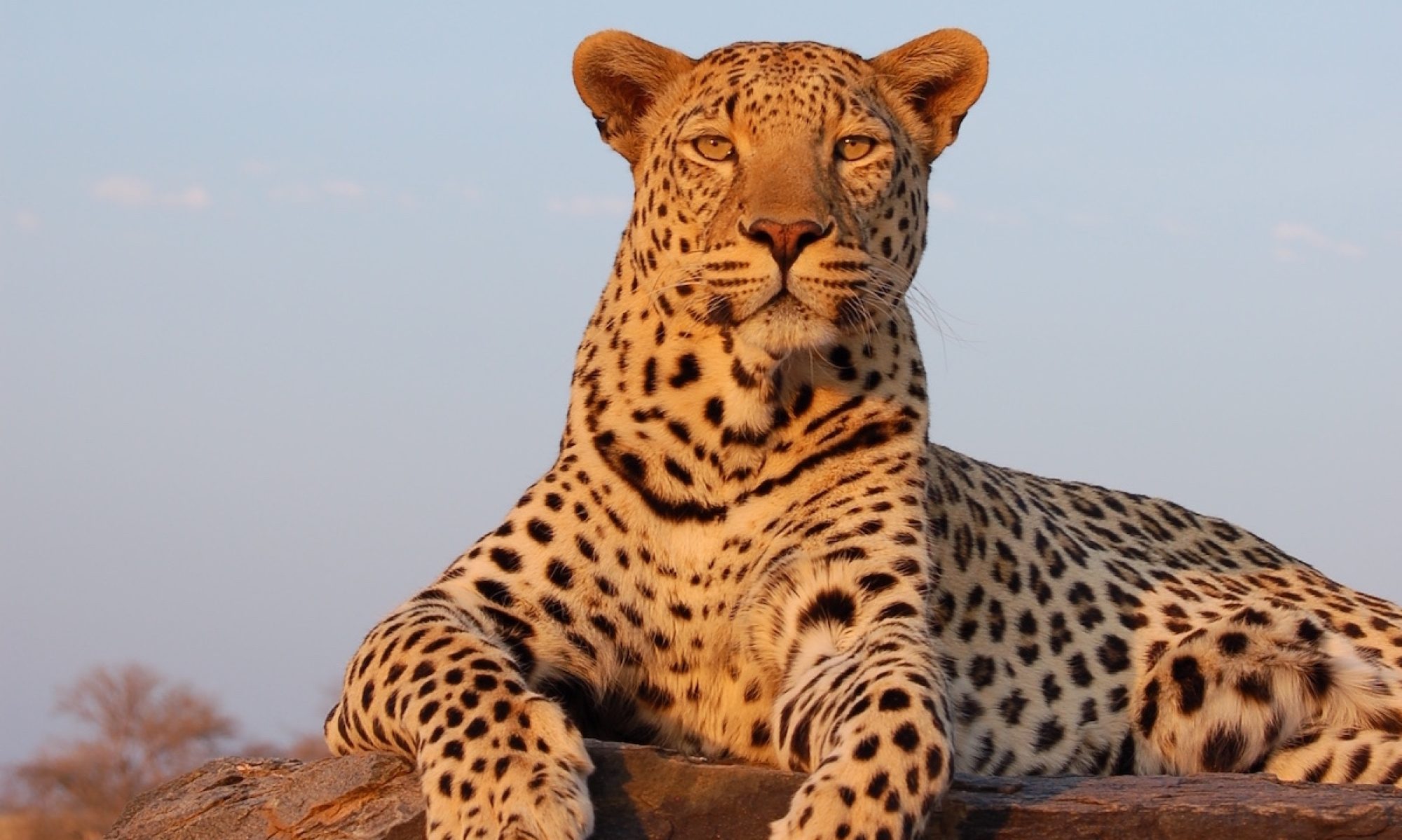
Group 1 is back from the field – and what a start it was, exceeding all expectations of what the 18 camera traps left in the field by last year’s expedition would yield. Almost every camera we toiled up to at around 4000 m caught snow leopards. Preliminary analysis of pelt patterns yields 8+ individuals, a result we can hardly believe ourselves (and have enquired with colleagues about for confirmation). One camera in particular yielded a spectacular photo:

But there were many others too:

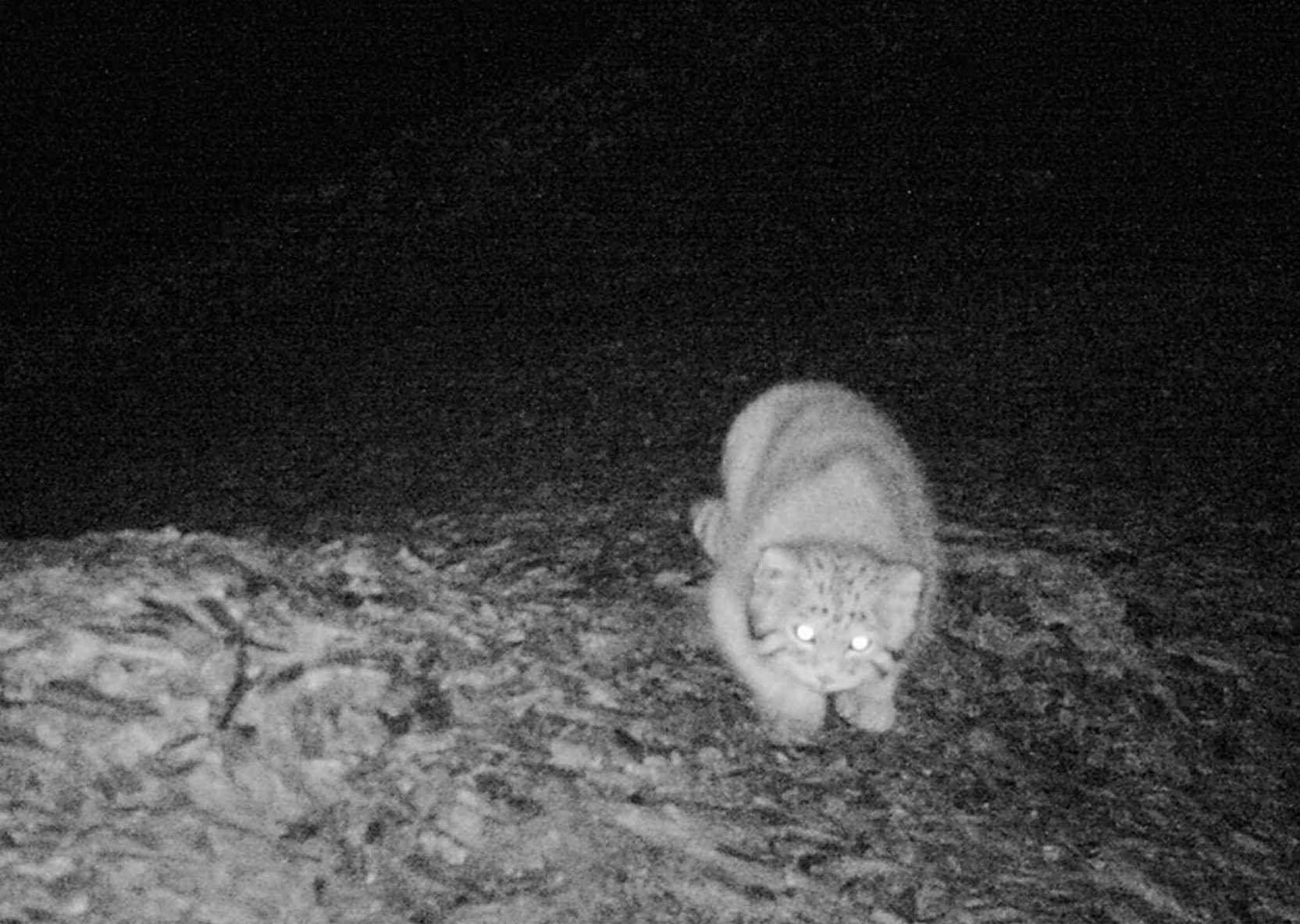
Of course the camera traps not only caught snow leopards, but also many other species such as this rare manul / Pallas cat

A probably even rarer (because they have all been poached out) argali mountain sheep

Ibex

Wolf

An incredibly hardy “yeti” marmot up at 4000 m

Fox

Yak

A curious red-billed cough

Many Himalayan snow cock prancing about

And a lammergeyer photographed by a camera trap that was knocked over (by what we don’t know) and recorded over 10,000 pictures of moving clouds (thanks for going through all of them Aurรฉlie), but also this vulture

But it was not just all about camera traps. We also surveyed cells lower down, conducted interviews and re-affirmed good relations with the local people, ran overnighter surveys and reconnaissance trips into the neighbouring valleys and so much more, yielding this quick summary of results, presented to the team by our local scientist Emil at the end of group 1’s efforts

And what an effort it was! None of this could have been achieved without our 14-strong team of citizen and professional scientists and staff. Thank you to you all and so very well done.

I leave you with impressions of our work, camp and the mountains, as well as feedback from some group 1 participants, and hand the expedition leader baton over to Jonny, who will meet group 2 at the Futuro on Monday.

Update from our Kyrgyzstan expedition to the Tien Shan mountains, volunteering in snow leopard conservation.

Tien Shan: Base action

Update from our snow leopard volunteer project to the Tien Shan mountains of Kyrgyzstan

We’re as ready as we ever will be. A whole lorry-load is packed and will go on its 10-hour journey with us. Once there, we will turn this

into this

in a couple of days.

You won’t hear from us again until we meet group 1 at the Futuro on Monday. Please be on time.

Continue reading “Tien Shan: Base action”

Tien Shan: Bishkek

Update from our snow leopard volunteer project to the Tien Shan mountains of Kyrgyzstan

Bishkek is hot, dry, sweaty, noisy and oh so Central Asia. On a clear day the views of the mountains are beautiful.

We’re shopping, meeting, talking with partners, doing paperwork, printing out datasheets, filling gas bottles, withdrawing cash, charging up and testing radios, sat phones and GPSs, and doing all the umpteen things that need to be done before an expedition can head out into the field. We have a few days of this still ahead of us until we can head into the mountains on Wednesday to set up base camp for you.

A couple of household points for the team:

There is a Globus supermarket a few minutes walk away from the Futuro assembly point hotel. It is open 24/7, takes cards and has lots of drinks and sweets and more. There will be plenty of food, tea, water and coffee at base, but no shops anywhere around. If you simply must have a can of lager in the evening or are addicted to Mars bars or similar, we recommend you stock up there before assembly (don’t be late tough!). Good luck with reading the labels ๐Ÿ˜‰ Remember we are at base and away from shops for 12 nights.

I hope you have swatted up on the 2024 report, field guide and dossier. If you want to be ahead of the curve (the first two days of training will be tough, with lots of information thrown at you), then have a look at all the documents here, which I suggest you read at some stage or on your flight to come extra well prepared.

Continue reading “Tien Shan: Bishkek”

Tien Shan: Prep

Update from our snow leopard volunteer project to the Tien Shan mountains of Kyrgyzstan

Welcome to the 2025 Tien Shan snow leopard expedition diary. I am Matthias Hammer, expedition leader for group 1 and the founder & executive director of Biosphere Expeditions. I am already in Bishkek, where it is hot and stifling (35 C yesterday). It will be different in the mountains – cooler and fresher.

The expedition scientist, Emil, and I have a week to prepare, go shopping, put things in place etc. before two more staff and expedition leaders – Jonny and Darran – arrive from the UK and Ireland respectively and we move out and set up base camp for you, before it all starts.

So this is just to let you know that things are proceeding as planned despite various crises around the world, and that we look forward to meeting you in due course.

At your end, please study your dossier as well as the 2024 report to make sure you come prepared. I hope you are getting excited and that your preparations are going well. I’ll be in touch again before we set up and once we’re back from setup.

2024 expedition base – flyover
Continue reading “Tien Shan: Prep”

โ€˜When I come back from expedition, I always feel richer and profoundly privileged for having been to places and done things that I used to believe only existed in an Attenborough world.โ€™

Peter Thoem, a retiree from Canada, has participated in six expeditions so far. โ€˜I have time in my life, the health and the resources – so why notโ€™ is his go-getter attitude in all this. This is why he started with expeditions and what he experienced on them.

Peter in the Tien Shan mountains in 2018

Since 2018 Peter has tracked snow leopards in the Tien Shan mountains of Kyrgyzstan, studied biodiversity in Kenyaโ€™s Masai Mara, Arabian oryx in the Dubai Desert Conservation Reserve and whales & dolphins on the Azores archipelago.

โ€˜Back in the day, when I was thinking about joining my first expedition to the Tien Shan mountains to study snow leopards, it was the opportunity to get into a really wild area. I could see that few westerners would ever get to see or experience the Tien Shan mountains and that the expedition might yield exciting resultsโ€™, recounts Peter, โ€˜it was simply too good an opportunity to miss.โ€™

And since then? โ€˜Tien Shan was just so thrillingโ€™, says Peter, โ€˜and then the year after โ€“ in 2019 โ€“ there was the chance to do something equally useful in places as fascinating as the Dubai Desert Conservation Reserve and Kenya’s Masai Mara. It deeply interested meโ€™. So off he went to the Dubai Desert Conservation Reserve first and then a few months later to Africa for back-to-back expeditions in 2019 and 2020, just before the Covid pandemic brought everything to a standstill for a couple of years.

Peter with local rangers on the Kenya Masai Mara expedition


His most recent expedition was to the Azores archipelago, studying whales & dolphins from a catamaran.

When asked about lessons learnt on expedition, Peterโ€™s answers are swift and precise, showing his enthusiasm. He believes that with good planning, an open mind, health and resources, you can do it, because โ€˜it’s a fascinating world out thereโ€™. And further that even if โ€˜our western comforts make us think that everywhere else is scary, it’s not. Yes, some places can be risky, even dangerous, but not everywhere else.โ€™

When asked to summarise his experiences, Peter takes some time to think, smiling to himself and then says: โ€˜Sometimes itโ€™s rigorous โ€“ we have work to do and protocols to follow, we have to understand what’s expected. We have to coalesce as a team and appreciate each other’s strengths and not-so-strengths. Then we have to find ways to work with the less committed โ€“ some are day-dreamers, others are bloggers who don’t always contribute much.โ€™ But it always works out in the end: โ€˜We come from all corners of the world, some of us have even met before, because we’re committed to the Biosphere Expeditions ethic. And when I return, I always feel richer and profoundly privileged for having been to places and done things that I used to believe only existed in an Attenborough world.โ€™

Peterโ€™s most abiding memories include standing on the slope of a remote valley in Kyrgyzstan with a clear blue sky. โ€˜It’s just warm enough to unzip my jacket. I’m surrounded by yellow expanses of spring flowers, there’s rushing meltwater cascading off snow-draped mountains around me and I had to pinch myself. Is THIS really me? Am I really here?”

Or there is the time when Peter was on his middle-of-the-night-shift keeping watch over a waterhole in Kenya’s Masai Mara. There are elephants around and hippos lie in the waterhole, but it’s quiet except for the odd grunt, splash or snuffle. Then from across the valley comes a strange upside-down bark, like indrawn breath “EEeeeeYiP”. What’s that, Peter asks the ranger. โ€˜Hyaenaโ€™, the ranger replies and Peterโ€™s spine tingles.

And most recently, in 2024, on the expedition boat off Faial, one of the islands of the Azores archipelago: โ€˜The sea is lively and we have to hold on white-knuckle tightโ€™, remembers Peter, โ€˜we’re all doing our tasks as assigned when a blue whale is sighted. We slow down and carefully approach โ€“ again everyone does as instructed โ€“ gathering data: time, water temperature, sea-state; taking photos, watching, counting and more. And then we’re spell-bound. There in front of us, all but immersed, visible yet almost invisible is the world’s largest mammal. It blows a couple of times, then dives to depths that take it out of the realm of human comprehension.โ€™

A blue whale: a spell-binding animal for Peter

With all those experiences, what impact have the expeditions had on Peterโ€™s daily life, away from expeditions? Again, Peter does not hesitate: โ€˜I’m seen and known for having just come back from another exotic place. Where are you going next, people ask. I have a greater understanding and appreciation of the value of citizen scienceโ€™. An appreciation that has contributed to a structured long-term project on bird populations close to Peterโ€™s home (now in its 10th year).

And what about Peterโ€™s connection to nature? Has this changed through the expedition experiences heโ€™s made? โ€˜My connection with nature has always been strongโ€™, Peter responds, โ€˜and I feel that I have a reasonable understanding of how the balance of nature all weaves together. The expeditions give me the chance to see some of those interactions and inter-relationshipsโ€™. And Peter adds an example of this: โ€˜With Alan, our expedition scientist in Kenya, we watched a small group of impala ingesting mineral-rich soils. Alan was ecstatic, it was, he said, the first known-to-science example of geophagy (animals eating soil, usually for its mineral content) by impalas. My photos made it a publishable observationโ€˜.

Impala geophagy at the Memusi mineral (salt) lick, photo courtesy of Peter Thoem.

The interview ends with the question of what Peter would tell others who are thinking about joining their first expedition. Peter laughs and just says: โ€˜If it appeals to you, then set aside your fears and just go do itโ€™.

Find an overview of all upcoming expeditions here.


Also see Peter’s birding blog entries for Kenya and Arabia