
Update from our marine conservation volunteering holiday in the Azores archipelago, working on whales, dolphins and turtles

Having now spent a few days at sea, the whole team is very familiar with the daily routine. Whether team members are on lookout, data collection or the camera, everyone knows their role on the boat. This seems to include starting most days with a humpback ‘hunt’.

Sperm whales galore

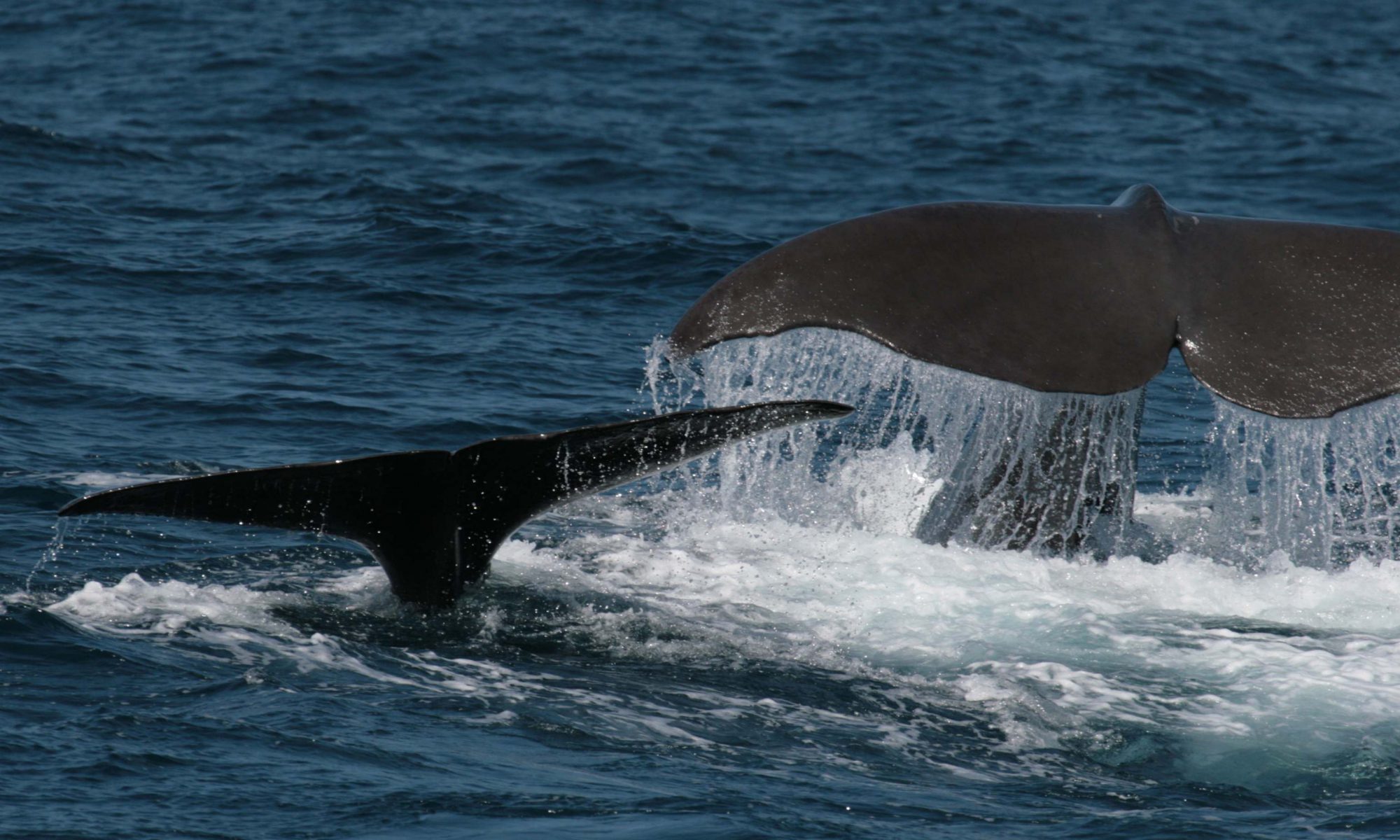
On our penultimate day (for group 2) we first found another humpback and then were busy with a group of sperm whales to the north of Faial.
Once we had documented most of the group, we got news of yet another humpback and a probable sighting of pilot whales!

So we changed course for the north of Pico. No luck this time. We could not find the humpback or the pilot whales, but with the hydrophone now deployed, we did find another group of sperm whales – making Lisa very happy. We (well Maja) kept spotting individuals, including a large male, as we tried to head for Horta. The observations and photography revealed this to be a different social group to the one found in the morning. Again, not so common to find two groups in one day.


Seeing sei
On our final day at sea, we were lucky to encounter another small group of sei whales. Another great data collection effort by group 2.
We have now recorded ten different cetacean species across just over 100 encounters. But there are still species to find… including those pesky pilot whales.

Data value
Talking of data, we have also been the recipients of two great talks this week, the first from our resident PhD student Maria Inês Silva. Her research showed how sea surface temperature (SST) can influence the distribution of common dolphins and Atlantic spotted dolphins in the Azores. SST is a variable that the expedition also monitors!
We also welcomed back Cláudia Oliveira who gave a talk on the role of photo-identification and bioacoustics for sperm whale studies. Again, illustrating the power of simple data collection and the importance of collaboration. Both are from the Azores Whale Lab where you can learn more about their work and how they collaborate with our project scientist, Lisa Steiner.

So, as we bid group 2 farewell, we now welcome group 3; and we hope for new sightings on the final leg of this year’s expedition. Safe travels to all.
Read also: First I second I third I fourth I fifth I sixth I seventh 2026 diary entry of the Azores whale and dolphin expedition. Also: all 2026 Azores diary entries on one page.
Author: Craig Turner

Craig Turner was born in Oxford, England. He studied biology, ecology and environmental management at Southampton, Aberdeen and London universities. After graduating from his first degree, he left the UK for expedition life in Tanzania. Since then, he has continued to combine his interest in volunteer travel and passion for conservation, working with a wide range of organisations on projects and expedition sites in the Americas, Africa, Asia and the Pacific. He has managed expedition programmes for the Zoological Society of London, and is a frequent contributor to the ‘Explore’ conference held by the Royal Geographical Society (RGS). He is a Fellow of the RGS and the Linnean Society. Having visited and/or worked in more countries than years have passed, he now runs a small environmental consultancy with his partner, based in Scotland, where he splits his wildlife interests and work between the UK and overseas. He also crews for the RNLI and is casualty care trained. He is ever keen to share his exploits, writing for several magazines, and is a published photographer.