
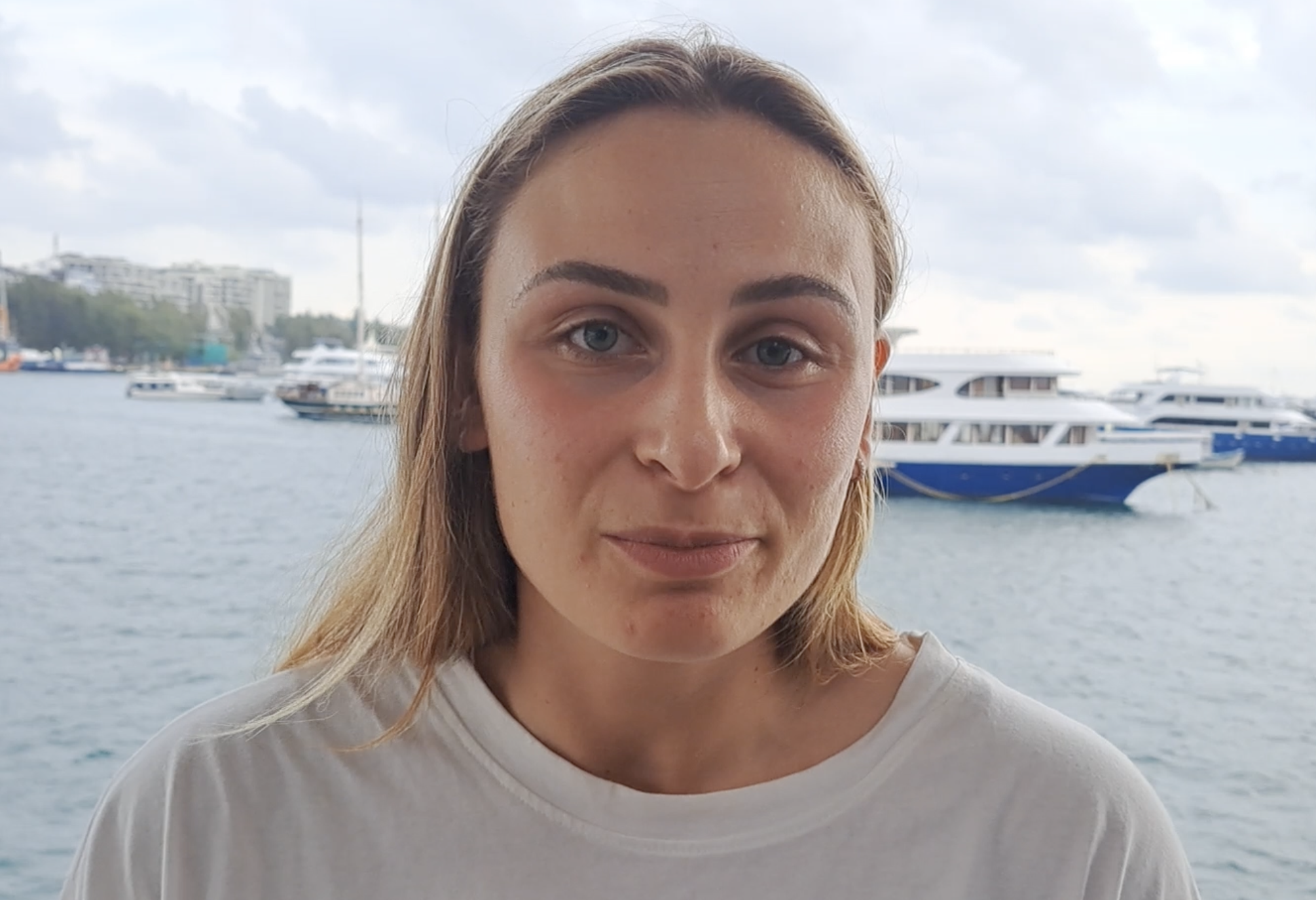
For Loulou Ojjeh, Biosphere Expeditions played a pivotal role in her journey towards becoming an ecologist when she joined its Maldives expedition in 2025.
Despite having completed only 20 dives and questioning whether she was truly ready, Loulou quickly realised that she was far from being an anomaly. ‘Many participants shared similar doubts’, Loulou recalls finding out.
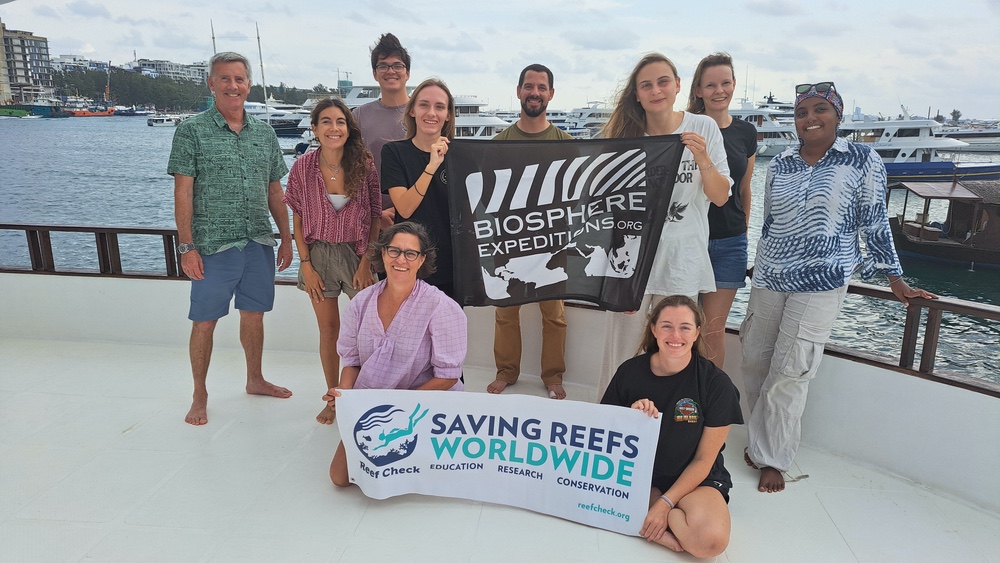
‘Being based somewhere far from home encouraged me to make the best out of life and take everything in with energy and enthusiasm’
‘I spent higher education focusing on life sciences and always felt connected to nature on a personal and intellectual level’, Loulou says.
However, she had never been on an expedition before, but as soon as she discovered Biosphere Expeditions, she knew it was right for her. Not only did it offer a research-focused, Reef Check-certified expedition, but it also provided an ‘immersive experience: meeting new people, immersing yourself in a different culture, gaining real volunteering and research experience’.
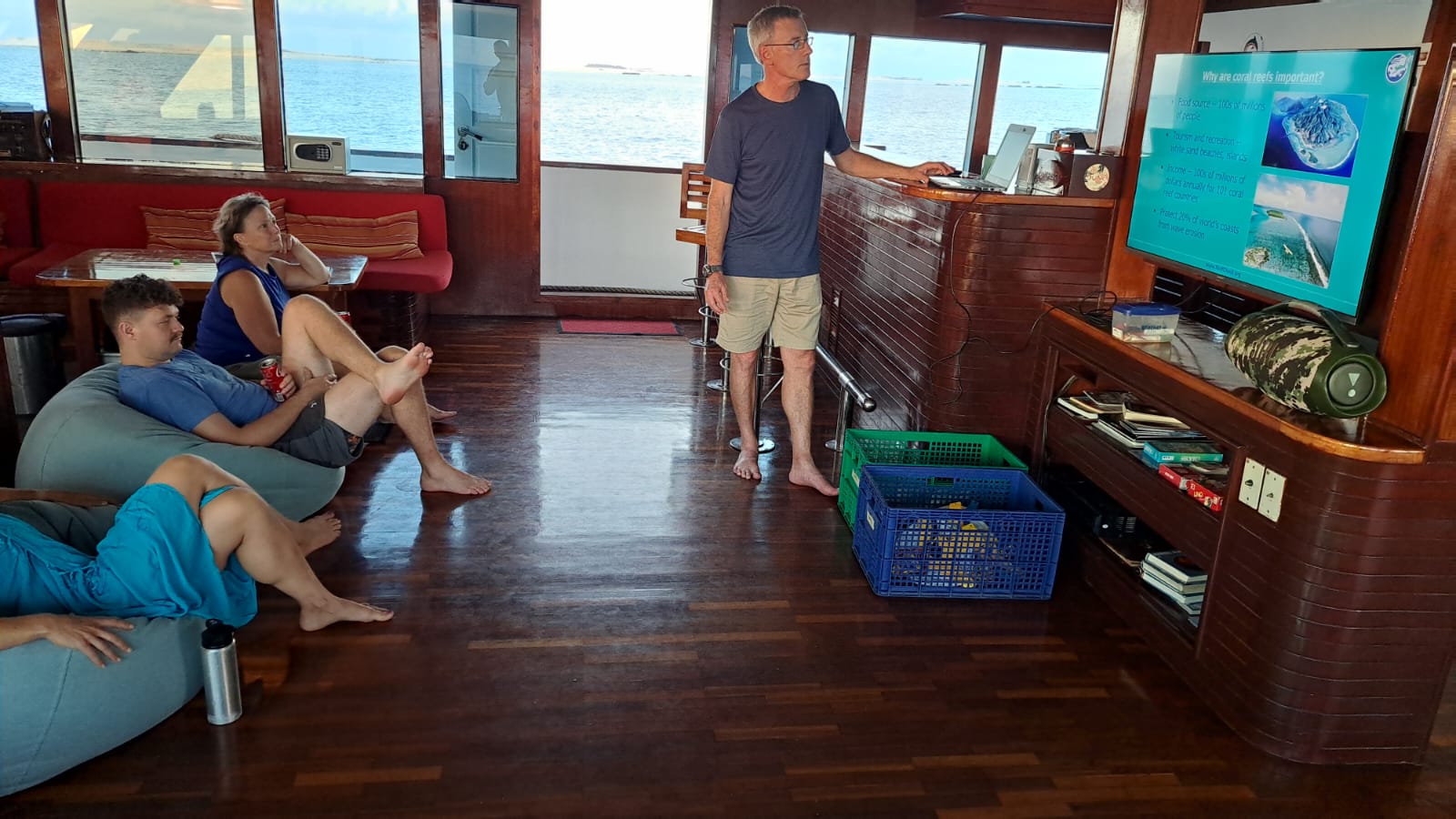
Training to be a coral reef volunteer
The expedition began with two days of intensive training, in the water and in the classroom. Loulou and her fellow conservation volunteers learned to identify indicator species – fish, invertebrates and substrates – and were tested on their knowledge before being allowed to collect real data.
For Loulou, a visual learner, this process was particularly rewarding. ‘I loved visually distinguishing between species and learning their unique traits. It really resonated with me’, she recalls.
Then came the coral reef survey dives
‘Diving in coral reefs is already exciting’, Loulou explains, ‘but to contribute to monitoring them by recording observations was incredible. Being underwater really transformed my connection to nature from an intellectual level into something physical’.
One of the defining features of Biosphere Expeditions is its ethical approach to marine conservation and research. The organisation makes no promises of sightings and treats the ocean and its inhabitants with respect, allowing wildlife to behave naturally without disturbance.
The work the citizen scientists do during the expedition can be demanding but it is balanced by the supportive environment on board. Loulou agrees: ‘Many conversations with amazing people really had a big impact on me’.
‘Diving while writing on a slate makes you feel like an avid researcher and that you are contributing to something beyond yourself. Truly unforgettable’, Loulou reminisces with a smile.
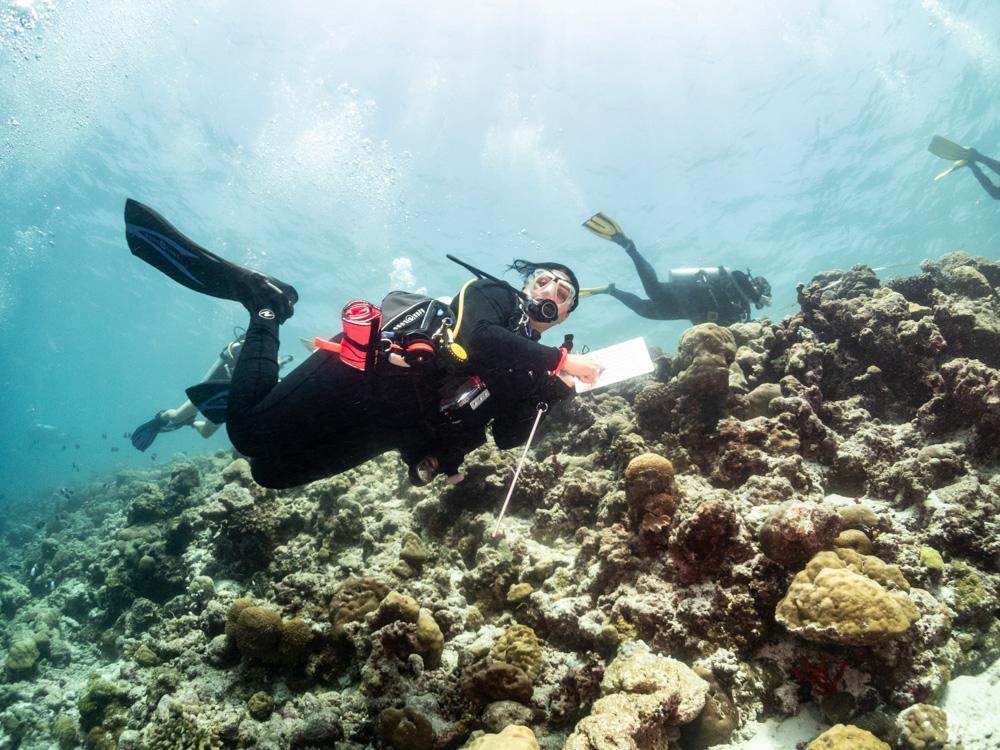
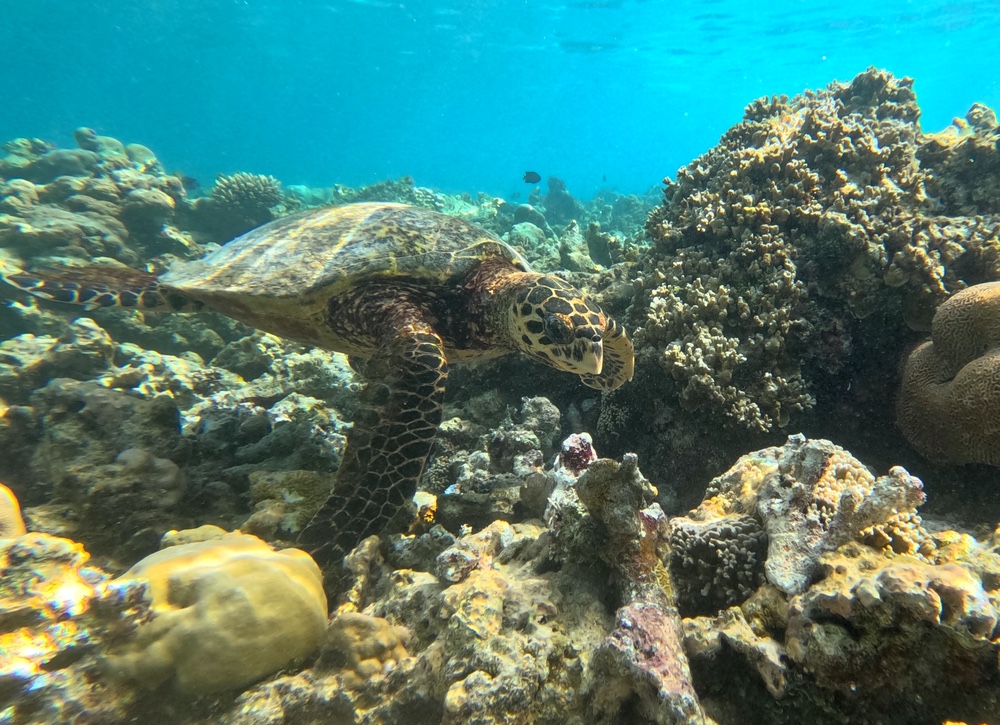
On one dive, Loulou and her buddy carried out a fish identification survey on a particularly healthy, biodiverse reef – where a turtle swam calmly along the transect line, seemingly unbothered by their presence. On another, she encountered an octopus, an experience she describes simply as ‘ineffable’.
To be part of this expedition, participants need at least a PADI Open Water qualification. Loulou especially appreciated the supportive environment, as well as the balance between work and leisure.
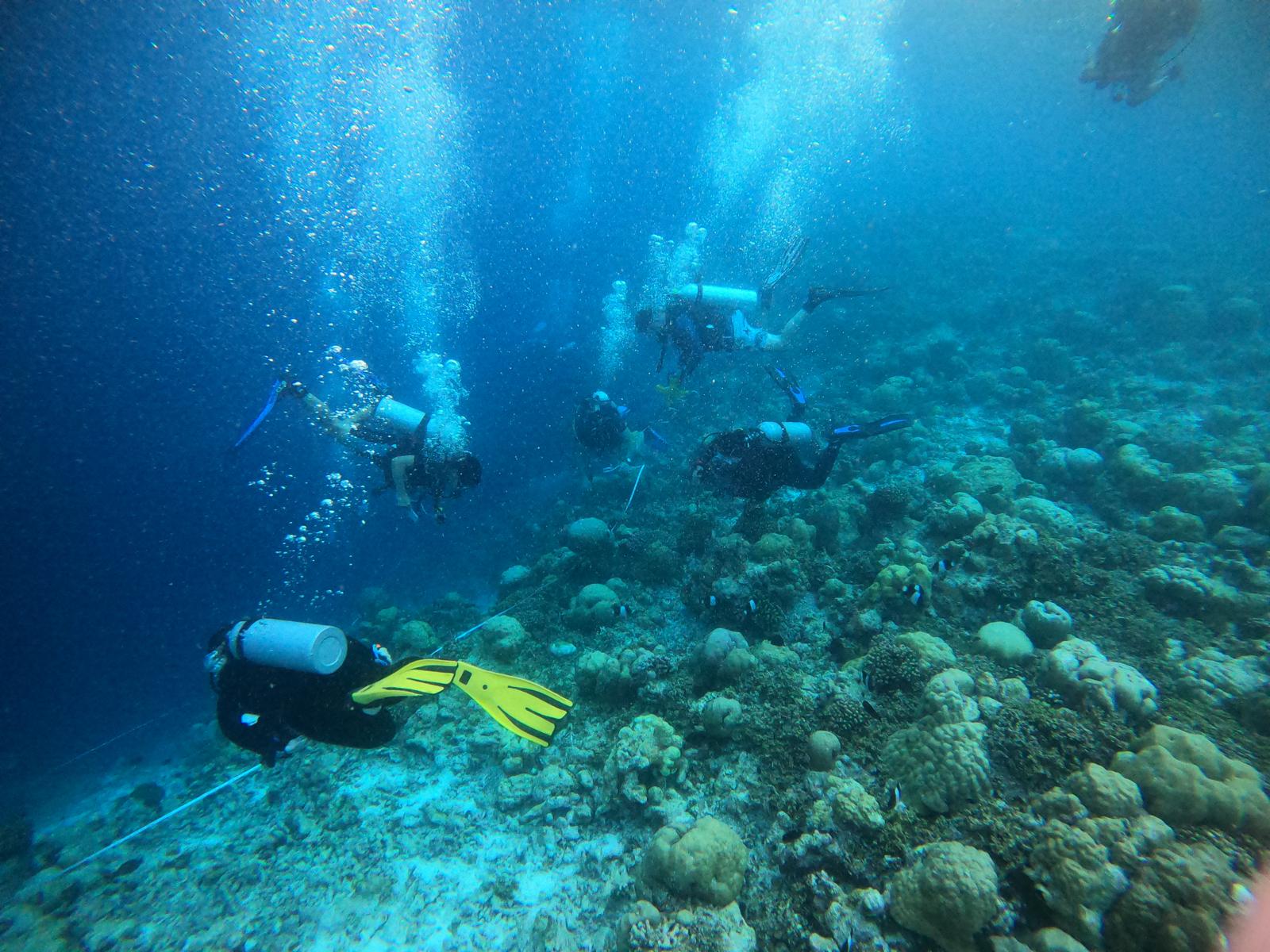
‘I really love how we had a balance of survey dives and ‘pointless’ (as Biosphere Expeditions calls them) dives. This gave us a duality of diving experiences where in some we would be focused and at work and others where we would just be swimming around soaking in all the beauty’, Loulou says.
Above water – the impact of the expedition team experience
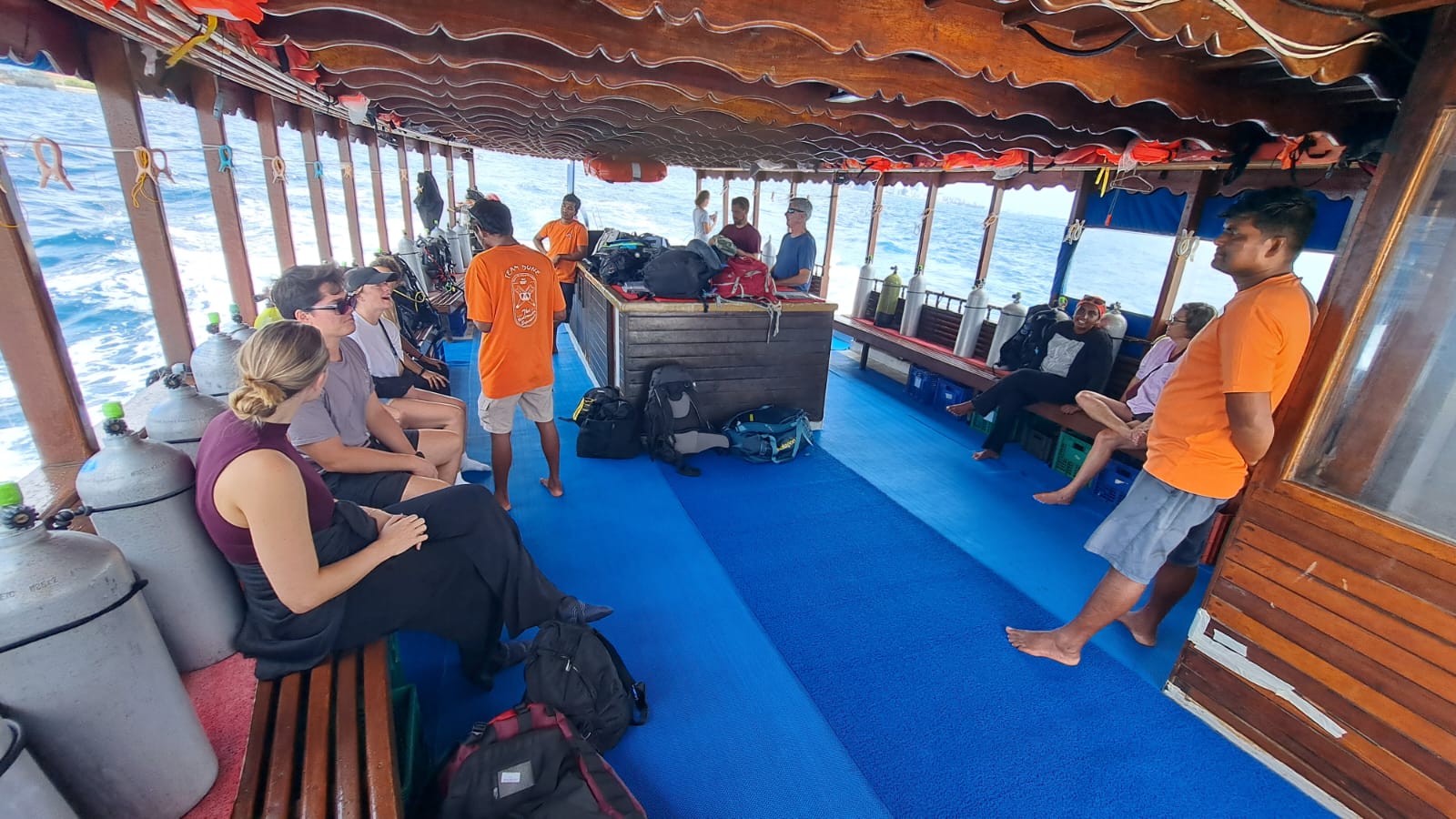
Above the surface, the connections were just as meaningful. ’Living and working closely with others from around the world deepened my sense of perspective – not only about conservation, but about life itself’, says Loulou.
Each expedition in the Maldives consists of up to 15 volunteer citizen scientists, an expedition leader and a professional scientist, who come from all over the world. On top of that, there’s the crew and local placements who tend to have a diverse background as well. Together this creates an inspiring multi-cultural environment, which often sparks the meaningful conversations and connections that Loulou mentions.
During the 2025 expedition, Loulou, along with her fellow citizen scientists, surveyed 11 reefs: Some sites showed stable or improving coral cover, especially on ocean-fed outer reefs, while inner lagoon sites, more exposed to warming and stress, continued to struggle.
These data collected by Biosphere Expeditions volunteers feed into planning for marine protected areas and help guide management decisions focused on safeguarding reef ecosystems and charismatic species such as whale sharks.
What the future holds
The expedition did more than just reinforce Loulou’s passion for marine ecology; it reshaped her future ambitions. She is now particularly interested in joining the Azores expedition, eager to continue contributing to marine conservation efforts.
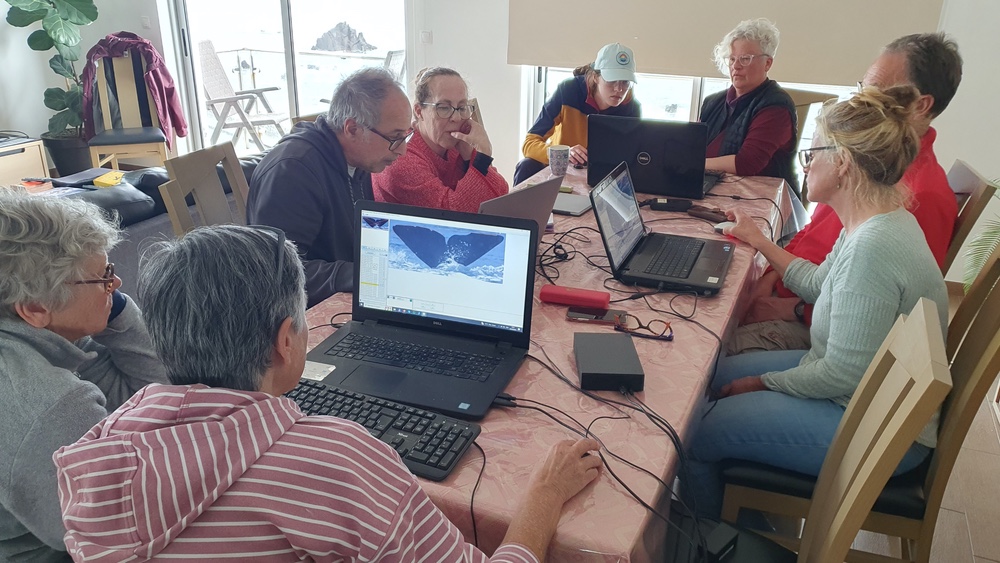
‘There is nothing better than doing this work in a foreign country’, she says. ‘You learn so much beyond conservation alone’.
She urges anyone considering a Biosphere Expeditions adventure to take the leap.
‘Just jump the plank and do it no matter your fears and doubts. I can guarantee that you will end up surprising yourself and having one of the most enriching experiences in your life’.
She adds, ‘The expedition made me confirm to myself that I need to spend more time working abroad and my friends and family recognised that too’.
Her final reflection captures the lasting impact of the experience:
‘During daily life, humans have the tendency to get caught up in little things. If we really took a step back and realised just how much impact we have on the grander things (i.e how we can adjust our lifestyle for the planet, the fact that we share the planet with so many other creatures that have evolved fascinating traits over millions of years as a response to changing climates/conditions), I believe we would be much happier and would find more meaning. At least this is how I felt coming back from the expedition. There is a huge world beyond. We just have to stop and look’.
Join Biosphere Expeditions
As an award winning non-profit organisation Biosphere Expeditions organises new expeditions each year, in a wide range of countries.
Travel with us to remote and beautiful places, learn new skills, meet like-minded people from around the world and experience conservation travel in action.
Author: Liesl Hammer
Liesl Hammer grew up bilingual in England and Germany with a passion for writing and conservation and holds an English Literature with Creative Writing degree. As the daughter of Biosphere Expeditions’ founder and executive director, she has been on many expeditions, for example to Namibia, South Africa, Oman and Maldives, where she was always captivated by the different cultures, wildlife and wild places she found. Combining all these interests, Liesl now has her own business, helping organisations and businesses improve their social media presence and quality of writing, which is exactly what she does for Biosphere Expeditions – from creating a social media strategy to producing a blog to looking at communication in wildlife conservation.
 Biosphere Expeditions: blogs from the frontline of wildlife conservation and the fight for a more sustainable planet