
Shaha Hashim is a pioneer in the conservation movement in the Maldives. Her passion started at a young age when she “was lucky enough to be selected for the school snorkelling club where I witnessed the vibrant beauty of the corals before the 1998 bleaching event devastated over 90% of them.”
Many corals have grown back since and Shaha never lost her dedication to them. In 2014 Shaha joined Biosphere Expeditions, an international non-profit citizen science organisation, which supercharged her conservation career.
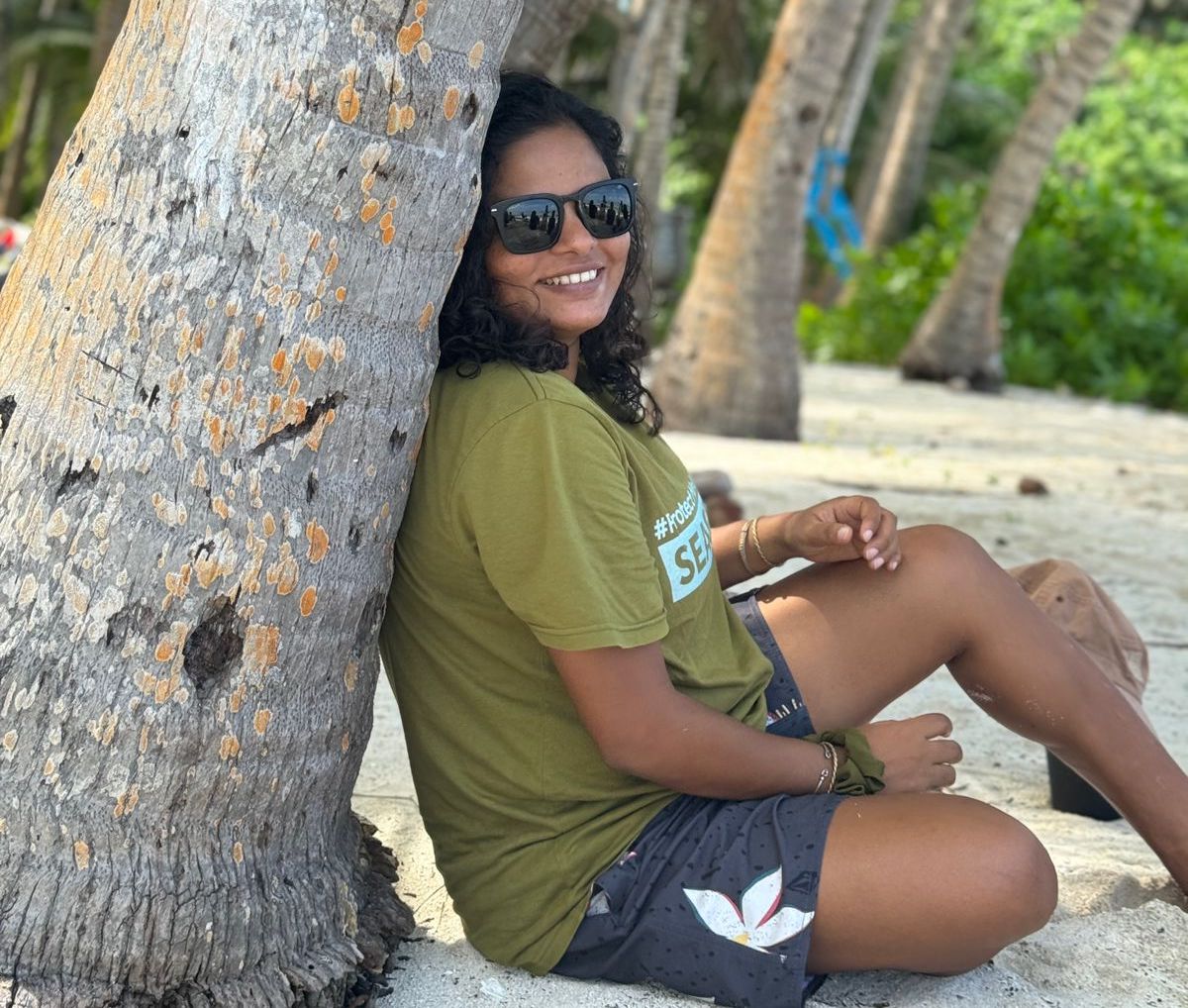
“I’ll never forget the first time I saw coral reefs – their sheer beauty was overwhelming. Now, I want to see a Maldives with strong collaboration between national and local governments, as well as civil society in conservation projects.”
Although the Maldives are an ocean nation, many locals do not have the time or money to experience the beauty of the reefs. The ocean is largely seen as a workspace and it is often too expensive for local people to enjoy recreationally. It was similar for Shaha: “I only saw the ocean once or twice a year on family picnics at the beach and never saw what was like under the water”, she recalls.
After school and its snorkelling club, Shaha began working for the UN Development Programme and went diving on her weekends. She knew her family would not approve of what she was doing, so she “simply didn’t tell them.” In the Muslim culture of the Maldives, women are by and large regarded as home-makers, looking after their husbands and kids. Working in the ocean is unfeminine. But Shaha did not care. The ocean’s pull and the desire to make the world a better place was too strong. She defied norms and pursued her dream instead. She spent enough time travelling for work that no one would ever suspect a thing.
“I felt an urge to work in conservation when I started talking to fishermen.”
Shaha first encountered Biosphere Expeditions in 2014 when she “actively began looking for conservation opportunities. She was just googling things and found their placement programme. It was a no-brainer. This was her stepping stone – she wanted to get more involved with conservation, but there were limited opportunities in the Maldives. The Maldives became a tourist destination in the 1970s, at the expense of the uniquely wonderful marine life. However, this also brought international scientists, including those of Biosphere Expeditions, who were invested in protecting coral reefs.
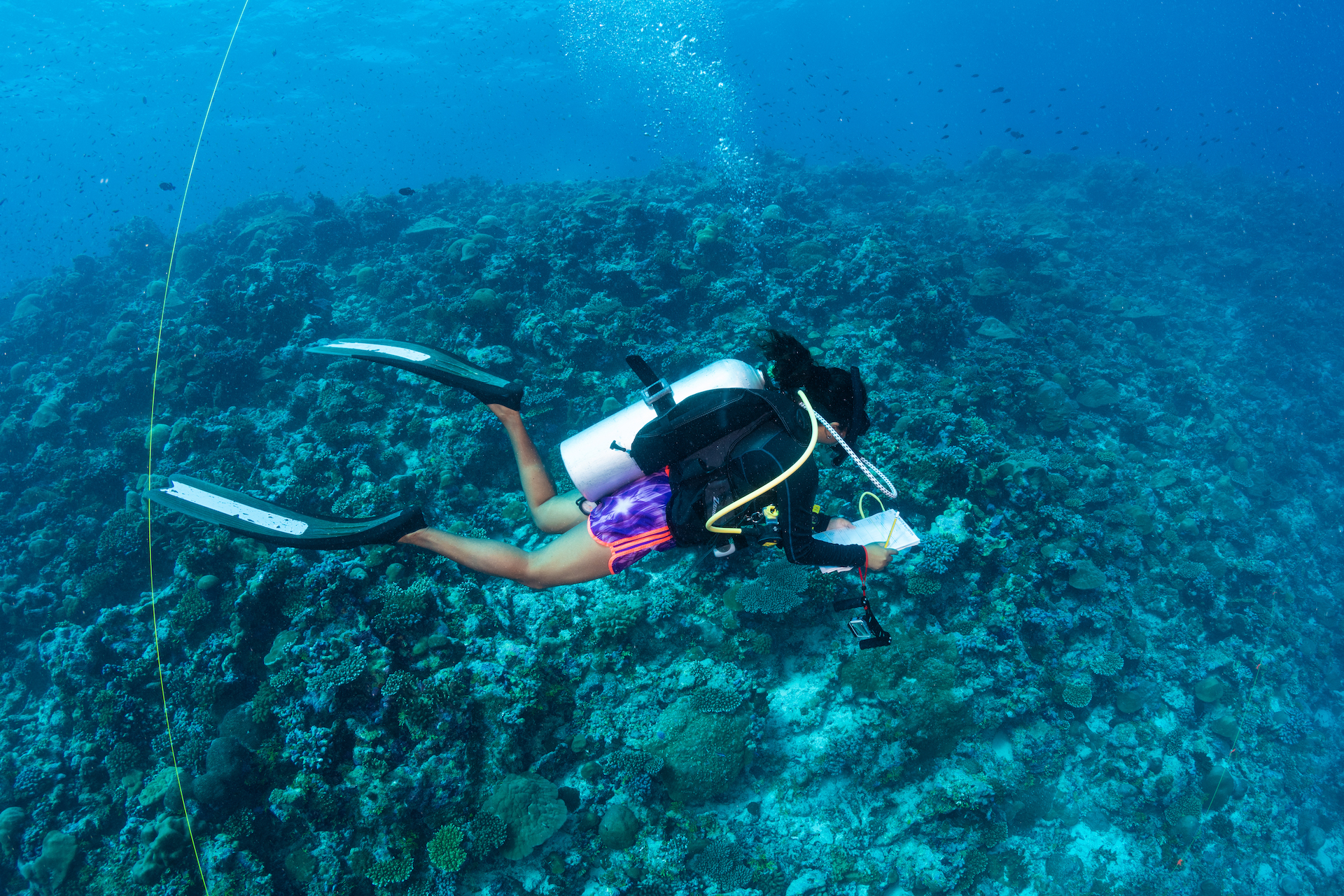
Not only was Biosphere Expeditions instrumental in how Shaha saw the world, it also made her more curious and “led her to the next step in her scientific surveys. Through the partnership with Reef Check, Biosphere Expeditions “gives you a broad understanding of whale shakes, invertebrates and fish in a simple way that you can then build on,” remembers Shaha.
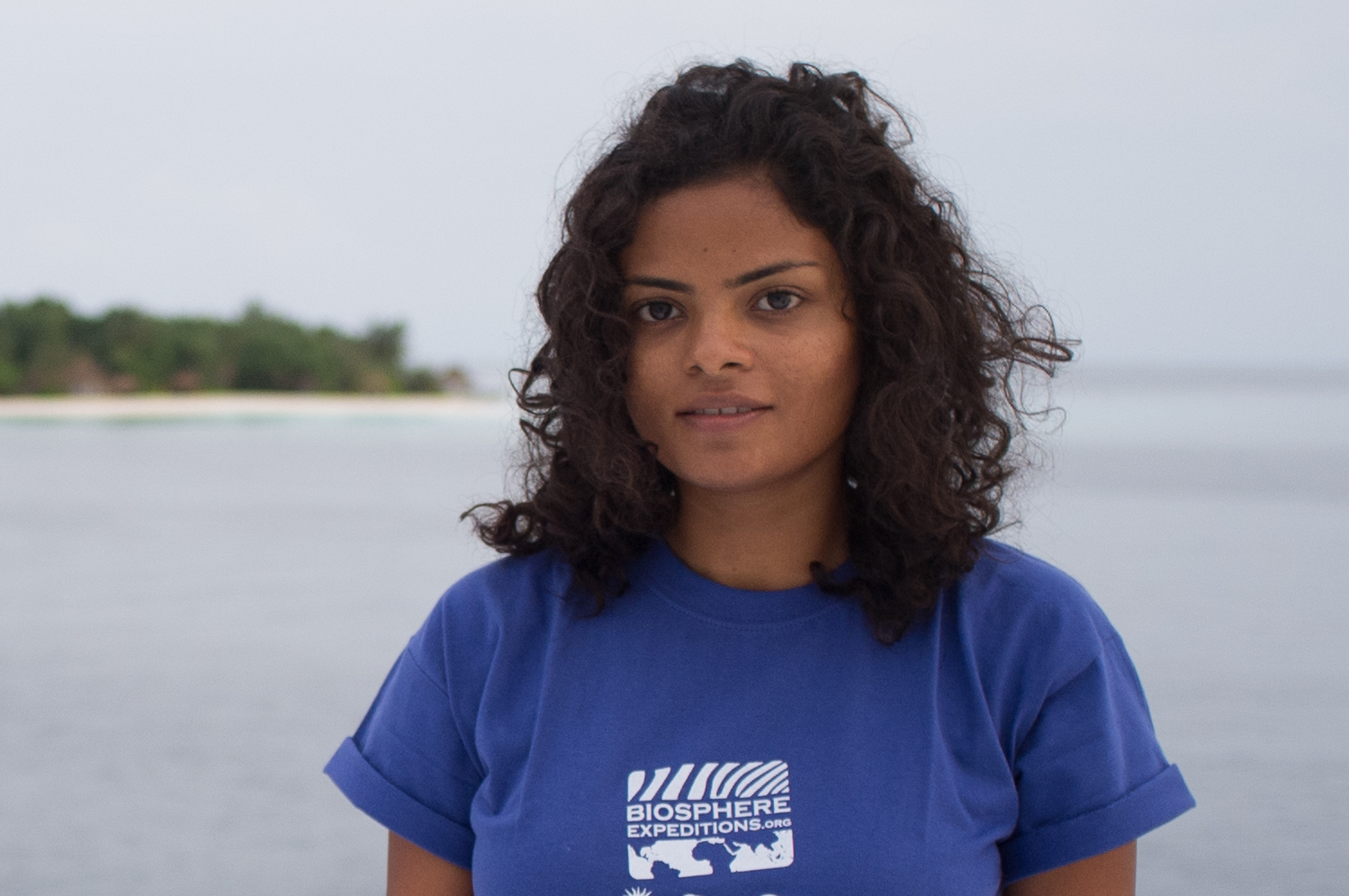
When asked about her experience with Biosphere Expeditions in particular, Shaha says, “going on that expedition was the first time I spent a week in a confined environment with a dozen citizen scientists from all over the world, trained in reef survey work and then took part in surveys, all using the Reef Check methodology. I was shy in nature, wasn’t confident in my knowledge and thought others would know lots more than me, but I soon realised others were the same and I felt confident with them pretty quickly.” And it wasn’t just her fellow volunteers with whom she got on with. “The liveaboard crew and the Biosphere Expeditions scientist and expedition leader were all super supportive .”
“People can be reassured that they will receive a good experience, which they can get the best out of.”
After Shaha’s first experience with Biosphere Expeditions, she wanted to do more. She “started going to the ocean more often. Tried to go swimming or snorkelling every day before work by moving down south. This also meant there were fewer tourists.” Ever since then, Shaha has worked in conservation, won awards and has become highly acclaimed in the Maldives.
“Conservation of feels like an uphill battle,” and tourism and capitalism make it harder. Since the 2000s, land reclamation has spread across the country and it has intensified. Huge lagoons are being reclaimed for tourism. More money is being spent on building more infrastructure.
Shaha Hashim’s experience on the expedition set her on a trajectory that would see her become the Chairperson of Maldives Resilient Reefs and manager for the Blue Marine Foundation.
“We have proven that conservation can be successful if done correctly. Now we have established small models; we just need help to upscale this on a national level.”
The most important takeaway when it comes to conservation? “Some people feel like the issue is too big to change, but if every person adjusts their lives in a small way with consistency, persistence and visibility, I think we as humankind have the power to change things for the better. We have done it before.”
 Biosphere Expeditions: blogs from the frontline of wildlife conservation and the fight for a more sustainable planet
One Reply to “”