
Update from our marine conservation volunteering holiday in the Azores archipelago, working on whales, dolphins and turtles
The bad whether seemed relentless as Friday approached, so the team stayed onshore and developed their photo-ID skills, becoming increasingly efficient in photo-analysis and matching, making our scientist Lisa very happy. Claudia Oliveira, a sperm whale expert from Azores University, visited us to give great talk on acoustics and photo-ID research to elucidate sperm whale behaviour and the impact of whale-watching boats. In the evening, we watched the National Geographic ‘Secrets of the Whales’ episode.
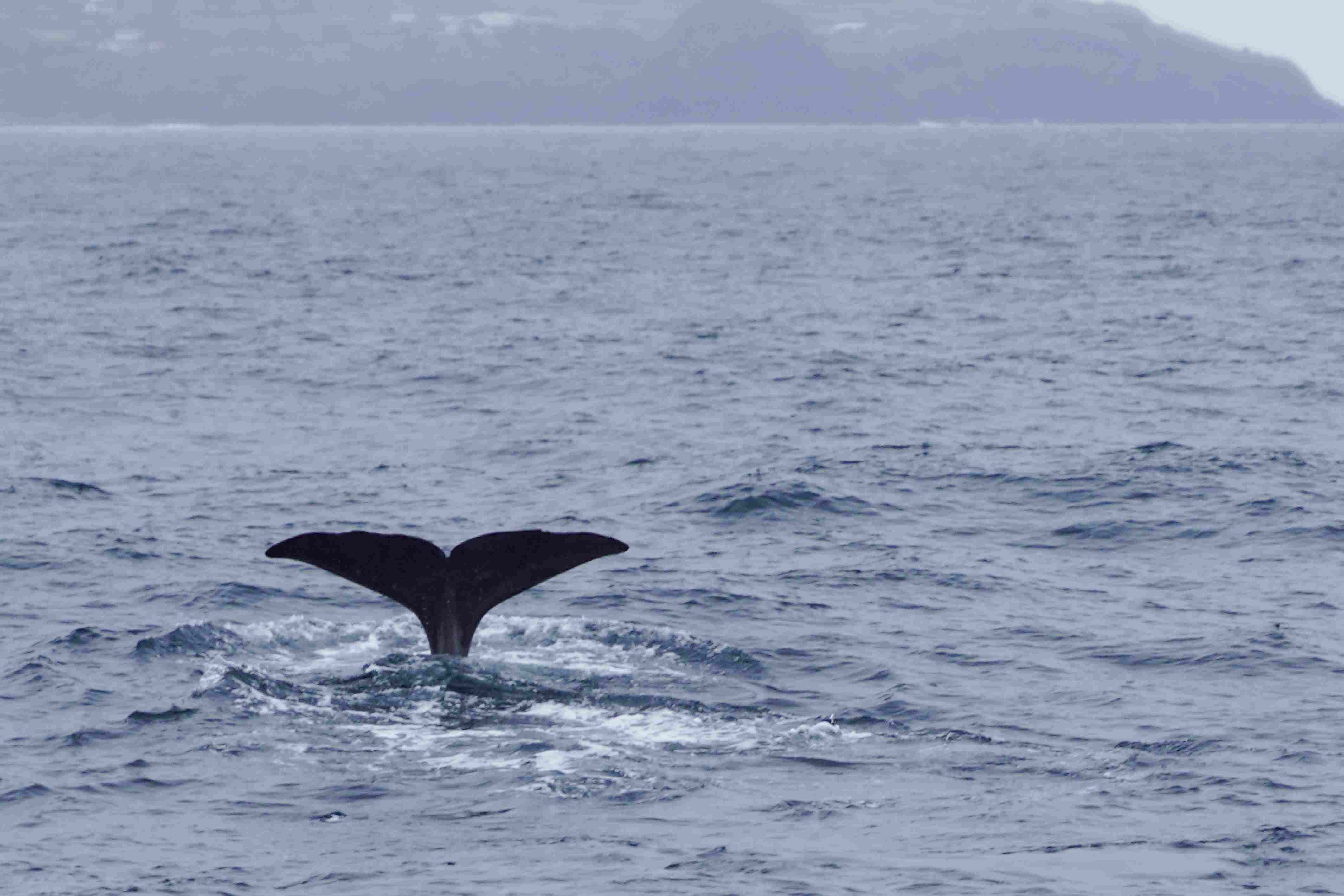
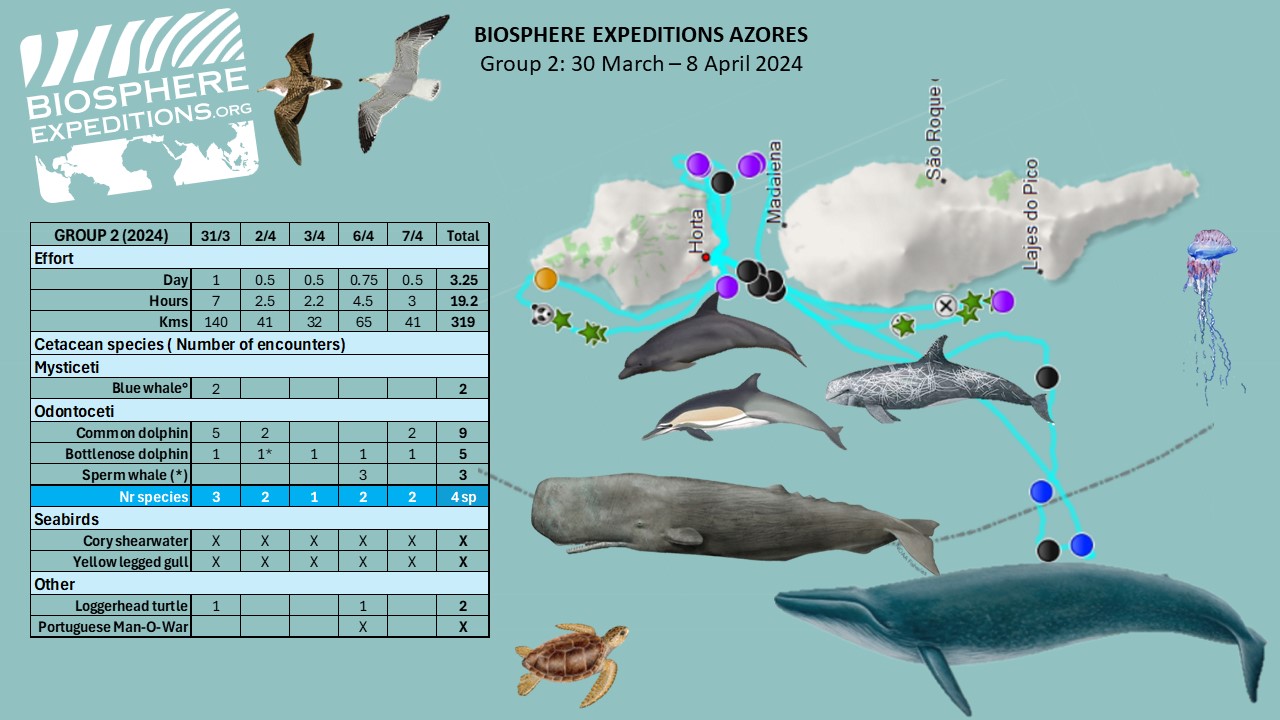
The team was determined to go out on Saturday, even if the sea was at its roughest, with the catamaran dancing on the waves, lots of sea spray everywhere and very high waves. Everyone was confined to the upper deck to keep safe. With help from the on-land lookouts or ‘vigias’ we were treated ….at last …. to three sperm whale sightings. The first glimpses of our priority species this season! Only one, a subadult male, fluked and then disappeared rapidly behind a high wave. Given the conditions, it was quite an achievement to get one good photo-ID shot. After spotting some more bottlenose dolphins, we returned to base.
On Sunday the Physeter was the only boat heading out, because … you guessed it right … of the rough weather. No longer phased by this, we collected more data regardless. We saw a large group of bottlenose dolphins were socialising, including leaps, splashes and lots of surface activity, ideal for taking a closer look.
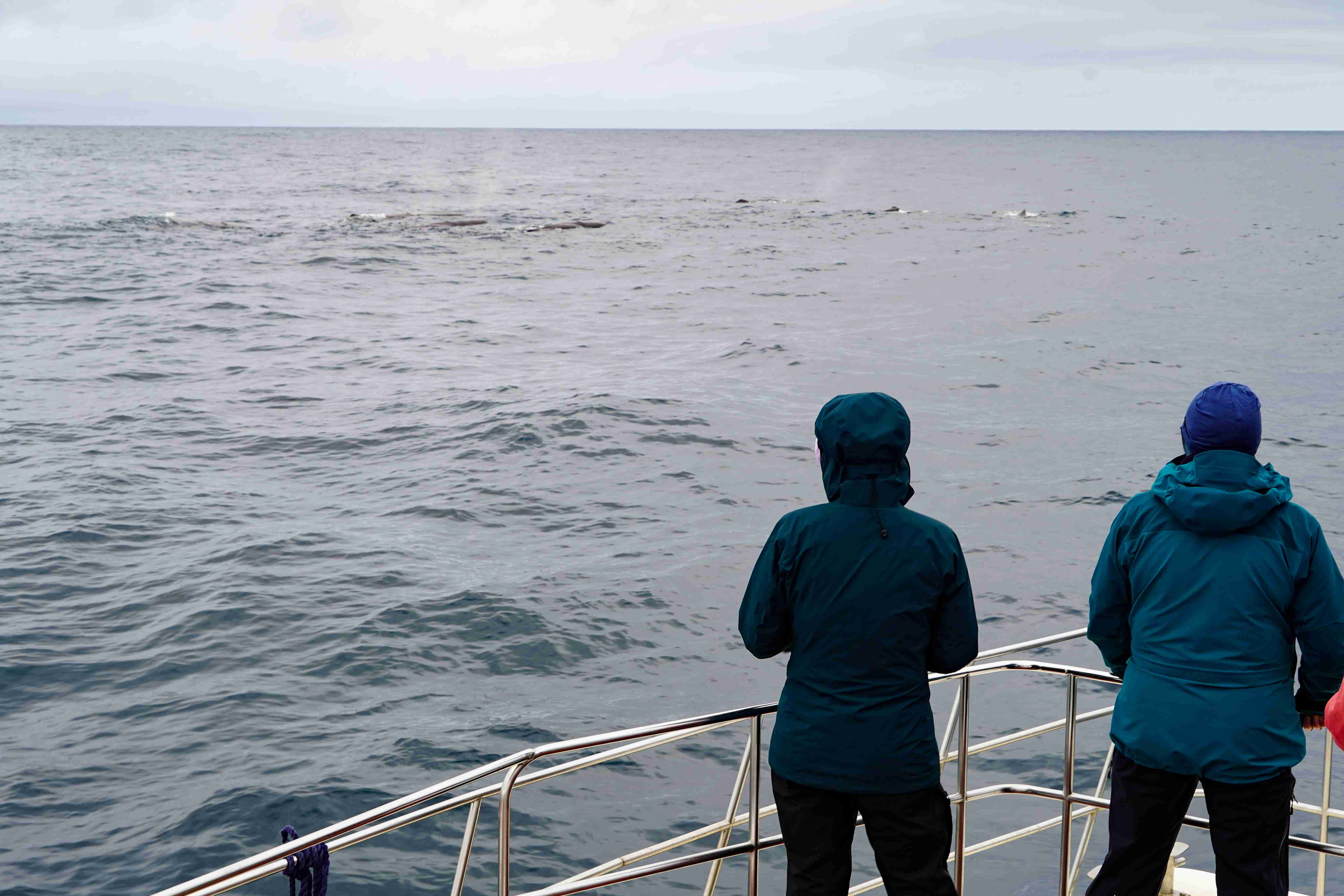
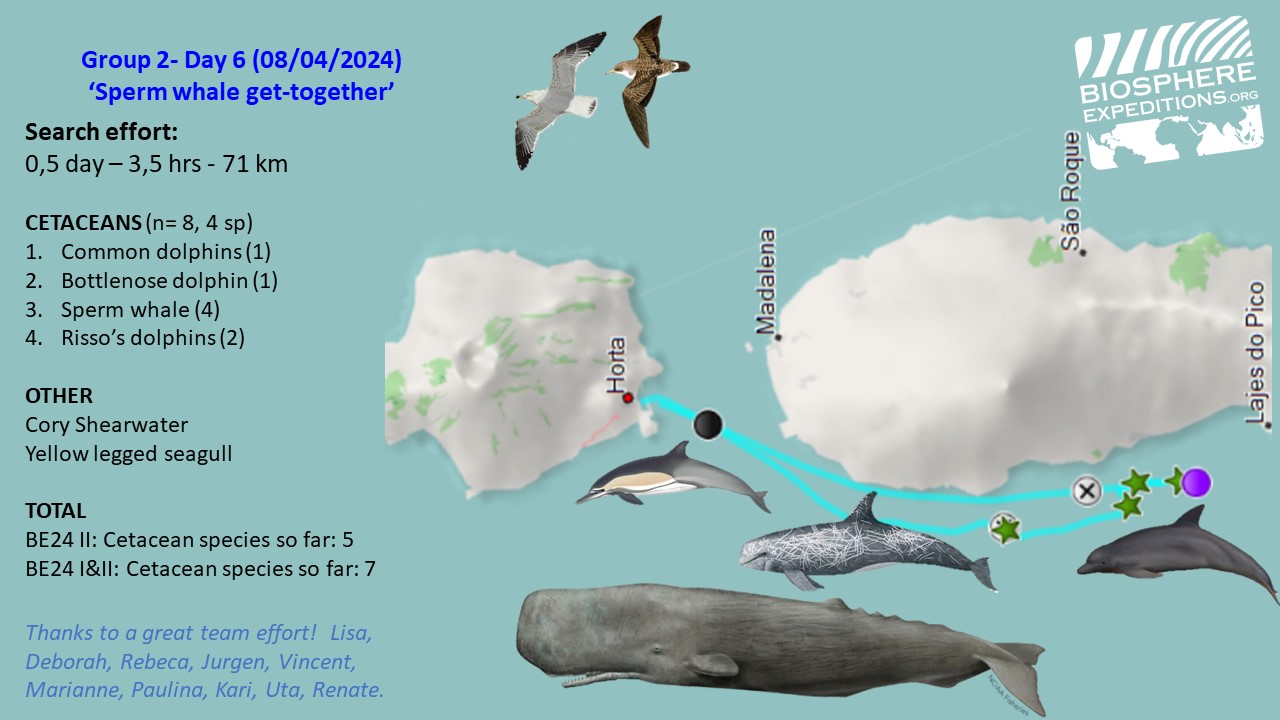
Monday was rainy and windy, but finally with calmer seas, so our skipper Norberto treated us to an extra long day. We added Risso’s dolphins as a new species for this second group and saw more than 12 sperm whales, initially spread out widely, but slowly coming together at the surface. We also spotted a suckling calf, multiple females and several juveniles. We photographed two flukes, which Lisa matched to numbers ‘6249’ and ‘ 6253’ in the sperm whale database. These animals were last seen here in July 2018. It was a rare treat and a unique goodbye to our second group of expeditioners.
Thanks to everyone in the team for your flexibility in coping with the unpredictable weather and for a true team effort! Safe travels and we look forward to welcoming our third and final group of the 2024 season.




Update from our marine conservation volunteering holiday in the Azores archipelago, working on whales, dolphins and turtles
 Biosphere Expeditions: blogs from the frontline of wildlife conservation and the fight for a more sustainable planet