
Update from our marine conservation volunteering holiday in the Azores archipelago, working on whales, dolphins and turtles
Group 2 experienced a flying start on their first day with intensive training. Only Sunday’s weather forecast looked good to go out to sea, so we made sure to focus our training on all citizen science tasks on board to be ready for it.
After many rainy and windy days, Easter came with blue skies, calmer seas and lots of eagerness from the expeditioners to get started and test their sea legs. A lone bottlenose dolphin feeding just outside the harbour welcomed the team. Shortly after, when crossing the channel to Pico, we sighted a pod of common dolphins. A promising start!
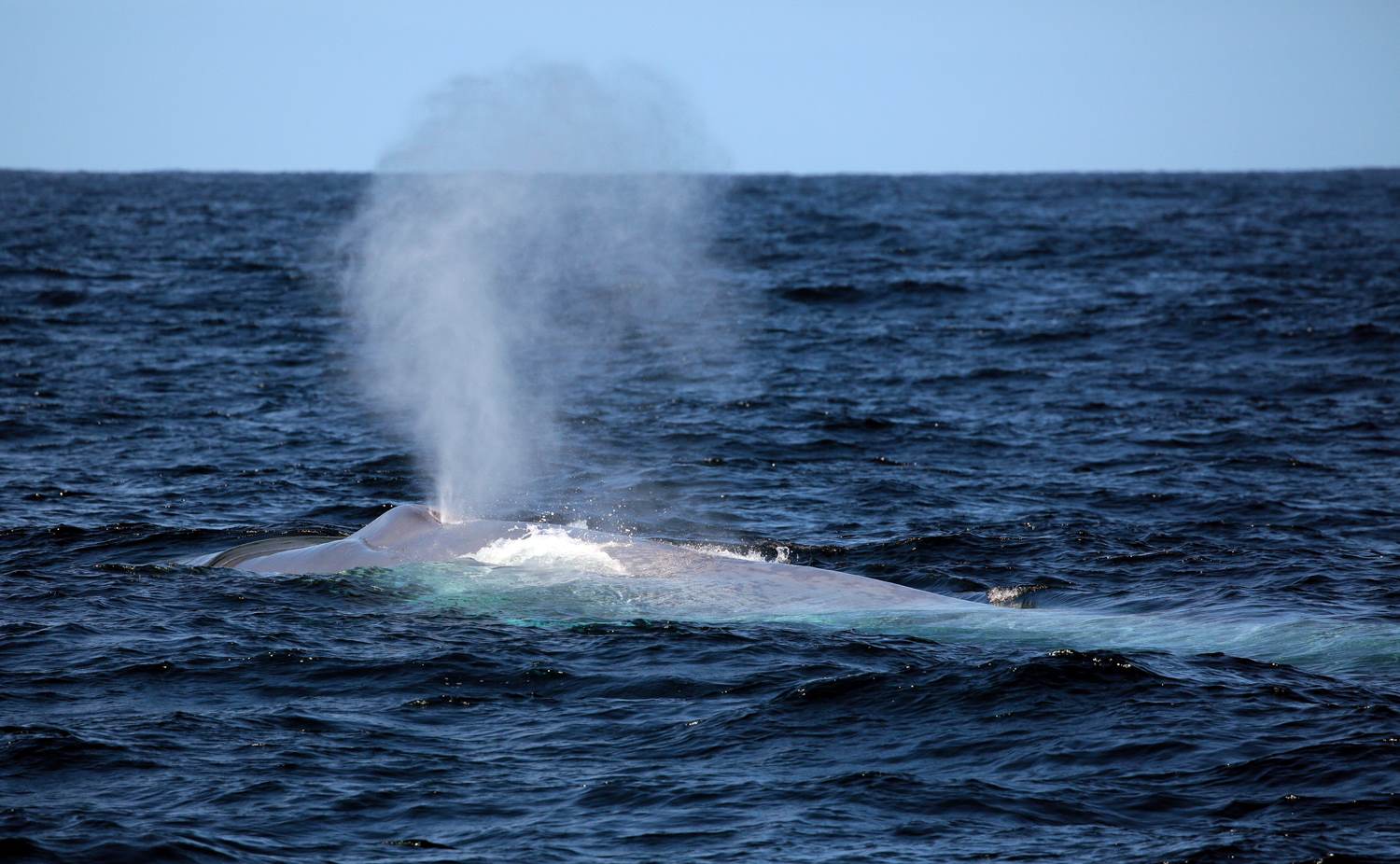
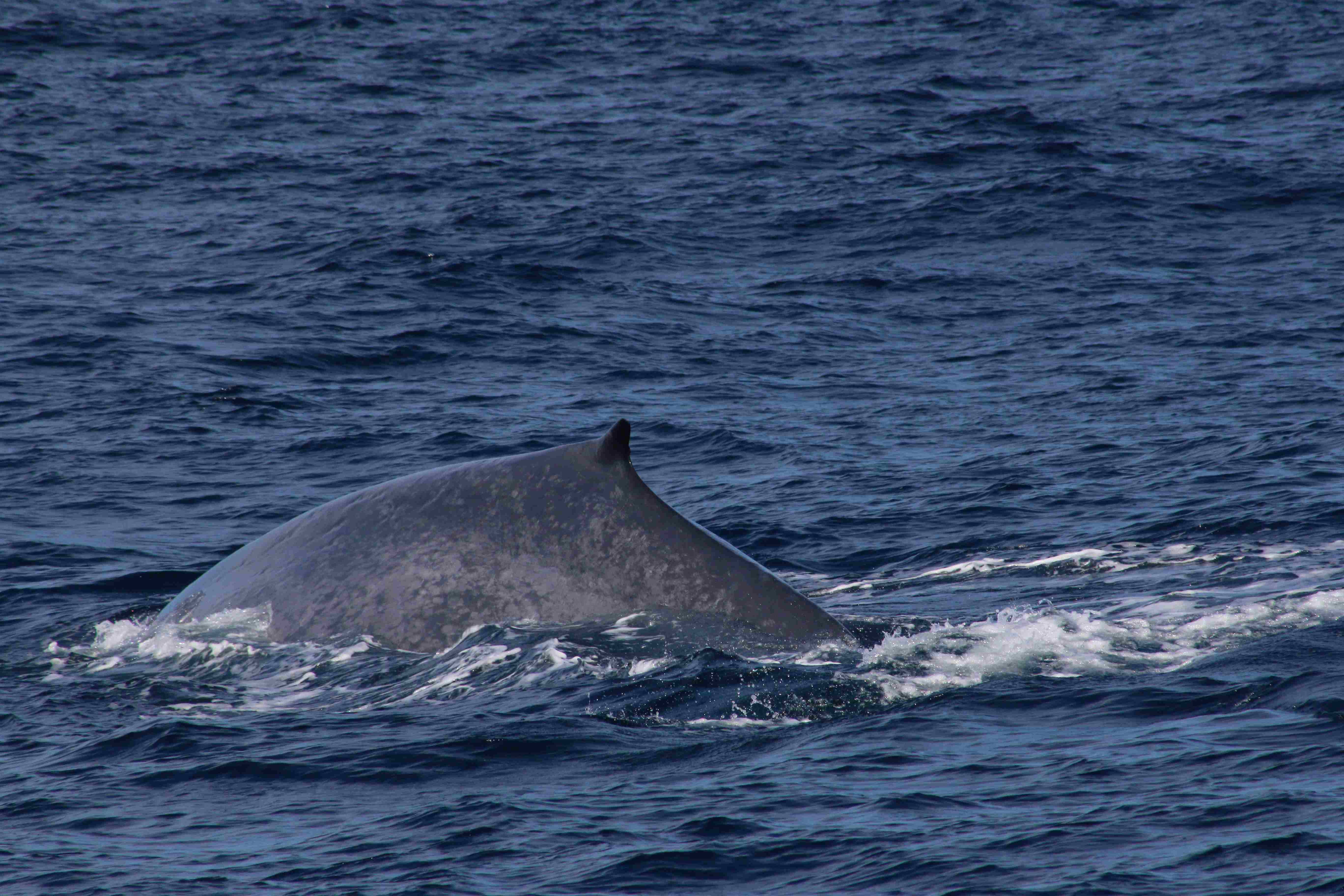
With north-westerly winds prevailing, we headed back out to the south of Pico, our main search area, lowered the hydrophone in the water to eavesdrop on a single sperm whale spotted by the ‘vigias’ on land, but could not locate it. We tried our luck further offshore, in search of an ‘unidentified’ baleen whale. A large blow in the distance got us excited … for many on board it was their first encounter with the largest living animal on the planet, the blue whale. Lots of ‘ooh and ahs‘ of admiration when the giant passed by, dwarfing our 12-m catamaran displaying its fluke not just once but several times. The day became even better when we spotted another slightly ‘smaller’ blue whale. Kari did a great job capturing it all on camera in high waves, Jürgen and Renate were busy collecting POPA data on the upper deck, Rebeca noted down sightings data on the lower deck, while Uta was perfectioning her bucket-throwing skills to measure water temperature.
On Monday the weather gods were merciless, with strong winds and high waves making it impossible to get out to sea. Onshore days are ideal for photo-identification, so we spent the day matching sperm whale flukes, as well as sorting out Risso’s dolphins, false killer whale and sei whale photos. We finished our day with a nice home-cooked enchilada dinner, dreaming of better weather and more sightings.






Update from our marine conservation volunteering holiday in the Azores archipelago, working on whales, dolphins and turtles
 Biosphere Expeditions: blogs from the frontline of wildlife conservation and the fight for a more sustainable planet