
Update from our marine conservation volunteering holiday in the Azores archipelago, working on whales, dolphins and turtles
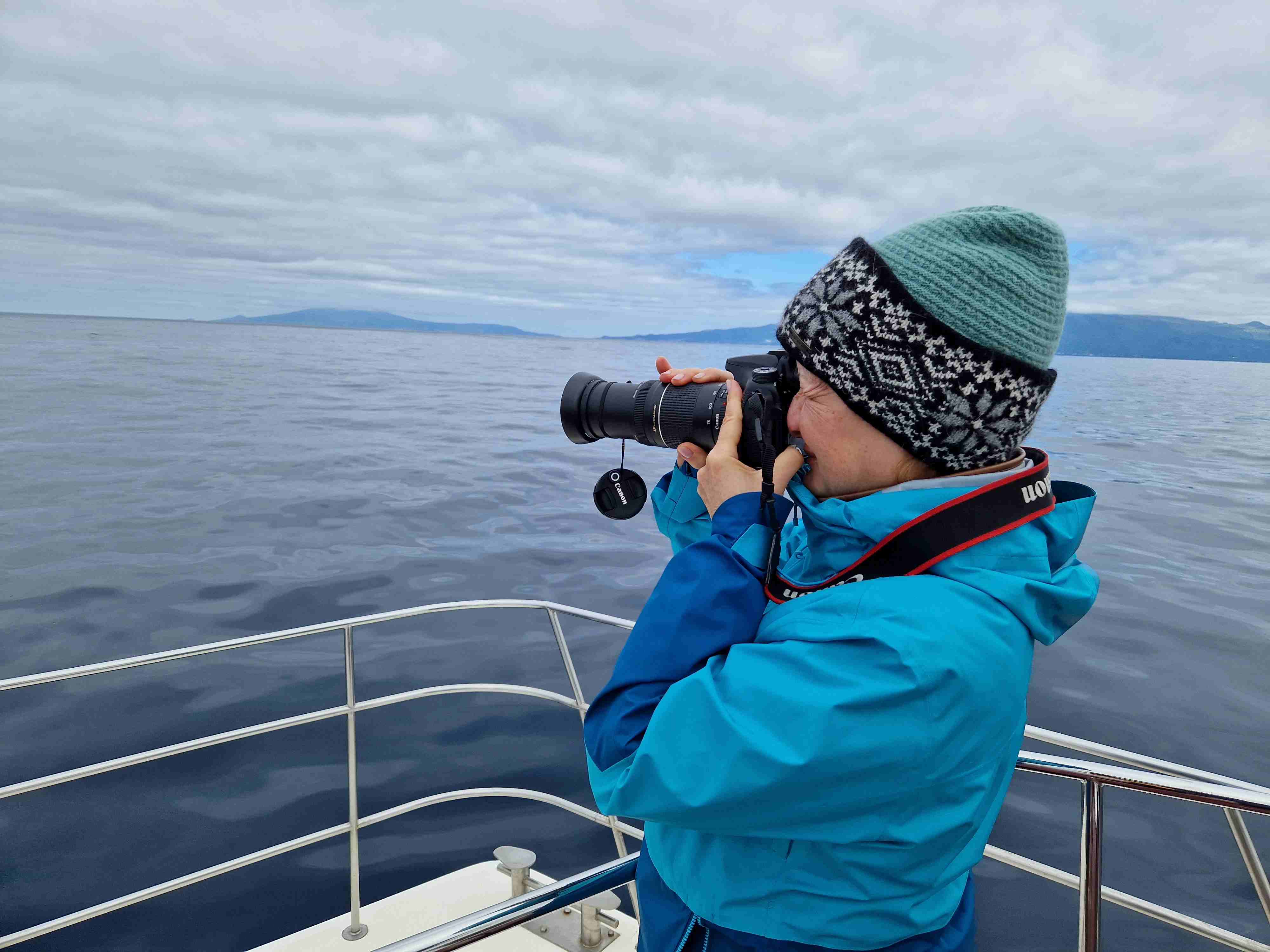
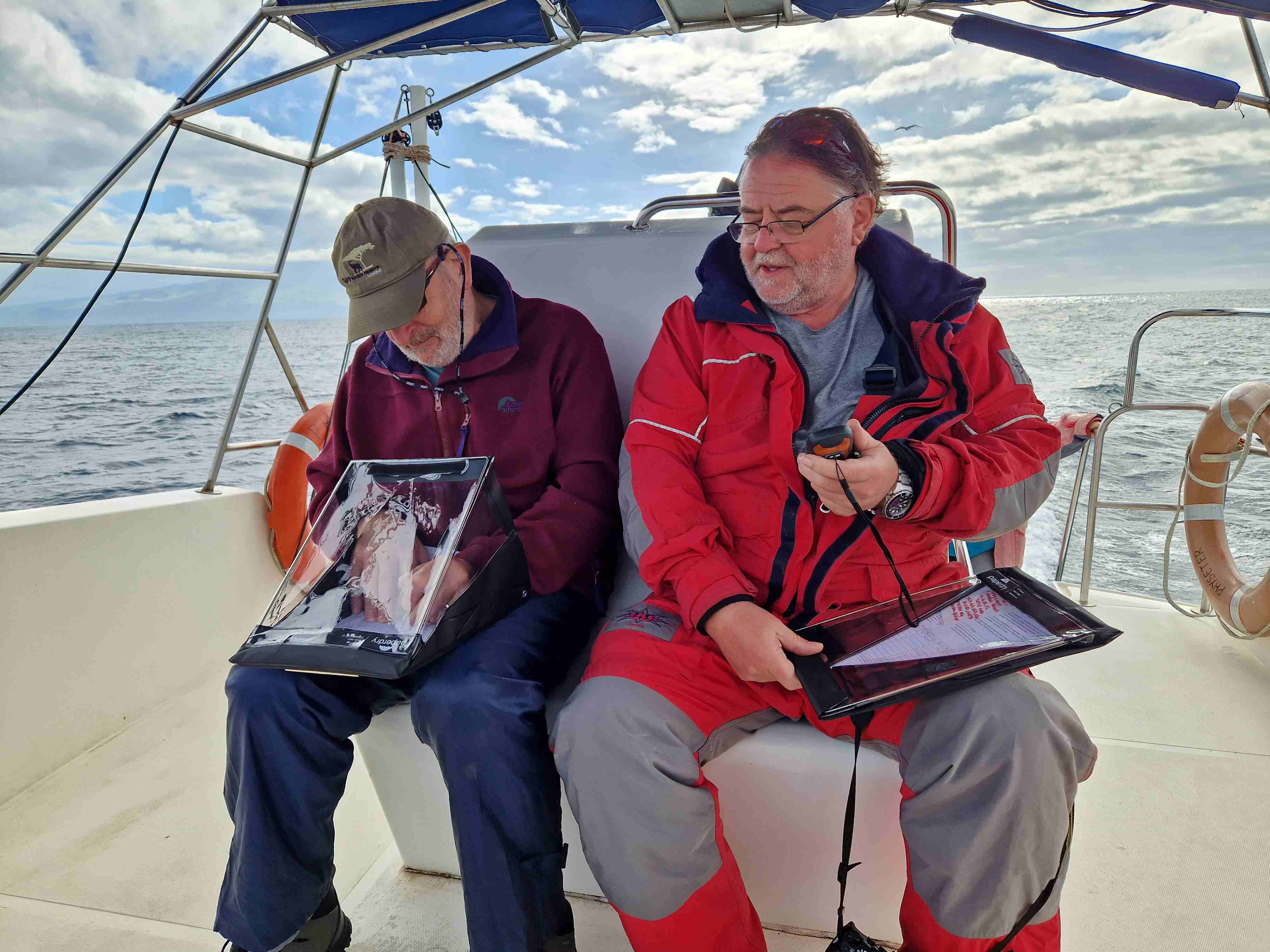
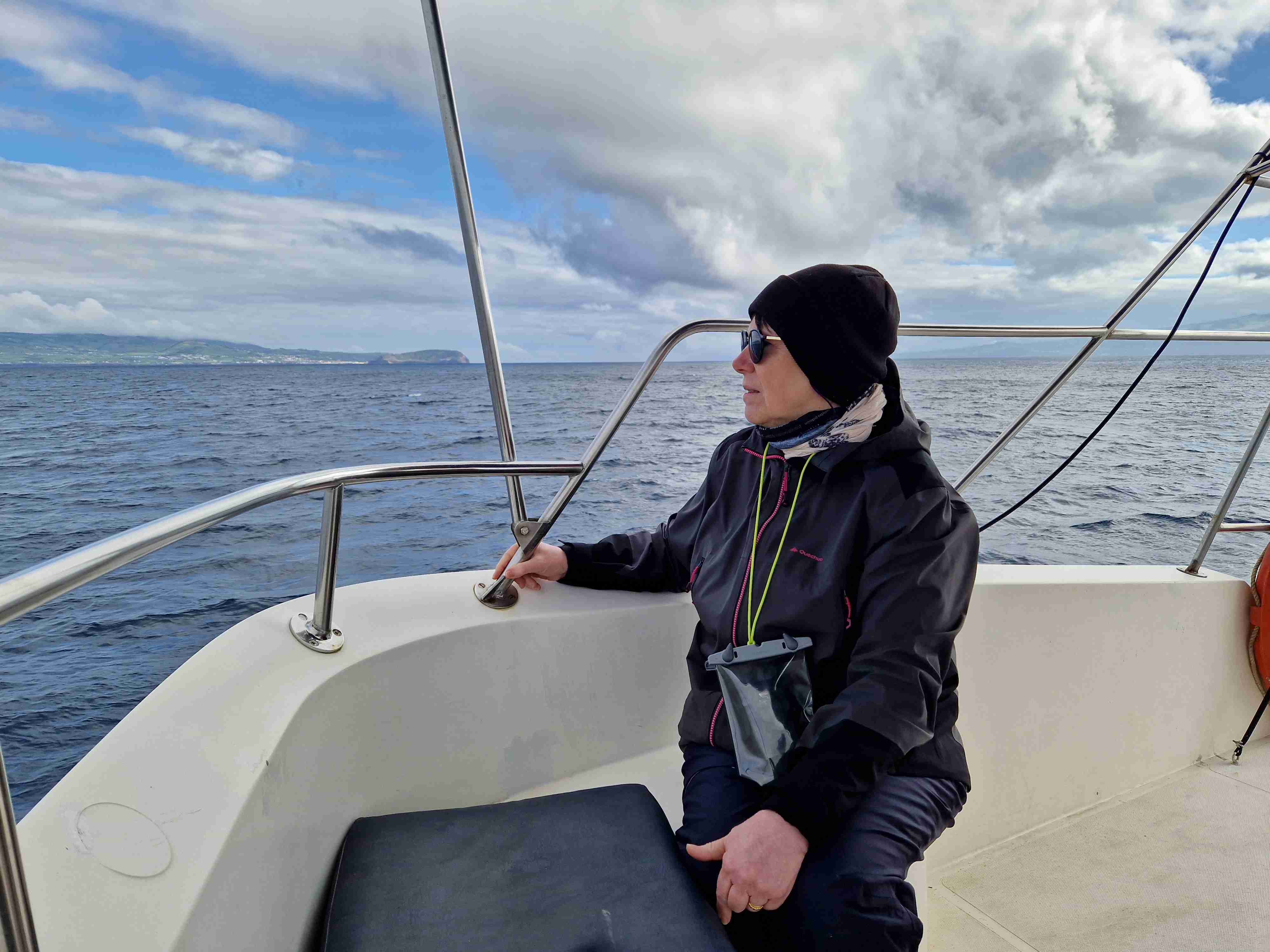
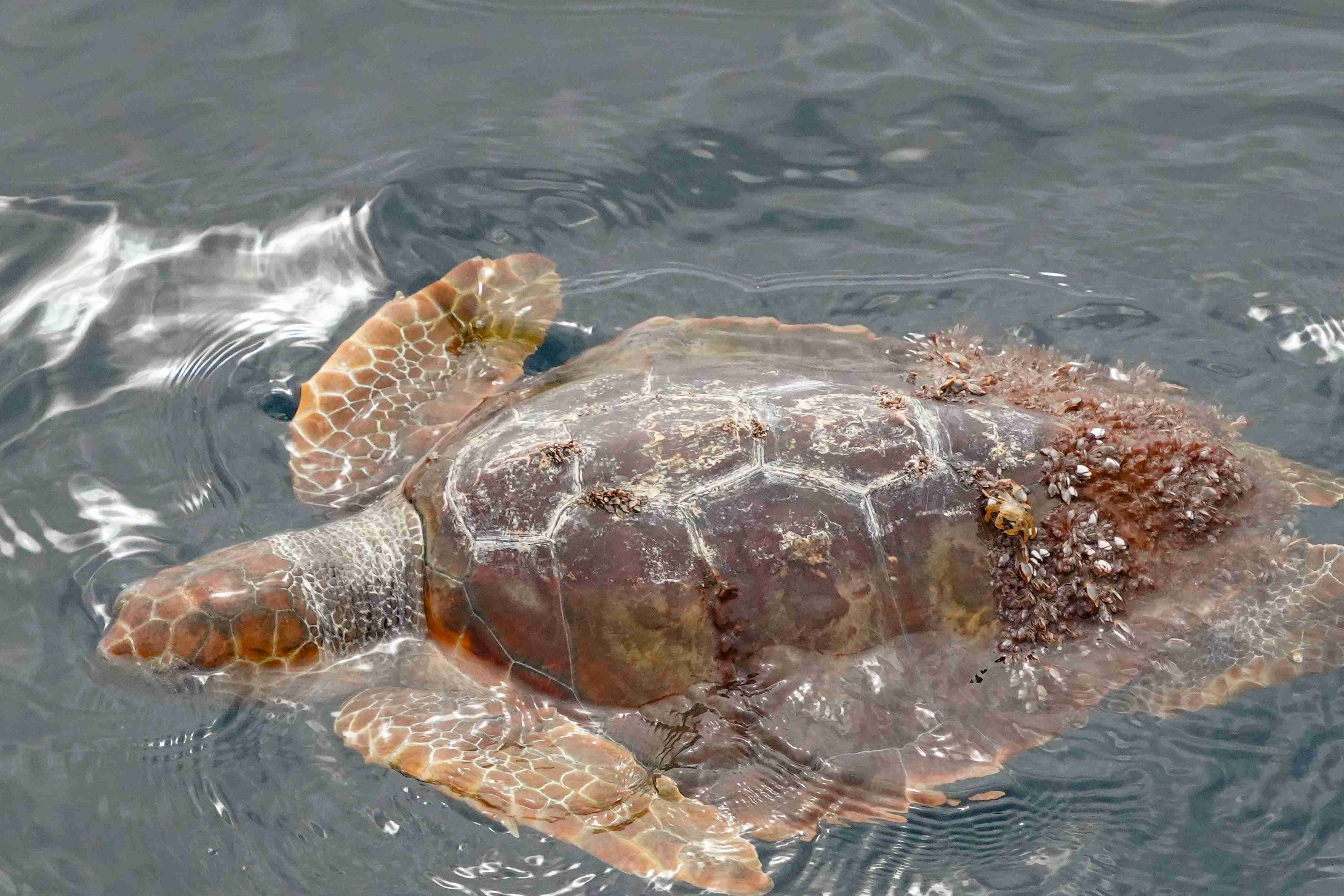
On Thursday it was smooth sailing on rolling waves. The topic of the day was clearly baleen whales. We did a return visit to the same giant blue whale still feeding in the same area. Then Nicole spotted a large fin whale twice, followed by Peter surprising us with the observation of the smaller minke whale. Quite remarkable, as they are hard to spot with almost no blow. An excellent day to memorise those identifying features, unique to each species. Meanwhile everyone is in the rhythm of the different roles to be performed on board. Also, thanks to sea state 1, with just ripples on the surface, we managed to get a good closer look at our first loggerhead turtle floating nearby the boat.
On Friday the sun came out. We covered a lot of distance in the morning with no sightings, except for a few elusive small groups of common dolphins. Southeast of Pico, a vigia guided us to a humpback whale feeding closer to shore. Another baleen whale species on our list, the fourth in only three days! Their white long pectoral fins make this species quite distinctive, as well as their coloured fluke, ideal for photo-identification. Another blue whale was feeding in that same area….
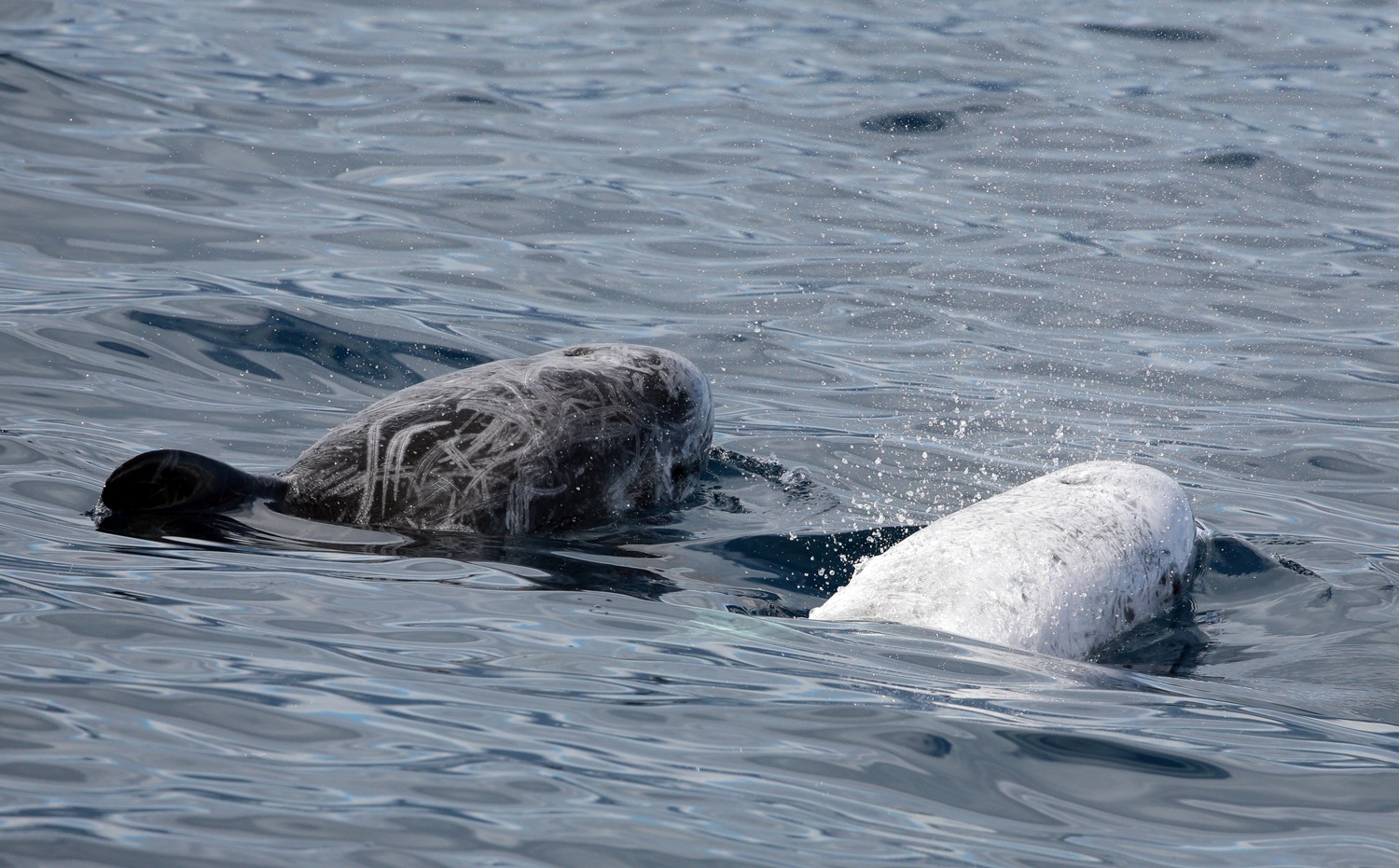
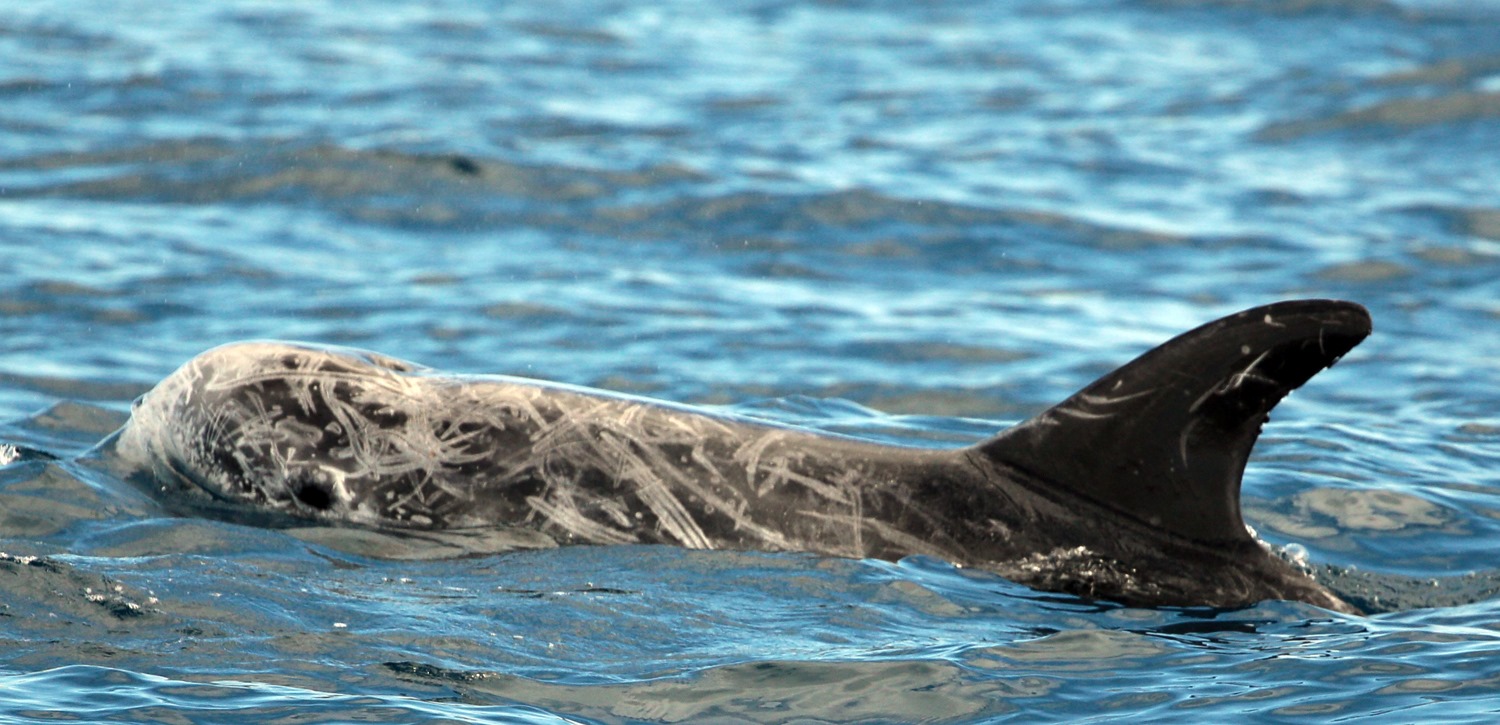
On our way back to Horta, we spotted Risso’s dolphins, also called the ghosts of the sea, ranging from black to white depending on the number of scars. The local expert Karin Hartman confirmed this is a relatively shy resident group of males, some of which have been seen already since 2000, with one female in the group being courted. Thus ended a long, tiring yet very satisfying day full of beautiful observations, rich in data and many photos for identification to better understand the migration patterns of the different baleen whales.


Update from our marine conservation volunteering holiday in the Azores archipelago, working on whales, dolphins and turtles
 Biosphere Expeditions: blogs from the frontline of wildlife conservation and the fight for a more sustainable planet