
Team 2 consisting of Ed (U.S.) in his second week, Sakia (NL), Connor, Martin and Tim (UK), Holger (D) and Vincent (S) have arrived safely on Sunday and are preparing to head out for the first full survey day. As ususal everyone ran through briefing and training sessions over the last two days. On the training walk on Monday, we went up and around Blatna lake again, tried the snow shoes in various terrains, recorded fresh wolf tracks, collected wolf urine from a marking place, saw a golden eagle and had a nice cup of hot chocolate at Pod Lipami. Everyone is now well prepared for the surveys to come.
From our conservation holiday volunteering with lynx, wolves, bears and wildcats in the Carpathian mountains of Slovakia (http://www.biosphere-expeditions.org/slovakia)
Video by ORF journalist Christian Cummings about our Slovakia lynx, wolf and bear expedition. A radio programme about this will be broadcast on Sat, 25 Feb 2017 on Austria’s ORF FM4 (see http://fm4.orf.at/chriscummins).
From our conservation holiday volunteering with lynx, wolves, bears and wildcats in the Carpathian mountains of Slovakia (http://www.biosphere-expeditions.org/slovakia)
On our last survey day on Friday the teams again walked more than 40 km overall, checking parts of the main valley, collecting some of the camera traps that were set on Tuesday, but also placing a couple more in promising spots, i.e. near a fresh wolf kill.
The snow conditions have worsened over the last few days. It’s been thawing during the day and freezing at night. In many places the snow is covered with a solid layer of ice, so fresh footprints and tracks are much more difficult to spot.
In the evening Tomas summed up the provisional results of the first week:
- The teams walked a total of 173.5 km, covering 14 transects and surveying 15 cells of 2.5 x 2.5 km
- 18 camera traps were set up
- Five samples of our target species were collected for DNA analysis: Two bear scats, one lynx and one wolf urine as well as one wolf scat.
- The teams recorded hazel grouse once, two golden eagles, otter four times and wildcat seven times. They also found 17 lynx, 47 wolf and an overwhelming number of 66 bear signs. Never before on this project (in February) have bears been that active.
- Pictures of red deer, fox, pinemarten, squirrel and lynx were found on the cameras brought back to base (see pictures).
It was almost midnight when we went to bed after a shot of Tatra tea or Frantisek’s homemade ginger/honey vodka. The week has gone so quickly!
Thank you everyone of team one, you’ve done a great job collecting a huge amount of data every single day on long distance walks equipped with snow shoes, clipboards and GPSs. Thank you so much for putting a lot into this project, which could not happen without you. It was a great pleasure to meet you all. Safe travels or enjoy your onward trip.
Team 2, I will meet you at Bratislava station at 9:00 on Sunday morning.
From our conservation holiday volunteering with lynx, wolves, bears and wildcats in the Carpathian mountains of Slovakia (http://www.biosphere-expeditions.org/slovakia)
Most of the main part of the 24 km long Lubochňa valley was surveyed on Thursday. Gilli, Idan and Ed started at the very end together with Noro and worked their way downwards, dipping into smaller side valleys as they went along. Close to a rock providing a perfect vantage point, they found a lynx marking place, collected samples for DNA analysis and set up a camera trap. There is a good chance of a lynx revisiting what looks like a favourite place. They also found very clear otter trails around a small lake (see picture), a first on this year’s species list. Other than that, they recorded evidence of wildcat, wild boar and pine marten. By the end of the day, their odometer reading was 14 km.
Angela, Phil and Peter started mid-valley towards Lubochňa village. Right opposite the starting point close to a house, they found their first wolf tracks, then more crossing the main road as they went along. Past the National Park boundary, they spotted bear tracks on a flat area stretching out for about 100 m towards a river. Following them, they could discern that one big and two small individuals must have walked together. The track then led them into some small bushes and trees, where they discovered remains of a very old kill and lots more bear tracks all over the place. Another promising spot for a camera trap? Tomas will go and check out this location soon. Remarkably, this exciting discovery was made only a few hundred metres away from the first houses of Lubochňa village.
Team three tied a record of finding wolf tracks in Lipová valley. On their 18 km loop Anne, Angelika, Karl-Heinz and Marina found a nearly eaten carcass of a young deer, several wolf tracks of up to five individuals, as well as a lynx trail. They then set up a camera trap in a place where lynx and wolf have been seen before. They were late for the hot chocolate at Pod Lipami but will make up for that today, I am sure. 😉
From our conservation holiday volunteering with lynx, wolves, bears and wildcats in the Carpathian mountains of Slovakia (http://www.biosphere-expeditions.org/slovakia)
On Wednesday we surveyed Honiaca, Rakytov und Rakova valleys.
During the de-brief the valleys were renamed more appropriately as Getting Lost, Death Valley and Bear Paradise. In the latter Tomas’s team must have been surrounded by bears. Tracks of a couple of mothers with young ones were found. On one of the meadows the bears must have thrown a party. The whole area was covered with footprints. Not much other wildlife, though, for this group, but the first sign of wild boar presence this year.
By contrast, Death valley, surveyed by Noro and his team was more or less abandoned, except for one bear and one pine marten track. Quite a few pictures were taken of funny snow shapes that still would not pass for an animal track for our scientist, despite persistant bargaining during the de-brief. Tomas finally admitted a 50% bear, track but didn’t allow an entry into the data sheets. Everyone was happy in the end. 😉
Getting Lost during this expedition is classified as a medium risk. Statistically it happens to one group during each slot. It was team 1’s turn yesterday given that being (very) late would also count for this category. But their data sheet included more than thirty entries starting from squirrel, pine marten, badger to bear and lynx (two walking together) and once more wildcat. Everyone was back at base by around 17:15, some with, others without having had a hot chocolate or two at Pod Lipami.
From our conservation holiday volunteering with lynx, wolves, bears and wildcats in the Carpathian mountains of Slovakia (http://www.biosphere-expeditions.org/slovakia)
Great success on our first full survey day on Tuesday. All three teams found bear tracks! So, instead of hibernating, some of them are roaming around. Even at least one of the old ones, the so-called “King of Lubochnia valley” is active, as proven by a footprint of 22 cm width that Noro’s team of Angelika, Anne and Karl-Heinz found in Turecka valley. The bear weighs about 320 kg, Tomas told us.
Tomas took Gilli, Ed, Idan and journalist Chris to Lipova valley for a 16 km survey walk. Two camera traps were set up, one right at a lynx marking place. The steep shortcut they took back down to where the car was parked wasn’t managed in proper walking manner, though 😉
Most wolf tracks were found in Turecka valley. Noro’s team reported that they were surrounded by wolves in the beginning and by bears later on.
About 35 recordings were put in the data sheets including also lynx and the black woodpecker – quite impressive.
Another exciting finding were very clear wild cat tracks in Krackor valley . Angela and Philip both claimed to be first at spotting them, but I think everyone on the team (Marina, Peter and myself) saw them at about the same time on the trail we were walking. We came along an active logging site, but the wildlife doesn’t seem to have vanished from this area. Lynx and bear tracks were found, as well as Hazel grouse footprints.
After finishing the surveys, we met at the Pod Lipami inn at the entrance to the valley, famous for its hot chocolate. It reminds more of a pudding than a drink topped with cream. Heaven after a day out in the snowy mountains.
From our conservation holiday volunteering with lynx, wolves, bears and wildcats in the Carpathian mountains of Slovakia (http://www.biosphere-expeditions.org/slovakia)
Everyone arrived safely on Sunday.
This week we are a team of ten team members form the UK, USA, Germany, Israel and of course Slovakia.
After a journey of about four hours from Bratislava station to Švošov we had lunch and then went straight into briefings and training sessions. In the evening Thomas’s film about the two lynx Lisa and Muro that were born in a zoo, then raised by hand for two years and finally been released into the wild in Lubochnya valley, our study site, rounded up the day.
There was more training on Monday morning, including navigating with maps, compasses and GPSs as well as first experiences with walking with snow shoes. Taking with us all our lunch boxes and the equipment, we left base at 11:30 for a training walk in our study site.
We found the first fresh wolf tracks only a few dozen metres away from where we had parked the cars. Not only one, but lots of them. So we spent quite some time in this spot until all data were recorded. We proceeded to beautiful lake Blatna and had lunch there. The lake was still covered in layers of snow, despite the thaw of the last four days.
Today will be our fist ‘real’ full survey day out. While I write this, everyone else is having breakfast and preparing for the day.
From our conservation holiday volunteering with lynx, wolves, bears and wildcats in the Carpathian mountains of Slovakia (http://www.biosphere-expeditions.org/slovakia)
I arrived at base on Thursday afternoon. It was a long drive of more than 1,000 km from where I started two days ago, with heavy snowfall most of the way through Austria and wintery driving conditions in Slovakia too.

In Bratislava, I met up with Tomas, the expedition scientist. It was a brief encounter at a service station on the way to discuss preparations, logistics and permissions for the expedition vehicles in the Veľká Fatra National Park. The forestry department staff there have told Tomas that quite a few bears are active instead of hibernating, some even having young ones. Maybe we will be lucky!

By the way, the Veľká Fatra National Park National Park has a fairly active Facebook page (www.facebook.com/Národný-park-Veľká-Fatra-168367143242479) with some good pictures and videos of their trapping efforts, showing lynx, bears and wolves, amongst other species.
At base in Švošov I was warmly welcomed by František Pompáš, our host and owner of the house we will call home for the next couple of weeks. The welcoming drink offered was Tatra tea – a very special homemade refined vodka with honey, wild flowers and some other unfamiliar spicy stuff. Beware the Tatra tea!

After tea, I spent most of the rest of Thursday unpacking boxes, writing shopping lists and going through paperwork.
It’s been thawing here, but there is still now on the mountains. The forecast (www.wunderground.com/sk/ruzomberok) is for more thaw and rain for a few days, followed by a drop in temperatures and snow.
From our conservation holiday volunteering with lynx, wolves, bears and wildcats in the Carpathian mountains of Slovakia (http://www.biosphere-expeditions.org/slovakia)
Hello everyone and welcome to the Slovakia 2017 expedition diary.
My name is Malika and I will be your expedition leader. It’s been seven years since I led this project and I am really looking forward to returning to Slovakia.
In a few minutes I will be leaving from Höchberg in Bavaria, Germany. I have packed items such as GPSs, binoculars, paperwork etc. from the stores into three boxes; the rest is already in storage in Slovakia.
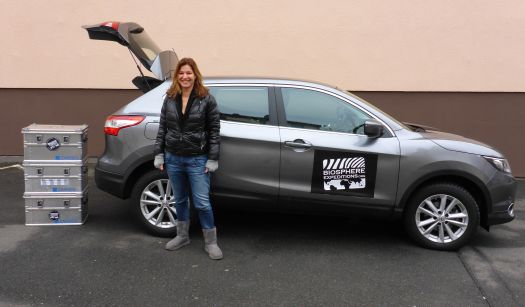
Today I’ll drive for seven hours or so to Vienna, and tomorrow another four to our expedition base in Švošov, where I should arrive around noon on Thursday to set up. Tomas, the expedition scientist and his assistant Noro will join me on Saturday morning.
From what we’ve heard from our partners on the ground, the study site is covered in snow – good conditions for our surveys. Keep your fingers crossed that the temperatures will stay low enough to get more snow instead of rain.
I hope your preparations are going well. I will be in touch again once I have arrived at base with updates from the site.
That’s it for now – I’ll keep you updated.
Regards
Malika
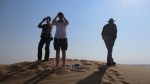
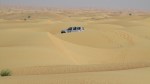
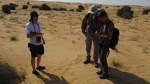
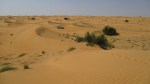
Update from our Arabian desert expedition / working holiday volunteering with oryx and wildcats in the United Arab Emirates (www.biosphere-expeditions.org/arabia)
So the expedition is over. Our scientist Greg summarised the results for us this morning.
We found 168 known fox dens and discovered 19 new ones. On our circular observations we counted 104 oryx, 77 Arabian gazelle, 4 sand gazelle, 140 palm trees, 843 ghaf trees, 28 acacia, 12 Sodom’s apples and a whopping 8000 or so broom bushes. The random observations yielded 31 bird, 11 mammal & reptile, 11 insect and 15 plant species. The 18 camera traps took 16247 (!) pictures, 13000 from one camera photographing moving tree branches or something similarly exciting :), but also of course a variety of species.
Our live trapping was unsuccessful this year, but if you don’t try, you don’t get. Who knows when we will get the next sand fox or Gordon’s wildcat. We’ll keep at it.
So all that remains is for me to thank the team again for all its efforts. Thank you Jörn, Karin, Jörg, Sigi, Kathie, Albert, Jim, Martina, Yvonne, Samar & Laura. You could have gone to the beach for your holiday, but you chose to help Greg here in his beautiful office. I take my hat off to you for this and I hope you will come and join us again. Thank you Amadeus & Tessa for being the kind of staff that makes Biosphere Expeditions what it is. And thank you Al Maha and Platinum Heritage for your support. And thank you Greg for letting us share your office and vision.
Farewell everyone, safe travels home and I hope to see you again someday, somewhere on this beautiful planet of ours.
Matthias


























 Biosphere Expeditions: blogs from the frontline of wildlife conservation and the fight for a more sustainable planet