From our scuba diving conservation holiday with whale sharks and coral reefs of the Maldives (http://www.biosphere-expeditions.org/maldives)

Yesterday, on Saturday the expedition team met in Male’, and after a short trip on our dhoni (transit and dive vessel for the week), we arrived at the MV Carpe Diem in all its splendour.

carpediem

Following some safety and other briefings, an excellent lunch and passage to Baros, a resort island whose house reef will serve us as a training ground, we completed a successful check dive, spotting octopus, lobster and a myriad of other reef dwellers. Now the work begins…

After identifying the conservation aims of Reef Check and the environmental challenges facing the reef ecosystem, Dr. Jean-Luc Solandt, Biosphere Expeditions’s scientist from the Marine Conservation Society and co-ordinator of Reef Check here in the Maldives, embarks on the methodology. All in all a very busy day!

Today, Sunday, the team knuckled down to hard work with lectures, snorkels, dives (and more lectures!), bringing the reality of conservation fieldwork to the forefront. With a blacktip reef shark circling overhead, we learned to identify the complexities of marine flora and fauna, and now with tests looming, everyone is revising hard.

revision

Good luck everyone!

Continue reading “From our scuba diving conservation holiday with whale sharks and coral reefs of the Maldives (http://www.biosphere-expeditions.org/maldives)”

From our scuba diving conservation holiday with whale sharks and coral reefs of the Maldives (http://www.biosphere-expeditions.org/maldives)

We, your Biosphere Expeditions staff, have arrived safely and have had very successful meetings with both Hussein Zahir from LaMer, and with Shiham Adam from MRC (the government’s Marine Research Centre).

In a nutshell, both are very happy that we are continuing our collection of Reef Check data here in the Maldives. Hussein feels that it is very valuable data and can be added to the National Coral Reef Monitoring Framework protocols. Also, there is a desire that our data collected up until now are included in the National Status Report Assessment, currently being compiled by MRC. Both see our placement programme of local Maldivians coming with us on the boat, as they will be this year too, as an excellent way to increase capacity and raise awareness of conservation issues facing these threatened islands.

We are meeting with Shaha from Gemana, a local reef conservation NGO, in an hour or so, and with Gabriel Grimsditch of IUCN and Rafil Mohammed from the Maldives Diving Association tomorrow.

See you in a couple of days. Safe travels.

Catherine

Continue reading “From our scuba diving conservation holiday with whale sharks and coral reefs of the Maldives (http://www.biosphere-expeditions.org/maldives)”

From our working holiday volunteering with leopards, elephants and cheetahs in Namibia, Africa (http://www.biosphere-expeditions.org/namibia)

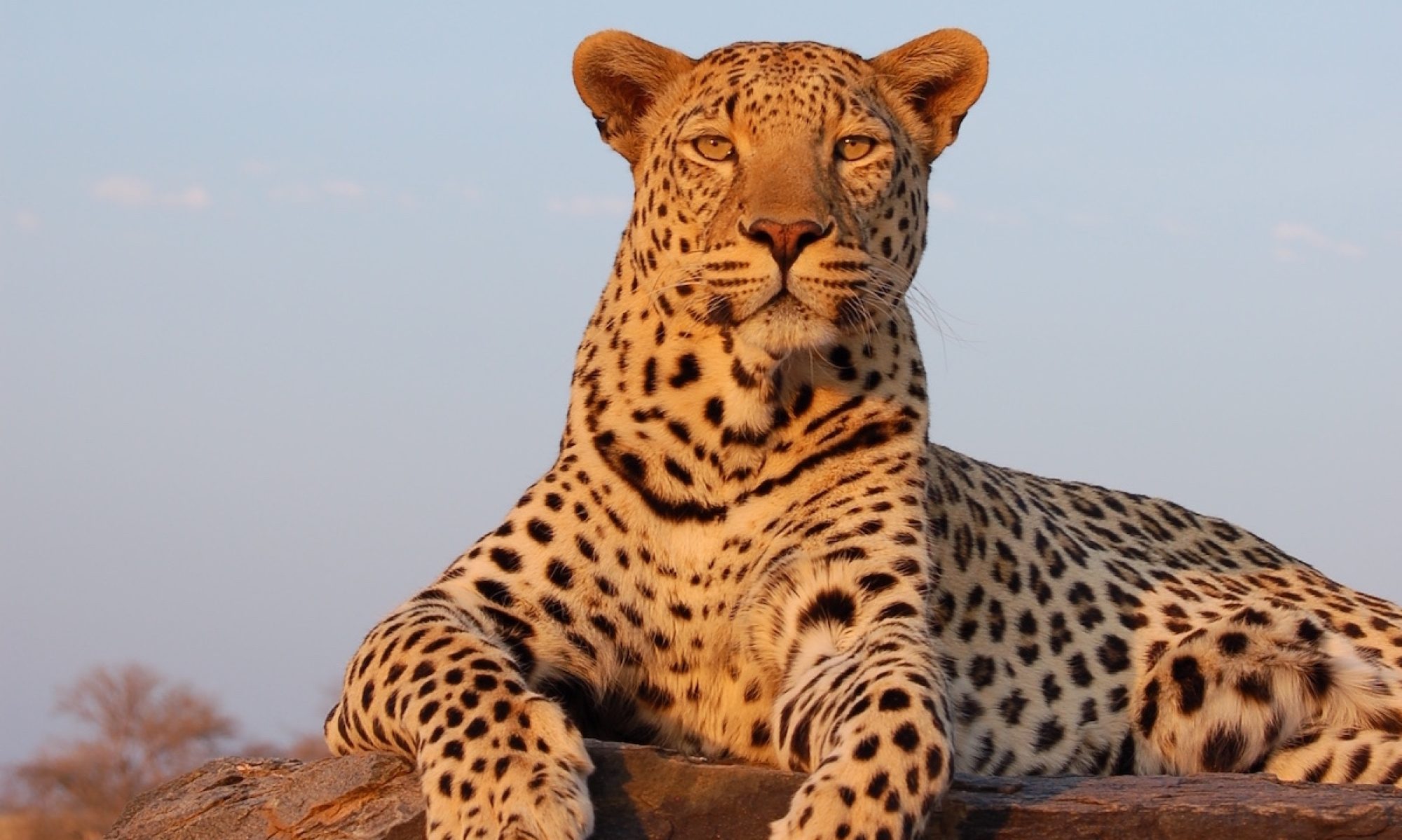
We’d given the traps at the lodge a “night off” (really an opportunity for the mother and cub leopard not to be bothered if they were still in the area recovering), and Sunday morning Team 2 reset the lodge box trap. John, Valerie, Lesley and Jesaja had quite some work because of the leopard caputre, and we’d actually split into two box trap teams for the task. The trap that caught the mother leopard was brought to Vera’s base for repairs, and we collected the release box out of the field as well. That leaves us three box traps still set (Frankposten, behind the farm owner’s house and the one at the lodge).

John and Lesley set out to (not) find the elephants, frustrating because once again the team knew where they were, but there was no track close enough to view them. Lynne and Valerie checked box traps in the afternoon (empty), while Glenn stayed at base to do data entry.

Thursday’s “Black Mamba” vehicle game count team re-encountered a monitor lizard on their route (thanks Valerie for several nice pictures added to this diary). Lynne had a “magical” encounter with the elephants at Boma, when she single-handedly recorded elephant behaviour. Other pictures are of Team 2 working in the field.

We’re having some maddening problems with the Bushnell cameras. One, the display stopped working. Another, it seems to like to spit out the batteries right after the volunteers set it, so we don’t get any pictures. Super frustrating since these cameras were installed in the mountainous area of Okambara, so that means furtherst away from base camp.

The good camera news is that our Tracks and Scats team found a leopard “marking” place (it’s a place with a lot of defecation, so marking is not the proper term but that’s what we’ve nicknamed it). We set a camera trap up there and once we get the cameras working properly, then we’ll see who’s coming around.

This slideshow requires JavaScript.

Other good news is that our partner scientists have flown over the study site, collecting data from the collars of several animals, and our female leopard L074 from Monday was on the download. We were able to see her movements after her immobilisation, and as predicted she laid low until her immobilisation drugs wore off, then climbed the ridge behind and walked off down the ridge.

Team 2 leaves today and it’s hard to believe it’s already been two weeks. It’s been a very productive and interesting two weeks. Thanks for your flexibility and eagerness to get out into the field and do whatever is necessary, including Valerie and Lesley taking a bag of intestines up into the mountains and dragging them towards a trap in order to entice a leopard. Not all of our work is pretty or “nice”, but thanks to all of you for tucking in and getting it done. My favorite Vera quote this week: “Is it my imagination or is everyone getting out into the field freakishly early?”

Team 3? See you on 7 September after the week’s break. We have a box trap that’s ready to be placed back into the field, lots of animals to be counted and elephants whose feeding behaviour we need to record, so pack your sunscreens, water bottles and get ready to roll up your sleeves and get down to the business of catching more leopards!

Continue reading “From our working holiday volunteering with leopards, elephants and cheetahs in Namibia, Africa (http://www.biosphere-expeditions.org/namibia)”
From our scuba diving conservation holiday with whale sharks and coral reefs of the Maldives (http://www.biosphere-expeditions.org/maldives)

Welcome to the Maldives diary.

My name is Catherine Edsell and I will be your expedition leader for the Maldives; also coming along from Biosphere Expeditions will be Dr. Matthias Hammer, our executive director.

I will arrive a couple of days in advance with Dr. Jean-Luc Solandt, our scientist from the Marine Conservation Society and Reef Check’s Maldives co-ordinator, to set up and meet our local partners. As soon as I get my mobile phone connected in the Maldives, I will email you my Maldivian number (to be used for emergency purposes only, such as missing assembly).

I hope all your preparations are going well and that you’ve had a chance to study all the Reef Check material and whale shark info available on the website. We have a packed schedule planned, so please arrive rested and ready to go. And talking about schedules, our expedition route is below.

All subject to change, of course. So anyone thinking they are coming on a cushy dive “holiday” to go deep, please wake up 😉 After our week with us, you’ll never look at a reef the same way again.

My next missive will be from the Maldives. Until there and then!

Catherine Edsell
Expedition Leader

Continue reading “From our scuba diving conservation holiday with whale sharks and coral reefs of the Maldives (http://www.biosphere-expeditions.org/maldives)”

From our working holiday volunteering with leopards, elephants and cheetahs in Namibia, Africa (http://www.biosphere-expeditions.org/namibia)

Glenn dubbed yesterday “Double Leopard Monday” because we had an historic event on Okambara: yes, we caught two separate leopards in one go and collared one. Here’s how it happened: Saturday we’d just had a team meeting, brainstorming about why very few animals were going into the traps. We are following all the protocols from last year – changing the meat every 3-4 days, leaving as little human scent as possible around the traps and applying all the good housekeeping methods of attracting leopards.

Sunday morning Glenn and Valerie were the box trap team, and they called in a leopard at the lodge box trap. Excitement! Vera called around for a veterinarian while she and I drove to place a shade net and water for the animal. Sunday was part of a long holiday weekend, and the veterinarian could not come until the following morning. (This is completely okay for the animal to spend one night in the trap—we made sure he was comfortable and safe from other predators.)

The leopard was a young animal about a year old, and since he had to spend the night in the box trap anyways, Vera decided to set another trap next to the cub to see if we could catch the mother.

We met the veterinarian at dawn on Monday, and the anticipation was keen while we waited for Vera to check the trap the next morning to see if we had one or two animals to collar. The beaming smile on Vera’s face gave it away—success! We’d caught the mother as well.

We had a long morning of setting up the field hospital, immobilising the animals one at a time, taking samples of the cub and placing a rice-sized chip in him (the same kind that veterinarians place in pets that can be scanned and read if an animal goes missing, in this case for if he ever gets caught again we’ll know when and where he was first caught.) Too young to collar, we filled him with fluids to ease his immobilisation hangover, and Lynne, our resident (retired) nurse, helped the veterinarian look after him.

Afterwards we placed the cub in the shade in a transfer box so he’d be safe while we immobilised and worked on his mother. In the prime of her life and recently very well fed, the mother was fierce and protective of her cub and took longer to immobilise than her cub. By the time she was collared and placed in the shade with a shot of sedation reversal, it was 13:00 before the team left Vera and the veterinarian watching over the waking up and releasing of the cub and mother together.

This slideshow requires JavaScript.

Team 2 stood in the hot sun watching and helping with the immobilisations for hours, but they were wired when we got back to camp for “breakfast” at nearly two o’clock in the afternoon. We’d left bush camp at 5:30 in order to check box traps and meet the vet at first light, but believe it or not they ate a few bites and eagerly jumped into the afternoon tasks that needed to be done. Team 2 you are really terrific. Thanks for all of your helpfulness, good humour and team spirit. You rock!

Vera is extremely excited at having caught and collared her first female leopard on Okambara. Collaring females within the ranges of male leopards has been a goal of hers for the past year, so it’s thanks to you –  all of you – for making that happen. Shall we try for another two next Monday?

Continue reading “From our working holiday volunteering with leopards, elephants and cheetahs in Namibia, Africa (http://www.biosphere-expeditions.org/namibia)”

From our working holiday volunteering with leopards, elephants and cheetahs in Namibia, Africa (http://www.biosphere-expeditions.org/namibia)

Well, we have a new record for the number of camera trap pictures the data entry team has to look through. Team 1 was shocked by the 3000+ pictures on the SD card, yet John from Team 2 suffered, er, poured over 9,569 pictures taken at Bergposten. He is now a self-proclaimed expert in baboon behaviour. (John also points out that the card was only half full, so the potential exists for 20,000 pictures for the next unsuspecting citizen scientists to pour through.)

Thursday was our vehicle game count, and the team reported slightly more early morning game activity. Also with the time change we started fifteen minutes earlier than Team 1. My team for that activity is now dubbed the “Black Mamba Team” for reasons of which I cannot discuss in the diary. (Some tall tales need to stay on Okambara.)

Saturday was our day off, yet once again this team wanted to work and volunteered for tasks that normally Vera and I are left to do on the day off. John, Glenn and Mei were rewarded for their efforts by being the team that found and released a beautiful genet. John did the proper thing and stayed far away from the release, yet with his telephoto lens caught the animal at the perfect time in its release for the attached picture.

MDamGenet-1000

Saturday was a sad day for us because Mei left in the morning. She was an integral part of the team the first week and a great volunteer, but unfortunately her work schedule sent her off to South America mid-slot. Mei you are missed!

Continue reading “From our working holiday volunteering with leopards, elephants and cheetahs in Namibia, Africa (http://www.biosphere-expeditions.org/namibia)”

From our working holiday volunteering with leopards, elephants and cheetahs in Namibia, Africa (http://www.biosphere-expeditions.org/namibia)

Team 2 hit the ground running. We’re a small group, but full of enthusiasm and have already been trained up on all the equipment. Glenn, Lynne, Lesley and Mei came out with me on the first day and learned how to use the telemetry equipment to track the elephants. They also learned how well the elephants can blend into the savannah and how frustrating it can be when the entire herd is in the exact middle between tracks and we know where they are, but we cannot see them.

John and Valerie walked with Jesaja on the first day on the tracks and scats route #9. The surface was hard for them to read with the pockmarks of the light rain that came down. Yes, rain. We woke up to the unusual sound of the patter of rain on the thatched roofs. This was big and most-welcome news for us since we are now in the heart of the dry season.

Yesterday we caught our first rock dassie (rock hyrax) by-catch. Normally hiding in the rocks, this fellow was found hiding under the trigger plate of the trap. Evidently the animal gave Ligeus, Lynne and Leslie quite a scare when it stopped playing “dead” and raced out of the trap as soon as they opened the door to investigate.

This slideshow requires JavaScript.

Continue reading “From our working holiday volunteering with leopards, elephants and cheetahs in Namibia, Africa (http://www.biosphere-expeditions.org/namibia)”
From our working holiday volunteering with leopards, elephants and cheetahs in Namibia, Africa (http://www.biosphere-expeditions.org/namibia)

We thought we’d share some of our “Best of” camera trap pictures and team photos while we’re busy training Team 2…

This slideshow requires JavaScript.

Continue reading “From our working holiday volunteering with leopards, elephants and cheetahs in Namibia, Africa (http://www.biosphere-expeditions.org/namibia)”
From our working holiday volunteering with leopards, elephants and cheetahs in Namibia, Africa (http://www.biosphere-expeditions.org/namibia)

It’s been a whirlwind week of checking box traps (liberated: one rock monitor lizard, one hare and one porcupine), setting up camera traps, trouble-shooting camera traps (re-aligned by baboons, some not taking pictures, some taking too many pictures), fixing up waterholes (Emil the bull rhino used the one at Gustavposten as a scratching post), doing water hole observations, early morning vehicle game counts (1 cold and one not-so-cold-but-windy), observing elephants, walking around the bush looking for tracks (lots!) and picking up scats (lots!).

We did two evening observation drives and while we did not see any aardvarks, which were my original idea because of the plethora of new holes dug in the farm tracks, the teams reported seeing an aardwolf, bat eared foxes, “loads of springhares” and jackals. Evening entertainment included “Banana Grams”, a simple word game made very confusing by each participant making words in their own language (English, French, German and Italian). Verification was next to impossible. Evening briefings were made more artful by Marco’s pictogram explanations of the day’s activities. Thanks Heinz for letting me post some of your pictures with this diary!

Team 1 has just left for the Josephine Gate and it’s very sad to see them go. They formed a solid working team quite quickly, and really impressed Vera and I with their work ethic and willingness to spend long hours in the field making sure everything got done. Up and out at times before the “regular” departure time, their willingness to go out in the cold and count game animals was remarkable, and their willingness to go out into the field all day working on a smorgasbord of activities got us off to a great start. A big thank-you to all of you for your ability to make hard work fun, and for your contributions to the leopard project. Safe travels home.

Team 2? See you Sunday!

This slideshow requires JavaScript.

Continue reading “From our working holiday volunteering with leopards, elephants and cheetahs in Namibia, Africa (http://www.biosphere-expeditions.org/namibia)”

From our working holiday volunteering with leopards, elephants and cheetahs in Namibia, Africa (http://www.biosphere-expeditions.org/namibia)

How to Set up a Box Trap in 5 Easy Steps

1. Gather 9 citizen scientists

2. Fill buckets with sand and make a nice floor for leopards to walk on

3. Do leopard-liking landscaping inside and out

4. Hang Fresh Meat

5. Install Doors and Activate Trap!

This slideshow requires JavaScript.

Continue reading “From our working holiday volunteering with leopards, elephants and cheetahs in Namibia, Africa (http://www.biosphere-expeditions.org/namibia)”