Award-winning, non-profit and ethical wildlife conservation volunteering. Advancing citizen science and conservation since 1999 – for nature, not profit.
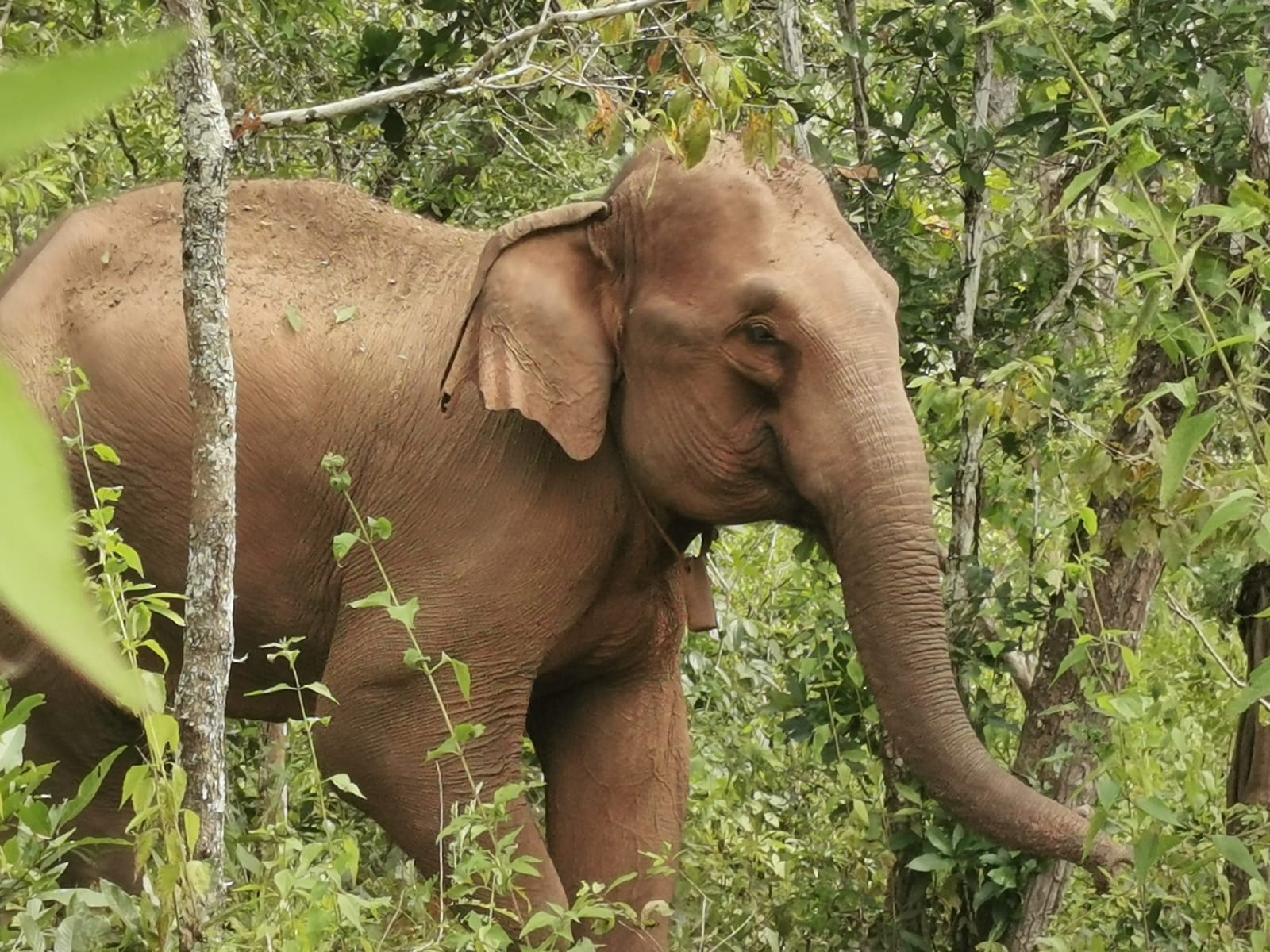
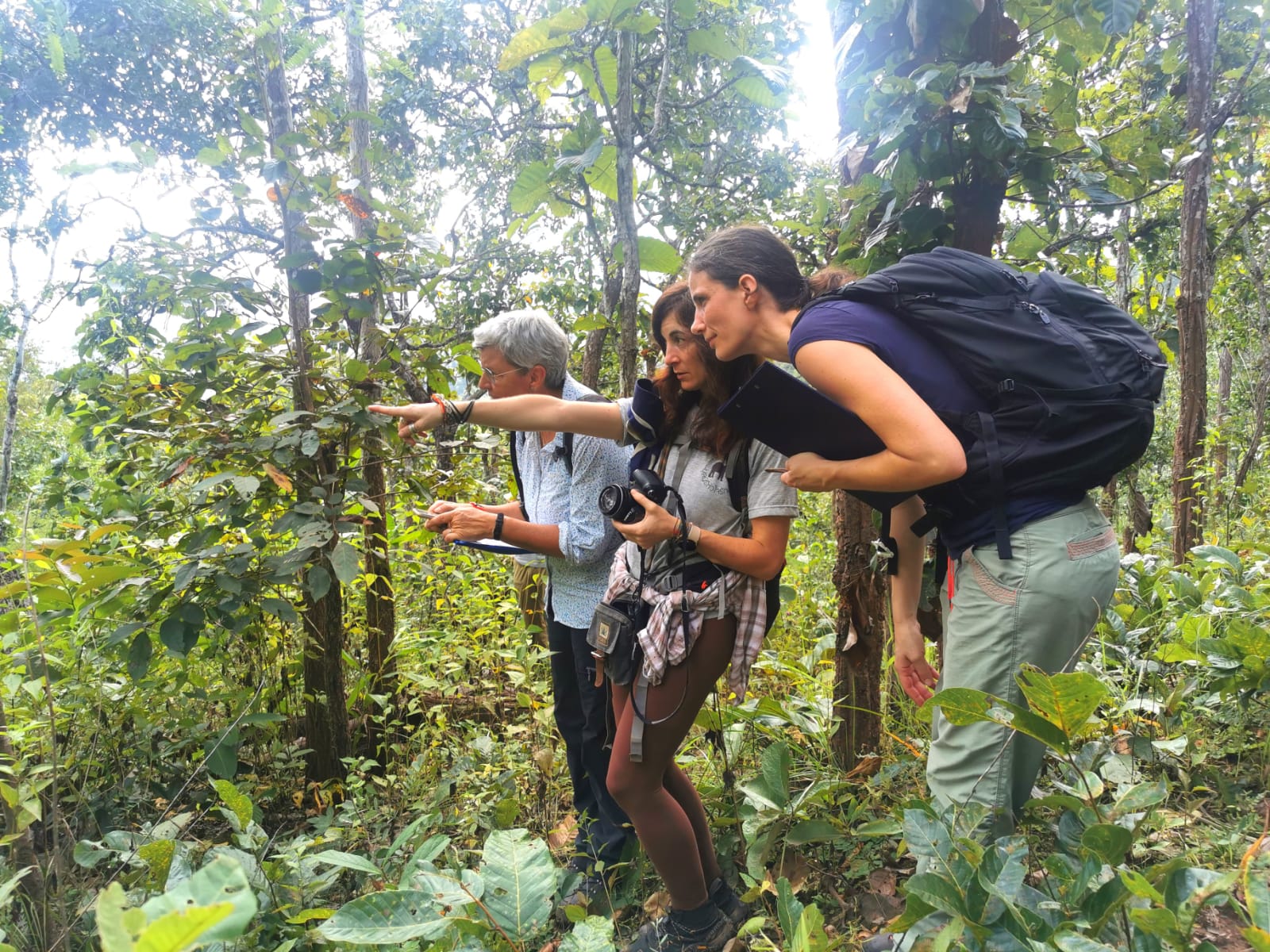
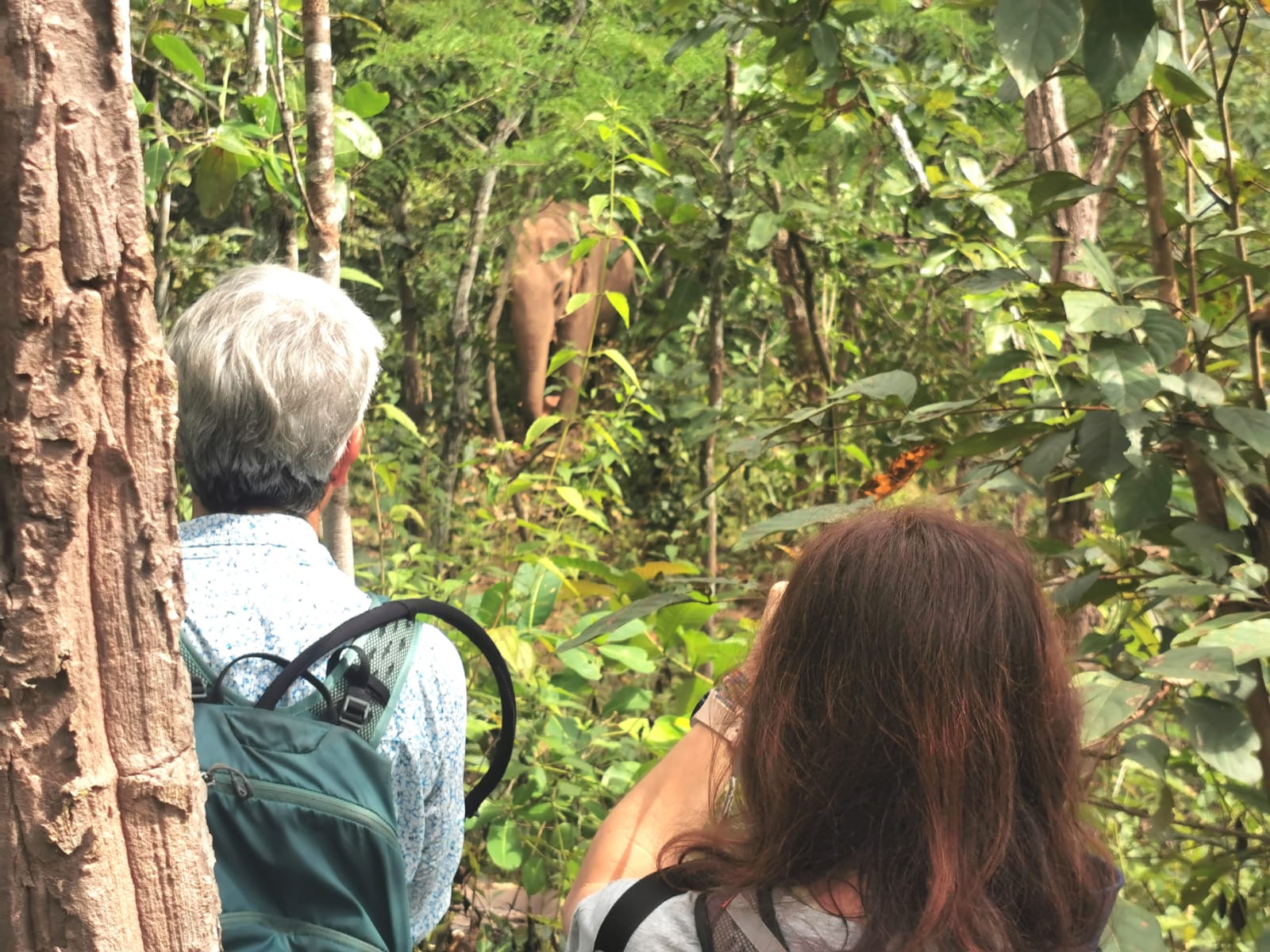
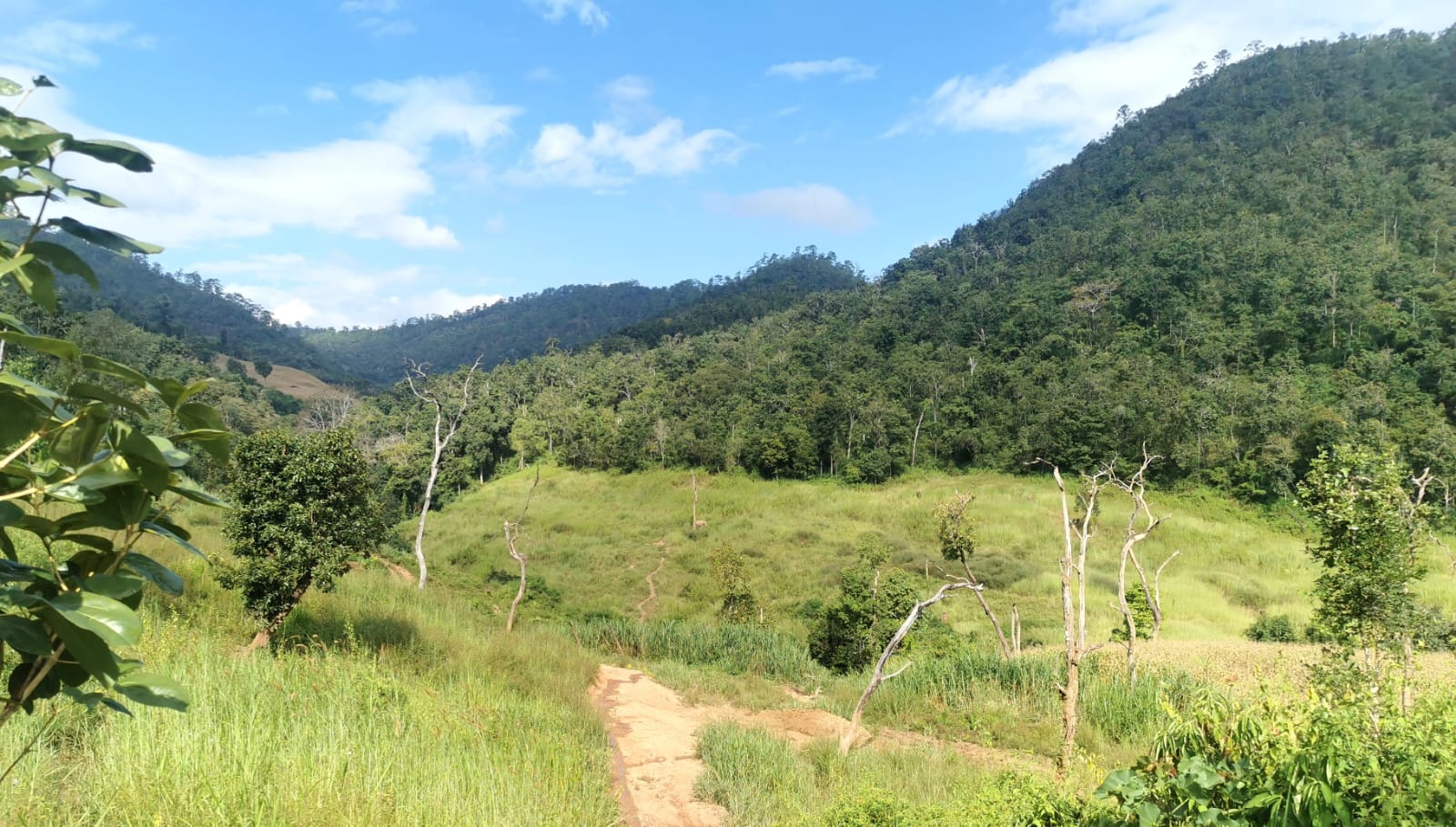
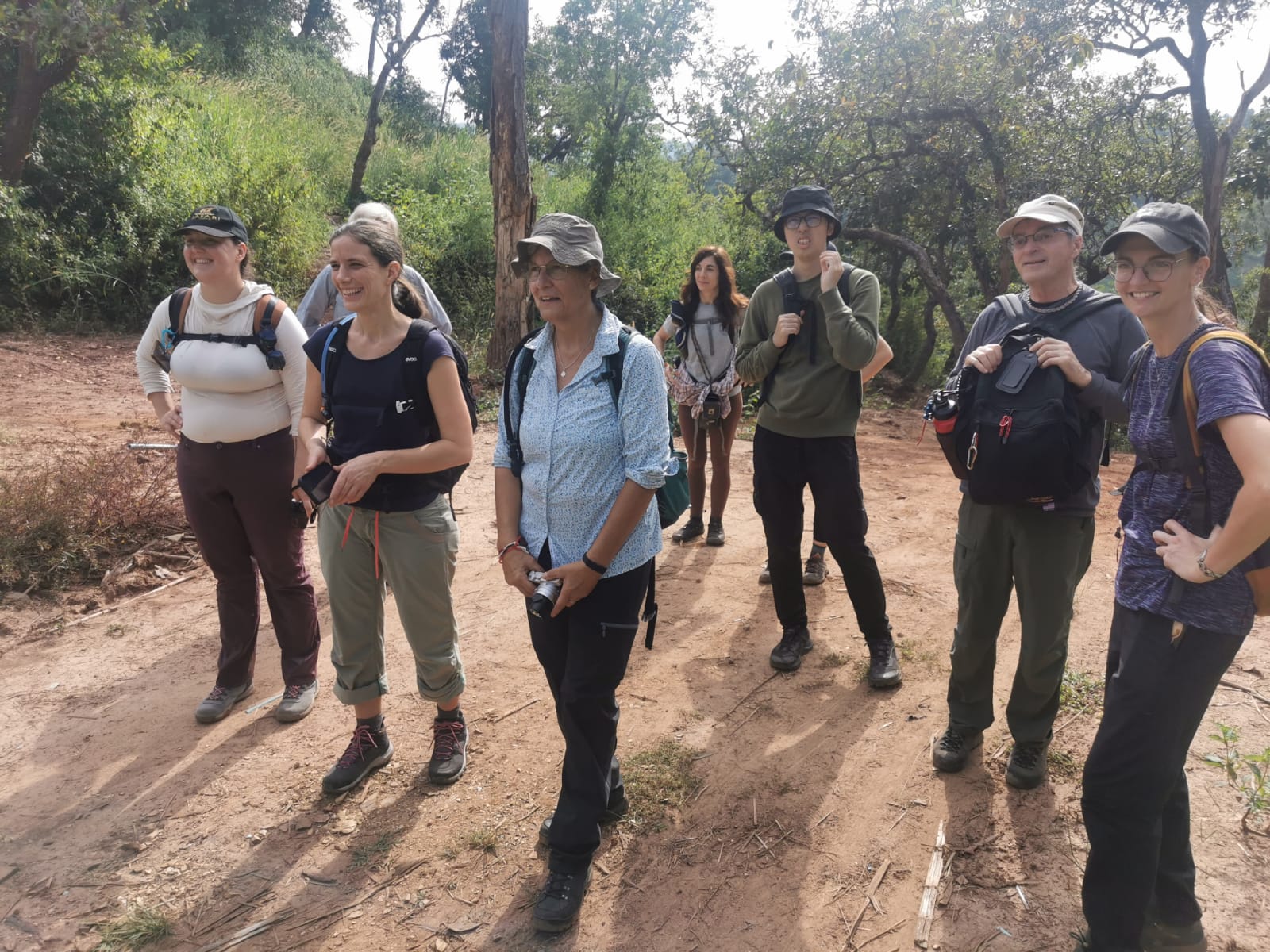
I have made it to the expedition base: in the small village of Ban Naklang, west of Chiang Mai. The village is nestled by a river surrounded by forested hills: this is where the elephants live and where we will be hiking to carry out our research tasks every day. We stay in homestays in the village: wooden huts on stilts to keep them above any floods and any unwelcome animals. The village life bustles with people, dogs, chickens, goats and the occasional motorbike. I was woken up this morning by the distinctive loud call of a tokay gecko living in my bedroom โ somewhat startling if you donโt know what it is.ย
Our base is simple, rustic , practical and comfortable. The main area is on stilts, with good views of the river, the village and lush vegetation. Colourful butterflies flit about andย lizards dart about the walls. The weather has been warm rather than hot and the occasional rain storm has passed through quickly. A small suspension bridge crosses the river to connect us to the village. It is excitingly wobbly but perfectly safe.ย
The team here โ myself as expedition leader along with the KSES staff: Kerri (manager), Cris (deputy manager) and Laura (scientist) have been busy preparing for the expedition: checking kit, reviewing protocols, printing documents and getting the base set up just right. Tomorrow we plan to go up into the forest to find the elephants so I can get the lay of the land. And on Monday โ the expedition begins!
It’s not long now until the start of the Thailand elephant conservation research expedition. I have now flown out to Chiang Mai on my way to our expedition base at KSES to get things ready with Kerri and scientist Laura there.
Chiang Mai at night is bustling and busy and there are no obvious problems from the floods a few weeks ago.ย Kerri tells me that the weather at our baseย is cool in the mornings and hot in the day time. The clothing and kit listed in the expedition dossier will be fine. The elephants seem happy wandering around in the forest whatever the weather.ย
A couple of practical things: Please make sure you get a ‘True’ SIM card with plenty of data on it, before you leave Chiang Mai (available at Chiang Mai airport) . And download the KoboCollect app on your phone. We will use this to collect data in the field.ย Also bring any old Android phones you have and download the app to this too before leaving.
I’ll send another update when I reach our expedition base.ย
As a wrap-up for the 2024 expedition, we thought you would like to know what our scientist Dr. Jean-Luc Solandt said to Reef Check:
During the 2024 expedition we had to operate near to Guraidhoo (four sites) for most of the week due to the high winds. We also surveyed Bandos Island in N Maleโ atoll.
Surprisingly reasonably healthy reefs just near to Guraidhoo island (Guraidhoo backreef) where we saw considerable damage in 2022 after the construction of the infilled back reef (see this report). In some (particularly back reef) reef areas there appears to have been dominance of lifeforms other than Acropora โ moving towards non-Acropora genera such as Porites rus and Porites cylindrica that are also dominant at Baybeโs.
Porites species dominance
This was evident at Guraidhoo back reef. Guraidhoo fore reef, however, has not recovered its pre-development coral reef condition. Perhaps because the conditions are not suitable for both sediment and wave-action tolerant coral lifeforms such as Porites rus.
These patterns will be discussed in the 2024 report.
The 2024 expedition is done. Instead of waxing lyrical again, why not let some of those involved speak:
Thank you to all of you involved in the expedition. Thank you for making it possible through your input of time and money. Thank you for helping to build a unique dataset, telling a significant story of hope in what can sometimes be a bleak world of nature conservation, especially for coral reefs. We will have to see what comes of it.
So finally, honour where honour is due, here they are, our heroes of the reef:
Four days into the expedition, we’ve hit the groove. The first couple of days were intense, as always – cramming fish ID, invertebrates, substrate, coral disease & impact into citizen scientists’ brains, no gain without pain, late night sessions, tests, re-tests, success, until it all drops off and we can get into the real work of surveying. Well done to the team for rising to the challenge.
Yesterday, we did a test survey and this group of citizen scientist divers quietly got on with the job so well that our professional scientist Jean-Luc accepted the data. More surveys today, despite the squalls and the currents. Now, as night has fallen and I type away, they are on a night lazy dive, meaning there’s no surveying involved. Whether this is a reward or not, I am not sure.
The story from the Maldives that seems to be developing here, may be one of global significance, with echoes of it around other places in the tropics. The inner reefs, built over millennia in shallow waters, are suffering and increasingly seem doomed by climate change. Their corals simply cannot cope with the higher temperatures, gradually fading and dying, leaving space for other lifeforms to take over. Lifeforms that do not build reefs, so ocean rainforests turn to monocultures devoid of much life except a few specialised species. The outer reefs, however, exposed to colder waters from the open ocean are more resilient. But here too a great shift seems to be going on – the corals that cannot tolerate warmer waters fade away; the ones that can cope better with warmer waters survive and take over the vacant spaces. Evolution in action, reminiscent of a great city where gangs fight for turf and survival.
Does that mean that the outlook for reefs is not as bleak as it seems? Who knows. We need more time to study this, compare it to other parts of the world and draw conclusions. Whether we have the time to do this is another story. The supertanker is heading towards the harbour wall at full speed and nobody has turned the rudder around so far – far from it. Whatever we do, the corals themselves will provide the answer over time. The planet itself does not care what we humans do to it anyway. It’s been through much bigger upheavals and it is still the insignificant speck of dust it has always been at the edge of the great expanse of time and space.
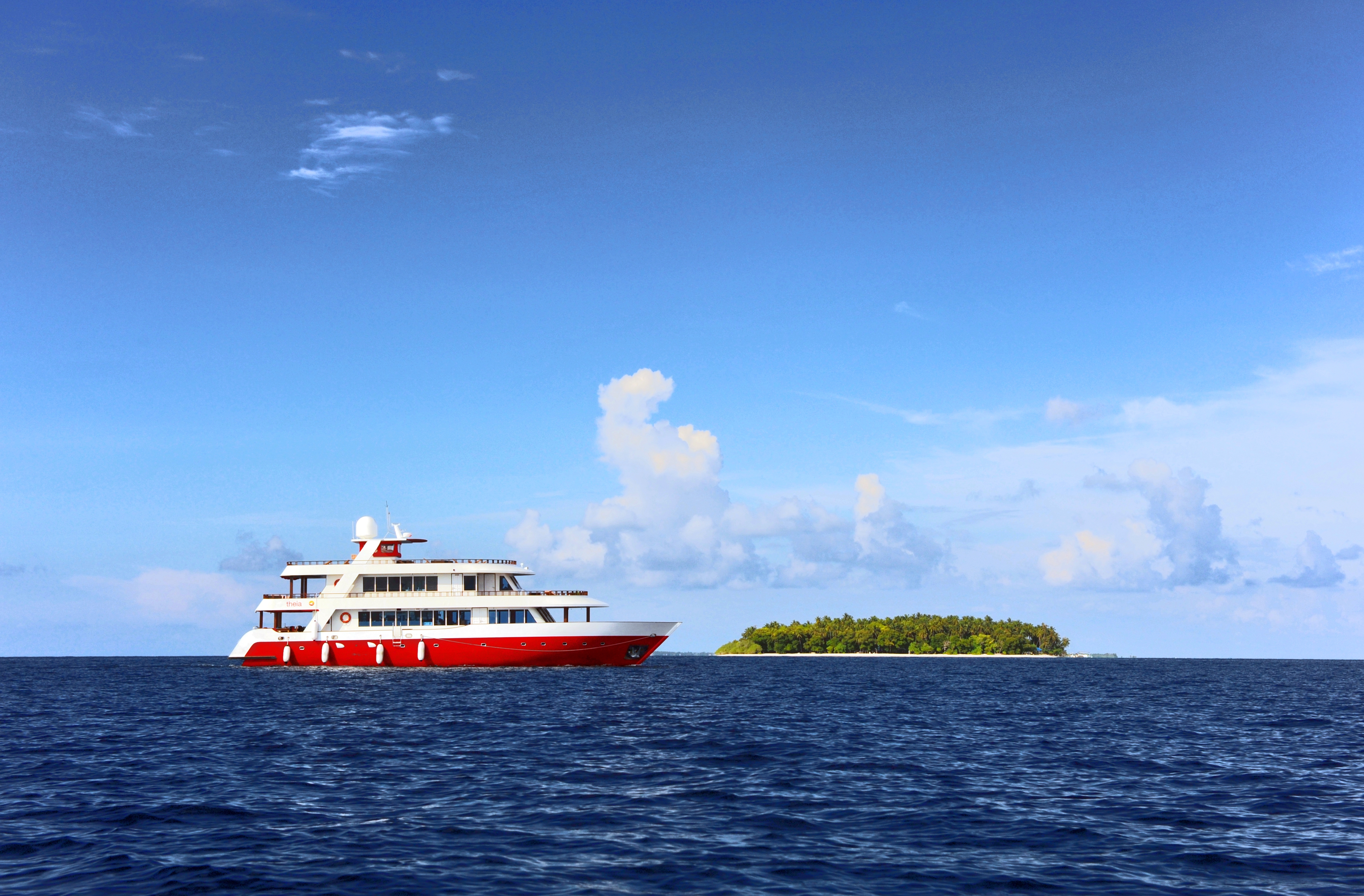
But right here, in our very own great expanse of blue and azure, on this liveaboard, with this team of enthusiastic and capable citizen scientists and newly qualified Reef Check Ecodivers, it means our dives are not depressing at all. We’ve seen healthy reefs with healthy corals. Some bouncing back from development and other stresses, some quietly doing their thing despite the climate upheavals above the water.
So we dive right in, lay our 100 m line of science, count the fish, invertebrates, corals and much more along it and come out smiling. And that really is a reward, well deserved by all those on board who have opted to be small cogs in the wheels of reef research and conservation. Thank you for this.
We’re here, we’ve set up and all is well. It’s a muggy 30 C and there is rain forecast tonight. This won’t change much over the week.
Here are a few names to remember: Most importantly there’s Dileepa (cook), Randika (waiter), Mox, Antoine, Lorae (dive guides), Lukas (deck hand), Jean-Luc (scientist), Matthias (expedition leader), as well as a few other crew who are here to make sure the expedition runs smoothly.
All it needs now is you, our citizen scientists. Safe travels and we’ll see you at 11:00 at the Coffee Club tomorrow. Be prepared for a mind dump, some hard studying and exams at teh end, before we let you lose on the data collection.
Biosphere Expeditions has continued its long-term partnership with Lilongwe Wildlife Trust, researching and monitoring wildlife populations in Vwaza Marsh Wildlife Reserve.
The Malawi expedition has a particular focus on surveying elephants and hippos, as well as camera trap surveys of other wild animals. Analysis of elephant dung was also carried out to assess whether elephants had been eating crops grown in fields outside the reserve. The 2024 expedition also continued the process started in the earlier expeditions of identifying individual matriarch and adult bull elephants. Building this database of individual elephants will help greatly in mapping the demographics, movements and health of the elephant herds in Vwaza.
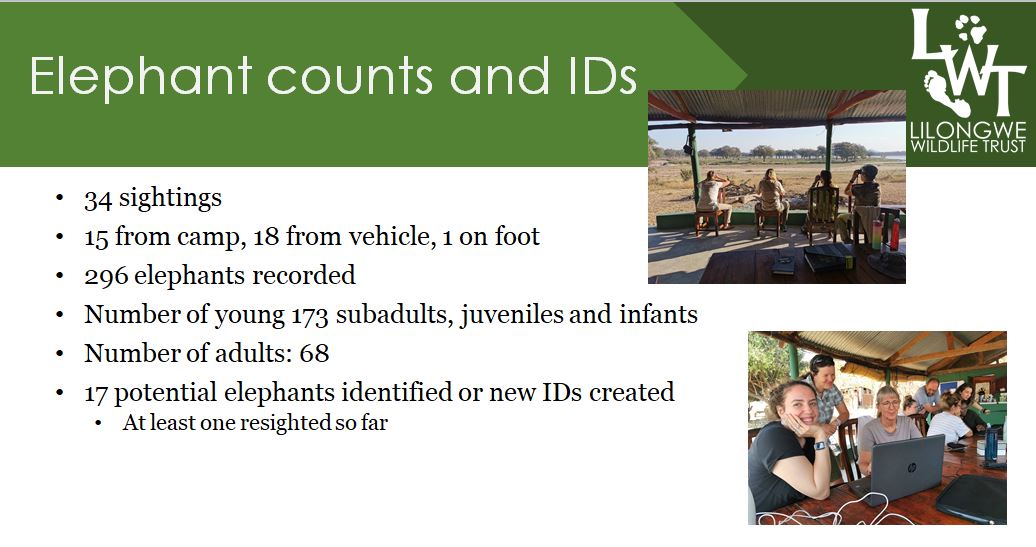
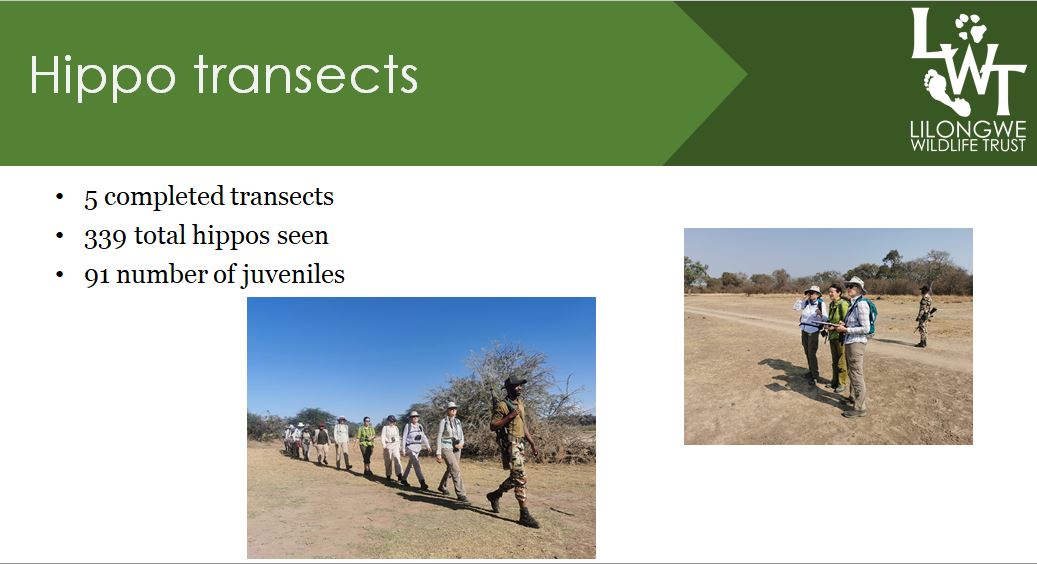
The 2024 expedition counted 296 elephants over 34 sightings, 339 hippos over five complete lake-side transects and collected and analysed 24 elephant dung samples (yielding 1743 seeds). The expedition also identified or created 17 ID profiles of elephants, with at least one re-sighting. Seventeen camera traps throughout the expedition provided evidence of hyaena, civet, genet, two species of mongoose and honey badger, amongst other species.
Expedition Leader Roland Arnison, who also led the 2022 and 2023 expeditions in Vwaza, said that โthis was another successful expedition, carrying out field research tasks that, practically, can only be carried out by a team of hard-working citizen scientists. I am confident that the results gathered from this expedition will make an important contribution to the conservation of endangered species and biodiversity in Vwaza”.
Head of Research at LWT, Dr Leandra Stracquadanio, who was the expedition scientist, said โthe data that we collected during this expedition is invaluable for us to continue our monitoring of elephant and hippo populations, as well as the overall biodiversity within Vwaza. The team did an excellent job and produced high-quality data that will inform ongoing and future conservation planning.โ
Citizen scientists feedback:
Roland and Lea and the team really made this entire experience incredible. Kathy H., USA
Itโs a great experience and I really felt us being here was useful. Sanne W., Netherlands
Really enjoyed that each day had a different combination of activities. Really positive leadership by Roland and Lea. Pam G., UK
The expedition was well set up and organised and there was not a day that I felt like something was out of place. Glory M., Malawi
This is my fourth expedition to Vwaza Marsh with Biosphere Expeditions. Another wonderful experience, finished off with a very special visit from the elephants and their babies coming right past our campfire as we were having dinner on our last night. Janet B., UK
Our 14th Maldives coral reef and whale shark expedition is about to start in a few days. I am Dr. Matthias Hammer, your expedition leader and founder & executive director of Biosphere Expeditions, and I look forward to meeting you all in Male’ soon.
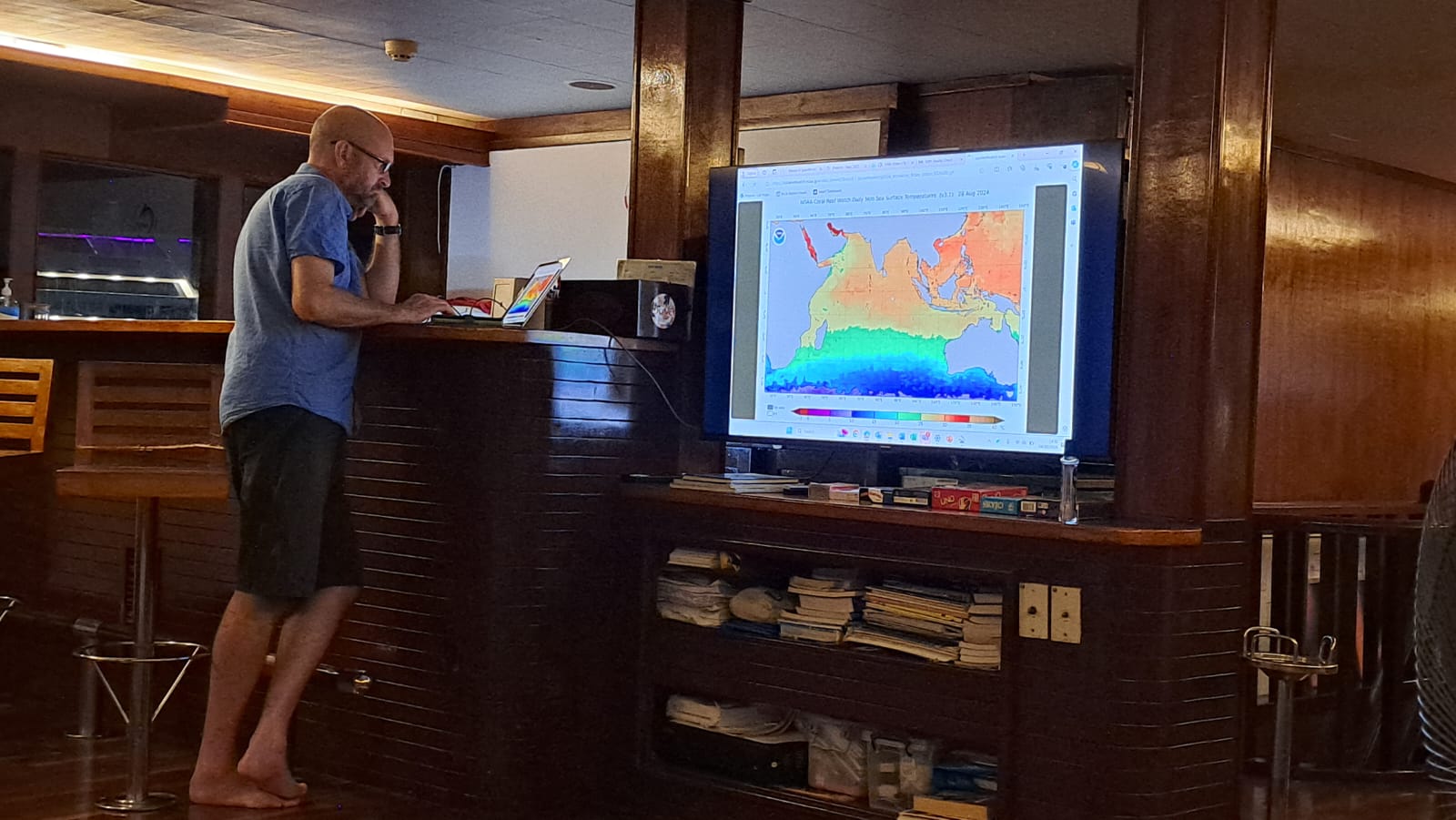
Our expeditions scientists is Dr. Jean-Luc Solandt of the Blue Marine Foundation. Together we have run this expedition for longer than we both care to admit. In fact, we are practically married (and since we are both old, grumpy, single farts, who knows what bells will be tolling on board ;).
We’ll be 24 hours ahead of you to set up and get our beautiful liveaboard yacht and research base ready for you.
You can see our itinerary here and I hope you have all swotted up on the Reef Check methodology. The more effort you put in now, the easier it will be during the intense knowledge dump that will happen during the first couple of days. Don’t forget either that you must complete the online immigration formprior to departing for the Maldives.
Anyway, we’ll see you at the airport assembly point soon.
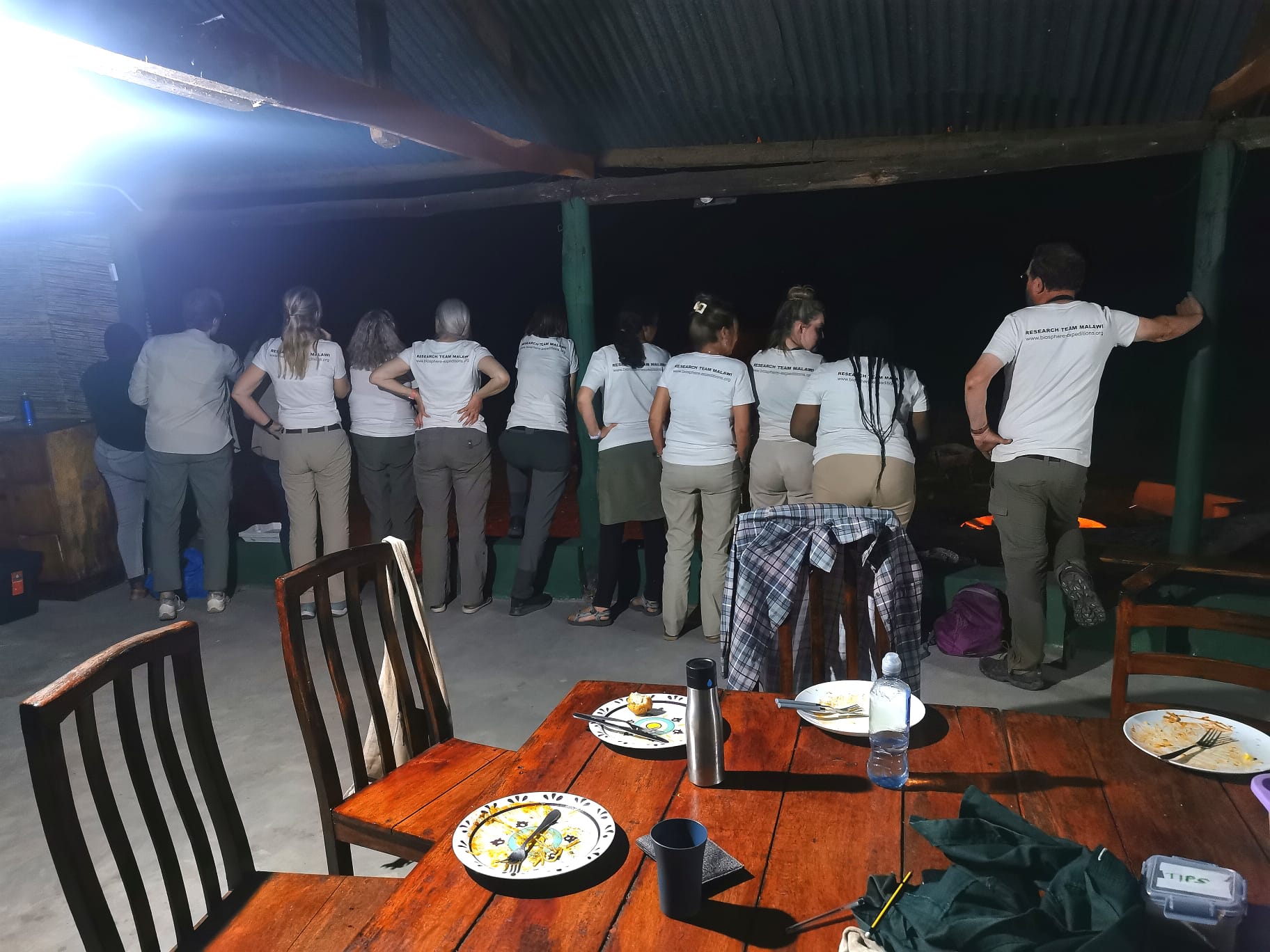
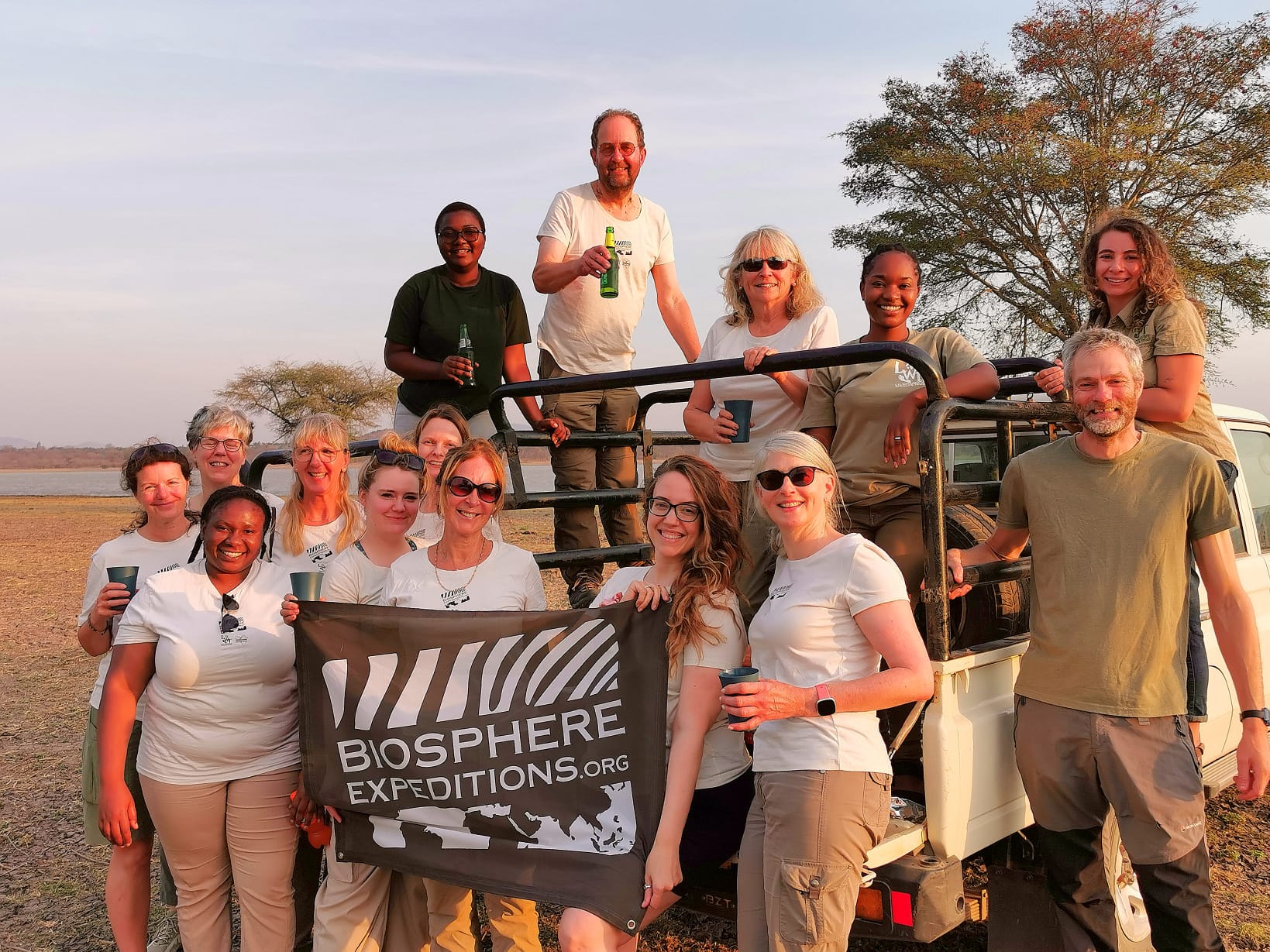
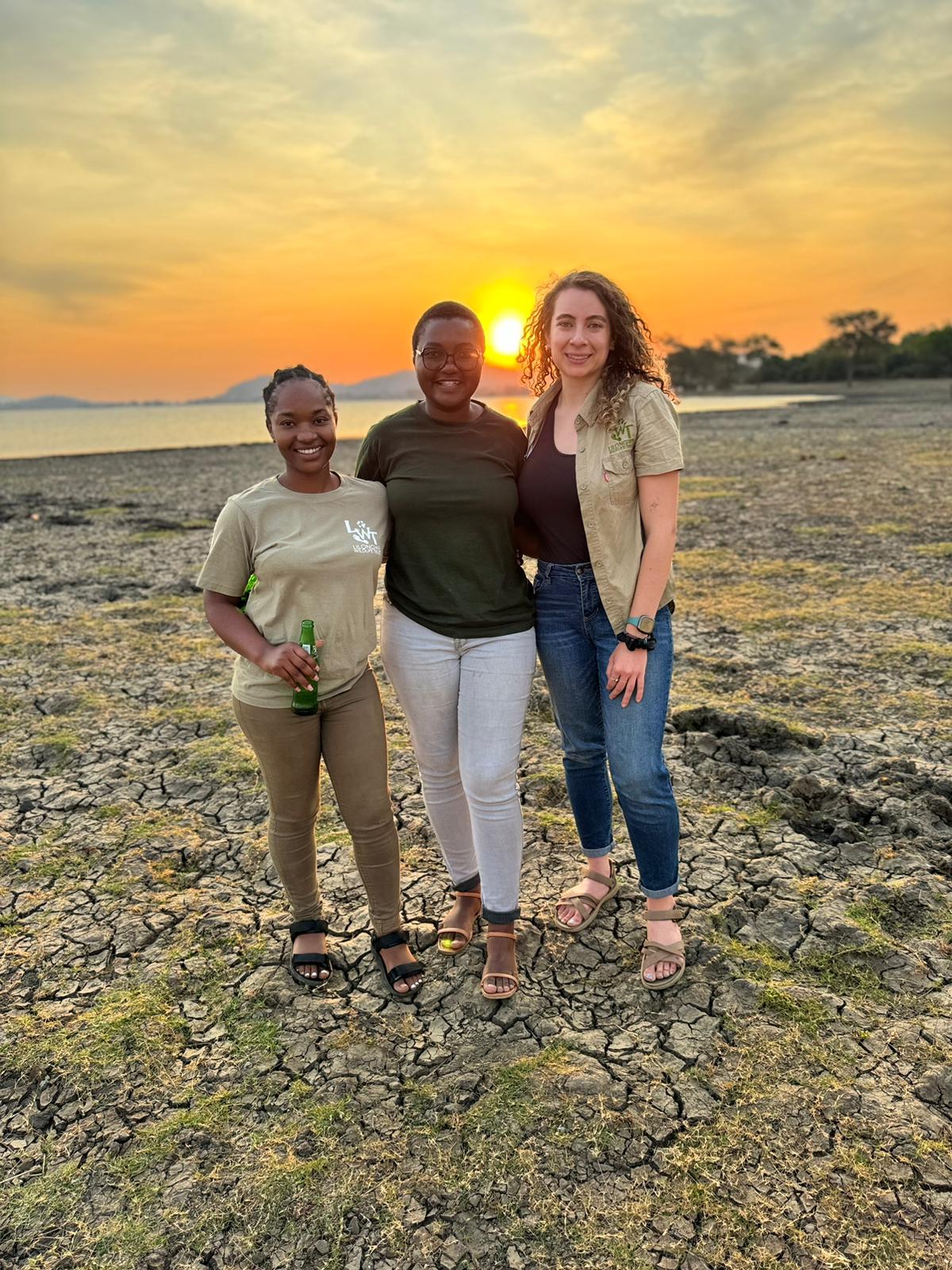
The 2024 Malawi expedition has now finished and it ended in style. With our last research tasks complete, all the data entered and kit packed up, we enjoyed a well deserved sundowner on our last evening on the shores of the lake, watching the glorious red sunset. Back to camp for a farewell feast prepared by the expedition cook, Luca, which was interrupted by a startling loud noise coming from the dark very close to us. Elephants! A herd had quietly crept in and was calmly feeding on the trees only 10 meters away. We unpacked a red spotlight and watched with fascination and joy as the elephants spent the next hour or so wandering around the edges of our camp, utterly unfazed by us watching safely from our communal area. It was a magnificent and pretty emotional ending for the expedition.
Some headline achievements of the expedition are shown below.
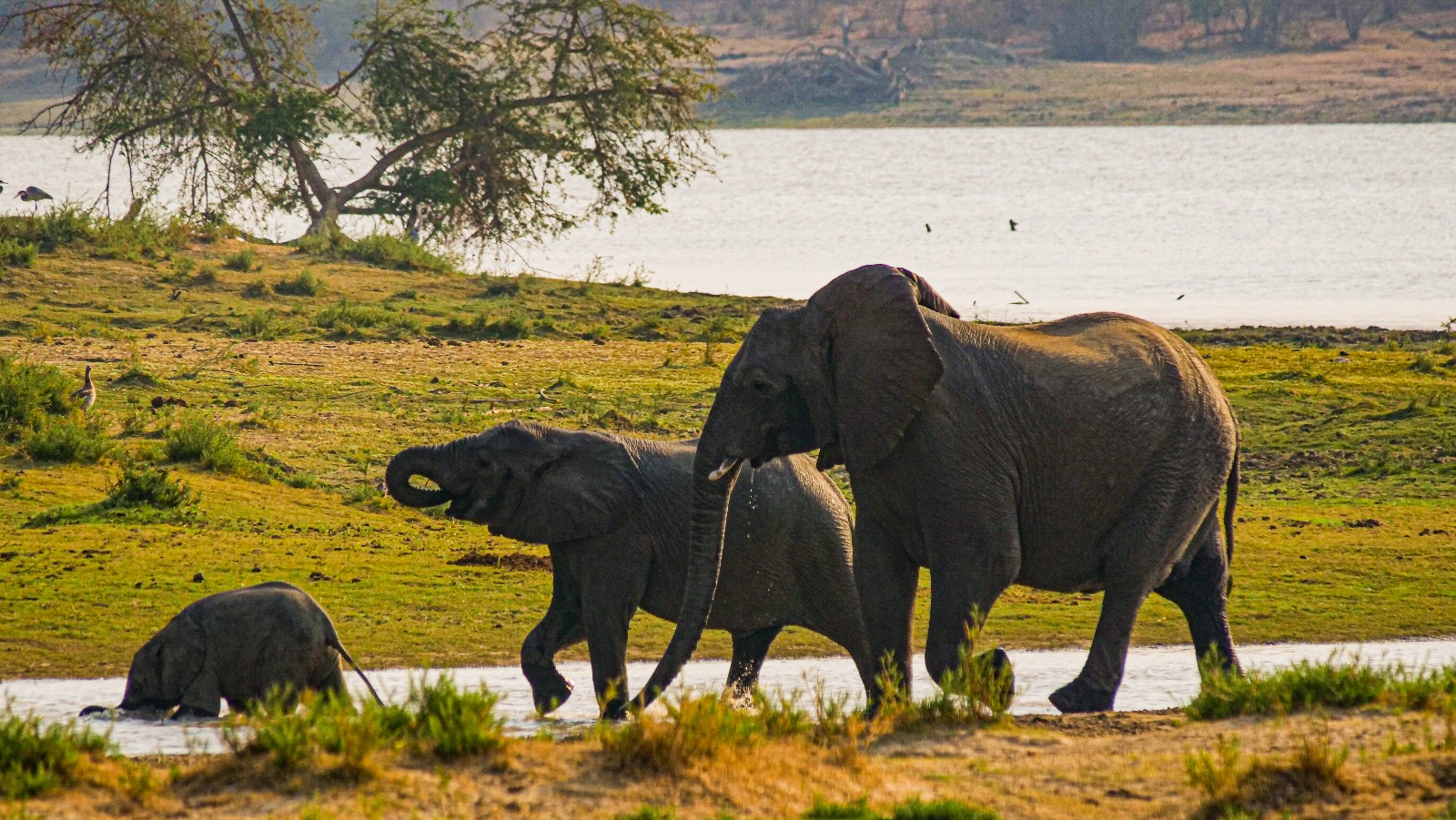
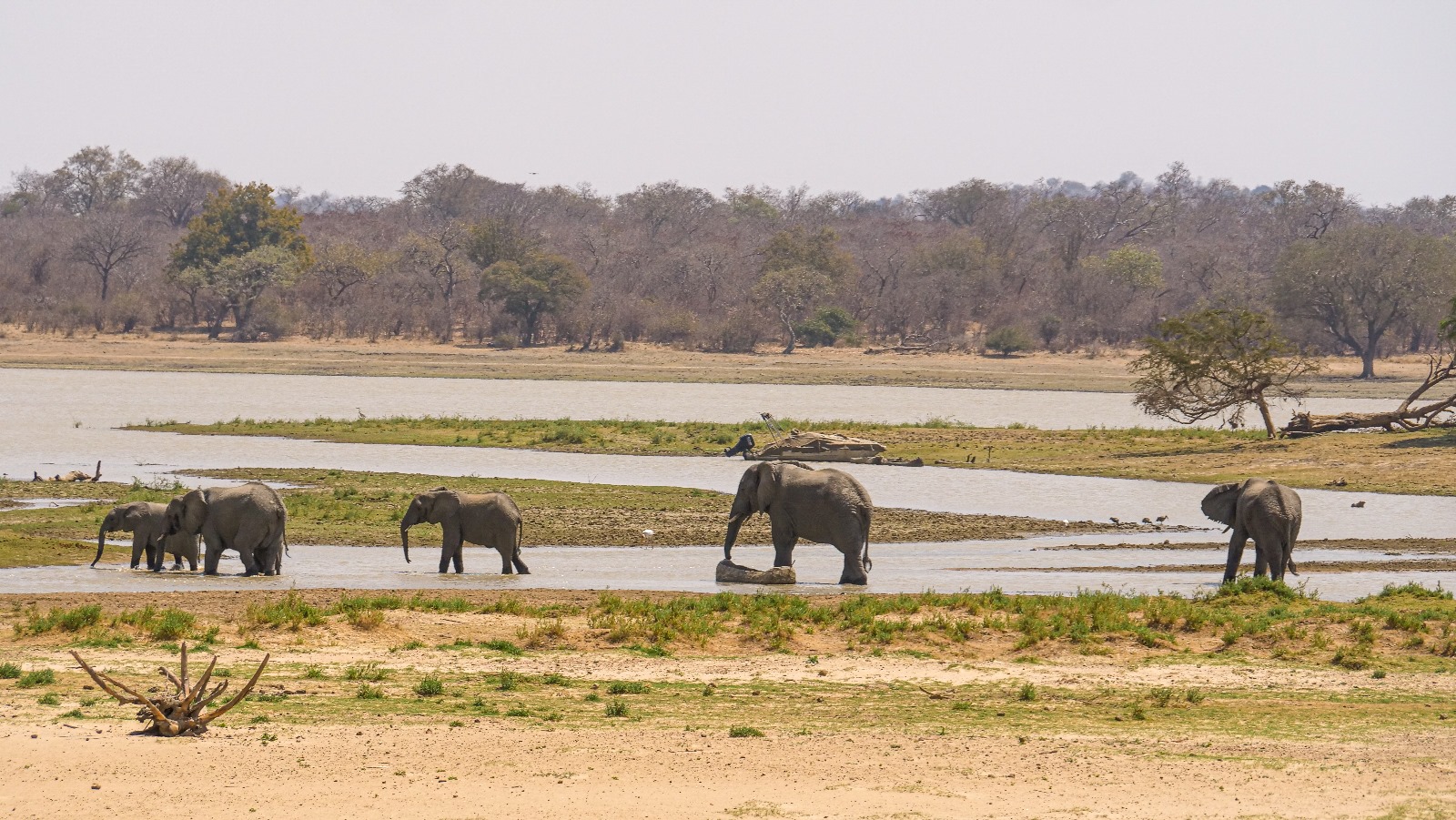
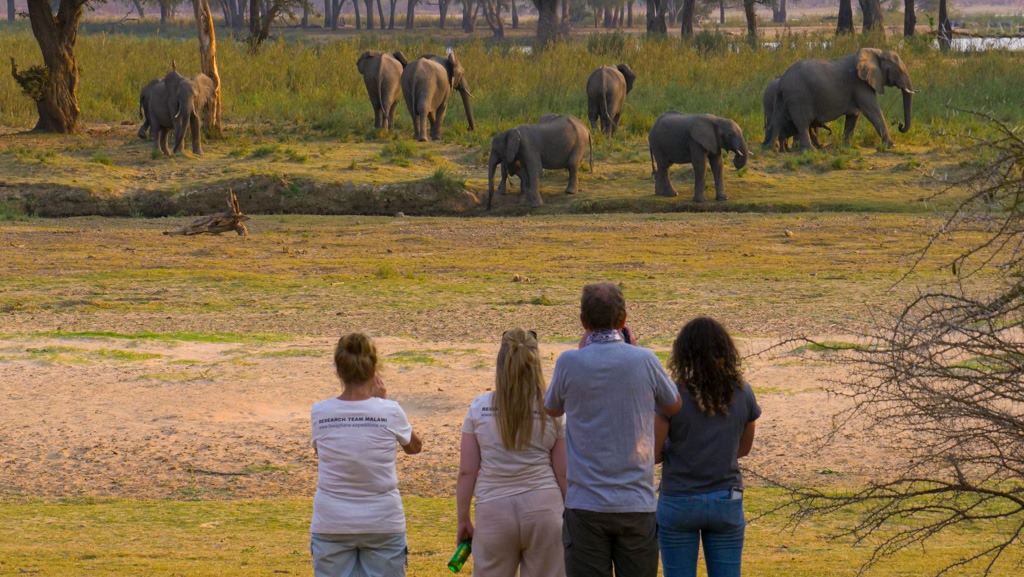
Many of our elephant sightings have been from base camp. Some of the herds seem to have a tendency to wander down to โourโ end of the lake and the good grazing on the land opposite camp in the late afternoon. We often get only a few minutes to enjoy watching them wade through the shallows, drinking and bathing, then up onto the shore before they reach the tall vegetation where they are half hidden. In those precious minutes we need to count and do our best to characterise them by sex and age class. Using binoculars and cameras, we also look for any distinctive identification features such as notches on ears and tusk shape. In this way we can cross-reference with the Vwaza elephant catalogue created from our previous expeditions here and potentially add to the catalogue too.
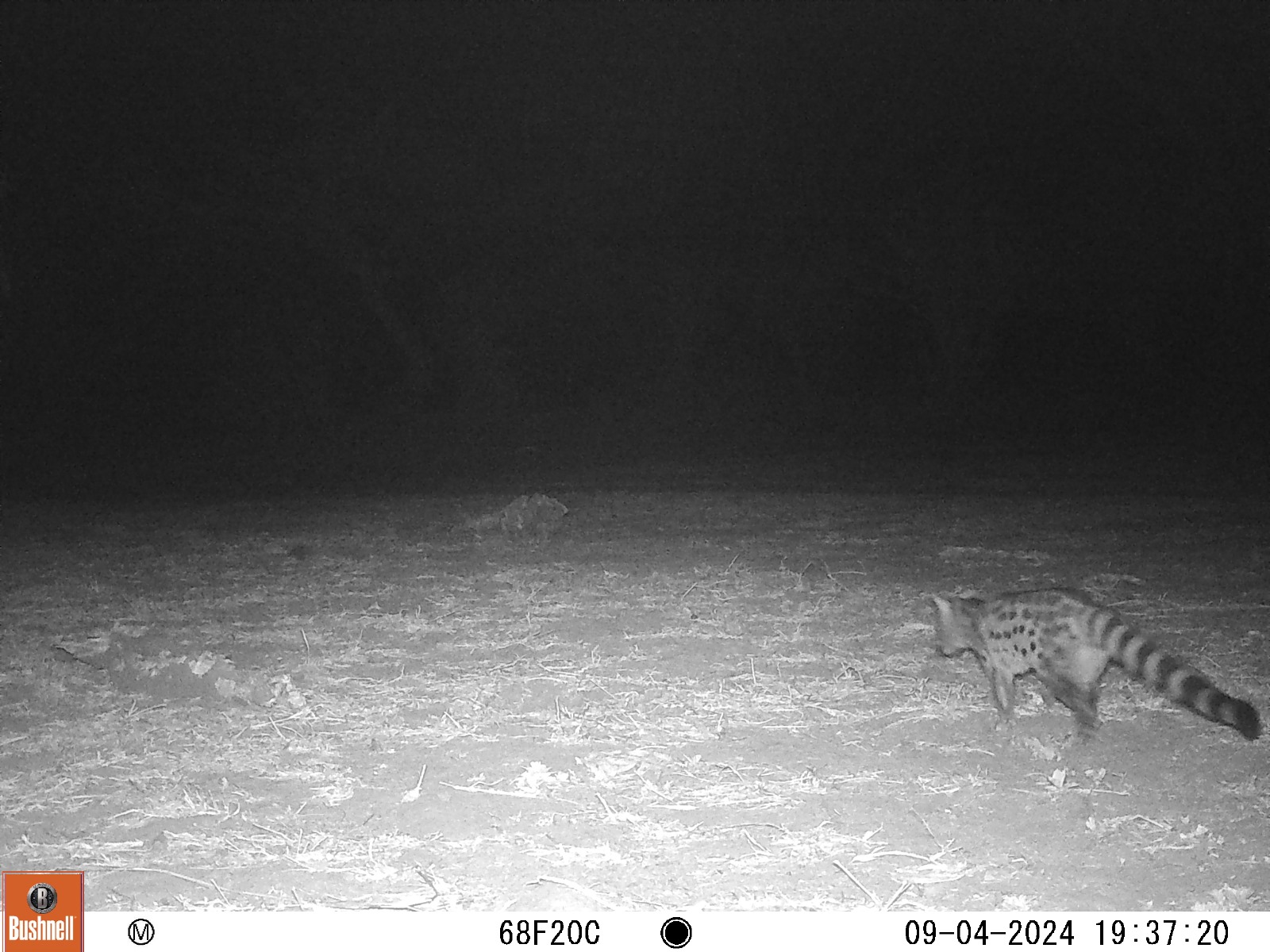
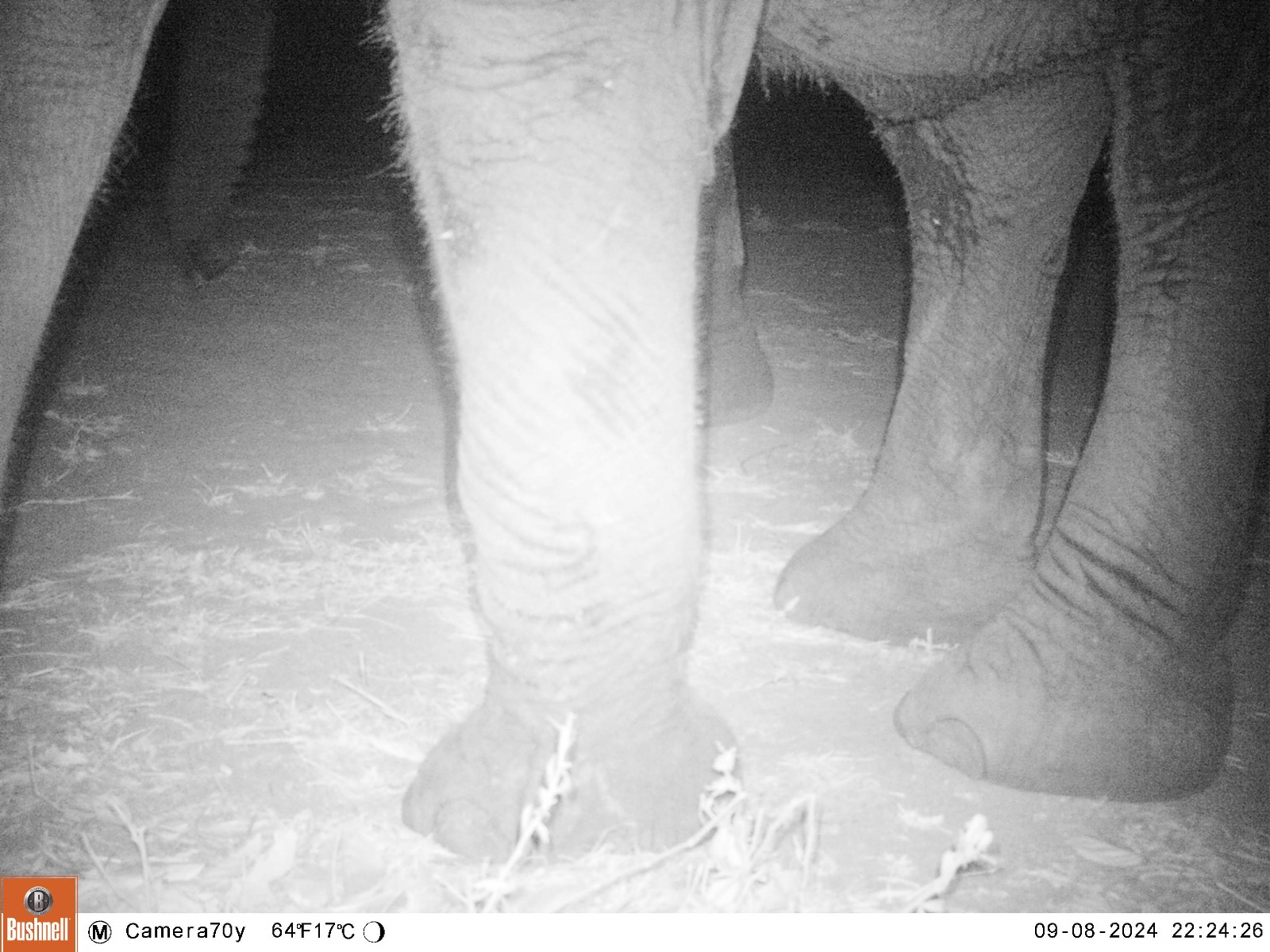
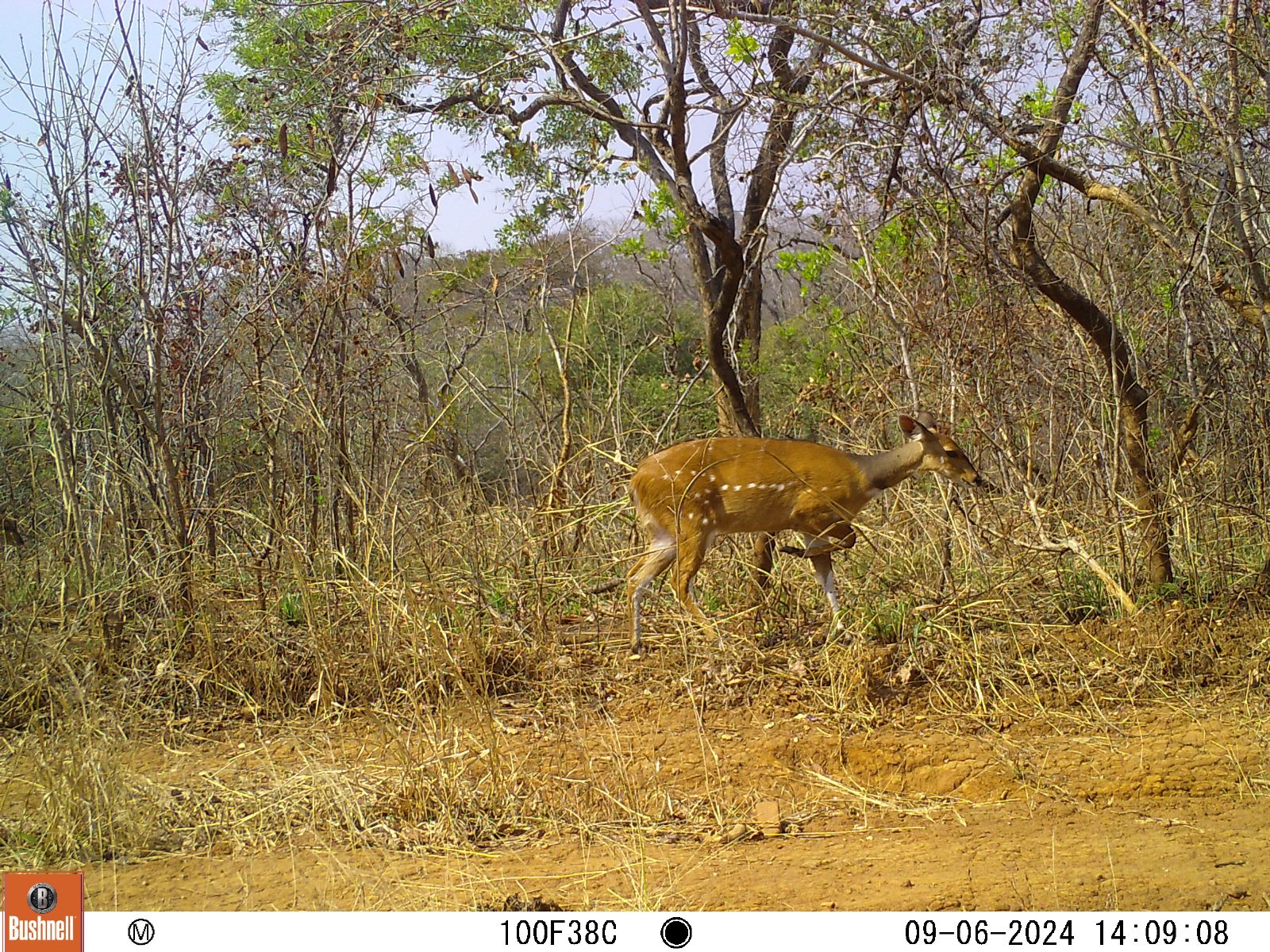
We also collected all the camera traps and processed all the images. As expected, we have images of hippos and elephants (mostly just their legs, close up) as well as the antelope species we meet every day in the day time. But we also have evidence of quite a few nocturnal species: civets, genets, mongooses as well as a porcupine and a honey badger. All of these are significant, but none quite as exciting as the hyaenas we captured earlier on.
It has been a good expedition, and both myself and expedition scientist Lea are pleased with the quality and amount of data that the team has gathered. I would like to thank our all our citizen scientists who have contributed so much to this expedition and continued our mission of building up a good long-term research dataset on the wildlife at Vwaza, which will be shared with the reserve managers and others and published as necessary. Thank you!
We deploy camera traps to monitor which species live in Vwaza โ especially nocturnal animals, which we would not otherwise spot. Some of these animals are caught on our cameras every year, but no less exciting to find anyway โ civets, mongooses, genets and of course elephants and hippos (both wander the woods at night, feeding). But occasionally we capture an image of a rarer species. Two years ago we found the first ever evidence of wild dogs in Vwaza in this way. This year when we checked a camera we had set up facing an animal carcass, which we noticed had been dragged away, we found the culprit on camera: a hyaena! Interestingly, the images showed the animal investigating the camera rather than scavenging the carcass: hyaenas are known to show much interest in camera traps and sometimes even pull them off their tree and chew them to destruction. Although we have had evidence of hyaenas at Vwaza before (we spotted some footprints in the sand nearby at the start of the expedition), this is still a notable discovery.
We continue to see elephants daily, although there does seem to be a pattern of โgood ele daysโ alternating with โbad ele daysโ.
Our rest day involved a trip to the market town of Rumphi and a cultural visit to the local elementary school. We had prepared a very simple presentation for the children, which was translated by the teacher, telling them what we are doing here and hopefully inspiring them about wild animals. They in turn sang some songs for us. It was good to make a connection with local people like this.
We only have a couple more full days to go on this yearโs expedition, but the team are working well and we are getting a lot of good data in. And tonight we will retrieve the remaining camera traps: who knows what animals we will find on those SD cards!