Update from our volunteer vacation / conservation holiday protecting whales, dolphins and turtles around the Azores archipelago (www.biosphere-expeditions.org/azores)

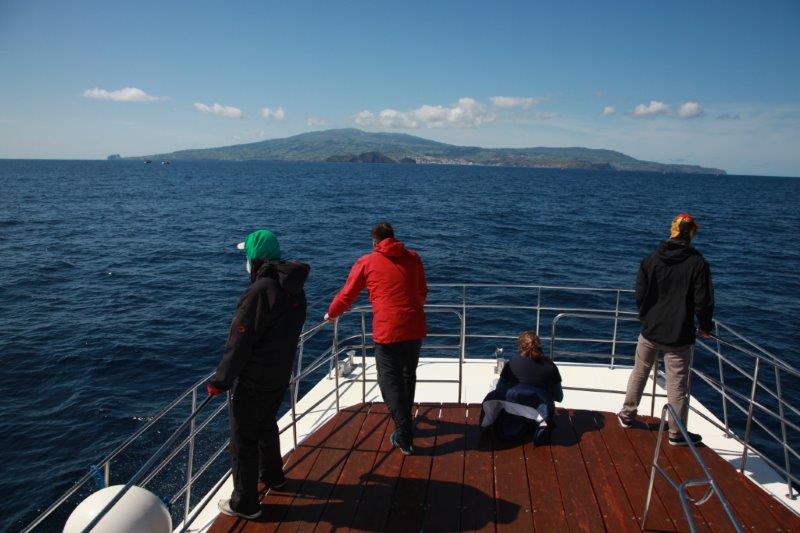
There were no signs of the Monday morning blues as we set out to sea after two days ashore. Rightly so, as the sun was shining, the sea was calm and snow dusted the top of Pico.

Aside from our normal encounters with common dolphins and loggerhead turtles, the first main event to document was with a mighty fin whale, second only in size to the blue whale. It is not often you can spend your Monday morning tracking fin whales.

However, the day was to get better. Reports were coming in of a pod of false killer whales. So we powered along the south coast of Pico island and sure enough came across a large pod (100+) of the false killer whales – sleek, black, torpedo-shaped and a member of the dolphin family.

This slideshow requires JavaScript.

This species is often found in association with bottlenose dolphins, and we weren’t disappointed. A flurry of data collection and photography ensued, as the teamed work to document the encounter (and individuals) but also enjoy the show, as both species moved in to the ride the bow waves of our boat.

As we finally parted ways, and went back on one of our survey transects, the day was neatly rounded off with yet more fin whales and a passing encounter with a small group of Risso’s dolphins.

Monday was definitely a dolphin day.


Update from our volunteer vacation / conservation holiday protecting whales, dolphins and turtles around the Azores archipelago
Update from our volunteer vacation / conservation holiday protecting whales, dolphins and turtles around the Azores archipelago (www.biosphere-expeditions.org/azores)

Our third day at sea was the perfect illustration of why fieldwork brings both freedom and frustration.

The whales were using the freedom of the ocean to disappear without a trace and we were being drawn into a nautical game of hide and seek. How hard is it to find 50 tonnes of whale? – very, when they can dive for 90 minutes on one breath and descend to 1000 m below the surface.

But the team are a determined bunch. With ‘eyes all around’ looking in every direction the sperm whale had to ‘blow’ its cover at some point.

IMG_8299
Eyes around


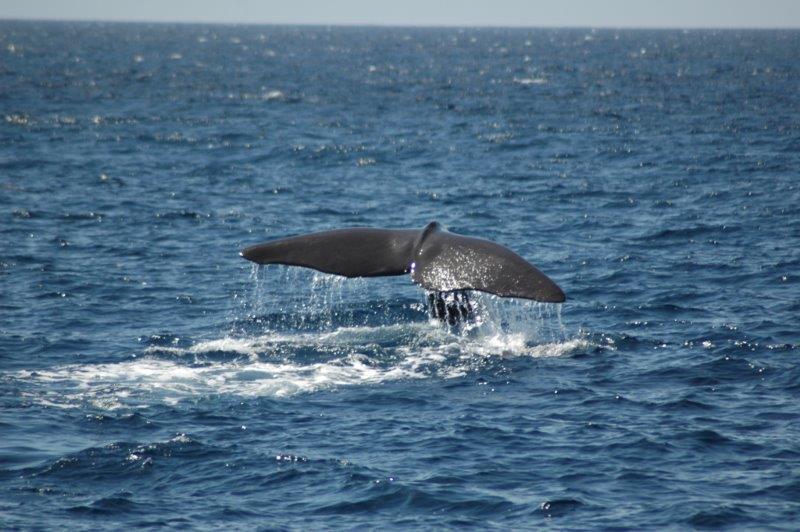
We also had one other trick up our sleeve, as Annabel deployed the hydrophone – an underwater microphone to listen in on the whale’s world. We then had a better sense where it may be moving. The audio-visual vigilance paid off and a single male sperm whale was finally spotted and photographed for the identification records.

IMG_8316
Deploying the hydrophone


IMG_8839
Sperm whale fluke success


The weather also conspired against us, with increasing winds restricting our movements around Faial. With a limited search area, the dolphins also proved elusive, with just a handful of common and bottlenose sighted. The turtles were the only ones keeping up a regular appearance and giving any consistency to the data.

This is why we are here – to better understand the patterns of appearance and disappearance. After all, any record or none at all – they are all still valuable data.


Update from our volunteer vacation / conservation holiday protecting whales, dolphins and turtles around the Azores archipelago

Update from our volunteer vacation / conservation holiday protecting whales, dolphins and turtles around the Azores archipelago (www.biosphere-expeditions.org/azores)

If our first day at sea was about diversity (with blue, sperm and humpback whales; not to mention the common and bottlenose dolphins), our second day was all about intensity.

After the obligatory turtle sighting from Carlos (winning the prize for the first spot of the day), common dolphins were again added to the sightings list, but this time with calves. Our lookouts (Anthony and Simon) then proved their worth with a dolphin shout that turned out to be Risso’s, again with calves. With hieroglyphic scratches covering their bodies, this not only makes them distinctive, but also gives a window on their history.

Risso’s dolphin sighted off Pico Island – the scratch marks on the dorsal fin aids identification. Picture courtesy of Craig Turner.

Body art was also a theme for the part of the day, as we observed the ‘chevron patterns’ of several fin whales – these markings behind the head are partly used to identify individuals.

IMG_8791
Trying to identify a fin whale from its chevron markings. Picture courtesy of Craig Turner.

The afternoon was reserved for sperm whales by the dozen. Keeping the team busy recording blow rates and fluke photographs for identification of individuals. Several of the females observed were also with calves. There must be something in the water!

Until tomorrow.

Craig


Update from our volunteer vacation / conservation holiday protecting whales, dolphins and turtles around the Azores archipelago

Update from our volunteer vacation / conservation holiday protecting whales, dolphins and turtles around the Azores archipelago (www.biosphere-expeditions.org/azores)
This is Anthony, Craig’s assistant expedition leader, reporting on our first day out at sea.

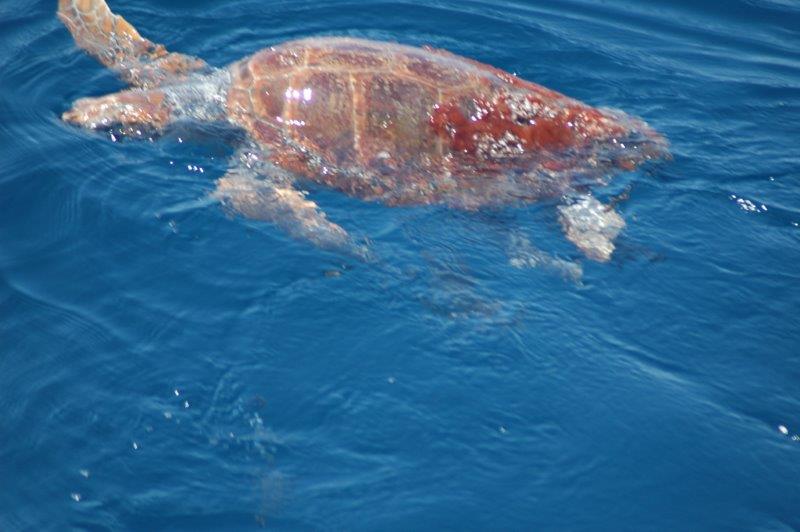
Datasheets at the ready, we set sail this morning. Within moments of leaving the dock, we spied our first pod of common dolphins. In the rush to get the corresponding paperwork to document this event, a turtle was spotted by Annabel. Now hurriedly looking for the turtle sheet we were now in the bay and into the blue.

common dolphin (1)
Common dolphins
turtle 2010 (1)
Turtle

With the early records documented, we saw our first blow in the distance. It belonged to a humpback whale. Before we could get there, it had dived. Luckily, however, the radio, operated by our spotters on land, reported sightings of a baleen whale, so we powered in that direction.

humpback whale (1)
Humpback whale


When we arrived we discovered it was the mother of all baleens, the mighty blue whale. We patiently watched it as it swam gently on its way before diving and giving us five minutes or so of Meerkat-style peering around in all directions to see where the next blow came from.

blue whale (1)
Blue whale


Eventually we headed off and happened upon our humpback again, waving at us with his enormous pectoral flipper.

The day was rounded off with a group sperm whales until we had to make our way back to the harbour and call it a day.

Sperm whale
Sperm whale

All in all we could not have hoped for a better first day. What will tomorrow bring…?


Update from our volunteer vacation / conservation holiday protecting whales, dolphins and turtles around the Azores archipelago

Update from our volunteer vacation / conservation holiday protecting whales, dolphins and turtles around the Azores archipelago (www.biosphere-expeditions.org/azores)
After an early start for the final pieces of preparation, we can at last say a big Azorean welcome to our expeditioners.

The team all arrived safely, from the north, east and west; via a mix of routes and modes of transport. The good news is they are all present and correct and very excited. So the first slot of 2015 officially begins.

With initial introductions, risks assessments and briefings completed, we stretched our legs with a whistle–stop orientation around Horta. Whilst important for us to impart the initial project knowledge, it has been great to learn about our new team. The day was rounded off with our first dinner, created in-house by the team – a tasty vegetarian pasta it was too!

Rested and recuperated from the travel and briefing exertions of yesterday, the science training began today. Familiarisation with equipment was followed by data records training, and rounded off with a boat orientation – though the latter was slightly delayed, as our vessel went (without us) to the aid of another boat stranded engineless in the harbour – always be prepared for the unexpected!

boat (1)
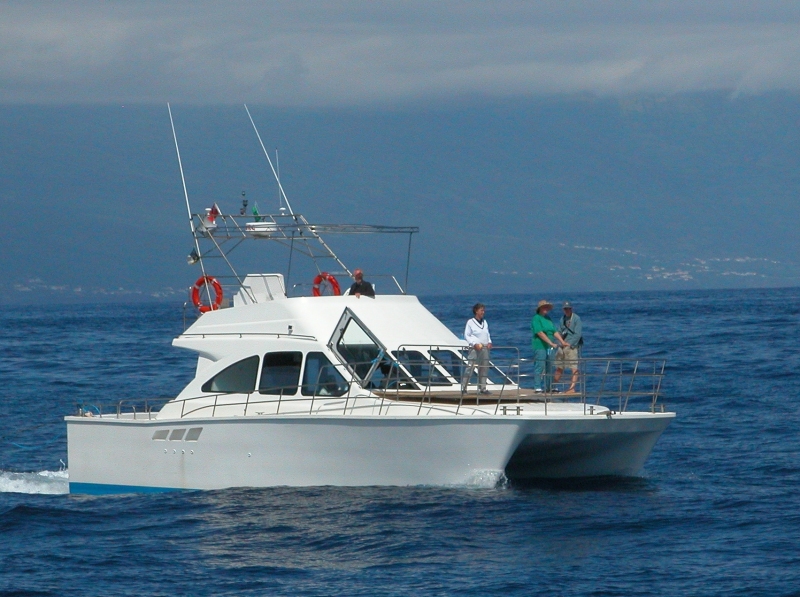
The research vessel


Slightly less than unexpected was the small ‘weather spanner’ thrown into the workings of the expedition, as our training session at sea was postponed by high winds. Tomorrow looks more favourable, so it will be all systems go as our team put their new-found knowledge into practice. The whales won’t have to wait for us much longer 😉

The weather delay meant Lisa (our scientist) could give a background talk on cetaceans, and the team could acquaint themselves with the data entry and the fluke matching process – how we identify and track individual whales.

The day was rounded off learning key identification features of species we will hopefully encounter, the team are now poised and ready for action. All we need now is a good night’s rest and the right weather for whales…


Update from our volunteer vacation / conservation holiday protecting whales, dolphins and turtles around the Azores archipelago

Update from our volunteer vacation / conservation holiday protecting whales, dolphins and turtles around the Azores archipelago (www.biosphere-expeditions.org/azores)
Our migration to the Azores is complete. After a great flight from Ponta Delgada, staring at the sea below whilst passing the towering volcanic peak of Pico island, Anthony and I are now in Horta. Yesterday and today we have been preparing for your imminent arrival.

It has been great to re-orientate ourselves around town, meet up with our hosts (Jim, Claudia and Tiago) and catch up with Lisa (our scientist) to hear about all the recent sightings. We can share more detail on that once you’ve arrived (or you can have a look at Lisa’s Facebook pag at https://www.facebook.com/pages/Whale-Watch-Azores/113978598781878?fref=ts). We now just hope that the weather and whale gods are on our side and we can look forward to some great fieldwork (and data collection) over the next few days.

Easter Sunday has greeted us with liquid sunshine, but it won’t dampen the preparations or enthusiasm for the first group of the expedition. So safe travels to those of you still en route, and we look forward to meeting you all on Monday.

Peter's Cafe (Sport)
Peter’s Cafe (Sport) in Horta

From our conservation holiday volunteering with lynx, wolves, bears and wildcats in the Carpathian mountains of Slovakia (http://www.biosphere-expeditions.org/slovakia)

We thought you might all like to know that the last camera trap left out at the deer carcass yielded some beautiful pictures of lynx…

This slideshow requires JavaScript.

Thank you again everyone and well done for another great set of results.

Continue reading “From our conservation holiday volunteering with lynx, wolves, bears and wildcats in the Carpathian mountains of Slovakia (http://www.biosphere-expeditions.org/slovakia)”

Update from our volunteer vacation / conservation holiday protecting whales, dolphins and turtles around the Azores archipelago (www.biosphere-expeditions.org/azores)

Hello everyone

It’s time for the initial introductions. I am Craig Turner and I’ll be your expedition leader in the Azores this year. It is great to be going back after my first stint last year.

I am already on route, having packed my gear and left the snowy hills of north Scotland yesterday. Today is the Lake District to Lisbon leg, and tomorrow Horta. It will be great to meet up with friends and colleagues from last year, not least our scientist Lisa Steiner. If you want to find cetaceans in the Azores, then she is the person to find them. Last year, my baptism was blue – a great way to kick off our data collection. Who knows what it will be this year, with an early and rare rumour of orcas in the wider area.

I arrive a couple of days before you in order to set up the expedition headquarters. We’ll have Anthony and Chris as expedition-leaders-in-training along with us on each slot, which will be a great addition to the team. I’ll send around another message once I get on the ground in Horta and confirm my local telephone number.

This reminds to mention communications on the island. There’s mobile phone reception on Faial in addition to internet here and there, but there’s also a golden rule of no cell phones while we’re at sea. Hopefully you can resist the need for frequent international comms, and why not go off the grid for the expedition, and soak up the expedition experience.

I know you’ve all been eagerly reading your expedition materials and know to bring many layers of clothing. The weather can be a bit like four seasons in one day, so prepare for warm, cold, wet and dry. Like the weather in Scotland! Don’t forget your waterproof trousers – you’ll thank me when you are stationed on the bow as a lookout and the weather is choppy.

So with the local team in place, whale sightings already logged by Lisa, all we are missing is you. This Monday morning is hopefully one we are all looking forward to….. It will be great to meet you all and I’ll send along another update very soon.

Safe travels…

Craig


Update from our volunteer vacation / conservation holiday protecting whales, dolphins and turtles around the Azores archipelago

From our conservation holiday volunteering with lynx, wolves, bears and wildcats in the Carpathian mountains of Slovakia (http://www.biosphere-expeditions.org/slovakia)

The second group of the Slovakia wolf, lynx and bear expedition has now departed.

After a very successful expedition, the team travelled back west by train, and spilt off to their own destinations all over the world; one travelling as far as Singapore…

Again another sad departure, Steve, Sergii, Marc, Alex ‘leather pants’, Chris, Uwe, Katie, Aly-Cat, Nadine, Sarah, Emma and Heather (Angel) were an excellent group. With their sharp wits, minds and claws they compiled a good amount of data, again exceeding expectations in the ‘steep and deep’ snow.

This slideshow requires JavaScript.

Here’s a summary: 22 of our cells were covered in 17 transects. Records from this team include three golden eagle sightings, four otter tracks, ten lynx tracks, six lynx scats, eight lynx urine samples, 23 wolf tracks, six wolf urine samples, seven wolf scats, one wolf hair sample, eight camera traps placed (two of which are still deployed) and a large selection of carcasses, thanks to our carcass queen Katie.

Frantisek shed a tear as the train left, mostly because Alex ‘leather pants’ fluorescent orange ukelele went with it.

Paul and Astrid will remain here at base for one more day to collate data and pack up the kit, potentially squeezing in one last hot chocolate…

Tomas, Paul, Noro and Astrid wish you all a very safe and trouble free journey home, we thank you for your incredible efforts in the Velka Fatra National Park and your fantastic humour and spirit (not spirits) back at base. Hopefully we will meet some of you again in the future!

Best wishes

Paul & Astrid

Continue reading “From our conservation holiday volunteering with lynx, wolves, bears and wildcats in the Carpathian mountains of Slovakia (http://www.biosphere-expeditions.org/slovakia)”

From our conservation holiday volunteering with lynx, wolves, bears and wildcats in the Carpathian mountains of Slovakia (http://www.biosphere-expeditions.org/slovakia)

The second slot of the Slovakia wolf, lynx and bear expedition is now well underway.

All members of the group arrived on Sunday to a very wintery Svosov – another snowfall meant all the tracks (both human and local wildlife) were covered. Cleaning the slate and making the path clear for fresh findings, and more trail breaking.

After a thorough induction from Tomas, Paul and Astrid, the group left for their first day in the Velka Fatra National Park. After discussions with the local foresters, we were directed to the remains of a wolf kill by the L’ubochnianka river on the valley floor.

This slideshow requires JavaScript.

The team adjusted well to the tough going snow levels and the use of snow shoes. We all hiked as one group, in one line up to Lake Blatna making a ‘highway’ (path) in the snow as we went. The intention was to make an ‘easy route’ for animals to travel down, making their presence in that specific area more likely; (they like an easy route as much as we do, and will take the path of least resistance). We placed camera traps down two side valleys on our ‘highway’ and again, we will collect these in a few days.

Today we went out in four small groups of four, with one leader in each. One group were successful in finding wolf tracks from a pack of around three individuals, as well as wolf urine. Another group found boar and otter tracks.

We have been assured some very amusing photos in our debrief tonight, some people get used to snow shoes quicker than others and so today there were a few very close encounters with the valley floor. (For very close inspections of tracks you understand, not because anyone fell over unintentionally….)

This Slovakia expedition is responsible for many great things, needless to say – among the list though are two firsts: the first encounter with snow for two Australian participants (2014 and 2015) and their first ever snowman.

Continue reading “From our conservation holiday volunteering with lynx, wolves, bears and wildcats in the Carpathian mountains of Slovakia (http://www.biosphere-expeditions.org/slovakia)”