From our conservation holiday volunteering with jaguars, pumas, ocelots, primates and other species in the Peru Amazon jungle (http://www.biosphere-expeditions.org/amazonia)

Red uakari monkeys sighted!

We’re on our third survey day and the list of target species sightings is getting long. Most excitingly a troup of about 60 – 80 red uakari monkeys was sighted on Tuesday, the first survey day after the training sessions.

It was on the long hike to ‘terrra firme’, the study area’s high grounds that never get flooded, when Manuel, one of our local guides, heard the monkeys call from further away off the trail. While he stood his ground with team members Katie and Lansing, Fredrik equipped with a camera and a 600 mm lens was sent off to hunt for some pictures. This primate species is most elusive, they travel at impressive speed and have only been seen in the area once this year in March. Fredrik did an amazing job – see the picture he brought back for everyone to enjoy.

red uakari_IMG_1672

Not even fresh jaguar tracks found on the same day on the trail connecting the Tahuayo and Tangarana river made it top on the list that day. In total ten camera traps have been set in various locations throughout the study area to capture their presence…hopefully! Other species being recordedsare brown and white capuchin monkey, Squirrel, titi, saki and owl monkey, as well as moustached and saddleback tamarins.

Although the local people say that there is no dry season in the rainforest, it’s been very dry over the last week. Only the odd rain shower cooled down the temperature ever so slightly. We’re sweating and drinking water and sweating and drinking – not even at night temperatures does it drop below 25-30 degrees Celsius. One benefit of the dryness is that all trails are much easier to walk, the palm swamps easier to cross, and there are far fewer mosquitoes.

Continue reading “From our conservation holiday volunteering with jaguars, pumas, ocelots, primates and other species in the Peru Amazon jungle (http://www.biosphere-expeditions.org/amazonia)”

From our scuba diving conservation holiday with whale sharks and coral reefs of the Maldives (http://www.biosphere-expeditions.org/maldives)

I’ve arrived in Male’ – descending through stacks of cumulonimbus to be greeted by spectacular sights of atolls framed by a turquoise sea. It’s hot and sunny –  30 degrees celsius in the shade, but the forecast shows a front on the way, so we may meet some cooling showers during the week.

Shidha and I have met, shared our expectations for the expedition and discussed the week’s programme – she is familiar with the route we are taking and looking forward to training you, as am I.

Shidha and Catherine

I have a Maldivian phone number now – (+960) 768 3387, so if you need to contact me in an emergency this is the number to call.

Wishing you all a safe journey, and see you tomorrow at 11.00 at the Coffee Club

Catherine

Continue reading “From our scuba diving conservation holiday with whale sharks and coral reefs of the Maldives (http://www.biosphere-expeditions.org/maldives)”
From our scuba diving conservation holiday with whale sharks and coral reefs of the Maldives (http://www.biosphere-expeditions.org/maldives)

Biosphere Expeditions 2015 reef survey of the Maldives is on ‘bleaching alert’

In 1998 there was a significant global El Niño event that virtually stopped water circulation in the Pacific and Indian Oceans, resulting in floods in west, north and south American arid regions, and drought in the Australian and New Guinea rainforests, eventually resulting in forest fires. It upset the Asian subcontinent monsoons and led to crop failures and food shortages in the tropical nations of the world.

In the ocean, the ‘blocking’ of the equatorial oceanic gyre of currents led to significant warming of the shallow seas of the tropics, failure of the anchovy fishery of Peru, and the death of many coral reefs. The Maldives reefs suffered at least 90% coral mortality, because a lens of hot water, about 3-5 degrees (Celcius) above the usual maximum (that is 30-31 degrees Celsius) lay over the reefs of the country for four weeks. This stressed the corals and led to significant ‘bleaching’. Bleaching is a process where stress to the corals results in them expelling their colourful symbiotic algae (called zooxanthaellae), thus going pure white and exposing their calcium carbonate skeletons. It is often the initial cause of death to the corals as the symbiotic algae give up to 80% of the energy to the corals from the sugars they produce by photosynthesis. Corals can survive initial bleaching, but only if the hot water stays over the corals for a short period, or at a lower temperature. In these circumstances, corals can reabsorb zooxanthellae into their tissues from the water column. However, the 1998 Maldives bleaching event was so severe, that it killed most corals outright. The recovery of the reefs has been from juvenile corals settling on the dead coral reefs, and re-growing.

Biosphere Expeditions has in collaboration with the Marine Conservation Society (MCS) has been doing four things since 2011:

1. Monitoring the recovery of the 1998 bleaching event at reefs that were first surveyed before the event, in order to see the amount of live coral that now exists at shallow depths.

2. Re-surveying sites first visited by MCS in 2005, such that we have indications of reef health, fish populations, and any large megafauna such as whale shark, manta rays, turtles, large fish and reef sharks. We recorded a ‘new’ whaleshark in 2011.

3. Training, via Biosphere Expeditions’ placement programme http://www.biosphere-expeditions.org/placements, of local Maldivians from government and civil society to monitor their own reefs and providing training and funding, courtesy of LaMer and the Rufford Foundation, for exceptional individuals to become Reef Check trainers themselves. These individuals trained up three local Reef Check teams since 2014 and undertook the first ever all-Maldivian Reef Check survey in November last year.

4. We have published four technical reports on the condition of the reefs since 2011.

This and last year are also El Niño years, where the east–west surface current movements of water across the planet’s equator is stalling and stopping. This results in the sun heating up surface waters in some locations, such that bleaching events have occurred. They have occurred in the tropical west pacific, Hawaii, French Polynesia, and to a lesser extent, the Maldives. Northerly Indian Ocean reefs (around the Arabian Gulf, Thaliand and Andoman and Nicobar Islands) appeared to have had the brunt of the hot water, but the Maldives remains on high alert, as this El Niño event is not over yet, and indeed could strengthen.

This year’s expedition is therefore ‘highly tuned’ to looking for bleaching events in the Maldives, or evidence of recent bleaching events (where the whitened corals start to be overgrown by algae). We are re-visiting sites we first surveyed in 2005 and four other sites that have been regularly monitored (once every two years) since 2011, going down the beautiful Ari Atoll from north to south. We have a survey team of eleven individuals, two trainers – one British and one Maldivian – and nine trainees (including two Maldivian placement recipients). The two placements are from the local NGO ‘The Maldives Whaleshark Research Programme’ and a local marine consultancy. The trainers on the expedition have both been trained by Dr Jean-Luc Solandt of the Marine Conservation Society, a Reef Check Course Director and the national coordinator of Reef Check for the Maldives.

Continue reading “From our scuba diving conservation holiday with whale sharks and coral reefs of the Maldives (http://www.biosphere-expeditions.org/maldives)”

From our conservation holiday volunteering with jaguars, pumas, ocelots, primates and other species in the Peru Amazon jungle (http://www.biosphere-expeditions.org/amazonia)

Everyone arrived safely at the Amazon Research Center. After a speed boat ride of 2 1/2 hours from Iquitos, Alfredo, our scientists, and our scientific assistants Fredrik & Andy, and I welcomed the team at the Tahuayo Lodge and continued to the ARC after some brief introductions and having lunch. While I am writing this, Alfredo is delivering a presentation of the research’s target species such as jaguar, puma and more than a dozen different monkey species. It’s a lot of input on the first day after a comprehensive safety briefing to prepare everyone for the jungle research work. We’ll continue with training sessions on the research equipment and data sheets tomorrow morning, before we go out for our first training survey walk.

Continue reading “From our conservation holiday volunteering with jaguars, pumas, ocelots, primates and other species in the Peru Amazon jungle (http://www.biosphere-expeditions.org/amazonia)”

From our scuba diving conservation holiday with whale sharks and coral reefs of the Maldives (http://www.biosphere-expeditions.org/maldives)

My name is Catherine Edsell and I will be your expedition leader for this years Maldives expedition. Coral reef conservation is one of my passions and I led the Maldives expedition in 2014, so look forward to continuing our ongoing research with you. As you are aware, Dr. Jean-Luc Solandt is unable to join us due to personal reasons, but Mariyam Shidha Afzal, formerly from the Marine Research Centre of the Maldives, a marine biologist and experienced Reef Check Trainer will be taking his place, giving us the added benefit of her local knowledge.

I’m very much looking forward to meeting you in Male on Saturday, 12 September at 11:00 at the NEW meeting point in front of the Coffee Club at Maldives Airport. I will be arriving in Male on 10 September and as soon as I get my mobile phone set up, will email you my Maldivian phone number (to be used for emergency purposes only, such as missing assembly).

Our survey route for the week is below

I hope all your preparations are going well and that you’ve had a chance to study all the Reef Check material and whale shark info available on the website as this will not only save you revision time on board, but also stand you in good stead for a fruitful expedition. We have a packed schedule planned, so please arrive rested and ready to go.

Until then!

Catherine Edsell
Expedition Leader

Continue reading “From our scuba diving conservation holiday with whale sharks and coral reefs of the Maldives (http://www.biosphere-expeditions.org/maldives)”

From our citizen science project protecting leatherback turtles on the Caribbean coast of Costa Rica

I have just returned from the final reconnaissance visit to Costa Rica and I am pleased to say that everything went very well.

I have added some pictures and videos from the trip below. Hopefully they will give you a good impression of what it is like at Pacuare and of the work on the ground.

The expedition should be ready to join via www.biosphere-expeditions.org/costarica very soon and I hope you will join us. If you decide to do so, I look forward to seeing you in Costa Rica next year.

Regards

Dr. Matthias Hammer
Executive Director
Biosphere Expeditions

This slideshow requires JavaScript.


From our citizen science project protecting leatherback turtles on the Caribbean coast of Costa Rica

From our conservation holiday volunteering with jaguars, pumas, ocelots, primates and other species in the Peru Amazon jungle (http://www.biosphere-expeditions.org/amazonia)


Friday 07:30 in Iquitos: I am at the A&E Tours office waiting for the shops to open. I was told that today everything would be back to normal after two days of general strike. All shops & markets were closed, the streets left abandoned. Only the odd motocar passed by. It was around the Plaza des Armes where the crowd assembled demonstrating against a government decision. When the shops finally opened again, I had 90 minutes left before the boat left…

All other preparations have gone well so far. Fredrik Tegnér, a Swedish biologist who will be assisting Alfredo Dosantos, head scientist on this expedition, arrived in Iquitos on the same flight as I. Fredrik spent three months at the Amazon Research Centre last year studying the Peruvian poison frog. Now with his degree under his belt, he will join us to support Alfredo with data processing for the report. Together we have set up some of the research equipment: the GPSs now have updated maps and trails on them and the expedition computer is waiting for the team to feed it with data.

We will meet Alfredo later today at the ARC and will then start discussing the work plan, schedules, etc. – I’ll keep you updated.

Saturday: Fredrik & I arrived at the ARC yesterday in the late afternoon. Alfredo & I have worked out a work plan and I am looking forward to meeting team 1 tomorrow. If you have any problems with getting to the assembly point in time please contact the A&E Tours office in Iquitos, by either phone or e-mail. Safe travels and see you tomorrow.

Continue reading “From our conservation holiday volunteering with jaguars, pumas, ocelots, primates and other species in the Peru Amazon jungle (http://www.biosphere-expeditions.org/amazonia)”

From our Sumatran tiger conservation volunteering holiday in Indonesia (http://www.biosphere-expeditions.org/sumatra)

All good things come to an end, and today we to said goodbye to everyone who has made this expedition possible and draw a close on the Sumatran tiger expedition for 2015.

With 265-camera trap nights behind us, there have been some interesting results from the cameras we have collected. Clouded leopard, leopard cat, Malayan sun bear, binturong, yellow-throated marten, pig-tailed macaque, long-tailed macaque, barking deer, wild pig, and other animals. But sadly the extent of human impact within the wildlife sanctuary is unrelenting. We have caught on film people trying to kick our cameras off trees, in one case stealing the camera. Catching birds to sell in the villages. On the retrieval of one camera, the whole area leading up to it was cut down in the two weeks the camera had been in place. The loggers had not noticed the camera as they dragged timber past the traps we had set for the animals.

As a result no pictures of tigers were taken this year, but there is other, more circumstantial evidence, that they are still close to the villages. But we do now have a much greater understanding of what is going on the area. And we have made some really good contacts in villages further into the reserve for setting up sub-bases next year to access the harder-to-reach areas, away from humans, to which the tigers will have retracted too. And in several interviews in the last slot of this year’s expedition, as we have pushed deeper and deeper into the reserve, we have been hearing more about tigers in the nearby area in the form of tracks, roars and sightings in the last two months.

Thank you to everybody involved this year from the WWF, Batu Dinding and to all the participants who have taken time off to help with this cause. There are too many of you to mention by name, but you know who you are. None of this could have happened without you. Year 1 was always going to be the trailblazing year. Thank you for being trailblazers and preparing the ground for others to come after you in the years to come.

We battled leeches, spiders and things that bite, extreme rain, no rain, drought, the frustrations of not getting close enough to our quarry, pushed boats over rocks, worn wet shoes everyday, had fantastic blisters to show for our efforts and counted every last pig track in a 136 square km area. We were welcomed by the community, worked with them, passed on our enthusiasm  about the enchanting rainforest just over the fence to countless school children, had our photos taken, made friends and were part of something amazing.

Very best wishes

Anthony & the Biosphere Expeditions team

1 2 3 4


From our Sumatran tiger conservation volunteering holiday with tigers in Sumatra, Indonesia

From our Sumatran tiger conservation volunteering holiday in Indonesia (http://www.biosphere-expeditions.org/sumatra)

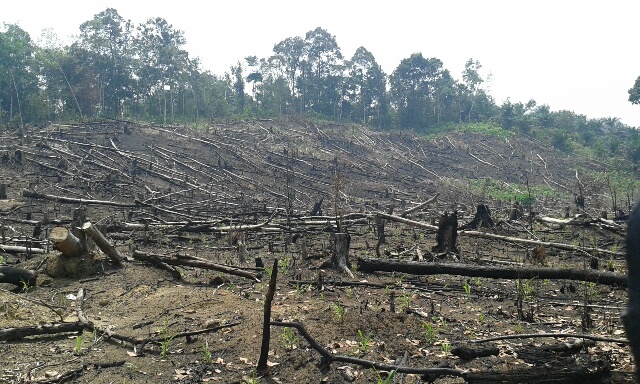
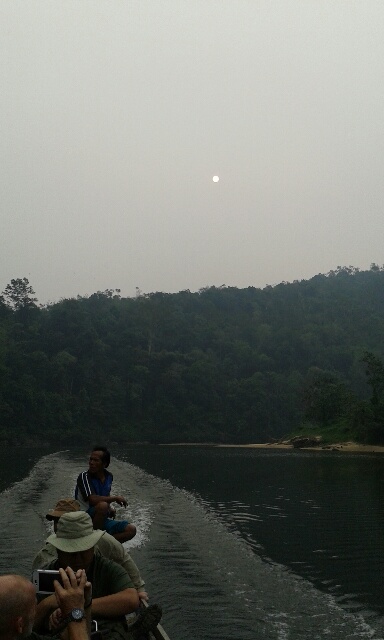
For the last couple of days, the sun has bearly made it through the smoke caused by all the slash and burn forest fires. Our expeditioners have been out in the haze collecting the cameras that slots 4 and 5 put in place.

20150819_124525_resized_1 20150901_074926_resized

We’ve caught sun bears, binturong, pig-tailed macaque and leopard cat to name but a few, but no tigers. We’ve also caught teenage boys catching birds in cages, a man kicking one of our cameras out of place (although we then got a troop of macaque we would have missed otherwise). Sadly, when we got to one trap area we found our camera had been stolen, along with the post it was chained to!

We’re off to a local high school now. So far we’ve had good success with the visits to the elementary schools, so are keen to speak to the older students.


From our Sumatran tiger conservation volunteering holiday with tigers in Sumatra, Indonesia

From our conservation holiday volunteering with jaguars, pumas, ocelots, primates and other species in the Peru Amazon jungle (www.biosphere-expeditions.org/amazonia)

Welcome everyone, this is the first issue of this year’s Amazonia expedition diary. My name is Malika, I’m a senior member of the Biosphere Expeditions’ staff and I will be leading our Amazonia jaguar & primates project in the Peruvian Amazon again this year. My bags are packed, I’m ready to go… (almost ;)). If my flights are on time, I’ll be arriving in Iquitos on 1 Sep around noon after picking up some more equipment in Lima.

I have been in touch with Alfredo Dosantos, our Peruvian expedition scientist, who told me about massive spring flooding and renovation work at our base: the Amazon Research Centre. But before meeting him there, I will spend a few preparation days in Iquitos. Checking equipment, preparing paperwork and shopping for missing items will be on my agenda before diving into jungle life.

I won’t have a local phone number, but will be available on my German mobile (for emergency purposes only!) until I leave Iquitos on 4 Sep. After that you can e-mail the office (on this e-mail) and they will relay a message to me.

That’s it for now. I’ll be in touch again with some more detailed information once I have arrived on the ground.

So as we prepare at this end, please can you do some more preparation too. In addition to studying the dossier, have a look at the “Methods & equipment” playlist. The bits that are relevant to the expedition are our cell methodology (explained for another expedition, but the principle is exactly the same), GPS, compass & map, Garmin etrex 20, camera trapping, binoculars and machete use.

Enjoy and I’ll see you at base in due course!

Malika Fettak
Expedition leader


Continue reading “From our conservation holiday volunteering with jaguars, pumas, ocelots, primates and other species in the Peru Amazon jungle (www.biosphere-expeditions.org/amazonia)”