From our snow leopard volunteering expedition in the Tien Shan mountains of Kyrgyzstan

Today is stormy with rain and snow, so we decided to take a trip to the zoology a museum on the other side of the Karakol pass in Doing Alysha, which is where I’m now writing from.

Meeting up with group 3 in Bishkek went perfectly. Now that the Karakol pass between our two valleys has been cleared of snow by group 2, it was possible to travel the shorter route to base camp from Bishkek. Once at base we unloaded groceries and got everyone settled in. Training on Tuesday held perfect weather again, so in an effort to keep traditions alive, we made sure that on our first day out for a survey, it rained. The weather cooperated all day till just after lunch when the clouds rolled in and the thunder started. Fortunately, the rain was only short-lived and everything dried up quickly for an all-round good survey. We have already, in only two survey days, collected information in 12 cells, seen one ibex (and lots of ibex sign), countless marmots, and plenty of birds, butterflies, and petroglyphs. Hoping for many more sunny survey days next week!

And the office tells me that the article by Matthias Gräub (group 1) in Swiss magazine “Tierwelt” (animal world) is now online on https://www.biosphere-expeditions.org/volunteeringinkyrgyzstan#press , alongside many others.

This slideshow requires JavaScript.

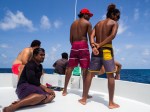
From our scuba diving conservation holiday with whale sharks and coral reefs of the Maldives

One of the questions on a Reef Check site description form is ‘Is this the best reef in the area?’ Distressed by our recurrent findings of unhealthy degraded reefs, we decided to go in search of just that, so on 26 July, after consulting the knowledgeable crew of our research vessel, we surveyed Litholu Kandu, an outer reef on the far eastern tip of Vaavu Atoll. We were not disappointed. This may not have been a pristine reef, but in comparison to what we had been seeing, it was a sight for sore eyes. As we headed north we found that the reefs once again were suffering, and these weren’t just the inner reefs, but the outer reefs as well.

On 27 July we performed our whale shark transect, but were not as fortunate as last week, and no whale sharks were sighted. But a large pod of around 50 spinner dolphins put on a great show of leaping and spinning, really playing up to their name.

For our final day the weather turned and our last transect, on a particularly silted reef, we battled with the wind, rain and poor visibility. The site we were surveying in Embudhu, South Male’, previously had 30% hard coral cover (in 2012), but now foreign investors in conjunction with the ministry of tourism here in the Maldives are reclaiming 7 km of land to build tourist islands akin to those in Dubai. As if the reefs aren’t having to cope with enough already! It was a sad way to end our week, but another example of why these surveys are really important, and why the world, and the Maldives, really need to wake up to what is going on just below the surface!

And what is going on is that inner reefs are devastated. Outer reefs aren’t in the places we’ve been to. If you look at IUCN ratings, over 30% cover is OK, so there may be opportunities for some recovery, but the problem is that impacts just keep increasing – sedimentation, pollution, ocean warming, overfishing, ocean acidification, you name it, it’s all here in the Maldives, which is why the inner reefs are indeed knackered and may not recover…..and this is of course where most of the resorts are….

We’ve been coming here since 2011 and even in this short time things have become much worse. Unless the Maldives, its people and its government wake up to the reality of what they are doing to their reefs, which are after all the basis for everything in the country, including the very country itself, then greed, ignorance, apathy and short-sightedness will win the day and kill the reefs – and with it much of the country’s economy and the well-being of its citizens. There’s no nice way to put this. What we are documenting is the rapid decline of a country in more ways than one.

Thank you to a fantastic team who have worked really hard in the face of an ecological crisis. This was the first time that Biosphere Expeditions has run an expedition for those already trained in Reef Check protocols and methodology, and it has been a great success. To be able to get to work quickly after a brief refresher, and to travel to distant locations has been a real bonus. It has also been great for participants of previous expeditions to meet up with old friends, and to make new ones. Everyone hopes that other diving destinations will follow suit and if they do, I hope to see you all in another location continuing the good work!

We would also like to thank the fantastic crew of our research vessel. The food has been amazing, and the knowledge and skill of the dive guides has really helped the whole operation run smoothly. A special thank you to Inthi, for being flexible and accommodating at all times.

So until next year… we wish the Maldivian reefs a year of recovery. `They need all the luck and help they can get.
From our scuba diving conservation holiday with whale sharks and coral reefs of the Maldives

To continue in the general trend, Vaavu Atoll has, so far, heralded a mixture of good and bad news for the reef. Fotteyo, the first site we surveyed on 24 July was a welcome example of a healthy reef, even though it was an inner reef. Could this be because it was uninhabited, we wondered?

Our second site caused some consternation as the latitude and longitude of the historic data we were using, didn’t match up to the name of the reef we were supposed to be surveying. We stuck with the lat/longs but were disappointed when we found most of the coral dead. The following morning, just to corroborate our findings and to make sure that we had covered all our bases, we also surveyed the actual Maaduvaree reef (across the channel from the lat/longs we had), in the hope that we may find a completely different story, but it was only marginally healthier. The upside was that there was a resident pod of spinner dolphins in the area and a couple of the team, Lori and Farah actually saw them underwater during the dive. For those who missed them, a stunning double rainbow, caused by a sudden downpour lifted the spirits of everyone else.

On the way to our next site, Vattaru, we dropped in to witness a school of reef sharks, some of them visibly pregnant, and then continued on to survey another completely uninhabited island reef. We had high hopes, due to our experience at Fotteyo, but here, the sub-aquatic picture was completely different. This reef was made up of individual coral outcrops, some of which were healthy with some evidence of new recruits, but the majority of the rest of the site was dominated by rock, rubble and sand. There was also some indication of recent bleaching and bleaching in progress, which was unsurprising as the water temperature was 31 degrees Celsius – too hot for coral to tolerate.

Tomorrow, 26 July, we will continue to survey the reefs of Vaavu Atoll, and do our best to document what is going on in this underwater ecosystem. We are trying to remain positive, but what we have seen so far of the Maldivian reefs, reveals a story of very significant degradation.

This slideshow requires JavaScript.

From our snow leopard volunteering expedition in the Tien Shan mountains of Kyrgyzstan

Interim science report (groups 1 and 2) from our expedition scientist Dr. Volodya Tytar.

Dr. Volodya Tytar

To date all sectors (A, B, C, D and E) of the planned study area have been visited. Maps of these areas are available at https://app.box.com/s/aars70mqox56bd6dmzbwa9wn2yhxb2wk).

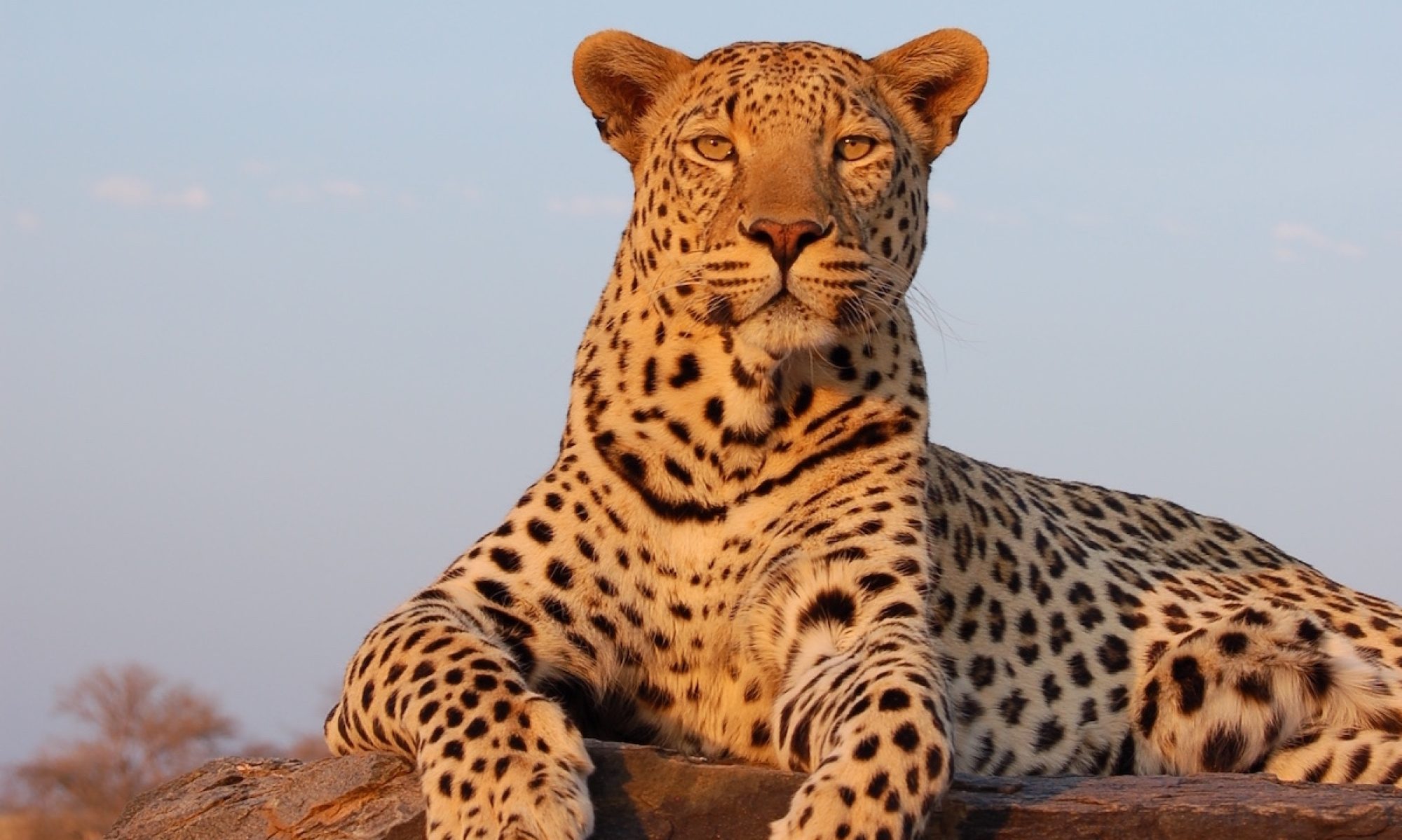
In total 72 cells have been surveyed by both teams (groups 1 and 2) and in 34 cells (47%) snow leopard prey (Siberian ibex, marmots, Himalayan snowcock) was recorded once or more times. The most frequent records are of marmot, particularly at lower altitudes. Together there have been 12 observations of live ibex on ridges, alongside with numerous records of tracks and droppings in places reached on foot.

Two or perhaps three signs of snow leopard presence were found. One scat sample (cell T17), one doubtful track (AF20) and one fairly distinct pugmark in mud (recorded in cell AF21).

For the first time live observations of ibex in Kyrgyzstan were accomplished (thanks to Sven Pelka from slot 2, Germany) using a drone.

Ground surveys (particularly in slot 2 when snow fields encountered in slot 1 were melting away) revealed ibex presence in areas of predicted good habitat (from surveys in previous years and the models developed from there, see expedition reports in www.biosphere-expeditions.org/reports) suitability for the animals. These, in particular, are upper reaches of valleys (together with the adjacent ridges) of Chon-Chikan (cells AC15 and AD16), Kara-Tor (AH14, AI15) and Dunguruma (AL14). These results will significantly help to improve the model used for guiding and planning our research in the area.

In all places where ibex activity was recorded, camera traps were set. To date there are 14 such traps in the field. It will be the task of groups 3 and 4 to check and retrieve them by the end of the expedition.

To date the expedition has also recorded 42 bird species (or two-thirds of the list of 2016). Amongst them are such Red Data Book species as the bearded vulture, golden eagle, black stork, which are protected in Kyrgyzstan.

Team members also continue to interview locals for the purpose of ascertaining attitudes towards snow leopards and snow leopard conservation. Nine such interviews have been accomplished so far. In general, they confirm positive attitudes and understanding of the need to protect snow leopards.

From our snow leopard volunteering expedition in the Tien Shan mountains of Kyrgyzstan

Our expedition scientist, Dr Volodya Tytar, on citizien science and snow leopard conservation

From our scuba diving conservation holiday with whale sharks and coral reefs of the Maldives

Team 2 arrived on Saturday, and already, in only one day, we have completed so much. This is the first ever Biosphere Expeditions Reef Check expedition to take previously trained Reef Check EcoDivers only and dedicate the whole expedition to gathering data. With the training process removed, it has allowed us to plan a new itinerary that will re-visit historic Reef Check sites that have not been surveyed in many years due to their distance from Male’ and also for the fact that in one week, to collect repetitive data sets, there just isn’t the time!

Some of the sites we will be surveying have had no data collected since 1997, prior to the last big bleaching event. Most of this week’s team trained with Biosphere Expeditions in other locations such as Musandam (Oman) or in Malaysia during the last couple of years, although Graham and Janet, from New Zealand, have had a seven year break! Adam from the USA gained his Reef Check qualification in the Phillipines and is new to Biosphere Expeditions.

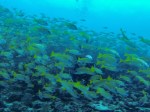
So after a quick refresher in methodology and an intensive reminder of indicator species, we set off to Bandos to perform our first ‘mock’ Reef Check survey. It went well and everyone was comforted by their ability to ‘slip back into it’. The fish survey was given a great opportunity to tell the difference between snapper and emperor fish when a huge mixed shoal swam through both transects.

Happy with the lessons learnt, we re-surveyed the site ‘for real’ and are looking forward to our first survey tomorrow on Vaavu Atoll – our first uninhabited reef!

This slideshow requires JavaScript.


From our snow leopard volunteering expedition in the Tien Shan mountains of Kyrgyzstan

First off, I’d like to say a big thank you to all the members of group 2: Yryskeldi, Andy, Carol, Brian Martin, Franzesca, Christof, Christina, Christore, Amy (from the UK), Amy (from the US), Maria and Sven. You made the last two weeks very enjoyable and successful by working well as a team!

Our first day of training held perfect weather, but just like in group 1, our first day out in the field had stormy skies in store. But unlike group 1, the weather would continue to be wet for another few days. On Thursday we decided to try and dig the snow off the high mountain pass between the East and West Karakol river valleys and make an attempt to reach Dong Alysh, the first village along the road. An hour of snow digging later (and a few blisters here and there) and we had opened the road! In Dong Alysh we met with some local partners who will be continuing our camera trapping efforts throughout the rest of the year (thank you to the Nando Peretti Foundation for supporting this). We also got the chance to visit the natural history museum in the local school. In the end, the bad weather allowed us a great opportunity to open the pass, meet our local partners and visit the museum.

Now that the pass was open, it was time to get busy on the other side…as long as the weather held out. Fortunately, the rain had passed and we were left with clear beautiful skies. Splitting into three groups each day, we were able to make up for lost time at the beginning and saw more than 30 ibex, an army of marmots, and lots of wonderful birds, butterflies, and petroglyphs. The snow leopard kept away, but we are hopeful that the camera traps we’ve been setting will catch one! More on this during later groups.

On the last day of the expedition, we decided to take a trip to the NABU rehabilitation centre, where injured snow leopards and other wildlife are nursed back to health. Seeing the work NABU is doing to take care of wild animals rescued from poachers was inspiring for all of us and made us realise that we are part of something bigger in snow leopard and wildlife conservation.

Group 2 was full of amazing people, experiences and memories. Thank you again. Looking forward to group 3 starting 31 July!

This slideshow requires JavaScript.

From our scuba diving conservation holiday with whale sharks and coral reefs of the Maldives

Our final Reef Check survey at Holiday Thilla was completed on 20 July, and again we were witness to near complete degradation of live coral caused by last year’s bleaching event. Coral recruits are visible throughout the substrate, but they are still very small. The survey itself ran like clockwork, and indeed all the surveys have been executed extremely well – you know it is a great survey team when the only complaint is that the transect tape has twisted so as to not instantly be able to read the cm side!

After the survey, we de-camped to the dhoni (our dive boat), and took our positions for the whale shark survey transect, and after about an hour scanning the shallow waters the dark shape of a whale shark, was spotted. The team jumped in and snorkelled behind it, it initially dived, but then resurfaced giving half the team a great view of the gill area, important for ID purposes, and Charlotte managed to get some excellent footage.

Unfortunately, for the rest of us, a group of divers then jumped directly in front of the shark, (against all protocols), and the shark dived, but we had collected the data! A storm blew through, causing us to abandon our survey, but we took the data to the Maldives Whale Shark Research Programme HQ on Dhigurah, and analysed it using I3S software – a program initially used by NASA to identify constellations. We discovered that the shark we had spotted was called ‘Adam’, the same shark we identified in 2015. He must have known we were in the area!

So as the expedition draws to a close we have to say goodbye and a massive thank you to Charlotte, Hani, Christina, Ida and the majority of the Maldivian contingent. Fathimath ‘Farah’ Amjad will be staying with us, representing Reef Check Maldives, and assisting with next week’s survey. Michele, Ian and Richard will also be staying on board, and we look forward to welcoming the new team tomorrow.

It has been an absolute pleasure working with Hussein Zahir, whose expertise and sharp wit have been immensely valuable and entertaining. Ibrahim Shameel’s dedication to Reef Check data collection and whale shark research was duly noted, and Hassan Ahmed is an inspiration to us all – his positivity and passion for reef conservation amongst the next generation makes him an excellent ambassador for Reef Check here in the Maldives. Thanks also to Nizam Ibrahim and Adam Saaneez – it has been an excellent week. We will miss you all!

From our scuba diving conservation holiday with whale sharks and coral reefs of the Maldives

It has been a very interesting couple of days with excellent survey work by the team, coupled with interesting lectures from Hussein Zahir and Ibrahim Shameel, from La Mer, and The Maldives Whale Shark Research Programme respectively.  Unfortunately the condition of some of the reefs we have surveyed show significant loss of coral cover due to the 2016 bleaching event, and there has, as yet, been little recovery.  There is some hope though, as the substrate is not yet covered in algae, so coral recruits do have a place to settle and grow.

We learned from Hussein Zahir, that it took almost 12 years for the reefs to recover from the previous massive bleaching event in 1997, but by 2009 there was significant coral cover once again.  As we had just had to witness an almost completely dead reef in Kudafalu, these statistics did give us some comfort.  The problem is that due to climate change, pollution and other human impacts, events threatening/killing reefs/corals now come around so frequently that there is little time for reefs to recover from one impact until they are pummelled by the next. There is no denying it: the reefs of the Maldives, and elsewhere, are in serious trouble.

Before work, on Tuesday, we managed to squeeze in an educational dawn dive, with most of our indicator fish species presenting themselves in all their glory, including the magnificent humphead wrasse.  Apart from that it has been systematic survey work followed by the all important data entry.  Spirits are high, and we look forward to our whale shark survey tomorrow.

From our scuba diving conservation holiday with whale sharks and coral reefs of the Maldives

The team is working hard and the last couple of days have seen us studying from dawn until dusk, taking tests in and out of water, and learning all the methods and identification skills needed to successfully complete a Reef Check survey.

It is important to practice everything, from completing the relevant forms prior to the start of the survey, gathering all the information we can about the local area, to the laying of the transect tape, and of course practicing collecting all the data underwater. As we have such a wealth of experience in our Maldivian partners, each expeditioner from abroad can be teamed with one of them for the first survey. This will help improve everyone’s confidence and hone the skills needed to be a great Reef Checker – after all, that’s why we’re all here!

So, on Monday 17th July we conducted our first mock survey at Rasdhoo Madivar. It is the healthiest reef we have seen so far, as sadly much of the reef at Baros, our inner reef training site did not recover from last year’s extensive bleaching. Rasdhoo, on the other hand, being an outer reef with stronger currents and increased water flow has, from first glance, recovered completely. The survey itself was hampered by a swarm of jellyfish and some strong currents towards the end, but was none the less a great learning experience.

So with all tests completed, and all team members successfully obtaining Reef Check Eco Diver status (congratulations), the data collection begins!

This slideshow requires JavaScript.