Award-winning, non-profit and ethical wildlife conservation volunteering. Advancing citizen science and conservation since 1999 – for nature, not profit.
Phil & I arrived in Bishkek on Sunday, where we were warmly welcomed by our partners on the ground at the NABU office and went straight to work. We fetched the expedition equipment, stored last year at the outskirts of Bishkek, together with Almaz and NABU staff. It was half a truck load of tents, the yurt, research and kitchen equipment, spare tyres and car boxes, water and fuel canisters, cookers, gas bottles, benches & tables, etc., etc.
In the afternoon we were invited to a meal with everyone.
Over the next couple of days we will be checking the equipment, writing shopping lists, going shopping for food and other supplies, and updating paperwork. Tomorrow will be the end of Ramadan, the Muslim fasting month, a public holiday of big celebration here in Kyrgyzstan. So we are hoping to find some Chinese shops open tomorrow morning, which means group 1 will be on Chinese food for a couple of weeks 😉
Volodya, our scientist, arrived this morning, completing the team. We had a meeting with Amadeus in the afternoon, talking through butterfly, birds & petroglyph data collection procedures using the newly created apps. Volodya was quite excited about how easy & quick data collection and processing could be, if modern technology does work out in the field. We will have old-fashioned pen & paper versions as back-ups too.
Tonight Emma kindly invited us to have dinner at her place. She cooked a delicious meal and made Phil & I eat an enormous amount of Tiramisu afterwards. In case any of you consider weight loss to be a possible side effect to the expedition, forget about it! 😉
Hello everyone and welcome to the Tien Shan 2016 expedition diary!
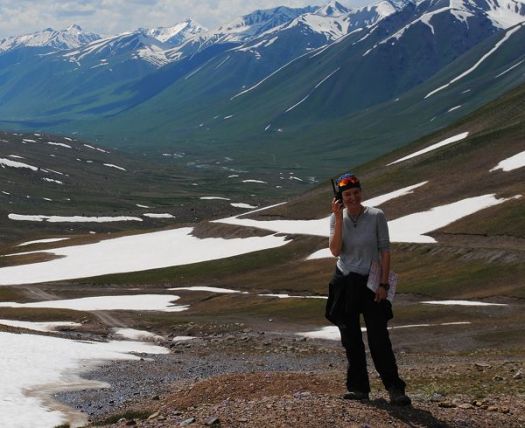
My name is Malika and I will be your expedition leader on the first group together with Phil. Phil will then take over leading groups 2 & 3 of this year’s snow leopard conservation expedition to the Tien Shan mountains of Kyrgyzstan.
Malika FettakPhil Markey
For the third time this Biosphere Expeditions project will be run in collaboration with NABU Kyrgyzstan and the ‘Gruppa Bars’ (snow leopard patrol), consisting of four Kyryzs NABU members of staff that work in snow leopard conservation all whole year round. Each group will be accompaigned by two Gruppa Bars members (and I’ll introduce you to everyone in due course). They will be our guides, mountain experts, spokespeople and link to the local herders.
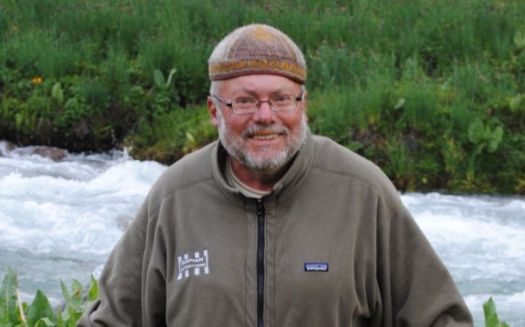
Dr. Volodya Tytar, originally from the Ukraine, is the expedition scientist. He has been working on this snow leopard project for more than a decade from the very beginning in the Altai mountains of Russia, before the study site was moved to Kyrgyzstan in 2014. If you would like to read about last year’s results, the 2015 expedition report will be ready for downloading within the next few days. You’ll receive an e-mail notification soon! Older reports are on www.biosphere-expeditions.org/reports.
Dr. Volodya Tytar
As in previous years, we will also have a couple of local placements on each group. They all have a specific interest in conservation, good knowledge of English and will help with communications in general and with conducting interviews at local herders’ yurts in particular.
So far so good. All staff involved are busy with organising things by e-mailing from our desks in Germany, the UK, Kiev and Bishkek, but we will all finally meet at the Bishkek NABU office on Sunday. So we will be about a week ahead of you, fetching base camp equipment from storage, checking and shopping for items that need to be replaced, buying supplies, etc. We will scout out a base camp location, set up camp, meet our cook Emma, shop for food (a lot) and make sure everything will be ready and in place for research work to commence when the first team arrives.
As regards the research work, have a look below, where methods and equipment are explained. The more you know now, the easier it will be for you during the first two training days, so do swot up, if you can. In addition to studying the dossier, have a look at the “Methods & equipment” playlist. The bits that are relevant to the expedition are first and foremost our cell survey methodology, followed by GPS, compass & map, Garmin etrex 20, PBLs, camera trapping and binoculars. Enjoy!
Finally, a word on some additional research we will be doing (that is not mentioned in the dossier): Amadeus, a local placement who joined the expedition in 2015, has created a ‘Butterflies of Kyrgyzstan’ app based on data that were collected last year. We will continue collecting butterfly data along the way on survey walks either by pen & paper or, much better, by putting data directly into the app. The app is available for downloading at WWW.DISCOVERNATURE.ORG.KG (Android version only). So, if you are planning to bring your personal Android smartphone, please consider downloading the app (how we will recharge all the phones in the absence of a convenient power plug is another matter ;). We will also be collecting data on birds that will contribute to creating a similar ‘Birds of Kyrgyzstan’ app in due course. Of course you will be trained on all of this during the introduction and training day!
That’s it for now. Once Phil and I have arrived in Bishkek we’ll be in touch again with our local phone numbers and some more updates from the ground.
My name is Ida Vincent and I will be your expedition leader on this Biosphere Expeditions project, helping our local partner WWF Indonesia with their Sumatran tiger conservation.
Ida Vincent
Our local scientists Febri and Ifran will train us in all aspects of the field work once we arrive at the Subayang Field Station and Dr. Matthias Hammer, executive director of Biosphere Expeditions, will also be joining us for the first few days, to help with getting set up.
Febri Anggriawan Widodo
I trust all your preparations are going well, and I look forward to meeting the first expedition team in just over two weeks on 17 July. I will be at hotel Red Planet for the 08:00 assembly. It is important that you are not late, as we have a busy day ahead of us transferring to the field station and starting the training, so we can get to work.
I’ll be about a week ahead of you and once I am in Pekanbaru on 11 July, I will be in touch again with my local mobile phone number and other updates from the field. I hope your preparations are going well and you are ready for an expedition experience, for this is what it’s going to be. For those of you still hoping for a tiger safari, please have a look at the expedition report from last year, available via www.biosphere-expeditions.org/reports 😉
Please do have another look through your dossier too and familiarise yourself with all the information and make sure you have all the necessary kit.
I look forward to working with you on this expedition.
Ida Vincent
Expedition Leader
As regards the research work, have a look below, where methods and equipment are explained. The more you know now, the easier it will be for you during the first two training days, so do swot up, if you can. In addition to studying the dossier, have a look at the “Methods & equipment” playlist. The bits that are relevant to the expedition are first and foremost our cell survey methodology, followed by GPS, compass & map, Garmin etrex 20, PBLs, camera trapping and binoculars. Enjoy!
Leatherback turtles frequent much of the Caribbean coast of Costa Rica during the months of February and July to lay their eggs. One egg has a market value of $2 and one turtle can lay a clutch of up to 100 eggs. For poachers this is a significant income and poaching is rife on the Caribbean coast of Costa Rica. But without eggs hatching, the species will disappear. This is where Biosphere Expeditions and its partnership with LAST (Latin American Sea Turtles) comes in.
Our joint mission is to patrol the beach on a nightly basis and relocate as many clutches of eggs to a guarded hatchery as possible, thus preventing the poachers from taking all the eggs. For this a whole host of trained “foot soldiers” (Biosphere Expeditions team members) is need to monitor the beach, catch a turtle before she lays, wait as she digs her nest, then catch the falling eggs in a large plastic bag and whip them out from beneath her before she starts to fill in the nest and camouflage her tracks. Biometric data are also taken, and the nest re-dug by hand by the team member on duty in the hatchery. The nest, now safely in the hatchery, is guarded 24 hours a day for the next 60-70 days until the hatchlings emerge.
Magali Marion MSc is the lead scientist at Pacuare Research Centre. For the past three years she has worked tirelessly training volunteers, delivering lectures, leading night patrols, working with the local community and generally acting as the perfect role model for a successful conservation programme. “The key problem,” she says, “is that this is a public beach, so we have no control over who comes onto it.” The weekends are the worst with a noticeable increase of poachers lurking in the undergrowth. “Foot soldiers are really important,” says Magali, “as their number determines the amount of patrols we can run.”
“I’m amazed at myself and the energy this project unleashed in me!” says Janet Hoffberg a 76 year-old passionate animal advocate from Florida. The reward? To spot a turtle before the poachers and safely deposit the eggs in the hatchery. But, as Theresa Bowman, aged 43 from Germany, points out, “it’s not all black and white – we are used to the poachers being the ‘evil ones’, but there is more to it.”
This is a complicated issue and Magali has put herself right in the middle of it, working with the local association (La Asociacion para el Ambiente de Nuevo Pacuare) to offer poachers the chance to become guides for the project. There are ground rules – no alcohol or drug consumption, no more poaching, a willingness to learn and work with volunteers from around the globe. Some pass the test, some fail, but the beauty of Magali’s strategy is that whichever camp you fall into, there must be no confrontation between poachers and patrols. “Our mission is long-term. We will not eradicate poaching from Pacuare in the next year, but we believe that by providing alternative livelihoods to the community and involving children, we will change their mindset so they understand that natural resources must be exploited in a sustainable way. It involves long hours of talking and exchanging with different people without judging them. When we get to understand what is the social reason that pushes people to poach, then we can get to the root of the problem, which in Pacuare is geographical isolation, low education and poor job opportunity.”
As rainy season sets in a second threat to the turtle population is revealed – erosion. With constant storms raging out at sea, the high tides flood the beach, reducing the availability of viable leatherback nesting sites. Cyclical erosion has always occurred on this coastline, but with the added pressure of climate change, this erosion is becoming more extreme. “Nesting grounds are degraded by erosion”, says Magali, and this year’s El Nino event has been very intense, which is now leading to an equally intense rainy season. We have reinforced the hatchery, so that it will not be eroded by the waves, but if the water table gets too high, the nests can be flooded from below.”
So what does the expedition mean in conservation terms? 15 clutches of eggs safely relocated to the hatchery; clutches, which if left in their natural condition would have either been poached or washed out to sea. This amounts to over 1000 potential hatchlings, and based on statistical probability, that is one adult who against all the odds will return in 15 years to lay her own clutch. This may not sound like much, but for a dwindling population of fewer than 4,000 leatherback turtles on the Caribbean coast, every single one counts.
This week it has become increasingly obvious that beach erosion is also a big problem in Pacuare. As a result of global warming more extreme weather events have been observed in the area in recent years, and due to current storms in the Caribbean we have seen very high tides and strong wave action eating away the beach from under our feet. This has also impacted the number of nesting turtles we have encountered. There have been fewer females coming out to nest at night, as there is little to no beach above the high tide line to nest on.
We did, however, encounter a turtle camouflaging her nest, that sadly had been poached, on Tuesday night. Fortunately we managed to recorded her tag numbers and get her measurements. She was an interesting turtle as her carapace was deformed and not very streamlined, and her back left flipper was missing, probably as a result of a shark attack. Only the previous day when we released a clutch of hatchlings, where a few had deformed carapaces, did we wonder if these juveniles would ever make it to adulthood. It turns out they do!
Wednesday, our last night on patrol saw more rain and therefore little turtle activity. Brad joked that, “it is like being on Survivor and preparing for a marathon each night!” But morale was still high. “Camaraderie doesn’t happen unless you’re doing something challenging”, said Janet from the UK. It certainly has been a challenging, but also a very rewarding time for the team, and turtles alike, but as the expedition draws to a close another nest emerges – 34 writhing hatchlings ready to begin their adventures at sea.
So with a joyous farewell dinner, with cake from Magali, candelabras by Theresa, and Scottish folk songs from Gordon, it is time to leave our rustic abode, and return to whence we came. We will not forget our experiences here in Pacuare and it has been an fruitful inaugural expedition for Biosphere Expeditions, with a total of 15 nests recovered and relocated in the hatchery. That’s over 1000 potential hatchlings! Thank you team for all your hard work in making this a reality. Many thanks also to our project partners LAST and especially to Magali for her knowledge, skills and dedication in the field – it was a pleasure working with you. A big thanks also to all the staff on site, to Silvia our cook, to the research assistants, to Pablo and especially the local guides, Mauricio, Carlos, Nene, Hernan and Steven who led us to the turtles each night. The poaching issue, although far from being resolved, is under the watchful eye of LAST and the Environmental Association of Nuevo Pacuare, and we look forward to continuing our relationship next year on another expedition.
Longest-known sperm whale match recorded during the Biosphere Expeditions Azores project. Male sperm whale returns to the “scene of the crime”
Biosphere Expeditions, now in its 13th year of collaboration with marine biologist Lisa Steiner, observed a sperm whale 29 years after she was first seen swimming in the Azores. Nº19, as she is known, was first observed as an adult in 1987. This is the longest recorded re-sighting of a sperm whale anywhere on the planet. Nº19 was observed ten times (three times during an expedition) over at least half of her life, since sperm whales live for 60-70 years.
The expedition also had an unbelievable sighting, a real “Ripley’s Believe It or Not” moment. A male sperm whale seen on 20 April 2016 was re-sighted in almost exactly the same position and at the same time as it was on 20 April 2009, seven years to the day and hour previously.
Also sighted during the 2016 expedition were a couple of blue whales that had been seen previously, one in 2006 & 2013 and the other from 2010.
This long-term research is showing that these ocean giants utilise the same migration corridor year after year. Three different humpback whales recorded during the expedition have also been observed on the breeding grounds in the Cape Verde Islands. The Azores is a “snack stop” on their way back to the Norwegian or Icelandic feeding grounds.
All of these data are collected using citizen scientists that come from all walks of life who may have never seen a whale before. Without them, this valuable information would not be collected.
Lisa Steiner says that “Photo-ID projects take time to bear fruit and it’s great that Biosphere Expeditions is in for the long haul. We are starting to generate some amazing results from our efforts. Inter-annual matches of these migrating giants shows that they tend to migrate along the same corridors year after year. Matching some of these animals to breeding grounds or feeding grounds gives us clues as to how whales are split into separate stocks. And the icing on the cake, for me, is identifying a sperm whale 10 times over the last 29 years; that is absolutely incredible.”
Photo archive of the 2016 expedition:
False killer whale (c) Craig Turner
False killer whales and Pico (c) Criaig Turner
Risso’s dolphin with calf (c) Craig Turner
Fin whale (c) Craig Turner
Sperm whale (c) Craig Turner
Breaching false killer whale (c) Craig Turner
Deploying the hydrophone
Laura recording data
Lynn listening to the hydrophone
Fin whale (taken by Craig Turner)
Sperm whale (taken by Craig Turner)
Sperm whale fluke (taken by Craig Turner)
Sperm whale fluke for ID (taken by Craig Turner)
Multiple sperm whales (taken by Craig Turner)
Following sperm whales (taken by Craig Turner)
Celine recording data (taken by Craig Turner)
Southern coast of Faial (taken by Craig Turner)
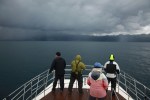
Some of the team on lookout (taken by Craig Turner)
Fin whale with calf
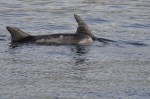
Bottlenose dolphins
Sperm whale fluke
Fin whale (taken by Craig Turner)
Fin whale (taken by Craig Turner)
Sperm whale fluke (taken by Craig Turner)
Sperm whale fluke for ID (taken by Craig Turner)
Cory’s shearwaters (taken by Craig Turner)
Sperm whale with Cory’s shearwaters (taken by Craig Turner)
Tracking a Fin whale (taken by Craig Turner)
Recording sperm whale data (taken by Craig Turner)
Recording sperm whale data (taken by Craig Turner)
Data sheet (taken by Craig Turner)
Sperm whale recorded last week and also recorded in 2014 (Craig Turner)
Team on the boat (Craig Turner)
Team on the boat (Craig Turner)
Risso’s dolphin (Craig Turner)
The reality of cetacean research (Craig Turner)
Waves in the harbour – never good news (Craig Turner)
Brief sighting of a fin whale (Craig Turner)
Following a sperm whale
Male sperm whale fluke, but not for ID
A better sperm whale fluke ID image, but not perfect
How many sperms whales do you see?
Pico smoking
Camila on aft lookout duty
Sunshine over Pico
Carol and Camila recording blow rates of sperm whales
A busy day of data for Scott
The sun does not always shine
Working in the shadow of Pico
Bottlenose dolphins
Bottlenose dolphin
The ideal dorsal fin ID shot
Dorsal fins of Risso’s dolphins
Risso’s dolphin with calf
Male sperm whale seen on the same day in 2009 and 2016
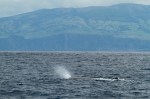
Fin whale blow
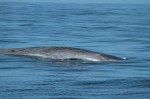
Fin whale with characteristic white jaw
Sperm whale off the north coast of Faial
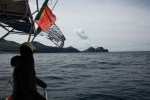
Sailing south of Faial island
Western point of Faial island
Stuart and Camila recording data
The team (by Lisa Steiner)
Fin whale and calf (by Julie Bork)
Rolling fin whale (by Uwe Burkhardt)
Fin whale with characteristic white jaw
Blue whale with fin whale
Risso’s dolphin
Fin whale fin
Characteristic mottling of a blue whale
Team on alert
The fly deck team on alert
Julie on aft lookout
David on hydrophone
Capturing the action
Carol on ‘POPA’
Sailing past Pico
Returning to Horta
Blue whale blow
Common dolphin (Craig Turner)
Harbour-side briefing from Lisa (Craig Turner)
Boat orientation (Craig Turner)
Close encounter of a blue (whale) kind (Craig Turner)
Blue whale south of Pico (Craig Turner)
Silvio hard at work recording data (Craig Turner)
The characteristic mottling and colouration of the blue whale (Craig Turner)
Our second expedition team have arrived, been trained in patrol and hatchery methodology, with Janet digging the “perfect leatherback nest.” In the hope of washing off the post nest-digging sand, most of us dived straight into the ocean. The ocean had other ideas, however, and tumbled us around in the surf, spitting us out with more sand in our clothes than before we had entered!
The first night proved a fruitful patrol for Magali’s team – as they encountered a smallish (141 cm carapace length), young turtle, bearing no tags. She took a very long time to drop her first eggs and then only laid 59, which is quite a small clutch for a leatherback. Holly from the UK who was given the task of collecting the eggs, said afterwards, “Being a new mum myself, I could relate to her not really knowing what she’s doing!”
Sunday night, the new moon, which had so delighted us with its light, enabling us to finally see where we were going, suddenly became obscured by dark, black clouds, which duly opened upon us. Then a nesting turtle suddenly appeared for Catherine, Carol, Terry and Janet, and it was action stations! The turtle was already laying and we peeped into the nest to see a clutch of glistening eggs. Oscar, our guide, quickly tried to excavate as many eggs as possible, but she was nearing the end, so he deftly inserted one end of a long measuring tape into the nest and waited until she had finished covering up and moving off, before unearthing the eggs – there’s no way a human can compete with the power of a leatherback’s flippers, so this was the best option. After rescuing Terry’s glasses from a near burial, we took the data and brought the eggs to the hatchery, which fortunately for us, was only two minutes away.
Other patrols witnessed two poaching events, and it seems that our thief (from last week) is still at large, as whilst taking a pee in the bushes, one of the poacher’s own egg bags was swiped! “Now that’s Karma!”, said Ida.
On Monday loud knocks woke us up at 21:30. There were initial grumbles at being woken up during our pre-midnight patrol nap. But as the word “hatchlings” were uttered we all got out of bed, bushy-tailed and bright-eyed. There was a clutch of twenty-five baby leatherback turtles ready to head for the ocean. We all observed them being measured and weighed before finally making their last mad dash for the sea. During the night a few more emerged and by the morning Theresa, who was on early morning hatchery shift, released the last lost little wanderer on to the beach.
Tuesday afternoon Magali excavated the nest and another nine turtles were dug out from the bottom of the nest. Everyone released a turtle, cheering them on as they crossed the beach. Dustin was up for hatchery duty next and just as we were all about to leave, he noted a few little heads starting to poke out of one of the nests. “I had just started my shift,” exclaimed Dustin. A couple of hours later as Theresa and Janet were about to take over hatchery duty, fifty-nine hatchlings had emerged and they measureed, weighed, and then finally released the little ones. What a night!
As we enter the darkest phase of the moon, the turtle activity seems to have declined slightly. However, due to our recent reporting of the poacher’s breach of agreement and subsequent egg theft, the presence of coast guards on the beach at night has risen from zero to four. As if to justify their presence even further, they were the ones to discover the only two nests that have been taken to the hatchery in the past couple of days! Hopefully this will inspire them to stick around, as their dedication is greatly needed.
For expedition team 1, the week in Pacuare is drawing to a close and instead of our usual afternoon beach duties, clearing the plethora of plastic from this remote coastline, and removing the logs which not only trip us up in the dark, but more importantly, may deter a cautious turtle from nesting, we opted for a locally-run wildlife tour instead. Our guide, Freddy, had an extremely keen eye, and alerted us to troupes of spider monkeys performing their aerial acrobatics in the high branches, miniscule bats lined up on a dead log asleep, lazy sloths and crimson poison dart frogs. A wonderful way to end an extremely experience-rich week.
Thank you team 1 for all your very hard work, day and night, for your diligence, your enthusiasm and all your wonderful feedback. During this expedition, we witnessed 24 false crawls, (this is when a turtle emerges from the sea, but does not dig a nest or lay any eggs), took 10 clutches of leatherback eggs to the hatchery for their protection, (a total of 760 eggs) and released 90 hatchlings into the sea. This is an excellent achievement. Unfortunately the poachers took a further 13 clutches of eggs despite our relentless patrolling, which brings the reality of the situation home. This is an area where only hands-on conservation work can make a difference – thank you for all your efforts, and we look forward to welcoming the second team in a few days time to continue what you have started.
Yesterday afternoon, as we were all out for a beach cleanup, we spotted Pablo running up the beach. “Babies!”, he called out as he got closer. The first lot of hatchlings for the season had just started to emerge out of their nest. We headed for the hatchery where two rather sleepy baby leatherback turtles had crawled out of their nest and a third one was poking its head out of the sand. It wasn’t until later at night, however, that the full nest started to emerge. At around 18:30, 24 baby turtles were busy flapping their flippers around. We all gathered at the hatchery and took turns helping out, weighing and measuring a subsample of 15 of the 24 hatchlings before it was time to release them all on the beach and watch them head for sea. Their jerky movements made them look like wound-up toys!
A couple of hours later a second, much larger, nest emerged and Alan, Janet and Ida, who were on hatchery duty, processed another 63 baby turtles. Just when we thought things had calmed down, three turtles poked their heads out of a third nest whilst Carol was on the early morning shift. But as a result of the hot daytime sun, the hatchlings in the third nest stopped emerging, instead waiting for cooler nighttime temperatures. We processed and released the three that had already emerged and watched them struggle to the sea (the process of letting them crawl over the beach is essential for imprinting the beach’s location into their brains). “It makes all the hard work worthwhile,” exclaimed Carol.
In the afternoon Magali excavated the two nests that had fully hatched. There were a couple of stragglers at the bottom that were released and all the hatched and unhatched eggs were removed and examined individually and their stage of development recorded. Then all were buried deep in the sand to avoid attracting predators.
Now we are all waiting for the third nest to fully emerge.
The team are acclimatising to the heat and the night-time schedule. It’s always a treat when you meet a turtle in full swing, just minutes after leaving the research base, as happened to the first patrol the other night. The eggs were collected and taken to the hatchery where Carol and Sheila, battling with the biblical plague of crabs heading on land, also to lay their eggs, duly dug the chamber and relocated the clutch.
On the way back down the beach another turtle was discovered, demonstrating signs of camouflaging her nest, meaning that she had already laid, and was preparing to head back to sea. There were no signs of poaching activity, no sticks in the sand, no bare-foot prints, so the team, Irmtraut, Nicole and Catherine, attempted to dig up the eggs, but to no avail. As Irmtraut rightly said, “It’s a bit like looking for a needle in a haystack!”
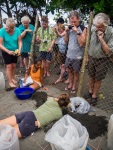
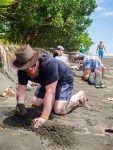
The next morning, we decided to enlist the help of Hernan, a once poacher, now guide with LAST, and for 30 minutes he poked around with a metal rod trying to find the nest. It was obvious that even for the professionals, this was not an easy job! The turtle had camouflaged her nest so well that we thought it was a lost cause until suddenly the rod went down with ease. He dug furiously until there they were, a cavern of white spheres.
Hernan finding the nest
Elated, Magali extracted the nest and then Janet and Ida helped to relocate it into the hatchery. It was a great sense of achievement, not only to have evaded the poachers, but to know that the nest is now safe from the elements too.
Magali extracting the eggsJanet placing the eggs into a nest in the hatcheryBagged eggs
However, last night the poachers broke the unwritten code of conduct for the first time since its inception a few years ago. The agreement is basically peaceful coexistance and that whoever gets to a turtle first has the “rights” over the nest. Last night a team were with a turtle who was laying facing the sea. They collected the eggs and placed them in their bag a metre or so away, whilst they took the rest of the data. Suddenly, Jenny heard the crack of a branch and when she turned around, a shadowy figure disappeared into the night with the egg bag! We were all obviously shocked to hear of such a breach, and a formal complaint will be lodged with the coast guard and the police. Magali is confident, though, that the name of the poacher will come out amongst the community (which only numbers 35 people) within a couple of days, and that community will take appropriate action for fear of creating a rift between themselves and LAST – no one, not even the poachers want to disrupt the current system of tolerance.
You may ask why we do not report poachers every time and why this tolerance. The answer is simple. There is no or very little law enforcement in this area, so it’s just us and the community, some of whom are poachers. The alternative to peaceful tolerance would be aggressive squabbling, which would get us nowhere fast. Without the cooperation of the community, we would have no chance to change hearts and minds away from a poaching culture. And agressive confrontation on pitch dark beaches in the middle of the night is not what we want either, nor are the poachers “bad” people. In this community of severe poverty, little education, few opportunities and some alcohol and drug-related problems too, our “poaching” may be their subsistance. We accept this and work hard to turn poachers into patrol leaders and provide alternative means of income, such as employing people from the community as patrol leaders, cooks, service providers or encouraging them to grow food that can be sold to the research station or making souvenirs for volunteers. Without us, poaching would be 100%. With us around it is between 60% and 35%, depending on the year. It’s a long game and, with the help of our volunteers, we’re in for the long haul, not futile, short-lived fights on the beaches.









































 Biosphere Expeditions: blogs from the frontline of wildlife conservation and the fight for a more sustainable planet