Award-winning, non-profit and ethical wildlife conservation volunteering. Advancing citizen science and conservation since 1999 – for nature, not profit.
The sun at last! the final two days of the trip have been stunningly beautiful, we were all up on deck enjoying the the sunshine! Harbour porpoise sightings and sunburn to worry about! We travelled 366.9 miles through storms and sunshine, with 28 sightings of 71 animals including three orca! The whole team went out for dinner on the last night and in the morning we had the inevitable goodbyes.
So this is the end of the Biosphere Scotland Hebrides expedition for 2013. The expedition has been a great success and I want to thank all participants for their efforts and contribution. Thank you also to HWDT staff and the crew of the Silurian for their efforts, as well as Swarovski Optik and BUFF(R) for their support. I am currently wrapping everything up for HQ and hope that you all had a safe trip back home.
I hope to see you again some day on one of our expeditions.
Our third team has arrived. They’ve brought along with them good luck and some strange weather. The first night, right on cue after the daily briefings, a rhinoceros family arrived at our waterhole. It’s always fun to watch the comings and goings just outside base camp.
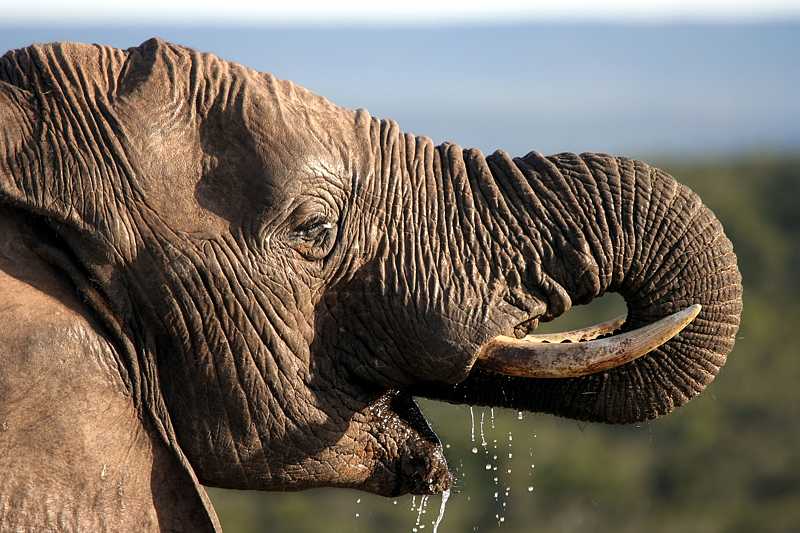
Speaking of watching things, team member Sandra B. even brought her own camera trap, and while she caught mostly images of cows, she did manage to capture a couple of curious jackals sniffing out the trap. We haven’t seen last night’s visitors yet, but just as everyone was going to bed the elephant herd came to our water hole, and I can tell you it was a reverential event. Joerg Melzheimer, the biologist who brought Biosphere Expeditions to this beautiful study site and now makes sure from the wings that our science does what it’s meant to do, had just finished giving his presentation on the elephants and their behaviour, when all nine Okambara elephants arrived. I know we’re not supposed to use smart phones out here in the bush, but I for one am glad he rang them up and invited them 😉
Elephant drinking
The elephants proved a little more elusive during the day today as the morning team couldn’t quite locate them. It would seem they were on the move all day long, because the afternoon team found them, but they were almost 8 kms away from where we’d tracked them in the morning. Also this morning Vera gave us a presentation on how box traps work, and Gabi volunteered to give us a live demonstration on how the trap works.
Vera explaining the box trap
Then Suresh took the initiative to get inside and get the job done. The group then split into three teams and we went about our morning activities.
Suresh
All afternoon it felt like a storm was brewing with dark clouds, shifting winds, and we all got excited when we felt the first raindrop. But after two more drops the rain went away, and we were left with dust storms all over Okambara. It has been two very interesting days!
The wind continues, but we are not giving in! We bashed our way through the Sound of Sleat yesterday navigating the strange tidal currents upwelling from the depths below us. Mast duty was more like an hour in a washing machine! Wet and windswept, we were all smiles in the evening when we went to have a warming drink on the Island of Muck.
We had a harbour porpoise sighting yesterday and plenty of acoustic detections. We are heading close to the “minke triangle” today, so hopes are high for some more sightings through the waves. After the excitement of the orcas earlier in the week, it is a testament to our strong teamwork that we have kept focused when collecting these vital data.
Vera and I were reminiscing about the first two groups and we decided to have a look at the expedition journal. We’ve had some really original input from team members so far, and it makes us remember you fondly. Thorns? What thorns? Dust? What dust? Waterhole roulette?
Here’s some of what the first two teams wrote, and we look forward to sharing this with the coming teams. Team 3, see you on Sunday!
Well, since the last update we have had plenty of one thing, wind! This did not stop us doing a 45 mile survey yesterday in “roller coaster” conditions!
Hold on!
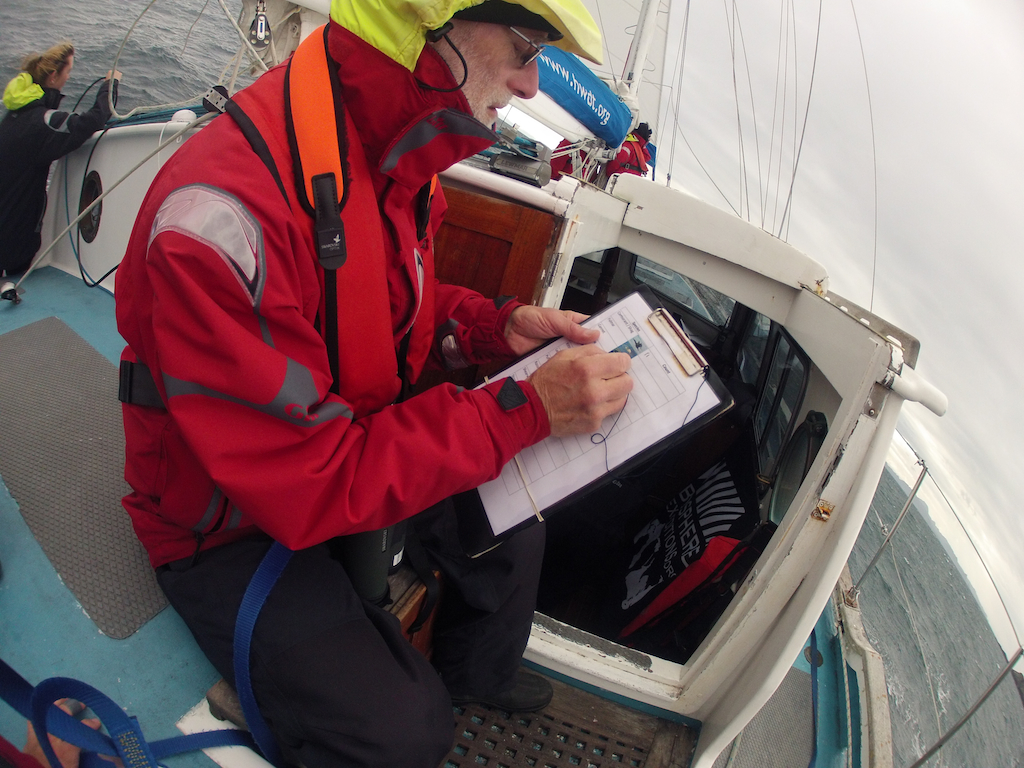
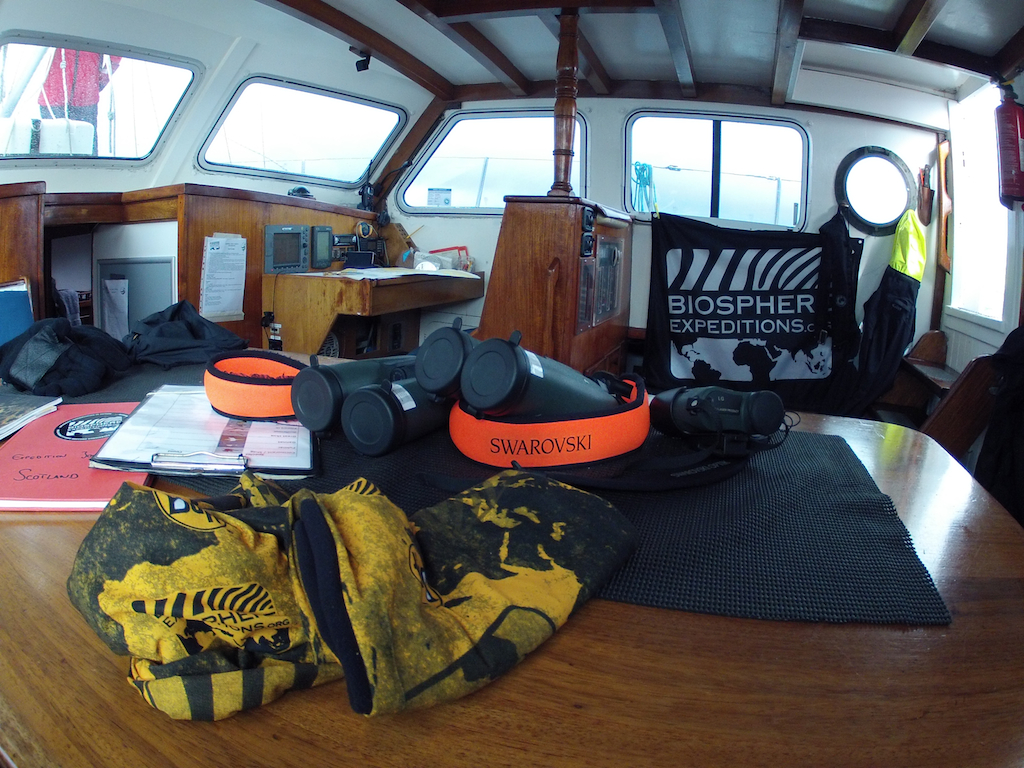
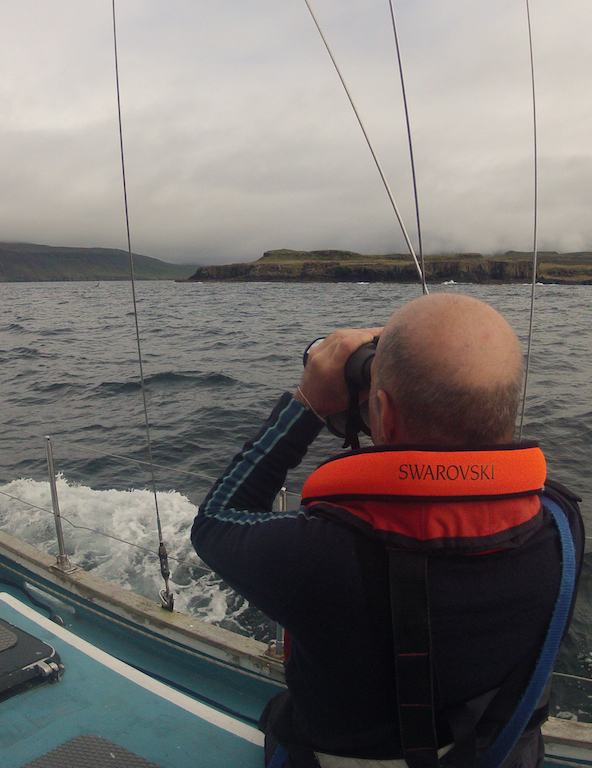
It was the first bird and boat survey day, so we now know our kittiwakes from our fulmars. The Swarovski binoculars are really coming in handy, as is all the foul weather gear; in the classroom bird ID is fine, but out on the boat it is a little more difficult! The weather has made it hard to see our target species, they are here though, 28 individual harbour porpoise detections via the hydrophone and no sightings from the mast!
Currently, with our Buffs over our noses, we are beating a path into the wind to get into Loch Torridon where we can get the survey back on track in more sheltered water amongst some spectacular Scottish mountain scenery.
Swarovskis to the eyes and Buffs over the ears on a calmer day 😉
Wednesday we performed our normal activities in the morning, and the box trap team liberated another curious warthog from Frankposten. The schools here in Namibia are on break this week, and in the afternoon we picked up the farm children and the team took them on a game drive. They all enjoyed the outing, but I think we enjoyed the children’s company more than the game drive. Barbara and Dianne had a sing-along with the children and it was really fun.
This slideshow requires JavaScript.
Apparently me vs. meerkat was the highlight of the afternoon for Shelagh, since she immortalized the event in the Expedition Journal for every team hereafter to read about: The farm workers have a tame meerkat, which considers them its “family”. When we were picking up the children the meerkat took offense at my presence and attacked my boot, and I clambered up the side of the vehicle. Preposterous as this seems, I’d already seen it attack Vera’s boot the week before, so I was having none of it. (I note with irony that the meerkat didn’t like Claire’s boots any better, but SHE did not get immortalised in the journal!)
Our second Vehicle Game Count was Thursday, and again the teams were ready and eager. Sightings were plentiful and all three teams noted the abundance of oryx calf sightings in the morning hours. While it’s late in the season for the oryx to be calving, apparently they have the ability to postpone delivery while waiting for better feeding conditions, but only for so long. The last rainy season was quite meager (I’m told 70 mm as opposed to the “normal” ~450 mm), and the vegetation is sparse. If we’re, lucky the rains will begin early in December, but that’s a long time to wait. And they may not come early at all. It’s tough conditions in the savannah right now.
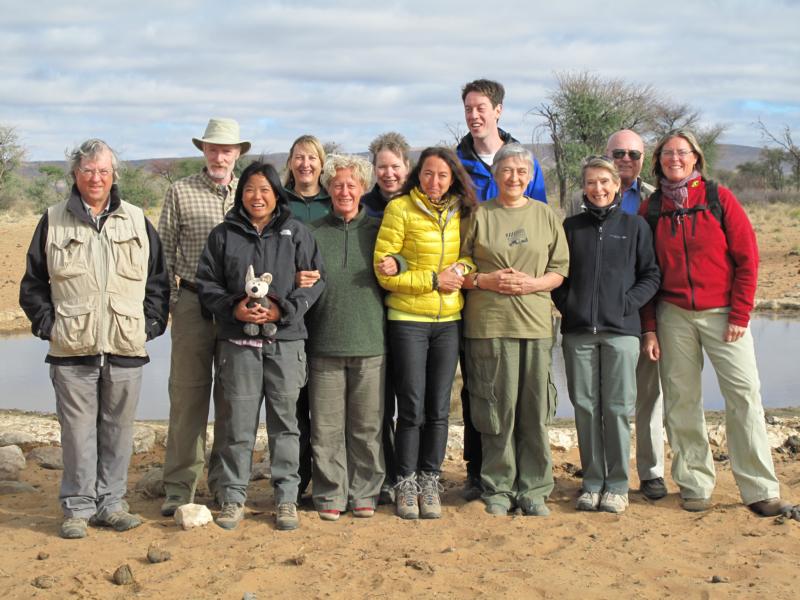
Good-bye Team 2!
Friday morning we said good-bye to Team 2, and after one day here alone I can tell you are sorely missed! I checked all the traps all by myself yesterday, and it was very time-consuming. All the volunteer work here is so important; without you, we simply do not have the reach into the field activities that we do when you are here. So a hearty thank-you to you all! I look forward to meeting Team 3 next week!
Welcome to the new (and last) team for this year aboard the Silurian! We have had a couple of nights on board already so everyone has had a chance to settle into their bunks. Yesterday was training day and Olivia filled everyone’s heads to a mush with information on how we are going to conduct our survey over the next ten days. The team shouldn’t worry though, there is plenty of time to practice!
Our first half day sailing took us to the Island of Rum passing many harbour porpoise as well as a fleeting visit from a minke whale. We did have a chance to go ashore onto Rum, mainly it seems, to be attacked by midges!
Today so far has been very exciting, harbour porpoise sightings earlier followed by three orca heading northwest along the coast of Skye.
Spotting the orcas with Swarovski Optik binoculars
It was immediately apparent to Olivia that the individuals are known to be from the Hebrides population; Lulu (female), Comet (male), Aquarius (male) (recognised from their dorsal fins). This is the first orca sighting form the Silurain this year, so we have been very lucky!
This slideshow requires JavaScript.
We have had every type of wether imaginable and we are now back on our planned survey path to near the Island of Isleornsay. We will spend the night there before heading through the Inner Sound tomorrow.
This just in: two new species discovered by the camera trap at base camp! Whatever could they be? (An FYI to Paul and Joe, our jokesters in Team 1 – I could hear Vera laughing all the way across the compound when she looked at the photos from this camera trap. Shelagh from Team 1 was there too. Well done!)
The last few days we’ve released a variety of animals from the box traps. One particularly belligerent male warthog refused to leave the trap, trying to punish Vera who was on top of the trap setting him free. We also had a reluctant porcupine in the trap at Frankposten…he made himself rather comfortable in the box and refused to come out. Finally the team left him alone to sort out his own departure.
Waterhole counts reveal large numbers of warthogs, as Claire said, “There is quite a lot of activity in upper warthog-ville today.” (The team counted 24!). Other teams captured on film a family of giraffes coming to drink in their awkward, long-legged way, and at one point an aardvark drinking at the water hole (sorry Joe).
Aardvark
Also in the past days the elephants have been extremely cooperative, taking their baths and playing at the waterholes (Frankposten and Boma) during our observation periods, making for some great photographs. Speaking of elephants, Team 1: do you remember how we thought that the elephants were nestled in at the north end of the farm? Well, look what we found on the camera trap at base camp!!! This was taken on the night before your departure. All missed the tracks that day even though we were standing right there for our group picture!
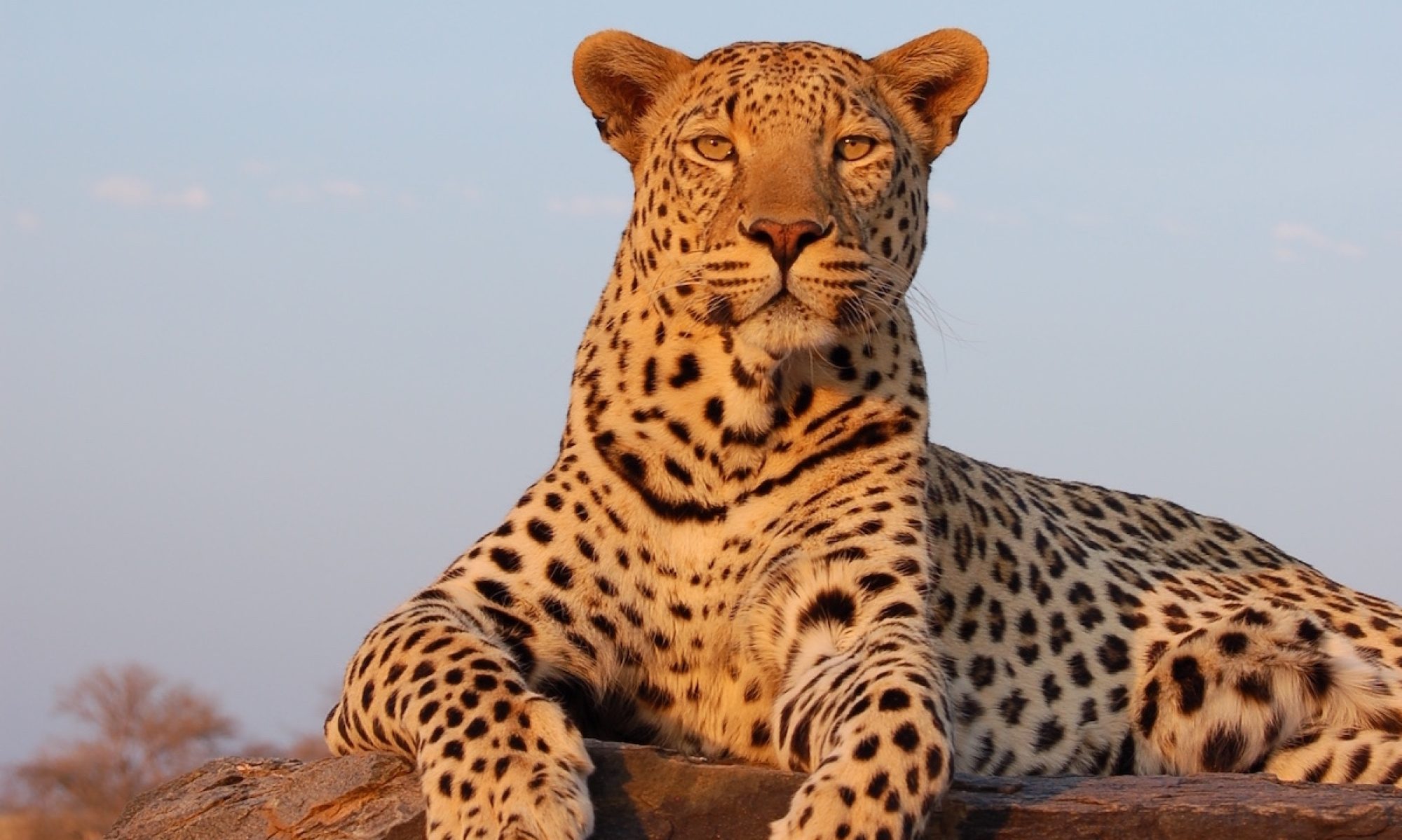
And as if that wasn’t exciting enough, we have had several carnivores make appearances on the camera traps. We’ve seen a brown hyaena in the pictures from the JM South (or hole-in-the-fence) camera trap as well as another leopard, and this leopard was wearing a collar. Looking at the date of the picture (the same day we had the other leopard in the trap) and ID pictures, Vera realized that this is the leopard that the Biosphere teams caught and collared last year. That makes two collared leopards now on Okambara, and a total of three using the same hole in the fence. Exciting!








 Biosphere Expeditions: blogs from the frontline of wildlife conservation and the fight for a more sustainable planet