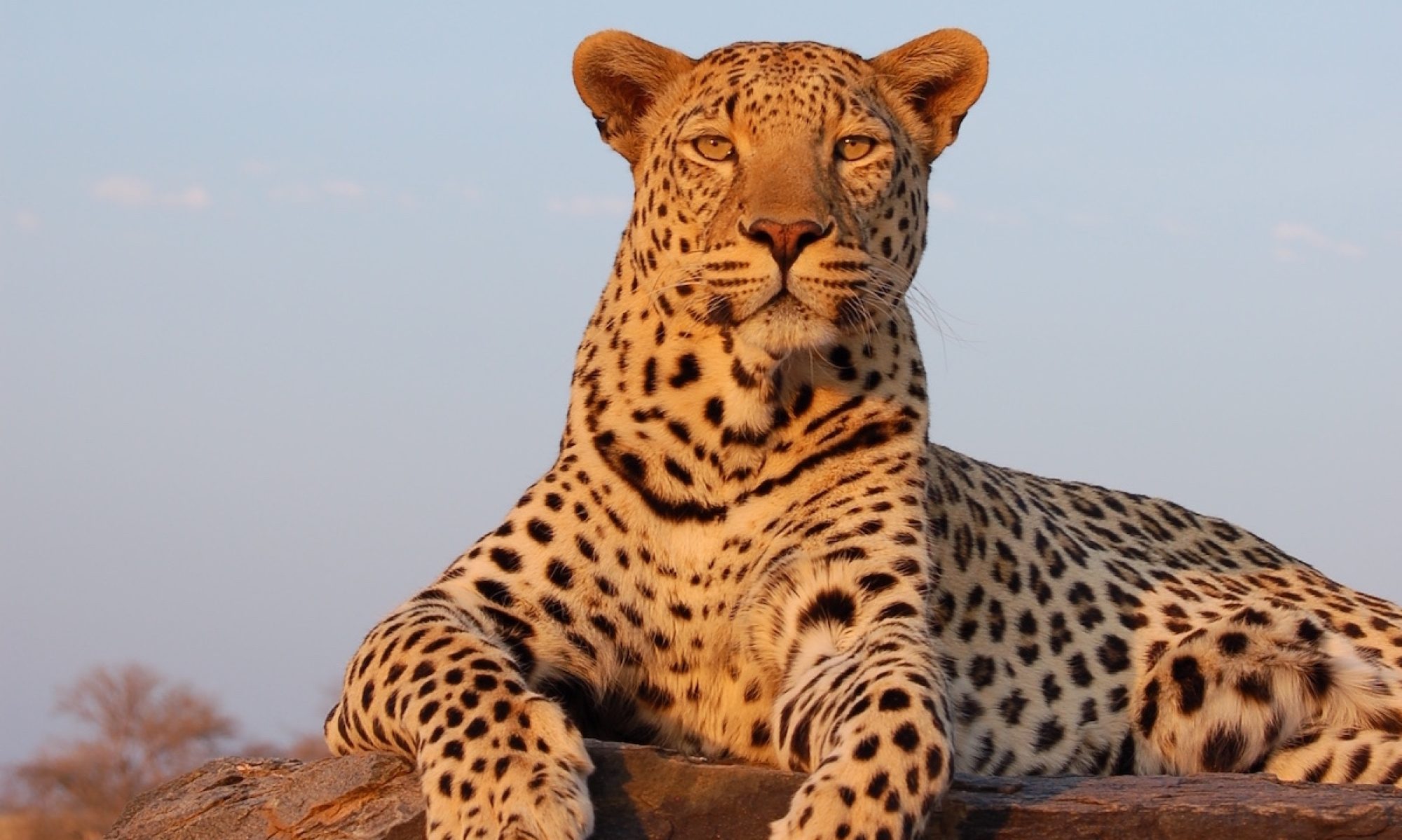
From our snow leopard volunteering expedition in the Tien Shan mountains of Kyrgyzstan (http://www.biosphere-expeditions.org/tienshan)

Apologies for the silence on the expedition (and the lack of videos and pictures for this one), but our technical department has been playing up. Our BGAN satellite internet connection is out of action, so until it is fixed, there will only be one or two updates per group – we are in the back of beyond after all. Photos and videos are also playing up, so just text for this one.

Trailblazing group 1 arrived on Monday (9 June) after their long drive to base to a sandwich lunch, pitch tents, and an introductions followed by a briefing session. The weather was mixed that day, but our Tuesday science, equipment, driving and datasheet training day was blessed with sunshine, so much of the training took place outside.

We started surveying on Wednesday. This trailblazing group’s job is to get to know the herder neighbours, the geography, valleys, passes and of course the wildlife on the way. Together with Volodya and the Grupa Bars we have visited about a dozens herder yurts so far to introduce ourselves and the project. At the moment it’s just getting to know people and their knowledge of the land, not structured interviews about snow leopards.

The same goes for exploring the range’s valleys to the east and west of base. Over the past week or so we have radiated out to many of them to ascertain accessibility, snow cover, the terrain and of course the wildlife. We have seen ibex and marmots, badgers and foxes, pikas and voles, birds and reptiles, and have found sign of wolves. No snow leopard sign so far, but it’s early days and the buggers are elusive.

Highlights include a day of six yurt visits, encounters with grazing ibex on alpine meadows, (live) badgers on the road, playful marmots on the hills, soaring golden eagles and lammergeyers in the air. Compared to the Altai, it’s encouraging to note that the ibex seem unconcerned by our presence. In the Altai they would panic and run away – a good sign of heavy poaching activity. Here they are mindful, but just go about their business of grazing as usual.

We’ve also had our first overnighter when four intrepid expeditioners went on a two-day loop around the mountains in search of animals. They found spectacular, remote and human-free mountain scenery, raging rivers, ibex and an incredible run of two days of near perfect weather, but their luck ran out with the snow leopard. Once, at about 3700 m near the twisted icefall of a glacier and in its terminal moraine, they caught a whiff of cat urine, but even an intensive search did not reveal more – no scats, no scratch marks, no nothing. Just the tantalising smell of cat in the air.

Last Sunday (15 June) was our day off and the day that Matthias left us. Some people opted to stay at base to relax and enjoy the changing weather of wind, sleet, sunshine and streaks of cloud being driven across the sky. Others opted to go fur lunch at a yurt an hour or so down the road. It’s our way of building relations, putting some money into the local economy and spreading the word about our work. It turned out to be a marathon lunch and the weather was not conducive to going riding. Next time we’ll try for more riding and less time in a yurt in front of heaps of food 😉

Continue reading “From our snow leopard volunteering expedition in the Tien Shan mountains of Kyrgyzstan (http://www.biosphere-expeditions.org/tienshan)”

From our snow leopard volunteering expedition in the Tien Shan mountains of Kyrgyzstan (http://www.biosphere-expeditions.org/tienshan)

It took us eight hours form Bishkek to base yesterday, including some scouting stops. We were lucky to have a sunny day on the Bishkek side. Driving over the pass, the views are spectacular on a clear day. The tunnel through to the other side, however, is dark, dank, full of fumes and scary.

Without the truck and scouting stops, it should take us about six hours on Monday with Group 1. Yesterday, we arrived by 19:00 and put up the kitchen and mess tents, as well as our own. When darkness fell at around 21:00, we had something resembling a base.

It drizzled when we put up camp. When we rose at 05:00 this morning, this had turned into snow. Pack acrrordingly! The snow did not stay for long on the ground, but the mountains around us are covered in icing sugar not far from our base.

The pictures show a bird’s eye view of camp. Our British Ecological Society approved toilets are marked in red. If we have time, we will produce a video of how to s**** amongst the rocks. Watch this space… Other pictures are Shilo and Volodya putting up tents, Ronald sorting out paperwork in the mess tent with our maps and summary datasheets in the background and Emma in action in the kitchen tent. As I write this, the drizzle has turned into rain. Don’t you love the sound of rain on a tent flysheet!

Base Camp birdtentsemma

Continue reading “From our snow leopard volunteering expedition in the Tien Shan mountains of Kyrgyzstan (http://www.biosphere-expeditions.org/tienshan)”

From our snow leopard volunteering expedition in the Tien Shan mountains of Kyrgyzstan (http://www.biosphere-expeditions.org/tienshan)

A day of extreme shopping and packing. It’s almost 22:00 and the most important man of the expedition, who is actually a woman, Emma, our cook, is still not back from food shopping yet. Perhaps it’s all been too much and she has run away. We’ll be in tents then, but just eating raw carrots and bananas.

Anyway, we’re sure she’ll be here any second. The boxes are all packed and tomorrow morning we’re off into the field to establish Base 1 for Team 1. The picture shows the truck all packed up with (from left to right cook Emma, expedition leader Ronald, scientist Volodya, Aman from Grupa Bars and Shilo from Grupa Bars).

truck

The next diary entry should be with pictures of/from base via satellite phone, but here’s one of Bishkek with our study site in the background for now. Not a bad view for a day’s work in the office.

bishkek-mountains

It’s been two no-cloud, blue and sunny days here in Bishkek. The next three days are forecast to be overcast, but then it’s meant to be sunny again. Mind you, this is on the Bishkek side of the range. The other side sports the coldest place in Kyrgyzstan, where -54 dec C have been measured (in winter). But yes, you’ve guessed it, that very place is quite close to Base 1. Appropriate clothing therefore modelled below. Spot the snow leopard in the background!

cold base

Continue reading “From our snow leopard volunteering expedition in the Tien Shan mountains of Kyrgyzstan (http://www.biosphere-expeditions.org/tienshan)”

From our snow leopard volunteering expedition in the Tien Shan mountains of Kyrgyzstan (http://www.biosphere-expeditions.org/tienshan)

From Matthias in Novosibirsk, Russia:

The month says June, but it’s 5° C in Novosibirsk. There’s a clue in the name – Siberia.

Here in Novosibirsk our gear has been in a Cinderella sleep since the end of the Altai expedition. We awakened it today and bundled it all into a minibus. Those of you who have been to the Altai might recognise Oleg (right), our friend and helper from Altai days. His friend Dennis (left) is providing his minibus and driving skills to get us to Bishkek. We’ll be leaving this afternoon.

Dennis & Oleg

From Ronald in Bishkek, Kyrgyzstan:

Hi everybody. My name is Ronald and I will be your expedition leader for the first three groups. I arrived in Bishkek on Sunday morning hitting very pleasant weather conditions: sunny, light wind, 21 degrees C. To be honest: it will be colder in the mountains (probably between freezing and 16 degrees C).

Writing this diary, I am sitting in the office of our partner organisation NABU not too far away from the centre of Bishkek – a restless, busy and turbulent capital. The most important news for now is that we have found an experienced cook (even in the outdoors) who is also willing to stay with us in these remote locations. As she does not speak any English, Volodya – our scientist who arrived on Monday – has now got an additional job as translator 😉

Our cars are ready to go and the list of equipment that has to be organised gets shorter and shorter, and our pile of equipment gets larger and larger. It’s all currently strewn about in one big room of the NABU office.

office

This morning Matthias, Oleg and Dennis arrived after a mammoth trip from cold Siberia via the endless steppe plains of Kazakhstan and finally into Bishkek. They took turns at driving through two nights and a day and a half, 42 hours in total for 2000 km. You can calculate the average speed and state of the roads from that.

So we’re all here now (from right to left): Matthias, Biosphere Expedition’s founder and executive director; Volodya, our scientist; Ronald, expedition leader; Aman & Shilo, members of NABU’s Grupa Bars and local staff.

staff

We’ll be in Bishkek for another couple of days before setting up base for you in the mountains. I’ll meet team 1 at the Grand Hotel as described in your dossier. Be there or be square! And please don’t forget to get some pocket money (in SOM) for sweeties, special drinks or similar at the airport because there will be no time for ATMs or money exchange on Monday. My mobile phone number you already have.

I am looking forward to meeting team 1 soon.

Ronald

Continue reading “From our snow leopard volunteering expedition in the Tien Shan mountains of Kyrgyzstan (http://www.biosphere-expeditions.org/tienshan)”

From our snow leopard volunteering expedition in the Tien Shan mountains of Kyrgyzstan (http://www.biosphere-expeditions.org/tienshan)

Volodya, Ronald and I are about to board our planes in Kiev, Berlin and Frankfurt to make our way to Bishkek. Volodya and Ronald will fly to Bishkek and I will go via Novosibirsk in Russia. This is where we have quite a bit of expedition equipment stored still from our Altai expedition. We’ll bundle this into a truck and drive about 2,000 km across the plains of Kazachzstan to Bishkek. While I try to keep my eyes open and on the road, Ronald and Volodya will organise the cook, check out the hospitals that we will hopefully never need, photocopy the datasheets that we will hopefully need lots, and generally get things ready for the arrival of team 1.

kazach plains

All being well Ronald, Volodya and I will meet up in Bishkek in a few days. There’s the small matter of the border crossing with a truck full of camping gear. Wish me luck for this, otherwise you’ll all be sleeping out in the open under the stars 😉 Safe travels Team 1. We’ll see you in the not so grand Grand Hotel on 9 June.

Regards

Matthias

Continue reading “From our snow leopard volunteering expedition in the Tien Shan mountains of Kyrgyzstan (http://www.biosphere-expeditions.org/tienshan)”

From our snow leopard volunteering expedition in the Tien Shan mountains of Kyrgyzstan (http://www.biosphere-expeditions.org/tienshan)

Welcome to the first entry of our new Tien Shan snow leopard expedition. My name is Matthias Hammer and I am the founder and executive director of Biosphere Expeditions. I’ll be with the first group, start this diary off and then hand over the baton to expedition leaders Ronald Seipold (groups 1-3), as well as Paul O’Dowd (groups 3-5). More about us, as well as our expedition scientist Dr. Volodya Tytar, is at http://www.biosphere-expeditions.org/about.We have all been very busy getting this trailblazing expedition ready for you. Ronald, Volodya and I will make our way to Bishkek on 1 June and set things up for you there and in the field. As you can imagine, setting up a new expedition is a heck of a lot of work. We’ll do all we can, but it’s essential that you come with an expedition, not a holiday, attitude. Please expect the unexpected and be prepared for things to go wrong and all of us having to help (each other) out whilst having a laugh about it all. In return you get the bragging rights of having been on a real trail-blazing expedition into the wilds of the Tien Shan mountains, not some cushy wildlife tour in an air-conditioned bus. Talking about tours and/or safaris, if you are hoping to see a snow leopard, please make sure you visit your local zoo (see http://www.snowleopard.org/find-zoos-with-snow-leopards). As I am sure you’ve understood by now, seeing a snow leopard is not the be all and end all of our expeditions by any means. We’re focused on the research and gathering data for conserving them, not on taking pictures or seeing them with our own eyes. Personally, I don’t get the obsession with seeing something yourself anyway. Isn’t it enough to know you are in snow leopard habitat and working towards protecting this and its flagship species? But that’s another story we can mull over by the campfire soon….

Onto the research. We’ve put some resources of maps, datasheets, field guides, a methodology manual, etc. on https://app.box.com/s/xzi0d9dln6flh6bvnrt2 for you. A map of our study site including the cells we’ll be working in/through is at http://goo.gl/maps/oBIPN. “Cells” I hear you ask? By way of explanation we’ve put a video of our methodology below for you as well.

It would be great if you could watch the video and use the resources provided to do some studying before you arrive. We’ll hit you with lots of information in the first couple of days and the more you’ve swotted up on things beforehand, the more you will remember, and the more useful you will be in the field. The datasheets and methodology may be confusing to start with, but if you read up now, we can explain things in the field more easily if you come with some background knowledge already.

Once you’ve seen all the materials, including the itinerary, all your last hopes of a relaxing holiday in the mountains with snow leopards dancing around base camp whilst you sip your martini outside your luxury tent should evaporate like the tufts of cloud whisking around the peaks of Ala Archa national park 😉 …. only to be replaced by the knowledge that soon you will be part of something genuinely new, important and useful in snow leopard conservation in Kyrgyzstan. And what, I ask, has more value? You could have opted for a beach holiday. Instead you are going to spend your time and money helping Volodya and our partners NABU out in the field. Thank you – I take my hat off to you for that.

That’s it for now. We’ll be back in touch with updates to the resources and from Bishkek when we get there. We hope your preparations are going well – do find some time to read through the materials we’ve made available.Best wishes

Matthias

Continue reading “From our snow leopard volunteering expedition in the Tien Shan mountains of Kyrgyzstan (http://www.biosphere-expeditions.org/tienshan)”

Update from our volunteer vacation / conservation holiday protecting whales, dolphins and turtles around the Azores archipelago (www.biosphere-expeditions.org/azores)

Addendum of pictures of the 2014 expedition

This slideshow requires JavaScript.

Continue reading “Update from our volunteer vacation / conservation holiday protecting whales, dolphins and turtles around the Azores archipelago (www.biosphere-expeditions.org/azores)”

Update from our volunteer vacation / conservation holiday protecting whales, dolphins and turtles around the Azores archipelago (www.biosphere-expeditions.org/azores)

Thursday we had four encounters with blue whales, one of them a breathtaking experience. The joke on board the Physeter was, “Now we know what blue whales play with—us!” because our first blue whale of the day circled the boat three times before heading off on a deep dive—directly under us! A couple of fin whales, one humpback, and encounters with common dolphins as the first and last encounters rounded out the day.

Friday the team had another remarkable day. First, the team reported a random sighting of the sun 🙂

Our first cetacean encounter was with two blue whales and a fin feeding together. It was another action-packed day with plenty of whales spotted by the vigias, as well as several random sightings of animals we spotted on our own. “Eyes to the back of the boat” was the motto of the day, and sure enough, many of the cetaceans chose to sneak up behind us today. We spotted an uncooperative humpback, which only fluked once. Luckily our photographer for the day, Simon, caught it right as its tail disappeared into a wave.

Humpback whales are unusual here in the Azores, and while there were reports of a few sightings of humpbacks before team 3, only team 3 actually saw them. Counting today’s last humpback encounter, Lisa was downright giddy that this was our fifth individual seen this season.

Another unusual occurrences war the “norm” for team 3; Lisa had just pointed out a few petrels – a species of bird that is generally not present this time of year – and had commented on how she had never before seen so many. There were around 150 birds and then we saw the reason why; they were feeding on a dead whale.

We estimated that the whale carcass was about 3-4 months old. Indeed, it was far gone (luckily our skipper kept us upwind). The species was unidentifiable, but the enormous amount of floating blubber did not leave any doubt as to what it was. In general the team agreed that it was a privilege to see the dead whale, an honour to bear witness to the cycle of life having also seen young whale calves during our time here. We also were privileged to see several blue whales, pilot fish, and the now-positively identified Wilson’s storm petrels.

A big thank-you to all team 3 members for your hard work. Your efforts catalogued:

Bottlenose dolphins – 0 encounters (much to Martina’s dismay…)

Common Dolphins – 18 encounters totalling 522 animals

Risso’s dolphins – 4 encounter totalling 36 animals

Fin whales – 11 encounters totalling 19 animals

Sei whales – 9 encounters totalling 11 animals

Blue whales – 16 encounters totalling 21 animals

Humpback whales – 5 encounters with 5 individuals

Sperm whales – 22 encounters with 15 identified individuals

and

Loggerhead turtles – 4 encounters with 4 individuals (with 1 tagged)

Saturday was the last day of the expedition and we obviously did our training job well in the Azores because after we said good-bye to team 3, I received a phone call from Martina at the airport…Diana had spotted a fluke! The two confirmed a humpback whale right off the coast of the island. Good work team!

Indeed good work everyone this year! A sincere thanks to all our hard working participants who came out with us this year. Your contributions in effort and time really made a difference in our research here – we simply would not have been out on the sea at this incredible time without you making this expedition happen. Thanks for braving bad weather, choppy seas, seasickness and POPA paperwork.

Overall stats for all three slots combined:

Bottlenose dolphins – 8 encounters totalling 60 animals

Common dolphins – 62 encounters totalling 1429 animals

Risso’s dolphins – 8 encounter totalling 82 animals

Fin whales – 20 encounters totalling 36 animals

Sei whales – 21 encounters totalling 37 animals

Blue whales – 19 encounters totalling 25 animals

Humpback whales – 5 encounters with 5 individuals

Sperm whales – 91 encounters totalling 276 animals

and

Loggerhead turtles – 11 encounters with 11 individuals

Leatherback turtles – 1 encounter with 1 individual

It was great to meet all of you and a privilege for Lisa and I to work alongside you. I hope to see you on another expedition. Can someone give me a water temperature please?

Alisa

This slideshow requires JavaScript.

Continue reading “Update from our volunteer vacation / conservation holiday protecting whales, dolphins and turtles around the Azores archipelago (www.biosphere-expeditions.org/azores)”

Update from our volunteer vacation / conservation holiday protecting whales, dolphins and turtles around the Azores archipelago (www.biosphere-expeditions.org/azores)

Tuesday we came close to breaking the Biosphere Expeditions record for the highest number of individual sperm whales catalogued in one day…we sighted 15 individual animals! We did, however, break the number of sperm whale breaches, with an astounding SIX breaches. Plus we saw another two sperm whale tail lobs. A tail lob is when a large whale positions themselves downwards vertically and then slaps the water surface with the stock of their tail.

On the way back to base we also saw two pods of Risso’s dolphins and a small group of striped dolphins.

Wednesday Ana Besugo, a researcher with the Departamento de Oceanografia e Pescas, Universidade dos Açores, came on board with us. Thanks to her we caught and tagged our first loggerhead turtle of Team 3. Volunteers saw Ana in action taking samples from the loggerhead, including barnacle scrapings and the turtle crabs. Most loggerheads have one or two crabs that live underneath the shell of the turtle close to the anus in a symbiotic relationship. The crabs clean, and the turtles provide protection.

The team did a terrific job again with big rolling waves and choppy seas today. We were treated to 20 common dolphins only a half hour from the harbour, then spent the rest of the day bouncing in between fin whales (6 in all), blue whales (2), and a humpback whale. The humpback was not bothered by the boat at all; matter of fact, he was downright photogenic. He fluked very close straight towards the boat, and then fluked very close going away from the boat, giving us some excellent ID pictures. (Thanks Ann for letting me post your pictures!)

This slideshow requires JavaScript.

Continue reading “Update from our volunteer vacation / conservation holiday protecting whales, dolphins and turtles around the Azores archipelago (www.biosphere-expeditions.org/azores)”

Update from our volunteer vacation / conservation holiday protecting whales, dolphins and turtles around the Azores archipelago (www.biosphere-expeditions.org/azores)

Due to bad weather at sea, Sunday was a shore day for the group. Seven of us – Manuel, Flávio, Mónica, Diana, Sue, Lisa and I – spent our morning alongside the locals in Almoxarife participating in Faial’s Beach Clean.

Organised every year, teams of volunteers meet at the island’s beaches to pick up debris that’s either been washed up from the Atlantic or left behind by locals. At the end of the two-hour clean, all the trash is piled up in the centre of town as a monument to the volunteers’ efforts. It’s amazing what a big difference a few volunteers can make. And I admit, it was really an honour to work alongside the Faialenses and be able to give back to this beautiful island community where we are privileged to work.

Yesterday, Monday, well, I just have to say well done Team Three! It was a difficult day at sea with a rocking boat and challenging sea conditions. We had two long encounters with two blue whales, totalling four animals to add to the catalogue. En route to a group of sperm whales we saw a small group of Risso’s dolphins.

Before we arrived at the sperm whales, a report of a humpback whale came in. When this changed to TWO humpbacks, we changed our course and went down to photograph them. They were actually at the mouth of the harbour – at one point only about 100 meters off of Monte da Guia. They were magnificent to watch, with their 5 meter long flippers that we could see under water.

This slideshow requires JavaScript.

Continue reading “Update from our volunteer vacation / conservation holiday protecting whales, dolphins and turtles around the Azores archipelago (www.biosphere-expeditions.org/azores)”