From our Sumatran tiger conservation volunteering holiday in Indonesia (http://www.biosphere-expeditions.org/sumatra)

The team from group five have all made it back to Pekanbaru safe and sound. Over the last few days the temperature seemed to be hotter than ever, so I’m sure the AC in the bus on the way back was a welcome break.

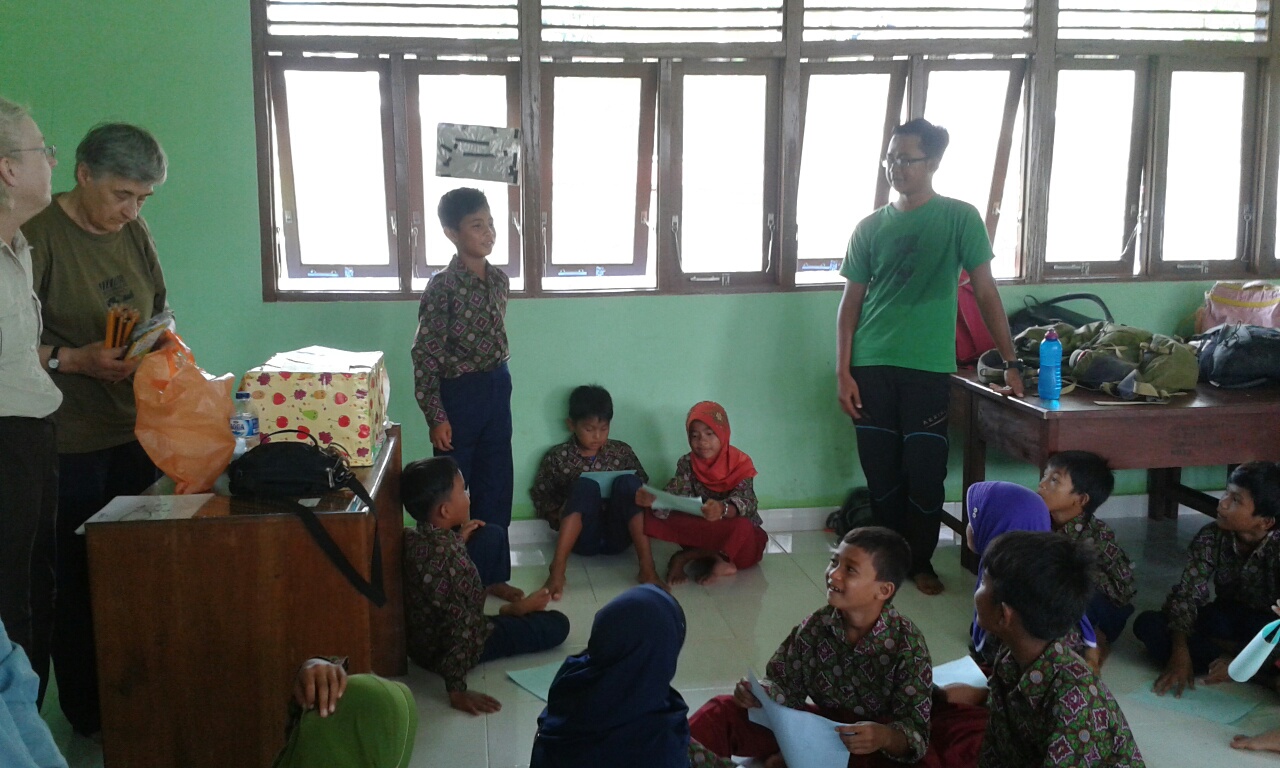
Yesterday we went to Tanjung Belit elementary school to give a presentation on the Sumatran tiger and their habitat. The students were all keen to tell us what they knew about all the different animals. And the headmaster spoke to us about how happy he is that our project is happening in this area, and he hopes we can all meet again soon and continue to work with the local community. The team of expeditioners (completely off their own backs) had brought a wide array of stationary, writing pads, frisbees, crayons, tennis balls and much more as gifts for the school, which was received gladly from the staff.

20150820_110226_resized

It has been a busy two weeks, setting out and checking on the camera traps and surveying new areas. Hopefully the enthusiasm of the last two slots will carry on into the sixth as there is a busy two final weeks ahead of us.


From our Sumatran tiger conservation volunteering holiday with tigers in Sumatra, Indonesia

From our Sumatran tiger conservation volunteering holiday in Indonesia (http://www.biosphere-expeditions.org/sumatra)

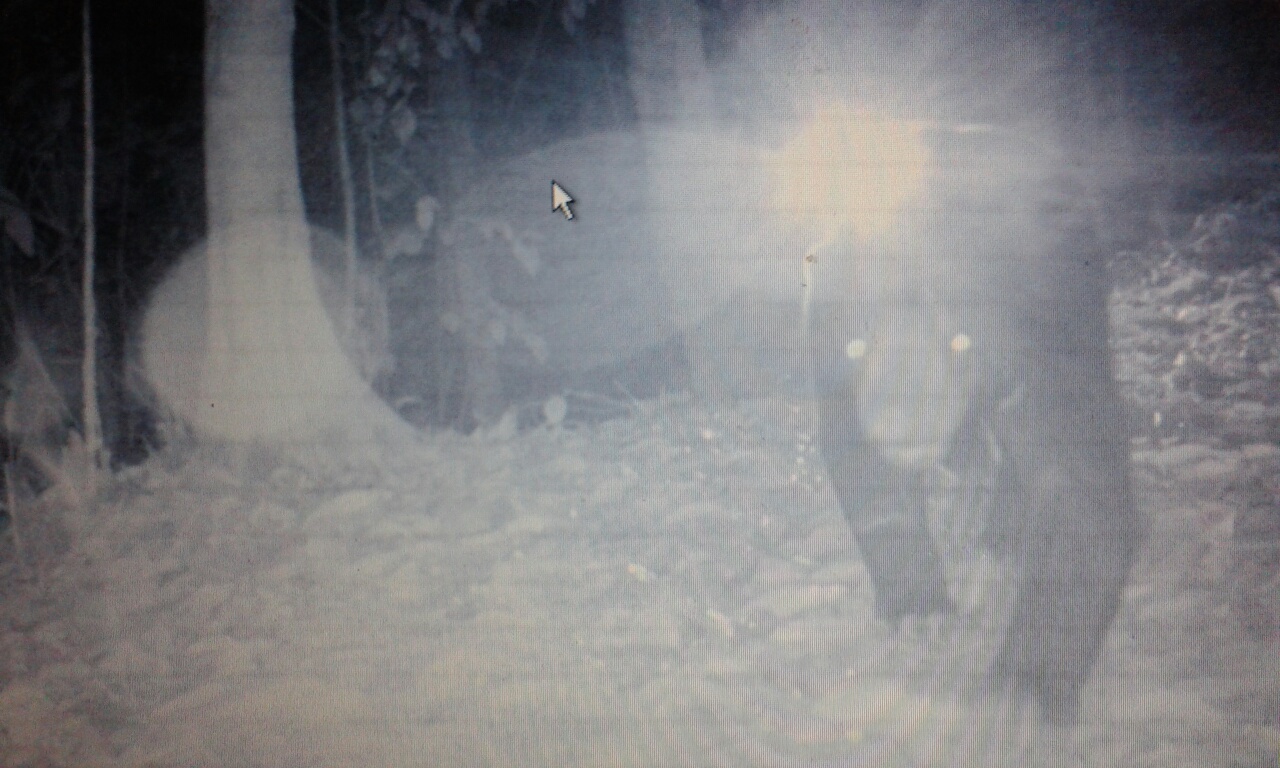
With the team collecting more SD cards over the last couple of days, we have seeing lots of wildlife on the cameras. Yellow throated martens, sun bears, common porcupine, pig tailed macaque, wild pigs and some bird catchers with birds in cages on their backs posing for the camera. That was before a sun bear knocked the camera to one side to climb up the tree for a snack.

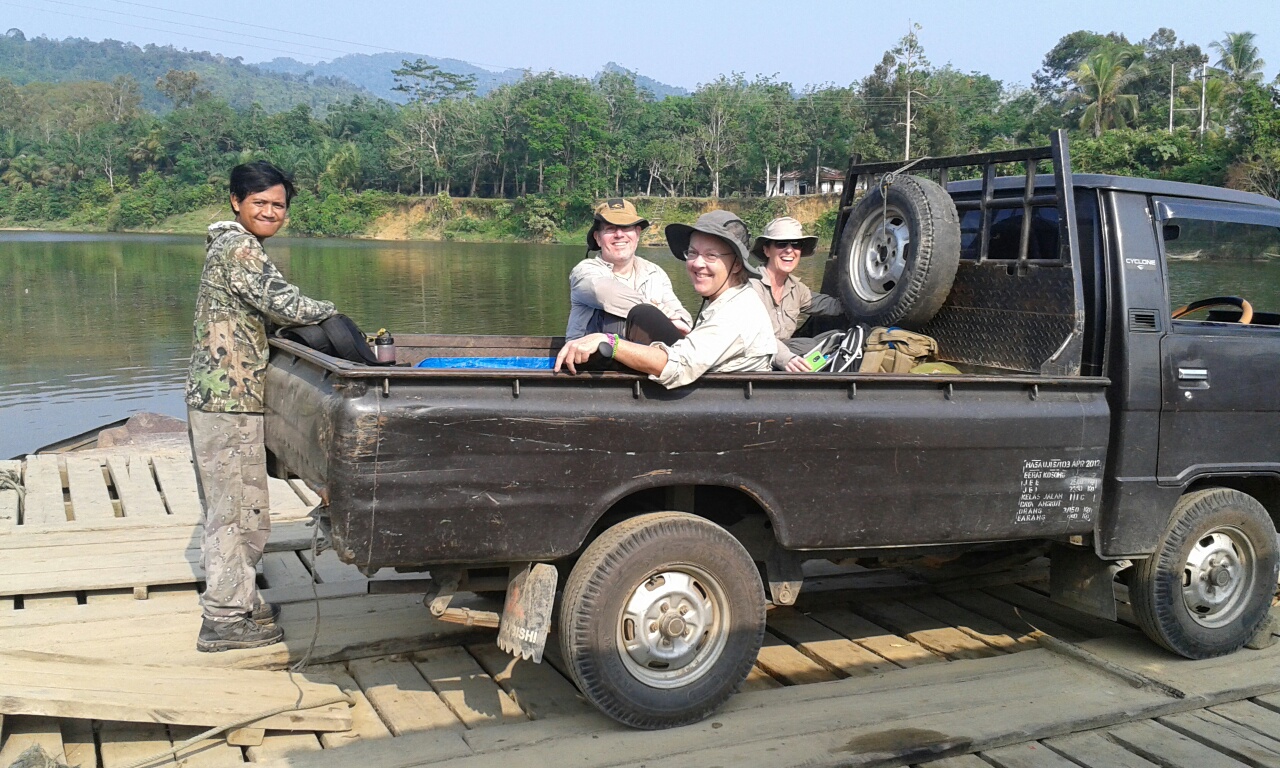
Today we set our last camera trap on a road that passes high over the mountains, where a local is said to have seen a tiger two months ago. It wasn’t the best ride ever bouncing around in the back of a pick-up truck in the heat of the day and we are looking forward to seeing what shows up on the pictures.

20150818_122541_resized 20150818_205821_resized 20150819_085525_resized


From our Sumatran tiger conservation volunteering holiday with tigers in Sumatra, Indonesia

From our Sumatran tiger conservation volunteering holiday in Indonesia (http://www.biosphere-expeditions.org/sumatra)

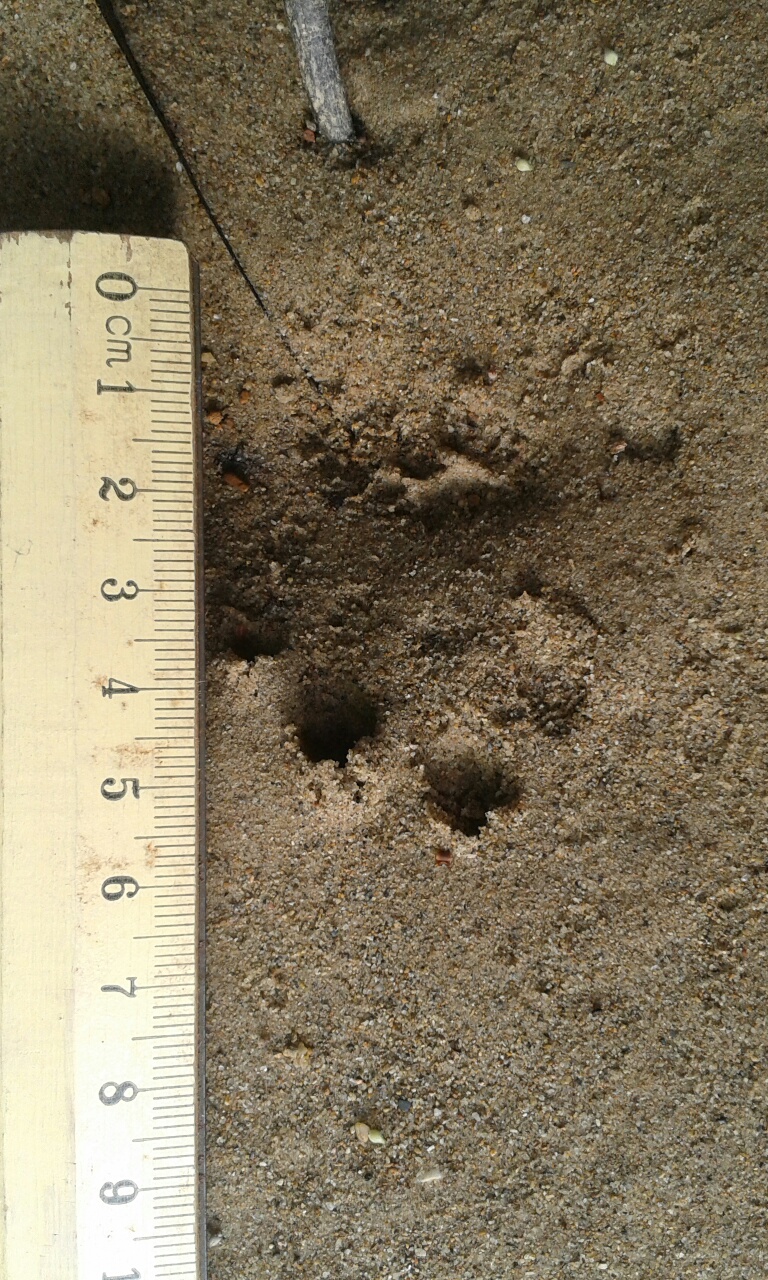
Earlier in the week, on the bank of the Subayang river getting out of the boat, we saw a paw print of a wildcat, which got one of our days off a good start. Teams have been out to swap over the SD cards in some of our camera traps that were set in place from the last slot. We also secured a school visit for next week in Tanjung Belit, which is the community that has been assisting us through the entire expedition. While in the school Sharon (whose boots had far too many laces to undo) waited on the steps and drew in quite a crowd of students, who were showing off very loudly, how well they could count to ten.

wild cat print

Despite two heavy rain storms, the Subayang river is continuing to drop, making travel in either direction a team effort, having to push our boats over the shallow spots. The locals from Tanjung Belit decided that with the low water levels it was a good time to have a fish harvest that brings the whole community together for a frantic few hours of net throwing and spear fishing. For the team it was a great opportunity to talk to villagers who were all to eager to talk to them. Helen, Mike, Laura and Nicole managed to have a good talk with the head of the village, who was very interested in our project and how it could help the community in the future.

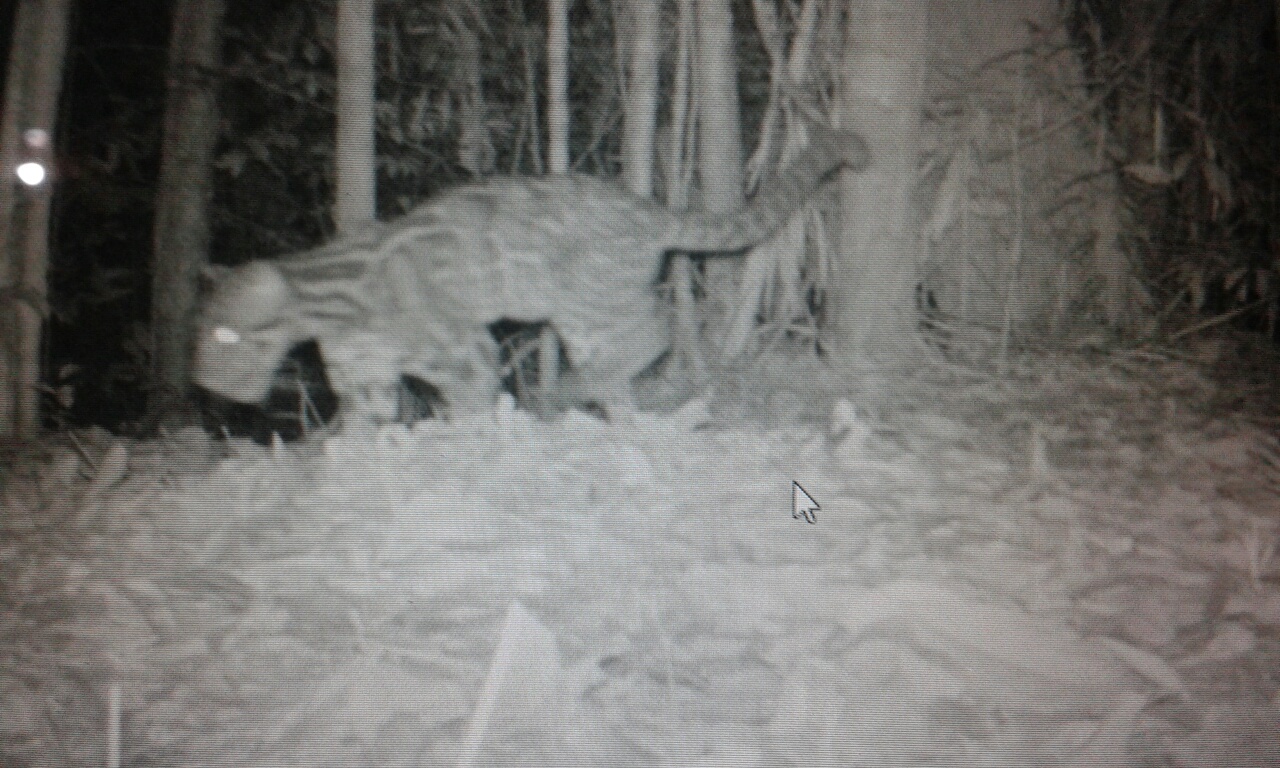
Our expeditioners have also been working hard doing surveys in the forest, setting out camera traps and collecting in SD cards. There has been a lot of animal movement on the cameras set by slot 4, such as wild pig, mouse deer, great argus bird, long tail macaque, leopard cat and sun bear. But the big thrill was seeing a clouded leopard caught by the camera set in cell AA130, set by Febri, Sugi, Sian, Nikki and Helga. While this is not our target species, Febri tells us that the clouded leopard is WWF’s secondary target for this area, as it is an important species that is able to manage ecosystems as a co-predator, after the tiger.

clouded leopard


From our Sumatran tiger conservation volunteering holiday with tigers in Sumatra, Indonesia

From our snow leopard volunteering expedition in the Tien Shan mountains of Kyrgyzstan (http://www.biosphere-expeditions.org/tienshan)

Greetings from Bishkek and apologies for the late entry. It took a while to get the photos organised.

The last seven hours drive from base camp back to Bishkek marks the end of the 4th and last slot of the 2015 Tien Shan expedition studying the elusive snow leopard.

After the final two weeks work surrounded by the amazing Kyrgyz mountain landscape and having made new friends, it is hard to say final goodbyes, but everybody is proud of the legacy they have left behind on this last group: 32 surveyed cells, 18 mammals datasheets filled, 3 direct observations of ibex (also recorded on camera traps) and two additional species of birds (adding to the total of 48 species recorded throughout the entire 2015 Tien Shan expedition period), make for some impressive results.

And what a last team that was! From the very first day everybody settled in quickly and enthusiastically, learning swiftly (helped by old hands Ellen and Vincent, thanks!) and then logging direct sightings of ibex on the very first survey.

We did not record any sign of snow leopard as on the slots before, but plenty of prey species and other environmental data. As our scientist Volodya says, even zero signs recorded in a given cell represent important data (especially in revisited cells) as lack of wildlife signs in cells where it was recorded before helps us understand the direct influence of human presence and the impact of disturbances such as herders and their livestock moving to higher grounds as the snows melted and fresh grass ran out lower down (making a good case for setting up conservation areas to reduce human interference on wildlife). In fact, the melting of the snow allowed to us to survey areas that were previously inaccessible to the preceding slots, driving the 4x4s over and across hair-raising mountain pass roads and onto new valleys. We definitely put those off-road driving skills learned to good practice.

One of the highlights of the slot was witnessing a whole herd of ibex (we counted 10+ on 31st July) moving across a mountain ridge visible from Donguruma valley. A relatively short walk took us to 3618 m, from where we watched the ibexes in awe through our binoculars. Volodya later explained to us that this is repeated behaviour observed in this area where ibex tend to move from one valley to the next when disturbed.

Our last survey walk of the season was a trip to Issyk-ata Pass and Chunchikan valley to retrieve the last four camera traps. Unfortunately the camera traps from Issyk-ata only yielded photos of fellow volunteers (camera set-up & retrieval selfie time!) and empty landscape. However, after two weeks out in snow leopard territory, the camera traps from Chunchikan valley provided us with some good photos of a young ibex and a couple of interesting videos of another (or maybe the same) ibex going past the device and shaking its fluffy tail at us.

This slideshow requires JavaScript.

We also had the excitement of our toilet tent disappearing twice. Our detective work found that one of the neighbouring cows had unsuccessfully tried to use it! It was queues in the mornings after that with only one last toilet tent standing, but luckily we had no more cow incidents.

Special thanks to all our volunteers who put so much effort towards this expedition, our field scientist Volodya for sharing his knowledge and insights and for leading us through his work, to our local partners NABU and especially our two experienced and trusty Kyrgyz of the Gruppa Bars and last but not least our champion cook Emma.

Thank you. Safe travels, back keep in touch with Biosphere Expeditions and I hope to see you all again on another expedition some day. And remember Margaret Mead’s word: “Never doubt that a small group of thoughtful, committed citizens can change the world; indeed, it’s the only thing that ever has.”

Keep up your good efforts for the conservation of this beautiful planet.

Rossella

Continue reading “From our snow leopard volunteering expedition in the Tien Shan mountains of Kyrgyzstan (http://www.biosphere-expeditions.org/tienshan)”
From our Sumatran tiger conservation volunteering holiday in Indonesia (http://www.biosphere-expeditions.org/sumatra)

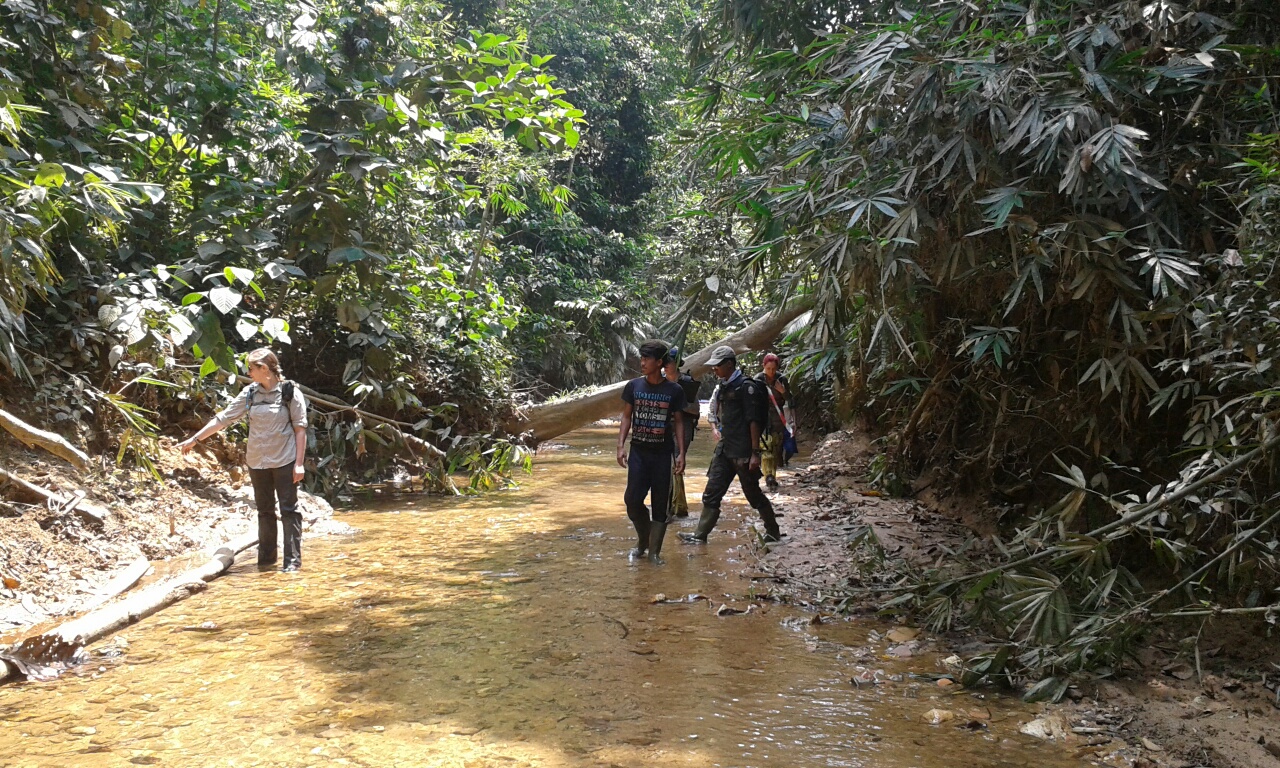
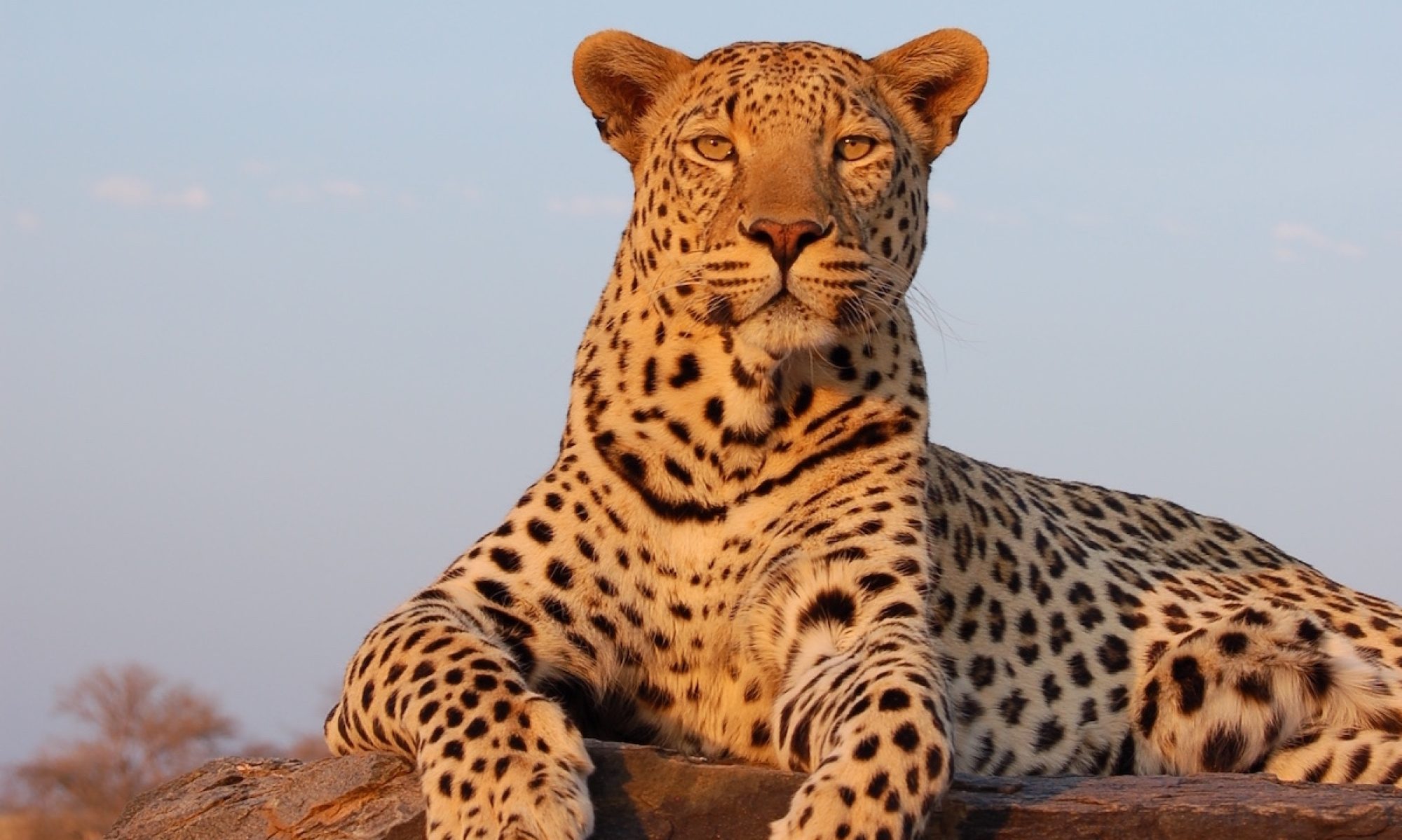
Our fifth and penultimate slot is underway, and today we set out for the first time in the rainforest. The team took to navigation on the terrain fantastically. The river is also higher again after some recent rains, so travelling in the boats has been far easier than the last slot. Sadly early Monday morning, I found our rescued leopard cat in a bad way. Three of the participants (who volunteer in big cat sanctuaries) Donna, Sharon, and Natalya tried their best to help. But in the end the cat had been to weak for too long and slipped away. I think this has been a stark reminder to us of how fragile the balance between humans and wildlife is in this area, and how much more work needs to be done.


From our Sumatran tiger conservation volunteering holiday with tigers in Sumatra, Indonesia

From our Sumatran tiger conservation volunteering holiday in Indonesia (http://www.biosphere-expeditions.org/sumatra)

Team four made it back to Pekanbaru. And they’ve been a great help to the project. With lots of interviews with locals of the surrounding villages, both up and down the river. Quite a few of them have heard of people coming across tiger tracks in the last couple of months. Sadly, there is significant illegal logging going, so we have not been able to safely place any camera traps yet.

This slideshow requires JavaScript.

The big surprise came on Thursday afternoon. Helga, Sian, Nicky and Sabine, who had been surveying a village, came across a bird cage with a leopard cat in it, hanging in a tree in the sun! Helga, who works as a captive animal behaviourist, could see immediately see that, unsurprisingly, the very young cat was highly distressed and very dehydrated. They then found out that it had been in the bird cage for two months with barely enough room to move and unable to stand up fully. So the four of them, after some negotiation with the “owner”, who claimed the cat had walked into his house as a kitten, brought the cat back to base in the cage to save it from the inevitable. As it’s not an endangered species there are no sanctuaries to take it to, so once back in camp, the whole team sprung into action. The team got hold of a much larger cage and through guidance from Helga and Febri made a temporary habitat for the leopard cat to live in for the next few weeks, until it gets its strength back again. This will also give us time to make local enquiries and think of the best course of action with our local partner WWF.


From our Sumatran tiger conservation volunteering holiday with tigers in Sumatra, Indonesia

From our Sumatran tiger conservation volunteering holiday in Indonesia (http://www.biosphere-expeditions.org/sumatra)

Apologies for the dearth of updates, but the internet connection here in the field is either absent or very, very slow. Too slow to send pictures, so you will have to wait for the fortnightly changeovers for the full complement, sorry. So here is just some short text and a couple of pictures to illustrate our work and adventures.

A few days ago we met up with a plantation owner who had taken a tiger track photo on his phone at the end of last year. After walking with him through the forest for several hours, our overnight team finally reached the start point of their survey. The area where the picture was taken last year is now largely rubber plantations so Arnau, Caitlin, Beno and Sugi walked further into the woods and found that people working in that landscape generally don’t like the tiger presence, as it makes them feel unsafe. Febri too fears that at the speed with which these plantation are expanding, there could be human tiger conflict situations in the near future.

Another highlight of this slot was being invited into a local primary scool and Febri gave a presentation on the biodiversity of the rainforest all around them and told them how the future of tigers can be affected by deforestation. After that we played some animal games thought up by the team, which tied into the presentation, although all the scholl girls just wanted to be next to Caitlin with her fascinatingly white skin and red hair.

On our day off the team relaxed by a local waterfall, watching the local boys and team member Arnau, our resident space engineer/acrobat, jumping off the rocks into the pools below.


From our Sumatran tiger conservation volunteering holiday with tigers in Sumatra, Indonesia

From our Sumatran tiger conservation volunteering holiday in Indonesia (http://www.biosphere-expeditions.org/sumatra)


With the work of the expedition in Rimbang Baling Wildlife Reserve back in full swing, a scientific article about five cat species (tiger, clouded leopard, golden cat, marbled cat, leopard cat) in Sumatra has just been published, examining how these species manage to coexist and the implications for their conservation on an island with high rates of forest loss and habitat degradation.

“[Cats] play a significant role ecologically as predators,” Sunarto Surnato, an ecologist with Virginia Tech and WWF Indonesia and the study’s principal researcher, told mongabay.com. “[T]hey control and influence the population number and also the behavior of other animals, especially their potential prey assemblage and this further affects the vegetation and the overall ecosystem, including the landscape.”

An adult male Sumatran tiger captured by camera trap. Photo credit: WWF_PHKA_VATech.

Using a large camera-trap study in five forested areas in Sumatra, the study camera-trapped all five species, there was only one location in which all five cat species were photographed together – Rimbang Baling Wildlife Reserve, the expedition’s study site!

The authors write that their study has important implications for the conservation and management of the various cat species in the study area, and possibly beyond, noting that the remaining forests of Sumatra, including the degraded ones, still have a high conservation value for wild cats and other wildlife.

“[E]ven the critically endangered Sumatran tiger can achieve high abundance in such forests, likely because prey is still supported in these areas,” the authors write. “[D]espite the widespread perception that rainforest animals need intact forest, we suggest that in addition to intact forested areas, protection of secondary, even degraded forests, is highly beneficial to maintaining the increasingly threatened wild cats in Sumatra.”

A Sumatran tiger captured by camera trap. Photo credit: WWF-KemenLHK.

For us on the expedition, this means that we need to continue to look at the more degraded areas on the fringes of Rimbang Baling Wildlife Reserve, as well as those hard-to-reach, remoter areas, away from people and disturbance, in our quest for wild tiger conservation. We wait for the next update from Anthony on how things are going…

More about the article | Original article


From our Sumatran tiger conservation volunteering holiday with tigers in Sumatra, Indonesia


From our snow leopard volunteering expedition in the Tien Shan mountains of Kyrgyzstan (http://www.biosphere-expeditions.org/tienshan)

Diary slot 3 (apologies for the delay)

Surrounded by streams, baseccamp II is located further up the valley closer to the Karakol mountain pass. The local name of the place is ‘Aral’ – island – describing exactly what it is. To get there from the main road a shallow stream must be crossed – I’m glad the truck made it safely through.

Team 3 assembles in time on Monday morning in Bishkek. Peter is with us again on his 2nd slot, there are Suzie and Ellen from the U.S., Nick from New Zealand, four Germans: Anke, Barbara & Michael and Andre, Siv & Duncan, a Norwegian/English couple, Vincent from Switzerland and last-minute joiner Ceire, also from the UK. Placement Nurjan from Bishkek completes the team.

It’s incredibly hot on the training day, so we seek shelter from the sun in the yurt during the afternoon. Some of us are even seen in their swimming costumes taking a refreshing bath in the river – temperature: 8 degrees!

Starting from last slot’s overnighter location, now only 10 minutes away from camp, we survey Kashka Tor valley on the first survey day. Remember this is where we found fresh snow leopard tracks and have set up two camera traps. Kurmanbek has hired a horse from our neighbour and friend Talant – he says that from a horse’s back the well-being of the whole group can be overseen much better! 😉 We split into two groups later on. A side valley is explored – so far unknown terrain – and the camera traps are picked up. No fresh wildlife tracks are found anywhere in the valley, so unfortunately no good reason for setting up more. Older signs of ibex and argali are around, though, marmot calls are heard all day. There are also eight different butterfly species, some of which are not amongst the common species of the picture sheets Amadeus created for us to continue his scientific butterfly data collection. No pictures of snow leopard on the cameras.

We find more signs of snow leopard presence at the very end of Issyk-Ata valley! Peter and Andre make our day, reporting from a long snow leopard track found in the snow and bringing back quite a few very good pictures.

This slideshow requires JavaScript.

And another exceptional finding is made on Saturday: Manul tracks. The location at an altitude of 3,650 m is at ‘no name valley’ (because it does not have a name on the map), not far from basecamp. Discussing the finding during the daily review, Volodya gets really excited. He explains that the manul has the same IUCN status as the snow leopard, but attracts much less attention. Proving the presence of another elusive and endangered species in the region is a precious piece of information.

A traditional Kyrgyz meal at a herder’s yurt is arranged on the day off (Sunday) with our neighbour Talant.

Takyr-Tor and Choloktor valley are surveyed on the next day. Don Galamish again on Tuesday before the overnighter team settles near base I while Anke, Barbara, Ellen, Michael and Nick drive back to spend the night at base II. Rain pours again when the overnighter teams head for Tuyuk to retrieve two more cameras, and Kumbel valley (= sandy mountain pass) unknown for most parts. Again, no snow leopard pictures on the cameras.

More exploration is done on Thursday. We cross the stream behind base for the first time. Neither on foot, nor by car this area would have been an option for surveys but horses can do it! In the morning Talant’s sons bring over two of them and one by one the team is ‘transported’ to the starting point. We do another short survey on the last day with Peter and Duncan retrieving a camera trap, Ceira, Siv and Nurjan going for interviews and the rest of the team doing a reccee on the other side of the Karakol mountain pass to check for possible overnight locations.

With everyone back at base, something very special is about to happen. Over the last couple of days Kurmanbek and Aman have gathered two teams for a traditional horse game and have set up the playing field right in front of basecamp. The ball must be picked up from the ground and be placed in a goal for points – somewhat similar to American football. Watching the scene from the slope we’re much impressed by the locals’ skills on their horsebacks, the speed and powerful action of the game. More young men on horses arrive while the game is on, but a downpour eventually ends the spectacle. We’re invited for the post-game meal to Joldosh’s hut – he is the undisputed champion of the game.

Back to the expeditions’ core business and the research, we meet in the late afternoon for a final review. During the 3rd slot, 32 positive cells have been recorded, about twice that number have been surveyed. 21 mammal datasheets were added to Volodya’s collection. To everyone’s great excitement, snow leopard tracks were found. Unexpectedly each slot recorded snow leopard tracks this year: in slot 1 at the Karakol Pass in snow, in slot 2 at Kashka Tor valley in mud (where a fowl was attacked last year) and in this slot again in snow at Issyk Ata. The manul footprint found at ‘no name valley’ is another highlight. Direct sightings of ibex were not recorded in slot 3. A very likely explanation for the lack of sightings is that with the snow melt, many, many more herders and their livestock have moved into the valley, pushing wildlife back into more remote areas. On the other hand, the interviews have been greatly boosted during this slot with more local people around. 19 yurts were visited, the age of interview partners ranged between 9 and 73 years. The bird list was extended to 45 species. Big birds of prey such as golden eagle, but also lammergeier have been recorded constantly, indicating a good quality habitat.

In the evening we socialise in the yurt enjoying the warmth of the stove and, of course, a shot of local vodka. To everyone’s surprise Anke, Barbara, Nurjan and Kurmanbek perform a Kyrgyz song rehearsed on a bad weather day. The somewhat wistful melody and the wording about the Kyrgyz way of life contributes to some unique experiences the team has gained over the last two weeks.

It’s time again to thank everyone – it’s been wonderful with every single one of you, slot 3. Special thanks go to Peter for his unwearing dedication over four expedition weeks and his help in many ways. As I said before, this project would not be possible without you passionate people putting time, money and sweat into it. I hope your expectations have been met and you’ve enjoyed the two weeks as much as I did. Safe travels onward or back home and keep in touch. I hope to see some of you again some time somewhere.

Having said alli this, I am now handing over to my colleague Rossella who will be leading this year’s last expedition slot in the Tien Shan mountains. Other assignments force me back to Europe with mixed feelings. A very heartfelt thanks goes to my colleague Volodya and NABU’s gruppa bars members Kurmanbek, Aman and Shailoo. You’ve been my family for two months. Together we did a great job overcoming language barriers and cultural differences with a good sense of humour, flexibility and the odd shot of vodka… all in an effort to save the snow leopard!

All the best,

Malika
Continue reading “From our snow leopard volunteering expedition in the Tien Shan mountains of Kyrgyzstan (http://www.biosphere-expeditions.org/tienshan)”
From our Sumatran tiger conservation volunteering holiday in Indonesia (http://www.biosphere-expeditions.org/sumatra)

Team 4 has arrived and they all looked ready for action and eager to go. Sian has already impressed me with the amount of gadgets she has in tow, portable fan, wireless sound system, not to mention stick-on LED lamps so no spiders in the loos will catch anyone by surprise. She’s really brought our humble jungle lodge into the 21st century.

With the risk assessments, science briefings and lessons on how to use all the technical gear out of the way, we were set, and after lunch on the second afternoon, ventured out into the field for our first taster of the rainforest and to test our newly found skills.

Febri, as ever, found the first tracks…and the second for that matter. Tomorrow we set out in earnest in our smaller groups to try and get some good data for him.

Febri
Febri

From our Sumatran tiger conservation volunteering holiday with tigers in Sumatra, Indonesia