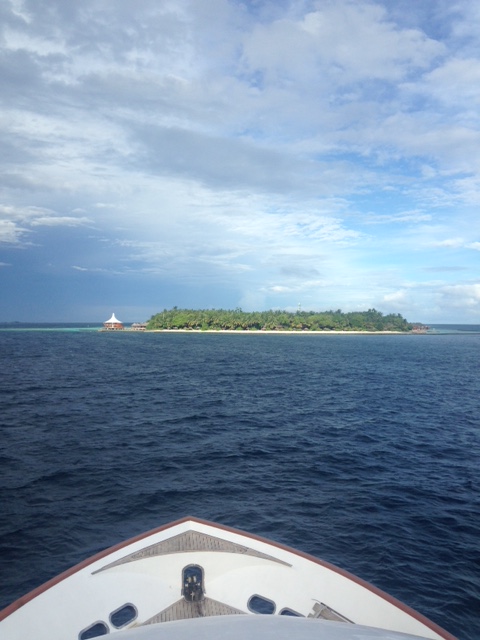
From our scuba diving conservation holiday with whale sharks and coral reefs of the Maldives (http://www.biosphere-expeditions.org/maldives)


Our first transit across open ocean from one atoll to another greeted us with storms – and these continued into the night. With the Carpe Diem rocking wildly in the wind and waves, it was quite a rough night’s sleep, for everyone except Yannick and Desiree who slept through the whole affair!

It’s been an exciting couple of days for the Maldives team – we’ve dived with reef sharks, eagle rays and enormous humphead wrasse during a dawn dive before work, and snorkled with Manta rays after dinner! Everyone passed all their tests first time round so no re-tests were necessary. Congratulations to you all!  This also meant that we could all focus our attention on the survey work.   We’ve now completed two full Reef Check surveys in Rasdhoo Atoll and Bathalaa Maagaa, and so far the news is good – no significant bleaching.

The stormy weather is still with us, but let’s hope it will be a calmer night tonight, with clear skies for tomorrow’s survey in Kudafalu.

This slideshow requires JavaScript.

Continue reading “From our scuba diving conservation holiday with whale sharks and coral reefs of the Maldives (http://www.biosphere-expeditions.org/maldives)”
Update from our volunteer vacation / conservation holiday protecting whales, dolphins and turtles around the Azores archipelago (www.biosphere-expeditions.org/azores)

Decade of data from citizen science confirms cetacean hotspot

Information on cetacean sightings collected by Biosphere Expeditions’ citizen science volunteers in the Azores are confirming the importance of this region for a variety of species, amongst them humpback, sperm and blue whales – the largest species ever to exist on our planet.

Recent data have highlighted the importance of ‘site fidelity’ (the same individuals returning to the same location again and again) for species such as sperm whales. Indeed some individuals have been recorded multiple times since 2004, when Biosphere Expeditions first collaborated with Whale Watch Azores on this long-term project.

Cetacean specialist Lisa Steiner, the expedition’s scientist, says that “the collaboration with Biosphere Expeditions has led to repeat sightings of blue whales in different years, as well as matching humpback whales seen in the Azores to the Cape Verde Islands. We often encounter sperm whales that have been observed more in the early or late part of the year, and such information will help determine if there are ‘winter’ and ‘summer’ whales.”

But the decade-long data collection has not only revealed patterns of the lives of whales and dolphins around the Azores. Fluke identifications have been matched with individuals recorded further afield, such as in Norway. The project supports initiatives with both the University of the Azores and University of Florida, resulting in multiple novel scientific publications on the marine life of this unique archipelago.

“The volunteer data collection effort is vital”, says Dr. Craig Turner, the 2015 expedition leader, “as it helps unravel the detail in the lives of not just one ocean giant, but also resident species such a Risso’s dolphins and migratory species such as loggerhead turtles. The project is developing an insight not just into which species are here, but what these species are doing, where and when. This knowledge is vital for any conservation efforts, if they are to be effective.”

Dr. Matthias Hammer, Biosphere Expeditions executive director, adds: “The Azores is one of our longest-running projects and our collaboration with Lisa Steiner has given hundreds of people a unique insight into cetacean research and conservation over the years. It has also yielded a vast amount of data. We may not have headline-grabbing news every year, but it’s the steady chipping away at the block that makes the difference here, because the data collected by our citizen scientist volunteers are the bedrock on which effective conservation sits. The project as a whole is also a showcase of how volunteer-led commitments can go well beyond the support of a few years that are usually offered by grant-giving bodies. Lisa has shown an outstanding dedication to marine life that now spans several decades, so this long-term support is what is needed. We are proud to be helping Lisa in her efforts and look forward to many more years of working with her.”

2015 expedition slideshow:

This slideshow requires JavaScript.

Continue reading “Update from our volunteer vacation / conservation holiday protecting whales, dolphins and turtles around the Azores archipelago (www.biosphere-expeditions.org/azores)”

From our scuba diving conservation holiday with whale sharks and coral reefs of the Maldives (http://www.biosphere-expeditions.org/maldives)

The team worked hard today, studying furiously both in and out of the water. Reef Check training means complete immersion in the marine environment, mentally and physically, absorbing new information about all aspects of the reef – the substrate, the fish and invertebrate life, as well as the impacts on the reef such as destructive fishing practices, coral bleaching and predation.

This year is an El Nino year, with predicted rises in surface ocean temperature, and we have already seen small signs of coral bleaching here on the Baros house reef, but nothing to be alarmed about. As our expedition continues and we travel further south, we will no doubt glean more information about other effects here in the Maldives.

As the day drew to a close, all the hard work paid off – with a glorious sunset as a backdrop, the entire team sat, and passed their fish test! Well done everyone! Only the substrate test and invertebrate tests to go tomorrow.

Continue reading “From our scuba diving conservation holiday with whale sharks and coral reefs of the Maldives (http://www.biosphere-expeditions.org/maldives)”

From our scuba diving conservation holiday with whale sharks and coral reefs of the Maldives (http://www.biosphere-expeditions.org/maldives)


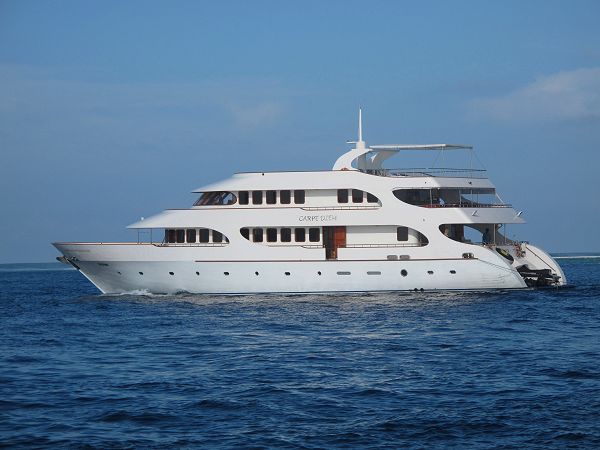
With all team members present and correct, we made our way to the Carpe Diem, our magnificent research vessel.

Boat 2010 (1)

Ours is a busy schedule, so without further ado, briefings were given and the Reef Check programme initiated, whilst we cruised to our training site at Baros to complete our first dive.

Baros, as with many islands in the Maldives, is a resort island and boasts well-kempt house reefs complete with megafauna.

baros from carpe diem

Though here, unlike many of the resorts, Reef Check training is offered to their guests. Ronny and Karin, the managers of the Baros Dive Centre, uphold the ethos of Reef Check and fully understand the benefits of long-term monitoring. Sadly, this is all-too uncommon around the Maldives, a country which depends on reefs for everything from its existence to substanance to tourist income.

The team had a great first dive and for some, who hadn’t dived in a while, it was a chance to become reacquainted with the ocean – some even saw their first shark, a white tip that moved silently through the group and off into the blue.

Rob Byron

Tomorrow the pressure is on with training lectures and dives all day, and the first test tomorrow evening!  Now though, it’s been a long day, so time for a good night’s rest.

Continue reading “From our scuba diving conservation holiday with whale sharks and coral reefs of the Maldives (http://www.biosphere-expeditions.org/maldives)”

From our conservation holiday volunteering with jaguars, pumas, ocelots, primates and other species in the Peru Amazon jungle (http://www.biosphere-expeditions.org/amazonia)


Everyone on the team worked very hard over the last few days walking transect trails in the morning and doing canoe river surveys or track trap checking in the afternoon. I would never have thought we would beg for rain, but the river level has dropped constantly to an alarming level. And as it drops, the river reveals its secrets: logs and fallen trees making boat rides difficult if not impossible. Keep your fingers crossed that rain comes soon for some relief not only from the heat.

We exchanged SD cards of all ten camera traps yesterday, also checking battery levels and functions. The cameras are all good for working day & night out in the field until the end of the expedition. Alfredo, Fredrik, Gabriel and Anh opted in to do the long walk to terra firme to also check on both cameras set in the most remote area of the study site. My guess is that they were keen because they were also secretly hoping to come across the troup of red uakaris again on the way. Surprisingly they were sighted once more within the trail grid on Thursday. Neil & Doug accompanied by Gabriel were lucky enough to get a glimpse of the rare monkey species that only occurs in the northeast of Peru and some isolated pockets in Brazil.

This slideshow requires JavaScript.

Many more fascinating species were encountered during the first expedition slot. As regards the expeditions’ target species, results so far are sightings of nine out of fourteen present primate species, tracks of jaguar and jaguarundi, collared and white-lipped peccary, paca and red brocket deer. Other mammal sightings include tayra, three-toed sloth, river otter, red squirrel, pigmy squirrel and armadillo. And, of course, the ever so cute yellow-crowned brush-tailed tree rat!

Overall the teams have walked 44 km of transect trails in four survey days, the total walking distance is about double of it. 40 km of transect were surveyed from the canoes thanks to the local field guides Gabriel, Julio, Mario & Oscar paddling and steering the canoes up and down the Tahuayo river. Nine cells of the study area have been covered each measuring 2 x 2 km.

Anh, Ed and Neil (all staying for the second slot) & I said goodbye to Ana, Brenda, Doug, Imogen, Katie, Lanse & Mary today. Thank you everyone for coping with the heat & humidity, blisters and putting sweat into the project. You have helped collecting valuable data that are slowly but constantly adding up to a precious knowledge base of the area and its wildlife.

Continue reading “From our conservation holiday volunteering with jaguars, pumas, ocelots, primates and other species in the Peru Amazon jungle (http://www.biosphere-expeditions.org/amazonia)”

From our conservation holiday volunteering with jaguars, pumas, ocelots, primates and other species in the Peru Amazon jungle (http://www.biosphere-expeditions.org/amazonia)

Red uakari monkeys sighted!

We’re on our third survey day and the list of target species sightings is getting long. Most excitingly a troup of about 60 – 80 red uakari monkeys was sighted on Tuesday, the first survey day after the training sessions.

It was on the long hike to ‘terrra firme’, the study area’s high grounds that never get flooded, when Manuel, one of our local guides, heard the monkeys call from further away off the trail. While he stood his ground with team members Katie and Lansing, Fredrik equipped with a camera and a 600 mm lens was sent off to hunt for some pictures. This primate species is most elusive, they travel at impressive speed and have only been seen in the area once this year in March. Fredrik did an amazing job – see the picture he brought back for everyone to enjoy.

red uakari_IMG_1672

Not even fresh jaguar tracks found on the same day on the trail connecting the Tahuayo and Tangarana river made it top on the list that day. In total ten camera traps have been set in various locations throughout the study area to capture their presence…hopefully! Other species being recordedsare brown and white capuchin monkey, Squirrel, titi, saki and owl monkey, as well as moustached and saddleback tamarins.

Although the local people say that there is no dry season in the rainforest, it’s been very dry over the last week. Only the odd rain shower cooled down the temperature ever so slightly. We’re sweating and drinking water and sweating and drinking – not even at night temperatures does it drop below 25-30 degrees Celsius. One benefit of the dryness is that all trails are much easier to walk, the palm swamps easier to cross, and there are far fewer mosquitoes.

Continue reading “From our conservation holiday volunteering with jaguars, pumas, ocelots, primates and other species in the Peru Amazon jungle (http://www.biosphere-expeditions.org/amazonia)”

From our scuba diving conservation holiday with whale sharks and coral reefs of the Maldives (http://www.biosphere-expeditions.org/maldives)

I’ve arrived in Male’ – descending through stacks of cumulonimbus to be greeted by spectacular sights of atolls framed by a turquoise sea. It’s hot and sunny –  30 degrees celsius in the shade, but the forecast shows a front on the way, so we may meet some cooling showers during the week.

Shidha and I have met, shared our expectations for the expedition and discussed the week’s programme – she is familiar with the route we are taking and looking forward to training you, as am I.

Shidha and Catherine

I have a Maldivian phone number now – (+960) 768 3387, so if you need to contact me in an emergency this is the number to call.

Wishing you all a safe journey, and see you tomorrow at 11.00 at the Coffee Club

Catherine

Continue reading “From our scuba diving conservation holiday with whale sharks and coral reefs of the Maldives (http://www.biosphere-expeditions.org/maldives)”
From our scuba diving conservation holiday with whale sharks and coral reefs of the Maldives (http://www.biosphere-expeditions.org/maldives)

Biosphere Expeditions 2015 reef survey of the Maldives is on ‘bleaching alert’

In 1998 there was a significant global El Niño event that virtually stopped water circulation in the Pacific and Indian Oceans, resulting in floods in west, north and south American arid regions, and drought in the Australian and New Guinea rainforests, eventually resulting in forest fires. It upset the Asian subcontinent monsoons and led to crop failures and food shortages in the tropical nations of the world.

In the ocean, the ‘blocking’ of the equatorial oceanic gyre of currents led to significant warming of the shallow seas of the tropics, failure of the anchovy fishery of Peru, and the death of many coral reefs. The Maldives reefs suffered at least 90% coral mortality, because a lens of hot water, about 3-5 degrees (Celcius) above the usual maximum (that is 30-31 degrees Celsius) lay over the reefs of the country for four weeks. This stressed the corals and led to significant ‘bleaching’. Bleaching is a process where stress to the corals results in them expelling their colourful symbiotic algae (called zooxanthaellae), thus going pure white and exposing their calcium carbonate skeletons. It is often the initial cause of death to the corals as the symbiotic algae give up to 80% of the energy to the corals from the sugars they produce by photosynthesis. Corals can survive initial bleaching, but only if the hot water stays over the corals for a short period, or at a lower temperature. In these circumstances, corals can reabsorb zooxanthellae into their tissues from the water column. However, the 1998 Maldives bleaching event was so severe, that it killed most corals outright. The recovery of the reefs has been from juvenile corals settling on the dead coral reefs, and re-growing.

Biosphere Expeditions has in collaboration with the Marine Conservation Society (MCS) has been doing four things since 2011:

1. Monitoring the recovery of the 1998 bleaching event at reefs that were first surveyed before the event, in order to see the amount of live coral that now exists at shallow depths.

2. Re-surveying sites first visited by MCS in 2005, such that we have indications of reef health, fish populations, and any large megafauna such as whale shark, manta rays, turtles, large fish and reef sharks. We recorded a ‘new’ whaleshark in 2011.

3. Training, via Biosphere Expeditions’ placement programme http://www.biosphere-expeditions.org/placements, of local Maldivians from government and civil society to monitor their own reefs and providing training and funding, courtesy of LaMer and the Rufford Foundation, for exceptional individuals to become Reef Check trainers themselves. These individuals trained up three local Reef Check teams since 2014 and undertook the first ever all-Maldivian Reef Check survey in November last year.

4. We have published four technical reports on the condition of the reefs since 2011.

This and last year are also El Niño years, where the east–west surface current movements of water across the planet’s equator is stalling and stopping. This results in the sun heating up surface waters in some locations, such that bleaching events have occurred. They have occurred in the tropical west pacific, Hawaii, French Polynesia, and to a lesser extent, the Maldives. Northerly Indian Ocean reefs (around the Arabian Gulf, Thaliand and Andoman and Nicobar Islands) appeared to have had the brunt of the hot water, but the Maldives remains on high alert, as this El Niño event is not over yet, and indeed could strengthen.

This year’s expedition is therefore ‘highly tuned’ to looking for bleaching events in the Maldives, or evidence of recent bleaching events (where the whitened corals start to be overgrown by algae). We are re-visiting sites we first surveyed in 2005 and four other sites that have been regularly monitored (once every two years) since 2011, going down the beautiful Ari Atoll from north to south. We have a survey team of eleven individuals, two trainers – one British and one Maldivian – and nine trainees (including two Maldivian placement recipients). The two placements are from the local NGO ‘The Maldives Whaleshark Research Programme’ and a local marine consultancy. The trainers on the expedition have both been trained by Dr Jean-Luc Solandt of the Marine Conservation Society, a Reef Check Course Director and the national coordinator of Reef Check for the Maldives.

Continue reading “From our scuba diving conservation holiday with whale sharks and coral reefs of the Maldives (http://www.biosphere-expeditions.org/maldives)”
From our conservation holiday volunteering with jaguars, pumas, ocelots, primates and other species in the Peru Amazon jungle (http://www.biosphere-expeditions.org/amazonia)

Everyone arrived safely at the Amazon Research Center. After a speed boat ride of 2 1/2 hours from Iquitos, Alfredo, our scientists, and our scientific assistants Fredrik & Andy, and I welcomed the team at the Tahuayo Lodge and continued to the ARC after some brief introductions and having lunch. While I am writing this, Alfredo is delivering a presentation of the research’s target species such as jaguar, puma and more than a dozen different monkey species. It’s a lot of input on the first day after a comprehensive safety briefing to prepare everyone for the jungle research work. We’ll continue with training sessions on the research equipment and data sheets tomorrow morning, before we go out for our first training survey walk.

Continue reading “From our conservation holiday volunteering with jaguars, pumas, ocelots, primates and other species in the Peru Amazon jungle (http://www.biosphere-expeditions.org/amazonia)”

From our scuba diving conservation holiday with whale sharks and coral reefs of the Maldives (http://www.biosphere-expeditions.org/maldives)

My name is Catherine Edsell and I will be your expedition leader for this years Maldives expedition. Coral reef conservation is one of my passions and I led the Maldives expedition in 2014, so look forward to continuing our ongoing research with you. As you are aware, Dr. Jean-Luc Solandt is unable to join us due to personal reasons, but Mariyam Shidha Afzal, formerly from the Marine Research Centre of the Maldives, a marine biologist and experienced Reef Check Trainer will be taking his place, giving us the added benefit of her local knowledge.

I’m very much looking forward to meeting you in Male on Saturday, 12 September at 11:00 at the NEW meeting point in front of the Coffee Club at Maldives Airport. I will be arriving in Male on 10 September and as soon as I get my mobile phone set up, will email you my Maldivian phone number (to be used for emergency purposes only, such as missing assembly).

Our survey route for the week is below

I hope all your preparations are going well and that you’ve had a chance to study all the Reef Check material and whale shark info available on the website as this will not only save you revision time on board, but also stand you in good stead for a fruitful expedition. We have a packed schedule planned, so please arrive rested and ready to go.

Until then!

Catherine Edsell
Expedition Leader

Continue reading “From our scuba diving conservation holiday with whale sharks and coral reefs of the Maldives (http://www.biosphere-expeditions.org/maldives)”