Update from our SCUBA diving volunteer opportunity & conservation holiday on the coral reefs of the Musandam peninsula, Oman (www.biosphere-expeditions.org/musandam)

It’s been an eventful beginning to this year’s Musandam expedition – a tire on our trailer blew out as we were en route to Khasab, so we had to wait for another vehicle to transport all the kit. Arriving late at the harbour meant we had no time to spare if we wanted to complete our check dive before dark, though with an attentive team, and a competent skipper and his crew this was not an issue. The dive went well and we relaxed to the light of a huge silvery moon.

moon

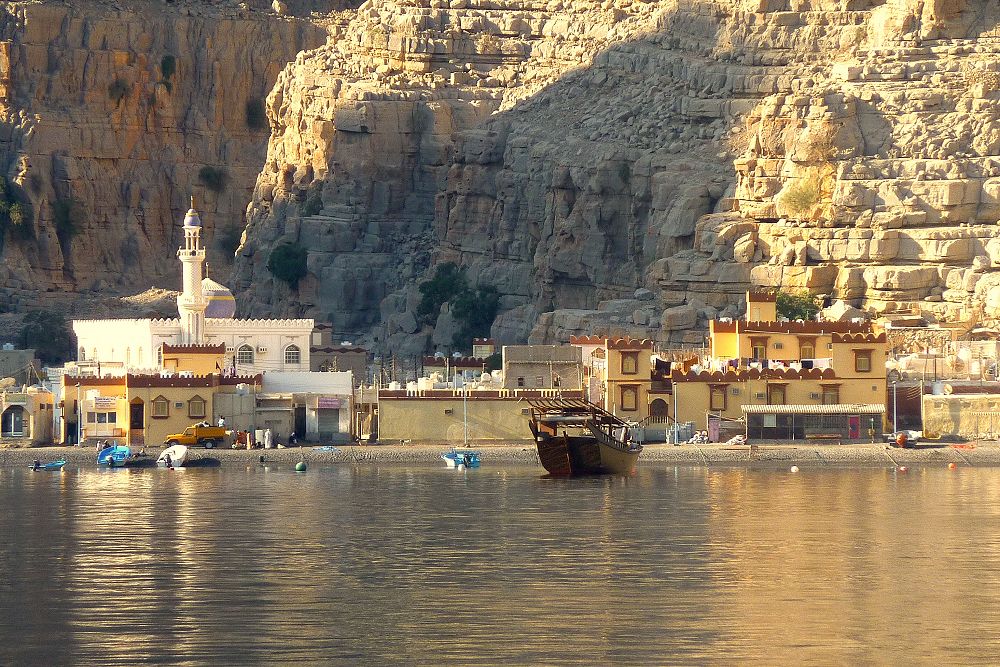
The next couple of days were taken up with Reef Check training. From dawn ’til dusk the team studied, dived, and took tests above and under water.  The effort required was considerable but rewarding and by the afternoon of the third day everyone had passed all their tests and were fully qualified reef checkers. Well done! A great achievement for a team with an age range spanning 50 years! As a treat we took the speedboat and visited the local land-locked village of Kumzar, learning about the local customs and traditions from Yusef, our skipper.
kumzar

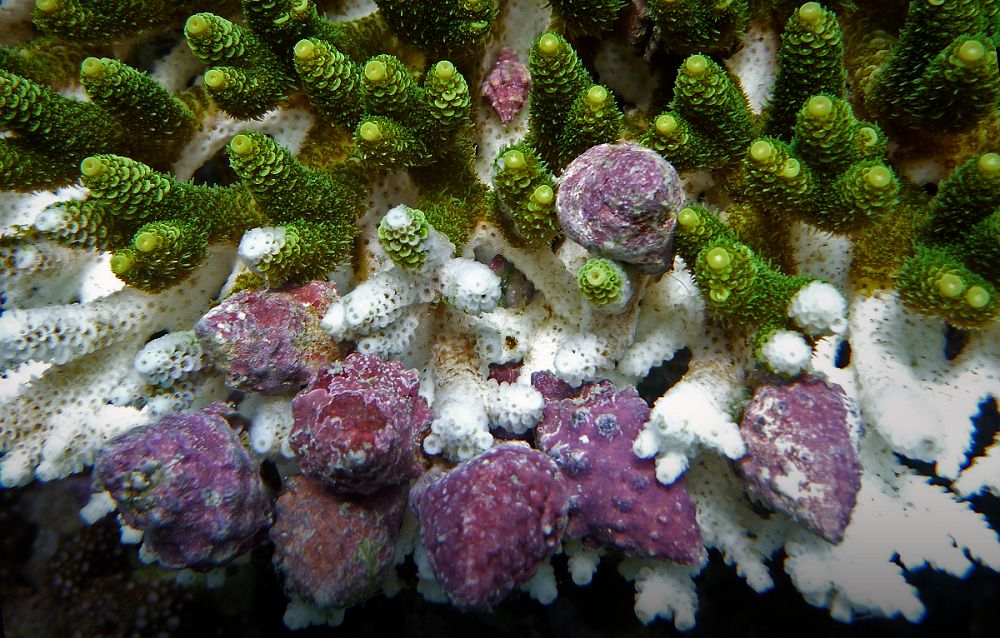
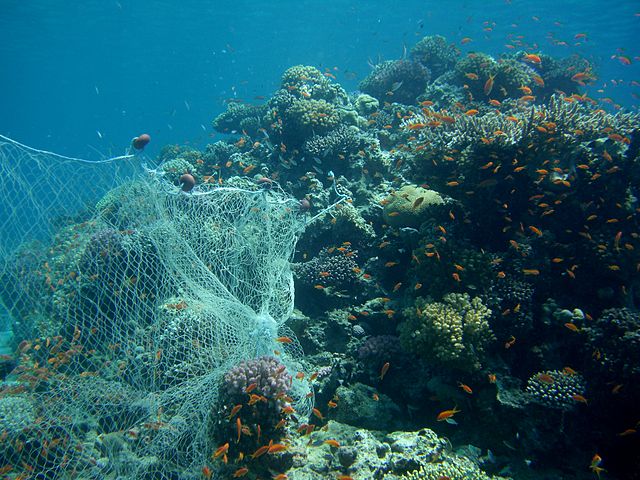
It is reassuring to see from our preliminary investigation that despite being flagged as a hot spot for coral bleaching, these corals seem to have adapted sufficiently to cope with such high temperatures. Not such good news is the first ever sighting on any Musandam expedition, of the coral-eating Drupella snail at, along with a proliferation of discarded fishing nets and lines. Reef Check veteran Ayesha managed to release two banner fish caught in a fish trap, though bat fish in another trap were not so fortunate.
drupella net

So with another five surveys ahead of us and the full moon tampering with the tide and currents, we still have very few full days ahead of us. But I have no doubt that if the last few days are anything to go by, the next will be filled with enthusiasm, hard work, and good humour.


Update from our SCUBA diving volunteer opportunity & conservation holiday on the coral reefs of the Musandam peninsula, Oman.

Update from our SCUBA diving volunteer opportunity & conservation holiday on the coral reefs of the Musandam peninsula, Oman (www.biosphere-expeditions.org/musandam)

Greetings from Dubai – our preparation day has been very successful, beginning with a trip out to the Dubai Desert Conservation Reserve (DDCR) to collect our kit boxes that have been in storage there for the past year. The DDCR is our partner for our Arabia expedition (www.biosphere-expeditions.org/arabia) which runs each January, monitoring Arabian oryx, Gordon’s wildcat, and other flagship species, and they also kindly guard all the equipment we need to run the Musandam expedition as well. Once the kit had been checked and the car loaded, we went back to Dubai in search of an essential piece of O2 delivery equipment, without which we could not set sail tomorrow. After a hectic couple of hours, it was sourced, found, and collected! Thank you Nasser for your help!

Our next port of call was the iconic sail-shaped Burj Al Arab hotel where we met with David Robinson, their head aquarist. He took us behind the scenes, showing us the turtle rehabilitation work they are doing in Dubai, taking injured hawksbill and green turtles that get washed up on the beaches, and nursing them back to health for release back into the open ocean. David told us that there are only 60 breeding adult female hawksbill turtles left in the whole of the Southern Gulf of Arabia. This dangerously low figure is due to loss of habitat, unsustainable fishing practices and other anthropogenic influences.

This slideshow requires JavaScript.

On our tour we saw the aquarium’s leopard shark, now 7 years old, born parthenogenetically, i.e. without external fertilisation. David was very excited, as yesterday, she too exhibited the first signs of laying her own clutch of eggs. Leopard sharks are only the 3rd species to show parthenogenesis in captivity.  David is not only working in Dubai, but is conducting research on whale shark ecology. As part of his PhD, David formed Sharkwatch Arabia, a database to collect whale shark sightings throughout the region. He recently discovered a massive aggregation of over 150 whale sharks in Qatar. Protected by the presence of oil rigs, the waters are not fished, and tourism is prohibited – a strange but effective MPA. He asked us to keep a lookout for whale shark and other shark species during our time in Musandam, as they are likely to be present in the areas we are surveying. We did indeed have a whale shark encounter two years ago, in the same location, so keep your eyes peeled – and remember, it may be above you!

So, after this very informative and enjoyable meeting we bid our farewells and rushed back to the Holiday Inn to collect another consignment of equipment – all in a day’s work!

It may be a few days before I can send another diary entry as internet connection out on the Musandam peninsula is sporadic to say the least, but I look forward to meeting you tomorrow at 09:00 – let the expedition begin!


Update from our SCUBA diving volunteer opportunity & conservation holiday on the coral reefs of the Musandam peninsula, Oman.

Update from our SCUBA diving volunteer opportunity & conservation holiday on the coral reefs of the Musandam peninsula, Oman (www.biosphere-expeditions.org/musandam)

For those of you still under the impression you are coming on a cushy diving “cruise”, we thought you might like to see the itinerary and dive sites 😉

Image1

Image2


Update from our SCUBA diving volunteer opportunity & conservation holiday on the coral reefs of the Musandam peninsula, Oman.

From our conservation holiday volunteering with jaguars, pumas, ocelots, primates and other species in the Peru Amazon jungle (www.biosphere-expeditions.org/amazonia)


Thanks to everyone for sharing your pictures. Here are a few highlights…

Continue reading “From our conservation holiday volunteering with jaguars, pumas, ocelots, primates and other species in the Peru Amazon jungle (www.biosphere-expeditions.org/amazonia)”

Update from our SCUBA diving volunteer opportunity & conservation holiday on the coral reefs of the Musandam peninsula, Oman (www.biosphere-expeditions.org/musandam)


Hello and welcome to the first instalment of the Musandam diary.  I am Catherine Edsell your leader for this year’s expedition to the Musandam Peninsula. I have led this expedition for the past three years and feel privileged to be able to take you to such a stunning environment – we have a great expedition ahead of us. I trust all your preparations are going well, and I look forward to meeting you in Dubai at 09:00 on 25 October in the foyer of the Holiday Inn Express Jumeirah, our departure point to the northernmost tip of Oman.

It is our aim to replicate the surveys we performed in 2013 and 2011 as only by obtaining comparative data can we gain an insight into the true state of reef health. This year is an El Niño year. Sea surface temperatures are rising and as I write this, corals around the world are dying due to the intensity of this phenomenon. The temperature of the waters surrounding the Musandam Peninsula are always higher than the global average, making it a unique study site, as the corals here are already adapted to warmer temperatures. It will be interesting to document how much resilience they have and whether they are being affected. This is our quest.

To be able to collect accurate data, Dr. Jean-Luc Solandt our expedition scientist, and I will first need to train you in Reef Check methodology, so please have a look at all the training materials available on our website (see your dossier for details), as the more familiar you are with the indicator species of fish and invertebrates and types of substrate we will be studying, the better!


Update from our SCUBA diving volunteer opportunity & conservation holiday on the coral reefs of the Musandam peninsula, Oman.

From our conservation holiday volunteering with jaguars, pumas, ocelots, primates and other species in the Peru Amazon jungle (http://www.biosphere-expeditions.org/amazonia)

This year’s Amazonia expedition has come to an end.

Highlights of the last couple of days are sightings of a tamandua (big anteater) sleeping on a tree, a coati, a huge group of perhaps 70 peccaries, crossing our survey path right in front of us. How exciting! During the review Alfredo added that he had not seen “the big” peccaries for a year or so.

The cameras took a few good pictures of red squirrel, tyra, collared peccary and tapir. Also a great series of “cappuchinos” – brown capuchin monkeys. To everyone’s amusement, Suzie renamed the species earlier this week. And finally, a cat. No, not the big one, but its little brother. A margay passed by one of the cameras set on the trail to Yarina lake documented in a series of three very good shots. As promised, they will all be shared once I’ve made it back home to my desk.

By the end of two expedition weeks, the species summary sheet is impressively long. Recordings (sightings & tracks) are of a total of 32 different mammal species, not to mention a great variety of birds, frogs, reptiles and insects. Ten different monkey species were spotted, one of which was seen for the very first time on expedition since the project started four years ago: the rare red uakari monkey. From the number of sightings – not individuals – saddleback tamarin is the most common species in the area (16 groups) followed by ‘cappuchino’ 😉 and squirrel monkey (13 & 12 groups). More details of all results will be published in the expedition report.

The total mileage walked is an impressive 160 km of forest trails on foot and about 60 km by canoe paddling up and down the Tahuayo river. Of these 57.27 km are actual foot and 30 km are canoe transect surveys. Statistically the sightings will be related to ten different cells of 2 x 2 km including seasonally flooded forest habitat, palm swamps, higher and lower restinga and terra firme.

A big thank you goes to the expedition team for performing the daily tasks enthusiastically and with great endurance. You never faltered – neither heat, nor humidity, nor tiredness, blisters or whatever held you back from going out twice a day, bringing back to base datasheets with valuable information. A special thanks goes to the local field assistants Gabriel, Julio, Manuel and Oscar for contributing their jungle skills and knowledge, whether it was by guiding teams on jungle trails, hearing, smelling, spotting and identifying animals, driving the boats safely through a labyrinth of logs and fallen trees, or paddling and stearing the canoes.

Thank you, Alfredo, for setting up an exemplary partnership between foreign researchers and local people. Even more for sharing your great knowledge, answering many, many questions and guiding teams day & night on “your patch”. Thank you Andy and Fredrik for joining us and multiplying the scientific input, not only of birds and frogs.

You all have put lots in – not only time & money, but also skills, good chats, ideas and comments. I trust you got lots out in return and enjoyed the project and our time at the ARC as much as I did.

All the best

Malika

P.S. Please don’t forget to share your pictures (instructions to be mailed soon).

This slideshow requires JavaScript.

Continue reading “From our conservation holiday volunteering with jaguars, pumas, ocelots, primates and other species in the Peru Amazon jungle (http://www.biosphere-expeditions.org/amazonia)”

From our conservation holiday volunteering with jaguars, pumas, ocelots, primates and other species in the Peru Amazon jungle (http://www.biosphere-expeditions.org/amazonia)

The second week’s survey is in full swing. Completing the second week’s team, Christy, Stephen & Suzie arrived on Sunday and went through their training sessions on Monday. From Tuesday on four teams have been going out every day for transect surveys.

Anh, Ed, Neil & I had some spare time in the early morning on Sunday to explore Fredrik’s frog transect located in the forest behind the small village of San Pedro – the home of six families – up at the Blanco river about 45 boat minutes away from the main lodge. Due to very low water, it took us about an hour to get there – we would not have made it without Mario’s brilliant boat driving skills!

Mario_S San Pedro village_S

Not having been visited for more than a year, the path was completely grown over and hard to find. To everyone’s excitement quite a few poison arrow frogs (Ranitomeya flavovittata) and another even rares species of the same family (Ranitomeya ventrimaculata) were spotted – have a look at the picture. They are amazing little creatures no bigger than a thumbnail.

Ranitomeya ventrimaculata_S

Back at our study site around the ARC, we add new sightings to our summary sheets every day. We have tuned in to the various monkey calls – at least when they are close enough for foreign ears to be recognised. Watching the monkeys while they are watching us from high up in the trees is an entertaining job. They make a lot of noise – not hard to guess what they want to tell us: go away!

A visitor of a different kind swung by on Tuesday evening during dinner time: a porcupine wandering about nibbeling the wood of the station’s balustrade. Very kind of him to pose for a few pictures before strolling away. An Emerald tree boa was also spotted – a rare finding.

Emerald tree boa-2_S

Other rare sightings during the surveys are collared peccary (so far only tracks have been recorded) and an agouti family patiently sitting in front of a den to be watched for 10 minutes or so.

porcupine_S

I will come up with a complete list of sightings and the results of the camera traps after the last survey day, which is on Friday already! Continue reading “From our conservation holiday volunteering with jaguars, pumas, ocelots, primates and other species in the Peru Amazon jungle (http://www.biosphere-expeditions.org/amazonia)”

Update from our volunteer vacation / conservation holiday protecting whales, dolphins and turtles around the Azores archipelago (www.biosphere-expeditions.org/azores)

Decade of data from citizen science confirms cetacean hotspot

Information on cetacean sightings collected by Biosphere Expeditions’ citizen science volunteers in the Azores are confirming the importance of this region for a variety of species, amongst them humpback, sperm and blue whales – the largest species ever to exist on our planet.

Recent data have highlighted the importance of ‘site fidelity’ (the same individuals returning to the same location again and again) for species such as sperm whales. Indeed some individuals have been recorded multiple times since 2004, when Biosphere Expeditions first collaborated with Whale Watch Azores on this long-term project.

Cetacean specialist Lisa Steiner, the expedition’s scientist, says that “the collaboration with Biosphere Expeditions has led to repeat sightings of blue whales in different years, as well as matching humpback whales seen in the Azores to the Cape Verde Islands. We often encounter sperm whales that have been observed more in the early or late part of the year, and such information will help determine if there are ‘winter’ and ‘summer’ whales.”

But the decade-long data collection has not only revealed patterns of the lives of whales and dolphins around the Azores. Fluke identifications have been matched with individuals recorded further afield, such as in Norway. The project supports initiatives with both the University of the Azores and University of Florida, resulting in multiple novel scientific publications on the marine life of this unique archipelago.

“The volunteer data collection effort is vital”, says Dr. Craig Turner, the 2015 expedition leader, “as it helps unravel the detail in the lives of not just one ocean giant, but also resident species such a Risso’s dolphins and migratory species such as loggerhead turtles. The project is developing an insight not just into which species are here, but what these species are doing, where and when. This knowledge is vital for any conservation efforts, if they are to be effective.”

Dr. Matthias Hammer, Biosphere Expeditions executive director, adds: “The Azores is one of our longest-running projects and our collaboration with Lisa Steiner has given hundreds of people a unique insight into cetacean research and conservation over the years. It has also yielded a vast amount of data. We may not have headline-grabbing news every year, but it’s the steady chipping away at the block that makes the difference here, because the data collected by our citizen scientist volunteers are the bedrock on which effective conservation sits. The project as a whole is also a showcase of how volunteer-led commitments can go well beyond the support of a few years that are usually offered by grant-giving bodies. Lisa has shown an outstanding dedication to marine life that now spans several decades, so this long-term support is what is needed. We are proud to be helping Lisa in her efforts and look forward to many more years of working with her.”

2015 expedition slideshow:

This slideshow requires JavaScript.

Continue reading “Update from our volunteer vacation / conservation holiday protecting whales, dolphins and turtles around the Azores archipelago (www.biosphere-expeditions.org/azores)”

From our conservation holiday volunteering with jaguars, pumas, ocelots, primates and other species in the Peru Amazon jungle (http://www.biosphere-expeditions.org/amazonia)


Everyone on the team worked very hard over the last few days walking transect trails in the morning and doing canoe river surveys or track trap checking in the afternoon. I would never have thought we would beg for rain, but the river level has dropped constantly to an alarming level. And as it drops, the river reveals its secrets: logs and fallen trees making boat rides difficult if not impossible. Keep your fingers crossed that rain comes soon for some relief not only from the heat.

We exchanged SD cards of all ten camera traps yesterday, also checking battery levels and functions. The cameras are all good for working day & night out in the field until the end of the expedition. Alfredo, Fredrik, Gabriel and Anh opted in to do the long walk to terra firme to also check on both cameras set in the most remote area of the study site. My guess is that they were keen because they were also secretly hoping to come across the troup of red uakaris again on the way. Surprisingly they were sighted once more within the trail grid on Thursday. Neil & Doug accompanied by Gabriel were lucky enough to get a glimpse of the rare monkey species that only occurs in the northeast of Peru and some isolated pockets in Brazil.

This slideshow requires JavaScript.

Many more fascinating species were encountered during the first expedition slot. As regards the expeditions’ target species, results so far are sightings of nine out of fourteen present primate species, tracks of jaguar and jaguarundi, collared and white-lipped peccary, paca and red brocket deer. Other mammal sightings include tayra, three-toed sloth, river otter, red squirrel, pigmy squirrel and armadillo. And, of course, the ever so cute yellow-crowned brush-tailed tree rat!

Overall the teams have walked 44 km of transect trails in four survey days, the total walking distance is about double of it. 40 km of transect were surveyed from the canoes thanks to the local field guides Gabriel, Julio, Mario & Oscar paddling and steering the canoes up and down the Tahuayo river. Nine cells of the study area have been covered each measuring 2 x 2 km.

Anh, Ed and Neil (all staying for the second slot) & I said goodbye to Ana, Brenda, Doug, Imogen, Katie, Lanse & Mary today. Thank you everyone for coping with the heat & humidity, blisters and putting sweat into the project. You have helped collecting valuable data that are slowly but constantly adding up to a precious knowledge base of the area and its wildlife.

Continue reading “From our conservation holiday volunteering with jaguars, pumas, ocelots, primates and other species in the Peru Amazon jungle (http://www.biosphere-expeditions.org/amazonia)”

From our conservation holiday volunteering with jaguars, pumas, ocelots, primates and other species in the Peru Amazon jungle (http://www.biosphere-expeditions.org/amazonia)

Red uakari monkeys sighted!

We’re on our third survey day and the list of target species sightings is getting long. Most excitingly a troup of about 60 – 80 red uakari monkeys was sighted on Tuesday, the first survey day after the training sessions.

It was on the long hike to ‘terrra firme’, the study area’s high grounds that never get flooded, when Manuel, one of our local guides, heard the monkeys call from further away off the trail. While he stood his ground with team members Katie and Lansing, Fredrik equipped with a camera and a 600 mm lens was sent off to hunt for some pictures. This primate species is most elusive, they travel at impressive speed and have only been seen in the area once this year in March. Fredrik did an amazing job – see the picture he brought back for everyone to enjoy.

red uakari_IMG_1672

Not even fresh jaguar tracks found on the same day on the trail connecting the Tahuayo and Tangarana river made it top on the list that day. In total ten camera traps have been set in various locations throughout the study area to capture their presence…hopefully! Other species being recordedsare brown and white capuchin monkey, Squirrel, titi, saki and owl monkey, as well as moustached and saddleback tamarins.

Although the local people say that there is no dry season in the rainforest, it’s been very dry over the last week. Only the odd rain shower cooled down the temperature ever so slightly. We’re sweating and drinking water and sweating and drinking – not even at night temperatures does it drop below 25-30 degrees Celsius. One benefit of the dryness is that all trails are much easier to walk, the palm swamps easier to cross, and there are far fewer mosquitoes.

Continue reading “From our conservation holiday volunteering with jaguars, pumas, ocelots, primates and other species in the Peru Amazon jungle (http://www.biosphere-expeditions.org/amazonia)”