Thailand: Collecting data

The team has completed the second elephant survey day. Introductions, presentations and lectures on the science, the history of the elephants to be surveyed, the equipment, safety and living with the local people were followed by a half day of practical training in the field on Tuesday. Data collection started on Wednesday and will continue until Monday, working towards the goal of completing two full sets of survey hours between 08:00 and 16:00. That means that the schedule will change from day to day, some days starting at 06:00 others at 08:00.

We left base at 08:00 on Wednesday for the 4.5 km hike to find the elephants. Too-Meh, the herd’s grandmother (57 years), her daughter Mae-Doom (23 years) and Gentong, Too-Meh’s grandson (6 years) were  together near the river. They foraged most of the time and took a bath in the river later on. Right at lunchtime, one of the male elephants, Boon-Rott (13 years) joined them, so that almost the whole team was reunited for lunch. The third male elephant, Dodo (Gentong’s brother, 13 years) decided to roam around solitary. A team of two citizen scientists followed him up and down steep hills and even further away from where the rest of the herd enjoyed each other’s company. It was a very good first survey day – easy for some, more challenging for others, though.

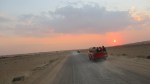
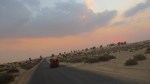
Today (Thursday) we went for the first out of two early shifts. Leaving base before sunrise, we very much enjoyed the 90 min walk along the river watching the sun come up and slowly dissolving the mist. For the first time during this week the sky was clear blue and the sun pushed the temperature up and over thirty degrees. Keep your fingers crossed that we won’t get any more rain!

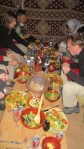
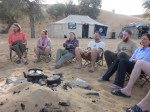
We celebrated Neil’s birthday on Wednesday evening. Talia prepared a delicious homemade cake, which was presented after dinner. Thank you, Talia, for doing so, and thank you, Neil, for sharing it with us!

Thailand: Training

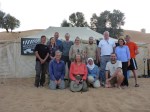
Everyone arrived safely at base today. Our team of ten citizen scientists from Brazil, Germany, the UK and US moved into their homes after lunch. Today was full-on introduction and training, stuffed with information before we go out tomorrow (Tuesday) morning for a practical data collection training walk.

Thailand: Ready to roll

I arrived at our base camp village of Ban Naklang on Saturday. Kerri, the founder of our partner organisation, and I had a meal at one of the homestay houses and continued to work on preparations, finalising the day-to-day schedule. Sunny weather was interrupted by heavy rain showers on Saturday and Sunday, but the weather forecast in predicting improving wheather conditions.

You will be picked up by Talia, our expedition scientist, tomorrow morning (Monday) at 8:00 at the Imperial Mae Ping Hotel, and Kerri and I look forward to meeting you at base.

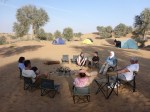
I leave you with a few impressions from base and our jungle office, now all ready for your arrival…

Thailand: Preparations in Chiang Mai

I arrived in Chiang Mai on Thursday morning welcomed by sunny weather and temperatures around 30 C. I spent the day running around the old town doing some last minute shopping, passing food and other markets, enjoying the smells of Thai food prepared on the streets, as well as the cornucopia of strange-looking fruit, vegetables and flowers laid out on the tables.

The weather forecast says that the temperatures won’t change much over the next week or so, but there is a 50% chance of rain on the first couple of days of the expedition.

Kerri & Thalia, founders of Kindred Spirit Elephant Sanctuary (our partner organisation on the ground) and I are also finalising the work schedule. Each day will include a walk of about 60 – 90 min to get to where the elephants are , as well as three hours of observation and data recording, interrupted by a one hour break. Please be prepared that the walk will include river crossings, some of them waist-high as Kerri told me this morning. So please make yourselves comfortable with the tought that you won’t be able to keep your shoes & trousers dry throughout the surveys. You might also want to consider bringing walking poles if you’re not comfortable enough with using the bamboo sticks that will be provided at base.

I will leave Chiang Mai tomorrow morning. You’ll hear from me again once I have arrived at the village. I shall then also let you have my local (emergency) phone number. Until then please e-mail the office in case of emergency or if need to get in touch.

I’ll leave you with some impressions of Chiang Mai…

Thailand: Getting ready

Hello everyone, my name is Malika and I am going to be your expedition leader on this year’s elephant conservation project in Thailand. It’ll be our second year of collecting activity, social behaviour and other data by following the study objects around in the forest – and I can’t wait to get started.

I was busy with packing and preparing the equipment, paperwork, etc. and will start my journey from Europe to Chiang Mai today. Not much more to say for now; I’ll let you have the latest infos once I’ve arrived on the ground as well as my local (emergency) phone number. I hope your preparations are going well and you are all as excited as I am to get going. I hope you have all read last year’s expedition report as part of your preparations. If not, I suggest you download this now for some light reading on your flight. It’ll help you with training and being an effective citizen scientist.

See you all soon…

Malika Fettak
Expedition leader

P.S. I have also added some videos below so that you know what’s coming


Update from our conservation holiday protecting leatherback and other sea turtles on the Caribbean coast of Costa Rica

Here’s a first report of the season by our expedition scientist Fabian Carrasco:

Fabian Carrasco

The leatherback season started on 26 February with the first nesting female. Unfortunately she was poached. Later we had a nest in situ on 1  March. Her tracks were hidden by the waves in a couple of hours and the eggs remained safe from poachers. Our patrols with local assistants and international research assistants have started and in the past 43 days we have recorded 52 successful nesting activities:

* 1 natural nest (in situ)

* 25 nest relocated in Styrofoam coolers

* 9 nest relocated higher up the beach between markers 95-104

* 19 poached nests

* 1 nest saved by the Coast Guard and Police O.I.J.

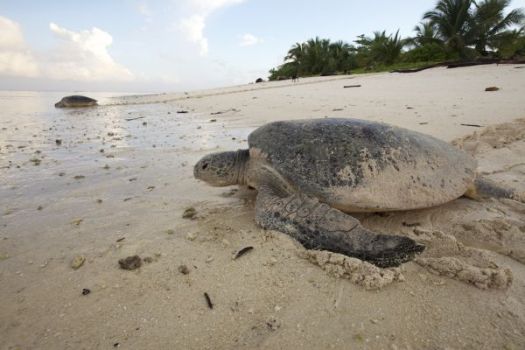
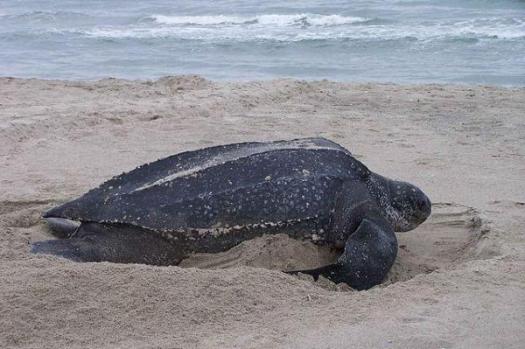
Among the nests relocated in styrofoam coolers is one of green turtle (from 2 April). The others nests are from leatherbacks. No hawksbill have been seen yet.

The fist hatchlings are due between 1 and 8 May at marker 79.

Green turtle returning to sea after nesting
Leatherback turtle returning to sea after nesting

Update from our conservation holiday protecting leatherback and other sea turtles on the Caribbean coast of Costa Rica

Welcome to the Costa Rica 2017 expedition diary! My name is Ida Vincent and I will be your expedition leader. This will be my second year on this expedition and I look forward to being back at the Pacuare field station and working together with Latin America Sea Turtles (LAST).

Ida

The field station is located just behind the beach where the turtles nest and during our time in Pacuare we will work closely with the onsite biologist from LAST, Fabian Carrasco, who will be training us in sea turtle monitoring. Lucy Marcus, expedition leader in training, will be assisting me throughout the expedition and we all look forward to meeting you on 8 May.

Lucy

Lucy and I will already be in Pacuare helping to prepare the field station for you arrival, however, Nicki Wheeler from LAST will be meeting you at 09.00 in the lobby of Hotel Santo Tomas. Make sure to be on time as our first night of patrols starts that very evening and there is a lot to learn prior.

Have another look through your dossier and check your packing list, remember that your head lamp needs to have a red light mode.

Hopefully you will all have read the 2016 expedition report too, so you already know why we are there and do what we do. As you can read in the report, support from citizen scientists such as you is critical, so thank you for your support and see you in a couple of weeks!

Ida

Update from our Arabian desert expedition / working holiday volunteering with oryx and wildcats in the United Arab Emirates (www.biosphere-expeditions.org/arabia)

Citizen scientists help for the sixth year in the Dubai Desert Conservation Reserve

Biosphere Expeditions, the international award-winning non-profit conservation organisation, has just finished its sixth annual survey expedition in the wildlife haven of the Dubai Desert Conservation Reserve (DDCR).

Seventeen citizen scientists and conservation professionals from nine nations in Europe, Africa, North America and the Middle East joined forces to survey the biodiversity of the sand dunes not far from the glittering metropolis of Dubai. Together they counted 31 bird, 11 mammal & reptile, 11 insect and 15 plant species. Amongst them 104 Arabian oryx, 77 Arabian gazelle, 4 sand gazelle, 140 palm trees, 843 ghaf trees, 28 acacia, 12 Sodom’s apples and a whopping 8,000 or so broom bushes.

Greg Simkins, Conservation Manager of the DDCR, says: “The annual survey with Biosphere Expeditions this year was the most productive we’ve ever had. This joint effort by people from across the globe is important for us. The data that the citizen scientists collect help us to manage the reserve more effectively. For example, by adjusting oryx feed or working out how many gazelles the reserve can support. And on top of this it is both rewarding and humbling to have so much interest and support from so many places around our planet.”

Expedition leader Dr. Matthias Hammer, who is also the founder and executive director of Biosphere Expeditions, adds: “We have wildlife conservation projects all over the world. This one really stands out because of our excellent working relationship with the DCCR. It is a pleasure to work with Greg and to see how our survey efforts translate into direct and immediate conservation and management solutions.”

The United Arab Emirates, and Dubai in particular, are well known for its rapid development over the past 50 years as well as for mega-construction projects such as the Palm Islands and the Burj Khalifa (the world’s tallest building). Less well known is the diversity and beauty of the natural environment, from the dugongs and corals in the Arabian Sea to the serene splendour of the sandy dune inland desert. Also little known is that the largest piece of land given to any single project in Dubai was for the establishment of the DDCR in 200; at 225 km², 4.7% of Dubai’s total land area, and the expedition’s study site.

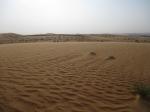
“Stepping into the DDCR is like stepping back in time”, says expedition participant Tessa Merrie. “You see the Dubai desert as it must have been before lots of camels and guns killed off the native wildlife. You can see oryx standing majestically on the dunes and gazelles flitting across the sands. It was also a joy to live out in the desert for a week in a beautiful ghaf tree grove, surrounded by rose-coloured sand dunes.”

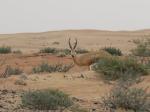
The Arabian oryx is the largest of the antelopes in the region and it is very well adapted to the extremely arid environment. Oryx once roamed all across Arabia, but the advent of firearms saw their rapid decline. The Arabian oryx is classified as “Endangered” on the IUCN Red List. Re-introduced into the DDCR in 1999, the population has steadily grown from the original 100 individuals to over 400 today. For the next phase of the oryx project, local scientists need a greater understanding of how oryx fit into the DDCR’s natural environment, which habitats and plants they prefer, what the social structure of the herd is and how this is affected by the environment. “This can only be achieved through monitoring, for which Biosphere Expeditions provides the manpower”, says Simkins.

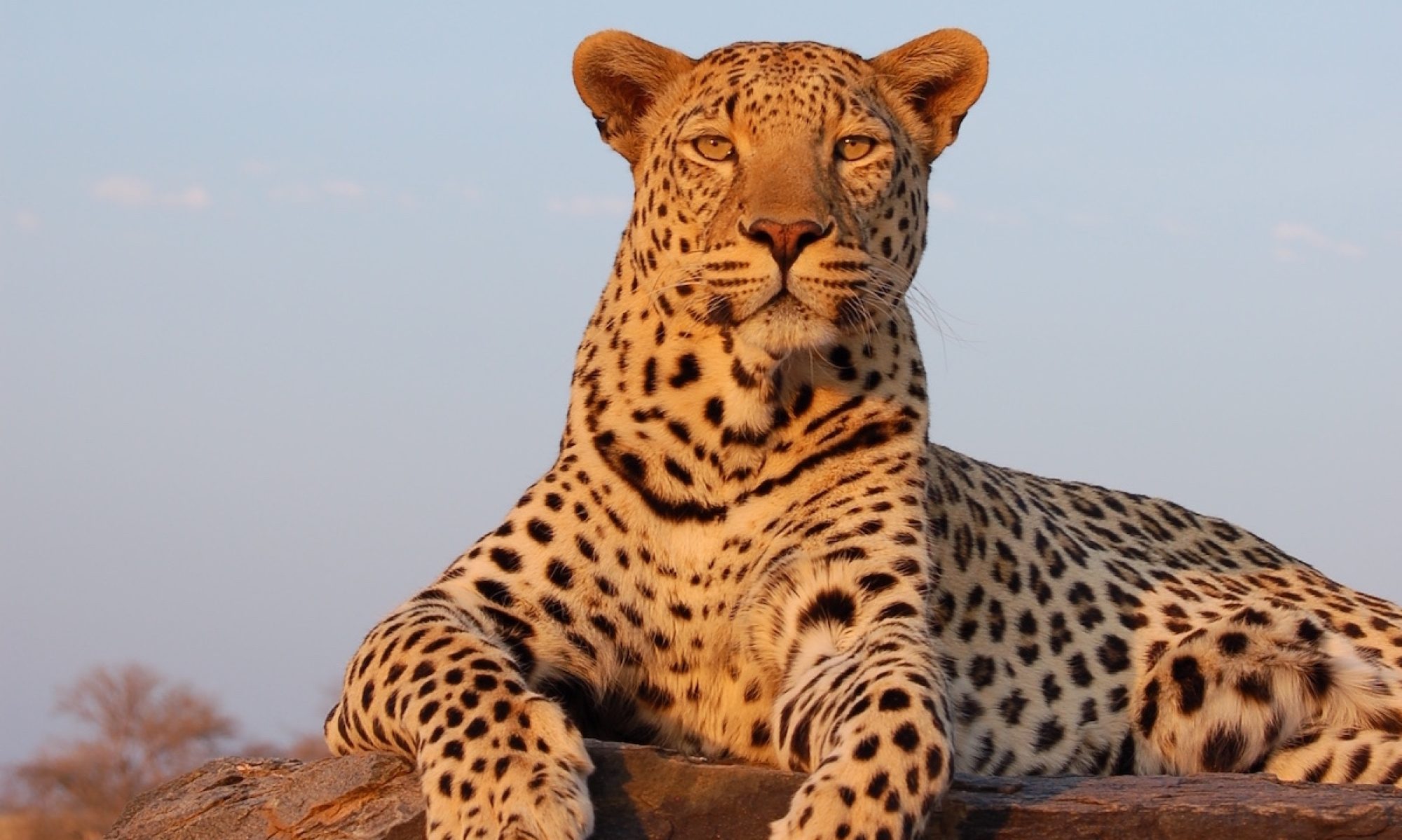
Other species seen by the expedition included a very rare Gordon’s wildcat, as well as Arabian hares and Macqueen’s bustards. There was also an exciting sighting of four short-eared owls, a first for the DDCR. The expedition also surveyed vegetation such as the beautiful ghaf tree.

Biosphere Expeditions is an award-winning not-for-profit conservation organisation, and a member of the IUCN (International Union for the Conservation of Nature) and of the United Nations Environment Programme’s (UNEP) Governing Council & Global Ministerial Environment Forum. Achievements include the creation of protected areas on four continents, scientific and lay publications, as well as capacity-building, training and education all over the world. Biosphere Expeditions conducts citizen science projects in wildlife conservation and research. Citizen science is scientific research conducted, in whole or in part, by amateur or nonprofessional scientists. Formally, citizen science has been defined as “the systematic collection and analysis of data; development of technology; testing of natural phenomena; and the dissemination of these activities by researchers on a primarily a vocational basis.”

A journalist from National Geographic also took part in the expedition, as well as an assessor from the World Tourism Council, as Biosphere Expeditions has been shortlisted for the very prestigious “Tourism for Tomorrow” Award.

The 2017 expedition was kindly supported by Al Maha Desert Resort & Spa, as well as Platinum Heritage Luxury Tours & Safaris. The next annual expedition will run from 20 – 27 January 2018 and “anyone is welcome to join”, says Dr. Hammer. “The more citizen scientist we have helping us, the more we can achieve”, concludes Simkins.

More information about the expedition can be found on www.biosphere-expeditions.org/arabia.


Continue reading “Update from our Arabian desert expedition / working holiday volunteering with oryx and wildcats in the United Arab Emirates (www.biosphere-expeditions.org/arabia)”
Update from our Arabian desert expedition / working holiday volunteering with oryx and wildcats in the United Arab Emirates (www.biosphere-expeditions.org/arabia)

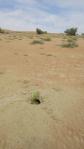
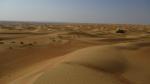
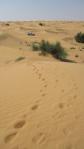
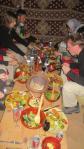
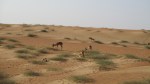
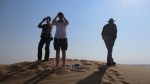
Here’s a selection of images of the expedition:

Continue reading “Update from our Arabian desert expedition / working holiday volunteering with oryx and wildcats in the United Arab Emirates (www.biosphere-expeditions.org/arabia)”

Update from our Arabian desert expedition / working holiday volunteering with oryx and wildcats in the United Arab Emirates (www.biosphere-expeditions.org/arabia)

So the expedition is over. Our scientist Greg summarised the results for us this morning.

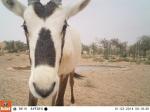
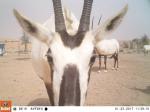
We found 168 known fox dens and discovered 19 new ones. On our circular observations we counted 104 oryx, 77 Arabian gazelle, 4 sand gazelle, 140 palm trees, 843 ghaf trees, 28 acacia, 12 Sodom’s apples and a whopping 8000 or so broom bushes. The random observations yielded 31 bird, 11 mammal & reptile, 11 insect and 15 plant species. The 18 camera traps took 16247 (!) pictures, 13000 from one camera photographing moving tree branches or something similarly exciting :), but also of course a variety of species.

This slideshow requires JavaScript.

Our live trapping was unsuccessful this year, but if you don’t try, you don’t get. Who knows when we will get the next sand fox or Gordon’s wildcat. We’ll keep at it.

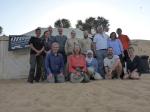
So all that remains is for me to thank the team again for all its efforts. Thank you Jörn, Karin, Jörg, Sigi, Kathie, Albert, Jim, Martina, Yvonne, Samar & Laura. You could have gone to the beach for your holiday, but you chose to help Greg here in his beautiful office. I take my hat off to you for this and I hope you will come and join us again. Thank you Amadeus & Tessa for being the kind of staff that makes Biosphere Expeditions what it is. And thank you Al Maha and Platinum Heritage for your support. And thank you Greg for letting us share your office and vision.

Farewell everyone, safe travels home and I hope to see you again someday, somewhere on this beautiful planet of ours.

Matthias

Continue reading “Update from our Arabian desert expedition / working holiday volunteering with oryx and wildcats in the United Arab Emirates (www.biosphere-expeditions.org/arabia)”