Award-winning, non-profit and ethical wildlife conservation volunteering. Advancing citizen science and conservation since 1999 – for nature, not profit.
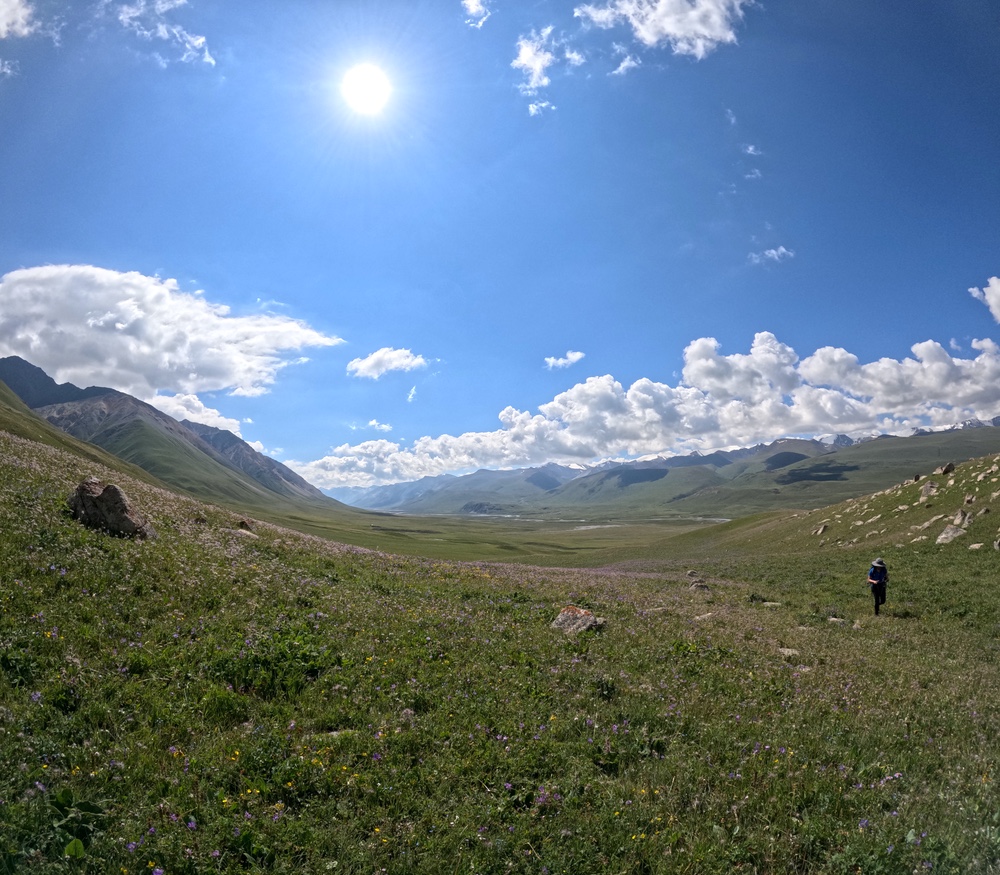
Bishkek is hot, dry, sweaty, noisy and oh so Central Asia. On a clear day the views of the mountains are beautiful.
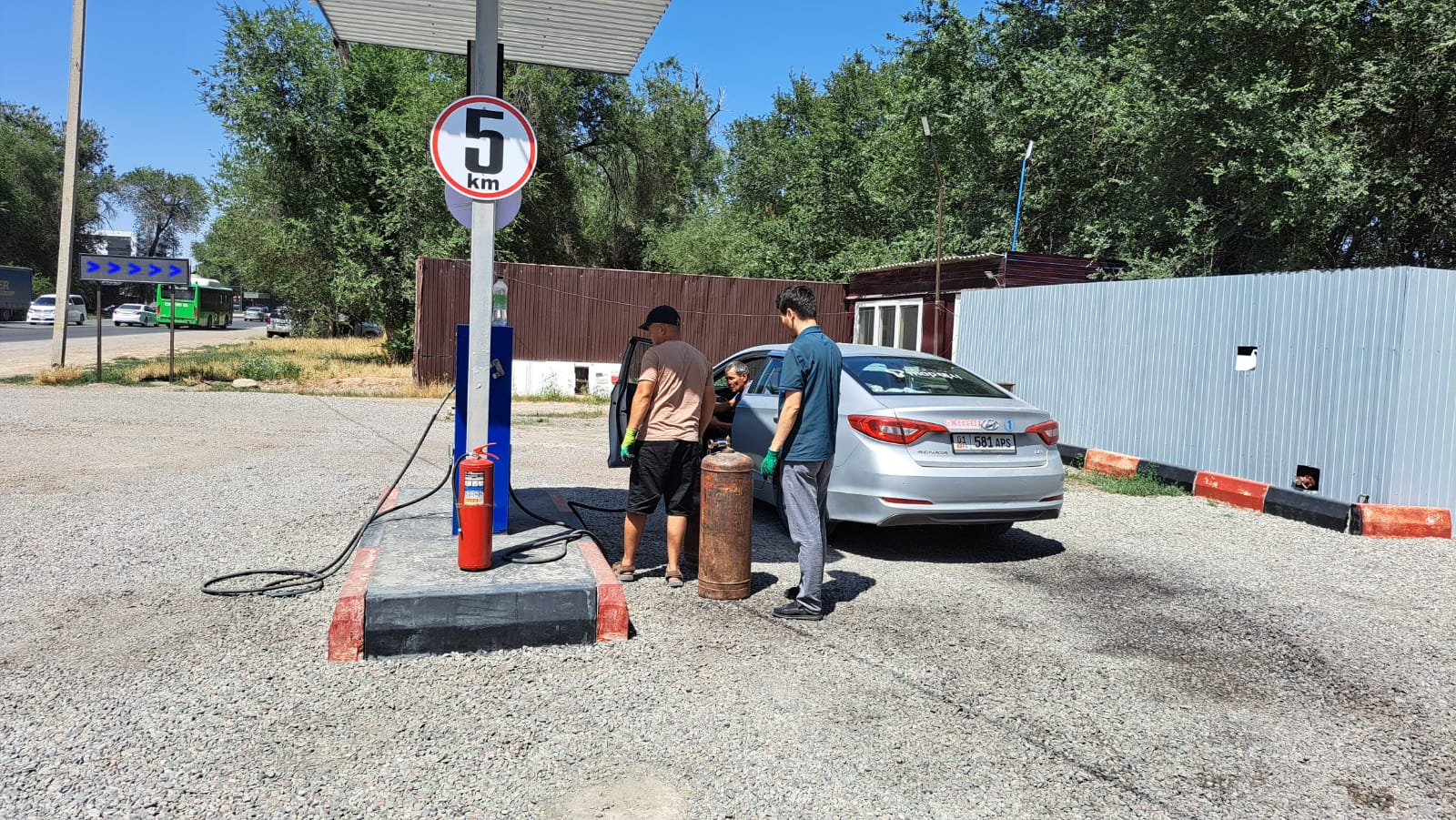
We’re shopping, meeting, talking with partners, doing paperwork, printing out datasheets, filling gas bottles, withdrawing cash, charging up and testing radios, sat phones and GPSs, and doing all the umpteen things that need to be done before an expedition can head out into the field. We have a few days of this still ahead of us until we can head into the mountains on Wednesday to set up base camp for you.
A couple of household points for the team:
There is a Globus supermarket a few minutes walk away from the Futuro assembly point hotel. It is open 24/7, takes cards and has lots of drinks and sweets and more. There will be plenty of food, tea, water and coffee at base, but no shops anywhere around. If you simply must have a can of lager in the evening or are addicted to Mars bars or similar, we recommend you stock up there before assembly (don’t be late tough!). Good luck with reading the labels 😉 Remember we are at base and away from shops for 12 nights.
I hope you have swatted up on the 2024 report, field guide and dossier. If you want to be ahead of the curve (the first two days of training will be tough, with lots of information thrown at you), then have a look at all the documents here, which I suggest you read at some stage or on your flight to come extra well prepared.
Welcome to the 2025 Tien Shan snow leopard expedition diary. I am Matthias Hammer, expedition leader for group 1 and the founder & executive director of Biosphere Expeditions. I am already in Bishkek, where it is hot and stifling (35 C yesterday). It will be different in the mountains – cooler and fresher.
The expedition scientist, Emil, and I have a week to prepare, go shopping, put things in place etc. before two more staff and expedition leaders – Jonny and Darran – arrive from the UK and Ireland respectively and we move out and set up base camp for you, before it all starts.
Matthias (left) and Emil
So this is just to let you know that things are proceeding as planned despite various crises around the world, and that we look forward to meeting you in due course.
At your end, please study your dossier as well as the 2024 report to make sure you come prepared. I hope you are getting excited and that your preparations are going well. I’ll be in touch again before we set up and once we’re back from setup.
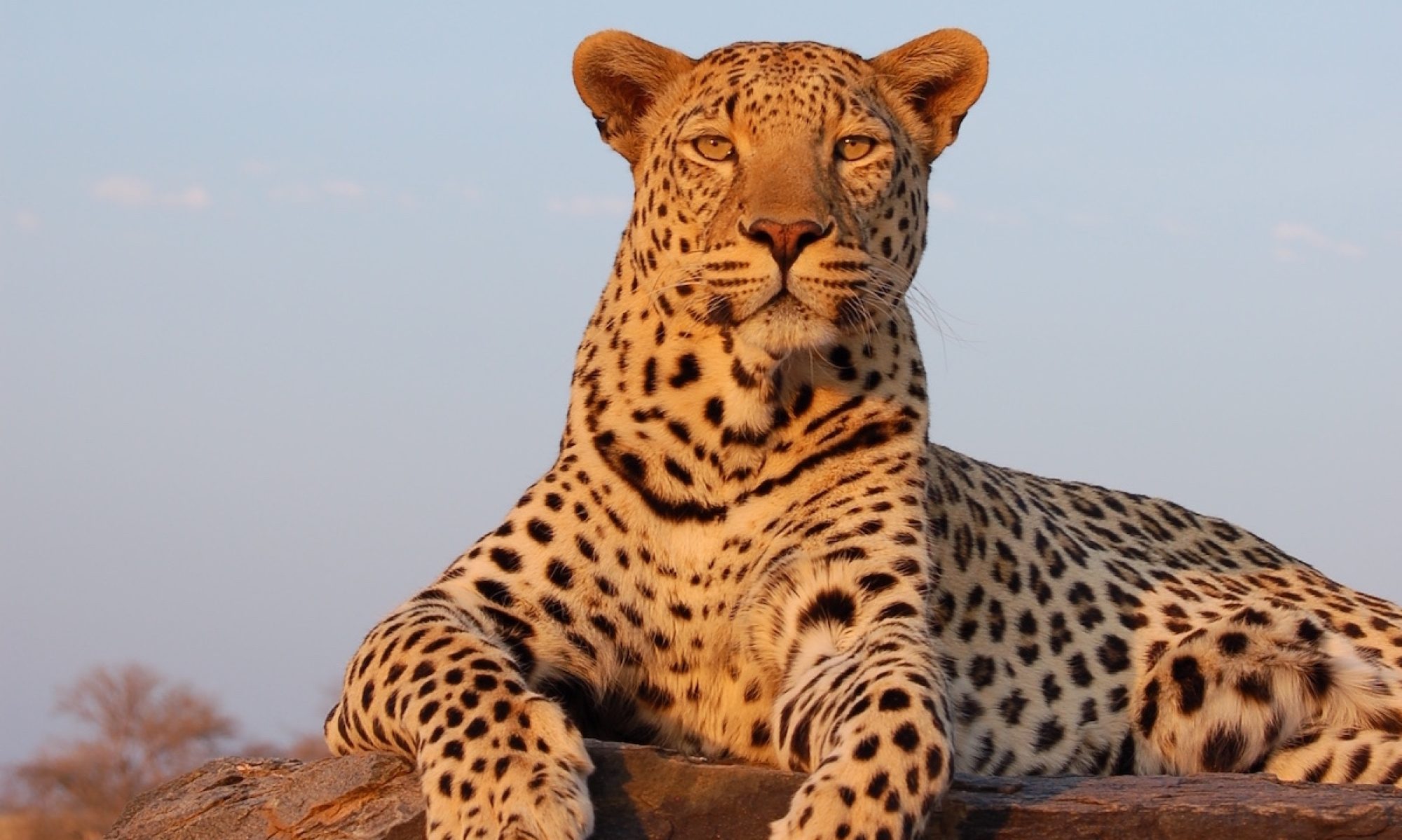
The snow leopard – perhaps the most iconic flagship species of them all – is listed as Vulnerable on the IUCN Red List because there are probably fewer than 10,000 adults left in the wild. Living in the high mountains of eastern Afghanistan, the Himalayas and the Tibetan Plateau to southern Siberia, Mongolia and western China, they are threatened by poaching, habitat destruction and climate breakdown. Helping in their conservation are organisations such as Biosphere Expeditions, who has worked in snow leopard conservation for over 20 years, making it one of the longest-running research projects on snow leopards ever conducted. Citizen science is key to this success story.
“We can only do this, because our citizen scientists from all over the world have provided a steady source of labour and funding”, says Dr. Matthias Hammer, founder and executive director of Biosphere Expeditions, the award-winning non-profit, which celebrated its 25th anniversary in 2024. “It works because these intrepid people are prepared to travel to remote places and help with research such as tracking, camera trapping, biodiversity surveys and more – tasks that can be taught in a day or two – but which provide valuable data for our professional scientists”, continues Hammer. “And they fund the research expeditions through their expedition contributions. So everyone wins: The scientists get data, the citizen scientist a unique and useful experience, and the animals get protected”.
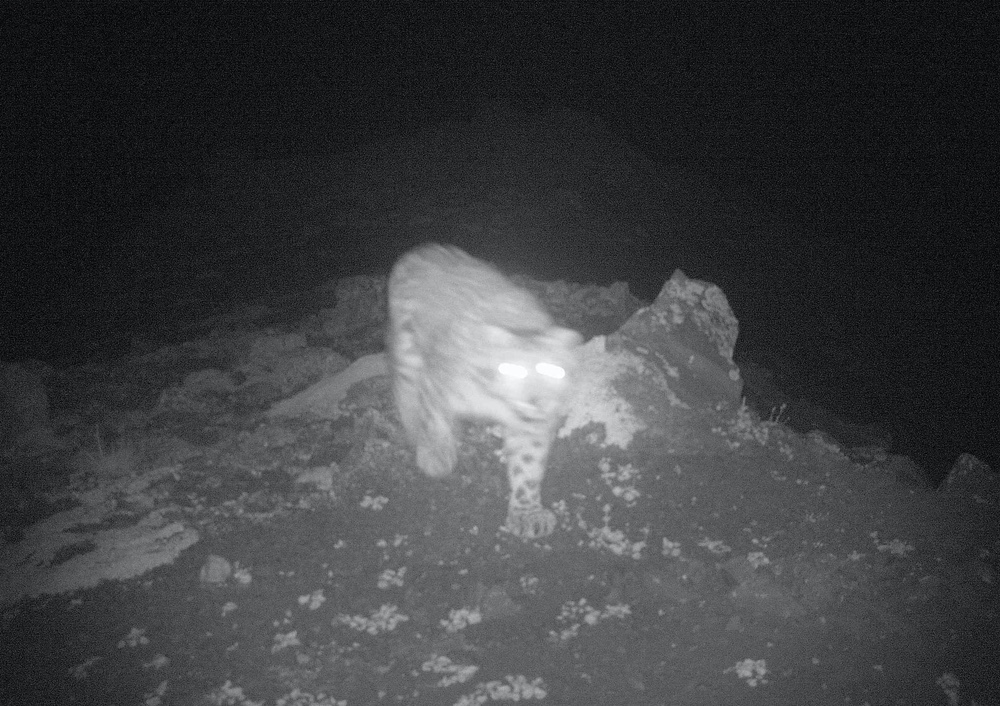
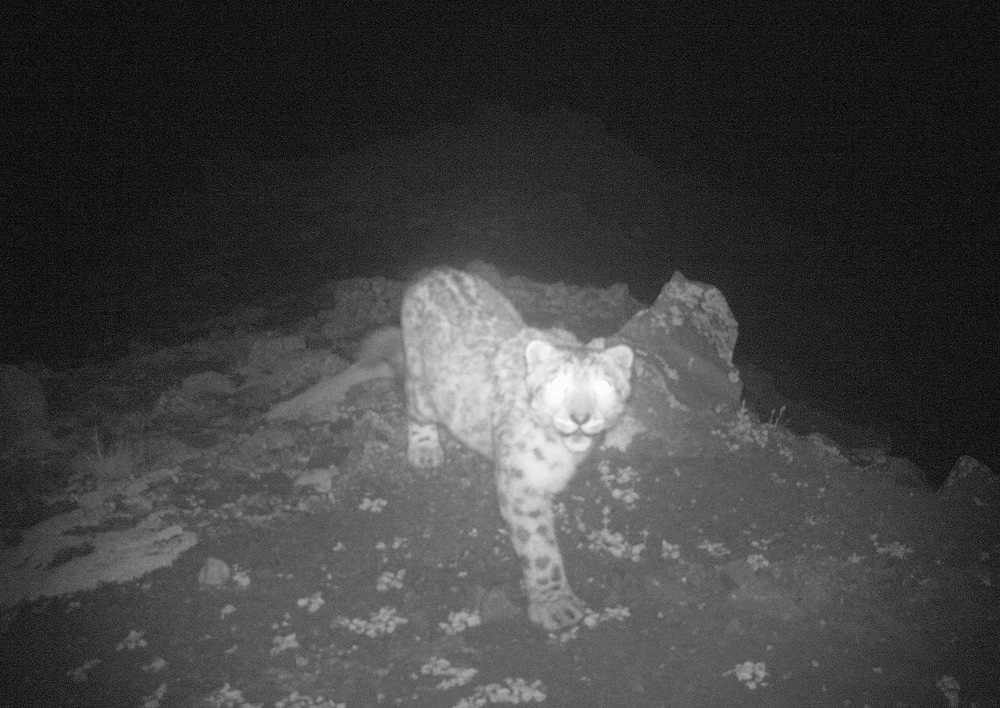
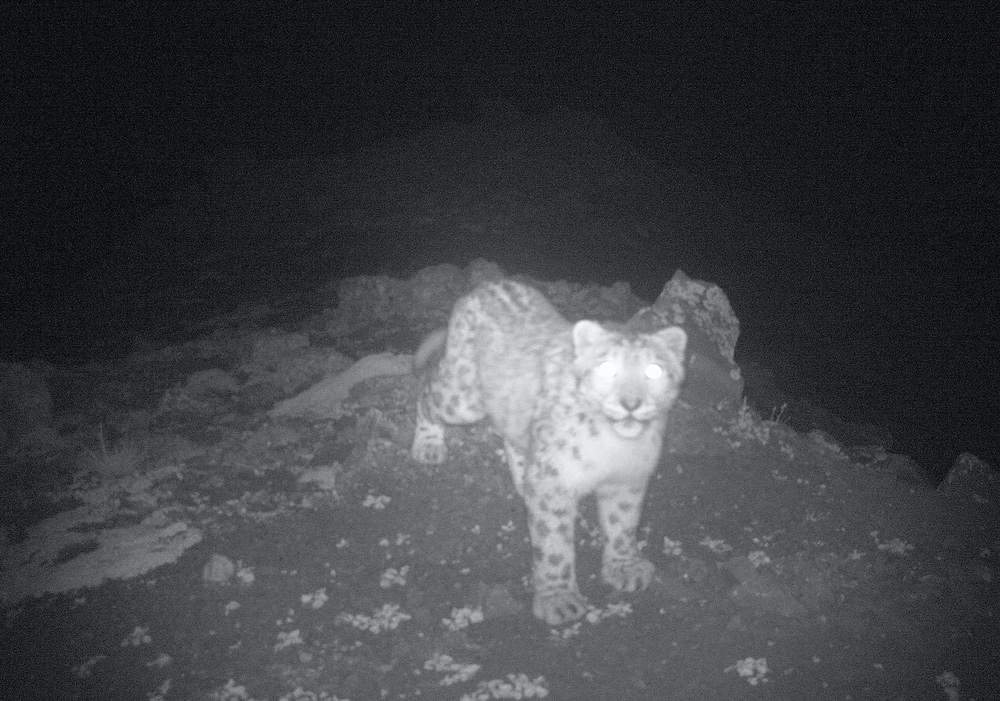
The snow leopard expeditions are a case in point: Initially, expeditions were based in the Altai mountain range in Russia from 2003 to 2011, where they utilised sign rates and sightings for species recordings to confirm snow leopard presence, which contributed to the establishment of Saylyugemsky National Park. From 2014 onwards, when the national park in the Altai was well on its way, expeditions moved to Kyrgyzstan: First the Karakol valley and lately in the Burkhan & Archaly valleys, all in the Tien Shan mountain range. There, as the 2024 expedition report details, snow leopards were recorded multiple times by camera trapping, track identification and DNA analysis of snow leopard droppings. Analysis of the camera trap photos showed that two, perhaps three snow leopards of unknown sex populate the Burkhan & Archaly valleys, which fits well with home ranges published by other studies. Further expeditions, including in the summer of 2025, will study whether these animals are just moving through or resident. The overall conclusion of the 2024 expedition was clear: The Burkhan & Archaly valleys are significant snow leopard habitat, which could develop into a snow leopard stronghold if the two main threats of game ungulate poaching and significant overgrazing by oversized herds can be tackled.
“So we will return there this summer”, says Emilbek Zholdoshbekov of Ala-Too International University, the young, early-career scientist who has served as the expedition scientist since 2024. He stands in a long line of professional scientists from Russia, Ukraine, Kyrgyzstan, the UK, the USA, Germany and Brazil, who have all contributed to the expeditions, as have over 500 citizen scientists from over 20 countries across the world over the last 22 years.
“Being the expedition scientist is a great honour and a great experience for me, because this is my first time taking part in a serious project of this kind”, continues Zholdoshbekov. “I am so grateful for the help and to have met all these wonderful people coming to Kyrgyzstan to protect one of our national treasures”.
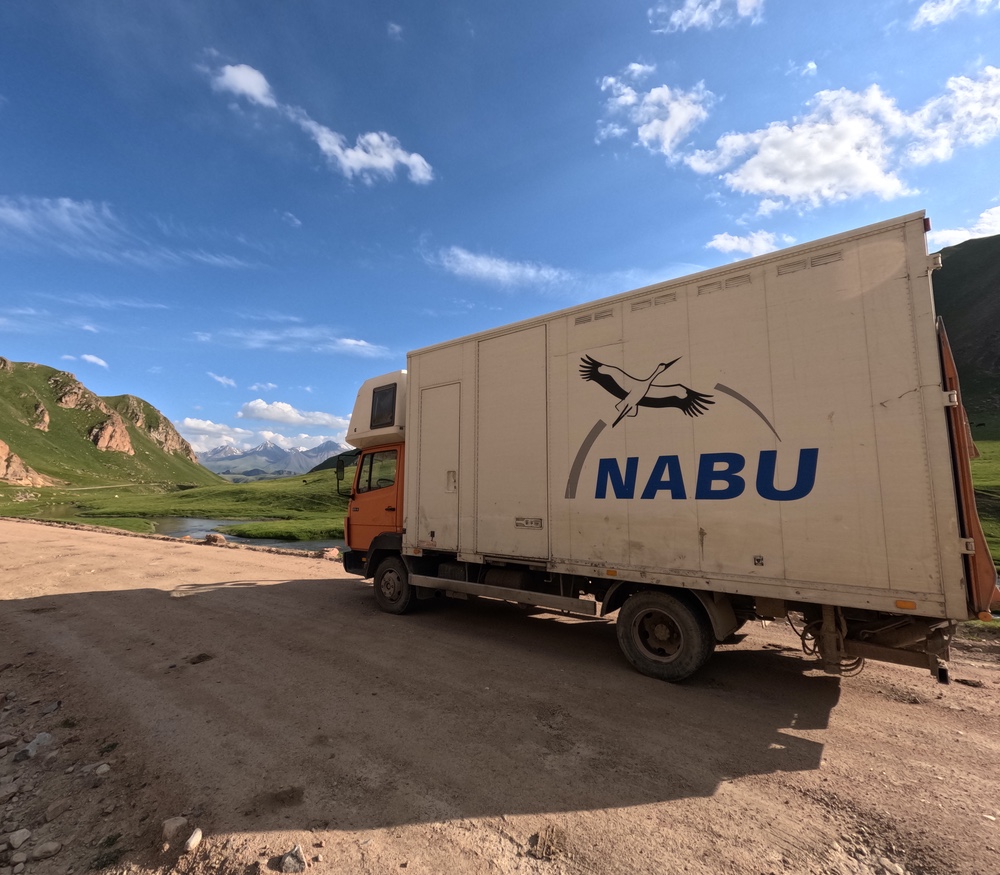
Another long-term partner of the expeditions is NABU Kyrgyzstan, an offshoot of Germany’s largest nature conservation NGO NABU. Both NGOs, NABU and Biosphere Expeditions, have been partners ever since the snow leopard research project moved to Kyrgyzstan, “In fact an invitation by NABU is what led us to Kyrgyzstan after our job in the Altai was done and the environment in Russia became increasingly hostile to expeditions involving foreigners”, says Hammer. “And from day 1 it was a success”, says Tolkunbek Asykulov, head of NABU Kyrgyzstan, “with our snow leopard anti-poaching group bedding the expeditions in and helping them for the last 10 years. It is especially gratifying to see a young, early-career compatriot leading on the science of the expedition now. This is what building capacity should look like, so thank you to Biosphere Expeditions and its many citizen scientists over the years”, Asykulov concludes.
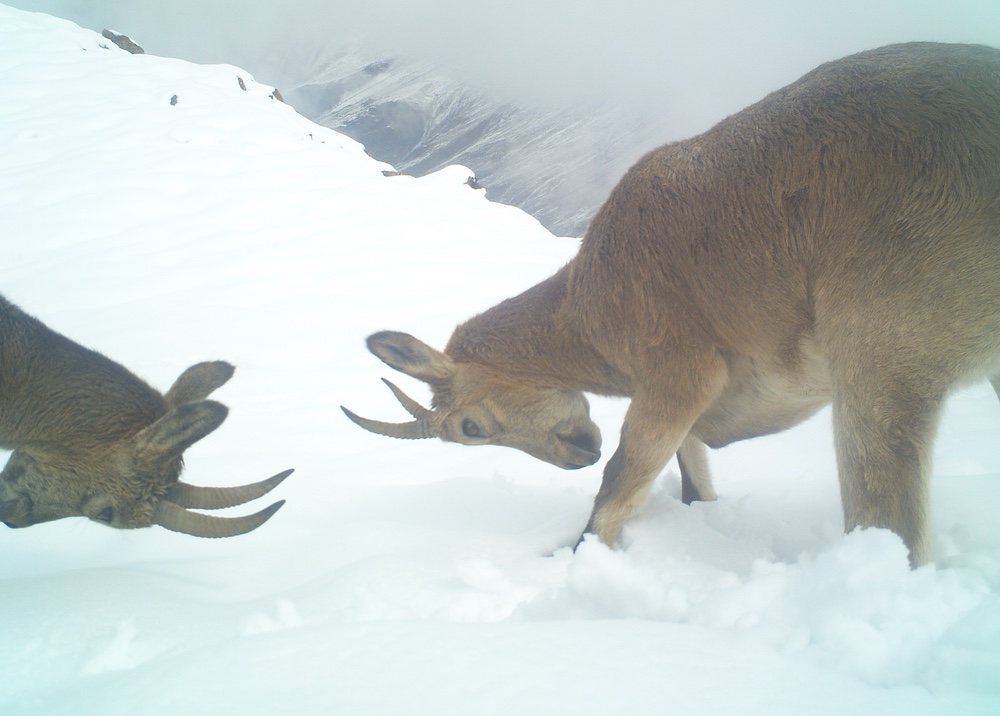
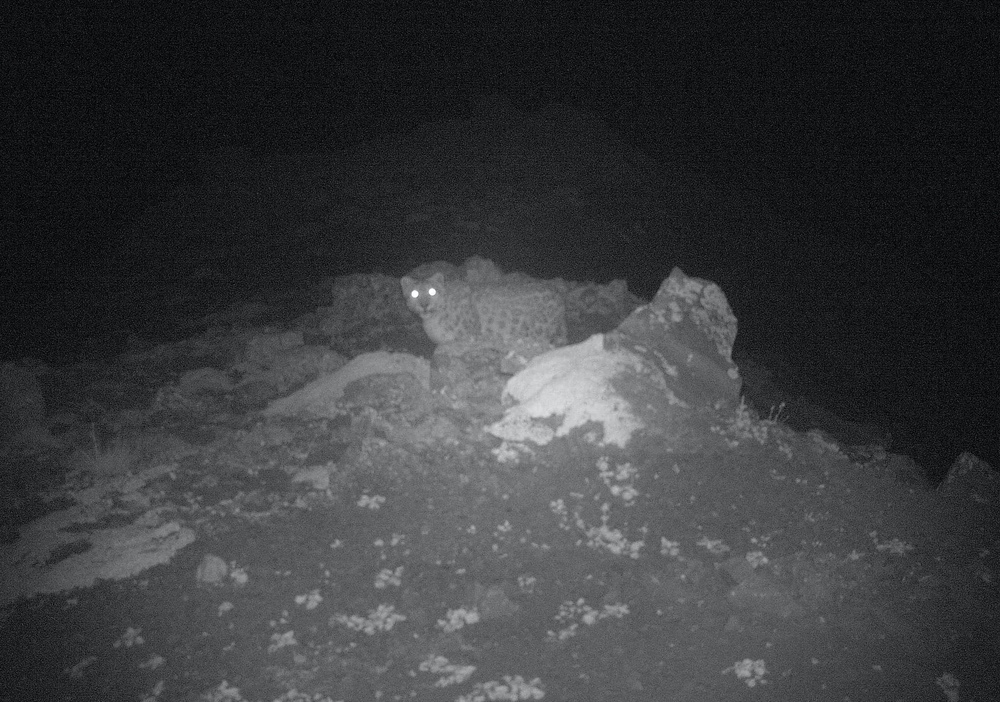
Snow leopard camera trap capture sequence 1 from the 2024 expedition
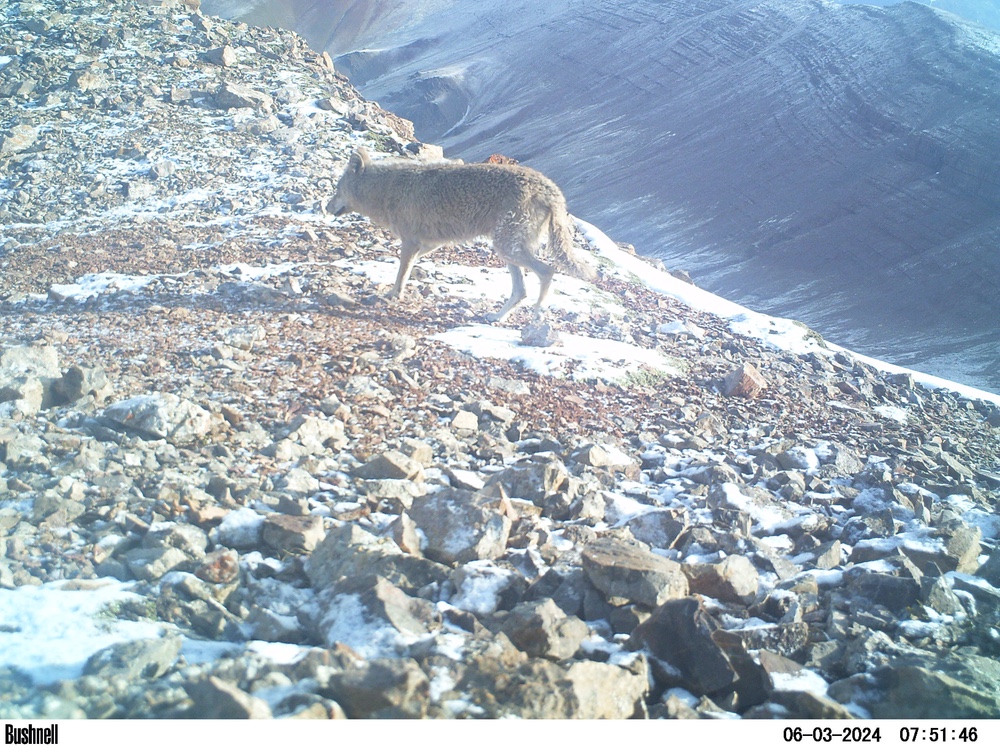
Snow leopard camera trap capture sequence 2 from the 2024 expedition
Feedback from the citizen scientists:
Great mother – daughter trip! First sighting of the Tien Shan mountains took our breath away. Daily treks out to search 2x2km cells for wildlife, who knew identifying marmot and badger scat could be so much fun?! One of the best parts was the wonderful multi-cultural interactions with the other participants and the leaders. Memories that will last a lifetime. Gina and Kerry R, USA
Thank you so much for this great experience. It touched me deeply and I will take so many special memories with me. Entering the high rocky mountains to the “living room” of the snow leopard, the wonderful nature, animals, flowers, the very friendly and hard-working locals, drinking water from a glacier, river crossings and to work with camera traps capturing snow leopards in their natural habitat. What else can one ask for? Tanja M., Germany
No phone network, no distractions, nothing unnecessary and still everything that was needed. Or just what was needed. Nature – mountains, beautiful connections with amazing people and so much good hiking. Time to reflect and reconnect. Thank you Biosphere Expeditions for this experience. Mimi K., Germany
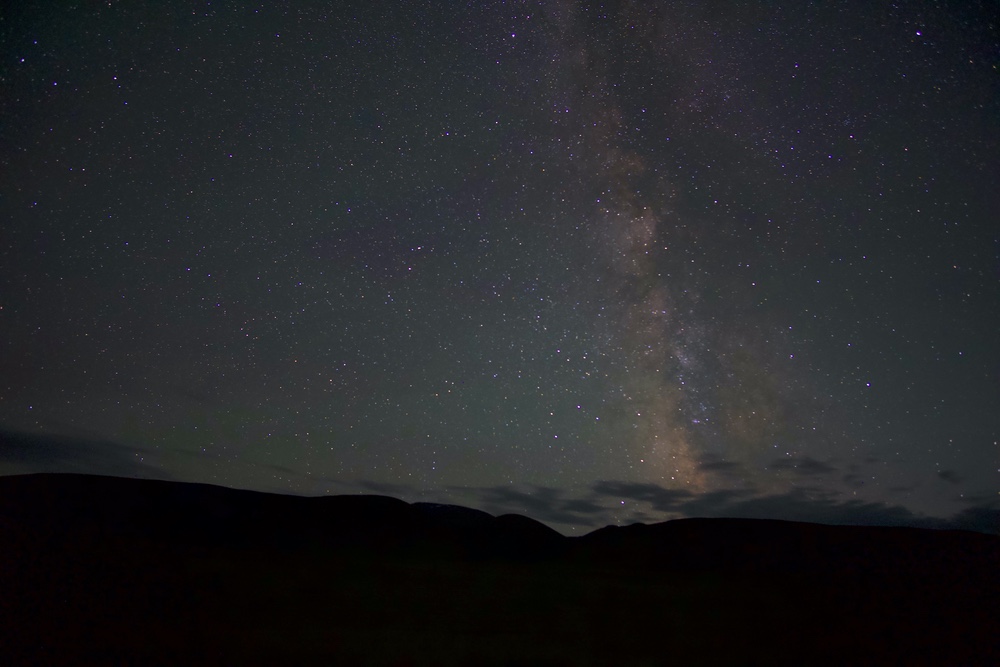
What an amazing experience it has been. Magnificent landscapes, a cool atmosphere, hiking surveys, frontier women on the overnight road-trip to Jyluu-Suu valley, offroad driving across glacial-fed rivers, wildlife sightings, clear night skies and the milky way, scenic toilet spots, delicious food, playing cards with the locals until far too late at night. The long hikes to discover the camera traps left by last year’s expedition members and the excitement when discovering images of snow leopards. I am grateful for a lifetime worth of memories. Seema I., Germany
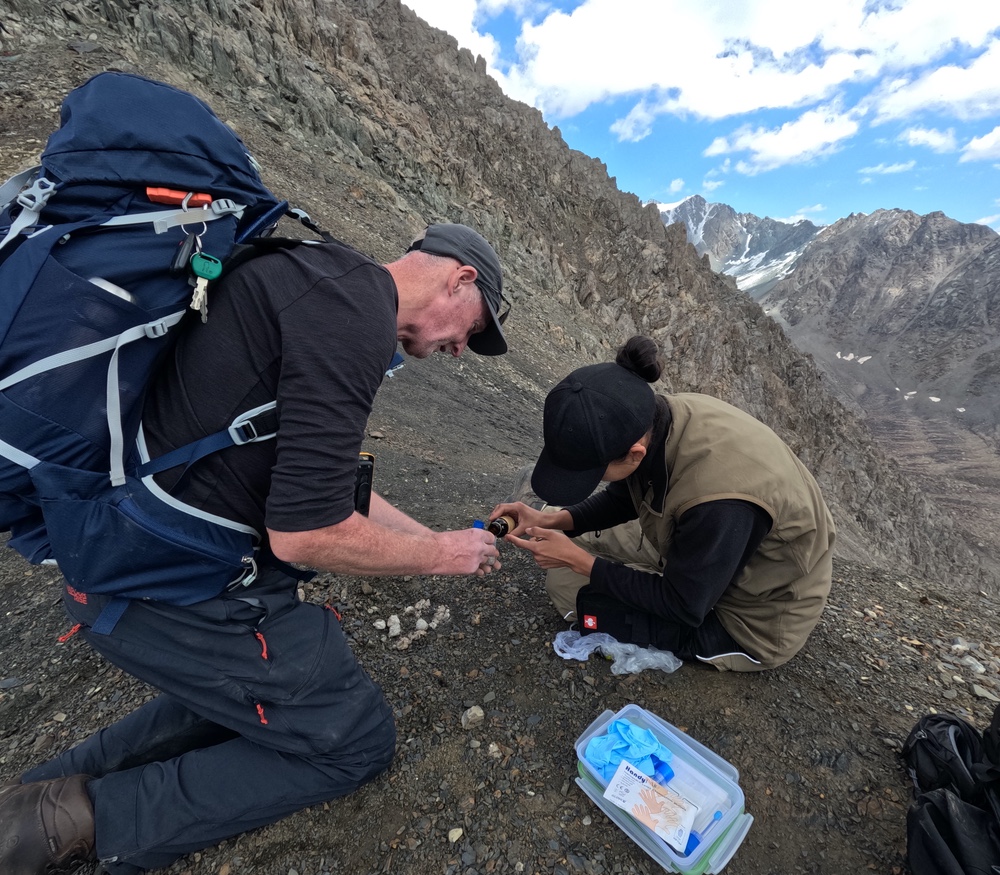
We thought you might be interested in the results of the DNA analysis of the samples you collected into the tubes.
Tubes 10, 12 (CT07), 13 and 14/15 (collected by group 3) are snow leopard.
All other tubes, i.e. all from group 1, as well as tubes 9 and 11 from group 3 are Mongolian wolf. Group 2 did not collect any tubes.
Thank you for your efforts in collecting these and the very useful results they yielded. More details and conclusions will be in the expedition report.
Our third and final Tien Shan group was full of enthusiasm and hard work. There was a real buzz around camp and everyone was motivated to get stuck in.
We have captured snow leopard on our camera traps a total of four times (total of 14 images captured) and sent back 13 scat samples to Germany to be DNA-tested whether they really are from the ghost cat. We have felt their presence and it is hard to imagine that they haven’t observed us from a distance.
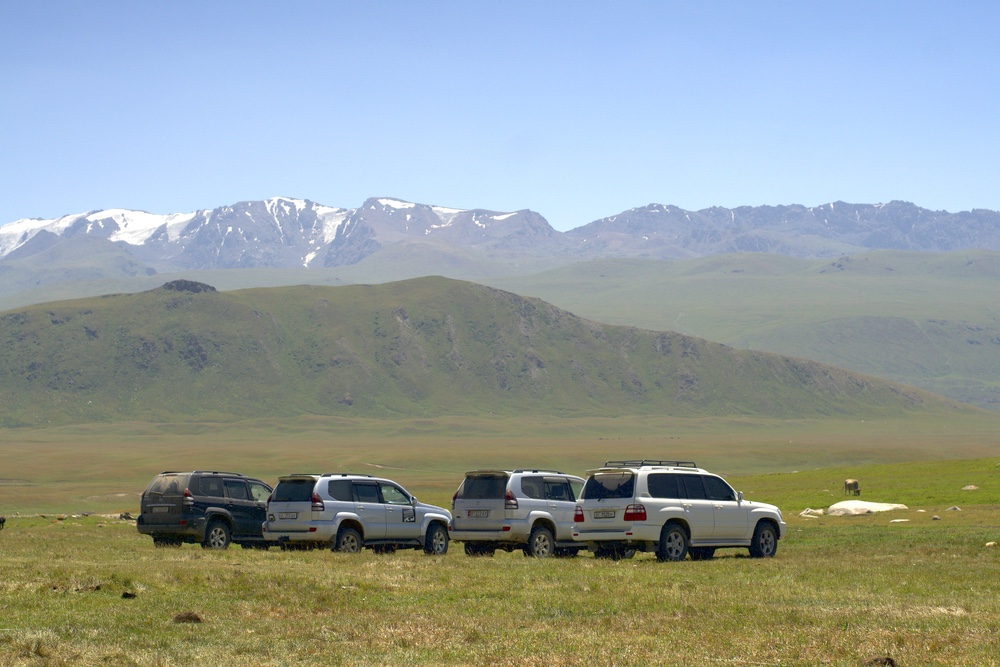
We planned an overnight expedition with two of our 4x4s to the east side of the Jil Suu valley to survey a large swath of prime habitat, but we were stopped in our tracks at the first hurdle: A road that we drove just two weeks ago was now impassable due to heavy rain “redesigning” the numerous river crossings. We returned to basecamp and decided to turn our attention to the east side of the Burkhan valley instead.
Another expedition team spent two days hiking in the mountains with an overnight stay in the Archaly valley to the south of our basecamp. They were able to place camera traps at a promising 4000 m pass and we are excited to see the results next year.
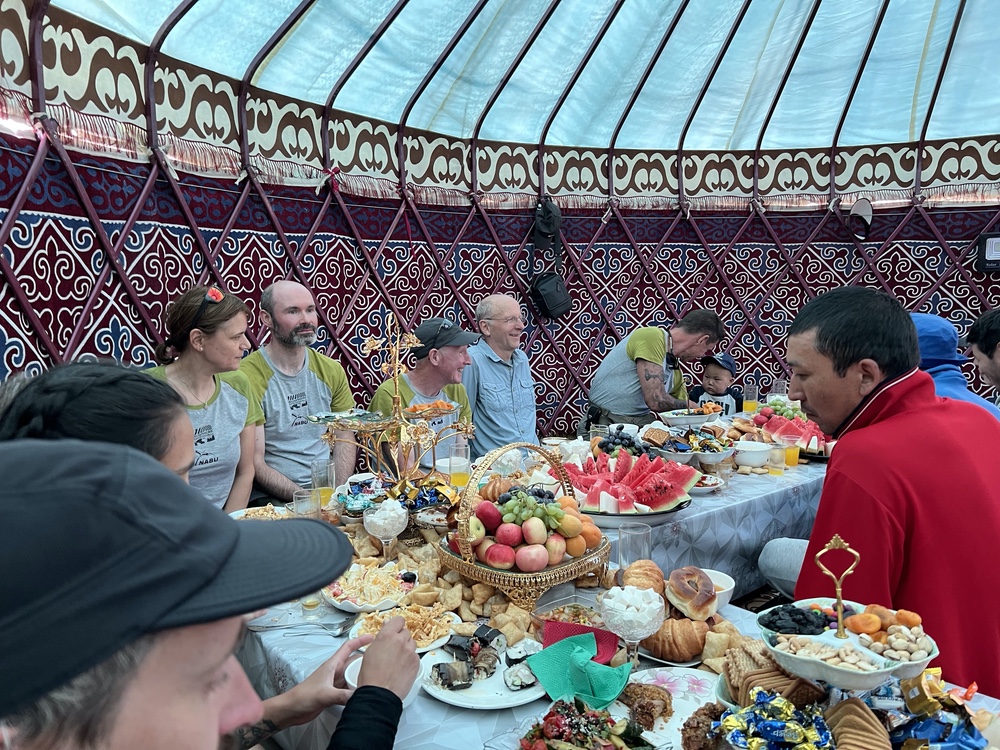
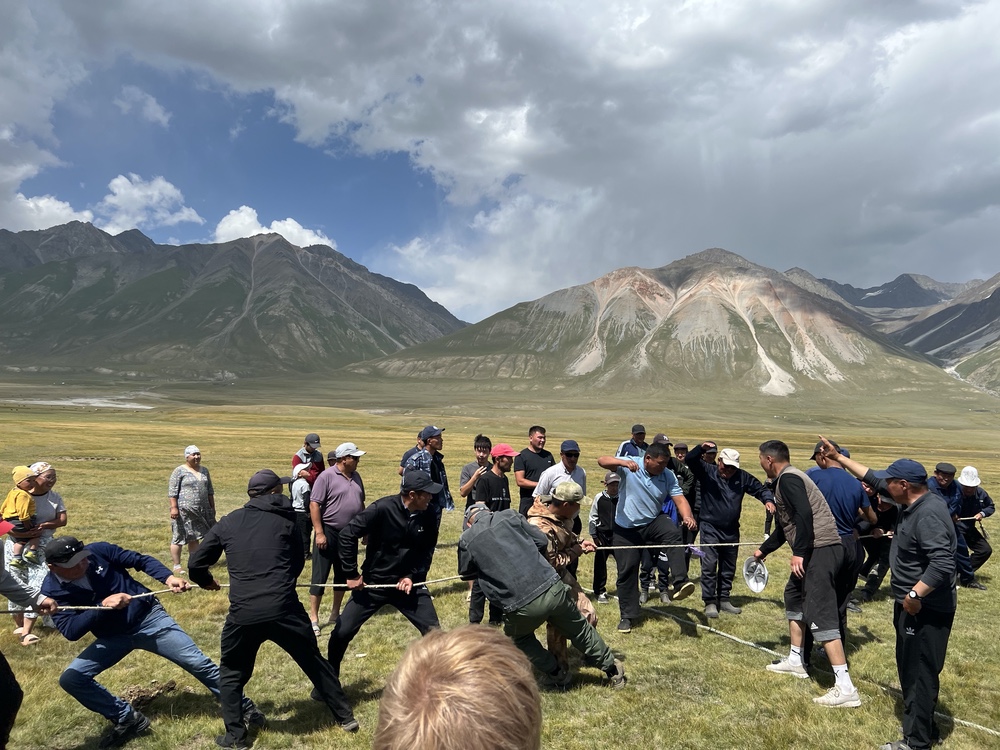
We were invited to join the local shepherds at a type of mid-summer celebration where all families from the same area let their hair down for the day. They had set up yurts with mountains of food and a loudspeaker to dance to Kyrgyz techno music. We were greeted gleefully and invited to talk in front of the more than 100 people that had congregated in the Burkhan valley. The Grupa Bars addressed the crowd and talked about the work we are doing here followed by talks from the expedition leader, expedition scientist and citizen scientists. We expressed our gratitude to our neighbours for their welcoming nature during our stay in the valley and their constant assistance and co-operation.
On our second to last day, we ventured to a ridge line to place camera traps, where we had discovered evidence of snow leopard. On the steep hike up the grass slope we were fortunate to witness a large group of seven to eight ibex walking on the ridgeline far above us, their silhouettes unmistakable against the deep blue Tien Shan sky. As we approached the top of the ridge, we made an effort to limit our noise in case they were still around. Sure enought, there was a small plateau around 150 m below the ridge where there was a group of over 40 ibex resting, the largest group of ibex we have seen on this expedition. We were able to observe them for a few minutes before they were startled by something and fled across the rocky, precipitous hillside out of sight.
The 2024 has been extremely successful and our citizen scientists have collected a huge amount of data. We have surveyed over 130 cells amounting to a total area of 520 square kilometres (!), looking for signs of snow leopards and their prey and assessing biodivrsity. We have placed 17 camera traps in the mountains to capture photos until our return in 2025 and have sent 13 vials of potential snow leopard scat to Germany to be DNA tested. Thank you to everyone involved to make this possible: NABU and the Grupa Bars, our scientist Emil, our local helpers and friends in the study site, in Bishkek and around the world, and most of all our citizen scientists, whose input in labour and funding make this expedition possible in the first place. I take my hat off to you all for doing this. Thank you.
The last two camera traps still out in the field from 2023 are proving elusive. Perhaps they have gone “missing”. Never mind. This happens.
BUT we have an amazing snow leopard photo from another trap from just six days ago. I will share this next weekend when we return from the field to Bishkek with this final group.
Today everyone is heading out on an overnighter to increase our reach as usual.
A couple of days ago we joined a community gathering of over 100 shepherds and gave a talk to them about who we are, what we do here and why. This was a good and successful undertaking.
Group 3 have arrived and are on their way to base camp.
With this group, we will retrieve the last two camera traps still out in the field from 2023, place new ones and check the ones put out in groups 1 & 2, survey more cells, conduct more herder interviews farther afield and hold a community information event at our base camp.
As always, updates from the field will be scant with no up-to-date pictures until changeover. Wish us luck for this final group.
During the final week of group 2, we received a tip from a local herder that he had seen a snow leopard at close range on two separate occasions in the same area. The area was in the same valley that we conducted our group 1 overnight mountain expedition in, so we know the area well.
We arranged to meet with the local herder, so he could show us the location and we could scope out camera trap locations. On the day we were supposed to meet, there was heavy rain and the forecast promised a wet day. Still, Emil and I were unperturbed by the weather and made our way to meet him, but he was suddenly “busy” for the day and unable to show us the location, but gave us some very brief details about the area and some geological features to identify it by.
After about an hour of walking, we were able to identify the area specified, but were surprised as it didn’t seem like classic territory for snow leopards. There were numerous cattle in the area and it was at a relatively low altitude with lots of grass and vegetation. We scoured the area for tracks, scat or scratch marks, but couldn’t find any evidence. We placed two camera traps in the vicinity and will report back, if we record anything interesting during group 3.
Overall, relations with the local community are very good. We have now conducted 16 herder interviews, which pretty much covers the big valley that base camp sits in. During group 3, we will move further afield.
Felt souvenir production for the expeditioners, bread-making and milk production for the expedition and therefore some income generation for the community is in full swing. Our information evening we had to postpone again to group 3, but I am determined that it will happen.
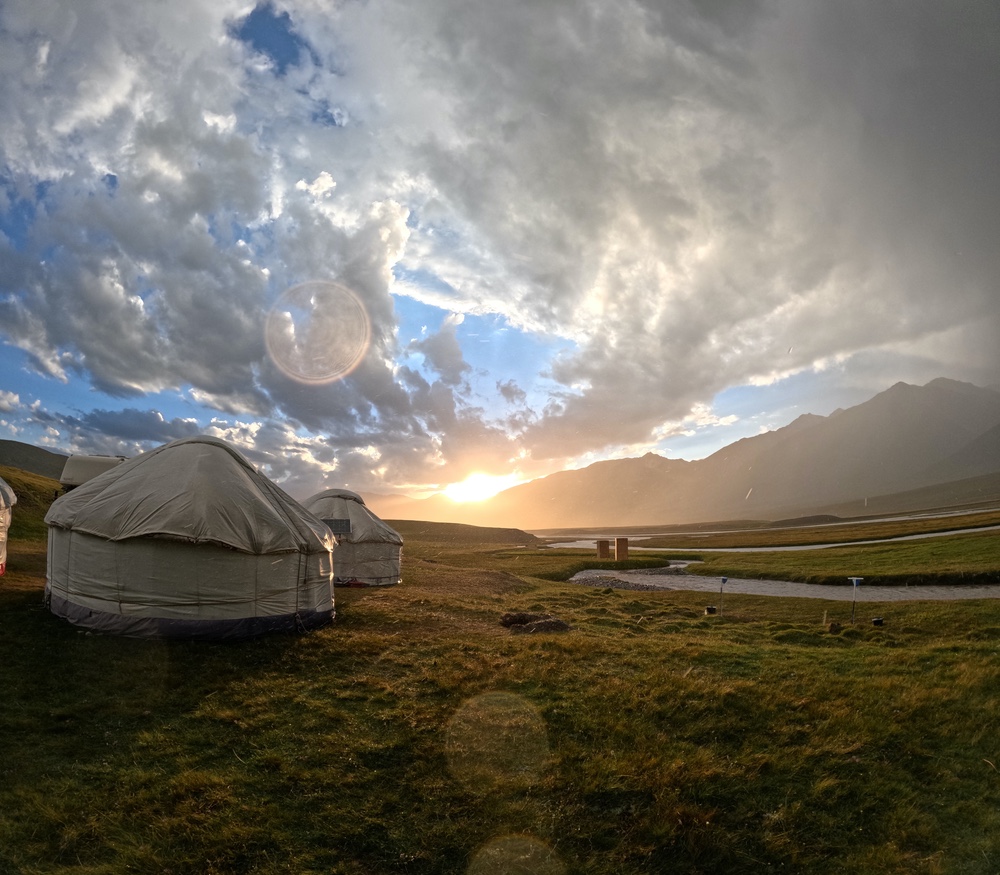
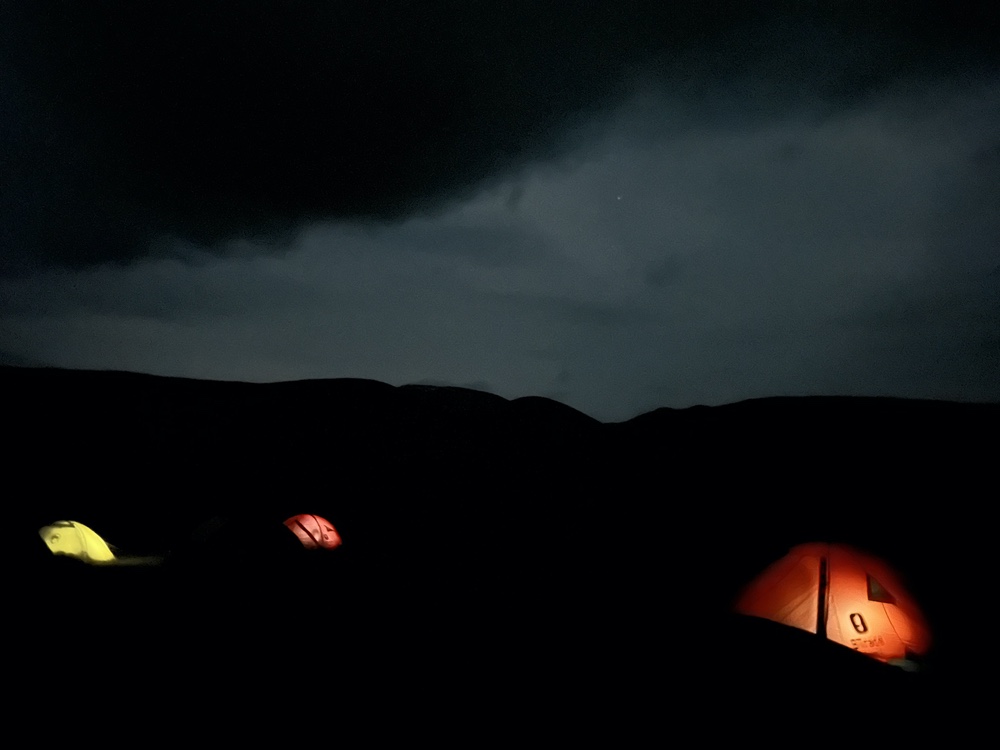
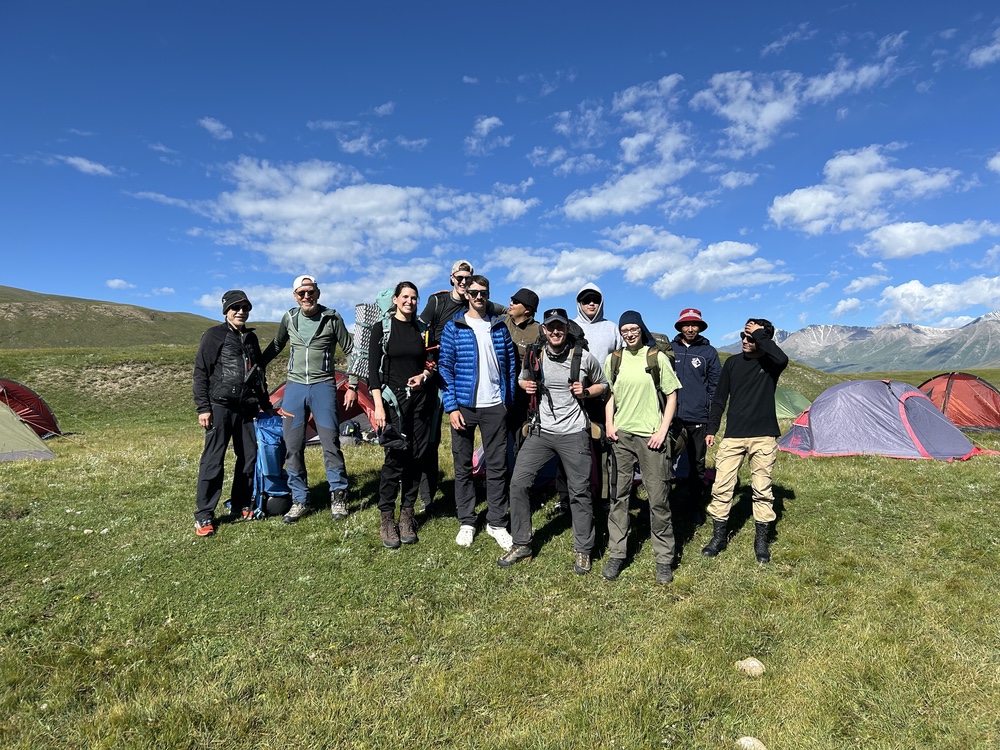
Our second group was an expedition of two distinct halves. The first week was characterised by expansive blue skies with wall-to-wall sunshine. The second week was a different beast altogether, with gloomy skies, rain and thunderstorms almost daily. The weather, however, did nothing to dampen the enthusiasm and motivation to conduct research and get deep into the mountains.
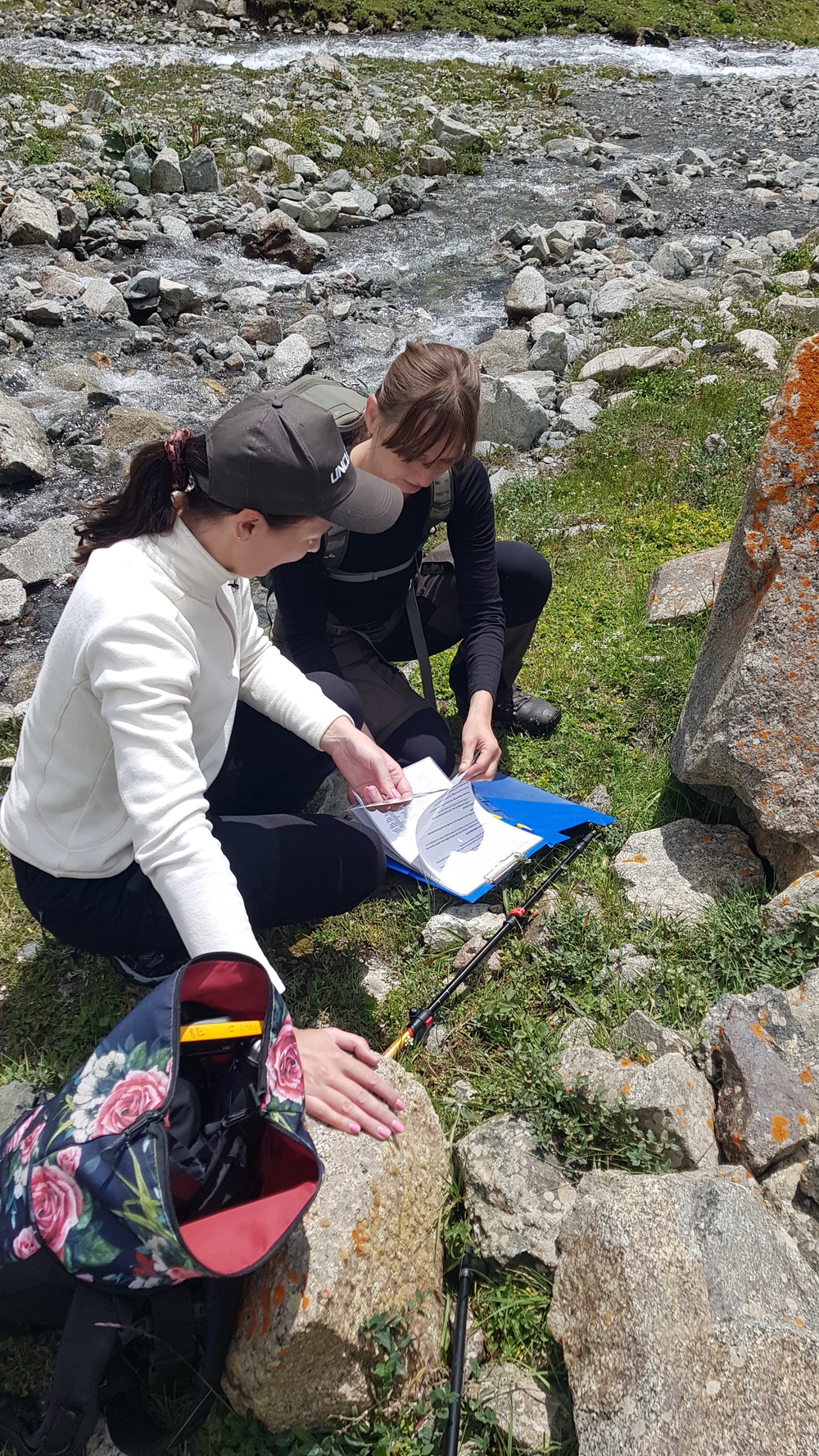
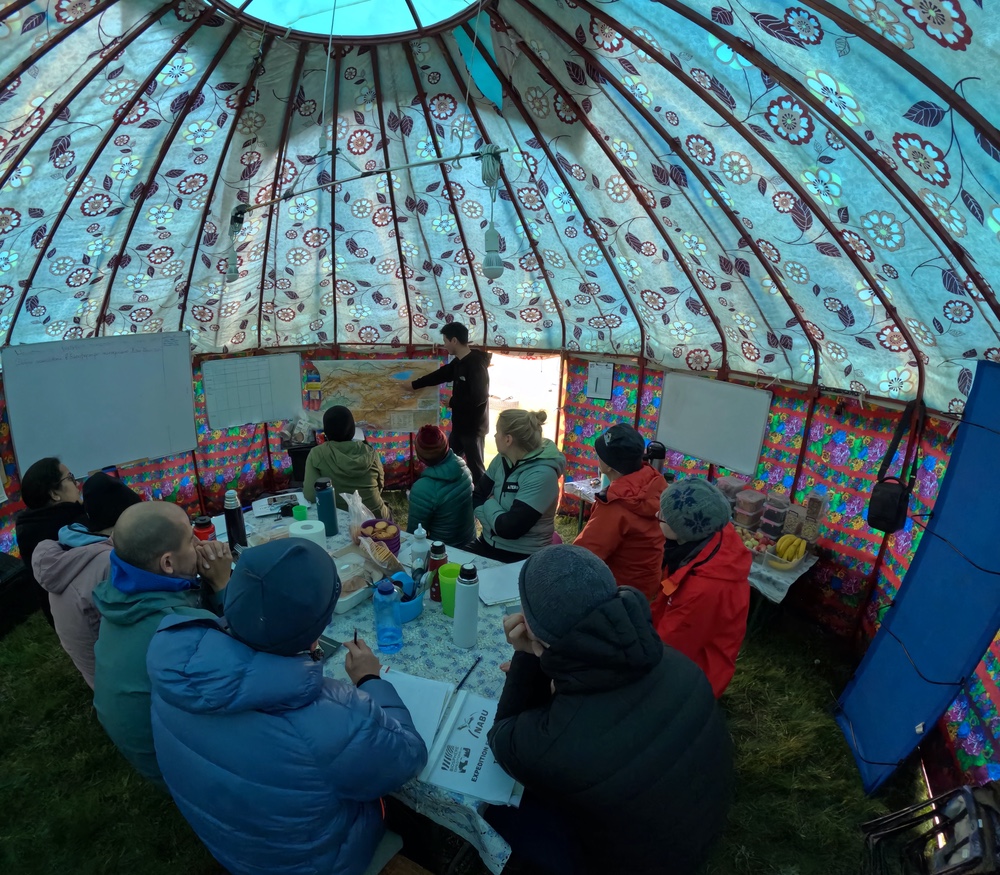
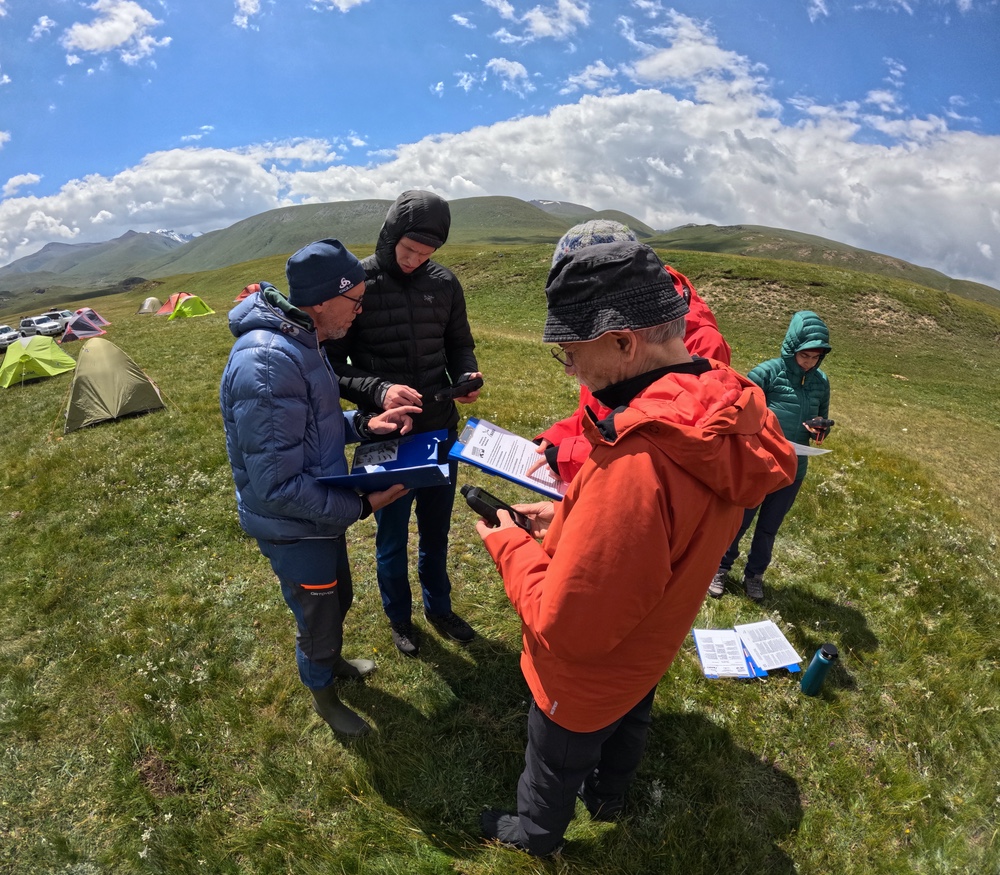
The first few days were filled with training and briefings before we got into the nitty gritty of the work we are here to do – research snow leopards, their prey and survey their natural habitat. We have been very successful in this aspect with 85 different cells already sampled, amounting to a total of area of 340 square kilometres surveyed.
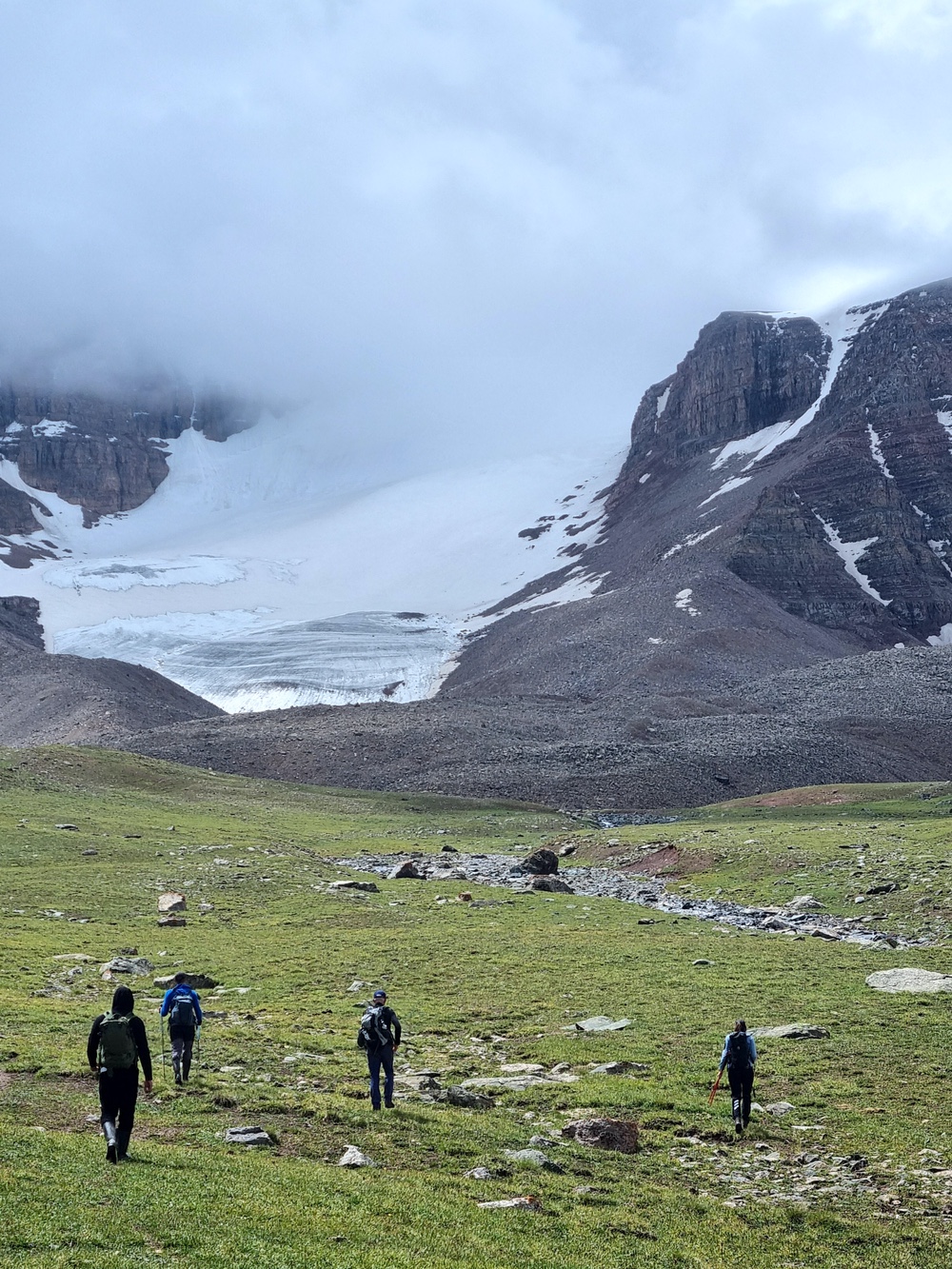
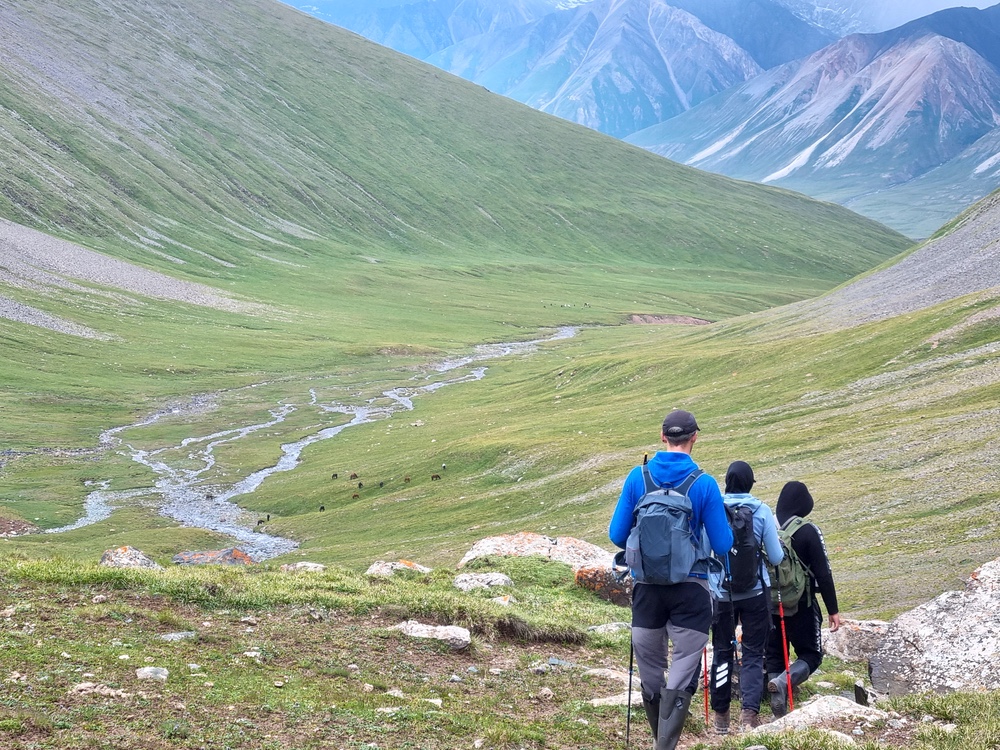
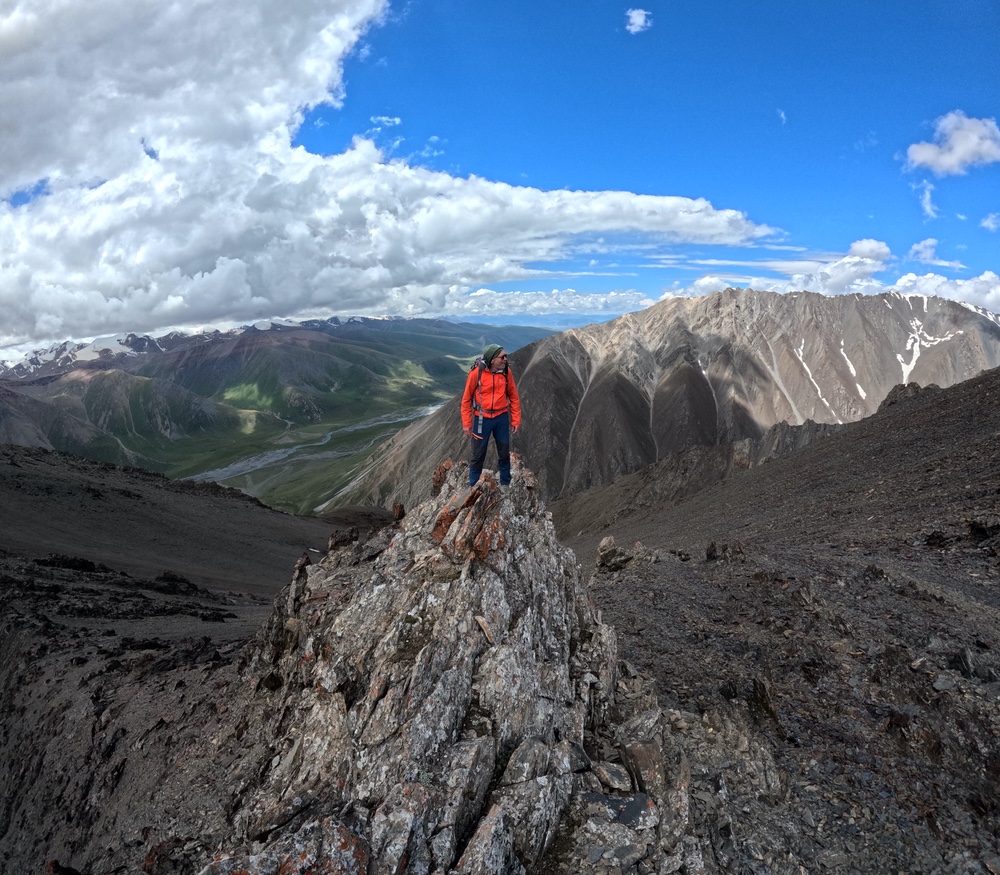
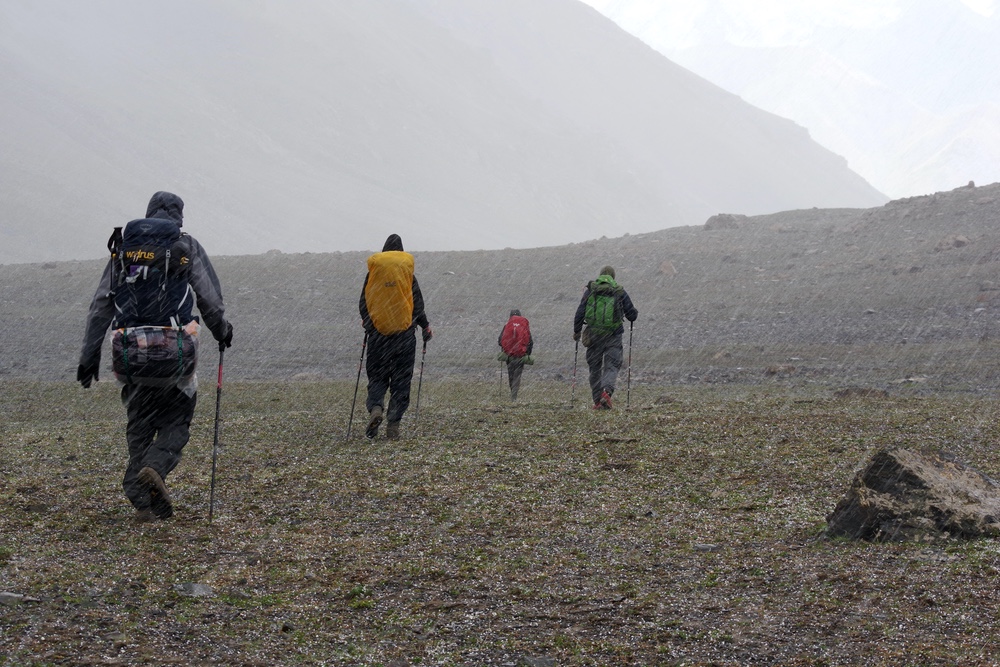
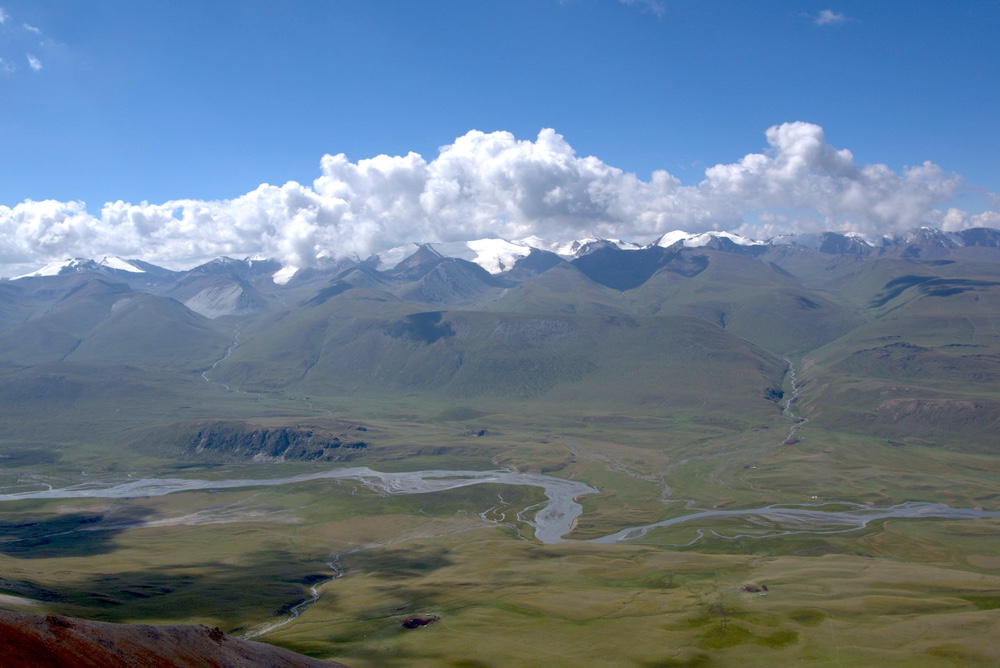
Our scientist Emil led a group of willing expeditioners deeper into the mountains on a three-day expedition across a 4000 m pass that leads into the Jil Sul valley to the north of our base camp. This enabled us to survey cells that would be impossible to reach in just one day and to place camera traps in promising locations.
Another team conducted an overnight expedition by car deep into the valley to survey cells at a lower to mid altitude and were fortunate to find wolf scat as well as evidence of snow leopard prey species and some interesting bird sightings.
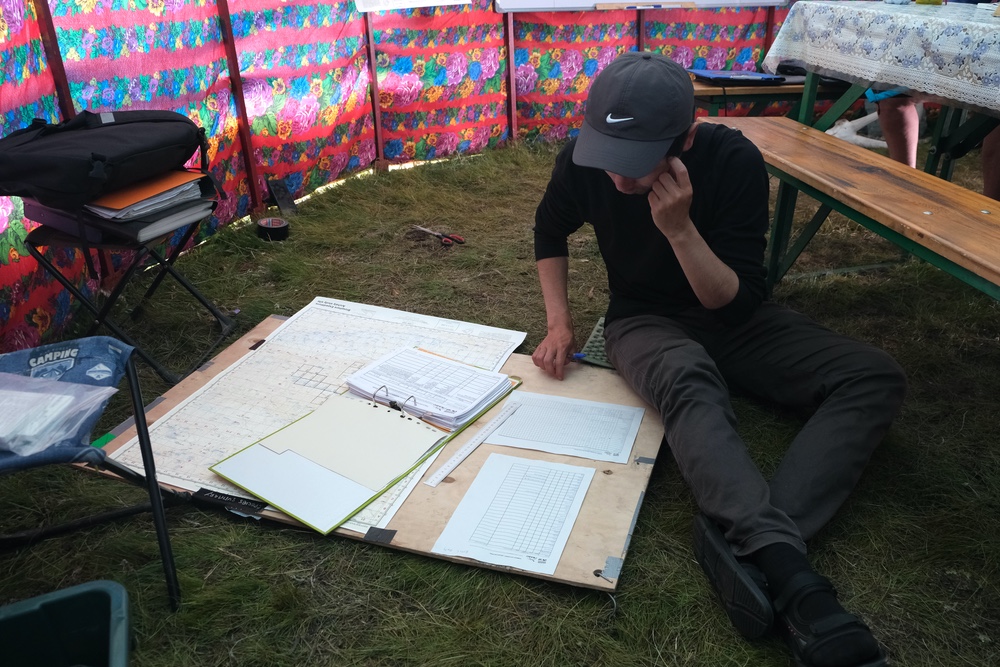
I am currently back in Bishkek making our preparations for the third and final group. Emil and I have been working hard on a camera trap plan, so there will be plenty of opportunites to get into the high mountains during the next two weeks.
Thank you to group 2 for your hard work and we are looking forward to meeting group 3 on Monday.
The weather has been kind to group 2 – we’ve had sunny days all week.
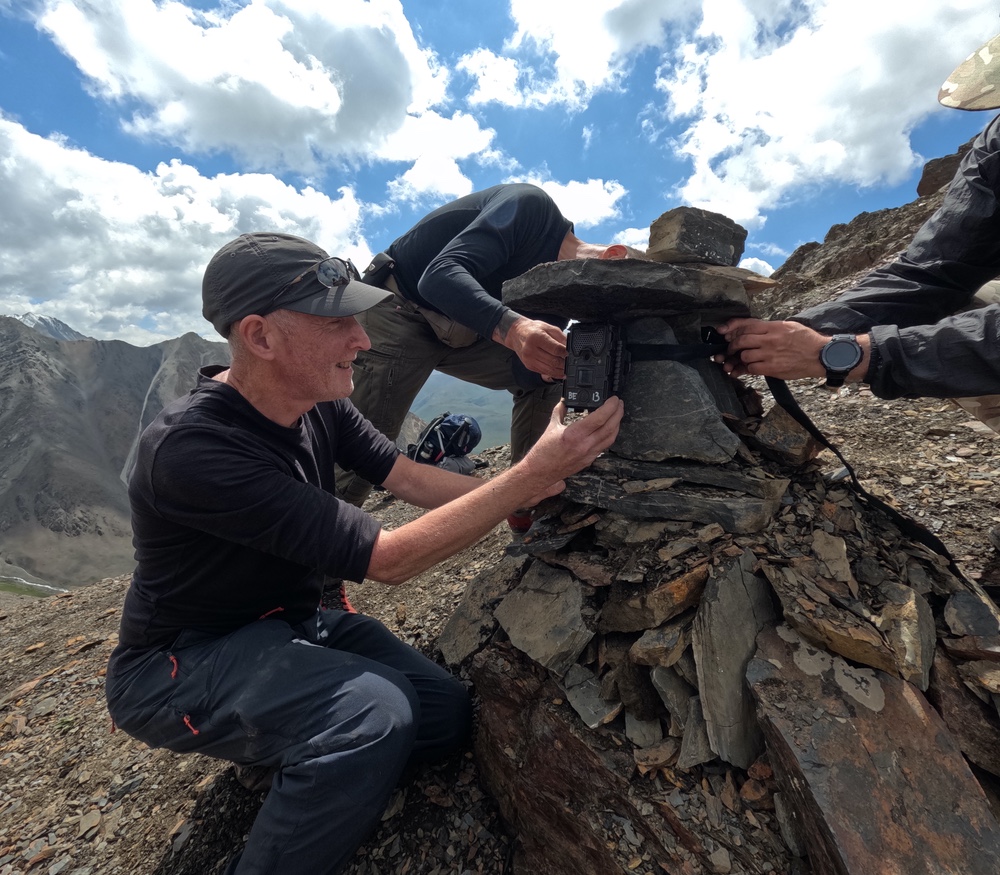
We have now retrieved all but two camera traps from last year and they have yielded lots of prey species and another wolf, but no more snow leopard photos.
Camera trap in place
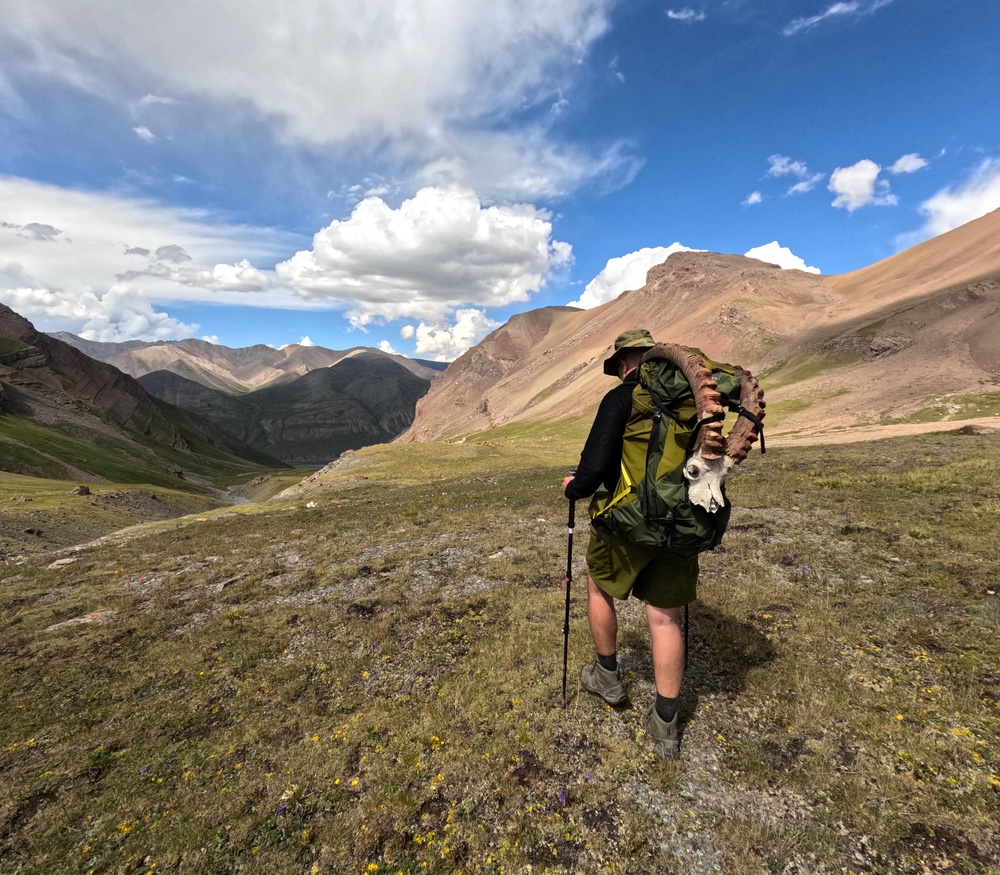
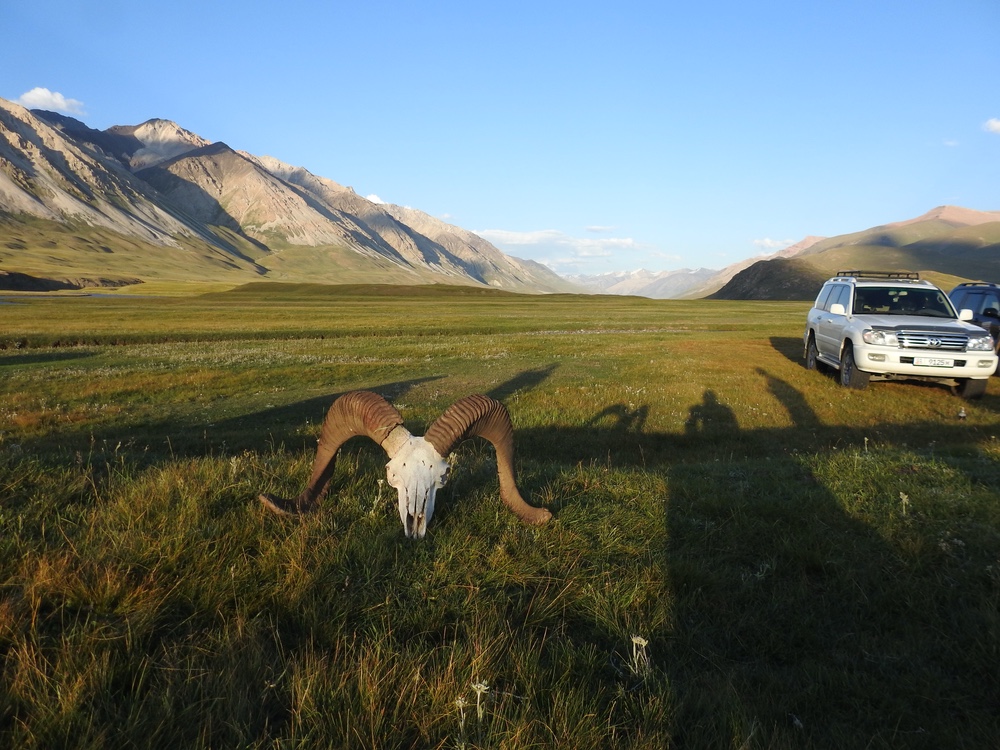
We have also found an argali skull and horns, so these iconic and elusive mountain sheep are around, but rarely seen.
Argali
We have also conducted eight more herder interviews.
Herder interview
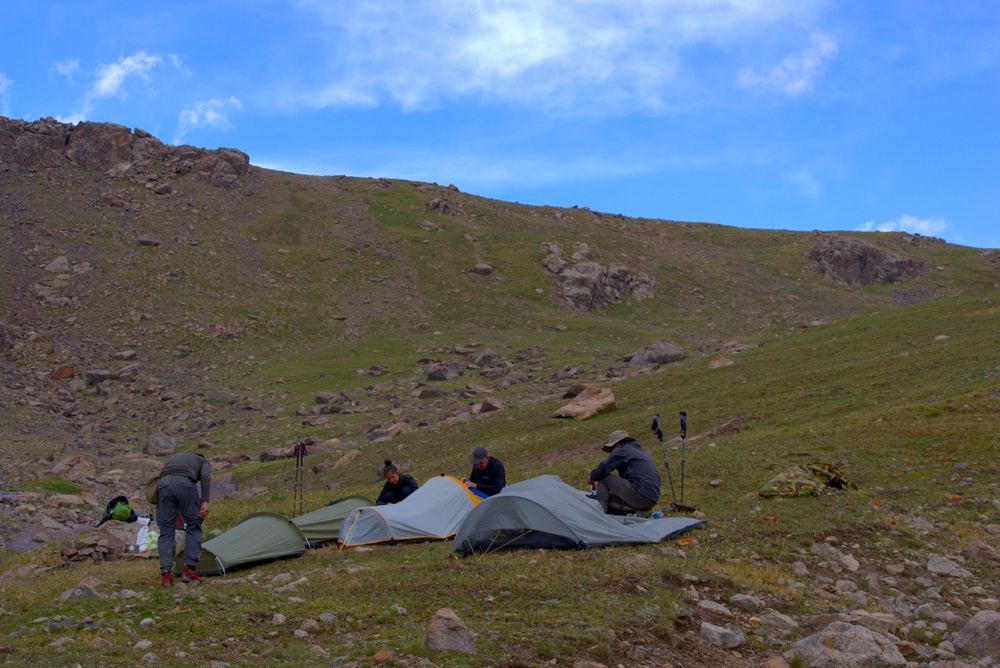
We have an overnight mini-expedition with an advance base camp planned for the second half of this group. This will take us north via a 4000 m pass to survey more cells and place camera traps.
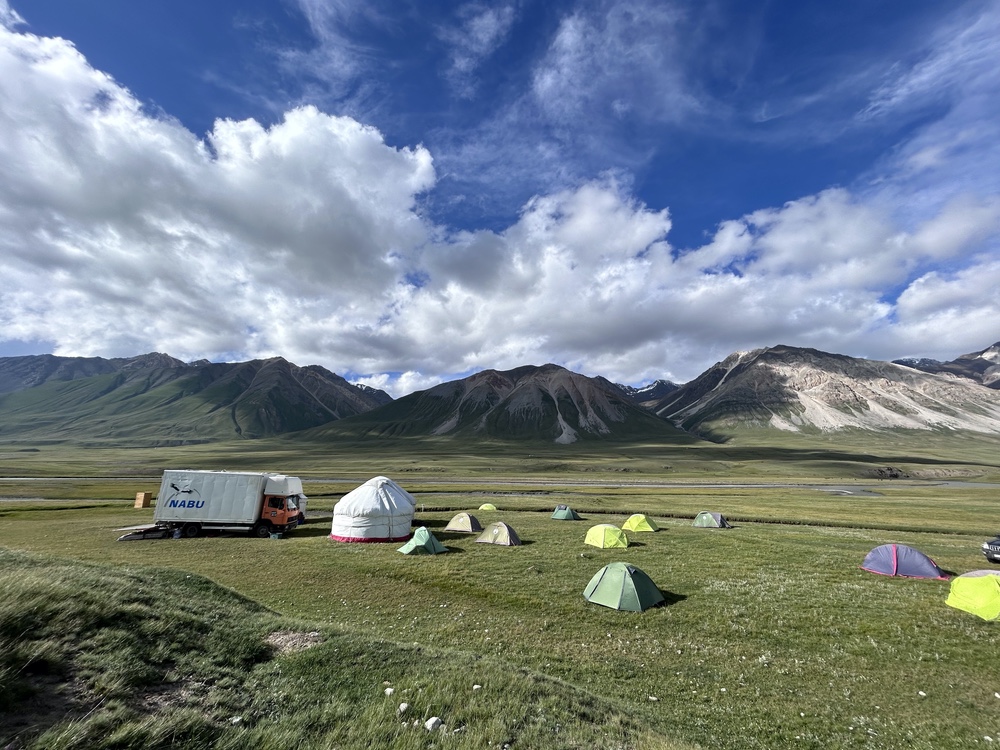
Advanced base camp
Also planned is a community information evening, during which we will explain who we are, what we do and ask how the community can and wants to be involved and benefit financially from our work, for example by supplying us with produce such as milk and bread or by helping with supply runs or producing felt gifts (felting is a great tradition and skill here).

























 Biosphere Expeditions: blogs from the frontline of wildlife conservation and the fight for a more sustainable planet