Award-winning, non-profit and ethical wildlife conservation volunteering. Advancing citizen science and conservation since 1999 – for nature, not profit.
The Sweden Brown Bear Research Expedition has begun! Andrea, Gunther, Louise and Roland have been working tirelessly over the last few days to get everything set up with the necessary Covid restrictions in place. Adaptation is key to success when faced with such challenges on an expedition, and it seems to be a success so far. Even Andrea’s damaged knee (injured through a bad jump from a helicopter while darting a bear to attach a GPS tracker – she is that kind of bear researcher!) hasn’t derailed the expedition. A bionic-looking leg brace and some inner grit seems to keep her going.
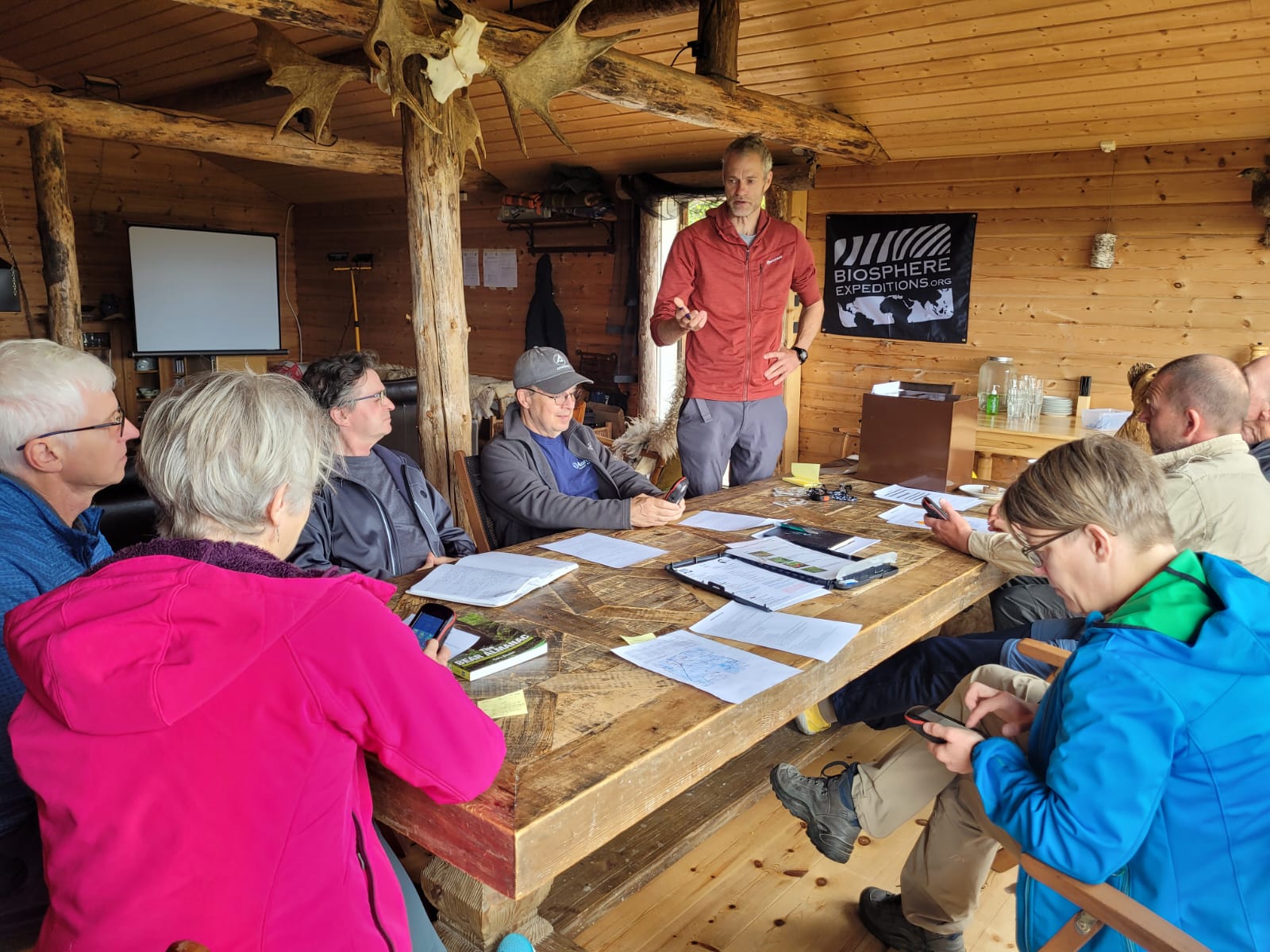
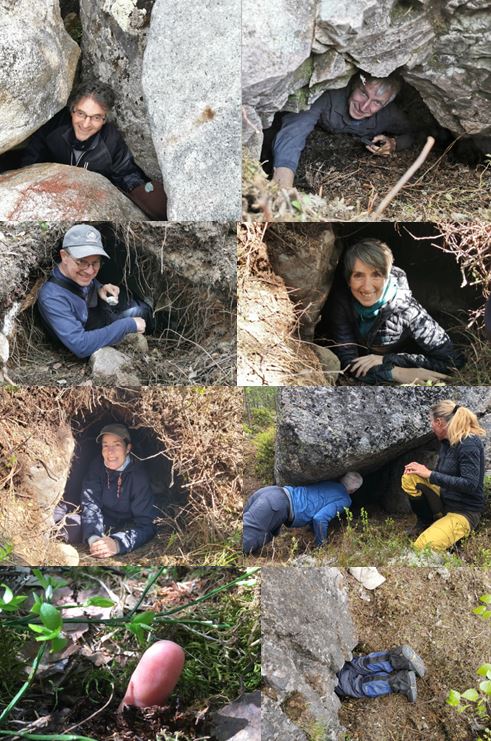
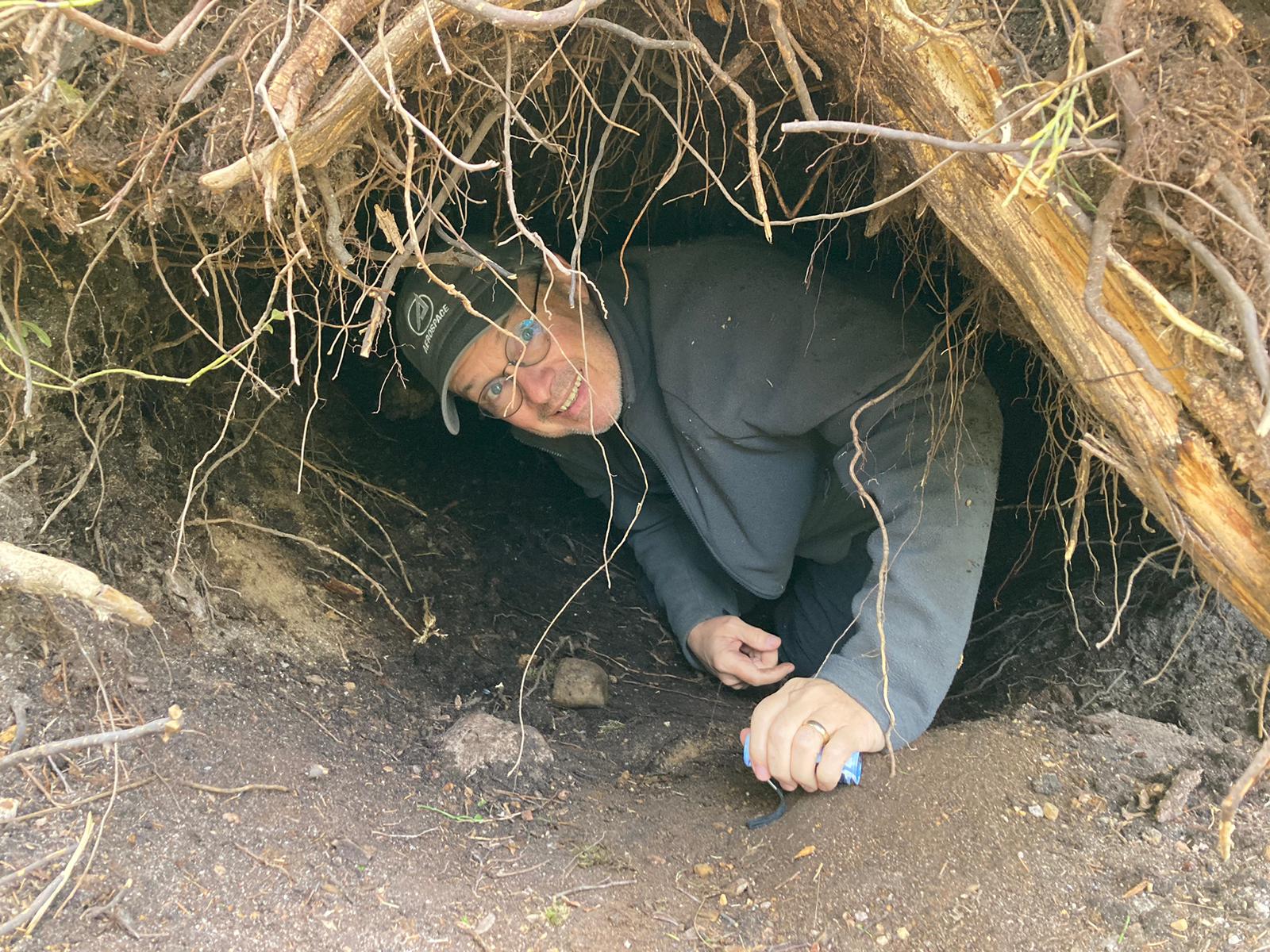
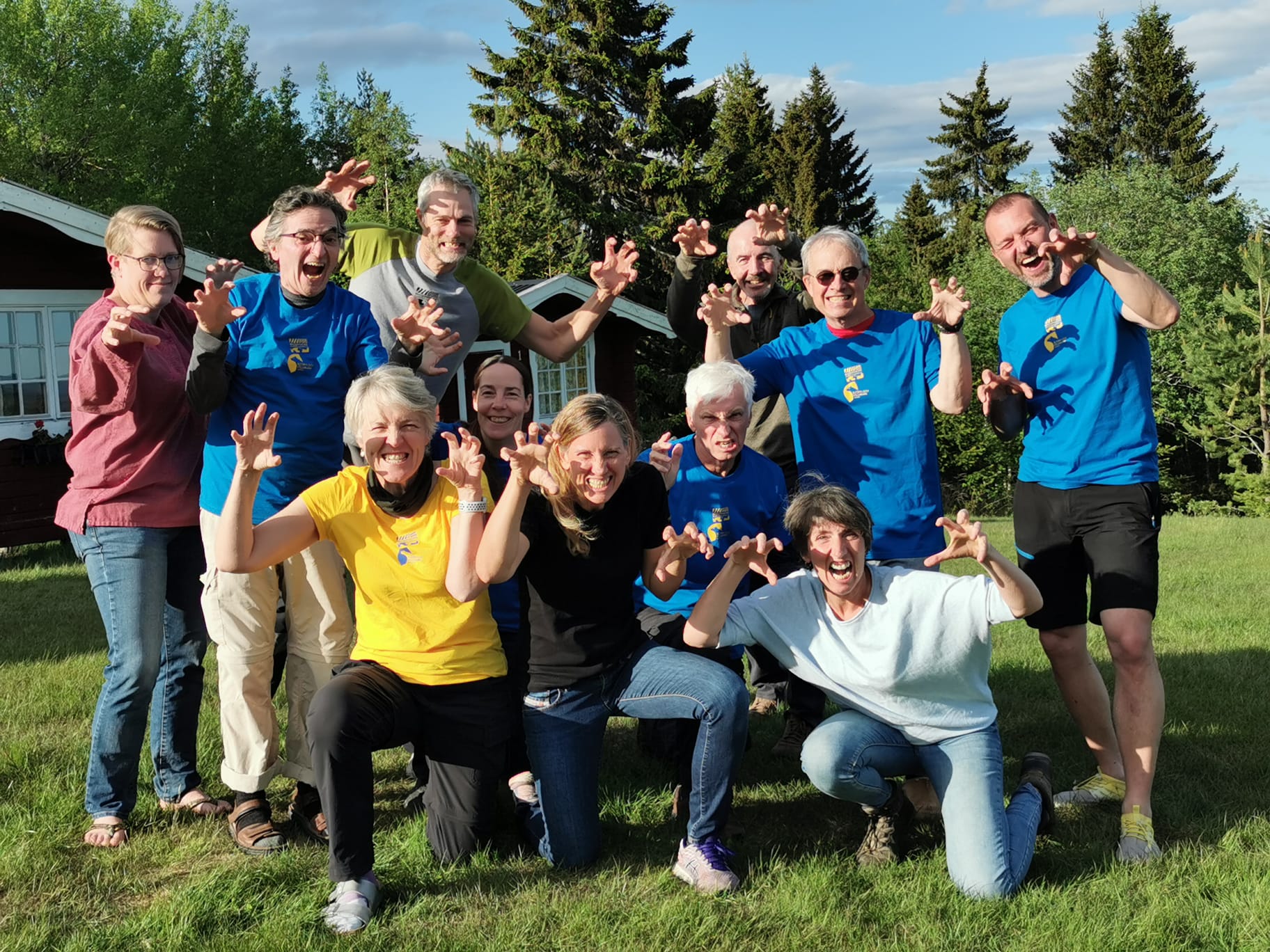
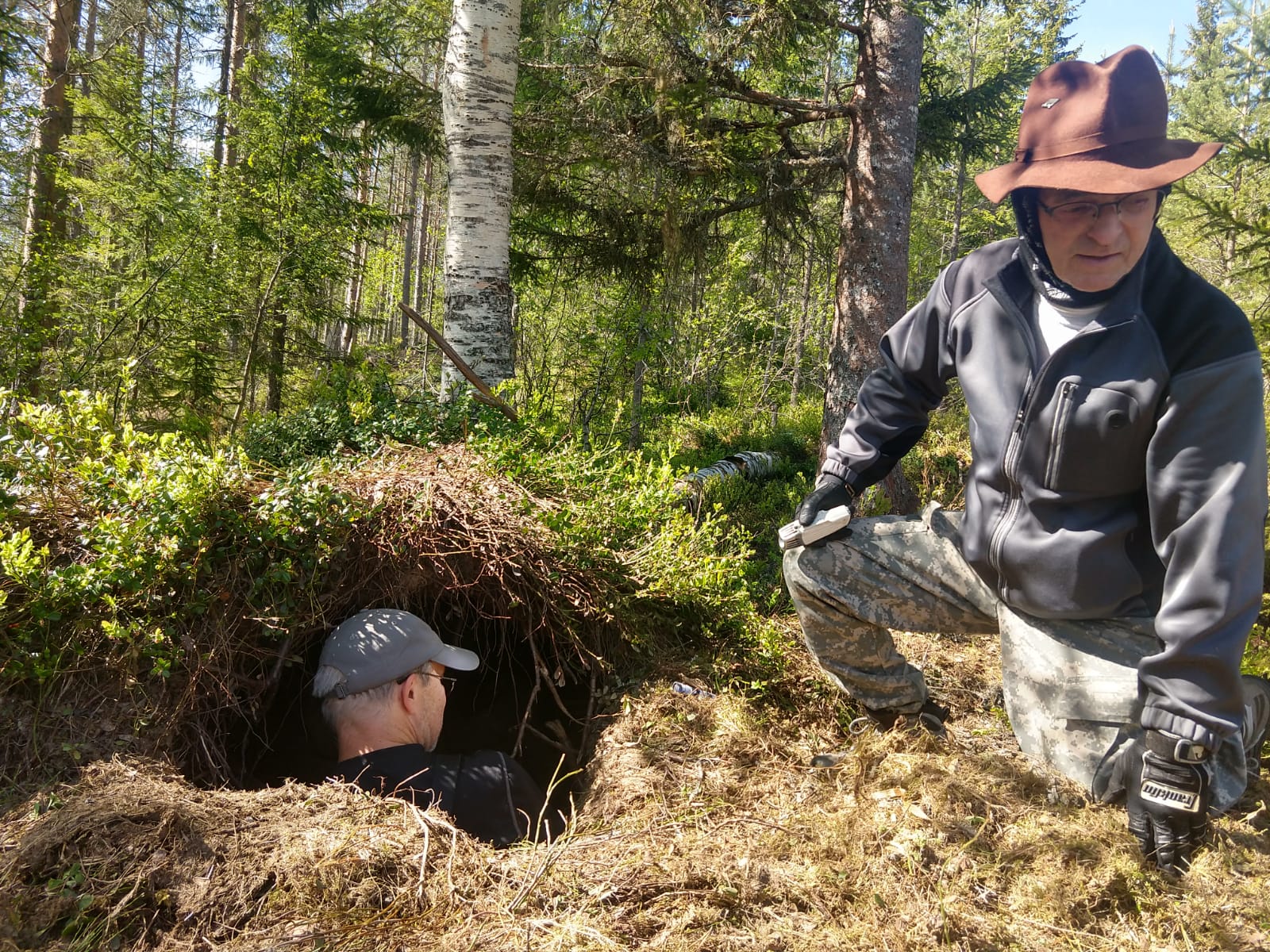
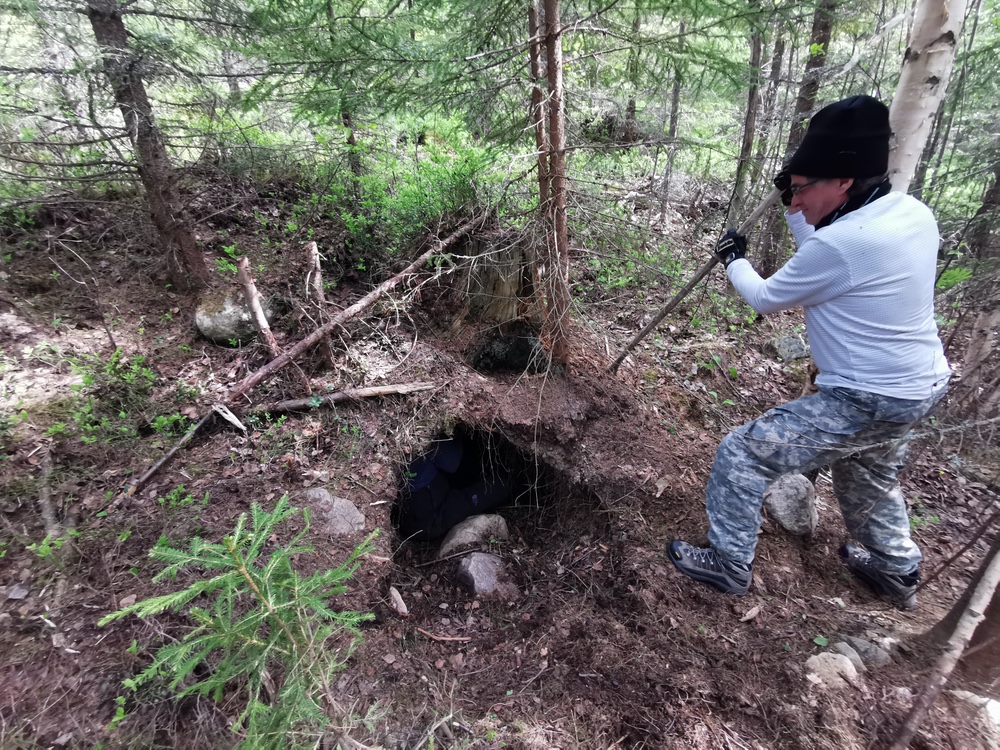
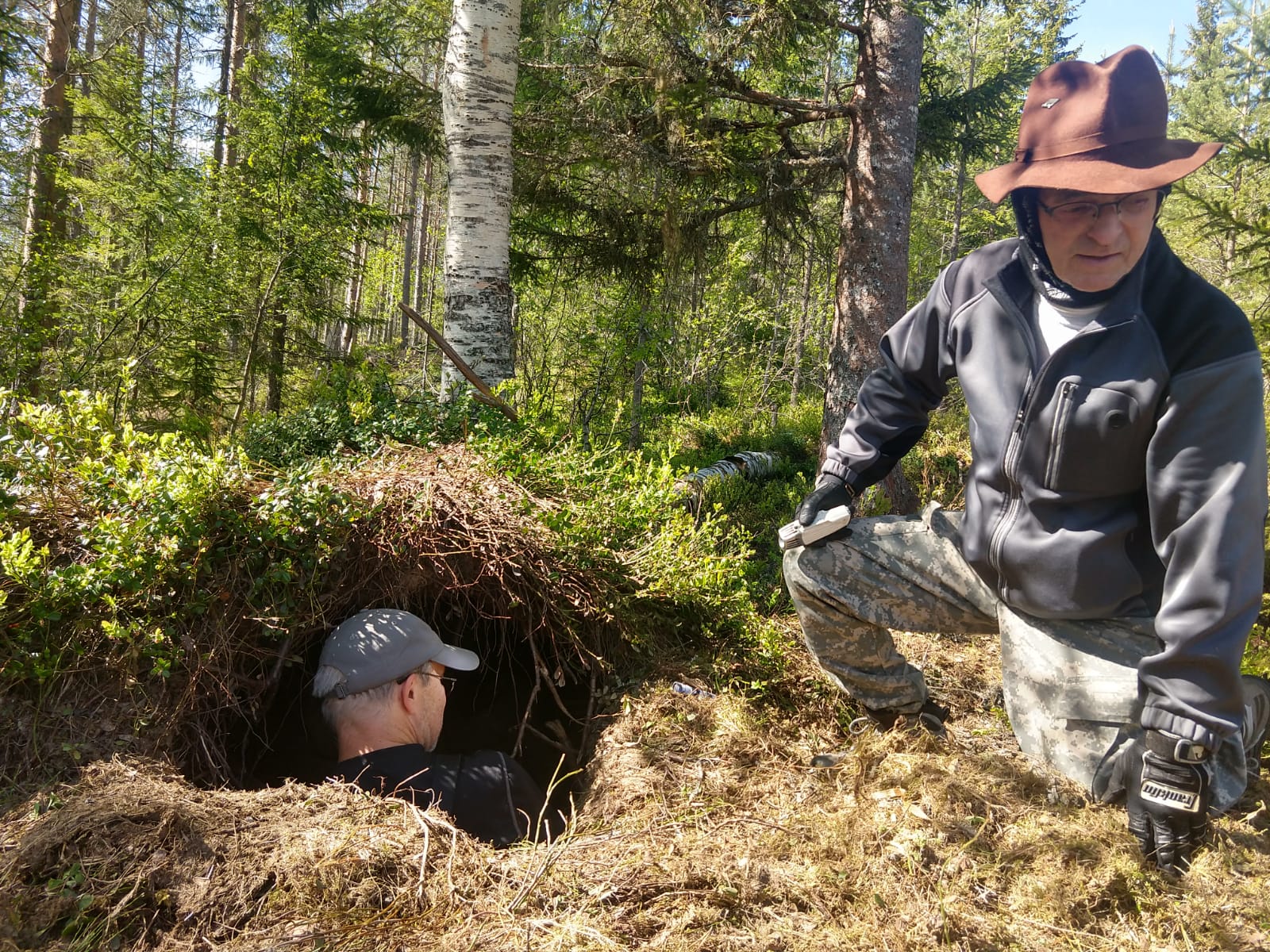
Our multinational expedition team – representing the UK, Germany, Poland, Spain and the USA – have arrived, settled into base camp and hit the ground running with a busy first day of introductions, safety briefing, background lectures and practical training. By the afternoon, the team were hiking through the forest to find a bear den (recently vacated by the bear), navigating to it using coordinates in a GPS unit. It turned out to be a very snug den, excavated into an old ant hill: this type of den is considered to be a high quality one.
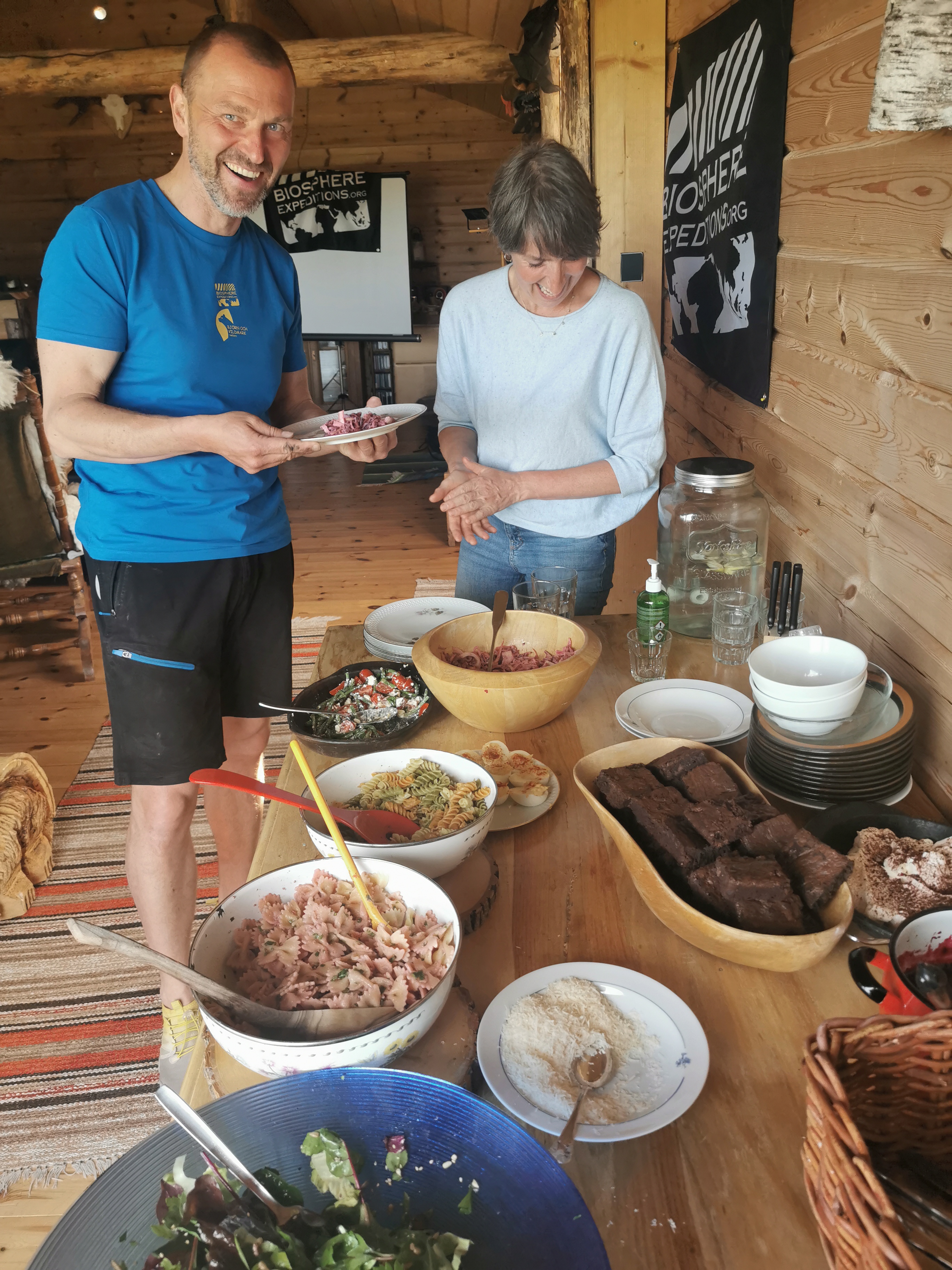
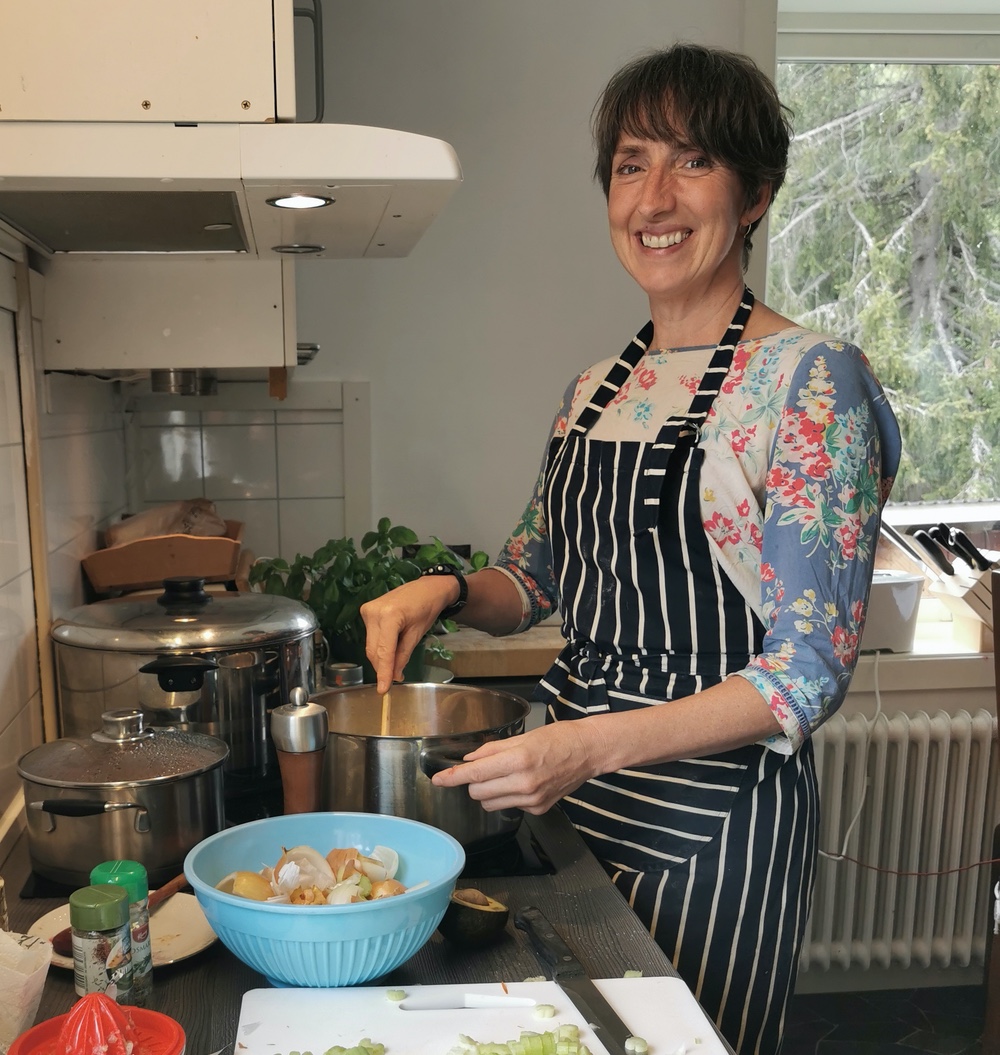
Louise’s Covid-adapted kitchen protocols have not stopped her producing great food for the hard working team. The outdoors briefing sessions are working out fine too, thanks to the good weather.
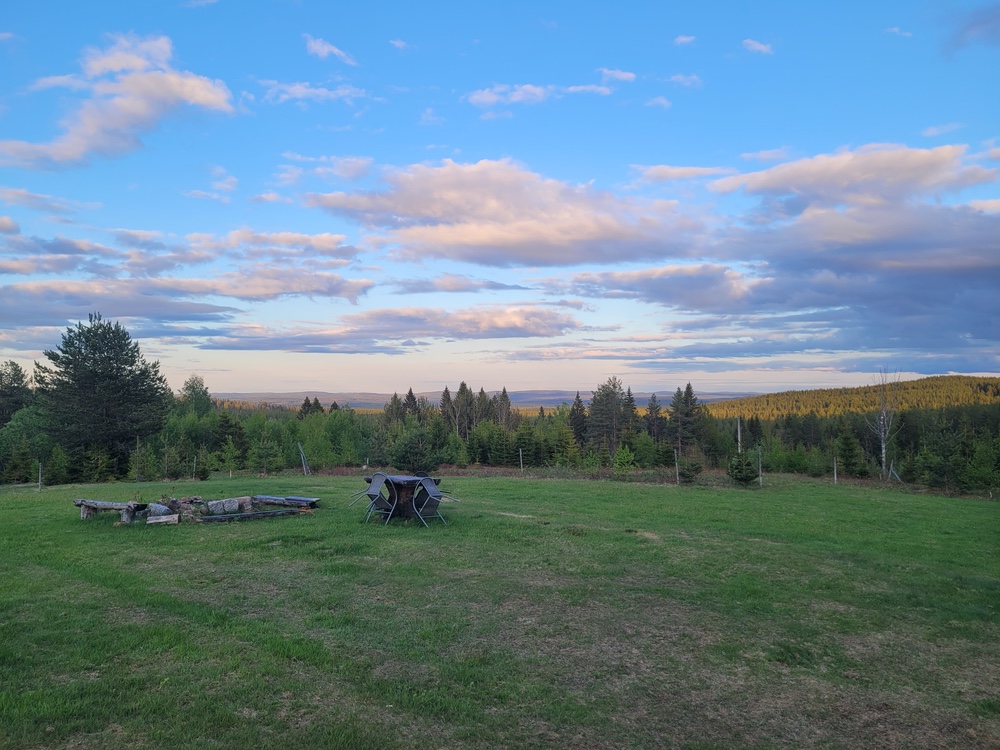
Tuesday will involve more training on research tasks, equipment and a full assessment of another bear den carried out by the whole team, led by Andrea. In the meantime, the team are allowed some down time whether that be in the communal log cabin, enjoying the peaceful ambience of the Swedish forest at dusk or, if they feel they deserve it, even firing up the sauna hidden away in the trees a short wander from base camp.
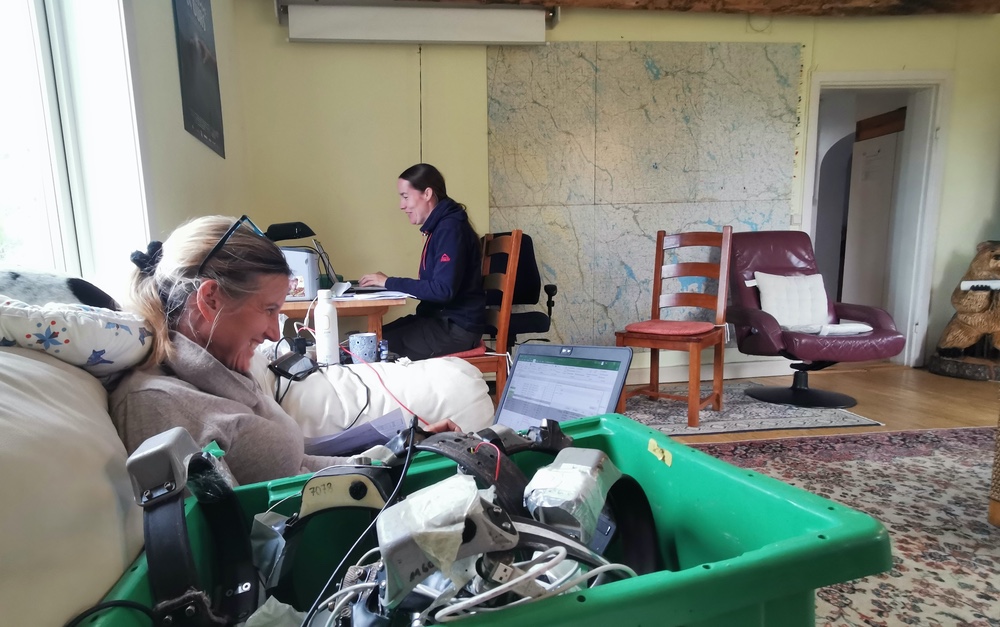
Greetings from Sweden everyone. Louise and I travelled up to Mora together, started feeling ill and tested positive for Covid yesterday; no idea where we picked that up. This is a bummer, but not the end of the world, as Covid no longer is the health issue it once was and because Sweden no longer has any restrictions in place (they never did have many). Today we feel pretty rough, but can still function, so because of this and out of courtesy to everyone else, this is how we will run the expedition:
Louise and I will isolate ourselves as much as possible in the main house, where the kitchen is located. Louise will cook there and we will put the food out for you to carry over to the fireplace house to eat (we will eat in the main house).
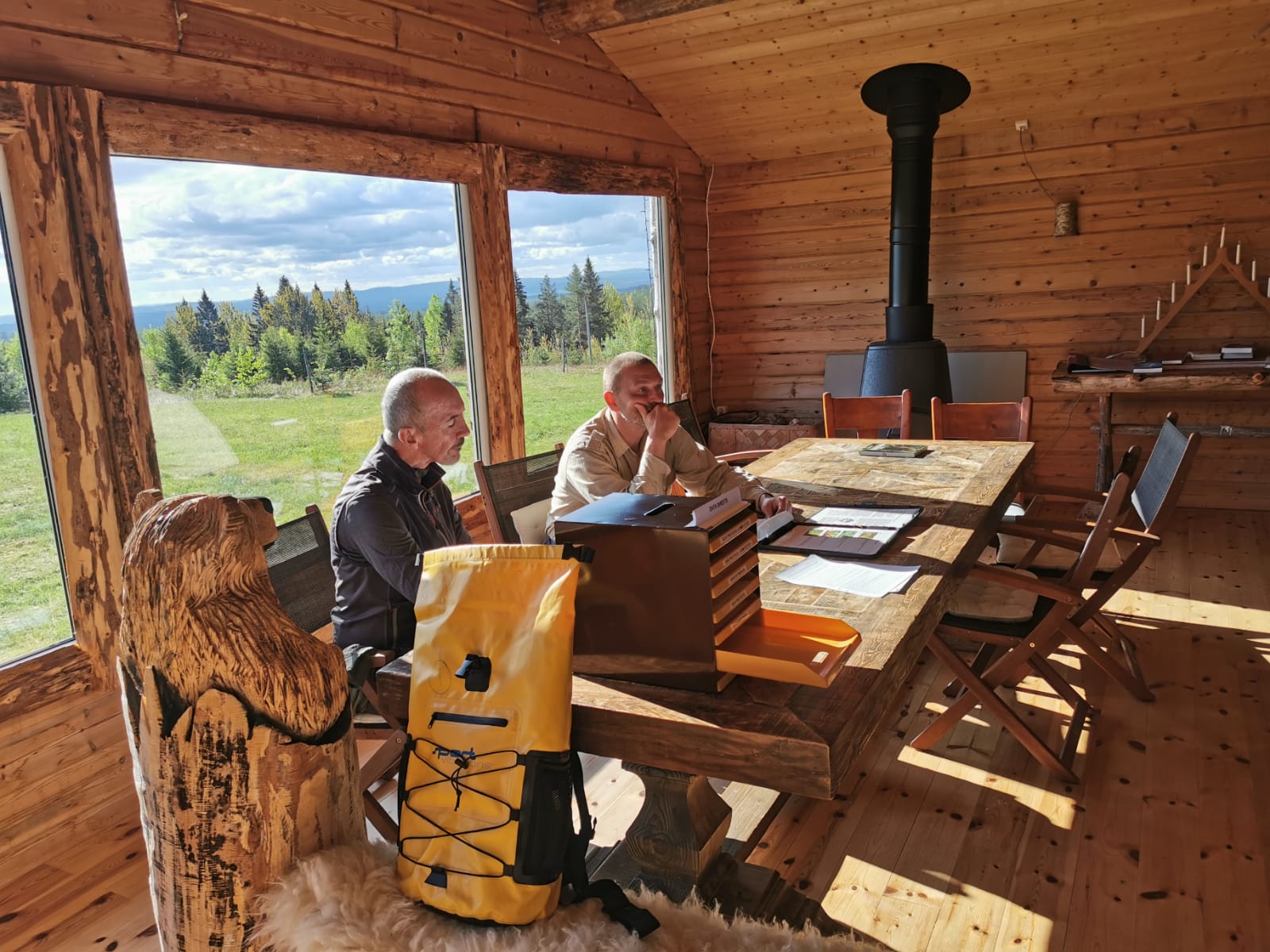
Also in the fireplace house will be the equipment and where Andrea will conduct her training sessions.
You will all have twin share cabins to keep your things and sleep in at night, as normal.
Louise and I will wear FFP2 masks (the thicker type) whenever we are in contact with you. We recommend that you also wear FFP2 masks when around us (make sure you buy some before you arrive and we will also have some on site).
Andrea has drafted in her husband Gunther to help with training sessions. If I am needed for training sessions, they will be held outside or in the well-ventilated/draft barn and I will be masked up. We recommend that you mask up too.
Andrea will lead all field training activities during the first two days and Louise and I will stay back at base.
As people usually stay infectious for 10 days after testing positive, this will bring us towards the end of the expedition. Louise and I will monitor for symptoms and only stop using masks and join the group as normal if we have two negative tests 24 hrs apart; you are of course free still to use masks around us if/when we re-join.
I hope this explains everything clearly. We can discuss details on site, if you want to.
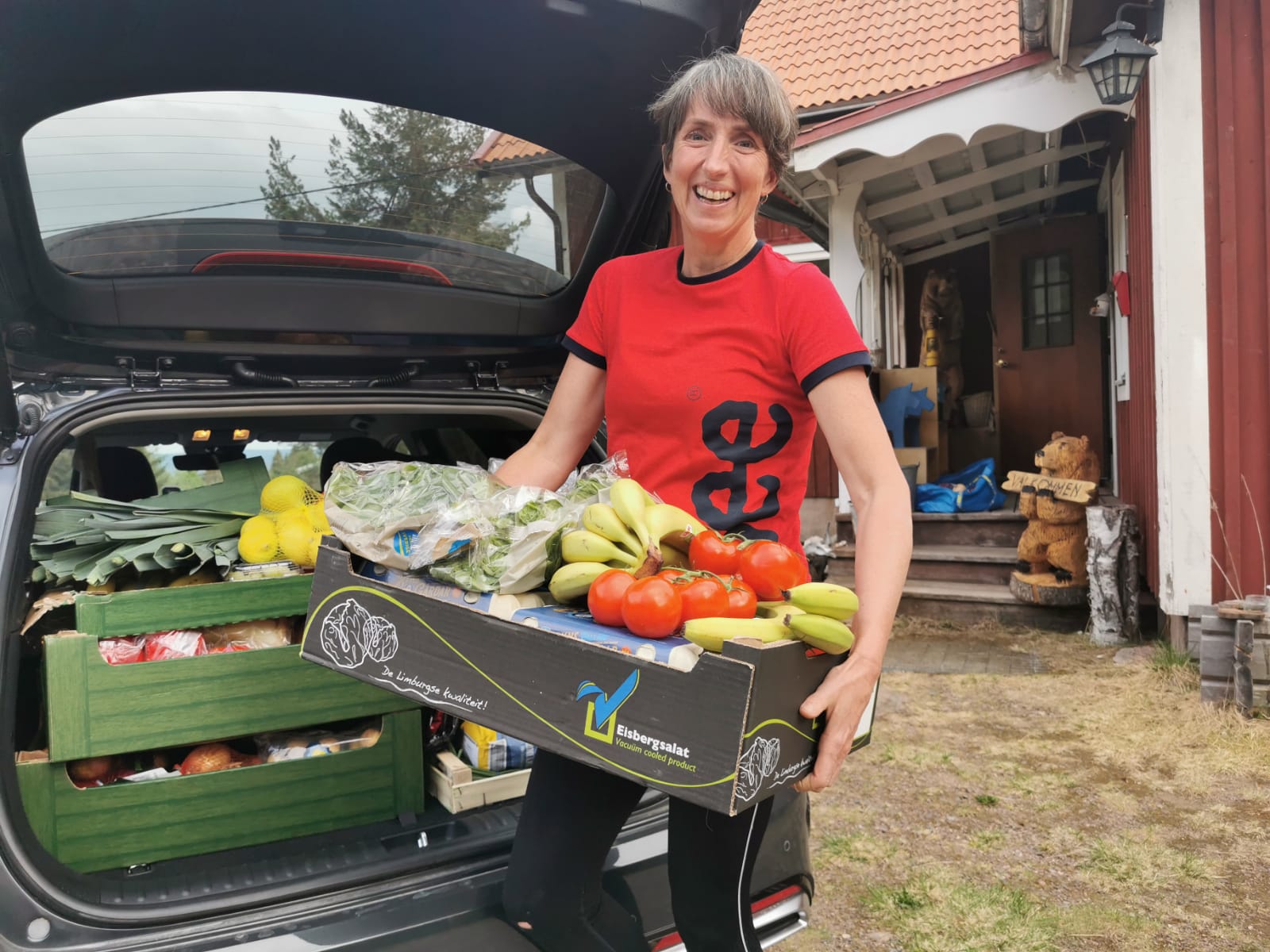
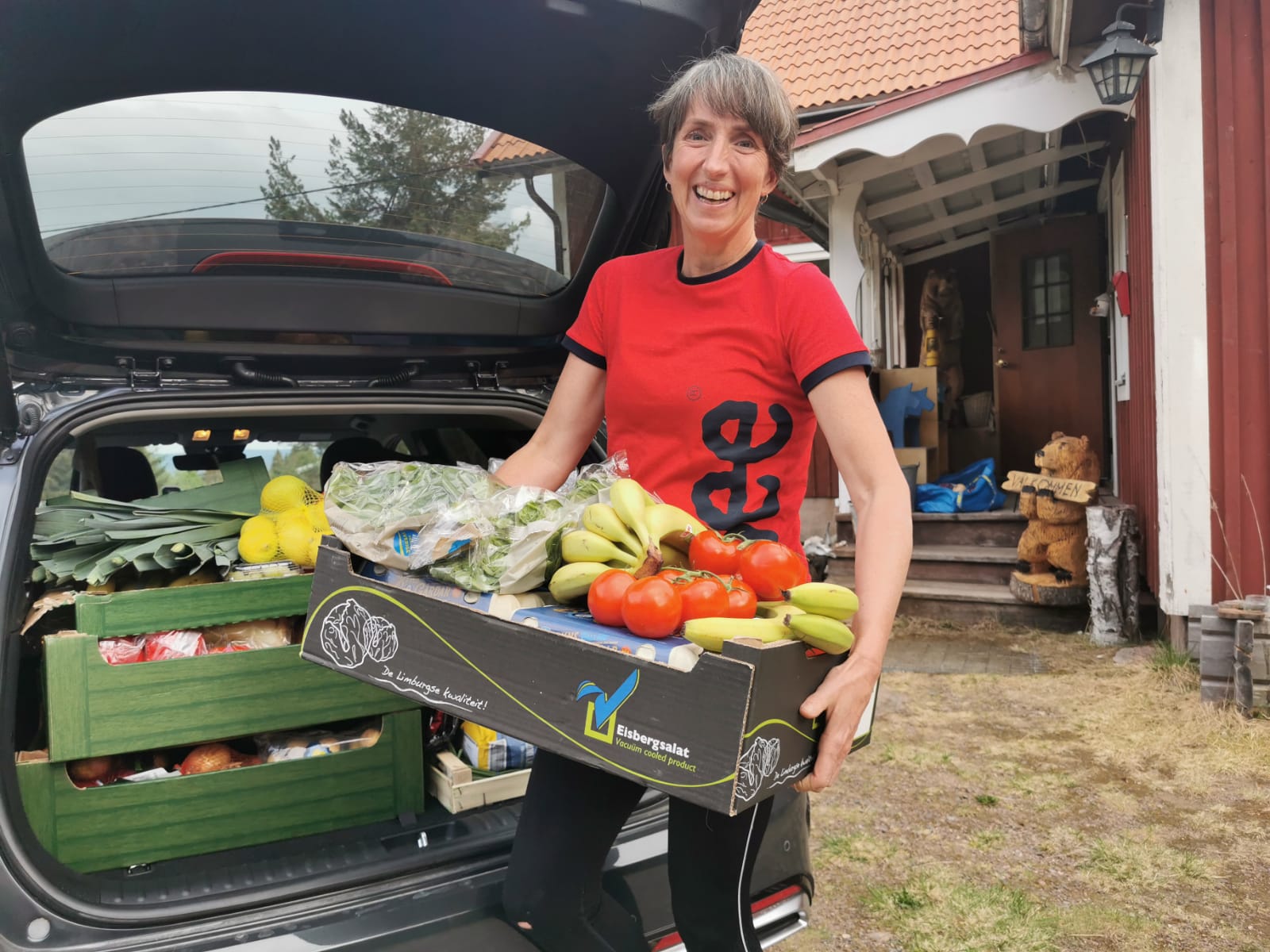
Apart from that, the expedition preparation is going well and to plan. We have bought what looks like an enormous amount of food, but is exactly the right quantity as calculated in Louise’s spreadsheet.
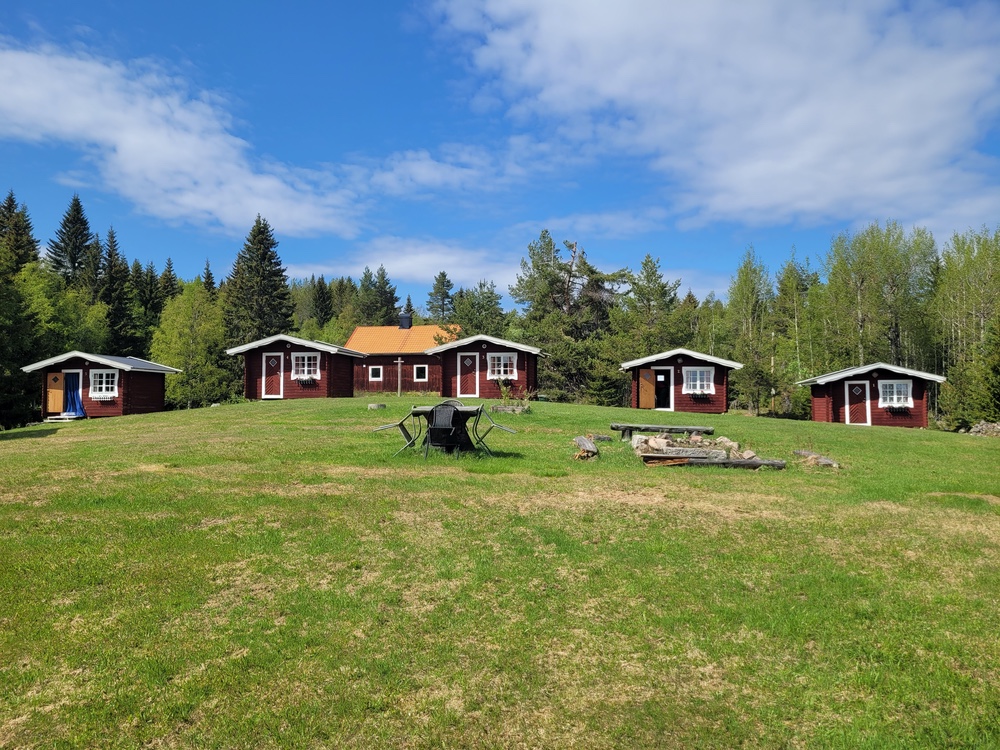
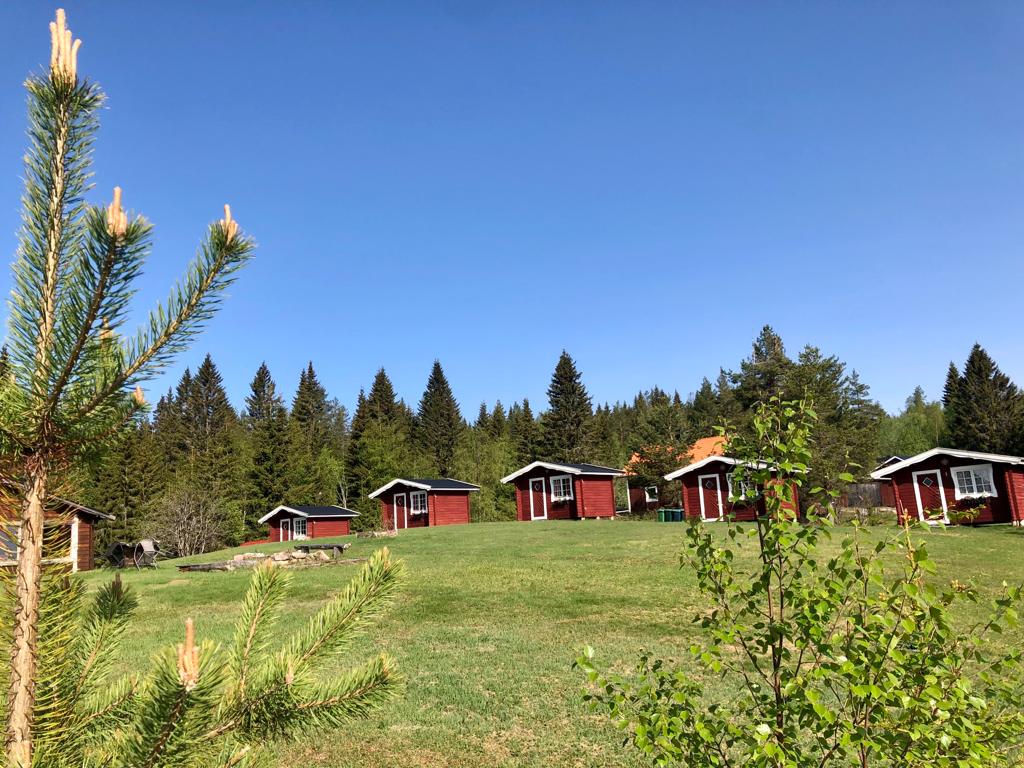
Our base camp is looking good and will be ready to welcome the expedition team on Sunday. The weather forecast is looking good. Cloudy and sunny days ahead, not much rain, temperatures up to 25C on some days. Don’t forget your sun hat!
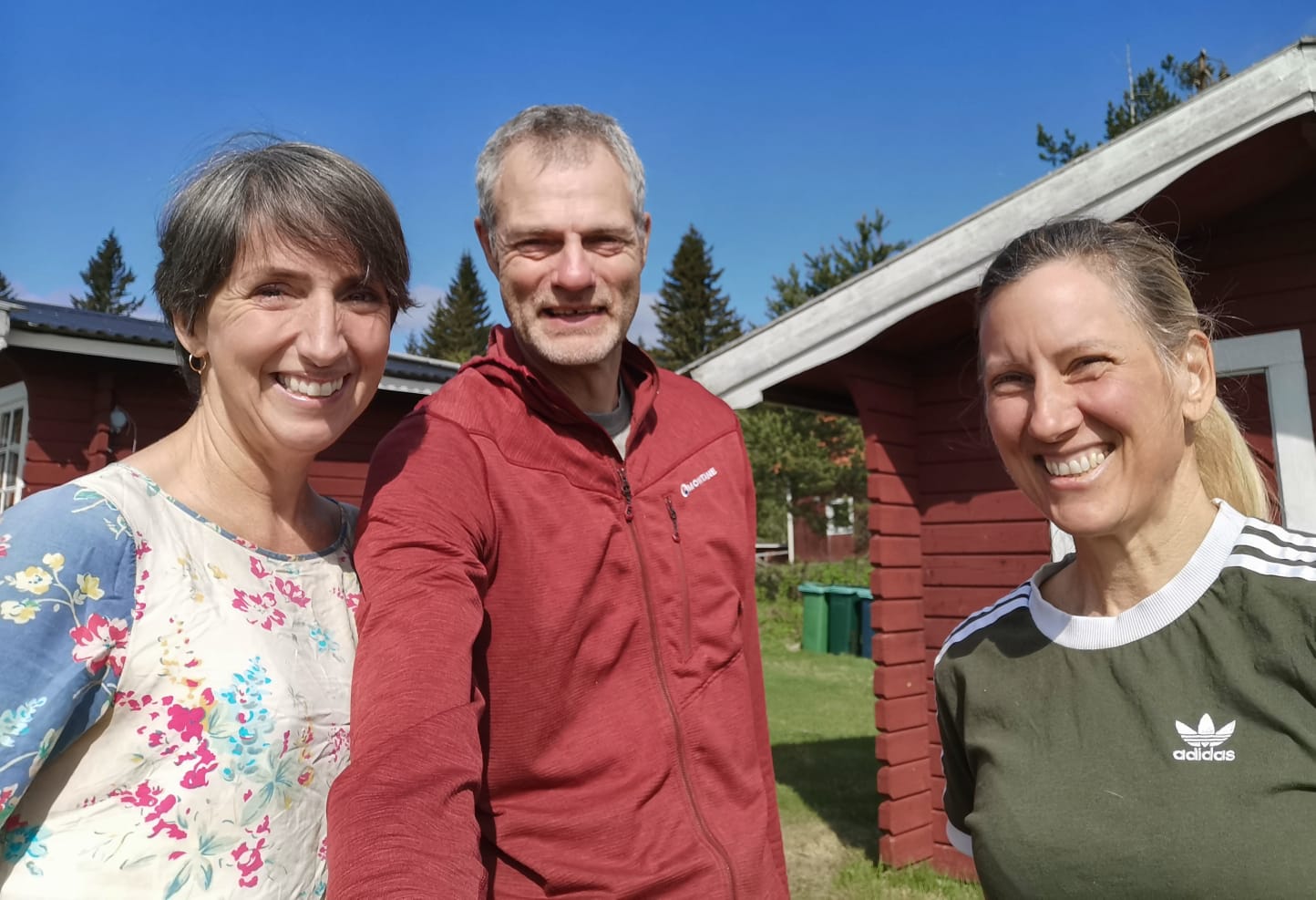
We have the same team as last year of expedition scientist Andrea, expedition cook Luise and me running the expedition and we are busy preparing. I am taking a break from a sea kayaking journey in Scotland and will be heading direct to Sweden in the coming days. Louise will be joining us from Devon to take command of the kitchen and keep the expedition team well fed. And expedition Andrea is based in Sweden and currently busy fitting tracking collars to bears who have recently left their winter dens. It is the use of these tracking collars that allow us to find the dens that we survey on our expedition, while also collecting a range of other biological data needed for us to understand how the bear population of mid Sweden is affected by changing pressures from climate change, forest management and hunting. This is conservation research on the front line.
We will be using similar research methodologies as last year, but we have some new kit. Make sure you read past expedition reports (2023, 2022, 2019) so that you are fully informed when you arrive.
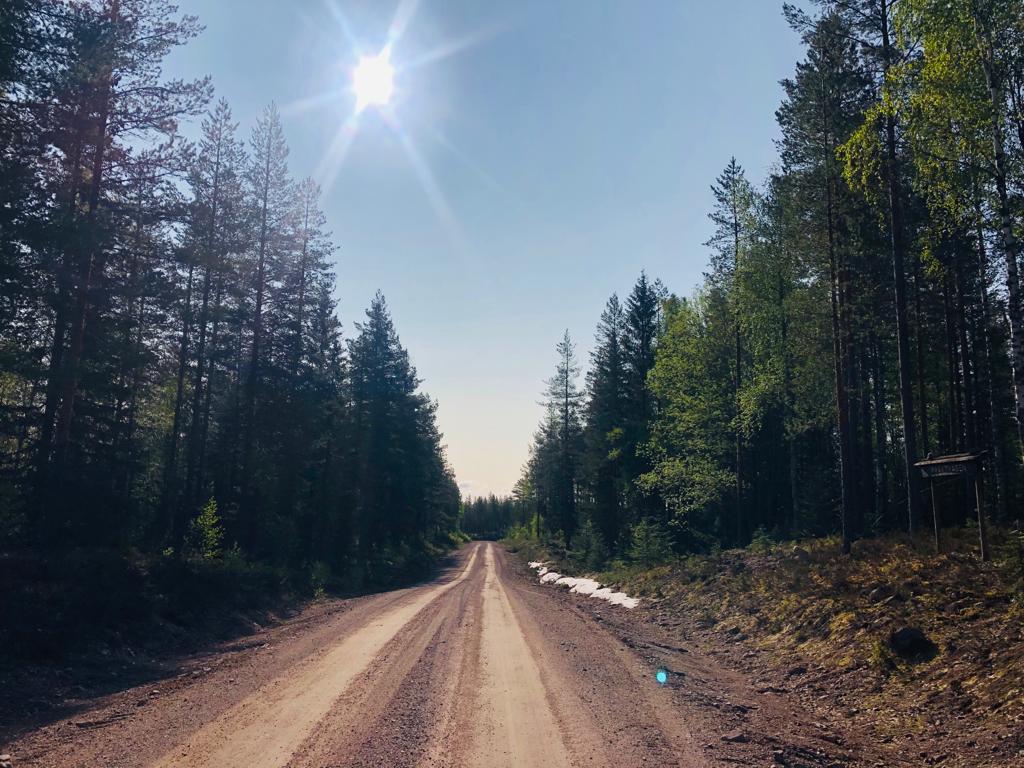
The weather in Kvarnberg is good at the moment, warm and sunny. Although of course this may change, so please do bring clothes suitable for any weather, as described in the expedition dossier.
I can’t wait to get started and I will be back in touch from Sweden when I have arrived to set everything up for you.
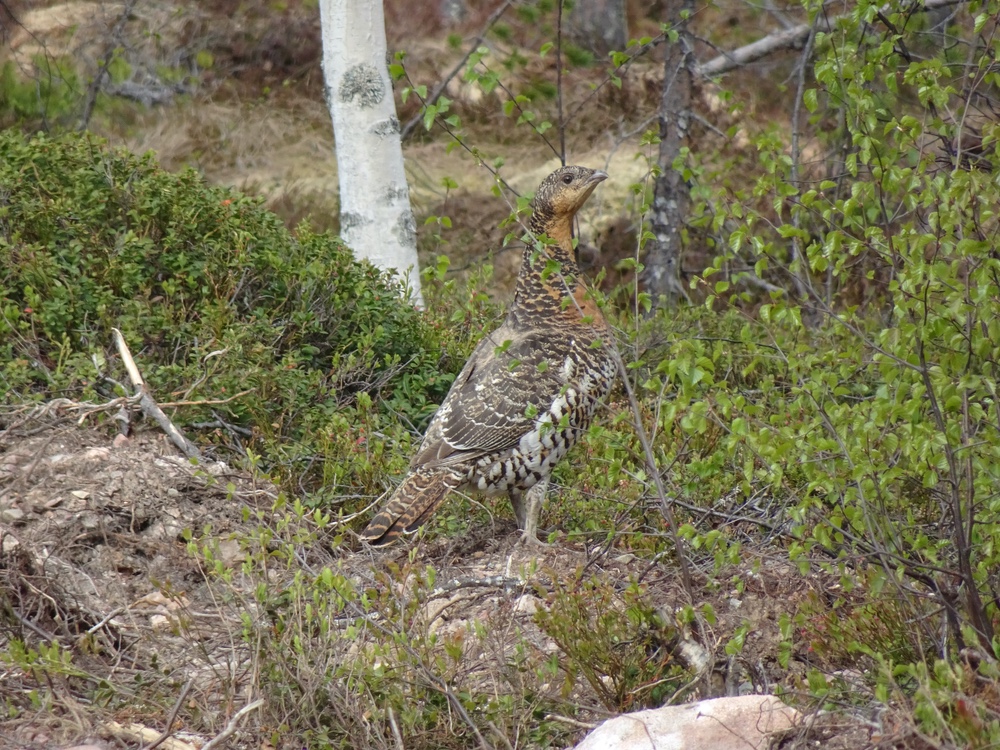
The inaugural expedition in 2019 visited 28 bear den sites and mapped 24, found 10 scats at 15 bear cluster sites, recovered a bear skeleton from a bog for further analysis, recovered a valuable transmitter, covered over 2,000 km of the study site, had two bear encounters and several with moose, capercaillie and other interesting wildlife, increased the scientist’s bear den database by between a third and a half, and in one short week gathered scats worth six weeks. The expedition scientist called the expedition’s contribution “invaluable”.
The post-Covid second and third expeditions (2022 and 2023) built on the successes of the first expedition by collecting a significant amount of up-to-date data on the bears’ winter dens, day bed sites and their scats. Following a review, the length of expeditions was increased from 2023 to maximise data collection time. This resulted in the 2023 expedition visiting 68 sites, including 38 winter dens and 35 scat collections, ten of which were ‘first scats of the season’ (especially valuable samples that can reveal what a bear has eaten before and during hibernation).
We thank all citizen scientists very much for their help. An expedition report has ben published once data were analysed and here is its abstract:
From 27 May to 4 June 2023, eight citizen scientists collected data on bear denning behaviour and feeding ecology by investigating the 2022/2023 hibernation season den sites of GPS-collared brown bears and by collecting fresh scats from day bed sites. 2023 was the third year of Biosphere Expeditions citizen scientists assisting the Scandinavian Brown Bear Research Project (SBBRP) after 2019 (followed by an enforced COVID-19-related break in 2020 and 2021) and 2022. It was the first year when field sampling was extended by two days to a total expedition length of ten days.
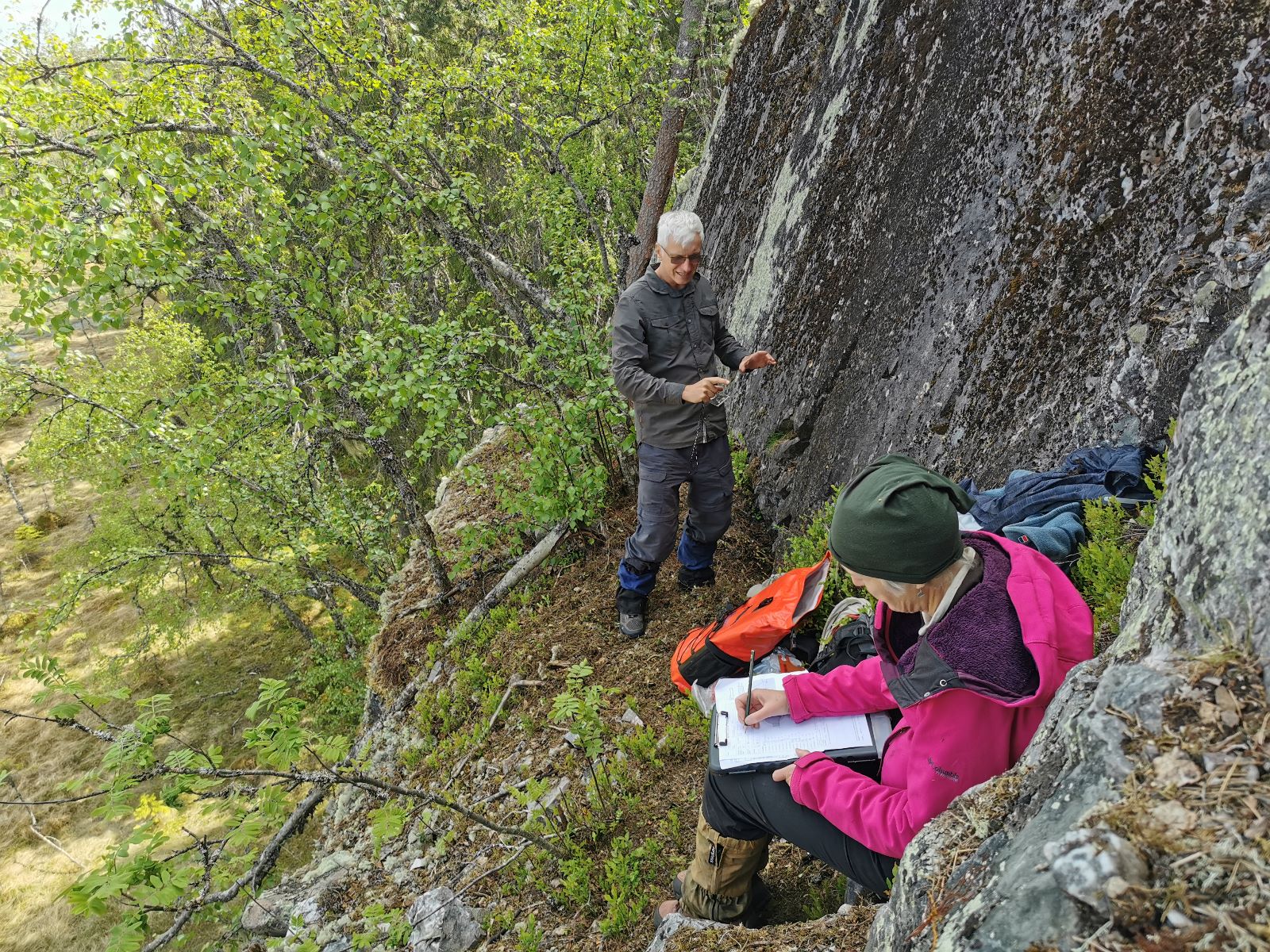
All field work was performed in the northern boreal forest zone in Dalarna and Gävleborg counties, south-central Sweden, which is the southern study area of the SBBRP. After two days of training, citizen scientists were divided into three to four sub-teams each day for seven days of field work. On field work days, citizen scientists were given locations where collar data suggested that bears had spent significant time either denning or around a kill site. Citizen scientists then went to those locations and defined den types (anthill den, soil den, rock den, basket den or uprooted tree den), recorded bed material thickness, size and content, as well as all tracks and signs around the den sites to elucidate whether a female had given birth to cubs during hibernation. All first scats after hibernation and hair samples found at those locations were also collected, and the habitat type around the den and the visibility of the den site were described.
In a very significant contribution to the SBBRP’s field work, the expedition visited 43 winter positions and investigated 37 dens of 30 bears, which represents about 75% of all winter positions that the SBBRP recorded in 2022. Previous expeditions investigated 34% (2019) and 50% (2022) of all winter positions recorded. The significant 2023 expedition increase is due to the extra two field days introduced with this expedition. Additionally, the expedition collected 100% of scat samples that the SBBRP normally collects during a research season. Previous expeditions collected 50% (2019) and 100% (2022).
As in 2022, two bears shifted their dens at least once during the hibernation season. In total, the expedition found 37 dens; five soil dens, eleven anthill dens, four anthill/soil dens, seven stone/rock den, five dens under uprooted trees and five basket dens. Unusually again, as in 2022, one pregnant female that gave birth to three cubs during winter, and one female that hibernated together with dependent offspring spent the winter in basket dens. Normally basket dens are mainly used by large males.
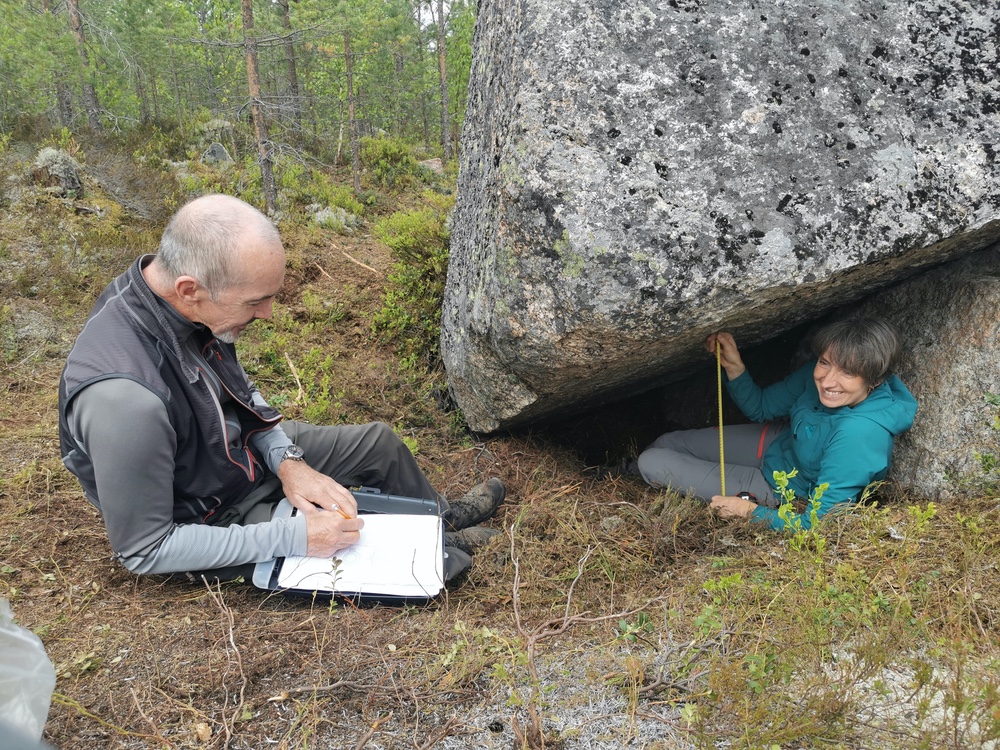
Excavated bear dens had an average outer length of 2.0 m, an outer width of 2.2 m, and an outer height of 0.7 m. The entrance on average comprised 16% of the open area. The inner length of the den was on average 1.4 m and the inner width was 1.3 m. The inner height of the dens was on average 0.7 m. Bears that hibernated in covered dens used mainly mosses (43%), field layer shrubs (21%) and branches (22%) as nest material, which reflected the composition of the field layer and ground layer that was present at the den site. However, bears that hibernated in open dens such as basket dens, preferred mosses (64%) followed by grass (17%); and field shrubs (17%) as nest material. The expedition found ten first post-hibernation bear scats at the den sites.
Twenty-seven bears selected their den sites in older forests, and three bears in younger forests. The habitat around the dens was dominated by spruce (Picea abies) 39%, scots pine (Pinus sylvestris) 36% and birch (Betula pendula, Betula pubescens) 26%.
The SBBRP is very thankful for Biosphere Expeditions’ significant annual data collection aiding its long-term study of brown bears. With the help of these data, three reports and publications are on course to be published within the next two years: (1) A global review of the factors influencing den types of brown bears, (2) a brown bear dietary specialisation Master thesis based on faecal samples and (3) a publication on the effect of den type on hibernation duration and reproductive success.
This rounds up this expedition and here are some feedback videos and a picture gallery of the expedition:
All good things must come to an end. Our Sweden Brown Bear Research Expedition 2023 has finished now. Following a review last year, it was a few days longer than our 2022 expedition, which Andrea and myself really valued. We gathered significantly more data following the initial training and Andrea was thrilled to discover by the end of the expedition we had surveyed the vast majority of all the dens on her target list for the year. Another great Biosphere Expeditions achievement!
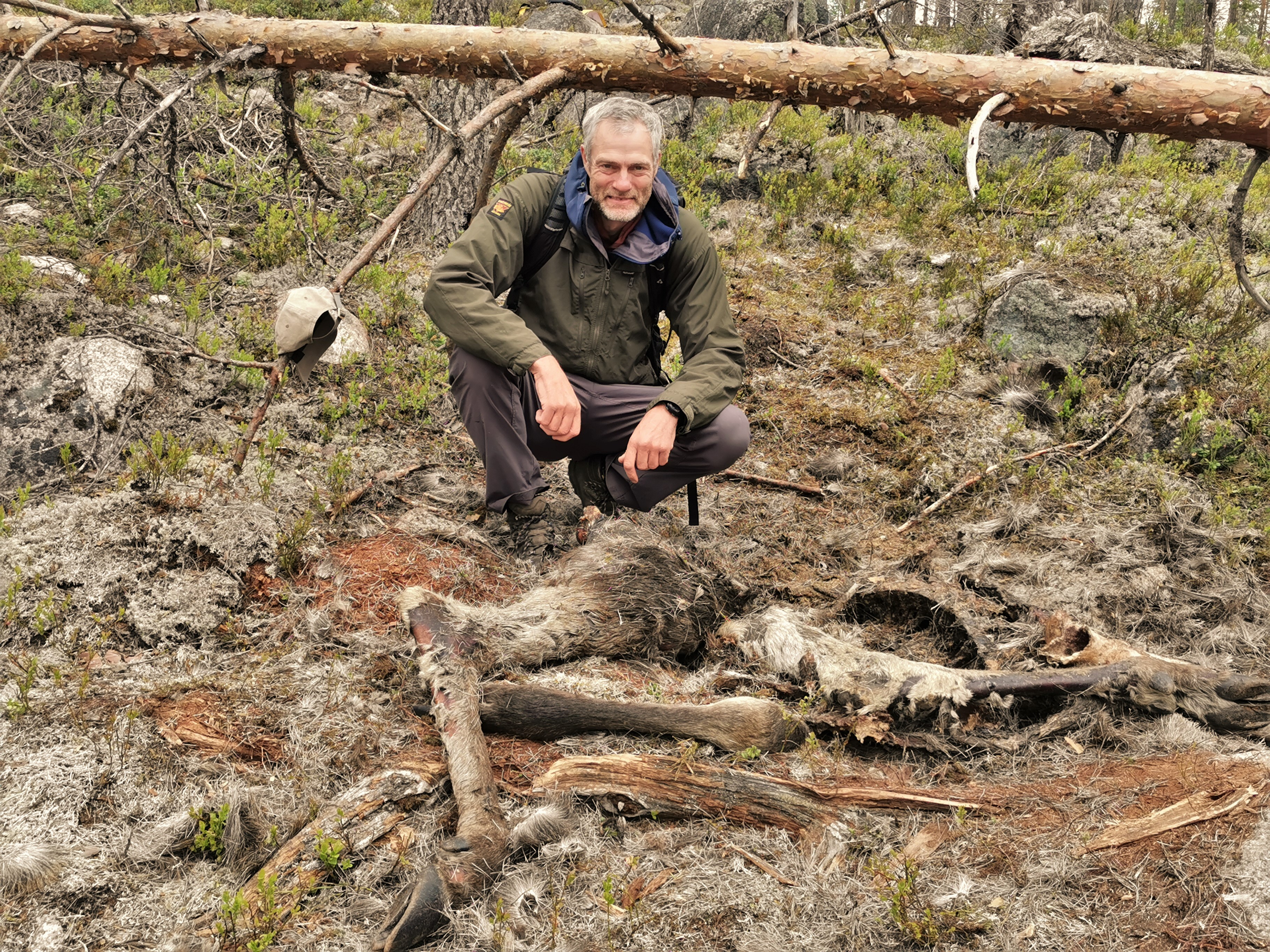
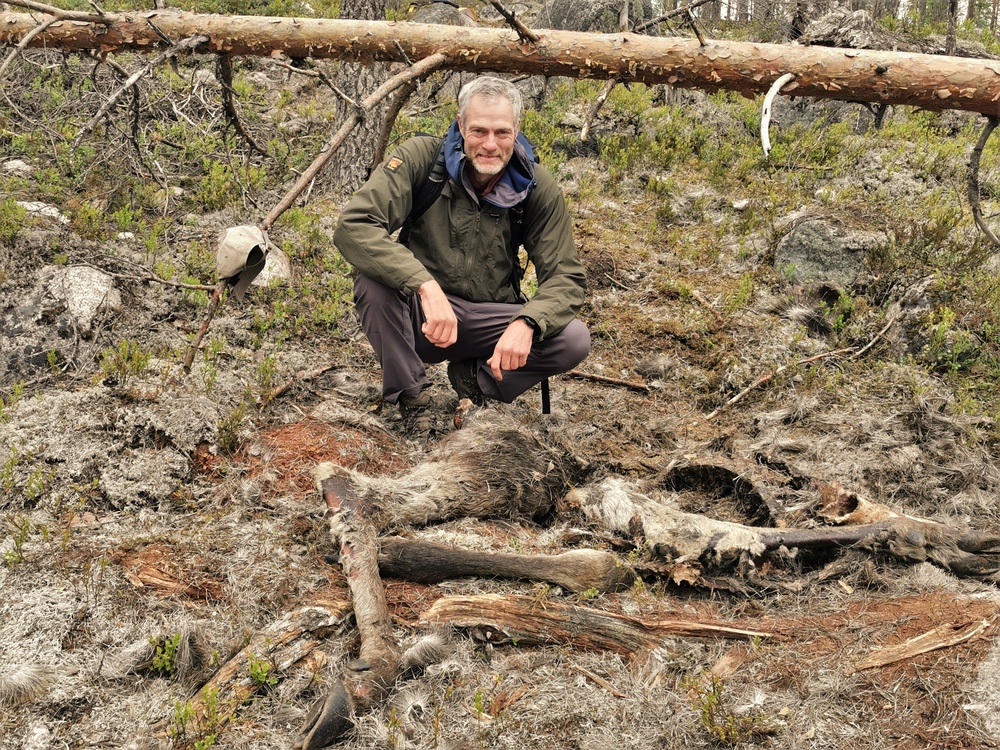
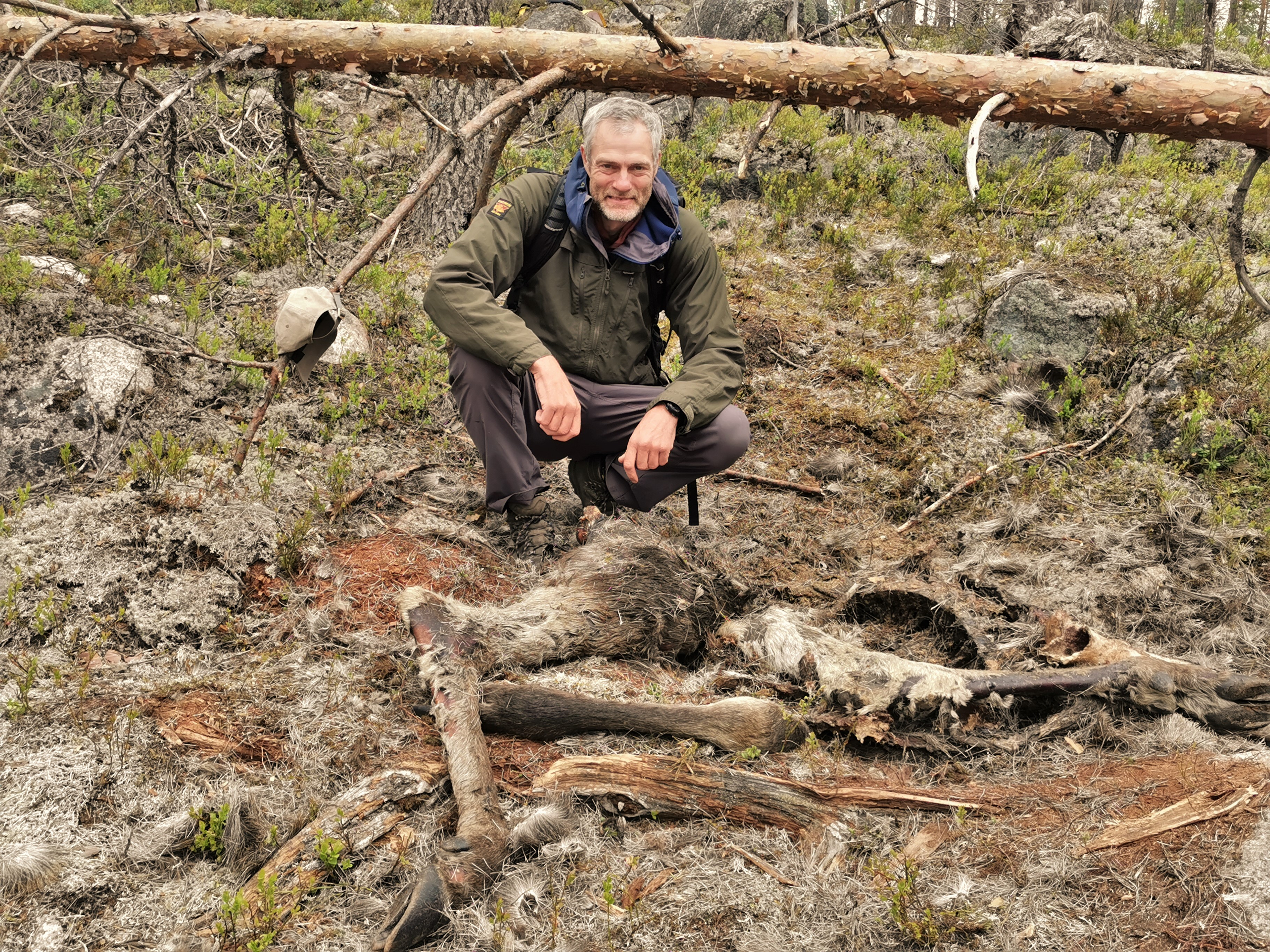
The last days of the expedition saw us working as hard as ever, navigating very much off-piste to find winter dens and recent day beds hidden in the forests. We also found several moose carcasses or remains of moose at day bed sites, giving an insight into the types of food that at least some bears hunt or scavenge on at this time of year.
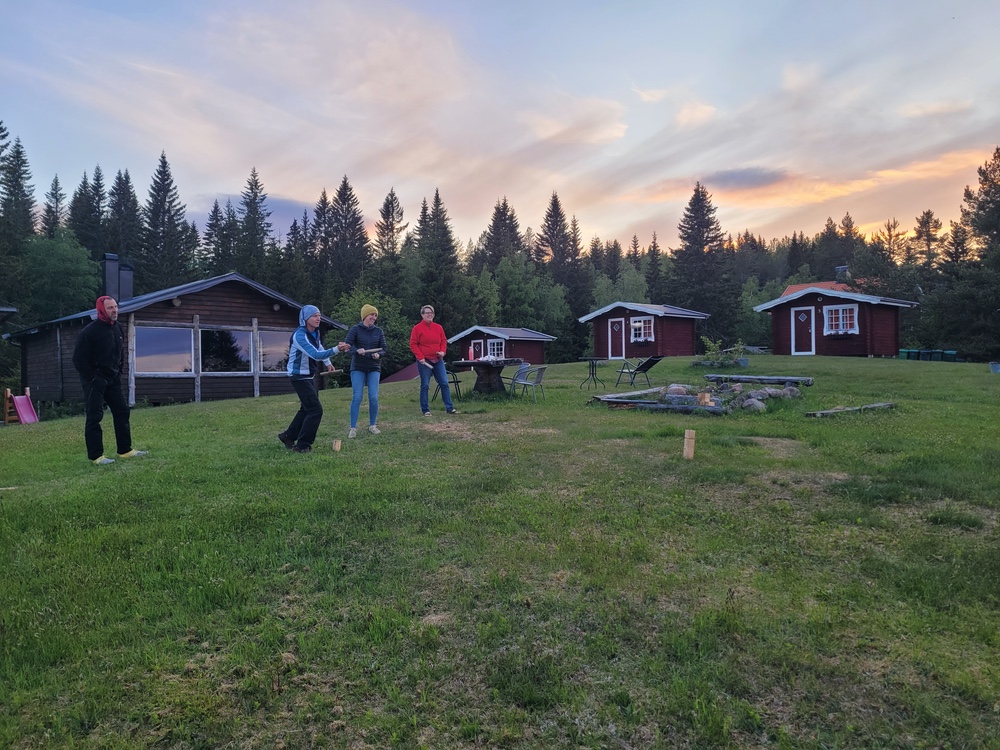
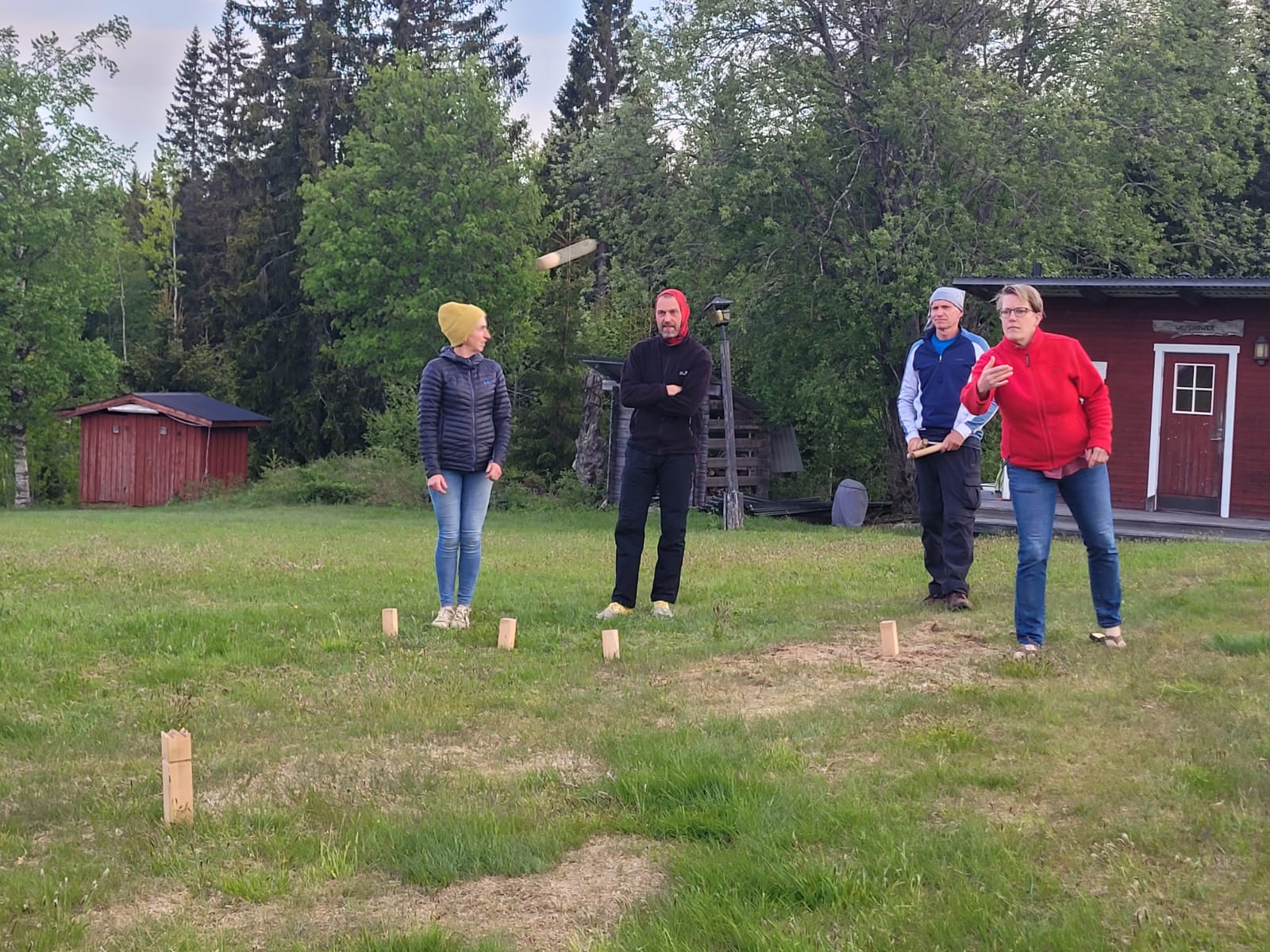
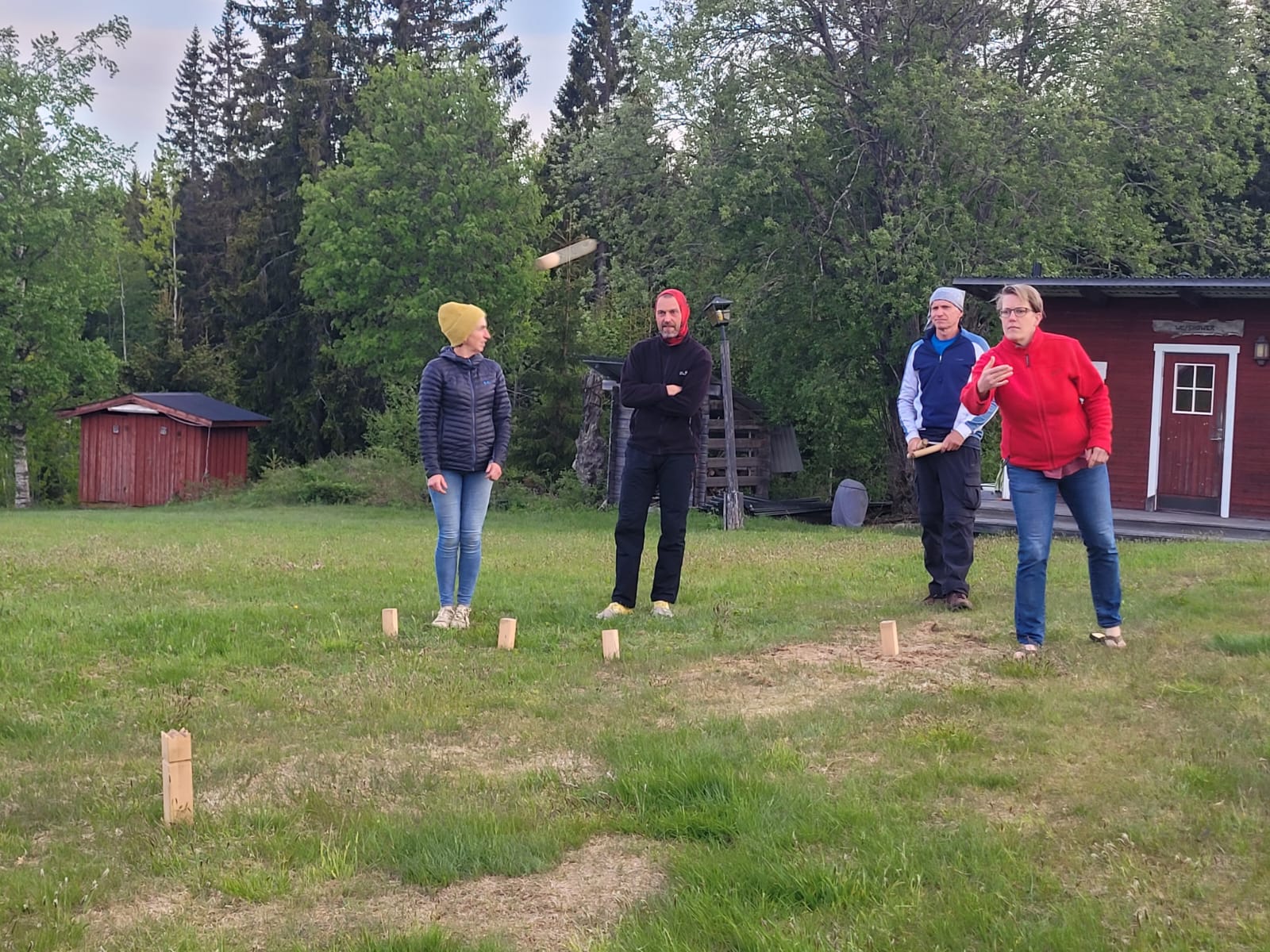
Our last night was celebrated with wonderful food, a review of everything we had achieved, with much appreciation from Andrea for the amount of quality data gathered by a hard-working team of committed citizen scientists and a late night impromptu game of Viking Chess outside as the sun dropped below the trees.
Altogether our expedition team visited 68 sites in eight days of field work. This included 38 winter dens, 3 sites where the den could not be found and 27 day bed or likely scat sites. We collected 35 scat samples to be sent off for analysis. Ten of these were ‘first scats of the season’: especially valuable samples that can reveal much about hibernation.
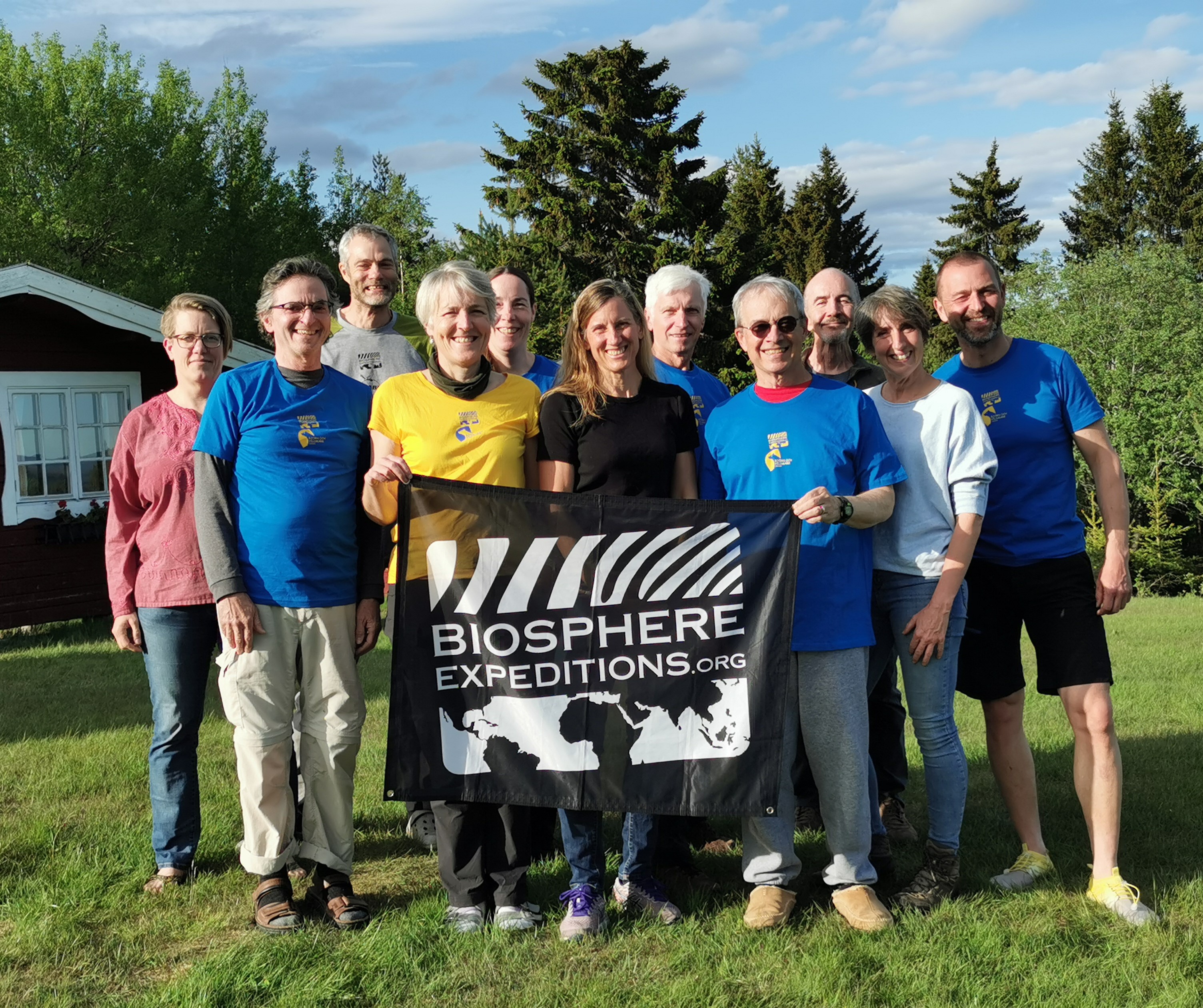
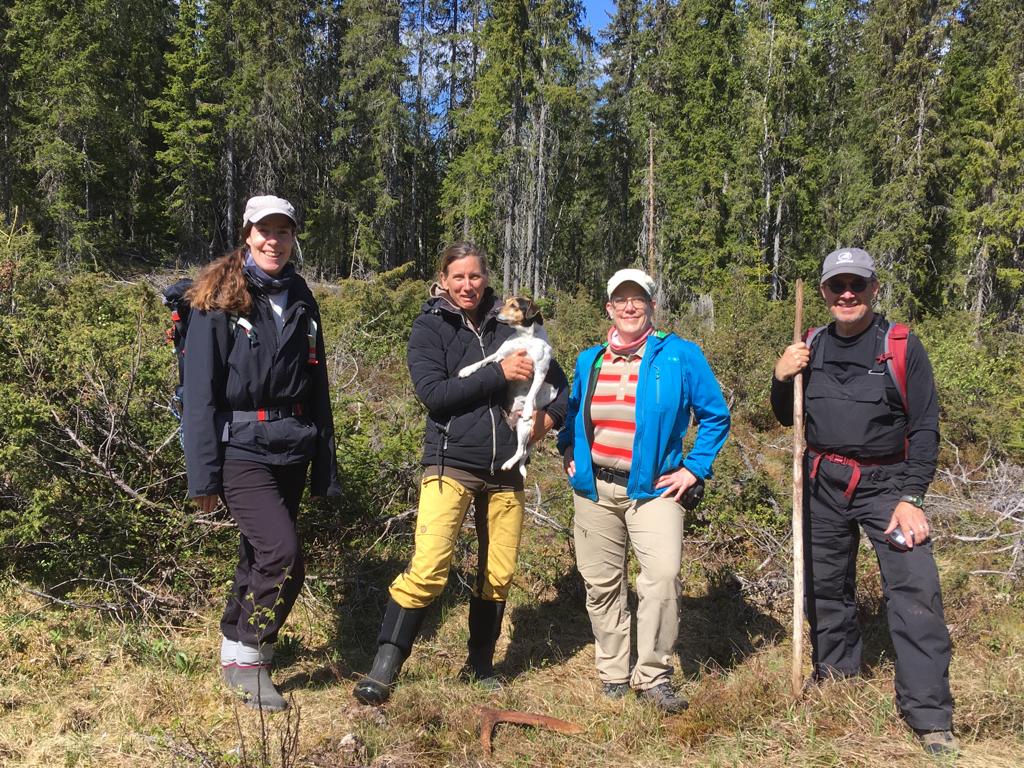
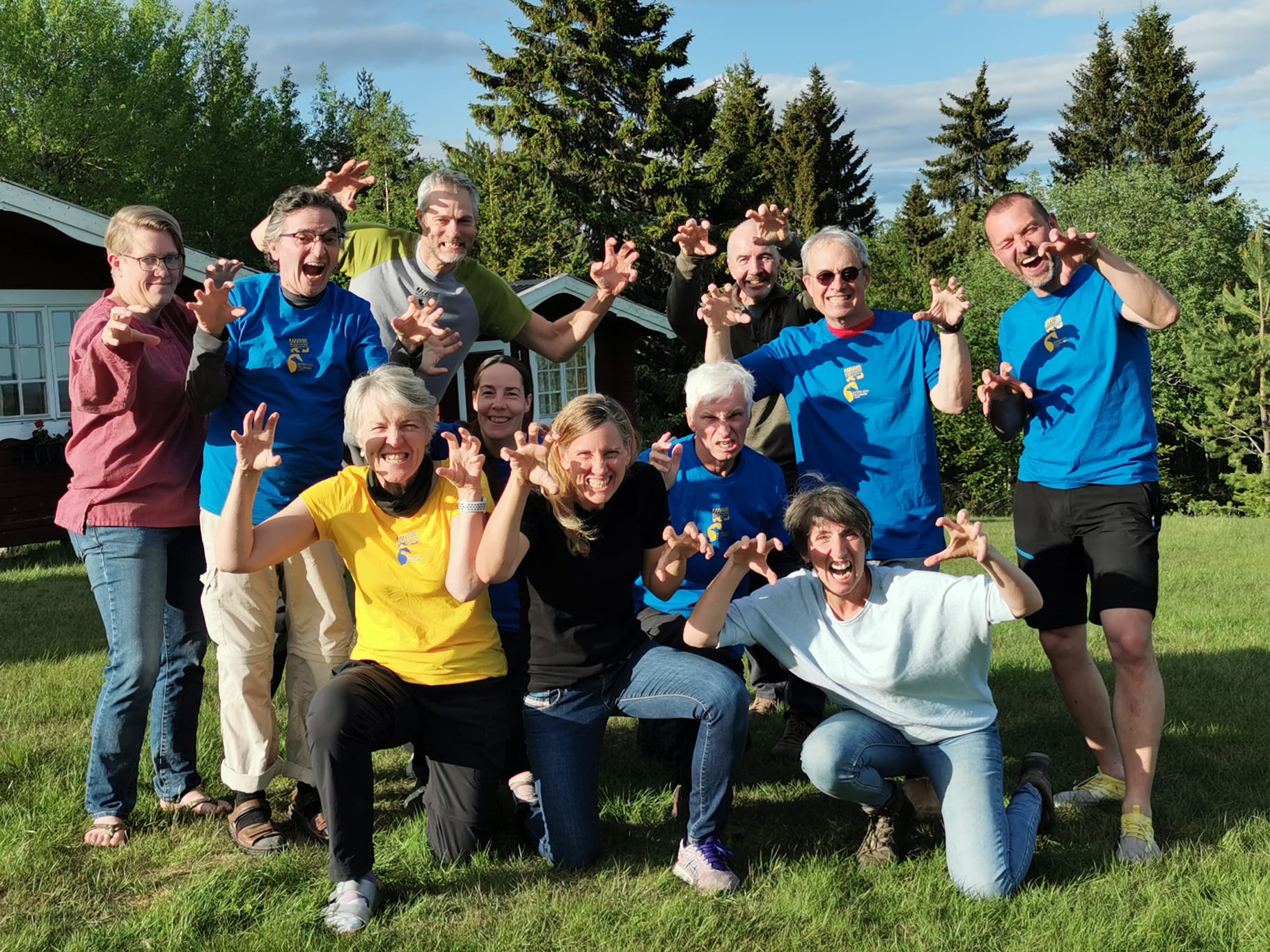
All this is a significant achievement and scale of effort by a top team of citizen scientists. I would like to give my heartfelt thanks to everyone on this very successful expedition – to Andrea, who explained and trained us in the research so well (and welcomed us on to her property to use as our base camp), to Louise who fed us so well and to our magnificent group of citizen scientists who threw themselves into this expedition with a great attitude, got on really well as a team and gathered a considerable quantity of high quality data. You make a vital contribution to the evidence base needed for successful conservation of Brown Bears in Scandinavia.
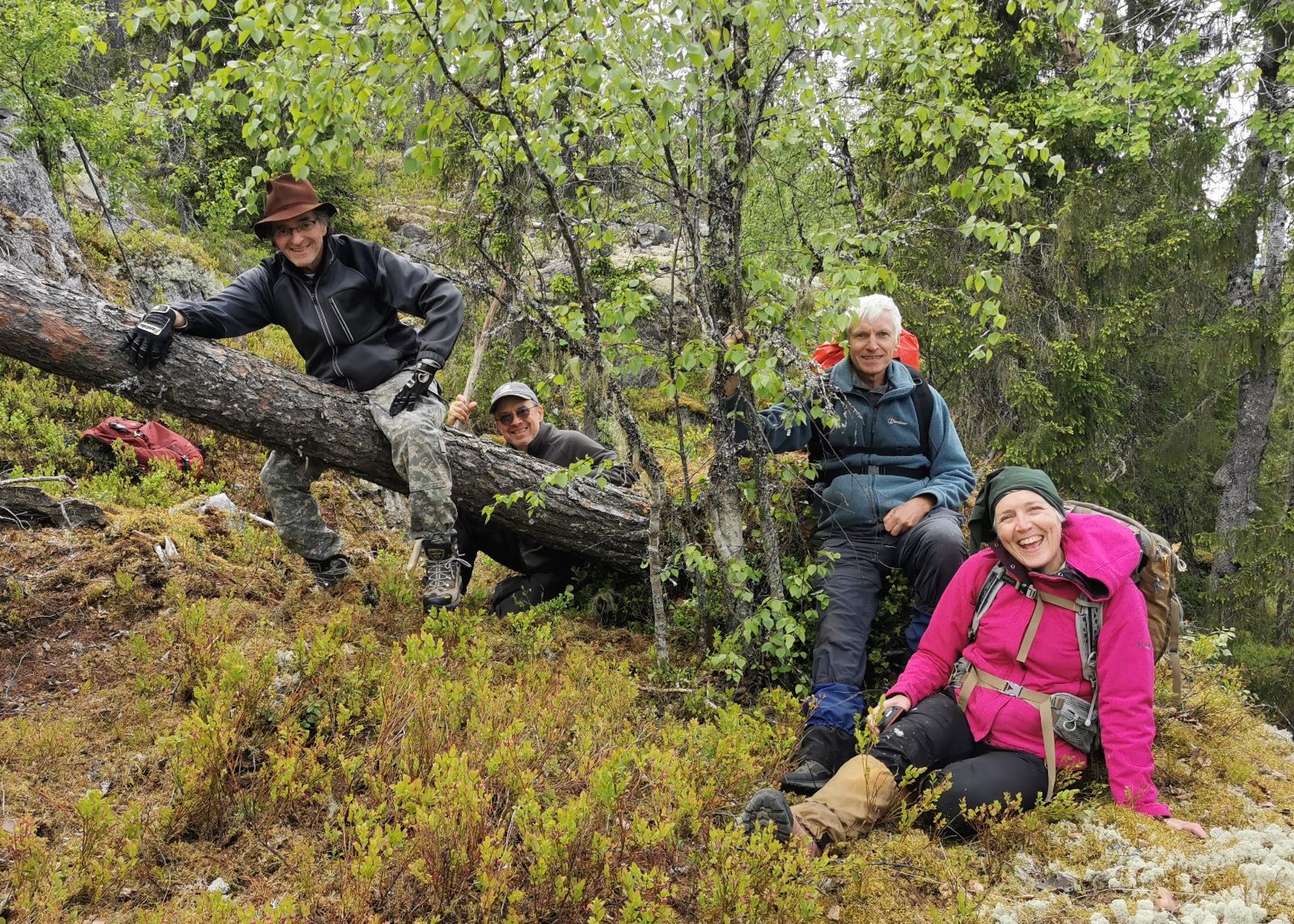
We have been working hard, finding bear dens in difficult places, investigating the sites where tracked bears have spent time on one spot and then returning to base to enter the hard-won data into the computer. The rewards for this work come from the pleasure of contributing to a research programme that forms the basis for brown bear conservation action – but also good company, excellent food, the beauty of the Swedish forest, and a small break we enjoyed together on day 6.
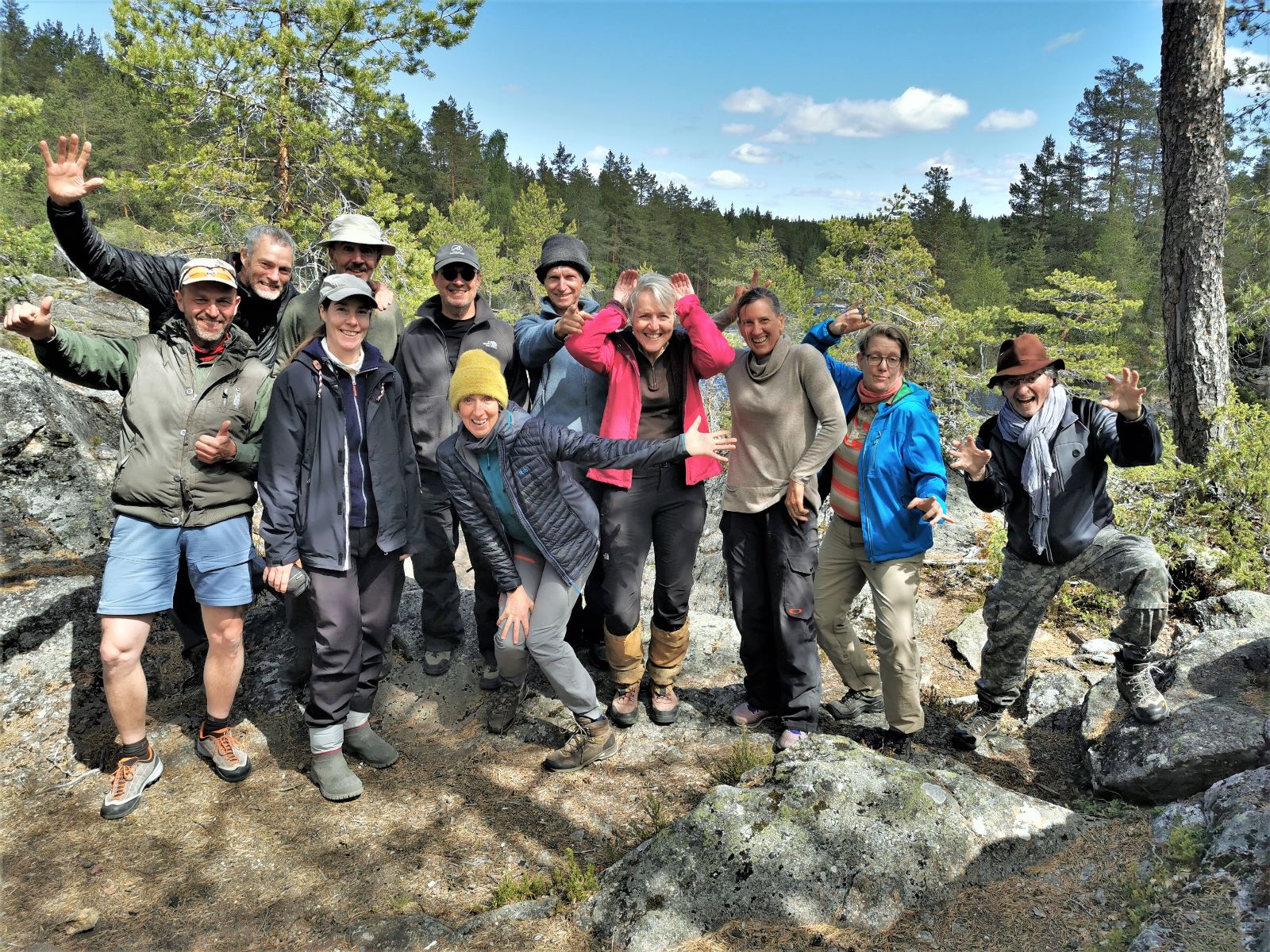
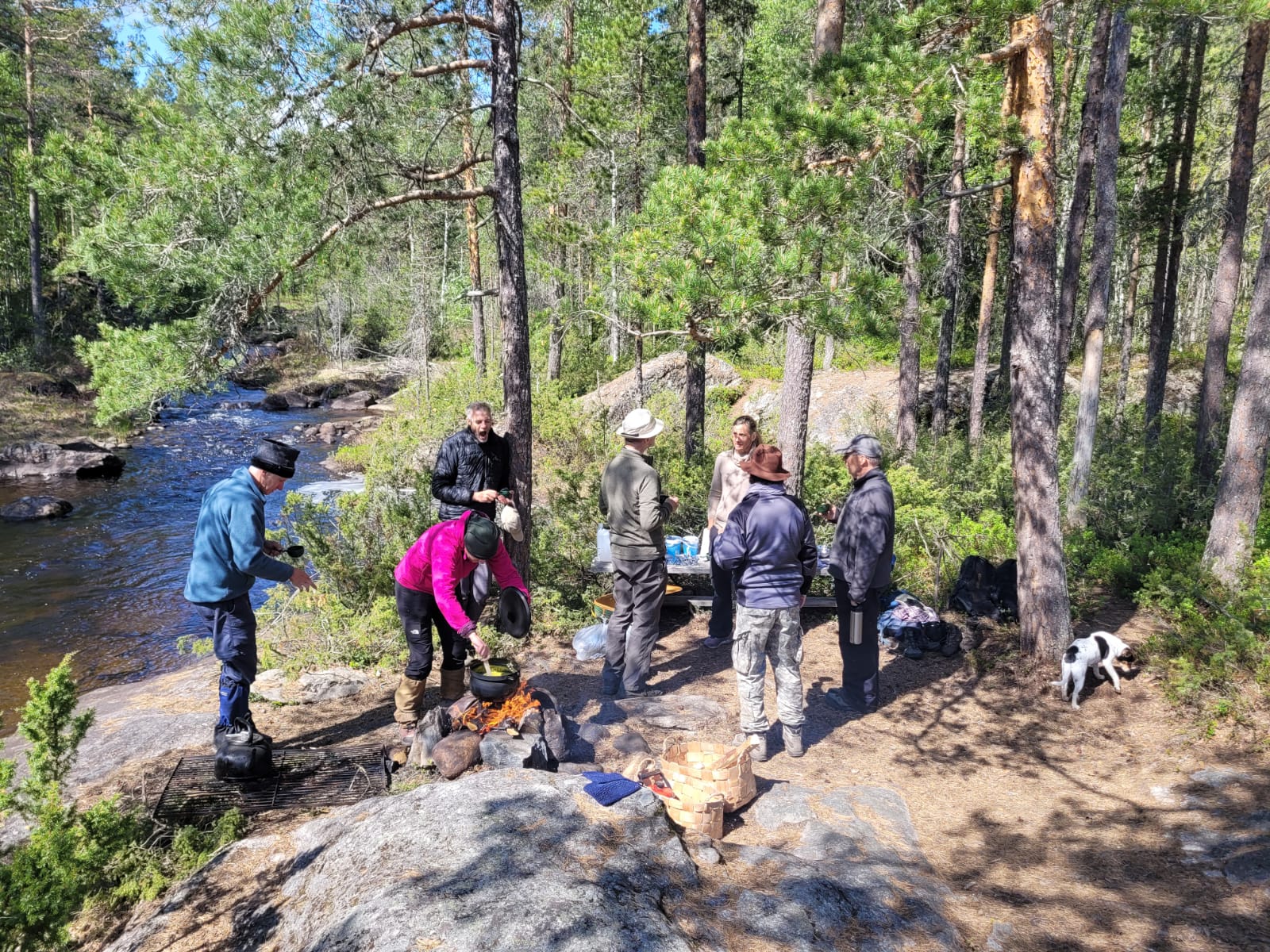
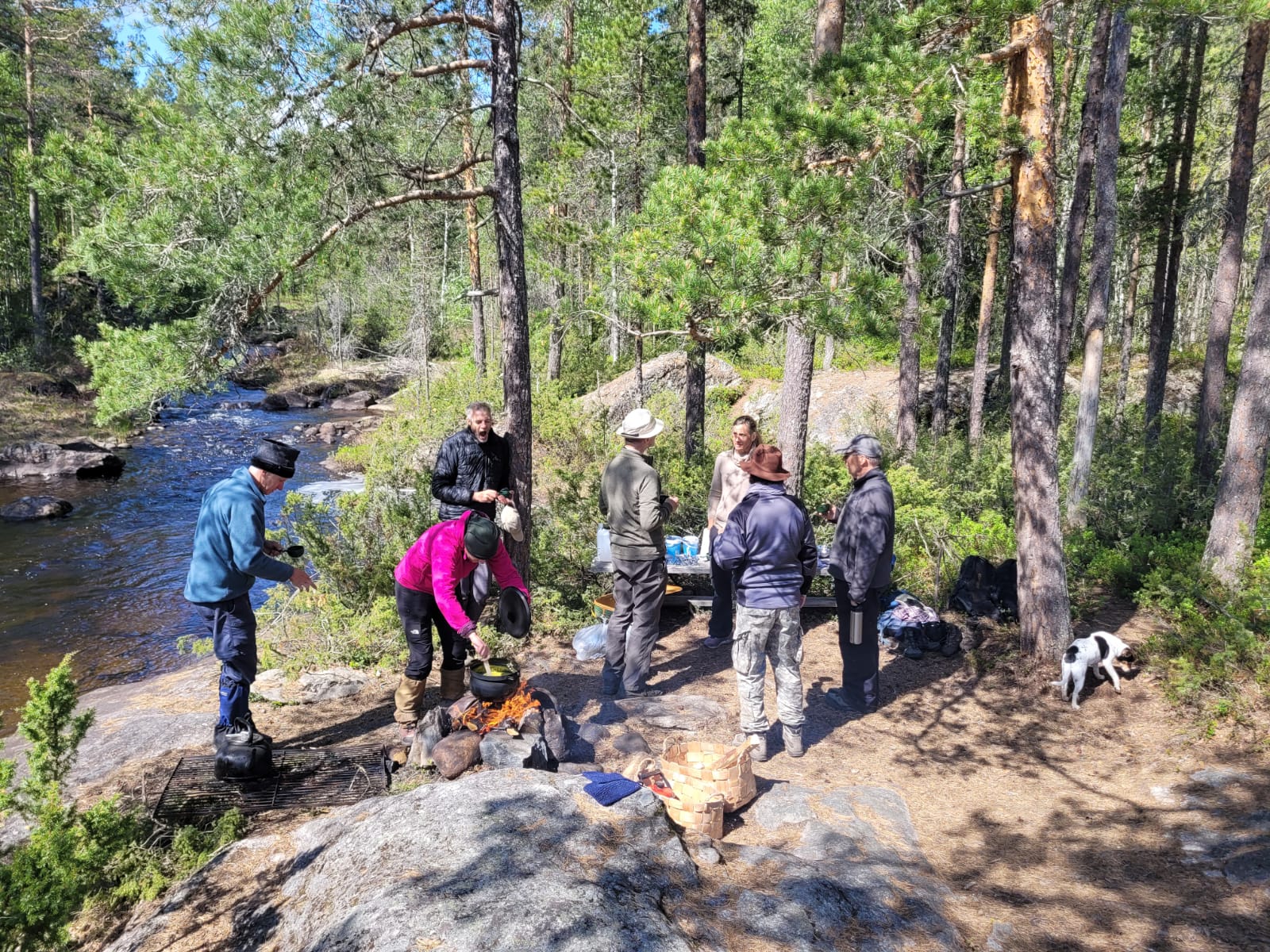
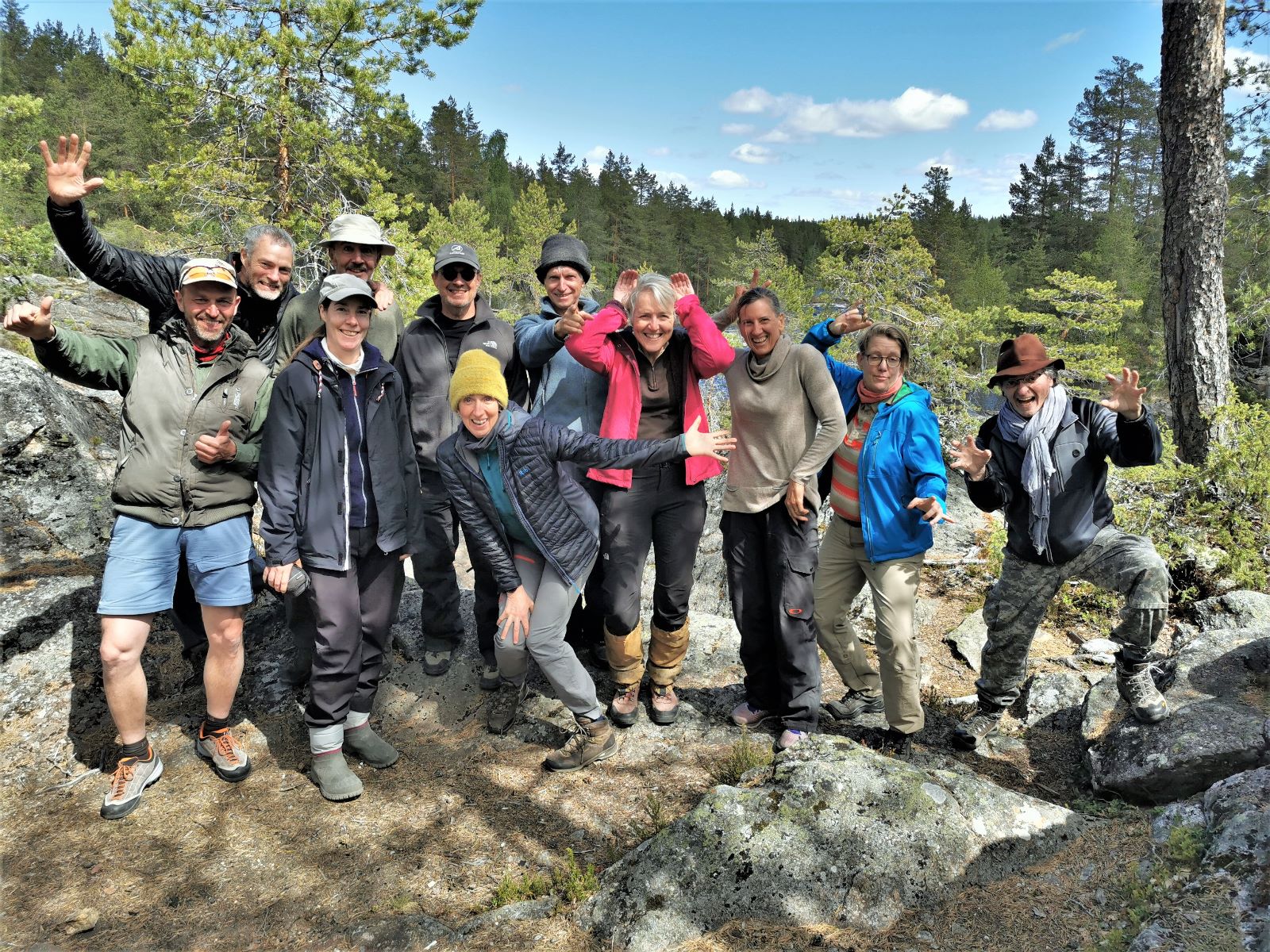
Conveniently near to a bear day bed site we needed to visit that day, is a delightful spot where the river Voxnan rushes down through a rocky gorge in a forest of pine and birch. Here we all met up for a mid-expedition celebratory lunch of pea soup and pancakes – the traditional Swedish Thursday meal – cooked on a camp fire. Some of the team insisted on immersing themselves in the cold waters of the calmer parts of the river.
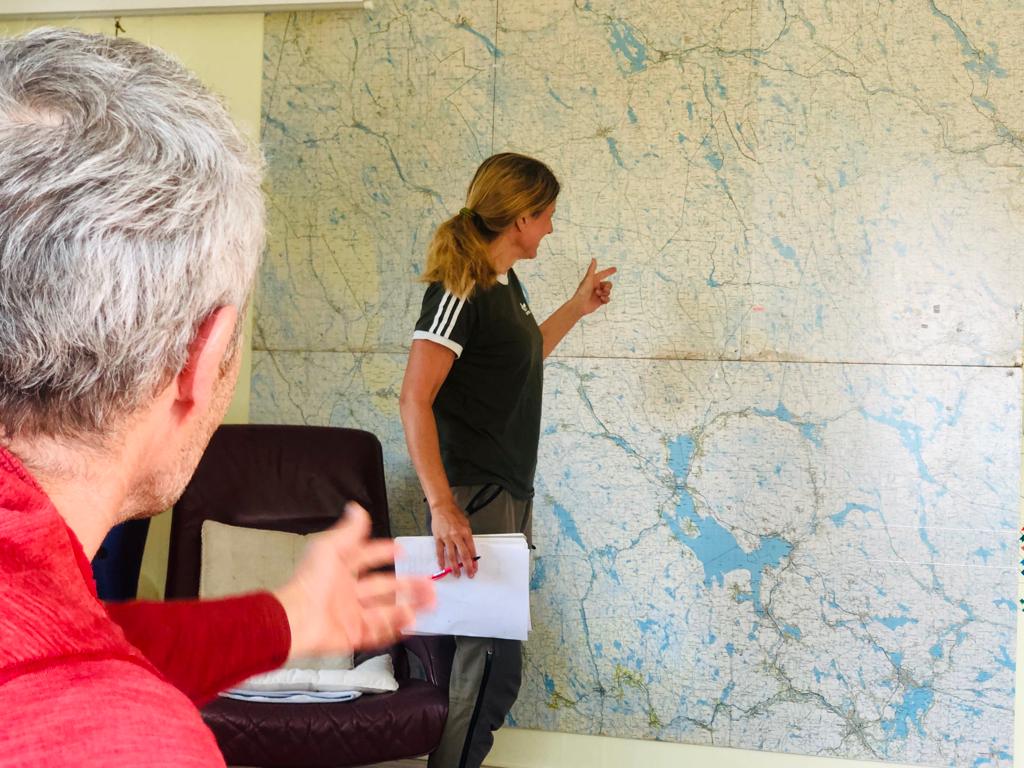
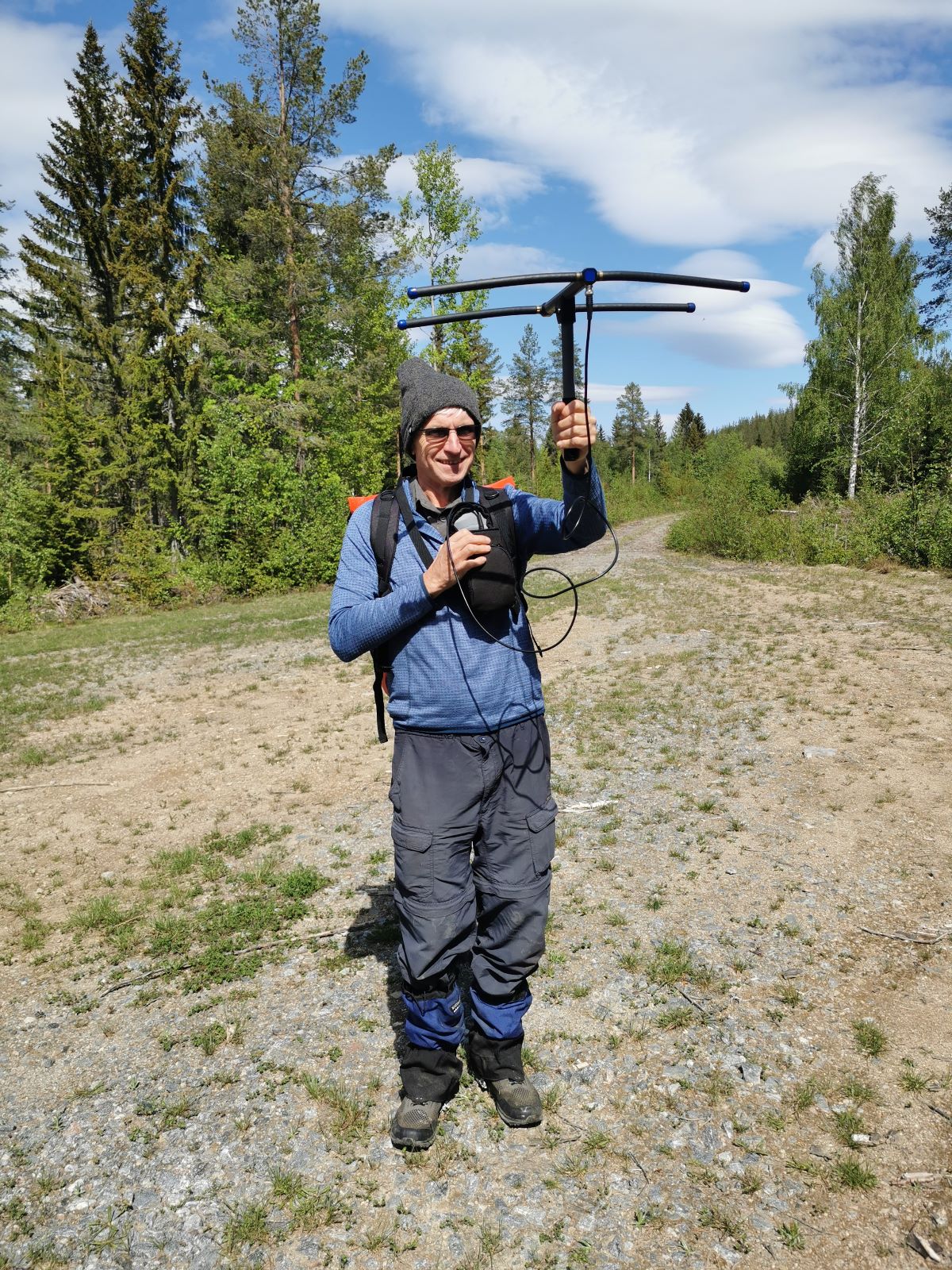
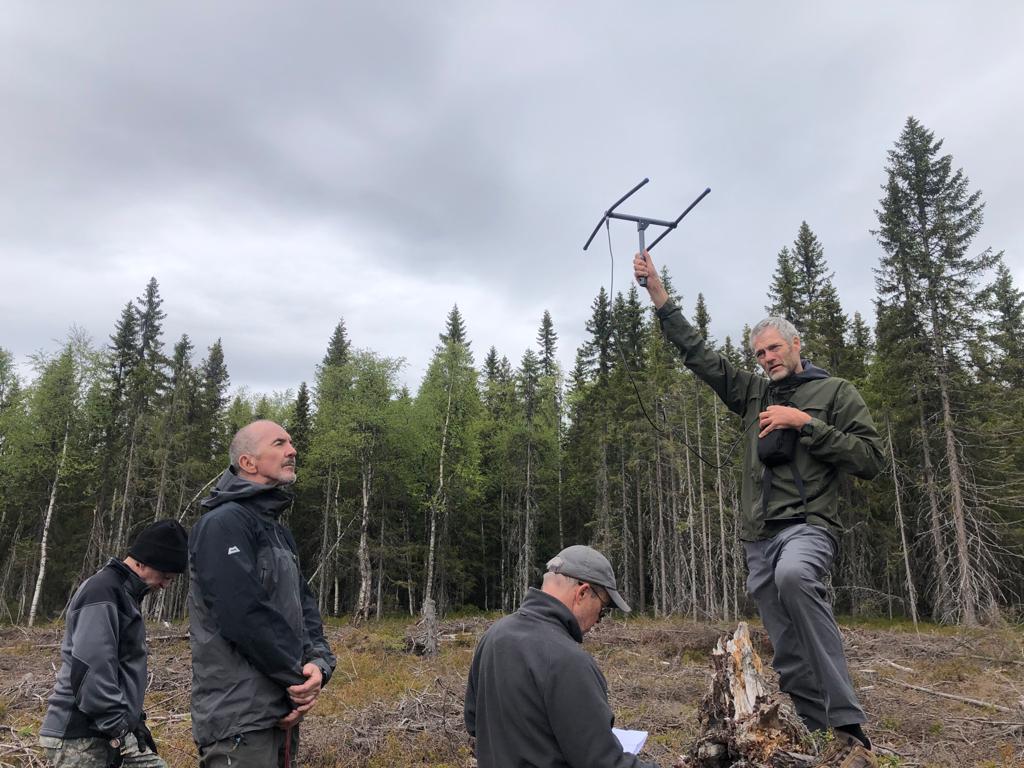
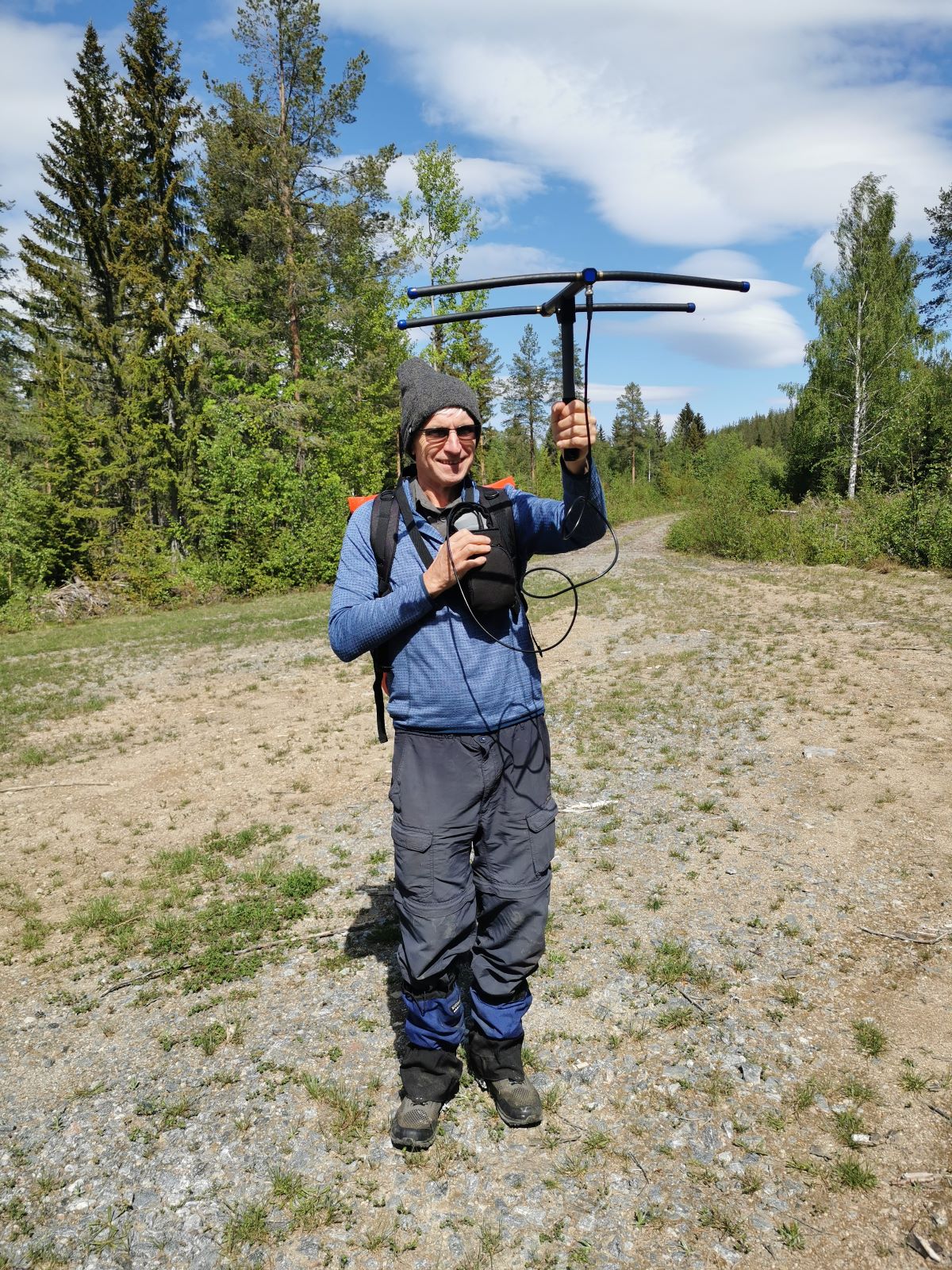
Yesterday, Andrea gave one team an extra job to do. She wanted to know if a particular bear family of mother and two yearling cubs had split up or not. The GPS data from mother and one cub gave recent locations, but had not been updating recently. The second cub did not have a GPS collar, so his location was simply unknown. But all three bears did have radio tracking devices, so our mission was to try and locate all three bears in real time using a directional radio receiver and triangulate the results on a map. This took more time, care and luck than we anticipated! A bear lurking behind a rock or moving off while we are in the middle of trying to locate it can make the whole exercise very difficult. We did at least obtain some partial results showing the cubs in the same approximate area as each other, with the location of mother bear uncertain. Such are the practical realities of conservation research. Some of us ended that long day with a much-earned sauna in the woods at base camp.
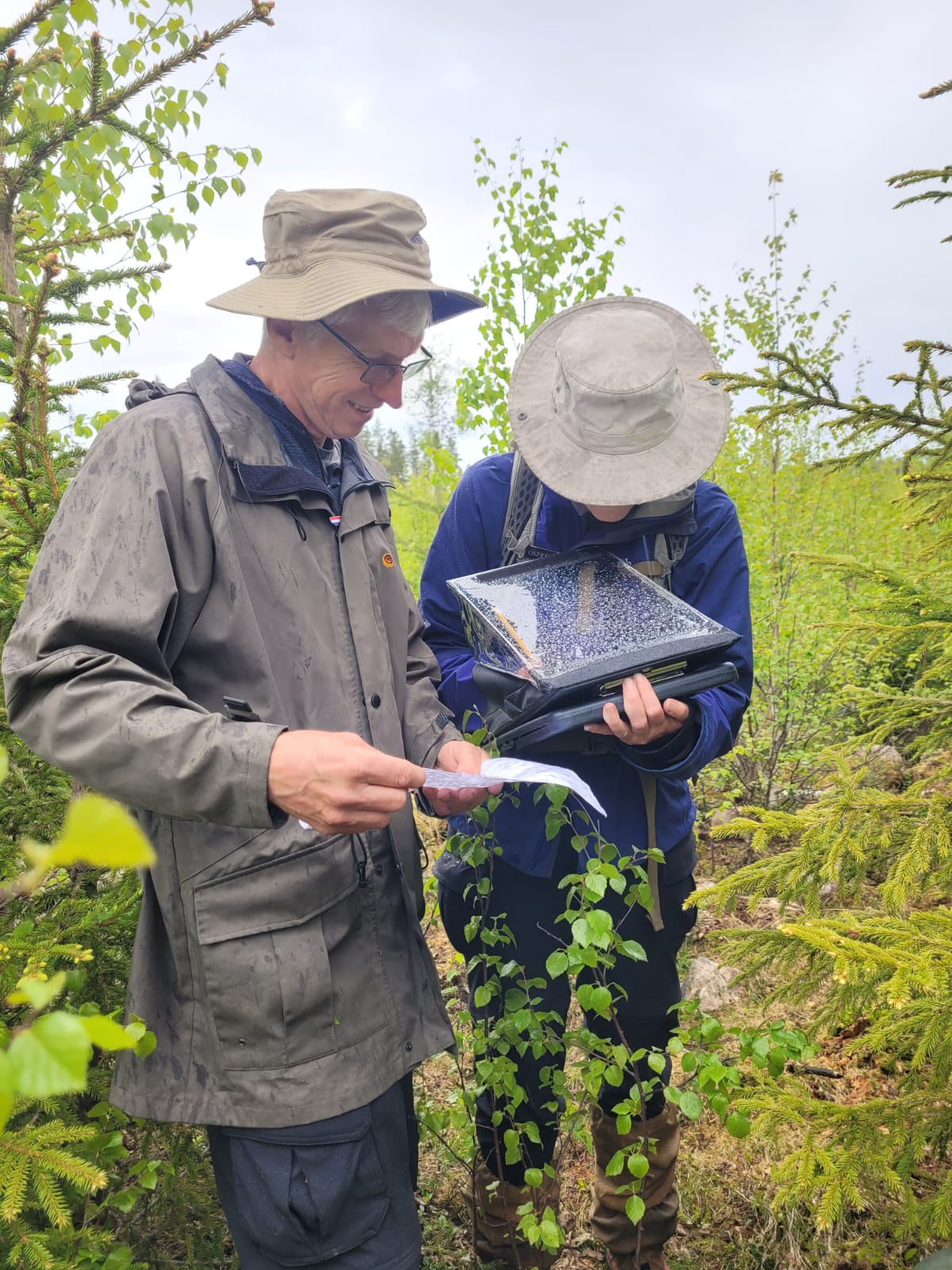
Every morning we are tasked by Andrea, the expedition scientist and bear expert, to visit bear dens and day beds, at specific locations in this beautiful part of Sweden. The den sites are the locations where bears have been seen to hibernate in winter or where the GPS collars of tracked bears report that they stayed over winter. The day bed sites are simply where a tracked bear stayed for a few hours recently – perhaps only the day before – and which give us a chance to find their scat to collect for later analysis or perhaps evidence of a moose that the bear has hunted or scavenged. Bears are not aggressive and avoid humans, but just to err on the side of caution we also sometimes need to use a directional radio receiver to triangulate the latest position of a bear with a radio collar to make sure it is not still loitering in the location we plan to visit.
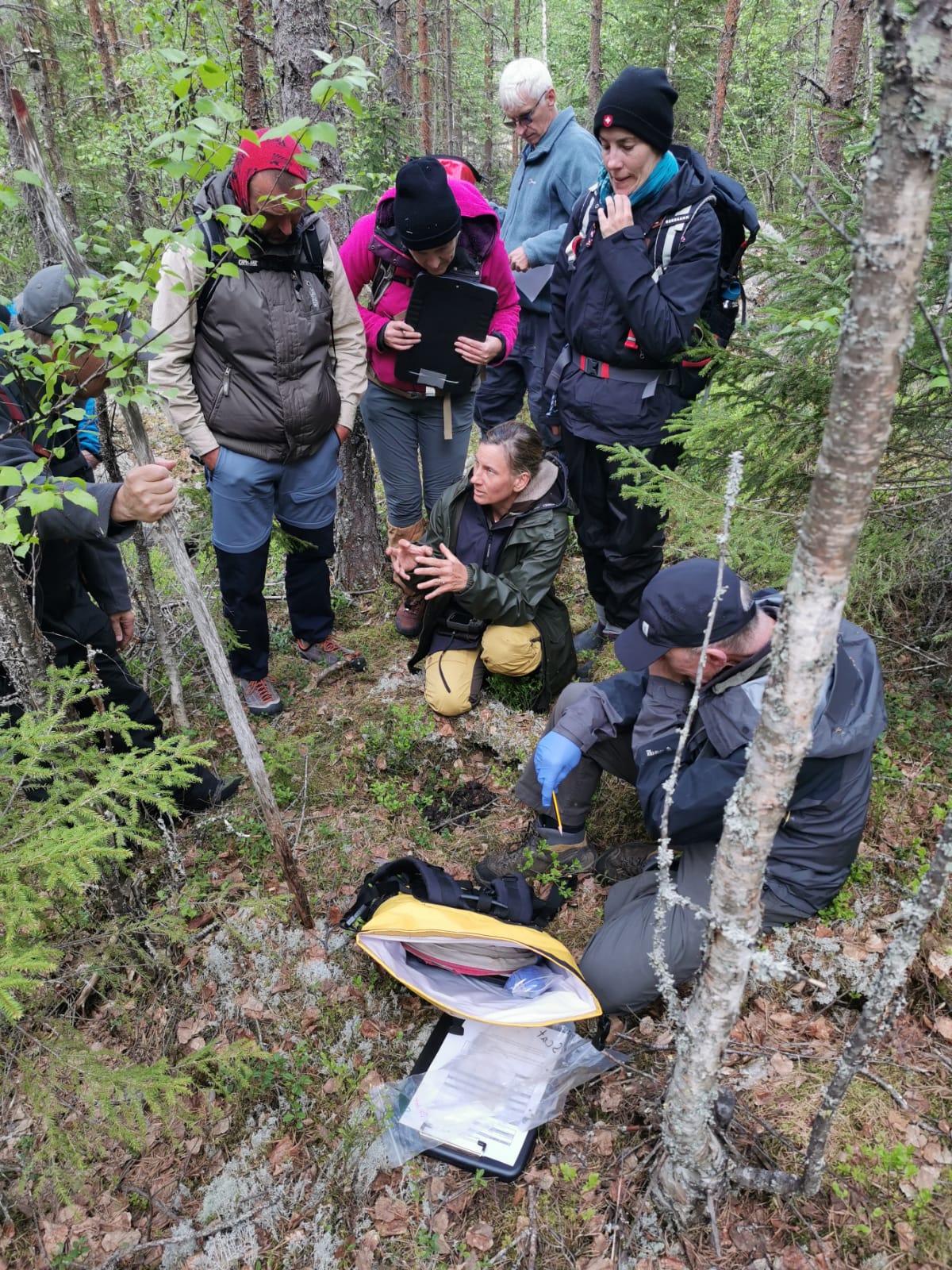
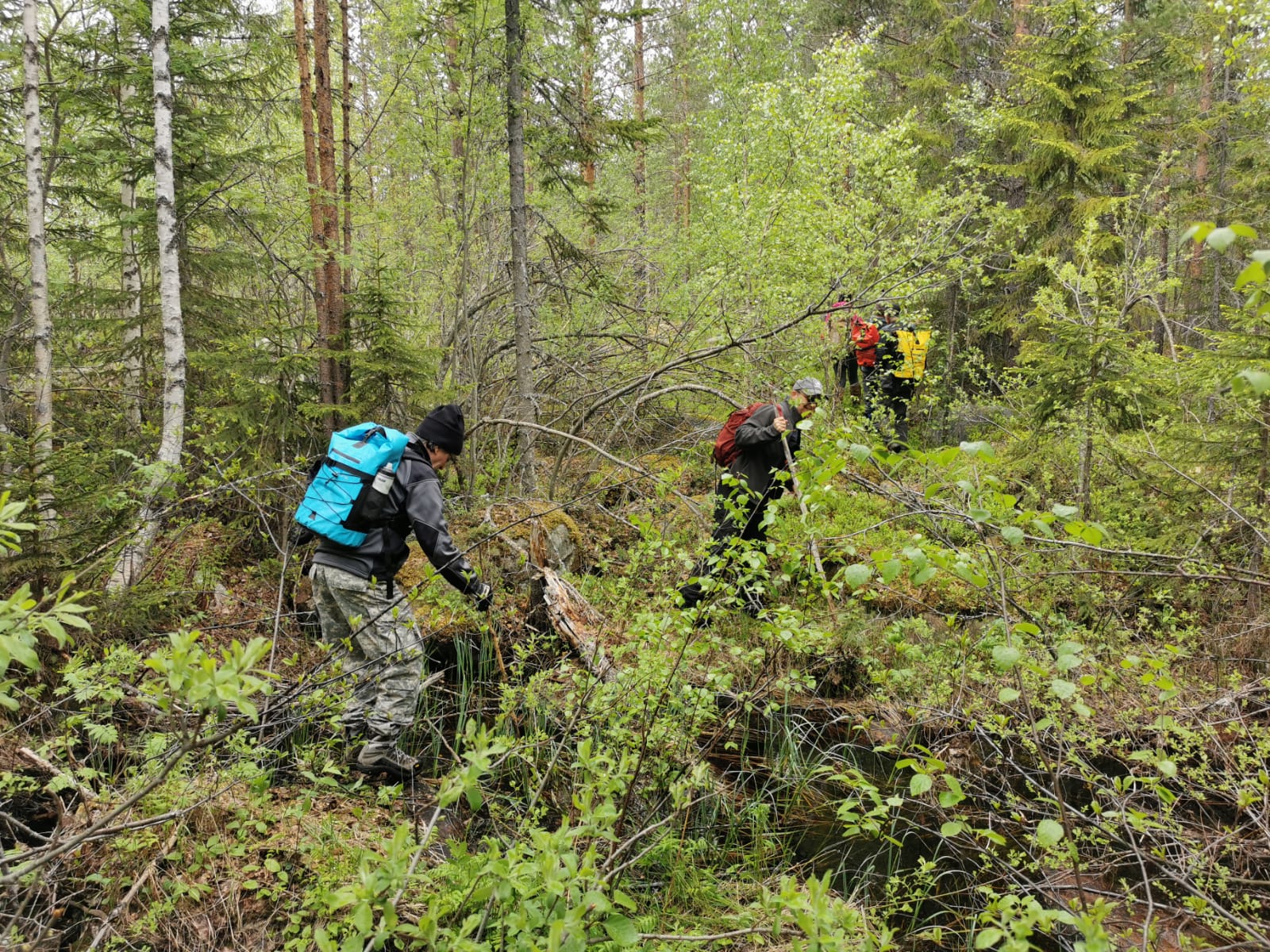
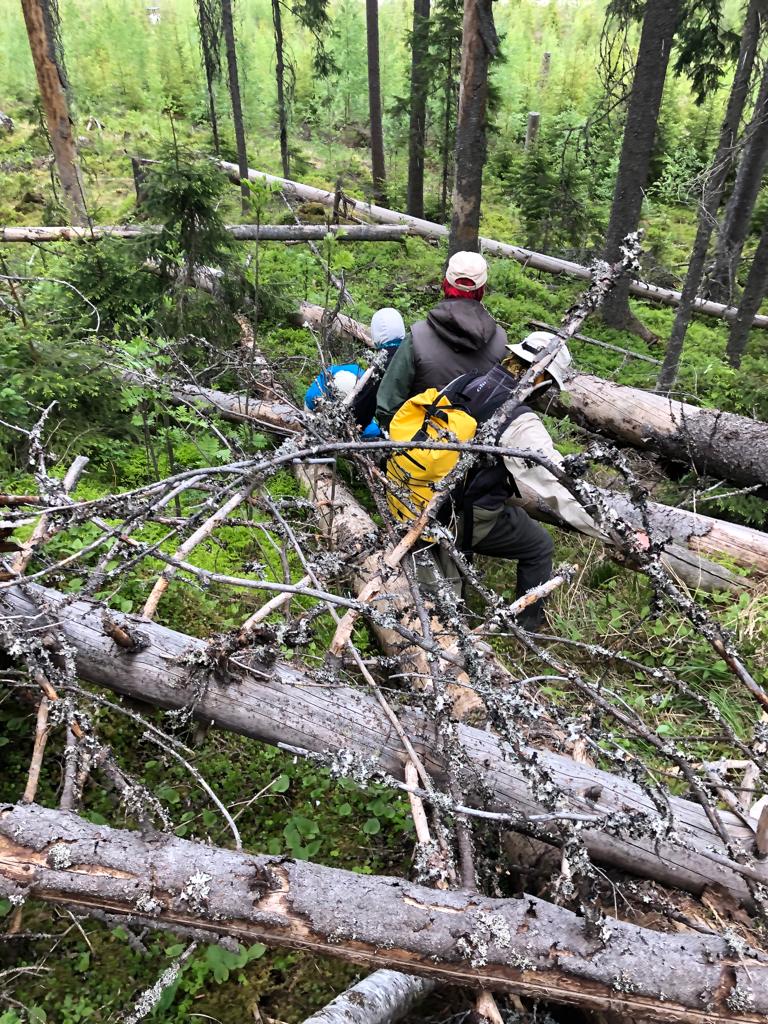
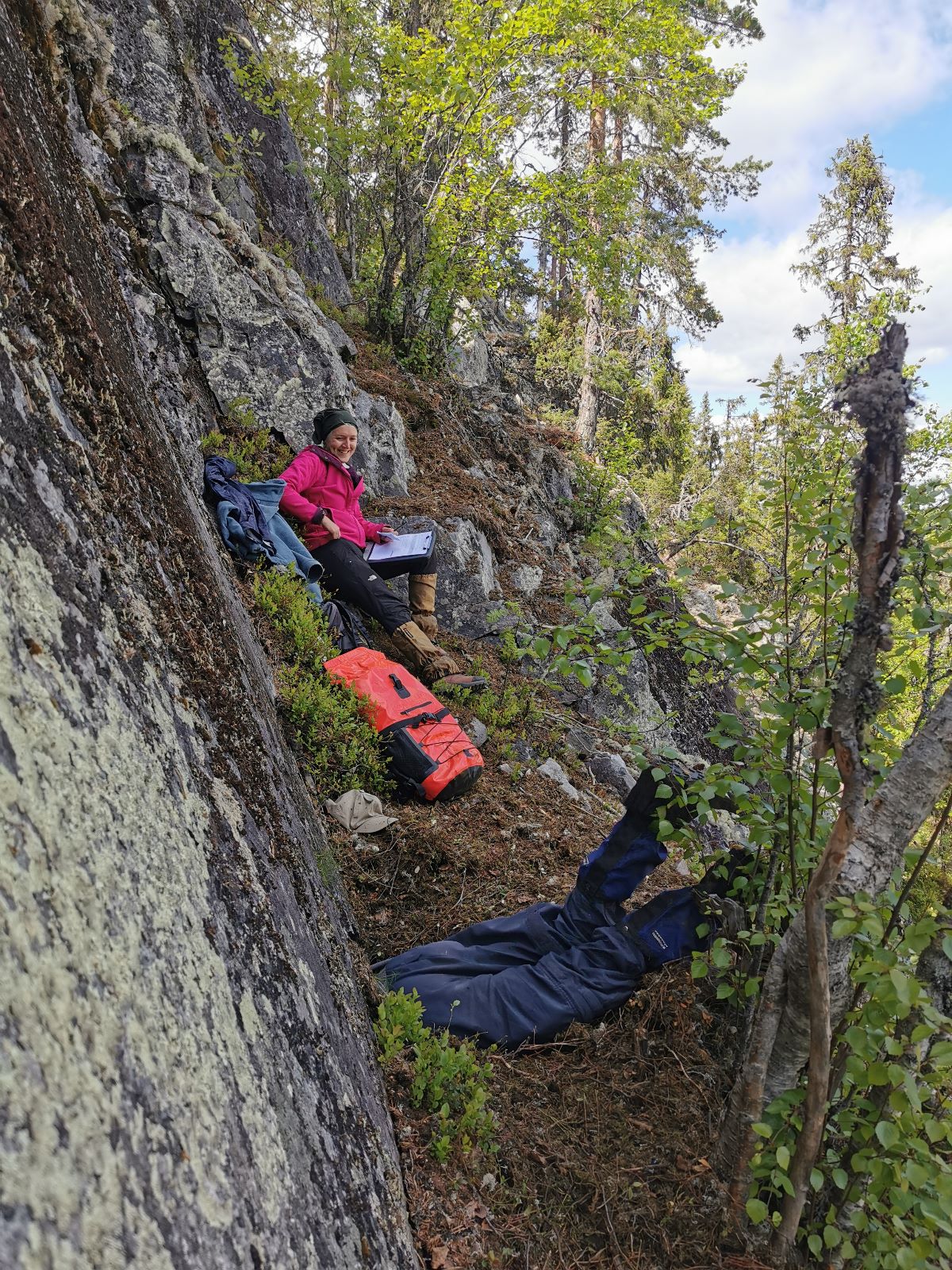
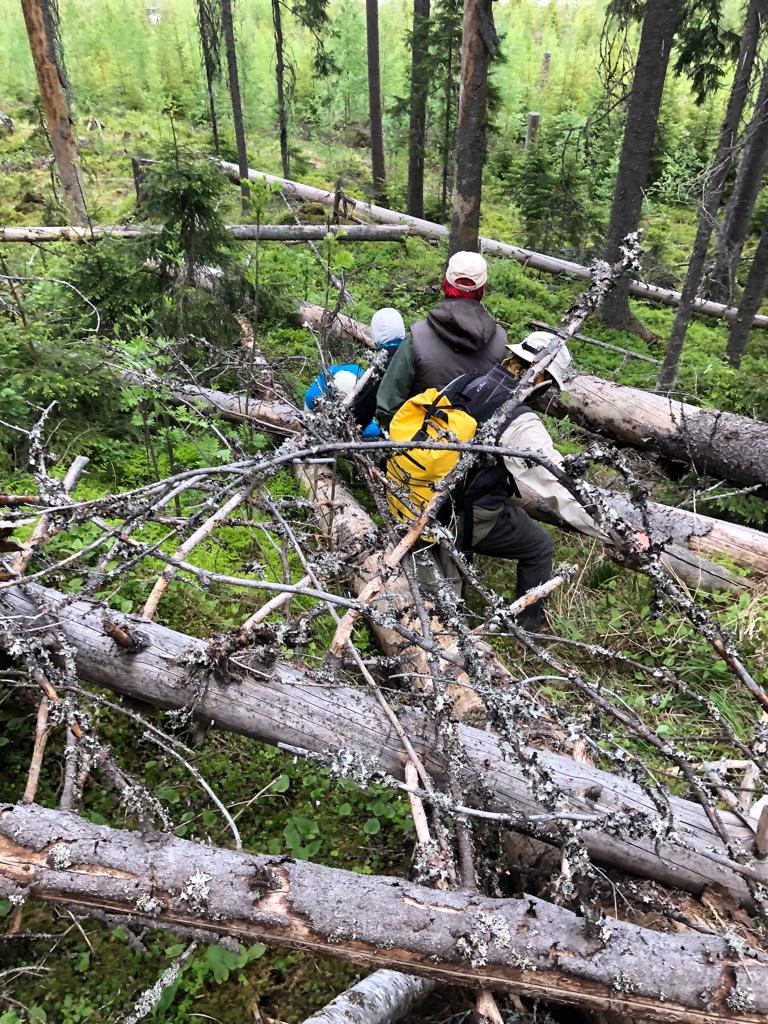
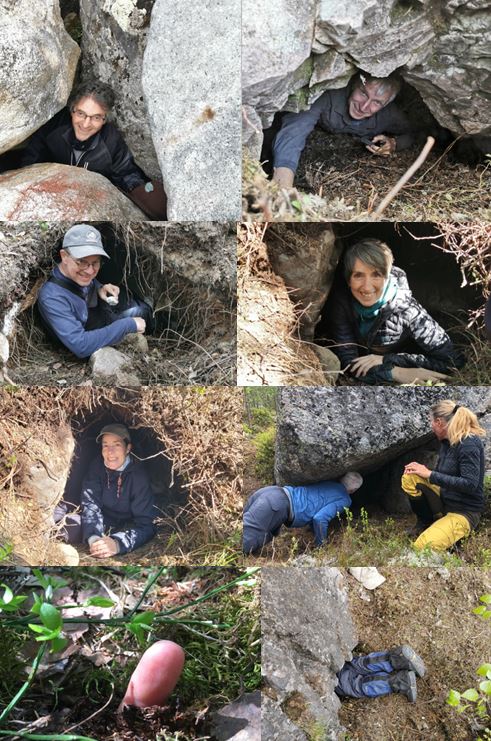
Finding a den always brings a thrill. Sometimes, they are obvious – a big old anthill in a forest clearing, exactly where the GPS pin shows it. Other dens need more work to find and we need to spend an hour or so fighting through the undergrowth, climbing through a maze of fallen tree trunks or investigating every rock crevice before we come across the den. Each den is unique. The expedition’s research aims include learning more about how the bears’ choice of den relates to the available habitat, any impacts of climate change and the bears’ condition. This year we have discovered a notably wide variety of bear dens. Dens built in uprooted tree roots, dens dug into the side of a hill, anthills excavated to create a cosy igloo of pine needles, open nests and rocky caves. We categorise and measure each one.
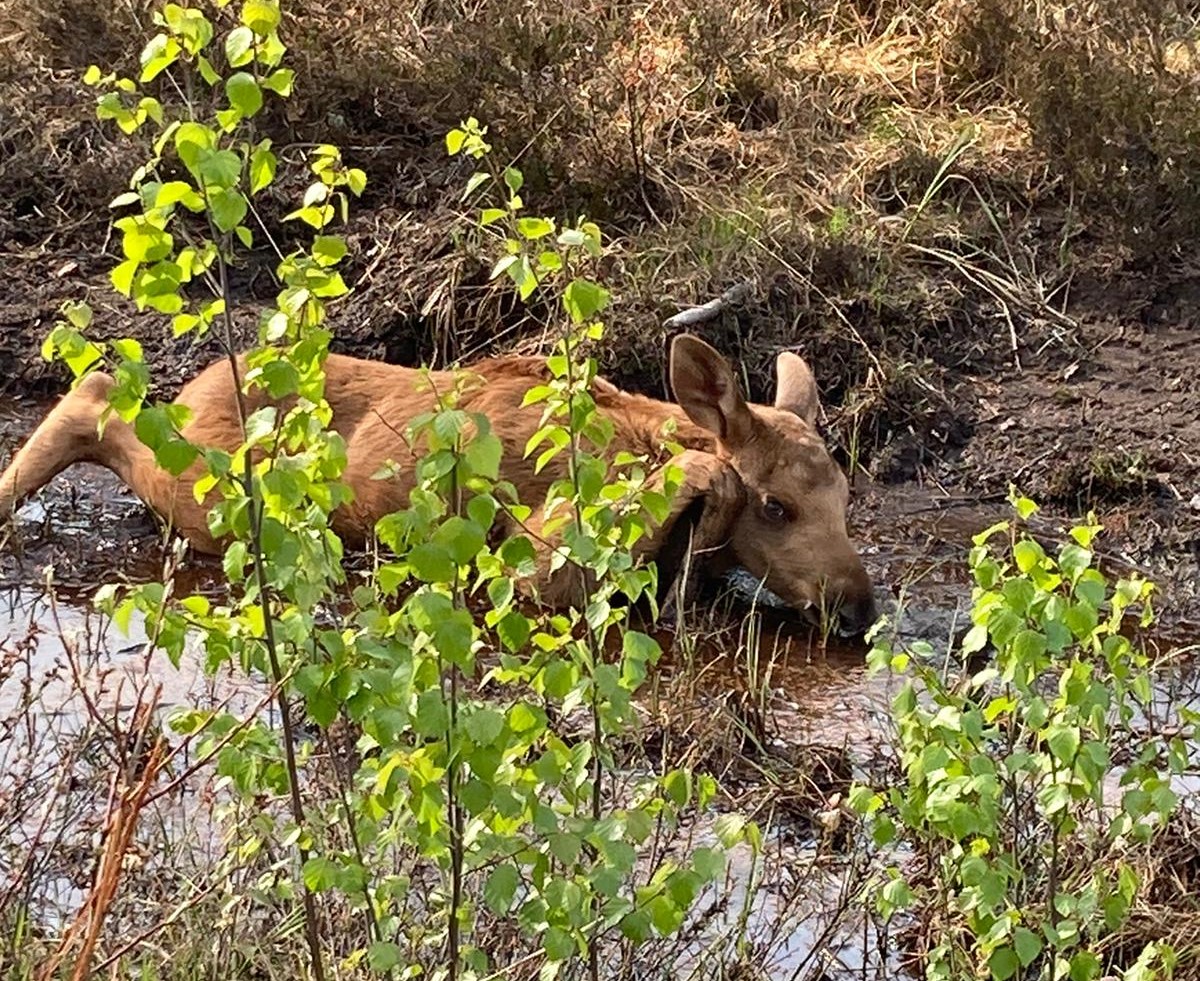
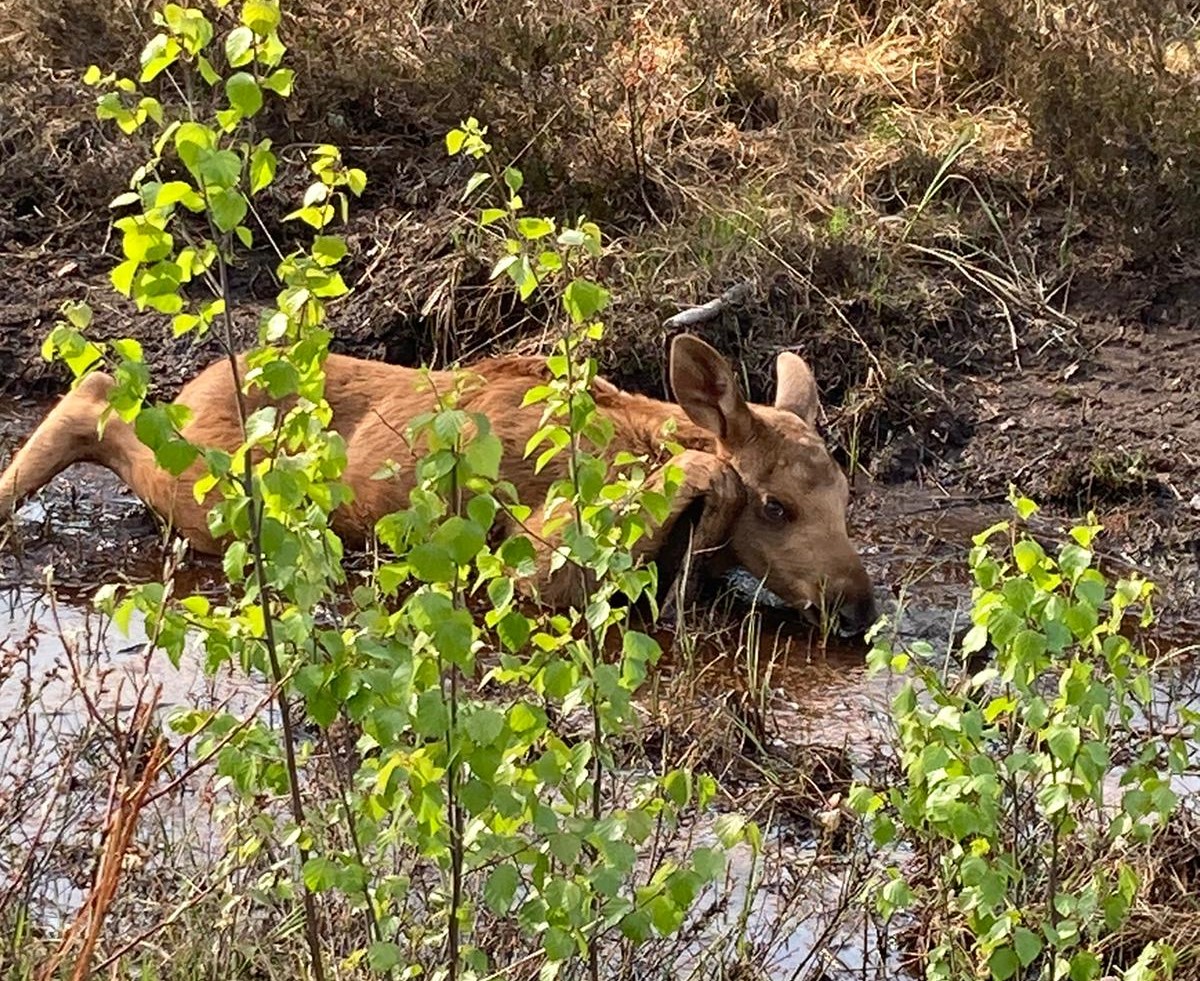
Yesterday we had our first moose sighting: a mother and calf, wandering along the forest edge. We stopped and watched: the mother walked off to a safe distance, the calf took cover in plain sight in a ditch right next to us. It was a special moment.
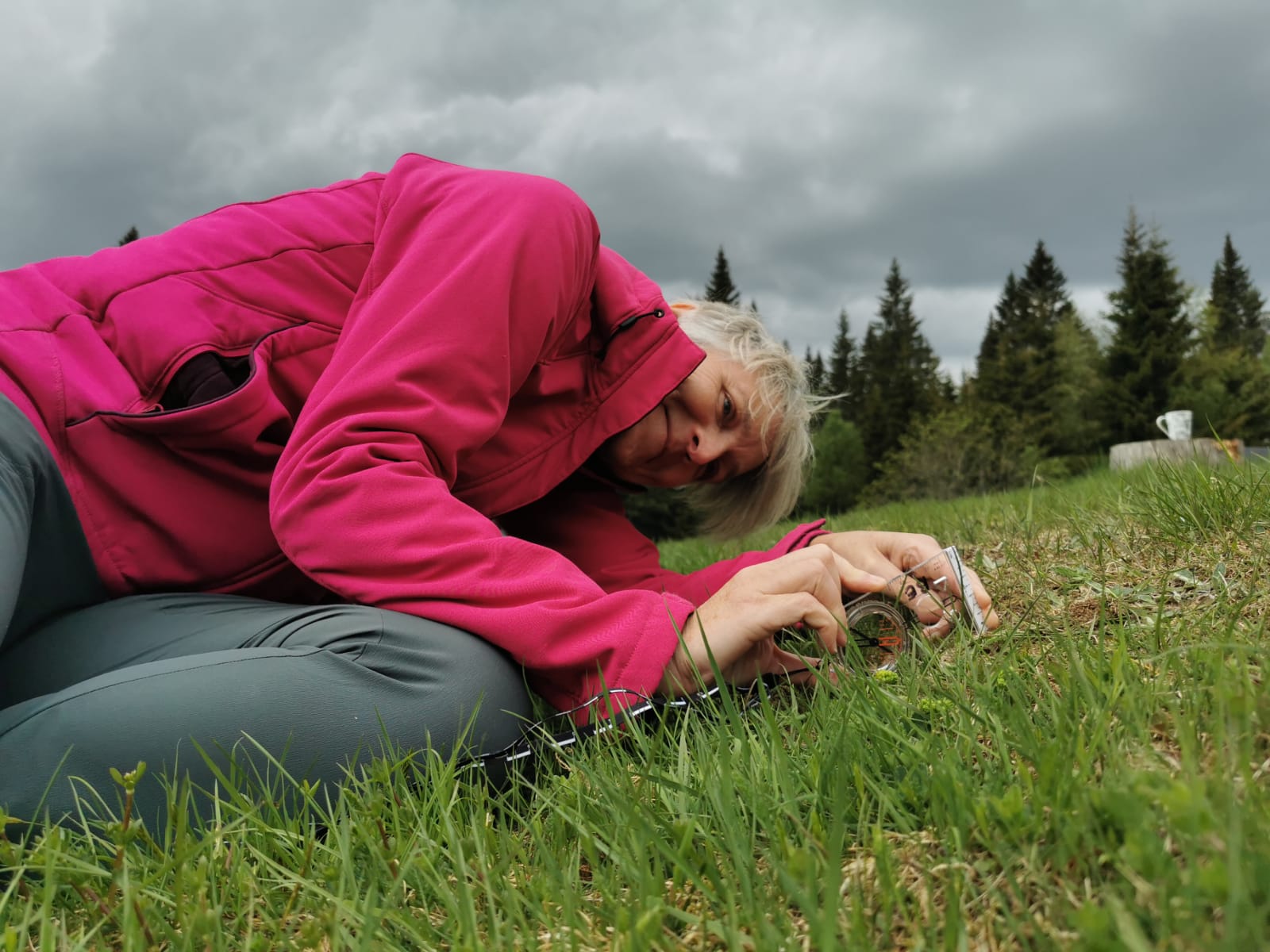
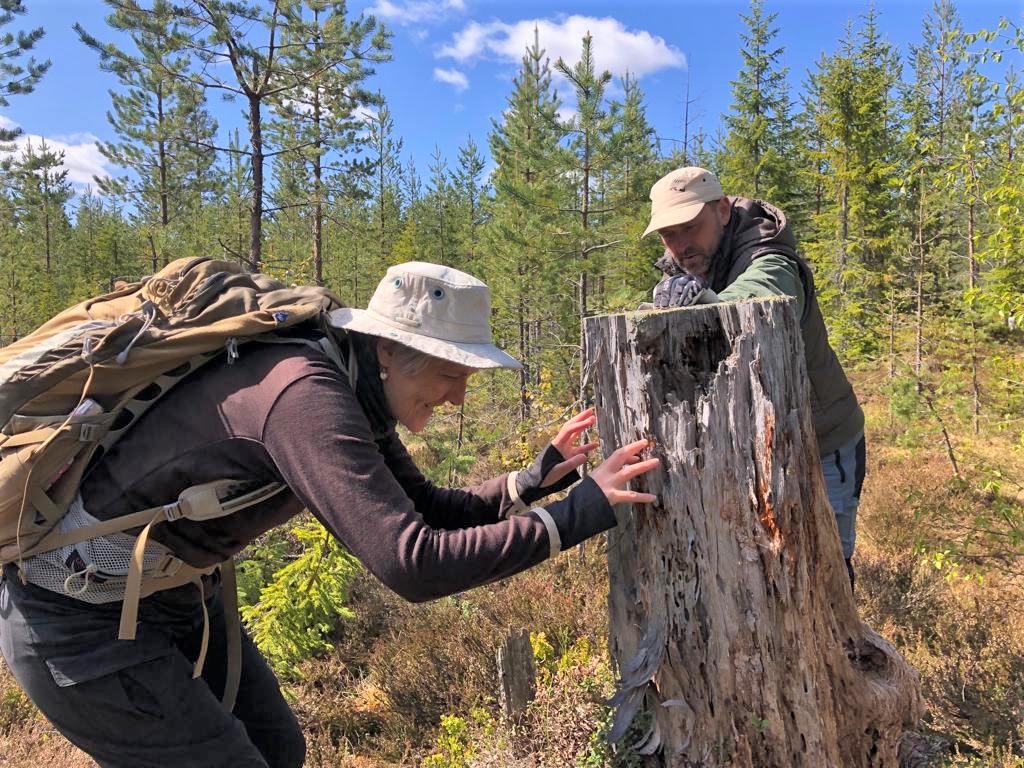
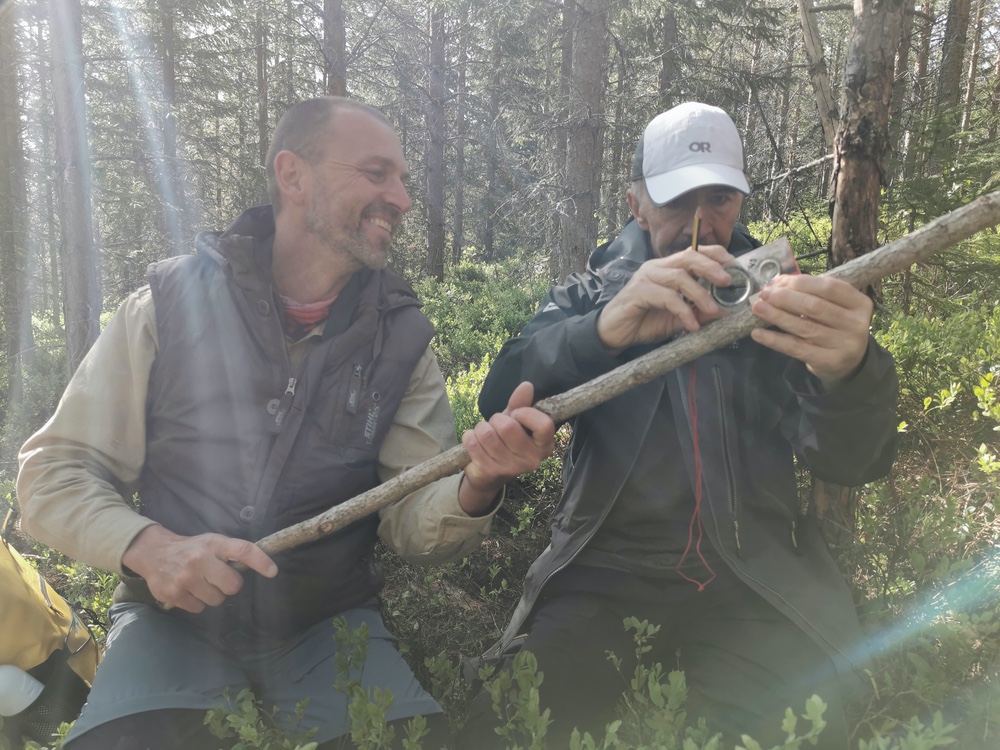
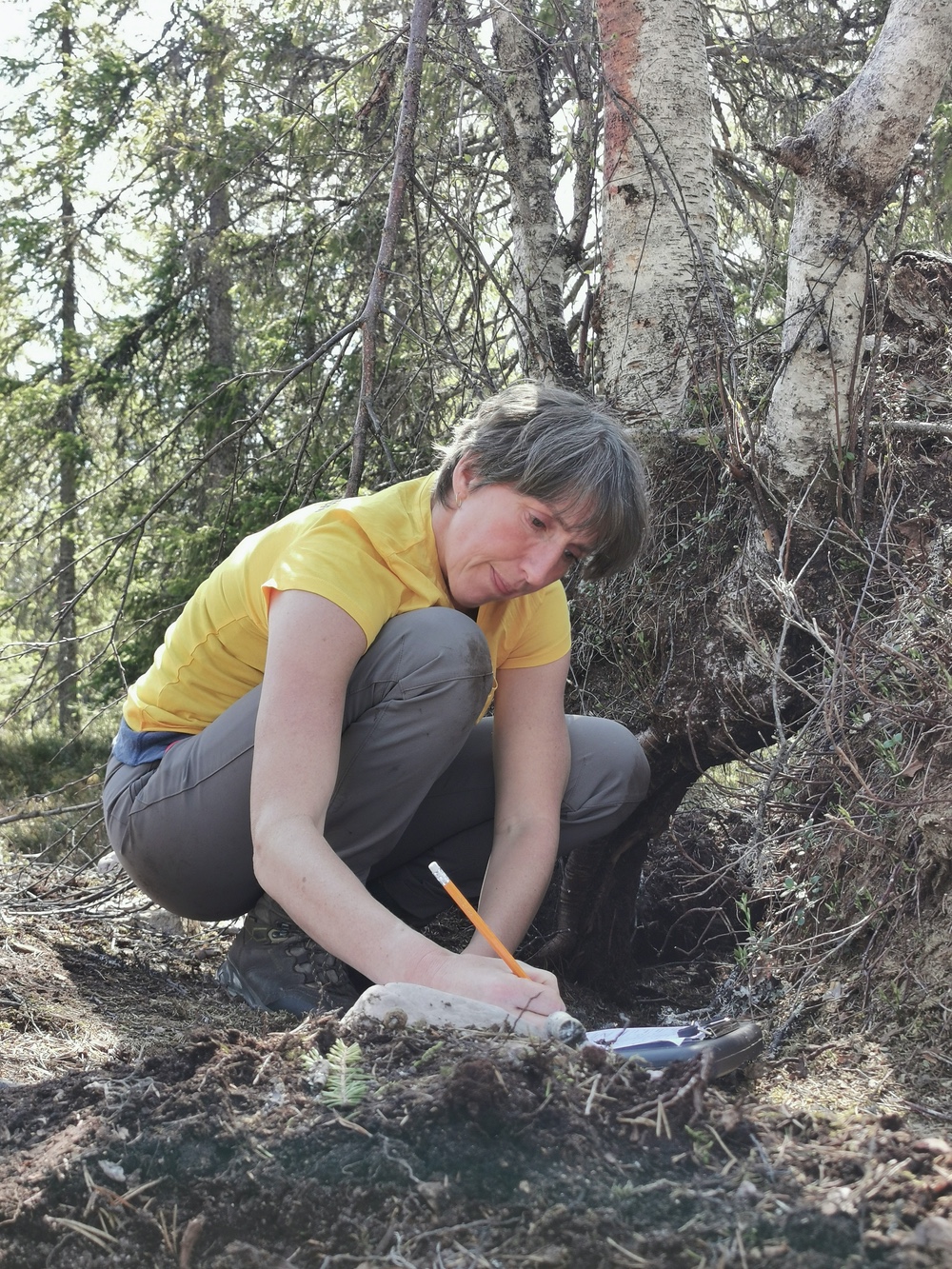
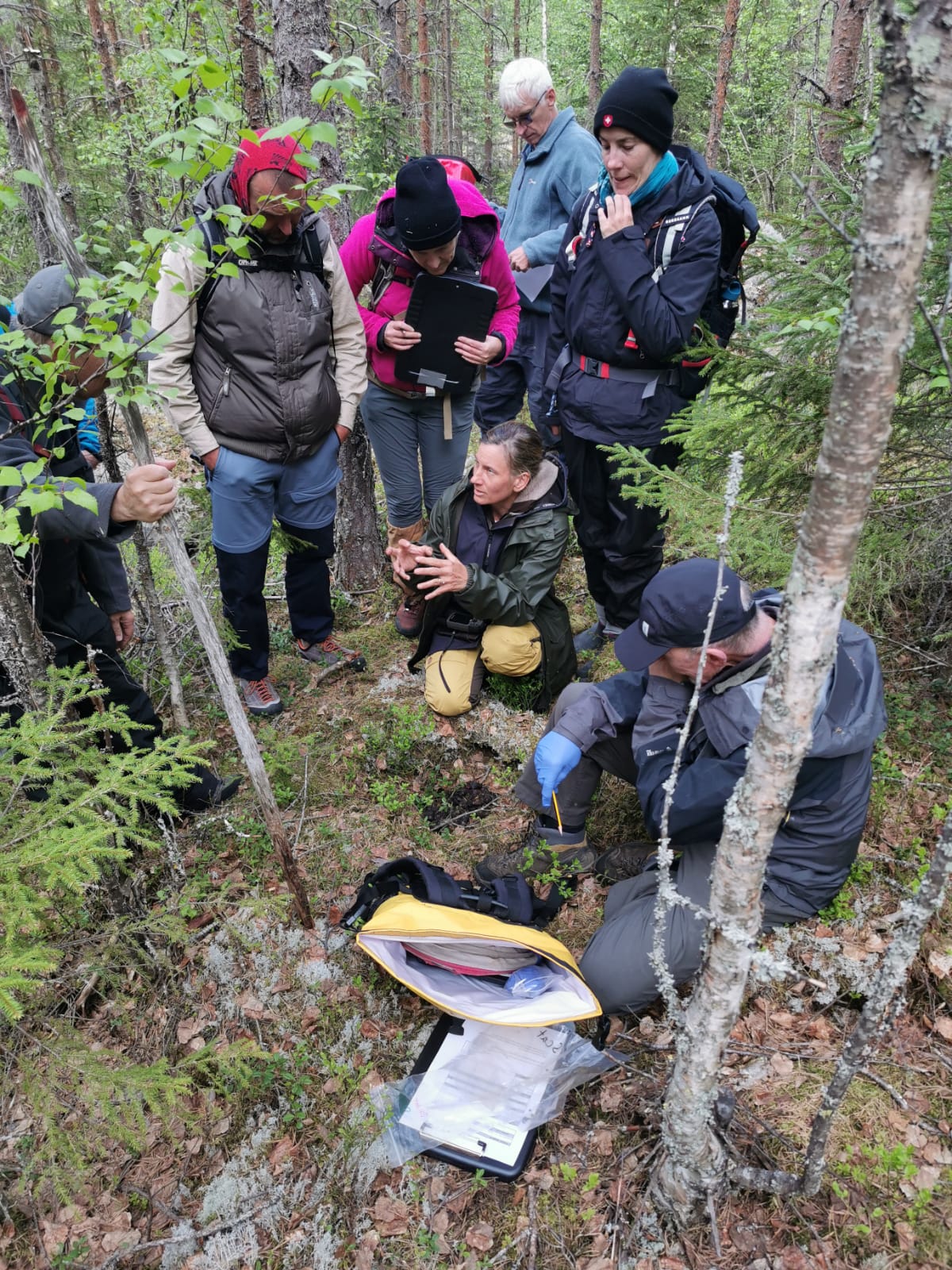
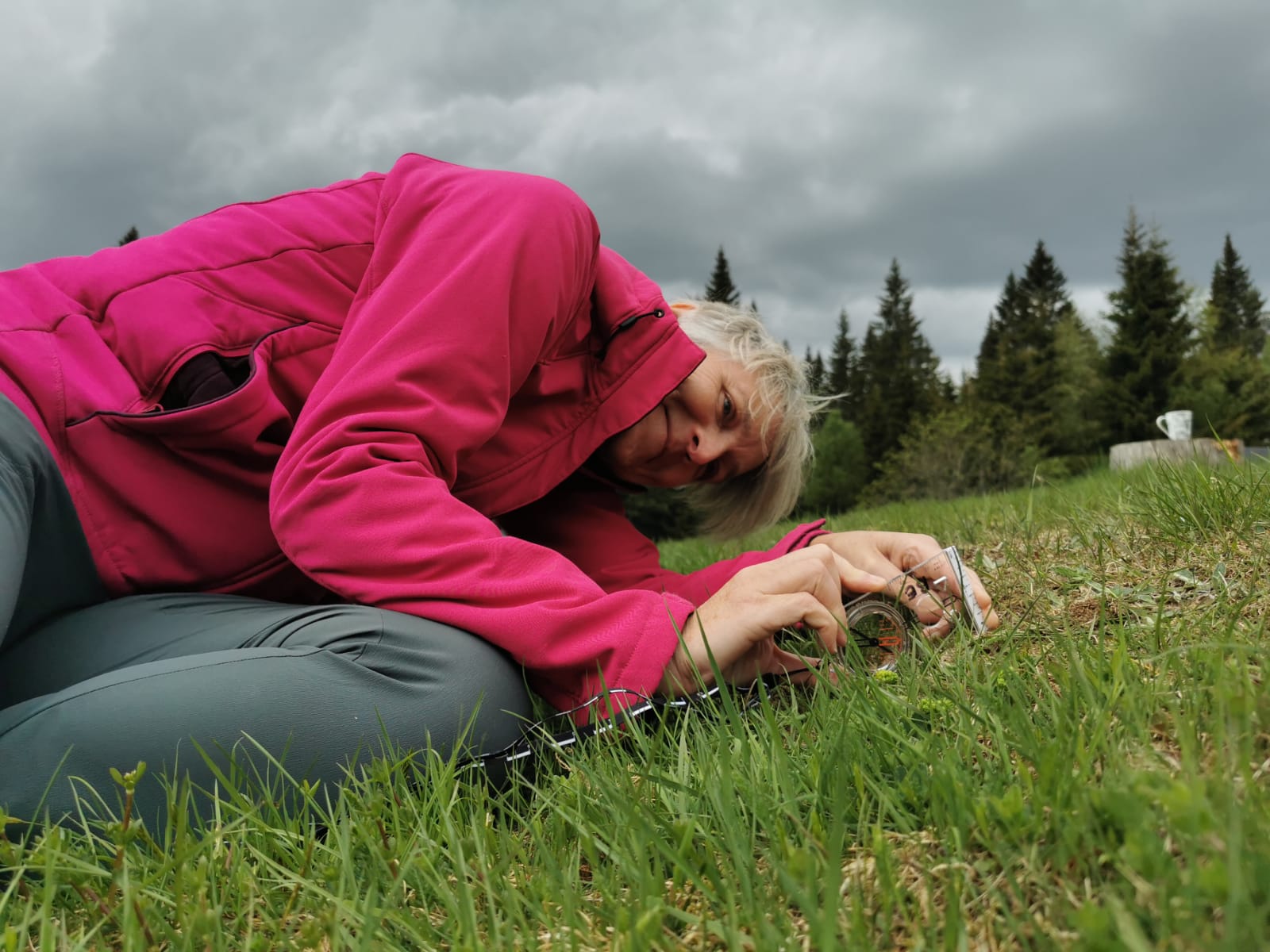
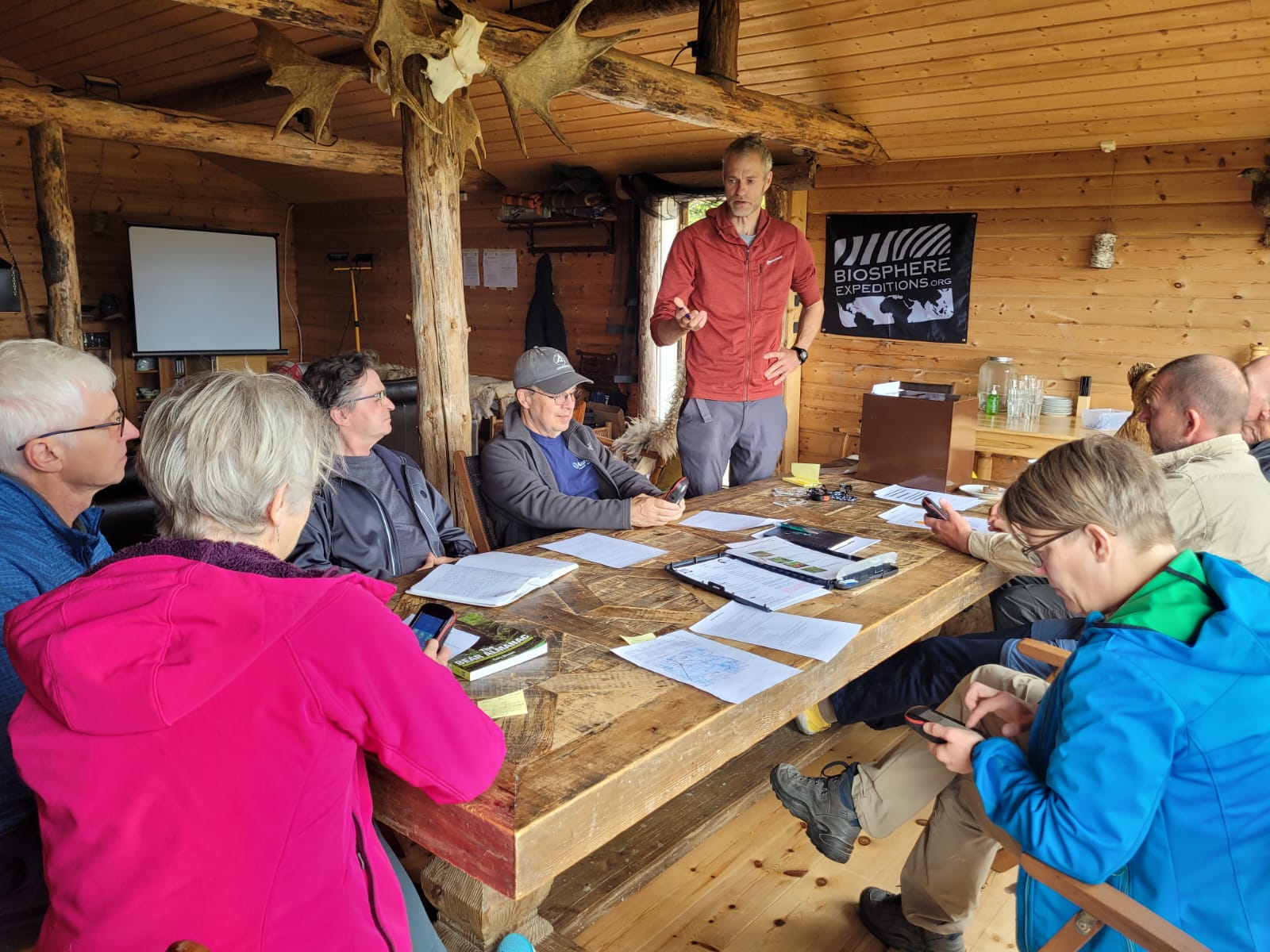
The first two days of the expedition are dominated by intense training, and this team has hit the ground running. Much of the training is in the practical methods used to collect data at each winter den: from the den measurements through to a methodological approach to defining the habitat around the den, as well as much information to record about bear scats. Research equipment that the team are trained to use range from the specialist densitometer, which measures the extent of tree canopy above a den, to the humble compass (you need to put Fred in the Shed).
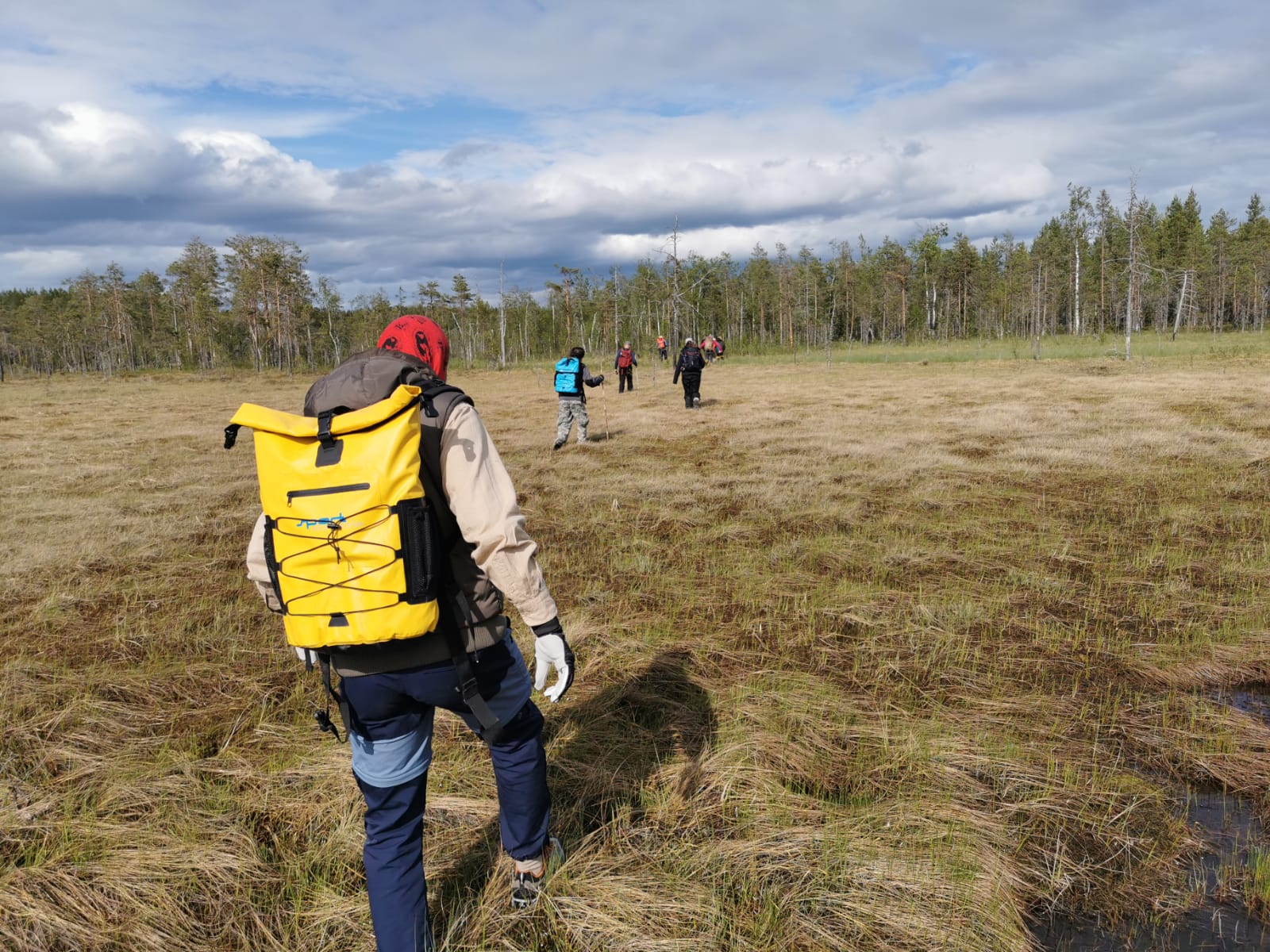
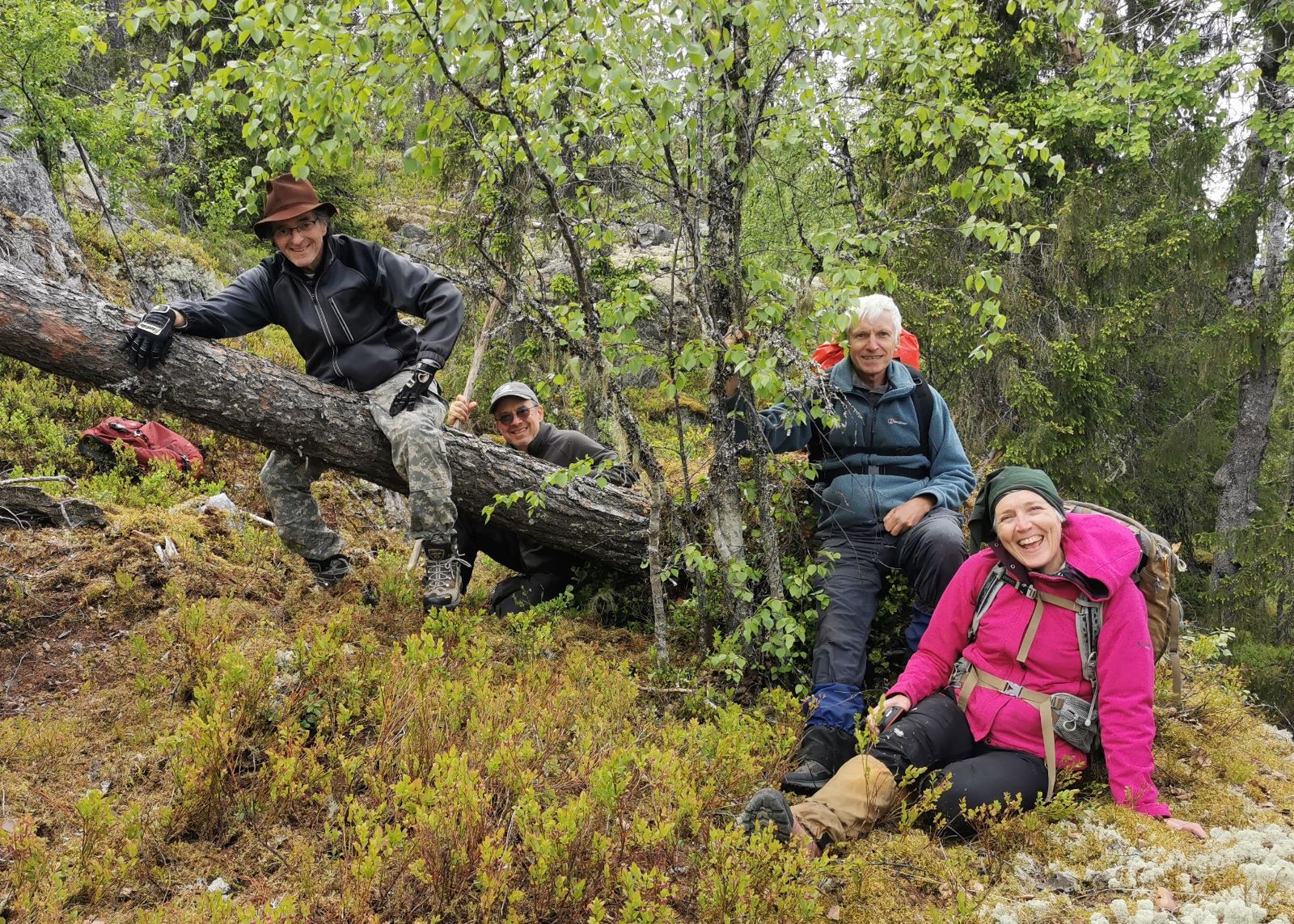
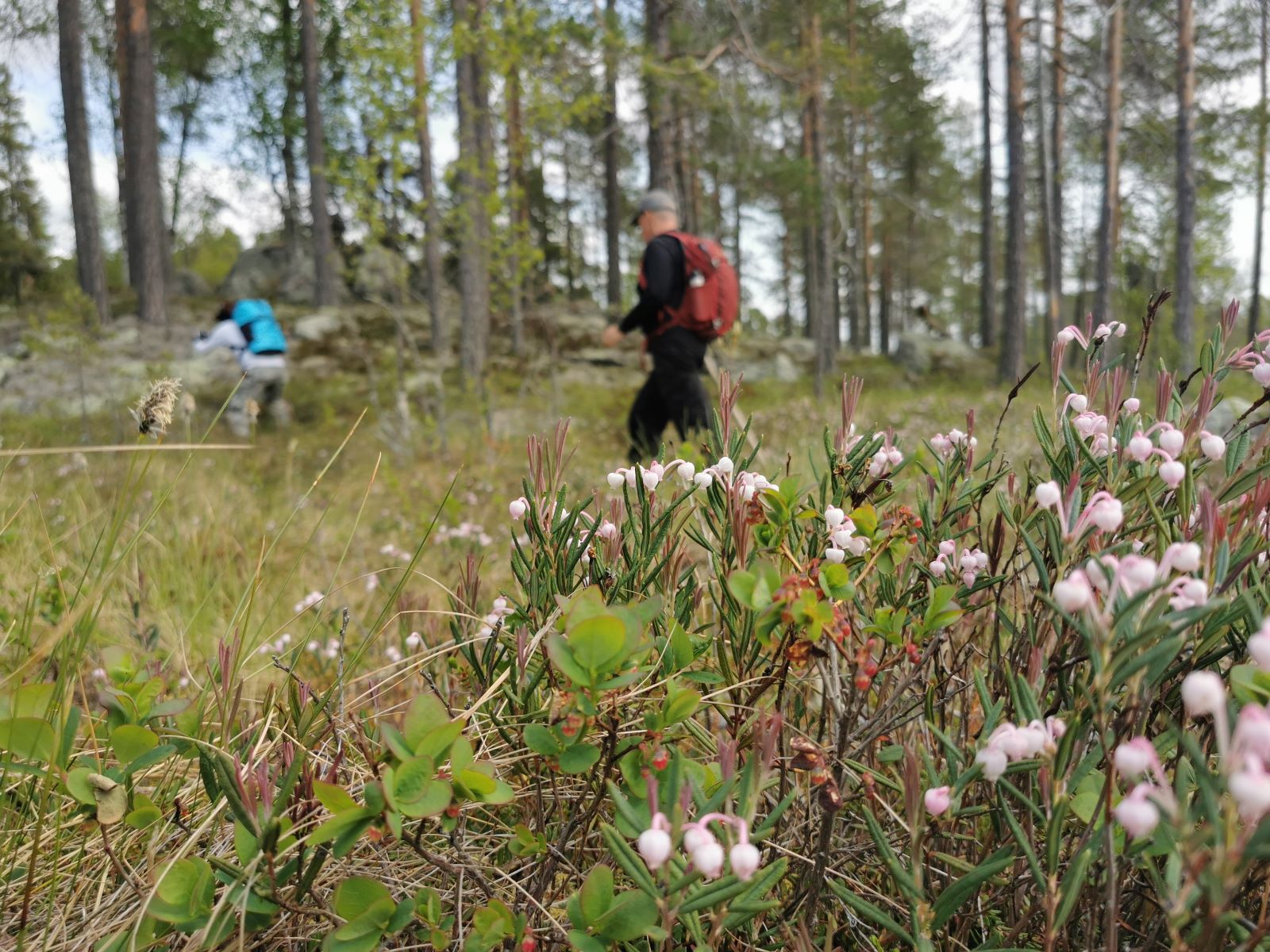
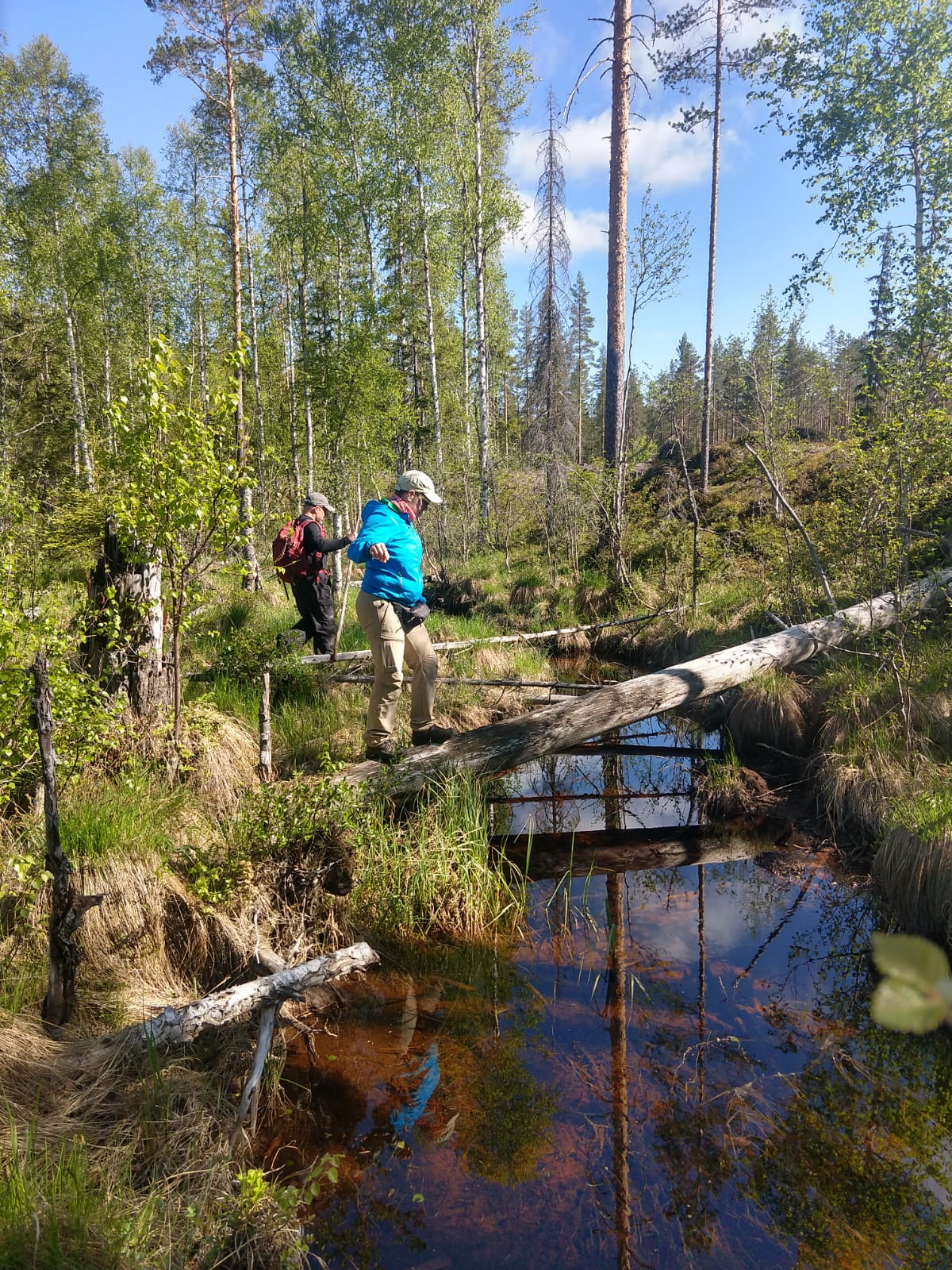
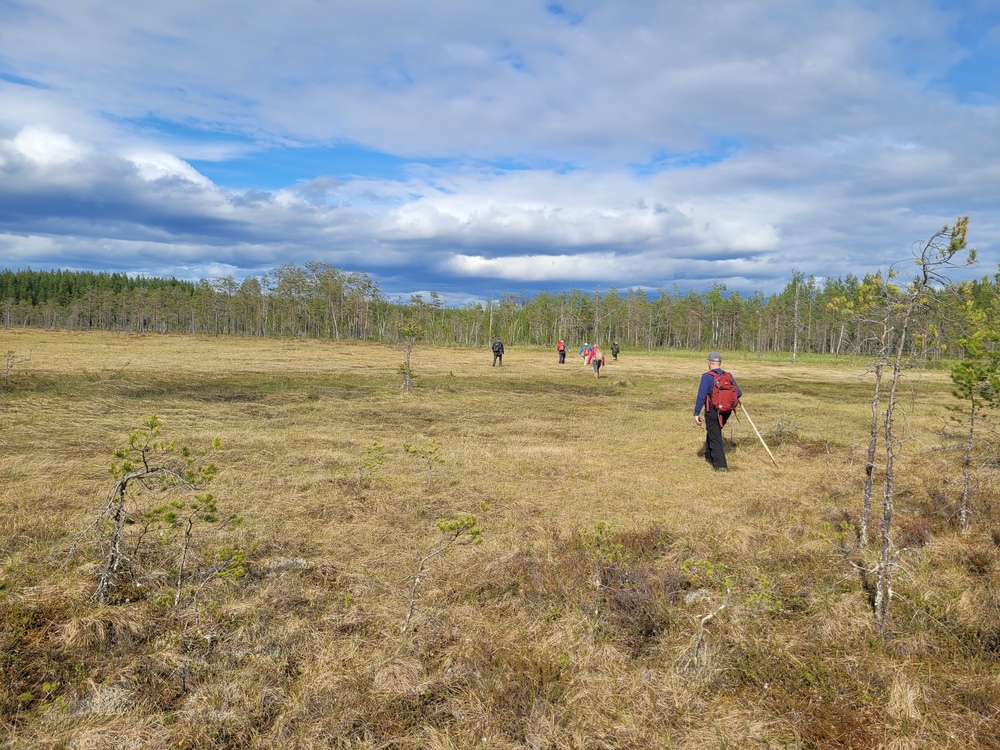
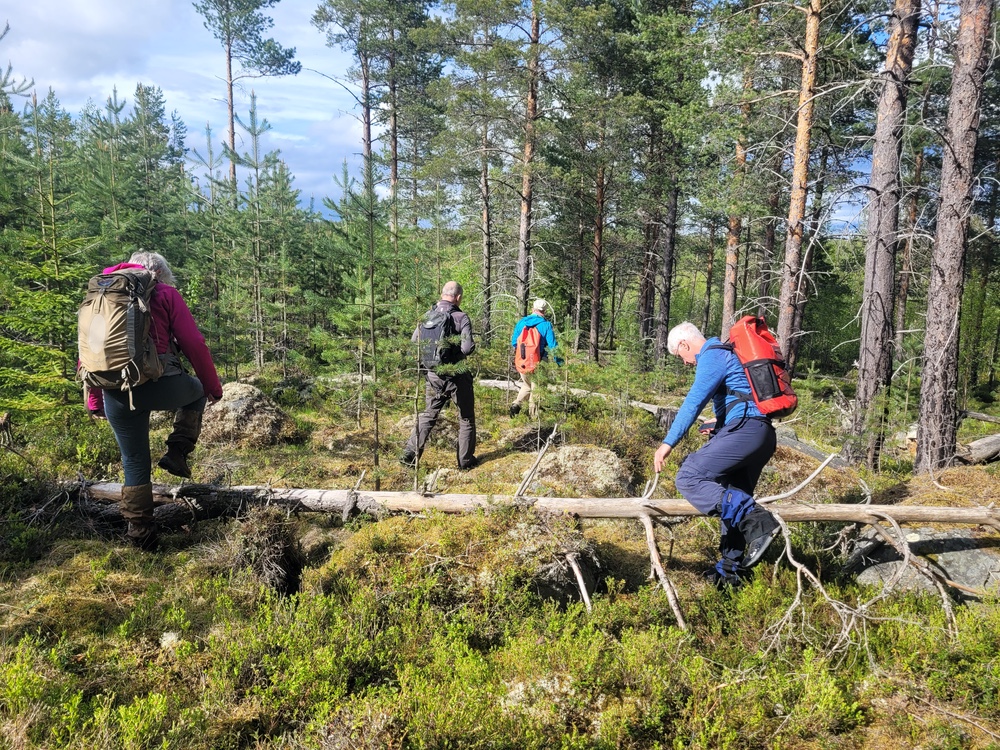
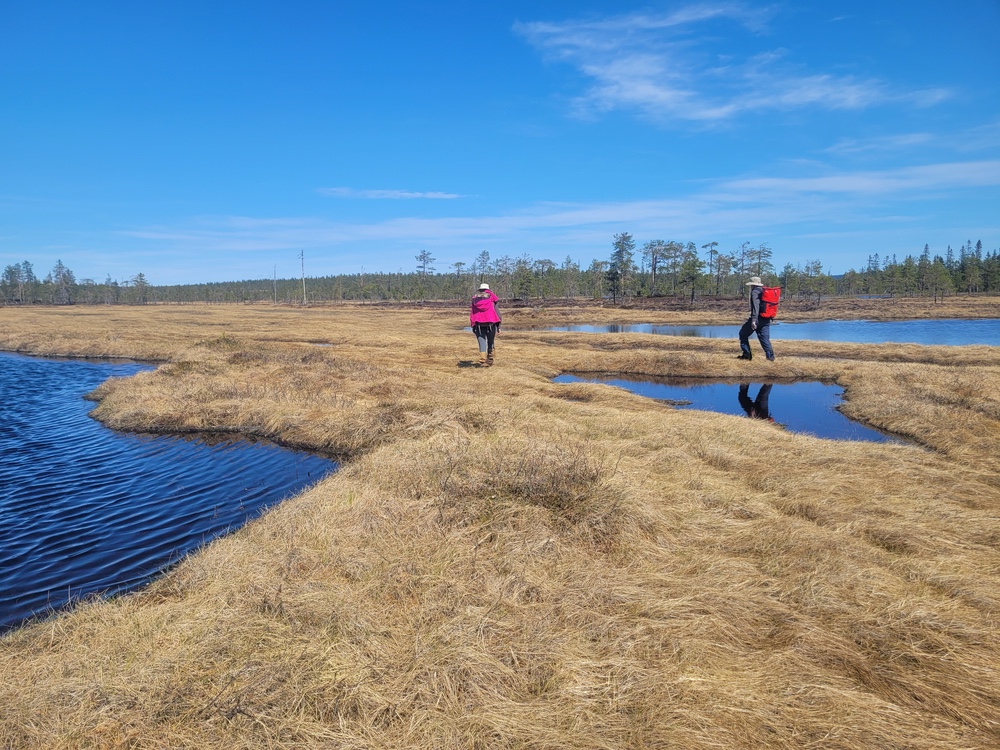
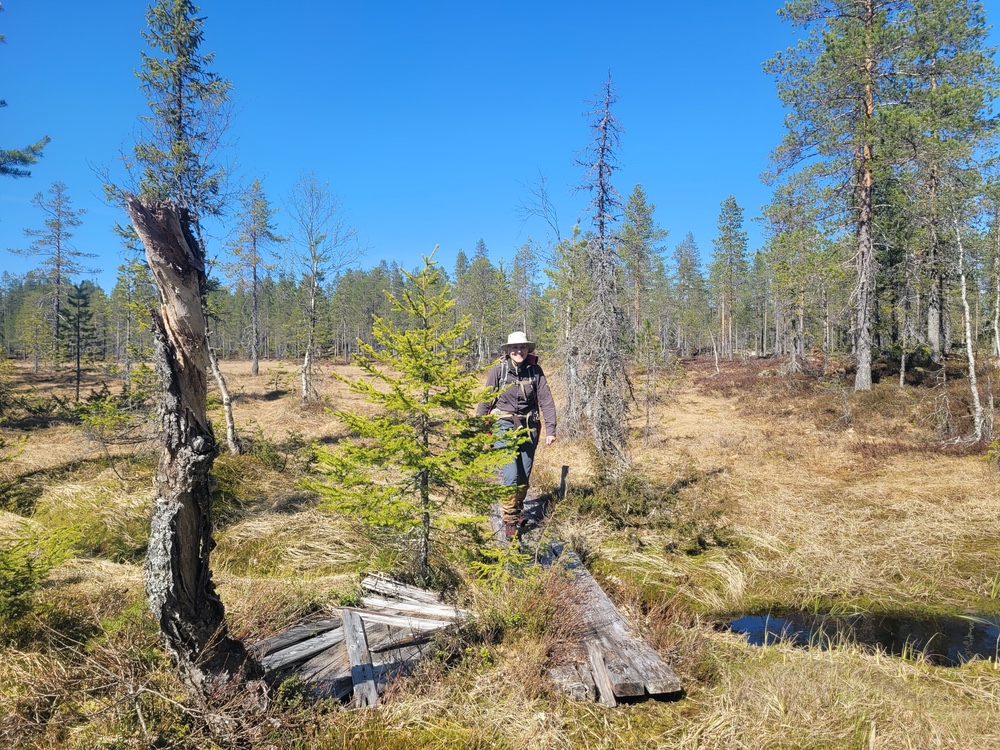
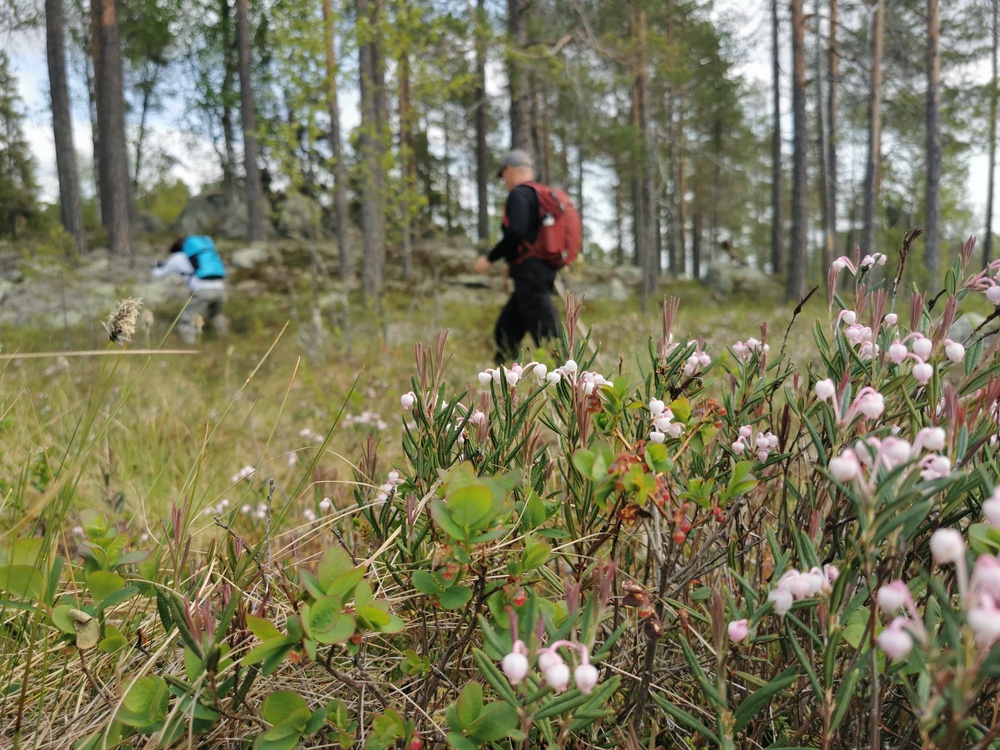
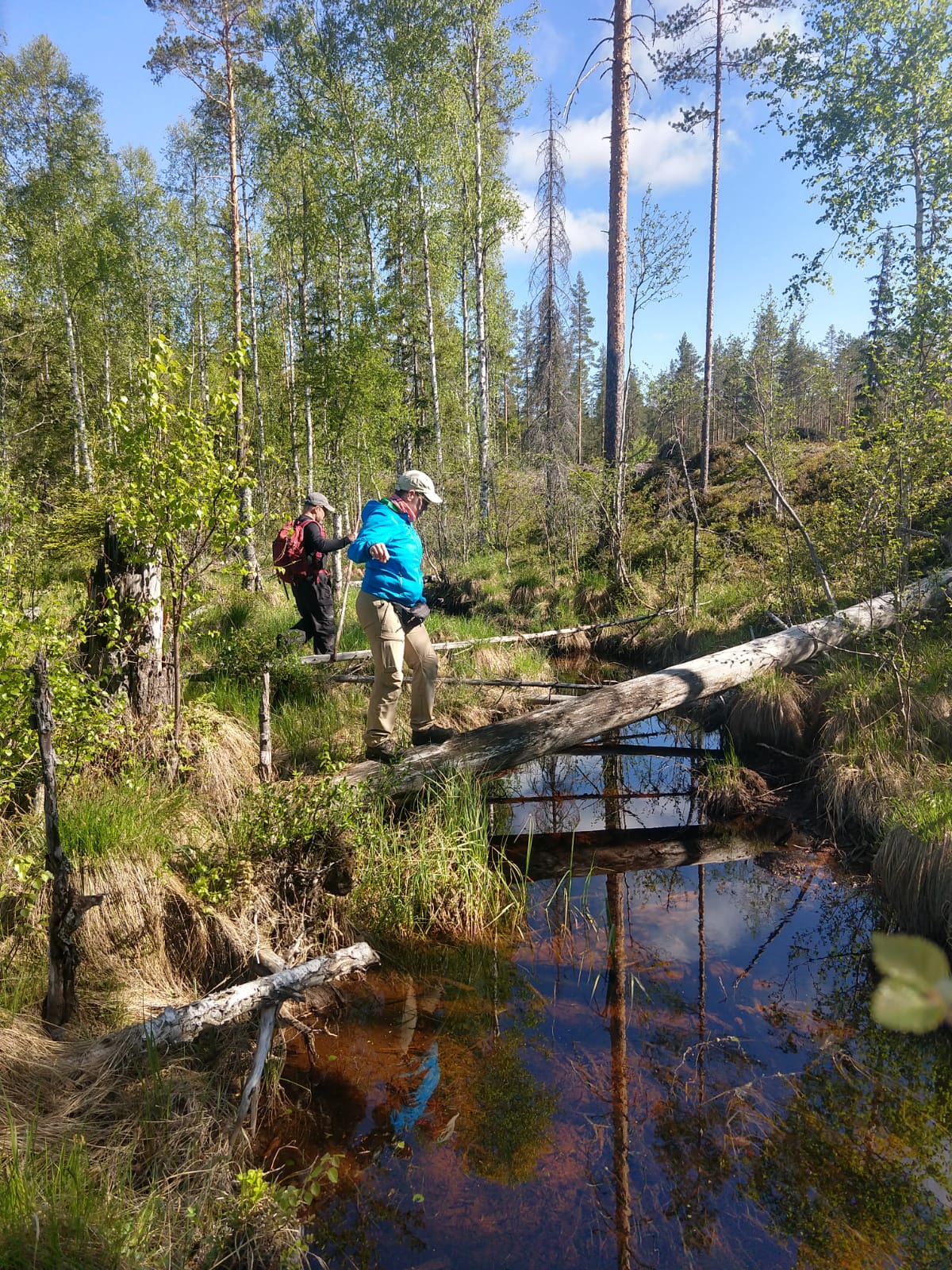
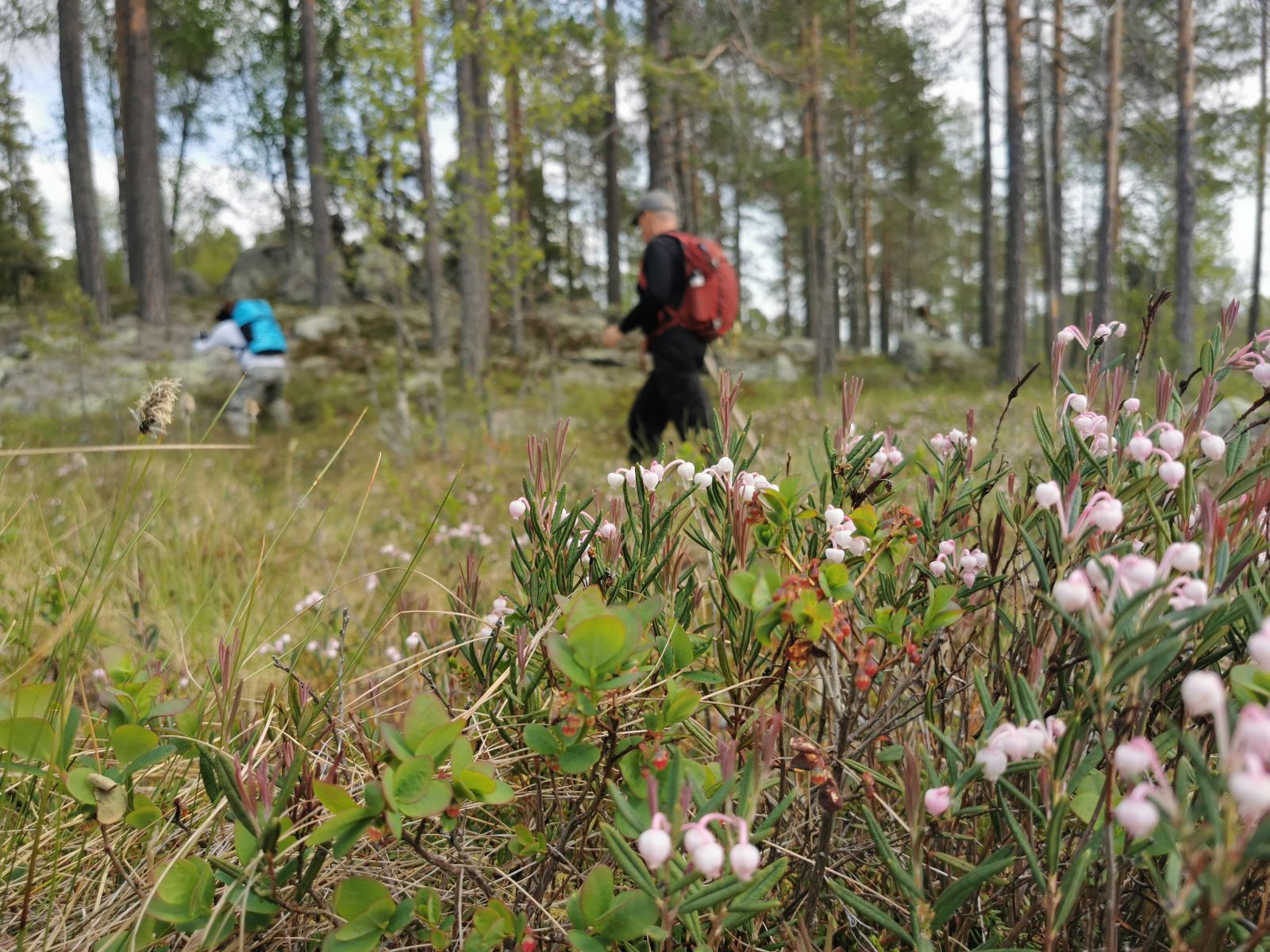
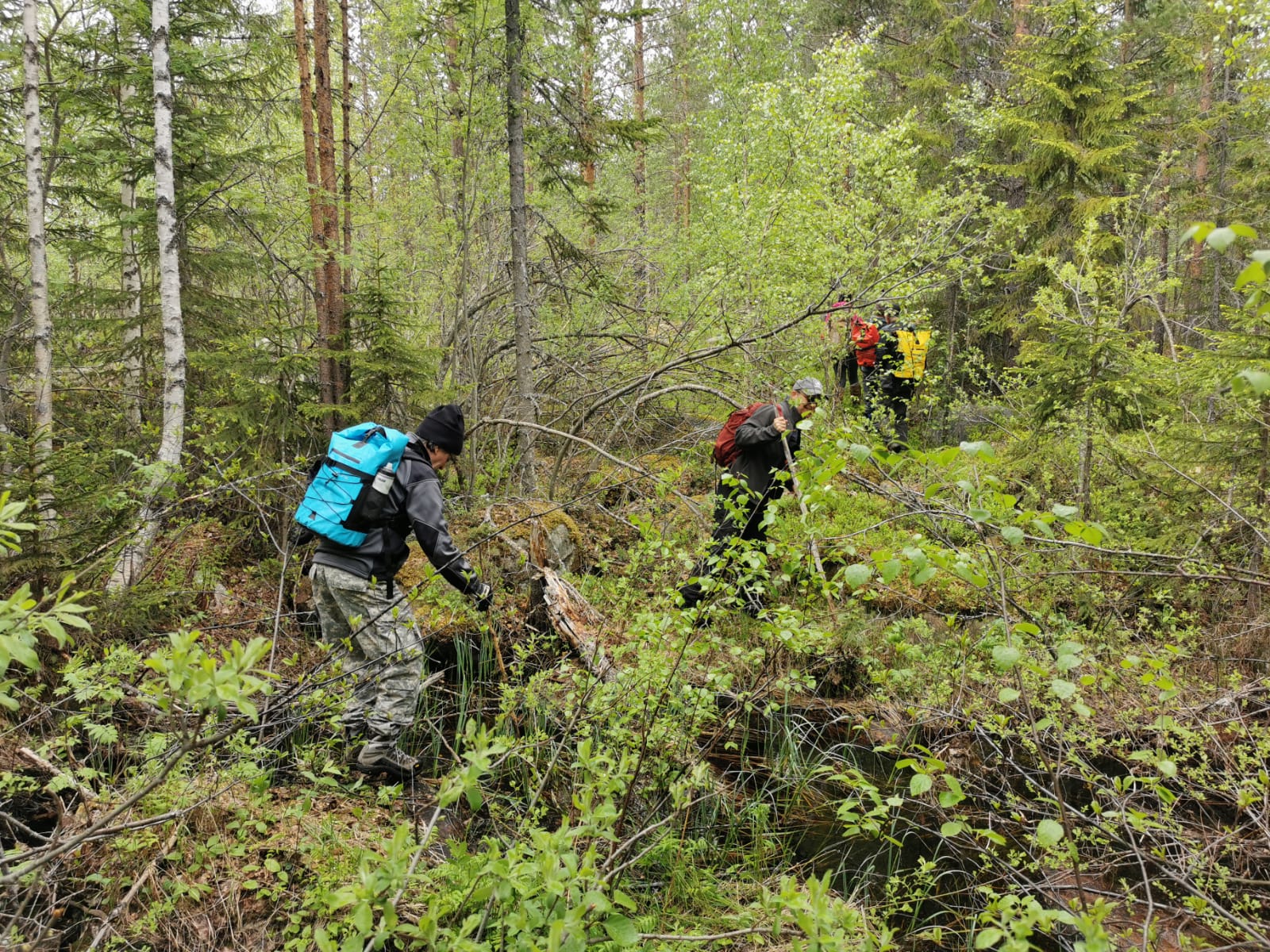
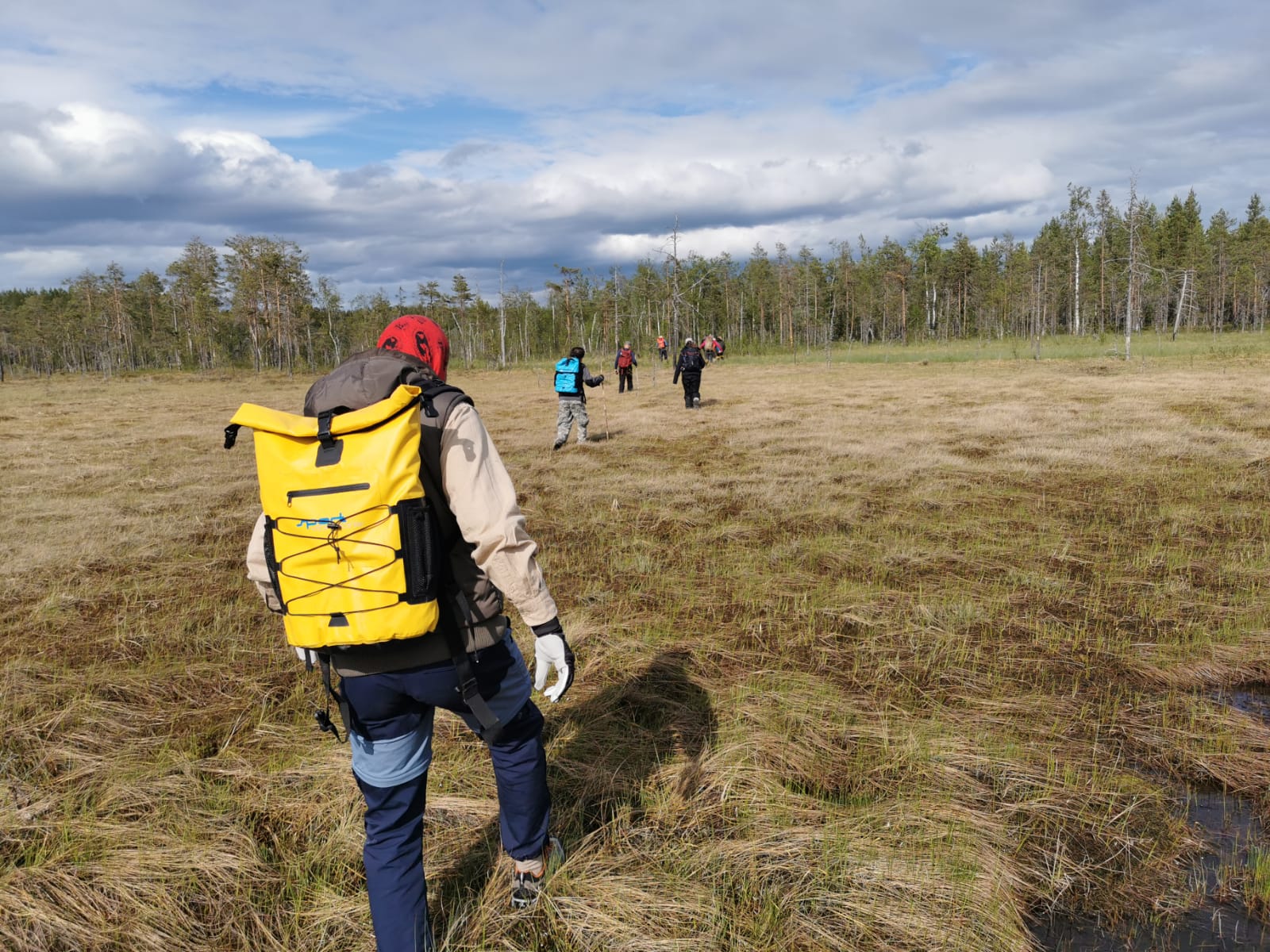
We also train the expedition team in how not to get lost. The bear dens and day beds that they are tasked with finding are deep in the woods, often a long way from the road. As adventurer-scientists, the team have to fight their way through some pretty challenging and pathless territory – typically rocky, boggy and/or hard going (usually all three), trying to locate a waypoint on a GPS device, and ideally not losing anyone en route. Finding the way back to the car afterwards can be a difficult task when you look up after an hour of focussed survey work and being confronted with a view of indistinguishable forest in all directions. Fortunately the team are trained in various navigational techniques, complemented by cool heads and common sense, so have successfully failed to get lost so far.
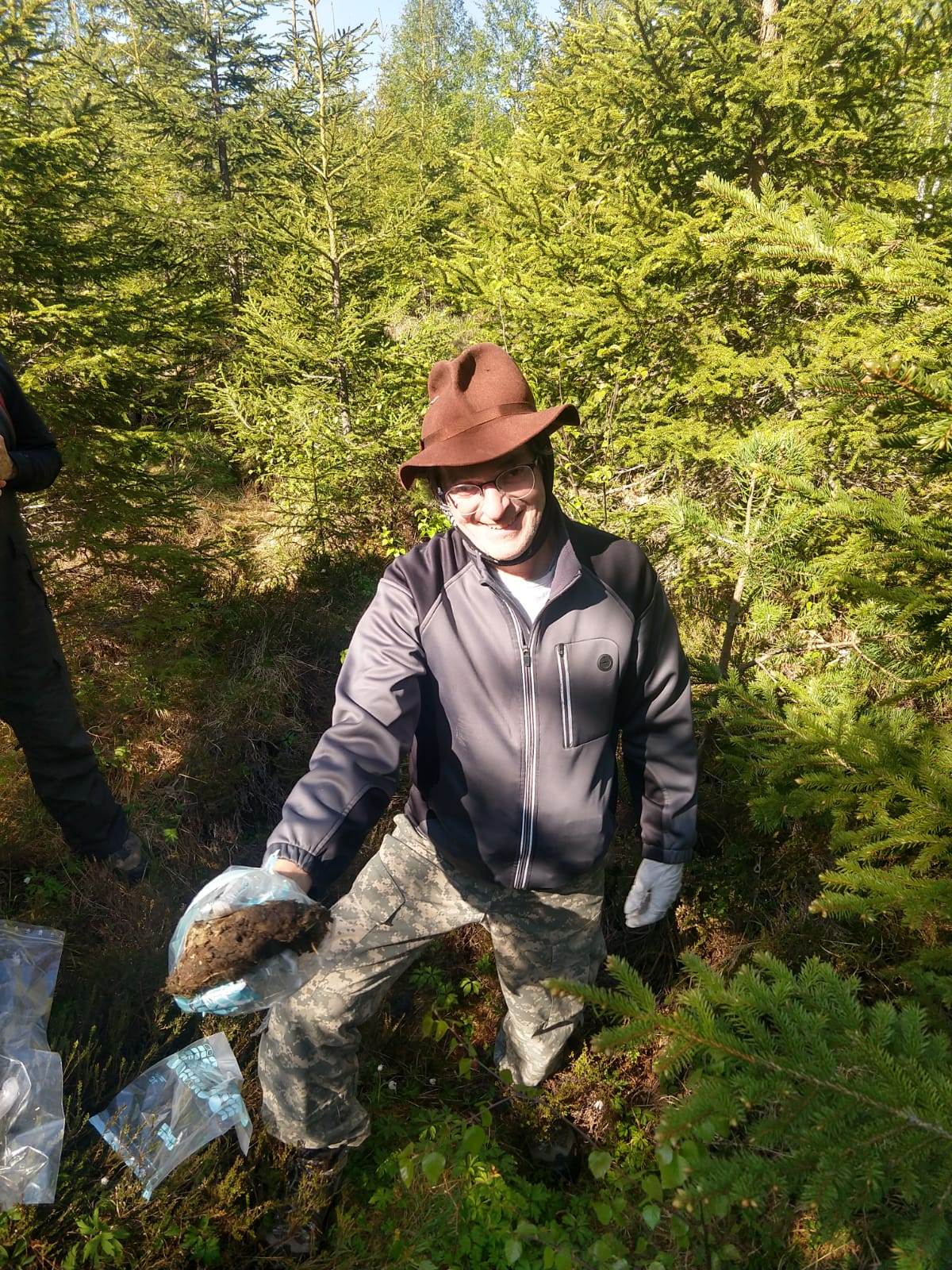
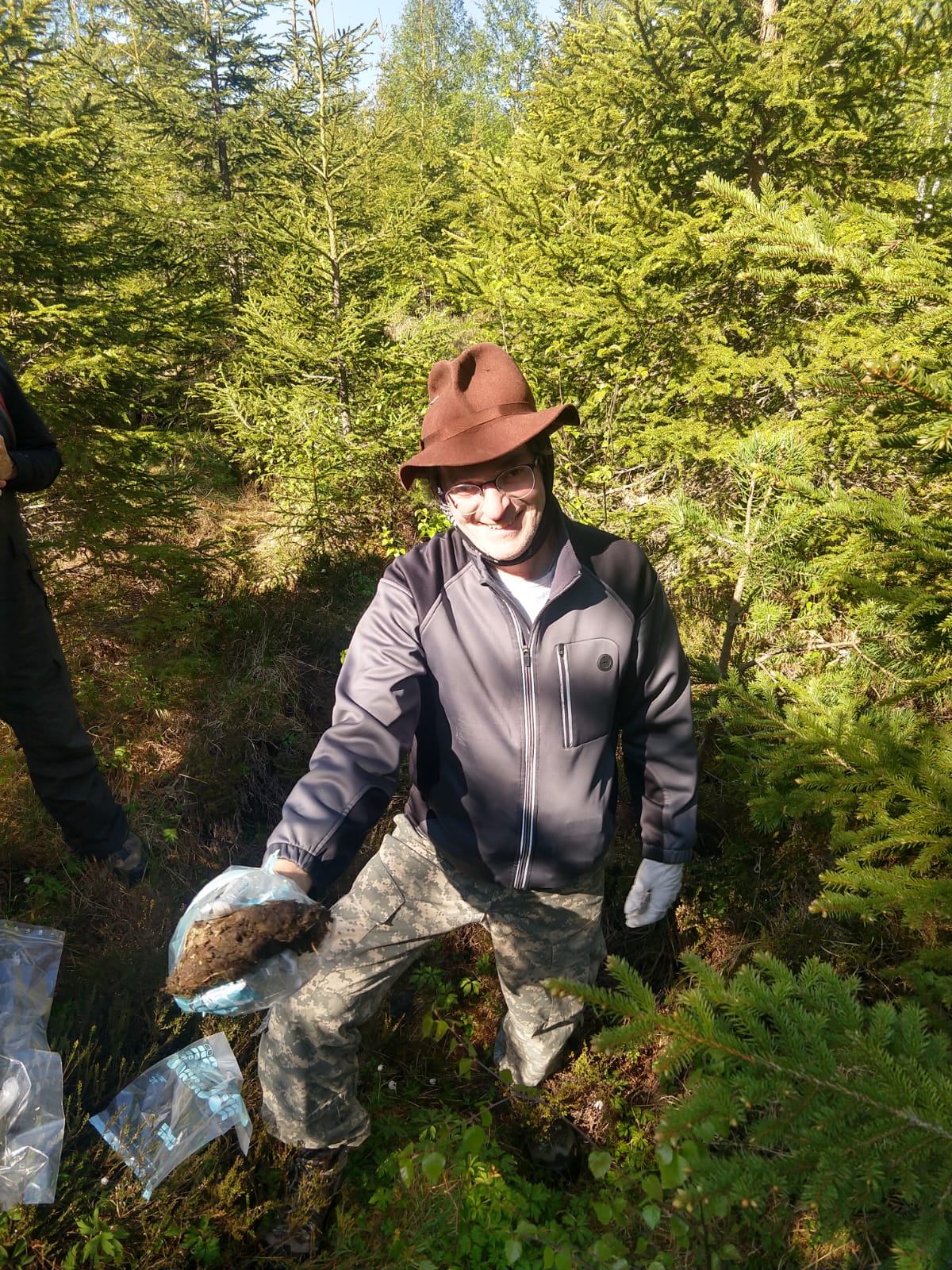
We have already surveyed two winter dens – a beautiful den under a massive boulder and a very different ‘nest’ type den where a bear and her cubs spent winter covered by nothing more than a thick blanket of snow. We have also begun to collect our first bear scats, carefully labelled and stored ready for later analysis to reveal what the bear has been eating before and after hibernation.
The team have taken all this on with little rest and in good spirits. A special mention here to Torsten, who cycled over 1000 km from southern Sweden to join the expedition and immediately threw himself into expedition life without pause.
With the training part of the expedition almost over, the team is ready to devote the next week to exploring the tangled forests of mid-Sweden to record high quality data for the transnational Scandinavian Brown Bear Research Project.
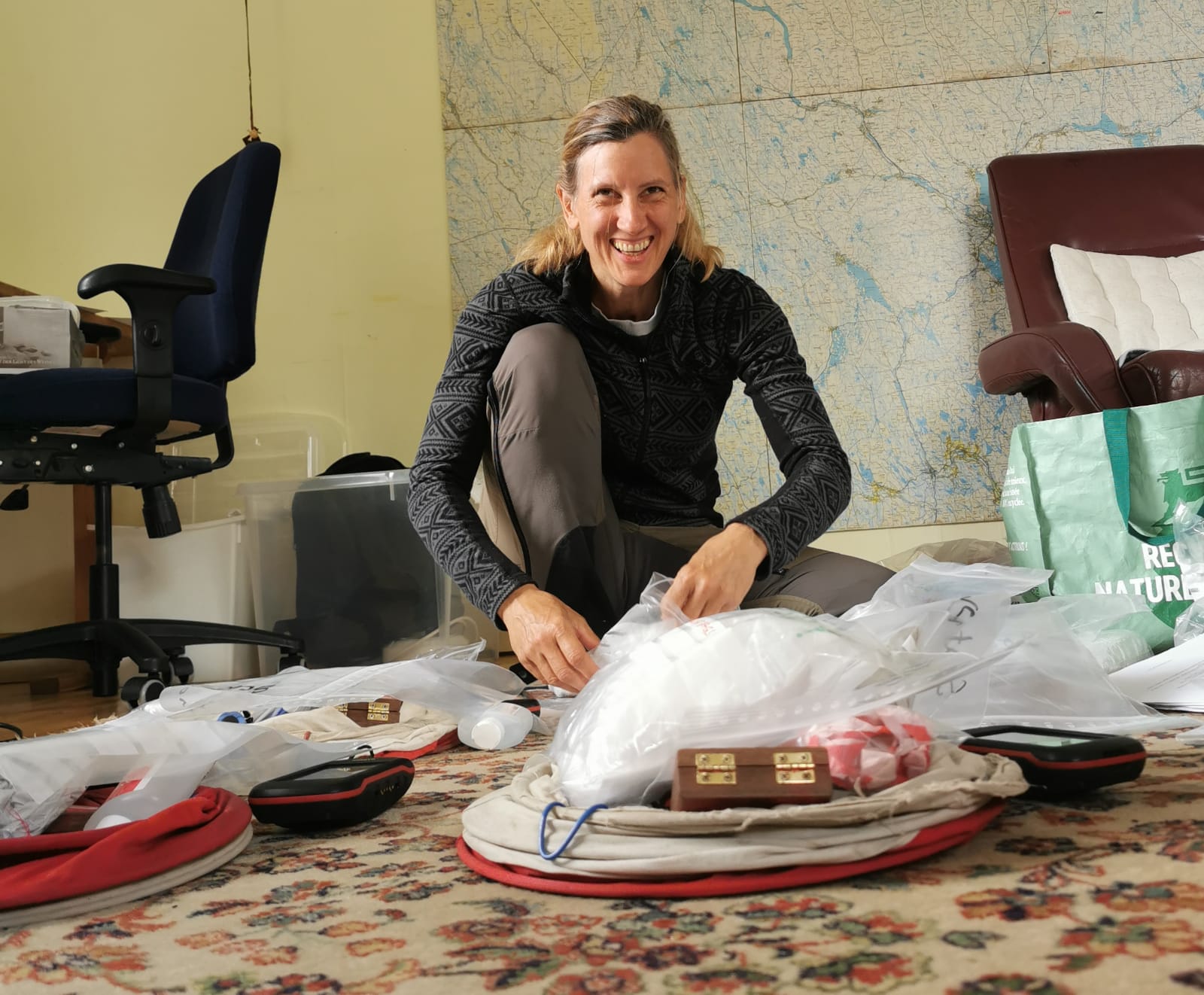
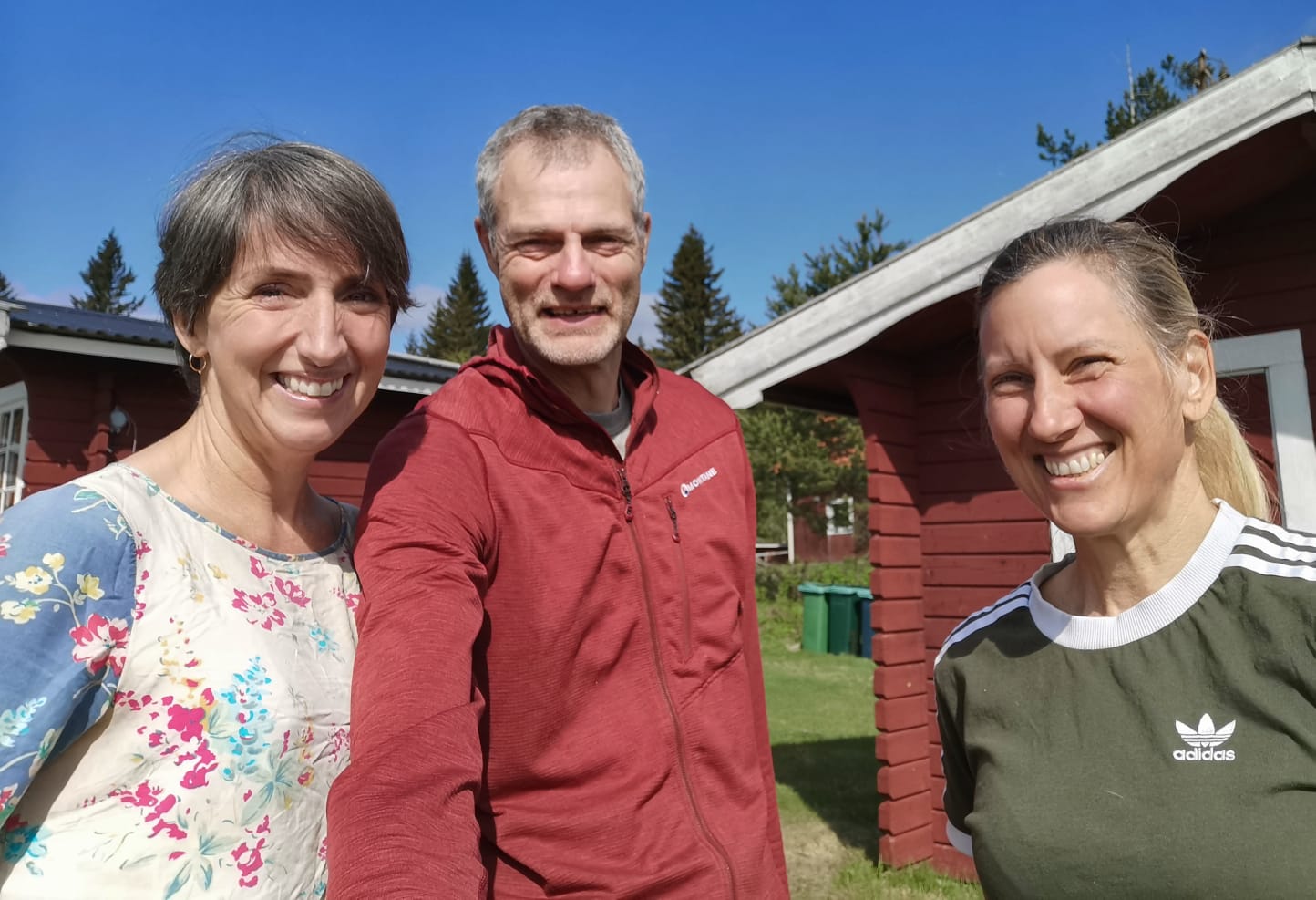
Greetings from base camp. I am excited to be back! The Advanced Team have assembled: Louise and I arrived here last night and Andrea, the expedition scientist, joined us today. We have bought the food and supplies for the expedition: there is a lot of it, so I hope you will be hungry.
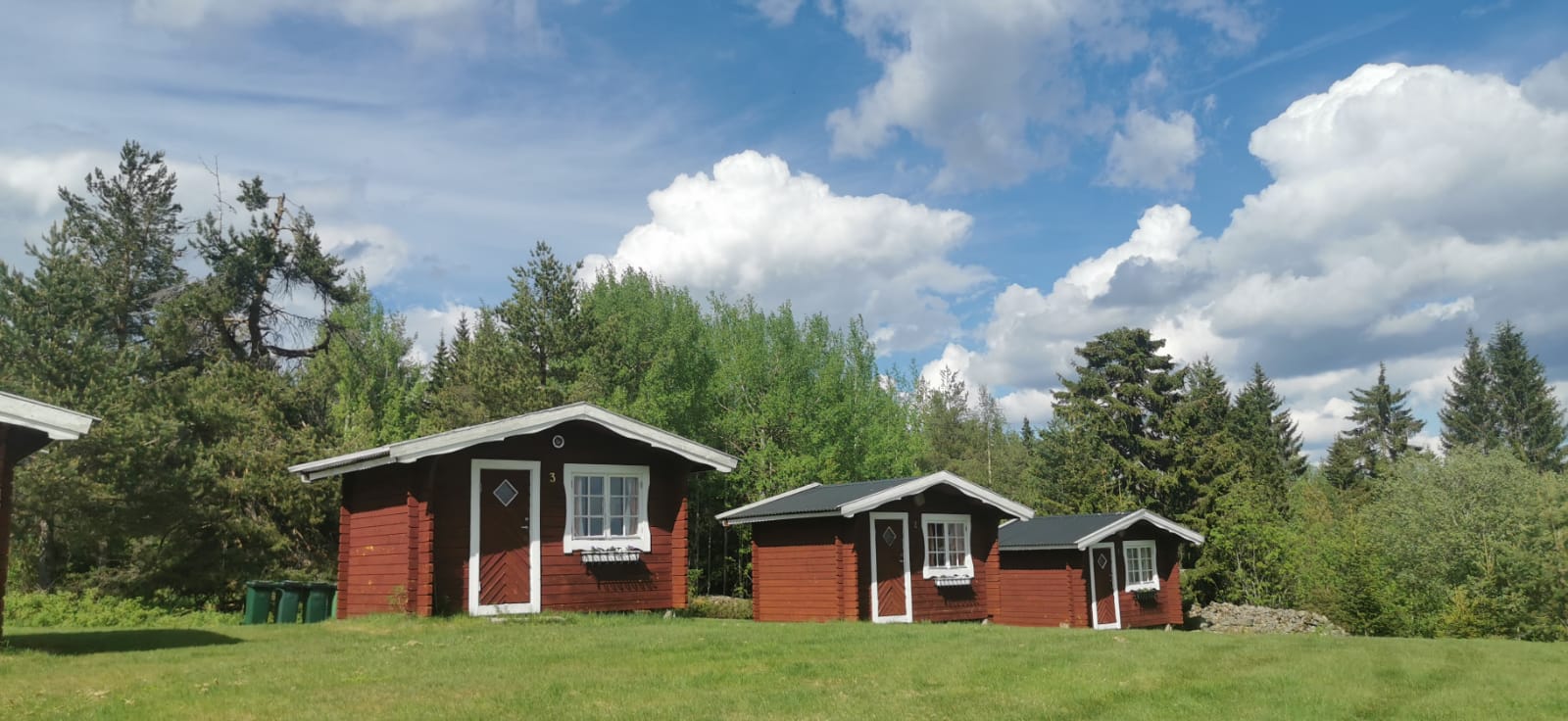
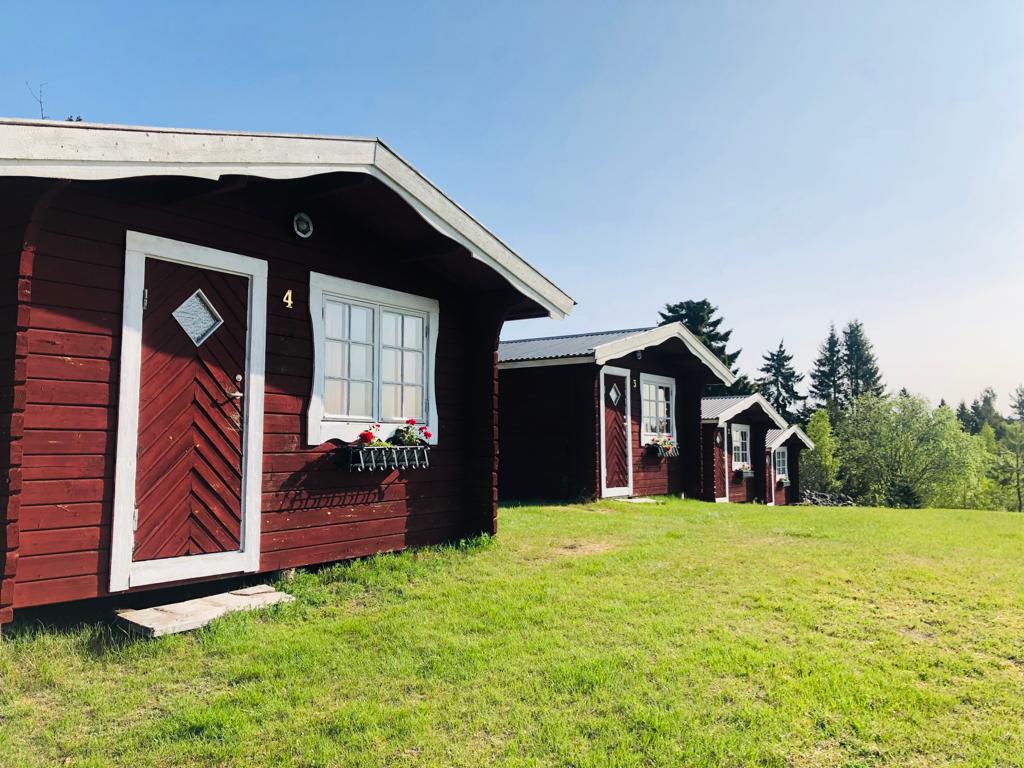
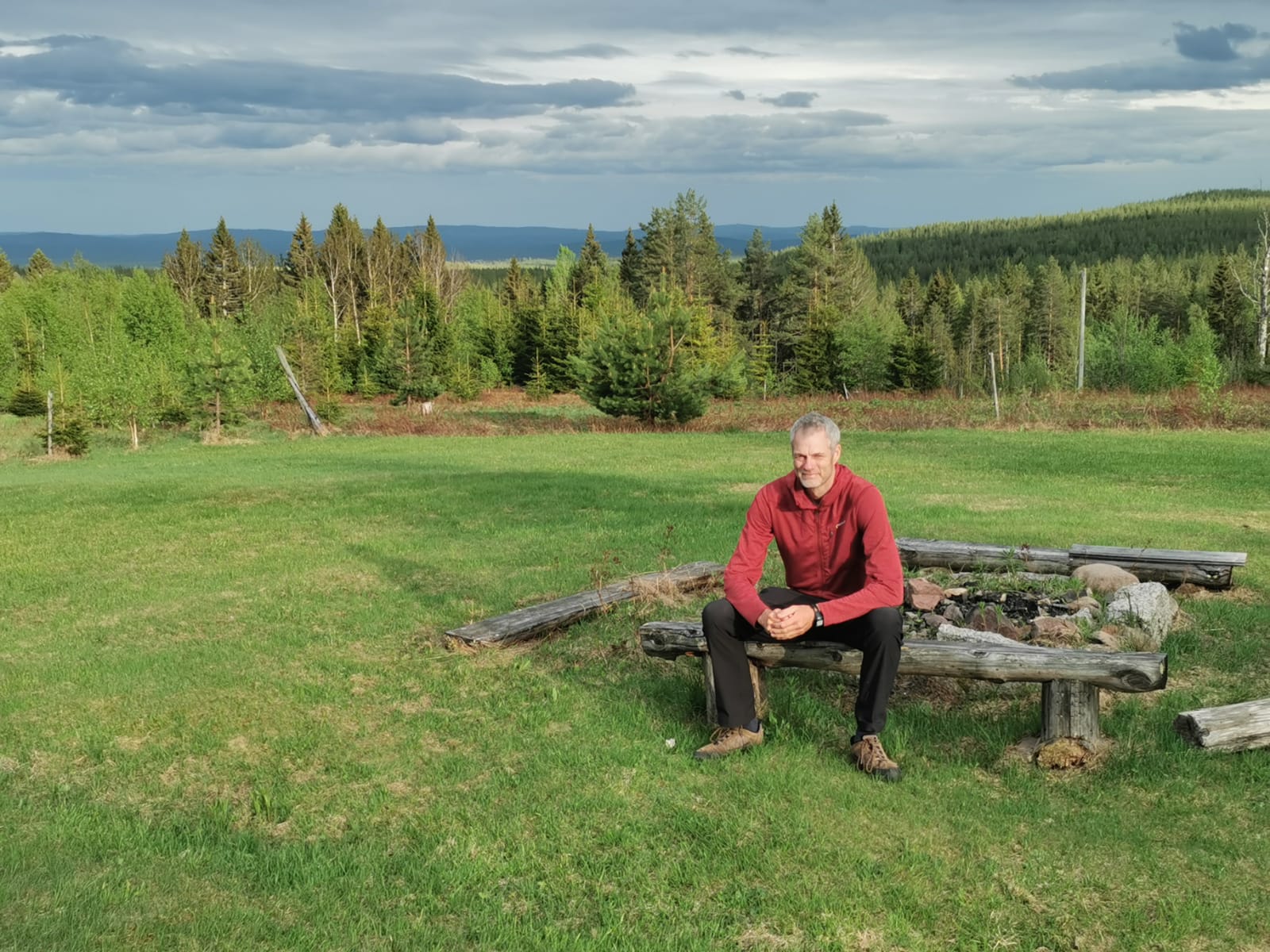
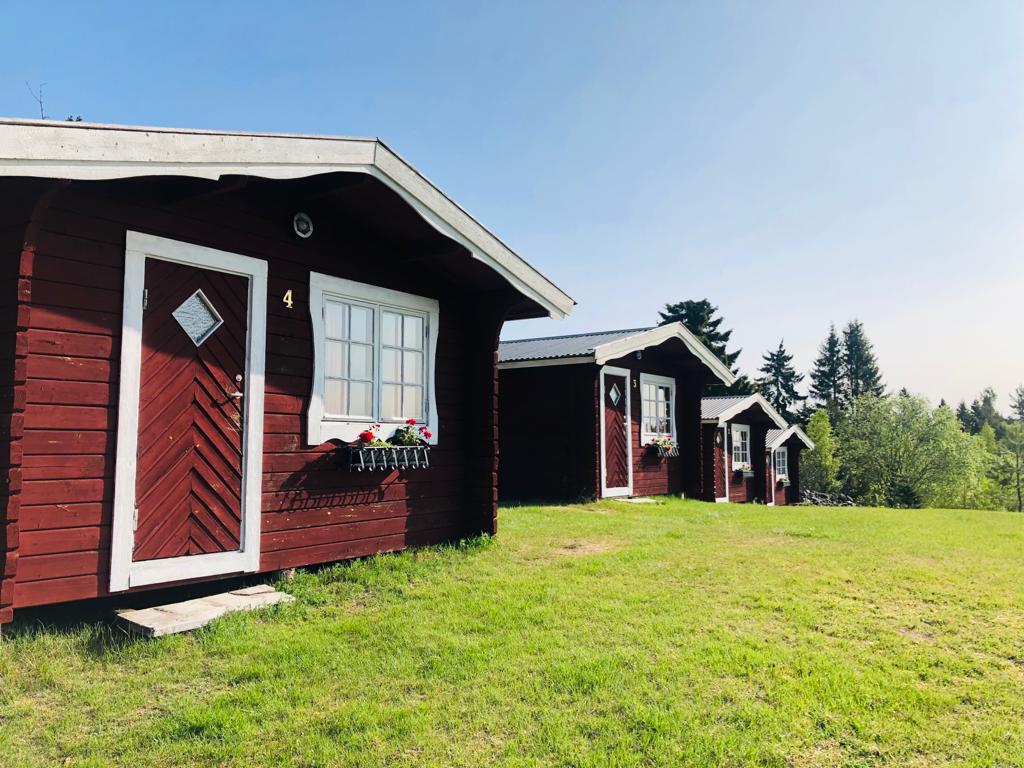
Base camp is looking glorious in the Swedish spring sunshine. The iconic Swedish red wooden cabins are almost glowing in the morning light, the birch and pine trees are bursting with green vitality and we saw a fox running past the sauna and across the stream when we were out exploring late last night.
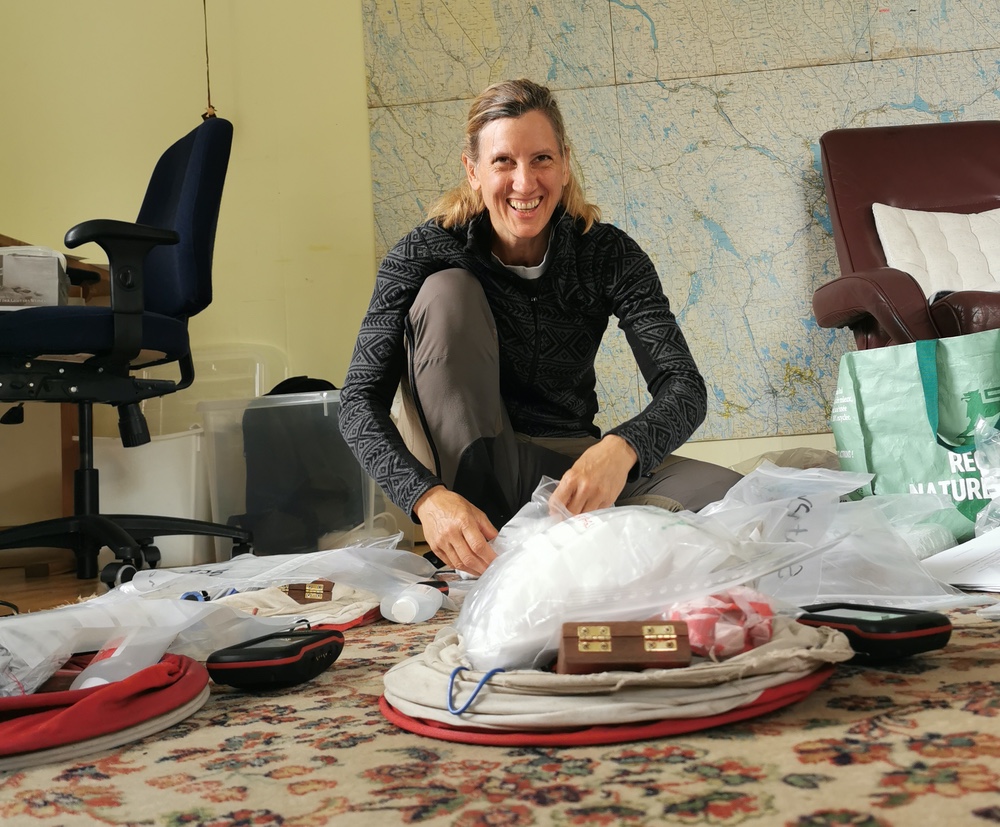
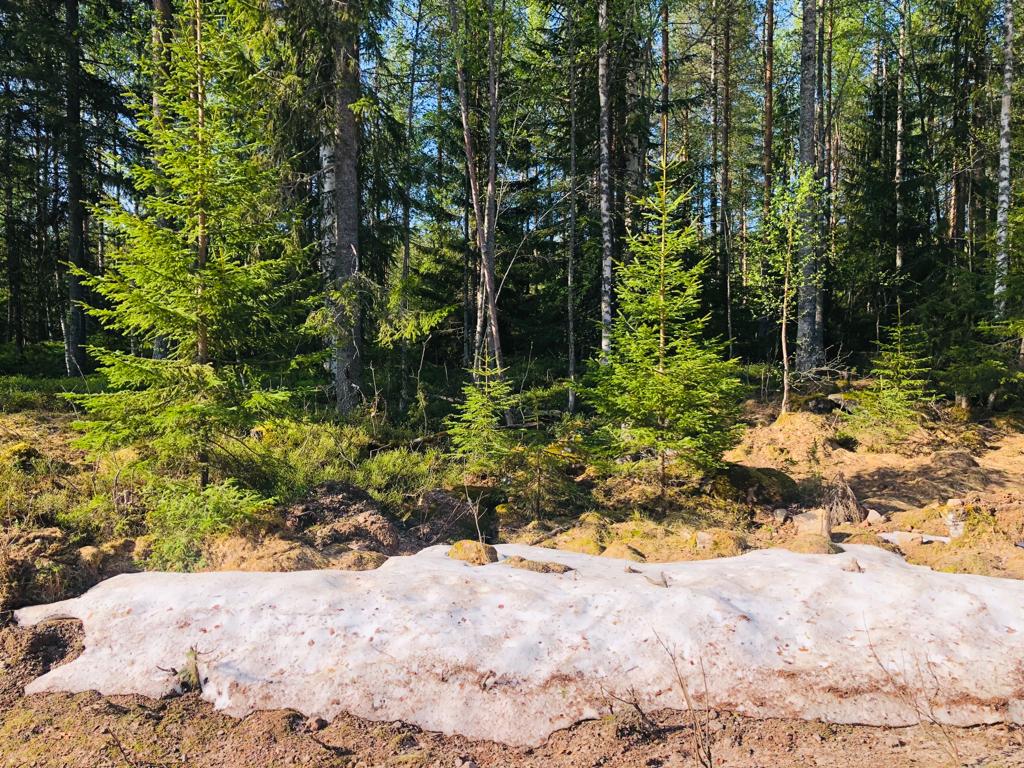
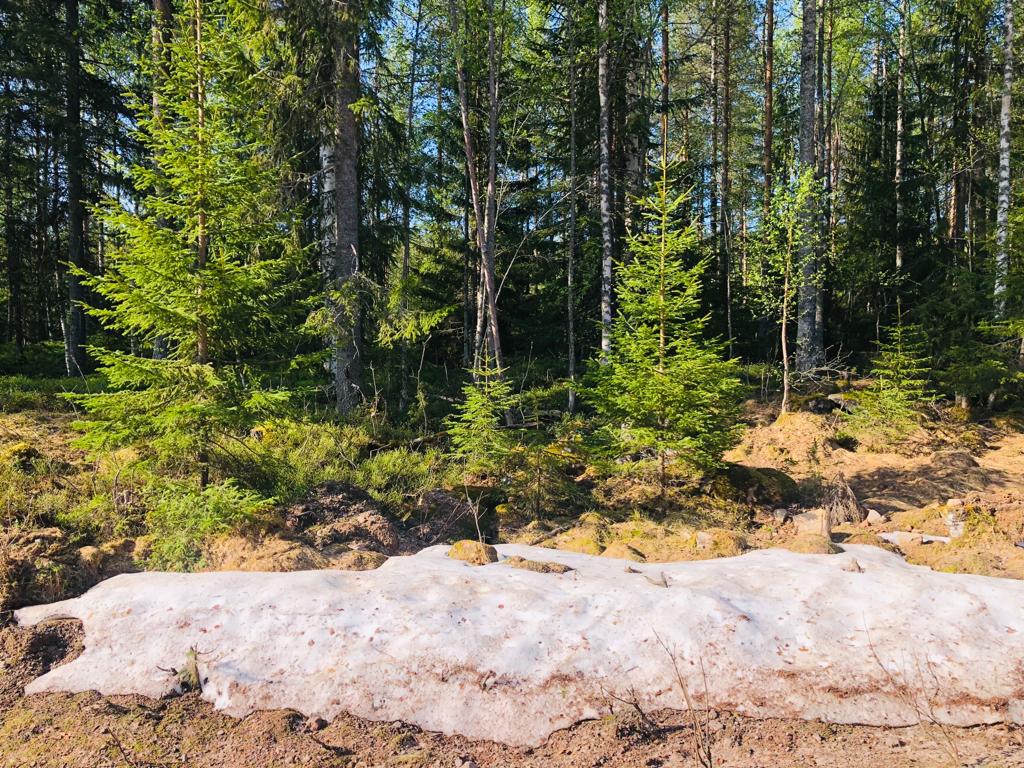
The snow has gone, apart from a few patches in forest clearings, revealing the grass at base camp, along with some old moose scat. Our job for the next two days is to get base camp tidy and organised ready for the expedition, and to check and prepare all the research equipment.
Andrea has been a little tense: the tracked bears’ GPS collars often only transmit their entire winter’s data after they have left their winter den and walked into an area with phone signal. Due to the late arrival of spring here, Andrea has been left waiting for these data uploads. Thankfully, as of yesterday, she now has the data and she looks positively happy now!
We are getting excitingly close to the start of the 2023 Sweden Brown Bear expedition, and preparations are going well. I am Roland, your expedition leader, and this will be my second time leading this expedition. I am really looking forward to returning. This year, my partner Louise, a professional events caterer, will also be joining us as expedition cook. It will be interesting to see what that will mean under expedition conditions. We will be working alongside Dr Andrea Friebe, the local expedition scientist who manages a long-term research programme monitoring the brown bear population in this region.
Louise & Roland
Our daily research tasks will include finding and recording the dens that the bears have been using to hibernate in over winter, as well as their day beds, which we will visit sometimes shortly after they have left them.
Andrea sent an update from the field today saying that 10 cm of snow fell last night and that some of the tracked bears have not yet left their dens, so we may have some interesting challenges coming our way…
As always with Biosphere Expeditions, we will review and adapt our plans according to the conditions we find. The weather forecast for Dalarna province, at least for the first few days of the expedition, predicts warmer conditions – up to 27 C , with some sunny, some cloudy and some rainy days. The best advice is to pack clothing and footwear ready for any and all weather conditions!
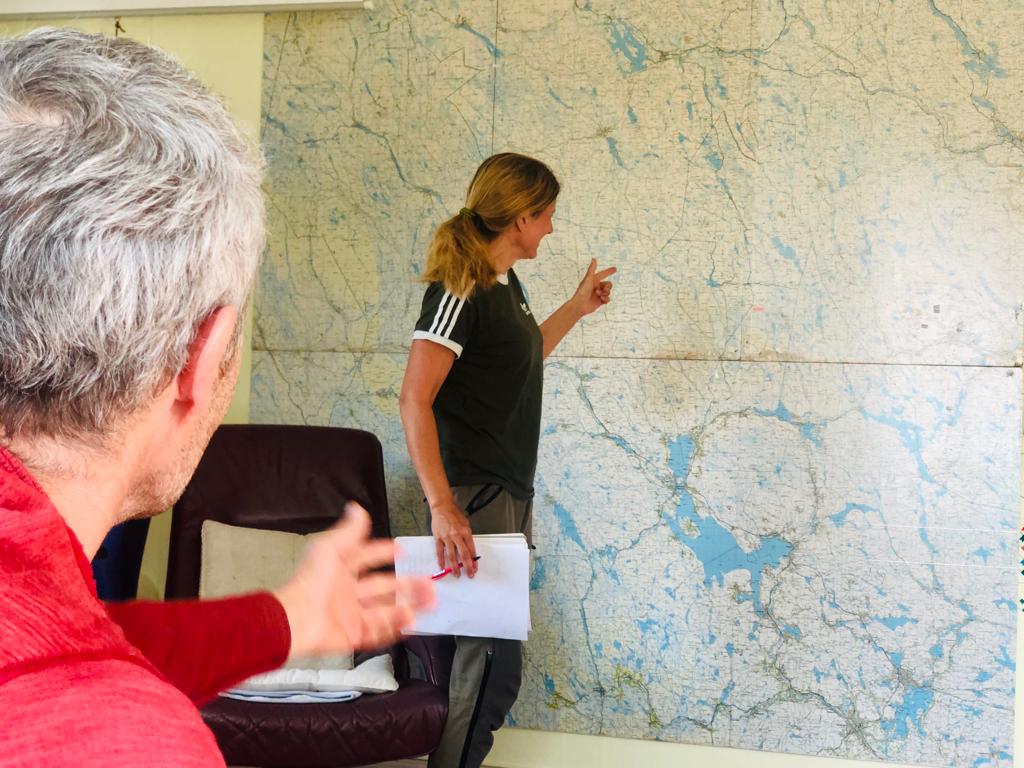
The research methodologies we use on this expedition are relatively detailed and specific, especially when it comes to surveying the winter dens. But fear not, we will provide ample training in the methods and using the research equipment in the first two days. I will send another update once Louise and I get to our expedition base, on 24 May. In the meantime, feel free to start getting excited about this expedition – I certainly am!















 Biosphere Expeditions: blogs from the frontline of wildlife conservation and the fight for a more sustainable planet