Award-winning, non-profit and ethical wildlife conservation volunteering. Advancing citizen science and conservation since 1999 – for nature, not profit.
The weather has turned in our favour for much of the past week, which meant improving conditions and calmer seas. Music to ears of many. It also meant we could venture in a new direction for 2023, south of Faial. This paid dividends with not only another humpback sighting, but also a fin whale.
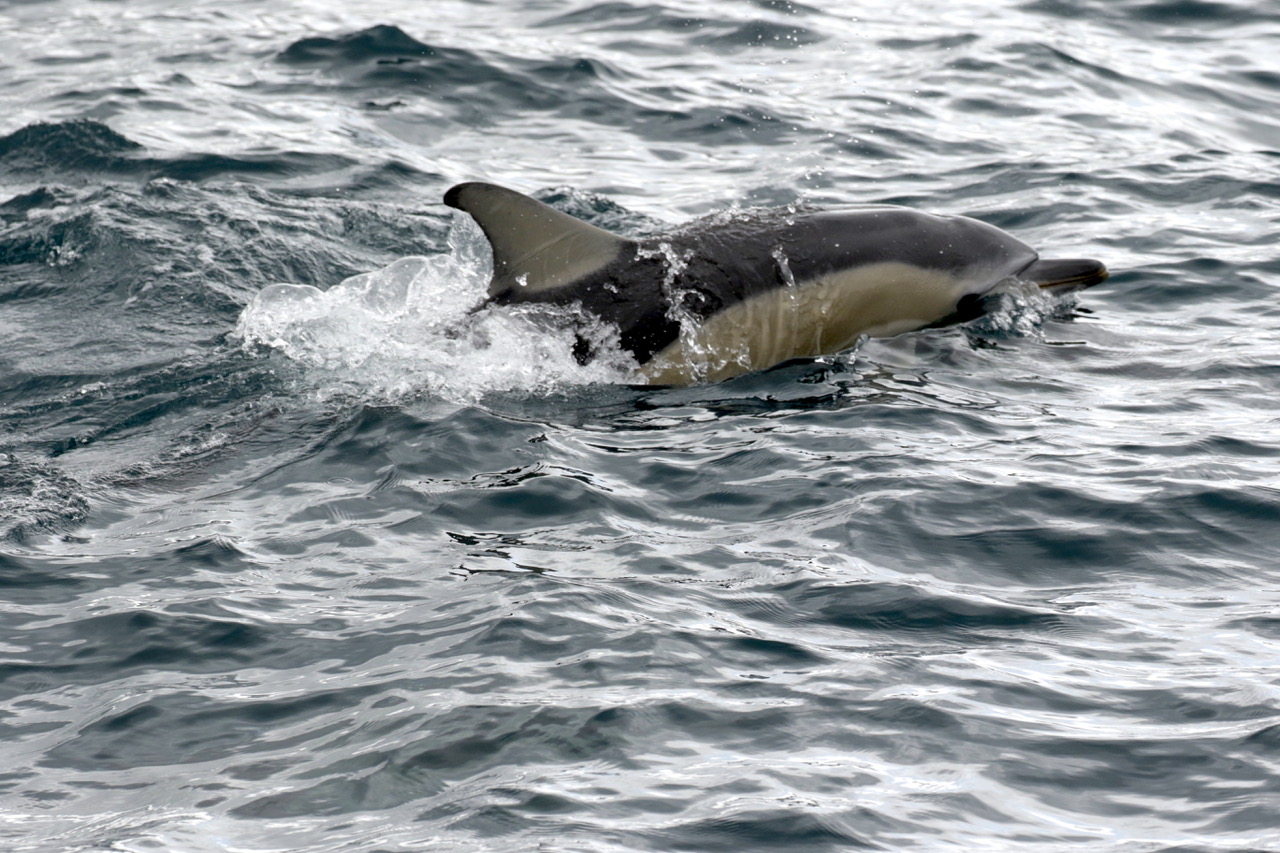
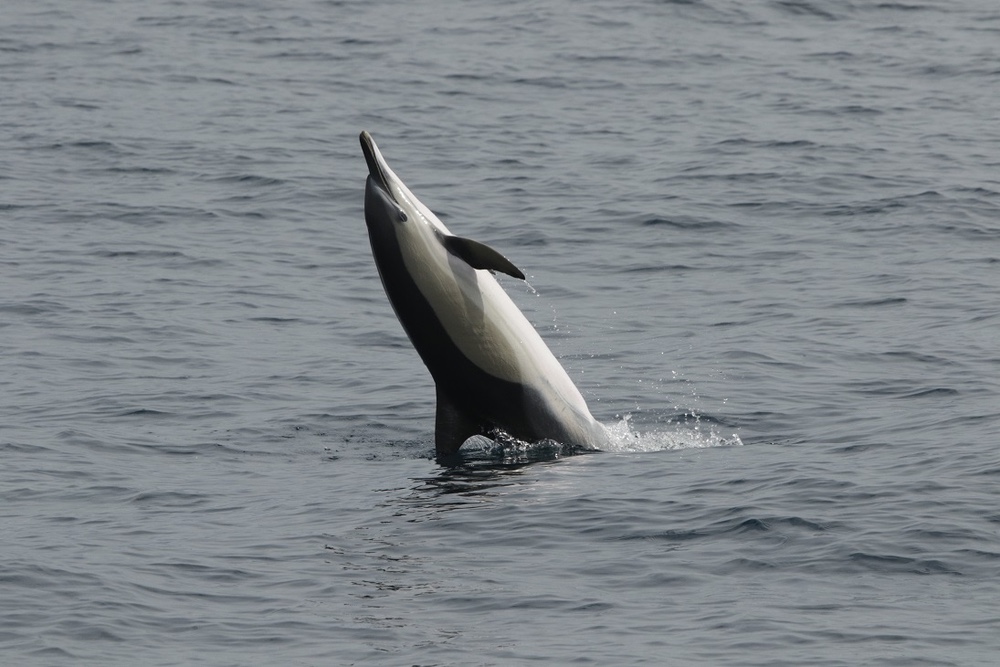
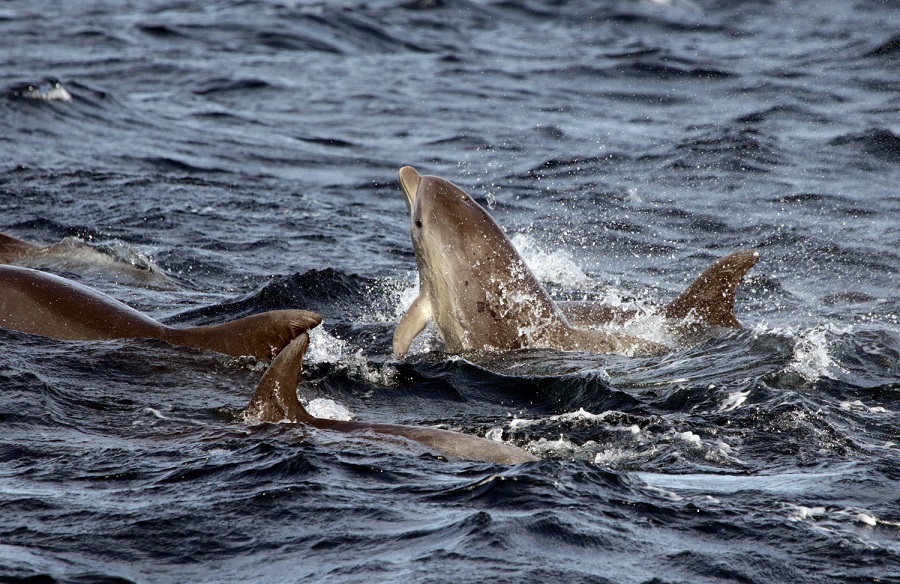
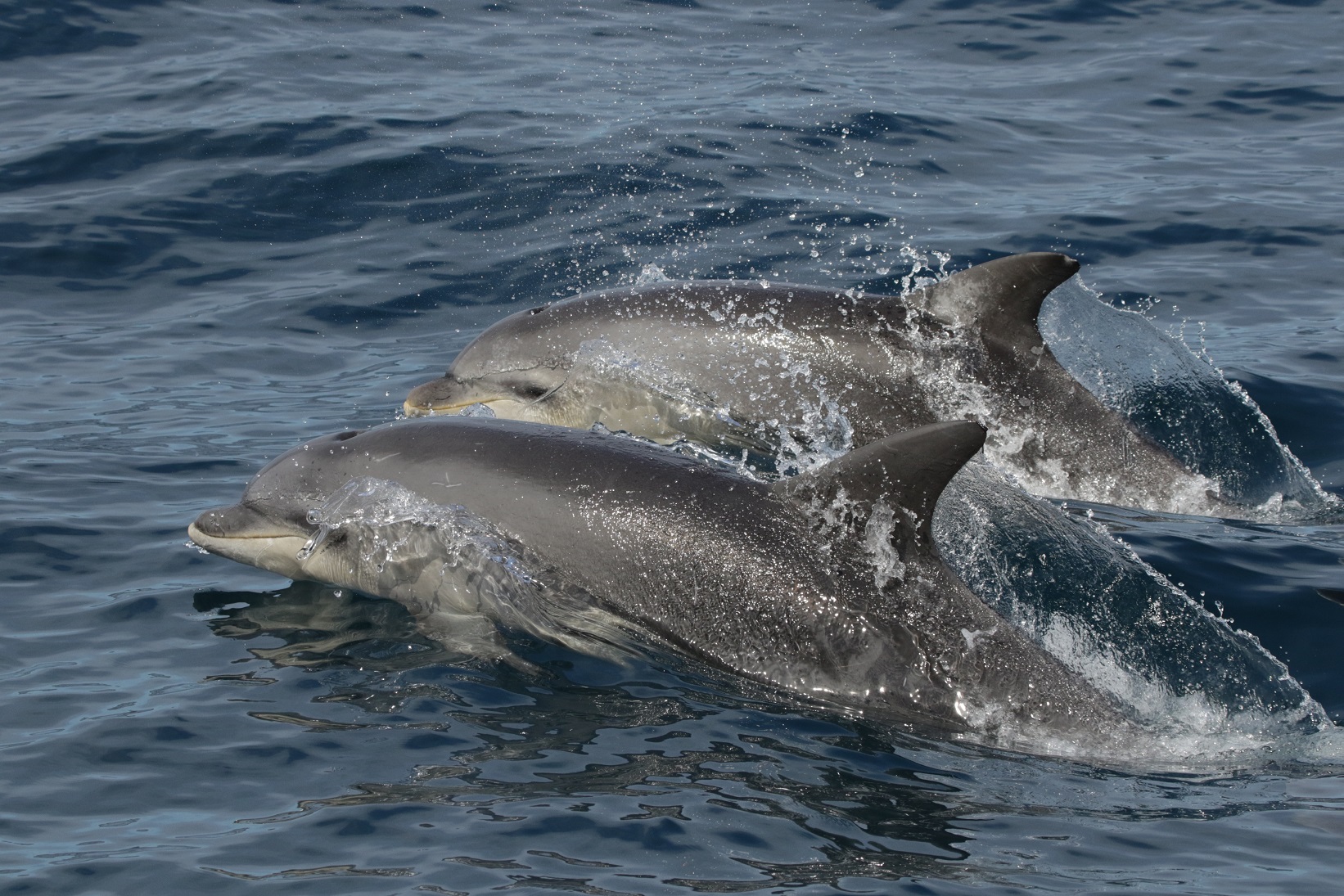
The latter is another new record for 2023, and appeared at random, whilst ‘on transect’ less than 10 m in front of the boat! Quite a surprise for all, including our skipper. This was followed by more sperm whale encounters off the far west of Faial, which then gave us the opportunity to complete the circumnavigation of Faial before returning to Horta, only interrupted by a few common dolphin sightings, and a great encounter with sociable bottlenose dolphins.
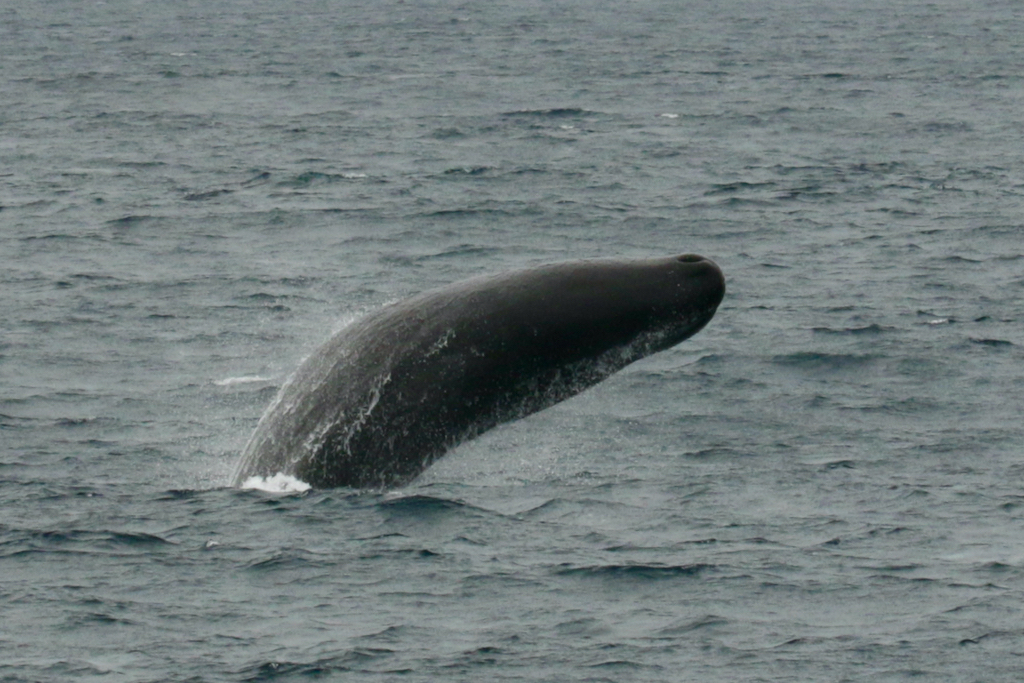
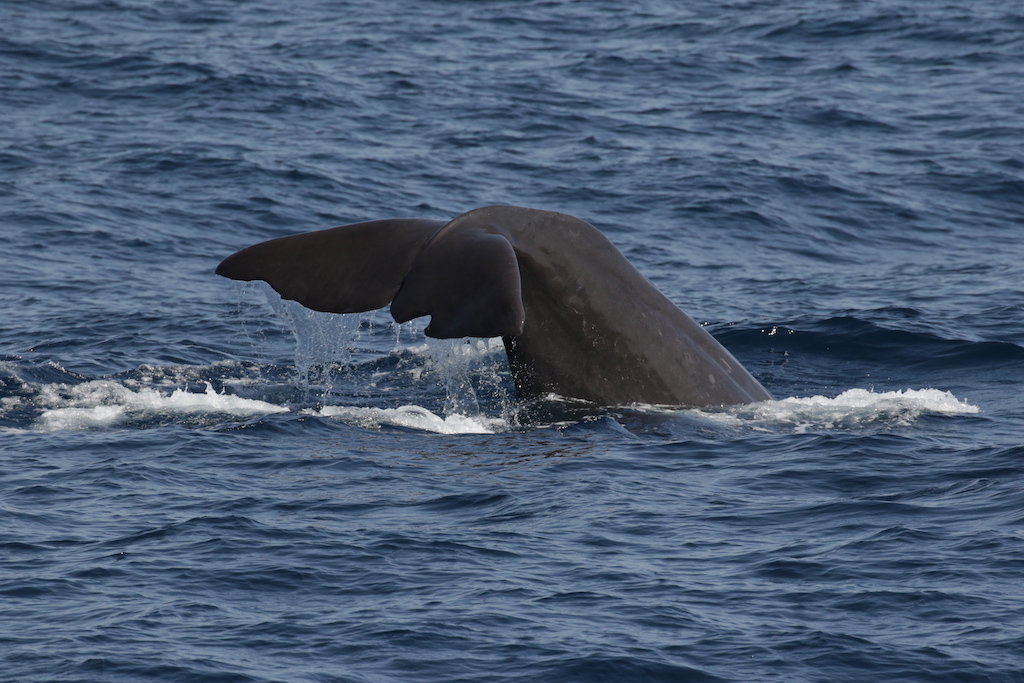
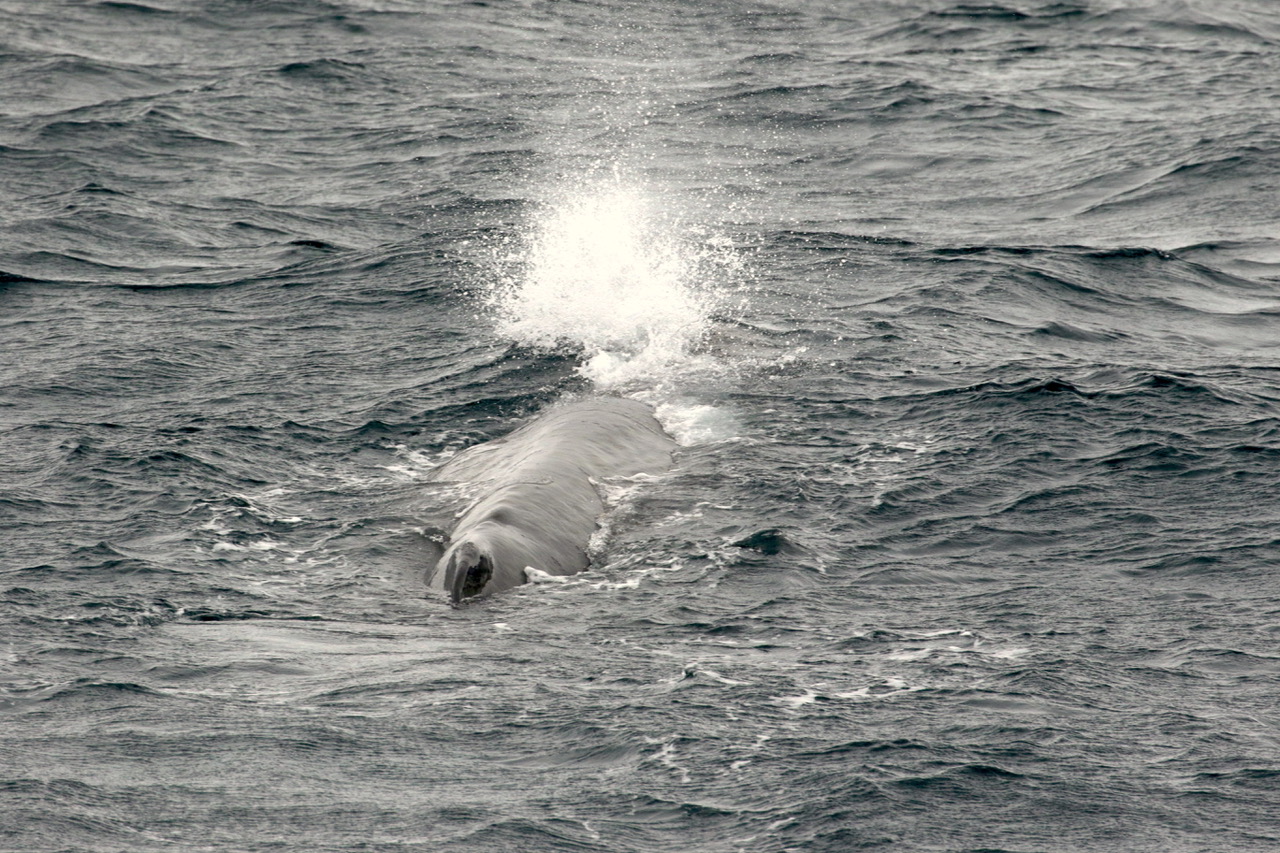
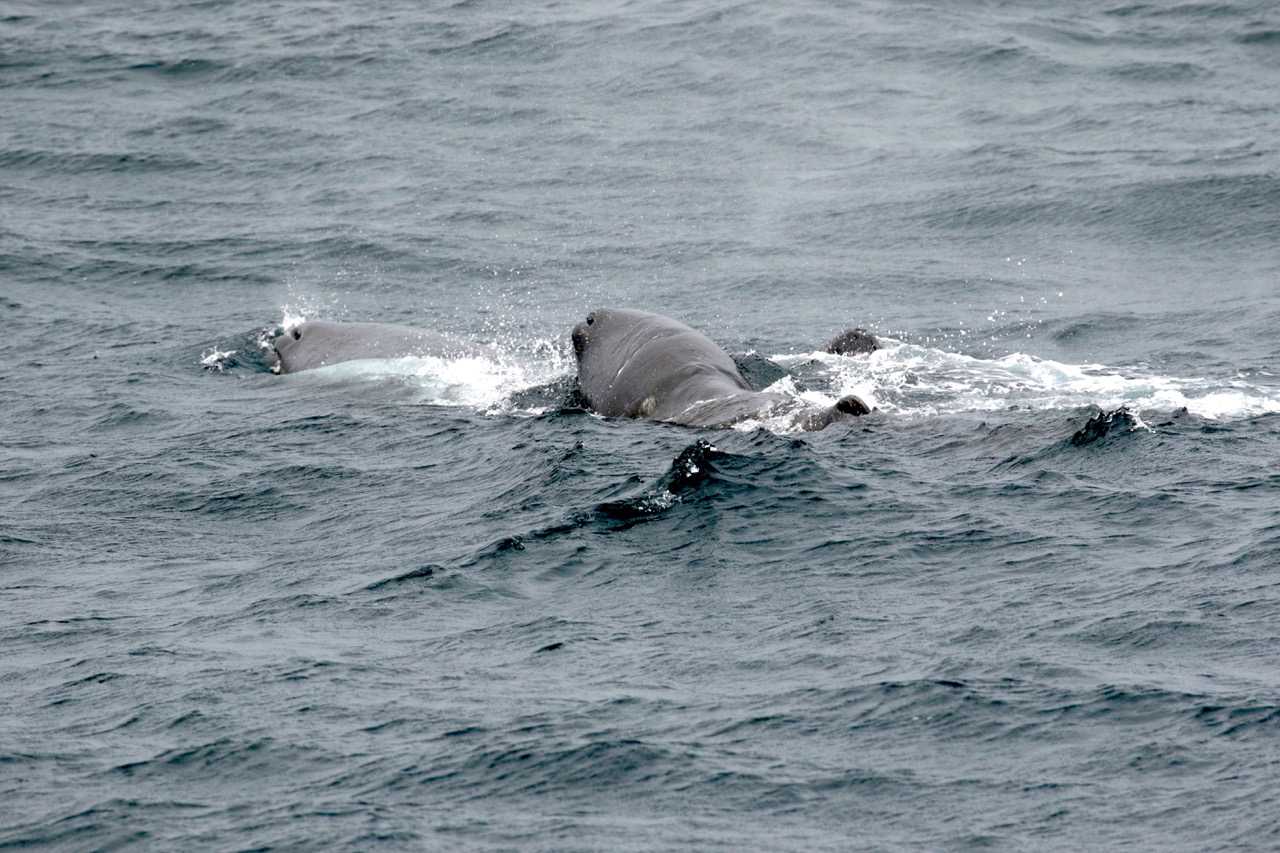
The next day saw us head south again, this time off Pico. In addition to the usual, dolphin, and less common turtle and shark sightings, it again turned into a sperm whale day. Whilst they were doing their best to frustrate us, with not many fluking, so ID pictures were limited, they saved the best until last. We managed to see one breaching some distance from the boat, but were then treated to three breaches a few hundred metres from the front of the boat – think flying giant cucumbers!
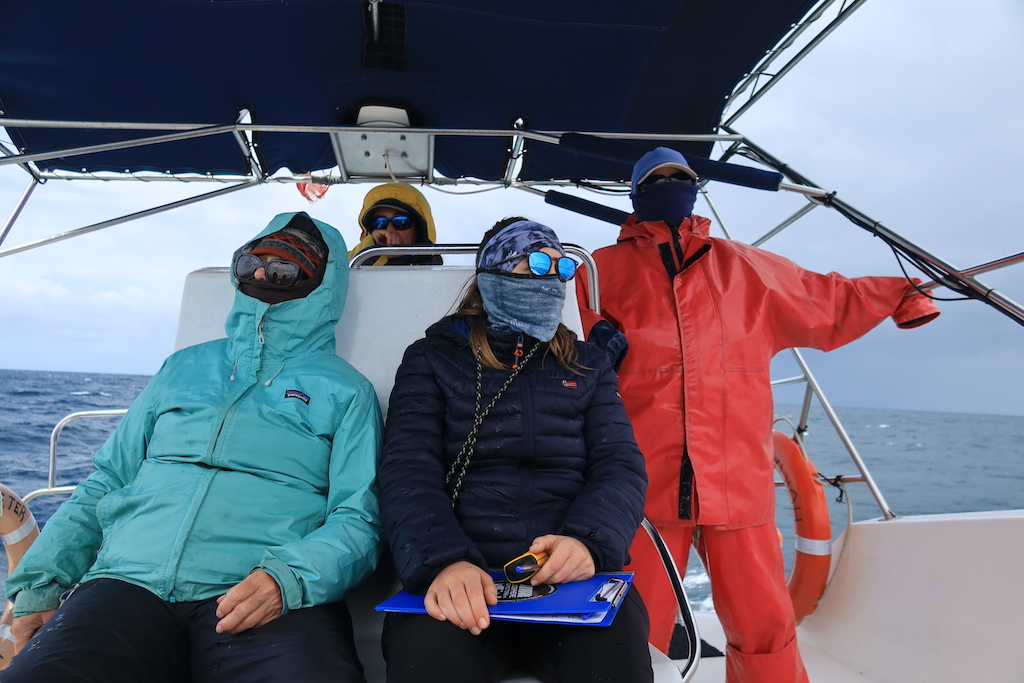
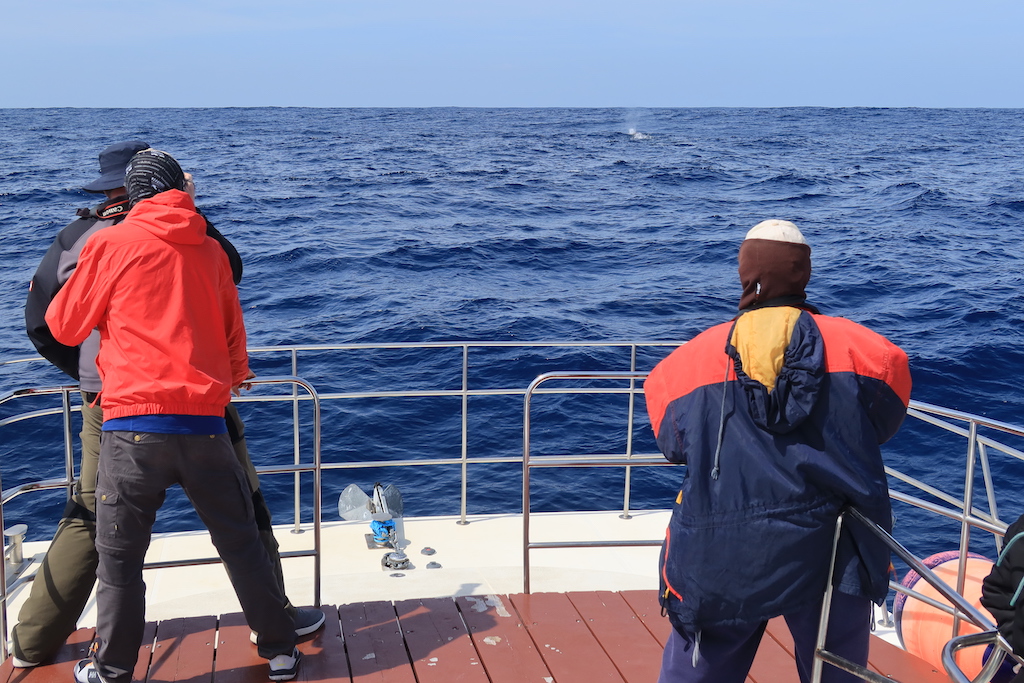
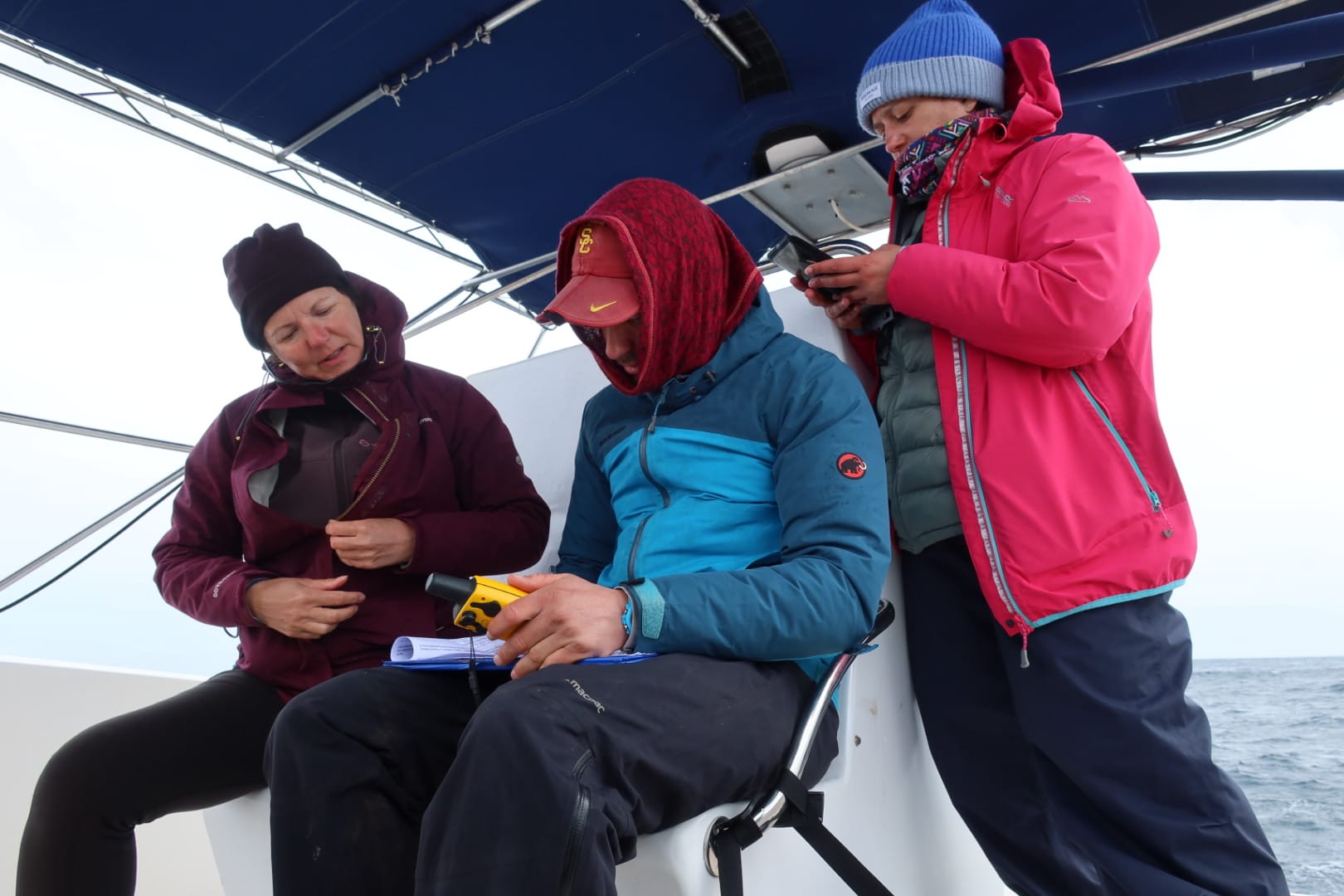
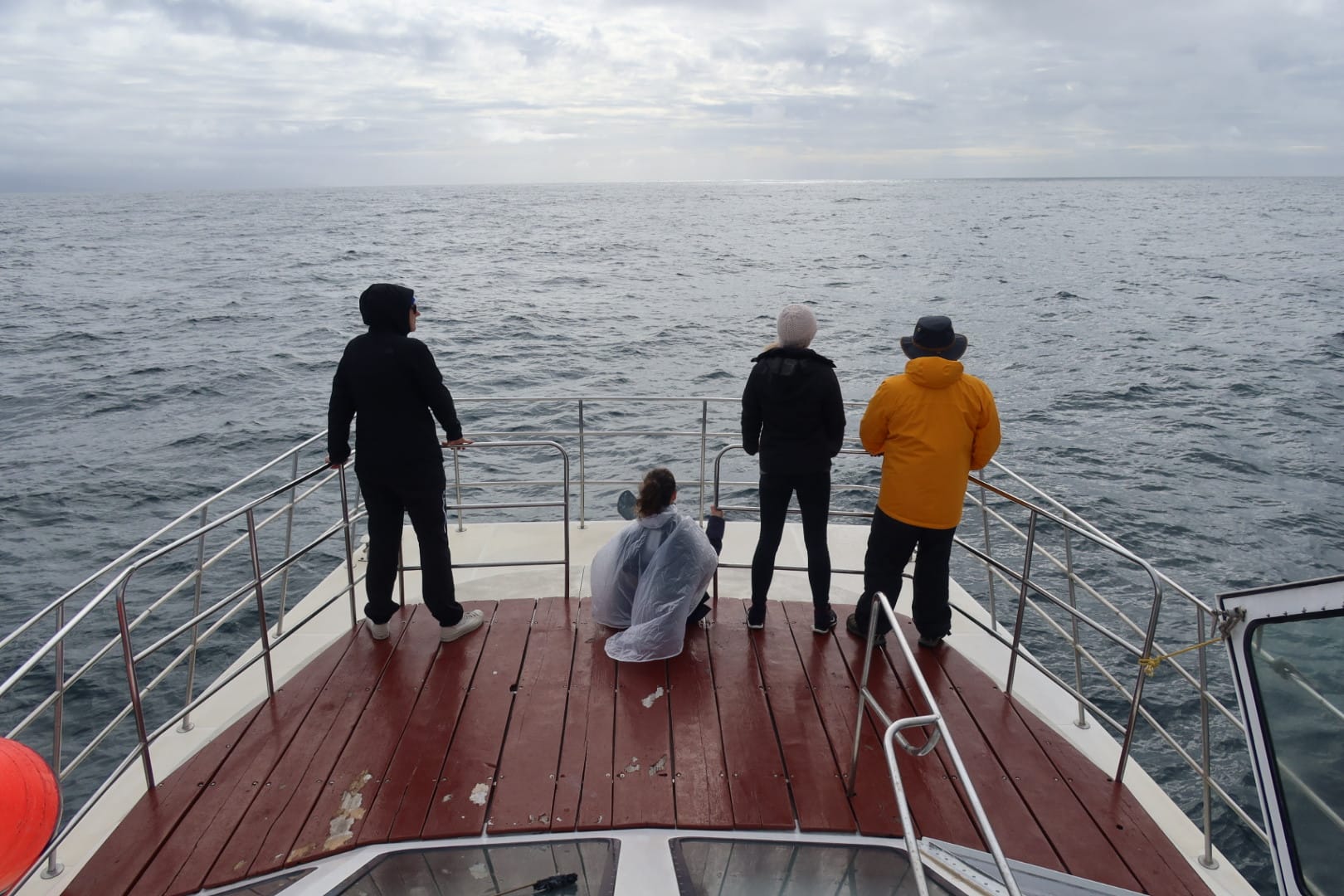
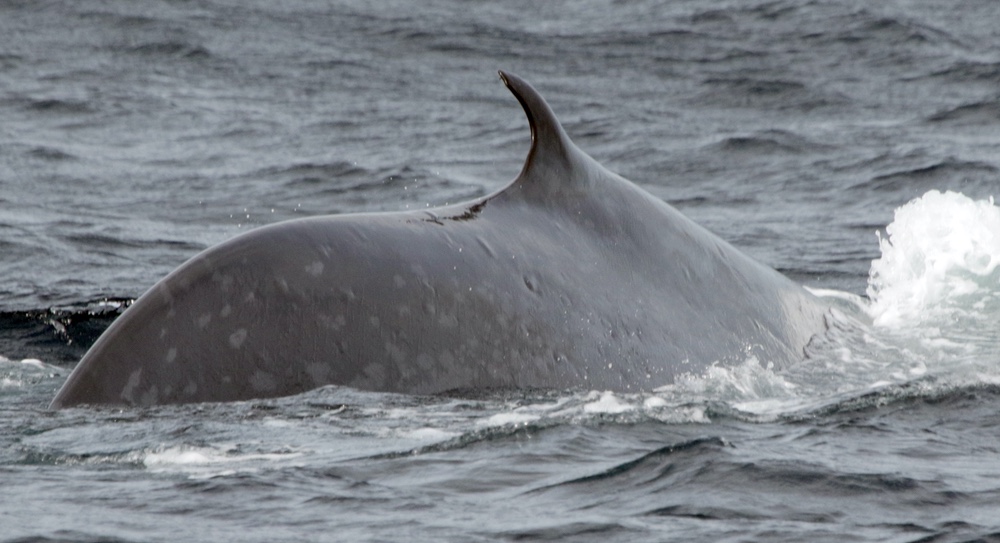
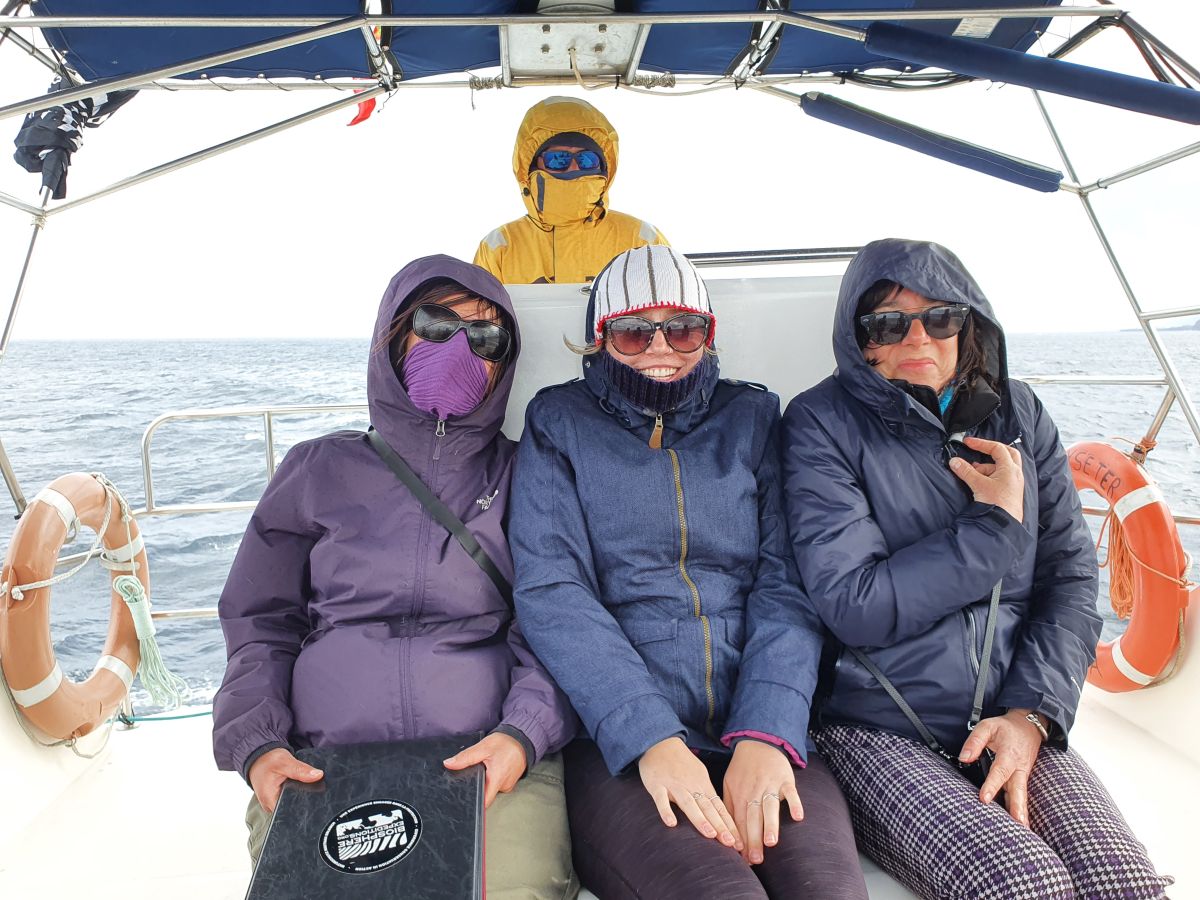
With the weather changing and winds building on Thursday, we pursued a suspected sighting of more than one blue whale, several miles north of Faial. This turned out to be a fairly challenging day, with the boat making way into oncoming weather and waves, peaking at force 5 – which makes staying upright a challenge – let alone doing any data collection. However, persistence often pays off, and we were rewarded with sightings of three blue whales. A great job by all to get the data recorded and stay on the boat….
With photos sent off to various collaborators, we now await news of possible matches, to work out where there whales may have come from or go to…….watch this space. After four consecutive days at seas the team are having a well-earned rest before we make the final push on Saturday.
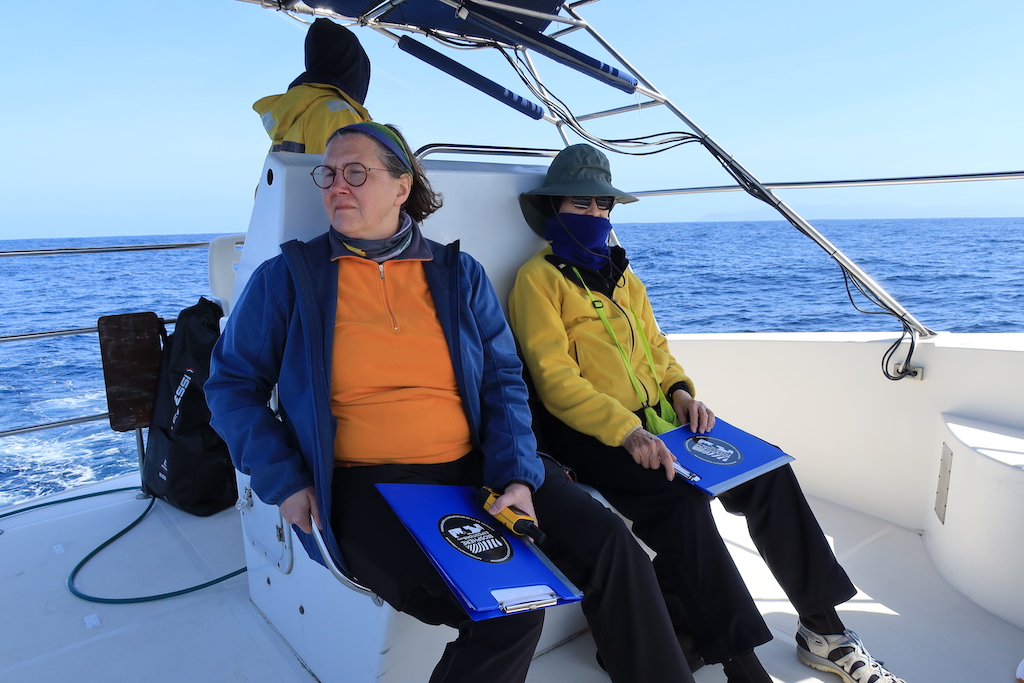
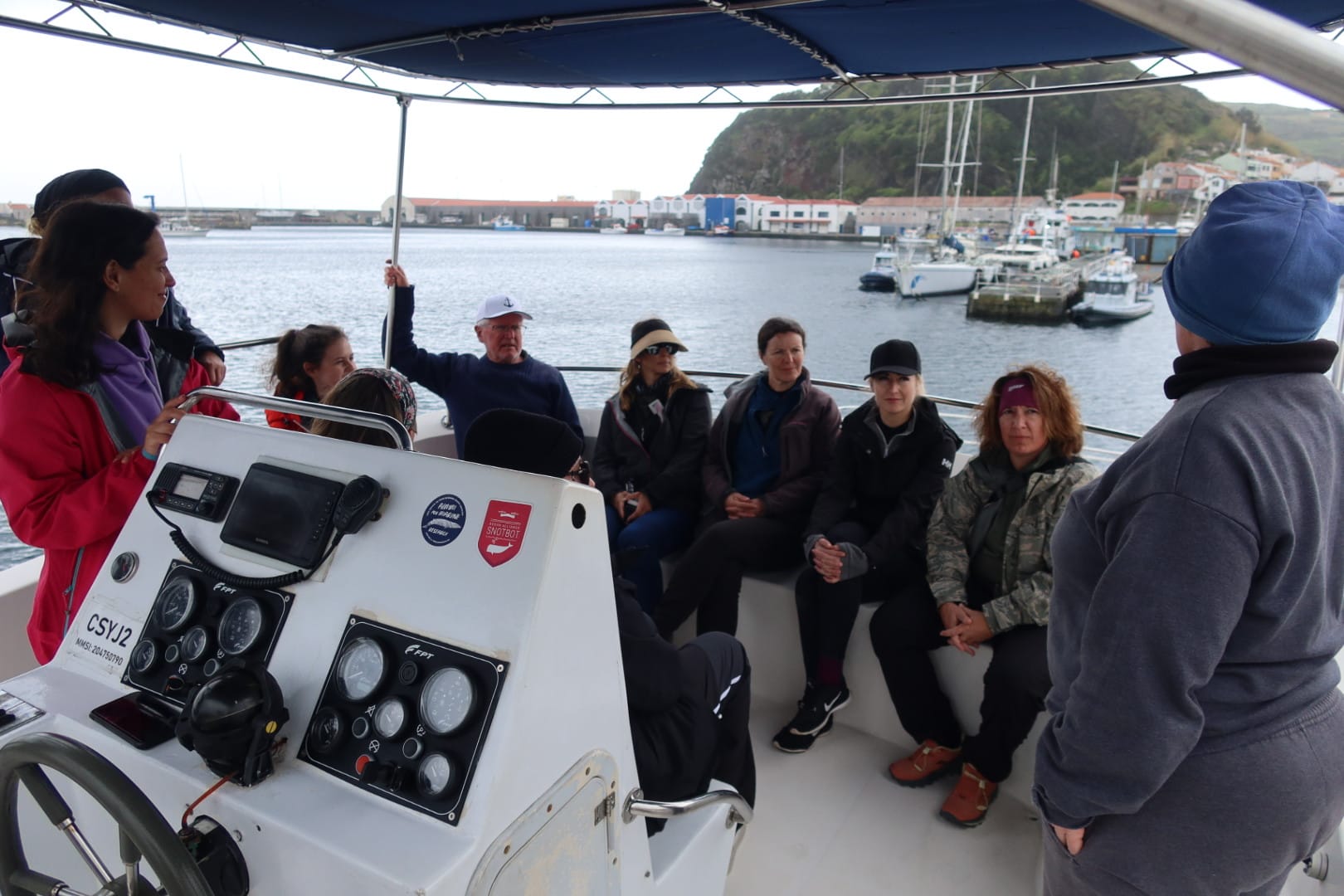
Having welcomed group 2 on the expedition, we embarked on the first two days of orientations, equipment and scientific survey training. This all went to plan until it was time for our first session on the boat – the weather (and sea conditions) had other ideas!
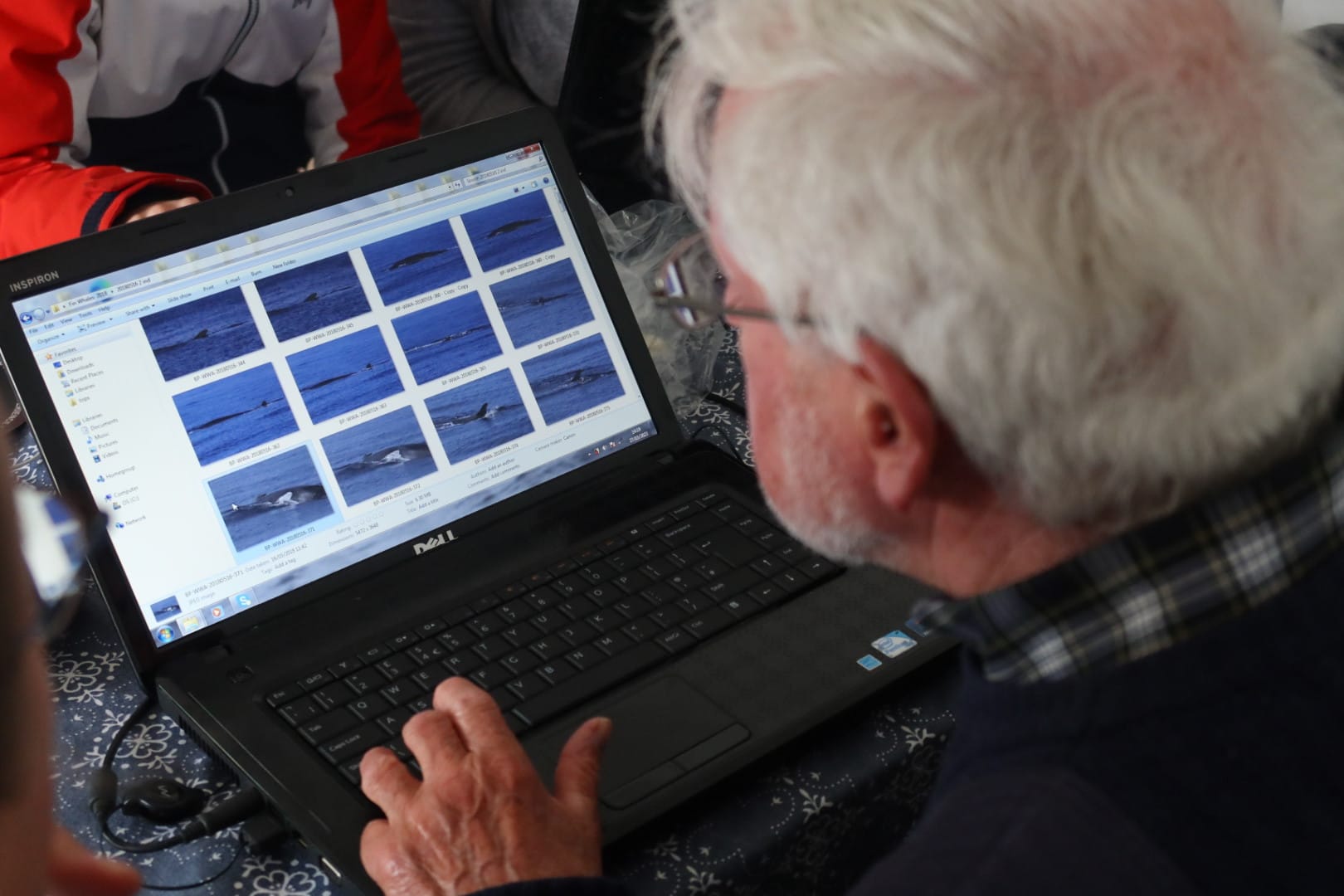
This lead to an impromptu afternoon on shore, followed by a day sorting existing data and images. An important task , which gives real context to the field surveys. But soon the howling winds abated, meaning we could head out to sea on Monday.
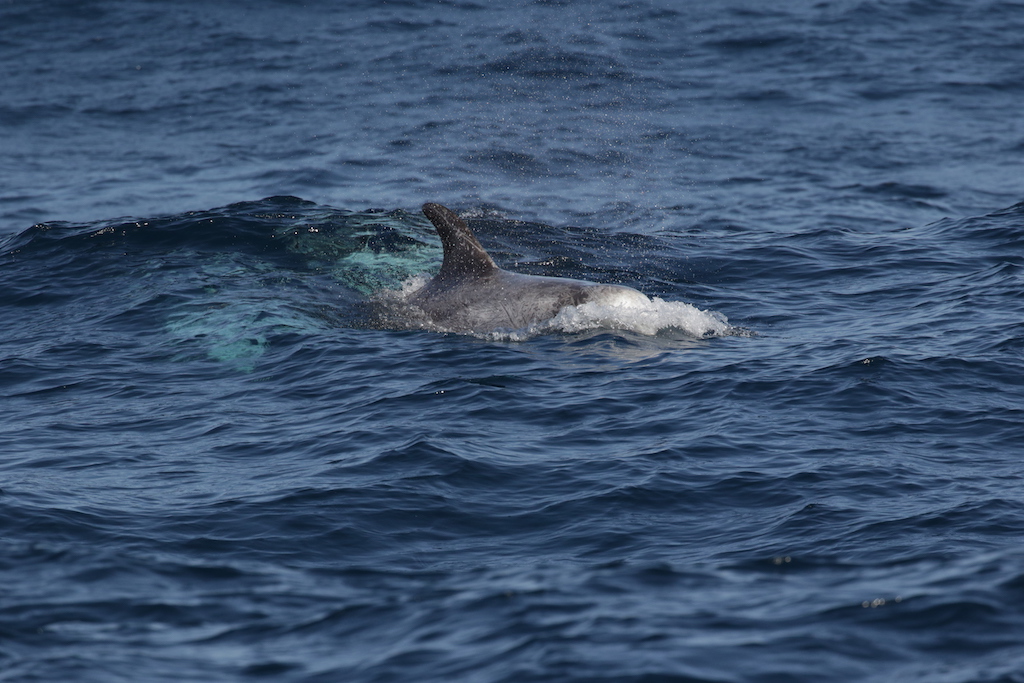
The wait was worth it; with multiple sperm whale records and more common dolphins. We were also able to record both Risso’s dolphins and striped dolphins for the first time in 2023. Great effort considering we were still working in 4-5 m swell and the various species weren’t making it easy to record them, let alone obtain good photo ID imagery. A special thanks to Cord, Bendine and Nina for stepping up to the task in the way you did.
With the weather set to continue to improve (for the next few days at least), we look forward to even more sightings now that we have our sea legs, hopefully.
A sterling effort by group 1 despite the weather frustrating our efforts to get out to sea.
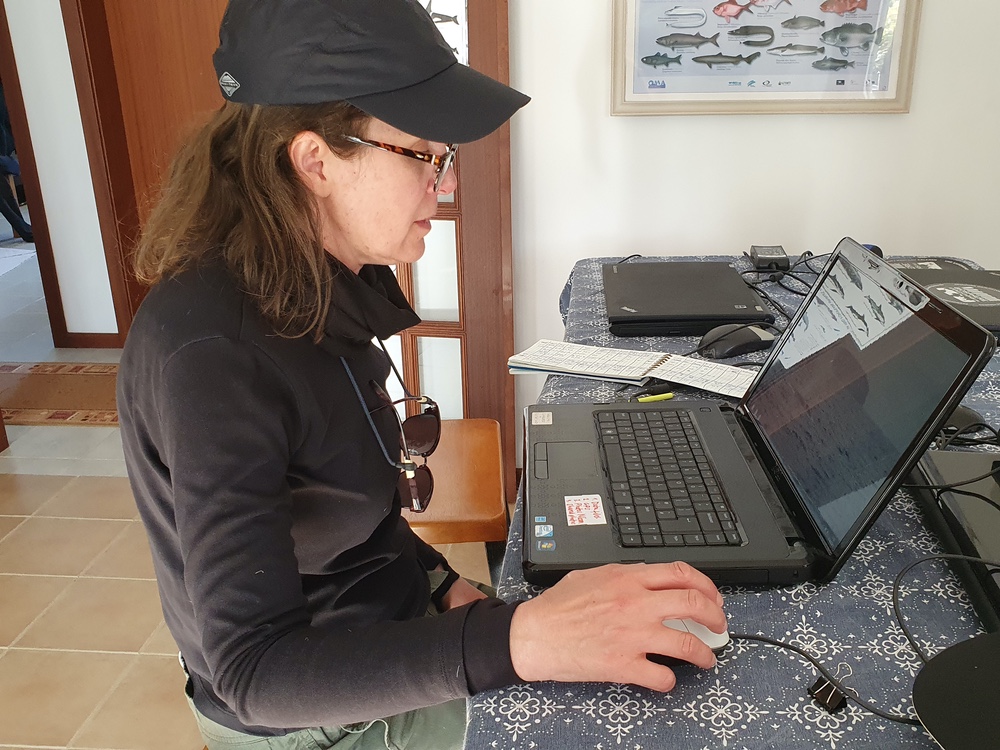
This has meant time on shore to sort data, process imagery and begin the task of matching individuals, across multiple species. Amazing what you can achieve with coffee, a few treats and determination.
Over the past few days we’ve covered almost 500 km of surveys, with just shy of 40 cetacean encounters across five different species. The only area we could not explore was south and west of Faial due to some challenging seas.
We should also not forget the loggerhead turtles, multiple bird species and two shark sightings. Not a bad data haul for this time of year.
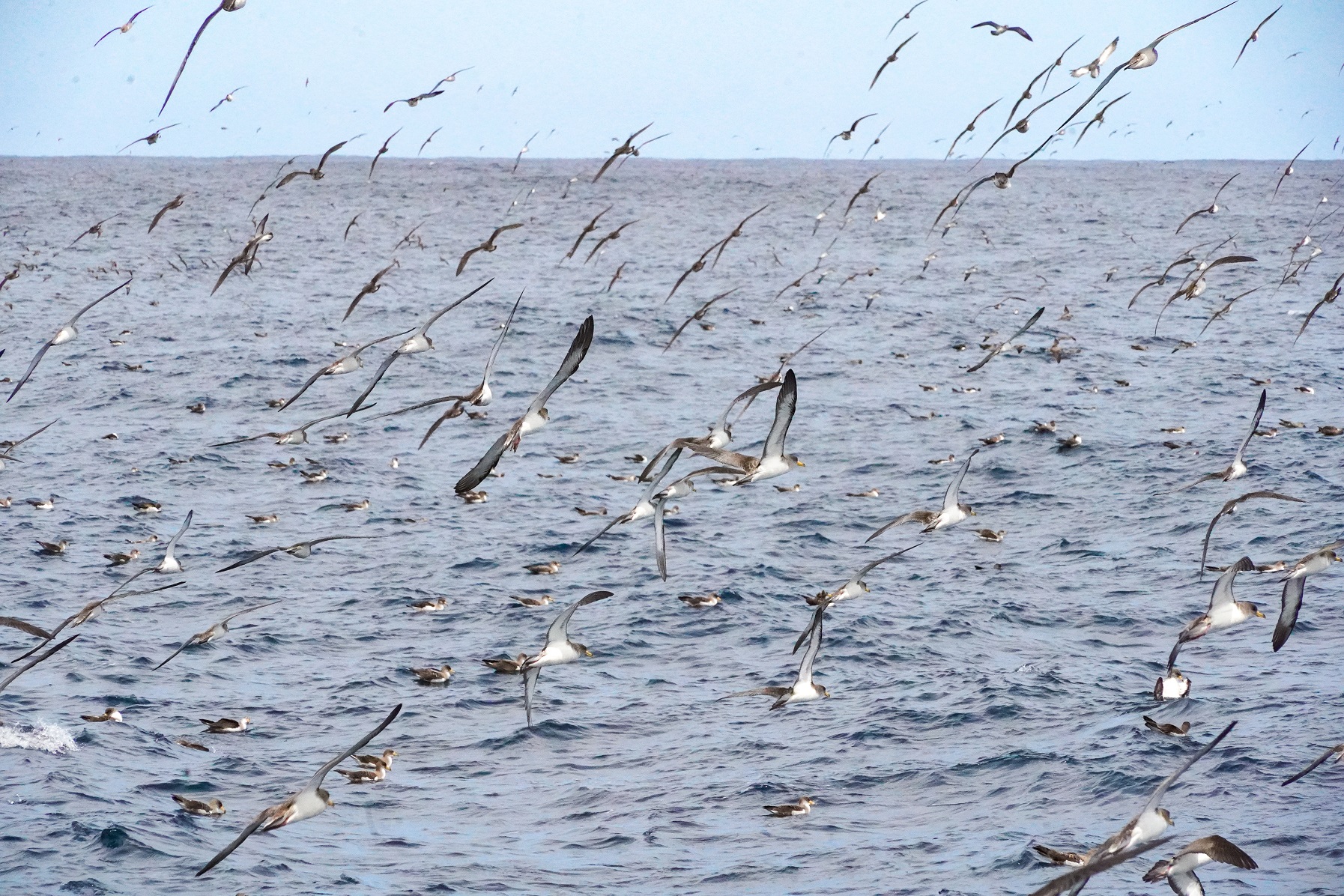
Safe to say we’ve already had some highlights this early in the expedition. Our first blue whale, a humpback being mobbed by hundreds of see birds and a rare circumnavigation of Pico.
Talking of long-distance trips, some of us also completed an extended night walk of Horta, courtesy of Sofia’s local knowledge – a story for another time!
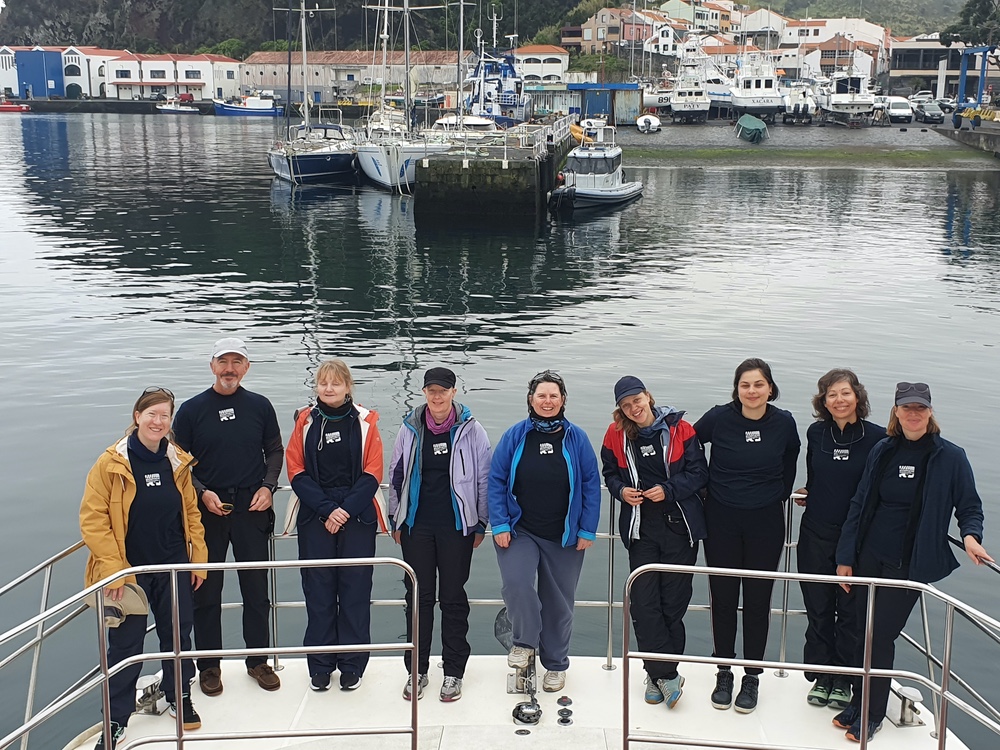
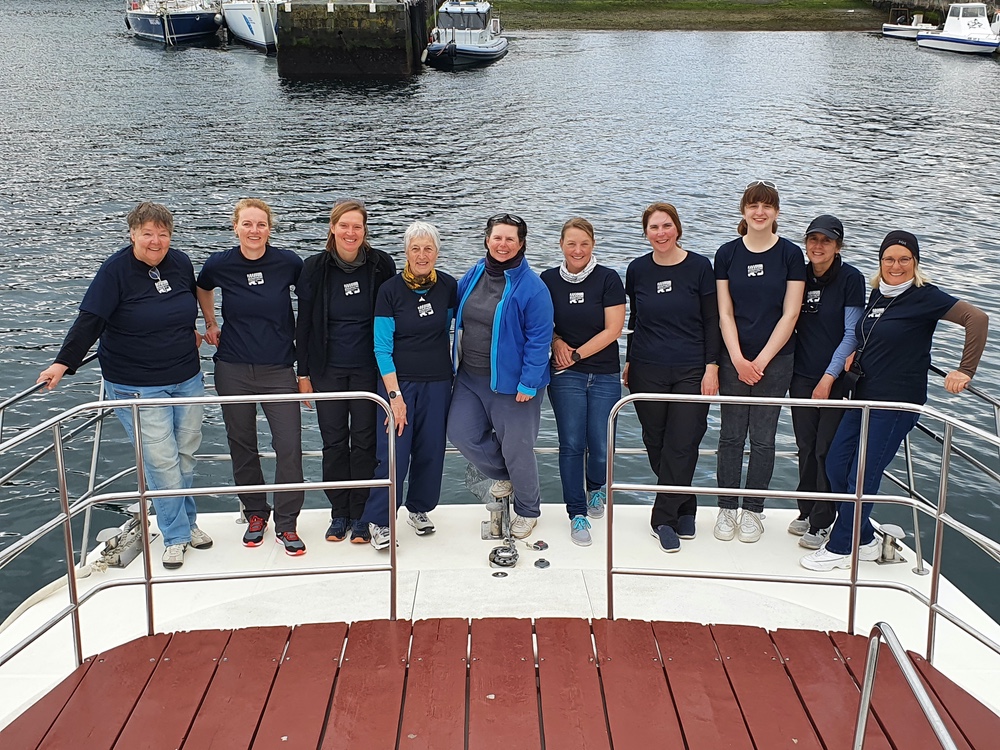
It’s been a joy to kick off the 2023 expedition with such a great group who have personified great teamwork with endless humour – you have been a joy to work with, thank you.
We also lose Henry (our expedition leader in training) who has been another great asset (and halved my workload!). But as we say farewell to group 1, we are now excited to meet and welcome group 2. There is still much to discover and here’s hoping you bring good weather and calm seas….
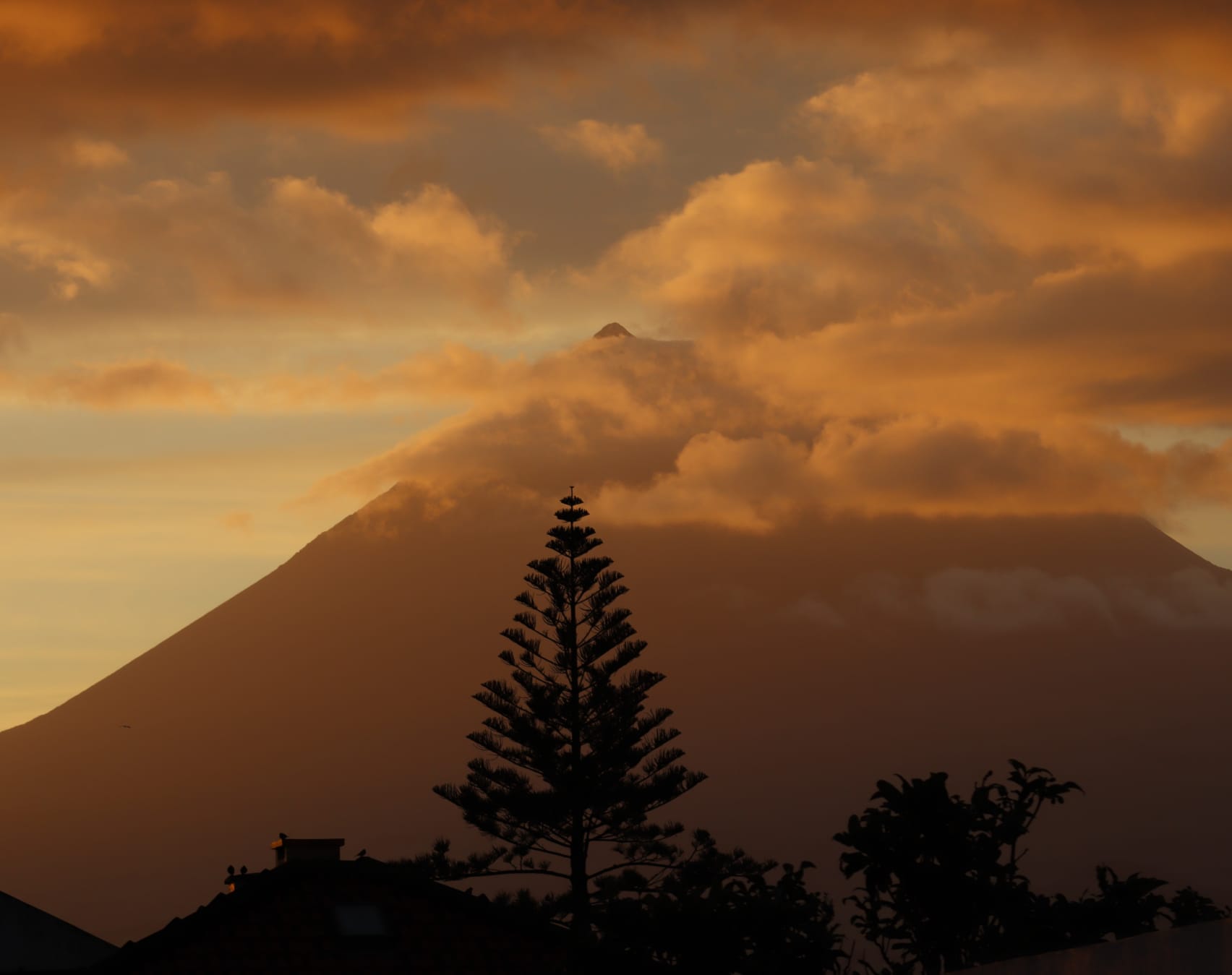
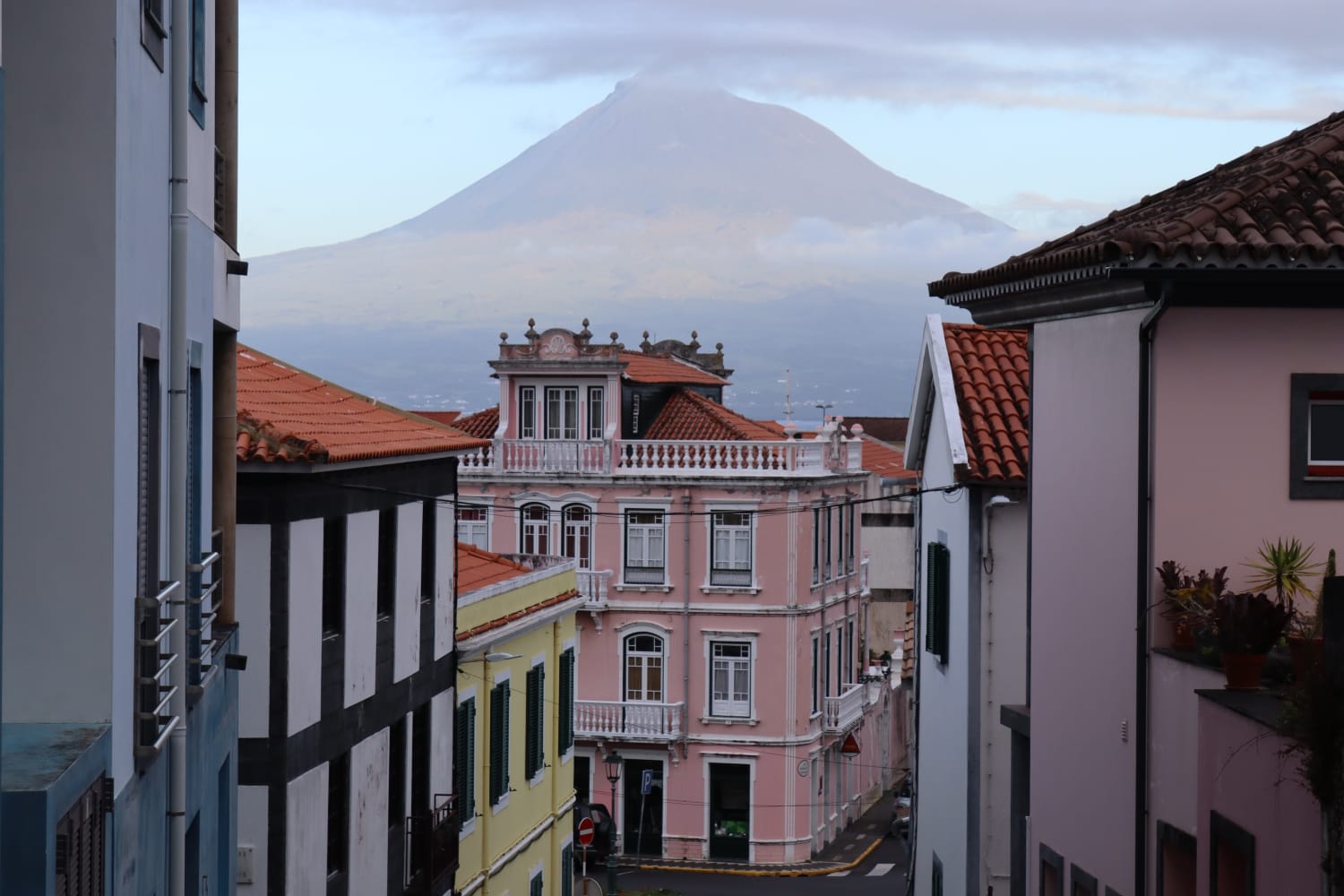
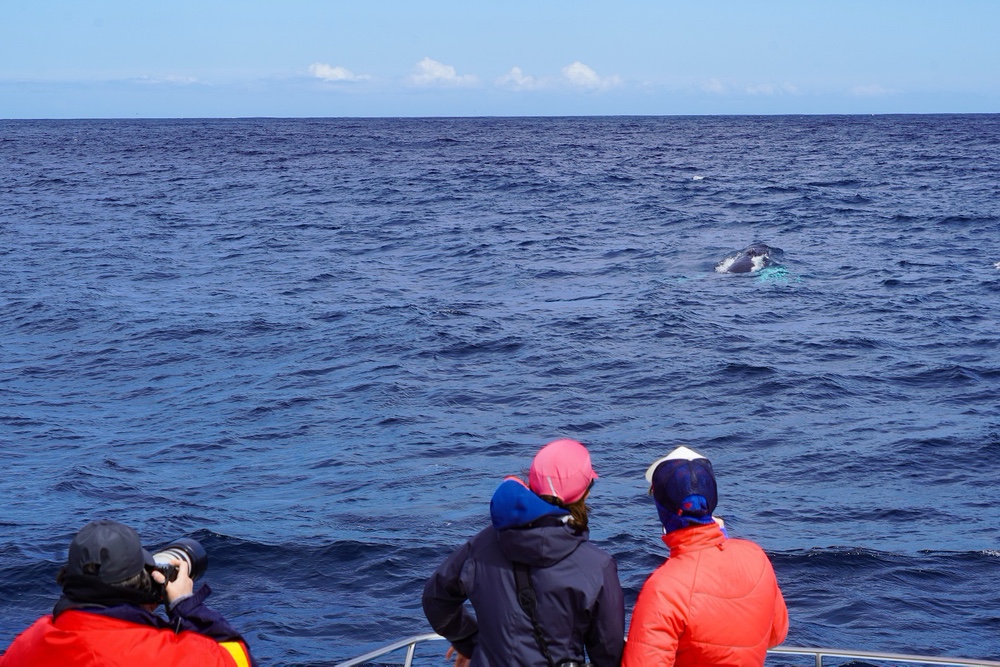
Sea day 3 began with clear skies and views of Portugal’s highest mountain on the Island of Pico. We headed for the lee of the island to increase our chances of sighting (and recording) target species. Despite the best efforts of the spotters and deployment of the hydrophone, we were not seeing (or hearing) anything. Eventually we received information that a humpback had been spotted off the north coast, so we headed into the somewhat rougher waters on the windward side of the island. This culminated in a 145 kilometre circumnavigation of Pico during which we did manage to find a juvenile humpback feeding and were even treated to a couple of breaches.
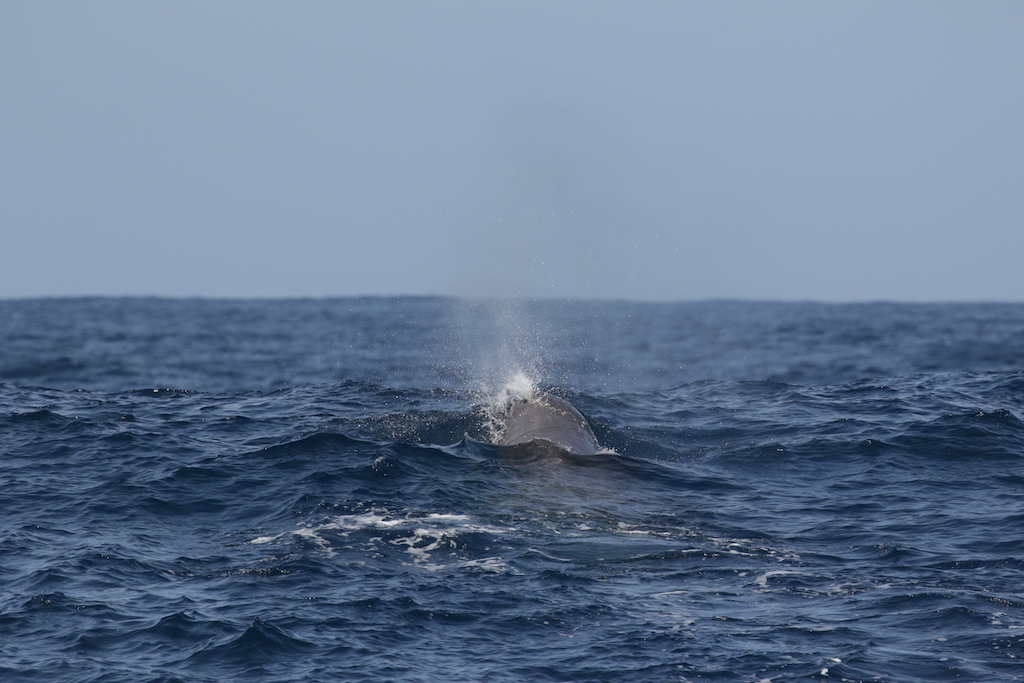
Sea day 4 came with more swell and another long day covering 108 kilometres north of Faial. This time sperm whales could be heard in the distance through the hydrophone. So we began the process of slowly honing in on their position. Sea conditions made it challenging and after hours of work, Alice finally spotted the blow as the whales surfaced just 200 metres from the boat. The resulting photos enabled Lisa to get positive IDs on four individuals, some of which had been recorded on previous expeditions of ours.
After four days at sea, fatigue was certainly evident amongst the team. But with incoming rough weather a 5th consecutive day on the water was decided upon. We were a couple of expeditioners down due to sea sickness and fatigue, but the team pulled together, with Emma and Elena volunteering to make sure all roles were covered.
Day 5 was a different story to the previous days, with calmer waters, no rain and more whales. We had over 20 sperm whale sightings with six individuals identified, and as if to reward the hard work of the previous days, we even managed to record a blue whale (we’re still waiting on any positive ID matches for this individual).
This Sunday the team are having a shore day and taking a well-earned rest. Fingers are firmly crossed for a break in the weather to enable one more day at sea.
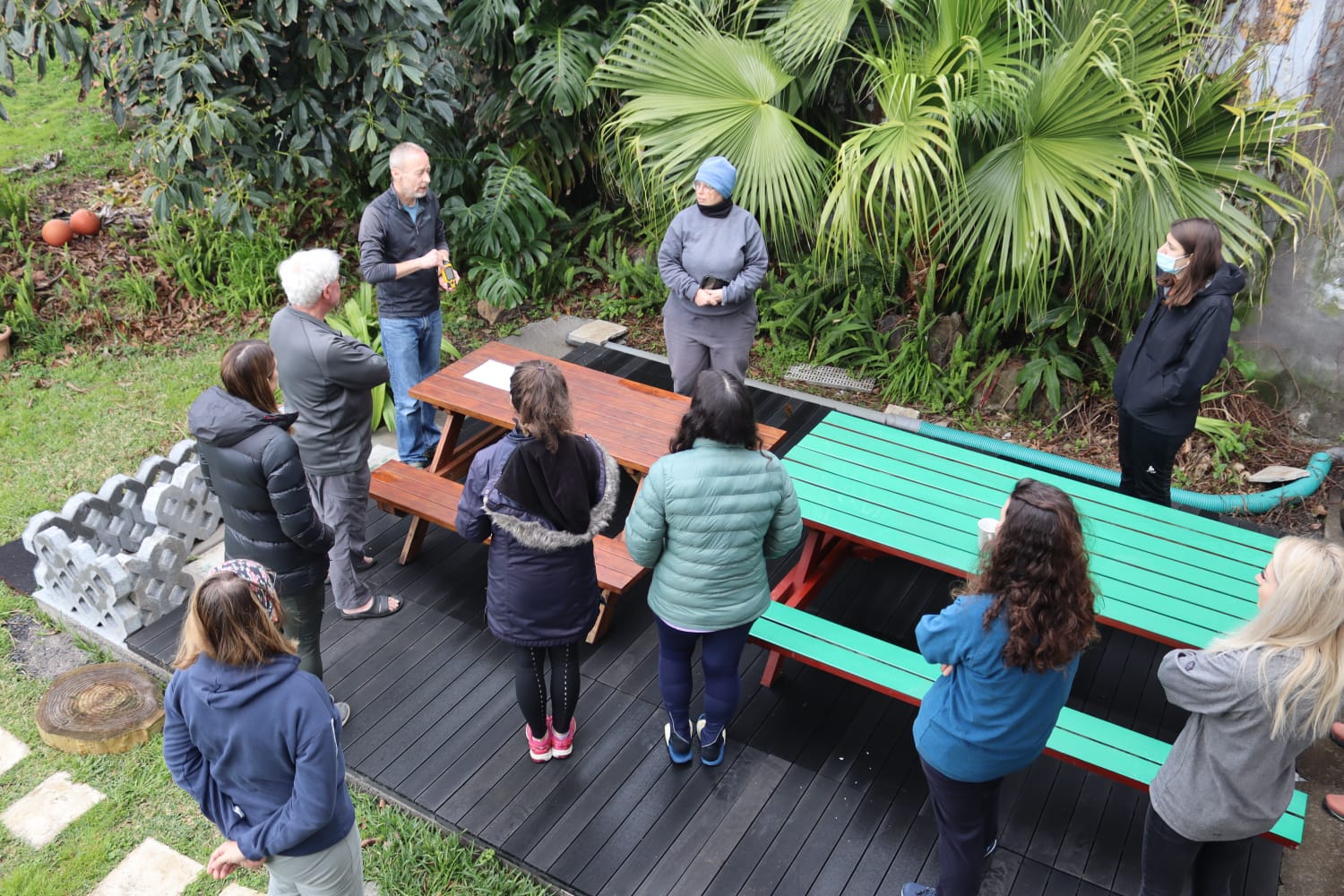
The expedition is underway with participants from six countries arriving to Horta on Monday. Some great weather conditions meant we hit the ground running with training on equipment use and data collection amongst the avocado and banana trees at the expedition base.
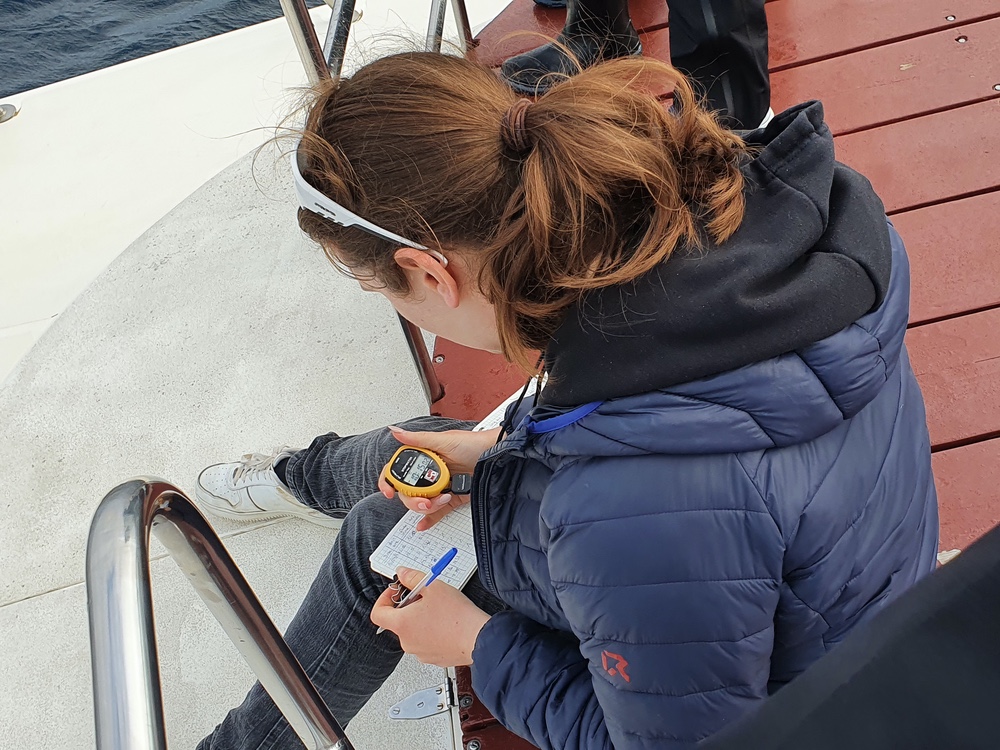
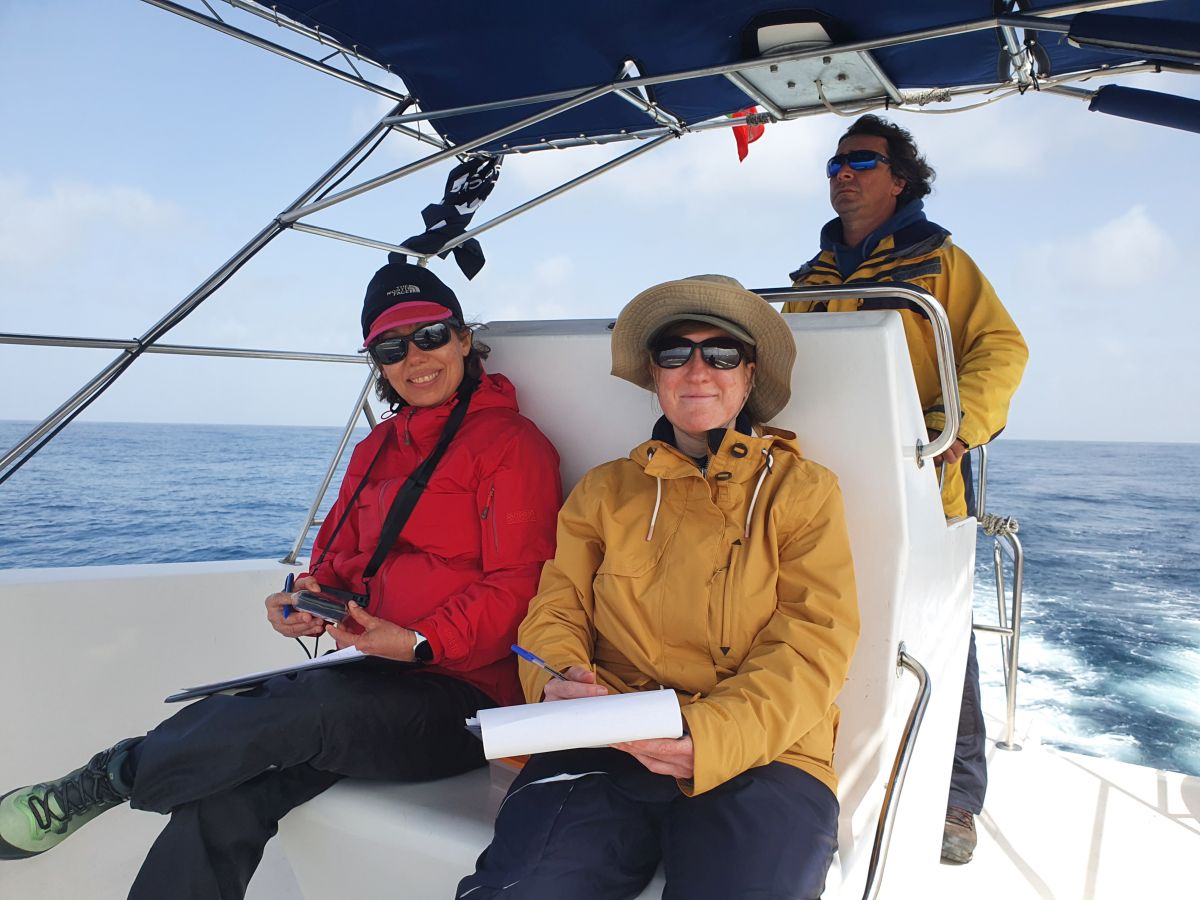
After the training was completed, the weather became more challenging for Tuesday afternoon’s test run on the water. Despite the conditions, within four hours we’d covered 57 kilometres, recorded common and bottlenose dolphins and three sperm whales (including a calf displaying suckling behaviour). The team did well on the data recording, especially Tracy, who is in danger of earning herself a permanent slot as POPA master.
Expedition scientist Lisa has been giving evening lectures, and after last night’s species identification lecture, everyone was keen to put their new knowledge to the test. However, the cetaceans weren’t making it easy. Despite almost double the distance covered, and deploying the hydrophone – so we could potentially hear what we couldn’t see – day two on the water proved less fruitful (with only common dolphins recorded).
Such is the unpredictability of wildlife. Spirits amongst the team are high and the weather looks good for day three on the water.
Expeditions are partly about the journey and the destination. So, after three days, three flights and four airports Henry and I landed in the Azores. Though slightly later than anticipated due to an unforeseen strike! No real drama and now the interesting part of the expedition can begin….
For the past couple of days Jim and Claudia (our hosts), and we have been preparing the expedition base for your imminent arrival.
It has been great to re-orientate myself with (and introduce Henry to) Horta, meet up with our hosts and catch up with Lisa (our scientist) to hear about all the recent news. We will share more detail on that once you’ve arrived…
We now just hope that the weather and whales (and other target species) are on our side and we can look forward to some great fieldwork (and data collection) over the next few days.
So safe travels to those of you on group 1 still en route, and we look forward to meeting you all on Monday morning (as per the details in the dossier).
It’s time for the initial introductions. I am Craig Turner and I’ll be your Expedition Leader in the Azores this year. On the first group, I will also be joined by Henry Taylor (Expedition Leader in training). It is great to be going back to the Azores after a few years’ break and escape the ongoing Scottish winter – I‘ll be making tracks earlier than expected as more snow is forecast, which could otherwise hamper my journey to the airport!
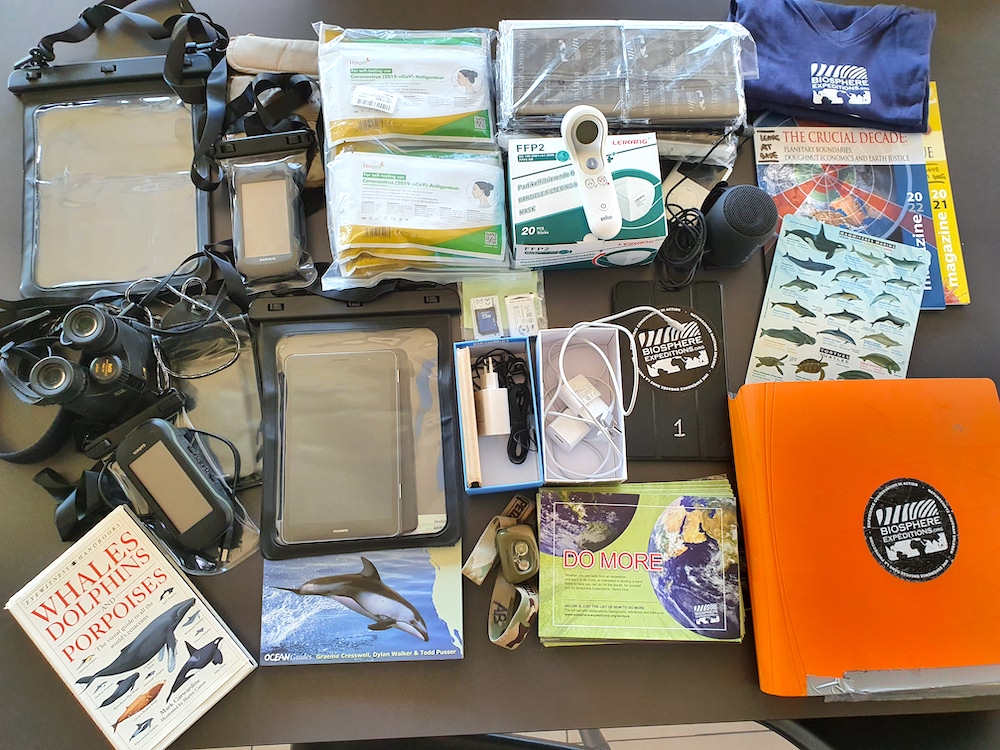
I am currently organising and packing my kit, checking that I have all I need for the next month – so don’t forget to check the project dossier. It will be great to meet up with old friends and colleagues from previous years, not least, our scientist Lisa Steiner. If you want to find cetaceans in the Azores, then she is the person to find them. If you have seen the latest project report and Lisa’s recent publications or the 2022 Azores expedition roundup, then you’ll know, not what to expect, but what we hope to record. Last year, you’ll note they had a variety of records – so you never can be too sure what ‘data’ we will collect. Just cross your fingers for good weather….
We arrive on Friday morning, a couple of days before we meet the first group, in order to set up the expedition headquarters. I’ll send around another message once I hit the ground in Horta and confirm my local contact details.
This reminds me to mention communications on the island. There’s cell/mobile reception on Faial in addition to internet via public hotpots and free WiFi in most cafes. Hopefully, you can resist the need for frequent international comms, and just soak up the experience of Atlantic island isolation.
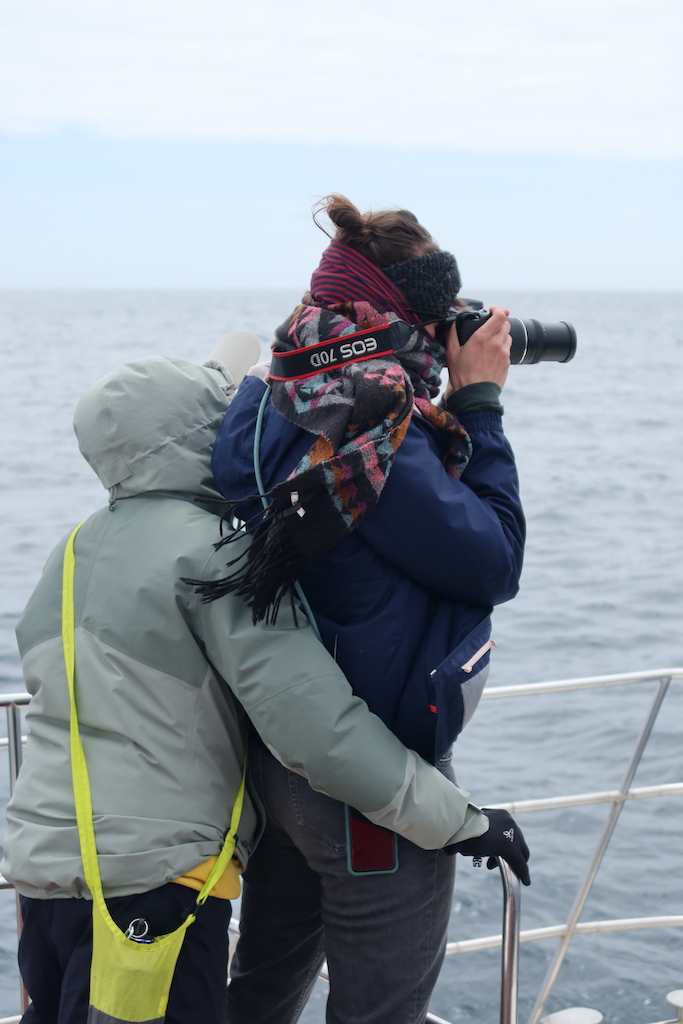
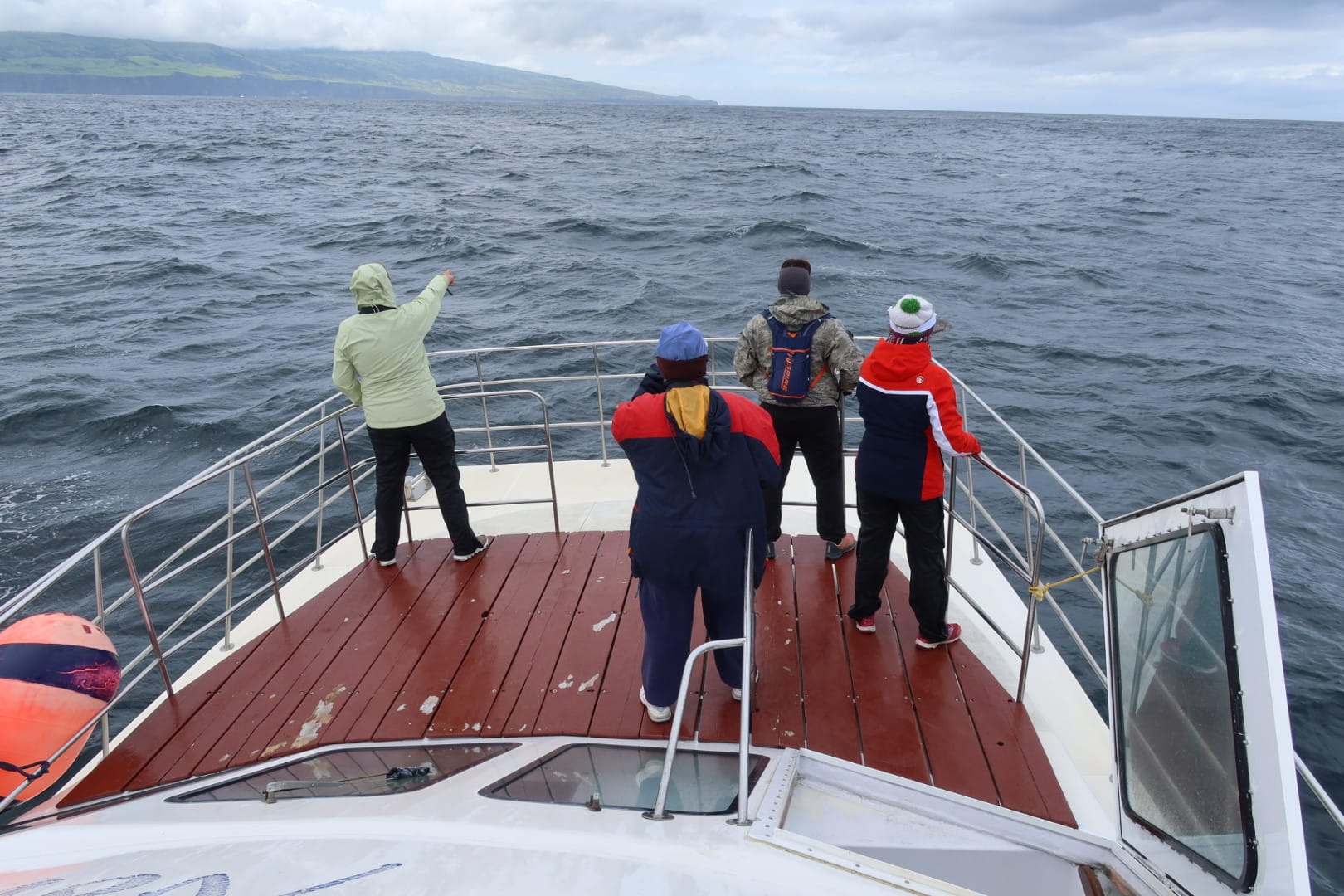
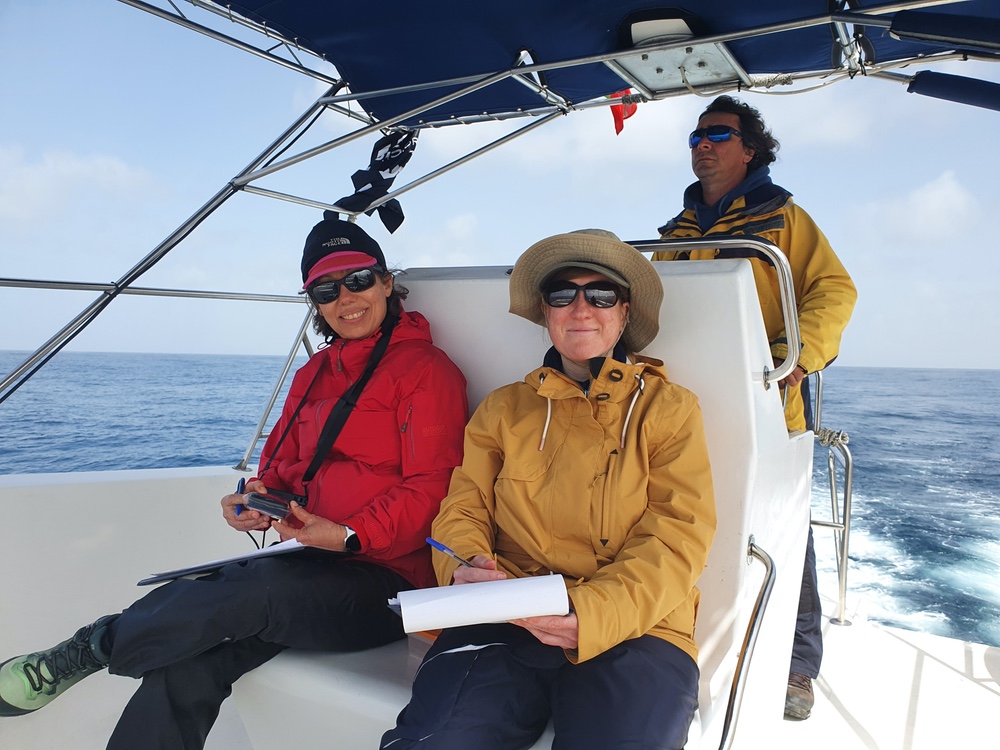
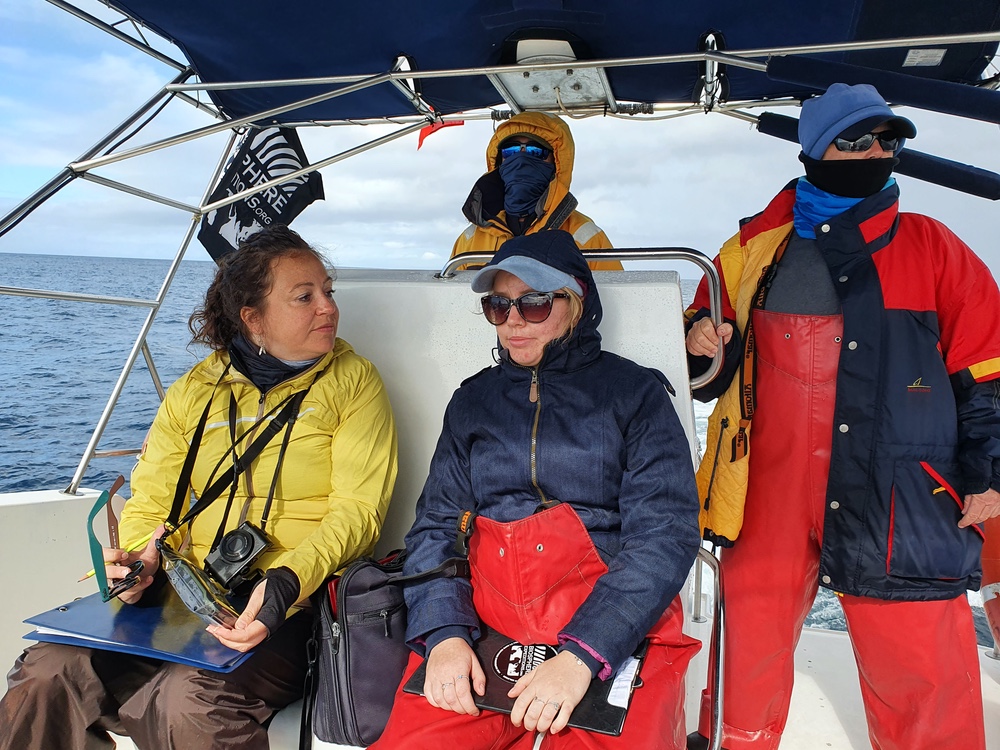
I hope you’ve all been eagerly reading your expedition materials and know to bring many layers of clothing. As to the weather, think Vivaldi ‘The Four Seasons”, so prepare for warm, cold, wet and dry – sometimes on the same day. Don’t forget your sunglasses or your waterproof trousers – you’ll thank me when you are stationed on the bow of the boat as a lookout and the weather is choppy (so also bring your motion sickness pills/patches – if you know you need them!).
So with the local team in place, whale sightings already logged by Lisa, all we are missing is you. It will be great to meet you all and I’ll send along another update very soon.
Twenty-three expeditioners from ten countries across the world joined the Azores expeditions in March and April 2022, the first expedition to run since the start of the Covid pandemic. This was the 16th edition in the Azores monitoring the movements, migrations, numbers, group structures and ecology of cetaceans.
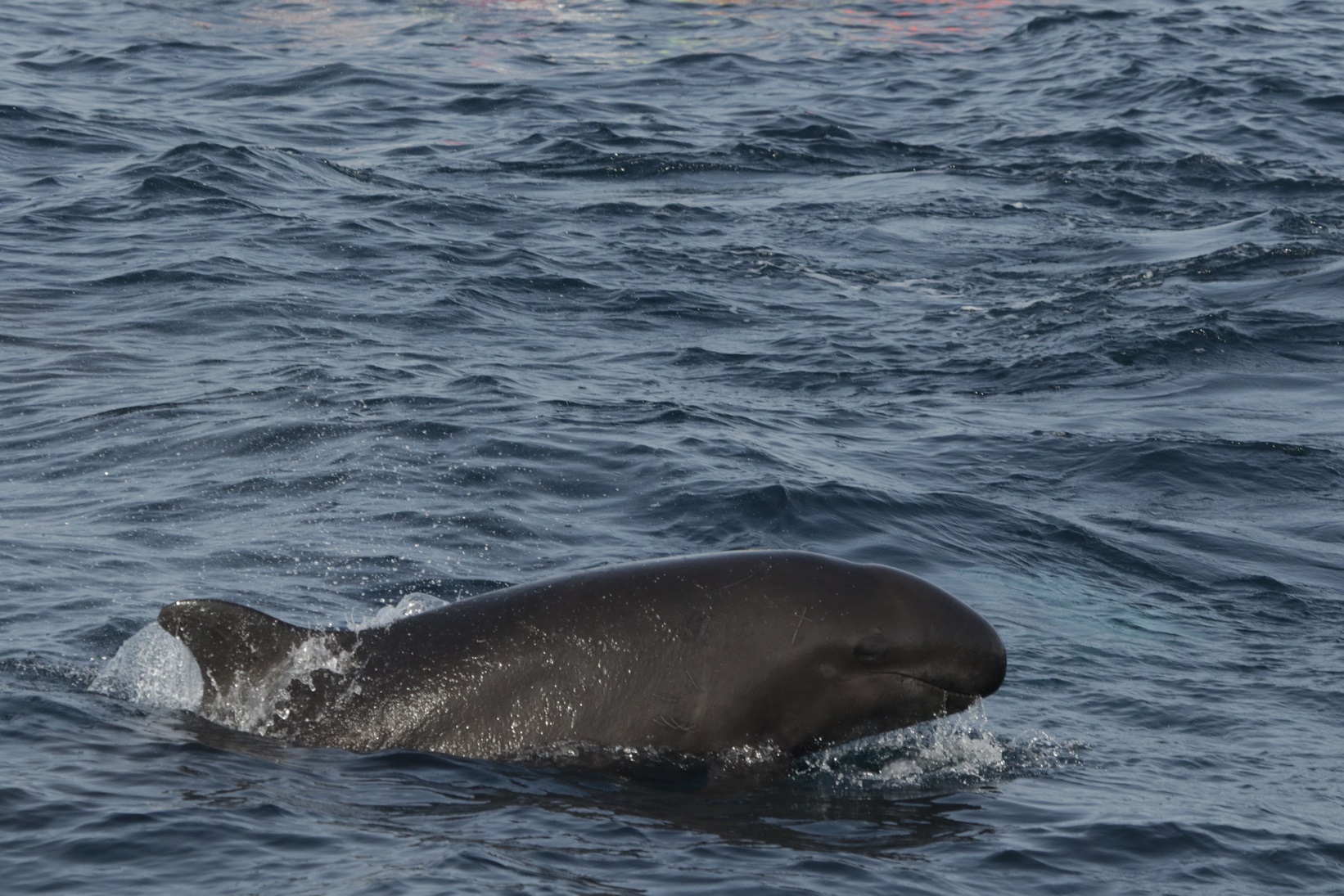
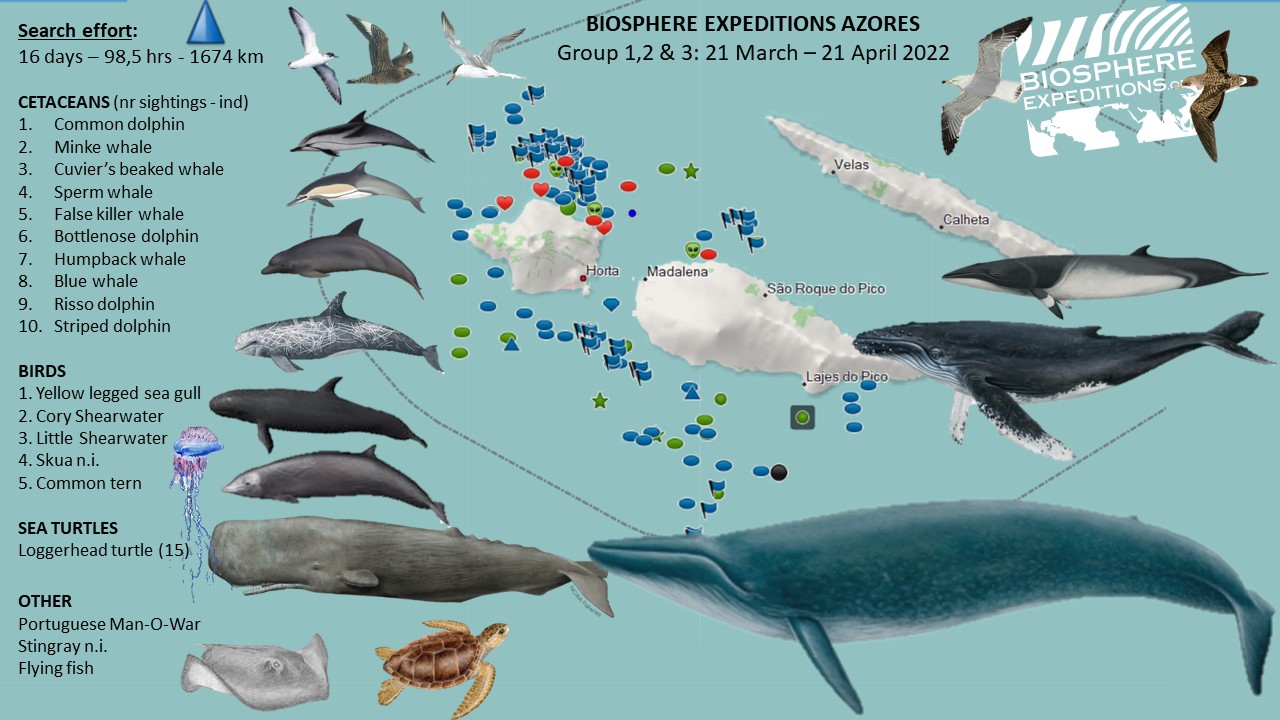
During this 16th expedition, citizen scientist participants spent 16 days out at sea, adding up to 100 sea-hours while covering 1674 km around the islands of Faial, Pico and Sao George in the central group of the Azores. The expedition’s search effort resulted in 127 sightings of 10 different cetacean species. In terms of abundance, the common dolphins come in first, while the iconic sperm whale was sighted on 59 occasions. Baleen whales are known to migrate through Azorean waters in spring, hence the timing of the expedition. The expedition recorded six humpback whales during three different encounters, one minke whale just outside Horta harbour and three majestic blue whales. As for dolphins, most of which are resident, the well-known bottlenose dolphins were spotted five times, Risso’s dolphins on four occasions and and striped dolphins twice. Of the larger toothed whales, the expedition witnessed a feasting bonanza of 75 false killer whales on tuna and even caught a glimpse of five elusive beaked whales.
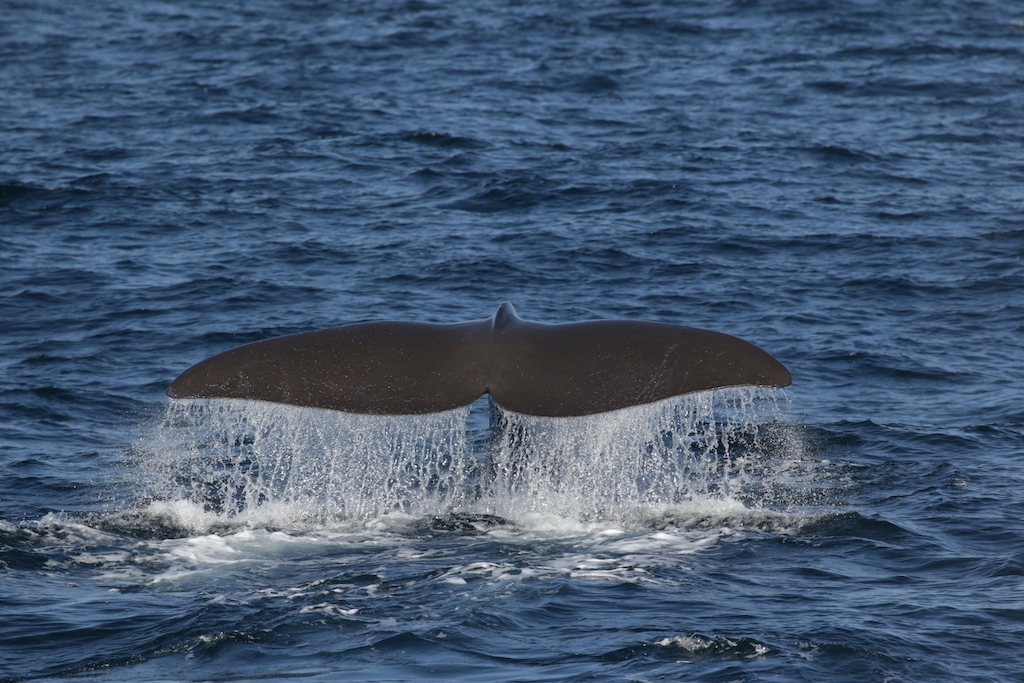
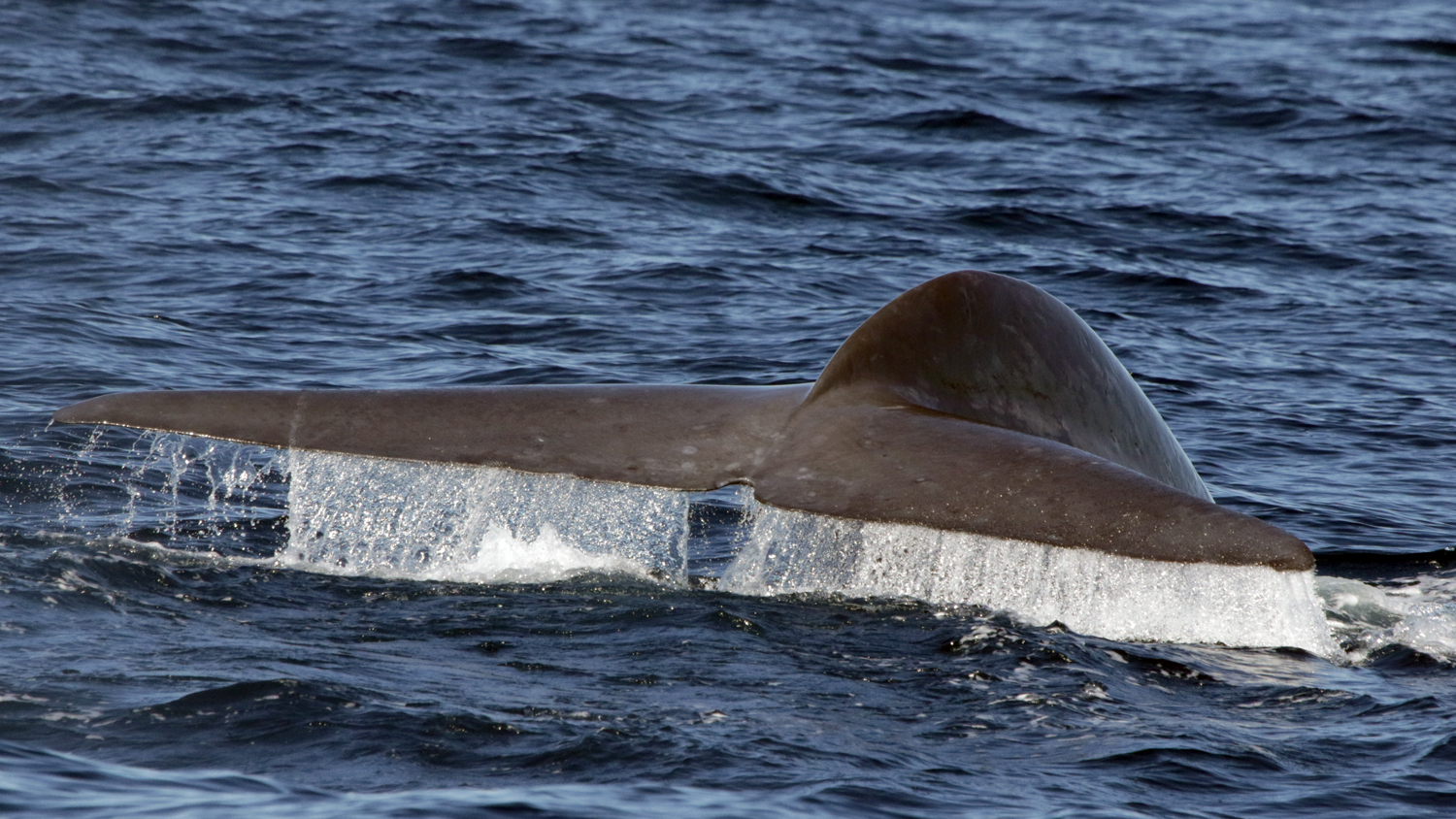
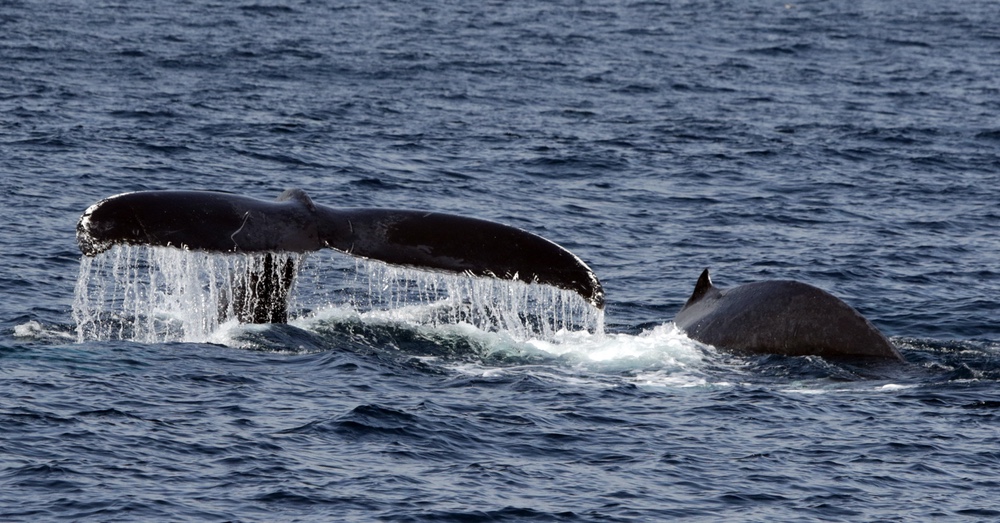
Cetaceans are no easy species to study, given that they spend most of their time under the water surface. Yet photographs of dorsal fins of dolphins and tails (flukes) of whales allow scientists to distinguish individuals. These can then be matched when photographed elsewhere along their migration route or as part of their movements within the Azores archipelago. Photo-IDs may sit for many years in a database before being matched, hence cetacean research and spatio-temporal monitoring requires long-term data collection and processing to reveal meaningful patterns – a perfect task for a citizen science expedition. In the long run – and conservation science is a long game – this gives relevant information on priority areas to protect to safeguard the many whale and dolphin species present in the Azores. Indeed the archipelago is considered a hotspot for both resident and migrating cetacean species.
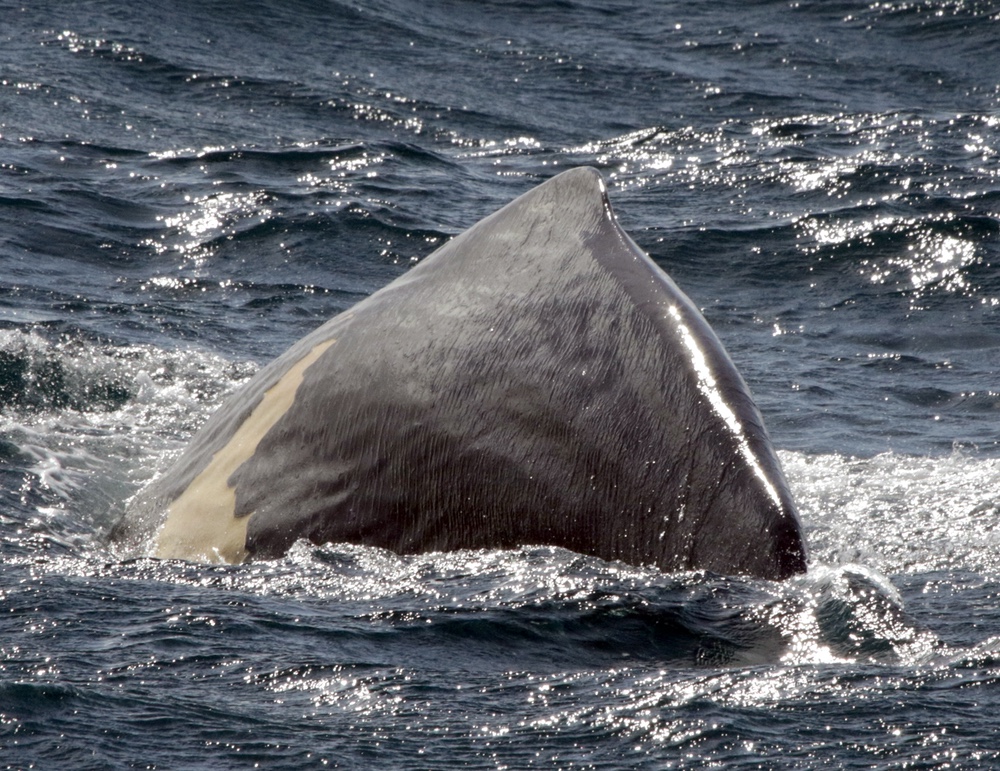
Out of the total of 59 sperm whale sightings, the expedition managed to identify 44 individuals of which 18 (40%) were known individuals and 26 (60%) were new individuals of which fluke shots were added to the catalogue. Actually, one sighting of one individual was repeated within the expedition, sighted both on 28 March as well as 19 April. Within the known individuals, there are three well-known groups: the one of a whale called “Nr 19”, the group of “1598” and the group of “2808”, with calves of last year. The expedition also spotted a few males, one of which known is known as “Tiktok”, a male that seem to be more resident around the Azores archipelago, often sighted close to Sāo Miguel. This is rather unusual, as most males migrate to the Northern Atlantic for food, while the females are known to stick around. These data are precious to Lisa Steiner, the expedition scientist, an expert on sperm whales, having studied them for over 35 years in the Azores. As Lisa says “cetacean research progresses one fluke at a time”. It is remarkable how she has come to know some of these individuals very well and we witnessed her jumping up and down on the lower deck in joy after taking a fluke shot, saying “this is number 19, I’ve know her since 1987!”
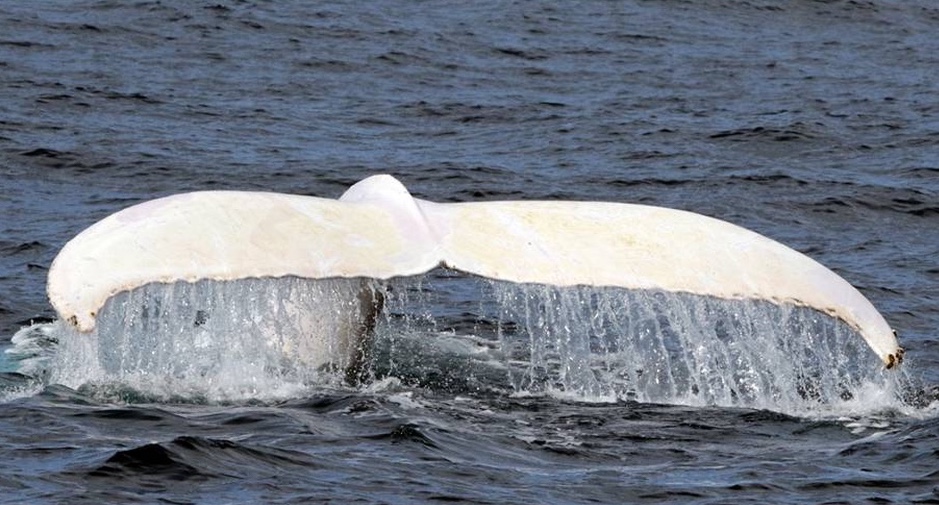
As for the humpback whales, one of the North Atlantic researchers for the species confirmed that one fluke photographed by the expedition matched to an individual seen in October 2014 and in January 2015 in the Tromso – Andenes region in the North of Norway. Our most unique sighting was the one of a white humpback whale, named “Willow”. It is the only known 95% leucistic individual in the Northern Atlantic humpback population. Based on this feature and together with its fluke ID, the expedition was able to confirm that Willow has been seen in the breeding grounds of Guadeloupe in 2015, 2019, 2020, as well as in the feeding grounds of Spitzbergen even earlier, in 2012. A tissue sample had been taken there, indicating Willow is a male. “This story and unique encounter demonstrates how every single fluke photo adds pieces of the puzzle that make up the life history of these long-lived migrating baleen whales” says An Bollen, the expedition leader.
Regarding the blue whales, the two individuals seen travelling together by the expedition were re-sightings from the Azores. One was seen there in 2010 and the other one in 2006, 2010, 2014 and 2018, as confirmed by the researcher Richard Sears, showing that at least some individuals use the same migration routes.
Dorsal fin photos were sorted by citizen scientists and have been sent off to Karen Hartmann, Risso’s dolphin researcher and to other colleagues working on bottlenose dolphins and false killer whales. These species are considered resident around the archipelago and indeed the expedition recognised some individuals with distinctive dorsal fins in groups of varying sizes, so as more feedback comes in form the colleagues, it will also add to an increased understanding of these dolphin species.
This year the expedition collaborated closely with the University of the Azores by testing the beta version of the Monicet app, which was released just before the start of the expedition. The expedition team provided several recommendations, which were included in an improved version, released by the end of April 2022. The idea is to roll out the use of the Monicet App to all whale watching vessels in the Azores to enable data collection and sharing. The expedition is proud to be asissting with this.
The expedition also worked with more advanced GPS units, which allow it to generate maps and other visualisations of results and effort.
This sums up the 16th Azores edition, which is only possible thanks to an international team of citizen scientists Lisa Steiner us and dedicating their free time, energy, resources and enthusiasm to collecting data and contributing to the conservation of these fascinating animals. Biosphere Expeditions will be back in March 2023 to continue its citizen science programme and keep contributing to long-term cetacean monitoring.
It was the first expedition to run after two years of the Covid pandemic. A total of 23 whale and dolphin volunteers from all corners of the world joined Lisa, our scientist, and myself in Horta for whale and dolphin volunteer action. Except for one brave man, it was women power all around on this 16th expedition!
We were reminded of the volcanic nature of the Azores archipelago with a lot of seismic activity on the nearby island of São George, but an eruption never came. After two years of lockdowns, many of us had were keen to explore new horizons, gain news skills and most of all contribute to the conservation of these fascinating animal group of cetaceans.
No citizen scientists tested positive, there were no major issues, great sightings, excellent team spirit, a wealth of data and high degree of satisfaction for those involved. Let me summarise our findings in a nutshell for you:
In total three groups of Azores volunteers spent 16 days out at sea, adding up to almost 100 sea-hours while covering 1,674 km around the islands of Faial, Pico and São George. Our search effort resulted in 127 sightings of 10 different cetacean species. Every group was treated to a subset of these and each one had their unique sightings and highlights.
For Group 1 it was very impressive to come across a group of 75 false killer whales feeding on tuna with seabirds all around. Group 2’s most exciting moment was spotting our first blue whale in sea state 6 ‘all hands on deck’ and Group 3 definitely wins the prize of the rarest sighting ever, seeing a leucistic white humpback whale.
Working our way through the species list, no one will be surprised to hear that common dolphins ome in first in terms of abundance, with 48 sightings and a total of 1,800 individuals. Second comes the iconic sperm whale, Lisa’s main research focus, with 59 sightings. Baleen whales are known to migrate through Azorean waters in spring, hence the timing of our expedition. We were treated to six humpback whales during three different encounters, one minke whale just outside Horta harbour and three majestic blue whales. As for dolphins, most of which are resident, the well-known bottlenose dolphins were spotted five times, we saw mysterious Risso’s dolphins on four occasions and had two encounters with striped dolphins. Last but not least, group 1 also got lucky to see five elusive beaked whales.
But Biosphere Expeditions obviously goes beyond listing species and counting numbers. The main purpose of our expedition is to understand population dynamics, local movements, seasonal migration patterns, as well as group composition and reproduction. Out of the total of 59 sperm whale sightings, we managed to identify 44 individuals of which 18 (40%) are known individuals and 26 (60%) are new individuals of which fluke shots were added to the catalogue. We actually repeated one individual within the expedition, sighted both on 28 March as well as 19 April. Within the known individuals, there are three well-known groups: the one of nr 19 first seen in 1987, the group of 1598 and the group of 2808-2448-3483-6089 with calves of last year. We also spotted a few male sperm whales, one of which is known as Tiktok, that seem to be more resident around the Azores archipelago, often sighted close to São Miguel. This is rather unusual, as most males migrate to the Northern Atlantic for food, while the females are known to stick around.
As for the humpback whales, one of the North Atlantic experts for the species confirmed that one fluke shot we took was matched to an individual seen in October 2014 and in January 2015 in the Tromsø–Andenes region in the north of Norway. Our white humpback whale, called Willow, is rather unique, being the only known white individual in the Northern Atlantic. So based on this feature together with its fluke ID, we were able to confirm that this individual was seen in the breeding grounds of Guadeloupe in 2015, 2019, 2020 as well as in the feeding grounds of Spitzbergen in 2012. A tissue sample had been taken there, indicating Willow is a male. This demonstrates how every fluke photo adds pieces of the puzzle that make up the life history of these long-lived migrating baleen whales.
Regarding the blue whales, the two individuals we spotted travelling together were resightings from the Azores. One was seen there before in 2010 and the other one in 2006, 2010, 2014 and 2018, as confirmed by the expert Richard Sears, showing that at least some individuals use the same migration routes.
Dorsal fin photos were sorted by our whale citizen scientists and sent off to Karen Hartmann, expert of Risso’s dolphins, and to other colleagues working on bottlenose dolphins and false killer whales. These species are considered resident around the islands and we recognised some individuals with distinctive dorsal fins in groups of varying sizes, so as more feedback comes in form the experts, it will also generate increased understanding of these dolphin species.
This year we collaborated closely with the University of the Azores by testing the beta version of the Monicet app, which was released just before the start of the expedition. Our team provided several recommendations, which will be included in an improved version to be released by the end of April. The idea is to roll out the use of the Monicet app to all whale watching vessels in the Azores to further increase data collection and sharing.
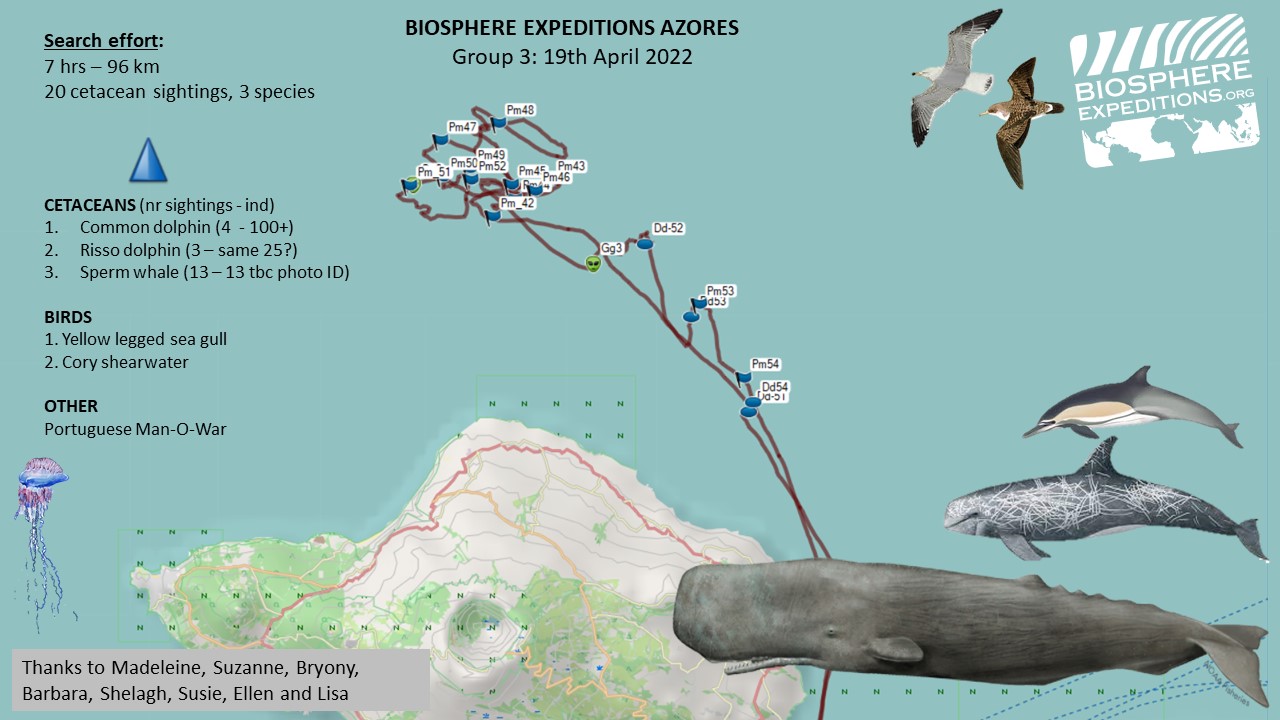
We look forward seeing the first results published and were glad to contribute to these. We also worked with more advanced GPS units, which allowed to record tracks and sightings as you can see from the included maps, which show our sightings during March and April.
Lisa will continue to use this GPS and as more data get uploaded, it will give further insight into movements in space and time of different species, while understanding which are hotspot priority areas for feeding and resting that merit further protection.
Thanks again to Lisa for sharing her expertise with all of us, to captain Siso for sailing us safely through sometimes rough seas, to all lookouts on land for spotting the animals for us and to Jim and Claudia for being excellent hosts. Last but not least, a big thank you to an international team of expeditioners joining us and dedicating their free time, energy, resources and enthusiasm to collecting data and contributing to the conservation of these magnificent creatures of the sea. We hope to welcome more expeditioners in 2023 for expedition nr 17 to continue our long-term monitoring work.
On Tuesday our marine volunteer team headed out to the north of Faial for some great sperm whale encounters. One after the other came up to the surface, making us head into all wind directions trying to get those perfect photo ID shots. While we were hoping for flukes all around, a lot of them did shallow dives and then disappeared making it difficult to identify who we were actually dealing with. Yet we did get what we came for and one male, named ‘Tiktok’ known to hang around São Miguel was one of the ‘usual suspects’. So yes, these creatures can be elusive. But once caught on camera, the detective work starts and completes insight to their walks of life. No more secrets for the whale citizen scientists on board.
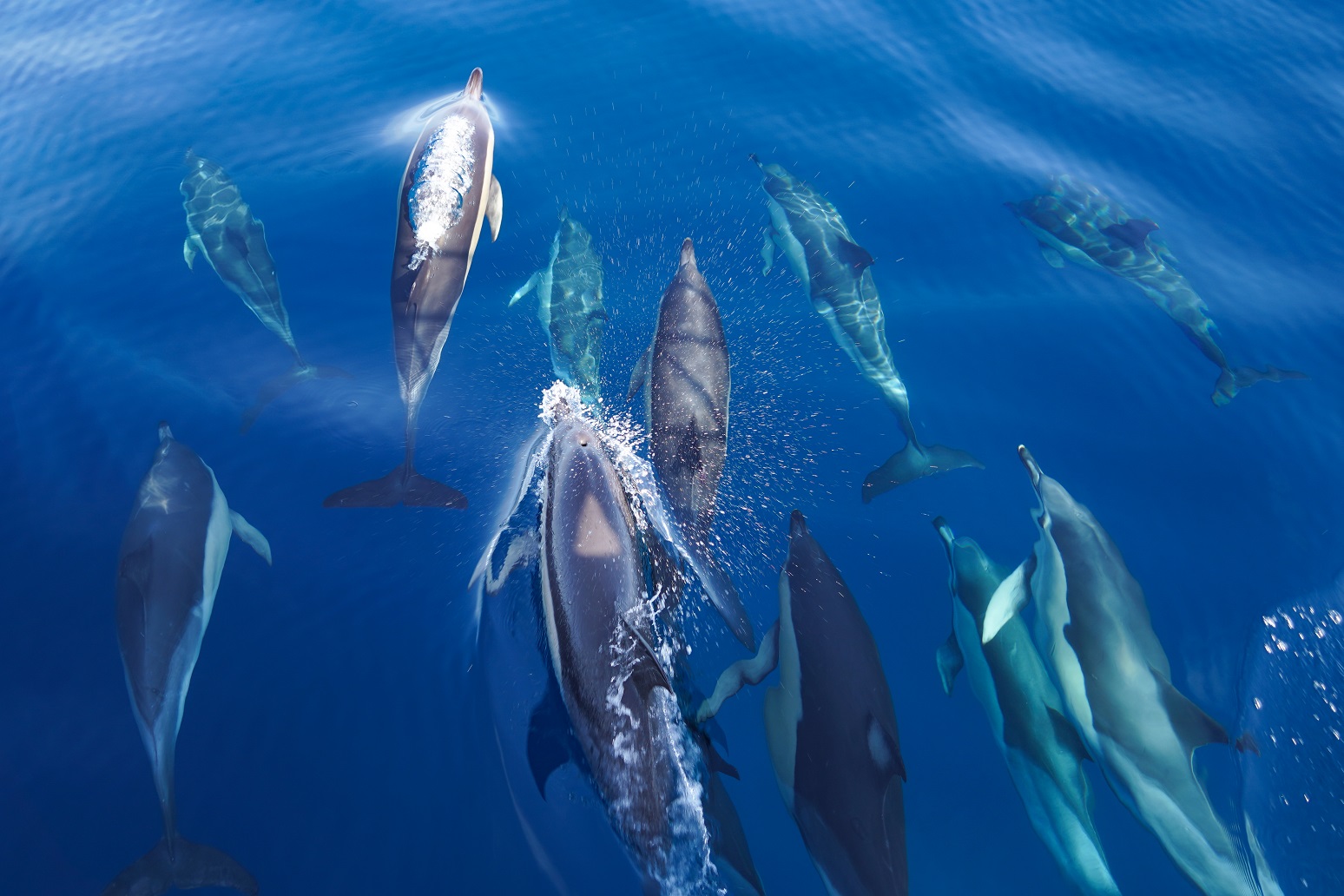
Along our track we were also treated to another two sightings of Risso’s dolphins. Karin Hartman, Lisa’s friend and colleague, confirmed that on our previous Risso’s sighting, one female called Albi was seen for the first time with a calf. The group we saw also had calves. And of course our most loyal friends, the common dolphins, joined us for a little while too. A day without them no longer feels complete.
On Thursday – the last day of the expedition – our Azores volunteers headed out eastwards for the channel between Pico and São George where – yes, you guessed it – there were more sperm whales. And on our final day, we were spoiled by smooth sailing, a flat sea surface and limited wind. Sea legs all around and even the photographers on board no longer needed ‘support’ from their fellow citizen scientists to keep standing. Bryony got top marks for scoring a double sperm whale fluke shot. We also saw mothers and suckling calves and sperm whales not finishing their meal. This meant we had parts of octopus floating around on the surface near the area where they were foraging and feeding. Even these bits were photographed and sent off to experts for identification. Lisa confirmed during the debriefing that these were ‘new’ sperm whales not sighted before.
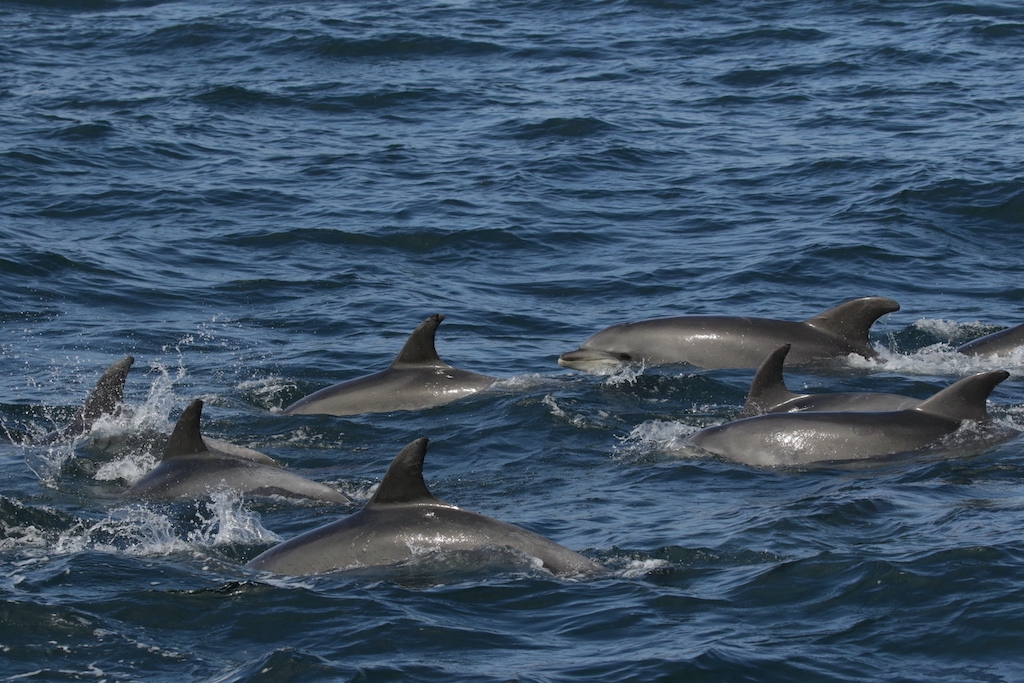
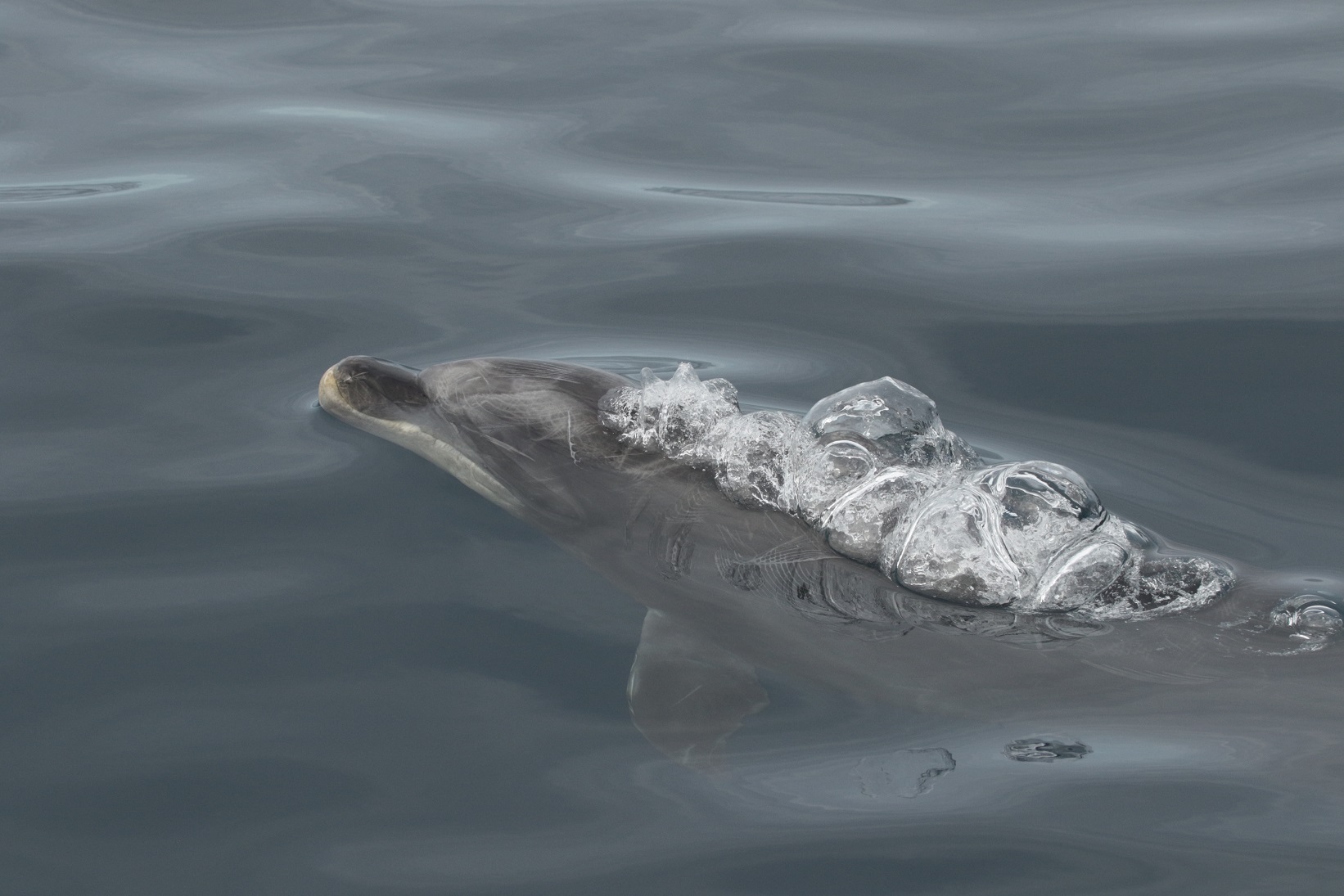
The Risso’s dolphins made another graceful appearance and of course on this last day, the bowriding common dolphins had to be present as well. On our way back, we had our goodbye sighting of this year’s expedition: a large group of bottlenose dolphins jumping on the horizon and then coming closer and displaying all their grandeur near the boat, leaving us with a sunset in the background. It could not have been more perfect.
It was very silent on the catamaran, each and everyone of us absorbing this special moment, leaving us with gratitude for a week well spent, full of magnificent sightings, while each and and every one of us had contributed to data collection sent of to different experts. Another great team effort, contributing to fundamental research that is required to set conservation measures for the great Azorean cetacean diversity. We were all glad to be part of it.
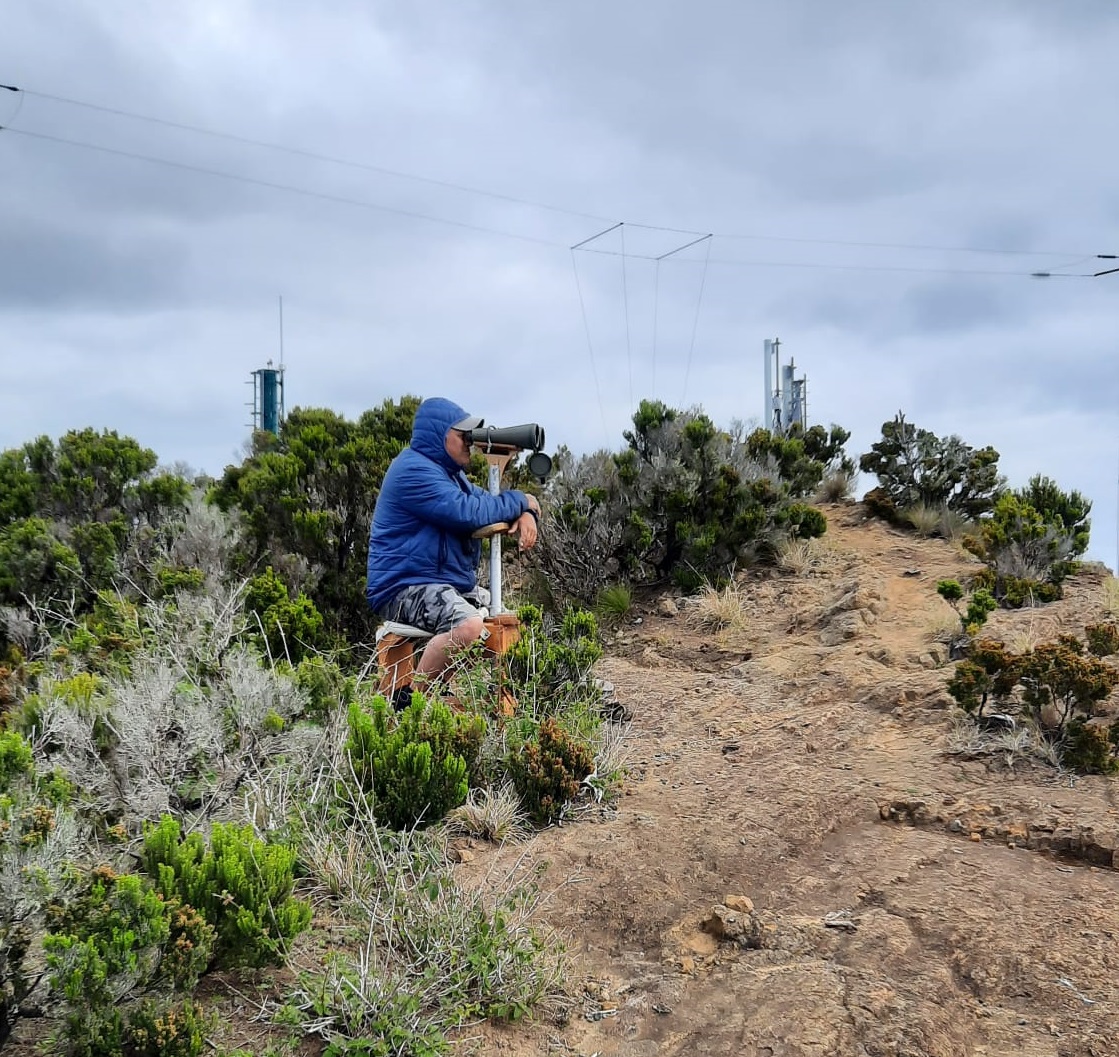
At the end of this season, I would like to say a special thank you to the vigias – lookouts on land. From their viewpoints spread over Faial and Pico, they scan sections of the ocean all day long tell us where to go. Nearly 80% of all our whale sightings are thanks to their work and dedication, with the other 20% a result of listening to the hydrophone or by spotting blows off in the distance by chance. So we owe them big time for the amazing sightings and it was always a lot of fun to hear their contagious enthusiasm on the radio…’uma baleia’ ( a whale). We get the close and personal encounters while they spend their working lives on the cliffs. peering into the distance. Muito obrigada!
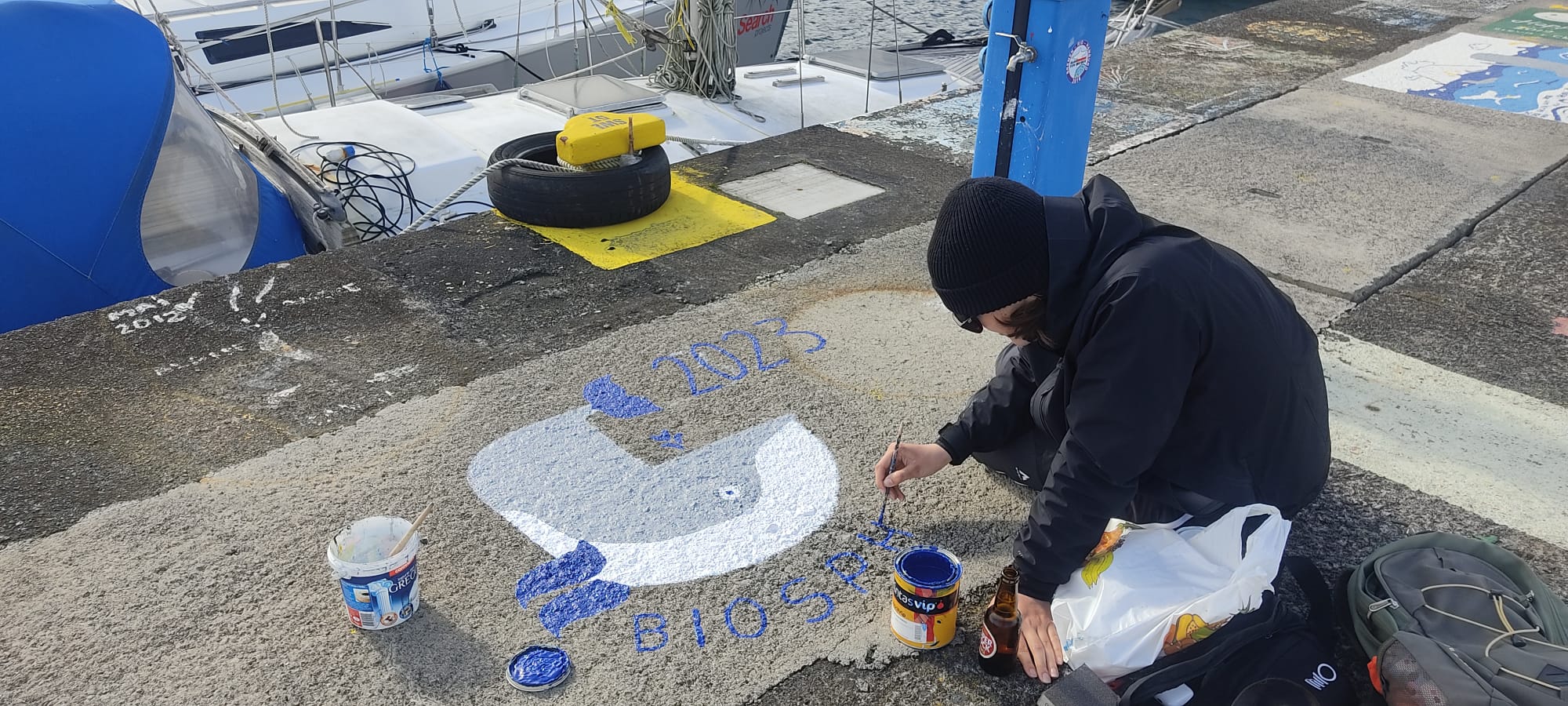
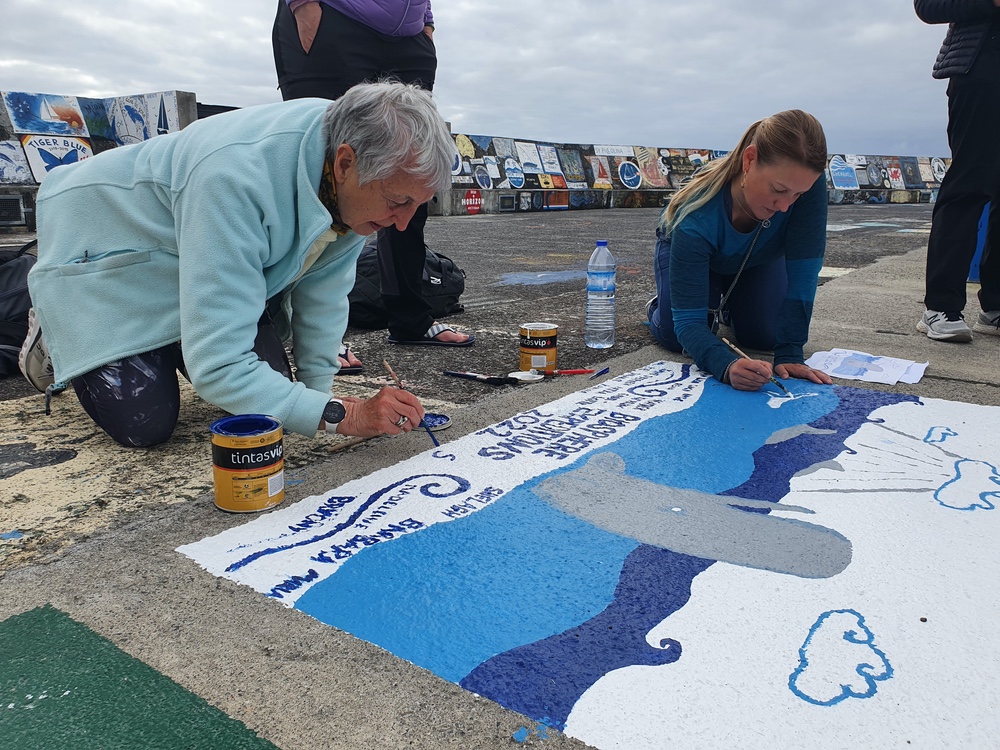
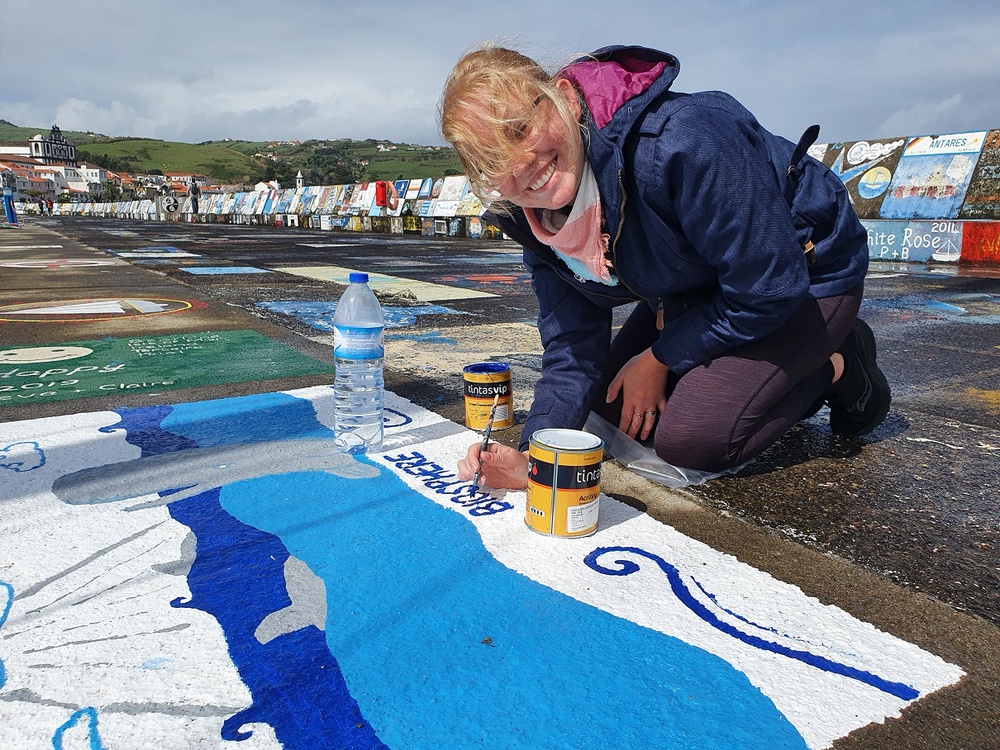
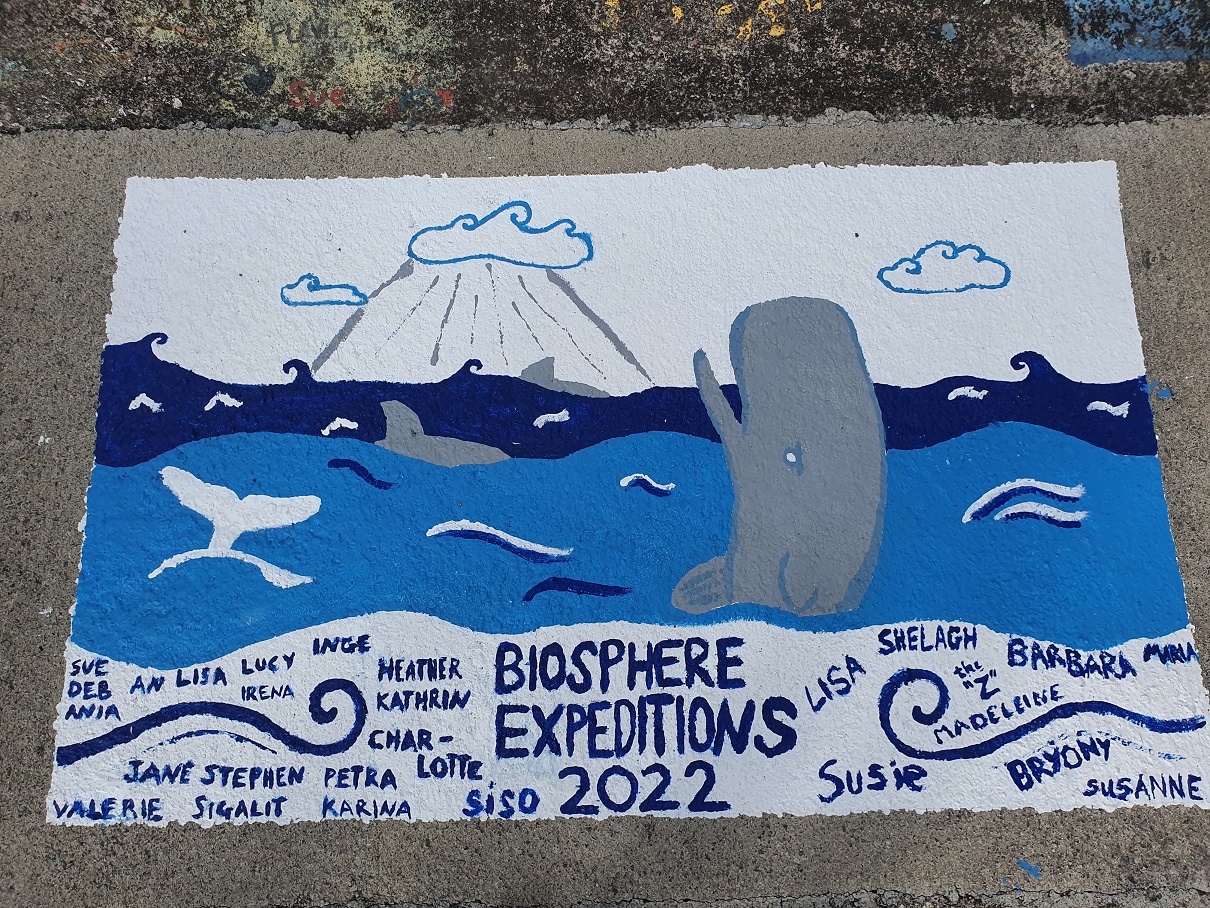
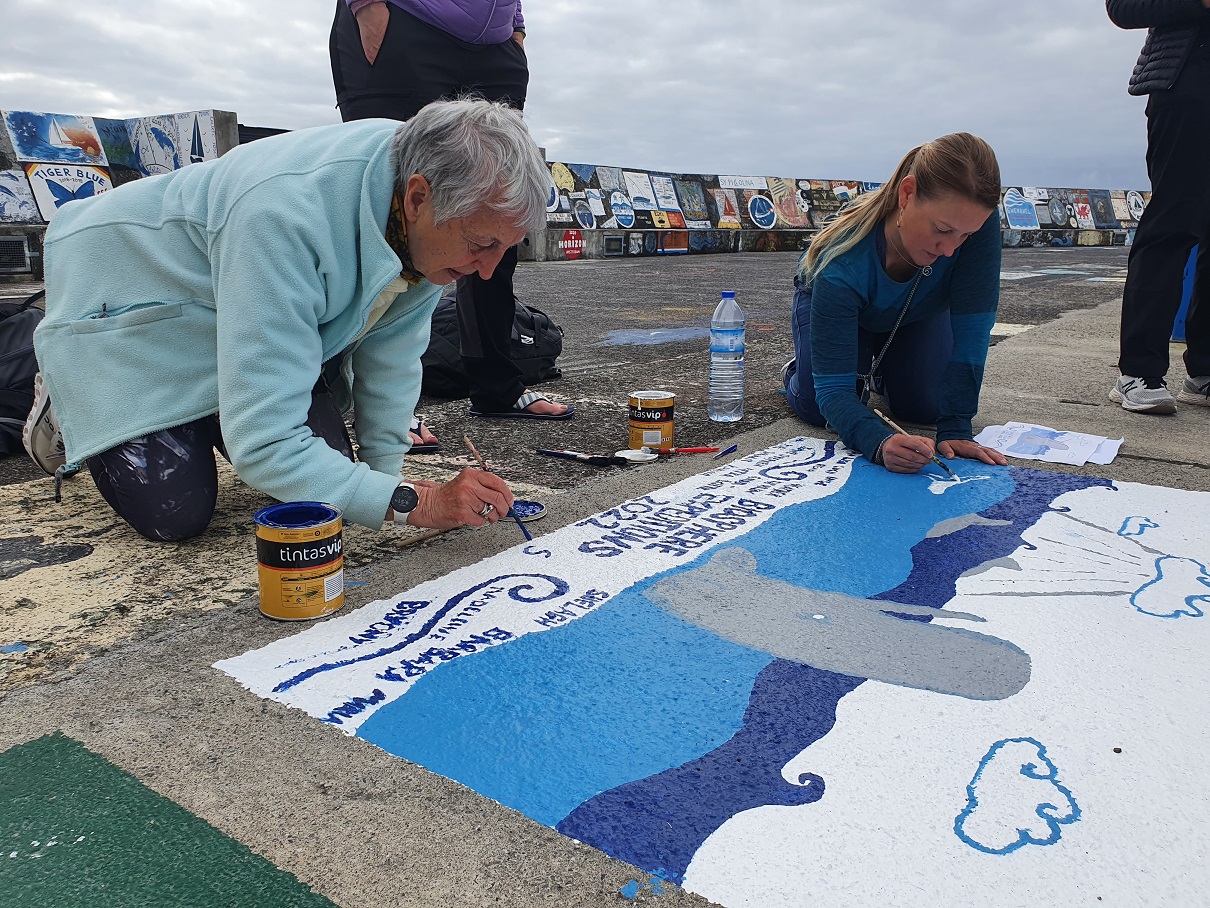
To conclude this last group, let me tall you about a nice tradition in Horta: the paintings in the harbour. These are mostly done by sailors passing through on a trans-Atlantic trip or a tour around the world. It is supposed to bring good luck out at sea. These paintings turn the harbour in a colourful outdoor graffiti exhibition space, telling the many stories of those who passed by here. Of course we join in every year, this time with a design reflecting the cetacean sightings we had. Kathryn from group 1, who is an illustrator, came up with the design and outline of the drawing, Lucy from Group 2 added the names, while Group 3 added our leucistic humpback, more names and a final finishing touch of the waves. Of course I am biased, but I do think that our drawing does stand out in the harbour and deserves its place next to the ones from previous expeditions….. Safe journey back home to all our whale and dolphin volunteers and thanks for making this season a good success ! For an overview of what we achieved, stay tuned for our final blog.
























































 Biosphere Expeditions: blogs from the frontline of wildlife conservation and the fight for a more sustainable planet