Award-winning, non-profit and ethical wildlife conservation volunteering. Advancing citizen science and conservation since 1999 – for nature, not profit.
Pascal Tchengang, from Paris, France, loves travelling and being in touch with nature. In fact, this is how he discovered Biosphere Expeditions way back in 2002 and then went on an expedition to study big cats in Namibia in 2003, returning there in 2005 as staff. Today Pascal helps out part-time in Biosphere Expeditionsโ French office near Paris.
Pascalโs first engagement with Biosphere Expeditions was in 2002, when he was researching options for holidays with a purpose in nature. โMy favourite thing -then and now – when I travel is being in touch with natureโ, Pascal reminisces, โthere are certain places you can discover and visit on your own or with your family, but there are others where you really need to be accompanied by specialistsโ. This is how he came across Biosphere Expeditions all those years ago and has โnever looked backโ, he says with a broad smile.
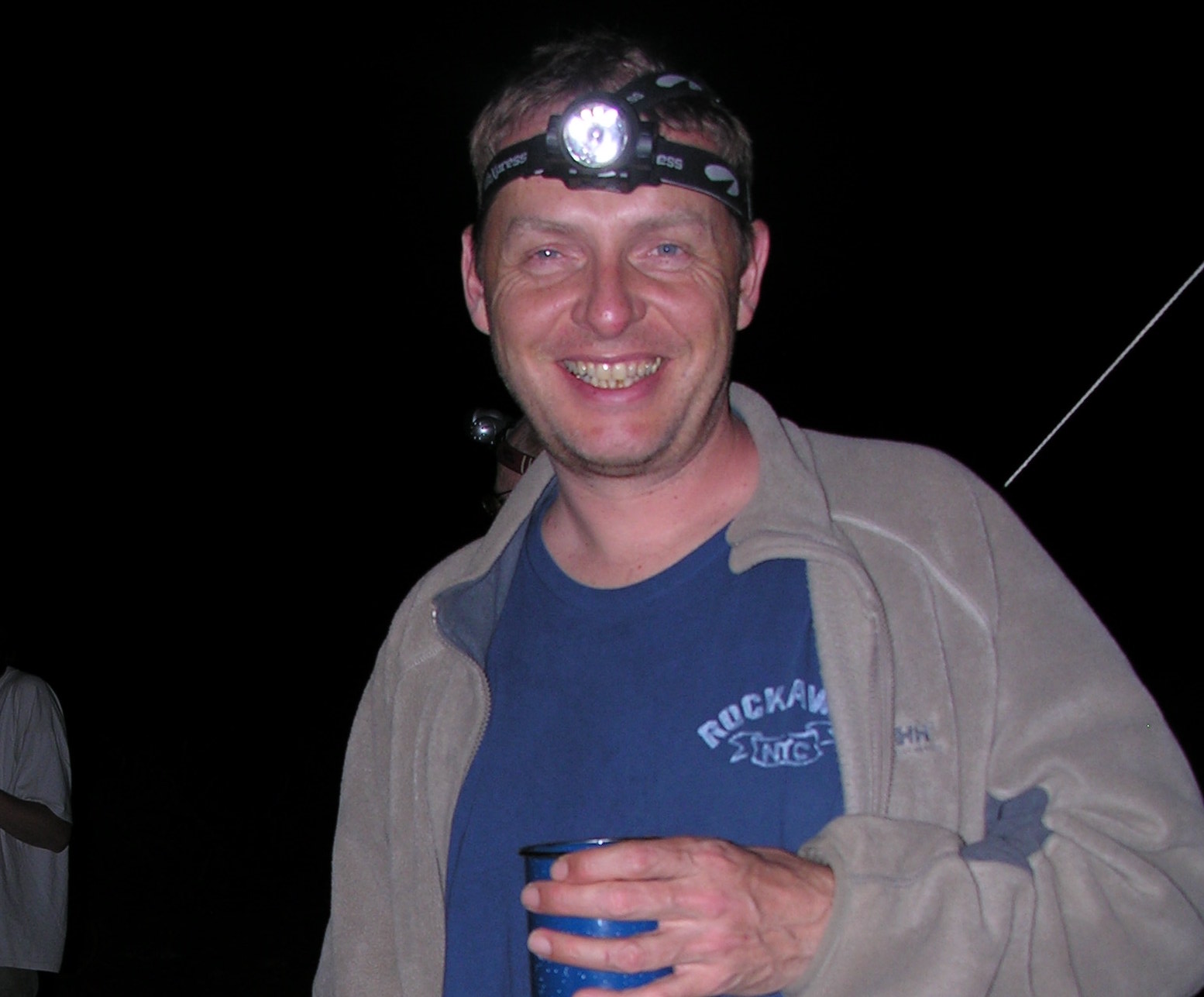
Pascal on expedition in 2005.
โYou see, I love animals and wildlife in general. Back then I had a burning desire to go to Africa and see wildlife up close. Of course, there are national parks that you can visit on your own or with your family by renting a vehicle, but what I wanted was to get as close as possible to the large mammals. So, while searching the web, I discovered Biosphere Expeditions. Browsing through their website, I was fascinated by the programmes offered on each expedition. So I signed up and took part in my first expedition to Namibia in 2003โ, Pascal recalls. โIt was incredible, a real revelation. It was the first time I had ever come into close contact with large mammals. In Namibia, I had the chance to get up close to cheetahs and leopards, because we were accompanied by a scientist who was studying them there. In fact, during that first expedition, I enjoyed both the opportunity to encounter the animals and being part of a group that was genuinely curious and eager to learnโ.
On the expedition Pascal met some senior Biosphere Expeditions staff and asked whether he could help out with the office in France. He could – and started assisting with enquiries and attending events, becoming a spokesperson for Biosphere Expeditions.
Two years later, Pascal was back in Namibia as staff, this time with Peggy, โthe person I share my life with todayโ, Pascal says with his eyes lighting up, โthis trip was her first of its kind, a real revelationโ.
Peggy & Pascal
โSo, yes, if you are looking for a trip where you won’t encounter trivialities, and especially if you want to make yourself useful, then I really recommend Biosphere Expeditionsโ Pascal says, adding with a laugh โand I donโt just say this because I am biased, but because I genuinely believe itโ. For advice, over 20 years after his first expedition, Pascal is the representative in France, so please feel free to reach out. โI will be happy to provide you with as much information as I canโ.
The advanced party has arrived in Malawi ahead of the start of the expedition, to help with last preparations, alongside expedition leader Roland, there is Simon, expedition leader in training. On the LWT side, there are expedition scientist Lea and helpers Chim and Gideon.
Roland, Gideon, Lea, Chim, Simon
Lilongwe is hot, dusty and busy, but not TOO hot dusty and busy! It’s fine walking around here in a T-shirt and thin trousers in the middle of the day. The Malawian government has been doing major road upgrades over the last few years and it’s now mostly complete in Lilongwe โ it’s almost fun to drive on the wide new tarmacced roads now. The taxi drivers we spoke to were very happy!
We have tied up a few remaining loose ends on the expedition prep and have just set off to Vwaza with all the kit and supplies we need to set everything up for the expedition there. It will be a long day, but it will end with arrival at our wonderful base camp, with baboons, hippos, antelope and elephants waiting for us. More from there in a day or two.
It’s not long to go until the start of the 2025 Malawi expedition. We are feeling prepared and excited. We have updated the research tasks โ continuing the long-term studies of elephants and hippos at Vwaza along with the camera trap surveys, while also adding some new nocturnal mammal and bird research. All the activities we intend to do are in the 2025 Malawi Field Guide. Please can you make sure you download and study this prior to the expedition, and bring a copy of it with you, either as a soft copy on a tablet or a printed version. We are counting on a hard-working team to undertake all of the activities, following training at the start of the expedition, so the more you can swot up now, the easier it will be for you to get through the intensive training phase.
We have sourced some new equipment too, to aid this research โ thank you to those of you who have volunteered to bring some of this kit with you. Our expedition partners, Lilongwe Wildlife Trust, have also been busy preparing: getting the camp and vehicles ready and sourcing the expedition food โ not always easy in a country like Malawi where you canโt guarantee the availability of all the food supplies you might want! But I am confident that we will have the tasty and nutritious meals that we have enjoyed in previous years, prepared by our experienced expedition cook.
This will be my fourth time leading this expedition and I expect it to run as smoothly as in previous years โ although something unexpected always seems to happen, usually involving elephants!
I will be flying out from the UK soon to work with LWT in final preparations and head up to Vwaza before the full expedition team arrive.
I will report back once I have arrived in Lilongwe and leave you with the 2024 picture selection to put you in the mood..
Sven Strohschein from Hamburg, Germany, has made some great memories with Biosphere Expeditions, going with them twice to research whales and dolphins around the Azores archipelago, to study Amazon biodiversity in Peru, African wildlife in Namibia and the Arabian leopard in Oman. After these expeditions, he also joined the โFriends of Biosphere.โ โIt was and is a great experience to be part of Biosphere Expeditionsโ, he sums up.
Sven on expedition in 2007
For Sven, who has been in the shipping industry since 1981, going on an expedition was something completely new for him: โI found Biosphere Expeditions through an article in a magazine. I was curious to get more experience and knowledge about wildlife conservation and looking after our natural environment.โ So Sven took the plunge into what was to become a formative experience.
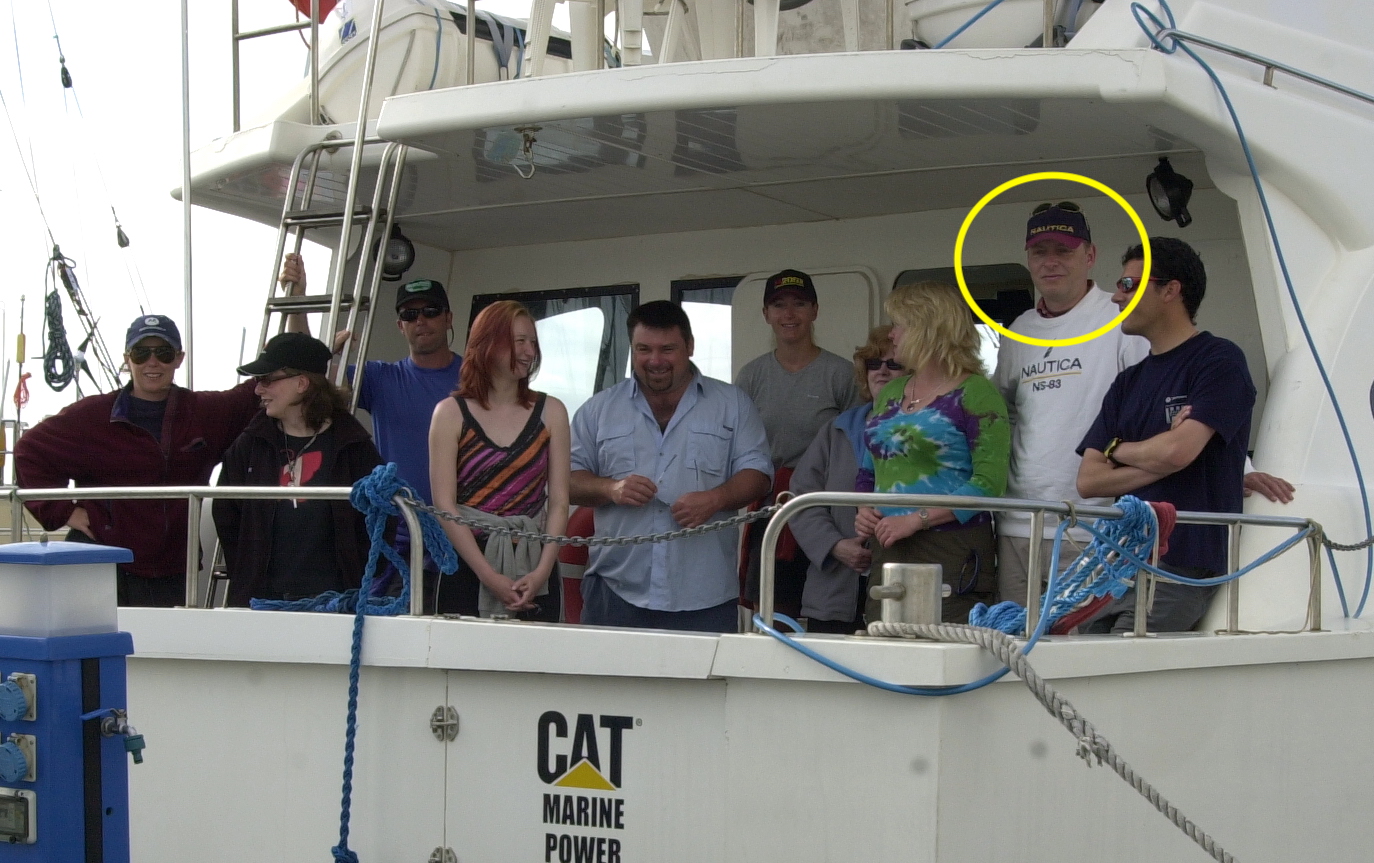
Sven (circle) and his Azores expedition team
โI can still remember sitting at the campfire under the stars during the Namibia expedition and hearing the lions roar. I also remember jumping into the Atlantic Ocean, trying to catch a glimpse of the whales after they went under the waves, and watching the sunrise at our research station on the Amazon.โ Perhaps his most abiding memories were โbeing woken up by elephants browsing trees just a metre away from where I was sleeping, witnessing a lion hunt in the middle of the night and talking to local people face-to-faceโ.
When asked about what heโs learnt, Sven thinks that a lot more needs to be done to help the natural world recover and also that everyone can help, not only scientists.
Sven (left) tracking a lion in Namibia
Looking back, Sven reminisces that โEach time I joined a Biosphere Expeditions team in the field, it was definitely a unique experience. I am happy and proud to also support Biosphere Expeditions through the Friends and by helping with media enquiries in Germany and talking to those who are thinking of coming on an expedition.โ
Peter Thoem, a retiree from Canada, has participated in six expeditions so far. โI have time in my life, the health and the resources – so why notโ is his go-getter attitude in all this. This is why he started with expeditions and what he experienced on them.
โBack in the day, when I was thinking about joining my first expedition to the Tien Shan mountains to study snow leopards, it was the opportunity to get into a really wild area. I could see that few westerners would ever get to see or experience the Tien Shan mountains and that the expedition might yield exciting resultsโ, recounts Peter, โit was simply too good an opportunity to miss.โ
And since then? โTien Shan was just so thrillingโ, says Peter, โand then the year after โ in 2019 โ there was the chance to do something equally useful in places as fascinating as the Dubai Desert Conservation Reserve and Kenya’s Masai Mara. It deeply interested meโ. So off he went to the Dubai Desert Conservation Reserve first and then a few months later to Africa for back-to-back expeditions in 2019 and 2020, just before the Covid pandemic brought everything to a standstill for a couple of years.
Peter with local rangers on the Kenya Masai Mara expedition
His most recent expedition was to the Azores archipelago, studying whales & dolphins from a catamaran.
When asked about lessons learnt on expedition, Peterโs answers are swift and precise, showing his enthusiasm. He believes that with good planning, an open mind, health and resources, you can do it, because โit’s a fascinating world out thereโ. And further that even if โour western comforts make us think that everywhere else is scary, it’s not. Yes, some places can be risky, even dangerous, but not everywhere else.โ
When asked to summarise his experiences, Peter takes some time to think, smiling to himself and then says: โSometimes itโs rigorous โ we have work to do and protocols to follow, we have to understand what’s expected. We have to coalesce as a team and appreciate each other’s strengths and not-so-strengths. Then we have to find ways to work with the less committed โ some are day-dreamers, others are bloggers who don’t always contribute much.โ But it always works out in the end: โWe come from all corners of the world, some of us have even met before, because we’re committed to the Biosphere Expeditions ethic. And when I return, I always feel richer and profoundly privileged for having been to places and done things that I used to believe only existed in an Attenborough world.โ
Peterโs most abiding memories include standing on the slope of a remote valley in Kyrgyzstan with a clear blue sky. โIt’s just warm enough to unzip my jacket. I’m surrounded by yellow expanses of spring flowers, there’s rushing meltwater cascading off snow-draped mountains around me and I had to pinch myself. Is THIS really me? Am I really here?”
Or there is the time when Peter was on his middle-of-the-night-shift keeping watch over a waterhole in Kenya’s Masai Mara. There are elephants around and hippos lie in the waterhole, but it’s quiet except for the odd grunt, splash or snuffle. Then from across the valley comes a strange upside-down bark, like indrawn breath “EEeeeeYiP”. What’s that, Peter asks the ranger. โHyaenaโ, the ranger replies and Peterโs spine tingles.
And most recently, in 2024, on the expedition boat off Faial, one of the islands of the Azores archipelago: โThe sea is lively and we have to hold on white-knuckle tightโ, remembers Peter, โwe’re all doing our tasks as assigned when a blue whale is sighted. We slow down and carefully approach โ again everyone does as instructed โ gathering data: time, water temperature, sea-state; taking photos, watching, counting and more. And then we’re spell-bound. There in front of us, all but immersed, visible yet almost invisible is the world’s largest mammal. It blows a couple of times, then dives to depths that take it out of the realm of human comprehension.โ
A blue whale: a spell-binding animal for Peter
With all those experiences, what impact have the expeditions had on Peterโs daily life, away from expeditions? Again, Peter does not hesitate: โI’m seen and known for having just come back from another exotic place. Where are you going next, people ask. I have a greater understanding and appreciation of the value of citizen scienceโ. An appreciation that has contributed to a structured long-term project on bird populations close to Peterโs home (now in its 10th year).
And what about Peterโs connection to nature? Has this changed through the expedition experiences heโs made? โMy connection with nature has always been strongโ, Peter responds, โand I feel that I have a reasonable understanding of how the balance of nature all weaves together. The expeditions give me the chance to see some of those interactions and inter-relationshipsโ. And Peter adds an example of this: โWith Alan, our expedition scientist in Kenya, we watched a small group of impala ingesting mineral-rich soils. Alan was ecstatic, it was, he said, the first known-to-science example of geophagy (animals eating soil, usually for its mineral content) by impalas. My photos made it a publishable observationโ.
Impala geophagy at the Memusi mineral (salt) lick, photo courtesy of Peter Thoem.
The interview ends with the question of what Peter would tell others who are thinking about joining their first expedition. Peter laughs and just says: โIf it appeals to you, then set aside your fears and just go do itโ.
Find an overview of all upcoming expeditions here.
Also see Peter’s birding blog entries for Kenya and Arabia
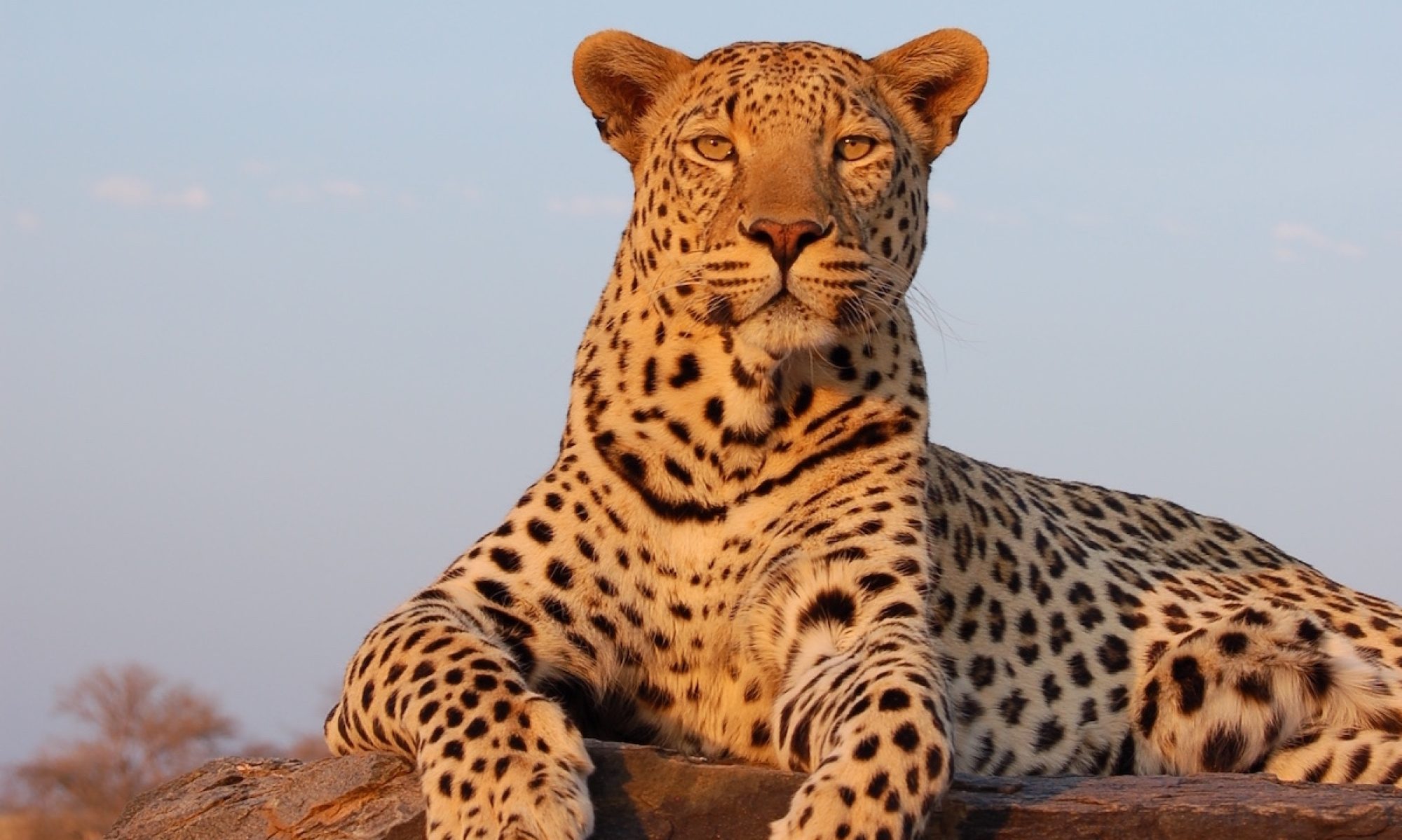
In his fifties, Neil Goodall felt the familiar urge to get away from it all and out into nature. Yet when he took the leap into expeditions, Neil discovered more than a new world – he found a new path, and a new lease of life.
Neil on expedition in 2018
Neil Goodall never expected to find himself in an acacia bush.
โWe were tracking leopards in Namibia, and had to set traps,โ Neil explains. โSo I volunteered to crawl into the bush, and put the smelly carcass in the trap – and I thought, Iโm an accountant!โ
Setting a trap for leopards in Namibia
Since his first expedition in Namibia, Neil never looked back. Thailand, Malawi, Tien Shan: Neil traversed swamps, crossed deserts, and returned with a different perspective on life. โThe contrast between this and working at my desk all day was just amazing. My colleagues couldnโt believe it. Gradually I became known as the Scat Hunter!โ
Yet he wasnโt always an adventurer. Like many people, Neil found himself isolated from the natural world.
โI always liked nature but never found the time for it,โ he says. โI was in my early 50s. Busy life. Two kids, family, and a very busy job – as a finance director for a public organisation.โ
To get closer to wildlife, Neil followed what seemed to be the only option – safari, spending five days in the Serengeti.
โAfterwards, I thought, I loved that, but a couple of things nagged me: youโre a tourist, youโre stuck in a vehicle, you canโt interact, and when you do see wildlife, theyโre surrounded by tourist vehicles…it all felt a bit contrived.โ
Signing up to be a citizen scientist with Biosphere Expeditions gave Neil the immersion in the natural world that he couldnโt reach in his everyday life – and then some.
โIt was everything that Iโd hoped for: structured, but with a sense of liberation. We could go out into the wild, and as long as we did our tasks, we were free to do as we pleased. Wildebeest, giraffe, springbok – all close enough to smell them.โ
Yet there was a crucial distinction. Neil wasnโt just close to the wildlife; his participation in the expedition enabled him to contribute to their conservation, shoulder to shoulder with dedicated scientists out in remote wilderness. On his first expedition, in Namibia, part of the projectโs purpose was to change the narrative.
โThe farmers blamed the leopards for killing their livestock. Our work was helping to protect the cats. Collecting data, but properly in the wild – itโs such a purposeful interaction with wildlife.โ
Part of what makes the expeditions so meaningful is because theyโre not a holiday – theyโre challenging, as Neil attests.
Neil (right) entering data with a fellow expeditioner in Malawi
โItโs hard work,โ he agrees. โYouโre up early, active from the off, but when you look back at the end of the day, shattered, you think – but what have I done? All day in nature, encounters with wildlife, collecting data with a team of people who were strangers a few days before. Itโs hard, but itโs also one of the best things to experience because it connects with a lot of deep drivers that are rare to find in everyday life. But Biosphere Expeditions gives you confidence: youโre well briefed, well fed, and you know what youโre doing: solid foundations to go out of your comfort zone!โ
And, like many expeditioners, Neil found himself not just out of his comfort zone, but far beyond it. His experiences across the world have been so out of the ordinary that theyโve changed how people see Neil as a person.
โOn my third expedition, I went to Peru – the first person in my family ever to go to South America. I found myself taking the boat from Iquitos down the Amazon, and I remember pinching myself – literally pinching myself – going, Iโm on the Amazon. How!?โ Neil says, laughing. โPeople at work see me as the accountant. But it changes peopleโs perspective of you. They react โWow, you did What!?โโ
Neil (middle) with fellow expeditioners in Amazonia
Judging by his stories, this amazement is justified.
โOne night, in a remote region of Malawi,โ Neil begins, eyes lighting up in recollection, โWe were observing a goat carcass to see if it attracted predators in the dark. We set a camera trap 10 miles from camp, but on the way back, we got stuck in the rutted road. Imagine: three of us, in the pitch black dark, somewhere in the middle of Malawi…and we had no choice but to get out of the car and push it out of the ruts. And you feel the danger,โ Neil admits. “We could radio for help, we knew we were safe, but itโs so far beyond everyday life. You come back and think: Wow!โ
Ultimately, though, Neilโs experiences on expedition have given him more than just memories. Theyโve given him new skills, opened new opportunities, and have made him an active protester for change. Inspired to put his new skills to use, he attend his first protest march โ Restore Nature Now โ in London in the summer, alongside 60,000 other nature lovers. Neil says, โI thank Biosphere Expeditions for giving me the confidence and the compulsion to protest for what I believe is a just cause, something I had not done before in my 68 years. And I will do the same again if the march is repeated.โ
โIt changed my idea of whatโs possible,โ Neil reflects. โIโve always had it latent within me – but when are you going to get the chance, sitting in the office?โ
Sixteen expeditions later, Neil the office accountant, has been transformed – and it hasnโt gone unnoticed. So who has Neilโs new sense of purpose influenced most? Neil bursts out laughing.
โMy sons – who see me as a boring old dad – they canโt believe what Iโve done!โ
As biologists, Gary and Sandra Hogben have always been fascinated by the natural world. But when seeking a way to get stuck into some fieldwork, they began going on expeditions together. From tiptoeing past sleeping elephants to learning how to use the village water pump, itโs been an even richer journey than theyโd imagined.
Sandra (left) and Gary Hogben (right) on their elephant expedition to Thailand in 2023.
Gary and Sandra never imagined theyโd end up stranded on a dirt road in Malawi, miles from anywhere, bus broken down, no immediate way of moving. But thatโs exactly where they found themselves. Rather than the struggle, however, they remember the laughter and camaraderie that came from taking responsibility for their own fate. โYouโre really pushing yourself,โ Sandra says. โYou learn your limits.โ
Their story starts back in 2013, when the couple undertook their first expedition to Namibia. It proved a turning point in how they saw themselvesโand their holidays. Both are biologists by training, but as Sandra notes, โItโs microbiology, not macro, so we wanted a broader perspective. Something that let us get back to what we used to do: proper fieldwork.โ A classic game drive wasnโt enough; they wanted hands-on involvement, real interaction with wildlife, and a sense they were contributing to something bigger.
So they signed up for a Biosphere Expeditions project in Namibia, discovering that expedition life is intense in ways they never anticipated. โI felt anxious about what Iโd signed up for,โ Gary admits, recalling the dossierโs instructions on braving remote desert roads and uncertain conditions. But from the start, that same uncertainty became an addictive challenge. โI love to travel, but because of the climate crisis, I felt guilty,โ he says. โThis wasnโt just a holiday though โ it had a purpose, a way to give something back.โ
Over time, they ventured further: Malawi, Arabia, Costa Rica, Thailand โ each place tested them physically and emotionally. Theyโve dodged tsetse flies, tiptoed past elephants at night, and faced torrential storms checking on hatcheries every fifteen minutes. Yet for all the trials & tribulations, both speak with a sense of wonder. โYou come back feeling that youโve overcome a challenge,โ Sandra says. โAnd very glad to have done so.โ
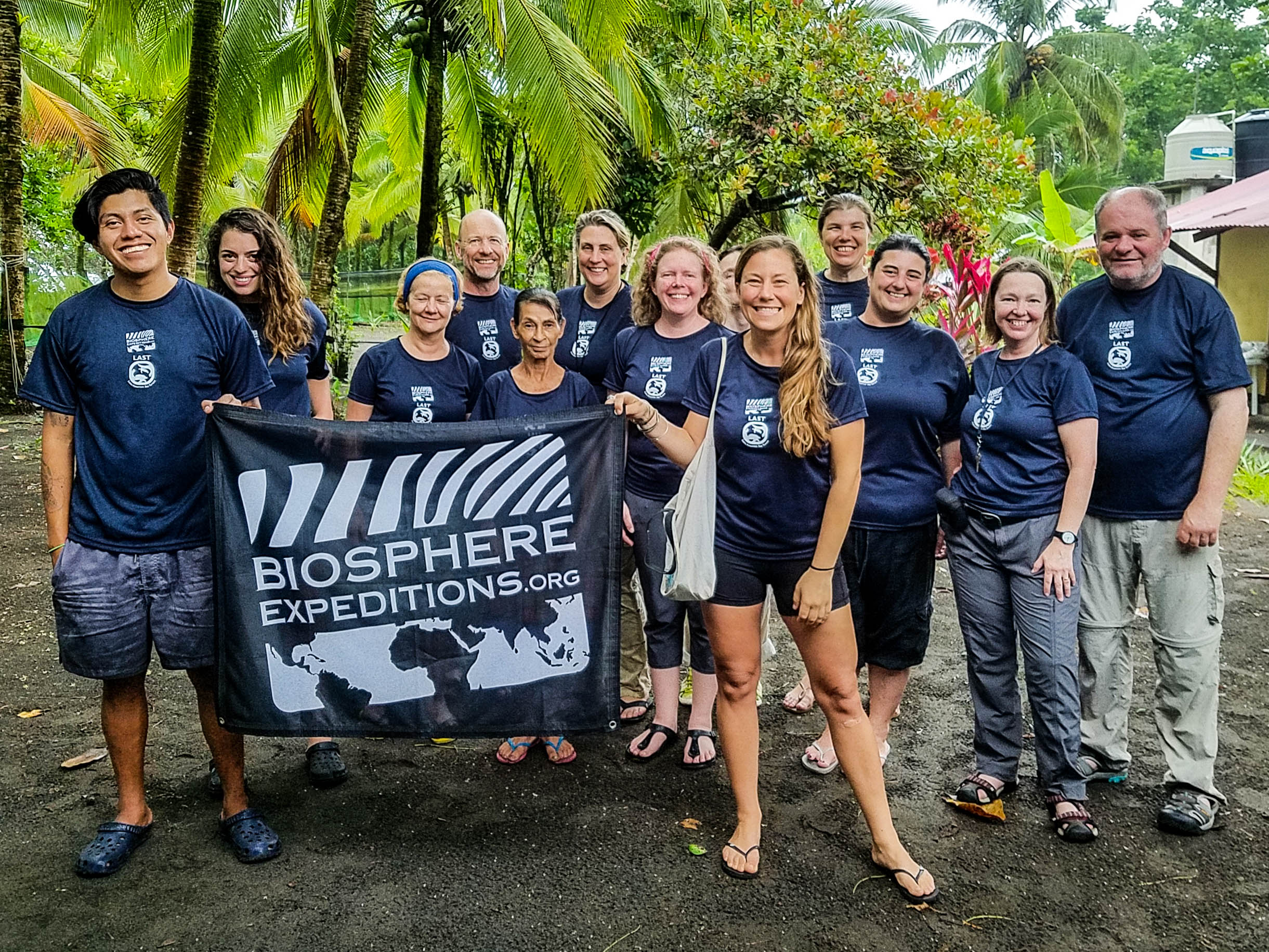
Gary & Sandra (from right) and their 2018 Costa Rica sea turtle expedition team.
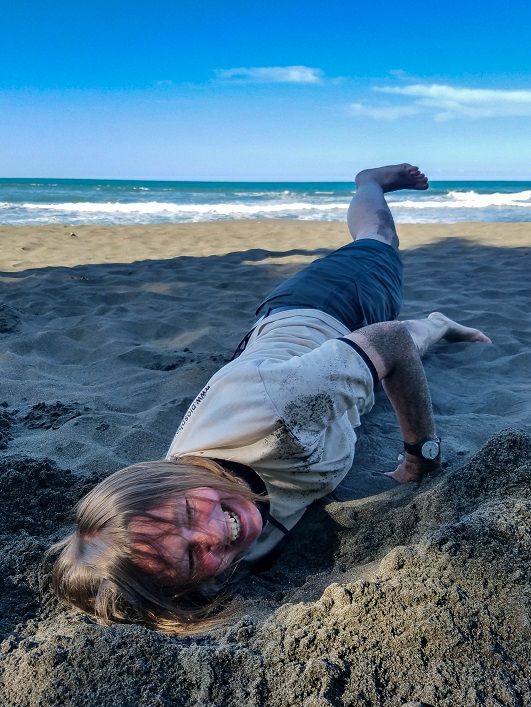
Sandra digging an incubation nest for leatherback turtle hatchlings
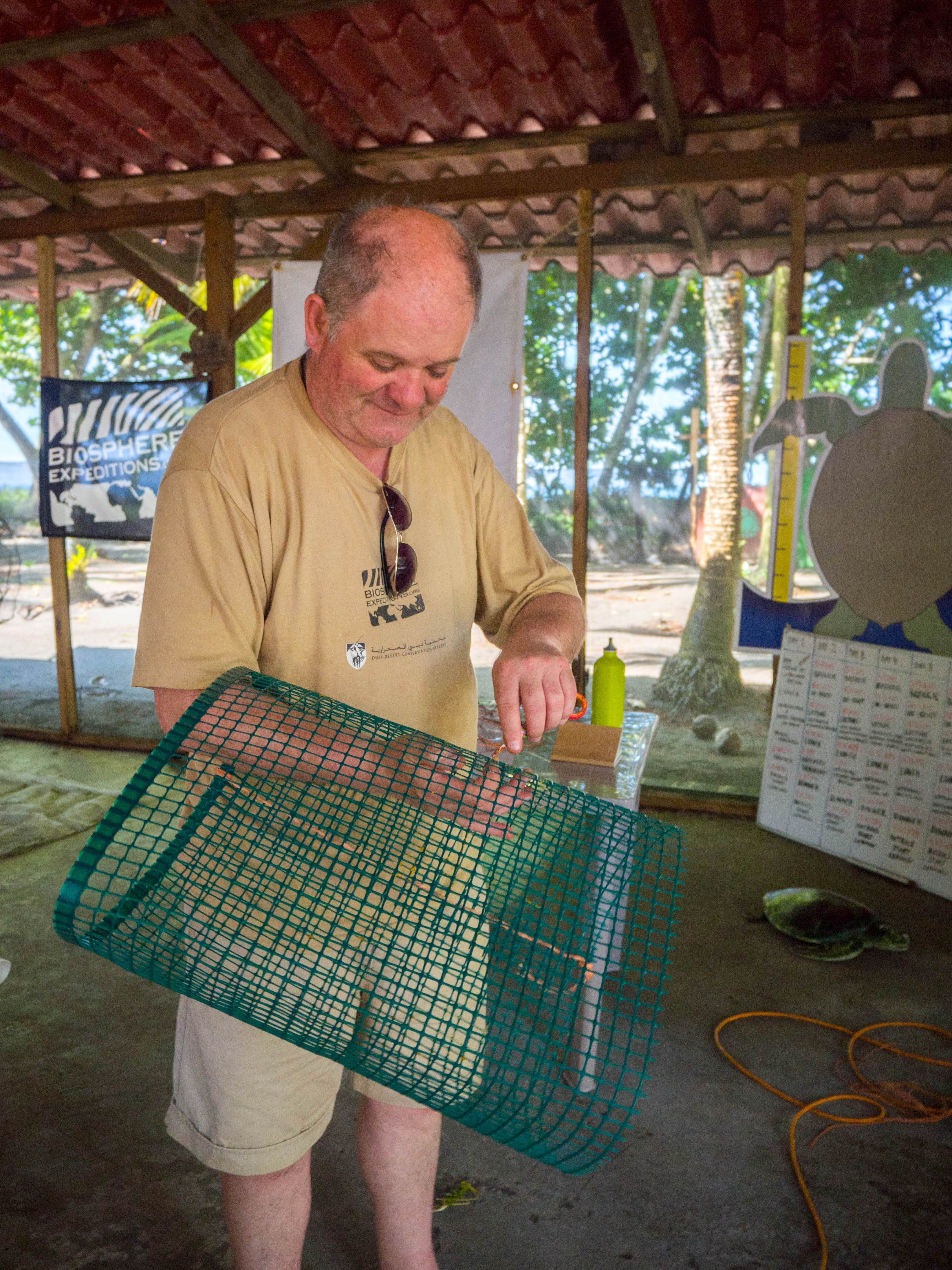
Gary constructing a protective basked for leatherback turtle hatchlings
Gary & Sandra on their 2018 Costa Rica experience
Meeting local communities helped them see their own routines in a new light. In Malawi, they learned to pump water from a village source, twenty liters at a time, or no shower. Back home, they realised their perspective had changed. โYou see it a bit differently,โ Sandra reflects. โIt shows you whatโs possible.โ Gary now chairs a clean-water advisory group, inspired by the stark realities he encountered. โYouโre right on the frontlines of conservation,โ he explains, โseeing the difference youโre making.โ
Gary on his 2019 Malawi experience
Perhaps the biggest surprise has been the friendships theyโve forged. โWeโve stayed in touch with people from our first expedition,โ Sandra says. โHelen from Australia visited us in the UK, and Georg from Germany โ like-minded folks who keep coming back for more.โ
โIf someone asks whether they should do it, I always say: โGo for it. You wonโt regret it,โโ Gary says. โI used to think being stuck between hippos and elephants was something youโd watch on TV. Now itโs part of our reality.โ And for both Gary and Sandra, that reality is far more compelling โ and life-changing โ than any other kind of holiday could ever be.
Biosphere Expeditions has continued its long-term partnership with Lilongwe Wildlife Trust, researching and monitoring wildlife populations in Vwaza Marsh Wildlife Reserve.
The Malawi expedition has a particular focus on surveying elephants and hippos, as well as camera trap surveys of other wild animals. Analysis of elephant dung was also carried out to assess whether elephants had been eating crops grown in fields outside the reserve. The 2024 expedition also continued the process started in the earlier expeditions of identifying individual matriarch and adult bull elephants. Building this database of individual elephants will help greatly in mapping the demographics, movements and health of the elephant herds in Vwaza.
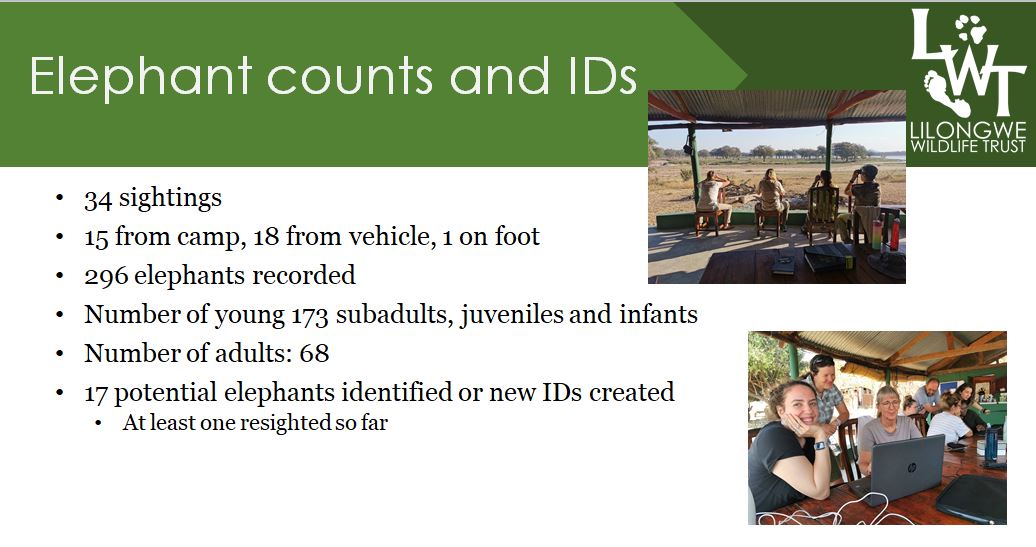
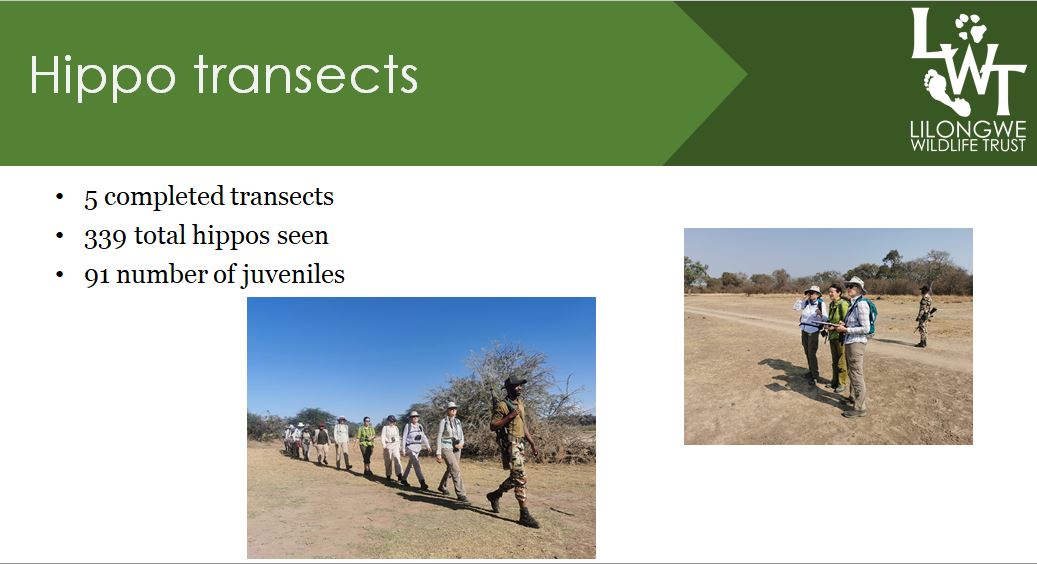
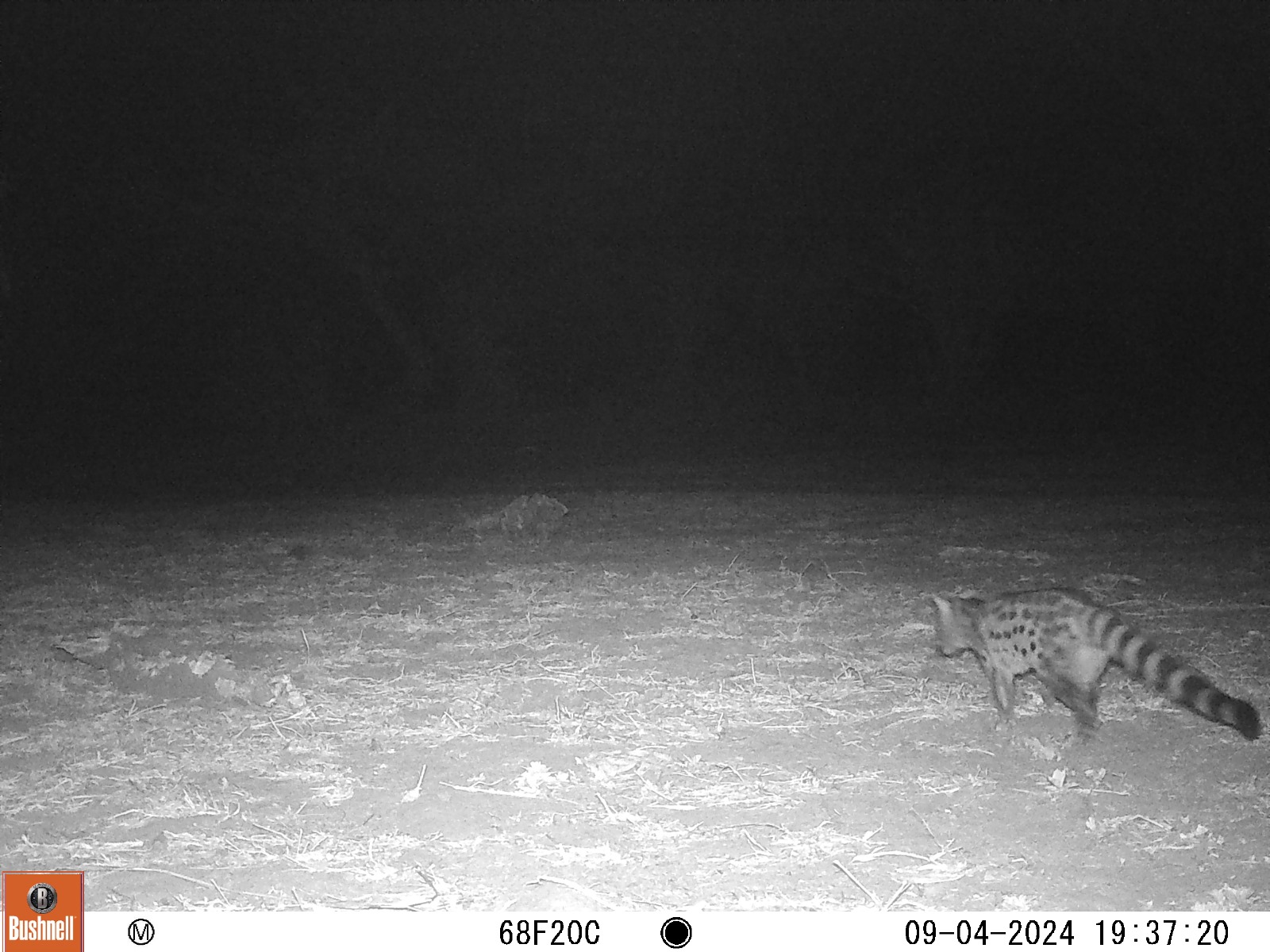
The 2024 expedition counted 296 elephants over 34 sightings, 339 hippos over five complete lake-side transects and collected and analysed 24 elephant dung samples (yielding 1743 seeds). The expedition also identified or created 17 ID profiles of elephants, with at least one re-sighting. Seventeen camera traps throughout the expedition provided evidence of hyaena, civet, genet, two species of mongoose and honey badger, amongst other species.
Expedition Leader Roland Arnison, who also led the 2022 and 2023 expeditions in Vwaza, said that โthis was another successful expedition, carrying out field research tasks that, practically, can only be carried out by a team of hard-working citizen scientists. I am confident that the results gathered from this expedition will make an important contribution to the conservation of endangered species and biodiversity in Vwaza”.
Head of Research at LWT, Dr Leandra Stracquadanio, who was the expedition scientist, said โthe data that we collected during this expedition is invaluable for us to continue our monitoring of elephant and hippo populations, as well as the overall biodiversity within Vwaza. The team did an excellent job and produced high-quality data that will inform ongoing and future conservation planning.โ
Citizen scientists feedback:
Roland and Lea and the team really made this entire experience incredible. Kathy H., USA
Itโs a great experience and I really felt us being here was useful. Sanne W., Netherlands
Really enjoyed that each day had a different combination of activities. Really positive leadership by Roland and Lea. Pam G., UK
The expedition was well set up and organised and there was not a day that I felt like something was out of place. Glory M., Malawi
This is my fourth expedition to Vwaza Marsh with Biosphere Expeditions. Another wonderful experience, finished off with a very special visit from the elephants and their babies coming right past our campfire as we were having dinner on our last night. Janet B., UK
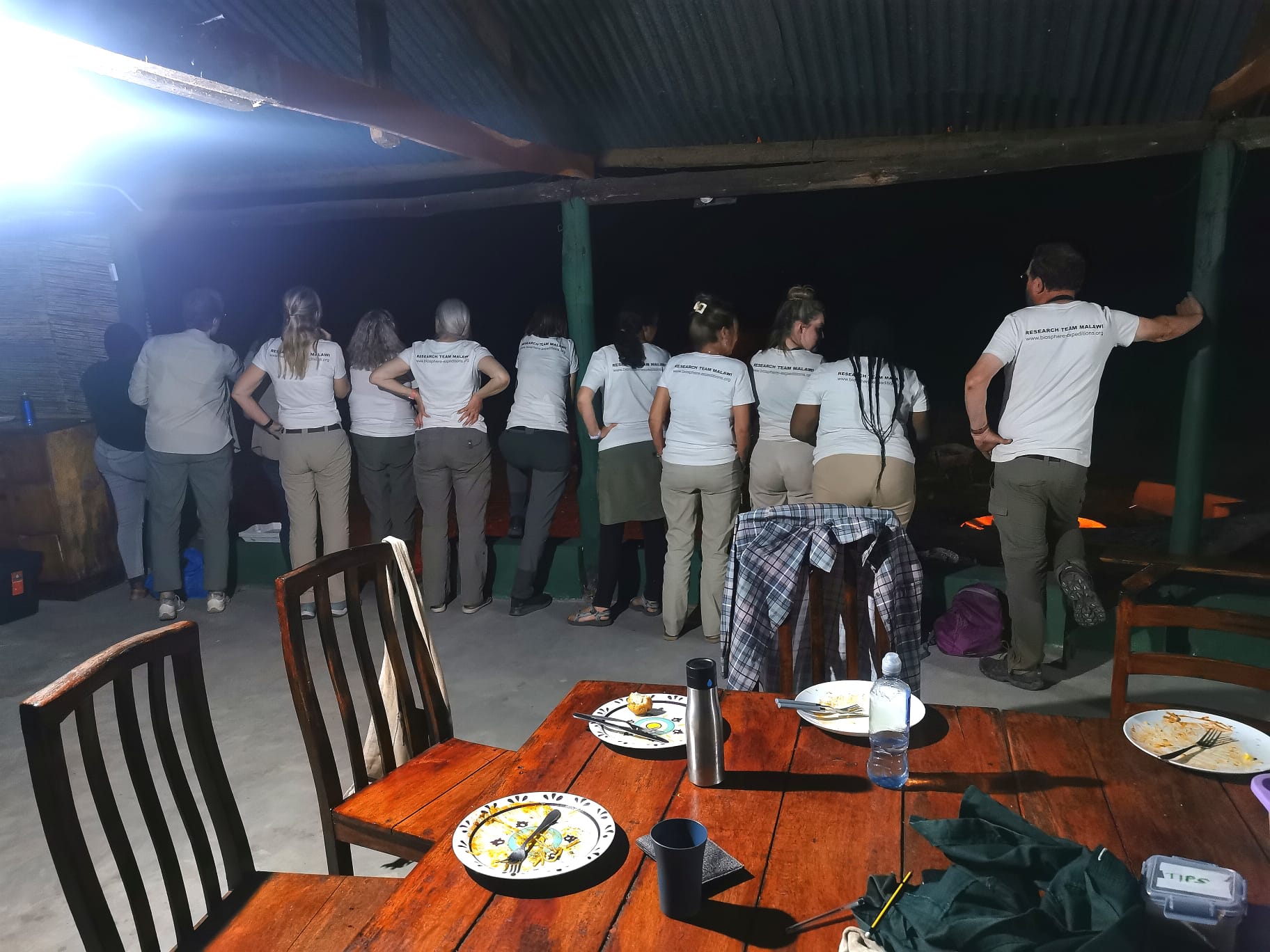
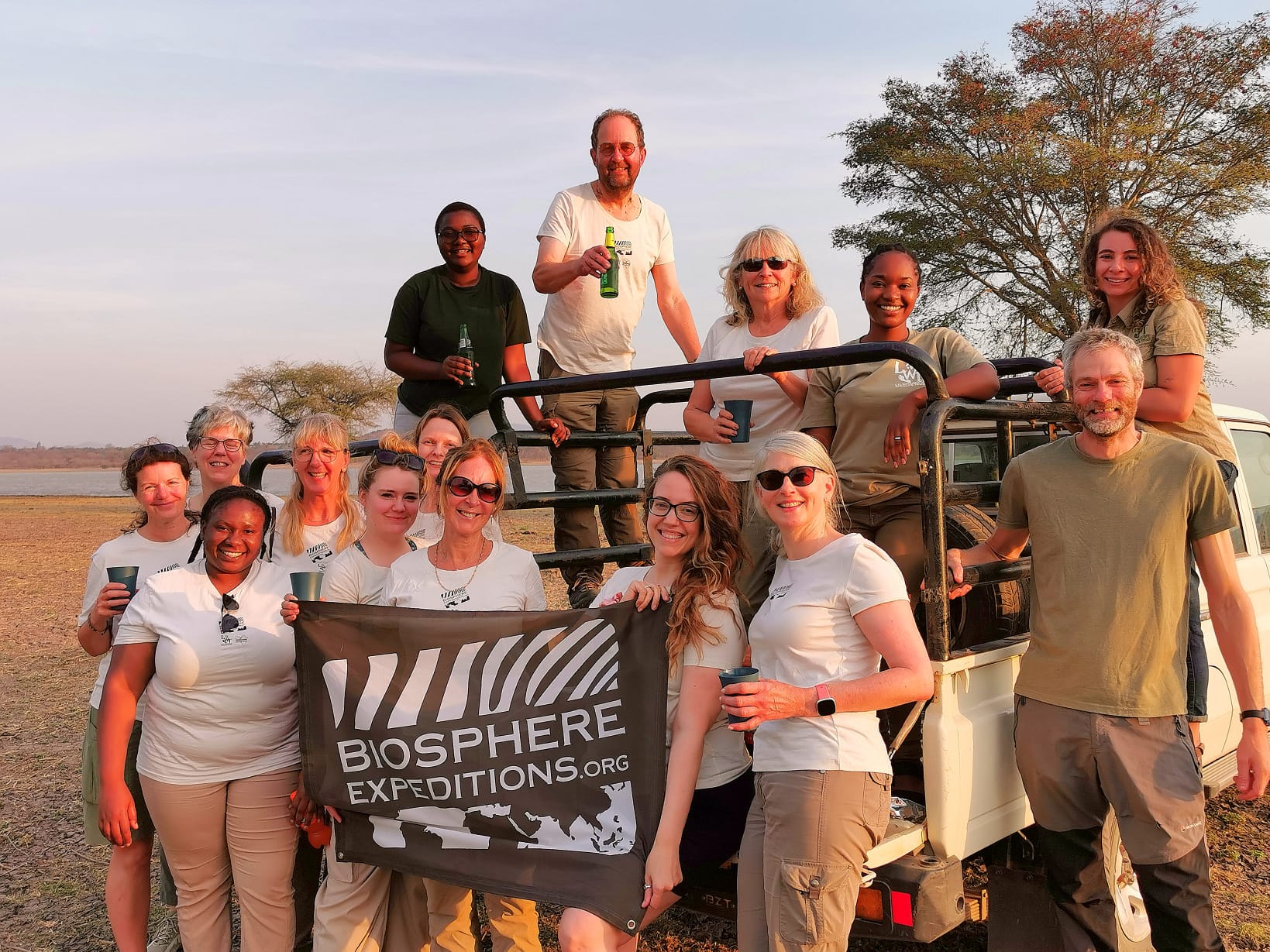
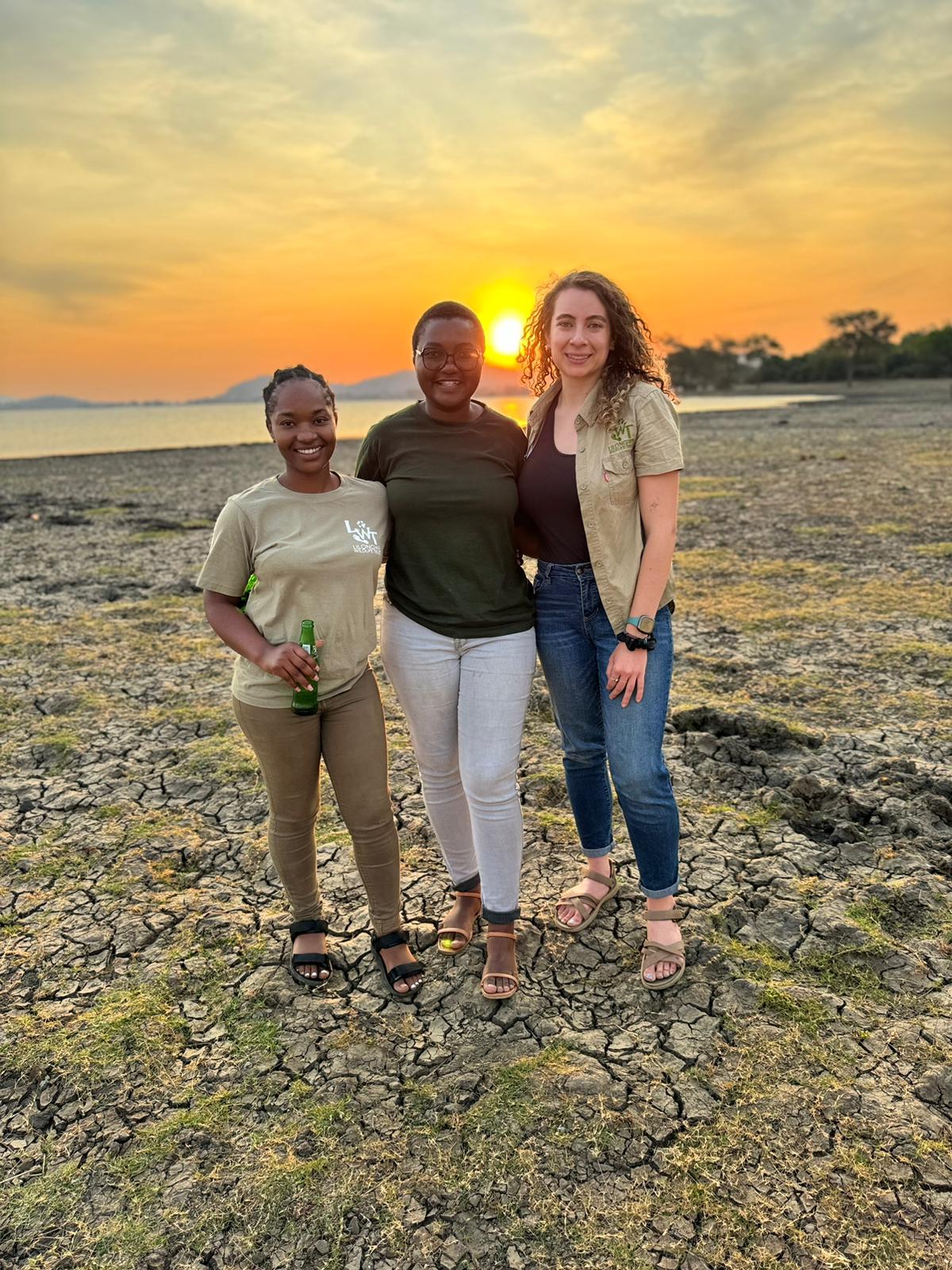
The 2024 Malawi expedition has now finished and it ended in style. With our last research tasks complete, all the data entered and kit packed up, we enjoyed a well deserved sundowner on our last evening on the shores of the lake, watching the glorious red sunset. Back to camp for a farewell feast prepared by the expedition cook, Luca, which was interrupted by a startling loud noise coming from the dark very close to us. Elephants! A herd had quietly crept in and was calmly feeding on the trees only 10 meters away. We unpacked a red spotlight and watched with fascination and joy as the elephants spent the next hour or so wandering around the edges of our camp, utterly unfazed by us watching safely from our communal area. It was a magnificent and pretty emotional ending for the expedition.
Some headline achievements of the expedition are shown below.
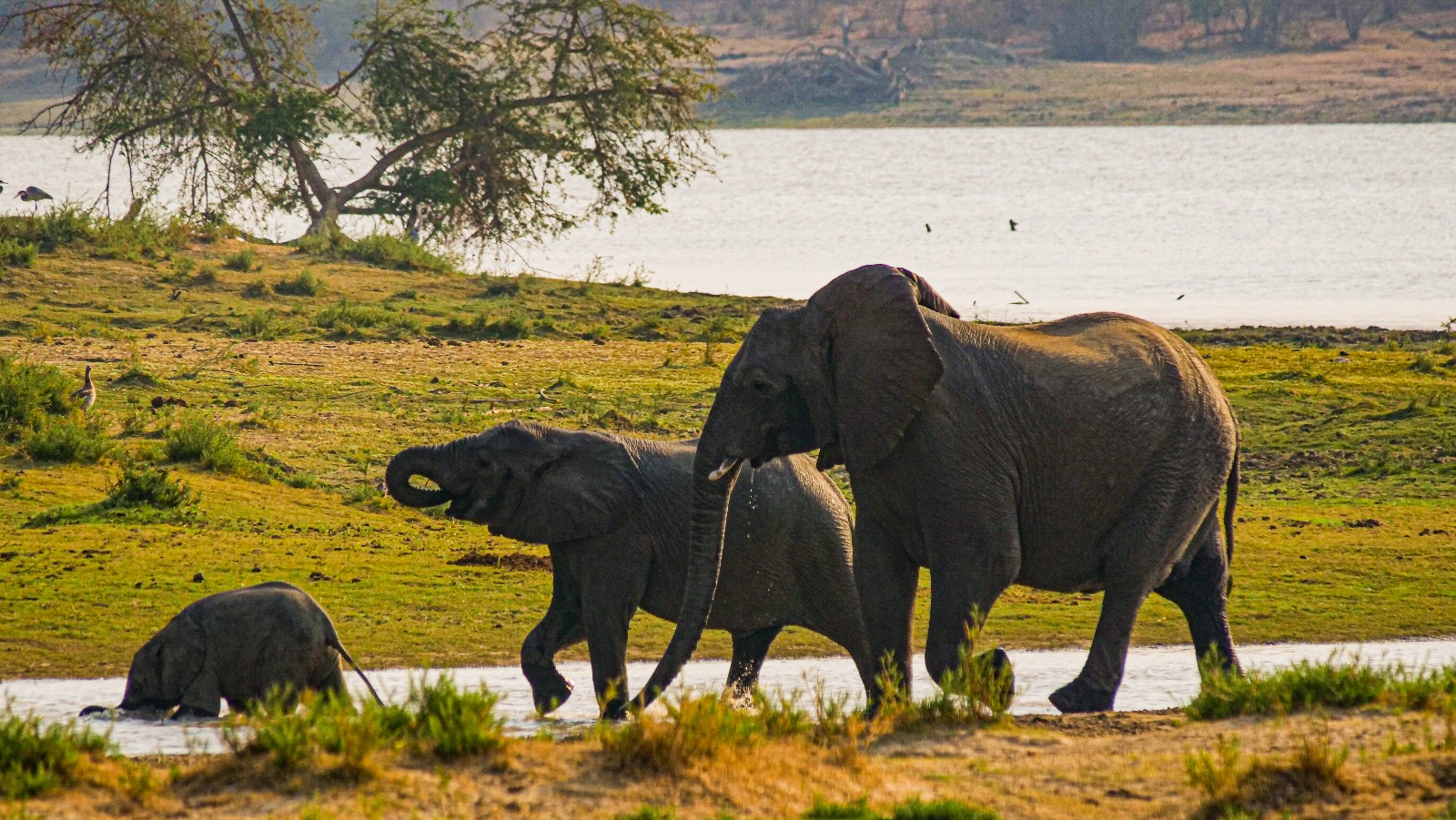
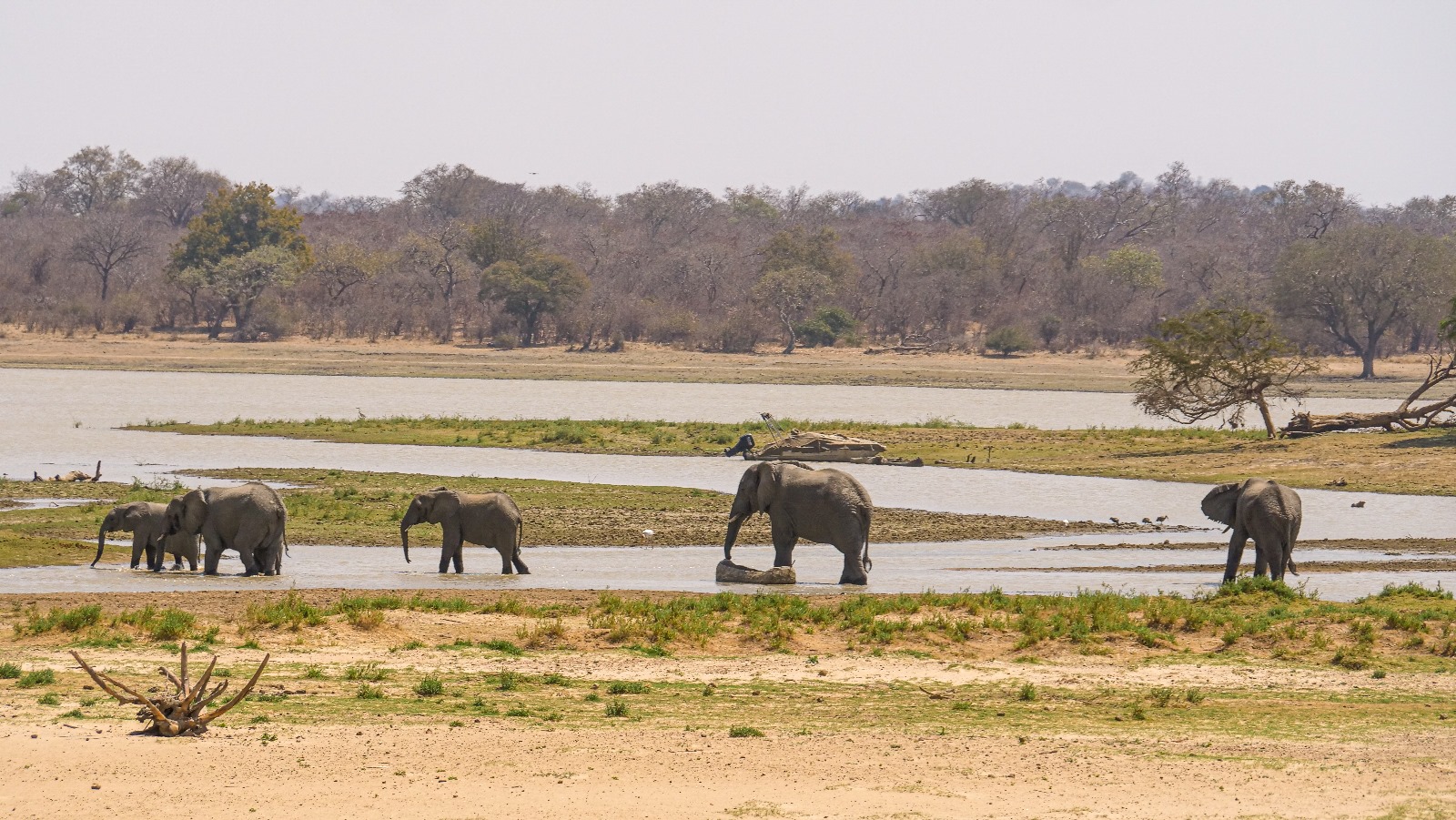
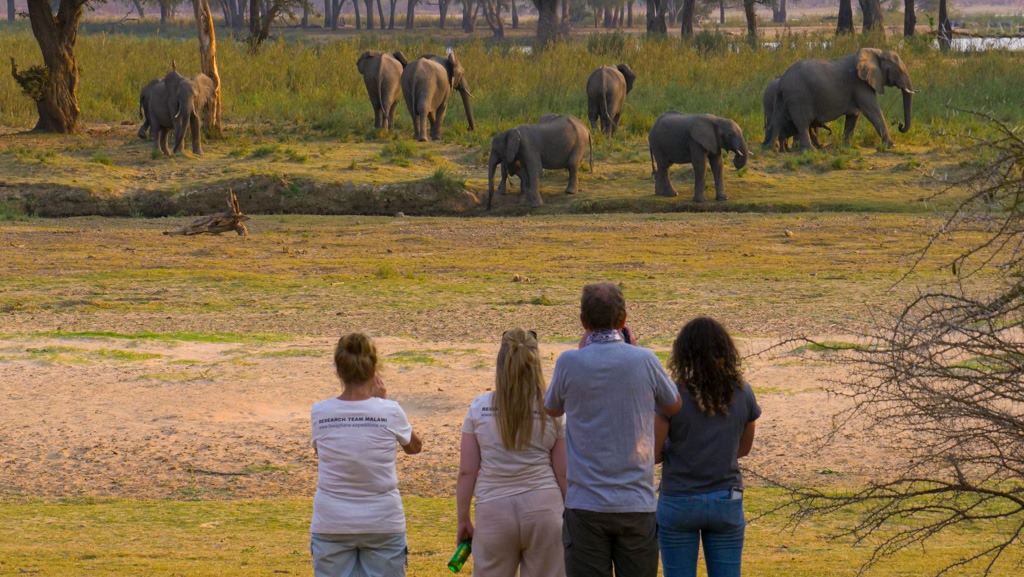
Many of our elephant sightings have been from base camp. Some of the herds seem to have a tendency to wander down to โourโ end of the lake and the good grazing on the land opposite camp in the late afternoon. We often get only a few minutes to enjoy watching them wade through the shallows, drinking and bathing, then up onto the shore before they reach the tall vegetation where they are half hidden. In those precious minutes we need to count and do our best to characterise them by sex and age class. Using binoculars and cameras, we also look for any distinctive identification features such as notches on ears and tusk shape. In this way we can cross-reference with the Vwaza elephant catalogue created from our previous expeditions here and potentially add to the catalogue too.
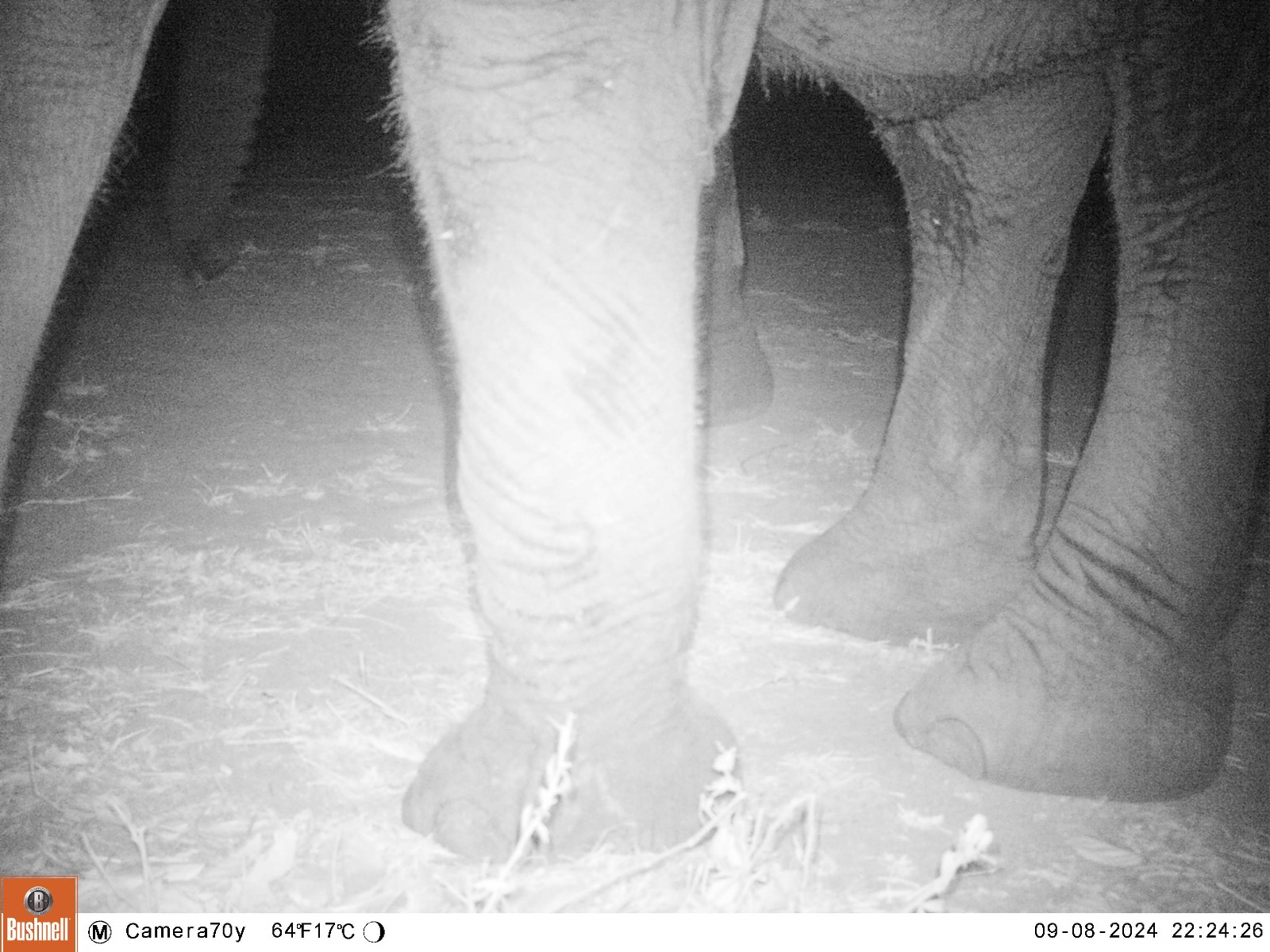
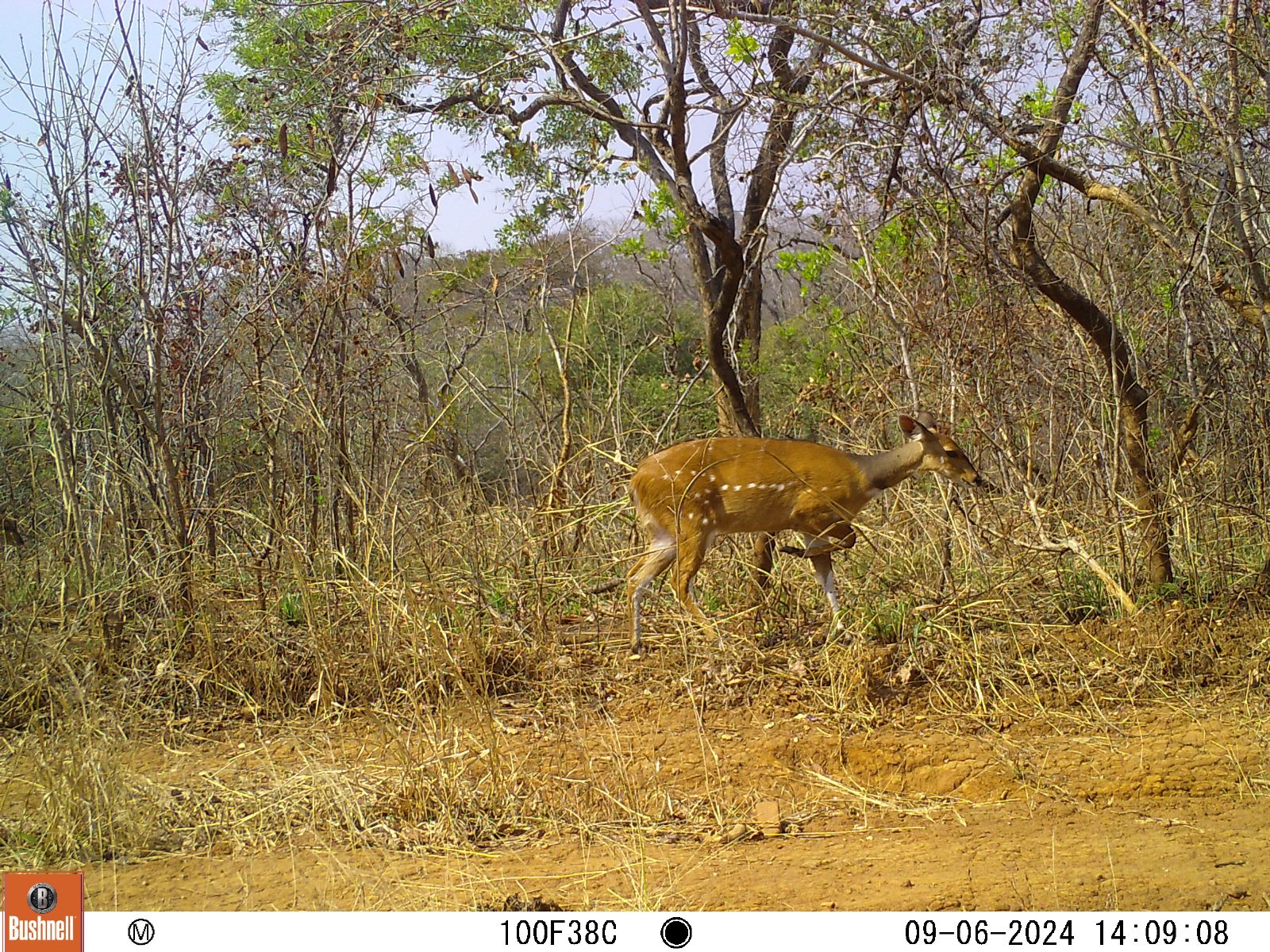
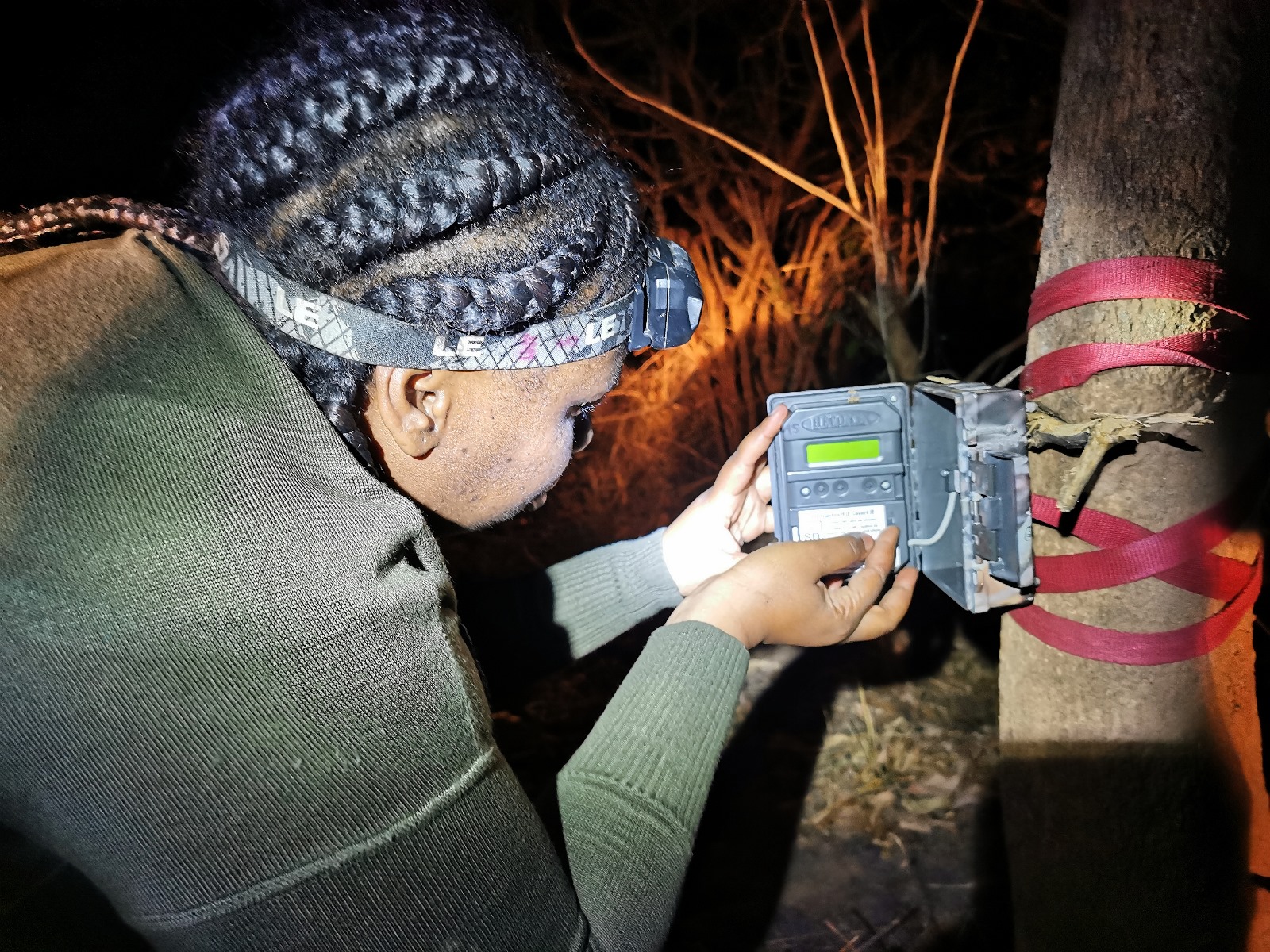
We also collected all the camera traps and processed all the images. As expected, we have images of hippos and elephants (mostly just their legs, close up) as well as the antelope species we meet every day in the day time. But we also have evidence of quite a few nocturnal species: civets, genets, mongooses as well as a porcupine and a honey badger. All of these are significant, but none quite as exciting as the hyaenas we captured earlier on.
It has been a good expedition, and both myself and expedition scientist Lea are pleased with the quality and amount of data that the team has gathered. I would like to thank our all our citizen scientists who have contributed so much to this expedition and continued our mission of building up a good long-term research dataset on the wildlife at Vwaza, which will be shared with the reserve managers and others and published as necessary. Thank you!
We deploy camera traps to monitor which species live in Vwaza โ especially nocturnal animals, which we would not otherwise spot. Some of these animals are caught on our cameras every year, but no less exciting to find anyway โ civets, mongooses, genets and of course elephants and hippos (both wander the woods at night, feeding). But occasionally we capture an image of a rarer species. Two years ago we found the first ever evidence of wild dogs in Vwaza in this way. This year when we checked a camera we had set up facing an animal carcass, which we noticed had been dragged away, we found the culprit on camera: a hyaena! Interestingly, the images showed the animal investigating the camera rather than scavenging the carcass: hyaenas are known to show much interest in camera traps and sometimes even pull them off their tree and chew them to destruction. Although we have had evidence of hyaenas at Vwaza before (we spotted some footprints in the sand nearby at the start of the expedition), this is still a notable discovery.
We continue to see elephants daily, although there does seem to be a pattern of โgood ele daysโ alternating with โbad ele daysโ.
Our rest day involved a trip to the market town of Rumphi and a cultural visit to the local elementary school. We had prepared a very simple presentation for the children, which was translated by the teacher, telling them what we are doing here and hopefully inspiring them about wild animals. They in turn sang some songs for us. It was good to make a connection with local people like this.
We only have a couple more full days to go on this yearโs expedition, but the team are working well and we are getting a lot of good data in. And tonight we will retrieve the remaining camera traps: who knows what animals we will find on those SD cards!