Update from our working holiday volunteering with leopards, elephants and cheetahs in Namibia, Africa (http://www.biosphere-expeditions.org/namibia).

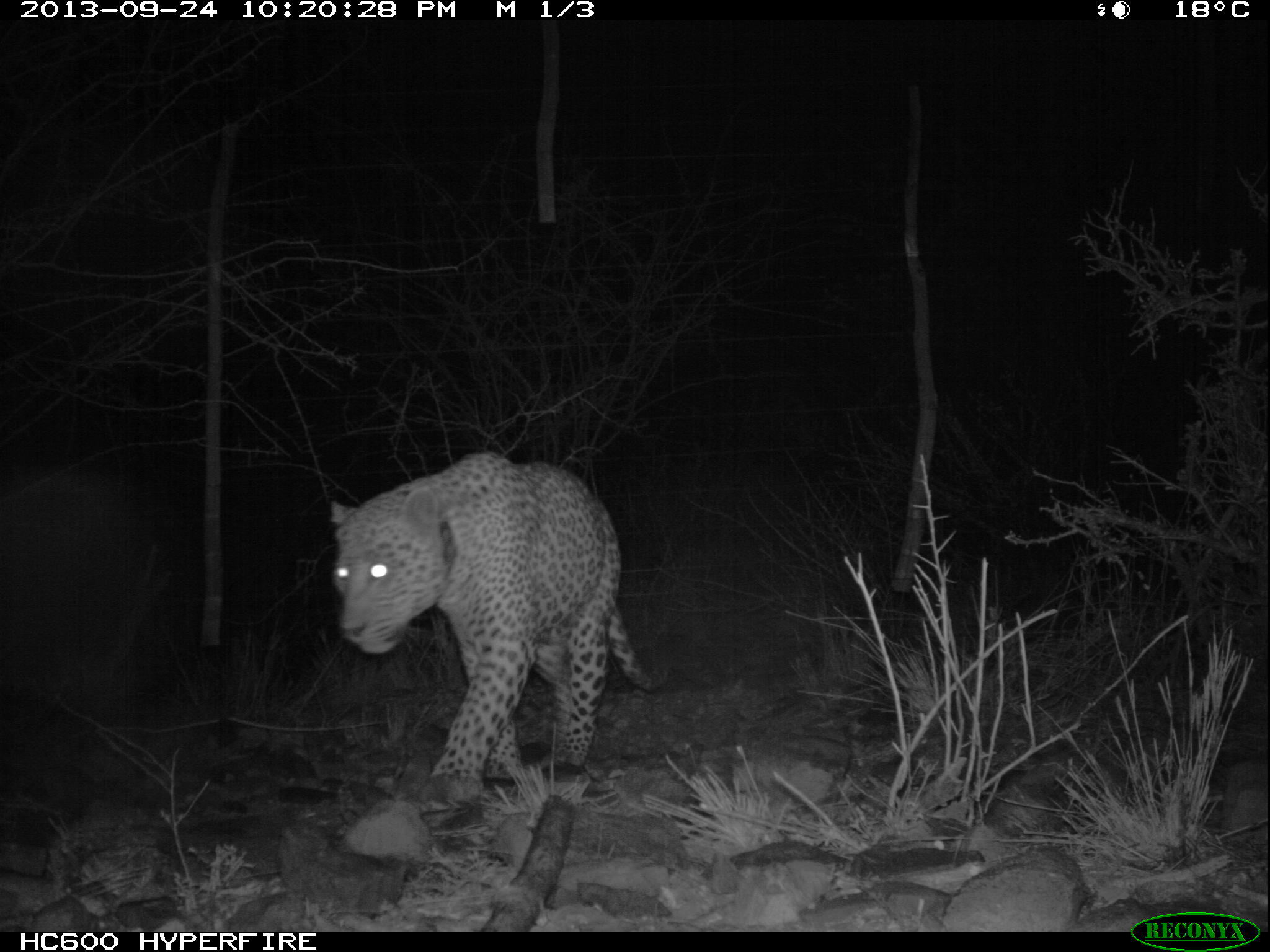
We had a week’s break after the last group, and now Team 7 is on the ground at Okambara. The group has been trained in box trap operations, elephant surveys, waterhole counts, navigation around the farm, and now we’re focusing on perfecting the box trap setups so we catch one final leopard. While we’ve had a great run and collared three leopards already, we’ve seen plenty more uncollared ones on the camera traps…so we know our work is not yet done.

This slideshow requires JavaScript.

Yesterday our water hole team of Wayne, Barbara, Seema and Carole built a shade net structure at Gustavposten; one we hope to replicate and erect at the other water holes.

Yesterday’s morning elephant team of Morgan, Ann, Eva and Ritva had a very (non) exciting encounter with the “bad boy” elephant (the teenage male bull that sometimes causes trouble on the farm.) We encountered him tearing into and eating a shrub pretty close to the road, and evidently we weren’t very exciting companions for him because after lifting his trunk to sniff and check us out, he promptly went over to a bush and laid down! Then it was his turn to be (non) exciting, because we got to watch him snooze for a full hour and a half. Right on cue, seconds after we wrapped up the observation period, he leapt up, shook himself off, and sauntered further into the bush and out of sight. The first groups of volunteers will remember very different encounters with the elephants – at the beginning of the season they were very wary of us. Now, they are mostly non plussed, and just go about their business and ignore us. Good news, because that means we are now observing their natural behaviours.

The rhinos are getting more accustomed to us as well. In the last two days all teams have encountered the rhinos near Sandposten. The rhinos now care so little for us that they hardly move out of the roadway! They just stand and stare at us, and go back to eating. We’re now able to get so close to them that we can hear them breathing and chewing!

Continue reading “Update from our working holiday volunteering with leopards, elephants and cheetahs in Namibia, Africa (http://www.biosphere-expeditions.org/namibia).”

Update from our working holiday volunteering with leopards, elephants and cheetahs in Namibia, Africa (http://www.biosphere-expeditions.org/namibia).

Our seventh and last group for 2014 is about to start. While you wait, here are a few pictures of your tools of the trade, from your fingers to maps to GPS and binoculars, as of Sunday…

Continue reading “Update from our working holiday volunteering with leopards, elephants and cheetahs in Namibia, Africa (http://www.biosphere-expeditions.org/namibia).”

Update from our working holiday volunteering with leopards, elephants and cheetahs in Namibia, Africa (http://www.biosphere-expeditions.org/namibia).

Team 6 caught another honey badger in the lodge east trap, and this one we released because the IZW veterinarian was too busy with other tasks to come to immobilise the animal and take samples. The rest of the week was business as usual—box traps, elephants, tracks & scats, and waterholes in the mornings, and box traps, waterholes, and elephants in the afternoons. Anh, Prasadu and Gabi’s names were drawn to help Vera investigate several clusters, which is a new activity.

Team 6
Team 6

What are clusters? Every 3-4 weeks Vera’s colleague flies over the study area and downloads the information off all the animal collars in the field. Vera gets the data and can see the activity of each animal. When an animal spends a significant amount of time in one area, or comes back to an area repeatedly over a period of a few days, it shows up as a cluster in the data. Vera then goes out into the field and investigates the area looking for evidence of activity, scat, kills, and other useful information. Her study area is much larger than Okambara, yet we had two such clusters on the farm and so she took volunteers out to investigate.

One animal (L051) spent all day in one location, but the site revealed none of its secrets. The second cluster they investigated belonged to L055, the leopard Team 6 collared upon their arrival, where the animal had come back repeatedly over a three day period. That site revealed two kills – one older and unidentifiable animal (Vera took hair samples back to the lab to determine the species) and a newer young oryx.

L051
L051

Normally the timing does not work out quite so well – collar an animal and then have the ability not only to see its movements in the next slot, but also then be able actually to track its movements in the field within the same two week expedition. Don’t worry previous team members – when Vera publishes her final report on the expedition, she will also include data on the movements of “our” animals.

Thanks Team 6 for all your hard work, and for your flexibility throughout the expedition, and for the rain you brought complete with the double rainbow!

_G8Q1578

Continue reading “Update from our working holiday volunteering with leopards, elephants and cheetahs in Namibia, Africa (http://www.biosphere-expeditions.org/namibia).”

Update from our working holiday volunteering with leopards, elephants and cheetahs in Namibia, Africa (http://www.biosphere-expeditions.org/namibia).

Saturday Group Six did not get much of a day off. In the morning we found a honey badger in the Bergposten trap, and the IZW veterinarian came in the afternoon to immobilize it and take samples. What a lucky group this is!

This slideshow requires JavaScript.

Continue reading “Update from our working holiday volunteering with leopards, elephants and cheetahs in Namibia, Africa (http://www.biosphere-expeditions.org/namibia).”

Update from our working holiday volunteering with leopards, elephants and cheetahs in Namibia, Africa (http://www.biosphere-expeditions.org/namibia).

“Welcome to Biosphere Expeditions Namibia. Now hurry up and get off the bus so we can go collar a leopard!” is what Group 6 arrived to. Amazing, and true. We caught a leopard in the mountain lodge box trap during the break between groups 5 and 6, and this makes the third leopard we’ve captured in a box trap with Biosphere Teams this year.

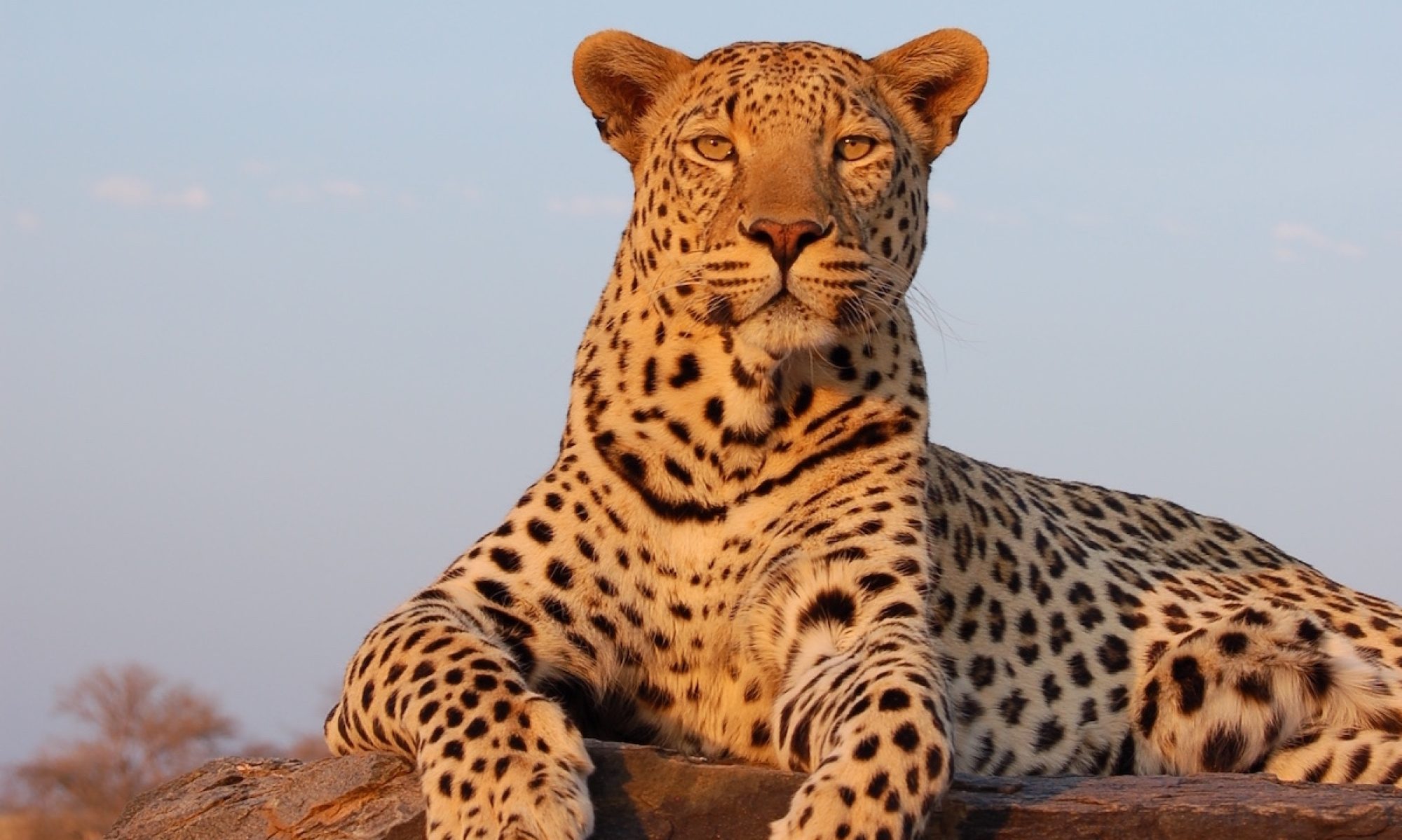
Several months now we’ve been watching a leopard on the camera traps up north that appeared to be an adult male. He has a very distinguishing feature; he is missing a portion of his upper right lip which exposes his canine teeth on that side. It makes him look quite fierce to us humans, and because he was so unusual we were keen to catch him. Lucky for us, he is now L055 in Vera’s study! (Previous teams who caught and collared L051 and L052 might ask what happened to L053 and L054. Those were caught on other farms within Vera’s study area.) Four leopards in just over a week…now that makes for a busy Biosphere Expeditions scientist!

Thanks go out to Martin and Renate, previous team members (different teams) that sent care packages along with two team 6 members. Speaking of care packages, thanks also to Team 6 members Siggi and Eliza for being Biosphere Expeditions couriers. They have brought along new kit for us—three new pairs of Swarovski Optik binoculars and a new range finder. Thanks Swarovski Optik for providing such great equipment that is so useful for us! Those 10×32 binoculars are great for seeing the small details on animals!

Group 6 has also been able to observe the rhinos here at the bush camp water hole, which is always a treat. It seems like I may mention it quite a bit here in the diary, and that’s because it’s an infrequent event. Yet when they arrive the entire camp goes quiet, and it never ceases to be a near reverential experience. It would seem we have a group or porcupines that has taken up residence in the Bergposten trap. So far we are 4 for 4…four days, four porcupines. One even decided to move in for the day, and the group eventually had to leave him in the trap with the doors open because we was just too comfortable. (I’d had to do the same with a porcupine over the break as well)

Tuesday was the first day for telemetry lessons and elephant observation, and Team 6 has already figured out that it’s not always easy to find a herd of elephants! The morning group looked for over two hours, before finding all nine of them taking a mid-morning siesta under an unlikely and very small tree. As we left them two of us who were looking were able to see one of the large cows lying down under a bush just a few meters away. It is my first time seeing one of the mature elephants lying down. Speaking of which, another team saw three mature giraffe lying down mid-morning, again another first for my stay here on Okambara. It just illustrates how the animals are reverting to their “energy conservation” mode.

Speaking of which, the weather here in Namibia has turned HOT during the day, although it is still cool at night. We’ve amended the daily schedule and the volunteer teams now start at 07:00 to take advantage of the cooler morning air. I think Team 6 hit their stride today, their second full day in the field, when they left early for both their morning and afternoon activities. We love keen volunteers!

Team 7 if you are currently deciding what to pack, make sure to bring plenty of high factor sunscreen, a hat, and long sleeves, which are now essential for the long hours in the blazing sun. You’ll still need your sweater/jumper at night, however.

Continue reading “Update from our working holiday volunteering with leopards, elephants and cheetahs in Namibia, Africa (http://www.biosphere-expeditions.org/namibia).”

Update from our working holiday volunteering with leopards, elephants and cheetahs in Namibia, Africa (http://www.biosphere-expeditions.org/namibia).

Just when we thought we were winding down the second week Team 5 started doing the bush boogie. They saw vultures circling over a kill (which we could not locate from the ground), then the next day they found another fresh kill (which was not a leopard kill). Why is this important? Because the first time we caught a leopard this year it was because we used his kill as bait in the traps and caught him the next night. So kills and drags and vultures and spoor are all very important pieces of the puzzle we use successfully to trap our cats.

During the week we released several non-target species from the traps such as porcupine and warthog. We also had some genets or mongoose triggering the traps on us, but they are slender enough to escape, leaving the disappointingly closed but empty trap for us to find.

Team 5
Team 5

Friday was our last dinner together at the bush camp, and the rhinos once again came right on cue. It was a great finale for Team 5. Thanks for all your hard work, flexibility, and assistance in collaring leopard L052. We wishe you safe travels home.

Continue reading “Update from our working holiday volunteering with leopards, elephants and cheetahs in Namibia, Africa (http://www.biosphere-expeditions.org/namibia).”

Update from our working holiday volunteering with leopards, elephants and cheetahs in Namibia, Africa (http://www.biosphere-expeditions.org/namibia).

Saturday wasn’t much of a day off for Team 5 because we caught a leopard overnight at the Bergposten box trap. It’s interesting how we go about our data collection day after day, the diligence of checking the box traps twice a day, and while we always remain hopeful, it still comes as a delightful surprise when we do have our target species in the trap.

Vera was ecstatic. She and Joerg rode up to take a look at the animal and to put a shade cover over it.

Weighing in at 67.5 kg, the leopard was determined to be an adult male of sufficient size to collar. Samples were taken of his conjunctiva, saliva, capillary blood from his ears, arterial blood, and fecal samples. The Biosphere team was able to watch the entire process except for the initial immobilization darting at the trap. We did get to hear it, however, and at that moment it sounded like it was a 200 kg leopard!

This slideshow requires JavaScript.

The team did a really great job of being flexible, and driving around the farm to check on the other box traps late that evening, despite being tired and hungry. I volunteered to check the cheetah trap near Gustavposten on the way home, and after much confusion about how I was to simultaneously open doors on both ends of the trap AND lock the trigger mechanism all at the same time (remember we were all tired and hungry!) Peter and Geoff came to my aid and helped me re-set the trap.

Here is my favourite advice from Namibian conservationist John Kasaona. This was advice given to him by his father, who is a poacher turned conservationist.

“My father taught me that when you see a cheetah feeding in the wild, you just slap it on the butt, and it will run away. If you see a lion face to face, stand your ground son, and look big. It might turn away. But if you see a leopard, you run like hell boy. You run faster than the goats you are herding.”

Having seen how powerful an angry leopard is when caught in a box trap, I think that’s really good advice.

Continue reading “Update from our working holiday volunteering with leopards, elephants and cheetahs in Namibia, Africa (http://www.biosphere-expeditions.org/namibia).”

Update from our working holiday volunteering with leopards, elephants and cheetahs in Namibia, Africa (http://www.biosphere-expeditions.org/namibia).

Friday was our vehicle game count, and I think everyone will agree that 6 am is a beautiful time of day to see the farm. All three teams reported record numbers of animals counted. Vehicle 2 spotted some cheetah tracks mid farm, which the team called “a nice interlude” for the game count. Vehicle three saw two bat eared foxes in the early morning light. They are seldom seen on Okambara, and Vera was very excited.

Two teams have had the opportunity to see all seven rhinos near Sandposten, and it is quite rare to see them all together. It’s full-on spring at the farm now, which means warm nights, cool mornings, and very hot afternoons. We’ve even had a few (very light) rain showers. I’ve switched to my summer Buff (without the fleece) for early mornings on the vehicles, and future team members should pack accordingly. You should also bring water containers to hold at least to litres of water, which is the bare minimum that you should drink each day. I find I am draining two litres before lunch.

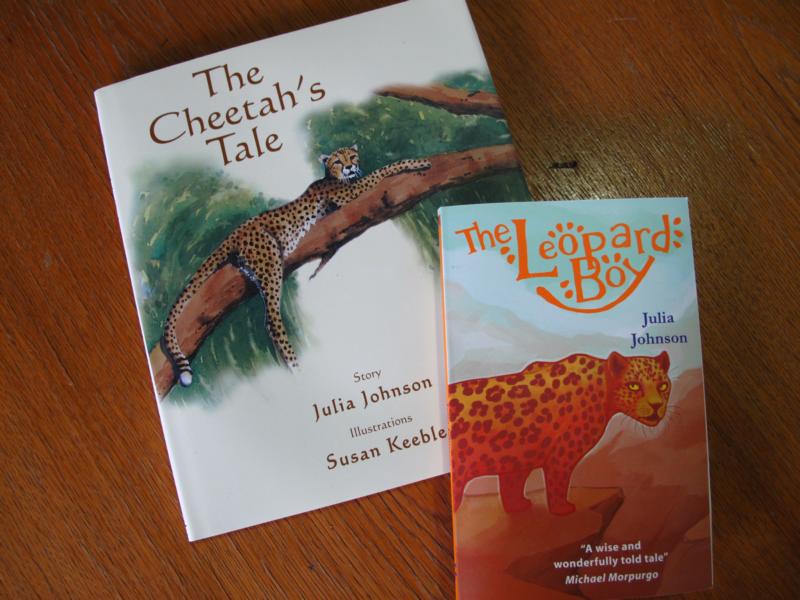
Julia Johnson is an author, and she has brought us two of her books. “The Leopard Boy” and “The Cheetah’s Tale” are now a part of the Biosphere Namibia library.

IMG_2401

Julia’s husband sent her a text message saying he saw her hat, not her, in the previous diary. I wonder what he will make of this next picture. 🙂

IMG_2403

Continue reading “Update from our working holiday volunteering with leopards, elephants and cheetahs in Namibia, Africa (http://www.biosphere-expeditions.org/namibia).”

Update from our working holiday volunteering with leopards, elephants and cheetahs in Namibia, Africa (http://www.biosphere-expeditions.org/namibia).

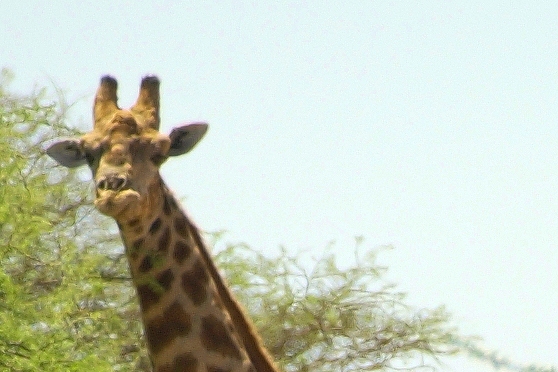
The giraffes greeted team 5 at the bush camp straight upon their arrival from Josephine Gate.

giraffe (1)

It was pretty stiff competition for my briefings, but thankfully the team paid attention and learned everything they need to know to be out in the field collecting data. Vera and I would like to thank Verena for planning her birthday on day one; thanks to her we got to eat cake and a visit from the rhinoceros, all at the same time.

Too good to be true, just after everyone went to bed, I heard the elephants at our water hole. I got back out of bed myself, turned on the lights, and went to see who else was still up. Verena and Stefan’s lights were still on, so I knocked on their door and presented her with her final birthday gift of the evening: all nine elephants. As usual, the first six elephants had to wait around for quite some time eating the bark off trees and licking the salt block before the last cow and her two calves showed up, so the encounter was quite long. Giraffe, elephants, and rhino at our water hold all in the span of a few hours. I think this is another lucky group.

Today was our first day in the field, and we had one porcupine (Michael’s Dam) and a warthog (Lodge Trap) to release, which was done by staff because we were actually on our way to the box trap briefing/move. Despite the heat the team managed to relocate the JM South box trap to behind the lodge (where we’d had a camera trap showing leopard activity on a number of occasions). We did it in record time with so many willing hands, and we hope the fresh meat and fancy digs will be appealing to the leopards.  Vera gave a box-tap briefing with a twist – this time we did a pop quiz at the end: what did we forget? THE MEAT! Eric jumped right in and helped Vera and Don fasten it inside the cage. Then we did housekeeping all over again.

Team 5’s box traps are located at Michael’s Dam, the Lodge, Mountains Lodge (the one we just installed today), and Bergposten. A cheetah trap has also been set up by our research partner IZW, not too far from the bush camp, and we’ll also be checking this for them as well. So team 5 has 5 box traps…a nice, tidy number coincidence!

This slideshow requires JavaScript.


Continue reading “Update from our working holiday volunteering with leopards, elephants and cheetahs in Namibia, Africa (http://www.biosphere-expeditions.org/namibia).”

Update from our working holiday volunteering with leopards, elephants and cheetahs in Namibia, Africa (http://www.biosphere-expeditions.org/namibia).

We’re in between teams at the moment, and since we’re looking forward to your arrival, we thought we’d share some of the camera trap pictures from the last group. Enjoy! See you soon Team 5.

This slideshow requires JavaScript.

Continue reading “Update from our working holiday volunteering with leopards, elephants and cheetahs in Namibia, Africa (http://www.biosphere-expeditions.org/namibia).”