Award-winning, non-profit and ethical wildlife conservation volunteering. Advancing citizen science and conservation since 1999 – for nature, not profit.
Well, we have a new record for the number of camera trap pictures the data entry team has to look through. Team 1 was shocked by the 3000+ pictures on the SD card, yet John from Team 2 suffered, er, poured over 9,569 pictures taken at Bergposten. He is now a self-proclaimed expert in baboon behaviour. (John also points out that the card was only half full, so the potential exists for 20,000 pictures for the next unsuspecting citizen scientists to pour through.)
Thursday was our vehicle game count, and the team reported slightly more early morning game activity. Also with the time change we started fifteen minutes earlier than Team 1. My team for that activity is now dubbed the “Black Mamba Team” for reasons of which I cannot discuss in the diary. (Some tall tales need to stay on Okambara.)
Saturday was our day off, yet once again this team wanted to work and volunteered for tasks that normally Vera and I are left to do on the day off. John, Glenn and Mei were rewarded for their efforts by being the team that found and released a beautiful genet. John did the proper thing and stayed far away from the release, yet with his telephoto lens caught the animal at the perfect time in its release for the attached picture.
Saturday was a sad day for us because Mei left in the morning. She was an integral part of the team the first week and a great volunteer, but unfortunately her work schedule sent her off to South America mid-slot. Mei you are missed!
Team 2 hit the ground running. We’re a small group, but full of enthusiasm and have already been trained up on all the equipment. Glenn, Lynne, Lesley and Mei came out with me on the first day and learned how to use the telemetry equipment to track the elephants. They also learned how well the elephants can blend into the savannah and how frustrating it can be when the entire herd is in the exact middle between tracks and we know where they are, but we cannot see them.
John and Valerie walked with Jesaja on the first day on the tracks and scats route #9. The surface was hard for them to read with the pockmarks of the light rain that came down. Yes, rain. We woke up to the unusual sound of the patter of rain on the thatched roofs. This was big and most-welcome news for us since we are now in the heart of the dry season.
Yesterday we caught our first rock dassie (rock hyrax) by-catch. Normally hiding in the rocks, this fellow was found hiding under the trigger plate of the trap. Evidently the animal gave Ligeus, Lynne and Leslie quite a scare when it stopped playing “dead” and raced out of the trap as soon as they opened the door to investigate.
It’s been a whirlwind week of checking box traps (liberated: one rock monitor lizard, one hare and one porcupine), setting up camera traps, trouble-shooting camera traps (re-aligned by baboons, some not taking pictures, some taking too many pictures), fixing up waterholes (Emil the bull rhino used the one at Gustavposten as a scratching post), doing water hole observations, early morning vehicle game counts (1 cold and one not-so-cold-but-windy), observing elephants, walking around the bush looking for tracks (lots!) and picking up scats (lots!).
We did two evening observation drives and while we did not see any aardvarks, which were my original idea because of the plethora of new holes dug in the farm tracks, the teams reported seeing an aardwolf, bat eared foxes, “loads of springhares” and jackals. Evening entertainment included “Banana Grams”, a simple word game made very confusing by each participant making words in their own language (English, French, German and Italian). Verification was next to impossible. Evening briefings were made more artful by Marco’s pictogram explanations of the day’s activities. Thanks Heinz for letting me post some of your pictures with this diary!
Team 1 has just left for the Josephine Gate and it’s very sad to see them go. They formed a solid working team quite quickly, and really impressed Vera and I with their work ethic and willingness to spend long hours in the field making sure everything got done. Up and out at times before the “regular” departure time, their willingness to go out in the cold and count game animals was remarkable, and their willingness to go out into the field all day working on a smorgasbord of activities got us off to a great start. A big thank-you to all of you for your ability to make hard work fun, and for your contributions to the leopard project. Safe travels home.
Team 1 has arrived and has already had one day of briefings so far. We’ve stuffed their brains full of useful information on bush safety, using GPSs, rangefinders, compasses and other equipment, and right now Vera is going over the datasheets. After lunch everyone will learn how to change a tyre in case of a flat, even the non-drivers. Then we’ll move on to the 4WD training, then straight into field work, because we have three open box traps on Okambara and they need to be checked twice a day.
We spent the afternoon learning how to change flat tyres then went out into the field for our 4WD training. Late afternoon tasks included a briefing on how to check the box traps and some animal identification practice. Tuesday will be our first full day working in the field.
This morning I woke to the sound of jackals and it’s good to be back on Okambara. Vera and I did some expedition shopping in Windhoek yesterday, and now we are busy setting up base camp for our six Namibia expedition groups this year. Good and bad news at the bush camp – for our three returning expeditioners, you’ll be sad to know that the elephants knocked down the shade tree we used to use for the trucks. The good news is that we can use its thorny branches to make corrals! Other good news is that we now have nine rhinos on the farm. They are only a couple months old and Vera has yet to see them, so that is definitely something for all of us to look forward to.
I remember from last year we had some confusion about the “lunch boxes” mentioned in the dossier (myself included!) and so I want to clarify that you’ll be wanting to bring a plastic container to carry around your sandwich. We got so see some really creative ones last year, including recycled ice cream containers and lime Vera’s green one that happened to be the same color as the anti-venom kits. Bring whatever style you like, just know we’ll be packing our lunches every day and using the plastic boxes to keep the contents together.
Another thing you need to be sure to bring is a re-usable water container. Backpack hydration packs are great, for example. See your dossier for further details.
One last thing I’ll mention right now to everyone is to bring your valid driver’s licenses! You will be able to drive our 4x4s around the study site (after proper training of course) and while we’ll only be driving on farm tracks, I still need to see your license in order to let you drive (no need to send copies to the office beforehand). Bring them even if you are thinking that you won’t want to drive, because I guarantee you when you see how easy and fun it is, you’ll regret it if you cannot drive. I mentioned the cold in yesterday’s diary, but it deserves mentioning again because when I arrived it was ZERO degrees Celsius. Bring a warm hat, scarf, layers, and especially warm gloves or mittens because the early morning vehicle game counts will be very cold until the sun comes up.
Looking forward to meeting Team 1 in Windhoek at 08:30 am on Sunday!
Hello everyone! Alisa Clickenger here, and I am your expedition leader for this year’s Namibia expeditions. I am writing (and speaking) to you from Frankfurt airport…
I’m in between my two overnight flights, and should be on the ground in Windhoek by 05:30 Tuesday morning. I am excited to see our expedition scientist Vera Menges, and we’ll begin right away doing the expedition shopping and setting up base camp for our studies there. I am equally excited to meet all of you, and looking forward to another season at Okambara.
Since I’ve yet to land I don’t have a Namibian SIM card for you to contact me yet, but that should be remedied upon my arrival. I’ll send another diary entry letting you know my local contact number in case of emergencies. For now just a short reminder that our meeting point is Casa Piccolo in Windhoek at 08:30. Team 1 will need to be there on Sunday, 03 August. Please arrive on time, and Casa Piccolo requests that you check in with reception when you arrive. After you check in at Casa Piccolo what then happens is that Casa Piccolo staff will put you on a transfer bus that will drive you out to Okambara, our study site (I’ll be meeting Team 1 and riding the shuttle with you to make sure everything goes smoothly with our new transfer company). It’s about a 2 hour drive on the shuttle and then Vera and our ground staff will then meet you in our 4x4s upon your arrival at the Josephine Gate. We’ll have another 45 minute drive to our base camp on Okambara, where we’ll quickly get settled in and get straight to briefing you in order to get you out and working in the field as quickly as we can.
The weather in central Namibia is sunny with temperatures during the day in the twenties (Centigrade) and dropping to single figures at night. Getting up in the morning will feel decidedly cold for the first few groups – there is no culture of heating in Namibia anywhere, so bring warm clothes! Vera gave me some good advice last year that I’ve followed again this year – I brought a lightweight sleeping bag to supplement my covers for the first teams. The good news is that as soon as the sun comes up over the horizon, you will quickly be able to shed those layers.
Here are a few more notes that may help you in your planning / anticipation of your work with us:
1 – There is no internet or mobile coverage at base, so you won’t be able to text, tweet or otherwise type away on your smartphones. Get your internet fix at Casa Piccolo and call all your loved ones and tell them that you’ll be disappearing for two weeks. I invite you to enjoy the serenity of the bush and your first hand experience with the Namibian savannah while leaving our all-too-wired society behind.
2 – Since there’s no internet at base, you won’t need a laptop unless you get withdrawal symptoms without one or you want to tinker with your photos or need a massive hard drive to share them (I encourage you to bring a high-volume USB stick for that purpose). Which brings us neatly to the question of photos. Of course you can snap away, but you won’t be on a photo safari either. We’re there to do serious science so we expect you to perform your jobs first and foremost, and the pictures are secondary. Of course it’s exciting to be in Namibia to see all those wondrous creatures and marvelous landscapes, so we will make sure you have some opportunities for photos. Heck, if we are lucky like last year, the animals will come to us at the base camp water hole once they get used to the activity there after our long absence
I look forward to meeting you and working together over the next several months!
Monday and Wednesday the waterhole teams worked on building shade net structures for the waterholes. Both teams really came together and came up with ingenious designs that could attach to and then detach from the hides so that they could be used at more than one hide. So for all you previous expedition team members, that means one more thing to bring to the waterhole! But I think everyone who volunteered in the last slots will agree it was necessary.
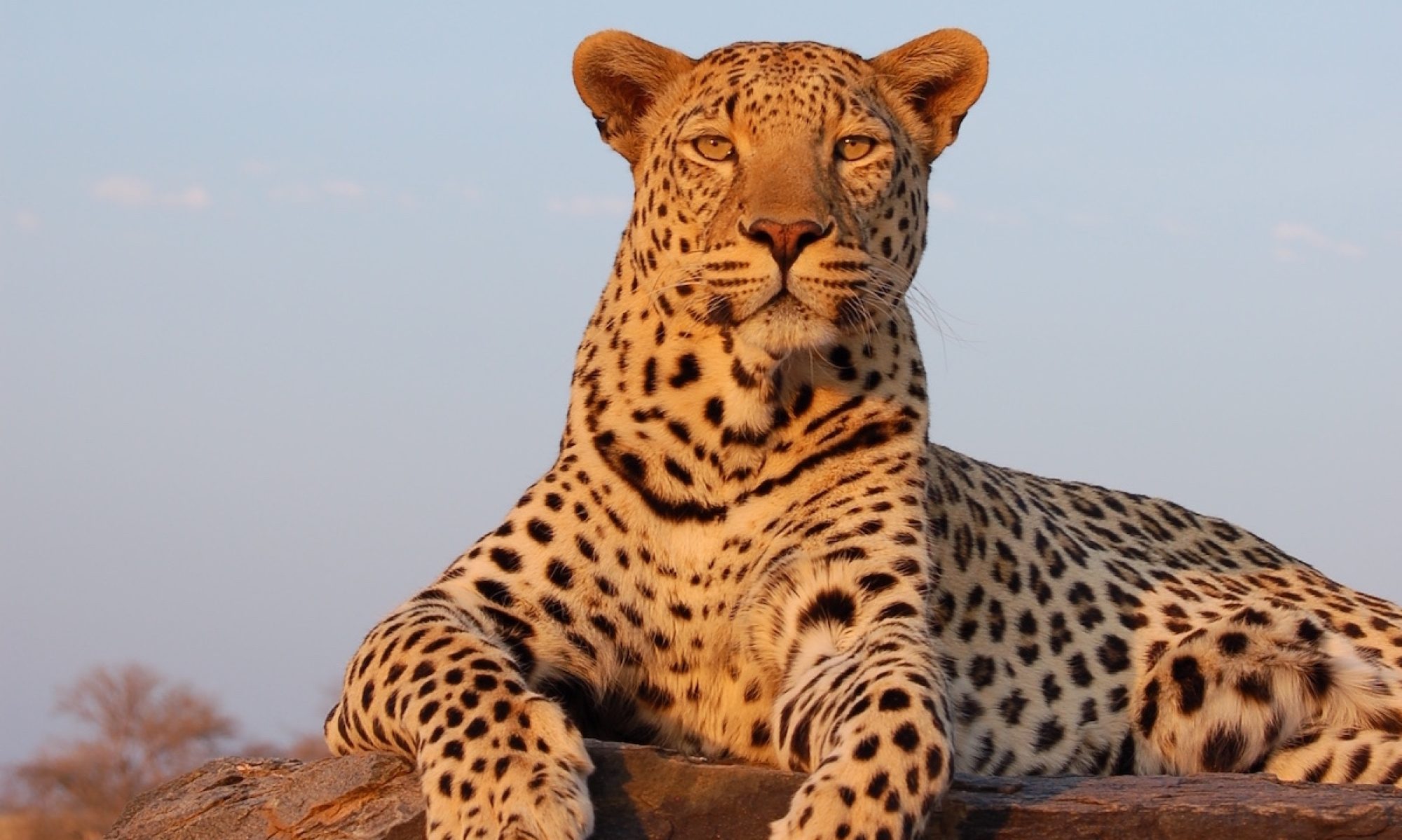
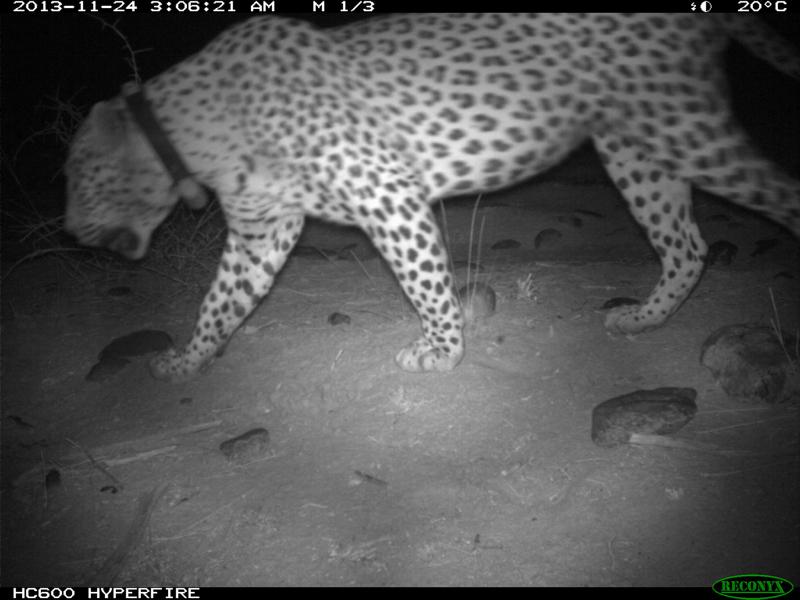
Wednesday we picked up the camera trap pictures and got a couple of nice pictures of L055. We also caught an oryx in the act of slipping under the fence…amazing how those animals can fold themselves up and get through a warthog-sized hole in the fence!
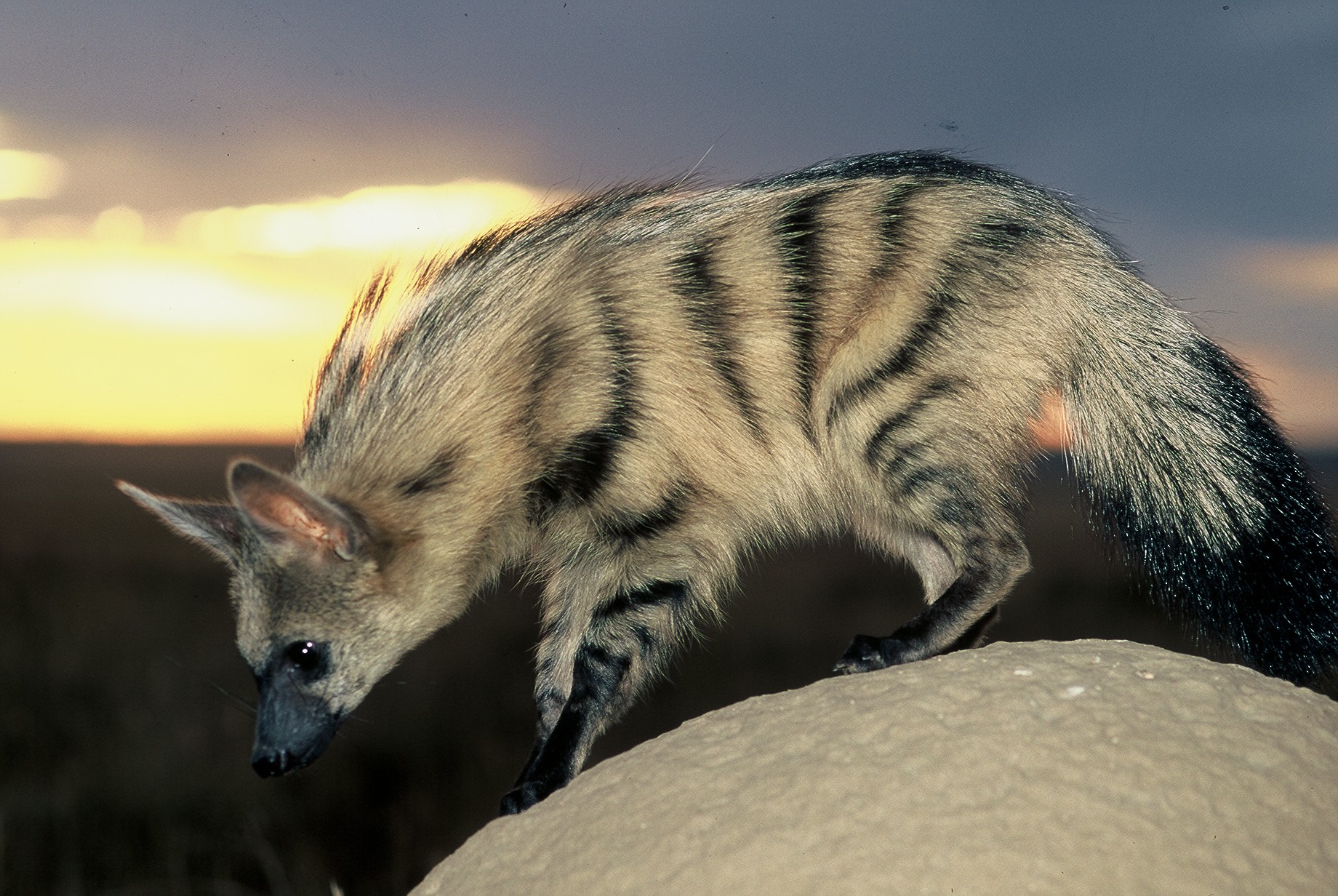
Friday morning Vera picked up the pictures from the new camera trap location, and yes! We caught the aardwolf on the camera.
Our final team 7 for this year is gone now, and that wraps up our Namibia expedition for 2013. A huge thank you to everyone who helped this year. It was great to meet you all and work alongside you. Your hard work, flexibility, and willingness to get dirty and help out has amassed a mountain of data for Vera. Thanks to you we also captured and collared three leopards, one brown hyaena, and took samples from four honey badgers. Vera’s scientific report on the expedition will be published in a few months.
Team 7
Safe travels team 7 and all the best to all of you Namibia expeditioners 2013. Perhaps we’ll meet again some day, somewhere on this beautiful planet of ours.
We’ve had a little rain, which is so badly needed and completely unexpected that we all went outside and danced in it. I’m not sure if the pictures do it justice, but I took a picture just to prove to the prior teams that it happened. Valerie took a “Rhinos and Rainbows” picture while still out in the field.
Friday was vehicle game count and the overall numbers were quite low. Perhaps that was due to the rain the night before.
Team 7 got a real “day off” on Saturday; the first Saturday in a few groups where we did not catch a predator in a trap. The team, however, was super keen on data entry, so they set up shop for the entire morning.
Sunday we moved the Lodge East trap to where camera trap 15 was located (for the previous volunteers that is behind the lodge up in the mountains—at the junction of the roads to Olifantposten and Kuduposten). Evidently it was here that Team 7 changed my nickname for Vera (Madam Scientist) to their own (Mad Scientist), purportedly for being very focused in the placement and setup of the box trap.
Like Vera’s new jewelry? (She was testing its transmitting capabilities.)
Sunday’s team also saw our first aardwolf. Never heard of one? They hadn’t either—they just knew it was an unusual sighting. What is an aardwolf? Picture a miniature striped hyaena with a long mane and bushy tail. They feed almost exclusively on harvester termites, and are one of the most specialized carnivores. They are solitary, nocturnal, and are thought to locate the termites more by hearing than by smell. Vera was delighted and now we’re off to set another camera trap at the hole where the team first saw it.






 Biosphere Expeditions: blogs from the frontline of wildlife conservation and the fight for a more sustainable planet