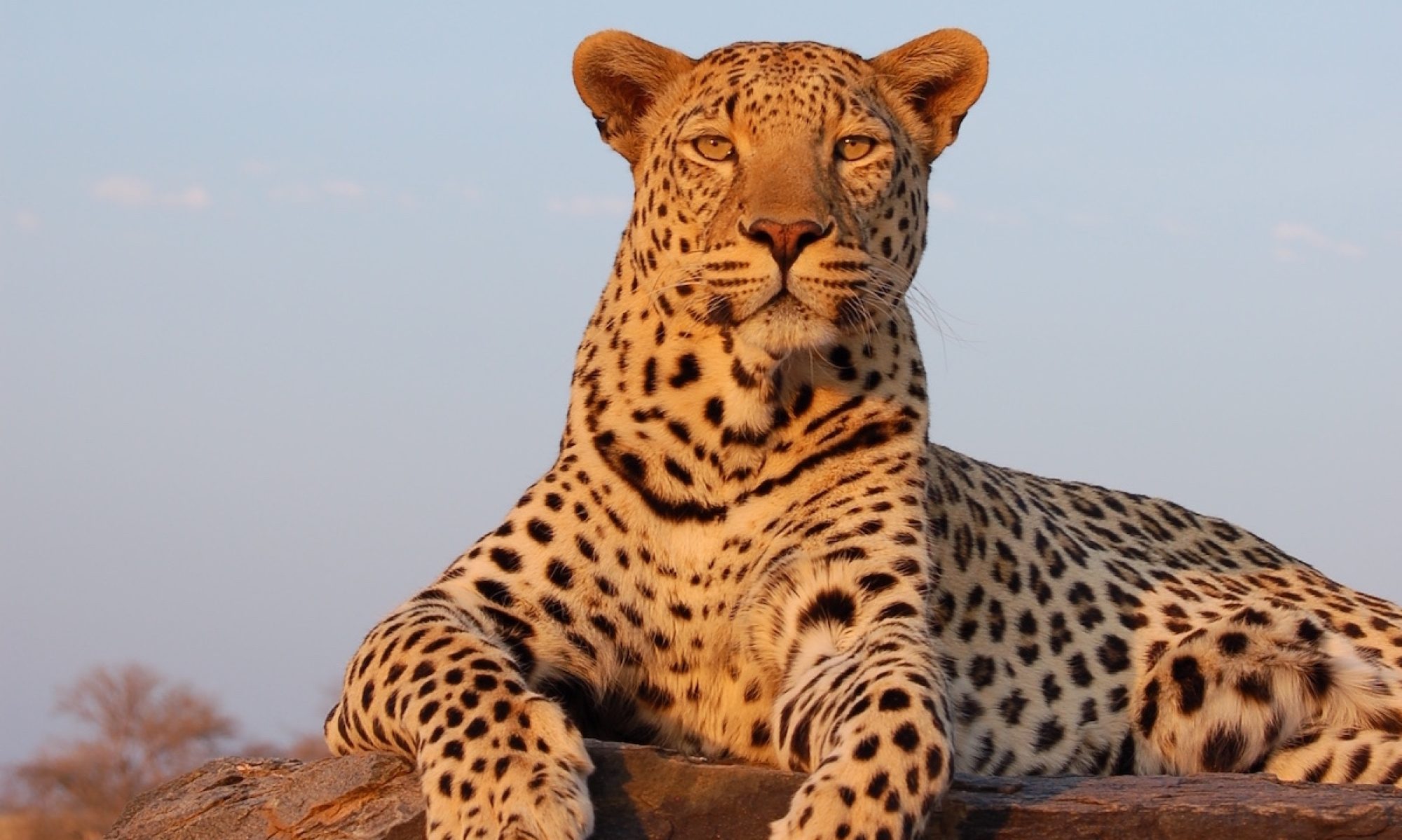

We catch animals quicker than I can write. Yesterday morning started with the release of our hyaena and just an hour later (I was just about to send pictures for the diary), Ann, Derek and Brian called in and with news of a big male leopard in the first box trap they checked. So we quickly changed the schedule for the day again (stay flexible! ;-)) and were lucky that the vet happend to be on the farm and had time to come immediately. Everyone was quickly called in from their activities and we all went straight to witness the big male leopard being collared. It needed six blokes, almost an hour, a lot of discussion and even more laughs to set up a small cover tent, but in the end we managed to sort it all out and were able to put a GPS/GMS collar on the 62 kg male leopard. The collar will now send regular messages with the animal’s location to Kristina. We decided to spend noon and all afternoon at the collaring spot and foregoing lunch were able to release the leopard after some hours. We arrived back at camp in the late afternoon very hungry and tired, but, as you can imagine, very happy!
Update from our conservation holiday volunteering with jaguars, pumas, ocelots, primates and other species in the Peru Amazon jungle (www.biosphere-expeditions.org/peru)
Sorry for the late final entry, but I was travelling for a long time immediately after the expedition. So here it goes:
1 September
We are back in Iquitos. Early this morning Herbert, Peter Eva, Katherine and I left the ARC after a great & productive time at the Amazon Research Centre. On the way we had lunch at the Tahuayo River lodge and visited El Chino, a small village of 160 residents. We switched to a speed boat in Esperanza village to take us down the Amazon river, on the way we spotted five grey dolphins and watched them for a while.
Over the last two weeks we have surveyed about 48 km on transect routes within the trailgrid.and paddled more than 15 km up and down the Tahuayo river. A couple of hundered different species were spotted including birds, frogs, reptiles, spiders, snakes and bugs. Mammals recorded were squirrel monkeys, saki, titi, brown & white fronted capuchin, saddleback & mustached tamarin monkeys, coati and an anteater. On our camera traps we captured margay, agouti and opossum. On the trails we found tracks of puma, tapir and deer.
I would to thank everyone involved in this year’s Peru Amazon expedition. You’ve been a great help and good mates. With your help we have created the basis for long-term wildlife monitoring to help conserve one of the most precious on our planet. I hope you enjoyed the time out in the forest as much as I did and hope to see some of you again someday.
Best wishes
Malika Fettak
Expedition leader
Update from our SCUBA conservation holiday volunteering with coral reefs and whale sharks of the Maldives (www.biosphere-expeditions.org/maldives)
We’ve been very good and checked those reefs, so we treated ourselves to a lazy dive yesterday, at night (after the work was done) and at arguably one of the world’s best night dive sites. Night dive fears were overcome heroically and our reward was a great display of sharks and stingrays hunting, turtles trying to find a place to sleep and a very different reef at night. The daytime reefs haven’t been bad either including one with an unheard of 50% hard coral coverage! Pictures of everything and a short movie of the night dive below.
Our scientist Jean-Luc is happy, the sun has come out, the food’s delicious and we’re winning the Reef Check Distinguished Service Medal. What more could we hope for. Whale sharks perhaps? Ah, that’s tomorrow, we hope.
Stay tuned.
Update from our working holiday volunteering with leopards, elephants and cheetahs in Namibia, Africa (www.biosphere-expeditions.org/namibia)
Hello again from Namibia, this is Jenny your expedition leader for the rest of our Namibia expedition. After five successful groups in the Altai mountains, I arrived in Namibia on Saturday just in time to meet and greet group 3 on Sunday morning. Even with the time being changed to daylight savings, all 10 team members (including John, who joins his seventh expedition with us to Namibia!) were on time and keen to start collecting data under the Africa sun. Kristina and I kept everyone awake with presentations and equipment training until 21:00 on our first training day.
On Monday it was driver training as usual and when we returned to base, we heard that the non-driver group had activated two box traps and spotted, besides all the different antelopes, a predator that is really hard to see: a honey badger!
On Tuesday, as we approached the first trap, Kristina noticed that both gates were closed and as we went closer we couldn’t believe that we have already captured a predator: another brown hyaena! This trap seems to be at a very good spot as it has already yielded two brown hyaenas, one leopard and a caracal. What a morning. Everyone is preparing behind me for our afternoon activities and Hendrik, Sandra and John are excited to get the SD cards and look at the pictures of our camera traps.
Stay tuned for more updates and pictures as soon as I can get to an internet connect that will not buckle under a few KB.
Update from our SCUBA conservation holiday volunteering with coral reefs and whale sharks of the Maldives (www.biosphere-expeditions.org/maldives)
With everyone fully qualified Reef Checkers (well done everybody!), we checked our first reef (Ellaidhoo of Ari atoll) today. This reef was surveyed just before the massive bleaching event of the late 1990s, so it was exciting to go back and see how it had fared after the event.
The great thing about Reef Check is that it gives us tangible results almost as soon as we’re out of the water and have punched our data into the laptops. The results are encouraging. Coral cover is back to half or two-thirds of what it was pre-1998, so that’s a decent recovery in 14 years. There certainly were a lot of butterflyfish, sweetlips, snappers and quite a few groupers (all Reef Check indicator species) and the coral diversity was as beautiful to look at as it was interesting to record.
Tomorrow things get even more interesting as we re-survey a reef for which we have pre- and post-bleaching data. Thanks again to everyone who came on this expedition to spend their time and money on getting us and our Maldivian partners these data. You could have gone to roast on a beach, but you decided to help us. Thank you!
Update from our SCUBA conservation holiday volunteering with coral reefs and whale sharks of the Maldives (www.biosphere-expeditions.org/maldives)
We’ve spent the last days training our team up to be Reef Checkers and so far they have passed with flying colours as one of the most capable and relaxed teams, sitting in their lecture, hardly even blinking an eyelid as the Carpe Diem had to plough through a storm with the waves crashing against the portholes.
Just an hour ago everyone passed their fish identification exam with flying colours.
Here’s the roll of honour of people who’ve passed:
And here’s the rest of the beach bums who were already qualified and so could laze around on the boat whilst the rest were sweating it out in the “exam room”.

Tomorrow it’s invertebrate and substrate exams, then an in-water test and then we’ll be ready to Check that Reef!
The diving’s been good too with a variety of good sites so far to get everyone to recognise indicator species in situ.

Update from our SCUBA conservation holiday volunteering with coral reefs and whale sharks of the Maldives (www.biosphere-expeditions.org/maldives)
We’ve arrived, the boat’s set up, Jean-Luc and I have finished the itinerary and the first thunderstorm has just moved through.

The Carpe Diem is as beautiful as ever.
My mobile number (for emergencies only) is xxxx and I look forward to meeting you all tomorrow morning.
Update from our SCUBA conservation holiday volunteering with coral reefs and whale sharks of the Maldives (www.biosphere-expeditions.org/maldives)
As the sun rises over this Paralympic city of London and my bag looks manageable, I hope your packing is going well too.

I am only slightly ahead of you and wish you safe travels. The weather looks like it’s going to be a mix of rain and sunshine throughout the week (see http://www.bbc.co.uk/weather/1282027).
For those of you who may still be under the impression that you are joining a cushy dive holiday, I attach our draft work plan for the week. It’s a draft and Jean-Luc and I will see whether we can cram any more in when we meet later in Male’ 😉 As you can see it’s mostly survey dives, but we usually get in a few “lazy dives”, i.e. dives when you don’t have to fill in any datasheets. Please come rested and with your heads clear for all the Reef Check information we’re going to hit you with.
See you in Male’ soon.
Update from our conservation holiday volunteering with jaguars, pumas, ocelots, primates and other species in the Peru Amazon jungle (www.biosphere-expeditions.org/peru)
Team 2 arrived on Sunday and after the training phase went out on Tuesday to set up eight camera traps. As usual we went through introductions, the equipment and the research background & goals before the whole team did their first forest orientation walk. The projector worked all the way through until the end of Alfredo’s indicator species presentation. Thanks to Tine (1st slot) the printer cartridges arrived at camp together with team 2, so that we were able to produce fancy identification sheets of monkeys, felids & terrestrial mammals for the field work.
Steering a canoe from the front was a new skill to learn for most of team 2. Peter complained that fallen trees, trunks and river banks decided to hit his canoe loaded with two passengers. Sitting in the middle Eva silently held on to her camera bag while Linda sitting in the back was commenting every crash with a shout. Laughs could be heard a long way up and down the river – no capsizing, though. Katherine and Herbert got the hang of it quickly – lucky me, as I was sharing their boat.

Over the last two days the team did survey walks on seven trailgrid transects and went out by canoe in the afternoon to do surveys along the Tahuayo river recording saki monkey, saddleback and mustached tamarin, titi monkey and some more non-mammal species. The Tamshiyacu Tahuayo conservation reserve is a biodiversity hotspot, but that doesen’t mean that indicator species to be monitored are seen easily! Again, Donaldo and Alfredo did a very good job by spotting monkeys yesterday while their teams did the measurements and filled in the datasheets. Full trained up, the girl power group of Eva, Linda & Katherine went ‘alone’ today while Peter and I teamed up with Donaldo.
On our night boat ride on Wednesday we spotted a couple of caiman just in front of our base, as well as various frogs.

This morning Linda left early to catch a flight. We said goodbye to her after another early breakfast at 5:30, but not before a team picture was taken shortly after sunrise (see websites below). Everyone else is now doing their final transect routes and collecting the camera traps that have been out for four nights. Watch this space for updates on what we have caught on the camera traps…

Update from our snow leopard conservation expedition to the high mountains of the Altai Republic in Central Asia (www.biosphere-expeditions.org/altai)
I wanted to thank you everyone who joined us this year on the Altai expedition. I arrived back in Germany yesterday and I am very happy with what we have achieved this year. It was the first year we placed camera traps and with your help we have been able to set up 10 camera traps around Sailugem and Talduiar and two more on Chickachova ridge.

Camera traps CT5, CT 6, CT 9 and the two camera traps at Chickachova are still out and will be checked by our partners at WWF Russia / Arkhar NGO later in the year.
On CT 2 we were able to get some Pallas Cat pictures which is very good news as this cat wasn’t known to climb to that altitude (3100 m). The other camera traps showed lots of prey species, which I will put into our statistics and the expedition report.
We did not get a photo of our elusive mountain ghost (but Sergei Spitsyn from Arkhar NGO did on Chickachova Ridge), but I am very happy to announce that we were successful in finding the all important snow leopard scrapes on the ridges in Slot 2, Slot 3 and Slot 4 On Chickachova we were able to find six scrapes and we set up one of our camera traps (CT- Ch01) in front of one. Most of the scrapes around Sailugem and Talduiar were found on the Sailugem valley ridge, where two more camera traps are still “on the hunt” for us.
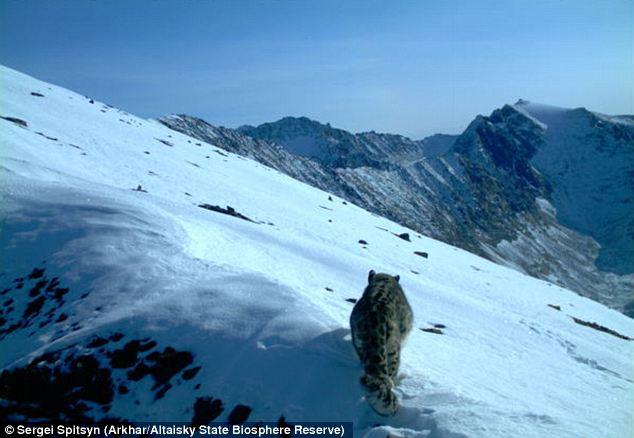
A big thanks to slot 4 who found a scrape with scat up on the ridge at Talduiar and managed to set up two more camera trapos. The scat is already 98 confirmed as snow leopard scat has been passed on to WWF for DNA analysis. Another big predator scat was found near Talduiar at 2900 m and we are waiting for the results.
Prey species were found and counted during each slot and my preliminary analyses show that prey numbers in our study area are increasing.
In summary our 2012 expedition set up twelve camera traps, checked and removed seven camera traps, found up to twelve scrapes, observed more than 100 prey species and interviewed nine local families.
As you know conservation is partly research and partly conservation action with animals, local stakeholders, etc. Please don’t feel that you have not contributed if you were not one of the mountain goats putting camera traps up on the high ridges. We need to take a holisitc view and all data we collect about prey and predators and with local stakeholders, high or low, is a useful piece of the puzzle. And also remember that it is YOU who make all this research possible in the first place. Without you, there would be no Biosphere expedition to the Altai, no expedition reports and none of the local economic incentives that come with a largish multi-month expedition such as ours. The Altai is at a crossroad, just as Montana was perhaps a hundred years ago when in transformed from a cattle-based to a tourism-based economy or the Alps when they transformed from an isolated, poverty-stricken rural backwater to a prosperous tourism-based economy. With our low-impact, high local involvement conservation expedition we are at the spearhead of what could be a very positive transformation for local wildlife and people. The transformation will take time, one or two generations perhaps, but if we can help our local partners avoid the mistakes we have made in Europe or North America, then we will have won. Do not underestimate the power our mere presence has on shaping people’s opinions on the value of wildlife and a nature-based economy. “What pays, stays” is what conservationists often say, and we together are a perfect example of how things can work for everyone, which will not be lost on local people. This aspect of our expedition is only set to increase as we deepen our relationship with local operators and NGOs, so thank you again everyone for being a part of this in 2012.
Jenny Kraushaar
Expedition scientist
 Biosphere Expeditions: blogs from the frontline of wildlife conservation and the fight for a more sustainable planet